

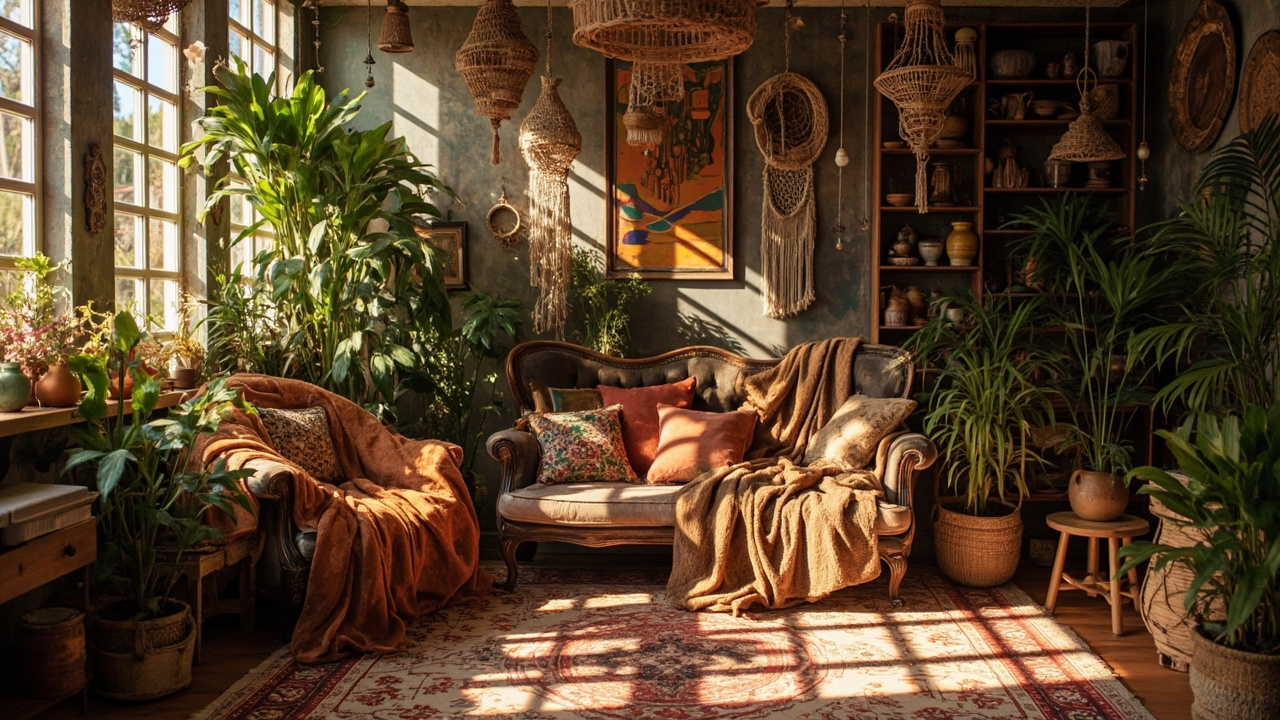
Boho Home Decor brings warm textures and layered scents of linen and wood into your room, creating a lived-in, calming atmosphere that feels personal and relaxed.
These 17 Stunning Boho Home Decor Ideas lean into updated 2026 trends like smoother organic shapes, clay accents, and natural palettes, helping you craft a space that feels both free and refined, with touches that pair beautifully with farmhouse pieces you might already love from 12 Beautiful Farmhouse Decor You’ll Love.
- 1. Organic Luxe
- 2. Woven Storytelling
- 3. Earthen Layers
- 4. Muted Maximalism
- 5. Biophilic Boho
- 6. Tactile Neutrals: Linen, Hemp, and Soft Wool Combinations
- 7. Curated Vintage: Mixing Midcentury Finds with Bohemian Flair
- 8. Stone & Wood Dialogue: Contrasting Raw Grain with Polished Surfaces
- 9. Artful Rugscapes: Layering Patterns for Depth and Flow
- 10. Global Folk Reimagined: Modern Takes on Ethnic Motifs
- 11. Ambient Rituals: Lighting that Warms and Creates Intimacy
- 12. Rot-Tan Revival: Rattan Reinvented for Contemporary Spaces
- 13. Ceramic Moments: Statement Vessels as Centerpieces
- 14. Boho Work Nooks: Cozy, Creative Home Offices with Soul
- 15. Color Drift: Using Benjamin Moore’s 2026 Palette in Boho Schemes
- 16. Minimal Clutter, Max Mood: Editing Objects for Impactful Boho Vibes
- 17. Outdoor-Indoor Continuity: Creating Seamless Boho Patios and Balconies
- Final Verdict
- Frequently Asked Questions
1. Organic Luxe
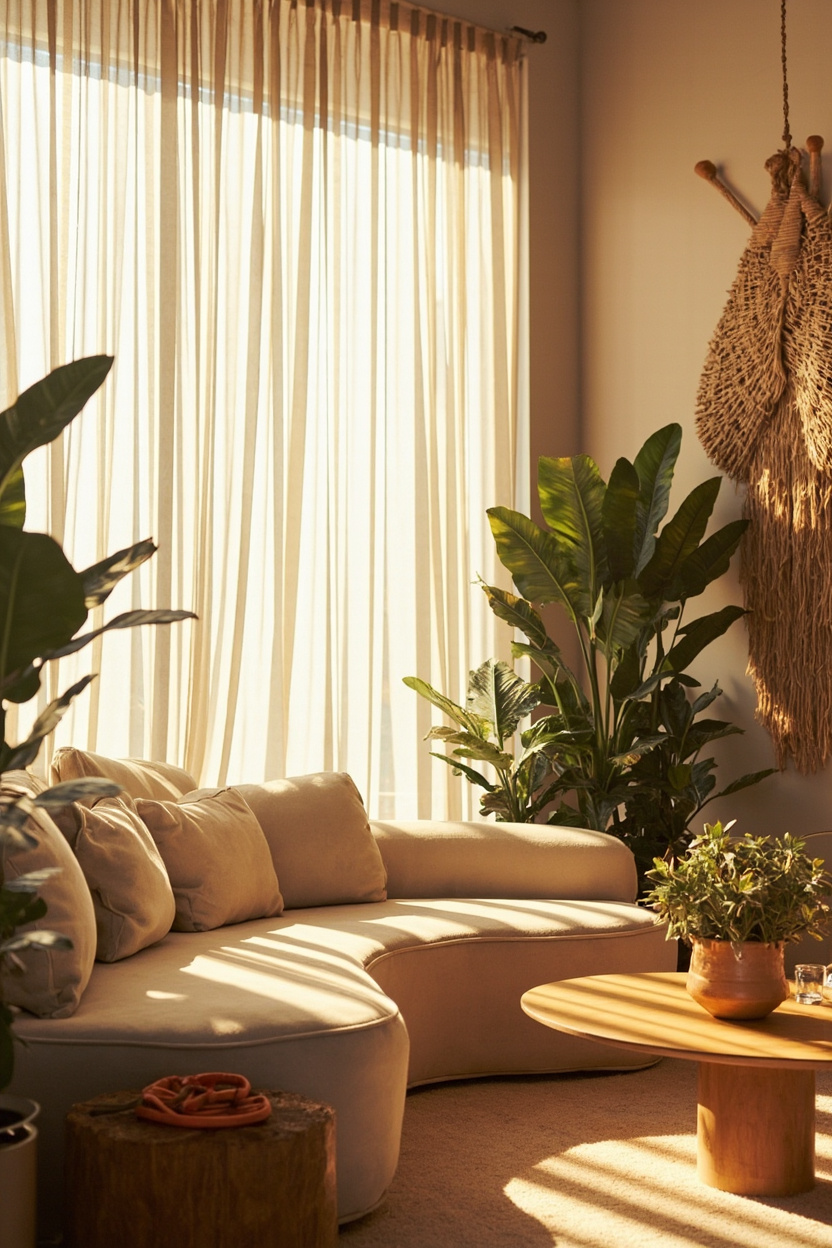
The Organic Luxe boho leans into smoother curves and softer finishes, trading raw roughness for refined natural materials like honed stone, warm oak, and silk-linen blends.
Furniture lines curve gently, rounded sofas, arched shelving, and pebble-like coffee tables, so the room feels tactile and restful instead of cluttered, while finishes stay matte or softly buffed to catch light without glare.
Layering is key
- Pair a low, curving sofa in a neutral boucle with a sculpted wooden side table and a muted stoneware lamp to create a calm, tactile composition that still reads rich and intentional.
Essentials
- Matte stone, warm wood, soft natural fabrics
This style works because it makes boho feel modern and luxe while keeping a grounded, lived-in warmth.
2. Woven Storytelling
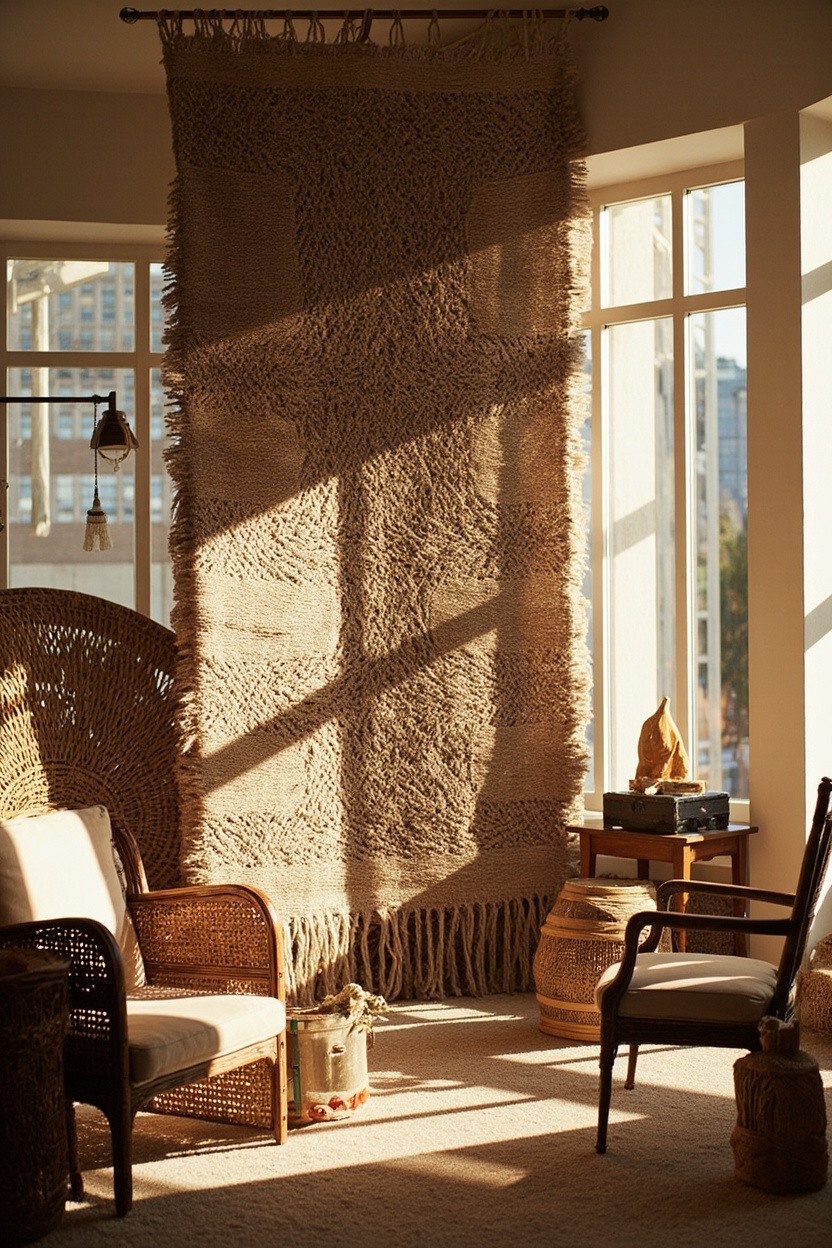
Woven Storytelling centers handcrafted textiles as the emotional core of a room, using kilims, hand-loomed rugs, and artisanal throws to anchor both color and pattern.
The textiles bring layered texture—slubby wool, nubby cotton, and hand-dyed ikats—that contrast beautifully with smooth plaster walls and simple furniture, giving each space a tactile narrative.
Mix scale and origin
- Hang a large woven wall piece behind a simple bed, layer rugs of different weave densities, and drape fringed throws over a leather chair to build depth and a sense of travel-worn authenticity.
Pairings
- Natural dyes, neutral upholstery, warm metallic accents
This approach works because handcrafted textiles give every room a personal story and an instantly lived-in warmth.
3. Earthen Layers
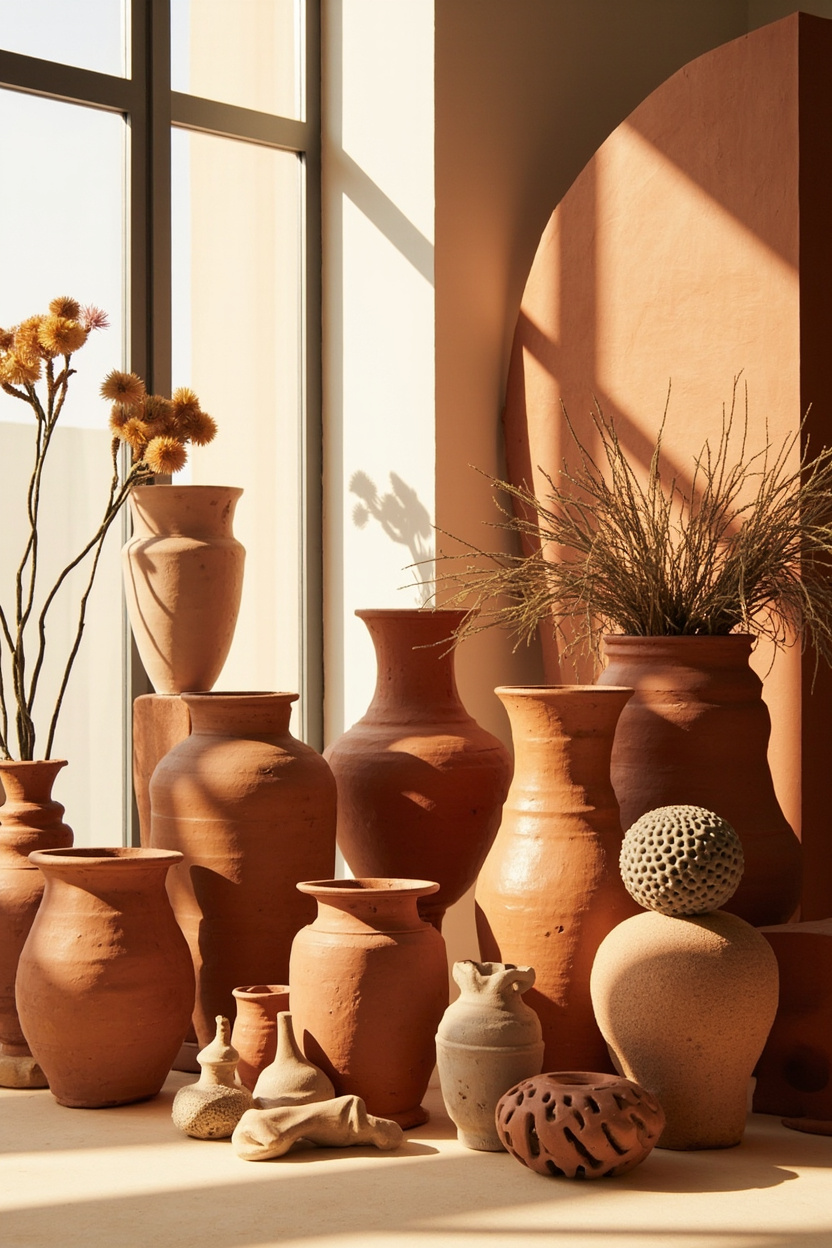
Earthen Layers celebrates clay, terracotta, and sculptural pottery as the main decor language, using vessels of varied scale to add organic weight and warmth.
Matte terra cotta, burnished clay, and hand-carved ceramic pieces bring subtle tonal shifts and a comforting earthiness that pairs well with raw linen and weathered wood.
Group collections on open shelving or console tables—mix tall spouts, squat storage jars, and asymmetrical sculptures—to create a museum-like still life that still feels domestic and approachable.
Colors
- Terracotta, warm ochre, soft sand
This works because earthen objects add timeless texture and a natural calm that anchors boho interiors.
4. Muted Maximalism
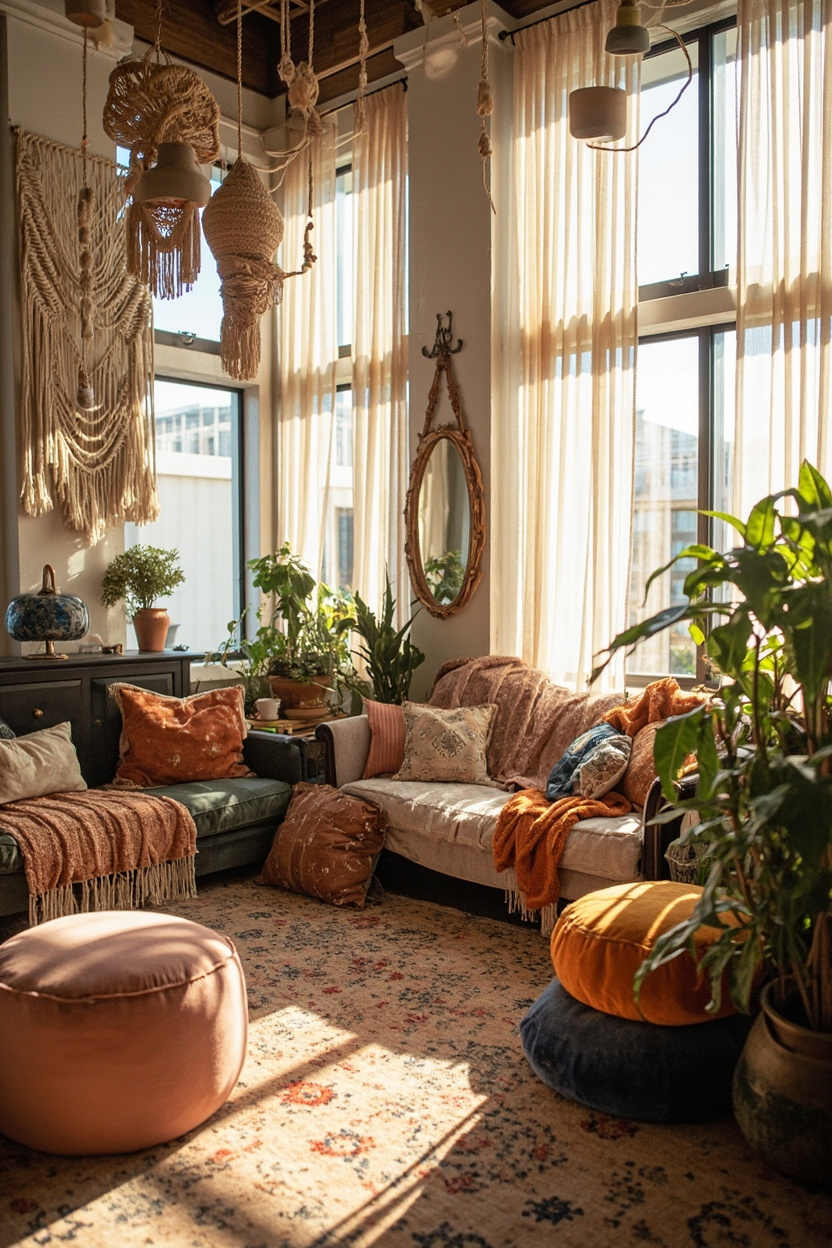
Muted Maximalism keeps eclectic layering but calms the palette to soft, desaturated hues—sage, clay gray, and powdery ochre—so pattern and abundance read cohesive rather than chaotic.
The trick is deliberate restraint: choose many objects and patterns, but in a controlled color family and balanced negative space, so the eye can rest.
Use pattern mixing—small geometric cushions, a large low-contrast rug, and sculptural lamps—in tonal variations to keep energy without visual fatigue, and let a few natural textures like rattan and brushed brass add contrast.
Focus on Tonal patterns, texture mixing, and measured negative space
This succeeds because it delivers boho’s layered richness while keeping the mood calm and sophisticated.
5. Biophilic Boho
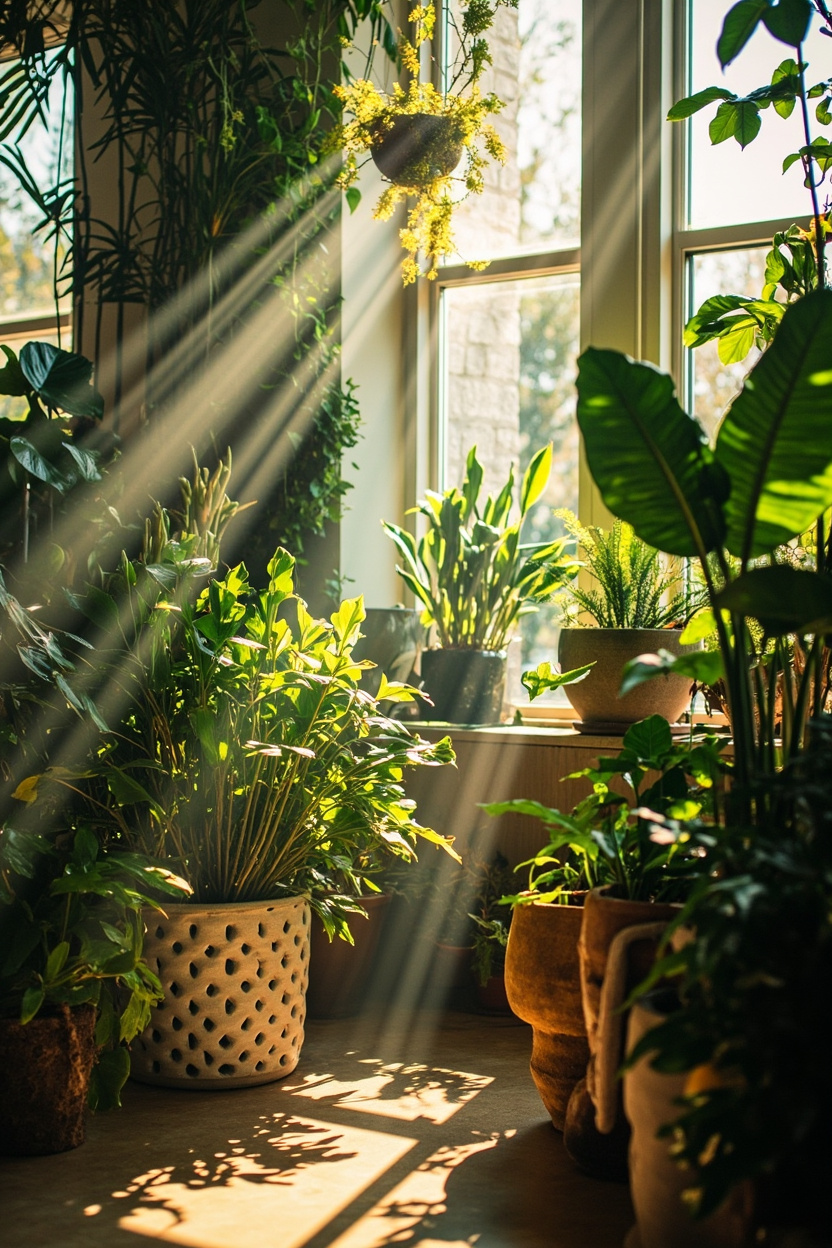
Biophilic Boho fuses abundant plant life with sculptural planters and organic decor to make interiors feel like curated jungles. Large-leaf specimens and trailing vines live alongside architectural planters in clay, matte ceramic, or hand-finished concrete, creating vertical interest and a soothing, oxygen-rich atmosphere.
Texture play is essential
- Pair glossy leaves with matte pots, woven baskets, and soft textiles to balance humidity and light, and arrange plants at varying heights to create depth and movement that feels intentionally wild.
Planter choices
- sculptural clay, matte ceramic, woven baskets
This works because plants bring life and scale to boho rooms while sculptural containers keep the look considered and elegant.
6. Tactile Neutrals: Linen, Hemp, and Soft Wool Combinations
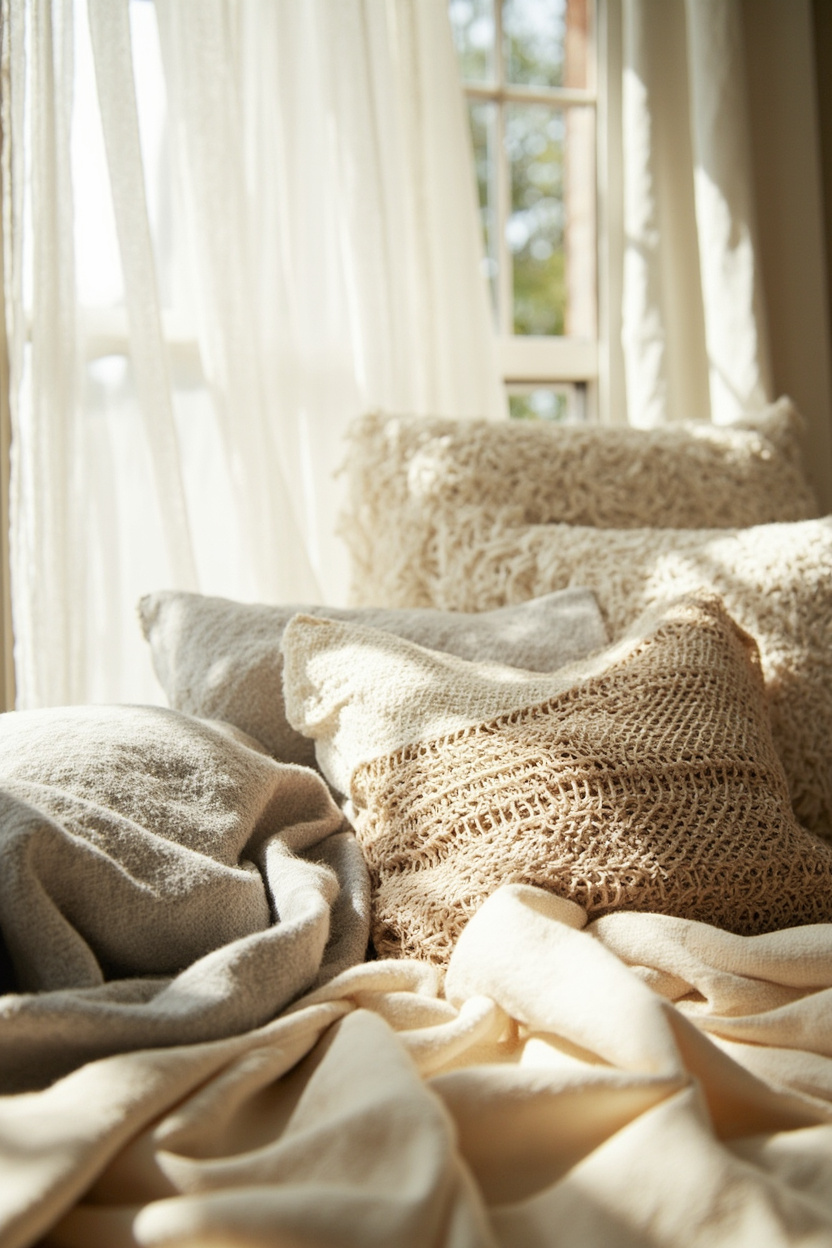
Linen, hemp, and soft wool form a quiet, tactile trio that reads as both relaxed and refined, with each fiber adding a distinct hand to the room. Linen brings a slightly slubby, lived-in drape on curtains and slipcovers, hemp offers a matte, structured feel for upholstery and baskets, and boiled or felted wool introduces plush warmth in cushions and throws.
Together they create a layered neutral scheme that’s never flat because the eye tracks the subtle contrasts in weave and weight rather than relying on color alone.
Keep finishes soft and matte—avoid high gloss—and use gentle, natural dyes like oat, clay, and warm sand to maintain that earthy, soothing atmosphere. The overall sensation is tactile and calm: a space you want to touch and linger in, perfect for quiet mornings or slow evenings.
This works because texture becomes the star, offering depth without loud color.
7. Curated Vintage: Mixing Midcentury Finds with Bohemian Flair
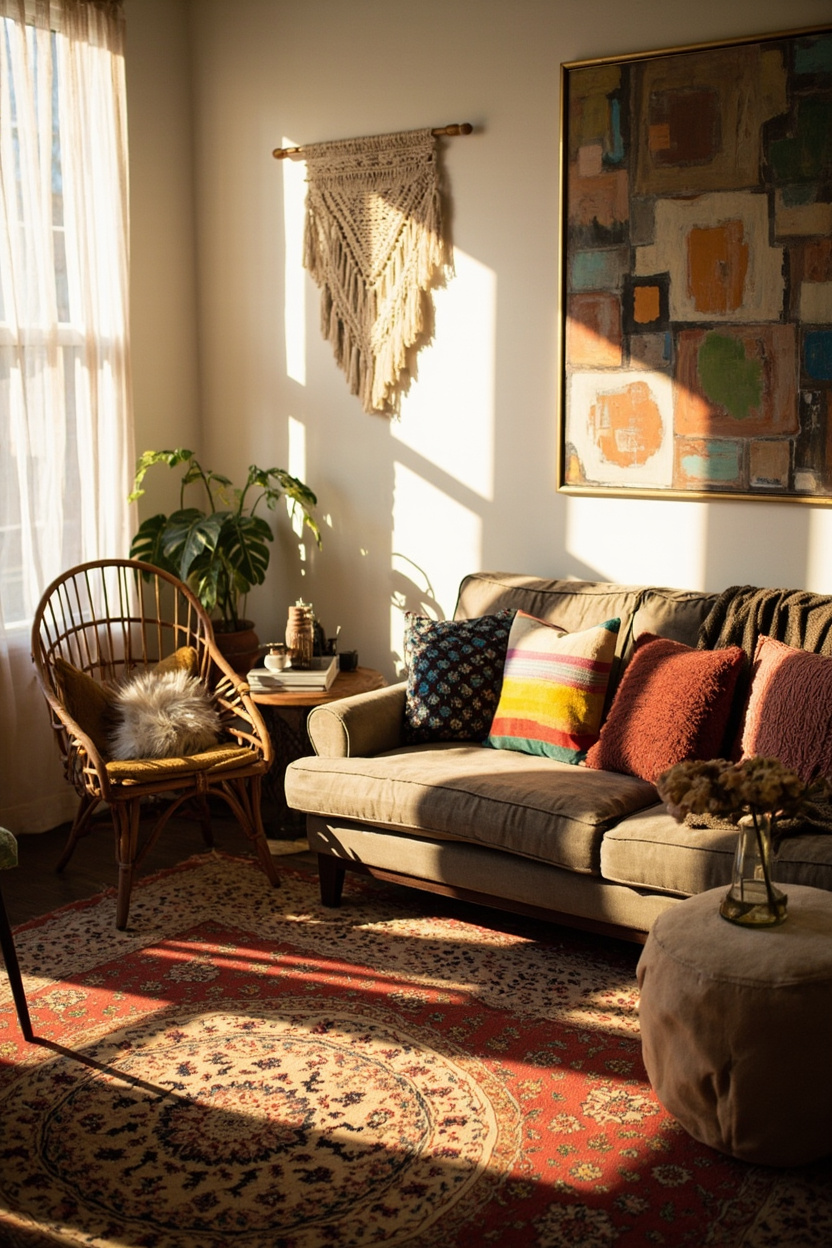
Curated vintage blends the clean lines and sculptural silhouettes of midcentury pieces with the layered, relaxed vibe of boho accessories, producing a home that feels edited yet personal.
Think a teak sideboard anchoring a living room, topped with woven baskets, hand-thrown ceramics, and a macramé wall hanging; the midcentury structure gives visual order while the bohemian touches add warmth and human scale.
Use wood tones and brass accents to echo midcentury warmth, and offset them with soft, organic textiles—macramé, kilims, and faded handlooms—to avoid a museum-like feel.
The atmosphere is collected and approachable: intentional pieces that tell stories without appearing staged, where the imperfections and patina of vintage elements enhance authenticity and comfort.
This pairing succeeds because the restraint of midcentury forms grounds boho’s eclectic texture, making a layered look feel polished rather than cluttered.
8. Stone & Wood Dialogue: Contrasting Raw Grain with Polished Surfaces
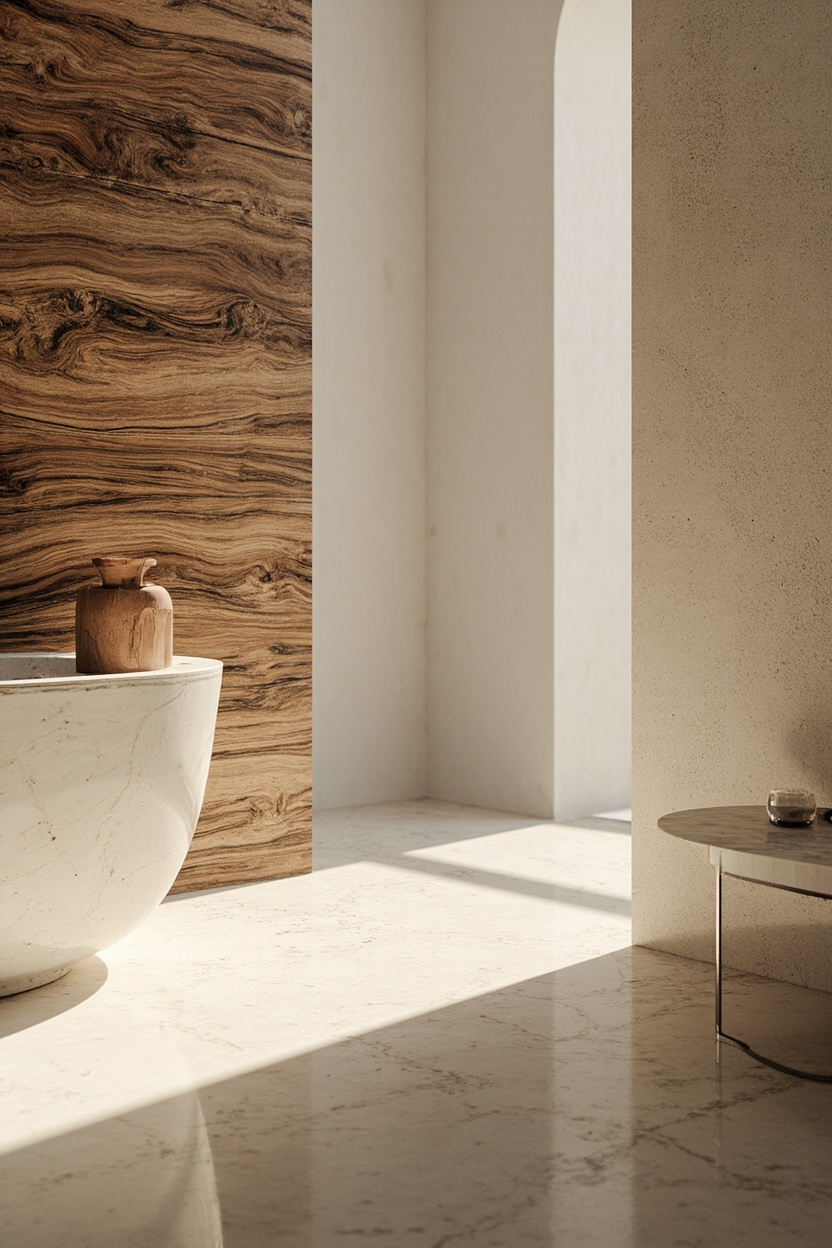
Combining raw-grain wood with polished stone creates a dynamic textural conversation that feels both organic and sophisticated, useful in kitchens, bathrooms, and living areas alike.
Let a live-edge oak table, its knots and growth rings visible, sit against a honed marble backsplash or a smooth terrazzo floor; the tactile roughness of the timber highlights the stone’s cool, reflective calm.
Keep joinery and hardware minimal so the materials can read clearly—the contrast should feel intentional, not busy.
Finish choices matter: matte sealers on wood and honed or satin stone surfaces preserve the tactile contrast without competing gloss. Lighting that skims across surfaces will reveal grain and veining, enriching the room’s sensory depth and creating a grounding, elemental atmosphere.
This works because the eye craves contrast, and pairing raw and refined materials delivers tactile interest and visual balance.
9. Artful Rugscapes: Layering Patterns for Depth and Flow
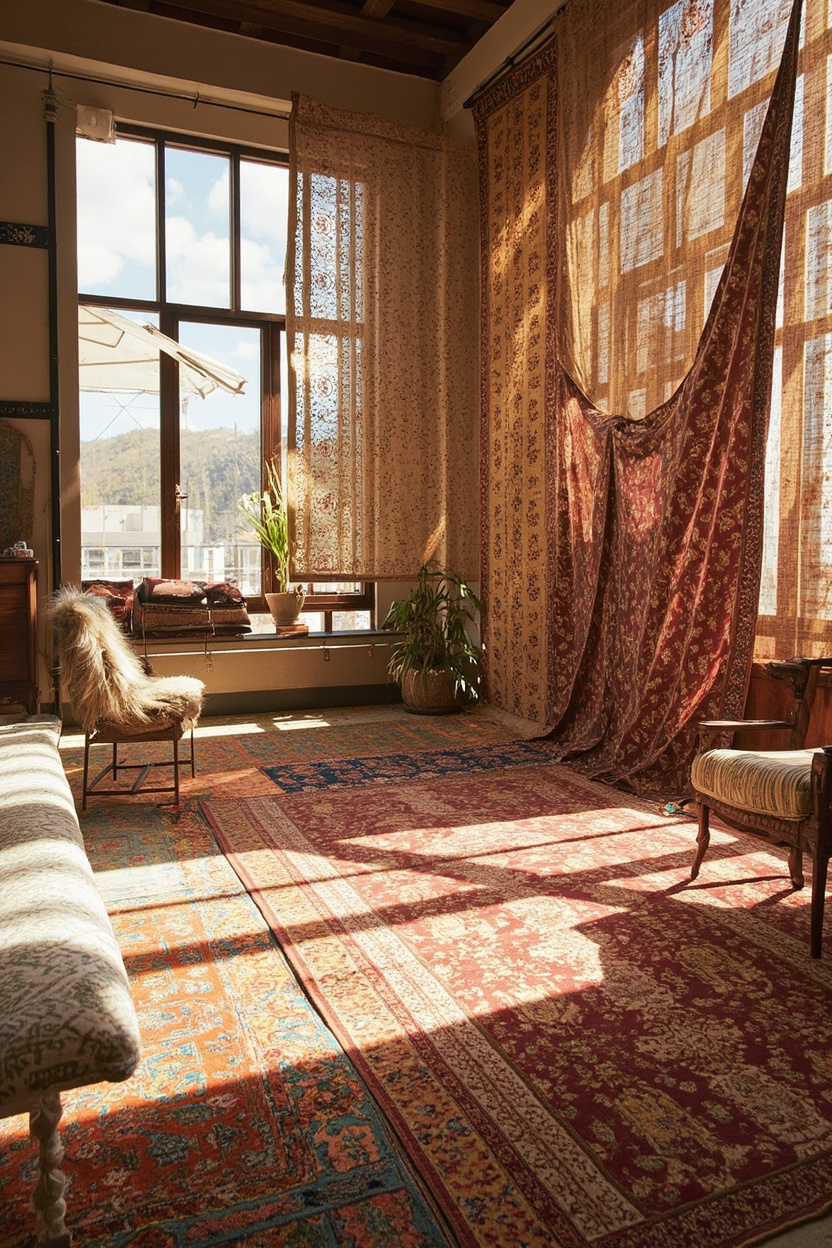
Artful rugscapes use multiple rugs—varying scale, pattern, and pile—to create zones, add warmth, and guide movement through open-plan spaces.
Start with a large, low-pile foundation in a muted geometric or solid color, then layer a smaller, high-pile or hand-knotted rug with bolder motifs where you want focus, like under a coffee table or reading chair.
Texture differences (flatweaves versus shag or knotted rugs) give physical and visual depth, while repeating one or two colors across layers ties the mix together.
Keep edges visible and avoid too many competing center patterns; the goal is flow and contrast, not chaos. The result reads curated and intentional, with pathways that feel defined and pockets that invite you to linger.
This approach works because layered textiles soften hard floors while organizing space through pattern and pile.
10. Global Folk Reimagined: Modern Takes on Ethnic Motifs
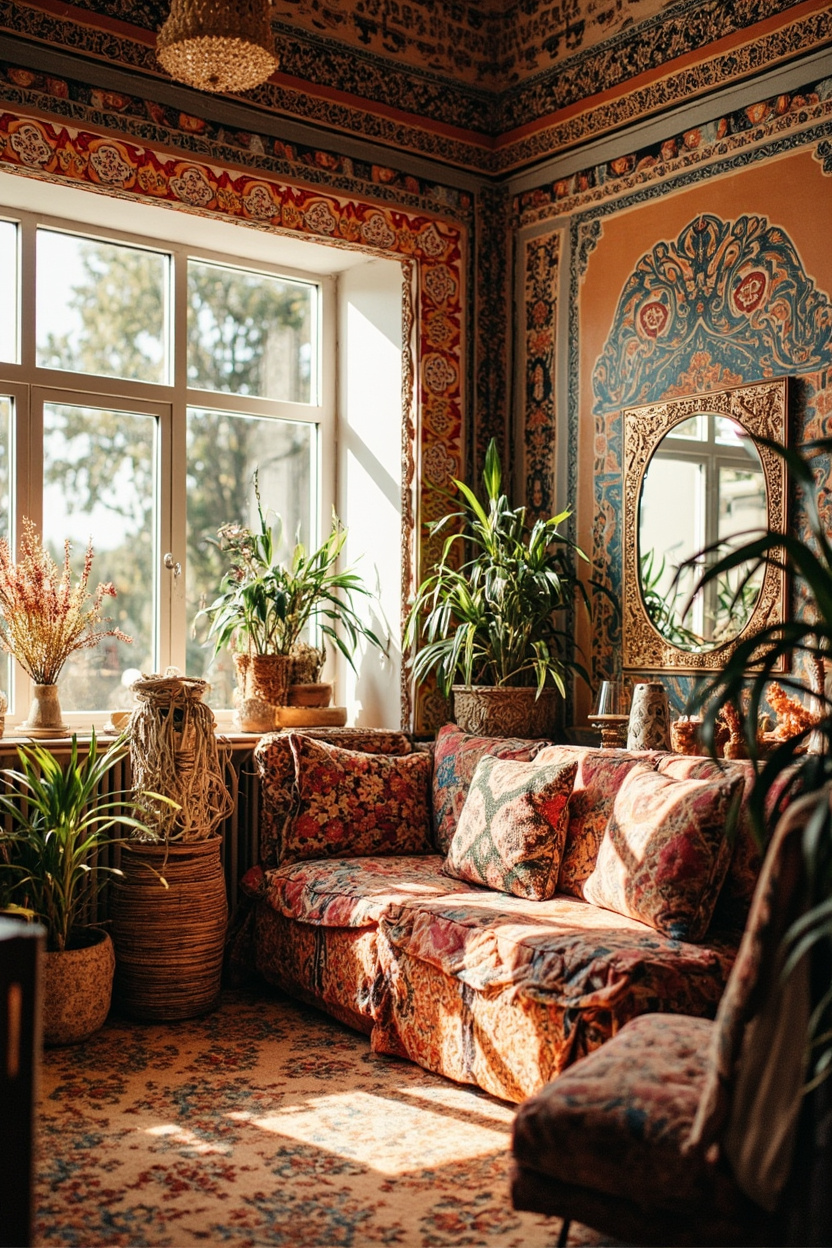
Global folk reimagined takes traditional ethnic motifs—block prints, embroidered panels, ikat, and symbolic weaves—and translates them into contemporary scale, color, or placement so they fit modern living.
Use vintage textiles as focal wall hangings or reupholster a modern sofa with a single panel of folk-stitched fabric to create contrast between old-world pattern and new-world form.
Keep palettes slightly desaturated or introduce unexpected contemporary hues like soft terracotta or muted sage to make motifs feel current without erasing their origin.
Balance is key: pair ornate fabrics with simple, modern furniture and raw, neutral backgrounds so the motifs read as artful accents rather than overwhelming decoration. The atmosphere becomes culturally layered and personally charged with history, but tailored to relaxed, everyday life.
This succeeds because it honors craft while adapting scale and color for fresh, livable interiors.
11. Ambient Rituals: Lighting that Warms and Creates Intimacy
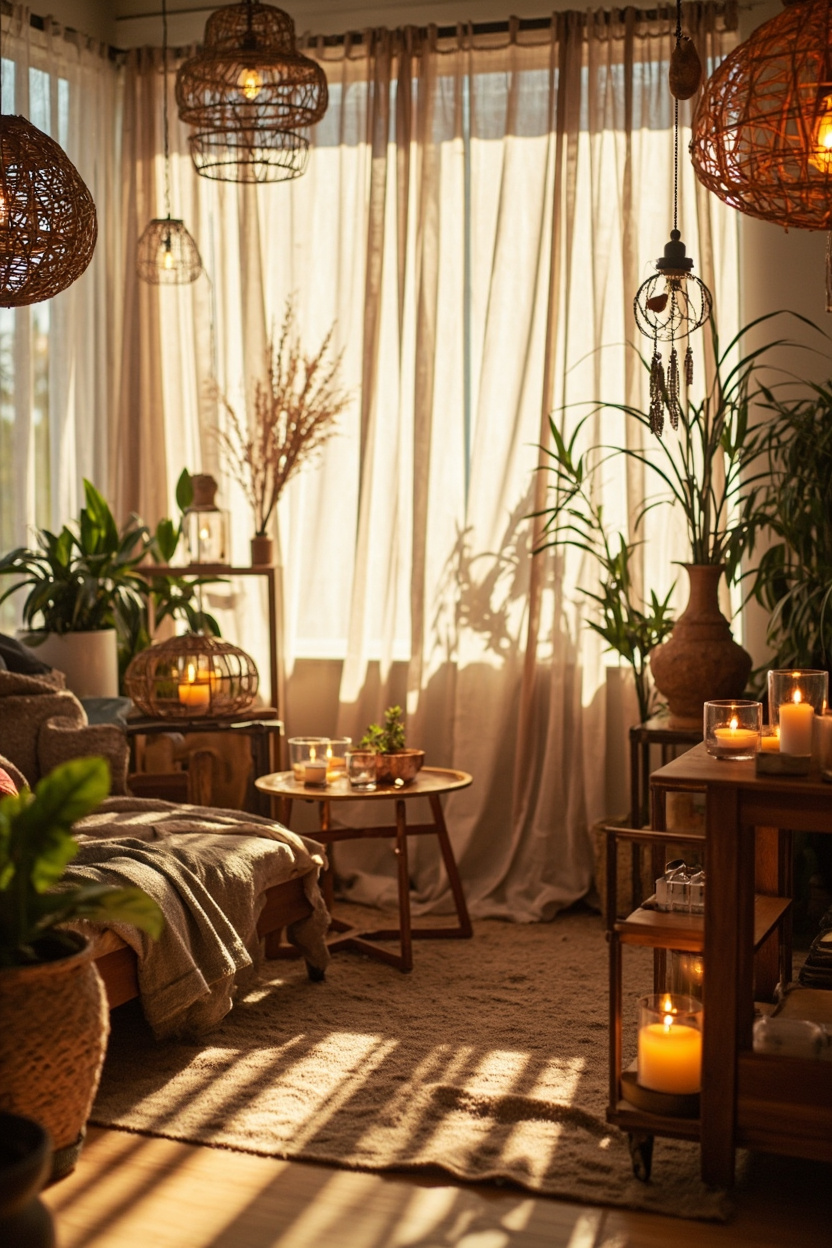
Soft, layered lighting is the backbone of intimate boho spaces, where warm color temperatures and varied fixtures create depth and comfort rather than glare.
Think dimmable pendants over seating, a mix of shaded floor lamps and tucked-away LED strips behind shelving, and clusters of small lights that read like a vignette instead of a single source.
Textures matter: matte metal, hand-blown glass, woven shades, and clay bases each diffuse light differently and add tactile interest when the lights are off.
Combine warm bulbs (2200–2700K) with surfaces that soak in and reflect that glow—natural wood, raw plaster, and linen—so the room feels layered and quietly luxurious.
A final touch: a low, flickering candle or wax lamp for ritual moments that deepens atmosphere and slows the pace. This approach works because light sculpts mood and makes everyday corners feel intentionally intimate.
12. Rot-Tan Revival: Rattan Reinvented for Contemporary Spaces
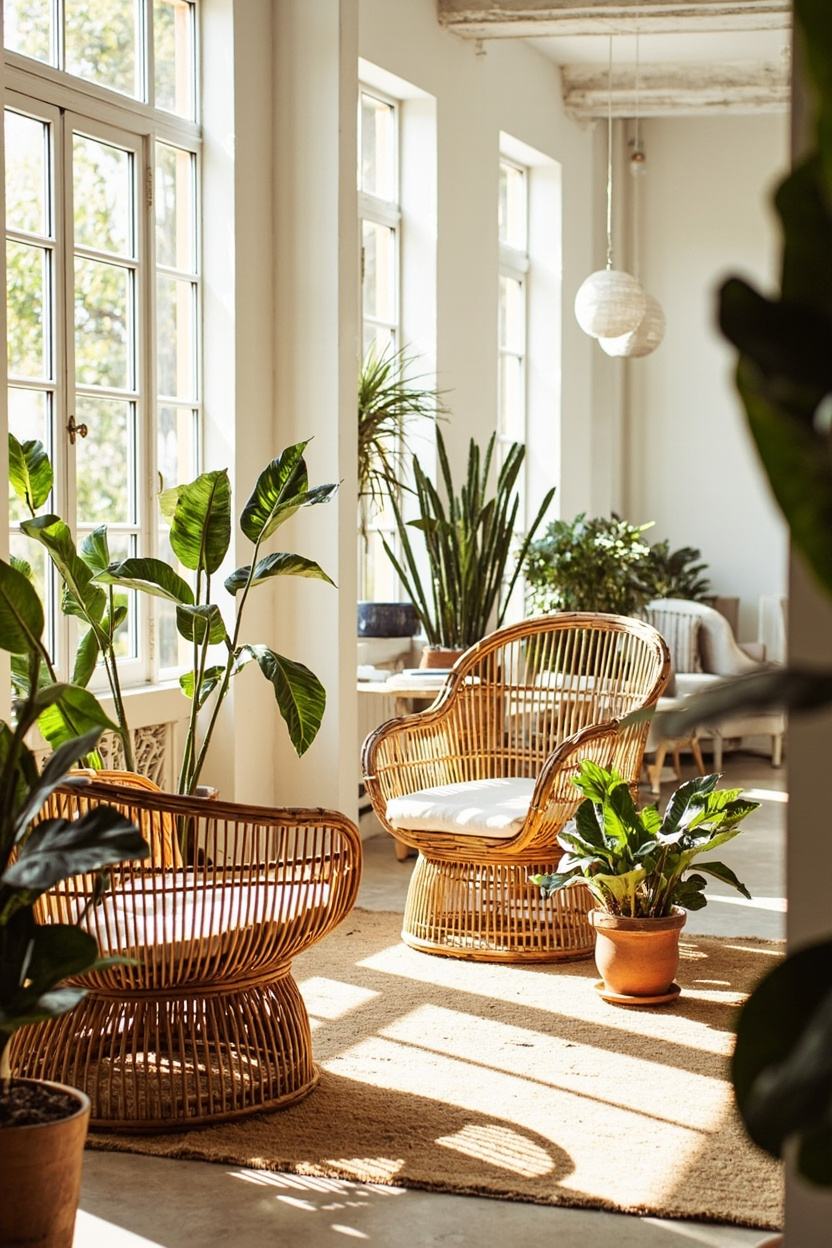
Rattan has matured beyond dusty wicker into a refined rot-tan language that pairs clean silhouettes with tactile weaving, fitting both modern and boho interiors.
Look for streamlined frames, oversized open weaves, and mixed-material pieces where rattan meets matte metal or molded wood for structural contrast and durability.
The material’s natural variation brings organic warmth, while contemporary proportions keep rooms from feeling overly rustic.
Layer rattan with smooth surfaces—polished stone coffee tables, linen upholstery, and satin-finish ceramics—to balance its texture and avoid visual heaviness.
Use pigmented stains or muted charcoals on select pieces to introduce subtle modernity without losing the natural grain. This revival works because rattan’s innate warmth and breathability deliver comfort and sculptural interest in equal measure.
13. Ceramic Moments: Statement Vessels as Centerpieces
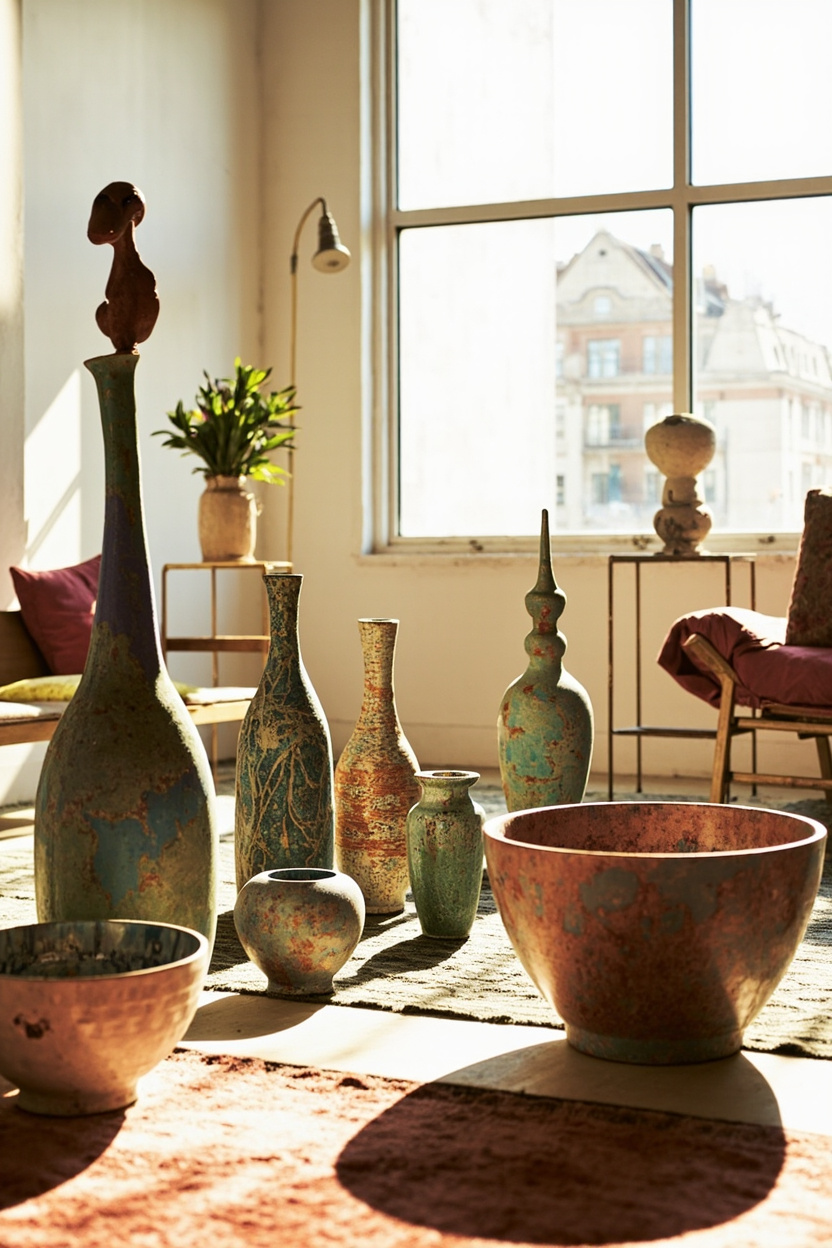
Large, tactile ceramics anchor boho rooms like quiet sculptures that serve function and mood; their hand-thrown imperfections and painterly glazes make each piece a focal point.
Choose oversized vases, low bowls, and sculptural vessels with matte or satin finishes in earthy tones—ochre, terracotta, ash grey—or layered glazes that catch light and show brushwork. These surfaces add subtle sheen and a handcrafted honesty that complements linen and raw wood.
Placement is intentional: a single oversized vase on a low table, a cluster of varying heights on a console, or a ceramic lamp that doubles as art; keep surrounding decor minimal so the vessel reads as a statement.
Combine with dried grasses, sculptural branches, or nothing at all to emphasize shape and texture. Ceramic centers work because they bring tactile artistry and grounded presence to casual, lived-in spaces.
14. Boho Work Nooks: Cozy, Creative Home Offices with Soul
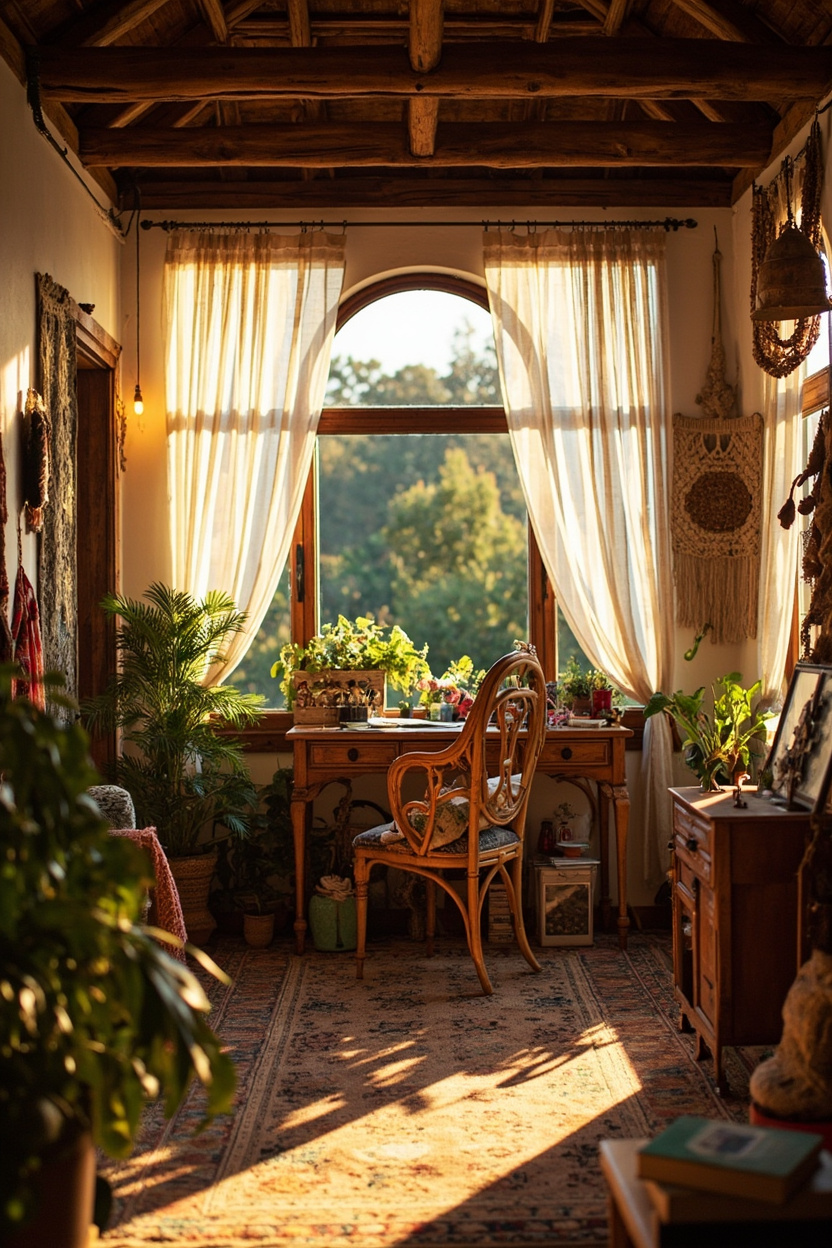
Boho work nooks prioritize comfort and sensory detail so creativity flows without formal stiffness; think small desks with rounded edges, woven chair seats, and layered rugs underfoot to define the zone.
Textures are calming—raw wood desktops, linen pinboards, cork or clay organizers, and fabric-wrapped lamp cords—so the space feels like a curated corner of your home rather than a corporate cell. Add plants for air and softness, and open shelving for tactile objects, books, and ceramics that inspire.
Keep lighting warm and adjustable, with a focused desk lamp plus ambient sources to avoid eye strain and maintain atmosphere; acoustic panels or a soft wall textile can tame noise while adding another tactile surface.
Colorwise, anchor the nook with a neutral base and punctuate it with one or two accent hues pulled from textiles or pottery to keep energy balanced.
This works because a soulful nook blends utility with cozy sensory cues that keep you productive and at ease.
15. Color Drift: Using Benjamin Moore’s 2026 Palette in Boho Schemes
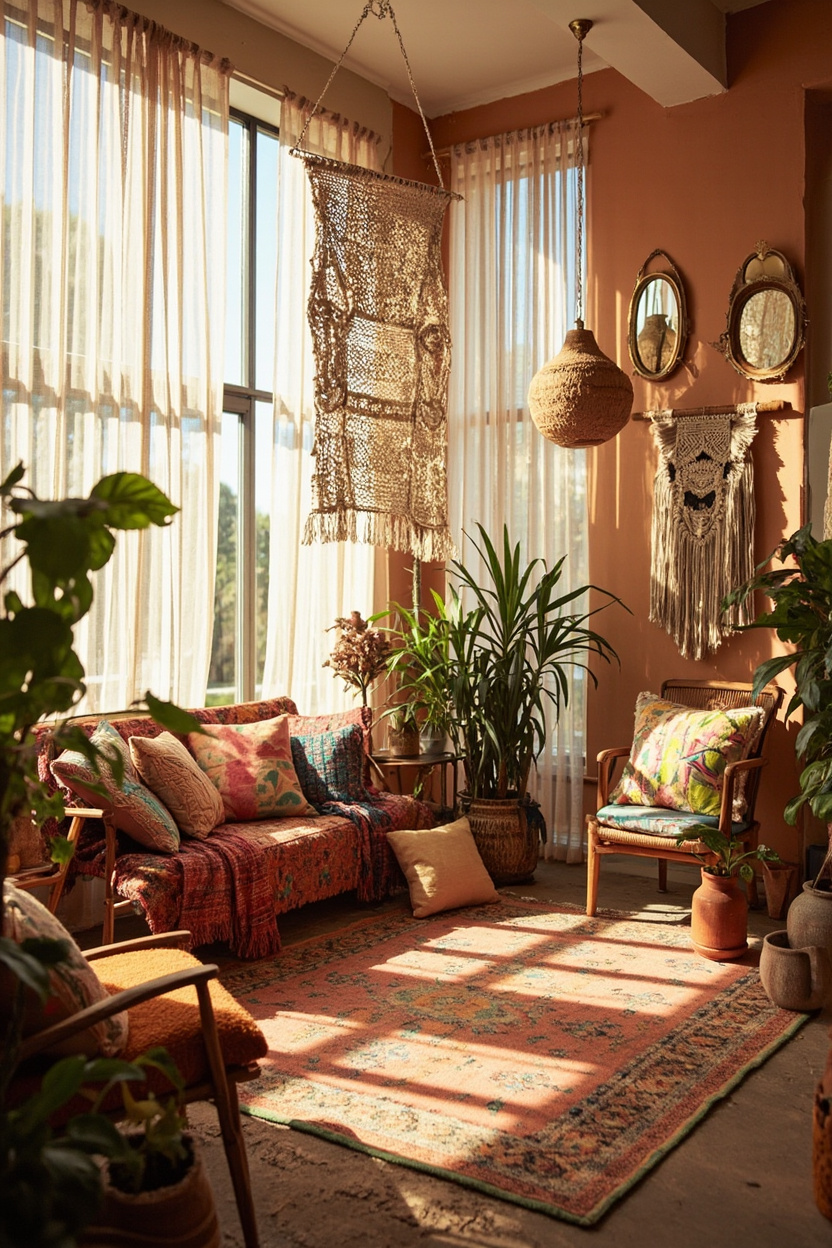
Benjamin Moore’s 2026 palette nudges boho interiors toward softer, earth-inflected hues—muted pinks, warmed greens, and clay-adjacent neutrals—that pair beautifully with natural materials and layered textures.
Use these tones as washes on walls or ceilings to create an enveloping backdrop, then layer with raw wood, rattan, and hand-glazed ceramics to amplify depth and tactility. The result is a calm, contemporary boho that feels curated rather than cluttered.
For balance, combine one dominant wall color with complementary accents in textiles and art, or use the palette to create tonal transitions from room to room that guide movement and mood.
Small lists of pairings work well here:
- Soft pink + warm olive + raw linen.
- Clay beige + muted teal + natural wood.
- Greige + terracotta + matte black accents.
This color drift succeeds because these updated hues harmonize with boho textures, making the style feel fresh and modern without losing its soulful core.
16. Minimal Clutter, Max Mood: Editing Objects for Impactful Boho Vibes
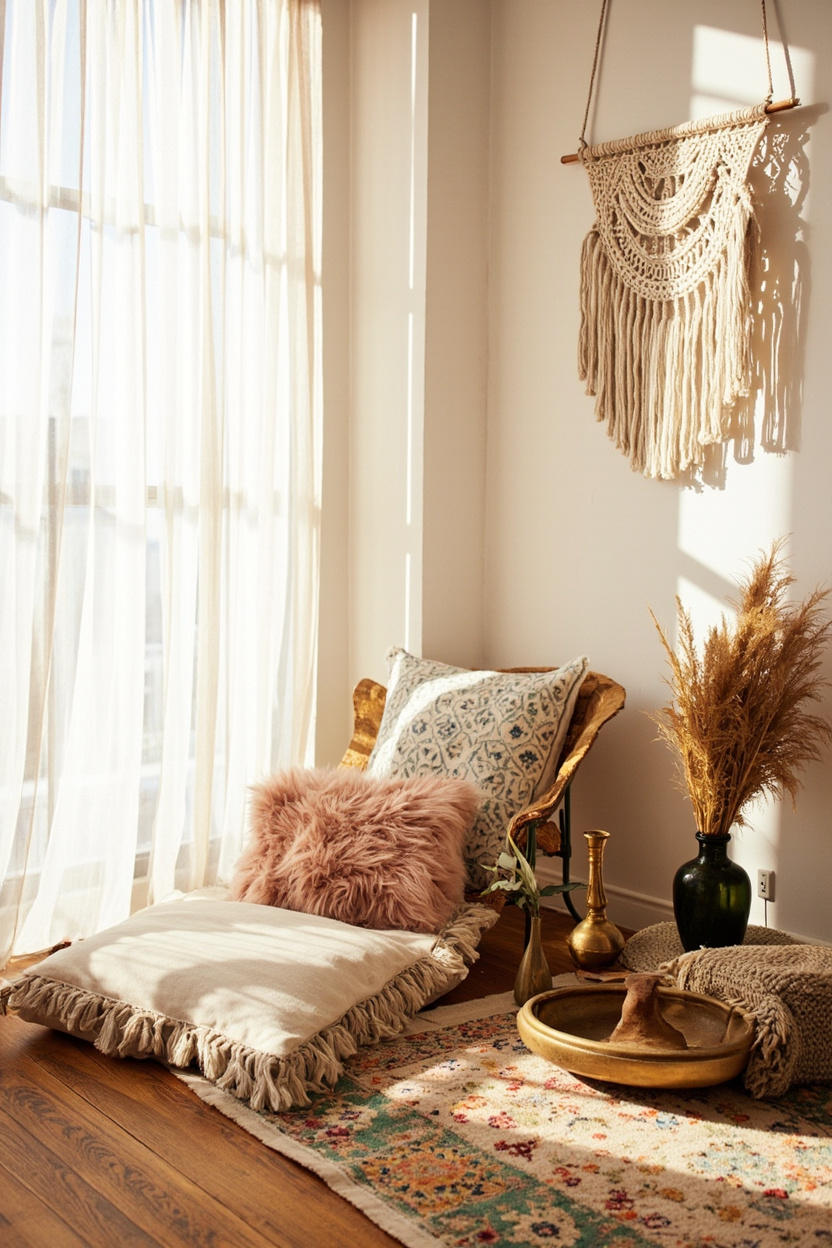
Boho doesn’t have to mean chaos; this edited approach pares the room down to a few soulful pieces so each texture and object reads loud and clear.
Choose one or two large, tactile elements — a handwoven rug, a sculptural clay lamp, or a reclaimed-wood console — and remove competing small decor so the remaining pieces create breathing room and intention.
Smooth linen cushions, matte ceramics, and low-sheen wood finishes play off one another to create a quiet, layered warmth that still feels richly bohemian.
Curate materials with contrast in mind: soft, slubby textiles against hard, aged metal, and a single living plant to add movement and life.
The atmosphere is calm and collected, like a well-edited gallery of personal items where every object earns attention; this makes natural light and negative space part of the design.
Edited Boho works because restraint amplifies texture and storytelling, giving the room a mood without clutter.
17. Outdoor-Indoor Continuity: Creating Seamless Boho Patios and Balconies
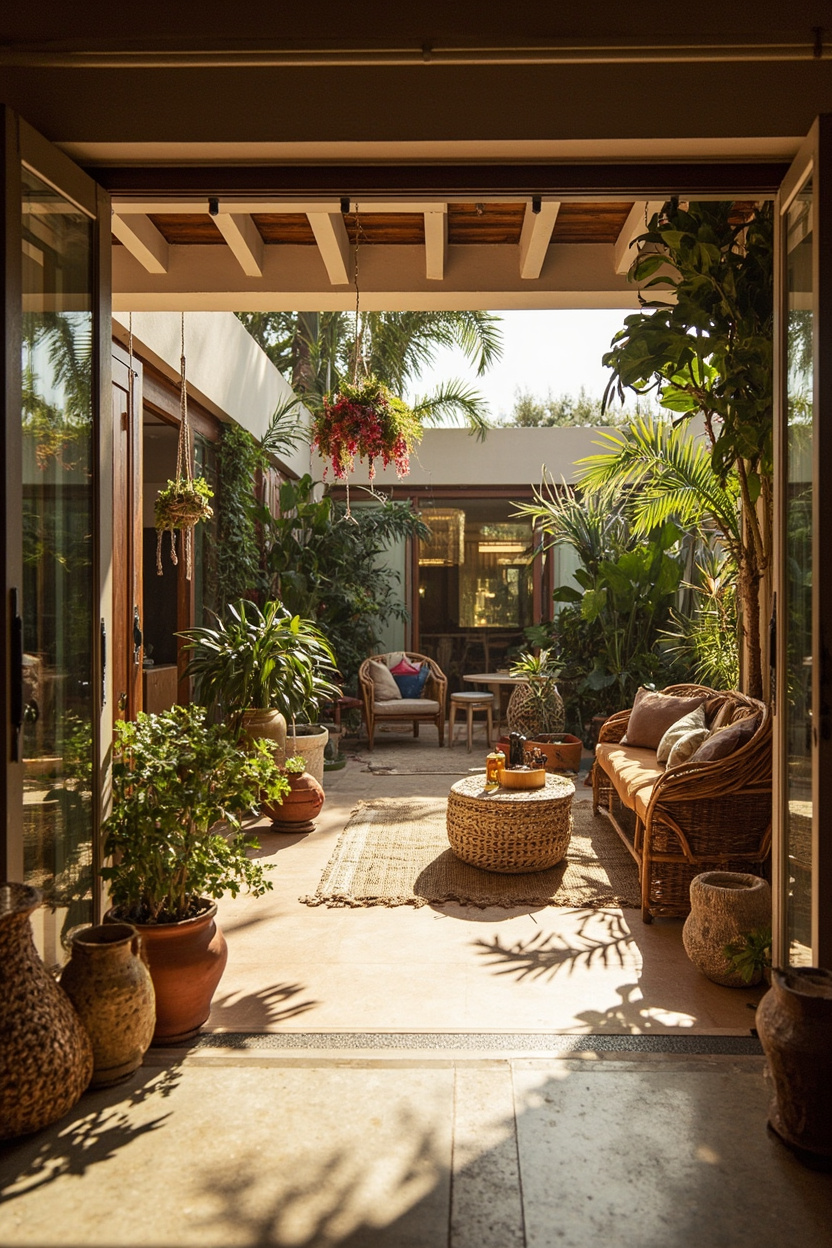
Extend boho sensibility beyond walls by using materials and colors that flow from inside to your outdoor space, such as terracotta pots, woven furniture, and weathered teak that mirror interior pieces.
Anchor the balcony with layered rugs made for outdoor use, soft seat pads, and a low-profile coffee table, then add clay planters and trailing greenery to blur the line between indoors and garden.
Textures—rattan, raw linen, hammered metal—should echo interior finishes so the eye travels effortlessly from one zone to the next.
Think in terms of micro-rooms: a shaded reading nook, a dining spot, or a meditation corner, each with lighting that works day and night—paper lanterns, waterproof string lights, and solar stake lamps.
For color and plant pairings, keep tones earthy and cohesive to maintain continuity across thresholds.
- Essential trio: terracotta, warm wood, and deep green foliage.
- Lighting: layered—task, ambient, and accent.
- Flooring tie-in: repeat an indoor rug texture outdoors.
This continuity creates a relaxed, cohesive boho lifestyle where inside and outside feel like parts of the same sanctuary.
Final Verdict
Boho home decor is flexible, warm, and easy to personalize, so make choices that reflect your life and comfort. Have fun layering textures, colors, and finds that tell your story—your home will feel inviting and lived-in in no time.
Frequently Asked Questions
Balance scale and texture: pair clean-lined furniture with organic textiles like linen and clay-toned rugs to create cohesion, a trend seen in updated bohemian interiors for 2025 that favor smoother finishes and thoughtful material blends.
Swap out throw pillows, add a woven rug, incorporate houseplants, and layer lighting with a mix of floor and table lamps to shift mood quickly and affordably while keeping an eclectic boho look.
Choose a neutral base of warm whites, soft clay, and muted greens, then add one accent color like terracotta or deep teal for depth, reflecting the earthy, organic palette trends designers recommend for 2026.
Opt for washable slipcovers, low-pile rugs, and durable natural materials like leather and tightly woven cotton, and place a few designated pet beds that match the room’s boho aesthetic to protect main pieces.