


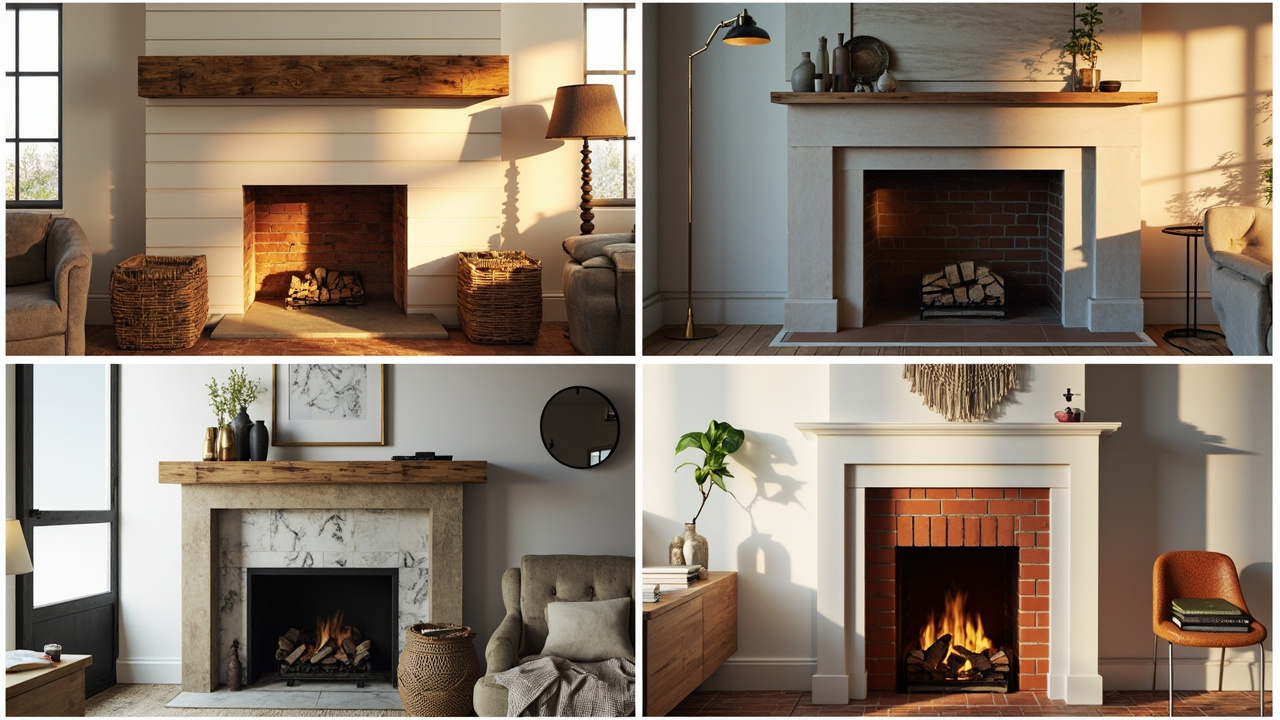
Warm, well-designed surrounds anchor a room and make a fireplace feel intentional rather than an afterthought. These DIY-friendly ideas focus on texture and proportion, so you can transform the hearth without a full remodel.
Prioritize materials and scale before you start: a heavy reclaimed beam needs solid anchoring, while a lighter faux option can be screwed to the drywall. I’ll highlight practical build tips and finish ideas that suit both budget and aesthetic goals.
- 1. Rustic Reclaimed Beam Mantel Ideas
- 2. Modern Floating Mantel Surrounds
- 3. Timber-Look Faux Beam Options
- 4. Stone Veneer Fireplace Facades
- 5. Textured Plaster Surround Techniques
- 6. Mixed-Material Mantel Combinations
- 7. Minimalist Concrete Mantel Designs
- 8. Shiplap and Board Surround Concepts
- 9. Integrated Shelving Mantel Solutions
- 11. Heat-Resistant Tile Patterns
- 12. Natural Wood Grain Finishes
- 13. Painted Mantel Color Strategies
- 14. LED-Integrated Mantel Ideas
- 15. Eco-friendly Reclaimed Materials
- 16. Custom Carpenter-Built Surrounds
- Final Thoughts
- FAQ
1. Rustic Reclaimed Beam Mantel Ideas
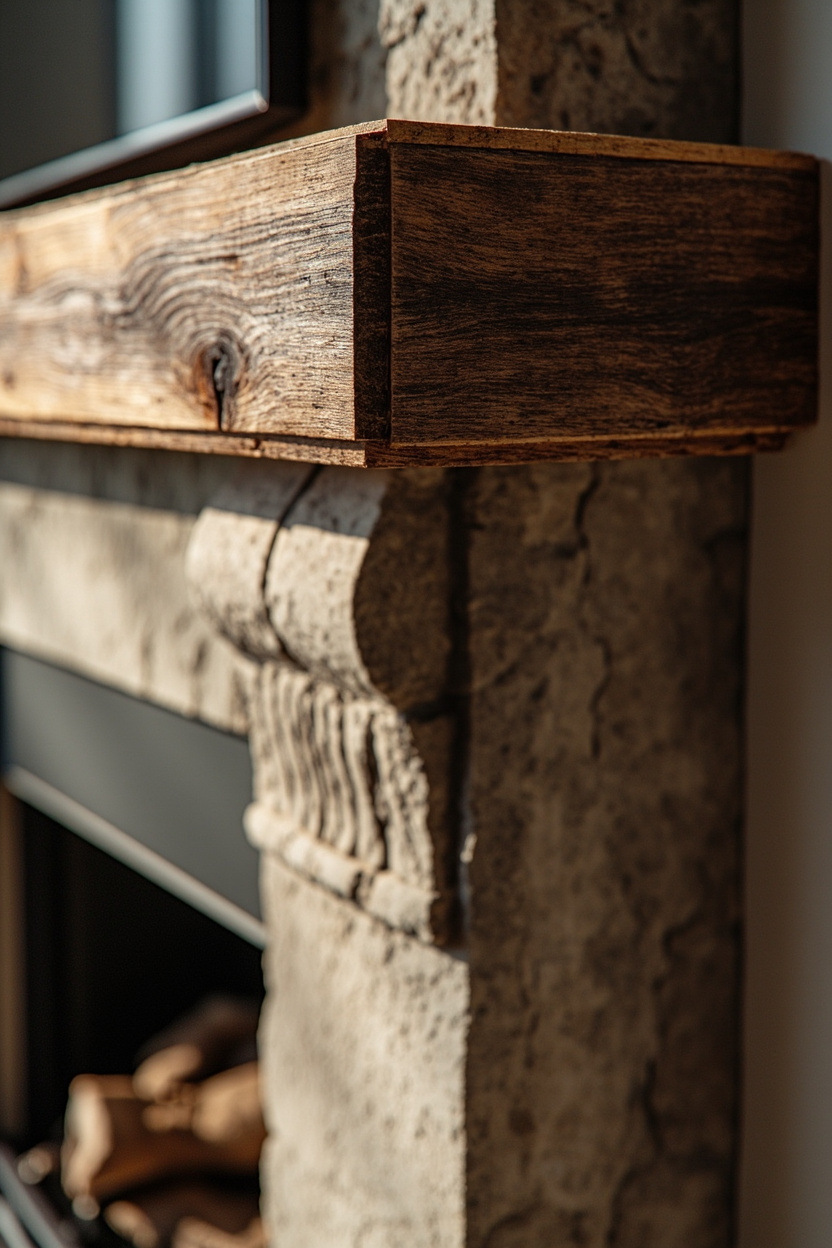
A reclaimed beam mantel brings weathered character and deep texture, instantly creating a focal point. Choose oak or pine beams with visible grain and natural distressing; leave cuts and knots intact for authenticity and seal with a matte oil to prevent splintering.
Install with hidden steel brackets spaced into wall studs to support weight safely, then style sparingly one statement artwork or a cluster of seasonal objects to keep the look balanced. T
This approach pairs beautifully with farmhouse interiors and works as a warm counterpoint in minimalist rooms; see related farmhouse interior tips for styling ideas.
2. Modern Floating Mantel Surrounds
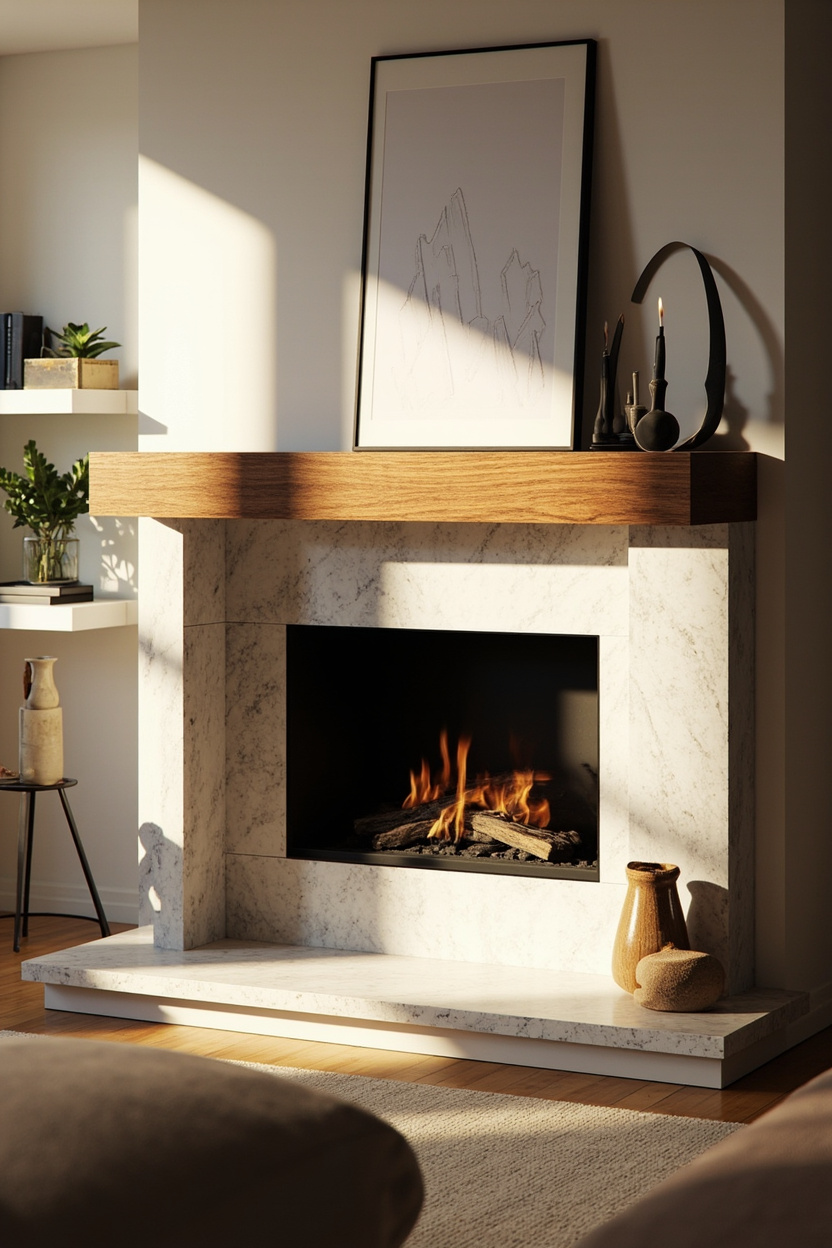
Floating mantels give a sleek, contemporary silhouette while keeping the hearth visually light. Build a hollow box mantel from plywood and attach it with a welded steel cleat anchored to studs; wrap in veneer or paint for a clean finish that reads custom-made.
Use a narrow depth to maintain sightlines and avoid overpowering the fireplace opening. Pair with simple tile or plaster surrounds to emphasize the floating effect and maintain a modern balance with furniture and lighting.
3. Timber-Look Faux Beam Options
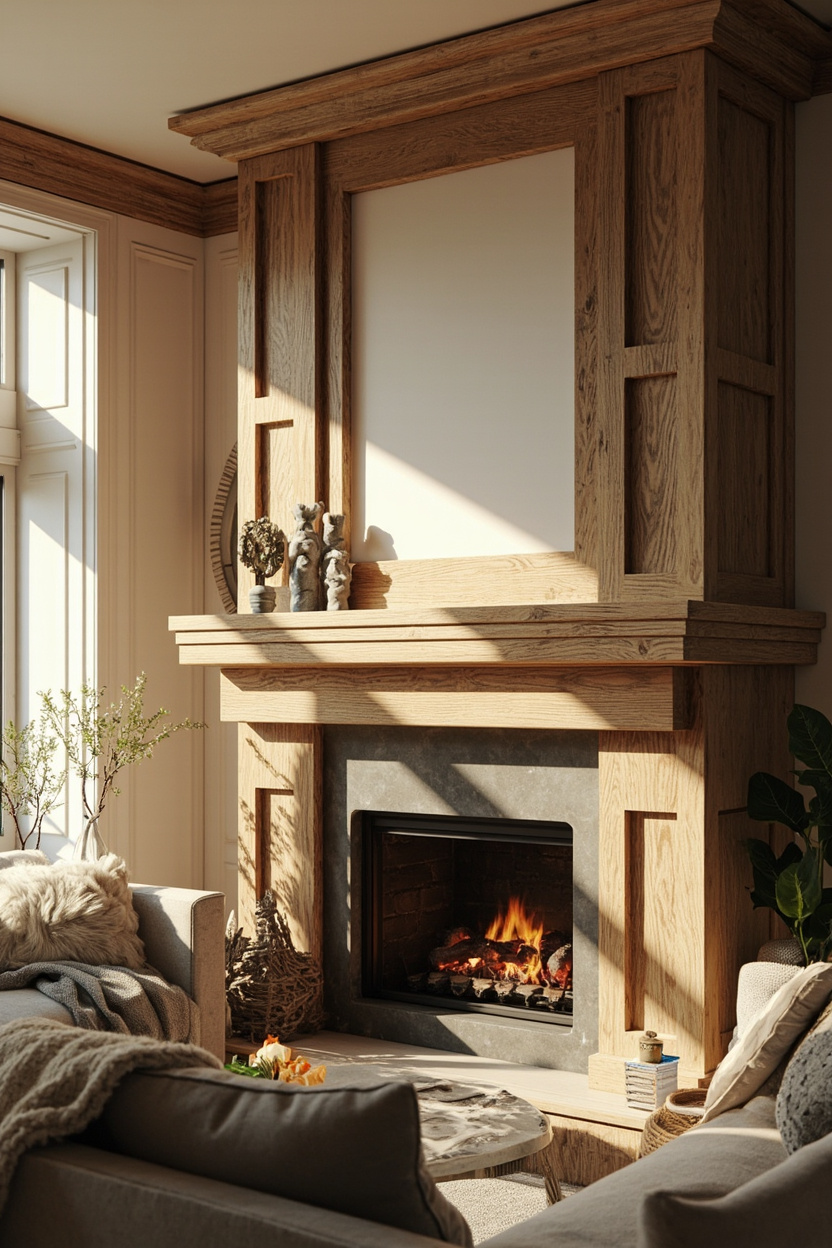
Faux timber beams are budget-friendly and easier to install, delivering the look of wood without the weight. Lightweight polyurethane or hollow wood veneer beams can be glued and screwed into place, then stained or painted to match existing trim for a cohesive feel.
Because they’re less structural, faux beams allow more placement flexibility over smaller gas fireplaces or above TV mounts.
Choose a textured finish that mimics grain and distress to read convincingly from across the room, and pair with natural materials for a lived-in, layered aesthetic.
4. Stone Veneer Fireplace Facades
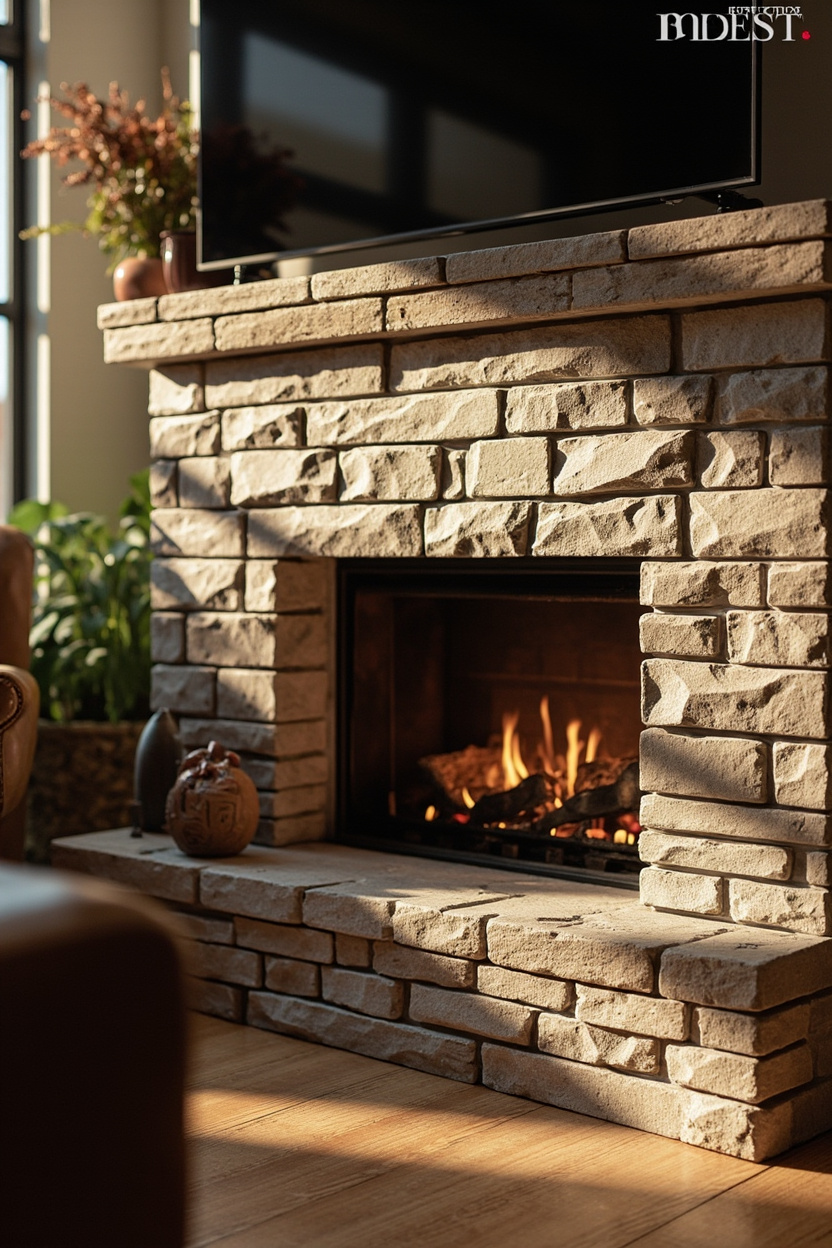
Stone veneer offers the authentic look of stacked stone or ledgestone without the structural weight or cost of full masonry. Lightweight panels can be applied over existing surrounds to create a dramatic focal point that reads as natural and timeless.
Choose warm, varied tones to mimic aged stone and seal porous finishes to protect against soot and smoke
. For installation tips and style inspiration, consider rustic pairings from coastal and farmhouse palettes that complement many interiors.
5. Textured Plaster Surround Techniques
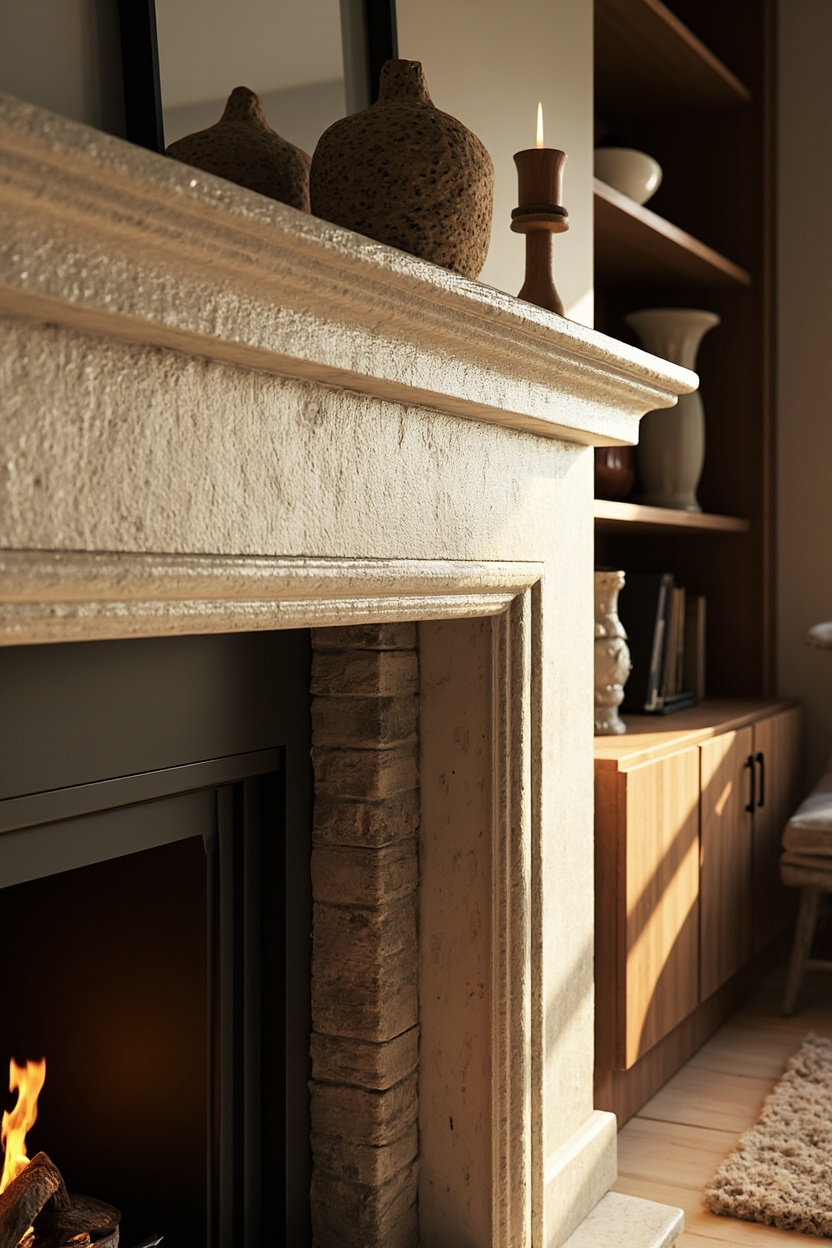
Textured plaster transforms a flat wall into a tactile canvas, think Venetian plaster, lime wash, or a hand-troweled finish for subtle depth. These finishes absorb and reflect light differently, softening the room’s lines and adding an artisan-crafted feel that stands up to modern or traditional schemes.
Work in thin layers, experiment on sample boards for the desired texture, and seal with a matte varnish for longevity. Integrating plaster with simple shelving or a slim mantel keeps the composition contemporary and clean; see minimalist approaches for balance.
6. Mixed-Material Mantel Combinations
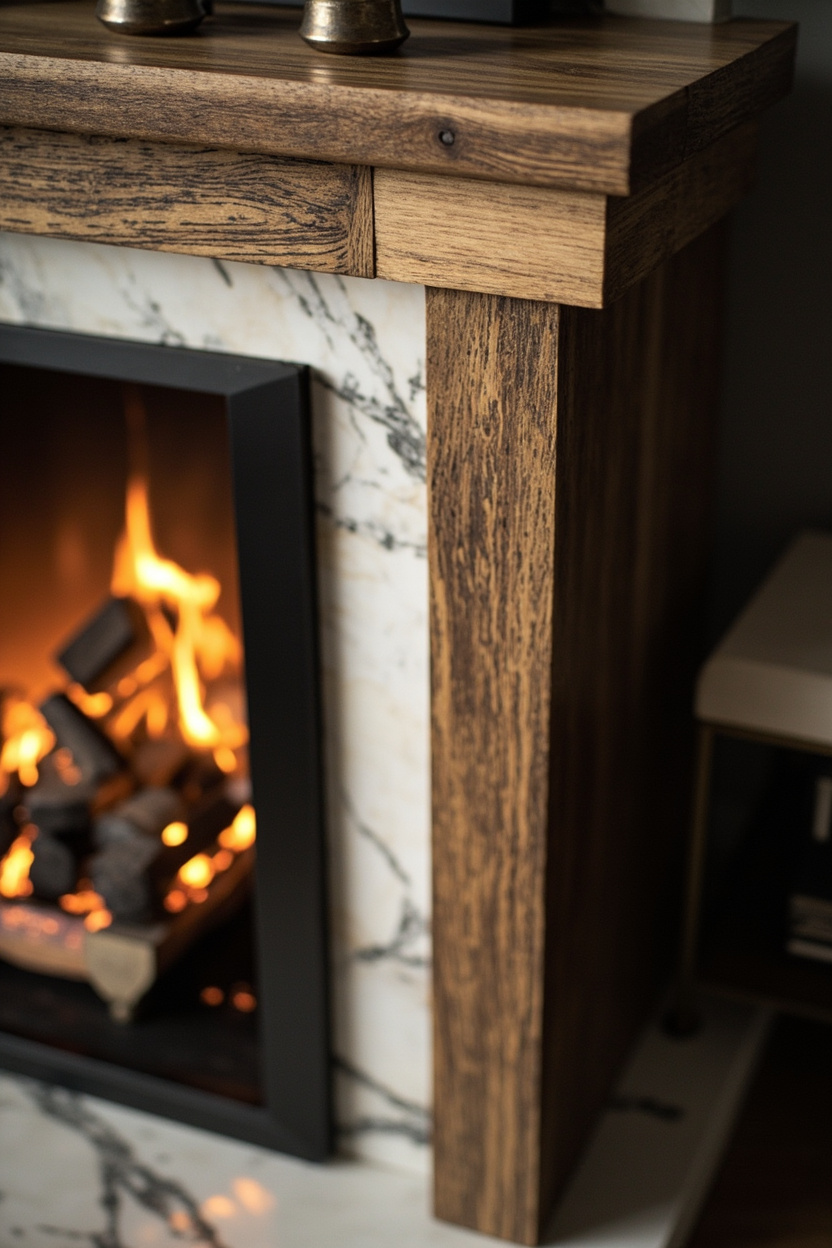
Combining materials, such as a reclaimed wood mantel over a stone or tile surround, or a metal banding paired with smooth plaster, creates contrast and visual hierarchy. Layering tactile elements like a live-edge shelf above a sleek, plastered field gives your fireplace a curated, designer look without extensive renovation.
Keep one dominant material to avoid clutter and repeat a secondary texture elsewhere in the room to unify the scheme.
7. Minimalist Concrete Mantel Designs
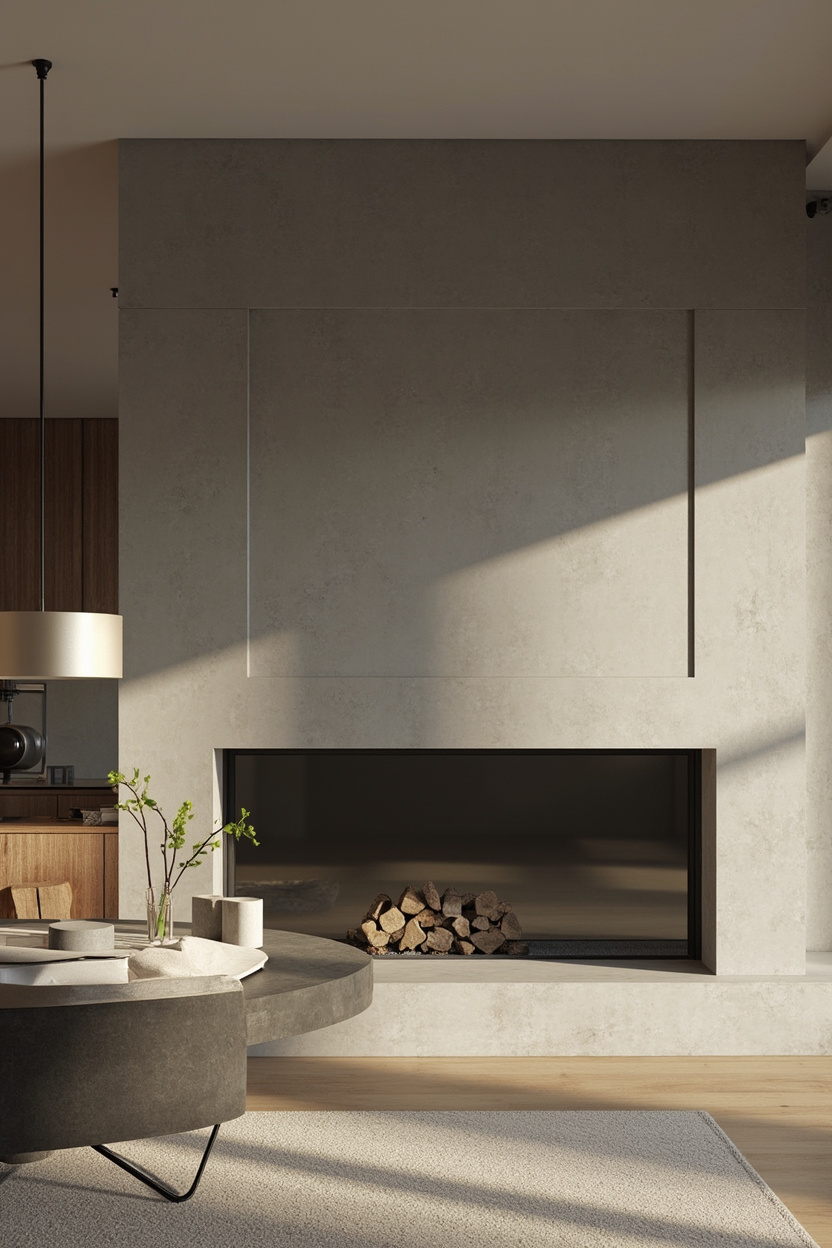
Concrete mantels deliver a pared-back, modern look that reads as both sculptural and utilitarian. Use a smooth, honed finish for a refined appearance or expose subtle aggregates for texture that feels lived-in and timeless.
Keep installations slim and low-profile to maintain a minimalist silhouette; pair the mantel with neutral walls and uncluttered decor to let the material speak for itself.
Concrete can be cast in place or purchased as a lightweight veneer, making it adaptable for DIY budgets and surface limitations.
8. Shiplap and Board Surround Concepts
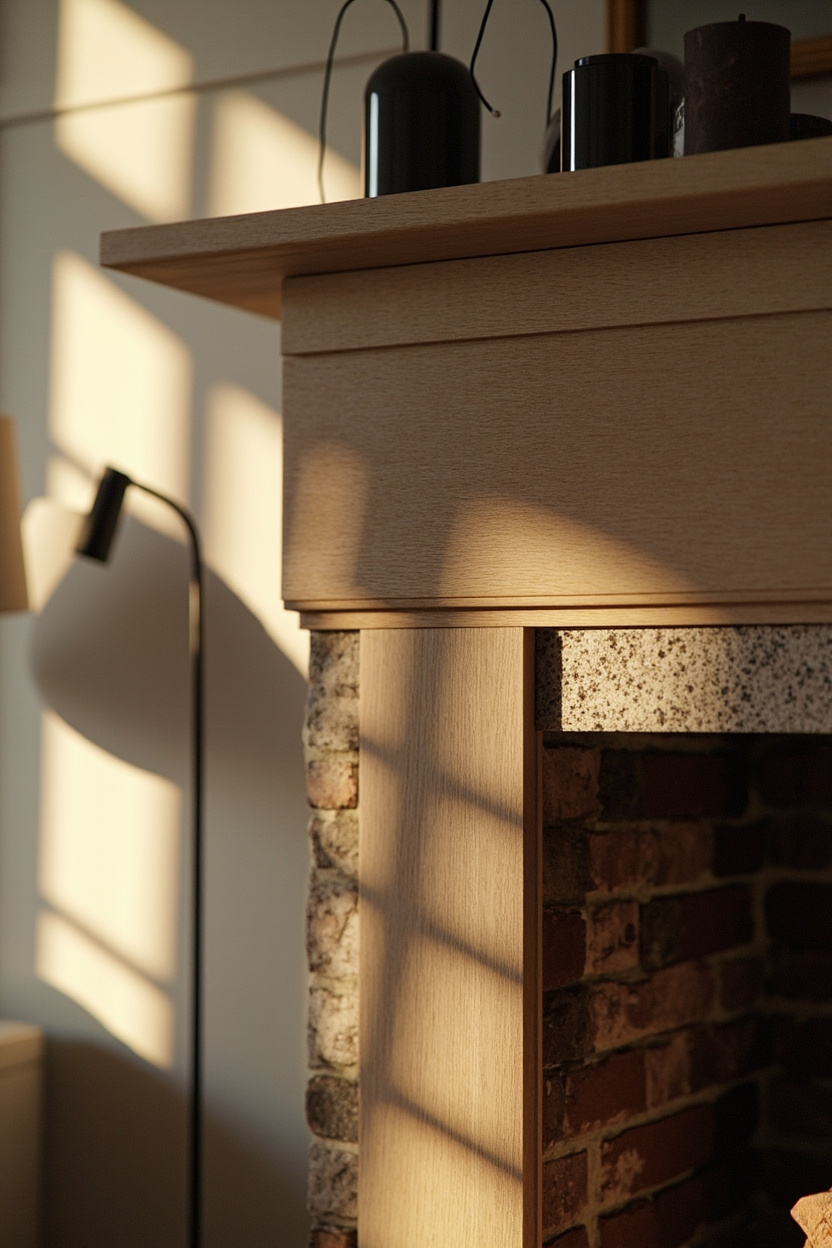
Shiplap creates a classic, cozy backdrop that instantly adds linear rhythm and a tactile farmhouse warmth to the fireplace wall. Install horizontal boards for a traditional look or vertical tongue-and-groove for a modern farmhouse twist.
Painted white brightens the room and highlights the mantel, while a stained finish emphasizes wood grain and rustic character.
Use narrow trim to finish edges cleanly and consider pairing with complementary farmhouse elements like woven baskets or a simple mirror.
9. Integrated Shelving Mantel Solutions
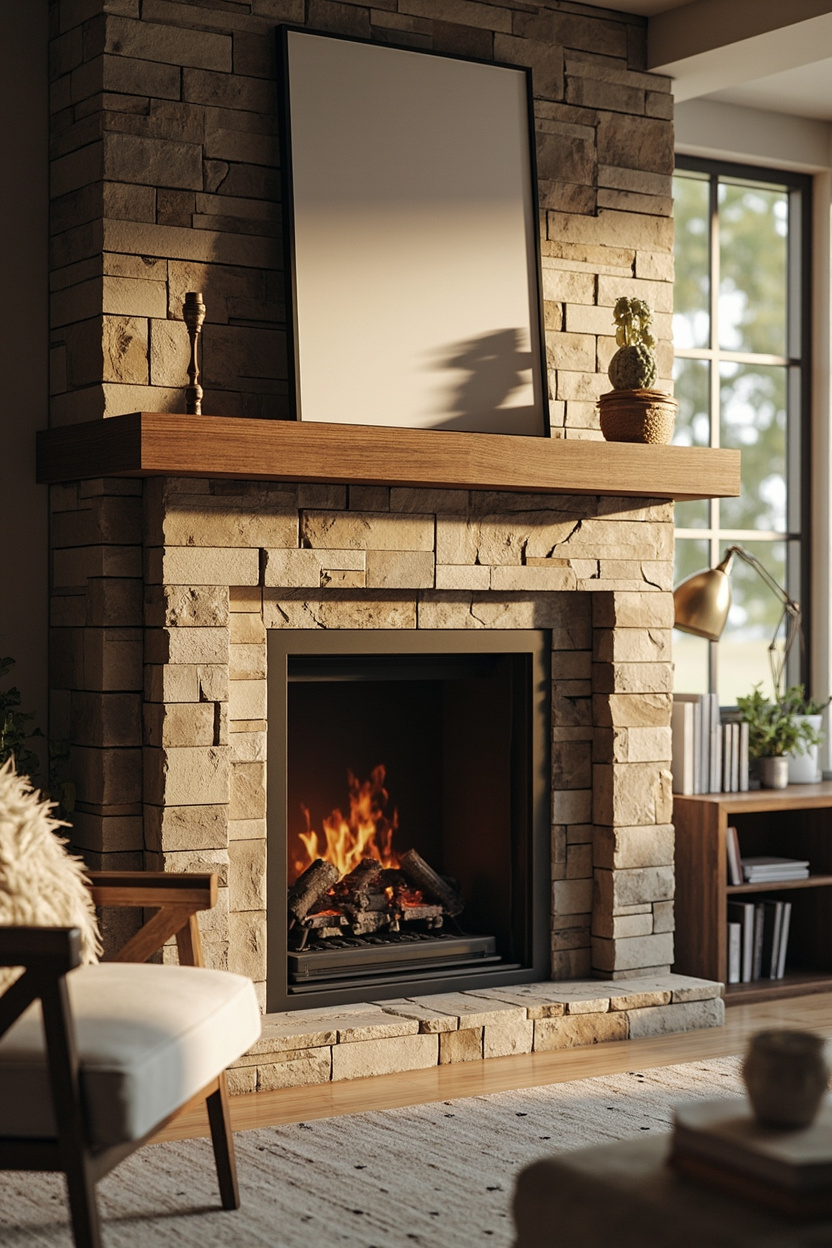
Built-in shelving flanking the fireplace converts the surround into a functional focal point that balances display and storage. Design open shelves of varying heights to accommodate art, books, and paired decor while keeping the mantel uncluttered.
Anchor the composition by aligning shelf materials and finishes with the mantel, matching wood tones, or contrasting with painted cabinetry for visual depth.
Incorporate concealed lighting or backboards to highlight key objects and maintain a polished, editorial feel.
11. Heat-Resistant Tile Patterns
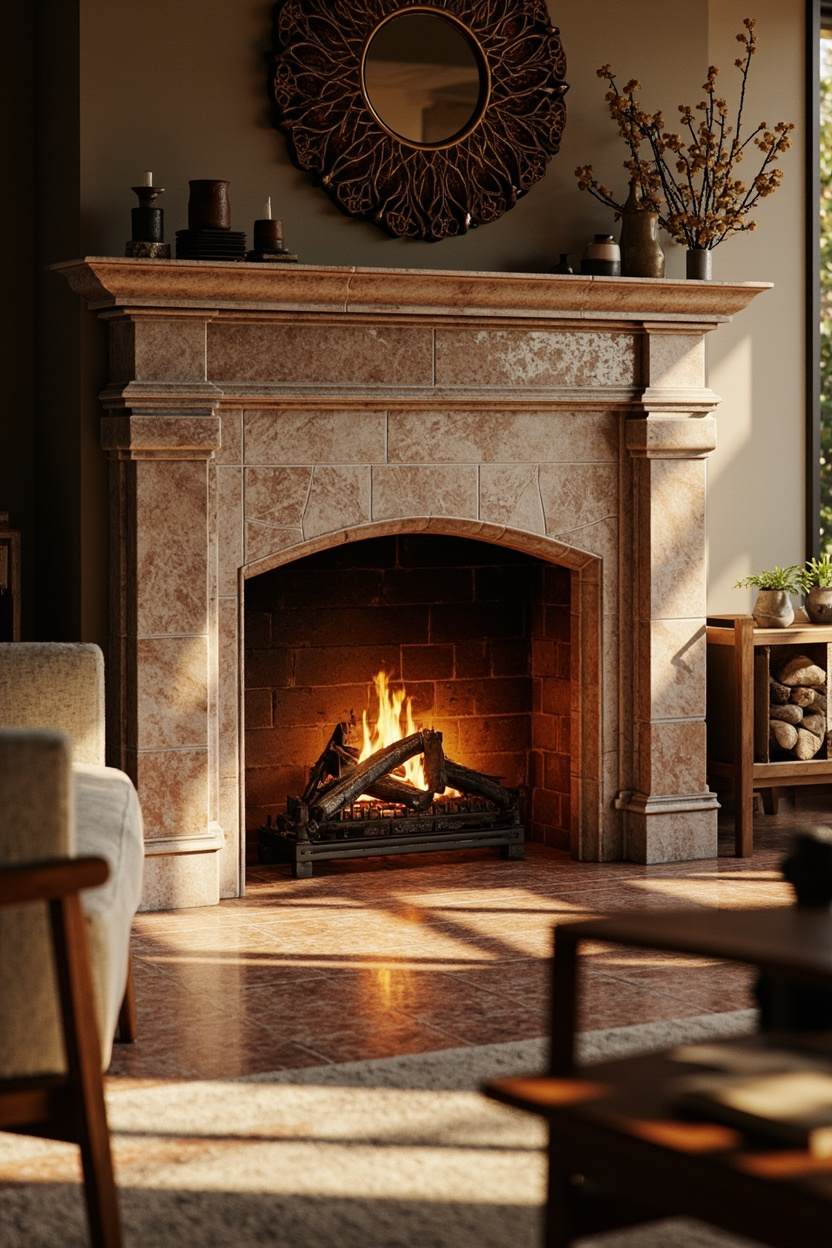
Choose tiles rated for hearth use, porcelain, slate, or quarry tile to ensure durability and safety. Lay tiles in a graphic pattern like herringbone or stacked bond to add architectural interest without bulky construction, and keep grout narrow for a cleaner, modern look.
For a cohesive room update, pull a tile color into nearby textiles or artwork to tie the fireplace into the scheme. For inspiration on mixing texture and pattern without overwhelming a space, see ideas in Minimalist Home Decor for balancing restraint and detail.
12. Natural Wood Grain Finishes
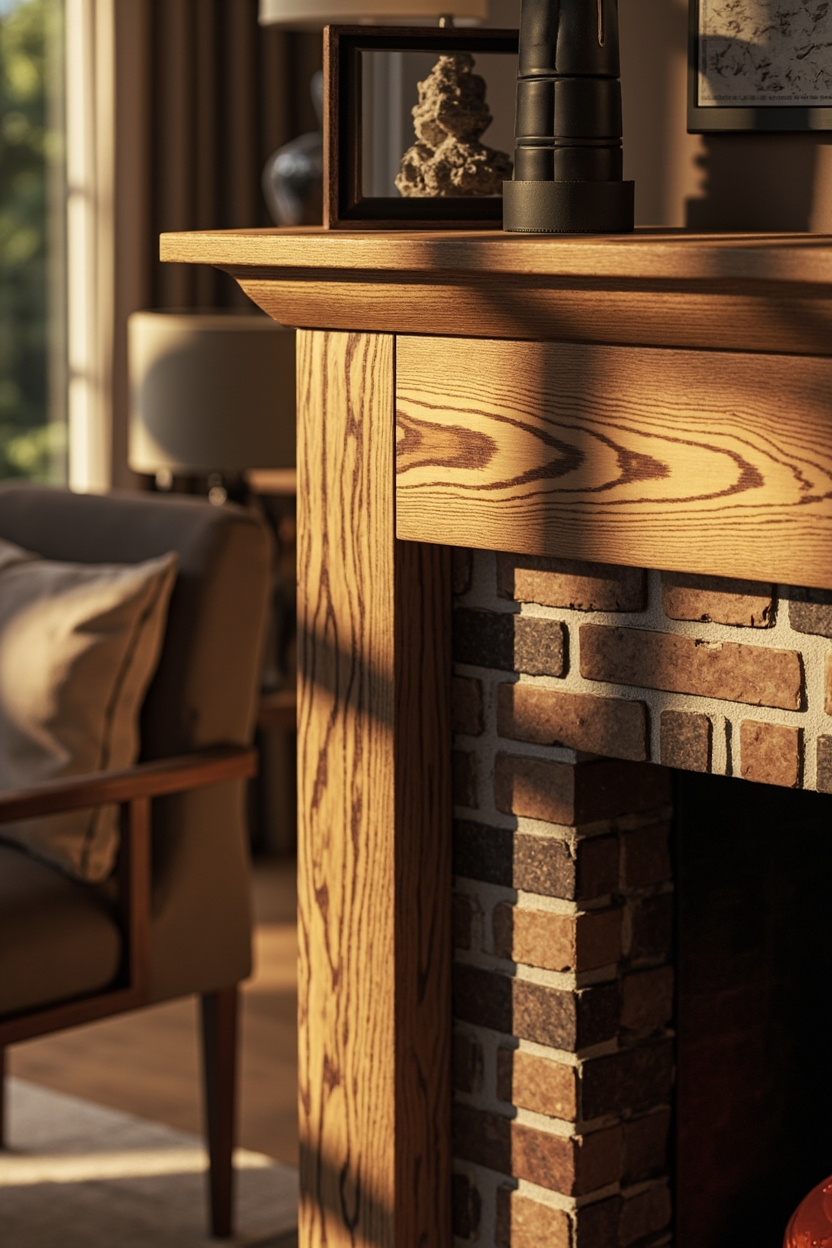
Salvaged or reclaimed wood mantels add authentic warmth and a lived-in texture that modern homeowners continue to favor; seal with a heat-resistant clear coat to preserve the grain and protect against smoke.
A simple floating beam mantel made from a single slab or built-up boards provides a strong focal point while keeping installation straightforward.
Use the wood’s undertones to guide surrounding finishes—warm oak pairs well with cream walls, while richer walnut grounds deeper palettes.
For complementary room layouts that let a natural mantel shine, explore farmhouse-inspired layouts at Farmhouse Interior.
13. Painted Mantel Color Strategies
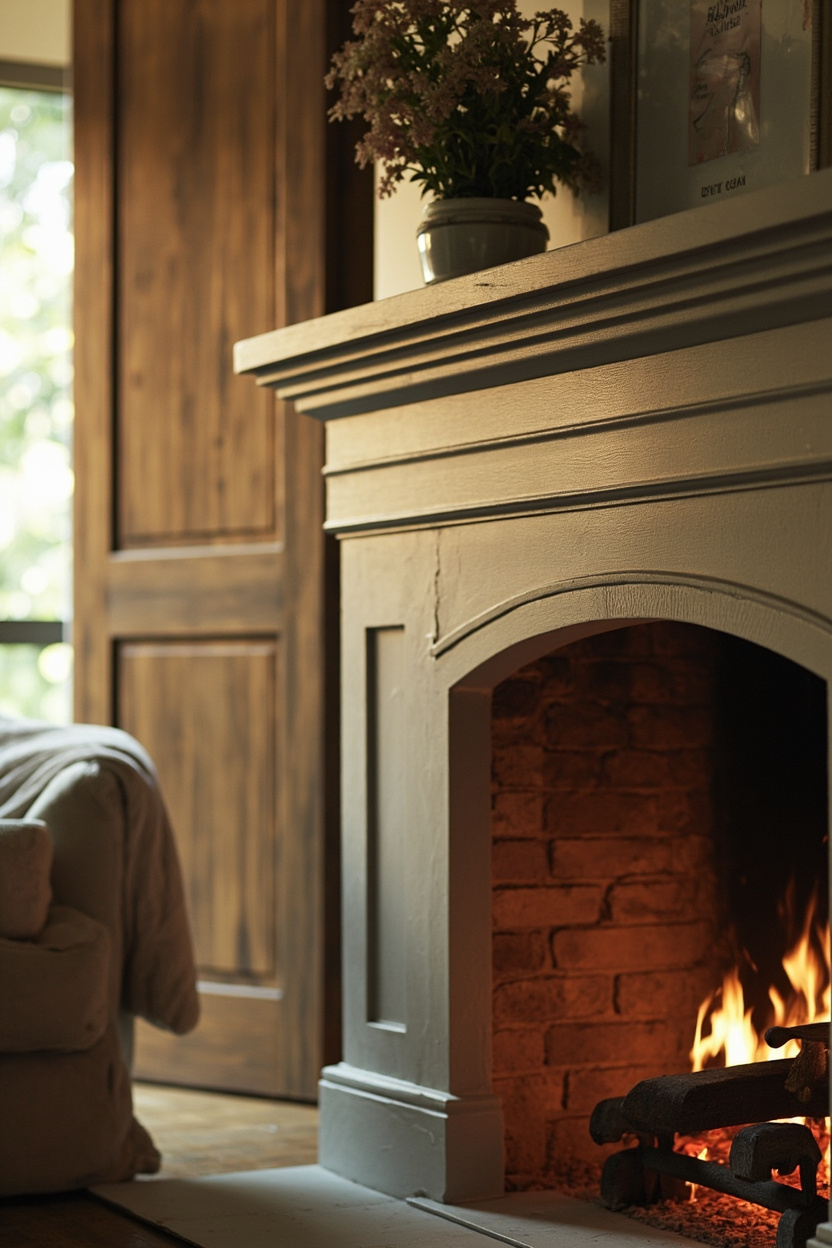
Painting a mantel is the quickest way to change a fireplace’s personality: go tonal with the wall for a seamless, modern look or choose a contrasting bold hue to make the mantel the room’s statement.
High-heat paint specifically formulated for fireplaces ensures longevity and avoids peeling or discoloration.
Consider balancing a painted mantel with softer textures, such as linen drapery or woven rugs, to prevent the color from feeling flat or aggressive.
When in doubt, test samples on a small area and view them at different times of day to confirm the chosen tone reads the way you intend.
14. LED-Integrated Mantel Ideas
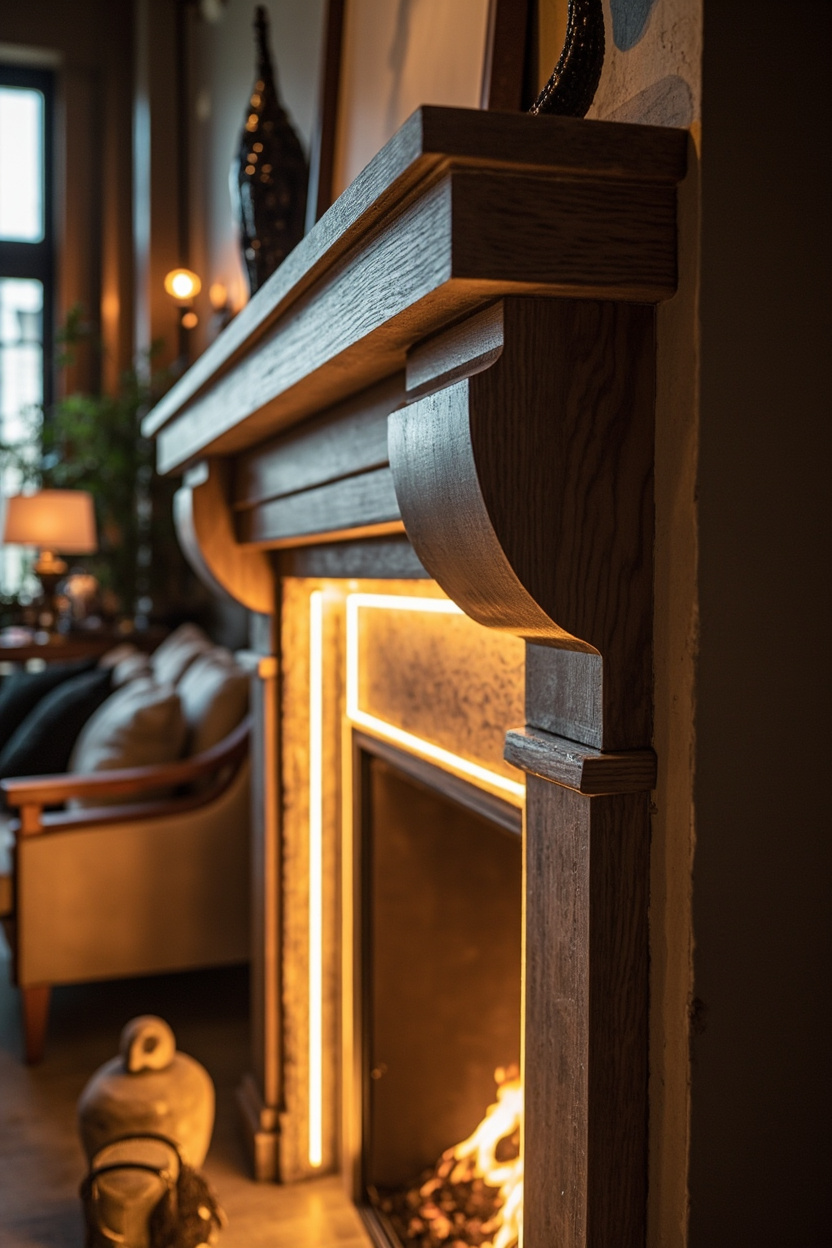
Installing LED strips behind a floating mantel or within a recessed shelf creates layered ambient light that highlights textures and architectural details without overpowering the room. Choose warm-color LEDs and a dimmer to coordinate glow with fireside warmth and evening moods.
Integrate thin, concealed wiring channels when building the mantel so the lights look seamless; battery-powered or plug-in options work for renters.
For a modern-meets-traditional effect, pair the LEDs with a reclaimed beam or painted board mantel to balance tech with tactile materials.
15. Eco-friendly Reclaimed Materials
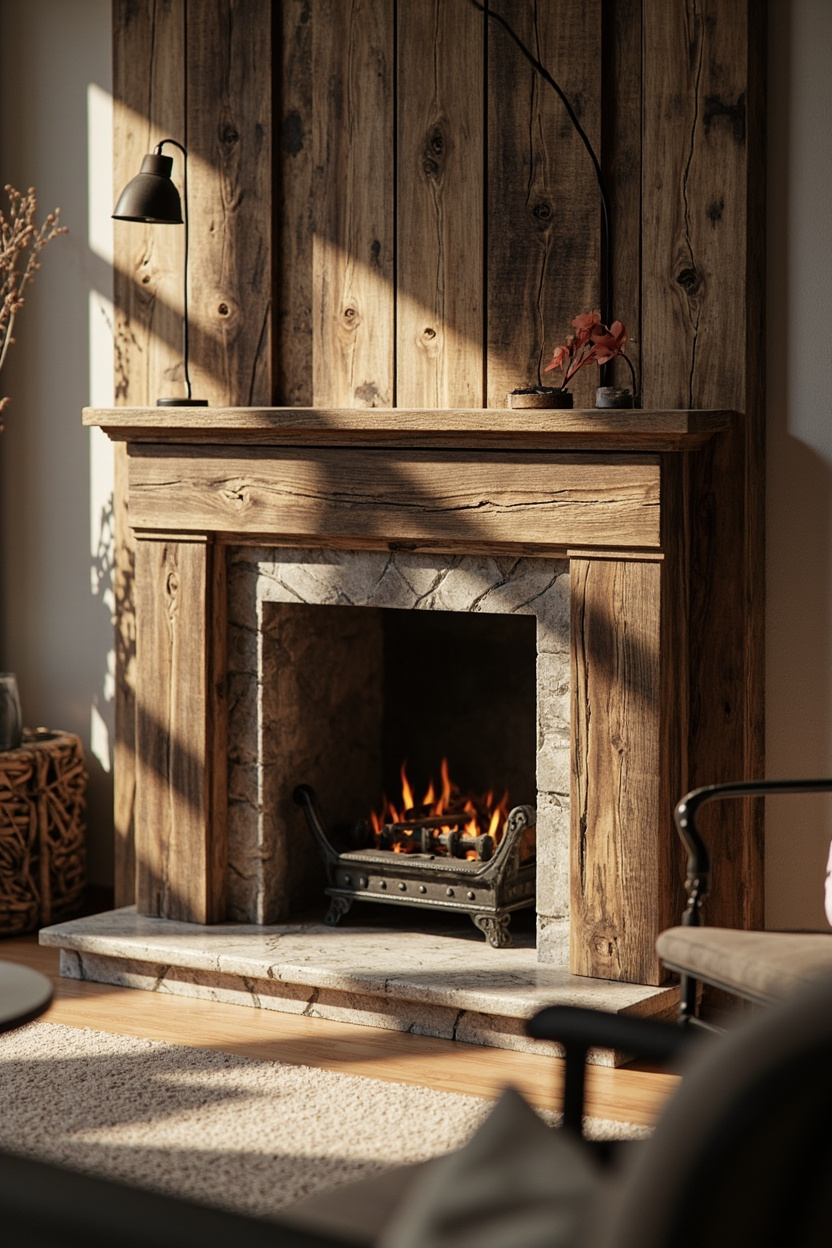
Using reclaimed wood, salvaged brick, or repurposed stone gives your surroundings authenticity and a dramatically lower environmental footprint than new materials.
Each piece brings unique patina and history, and small imperfections add character that factory-finished materials can’t replicate.
Prep reclaimed pieces carefully, clean, de-nail, and stabilize before installation to ensure safety and longevity. If you want a cohesive aesthetic, combine reclaimed elements with a neutral mortar or painted backdrop.
16. Custom Carpenter-Built Surrounds
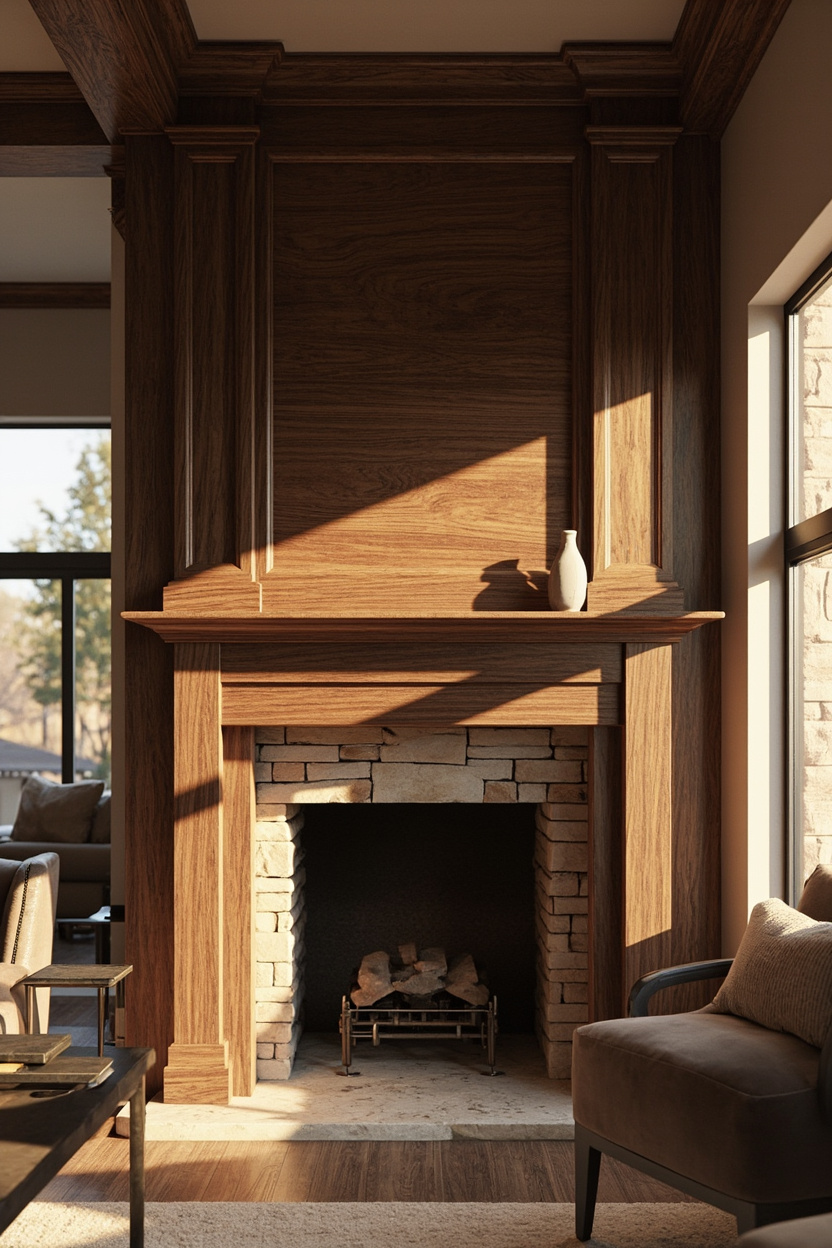
A carpenter-built surround lets you tailor scale, profile, and storage to the room, from slim modern frames to layered traditional mantels. Custom joinery ensures crisp lines and durability, and you can incorporate niches, corbels, or integrated shelving for display and function.
Work from a simple scaled drawing and select materials early to control budget; painted MDF or poplar delivers refined profiles affordably, while hardwoods like oak or walnut add lasting warmth.
Final Thoughts
A thoughtful surround transforms a fireplace from functional to focal—LED accents, reclaimed materials, or a custom carpentry piece each offer distinct character and lasting impact. Prioritize safety, proportion, and finish choices that tie into the room’s style to ensure the new surround enhances both mood and value.
FAQ
A slim, floating mantel or a minimal built-in surround complements modern inserts by keeping sightlines clean; use heat-resistant materials and maintain manufacturer clearance requirements.
Yes, when proper clearances are maintained, and the wood is treated or sealed, confirm fireplace specifications and consider a non-combustible hearth extension or trim if needed.
If you use plug-in LED strips and hide cords in a routed channel, it’s an easy DIY. Hardwiring requires an electrician but gives a seamless finish and is recommended for permanent installations.
Paint creates a crisp, cohesive look and can brighten a room; stain highlights grain and adds warmth. Choose based on the room’s palette and whether you want the surround to recede or become a focal point.