


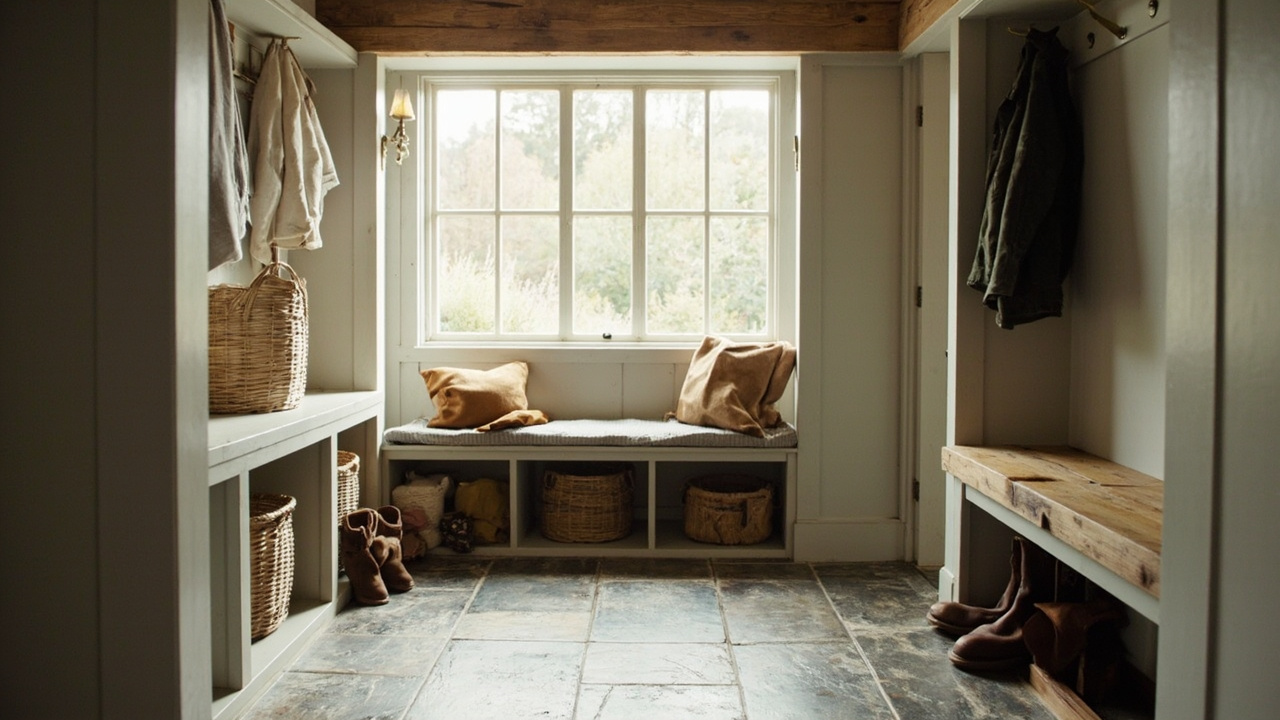
A farmhouse mudroom should act like a buffer zone: stylish enough to feel intentional, but rugged and organized enough to stop dirt, wet coats, and muddy boots at the threshold.
Think durable surfaces, clear sightlines to avoid clutter buildup, and a clear place for everything so habits form naturally.
The aesthetic mixes warm wood, woven textures, and practical metal hardware—handled with decisions that favor maintenance and real life over Pinterest staging.
Design these rooms around how your household actually moves. That means a durable floor with defined zones for shoes, a vertical surface for hanging outerwear, and storage sized to your family’s gear, no one-size-fits-all pieces.
Below are 13 field-tested farmhouse mudroom ideas that balance charm with grit and include specific choices on materials, scale, and placement so the rest of the house stays clean.
1. Layered Textures
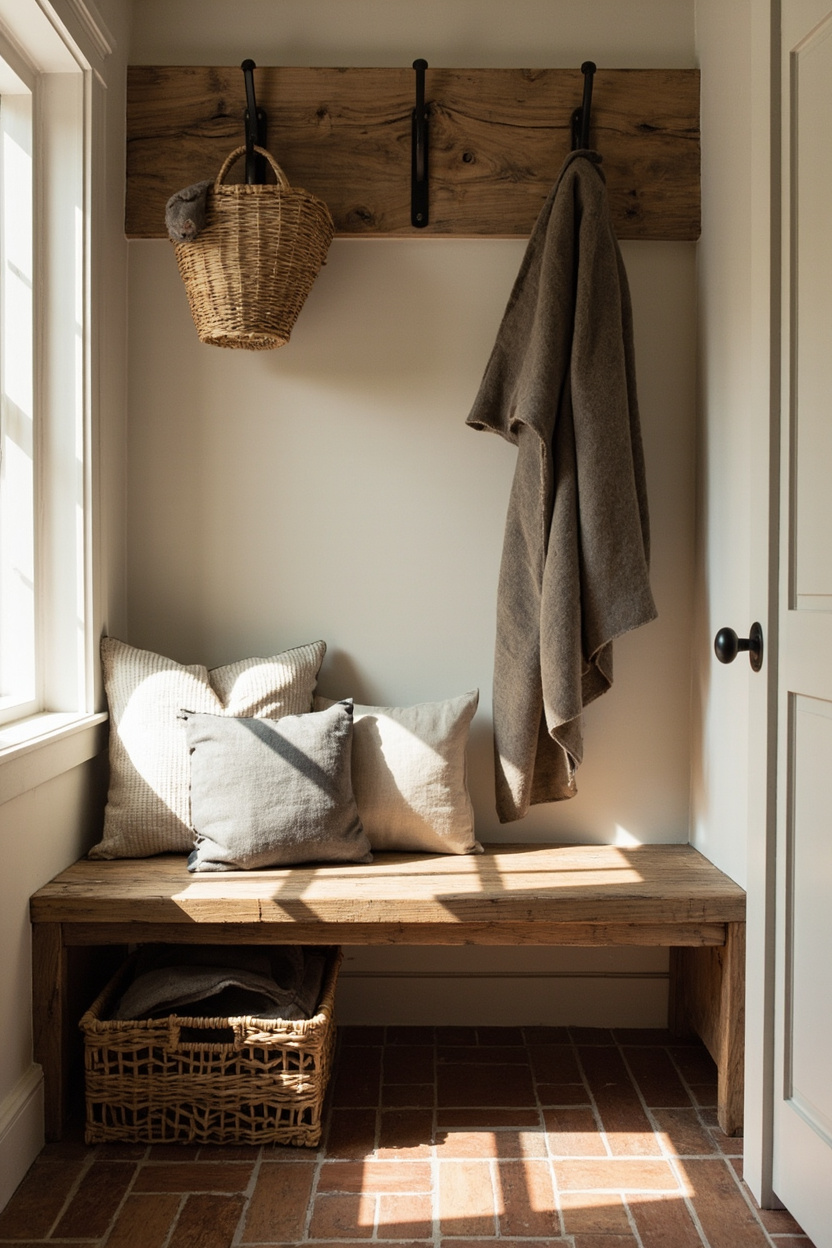
Layering textures in a mudroom is about controlled contrast: a sealed oak bench seat, painted beadboard walls, and a woven sisal mat hold up to traffic while hiding wear.
Pick finishes that patina well, washed oak or pine for seating, semi-gloss paint for lower walls to allow scrubbing, and a darker grout on tile floors to mask mud lines. Avoid delicate rugs; opt for indoor/outdoor rugs with weighted backing to prevent slipping and pile collapse under boots.
Texture isn’t only visual; prioritize tactile choices that clean easily. Use a quarter-round baseboard to catch debris and choose wall paneling heights (around 42–48 inches) that align with hooks to corral coats without scuffing painted drywall.
Small-scale design detail: stagger hook heights (12–15 inches apart vertically) to prevent garment overlap and improve air flow for drying outerwear.
Essential Elements
- Select semi-gloss paint for lower walls to resist scuffs and allow wiping down quickly.
- Choose a durable indoor/outdoor rug with a rubber backing to trap dirt and prevent slipping.
- Install beadboard or shiplap to about 42–48 inches high to protect walls from boots and bags.
- Place a wooden shoe tray or slatted bench base to allow mud to dry and fall through, not stain surfaces.
2. Built-In Benches
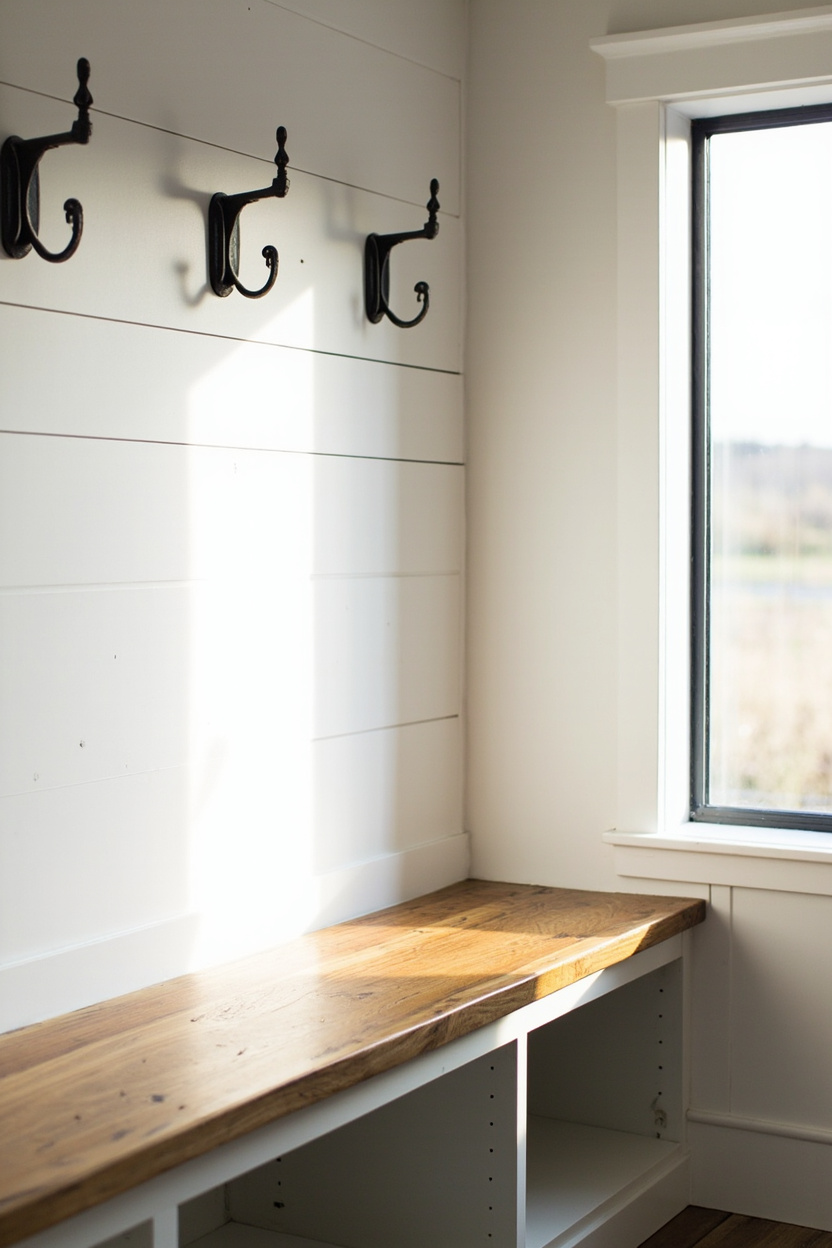
Built-in benches anchor the mudroom and enforce function—store beneath, seat on top, and use the face as a scuff guard. Dimensionally, aim for a seat height of 17–19 inches and a depth of 14–18 inches, so putting shoes on is ergonomic without consuming walkway space.
Integrate drawers or cubbies sized for each family member (approx. 12–15″ wide) to reduce morning pile-ups and give each person ownership of a spot.
Material choices matter: solid hardwood or plywood with a waterproof veneer resists swelling better than MDF in damp climates. If you add upholstery, choose outdoor-grade performance fabric and a removable cushion for easy washing.
For budget tiers, an open slatted bench with baskets underneath is cheaper and ventilates footwear better than closed cabinets.
Styling Blueprint
- Build benches with 17–19″ seat height for ergonomic use and comfortable shoe removal.
- Include individual cubbies ~12–15″ wide so each person has a dedicated storage slot.
- Use hardwood or plywood with water-resistant veneer to avoid swelling in wet seasons.
- Add removable outdoor-grade cushions for comfort while keeping cleaning simple.
3. Matte Black Hardware
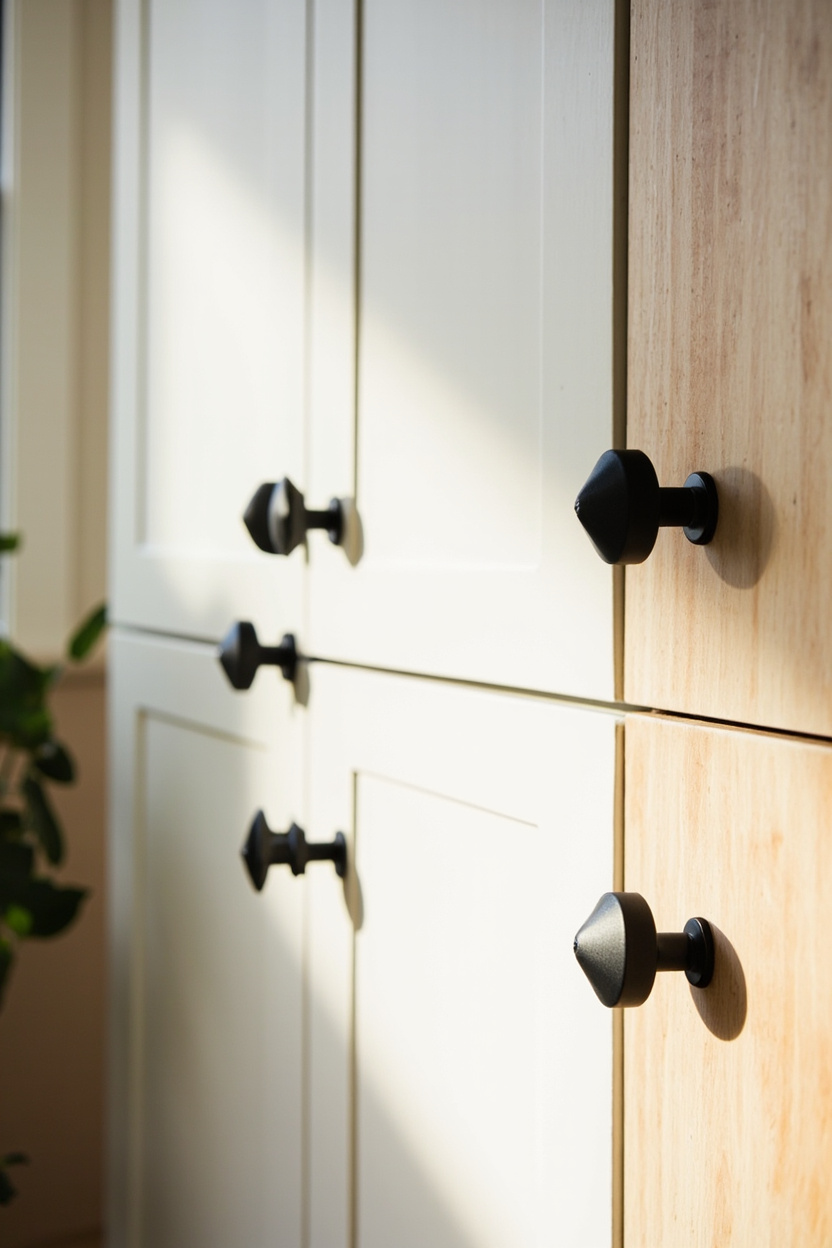
Matte black hardware feels modern but reads farmhouse when paired with warm wood and creamy paint. Choose durable finishes, powder-coated steel or solid brass with a matte treatment so repeated handling doesn’t reveal shine or wear.
For hooks, opt for 4–5″ spacing horizontally and secure them into studs or a plywood backboard to hold heavy winter coats without loosening.
Hardware is an easy way to unify the room and prevent visual clutter; use the same finish across hooks, drawer pulls, and door hardware. If your budget is tight, use matte black for high-touch items (hooks and drawer pulls) and pick chrome or stainless for occasional-use pieces to save cost without sacrificing cohesion.
For inspiration on blending rustic with modern elements in sleeping spaces, consult guidance on how to mix farmhouse and modern in the bedroom available here: Mix Farmhouse And Modern In The Bedroom.
What to Focus On?
- Select powder-coated or matte-finished metal to resist fingerprints and surface wear over time.
- Mount heavy hooks into studs or a plywood backer to support coats, backpacks, and sports gear.
- Match hardware finishes across hooks, knobs, and door handles for a cohesive look.
- Space hooks to avoid overlapping garments—about 4–5″ horizontally and varied heights for kids vs adults.
4. Warm Wood Tones
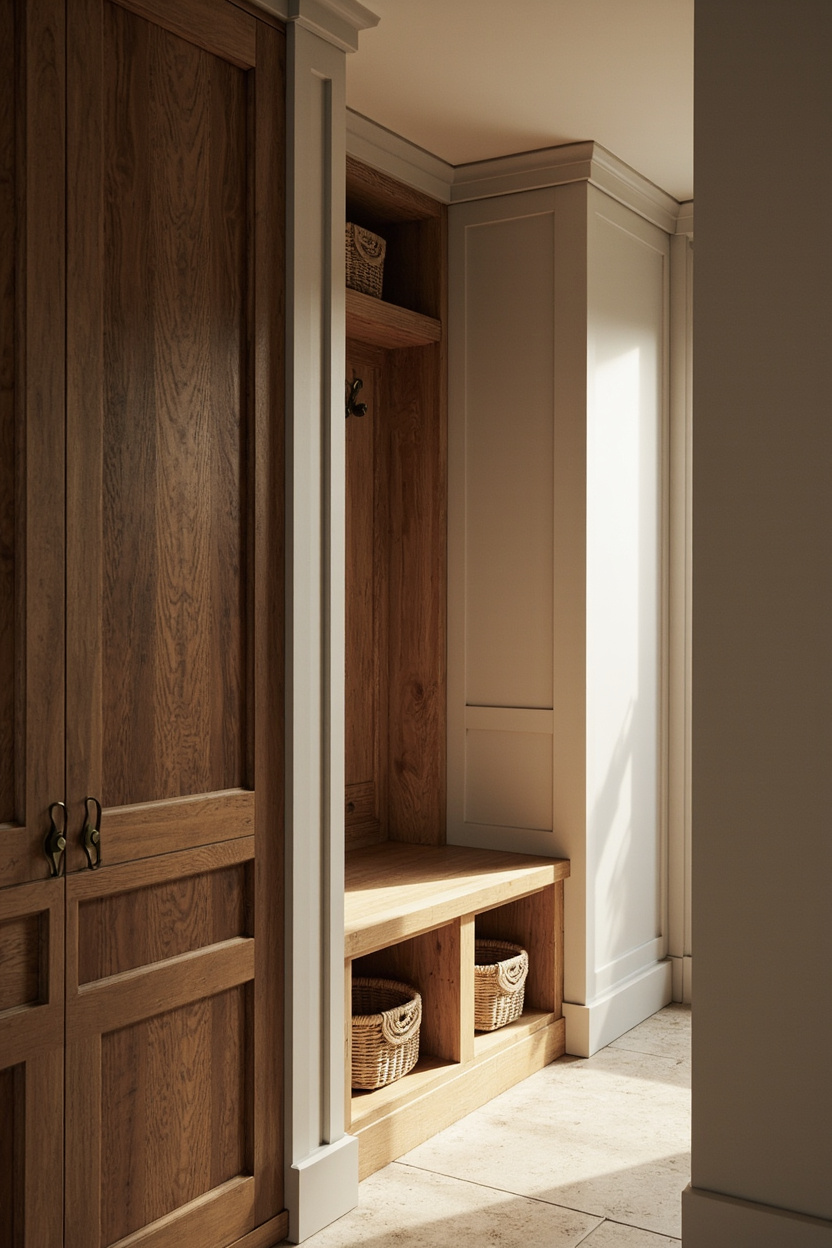
Warm wood tones in a mudroom instantly read as durable and welcoming—think quarter-sawn oak benches, a walnut kickboard, or painted beadboard with a pine top. Use medium to dark stains for high-traffic areas so dents and scuffs blend in; avoid pale sealers that show every mark.
Choose plank widths between 5–7 inches to keep the scale grounded with farmhouse proportions rather than appearing too modern or cottage-like.
Balance the warmth by specifying wipeable finishes on horizontal surfaces and sealed, water-resistant joinery at the base.
A practical decision: run a 2–3 inch rubber or metal toe-kick where the base meets the floor to prevent water damage and staining from boots.
For a cohesive transition, repeat the wood tone in an adjoining hallway or add a matching framed mirror to tie the palette to the rest of the home.
Styling Blueprint
- Use a medium-to-dark oil-based stain for durability and hide scuffs quickly with touch-up markers.
- Install a 36–48 inch built-in bench depth for comfortable sitting and easy boot removal.
- Seal horizontal tops with a marine-grade varnish in high-traffic or wet climates.
- Add a metal or rubber toe-kick to protect the base from water and wear.
5. Patterned Tile Floors
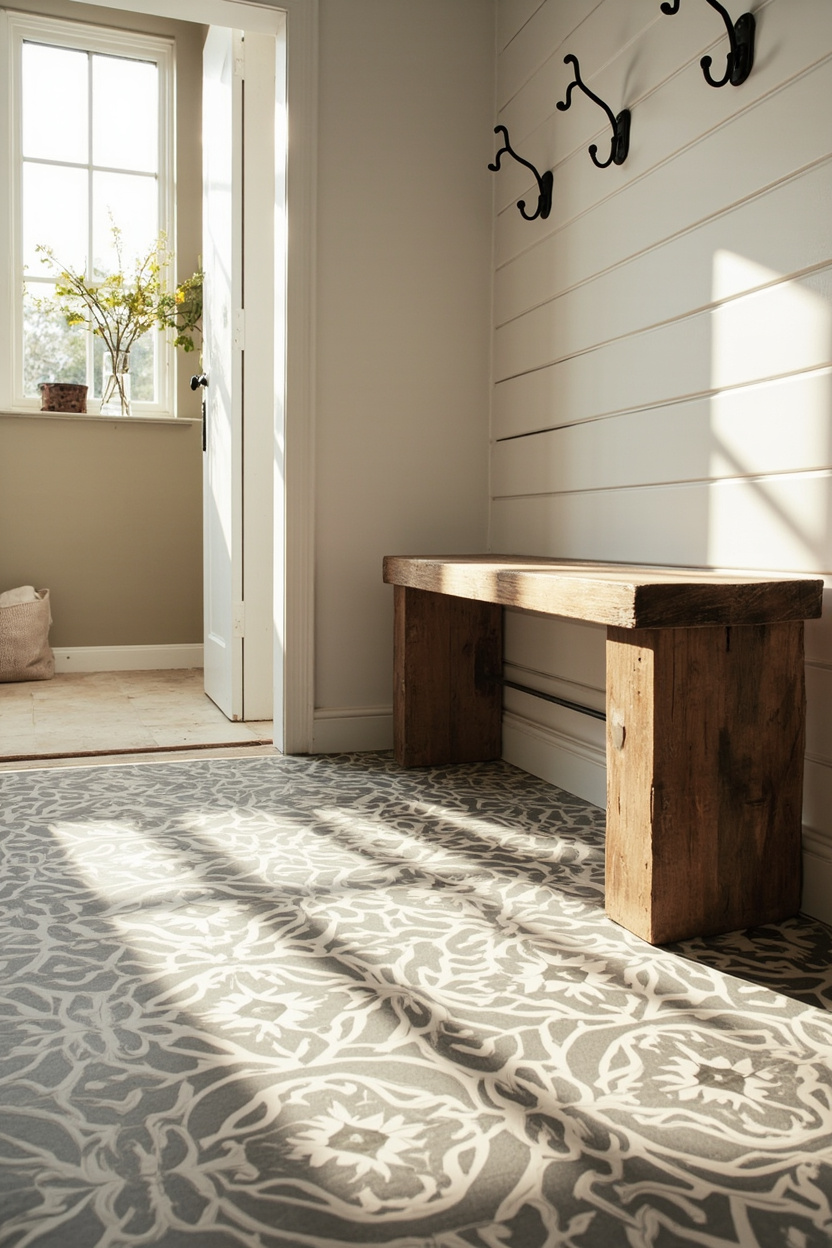
Patterned tile floors anchor a mudroom visually and trap dirt in grout lines so mess stays underfoot, not on the rest of the house. Opt for porcelain or vitrified ceramic with a matte finish and a slip-rating suitable for wet shoes—avoid glossy encaustics in entry areas.
A geometric black-and-white motif or a muted encaustic pattern in earthy tones suits modern farmhouse; keep tiles between 6–8 inches for easy sweeping and fewer grout lines.
Plan grout color strategically: a mid-tone gray hides grime best and reduces maintenance. Lay tiles in a field with a simple border or run a rug runner down the center to protect high-wear zones; avoid full rugs that retain moisture.
For budget-conscious installs, choose a patterned tile only in a 3–4 foot zone in front of the door and continue with a neutral tile elsewhere.
What to Focus On?
- Choose matte porcelain tiles with a slip resistance rating (R9 or higher) for wet conditions.
- Select mid-tone grout (medium gray) to conceal dirt and reduce cleaning frequency.
- Use 6–8 inch tiles to balance pattern clarity with easier maintenance.
- Create a patterned tile “landing” only at the entry for budget savings and visual impact.
6. Wicker Baskets
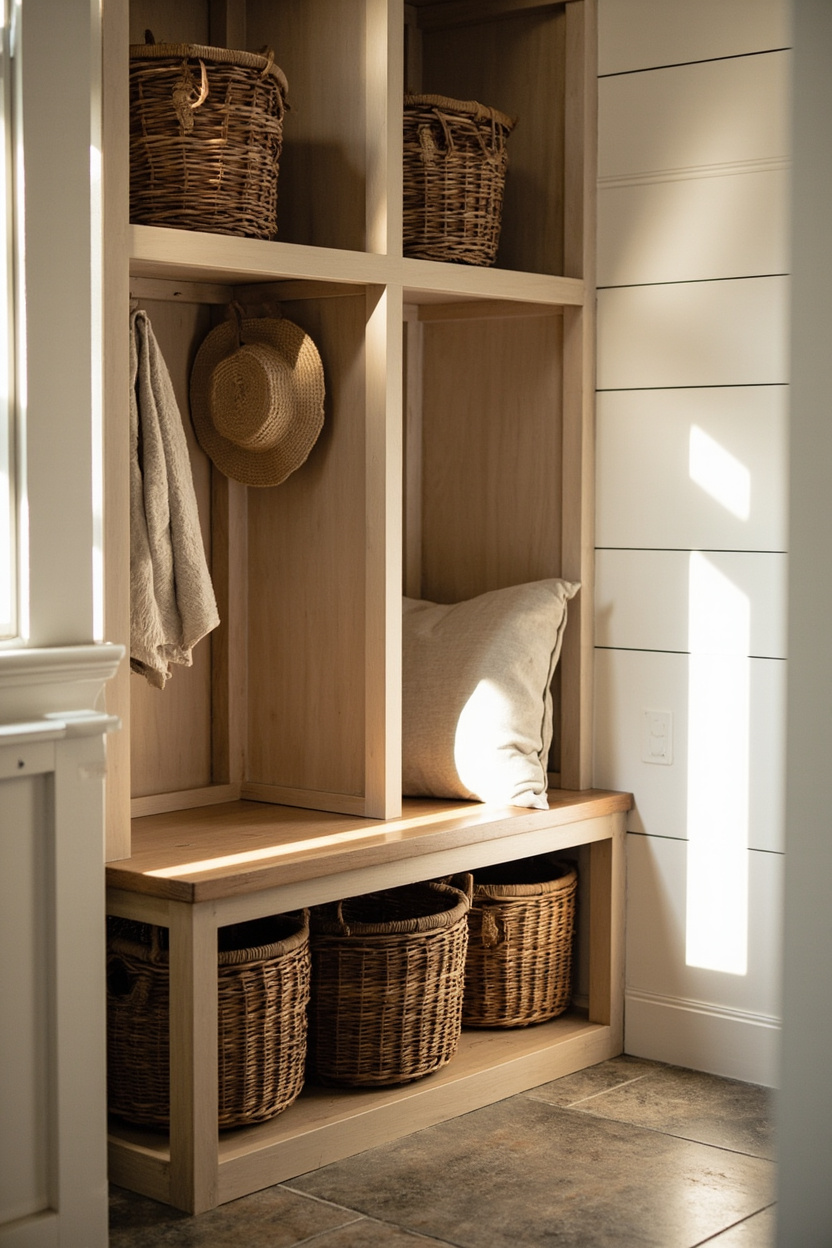
Wicker baskets are the farmhouse mudroom workhorse: breathable, lightweight, and excellent for corralling mittens, dog leashes, and sports gear. Choose seagrass or rattan for a relaxed look; avoid thin decorative weaves that fall apart under frequent handling.
For durability, pick baskets with a reinforced base or leather handles, which survive being pulled off high cubbies repeatedly.
Label baskets clearly, chalk tags or leather hang-tags hold up better than paper, and assign one per family member or category to reduce pile-ups.
Stack a pair under each bench or slide them into cubbies sized about 16–18 inches wide and 12–14 inches tall to ensure easy access and consistent visual rhythm with your built-ins.
Essential Elements
- Select seagrass or rattan with reinforced bases for everyday use and wet items.
- Size baskets to 16–18″ wide and 12–14″ tall to fit beneath benches and in cubbies.
- Add leather or metal handles to withstand heavy pulls and moisture exposure.
- Label baskets with durable tags (chalkboard or leather) to keep contents organized.
7. Utility Command Centers
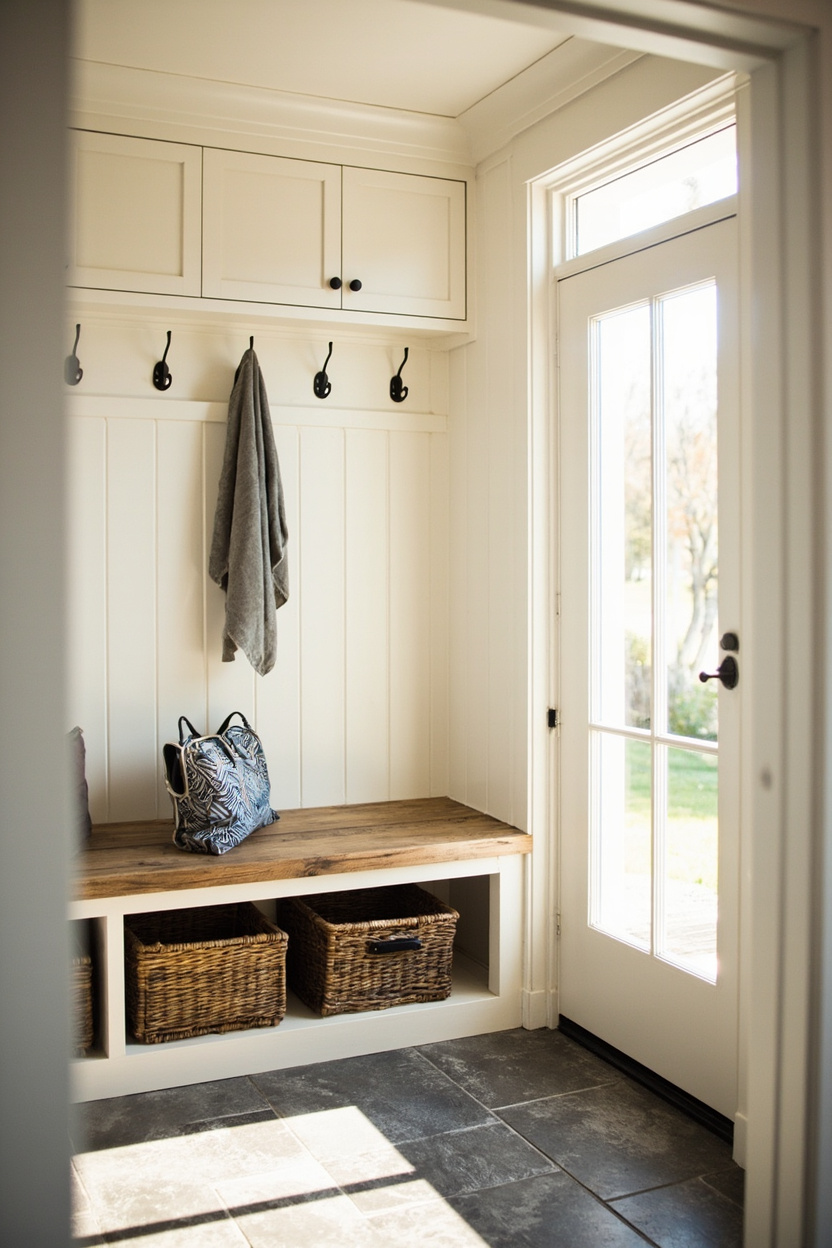
A dedicated command center transforms a mudroom from a pass-through to a household control hub.
Position a slim desk or wall-mounted ledge (24–30 inches deep) beneath a pegboard or cork panel so keys, mail, and schedules live in one visible plane; choose MDF with a polyurethane finish for durability under heavy use and easy wipe-clean maintenance.
Install a shallow appliance cabinet for bulky items like vacuum attachments and a labeled bin system for seasonal gear to prevent spillover into living areas.
Keep the color palette grounded—olive green or warm greys to hide scuffs while pairing with bright metal hooks for contrast and longevity.
Styling Blueprint
- Mount a pegboard 48–60 inches wide for modular storage options tied to the desk height.
- Use clear-lidded bins for mail and schoolwork to speed daily routines and reduce clutter.
- Allocate a 12-inch-deep appliance shelf with ventilation for charging cordless tools.
- Install a slim LED strip under shelves for a task light without glare when sorting items.
8. Mixed-Metal Lighting
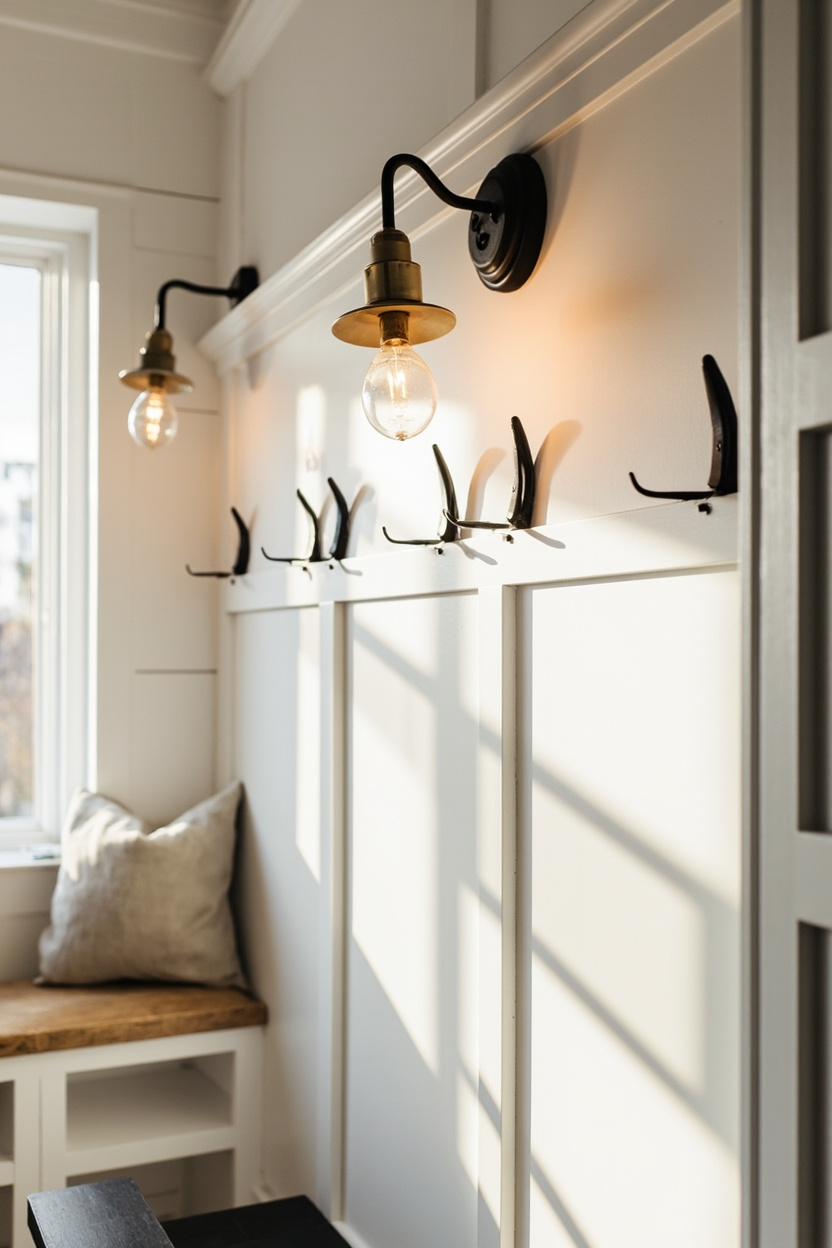
Layered lighting with mixed metals gives a farmhouse mudroom authenticity without feeling matchy-matchy.
Combine an aged-brass flush mount for ambient light with matte-black wall sconces over the bench to create visual depth; keep fixture scale modest, no more than 14–16 inches in diameter in narrow rooms to avoid overwhelming the space.
Choose bulbs with a warm 2200–2700K color temperature to maintain the cozy farmhouse mood, and hardwire sconces with pull chains or switches near the bench for convenience.
Avoid overly ornate fixtures; stick to simple silhouettes that show wear, brushed or hammered finishes conceal fingerprints and dust better than polished chrome.
Essential Elements
- Select one dominant metal and one accent metal to avoid a chaotic mix while keeping contrast.
- Use dimmable LED bulbs to adapt light levels for early-morning school runs or late-night arrivals.
- Place sconces 60–66 inches from the floor and 6–12 inches from a mirror or pegboard edge.
- Budget tip: swap full-metal shades for metal-and-glass combos to save 15–25% without losing style.
9. Vintage Locker Cubbies
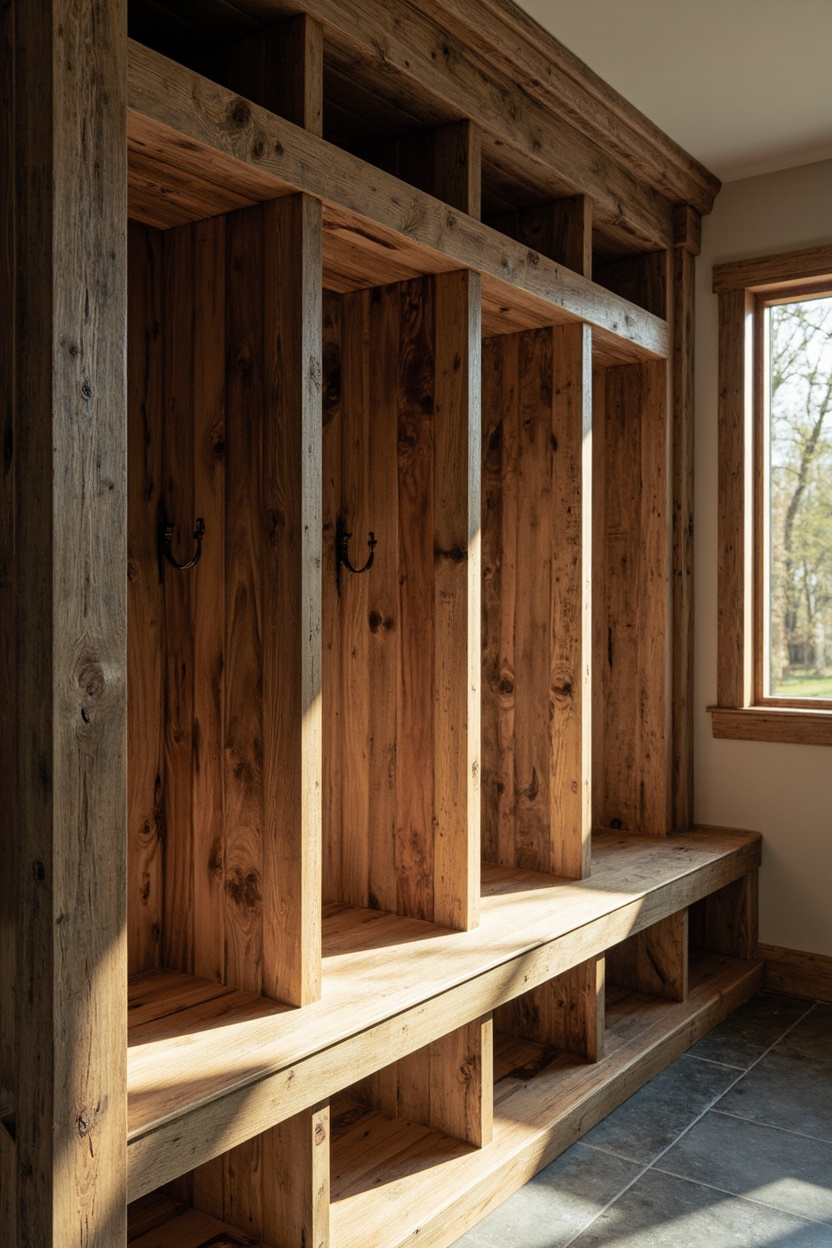
Reclaimed metal or wooden locker cubbies deliver hardworking storage and instant character in a farmhouse mudroom.
Anchor a bank of six cubbies against an exterior wall and assign each family member a cubby; scale each opening to roughly 12–15 inches wide by 18–20 inches high to accommodate backpacks and winter boots without overstuffing.
Refinish wood with a hardwax oil to preserve patina while adding wipeable protection, or strip and repaint metal lockers in a muted color like barn-red or slate for a cohesive look.
Add vintage brass label holders on each door so ownership is clear and laundry-day mix-ups are minimized.
What to Focus On?
- Confirm cubby depth of at least 14 inches to fit standard school backpacks upright.
- Include ventilation holes or slatted bottoms in each cubby to prevent mildew in wet seasons.
- Anchor the unit to studs and add a 2–3 inch toe-kick to keep bottoms off damp floors.
- Install removable washable liners or baskets in the cubbies for easy cleaning and seasonal swaps.
10. Earthy Color Palette
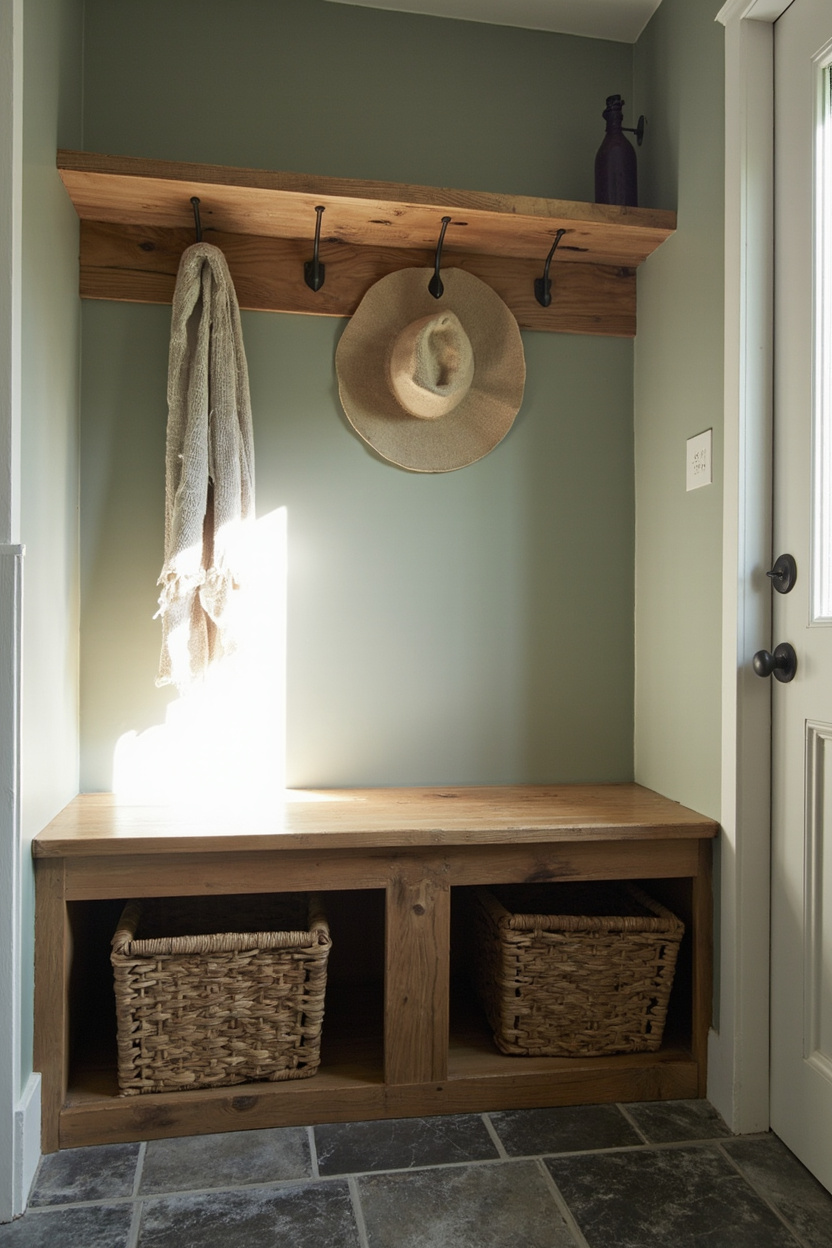
Warm, earthen tones ground a mudroom and disguise dirt better than pale neutrals—think clay-beige walls, olive-gray cabinets, and a deep umber bench.
Choose a durable, washable paint in an eggshell finish and pair it with matte black hardware for contrast; this palette reads collected rather than styled and hides scuffs from daily boots and pets.
Layer texture to avoid flatness: a rough-hewn wooden bench, jute basket storage, and a stone-tiled floor in a warm gray will keep the space cohesive with the rest of a farmhouse home.
For a concrete decision: pick tile sized 12×24 inches in a textured finish to reduce grout lines and make cleaning quicker while maintaining a rustic look.
Essential Elements
- Wall color: clay-beige or warm greige in washable eggshell paint.
- Bench material: reclaimed oak with oil finish to resist wear.
- Flooring: textured 12×24 porcelain tile in warm gray for durability.
- Hardware: matte black hooks and cup pulls for long-term hideability.
11. Oversized Rugs
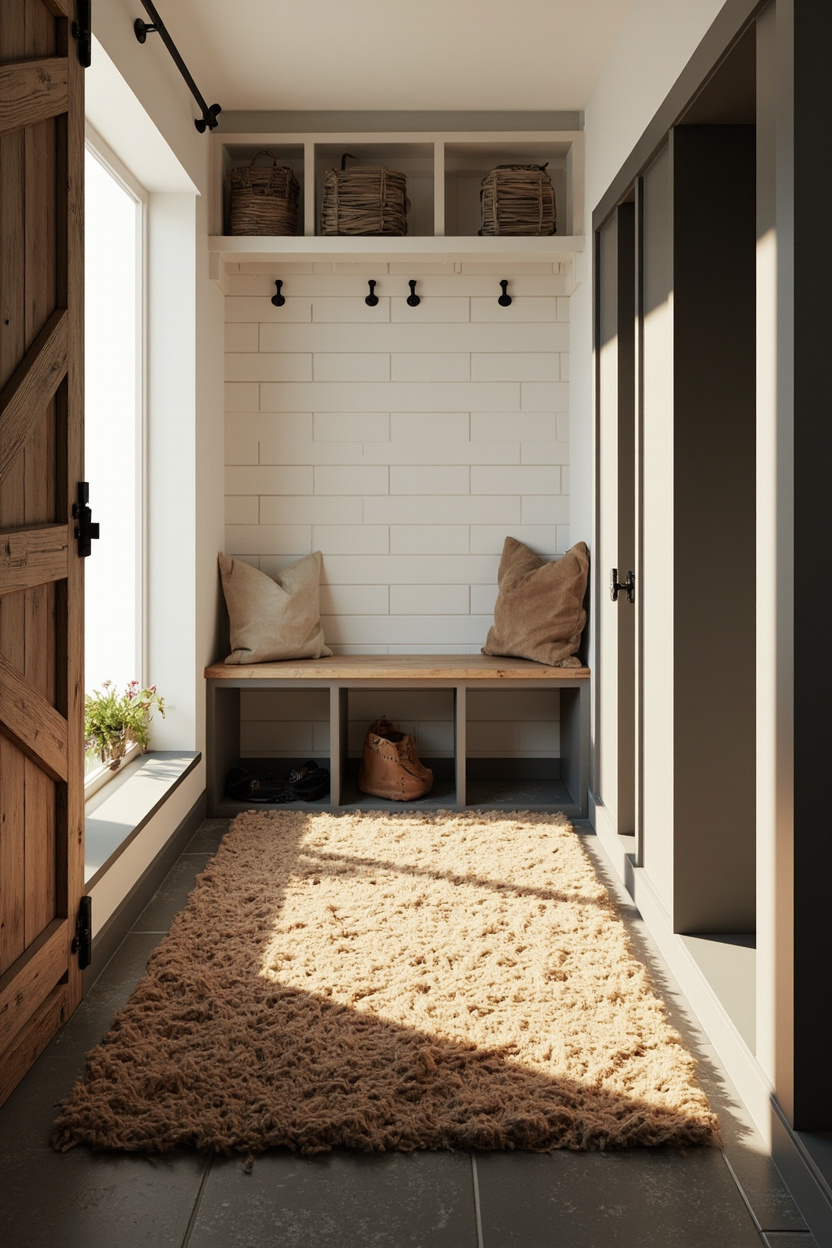
An oversized, low-pile rug anchors the mudroom, defines traffic flow, and catches dirt before it migrates into the house. Opt for a commercial-grade indoor/outdoor rug in a patterned weave, navy-and-cream or muted checker, so the scale reads intentional, and the pile stands up to repeated vacuuming and rainy shoes.
Keep maintenance practical: choose a rug that’s 2–3 feet longer than the entry door swing and machine-washable or hose-cleanable.
A concrete choice: pick polypropylene or blended flatweave in the $100–$400 range, depending on size; avoid natural fiber shag that traps moisture and stains.
Styling Blueprint
- Size rule: rug extends 24–36 inches beyond the door swing on all sides.
- Material: polypropylene or outdoor-rated flatweave for easy cleaning.
- Pattern: mid-scale check or faded stripe to mask dirt and wear.
- Underlay: non-slip pad sized to the rug to prevent shifting on tile.
12. Greenery Nooks
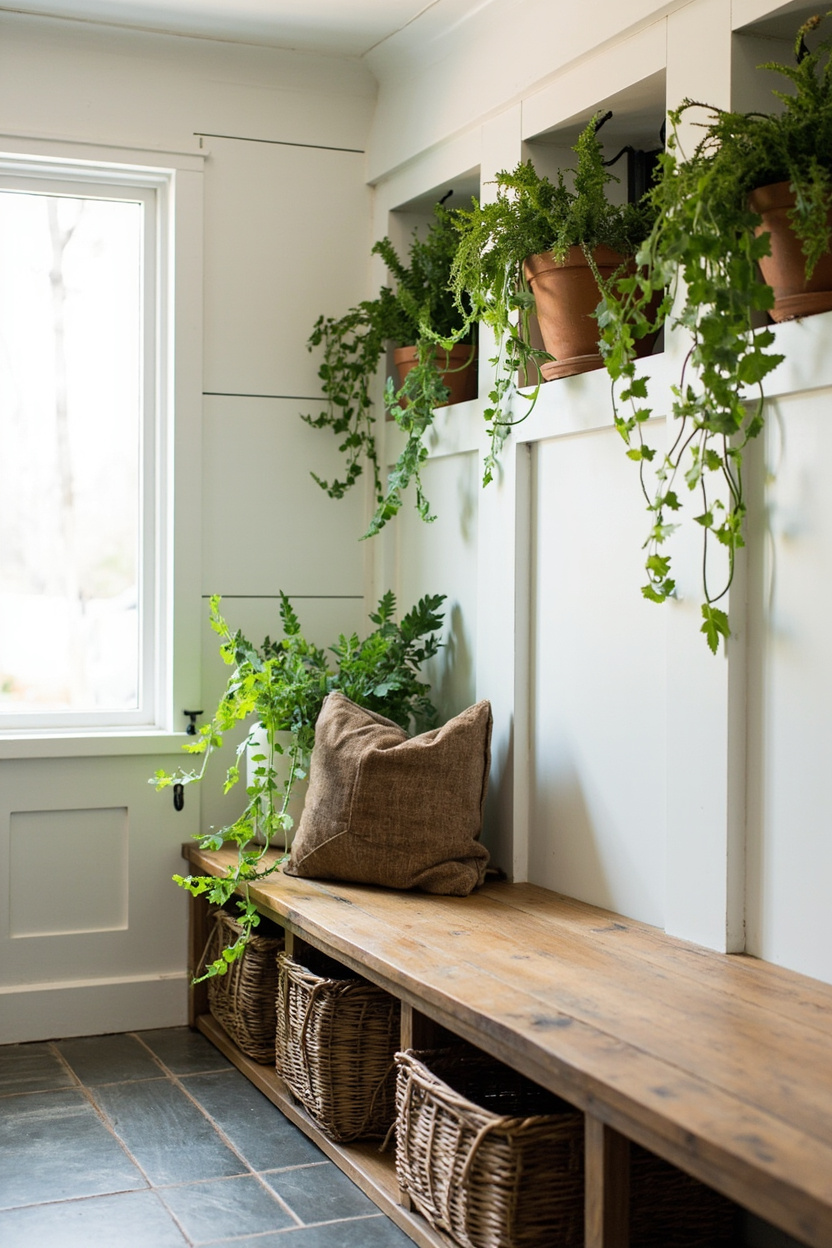
A small, curated greenery nook breathes life into a mudroom without becoming fussy—think a corner shelf with hardy plants like snake plants, pothos, or a dwarf olive in glazed terracotta.
These varieties tolerate fluctuating light and humidity common near entryways, and the green tones read naturally with farmhouse woods and earthy palettes.
Plan a real-care decision: place plants on a raised bench or slatted shelf to allow airflow and use pebble trays beneath pots to catch drips; avoid delicate-leaved specimens that need constant misting.
For style cohesion, use matching ceramic or galvanized pots in neutral tones and group odd-numbered sizes for an editorial look.
What to Focus On?
- Plant selection: snake plant, pothos, or dwarf olive for low maintenance.
- Placement: raised bench or slatted shelf to protect surfaces from water.
- Containers: glazed terracotta or galvanized metal in neutral tones.
- Care tip: pebble tray for drainage and easy floor protection.
13. Statement Mudroom Door
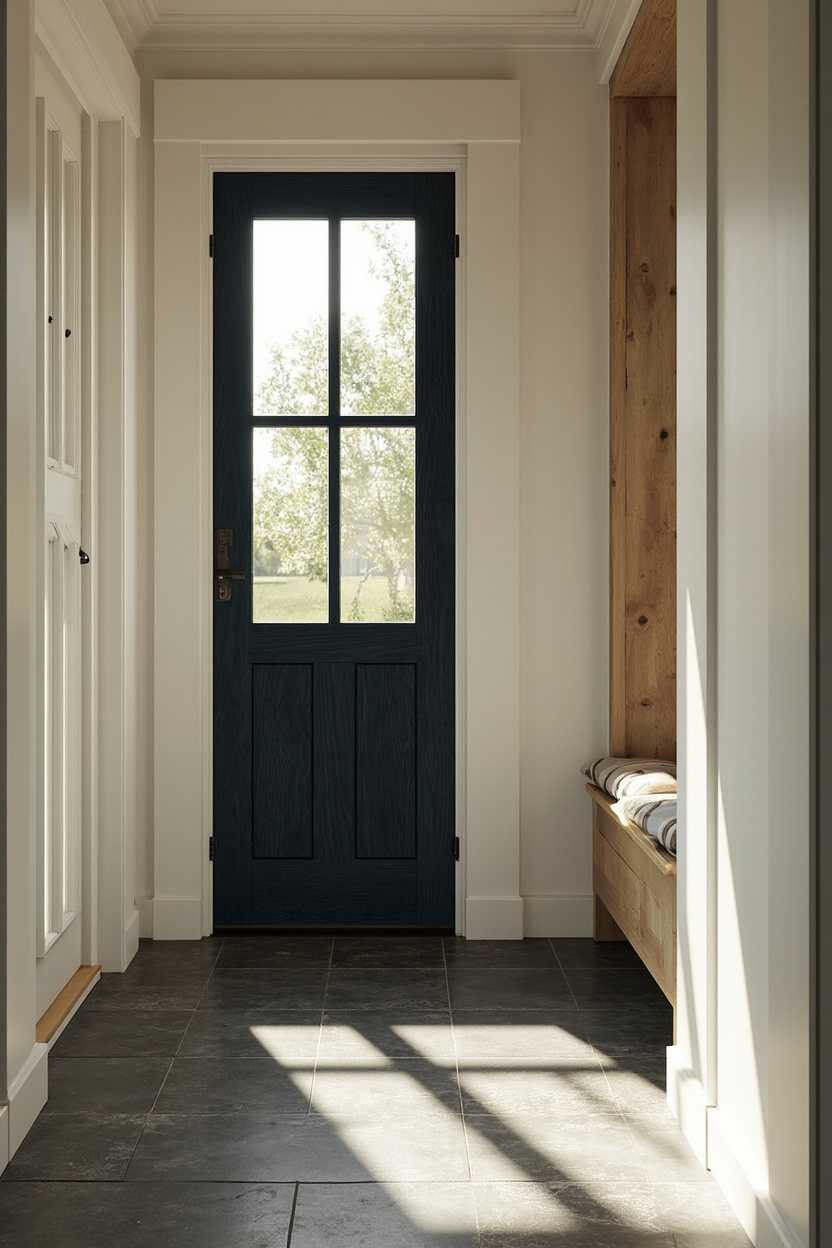
A bold, statement mudroom door does more than mark an entry—it sets the tone and contains mess before it reaches the rest of the house.
Choose a solid wood or steel-clad door with a deep, saturated color (think barn-red, charcoal, or hunter green) and a matte finish to hide scuffs; this gives you a durable focal point that also reads authentically farmhouse rather than trendy cottage.
If the budget is tight, paint and swap hardware on your existing door. Select a deadbolt and handle in aged bronze or black iron for a durable, period-appropriate accent that masks daily wear at the high-traffic threshold.
Beyond color and finish, prioritize functional details that actually keep dirt and wetness contained: specify a 1-inch-thick threshold and a full-length weatherstripping kit to prevent drafts and debris, and add a low-profile rubber boot scraper or a metal kick plate at the base to protect against repeated contact.
Avoid glass panels at child- and dog-heavy homes unless you choose polycarbonate glazing; if you do want light, opt for a high transom window or a narrow, frosted sidelight to preserve privacy while keeping maintenance easy.
What to Focus On?
- Material: solid wood or steel-clad door for durability and farmhouse character with a matte finish to conceal marks.
- Hardware: heavy-duty black iron or aged bronze handle and deadbolt sized for frequent use and easy grip.
- Functional upgrades: 1-inch threshold, full-length weatherstripping, and a metal kick plate to keep mud out and protect the door.
- Light options: use a high transom or frosted sidelight instead of large clear glass panels to limit cleaning and maintain privacy.
Final Thoughts
A farmhouse mudroom works best when the design is honest: durable materials, smart thresholds, and purposeful storage.
Treat the entry as a functional buffer. Choose one or two strong, farmhouse-driven decisions (a statement door, robust flooring, or a built-in locker wall) and build practical details around them to keep the rest of your home clean and calm.
FAQ
A practical mudroom can be as compact as 5 by 6 feet if planned tightly (bench with cubbies along one wall and hooks above). Allow at least 36 inches of clear circulation in front of storage to avoid bottlenecks when removing shoes or loading bags. Include a 12–18-inch-deep bench for seating and shoe storage beneath to maximize footprint efficiency. Reserve a 24-inch-wide zone for a taller locker or built-in if you need space for coats and bulky gear.
Ceramic or porcelain tile in a matte, textured finish is the most durable, low-maintenance choice for wet entry zones. Stamped concrete or sealed quarry tile suits higher-traffic, budget-minded farmhouses and resists staining. Vinyl plank with a strong wear layer can mimic wood while offering water resistance and easier installation. Add a washable runner or ribbed vinyl mat at the door to trap grit and protect the flooring for less frequent cleaning.
Designate labeled cubbies or baskets at child height for backpacks and sports gear to encourage independent tidying.
Install a waterproof dog-wash station or hose hookup if you frequently return with muddy pets to contain mess at the source.
Use hook clusters spaced 12–16 inches apart to hang multiple coats and leash storage without overlap..
Adopt a “five-minute reset” routine: daily surface wipe and quick shoe sweep to prevent buildup of clutter and grime.
Carry material cues reclaimed wood bench, black iron hardware, and muted paint tones to visually link to a farmhouse kitchen like those in gray farmhouse ideas.
Repeat backsplash tile or beadboard paneling at a smaller scale for cohesion without copying the kitchen exactly.
Coordinate flooring transitions with a threshold strip to keep sightlines clean between spaces.
Balance utility and style: prioritize durable surfaces first, then layer farmhouse accents like baskets and vintage hooks for warmth.