


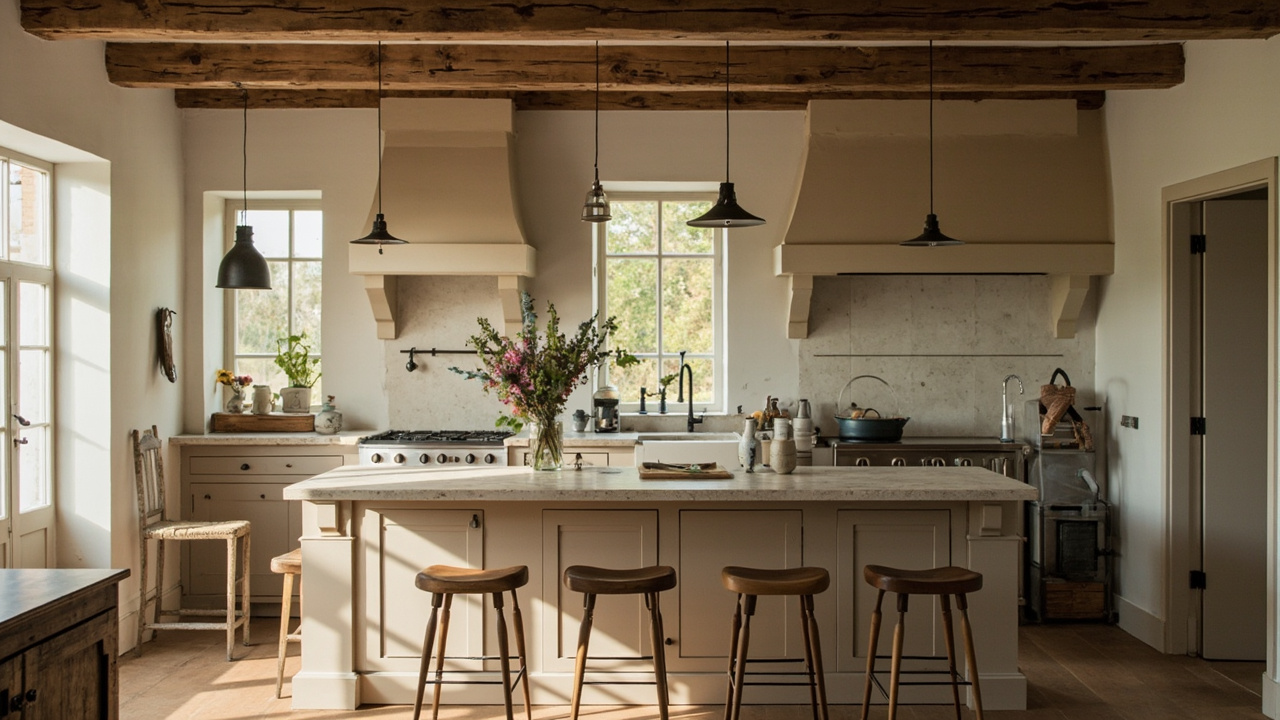
A French farmhouse kitchen on a budget is about prioritized choices, not expensive antiques. With targeted upgrades—paint, hardware, lighting, and layout tweaks—you can capture that warm, lived-in Parisian-countryside look without overspending.
This guide focuses on practical, cost-conscious steps to plan, select colors, and optimize small or awkward spaces so your kitchen reads French farmhouse at every price point.
- Planning Your Budget-Friendly French Farmhouse Kitchen
- Choosing Affordable French Farmhouse Color Palettes
- Smart Layouts for Small French Farmhouse Kitchens
- Cost-Effective Materials That Mimic Authentic Finishes
- Repurposing and Upcycling for Parisian Flair
- DIY Cabinetry, Open Shelving, and Hardware Tips
- Avoiding Common Mistakes on a Budget Remodel
- Final Touches: Styling, Lighting, and Maintenance
- Final Thoughts
- FAQ
Planning Your Budget-Friendly French Farmhouse Kitchen
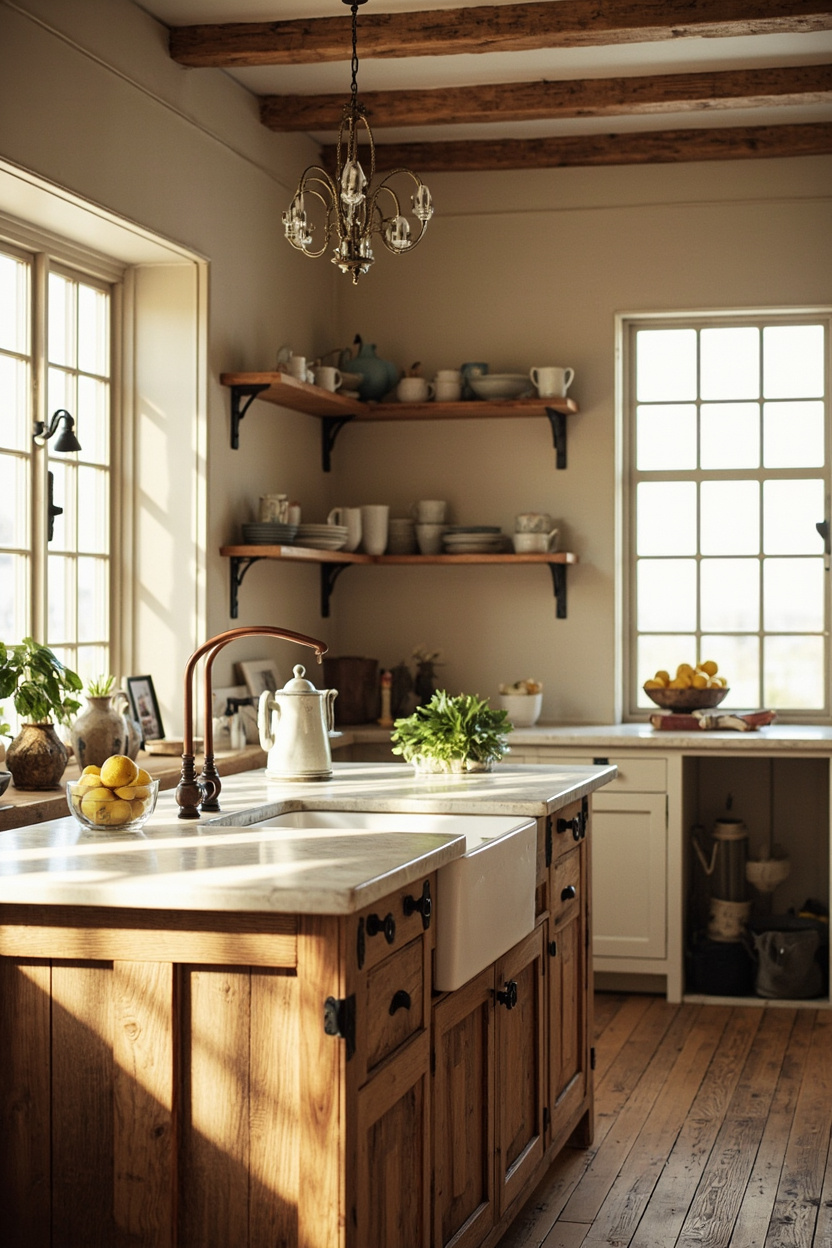
Start by setting a realistic total and dividing it into three buckets: essentials (function), style (visual impact), and splurges (one standout piece). Allocating funds prevents impulse buys that dilute the aesthetic.
Practical steps:
- List must-haves (appliances, sink, floor repairs) and nice-to-haves (open shelving, new island). Fund essentials first.
- Prioritize high-visibility, low-cost updates: paint, cabinet hardware, light fixtures, and open shelving—these create the biggest style shift per dollar.
- Consider phased updates: tackle structure and plumbing now, cosmetic details later. Keep a contingency of 10–15% for surprises.
- Source secondhand: salvage cabinets, vintage farmhouse sinks, and reclaimed wood counters from thrift sites or Habitat ReStore to cut costs and add authenticity.
- DIY where safe: apply paint, install beadboard, and swap hardware yourself; hire pros for gas, electrical, and major plumbing.
Mistakes to avoid:
- Chasing “authentic” pieces at full retail—mix reproductions with true vintage for balance.
- Over-renovating the layout when simpler fixes (paint, lighting, open shelving) will deliver the French farmhouse look.
Choosing Affordable French Farmhouse Color Palettes
The French farmhouse palette is soft, subdued, and layered—think warm creams, muted greens, dusty blues, and soft greys. Stick to three core tones: a neutral base, a muted accent, and a darker grounding shade.
Actionable color strategy:
- Use the neutral (cream or warm white) on walls and large surfaces to keep light and feel airy, which also hides imperfections.
- Apply the muted accent (sage green, faded blue, or lavender-grey) on lower cabinets, an island, or open shelving backs for subtle contrast.
- Add depth with a darker charcoal or deep blue on small elements—range hood, cabinet toe kicks, or trim—so the space reads intentional, not flat.
- Test samples in natural and artificial light before committing; paint looks different at different times of day.
- Coordinate hardware and fixtures in aged brass, oil-rubbed bronze, or matte black for a cohesive, vintage feel without expensive antiques.
Decision criteria:
- Choose paint first, then match textiles and accessories—it’s cheaper to swap pillows and curtains than repaint.
- For tight budgets, repaint existing cabinetry rather than replace; add beadboard or simple moulding for a farmhouse touch.
Smart Layouts for Small French Farmhouse Kitchens
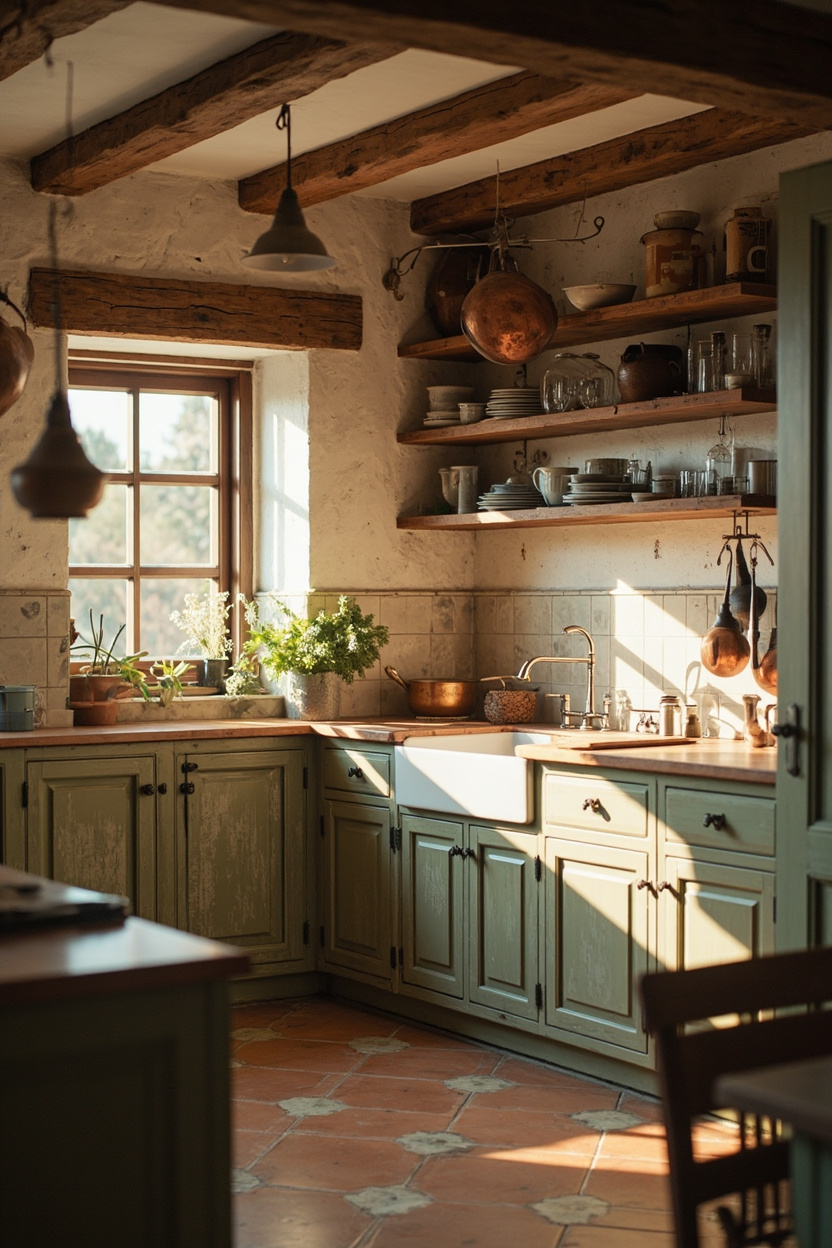
Small kitchens need smart circulation and visual tricks to feel larger and more purposeful. The French farmhouse look relies on functional simplicity—open sightlines, purposeful storage, and a single feature that anchors the room.
Practical layout moves:
- Adopt an efficient work triangle: place sink, stove, and fridge within a compact, unobstructed triangle to improve flow.
- Open upper cabinets on one wall to create depth and display dishes; balance with closed lower storage for clutter control.
- Use a narrow, movable island or butcher block cart for prep and storage—remove it when you need floor space.
- Maximize vertical space: tall, shallow cabinets, plate rails, and hooks for pans free up counters and add farmhouse character.
- Choose integrated or under-counter appliances where possible to save space and keep lines clean.
Implementation tips:
- Measure carefully before buying—small changes to appliance placement can have big ergonomic benefits.
- Prioritize countertop workspace near the stove and sink; consider removing a cabinet to create a continuous work surface if needed.
For inspiration and specific elements, explore budget-friendly styling ideas at Pink Cottage and practical bedding and textiles ideas that complement a French farmhouse kitchen at Cottage Bedding Ideas.
Cost-Effective Materials That Mimic Authentic Finishes
French farmhouse warmth comes from texture and patina, not expensive materials. Choose substitutions that read as aged or hand-crafted while keeping costs down.
- Beadboard and MDF with faux distressing: Use primed MDF or budget beadboard panels and hand-distress edges with sandpaper; finish with a chalk or milk paint diluted slightly for a matte, layered look.
- Engineered or laminate “stone” counters: Look for high-quality laminate or quartz-look engineered surfaces in soft, honed finishes. They mimic limestone or honed marble without sealing headaches.
- Distressed wood-look tiles: Porcelain planks with a weathered oak or limed finish give the visual weight of reclaimed wood but are kid- and moisture-friendly for kitchens.
- Faux plaster and limewash alternatives: Use textured paint or a budget limewash product over a neutral base to simulate lime plaster at a fraction of the cost; practice on a board first to control variation.
- Affordable metal finishes: Choose oil-rubbed bronze spray for inexpensive hardware or brushed brass-look knobs in budget lines; patina naturally with a light acetone wipe to remove factory shine.
Decision criteria: prioritize materials that balance look, durability, and maintenance. For high-use surfaces (island countertop, range surround), spend a bit more; for decorative zones (backsplash accents, open shelf backing), cheaper faux options work great.
Mistakes to avoid: don’t mix too many low-cost finishes—cohesion is key. Avoid shiny imitation finishes that read cheap; aim for matte or softly aged surfaces instead.
Repurposing and Upcycling for Parisian Flair
Repurposing adds genuine character and is central to French farmhouse authenticity. Focus on function-first pieces that show history.
- Refinish old furniture: Strip or sand a thrifted farmhouse table, then apply a limewash or white stain to reveal grain and imperfections—no need for perfect paint coverage.
- Turn vintage doors into cabinetry or islands: Use an old paneled door as the face of an island or as an open pantry door; add iron strap hinges for a rustic Parisian feel.
- Salvage architectural elements: Reuse corbels as shelf brackets, ceiling beams as open-shelf supports, and old crates as under-shelf storage to introduce texture and story.
- Give modern pieces aged detail: Distress new wood stools or attach reclaimed planks to plain cabinet faces to bridge budget pieces and authentic aesthetics.
Implementation tips: source items from flea markets, Craigslist, Habitat Restore, or salvage yards. Always measure before committing and stabilize reclaimed wood (de-nail, flatten, seal) to ensure kitchen safety.
Mistakes to avoid: don’t over-age everything—one or two focal upcycled pieces read intentional; a full room of mismatched salvaged items can feel cluttered.
DIY Cabinetry, Open Shelving, and Hardware Tips
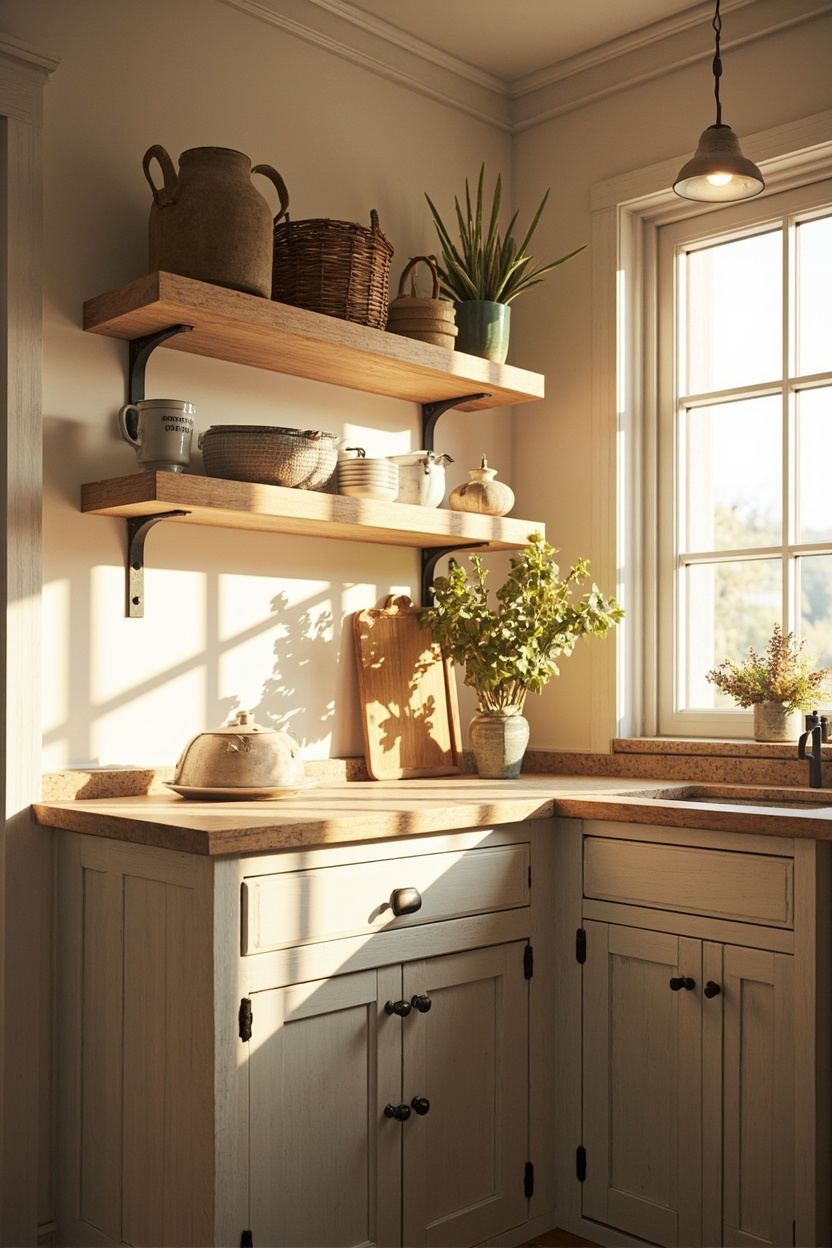
You can achieve a French farmhouse kitchen with DIY cabinetry basics, smart open shelving, and thoughtful hardware choices. Focus on proportion, finish, and function.
- Simple shaker-style units: Build basic frame-and-panel shaker cabinets from plywood; they’re forgiving, scalable, and take paint or limewash well. Keep door rails and stiles proportionate to your room size (narrower for small kitchens).
- Infill and trim to fake built-ins: Add plinths, cornice, and filler panels to boxy stock cabinets to create the appearance of custom pieces without the cost.
- Open shelving strategy: Limit open shelving to one wall or a section above the sink. Use deep, sturdy boards (3/4″ plywood with edge banding or reclaimed planks) and mount on hidden cleats or robust brackets to avoid sagging.
- Hardware scale and finish: Choose larger, simple pulls and cup pulls in aged brass, bronze, or matte black. Match backplate scale to door size—small knobs on large doors look off-balance.
- Soft-close where it matters: Install soft-close hinges/drawers for durability and perceived quality; save higher-end hardware for frequently used cabinets and drawers.
- Paint and aging technique: Sand cabinet edges lightly after painting to reveal subtle wear points. Seal high-contact areas with a clear matte polyurethane for protection without shine.
Practical build tips: pre-finish doors and shelves before installation; assemble and level cabinet boxes on-site using a laser or long level; label every part during disassembly/reassembly to avoid errors.
Common mistakes: undersized brackets for shelves, mismatched hardware finishes, and painting without priming, each undermines the lived-in, cohesive French farmhouse look.
Avoiding Common Mistakes on a Budget Remodel
Budget constraints can lead to rushed choices that undermine the French farmhouse look.
Focus on decisions that have the most visual impact and avoid shortcuts that create long-term costs or a mismatched aesthetic.
- Skipping a plan: Draft a simple layout and material list before buying—know what you need for function and style to prevent impulse purchases.
- Overmixing styles: Limit your palette to two main finishes (wood tone, metal, or paint) to keep the rustic-meets-elegant look cohesive.
- Choosing low-quality focal pieces: Invest in one well-made item—like a farmhouse sink or reclaimed wood table—then economize on accessories.
- Ignoring scale and proportion: Small rooms need slimmer islands or open shelving; oversized furniture will make a space feel cramped and clumsy.
- Neglecting practical upgrades: Don’t skip durable countertops or good lighting to save a little now—these lead to higher replacement costs later.
- Poor paint choices: Test paint in natural light; a wrong white or warm tone can kill the French farmhouse warmth or make it look dated.
- Bad hardware mix: Replace cheap, mismatched knobs and pulls in one go for an instant cohesive lift without a huge budget.
Final Touches: Styling, Lighting, and Maintenance
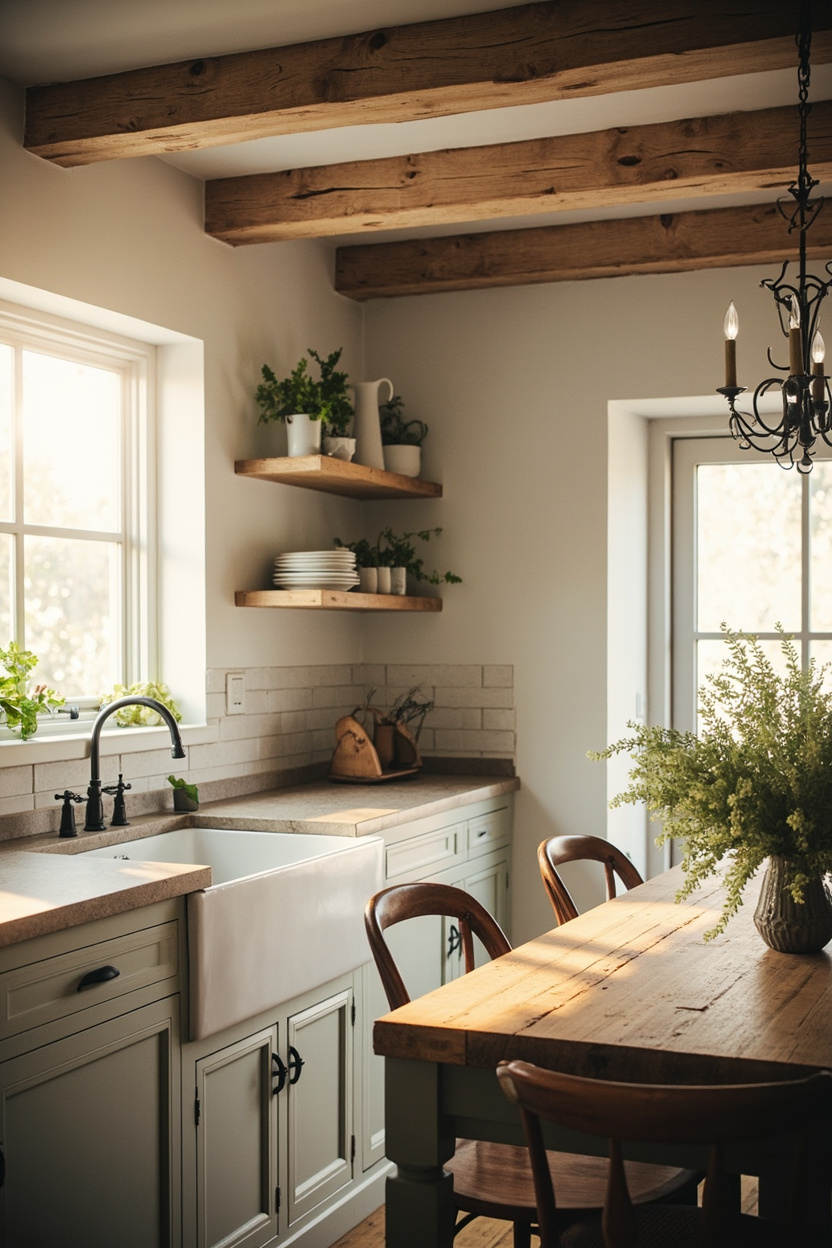
Styling and lighting define the mood; maintenance keeps the kitchen looking authentic. Use affordable strategies that deliver high-impact charm and make routine care manageable.
Styling: layered, intentional accents
- Layer textiles: Add linen dish towels, a simple runner, and neutral cushions to soften hard surfaces without expensive decor.
- Use functional decor: Display woven baskets, enamel pitchers, and curated cookbooks—items that serve and style simultaneously.
- Greenery and blooms: Fresh herbs in terracotta pots or a simple bouquet bring French countryside warmth for little cost.
Lighting: create depth and warmth
- Mix ambient and task light: Combine a statement pendant over the island with under-cabinet task lighting for function and mood.
- Choose warm color temperature: 2700K–3000K bulbs read more authentic and cozy than cool white in farmhouse settings.
- Update fixtures affordably: Swap shades or paint an existing fixture in a matte black or aged brass finish for instant style.
Maintenance: keep the patina intentional
- Protect wood: Use food-safe oil on a butcher block and wipe up spills promptly to preserve warmth without expensive sealing.
- Repair, don’t replace: Sand and refinish scuffs on painted cabinets or distressed furniture rather than buying new.
- Routine cleaning: Use gentle cleaners for enamel and stone; abrasive products ruin finishes that are key to the look.
Final Thoughts
Focus on cohesive finishes, one quality investment, and smart styling to create an authentic French farmhouse kitchen on any budget. Small, intentional choices deliver charm and durability without overspending.
FAQ
Yes, prioritize open shelving, slim furniture, light paint, and one rustic focal piece to keep the room airy and styled without overcrowding.
Reclaimed or distressed wood, beadboard, or MDF painted in quality paint, enamelware accents, and matte metal hardware give authentic character at low cost.
Test a few warm whites and muted neutrals in natural light; pick one main wall/trim color and a slightly warmer accent to keep the palette cohesive.
DIY small updates (painting cabinets, installing shelving, changing fixtures). Leave complex plumbing or electrical work to pros to avoid costly mistakes and safety issues.
Read Next: How to Create Minimalist Gallery Walls with Impact
Read Next: How to Create the Perfect Boho Fireplace Mantle
Read Next: 15 Farmhouse Kitchen Backsplash Ideas You Haven’t Seen Before