


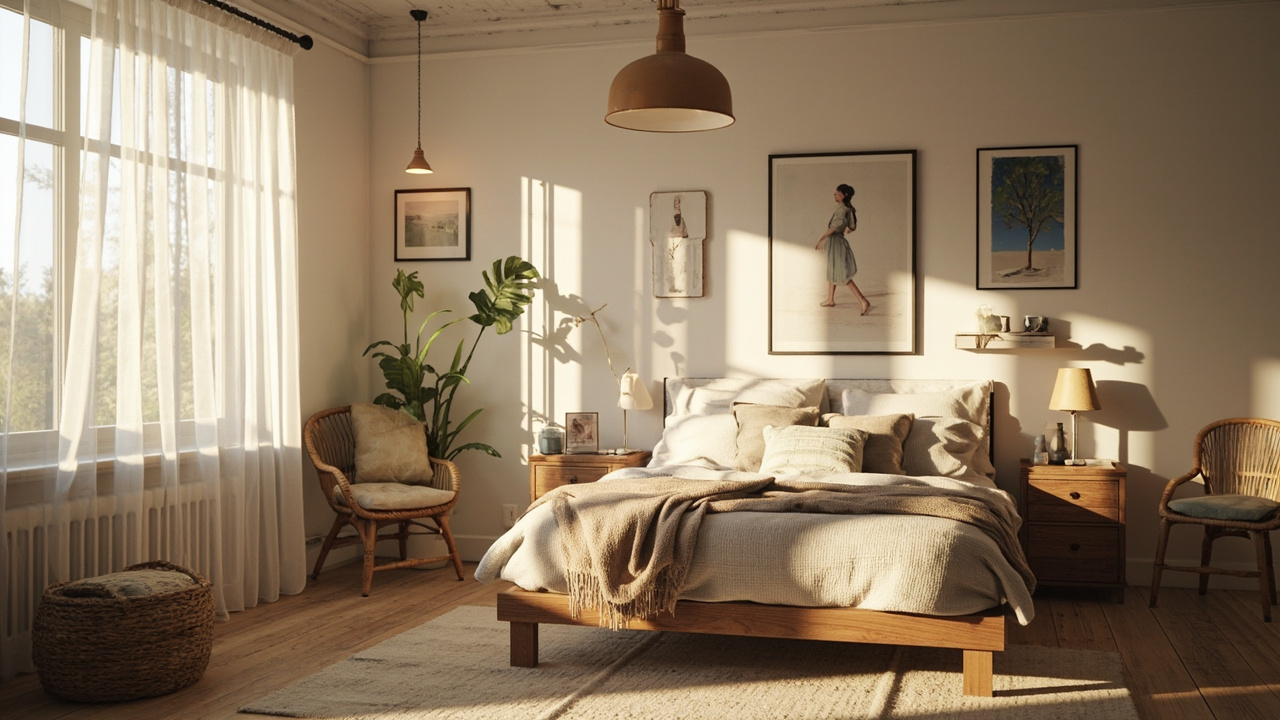
Cottage Bedroom Wall Decor Planning focuses on arranging walls, colors, and finishes to create a cozy and functional bedroom. This guide gives immediate, actionable steps for layout, palette selection, and material choices tailored to cottage style.
Use these steps to prioritize focal walls, select calming palettes, and choose durable finishes that complement textiles and furniture. For related styling ideas, see Earthy Cottage Home Decor Ideas and Farmhouse Decor for complementary looks.
- Planning Your Cottage Bedroom Layout
- Choosing a Cohesive Color Palette
- Selecting Wall Materials and Finishes
- Arranging Art and Wall Murals
- Installing Lighting and Wall Sconces
- Positioning Shelves and Ceramic Vases
- Coordinating Textiles and Headboards
- Avoiding Common Decor Placement Mistakes
- Optimizing Small-Wall Storage Solutions
- Styling Seasonal Accent Collages
- FAQ
- Final Thoughts
- Related Decor Reads
Planning Your Cottage Bedroom Layout
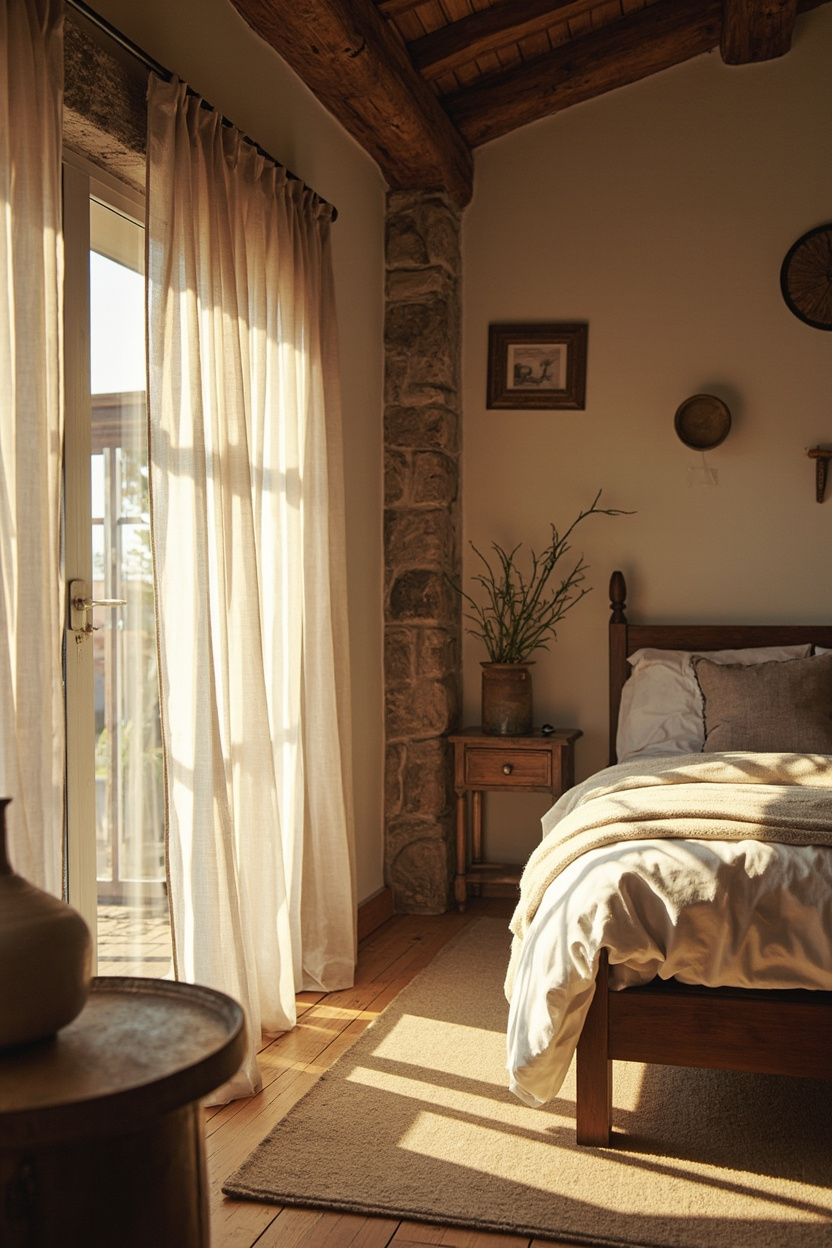
Start by mapping furniture footprint and sightlines to define the primary focal wall for the bed or a seating nook. Measure wall heights and openings to ensure wall decor and lighting scale correctly with the room.
Prioritize circulation: keep at least 24 inches of clear walkway beside beds and 30–36 inches for main pathways. Plan electrical access for sconces and lamps before committing to heavy wall treatments.
What to Do?
- Place the bed on the longest uninterrupted wall to create a natural focal point for wall decor and headboard treatments.
- Mark exact locations for sconces and outlets on your plan to avoid late-stage rewiring and to align wall art with lighting.
- Measure wall-to-wall and furniture dimensions, then mock up art and shelving positions with paper templates on the wall.
- Define zones for sleeping, dressing, and seating to determine which walls need calming finishes versus display features.
Mistakes to Avoid
- Choosing wall treatments before measuring and planning electrical and furniture placement.
- Overcrowding every wall with decor reduces the cottage sense of calm and makes small rooms feel busy.
Choosing a Cohesive Color Palette
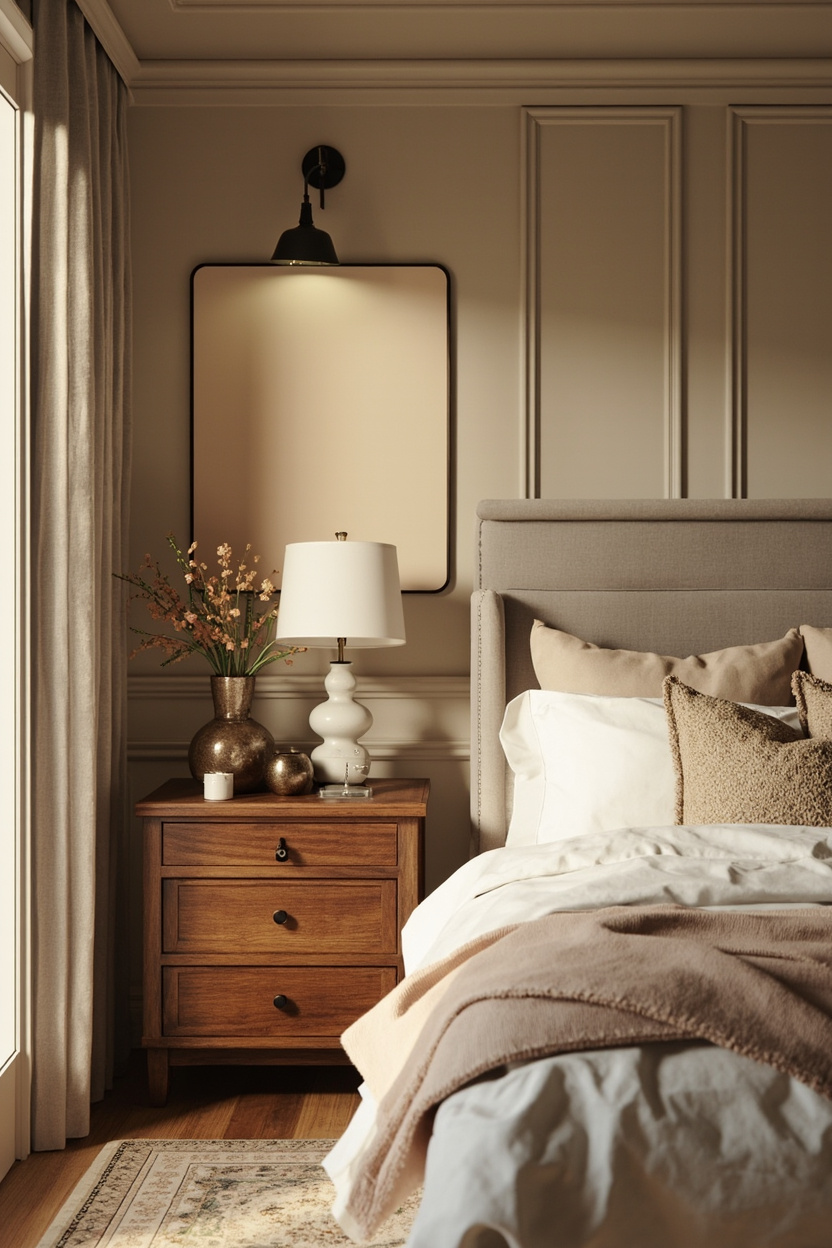
Select a restrained palette that supports a restful mood: neutrals, soft greens, muted blues, or warm creams work well in cottage bedrooms. Limit the primary palette to three hues and use accents for contrast.
Base choices on natural light and existing finishes like hardwood floors or vintage furniture. For layered texture options, check Earthy Cottage Home Decor Ideas and Boho Chic Decor for mixing neutrals with artisan accents.
What to Do?
- Pick a dominant neutral for walls, a secondary color for trim and built-ins, and one accent color for textiles and art.
- Test paint samples on multiple walls and observe colors at morning and evening light before finalizing.
- Use textiles—quilts, rugs, and curtains—to introduce accent colors without committing to bold paint.
Mistakes to Avoid
- Using too many strong colors at once, which breaks visual cohesion in small cottage bedrooms.
- Skipping paint tests under real lighting, leading to unexpected undertones that clash with furnishings.
Selecting Wall Materials and Finishes
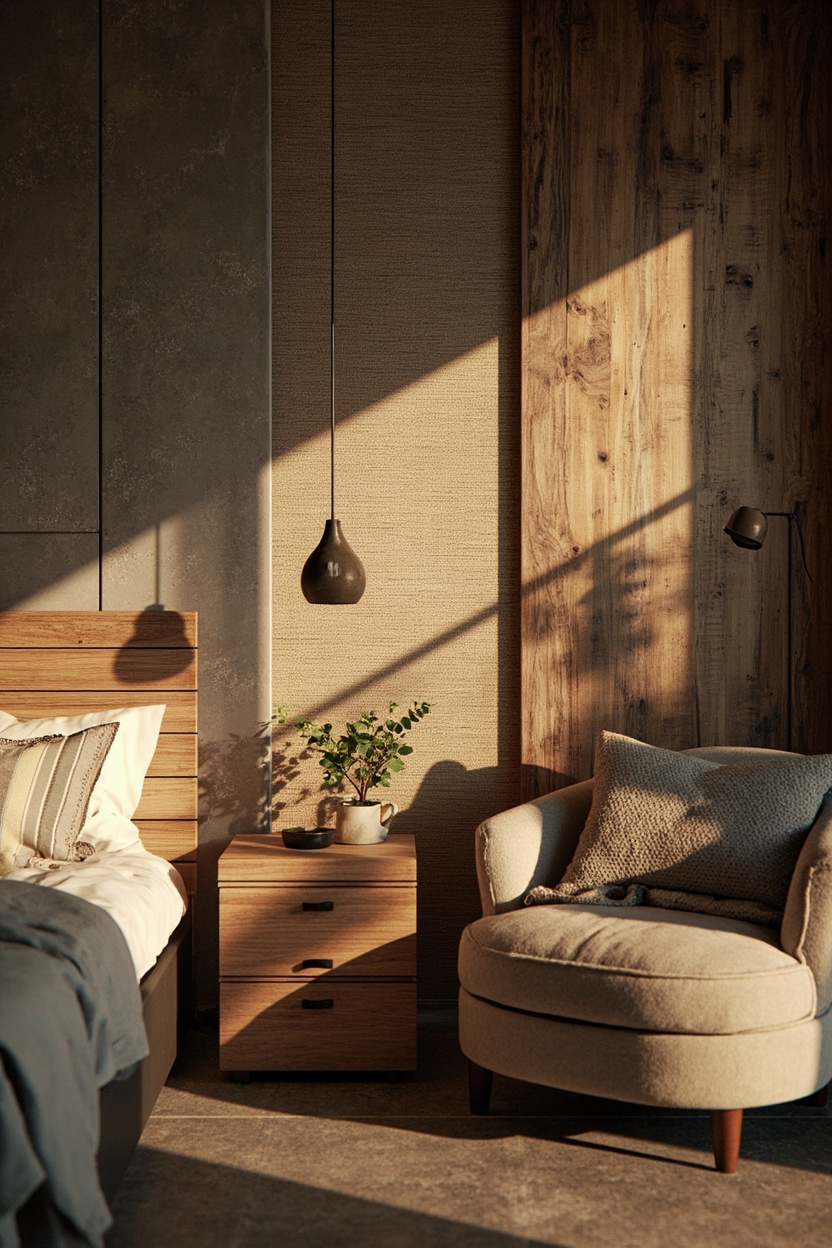
Choose finishes that balance durability and cottage character: plaster, shiplap, beadboard, or matte paint are classic choices. Consider moisture and wear—choose washable paints or sealed boards in high-use areas.
Layer finishes with textiles and art for warmth and depth; ceramic wall vases or woven baskets add tactile interest. For complementary room ideas and detailed styling, see Boho Home Decor and Farmhouse Bathroom for finish pairings.
What to Do?
- Select matte or eggshell paints to minimize glare and enhance the soft, cozy cottage aesthetic.
- Use shiplap or beadboard on a single accent wall rather than the entire room to avoid a themed look becoming overpowering.
- Specify moisture-resistant primers and washable topcoats for bedroom walls near en-suites or radiators.
- Incorporate natural materials like wood trim or plaster to create layered, tactile wall surfaces.
Mistakes to Avoid
- Covering every wall with heavy textures or wallpapers can make the room feel smaller and cluttered.
- Neglecting finish durability results in premature wear or staining on high-touch walls.
Arranging Art and Wall Murals
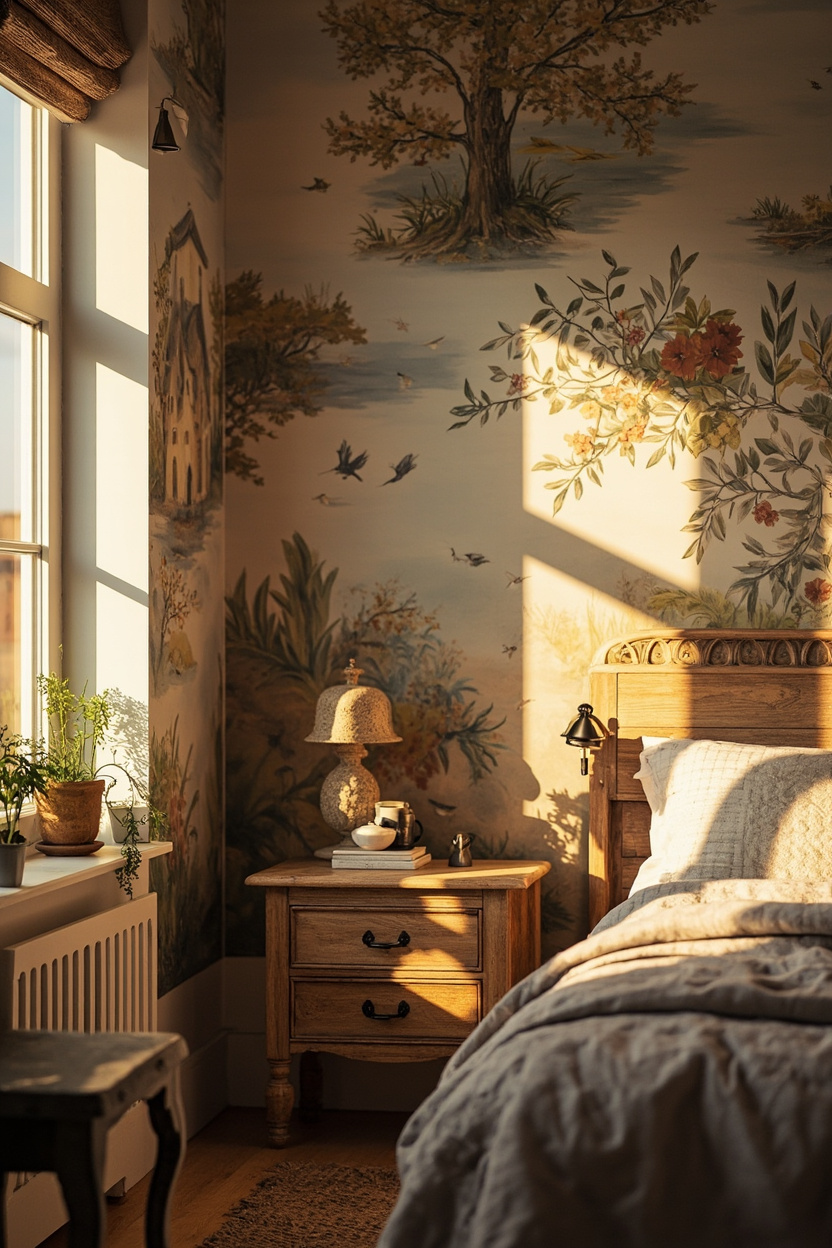
Place art and murals to anchor the bed and create a focal point in Cottage Bedroom Wall Decor Planning. Choose one large mural or a balanced gallery above the headboard to maintain visual weight and restful symmetry.
When mixing framed art and a mural, match dominant colors to bedding or a rug to tie the scheme together. Use a mock-up on the wall with paper templates before committing to nail holes.
What to Do?
- Center large pieces at eye level, approximately 57–60 inches from the floor to the center of the artwork.
- Create a gallery grid with consistent spacing of 2–3 inches between frames for a cohesive look.
- Use a mural behind the bed that spans at least two-thirds of the headboard width for proper balance.
- Coordinate mural or art palette with textiles to reinforce the cottage aesthetic, such as soft taupes or muted sea glass tones.
Mistakes to Avoid
- Hanging art too high, which severs the visual connection to furniture and makes the room feel disjointed.
- Using multiple oversized pieces without balance creates a crowded or chaotic focal area.
Installing Lighting and Wall Sconces
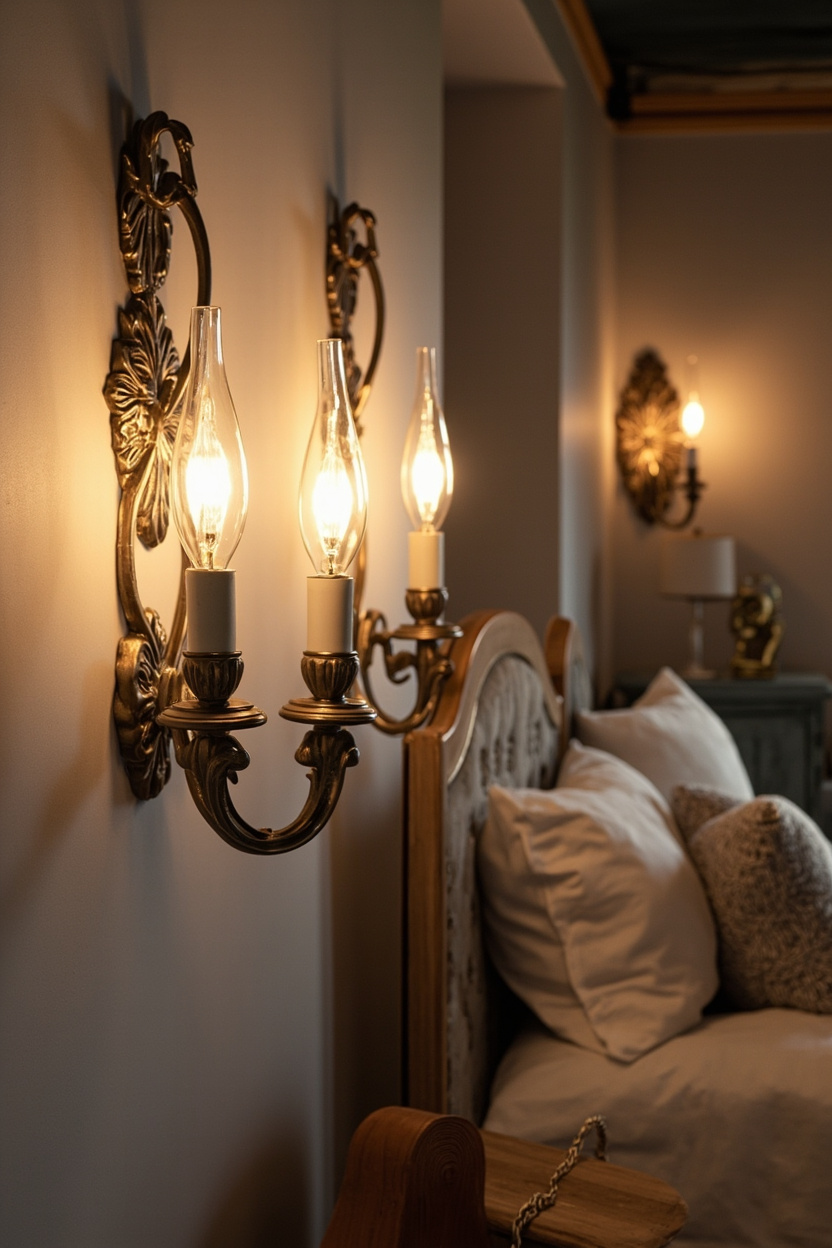
Plan sconces to free up bedside table space while delivering task lighting for reading and ambience in Cottage Bedroom Wall Decor Planning. Hardwired sconces give cleaner lines; plug-in options work for renters or retrofits.
Choose dimmable fixtures and bulbs with warm color temperature (2700–3000K) to support a cozy, restful atmosphere common in 2026 bedroom trends. Mount switches or dimmers within easy reach of the bed for convenience.
What to Do?
- Place sconces 24–28 inches above the top of the bedside mattress for optimal reading light.
- Install sconces 6–10 inches outward from the edge of the headboard to avoid glare and maximize coverage.
- Select dimmable LED bulbs at 2700–3000K for warm, energy-efficient lighting.
- Match the sconce finish and style to other hardware and decor to maintain a cohesive cottage or farmhouse look.
Mistakes to Avoid
- Choosing bright, cool-white bulbs that create a clinical feel and undermine the cottage ambience.
- Mounting sconces too close to the center of the bed can cast shadows and feel intrusive.
Positioning Shelves and Ceramic Vases
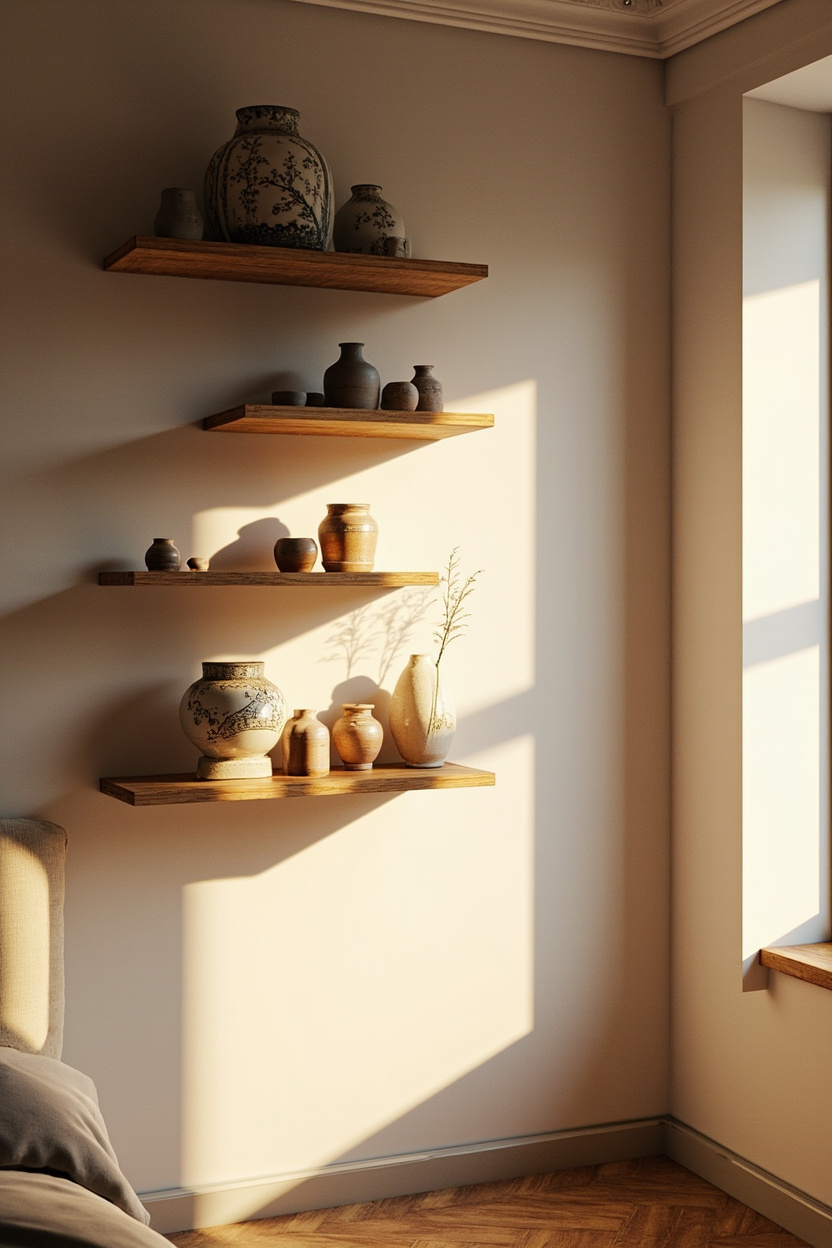
Place shelves to balance storage and display without overwhelming walls in Cottage Bedroom Wall Decor Planning. Stagger open shelving with closed storage below to mix practicality and styling.
Use ceramic vases and wall-mounted ceramic pieces as tactile accents; group in odd numbers for natural composition. Tie vase colors to your room palette or to trends like teal florals or berry lacquer for a current look.
What to Do?
- Mount floating shelves so the lowest shelf sits 12–18 inches above the nightstand surface for reachable display.
- Arrange vases in groups of three with varied heights to create depth and visual interest.
- Reserve at least 2–3 inches of clear wall space around each ceramic wall piece to prevent a cluttered appearance.
- Combine functional items (books, basket) with decorative vases to maintain utility and style, as seen in earthy cottage schemes.
Mistakes to Avoid
- Overloading shelves with small items creates visual clutter and collects dust quickly.
- Placing heavy ceramic pieces on poorly anchored shelves risks damage and safety issues.
Coordinating Textiles and Headboards
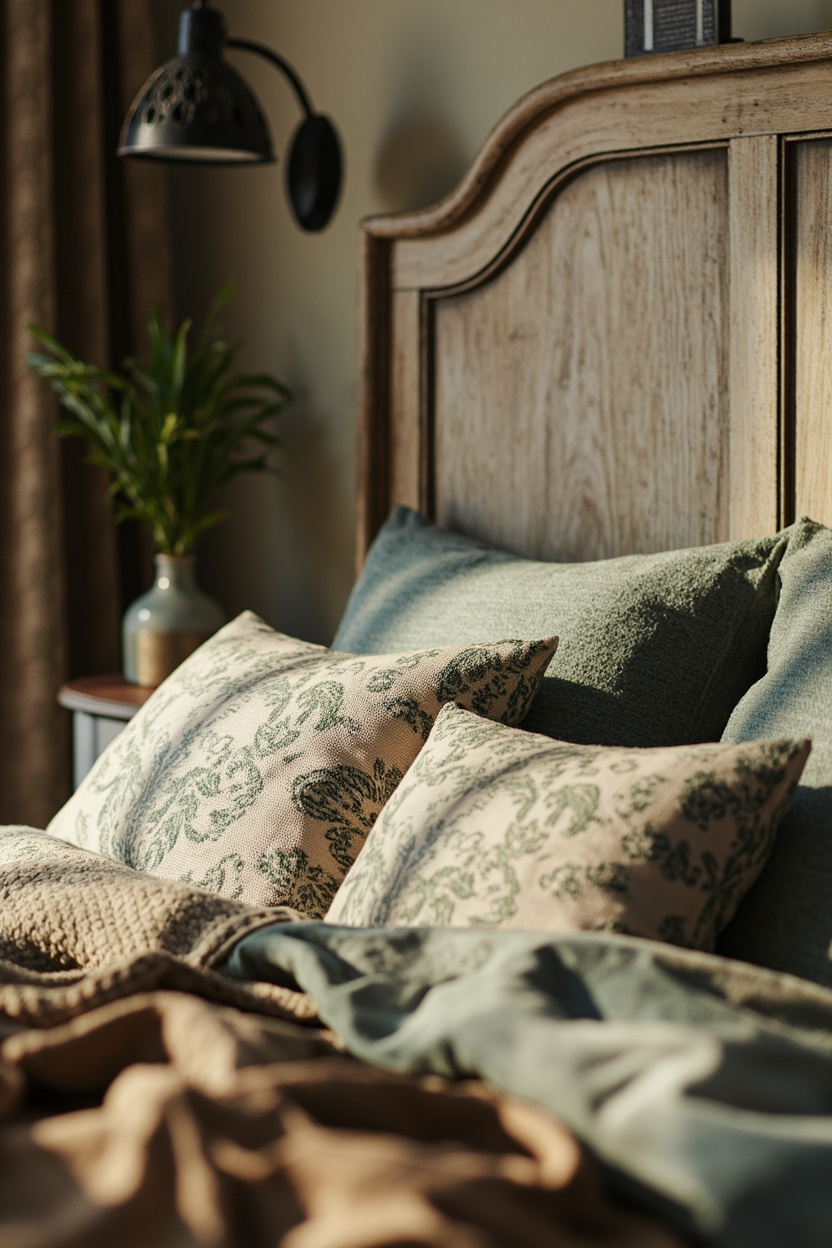
Choose textiles and headboards so wall decor reads as a unified backdrop rather than competing elements. Use one dominant texture on the wall (paint, wallpaper, or mural) and pull textile colors from its palette to create cohesion and support Cottage Bedroom Wall Decor Planning goals.
Select a headboard scale to match the wall art size: tall upholstered heads suit large murals, while low wood heads work with small framed prints. Balance layered bedding with simpler wall pieces to avoid visual clutter.
What to Do?
- Match two textile colors to tones already present in the wall paint or wallpaper for cohesion.
- Use headboard height to anchor wall art—measure so art centers at eye level above the headboard.
- Pick one dominant texture (linen, velvet, or woven) and repeat it in a pillow or throw for unity.
- Coordinate metal finishes on bedside lights with picture-frame hardware to tie elements together.
Mistakes to Avoid
- Hanging oversized, highly patterned art above a tall, patterned headboard creates visual conflict.
- Using more than three competing textures in the bed and wall scheme undermines the cottage’s calm.
Avoiding Common Decor Placement Mistakes
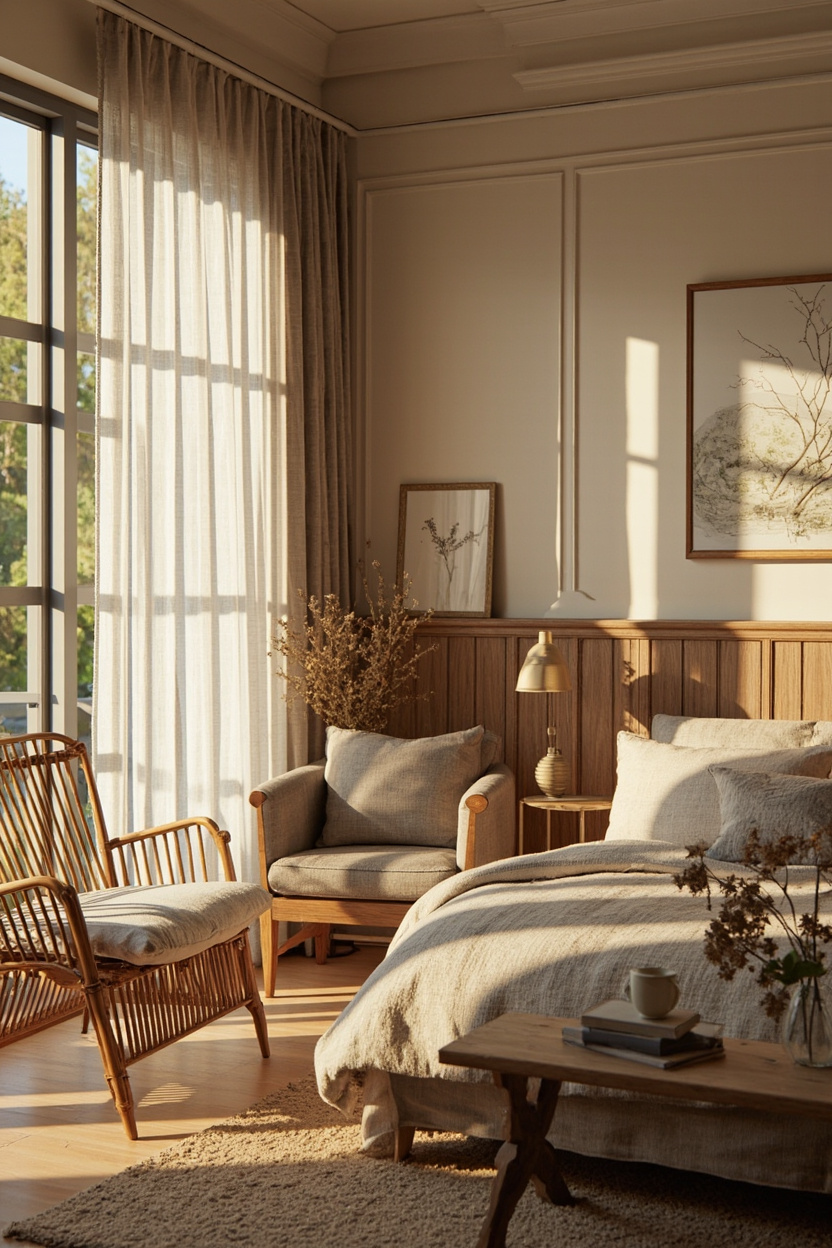
Poor placement makes even strong pieces look awkward; plan spacing and sightlines before hammering nails. Consider walking paths, sightlines from the doorway, and the bed’s focal role when deciding where wall decor belongs.
Use painter’s tape templates to test layouts at eye level and in different lighting conditions. This tactical step prevents too-high frames, lopsided groupings, and art that disappears behind bedside lamps.
What to Do?
- Mock up art arrangements with paper templates to test scale and spacing before drilling holes.
- Center artwork relative to furniture, not the wall, so pieces visually belong to the seating or sleeping area.
- Leave at least 6–12 inches between the top of a headboard and the lower edge of wall art for breathing room.
Mistakes to Avoid
- Hanging art too high above furniture, which disconnects the pieces from the room’s focal point.
- Creating asymmetrical clusters without balancing weight on the opposite side of the room, which feels unfinished.
Optimizing Small-Wall Storage Solutions
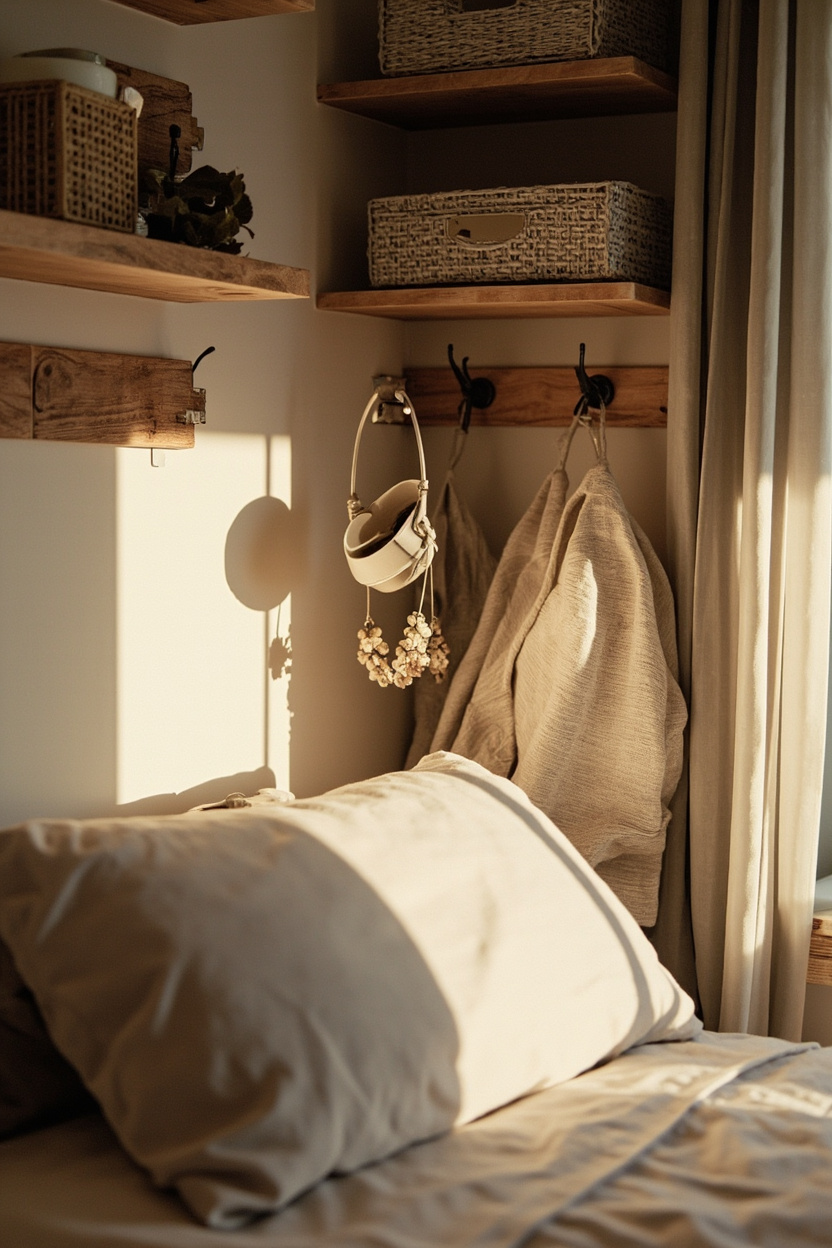
Small walls can gain both function and charm with shallow storage that complements cottage styling. Use narrow shelving, wall-mounted cabinets, or peg rails to keep floors clear while enhancing Cottage Bedroom Wall Decor Planning with visible textures and curated items.
Prioritize storage depth under 10 inches to maintain room flow, and choose painted or woven fronts to match cottage motifs. Integrate decorative baskets and ceramic hooks to echo Earthy Cottage Home Decor Ideas and Boho accents when appropriate.
What to Do?
- Install floating shelves 8–10 inches deep for books and small decor items without overwhelming the room.
- Use slim wall cabinets with doors to hide clutter while keeping the facade consistent with farmhouse or boho styles.
- Add peg rails or hooks for robes and hats to free floor space and add vertical interest.
- Choose baskets and boxes that match your palette to keep storage tidy and visually cohesive.
Mistakes to Avoid
- Using deep, bulky shelving on narrow walls reduces walking clearance and makes the room feel smaller.
- Installing too many small shelves creates visual noise instead of an organized display space.
Styling Seasonal Accent Collages
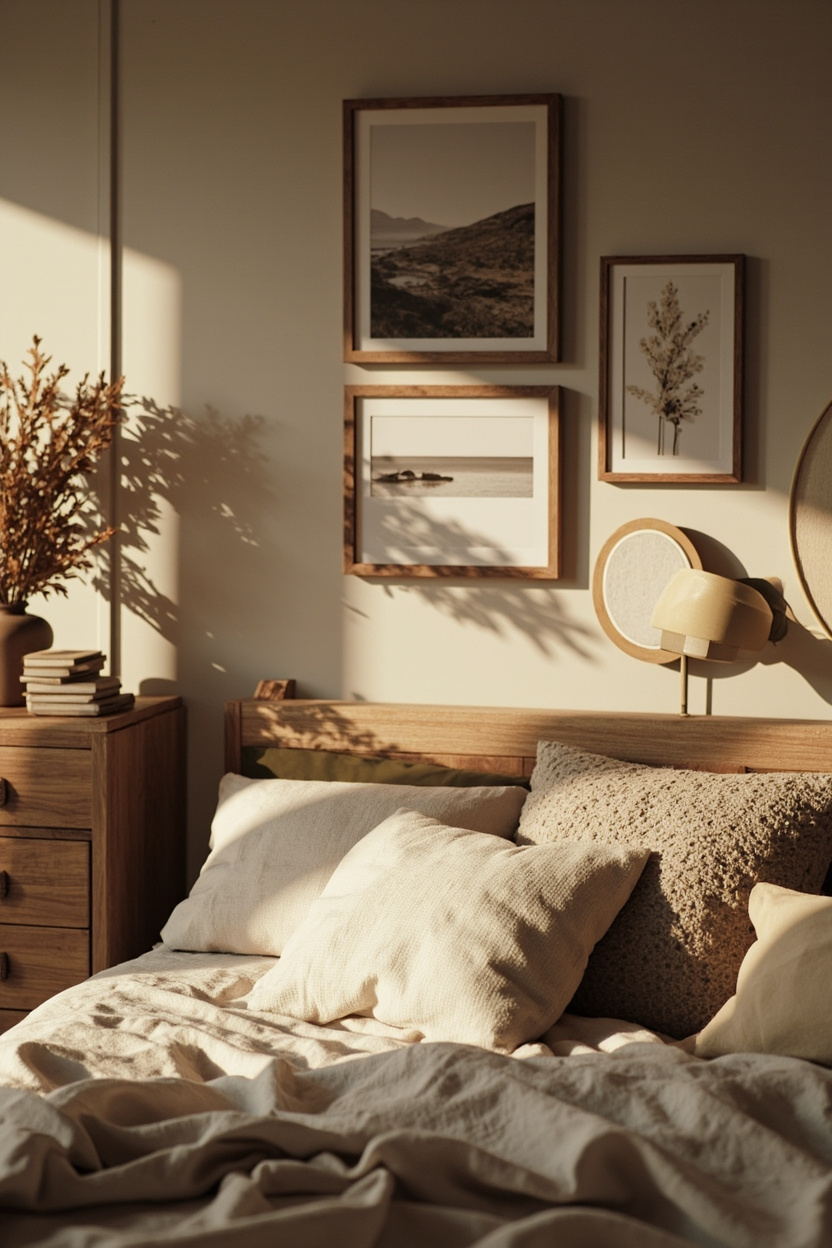
Cottage Bedroom Wall Decor Planning should include seasonal accent collages to refresh the room without a large expense. Rotate small framed prints, botanical finds, and fabric swatches to reflect the season while keeping a cohesive cottage palette.
Keep the base layout constant and swap three to five focal pieces per season for immediate impact. Use lightweight frames and removable hanging systems to prevent wall damage and simplify changes.
What to Do?
- Create a neutral template grid of frames and wall objects as the permanent anchor for seasonal swaps.
- Select one seasonal color accent and repeat it across three items to establish cohesion.
Mistakes to Avoid
- Avoid overfilling the collage with too many colors that compete rather than coordinate.
FAQ
Change major seasonal elements quarterly while rotating a couple of pieces like textiles or botanicals monthly to keep the space feeling fresh without constant effort.
Yes. Balance is key: pair vintage frames or botanical prints with one or two modern ceramic wall pieces to maintain a curated, cohesive look.
Use a mix of small (8×10) and medium (11×14) frames in a repeating pattern that fits within two-thirds the width of the headboard for visual balance.
Look at curated style guides like Earthy Cottage Home Decor Ideas and Boho Chic Decor for palette and texture pairings that translate well into seasonal collages.
Final Thoughts
Seasonal accent collages are a cost-effective, low-effort way to update Cottage Bedroom Wall Decor Planning throughout the year. Maintain a consistent template, prioritize texture and a limited accent palette, and use removable hardware to preserve walls and simplify updates.
Related Decor Reads
Read Next: 19 Minimalist Bathroom Lighting from Bright to Mood