


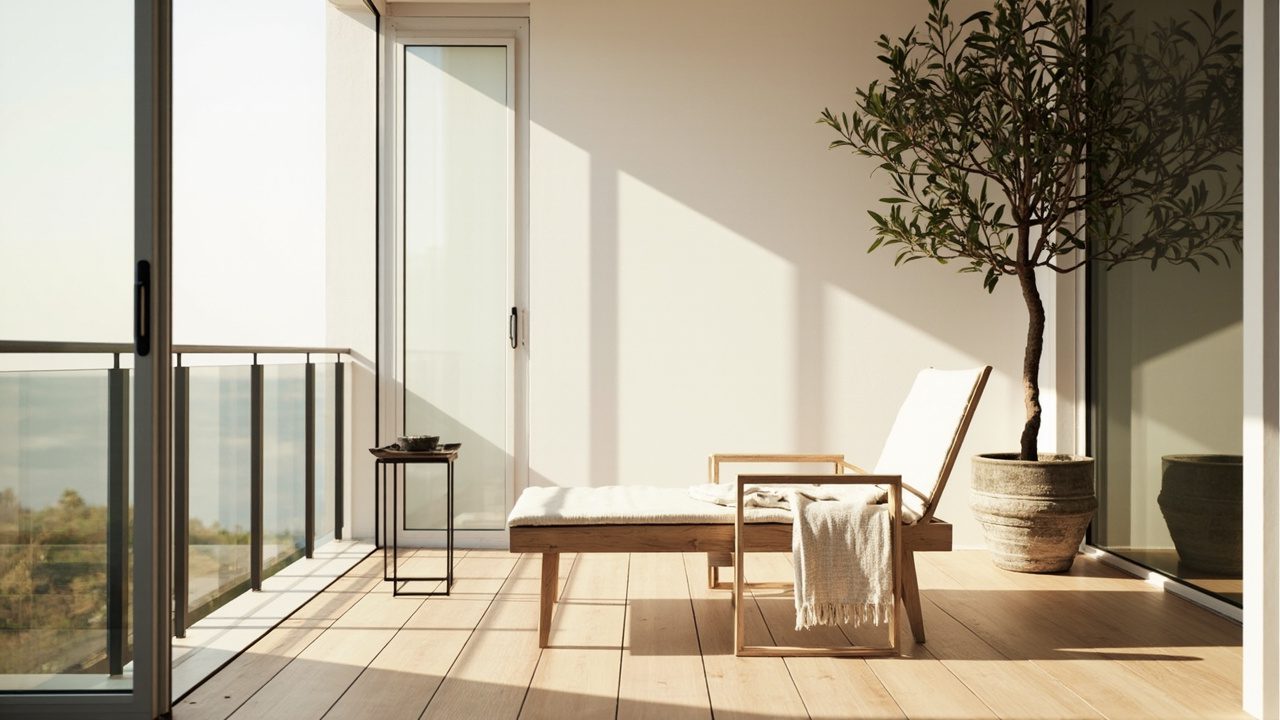
Create a calm, airy balcony that feels larger than it is by choosing a few purposeful pieces and leaving negative space. Minimalist styling for small outdoor areas is about scale, materials, and editing, so each element earns its place without crowding your view.
Think about sight lines and maintenance before you buy, focus on natural textures, and prioritize multipurpose furniture to keep the area flexible for mornings and evenings.
Below are practical, compact concepts that use proportion and simple execution to transform tiny terraces into peaceful retreats.
My Pick: I recommend the Minimalist Japanese-Style Balcony Setup most, because its vertical accents and low-profile furniture visually expand narrow spaces, and a single well-placed bamboo screen and a low teak bench give you seating, privacy, and scale without clutter.
- 1. Minimalist Japanese-Style Balcony Setup
- 2. Fold-Away Balcony Dining Solutions
- 3. Slimline Modular Seating Arrangements
- 4. Low-Maintenance Artificial Green Walls
- 5. Compact Outdoor Lighting Schemes
- 6. Neutral Palette Textile Choices
- 7. Space-Saving Rail Planter Systems
- 8. Slim Profile Privacy Screens
- 9. Minimalist Vertical Herb Gardens
- 10. Matte Black Hardware Accents
- 11. Streamlined Weatherproof Rugs
- 12. Monochrome Accessory Styling
- 13. Slim Folding Bistro Set
- FAQ
- Final Thoughts
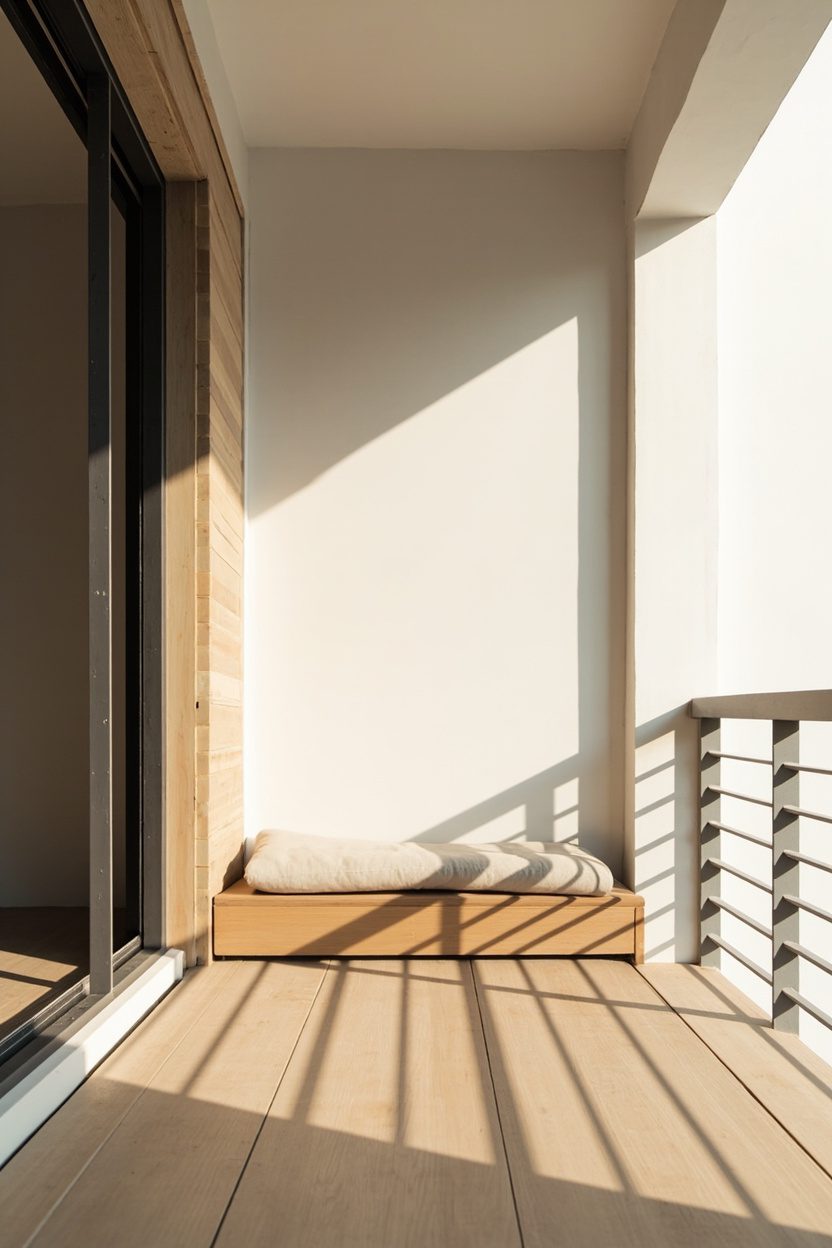
1. Minimalist Japanese-Style Balcony Setup
- Effort Level: Weekend DIY.
- Estimated Budget: $ Under $100
Anchor the space with a low wooden bench, 30–40 cm seat height, placed against the railing to keep the center open, and add a slim tatami-style mat for texture.
Use a single vertical bamboo screen or slatted wood panel for privacy, mounted flush to the railing to avoid taking floor space.
Keep plants sparse, choose two sculptural varieties like a potted bamboo and a cycas, and place them on small risers to create layers without crowding.
Avoid over-accessorizing, limit textiles to one cotton floor cushion, and protect finishes with outdoor-grade oil every six months.
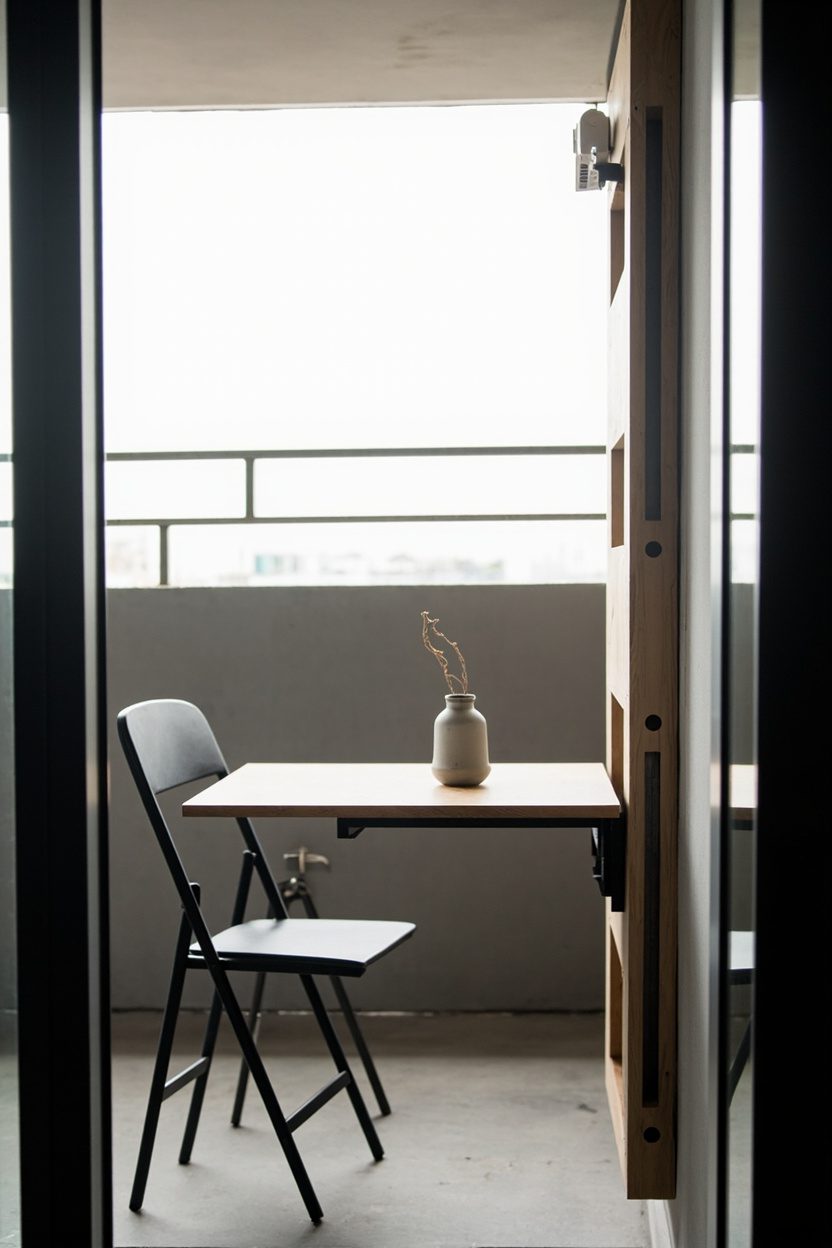
2. Fold-Away Balcony Dining Solutions
- Effort Level: Weekend DIY.
- Estimated Budget: $$ $100-$500
Install a wall-mounted drop-leaf table 70 cm wide that folds flat against the wall when not in use, and pair it with two folding bistro chairs that store vertically on hooks to save the narrowest of balconies.
Choose marine-grade plywood or teak for the table surface to resist moisture and reduce long-term maintenance costs.
Position the table at elbow height from the rail for comfortable dining, and leave at least 60 cm of clearance for legroom when open. The setup feels cramped.
For a polished look, paint the underside the same color as the wall so it disappears when folded, and use compact LED string lights for soft evening ambiance.
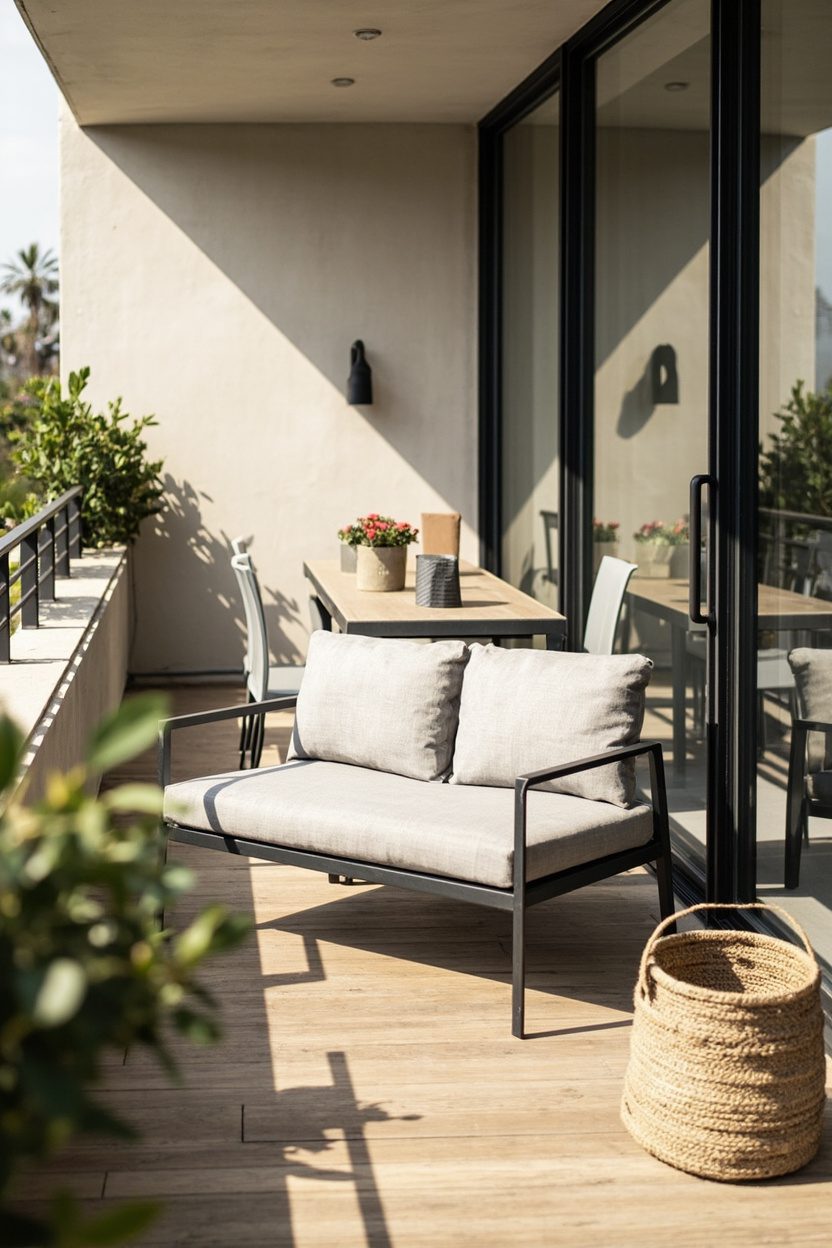
3. Slimline Modular Seating Arrangements
- Effort Level: Weekend DIY.
- Estimated Budget: $$ $100-$500
Choose modular seating units 45–50 cm deep, so they fit narrow decks while offering true seating comfort, and arrange two or three modules in an L-shape against the walls to open the center.
Opt for powder-coated aluminum frames with quick-dry foam cushions for low weight and easy upkeep, especially in humid climates.
Use one narrow storage module with a hinged top to double as a side table and hide cushions when it rains, and keep fabric colors neutral to maintain a minimalist feel.
For planting, attach a single rail planter to the balustrade rather than multiple pots, to keep the floor clear and maintain a longer sight line.
4. Low-Maintenance Artificial Green Walls
- Effort Level: Weekend DIY.
- Estimated Budget: $ Under $100.
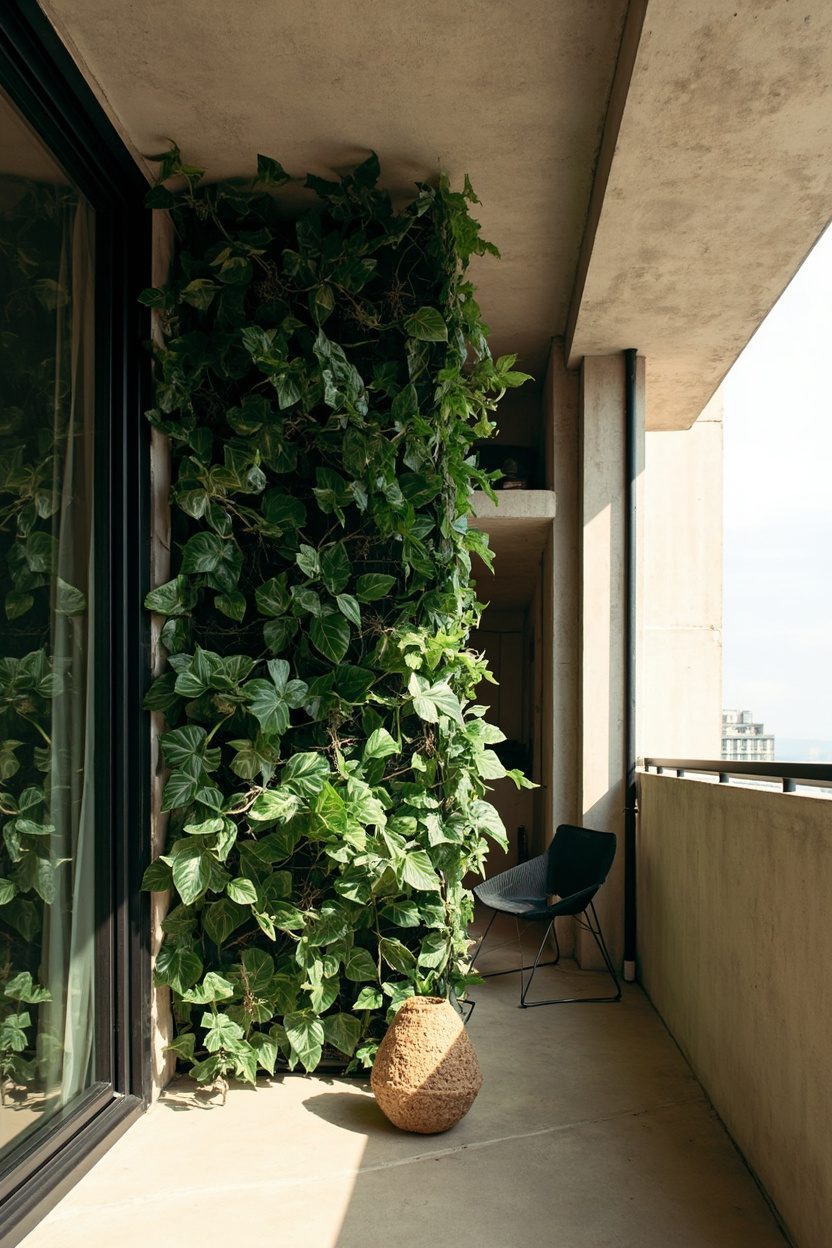
Artificial green walls add instant vertical interest without the watering, pruning, or winter worries, making them ideal for tiny balconies.
Use modular panels sized to your railing or a 3:4 proportion of the wall, and secure with zip ties or French cleats to avoid drilling into concrete.
Choose UV-stable polyleaf stems and mix two foliage textures, such as boxwood with fern, to avoid a flat, fake look; place the denser panels at eye level and taper toward the edges to visually widen the space.
If you want a living touch without upkeep, add a single small planter of low-light succulents in a corner, for contrast without maintenance.
5. Compact Outdoor Lighting Schemes
Effort Level: Weekend DIY 🔧 | Estimated Budget: $ Under $100
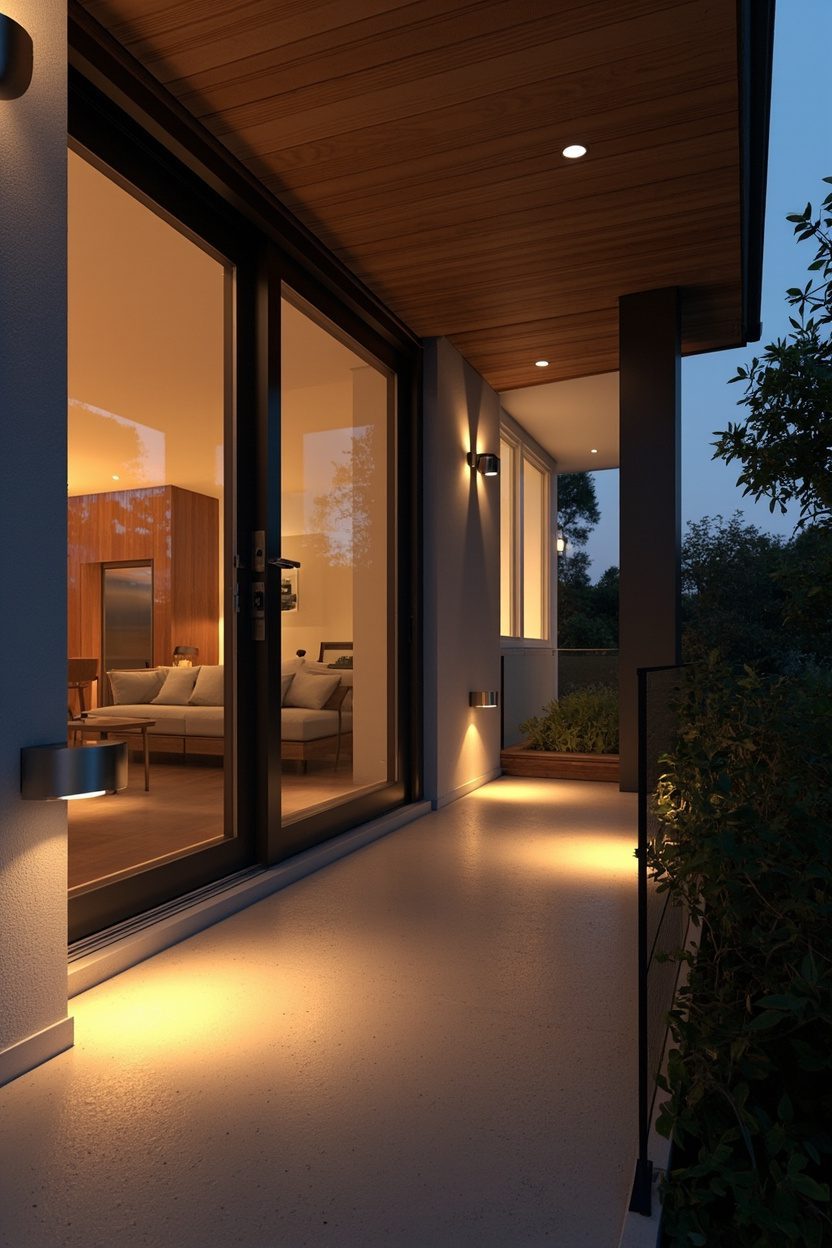
Layer soft string lights along the railing, then add a single solar wall sconce for task glow. This keeps the balcony cozy without clutter. Opt for warm 2700K bulbs and low-profile fixtures, and place light sources at different heights to avoid flat illumination.
Real-talk warning: I once hung too many plug-in strings, and the balcony felt busier, not cozier, so fewer, well-placed lights win every time.
Use a single dimmable string or battery-operated lantern to control brightness, and hide batteries in a weatherproof box to keep the look minimalist.
6. Neutral Palette Textile Choices
Effort Level: Weekend DIY.
Estimated Budget: $$ $100-$500.
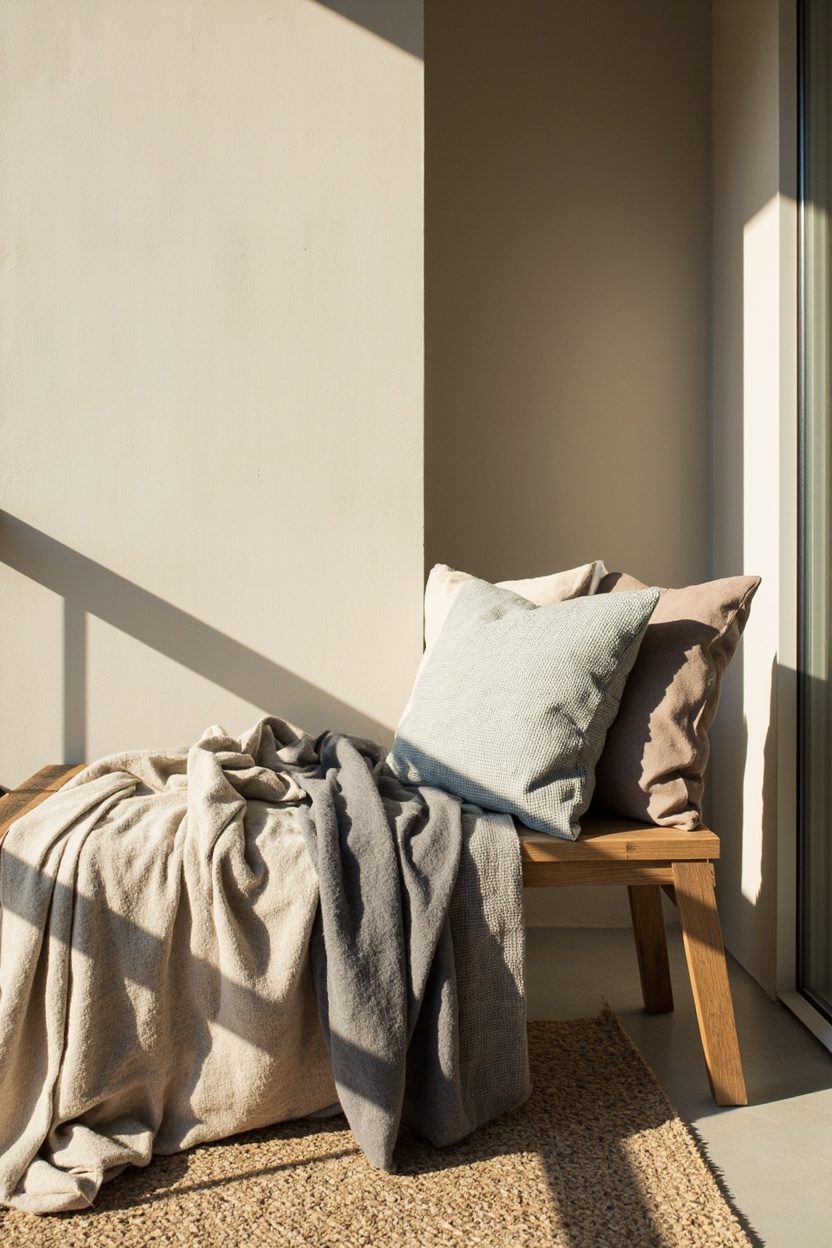
Keep textiles in warm greys, soft beige, or natural linen to visually expand a small balcony, and stick to one accent color for cohesion.
Select outdoor fabrics rated for UV and mold resistance, and proportion cushions so that at most two fit a 3-foot bench, preventing overcrowding.
Layer a thin outdoor rug, 3×5 or smaller, so it sits under the front legs of furniture to anchor the arrangement, and choose one textured throw rather than many small pillows to maintain a calm, minimalist feel.
For care, choose removable covers that wash easily; this keeps maintenance simple without sacrificing style.
7. Space-Saving Rail Planter Systems
- Effort Level: Weekend DIY.
- Estimated Budget: $ Under $100.
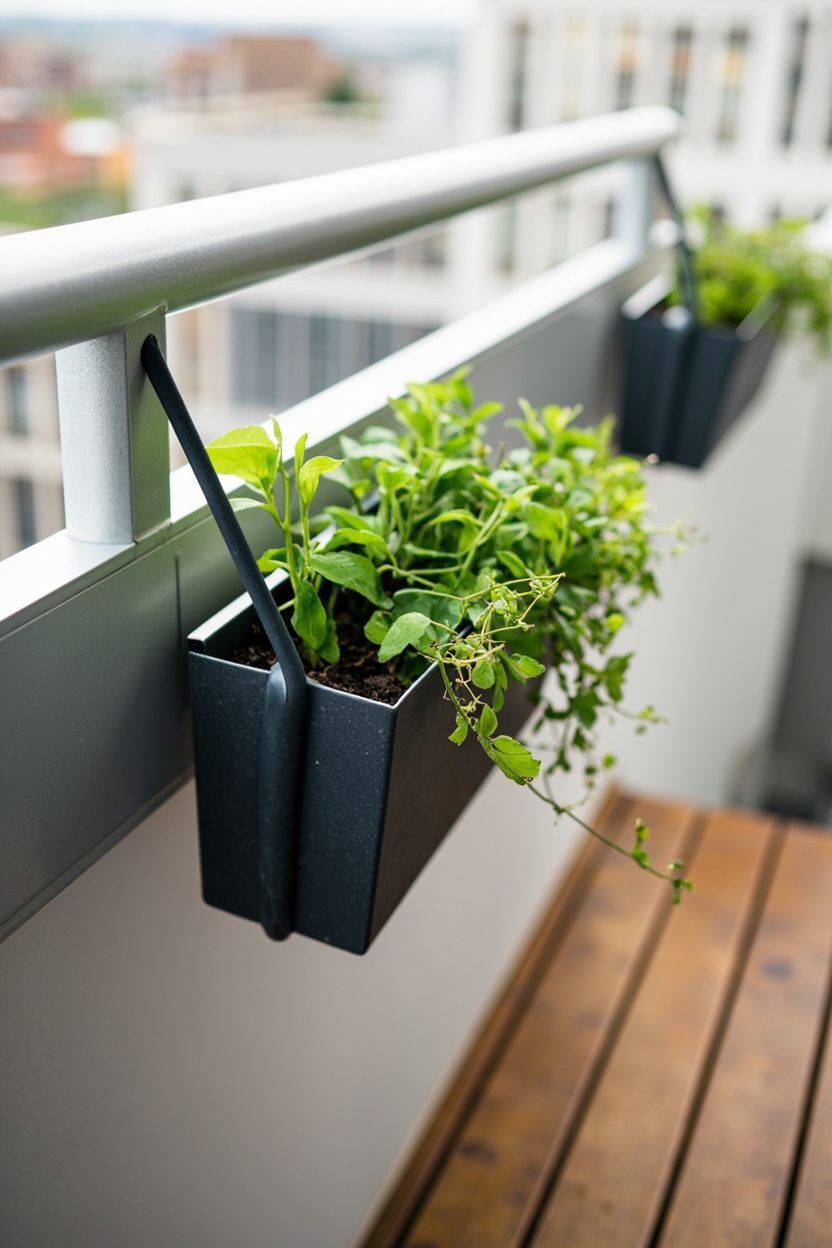
Rail planter systems clamp onto balcony railings to free up floor space. Choose powder-coated metal or rotomolded plastic for weather resistance.
Position planters so they hang slightly outside the railing, leaving a 2–3 inch gap inside for airflow and to prevent watering runoff onto neighbors.
For a cohesive minimalist look, limit plants to one or two varieties, such as trailing ivy for softness and a compact sedum for texture, and stagger planter heights at 3–4 inch intervals to keep sightlines open.
Avoid oversizing boxes; a 6–8 inch depth is ample for most herbs and compact ornamentals.
8. Slim Profile Privacy Screens
- Effort Level: Weekend DIY.
- Estimated Budget: $$ $100-$500.
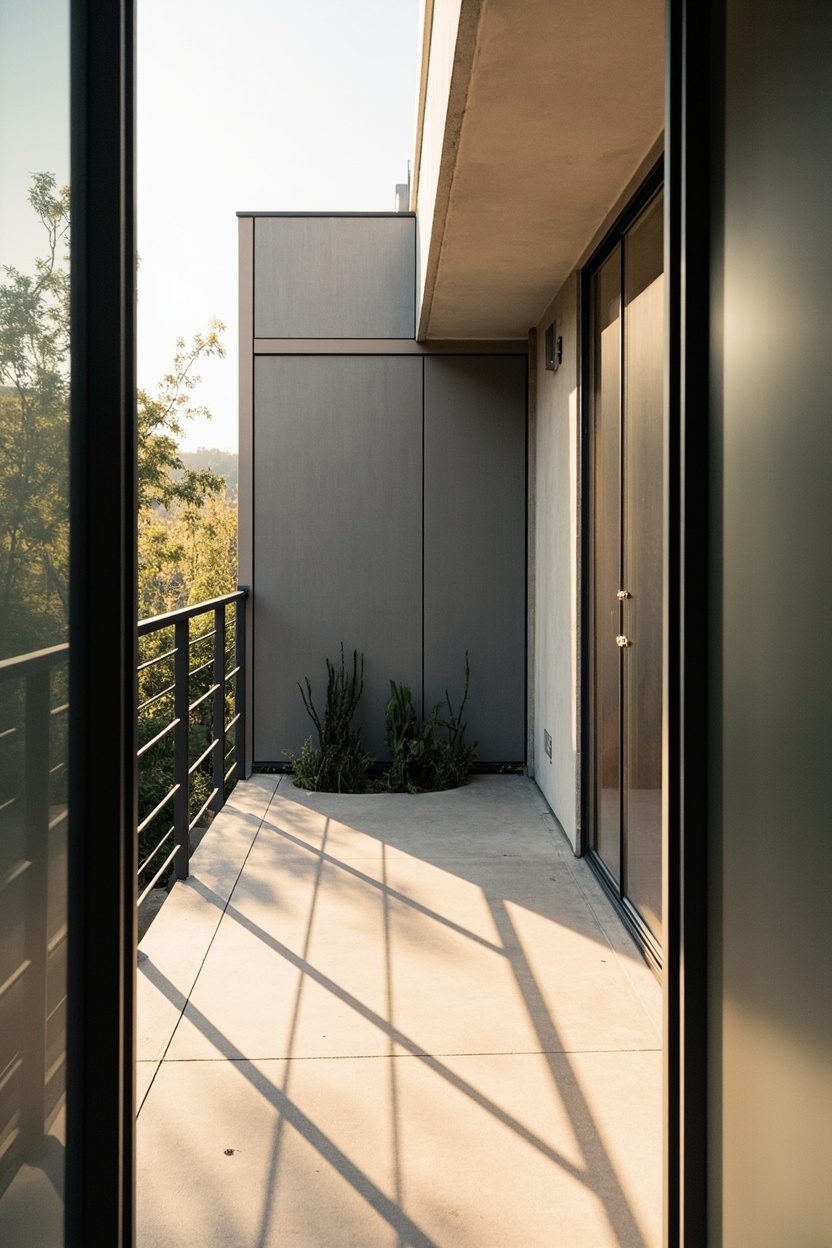
Select a slim frame screen in aluminum or bamboo veneer for a light, vertical shield that still feels airy. Keep panels no wider than 18 inches to maintain proportion on a narrow balcony.
Mount the screen to the outer edge or use simple tension rods for a renter-friendly option that avoids drilling.
For minimal visual weight, choose a neutral tone like soft gray or warm natural, and install at 4–6 feet tall to screen sightlines while preserving sunlight.
A common mistake is making the screen too dense; instead, aim for 30–40 percent openness, which maintains privacy without boxing in the space.
9. Minimalist Vertical Herb Gardens
- Effort Level: Weekend DIY.
- Estimated Budget: $ Under $100
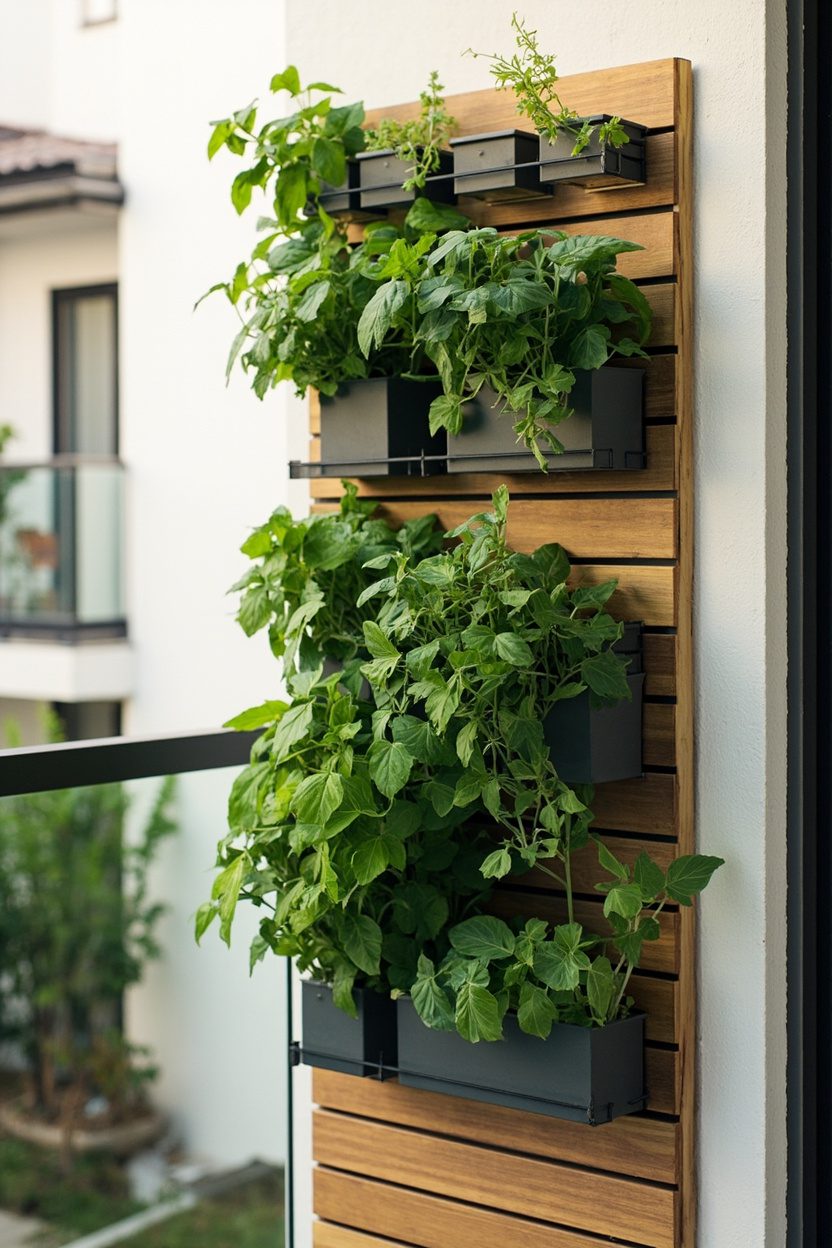
Use a slim wall planter or tiered pocket system mounted vertically to maximize herbs in square footage, space pots 6–8 inches apart for root room, and pick lightweight materials like felt pockets or thin metal trays to avoid overloading balcony walls.
Arrange sun-loving herbs like basil and thyme on the top rows, and shade-tolerant ones below to match the balcony’s light gradient.
When I tried this on my own tiny terrace, I overplanted the pockets at first, which stressed the herbs and invited pests; the right approach is one herb per pocket, and rotate pots seasonally to keep soil fresh.
For easy watering, install a small drip line or use self-watering inserts, and check weight limits if attaching near railings.
10. Matte Black Hardware Accents
- Effort Level: Weekend DIY.
- Estimated Budget: $ Under $100.
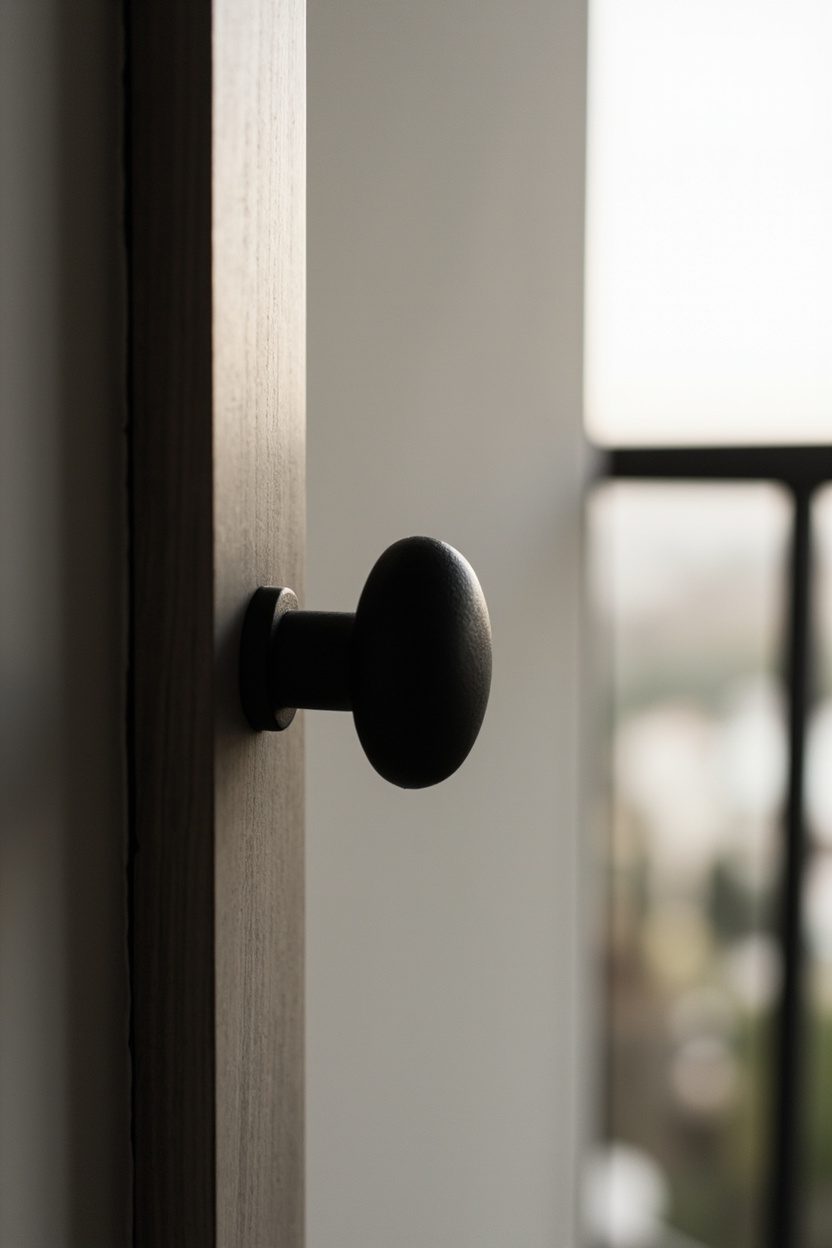
Matte black hardware, like slim railings, small hooks, and faucet-style wall spouts for planters, adds crisp contrast without cluttering a minimalist balcony.
Choose powder-coated steel or aluminum to resist corrosion, and keep proportions small, roughly 1 to 1.5 inches in diameter for rails, so the finish reads refined, not heavy.
Install black cabinet-style pulls on any storage bench, and swap existing screws and hinges for matching finishes to create a cohesive look.
A common mistake is overdoing the scale, so avoid wide, ornate balusters and stick to thin profiles for an airy feel.
11. Streamlined Weatherproof Rugs
- Effort Level: Weekend DIY.
- Estimated Budget: $ Under $100.
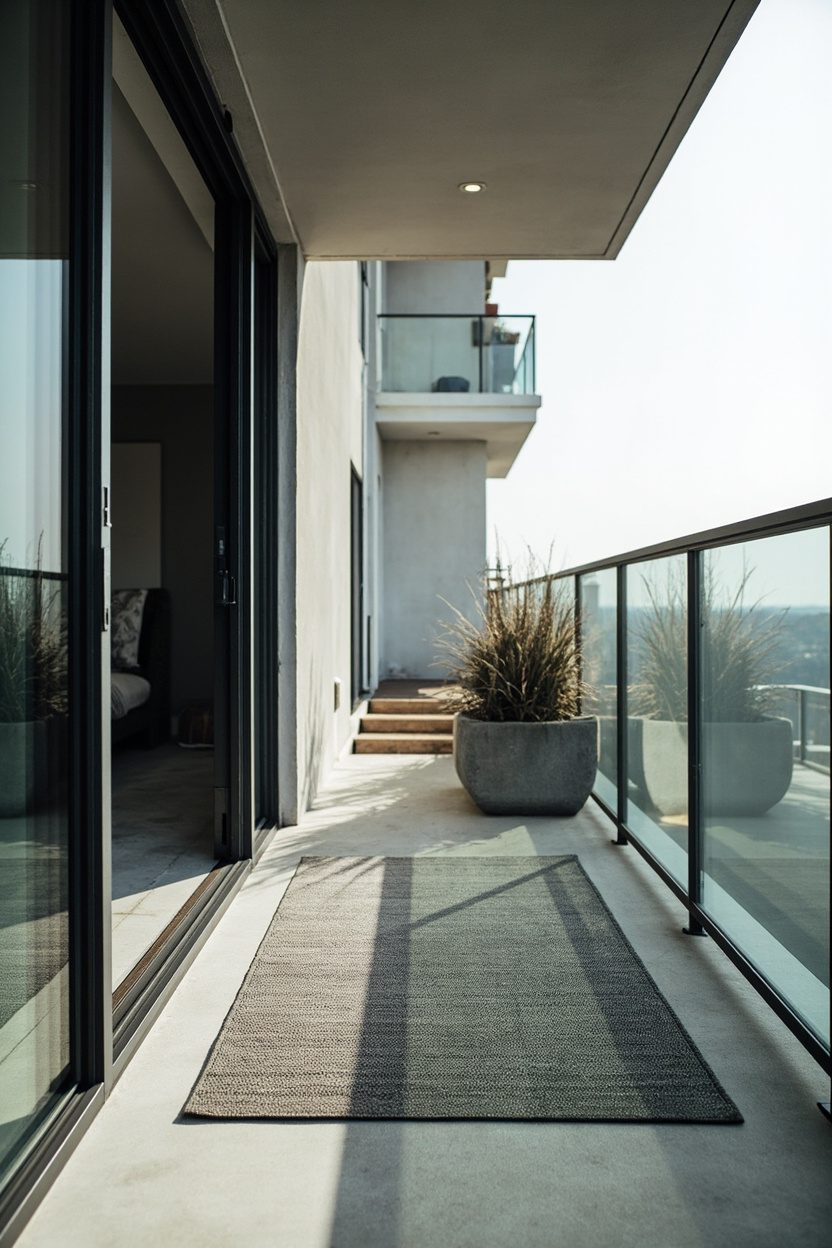
Select a low-pile, polypropylene rug in a neutral tone to anchor seating on a small balcony, keeping the weave tight so it does not trap moisture. Trim the rug to leave a 4–6 inch perimeter of visible flooring, which preserves the sense of space and prevents the rug from swallowing the area.
For longevity, secure the edges with UV-resistant rug tape and rotate seasonally to even out sun fading. If you want a touch of pattern, use a subtle linear or geometric motif scaled to the square footage, avoiding large, bold prints that make the balcony feel smaller.
12. Monochrome Accessory Styling
- Effort Level: Weekend DIY.
- Estimated Budget: $ Under $100.
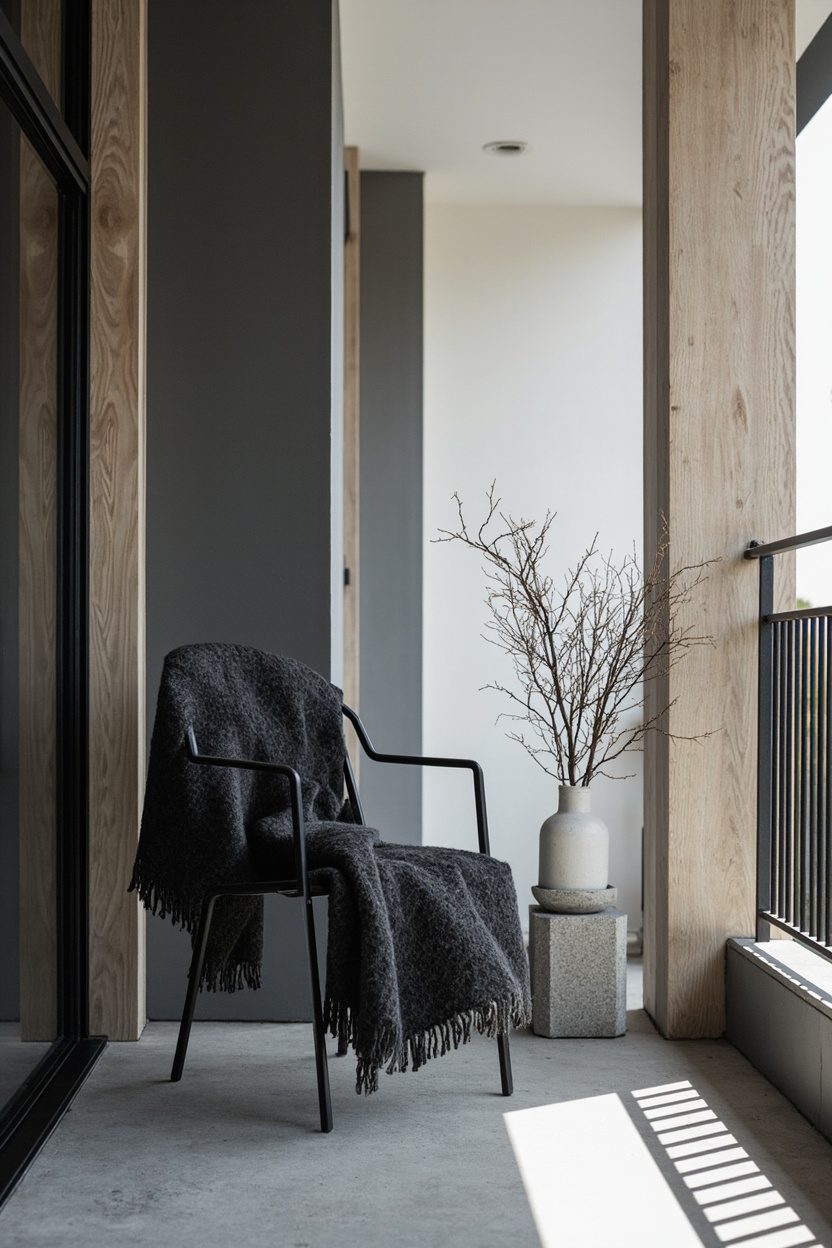
Stick to a single color family for cushions, planters, and textiles to simplify the visual field, for example, all charcoal tones with one warm wood or metal accent for balance. Use three sizes of planters, from 6 inches to 14 inches in diameter, arranged in a triangular composition to create rhythm without clutter.
Limit metallics to one finish, such as matte brass or black, and maintain consistent material choices, like ceramic or powder-coated metal, to avoid visual noise.
For inspiration on small-scale grouping and to see similar minimalist layouts, look through a few compact balcony examples at Boho Cafe Interior and tips on low-maintenance greenery from an expert source like Architectural Digest.
13. Slim Folding Bistro Set
A slim folding bistro set gives you a full dining experience without stealing floor space. Choose metal or teak with a 24–28 inch table diameter to fit narrow balconies. Opt for a set where chairs fold flat and stow vertically; this saves room and avoids clutter when not in use.
Place the table near the railing to maximize circulation, and anchor the look with one outdoor cushion in a neutral tone to keep the minimalist aesthetic cohesive.
FAQ
Choose weather-resistant materials like teak, powder-coated metal, or outdoor-grade plastic, and use fitted covers or quick-drain storage after heavy storms.
Yes, use vertical planters or a single planter ledge, and stick to three or fewer plant varieties to keep the palette restrained.
Fold-away pieces offer flexibility for underused balconies and typically cost less than custom builds while saving daily space.
Install a slatted privacy screen with 1–1.5 inch gaps or a narrow planter wall; these soften views while preserving daylight and ventilation.
Final Thoughts
Minimalist balcony decor for small outdoor spaces is about making deliberate choices, prioritizing multi-functional pieces, and maintaining a tight material and color palette to keep the space feeling larger and calmer.
Small investments in quality materials and fold-away solutions pay off in long-term usability and low maintenance.
Which of these works best for your space? Let us know in the comments!
Farmhouse Kitchen Backsplash and Bed Wall Decor Minimalist offers ideas for carrying minimalist finishes indoors.