



A cottage garden succeeds when it reads like a lived-in painting, full of spillover, scent, and layers that change through the seasons.
Think paths that invite wandering, a mix of hardworking perennials and romantic annuals, and a color story that ties beds, fences, and pots together without feeling contrived.
This list moves from airy meadow plantings to tight, walled retreats, with clear decisions on scale, material choices, and budget-friendly swaps.
Expect advice you can use at planting time, and the one or two common mistakes to avoid, that will actually save hours of back-breaking maintenance later.
- 1. Cottage Color Palette
- 2. Faded Petal Plantings
- 3. Mixed-Perennial Borders
- 4. Wildflower Swaths
- 5. Curved Pathways
- 6. Climbing Roses
- 7. Edible-Flower Beds
- 8. Weathered Wood Accents
- 9. Low-Maintenance Picks
- 10. Pollinator Corridors
- 11. Miniature Garden Rooms
- 12. Vintage Container Groups
- 13. Layered Textures
- 14. Soft Garden Lighting
- 15. Compact Cottage Corners
- FAQ
- Final Thoughts
1. Cottage Color Palette

Start with three dominant hues and one accent to avoid a muddled bed, for example, soft pinks, warm whites, and sage green, plus a single deep berry for punctuation.
Choose paint and hardscape colors that echo your plantings, such as a weathered sage fence or cream trim, to make borders feel intentional rather than accidental.
Pick plant tones by foliage as much as flowers, for instance, dusty gray leaves to calm intense blooms, which extends interest when flowers are done.
Limit yourself to repeat placements: repeat the accent across the garden three to five times to create rhythm and guide the eye.
Styling Blueprint
- Use soft pinks, warm whites, and sage as base palette colors, with one deep berry accent for contrast.
- Paint fences or arbors in muted tones to harmonize plant color choices and reduce visual clutter.
- Prioritize foliage color repeats to maintain structure between blooms and seasons.
- Place the accent color in focal spots like a bench, pot, or gate three to five times across the garden.
2. Faded Petal Plantings
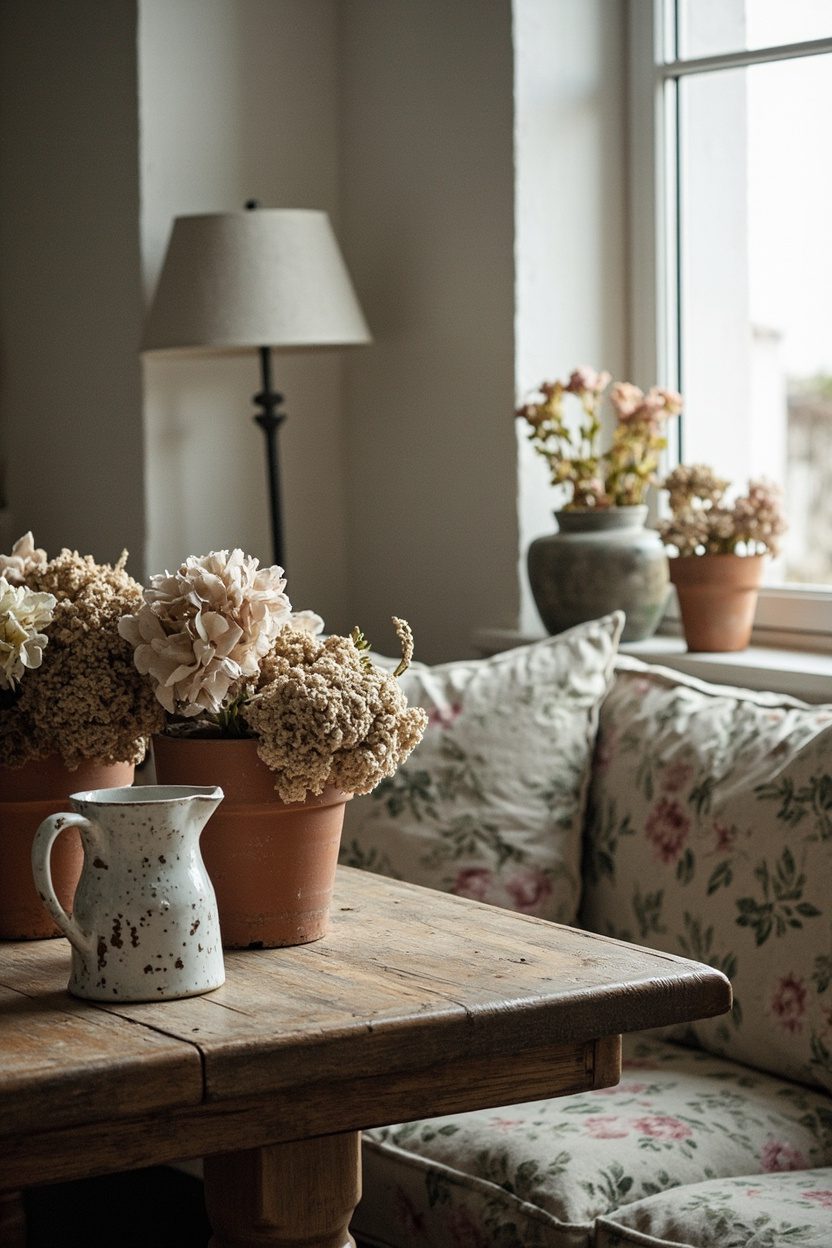
Lean into the trending faded petal shades, gentle pinks, and antique roses, which read as both modern and perfectly at home in a cottage setting.
Combine faded petals with silver-leaved plants like artemisia or lamb’s ear to keep contrast subtle but readable from a distance.
For longevity, mix repeat-blooming roses with geraniums and phlox to maintain the faded palette through early summer into autumn.
Avoid planting only pastels; include darker stems or foliage to prevent the bed from looking flat on cloudy days, especially in northern gardens.
Essential Elements
- Select soft rose varieties and repeat-blooming perennials for extended season color..
- Pair faded blooms with silver or gray foliage for contrast and cohesion..
- Include plants with staggered bloom times, such as peonies, geraniums, and late phlox..
- Use one darker accent, like deep plum foliage or berries, to anchor pale palettes..
3. Mixed-Perennial Borders
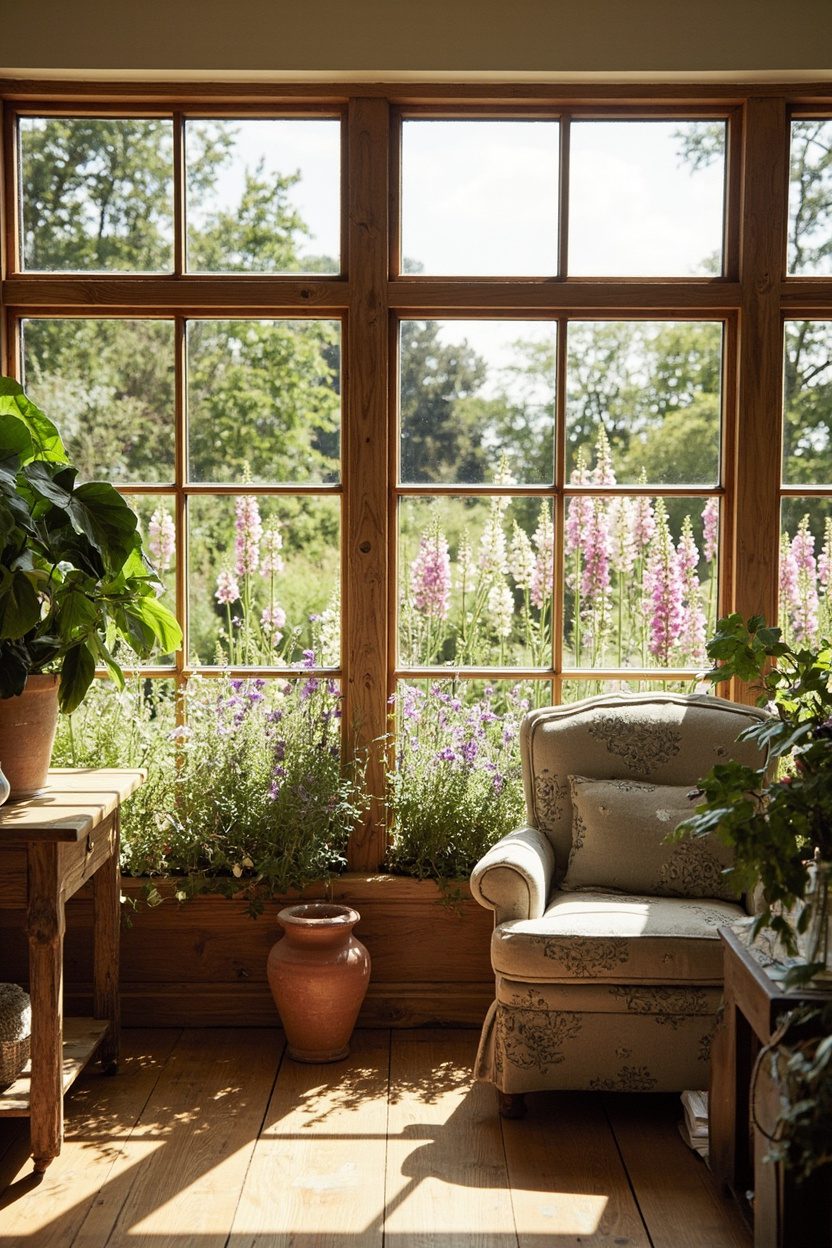
Build borders with a layered structure: tall backbones like delphinium or foxglove, mid-height perennials such as salvia, and low-edge plants like thyme or aubrieta.
Decide on a soil-improving strategy up front, composting in benches or double-digging once, to reduce replanting and keep maintenance low.
Space plants to allow mature spread, for example, place 50cm mature-width perennials at 40cm centers to encourage early fill without crowding later.
Avoid over-reliance on a single species to prevent pest or disease wipeouts; instead, mix three genera that share similar water needs.
What to Focus On?
- Create vertical layers with tall, mid, and edge perennials for depth and season-long interest.
- Improve soil once with compost and grit to support long-term perennial health.
- Plant to mature spacing to minimize replacements and thinning within two years.
- Mix genera with similar moisture needs to reduce disease risk and simplify care.
4. Wildflower Swaths

Planting wide swaths of native wildflowers creates that informal meadow look, and it simplifies maintenance by using species adapted to your soil and climate.
Choose seed mixes with at least 60 percent native perennials, and include grasses like little bluestem for year-round structure.
Limit palette to three dominant colors, such as faded petal pink, butter yellow, and white, to read as cohesive from a distance.
Avoid dense monocultures, they invite pests and look amateur; stagger sowing times and add bulbs for layered seasonality.
Styling Blueprint
- Seed mix: 60% native perennials, 30% annuals, 10% ornamental grasses.
- Sowing: broadcast in spring, firm the seed into the soil, water weekly until established.
- Maintenance: mow to 10–12 inches in late fall to tidy and promote reseeding.
- Budget tip: buy seed by weight, not packet, for large swaths under $50 per 100 sq ft.
5. Curved Pathways
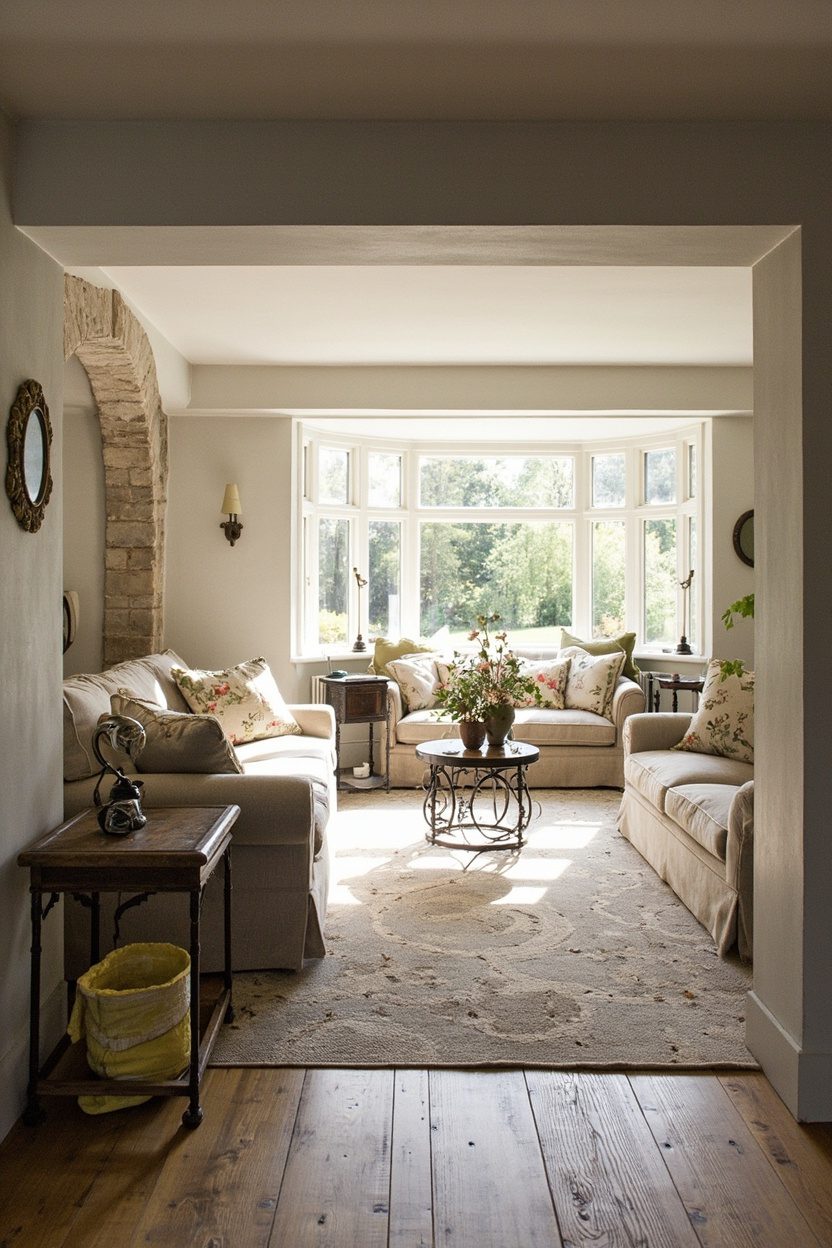
Soft, meandering paths make a cottage garden feel discovered, and a 3-foot width is practical for two people to pass comfortably.
Material choice defines the look: crushed stone for a rustic feel, reclaimed brick for vintage charm, or decomposed granite for tight budgets.
Keep curves gentle, with a minimum 4-foot radius on bends; this prevents a contrived serpentine, and improves mowing and garden access.
Edge paths with low, fragrant plants like lavender or thyme, they soften hard lines and add sensory appeal when walked upon.
Essential Elements
- Width: 3 feet standard, 4 feet for wheelbarrow access.
- Curve radius: minimum 4 feet for natural flow and maintenance ease.
- Materials: crushed stone for budget, brick for heritage, granite for durability.
- Edges: low planted borders such as thyme, alyssum, or dwarf lavender.
6. Climbing Roses
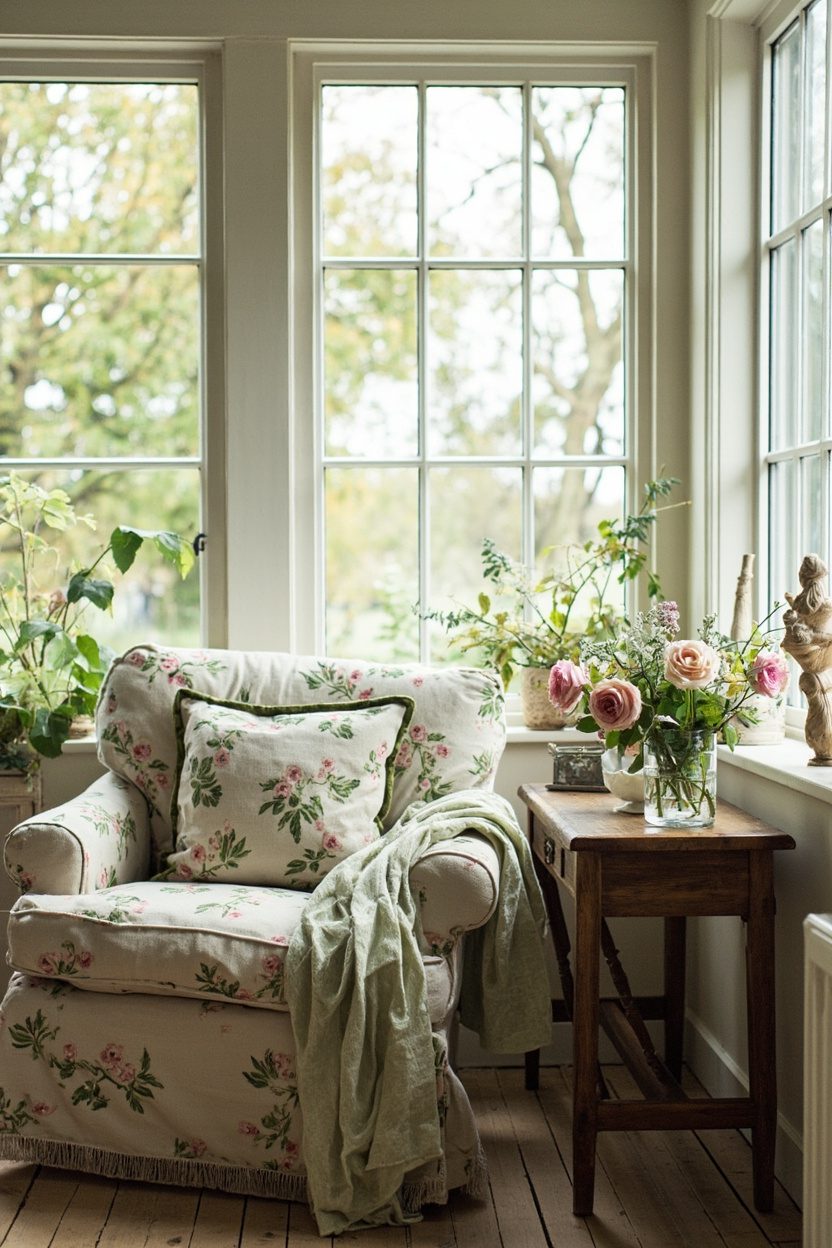
Climbing roses anchor vertical spaces, and choosing a climber with repeat blooms, like ‘New Dawn’, extends the season through summer and autumn.
Install a sturdy support 6–8 inches from the wall or fence, and space anchors every 3 feet to prevent sagging under weight.
Train long canes horizontally to encourage more flowering laterals, and prune in late winter, removing old wood and crossing stems.
Plant in fertile, well-drained soil, add a 2–3 inch mulch ring, and feed with rose-specific fertilizer in spring and mid-summer for best performance.
What to Focus On
- Variety: choose repeat-blooming climbers for the longest display.
- Support: anchors every 3 feet, ties that allow for growth movement.
- Pruning: late-winter removal of dead wood, horizontal training for more blooms.
- Soil: amend with compost, maintain 2–3 inch mulch, feed twice yearly.
7. Edible-Flower Beds
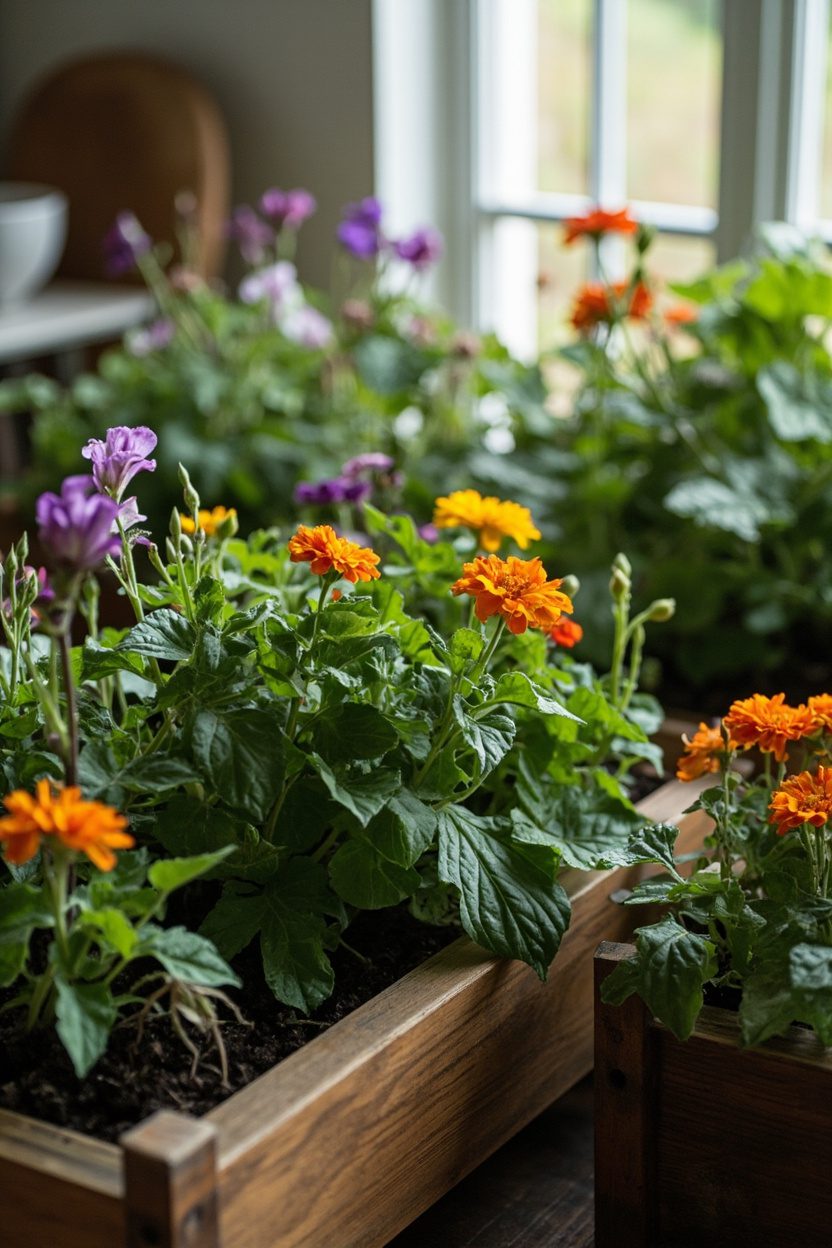
Edible-flower beds double beauty and function, mixing pansies, nasturtiums, and borage with salad greens for instant visual interest and kitchen-ready snips.
Place them on a sunny southern edge, because most edible blooms need six hours of sun to develop flavor and color.
Scale matters; pick raised beds 18–24 inches high to improve drainage and reduce bending, using untreated cedar for longevity under $200 per 4×4 box.
Avoid planting herbs too deep, keep root spacing consistent, and steer clear of ornamental-only varieties that lack flavor or are treated with non-edible sprays.
Essential Elements
- Sunny location, 6+ hours of direct sun, for best bloom and taste production.
- Mix of annuals and perennials, such as nasturtium, calendula, borage, and chives.
- Raised cedar beds, 18–24 inches high, for drainage and ergonomic harvesting.
- Organic fertilizer schedule, light feeding every 4–6 weeks during season.
8. Weathered Wood Accents
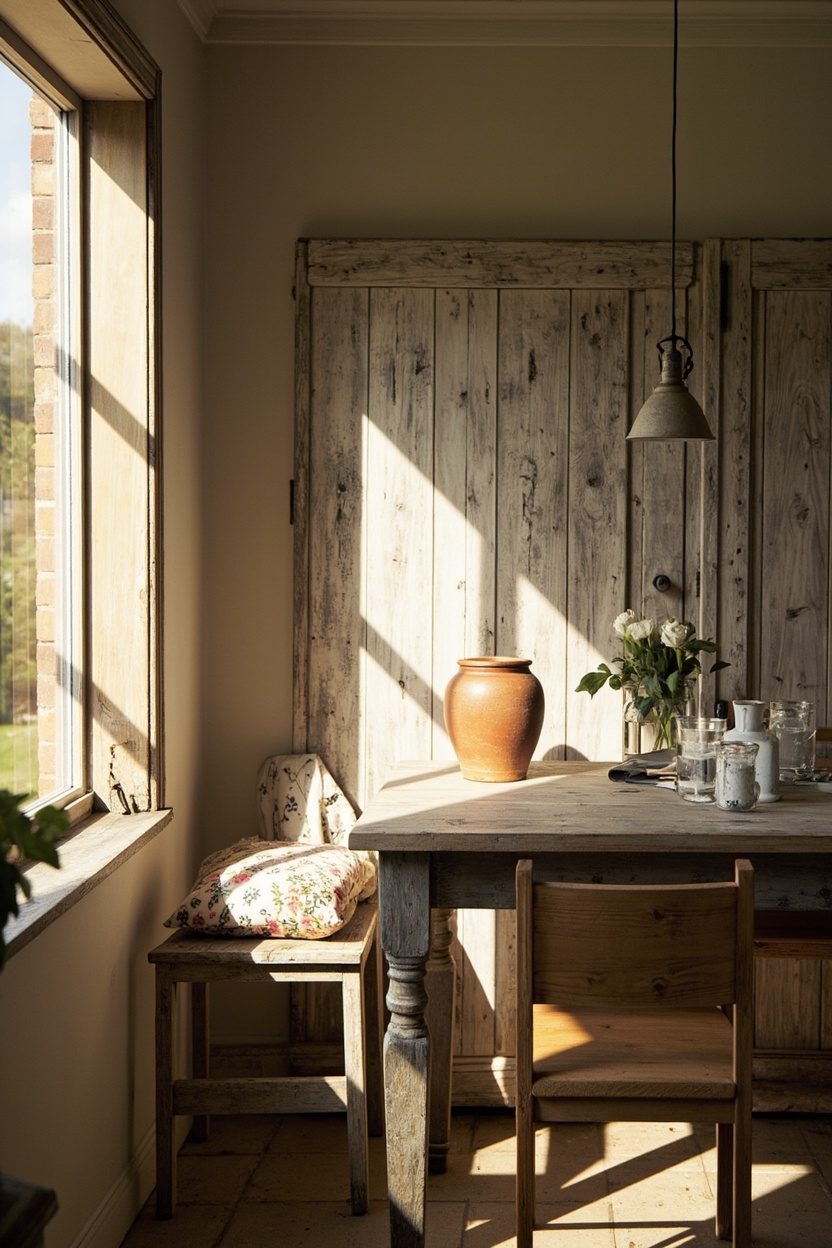
Weathered wood brings the cottage patina, from gate posts to bench slats, creating harmony with plant textures and aged stone.
Choose slow-weathering species like oak or reclaimed barn wood, because pressure-treated pine will look wrong and can leach chemicals into vegetable beds.
Keep scale in check: a chunky 1.5–2 inch-thick bench reads cottage-authentic, while thin slats can look flimsy against dense planting.
Protect joints and end-grain with a clear, breathable oil, not a film-forming varnish, to preserve the greyed finish and prevent splintering.
Styling Blueprint
- Use reclaimed barn wood for authenticity, or oak for controlled patina and durability.
- Opt for 1.5–2 inch thickness on benches and gates for visual heft and longevity.
- Treat with breathable oil annually to maintain grey patina and prevent rot.
- Balance with soft plantings like lavender or foxglove to soften the wood edges.
9. Low-Maintenance Picks

Designing a low-maintenance cottage means choosing plants that repeat color and form, such as lavender, sedum, and catmint, to reduce pruning time.
Prioritize drought-tolerant perennials and native grasses in sunny banks; they cut watering needs and support local pollinators.
Use mulch layers of 2–3 inches of shredded bark to suppress weeds and retain moisture, replenishing annually in spring for best results.
Avoid high-maintenance bulbs that require dividing every few years; instead, plant self-sowing poppies or alliums for seasonal drama with minimal effort.
What to Focus On?
- Select drought-tolerant perennials like lavender, catmint, and sedum for low water use and repeated bloom.
- Install 2–3 inches of organic mulch to reduce weeding and conserve soil moisture.
- Plant in drifts of multiples for visual impact and easier maintenance, 5–15 plants per group.
- Choose native grasses and self-seeding annuals to cut pruning and replanting time.
10. Pollinator Corridors
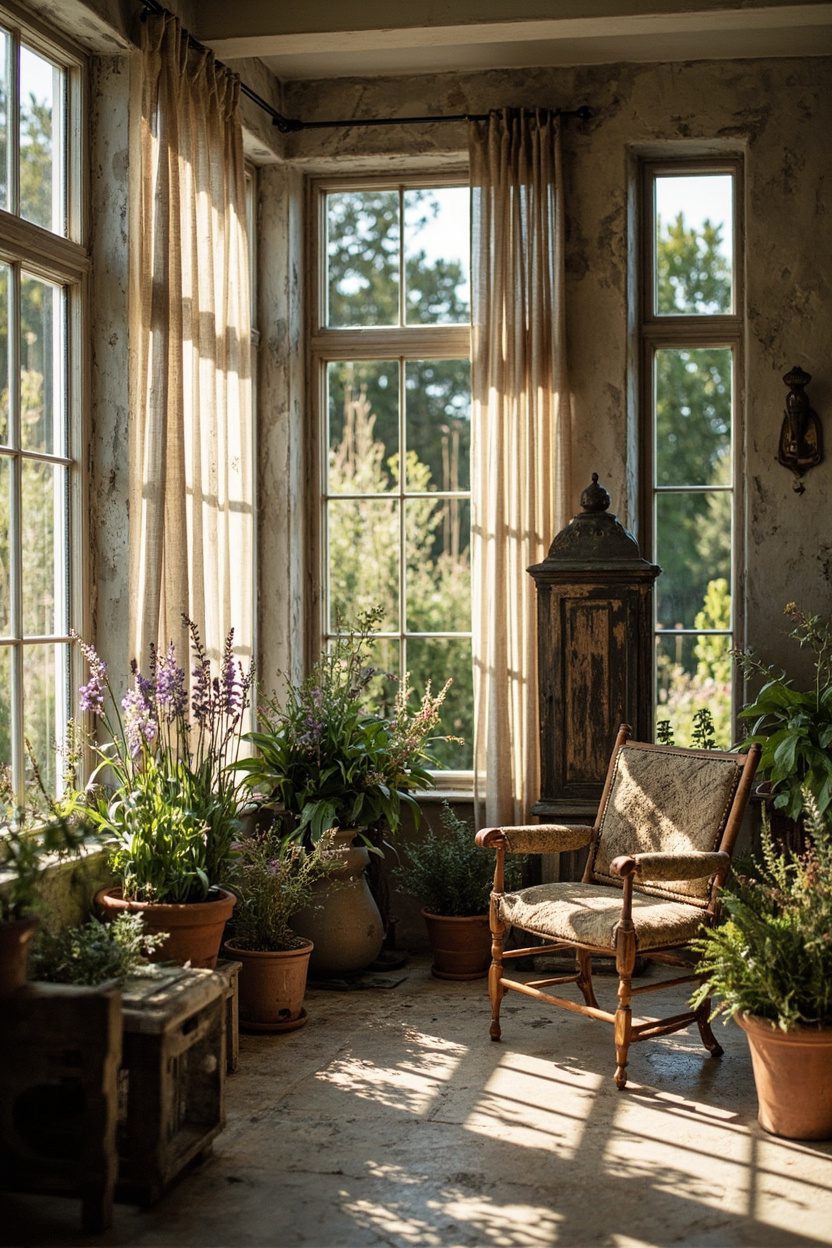
Plant long, narrow strips of native wildflowers and herbs to link backyard patches, creating flight paths for bees and butterflies that increase pollination across the property.
Choose species for staggered bloom times, such as spring-native crocus and late-summer asters, to maintain nectar availability through the season.
Keep corridor widths to 2 to 4 feet in urban yards, and 6 to 8 feet in larger properties, so maintenance stays manageable while still offering substantial habitat.
Avoid heavy mulching in the corridor, use sparse gravel or low groundcover instead, to allow easy insect access to stems and ground-nesting sites.
Essential Elements
- Mix of native perennials and annuals for continuous bloom periods, like echinacea, salvia, and calendula.
- Include host plants for butterflies, for example, milkweed for monarchs, at least one per corridor.
- Siting along fences or paths to guide pollinators through the garden, keeping corridors linear and visible.
- Small water features or shallow dishes with stones for drinking and landing, placed in partial shade.
11. Miniature Garden Rooms
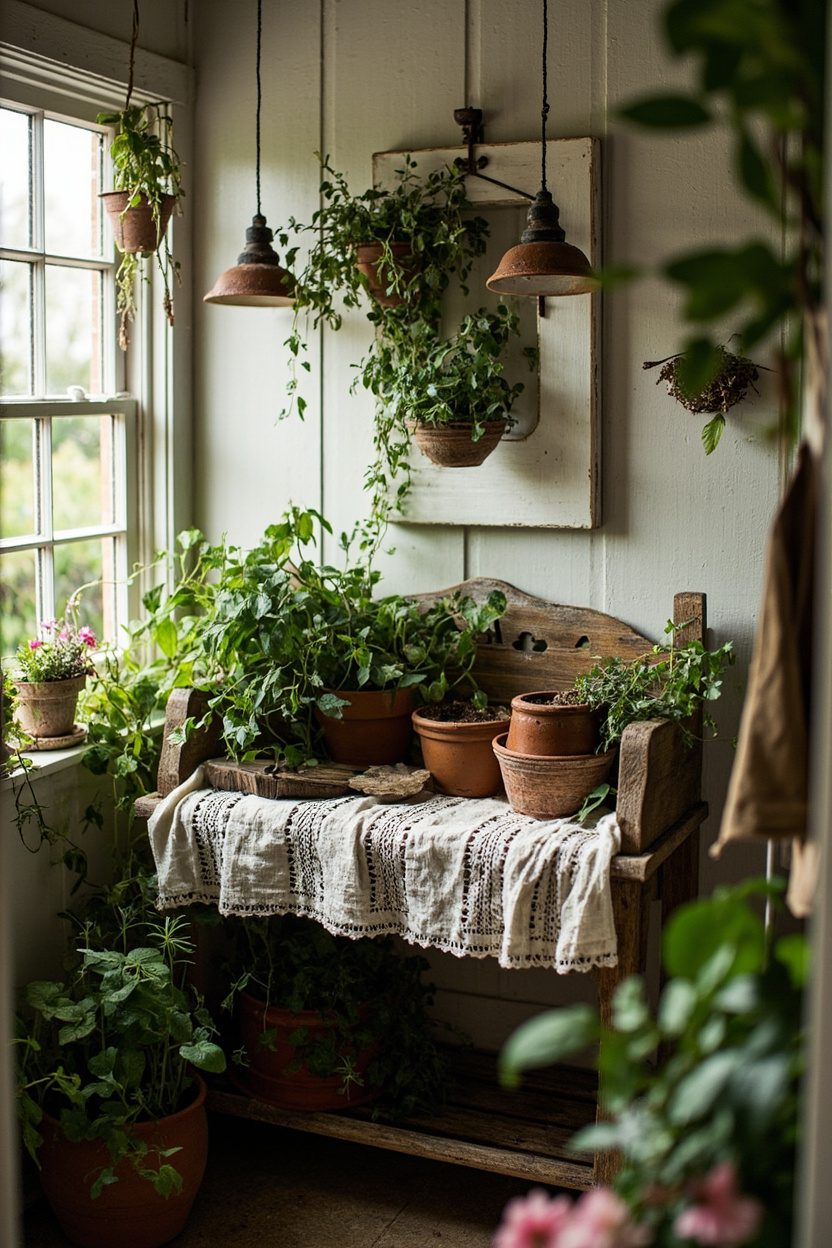
Carve out compact, themed enclosures 4 to 8 foot squares using low boxwood, clipped rosemary, or reclaimed timber to create intimate outdoor sitting pockets.
Scale furniture to the space with a bistro table or single chamfered bench, and limit a palette to two fabrics to keep the small room calm and cohesive.
Layer vertical interest with a trellis or arch, training clematis or fragrant honeysuckle to soften the enclosure and provide seasonal scent without overwhelming the space.
Set lighting low and local, such as a single pendant or path-level LED, to preserve a cozy evening atmosphere without bright spillover.
Styling Blueprint
- Define the boundary with 12-18-inch clipped shrubs or 24-inch raised planters for immediate effect.
- Choose one focal plant, like a dwarf olive or pleached crabapple, for structure and scale.
- Select hardscape material that repeats elsewhere, for example, reclaimed brick, to tie rooms into the garden.
- Add one sculptural accessory, such as a small urn or mirror, to create depth and a sense of enclosure.
12. Vintage Container Groups

Collect mismatched pots, enamelware, and wooden troughs to create layered container compositions that read like a curated flea-market vignette.
Cluster at odd numbers and vary heights by placing smaller pots on crates or stacked books, giving each plant room to show its form and texture.
Favor plants with differing silhouettes, such as tall foxglove, rounded geraniums, and trailing lobelia, to keep arrangements visually rich from every angle.
For long-term durability, ensure each container has proper drainage, use a gritty 70/30 potting mix, and budget for replanting annually in budget tiers under $150 per cluster.
What to Focus On?
- Pair containers by material, for example, metal with terracotta, to prevent visual clutter and emphasize contrast.
- Use repeat foliage colors, like silver or deep green, to unify diverse flowers across the group.
- Place heavier, glazed pots on stable surfaces and secure tall items against wind to avoid tipping.
- Rotate seasonal plants rather than changing pots, keeping structure while varying color and bloom cycles.
13. Layered Textures
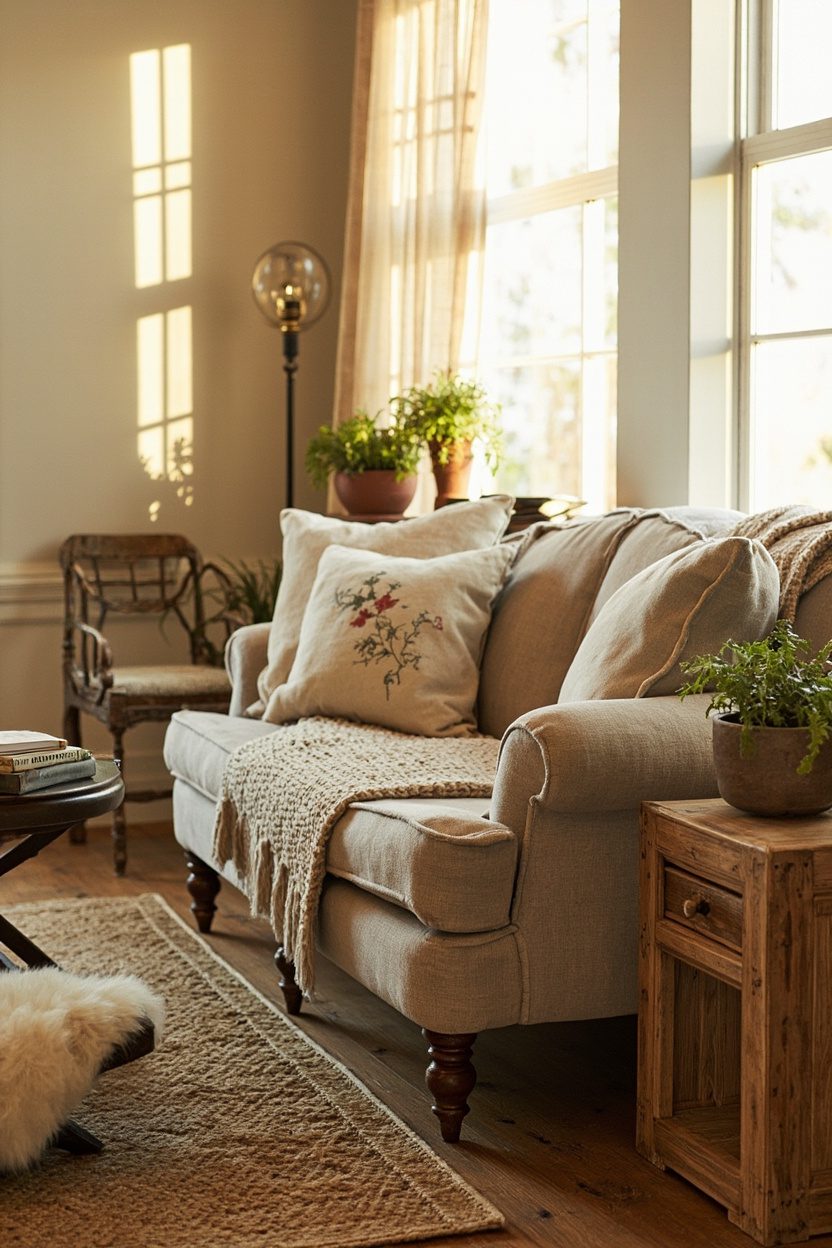
Softness and grit together make a cottage garden feel lived in, not staged. Layer coarse gravel paths with low moss and fine sand at edges to contrast texture and walking comfort.
Introduce mixed-height planting to add tactile variety, pairing feathery grasses with sculptural foxgloves and woolly sage, using a 2:1 height rhythm for balance.
Use materials deliberately: reclaimed brick for raised beds, untreated oak for low benches, and natural jute for hanging baskets to keep the palette cohesive.
Avoid over-polishing, choose weathering finishes that improve with age, and budget mid-range for durable materials rather than cheap, quick-replace options.
Styling Blueprint
- Combine three hard materials, such as brick, timber, and gravel, for layered contrast.
- Mix plant textures: one soft grass, one bold leaf, one delicate flower per grouping.
- Place a tactile bench at 36 inches seat height, with a rough-hewn finish.
- Opt for muted color materials, like terracotta and aged wood, to unify the look.
14. Soft Garden Lighting
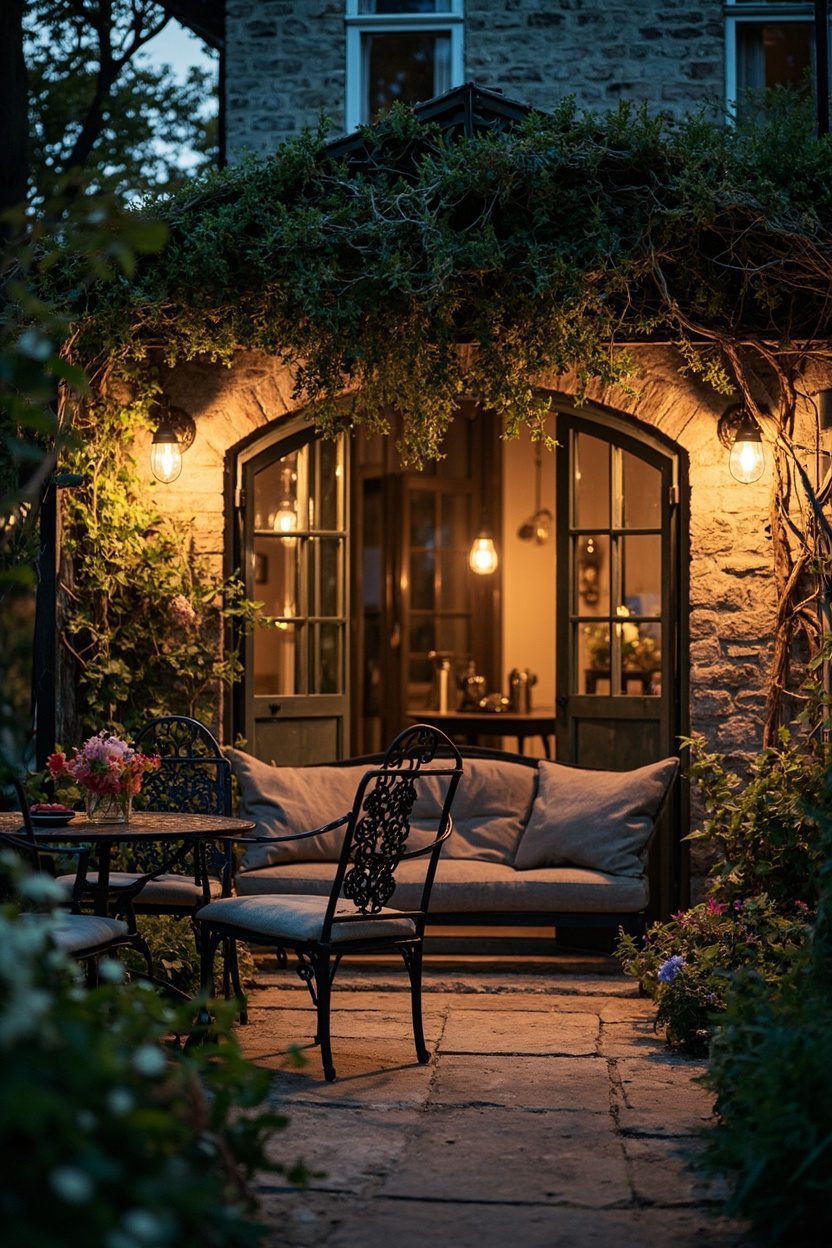
Evening atmosphere defines a cottage garden, so plan lighting that flatters plant forms, not overpowering them; aim for warm, 2200–2700K bulbs to keep tones cozy.
Layer lighting: low path lights for safety, spot uplights for specimen trees, and string lights in seating nooks for intimacy, each on separate circuits if possible.
Solar lanterns work in low-budget sites, but hardwired low-voltage systems give consistent output and allow dimming. Invest there if the budget allows.
Avoid high, harsh floodlights; instead, use shields and angles to prevent glare and preserve nocturnal wildlife corridors.
Essential Elements
- Use warm LED bulbs, 2200–2700K, for a cottage glow.
- Mix three levels of lighting: ground, mid-height, and overhead.
- Choose fixtures with full cut-off or angled shields to reduce glare.
- Place dimmers or timers to control intensity and conserve energy.
15. Compact Cottage Corners
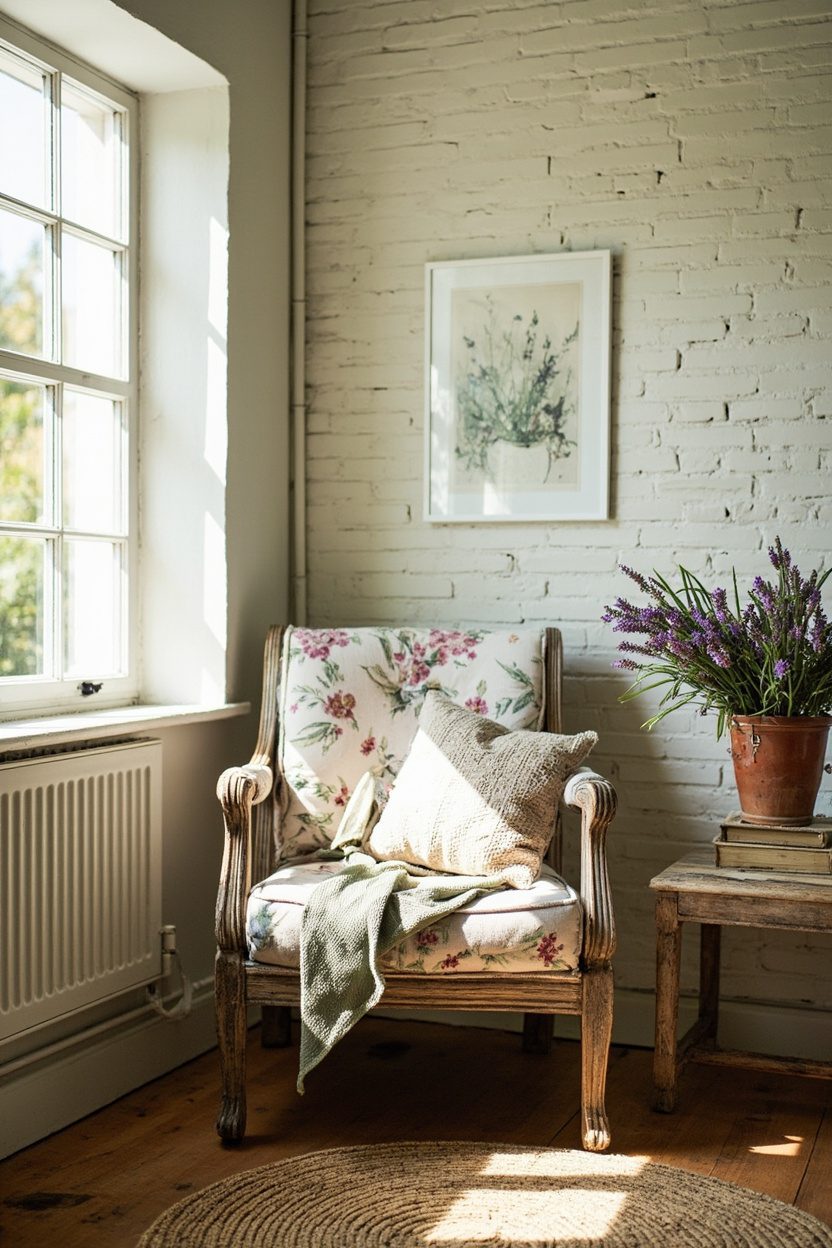
Small plots benefit from cottage charm when you work vertically; trellis climbers like clematis and sweet peas free ground space while adding fragrance at head height.
Create intimate seating in 4–6 square feet using a built-in bench with storage beneath, finished in pale, weathered paint to read as part of the garden fabric.
Scale is everything, so use pot groupings in odd numbers, maximum three sizes, and pick a dominant color motif like faded petal pink to tie elements together.
Keep paths narrow, 24–30 inches, to suggest depth without overwhelming space, and incorporate mirrors or reflective water for perceived expansion.
What to Focus On?
- Prioritize vertical planting to maximize floor area, using trellises and obelisks.
- Select compact plant varieties, labeled dwarf or patio-sized, for scale control.
- Install multifunctional seating with built-in storage to save space.
- Limit hardscape width to 24–30 inches to preserve planting room.
For a related idea, see Boho Wallpaper.
FAQ
Choose plants that combine structure and riot, such as roses, foxgloves, and perennial geraniums, and pair them with filler textures like ornamental grasses and groundcover. Focus on bloom succession, so you have color from spring through autumn.
Yes, prioritize soil improvement and layering rather than high-cost hardscape, divide established perennials from friends or community swaps, and use reclaimed materials for paths and raised beds. Invest in a few long-lasting elements, like a sturdy bench, rather than many disposable items.
Current trends favor lower-maintenance schemes, so choose drought-tolerant mixes, mulches to suppress weeds, and plant combinations that self-seed modestly. Plan for seasonal pruning and deadheading, but design groups to tolerate a relaxed, semi-wild rhythm.
Promote biodiversity by adding native pollinator plants, bat and bird boxes, and companion planting that deters pests, such as marigolds near vegetables. Use physical barriers, like row covers and collars, and hand-remove pests at the first sign to avoid escalation.
Final Thoughts
A successful cottage garden balances deliberate structure with the appearance of abundance, using textured layers, warm lighting, and smart scaling to suit any plot size. Make clear material choices, favor weathered finishes, and plan for seasons, and your garden will mature into the secret, lived-in landscape you want.