



Keep the coffee table intentionally spare, favoring crafted pieces that show restraint and purpose. This approach keeps surfaces calm, encourages the room to breathe, and makes each object feel considered.
Start with a dominant material and repeat it elsewhere in the room, for cohesion, and avoid more than four elements, so negative space becomes part of the design.
- 1. Light Wood Minimalist Tray Arrangement
- 2. Low-Profile Ceramic Accent Pieces
- 3. Slim Sculptural Candle Groupings
- 4. Neutral Linen Book Stack Styling
- 5. Single-Stem Glass Bud Vase
- 6. Matte Marble Coaster Setups
- 7. Textured Terracotta Object Pairing
- 8. Soft Desert-Toned Layering
- 9. Moody Minimalist Black Accents
- 10. Rounded Organic Wooden Bowls
- 11. Subtle Greenery in Minimal Pots
- 12. Understated Metallic Finishes
- FAQ
- Final Thoughts
1. Light Wood Minimalist Tray Arrangement
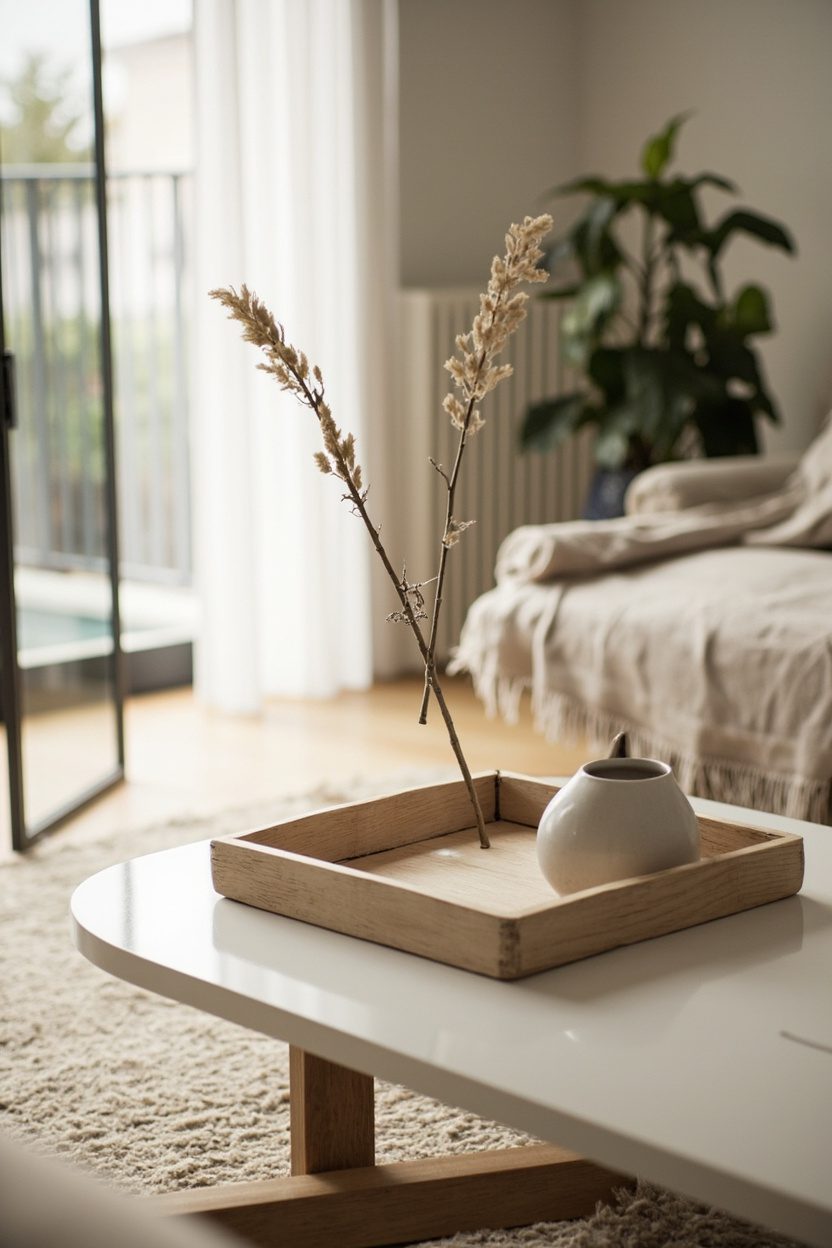
Choose a low, rectangular tray in solid light wood, about two-thirds the table length, so it reads as an anchored plane rather than a clutter catchall. Place a small stack of two hardcover books at one end, topped with a slim ceramic cup, keeping the books about one-quarter the table depth to preserve surface breathing room.
Add a single sculptural vase in matte white or soft terracotta, around 6 to 8 inches tall, set off-center.
The wood grain provides warmth against cool linens, and repeating that light wood in a nearby shelf or frame ties the look together; avoid mixing multiple tray materials to keep the aesthetic clean.
2. Low-Profile Ceramic Accent Pieces

Select one shallow, wide ceramic bowl and one small lidded jar in a complementary neutral, keep both under 4 inches tall to maintain a low silhouette that won’t obstruct sightlines.
Position the bowl closer to the viewer and the jar slightly behind, creating a stepped composition that reads polished from any angle.
Textural glazes like satin or sanded matte work best; pair ceramics with a slim linen runner no wider than half the table to ground the duo. For color lessons in similar rooms, see this piece on Boho Home Decor for how neutrals animate a space without clutter.
3. Slim Sculptural Candle Groupings
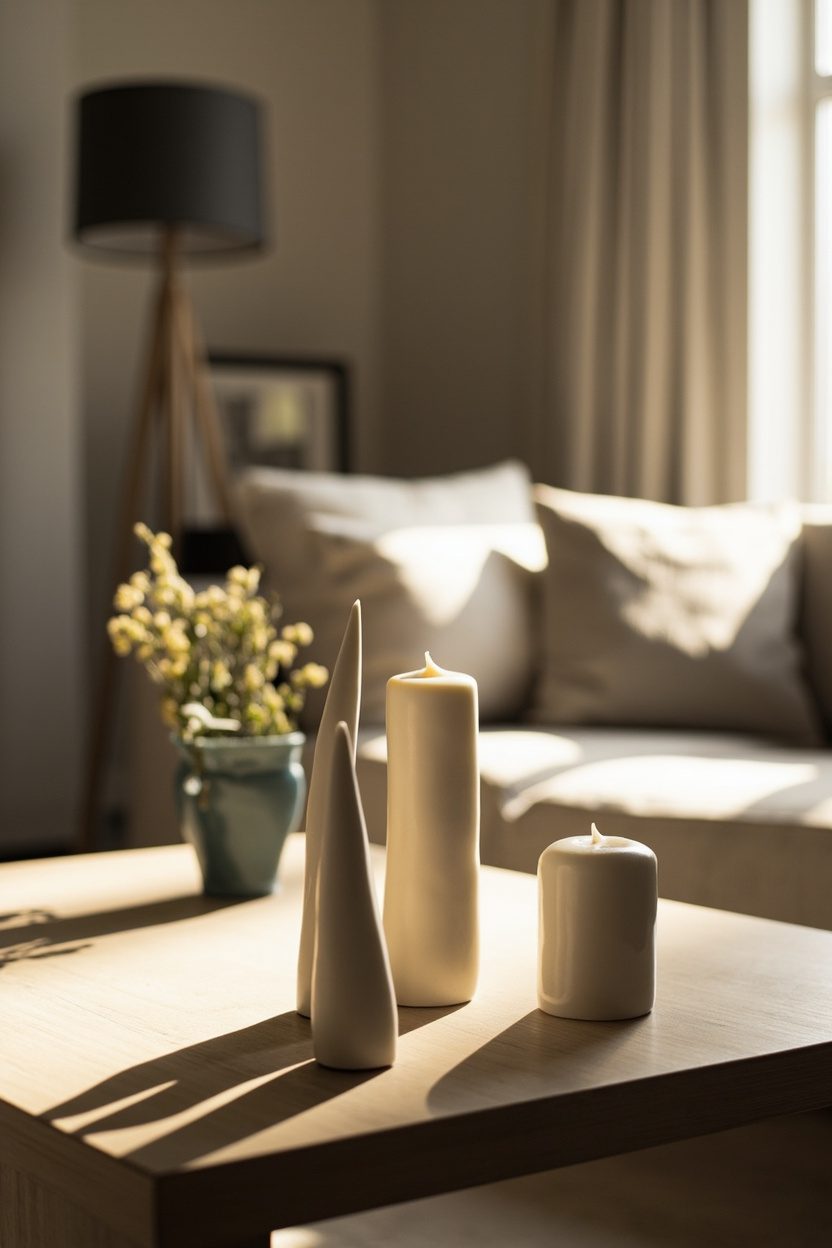
Use three candles only, varying in height by 2 to 4 inches, placed on a narrow rectangular tray in metal or stone, with the tallest candle at roughly one-third of the table width. Choose tapered or column candles with a subtle texture, avoid decorative holders, and let the candle forms read as miniature sculptures.
Keep spacing deliberate, around one to two inches between candles, so they read as a group rather than a stack, and limit fragrances to one mild scent. For material cues and current shapes that feel elevated, this trend analysis offers useful guidance.
4. Neutral Linen Book Stack Styling
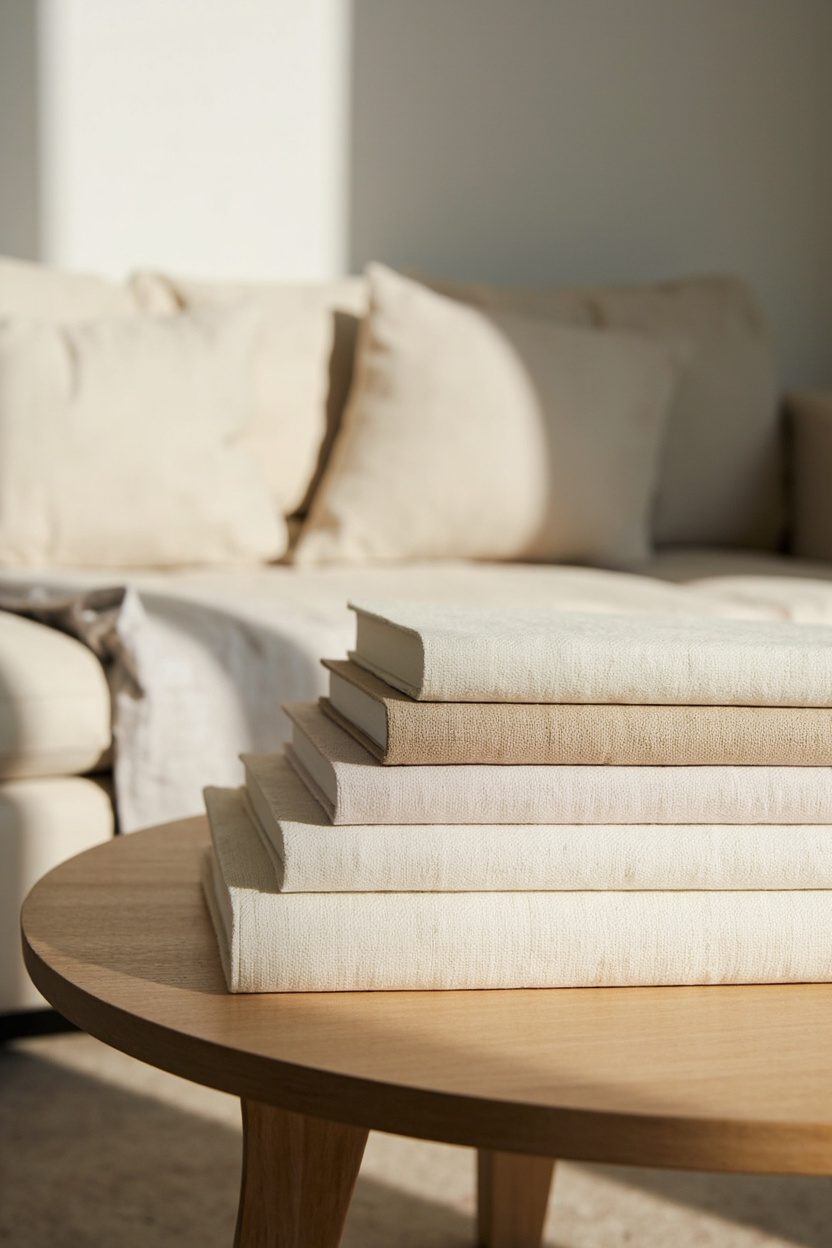
Layer a small stack of two or three linen-covered books in warm neutrals, keeping the largest at the bottom for a grounded silhouette. Place the stack off-center on the table, leave 3 to 4 inches of visible tabletop around it, and top with a low ceramic tray to prevent scuffs.
This keeps the look edited and protects surfaces. For scale, choose books whose combined height is about one-third the table height, so the stack reads as a deliberate accent, not clutter.
Keep textures muted, pair the linen with a tactile element like a small raw-wax candle or a smooth river stone, set close to the edge of the top book for contrast. Avoid glossy paperbacks or oversized coffee table tomes; those will overwhelm a minimalist layout and break the calm proportion.
For cottage-inflected palettes, lean into warm creams and soft taupes as shown in practical examples for boho palettes.
5. Single-Stem Glass Bud Vase

Select a slim, clear glass bud vase about 8 to 10 inches tall, and use a single stem with a defined shape, such as a tulip, ranunculus, or eucalyptus sprig, to read as purposeful and sculptural.
Position the vase near a natural light source when possible, and place it no more than 6 inches from another low element, like a coaster, to create a curated vignette without crowding the table. Keep the water level low, around one-third of the vase height, to maintain the stem line and avoid a top-heavy look.
Choose glass with a slight hand-blown irregularity to add character without distraction, and swap stems seasonally to refresh the table while staying minimal.
If you want a softer, eclectic edge, coordinate the vase with nearby plant styling from a small indoor greenery guide.
6. Matte Marble Coaster Setups

Use a small set of 2 to 4 matte marble coasters in mixed sizes, arranged in a loose cluster or in a tidy stack, depending on table shape and traffic patterns.
Keep coasters at the corner or near the seating side, about 2 to 4 inches from the edge, so they are easy to reach and do not interrupt the visual center. Pick honed marble in light gray or cream to keep reflections low and the mood understated, and protect the tabletop with felt pads underneath each coaster.
For a refined contrast, pair the marble with a thin metal tray no larger than 10 inches, placing the tray under the coasters to contain the grouping and make relocation simple.
Avoid shiny finishes that read as decorative noise, and budget for mid-range honed stone, which strikes the best balance between durability and minimal elegance, as seen in current coffee table trend reporting from design authorities.
7. Textured Terracotta Object Pairing
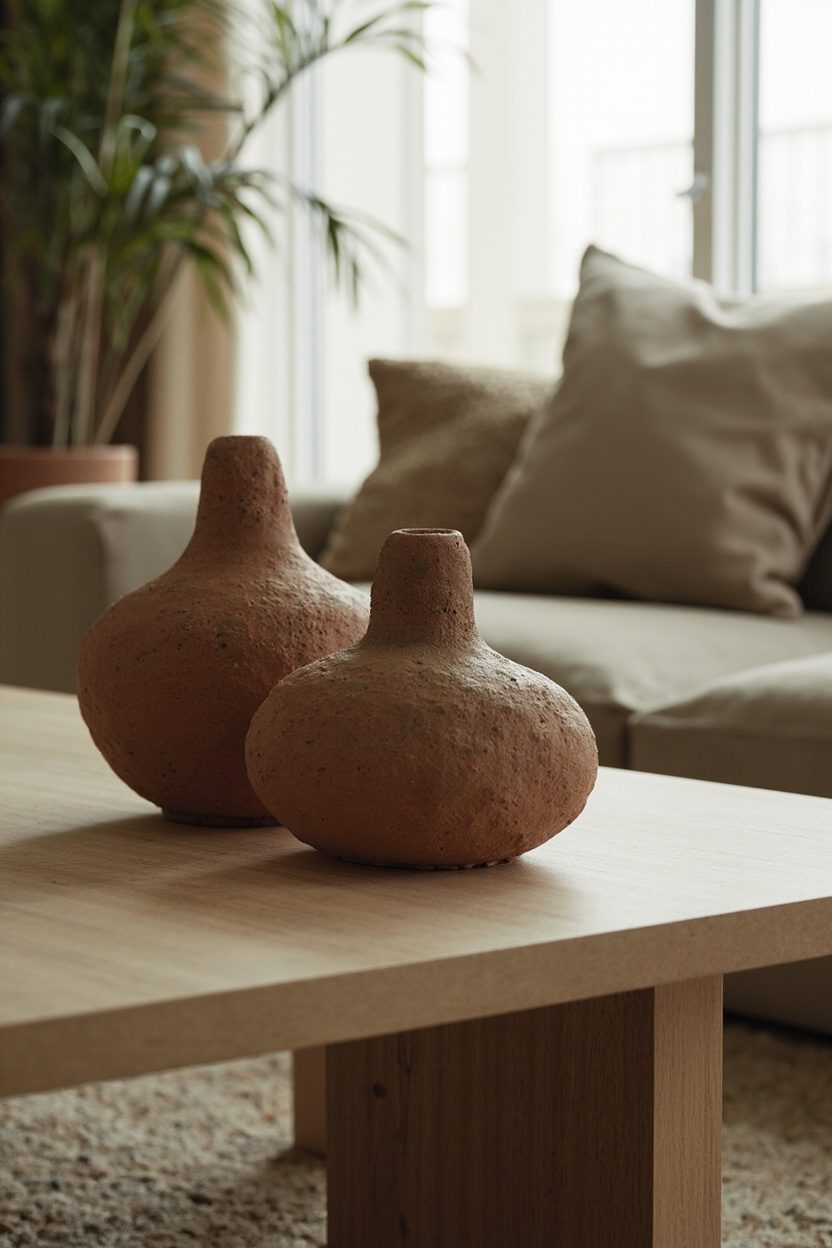
Terracotta lends quiet warmth while keeping a minimalist silhouette. Pair two small vessels in slightly different heights, one matte and one lightly glazed, to create a deliberate, considered cluster. Position the taller piece at one-third of the table length, the shorter piece closer to the center, so the negative space reads intentional rather than cluttered.
Choose shapes with subtle texture, like hand-ridged or pitted finishes, and keep the palette soft terracotta to pale clay.
This keeps the display cohesive and under $150 for both pieces if you shop artisan markets. Avoid matching exact duplicates; a small size difference and complementary finishes create the modern, curated look without fuss.
8. Soft Desert-Toned Layering
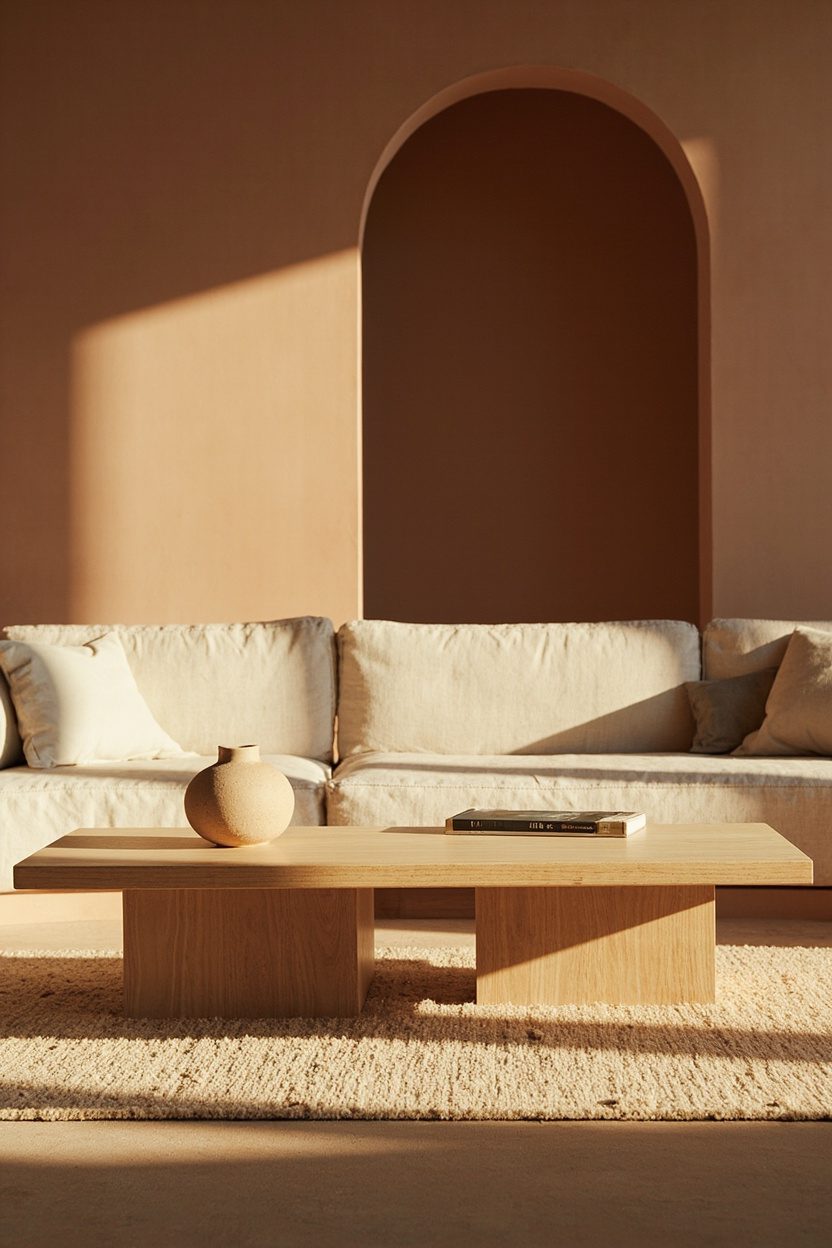
Layer a low-profile linen runner in sand color over the center third of the table, then top with a single shallow tray in a warm stone or travertine to anchor accessories.
This adds depth without visual weight. Use two to three desert-toned accents, such as a pale ochre ceramic bowl and a sun-bleached wooden bead strand, and keep all items low to maintain sightlines across the room.
For scale, aim for objects that sit under 6 inches tall on a standard 16 to 20 inch deep coffee table, that proportion reads relaxed and intentional; source natural materials to echo the light wood trends in contemporary coffee tables for a cohesive feel, see ideas for material choices here.
9. Moody Minimalist Black Accents
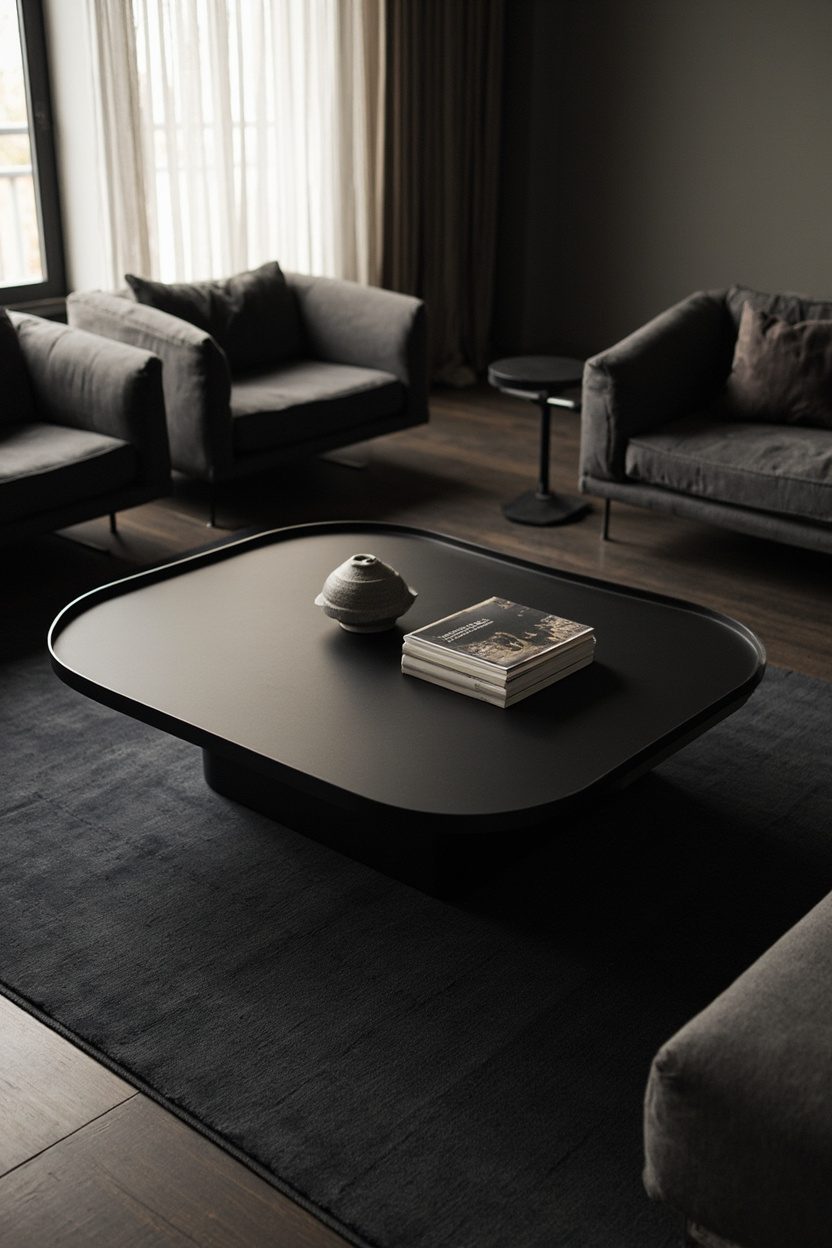
Use one striking black sculptural object, like a small matte iron vase or a geometric candleholder, paired with a single light-reflecting element such as a white marble coaster, to create contrast without clutter.
Place the black piece off-center, about one-third in from the edge, to anchor the composition and avoid the heavy, centered look that can feel fussy.
Keep surrounding items pale and tactile, linen coasters or a hand-bound book in cream, so the black reads as an intentional accent rather than overpowering, and limit total pieces to three or fewer to preserve minimalist impact.
10. Rounded Organic Wooden Bowls

A single rounded wooden bowl, carved from light solid oak or ash, provides warmth without clutter, serve it as a catchall for remotes or a sculptural centerpiece. Choose a bowl roughly one-third the length of your table to keep proportions balanced, and avoid multiple small bowls, which read as busy.
For styling, leave the bowl mostly empty, add one linen-wrapped object or a single decorative stone to introduce subtle texture, and finish with a beeswax or matte oil for a soft, low-shine patina that ages well.
11. Subtle Greenery in Minimal Pots
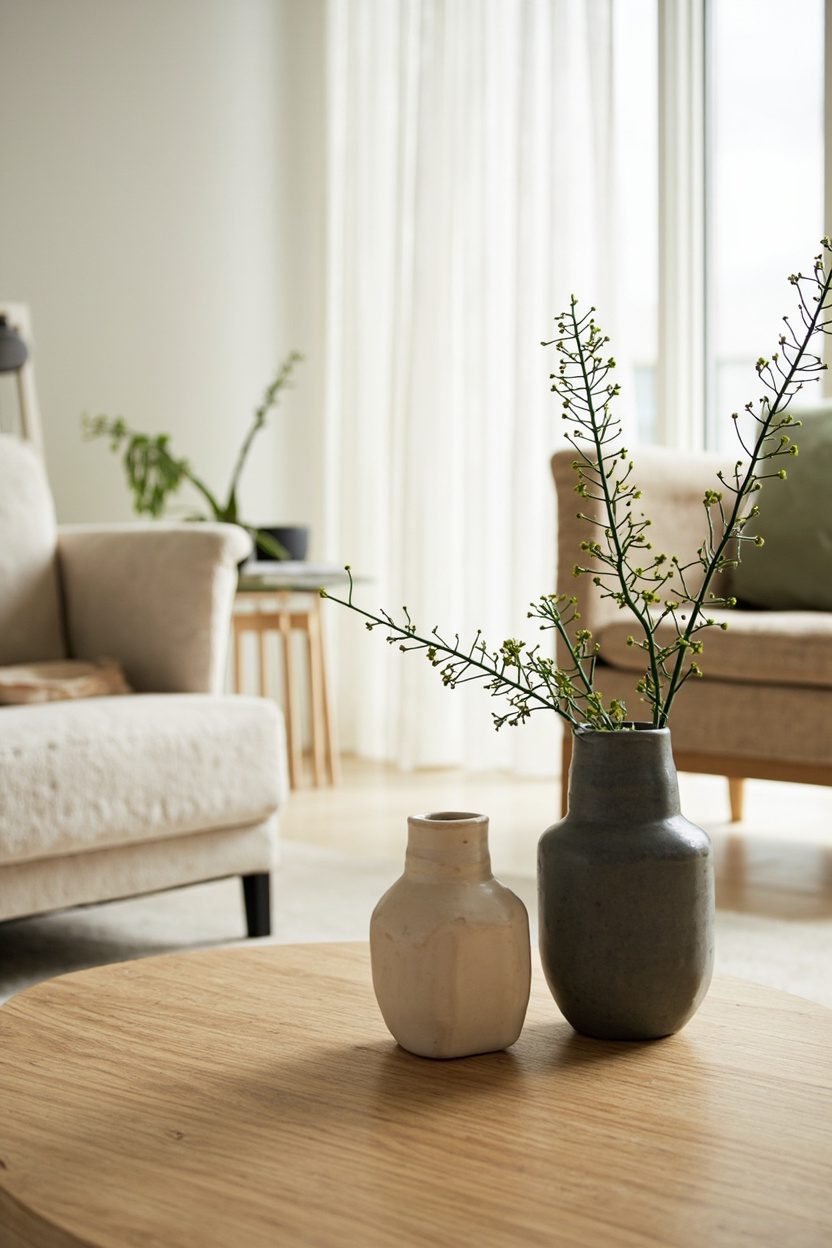
Select compact plants like a small ficus bonsai or a succulent, and pair with cylindrical matte ceramic pots in off-white or muted sage. Keep the pot diameter under 6 inches for scale on low coffee tables.
Position the pot slightly off-center toward the seating axis; this small shift creates deliberate asymmetry without adding clutter.
Avoid trailing plants that spill over the surface; instead, use a single well-groomed specimen and re-pot into a pebble base if needed, to minimize watering marks and soil mess.
12. Understated Metallic Finishes
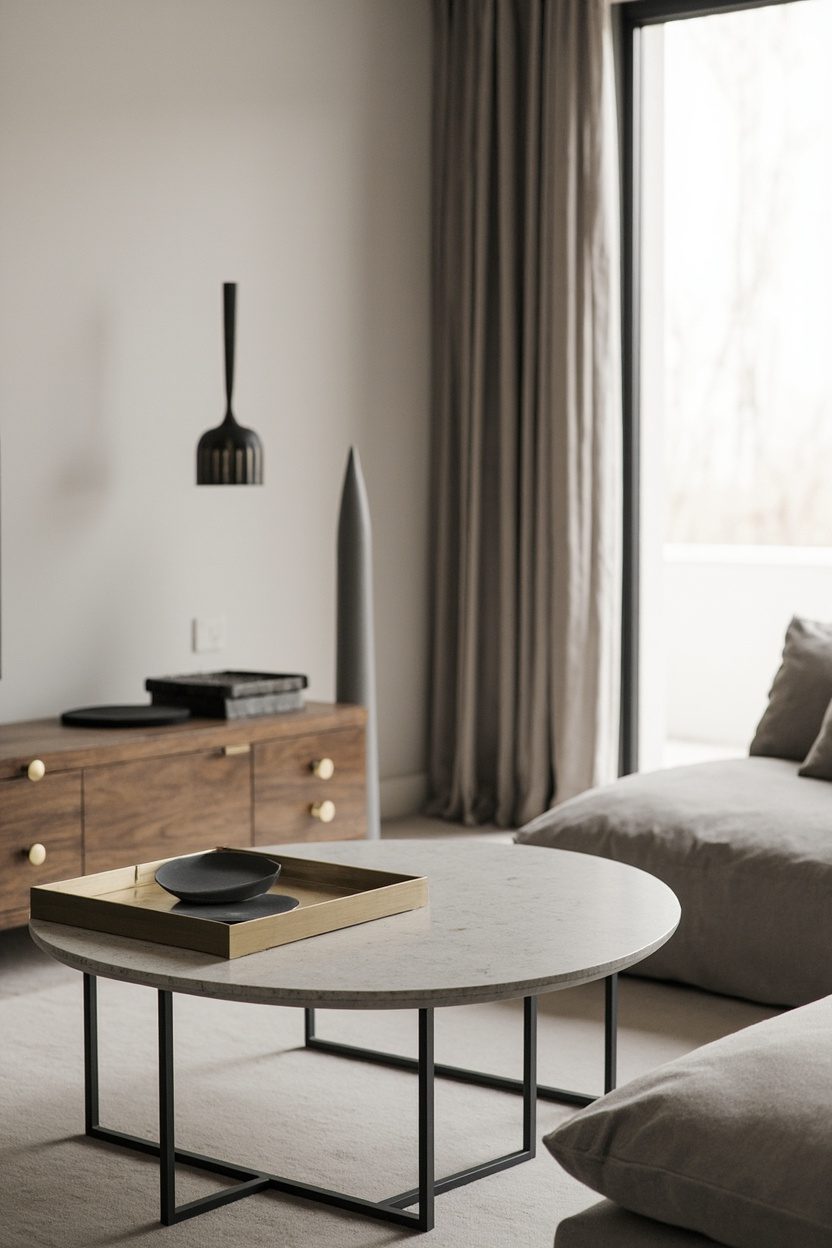
Introduce one metallic accent in brushed brass or aged nickel, such as a slim tray or a low bowl, to lift a neutral palette without shouting; keep the piece under half the table width so it reads as an accent.
Matte or brushed finishes are preferable, as they reflect light subtly and resist obvious fingerprints compared to polished chrome.
Pair metal with natural materials, for example, place the tray on top of a folded linen cloth to prevent scratches, and avoid mixing more than one metal tone to maintain a calm, minimalist aesthetic.
A useful follow-up is 8 Outdoor Dining Setups Perfect for Petite Patios.
FAQ
Aim for 1 to 3 pieces, with one anchor object and one smaller accent, keeping negative space to showcase the table surface.
Natural woods, matte ceramics, and brushed metals create restrained contrast. Choose finishes with low sheen to reduce visual noise.
Quarterly swaps are practical, refresh one element each season to keep the arrangement intentional and uncluttered.
Yes, use one slim book as a base layer, place objects asymmetrically on it, and keep titles and covers neutral to avoid distraction.
Final Thoughts
Minimalist coffee table decor relies on restraint, quality materials, and correct proportion. A few well-chosen pieces deliver impact without excess.
For inspiration on complementary color schemes and plant pairings, see Boho Living Room Color and explore simple greenery ideas at Boho Plant Decor, while trend context for material choices is discussed in this overview from Petra Madalena.