


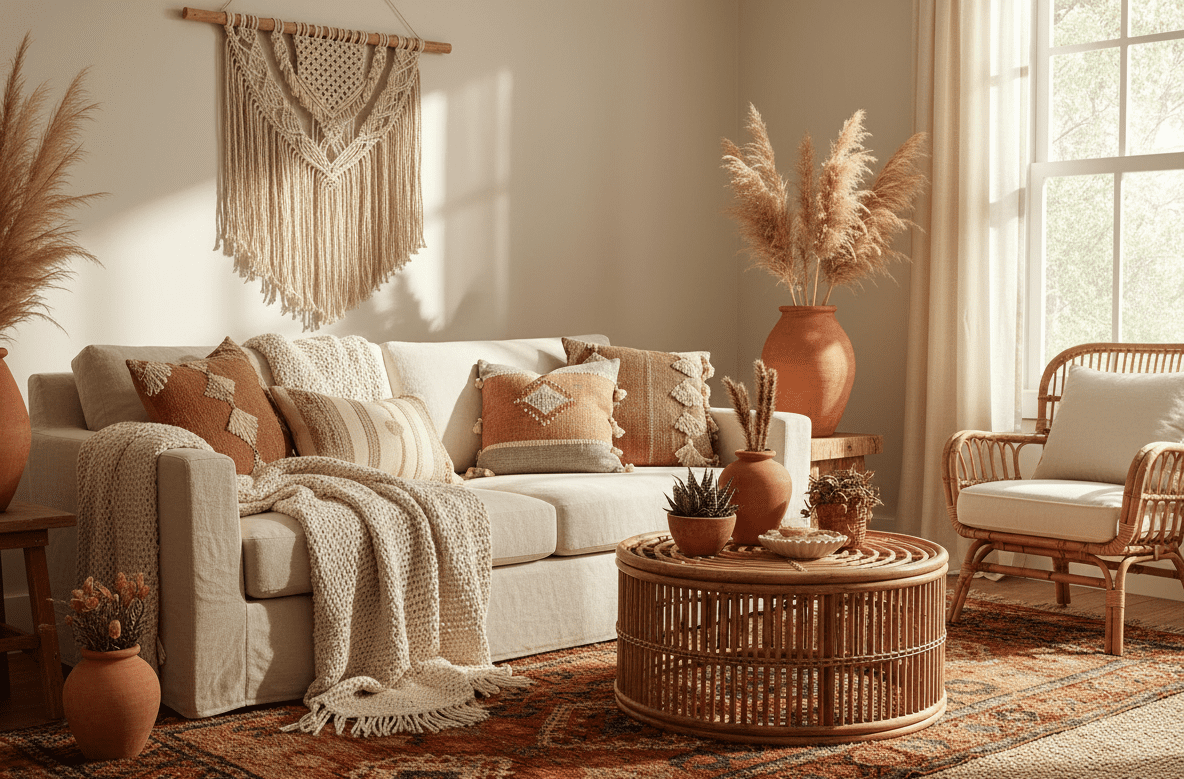
Warm, lived-in boho cottage style is about soulful layers, not matchy-matchy perfection. Start with a foundation of natural materials and add pattern in measured doses, so every corner reads as intentional and inviting.
- 1. Natural Wood Tables for Boho Cottage
- 2. Rattan Chairs with Cottage Charm
- 3. Woven Placemats and Table Layers
- 4. Layered Textiles for Cozy Corners
- 5. Blush Accents in Boho Cottage
- 6. Balanced Neutral Palettes with Warmth
- 7. Antique Wooden Pieces as Anchors
- 8. Soft Curves Over Hard Lines
- 9. Wicker Baskets for Organic Storage
- 10. Botanical Prints and Dried Blooms
- 11. Mixed-Fiber Rugs for Texture Depth
- 12. Light Linen Curtains for Airiness
- 13. Handcrafted Ceramics and Pottery
- FAQ
- Final Thoughts
1. Natural Wood Tables for Boho Cottage

Choose a solid natural wood table with visible grain and a relaxed silhouette, like an oak farmhouse top with a tapered leg, to anchor a boho cottage dining area.
Keep the proportion modest, around 30–36 inches wide for a small breakfast table, so the piece feels cozy rather than oversized in a cottage footprint.
Finish the surface with a matte oil or wax, not high-gloss varnish, to preserve tactile warmth and allow scuffs to age attractively.
Pair the table with woven placemats and a low, layered centerpiece of driftwood and dried flowers to reinforce texture without crowding the tabletop.
2. Rattan Chairs with Cottage Charm
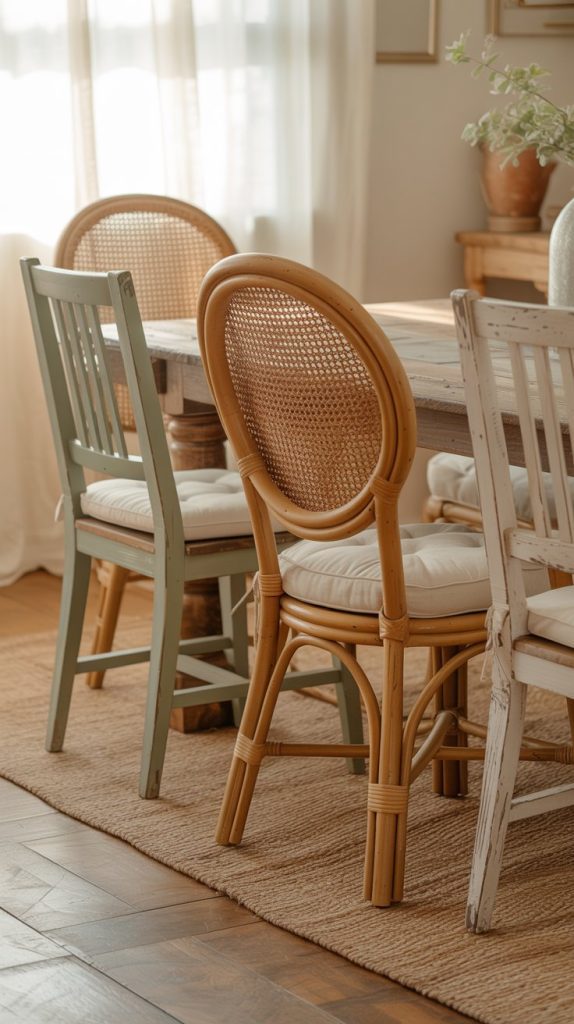
Pick rattan chairs that read handmade, with rounded backs or open-weave panels, to introduce lightweight texture and visual airiness into a cottage scheme.
For durability and comfort, add removable cushions in washable linen, about 2–3 inches thick, so the chairs stay practical for daily use.
Avoid overly-polished synthetic rattan, choose natural cane or handwoven seagrass where possible, and balance the look by mixing two rattan chairs with two painted wooden chairs, creating an intentional mismatch that feels curated rather than chaotic.
3. Woven Placemats and Table Layers
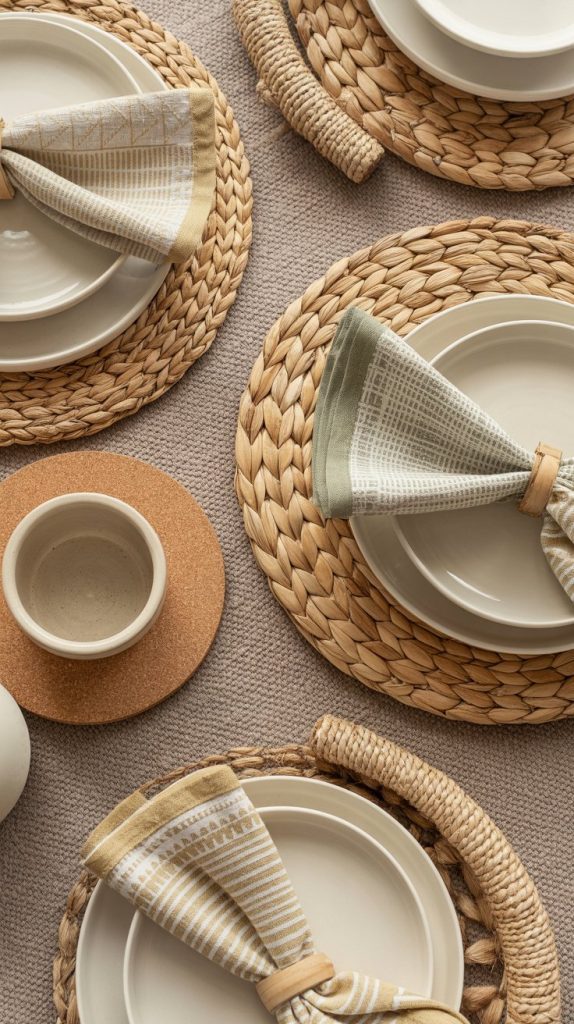
Layer woven placemats in natural fibers, like jute or seagrass, beneath patterned linen napkins to build depth on the table without adding bulk.
Use placemats about 15–18 inches in diameter for round settings, or 14×18 inches for rectangular, to maintain proper plate overhang and keep the tabletop legible.
Rotate between neutral and subtle color accents each season, and protect delicate finishes by placing a thin cork trivet under hot dishes. This prevents heat rings while keeping the layered, tactile look intact.
For more textile ideas that translate to windows and walls, explore boho curtain options in your scheme with simple, airy panels.
4. Layered Textiles for Cozy Corners
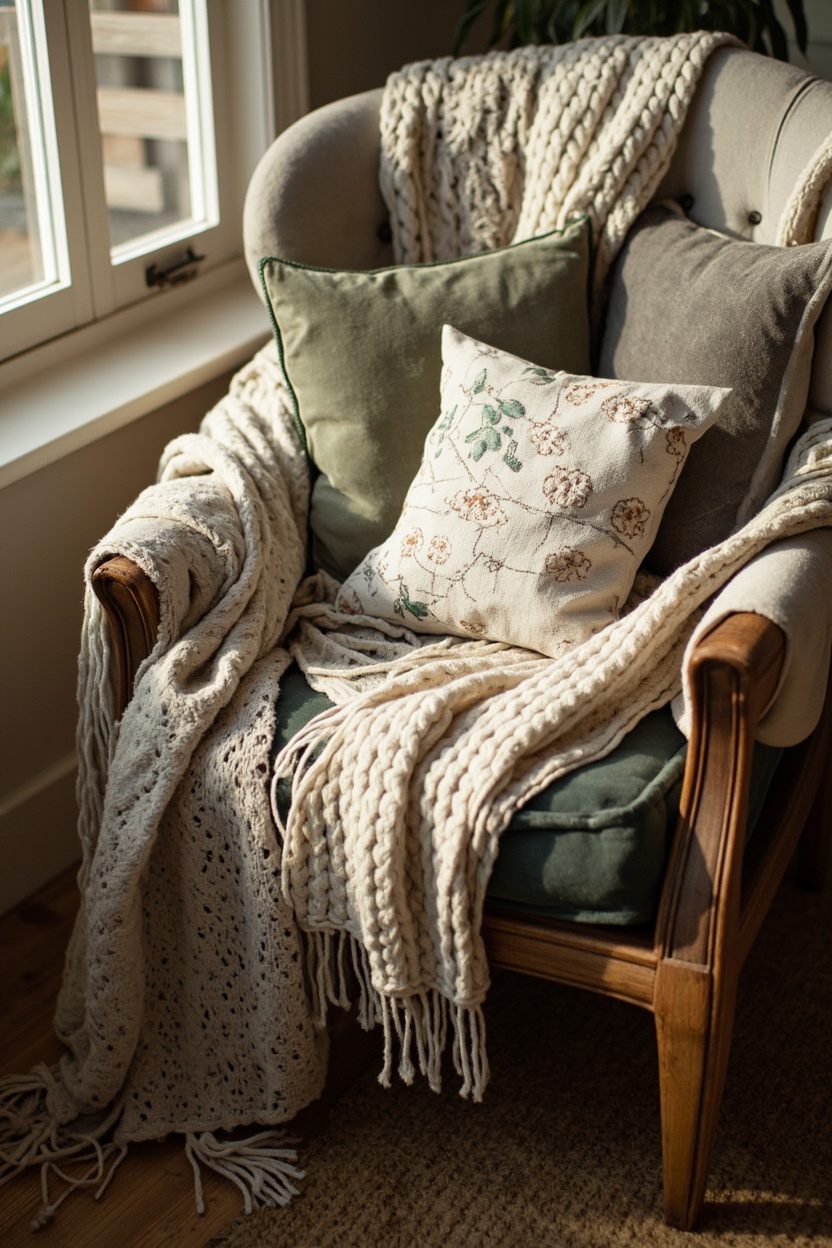
Start with a rattan armchair or a salvaged farmhouse spindle bench, then layer a structured wool throw underneath a slubby linen blanket; the contrast adds depth and keeps proportions grounded.
Mix a 50×50 cm kilim cushion with a long lumbar in boucle, placing the lumbar at the back to visually widen the seat and prevent small cushions from looking cluttered.
Introduce texture with a low-pile jute rug underfoot to anchor the corner, leaving 20 to 30 cm of rug beyond the furniture legs so the grouping reads as intentional, not floating.
For easy maintenance, rotate cushions seasonally, and avoid piling more than three textile layers on a single seat to keep the space usable.
5. Blush Accents in Boho Cottage
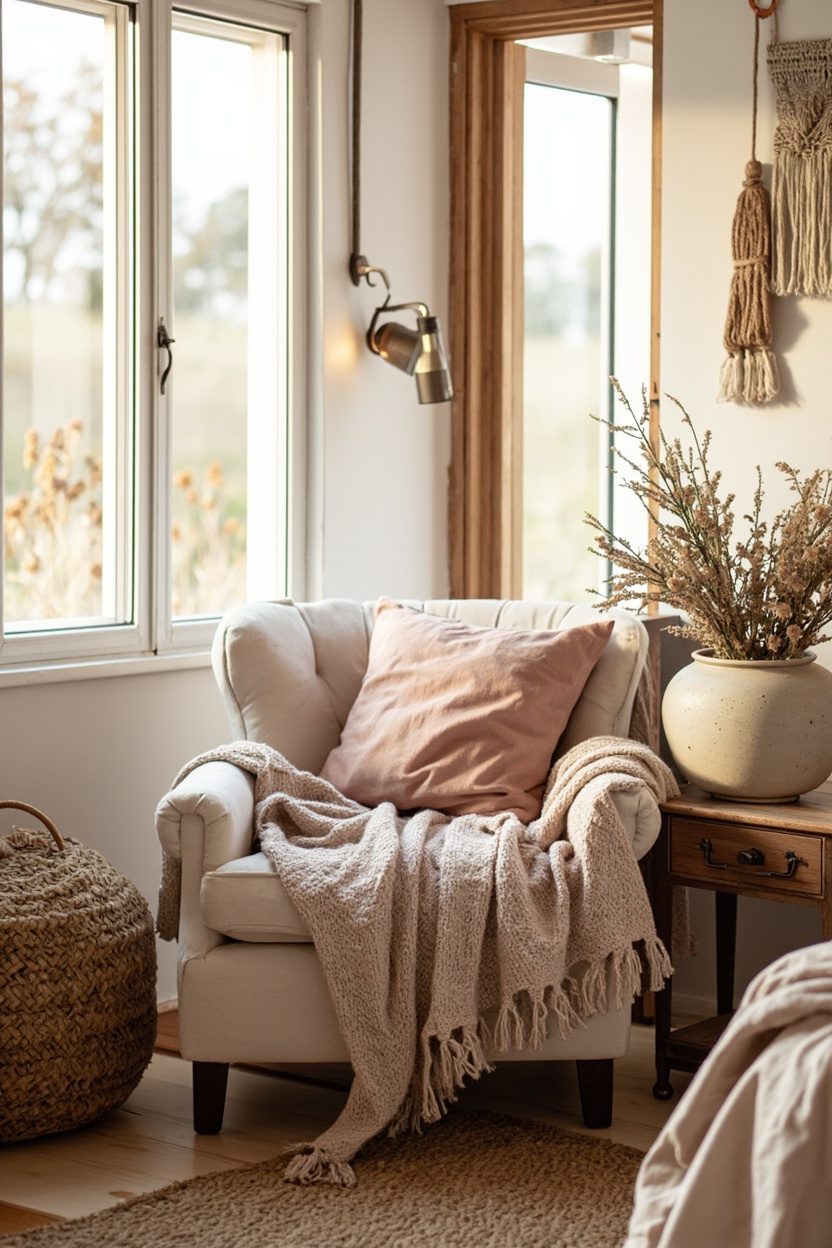
Use soft blush as an accent, not a foundation, by adding a velvet throw pillow or a ceramic vase in the hue; this keeps the look feminine without overwhelming the rustic wood tones.
Pair blush with warm neutrals like honey oak and warm white, and repeat the color in three spots at most, for example, a pillow, a small rug, and a bedside lamp, to create visual rhythm.
Consider blush in small-scale patterned fabrics, for instance, a floral linen shade or a faded ikat cushion; these introduce pattern without competing with larger boho prints.
For authenticity, source a blush-toned throw from natural fibers like cotton or linen rather than synthetic velvet; it will age better and layer more naturally.
6. Balanced Neutral Palettes with Warmth

Choose a three-tone neutral scheme, for example, warm white walls, a mid-tone oak floor, and deep beige upholstery.
This creates layered warmth while allowing patterned boho pieces to sing. Keep one surface matte, such as a lime-wash wall or chalk-painted cabinet, to absorb light and prevent the palette from feeling flat or sterile.
Add small, tactile accents like a leather pouf or a woven lampshade to introduce subtle contrast, place one dark element, such as a black iron side table, no larger than 30 percent of the visual field, to keep balance.
7. Antique Wooden Pieces as Anchors
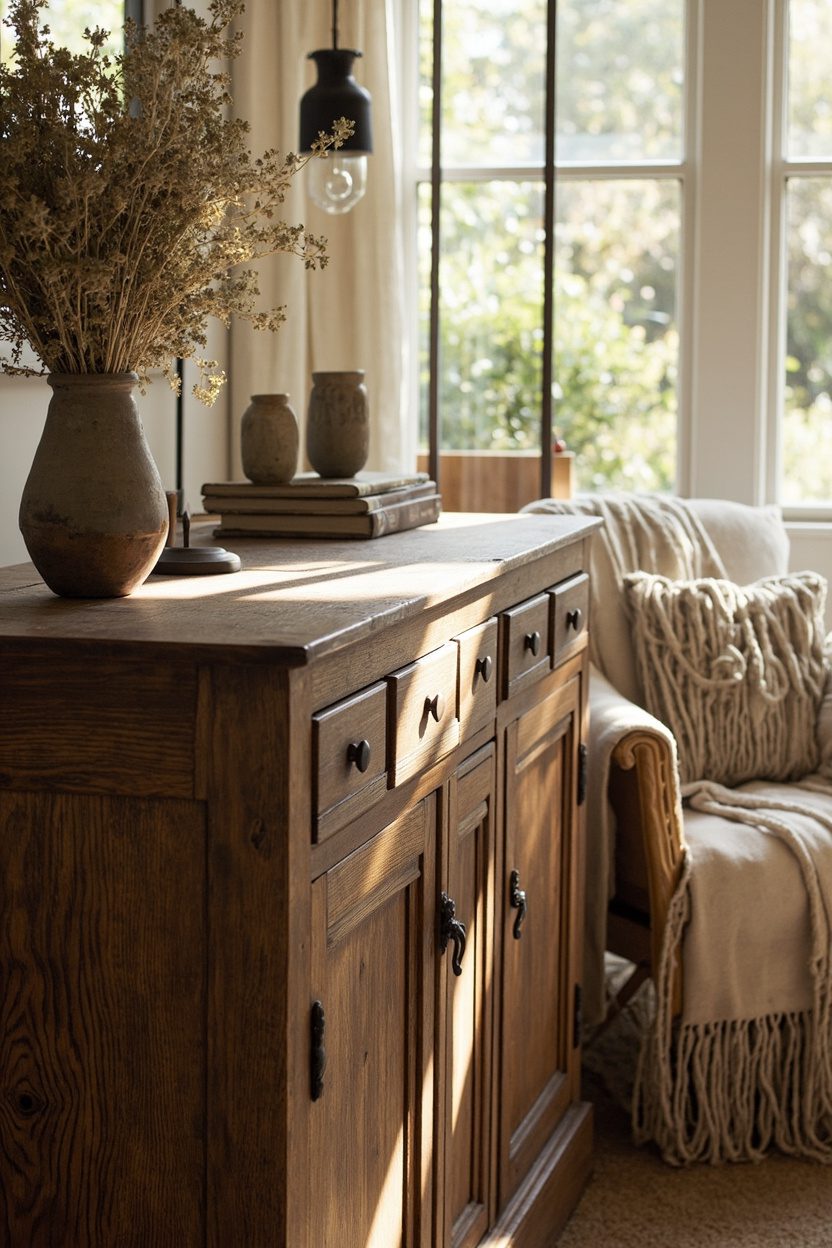
An antique wooden sideboard or bookcase provides a weathered focal point. Use pieces with visible patina and dovetail joints to keep authenticity, and avoid veneers that look new.
Place an heirloom piece against the main wall, sized so it occupies roughly one-third to one-half of the wall width. This proportion prevents the room from feeling overbuilt while anchoring layered textiles and modern accents.
When styling, leave negative space on top for a low lamp and a sculptural vase, stack two to three art books horizontally to vary height, and balance with lighter materials such as rattan chairs to prevent visual heaviness.
If the budget is tight, salvage a pine dresser and refinish only the top surface for contrast; many flea market finds become signature anchors with minimal work.
8. Soft Curves Over Hard Lines

Choose a curved sofa or rounded armchairs to soften a cottage shell, specify seat depth around 22 to 24 inches for comfortable lounging, and pick linen blends that can be steamed rather than dry cleaned for practical maintenance.
Curved furniture breaks up rectilinear farmhouse architecture, paired with a round jute rug that’s two feet wider than the seating footprint to emphasize the shape and create an intimate conversation area.
In accessories, favor circular mirrors and arched shelving, hang mirrors so their centers sit about five to six feet from the floor for human-scale reflection, and avoid overly small round pieces that get lost next to large patterned throws.
A common mistake is forcing curves with too many small, round objects; instead, commit to one major curved piece supported by a couple of softer accents.
9. Wicker Baskets for Organic Storage
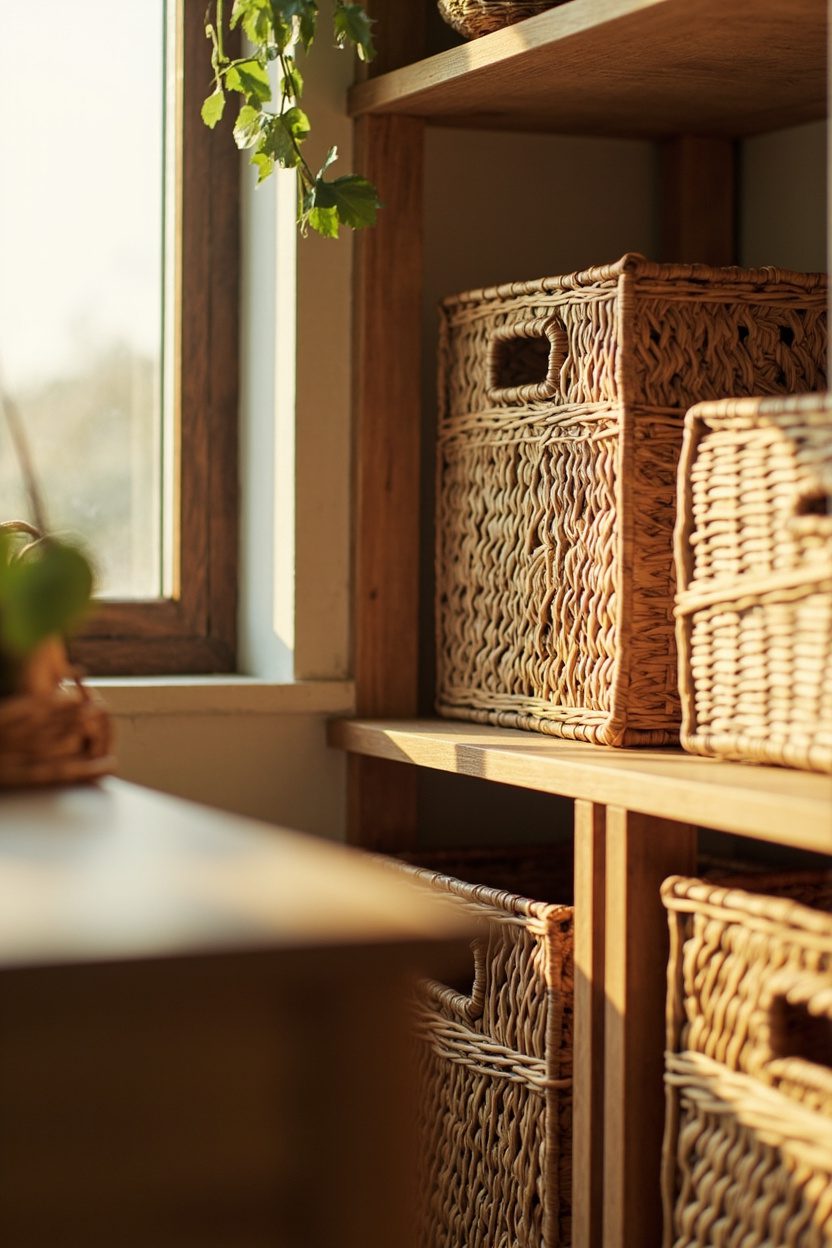
Wicker baskets add instant texture and practical storage. Choose varied weaves and sizes, use deeper baskets for blankets and shallow trays for magazines, and line inner baskets with washable cotton to protect delicate textiles.
Group baskets in threes for visual rhythm, place the largest on the floor beside seating, medium under console tables, and small on open shelving to keep the eye moving.
For durability, pick rattan with reinforced rims if you expect heavy use, and avoid plastic wicker that lacks the natural warmth of real fiber. Treat indoor wicker annually with a light oil to prevent drying.
For a polished boho cottage look, tuck a folded patterned throw peeking out of a basket; this balances function with the layered, soulful aesthetic.
10. Botanical Prints and Dried Blooms

Botanical prints paired with small clusters of dried blooms add instant cottage warmth. Use a 16×20 framed print above a sideboard, and place a pressed floral arrangement in a low ceramic vase to avoid top-heavy silhouettes.
Choose prints with muted greens and ochre tones to harmonize with woven rattan and raw oak, and secure dried stems at the base so they sit within the vase, not sticking out awkwardly.
Rotate seasonal botanical subjects, avoid overscaling the artwork for small walls, and consider layering a narrow shelf below the print to display a single specimen jar, which keeps the composition intentional and budget-friendly.
For sourcing, blend affordable prints with one authentic pressed piece to avoid a matchy, manufactured look, a common mistake in cottage styling.
11. Mixed-Fiber Rugs for Texture Depth
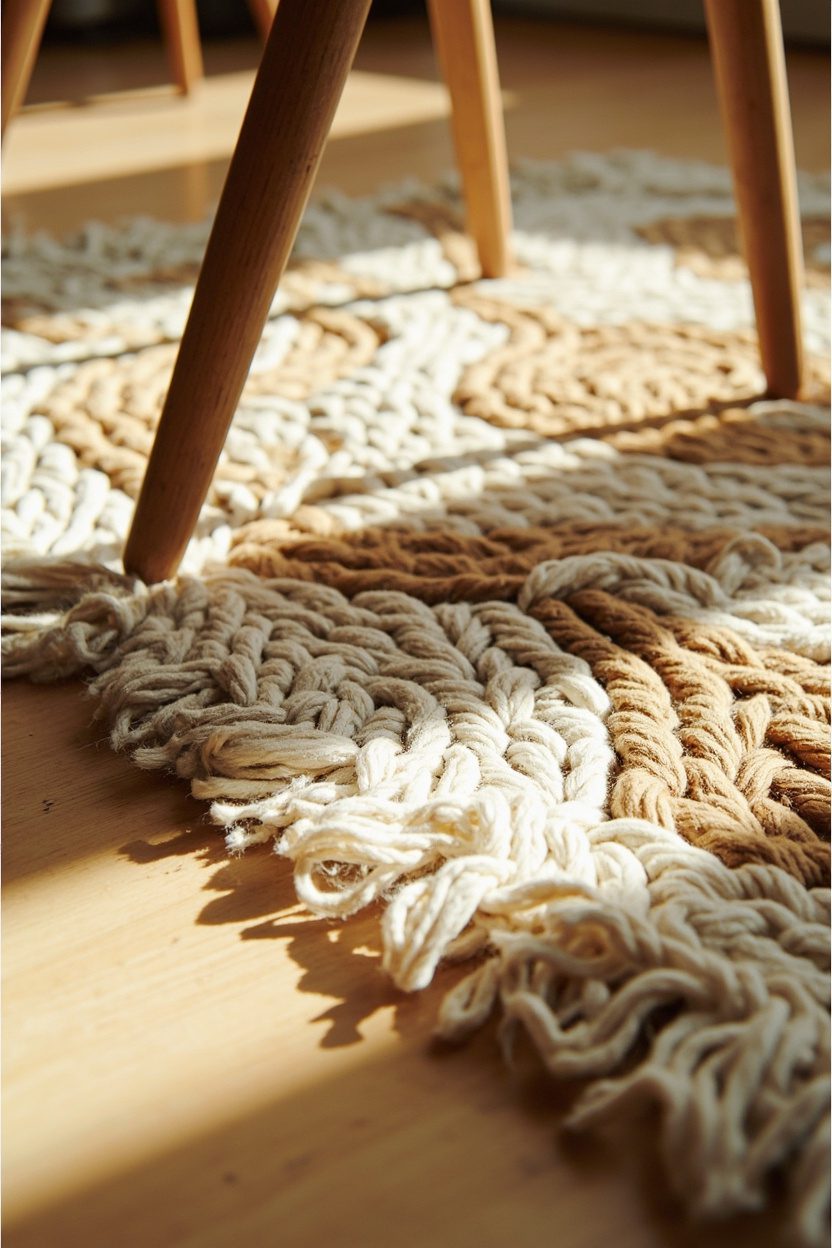
Mix a flatweave jute rug with a smaller wool kilim centered on top to create depth and visual warmth. Aim for the layered rug to be about two-thirds the size of the base rug so both textures read distinctly.
Use natural, earth-toned fibers under key seating, and anchor the front legs of seating on the top rug to define zones without buying a custom size.
Avoid shag over jute in high-traffic areas, as the fibers will mat; instead, choose short-pile wool for softness and durability, and secure the rugs with a low-profile pad to prevent slipping and edge curling.
If you want a boho-cottage hybrid, mix in a small braided runner near doors for durability and a cohesive stitched look.
12. Light Linen Curtains for Airiness
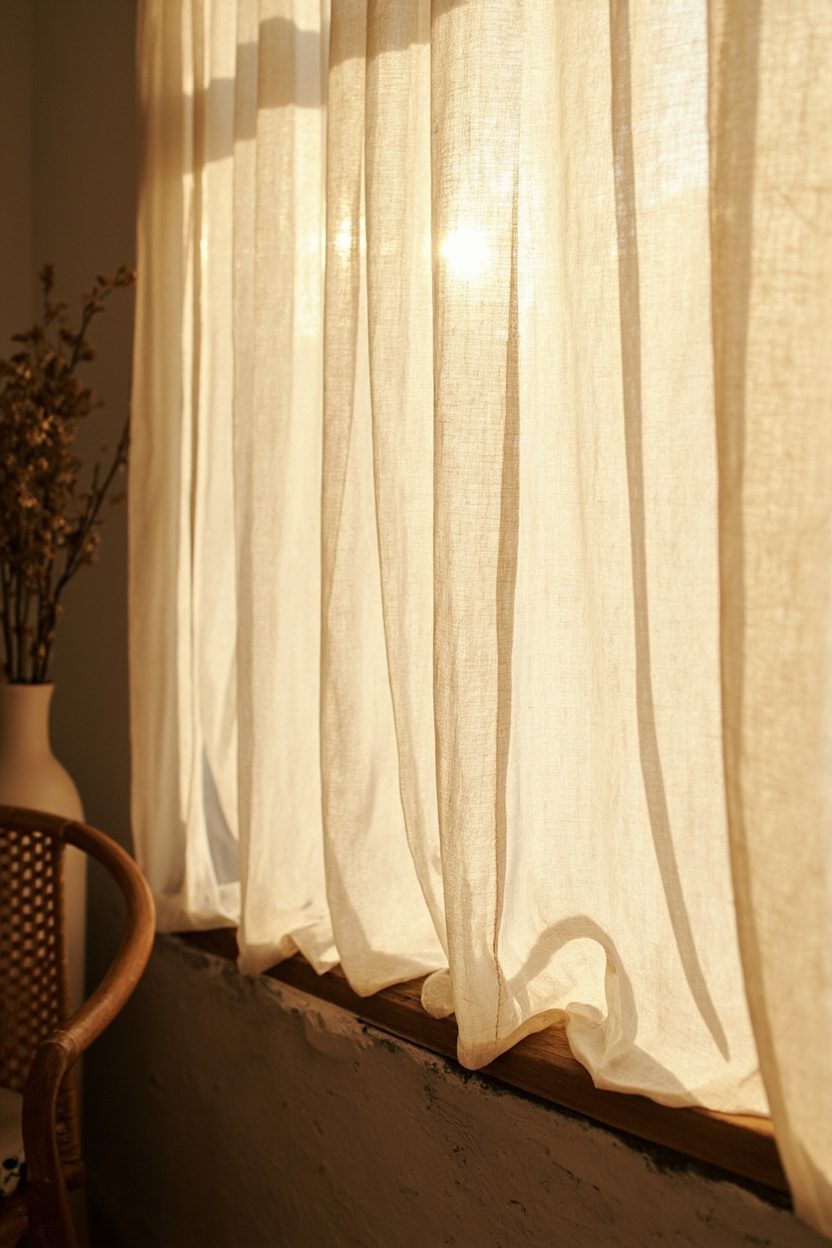
Light linen curtains filter daylight with a casual, lived-in texture. Hang them high, 6 to 8 inches above the window frame, and extend the rod 6 to 12 inches beyond each side to make windows appear larger.
Choose soft white or warm sand linen, pre-wash to get that relaxed crinkle and avoid starchy stiffness that betrays the cottage feel.
For layered privacy, pair linen panels with sheer cotton in narrower widths, using simple wooden rings for easy movement, a practical detail that keeps maintenance low and looks authentic.
If you want a bohemian touch, add tasseled tiebacks in natural fibers, which keep light control functional and decorative.
13. Handcrafted Ceramics and Pottery
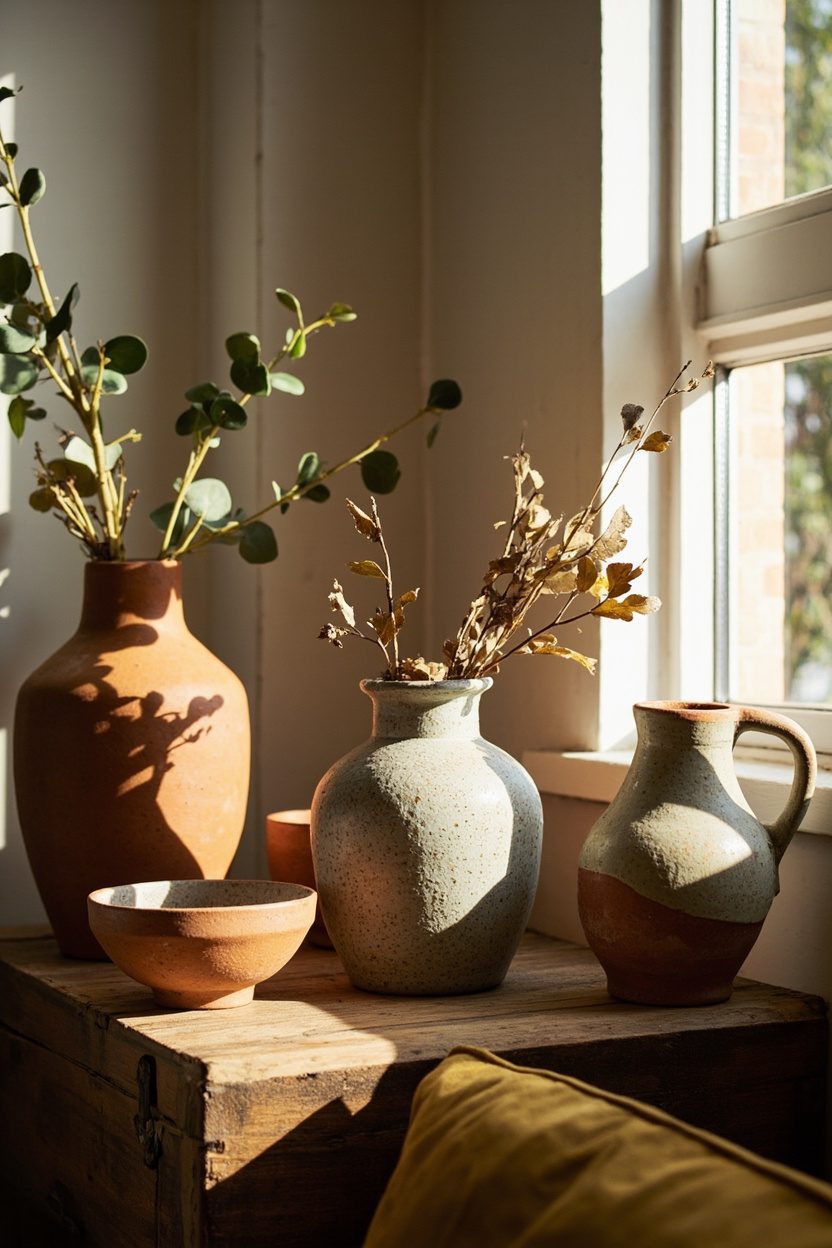
Handmade ceramics bring immediate tactile warmth, so display a small cluster of mixed heights on an open shelf or windowsill, spacing pieces about 2 to 3 inches apart to avoid visual clutter.
Choose matte glazes and earthy tones, or mix a single glazed accent piece among neutral vessels for a deliberate focal point. Budget about $30 to $150 per piece, depending on the maker.
Use ceramics functionally and decoratively, place a shallow bowl on a coffee table filled with natural objects like dried citrus or river stones, and avoid lining everything up, letting asymmetry read as intentional.
For authenticity, source from a local potter or small online studio, and rotate pieces seasonally to keep the vignette fresh.
FAQ
Choose rugs that anchor seating groups, typically 8×10 feet for a living room, or at minimum, the front legs of furniture should sit on the rug to create cohesion.
Yes, layer a modern flatweave with an heirloom kilim or fringed throw, keep a shared color or motif to prevent a jarring look.
Limit patterns to three scales for balance, for example, a large floral sofa, a medium geometric rug, and small patterned cushions.
They are central, use rattan, linen, and wood wherever possible, since these materials provide the texture and patina that define the aesthetic.
Final Thoughts
Handcrafted ceramics are a finishing touch that adds texture, function, and soul to a boho cottage. Pair them thoughtfully with layered textiles and natural elements for an authentic, lived-in look.