



Easter Table Centerpiece Ideas deserve both a stylistic plan and a gentle hand, and fresh spring flowers make that easy.
Start with a clear palette of soft pinks, lemon yellow, and pale green, and choose two dominant blooms plus one filler to keep the arrangement cohesive and camera-ready on the table.
Think about scale and sightlines, especially for family gatherings. Low, elongated arrangements work for longer tables, while a single upright bouquet suits round or pedestal tables; pick materials that tolerate a few days of display, like tulips, ranunculus, and waxflower.
Editor’s Pick: Rustic Basket Cluster — I love this one because it reads like a storybook centerpiece, combining garden-picked charm with practical durability; the woven basket hides water tubes and keeps stems corralled, which is a lifesaver during long brunches.
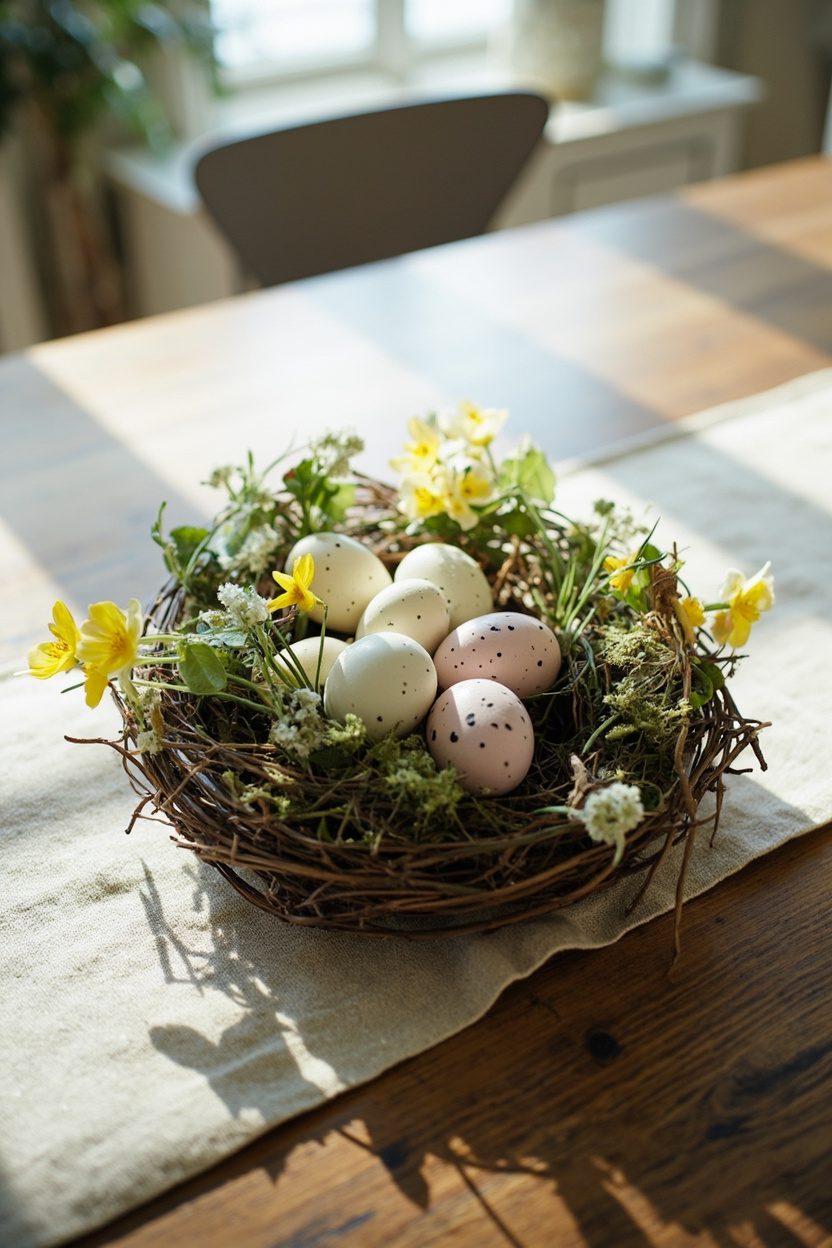
1. Spring Floral Nest
- Effort Level: Weekend DIY.
- Estimated Budget: 100-500.
- Maintenance Level: Low (Wipe clean).
- Best For: Small, low-light spaces.
Start by arranging a shallow moss-lined bowl to echo a bird’s nest, using floral foam or a waterproof liner to keep stems hydrated.
Choose a trio of blooms: pale pink tulips, white anemones, and lemon spray roses—for contrast in shape and tone.
Tuck in a few sprigs of seeded eucalyptus for texture and a soft scent that won’t overpower conversation.
Place mini speckled eggs or ceramic bunnies nestled among the flowers for an Easter-specific touch, keeping the palette muted to avoid visual clutter.
Stylist’s Note
This centerpiece thrives on proximity, so place it where guests can lean in and smell the flowers without it blocking faces. Keep the height under 8 inches for easy eye contact across the table.
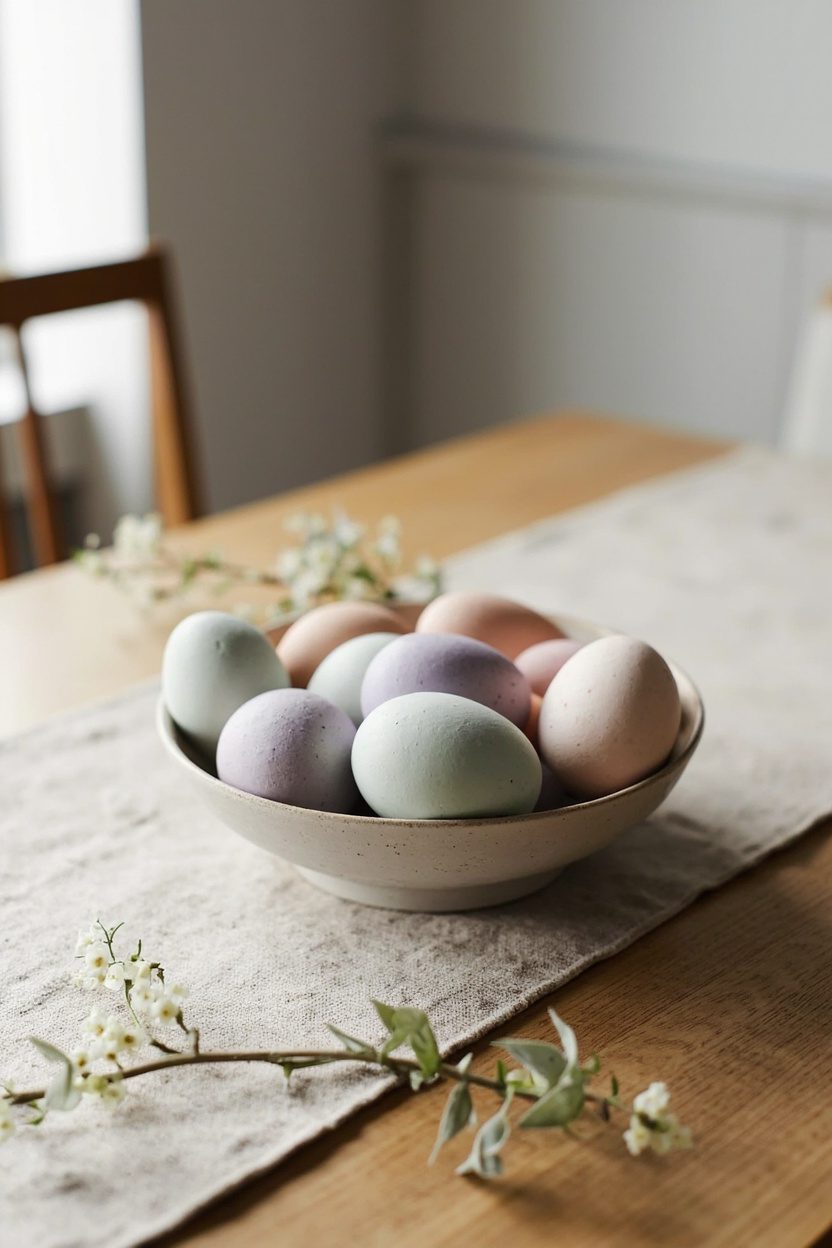
2. Pastel Egg Display
- Effort Level: Easy craft.
- Estimated Budget: 50-150.
- Maintenance Level: Very low (Dust occasionally).
- Best For: Casual brunches and kid-friendly tables.
Line a narrow wooden tray down the center of the table and scatter pastel-dyed eggs in varying sizes for immediate seasonal charm.
Intermix small bunches of fresh flowers, dwarf hyacinths, grape hyacinths, and baby’s breath—secured in bottle vases or wine cork bud vases for a playful rhythm.
Keep the color palette cohesive, choosing 3 or 4 pastels maximum, so the arrangement reads intentional rather than busy.
Use eggshells or faux eggs, depending on how long you need the display to last, and cluster eggs more tightly at the ends to suggest abundance.
Before You Buy
Use leftover hard-boiled eggs dyed with natural ingredients like beet juice and turmeric and small thrifted bottles for vases, which keeps costs low and looks charmingly collected.
Commission hand-painted ceramic eggs and invest in a long, turned-wood tray; the artisanal pieces become heirlooms and make the setup feel elevated for a larger holiday dinner.
3. Rustic Basket Cluster

- Effort Level: Medium craft.
- Estimated Budget: 75-300.
- Maintenance Level: Moderate (Refresh water daily).
- Best For: Informal, garden-themed meals.
Gather three small woven baskets in graduated sizes to create a layered focal point that reads casual and collected.
Line each basket with a clear liner and add floral foam or small mason jar vases to keep stems fresh and upright.
Mix peonies or garden roses with daffodils and sprigs of flowering quince to add seasonal shape and fragrance.
Position the largest basket in the center and offset the smaller two slightly, allowing room for place settings and serving dishes.
Make It Your Own
Swap one basket for a low wooden crate if you want a more structured silhouette, and choose blooms in a single color family to unify the cluster.
Keep an eye on proportions: baskets about 8 to 12 inches wide balance well on most dining tables.
4. Bunny Silhouette Trio

- Effort Level: Weekend DIY.
- Estimated Budget: 100-500.
- Maintenance Level: Low (Wipe clean).
- Best For: Small, low-light spaces.
What You’ll Need:
- Three wooden or acrylic bunny silhouettes, varying sizes.
- Small bud vases or test tubes with floral foam inserts.
- Fresh spring stems, like ranunculus, anemone, and sprigs of greenery.
- Matte spray paint in soft pastel or chalk white, optional hot glue, and sandpaper.
Start by choosing three silhouettes in proportion to your table length, for example, 6, 10, and 14 inches tall, so the arrangement reads as a deliberate trio rather than random heights.
Paint or finish the silhouettes in a coordinating color, allowing contrast with the flowers; a matte blush or chalk white keeps the look modern and soft, while black silhouettes read graphic and playful.
Mount small bud vases along the base of each bunny, spaced so stems peek above the silhouette’s outline, and use floral foam strips inside glass tubes to stabilize short blooms, aiming for 3–5 stems per vase.
Keep the palette cohesive: pick one dominant bloom, like pale pink ranunculus, then add two supporting accents, such as white anemones and a eucalyptus sprig, so density and scale stay balanced across the trio.
Stylist’s Note
Place the tallest bunny toward the center-back if your table is narrow, or stagger them when the table is long, so every guest gets a clear view.
The silhouette is the visual anchor, the blooms provide the softness, and keeping stems short prevents sightline interruptions at dinner.
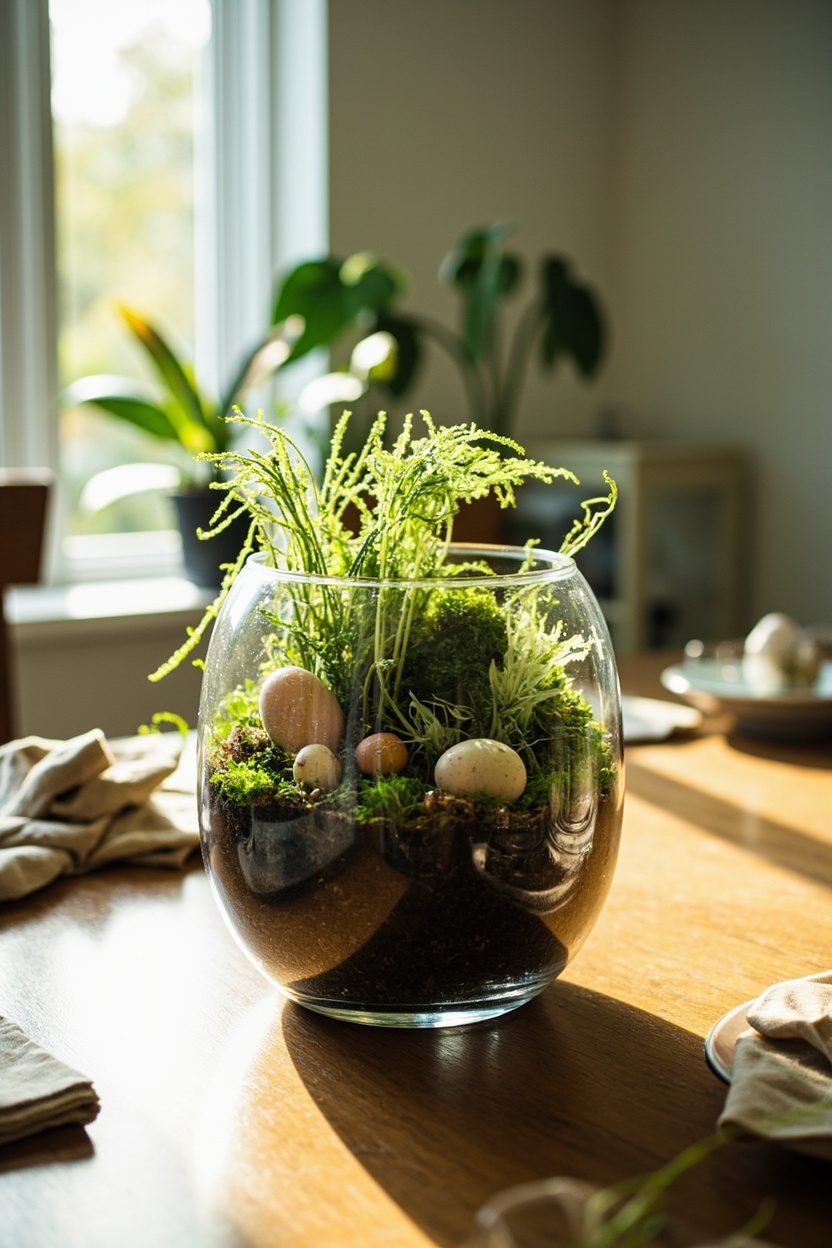
5. Miniature Terrarium Garden
- Effort Level: Light weekend project.
- Estimated Budget: 50-200.
- Maintenance Level: Medium (Occasional misting).
- Best For: Long tables and buffet-style setups.
Choose a mix of small glass vessels, like cloches, apothecary jars, and geometric terrariums in varying heights to build a mini landscape down the center of the table.
Layer with pebbles, activated charcoal if needed, and a thin topsoil layer for succulents or moss; if using cut flowers, nest them in water tubes hidden among the greenery for longevity.
Favor hardy spring blooms such as waxflower, small tulips, or paperwhites, paired with cushion moss, baby tears, and tiny ferns for texture and contrast in scale.
Group terrariums in odd numbers and leave breathing room between pieces so each little garden reads as its own vignette within the whole runner composition.
When I tried this in my own dining room, I underestimated how quickly closed cloches can fog up indoors, so I swapped a couple for open-top jars. That small change kept the plants healthy, and guests could still admire every detail.
Before You Buy
Pick vessels with removable lids if you plan to use live plants, so you can easily water and prune.
If you prefer zero maintenance, use preserved moss and water-resistant floral foam to anchor fresh cut stems without worry.
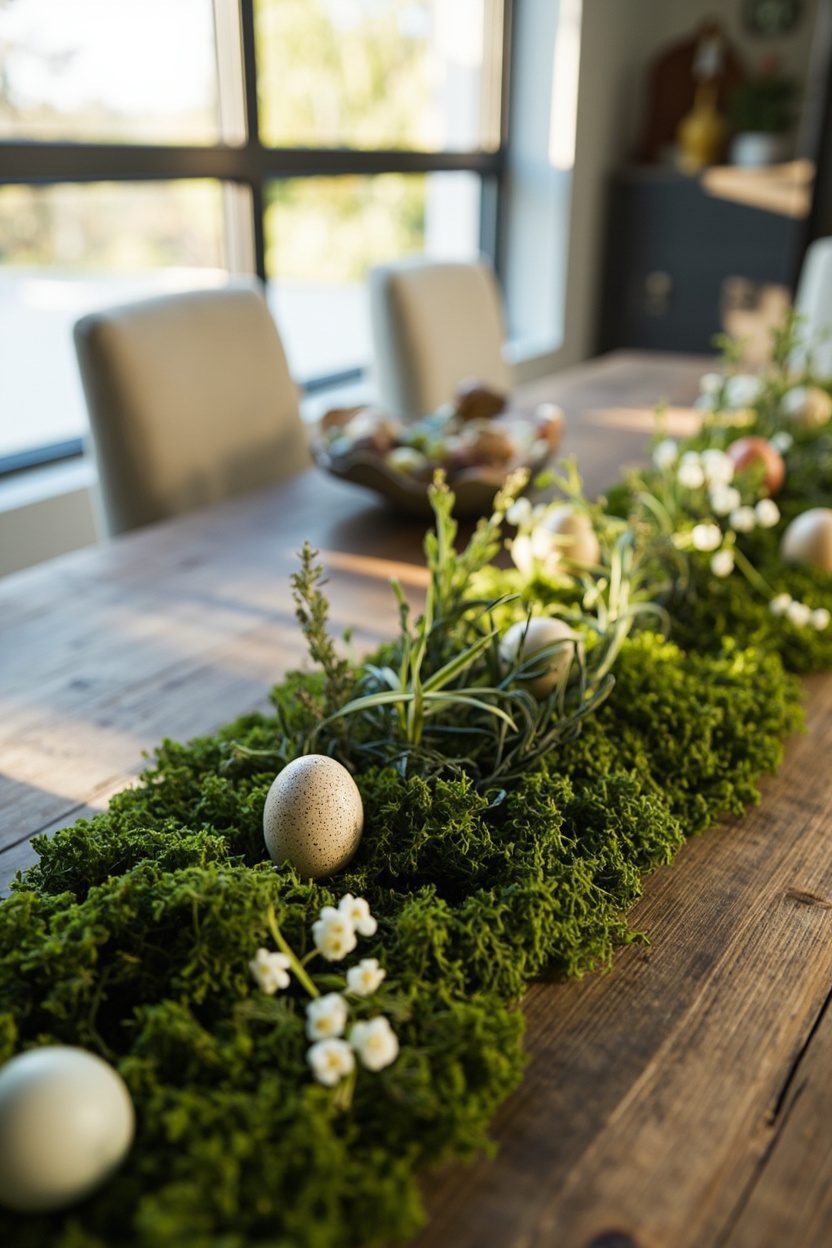
6. Moss Runner Arrangement
- Effort Level: Easy to moderate.
- Estimated Budget: 75-300.
- Maintenance Level: Low (Light misting only).
- Best For: Rustic, farmhouse, or woodland-themed tables.
Start with a natural jute or linen runner and lay a wide strip of sheet moss down the center, trimming the edges so the moss sits flush with the runner and doesn’t hang over the table edge.
Embed small clusters of blooms directly into the moss, using short-stemmed flowers like spray roses, ranunculus, or small daffodils, secured with florist pins or by tucking stems into moist floral foam pockets hidden beneath the moss.
Add height and variety with low vessels or wooden boxes sunk into the moss, filled with thicker bunches of flowers or a small branch of blossoming cherry for a sculptural focal point.
Keep the color story limited to two or three complementary tones, for example, soft lemon, cream, and a muted peach, so the lush green of the moss reads like a cohesive backdrop rather than a competing color.
Why This Works?
Moss softens the table surface and feels very springlike without fuss; it also hides mechanics like tubes and foam, so the arrangement looks effortless.
For tight budgets, preserved moss is an excellent swap that keeps the look for days with no extra care.
7. Candlestick Egg Holders
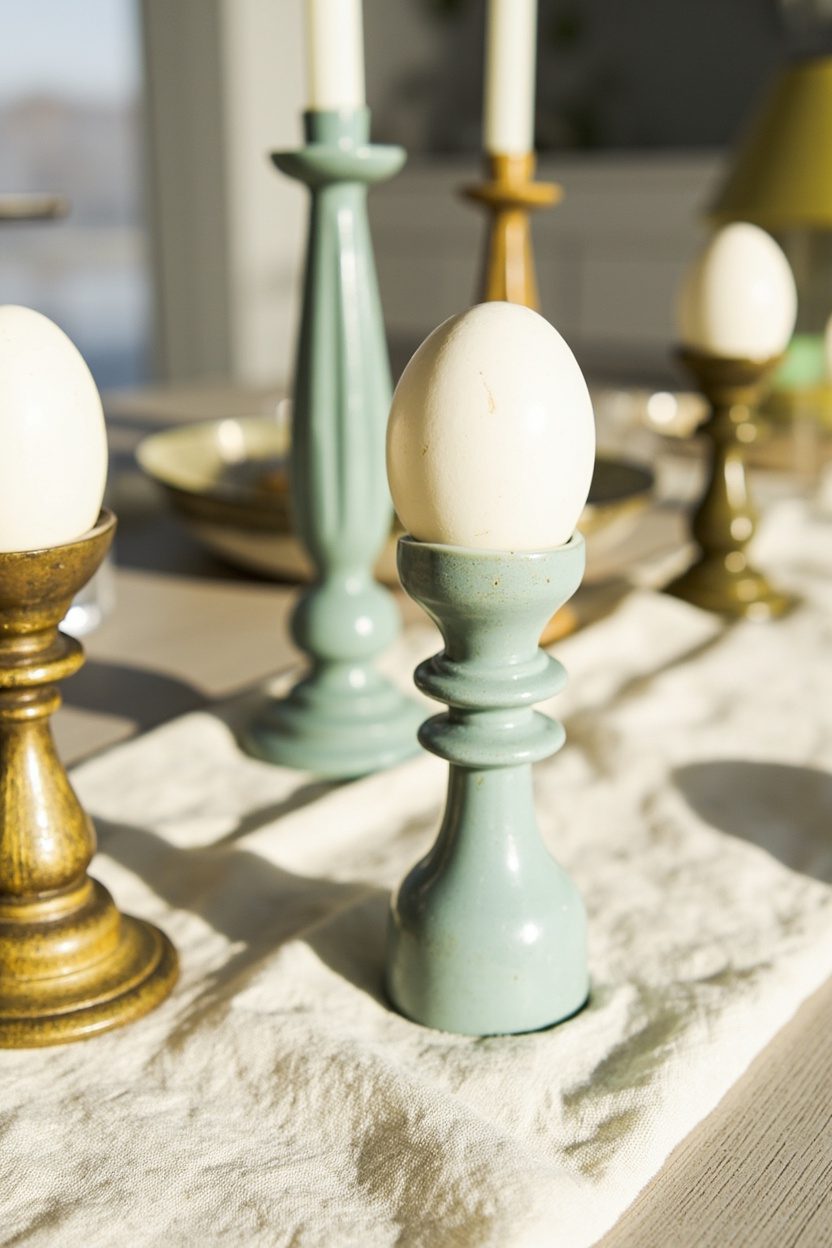
- Effort Level: Afternoon project.
- Estimated Budget: 50-150.
- Maintenance Level: Low (Refresh flowers weekly).
- Best For: Long farmhouse or modern dining tables.
Start with a row of tapered candlesticks in mixed heights, spacing them evenly down the table for rhythm and focus.
Top each candlestick with a shallow ceramic cup sized to hold a single dyed or natural egg and a tiny posy of spring blooms like ranunculus or grape hyacinth.
Use a restrained color story, for example, soft blush, cream, and moss green, to keep the look elegant rather than whimsical.
Keep stems short, about 2-3 inches, so the flowers sit just above the eggs and never block sightlines across the table.
Stylist’s Note
Swap real eggs for hollowed or ceramic ones if you want the centerpiece to last all weekend, and choose brass or matte black candlesticks to set the style direction.
For scale, place candlesticks 12–18 inches apart on a runner, and avoid too many extra accessories so the linear composition reads clearly.
8. Wildflower Mason Jars
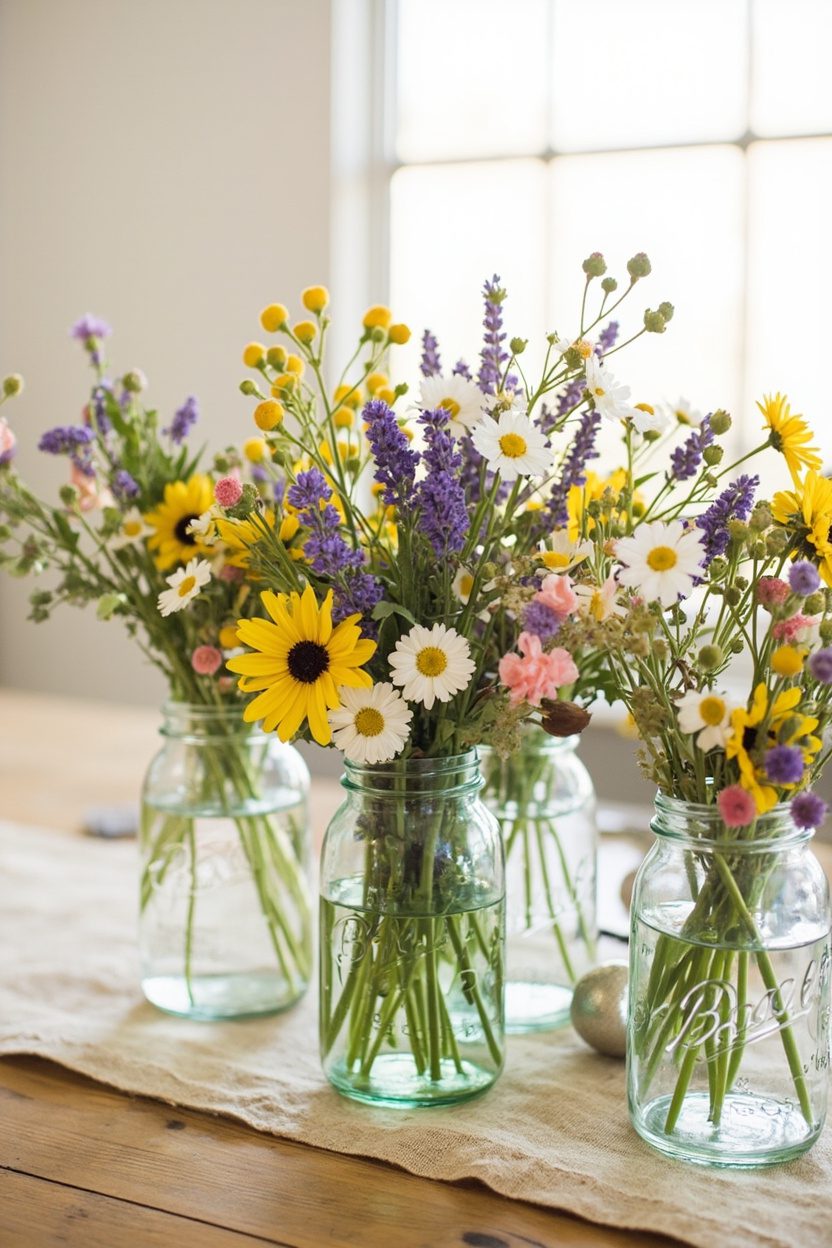
- Effort Level: Quick and casual.
- Estimated Budget: 30-100.
- Maintenance Level: Medium (Change water every 2 days).
- Best For: Rustic, boho, and outdoor tablescapes.
Gather mismatched mason jars in 8–12 ounce sizes, and fill each with a loose assortment of daisies, Queen Anne’s lace, calendula, and cornflowers for that freshly picked-from-the-field look.
Leave stems varying lengths, and tie simple twine bows around jar necks to add texture without overpowering the flowers.
Scatter jars down the table in groups of three or five, alternating single jars with small clusters to create an organic rhythm.
For color handling, choose a dominant hue, like sunny yellow or lavender, then feed in two complementary accents to keep the palette cohesive.
Splurge vs. Save
Save: Source jars from thrift shops or reuse jam jars, and pick locally grown or grocery-store bunches, then divide them into multiple vessels; this keeps cost under control and still feels abundant.
Splurge: Book a seasonal bouquet from a local flower farmer or florist with specialty stems like nigella and preserved grasses, and invest in new embossed mason jars or vintage glass to elevate the presentation without complicating the styling.
9. Minimalist White Wreath
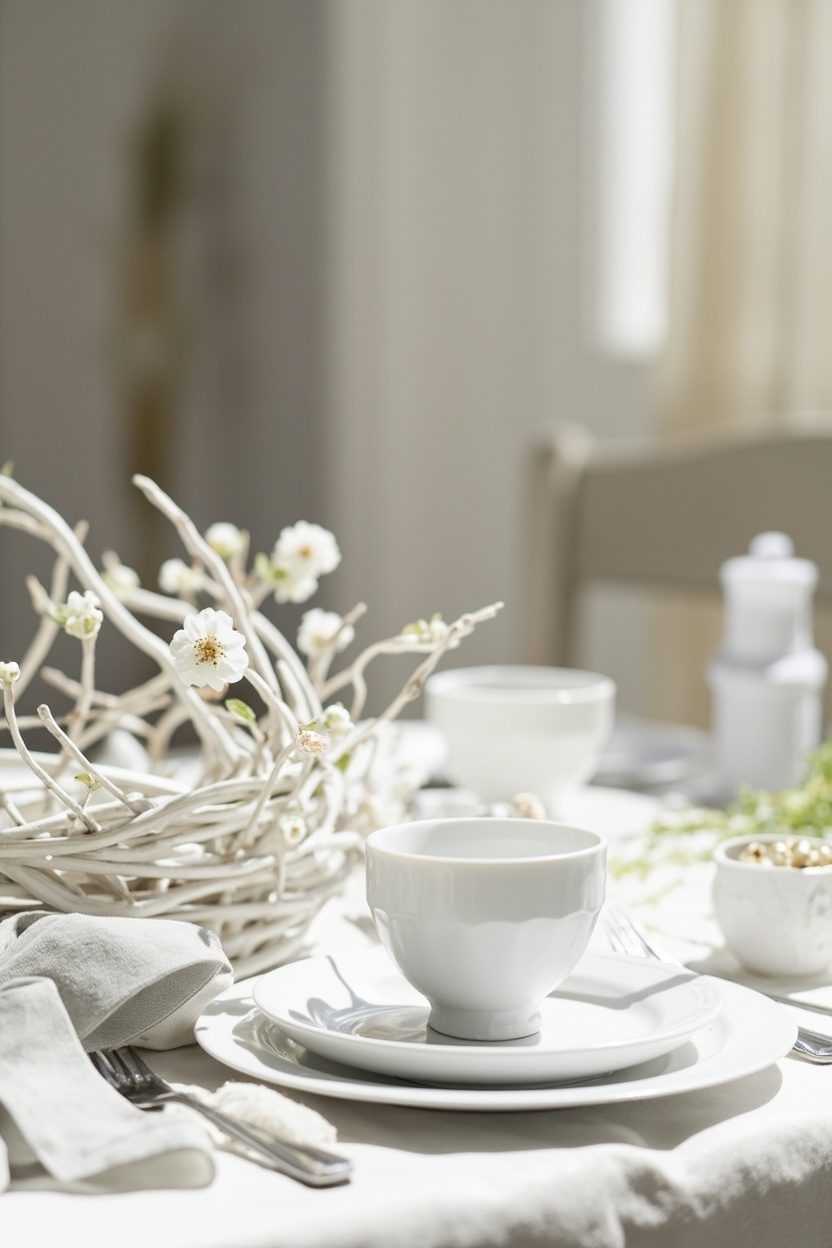
- Effort Level: Weekend craft.
- Estimated Budget: 40-200.
- Maintenance Level: Low (Avoid direct sun).
- Best For: Small round tables and intimate brunch settings.
Choose a low-form wreath base in whitewashed willow or foam, about 14–18 inches across, to sit flat as a centerpiece ring.
Arrange a sparse circle of white ranunculus, anemones, and small green eucalyptus sprigs so the center remains open for candles or a cake stand.
Keep flower placement asymmetric, with the densest cluster offset to one side for a modern editorial feel.
Select blooms with similar petal textures to maintain a calm, minimalist effect, and avoid bold colors that break the quiet restraint.
Make It Your Own
Place a single pillar candle or a tall glass cloche in the wreath center to add vertical interest, and consider a linen runner in soft gray as the base to make the white flowers read warmer.
If you like, reference classic neutral styling cues from White Farmhouse looks to keep the arrangement crisp and inviting.
10. Fruit-and-Herb Bowl

- Effort Level: Weekend DIY.
- Estimated Budget: 50-150.
- Maintenance Level: Medium (Replace wilted herbs).
- Best For: Casual brunches and kitchen tables.
What You’ll Need.
- Mixed citrus or apples, a small bunch of fresh herbs, and a shallow wooden or ceramic bowl.
- Floral foam or a small glass jar for anchoring stems, scissors, or kitchen shears.
- Optional: twine, small decorative eggs, and a citrus zester for added texture.
This centerpiece relies on produce and herbs for both scent and color, which feels effortlessly seasonal and useful after the meal.
Start with a sturdy, shallow bowl in a neutral material like matte ceramic or reclaimed wood, about 12 to 16 inches across, so the fruit can spread out without looking crowded.
Choose three to five types of fruit for visual interest: lemons for bright yellow, blood oranges for deep red, and green apples for contrast, keeping pieces roughly similar in size for balance.
Intermix sprigs of herbs such as rosemary, thyme, and mint; their stems tuck between fruit and add fresh fragrance when guests brush by, a practical detail that no single-flower arrangement offers.
Designer Secret
The trick is scale and repetition: use one dominant fruit, like lemons, then repeat a secondary fruit in smaller clusters to create rhythm across the bowl. Use a small jar of water hidden among the fruit to hold more delicate herb bunches; that way, they stay perky longer without soaking the whole arrangement.
Summary
For a cohesive table look, echo the bowl’s material in small serving pieces or napkin rings, and keep any disposable items out of sight to maintain that collected, intentional vibe.
If you like a coastal or minimal aesthetic, try pairing this with pared-back place settings or a linen runner referenced in minimalist bathroom lighting inspiration to keep the palette calm and fresh.
FAQ
Herbs tucked into small water-filled vessels will stay fresh several hours to a day, while sturdy fruit like apples and citrus can remain attractive for several days at room temperature. Keep delicate herbs in water and refresh them if the centerpiece needs to last multiple days.
Yes, assemble the fruit base the night before and store it in a cool place. Add the herbs and any fragile accents, like small flowers or decorative eggs, in the morning to ensure everything looks vibrant and lively at the table.
When scaled correctly. Use a polished ceramic or a low-profile metal bowl, select uniform fruit, and trim herbs neatly to maintain a refined silhouette that complements formal place settings without overpowering them.
Balance citrus with milder fruits, like pears or green apples, and include herb varieties with subtler aromas, such as thyme, instead of large quantities of rosemary. The result is a layered scent profile that feels fresh but not overpowering.