


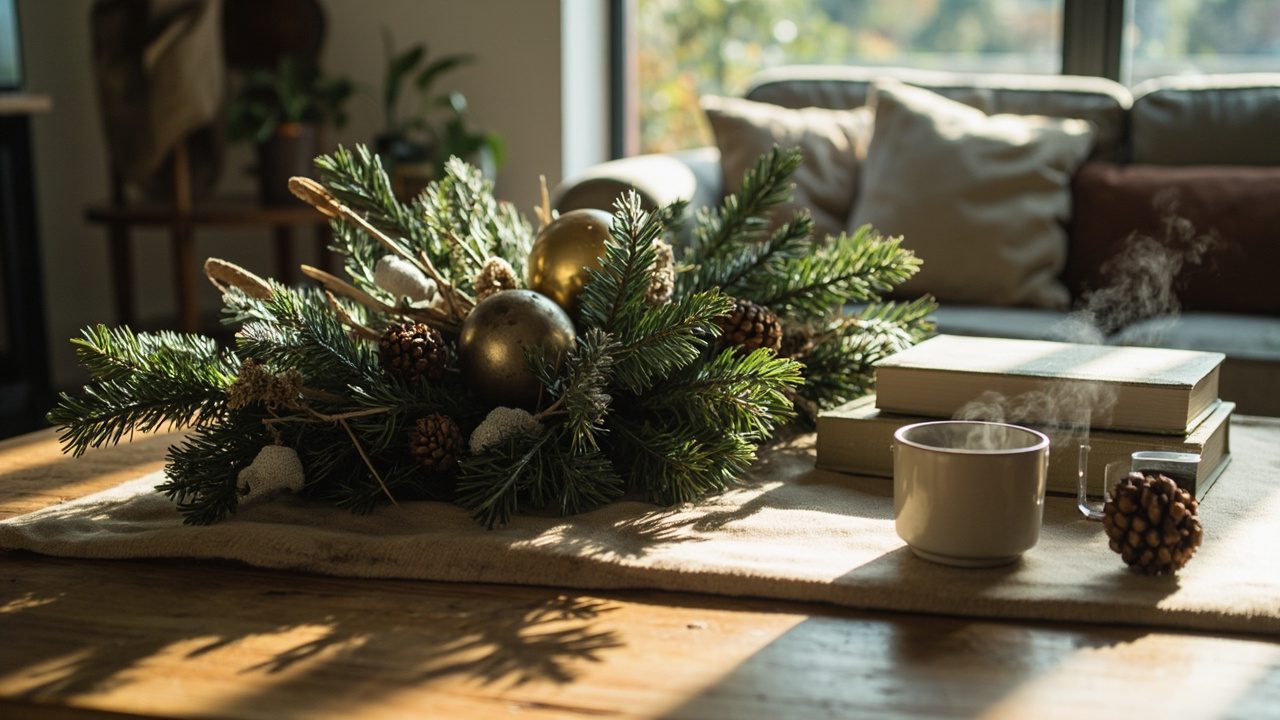
Warm your living room without overdoing it, with tabletop arrangements that read styled, not staged. Think in layers, scale, and texture, so a single focal piece can hold the room together, whether your sofa is modern, low-profile, or richly upholstered.
This edit focuses on materials, color temperature, and placement, so lighting, reflective surfaces, and seasonal botanicals work together. These ideas favor approachable budgets and clear choices, for a coffee table that looks edited and inviting all holiday season.
1. Candle Cluster Centerpiece

Clustered candles remain the quickest route to atmosphere, but in 2026, they should mix heights and finishes, not just match sizes.
Use three to seven candles, varying pillar heights by at least 2 inches so the arrangement reads intentional, not uniform.
Place the cluster on a nonflammable base, such as a shallow stone bowl or ceramic tray, to protect wood surfaces and create a defined footprint.
Choose warm white wax and pair with a matte brass or smoked glass holder to balance glow and reflection, avoiding overly shiny metals that compete with the flame.
Essential Elements
- Mix pillar heights, use an odd number, ideally 3 or 5, for balance and rhythm.
- Use a fire-resistant base like stone, ceramic, or metal to protect the table surface.
- Keep candle color warm white, avoid neon or stark white for holiday warmth.
- Include one reflective element, like a small brass bowl, to amplify light safely.
2. Mixed-Metal Accents

Layering metals, brass, aged nickel, and burnished bronze adds depth without looking matchy, a top 2026 move for holiday styling.
Anchor the arrangement with one larger metal object, such as a sculptural orb or candlestick, then add two smaller pieces in contrasting finishes.
Limit the palette to three metal tones maximum, and use one as the dominant tone to avoid visual clutter.
Combine metals with a soft textile underlay, like a neutral linen runner, to soften reflections and unify the composition.
Styling Blueprint
- Choose one dominant metal, add one secondary, and an accent metal for highlights.
- Scale matters; use one large object plus smaller accents to create hierarchy.
- Place metal pieces off-center, near a book stack or tray, not directly in the middle of the table.
- Pair with warm textiles to temper shine and reflect holiday light gently.
3. Textured Tray Vignette

A tray creates instant order, but texture is what reads as curated in real homes, so pick rattan, hammered metal, or honed stone for the base.
Start with a foundation object, like a stack of two coffee-table books, then layer the tray on top or beside them to create staggered heights.
Add a living element, such as a short sprig of pine or a small amaryllis bulb, for seasonal scent and an organic contrast to rigid textures.
Budget-wise, opt for an inexpensive wooden tray upgraded with a metallic leaf or chalk paint, rather than buying high-end pieces outright.
What to Focus On?
- Select a tray material that contrasts the table surface for instant definition.
- Use one living sprig or bulb for scent and seasonality, keep it low-profile.
- Create height with books or a small vase, never more than three tiers.
- Cluster small items—trinket dish, ornament, candle—for a curated, edited look.
4. Low-Bulk Greenery

A low-bulk greenery arrangement keeps the coffee table airy, so your living room reads relaxed, not cluttered.
Choose flat, trailing stems like eucalyptus, ruscus, or olive branches that lie low, keeping sightlines clear across the sofa.
Use a shallow, wide vessel in matte ceramic or hammered metal, about 10–14 inches across, to hold the arrangement without adding vertical height.
Avoid foam blocks or dense bouquets; the goal is texture and fragrance, not a centerpiece that dominates the sofa conversation area.
Styling Blueprint
- Use 3 sprigs of varied length, laid asymmetrically for a lived-in look, sized to the table width.
- Pick eucalyptus for scent, olive for sculptural leaves, and ruscus for budget-friendly fullness.
- Keep the container low and neutral, choose terracotta for warmth or black matte for contrast.
- Replace stems seasonally, or use high-quality faux for low-maintenance longevity.
5. Miniature Wreaths
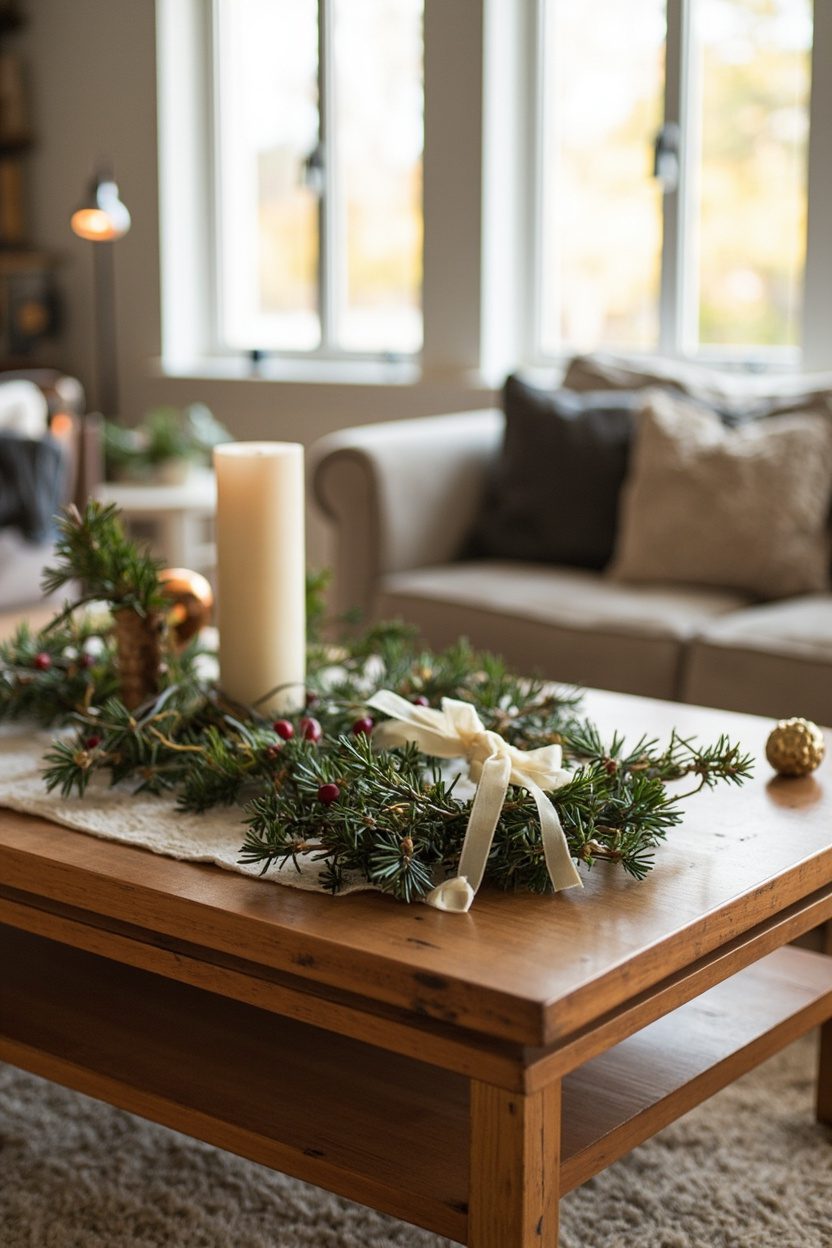
Miniature wreaths give a festive, crafted touch without overwhelming small surfaces; they work singly or in a trio across the table.
Opt for 6–10 inch rings made from preserved boxwood, cedar, or dried billy buttons to add texture and seasonal color.
Place one wreath flat under a candle, or stack two with a small vase in the center to create layered focus and varying height.
Steer away from glossy plastic greenery, choose preserved or natural elements so the wreaths photograph well and smell authentic.
Essential Elements
- Size wreaths to the table, aiming for one-third to one-half the table width for proportional balance.
- Use a single pillar candle or a bud vase as the wreath focal point, secure with a dab of museum gel if needed.
- Mix textures, add a tiny sprig of contrasting berry or dried grass for visual interest.
- Store preserved wreaths flat in tissue to keep shape, label by season for easy rotation.
6. Stoneware Trinket Box
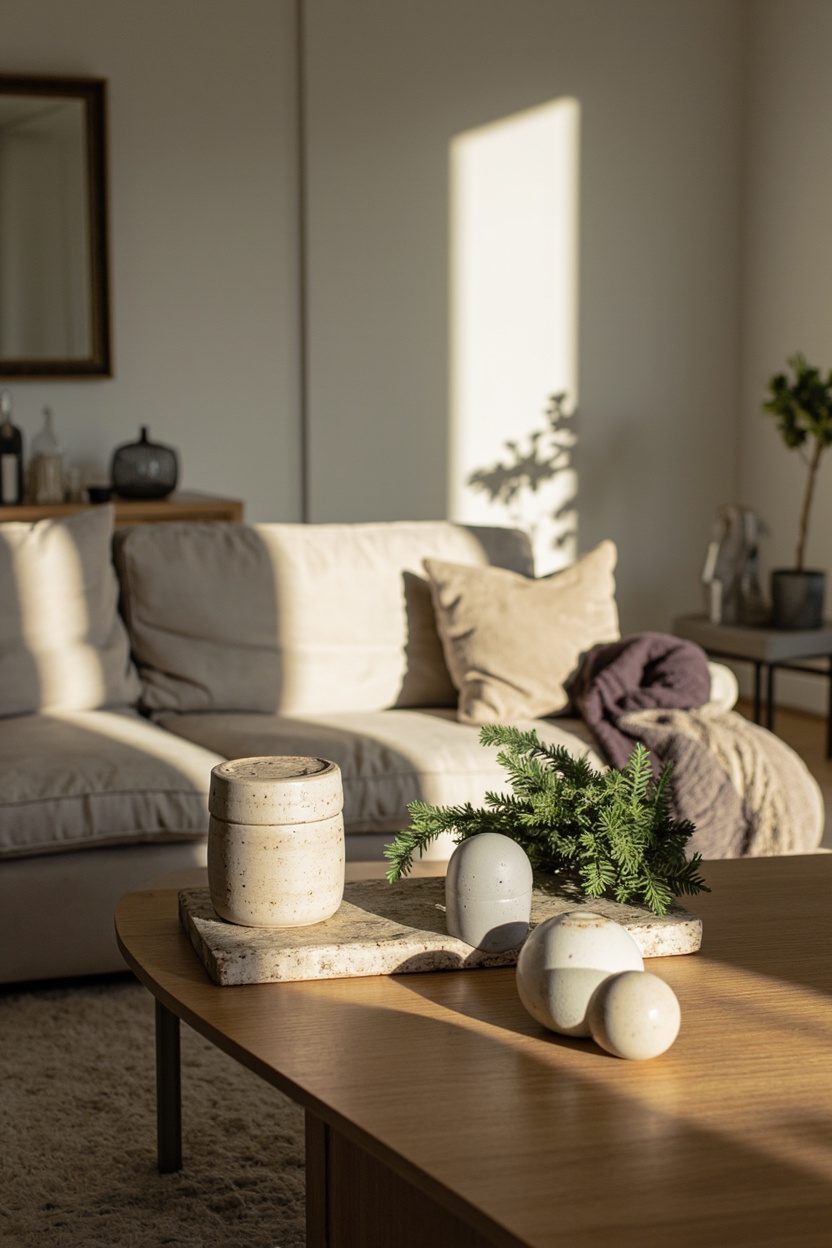
A stoneware trinket box is a tactile, elevated way to stash remotes, matches, or small holiday treasures on the coffee table.
Choose a hand-glazed finish in an on-trend hue, such as deep brown lacquer or warm sand, to read like intentional décor rather than storage.
Scale matters; pick a diameter of 5–8 inches for a single box, or a matched pair if your table is wider than 40 inches.
Avoid cheap resin knockoffs, invest in a kiln-fired piece or vintage stoneware for surface depth and long-term patina.
What to Focus On
- Match glaze tone to a secondary room color, like a cushion or rug accent, for cohesive layering.
- Choose a lid-weight that sits snugly, so items stay hidden, but access is effortless.
- Place a box near a stack of books or a small plant to anchor the composition and break monotony.
- Consider a lined interior with felt if you plan to store delicate items for protection and silence.
7. Sculptural Objects

Sculptural pieces make a coffee table feel intentional, not accidental. Choose one commanding form, like a matte ceramic torso or a hammered brass orb, sized about one-third the table length for correct scale.
Mix finishes, keep one neutral tone and one metallic, so the sculpture reads as art rather than seasonal clutter. Avoid too-tall pieces that block sightlines across the room.
Place the object off-center, paired with a low stack of two books and a single sprig in a bud vase to anchor it visually. A common mistake is over-ornamenting, which negates the sculptural drama.
Select budget-minded options in plaster or resin for under $150, or invest in a hand-thrown piece if you want a lasting centerpiece decision detail.
Styling Blueprint
- Scale the sculpture to one-third of the table length, approximately 10–14 inches for standard tables.
- Pair with a low vase and two books for hierarchy and negative space.
- Choose one neutral and one metallic finish to balance warmth and contrast.
- Avoid multiple tall pieces; keep sightlines clear for conversation flow.
8. Warm-toned palettes
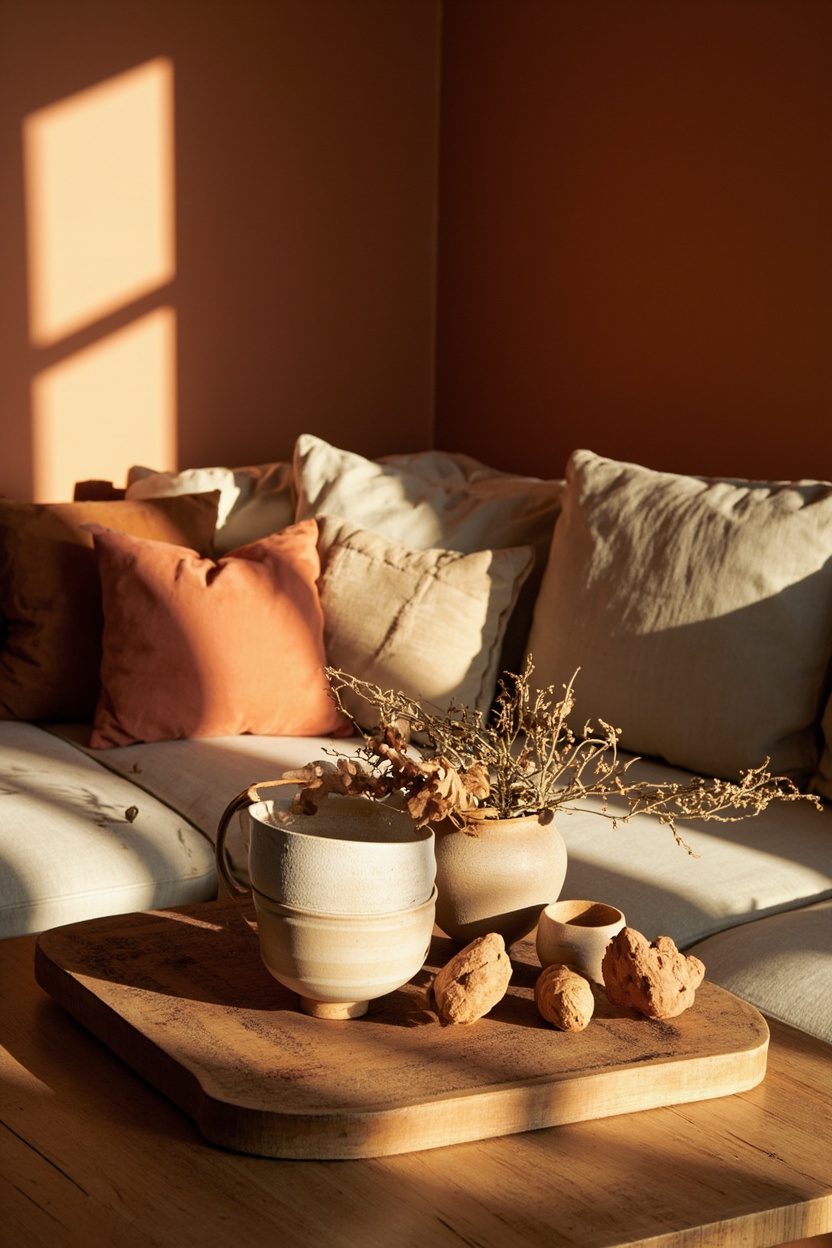
Switching to warm tones instantly adds seasonal comfort; think terracotta, ochre, and deep caramel instead of bright winter whites. Use a warm runner or tray as the foundation to contain the palette.
Introduce texture with a woven placemat, a leather-bound book, and a clay candle, keeping color saturation mid-range to avoid looking costume-y. Add a small evergreen spray to nod to the holidays without literal ornaments.
Limit the palette to three main hues plus a neutral, so the arrangement reads cohesive and editorial. For decision clarity, choose warm brass hardware over chrome on any tabletop accessories.
If you want a farmhouse nod, combine warm tones with distressed wood, referencing classic Old Farmhouse proportions and finishes.
Essential Elements
- Base layer: warm-toned tray or runner to anchor the color story.
- Textures: clay, leather, and woven fibers to add tactile warmth.
- Accent: one evergreen or dried element to reference the season subtly.
- Finish choice: warm brass or aged bronze for metal accents.
9. Layered Books Stack

A layered stack of books is the easiest way to add height and narrative. Start with a large-format coffee-table book as the base, about 12–14 inches square. Pick top books with covers in complementary holiday tones, but avoid matching them exactly.
Place a decorative object on the top book, such as a small sculptural candle or a ceramic trinket box, to complete the vignette and prevent the stack from looking like mere storage. Rotate books so spines face in different directions for collected, edited-in-place energy.
Keep the stack to two or three books; any more looks cluttered and destabilizes the visual flow. For a practical tip, use an archival slip to preserve dust jackets if you plan to reuse the books after the season.
If you need ideas for building a built-in look around your stacks, refer to Diy Built-In Bookcase Projects for treatment inspiration.
What to Focus On?
- Base book size: 12–14 inches square for standard tables, smaller for narrow surfaces.
- Stack height: two to three books, keeping the top object low at 3–4 inches.
- Cover palette: choose covers with mid-tone colors that harmonize with the room.
- Stability: Place heavier, larger books at the bottom, lighter ones on top.
10. Velvet Holiday Throw

A velvet throw folded over the corner of the coffee table adds instant warmth and layered texture, ideal for winter styling where touch matters as much as look.
Choose a rich jewel tone, like oxblood or deep emerald, to anchor the palette and contrast matte surfaces, which prevents the arrangement from feeling flat.
Keep the throw proportionate, about 50×60 inches for most tables, so it cascades just enough without hiding table legs or coasters.
Avoid synthetic sheen, opt for cotton-velvet or viscose blends for durability and easy spot cleaning after holiday entertaining.
Styling Blueprint
- Fold into thirds and drape over one corner, leaving tabletop items visible.
- Pair with one sculptural candle and a small stack of books for a layered scale.
- Match the throw tone to one accent pillow in the room for cohesion.
- Keep fringe or tassels trimmed to prevent catching on servingware.
11. LED Fairy Lanterns
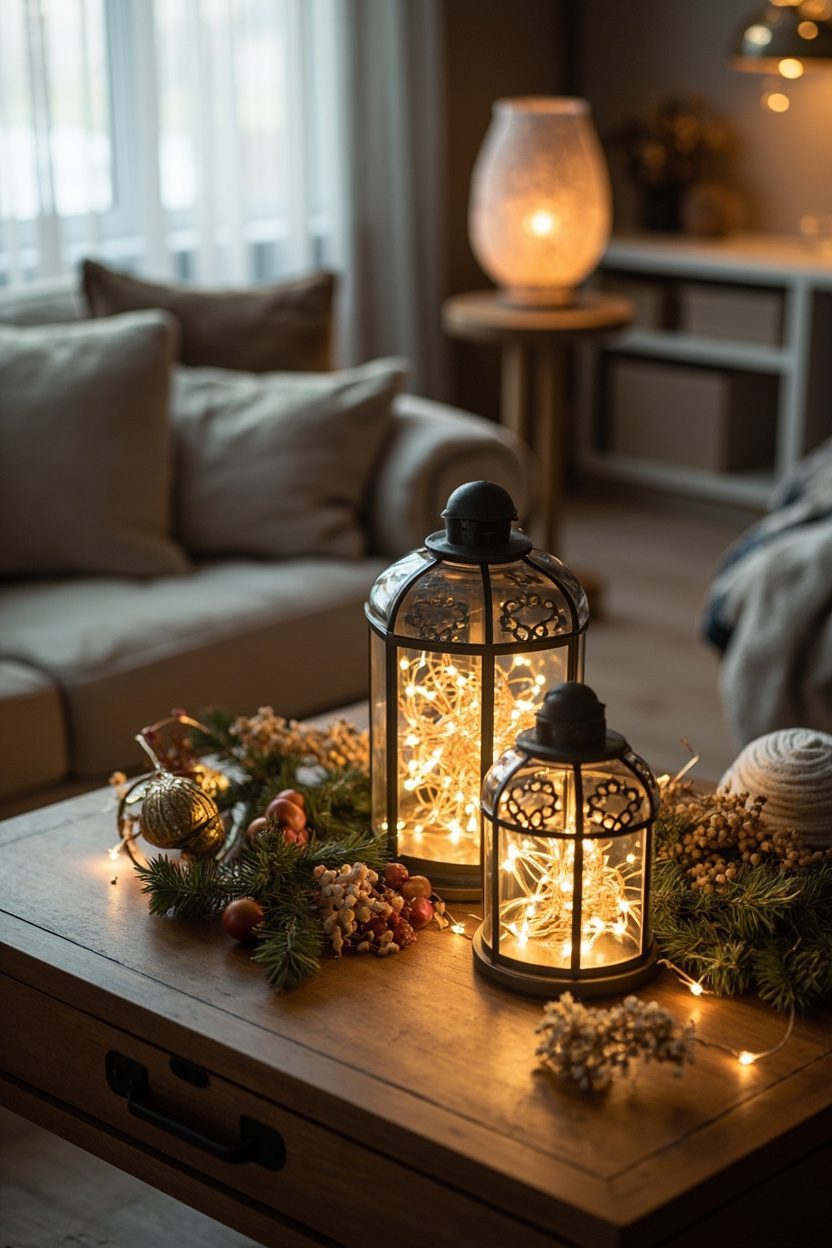
Clustered LED fairy lanterns bring soft, safe twinkle without open flames, perfect for homes with kids or pets during holiday parties.
Select warm-white LEDs and lanterns with dimmable settings to control ambience from bright appetizer hour to intimate after-dinner glow.
Scale matters, so mix one larger paper lantern with two smaller glass or metal versions to create depth and avoid visual monotony.
For longevity, use replaceable batteries and conceal battery packs under greenery or within a decorative tray to keep lines clean.
Essential Elements
- Use warm white, 2200–2700K, for candlelike warmth and flattering skin tones.
- Group lanterns on one side of the table to balance a focal stack of books on the other side.
- Add a small sprig of evergreen inside a glass lantern for seasonal charm.
- Choose lantern materials that echo other finishes in the room, like brass or matte black.
12. Depth-Focused Colorblocking
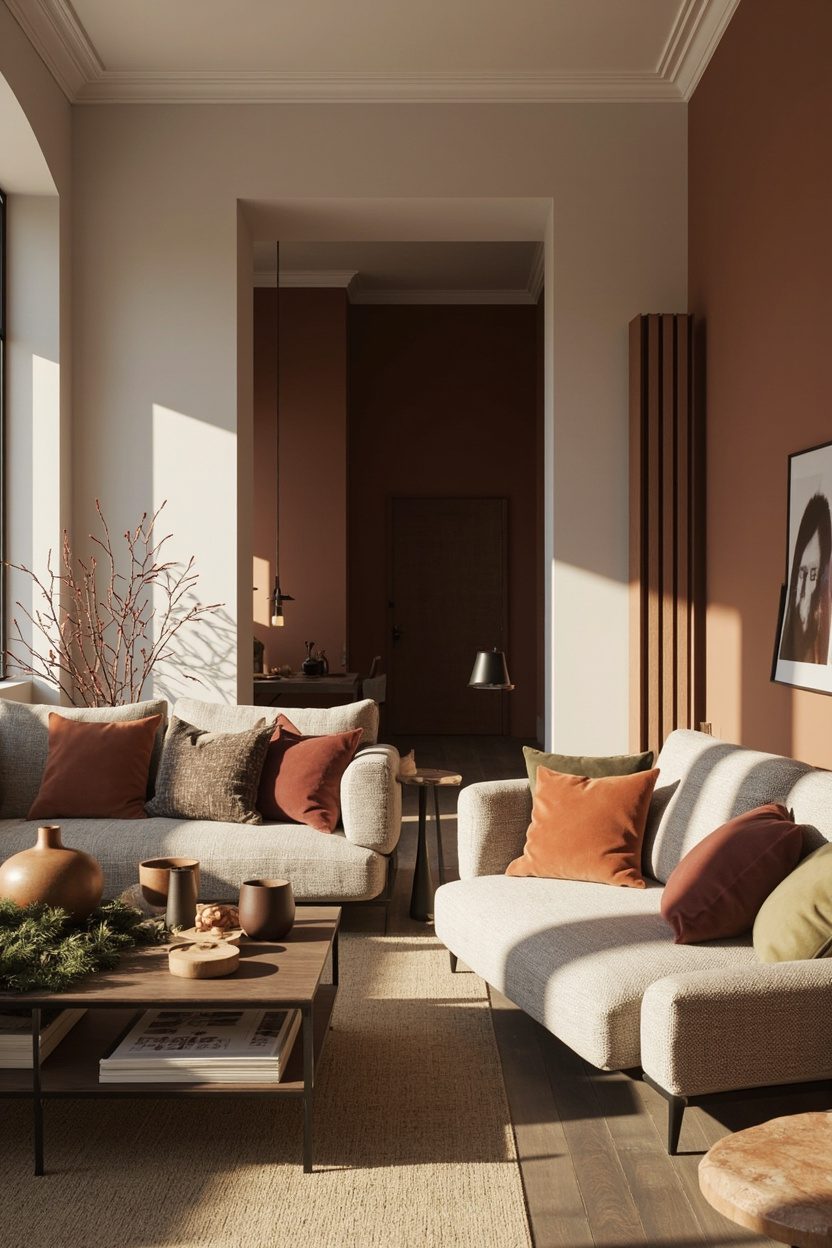
Colorblocking with layered hues creates dimensional coffee table vignettes, a trend moving toward nuanced, felt color rather than loud contrasts.
Start with a deep base object, such as a dark ceramic tray or lacquered box, then add mid-tone accents like terracotta or warm ochre for the middle ground.
Top with a light, tactile element, such as a cream candle or pale stone bowl, to finish the vertical progression and guide the eye through depth.
A single color family in three distinct tonal steps reads elevated and intentional; avoid more than three to keep compositions sophisticated.
What to Focus On?
- Pick one dominant deep tone, one mid-tone, and one light accent for every grouping.
- Use materials such as matte, satin, and glossy to enhance perceived depth alongside color.
- Limit to three objects per vignette to prevent visual overcrowding.
- Introduce a small metallic detail, like a brass match striker, to add sparkle without competing.
FAQ
Your centerpiece should leave a clear edge of the tabletop visible, generally occupying one-third to two-thirds of the table surface. Consider the table’s length and sightlines, prioritizing low pieces for conversation, and choose scale over quantity to avoid clutter.
Yes, mixing real and faux greenery is practical and looks natural when matched for color and texture; use real sprigs for scent and focal moments, and reinforce volume with high-quality faux stems where maintenance would be impractical.
Layered lighting wins: dimmable overheads, task lamps near seating, and accent sources like LED lanterns or candle clusters on the coffee table create a flexible atmosphere. Prioritize warm color temperatures for flattering skin tones and a cozy mood.
Use trays and coasters to localize spills and condensation, and choose finishes or placemats that are easy to wipe. For delicate surfaces, add a thin acrylic protector under decor during big gatherings, then remove it when you want the table’s original character to show.
Final Thoughts
Holiday coffee table styling rewards thoughtful restraint, prioritizing three-dimensional layering, tactile materials, and practical lighting.
Use one decisive element per vignette: a velvet throw, lantern cluster, or colorblocked stack—to create a curated, inviting living room ready for festivities.