


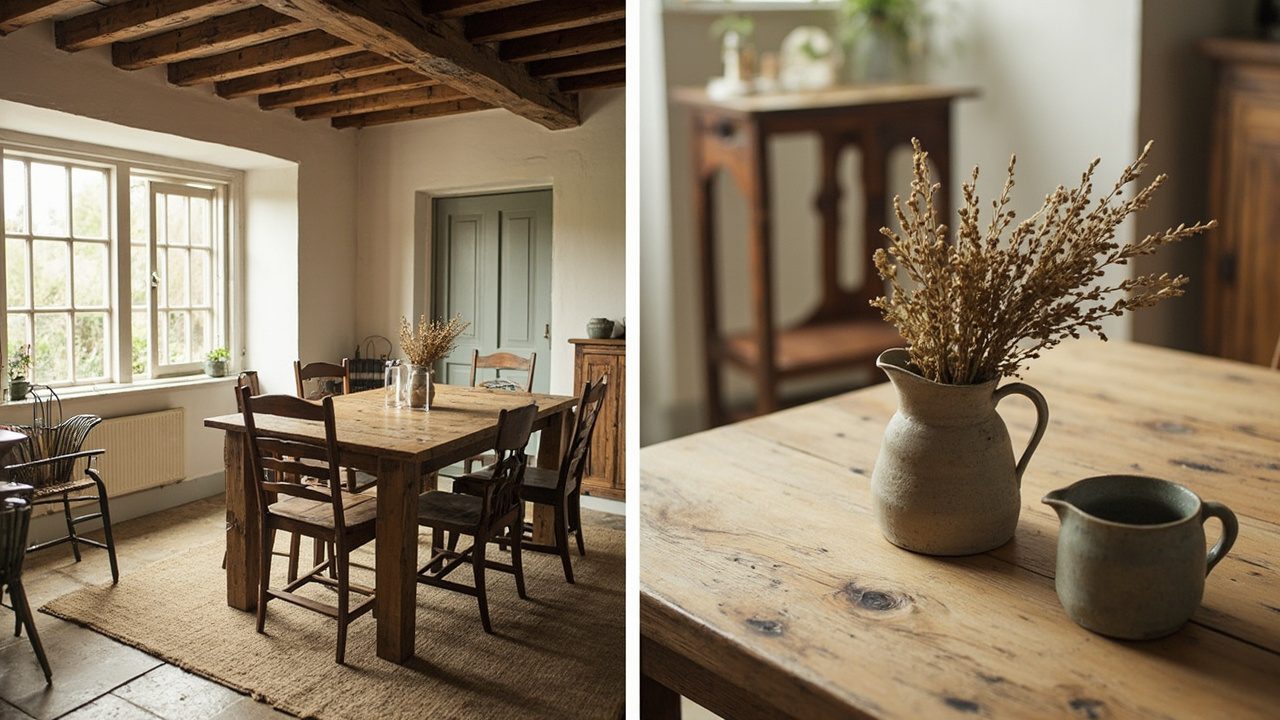
Cottage dining rooms should look lived-in and effortless, with every textile and surface earning its keep. These ideas focus on tactile layers, thoughtful proportions, and a few honest execution notes so your table setting feels comforting and collected.
- 1. Cottage dining table fabric layering
- 2. Warm wood and painted table combos
- 3. Pattern-on-pattern upholstery mixes
- 4. Deep blues with zesty accents
- 5. Mixing vintage and modern seating
- 6. Curated cottage tabletop collections
- 7. Statement lighting for cottage dining
- 8. Natural fiber rugs for warmth
- 9. Cozy banquette with floral textiles
- 10. Wallpapered feature walls in the dining
- 11. Hand-painted cabinetry and panelling
- 12. Earthy plaster finishes and textures
- 13. Botanical displays and foraged centrepieces
- Final Thoughts
1. Cottage dining table fabric layering

Start with a linen tablecloth in a muted tone, then add a runner in a contrasting scale, such as a narrow stripe over a soft floral, so the table reads curated, not cluttered. Use napkins in a third fabric, folded simply and placed off-center. This keeps the eye moving and allows crumbs to hide between washes.
Keep proportions practical, choose heavyweight linens for high-use tables, and anchor the look with a washable placemat at each setting to protect the base layer.
A common mistake is matching every fabric too closely; instead, aim for harmony through color family and varied scale.
2. Warm wood and painted table combos

Pair a warm honey or walnut top with painted legs in cream, sage, or charcoal; this contrast reads both cottage and contemporary, and shows wear gracefully. Keep the tabletop trimmed with a 2 to 3 inch overhang from the painted apron, so the wood surface remains the focal point when setting food down.
For longevity, finish the wood with a hard-wax oil that can be spot-sanded and refreshed rather than resealed, and avoid high-gloss paints on legs, which show chips; an eggshell finish masks knocks and layers well with woven seating.
If space is tight, choose a smaller round top; it encourages conversation and fits snugly into cottage nooks.
3. Pattern-on-pattern upholstery mixes
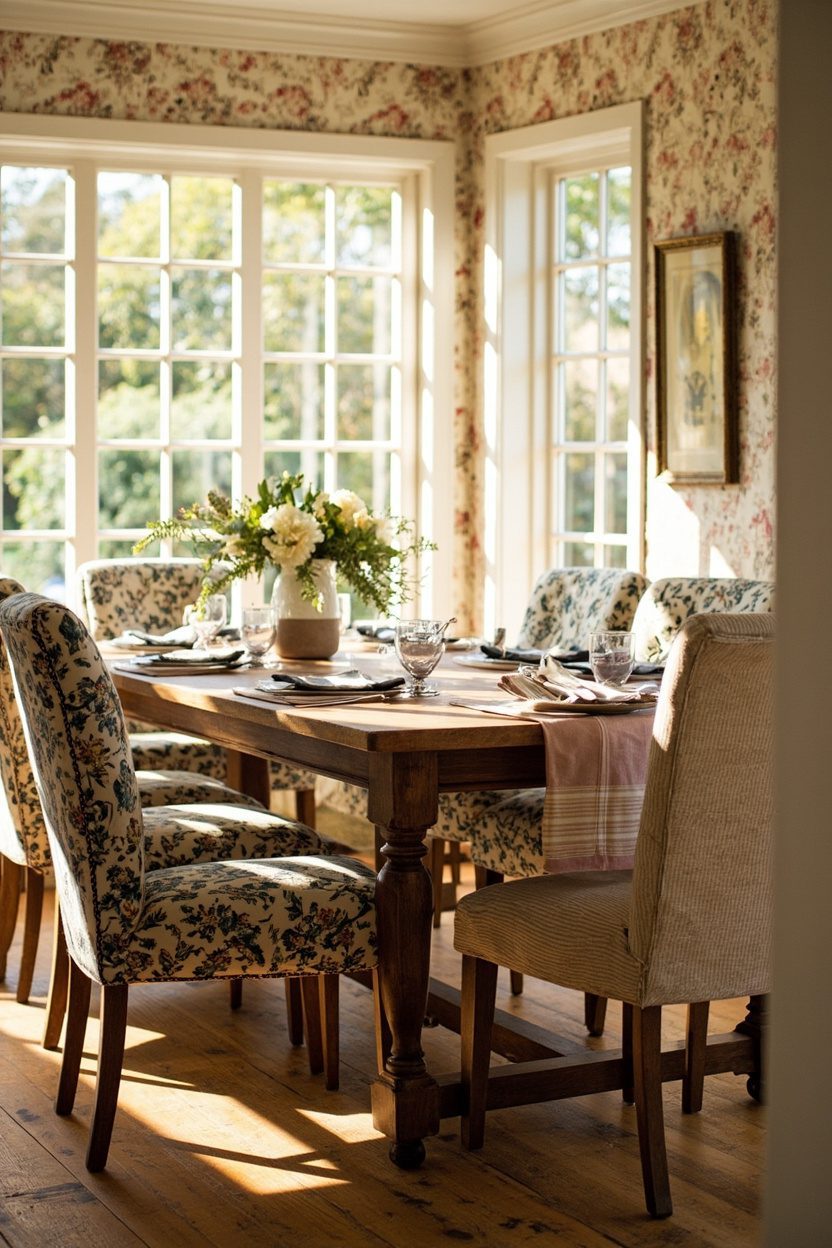
Layer seat fabrics by pairing a large-scale floral on chair backs with a tighter geometric on cushions or bench seats; the scale difference keeps the pairing readable and relaxed.
Use a consistent color undertone, for example, warm creams and moss greens, so the mixes feel intentionally edited rather than busy.
When upholstering, select durable, scrub-clean fabrics for high-use chairs, and position patterned pieces opposite plainer textiles to give the eye a resting place, a trick championed in recent cottage updates and discussed in trends like layered pattern schemes.
For inspiration on broader cottage palettes and finishes, see this designer roundup. Cottage Homes Boho Interior Design
4. Deep blues with zesty accents
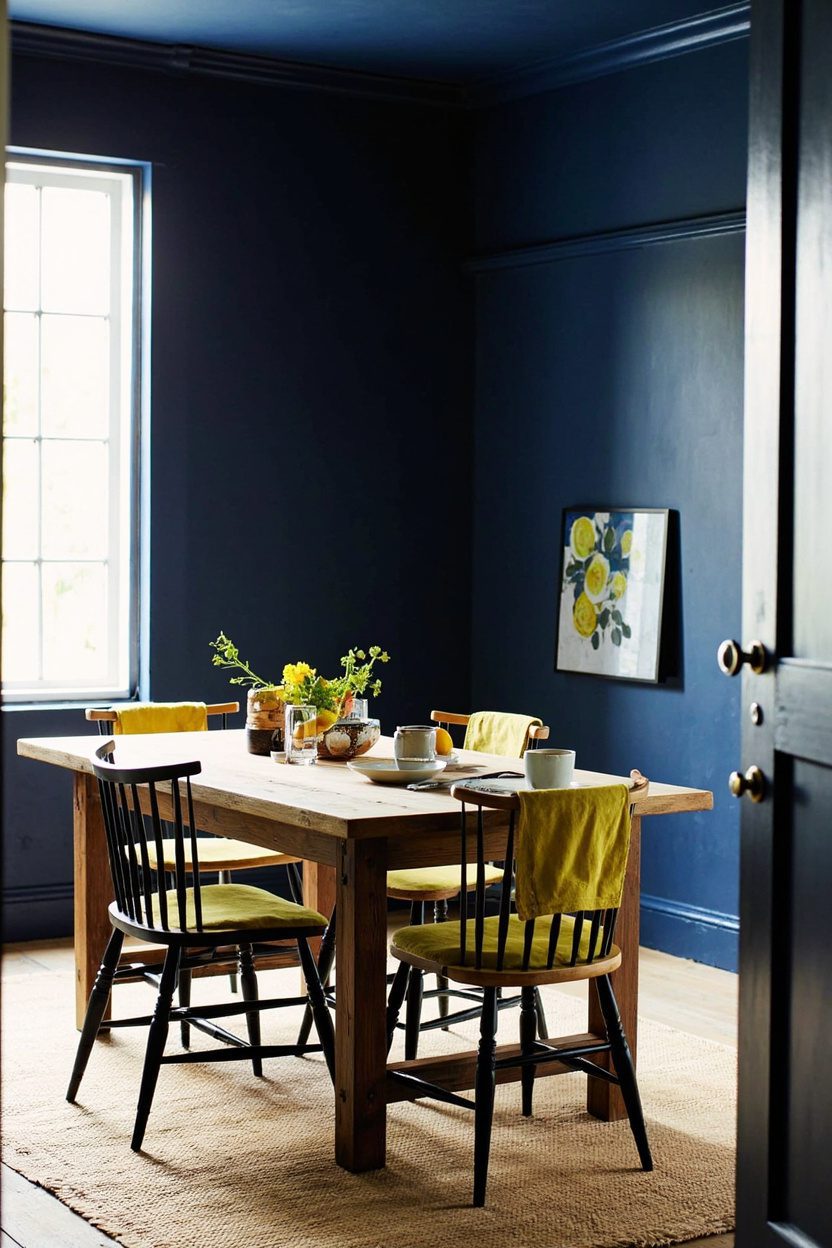
Layering deep navy walls or a painted board and batten with citrus yellow or tangerine cushions creates the classic cottage contrast. Keep the navy to about 60 percent of the visual field, and use zesty accents in 5 to 10 percent to avoid overpowering the room.
Anchor the palette with a warm wood dining table, choose a matte navy rather than gloss, and place a small bowl of fresh lemons on a runner to echo the accents. This keeps the scheme lively without feeling trendy-only.
Introduce texture to balance the saturated color, add a natural fiber rug under the table, and linen napkins in a lighter blue stripe for cohesion, and avoid mixing more than two accent hues to retain a curated look.
5. Mixing vintage and modern seating
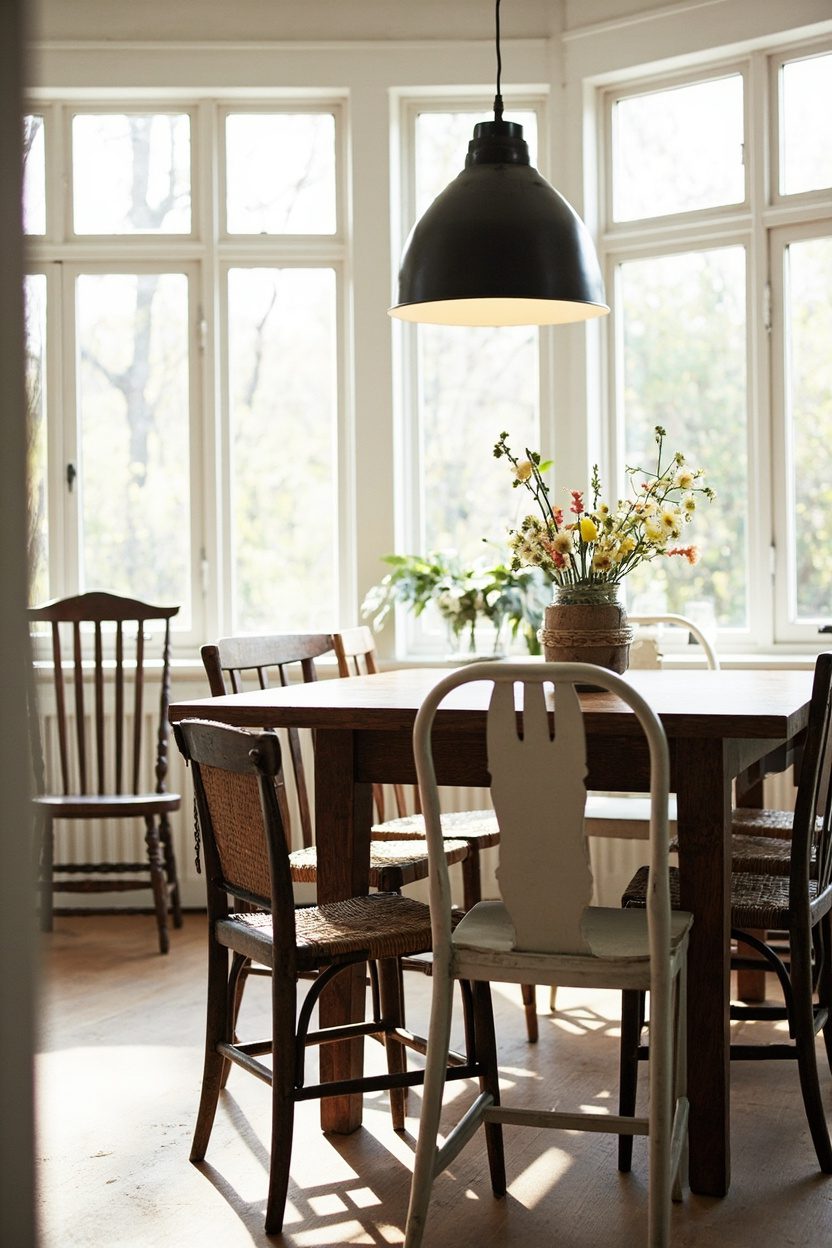
Combine a painted farmhouse bench at one side, two mid-century modern chairs at the ends, and mismatched ladderbacks on the opposite side for a collected cottage look that reads intentional, not random; keep seat heights within 2 inches and cushion depths similar so everyone sits comfortably.
Use a single unifying finish, for example, matte black metal legs on the modern chairs and black iron brackets on the bench, so the mix reads cohesive rather than chaotic.
When sourcing, set a small budget for at least one statement piece, antiques photograph well, and add patina, but replace worn seat pads with high-density foam and durable upholstery for frequent use.
Place a neutral runner beneath the seating arrangement to visually tie different chair styles together, and avoid more than three distinct seat silhouettes to prevent visual clutter.
6. Curated cottage tabletop collections

Build a tabletop collection around one dominant era or motif, for example, blue transferware and simple white stoneware. Display items on open shelving near the dining table for easy access, then rotate pieces seasonally to keep the setting fresh.
Use a rule of threes for vignettes, group serving bowls and a pitcher together at the center, and include one natural element like a small bunch of wildflowers to soften the arrangement.
When styling for meals, mix scale deliberately, pair large platters with small, detailed plates, and avoid matching everything exactly. This layered approach reads authentic and relaxed.
7. Statement lighting for cottage dining

A bold pendant or lantern centrally placed over the table instantly anchors a cottage dining room. Aim for a fixture about one-third the length of a rectangular table, or 30 to 36 inches in diameter for round tables.
Choose aged brass, hammered metal, or painted enamel finishes, and position it 28 to 34 inches above the tabletop to avoid glare while keeping conversation intimate.
Layer glass with a textured fabric shade to soften the light for Sunday lunches, and run the fixture on a dimmer so the same lamp serves bright family meals, and low, flattering light for long, slow afternoons. Avoid oversized crystal chandeliers that read too formal; instead, pick a piece with visible wiring or a chain for authentic cottage character.
8. Natural fiber rugs for warmth

A jute or sisal rug under the dining table adds texture and resilience. Pick a weave with at least 80 percent natural fiber so it lies flat and holds up to chair movement; leave 24 inches of rug beyond the table edge so chairs remain on the rug when pulled out.
Natural tones ground a patterned tablecloth, while a low-pile wool flatweave in muted checks or stripes brings washable warmth without hiding crumbs.
Layer a smaller patterned wool runner on top for visual interest, keep the rug size proportional to the room, and expect to spend $200 to $800 on a durable natural fiber rug for a typical dining area. Invest in a rug pad to prevent slipping and reduce wear.
For pairing rugs with cottage furnishings and textiles, the layered approach echoes current cottage trends noted by industry experts in 2026 cottage ideas.
9. Cozy banquette with floral textiles

A built-in banquette maximizes floor space and reads inherently snug in a cottage dining nook. Keep seat height at 18 inches and depth 18 to 20 inches for a comfortable dining posture, and leave at least 36 inches between the banquette and opposite furniture for circulation.
Upholster the seat in a durable linen blend, and pick floral upholstery with a small-scale repeat so the pattern reads calm at normal viewing distance.
Cushions in complementary solids or ticking stripes prevent pattern overload, and use removable cushion covers for easy laundering after lively Sunday meals; if building on a budget, buy ready-made bench cushions and DIY a fitted slipcover in midweight cotton for under $150.
For color balance, echo a key hue from the floral fabric in the centerpiece or wall art, avoid matching everything exactly, and keep trims simple to maintain a lived-in cottage ease.
10. Wallpapered feature walls in the dining
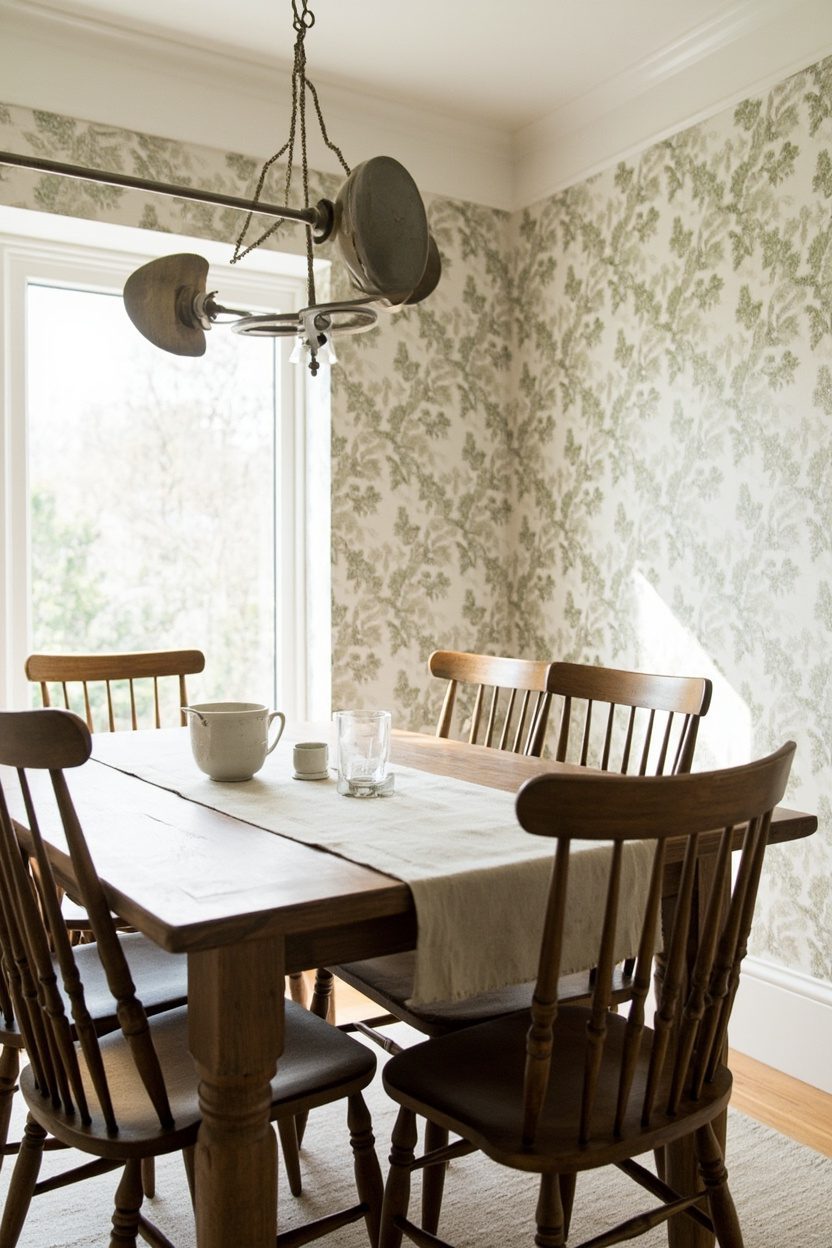
Choose a single wallpapered feature wall to anchor the cottage dining room, keep the other walls in a soft, neutral paint so the pattern sings without feeling busy.
Opt for a mid-scale floral or vintage stripe, apply it on the wall behind the table, and align the pattern repeat with the table center to avoid awkward seams when guests sit down.
For execution, use a washable vinyl or non-woven paper in high-traffic homes, and trim wallpaper to meet picture rail or panelling for a tailored, period-accurate look; budget around $50 to $120 per roll, depending on designer prints.
11. Hand-painted cabinetry and panelling

Hand-painted dining cabinetry and wall panelling bring an artisan, personalised feel. Choose colours like sage green, warm cream, or muted terracotta to keep the room grounded and timeless.
Paint in satin finish for durability on cabinetry, and use a soft matte on panelling to accent shadows and bead details. Keep brush marks subtle by sanding between coats for a professional finish.
Position painted sideboards or storage against the longest wall to balance a heavy dining table, and consider two-tone paint darker base, lighter upper panelling to create proportion without needing structural changes.
For small budgets, repaint existing furniture, and aim for high-traffic hardware replacement under $100 to refresh the whole look. Cottage Homes
12. Earthy plaster finishes and textures
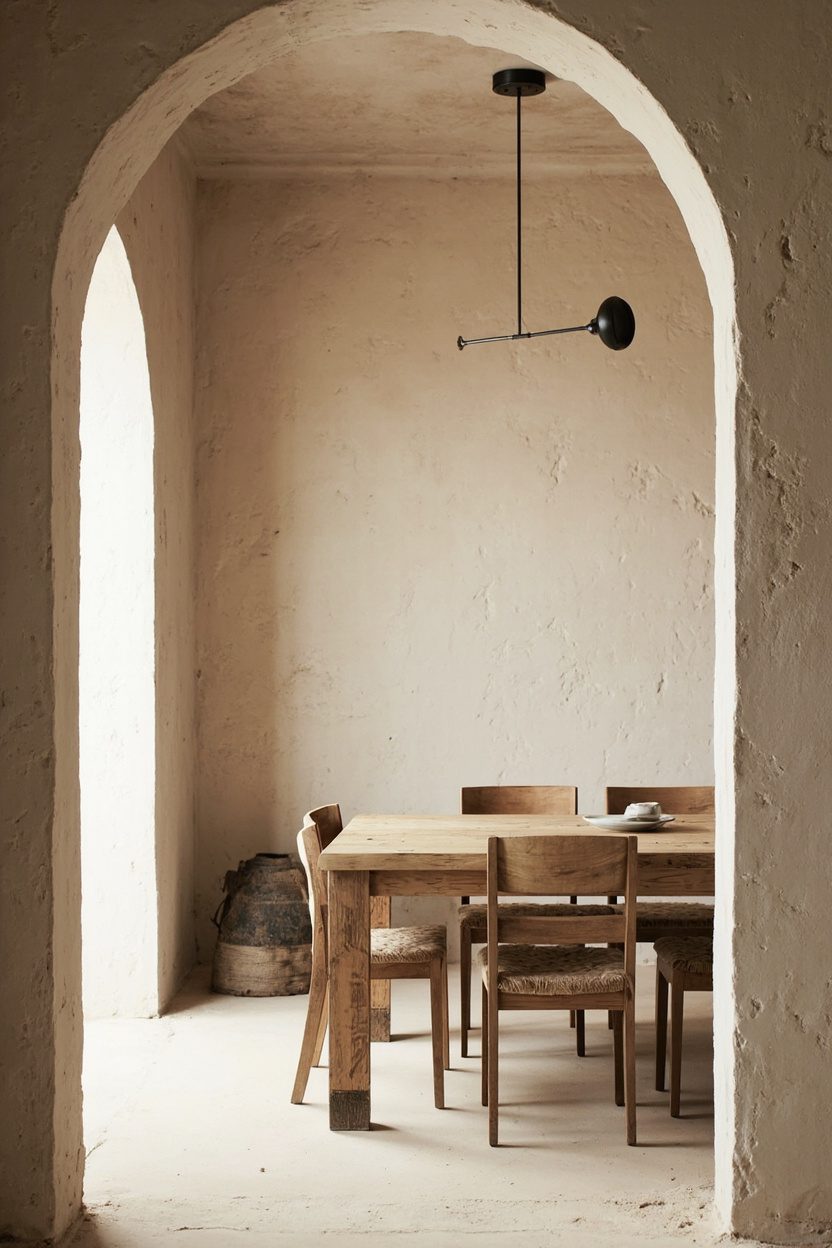
Introduce earthy lime or clay plaster on a single wall or ceiling beam to add tactile depth and an authentic cottage palette. Keep the application thin and slightly irregular, so the surface reads as handcrafted rather than factory-smooth.
Use warm, mineral pigments like ochre, raw umber, or chalky white, and seal with a breathable wax to protect from splashes while preserving the natural matte finish.
Place the table close to the textured surface so the plaster becomes a backdrop for dishes and floral centrepieces. Avoid high-gloss furnishings nearby, which will fight the subdued plaster, and budget about $8 to $15 per square foot for professional lime plaster for realistic results.
Include a credible technique reference when planning finishes, for example, guidance from lime plaster specialists at English Heritage practice.
13. Botanical displays and foraged centrepieces
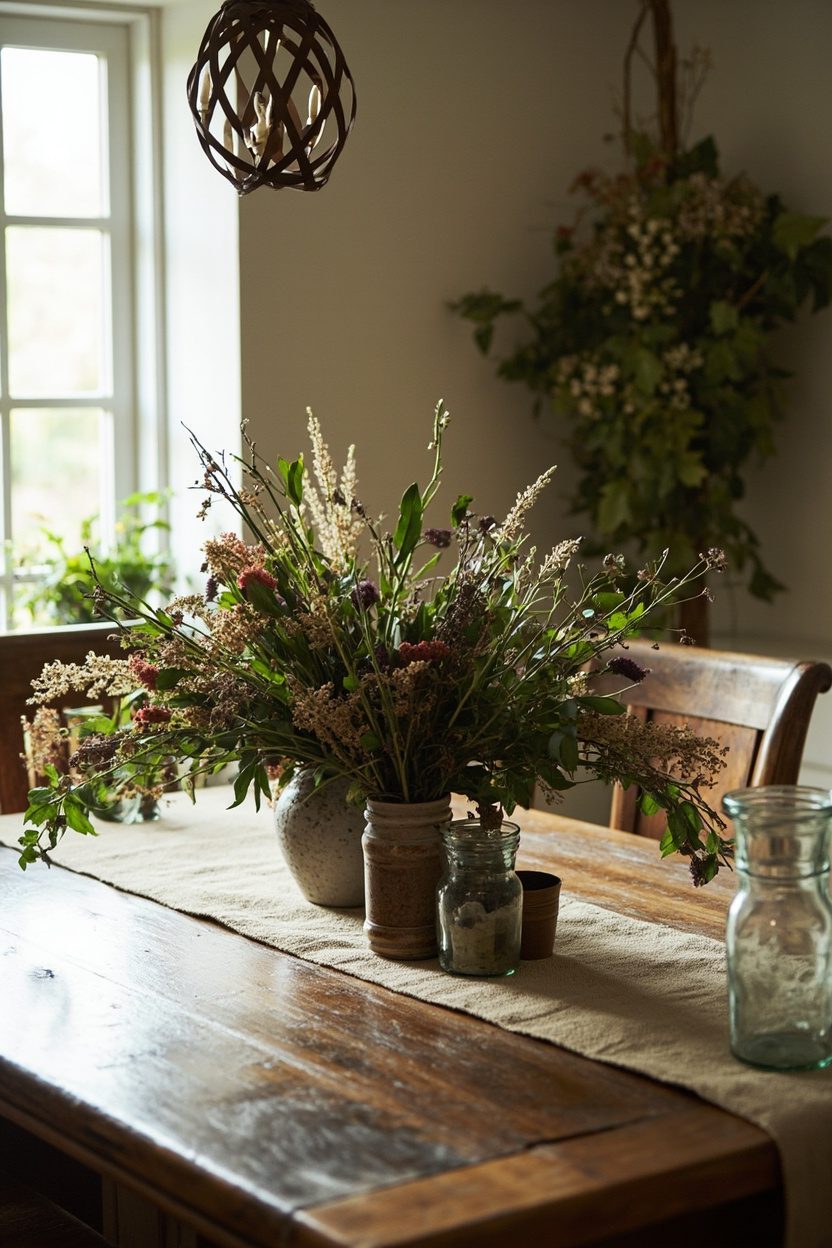
Use seasonal botanicals, clipped herbs, and foraged branches to create centrepieces that feel effortless and lived-in. Arrange them low in a shallow ceramic dish or a wide glass bowl, keeping stems trimmed to sit about 4 to 6 inches above the table so sightlines remain clear for conversation, and tuck in a few small candles for evening warmth.
Select foliage and flowers that hold up to water, like eucalyptus, rosemary, or dried grasses, to avoid wilting during long lunches, and balance the display with textural elements such as seed heads or a linen runner.
A common mistake is overloading the table; aim for a single generous arrangement or a trio of small vessels spaced every 2 feet to keep proportions right.
Final Thoughts
A well-chosen botanical centrepiece anchors a cottage dining room; it sets a seasonal tone and invites a relaxed, convivial meal. Keep scale, texture, and maintenance in mind, and your Sunday lunches will feel intentionally effortless