


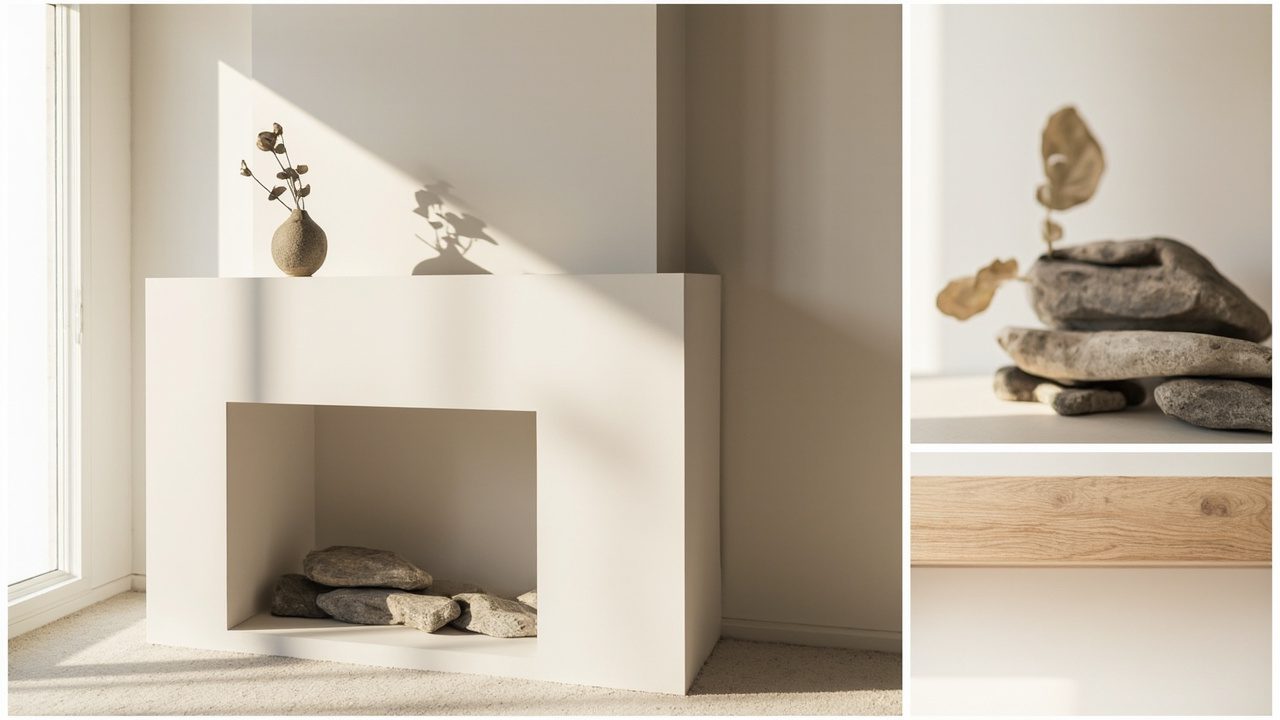
Fireplaces are no longer background heating appliances; they are the room’s punctuation mark. In minimalist interiors, the aim is restraint, so the fireplace has to read as intentional architecture rather than a cluttered shelf. Think crisp proportions, a limited palette, and negative space that lets material and line do the talking.
These 11 ideas focus on clean profiles, purposeful materials, and one smart decision per treatment, so you end up with a composed mantel that feels edited, calm, and unmistakably modern.
Expect details like linear scaling, concealed venting, and thin floating mantels, which are the exact moves that keep a fireplace feeling quiet and luxurious.
1. Linear Fireplace Focus
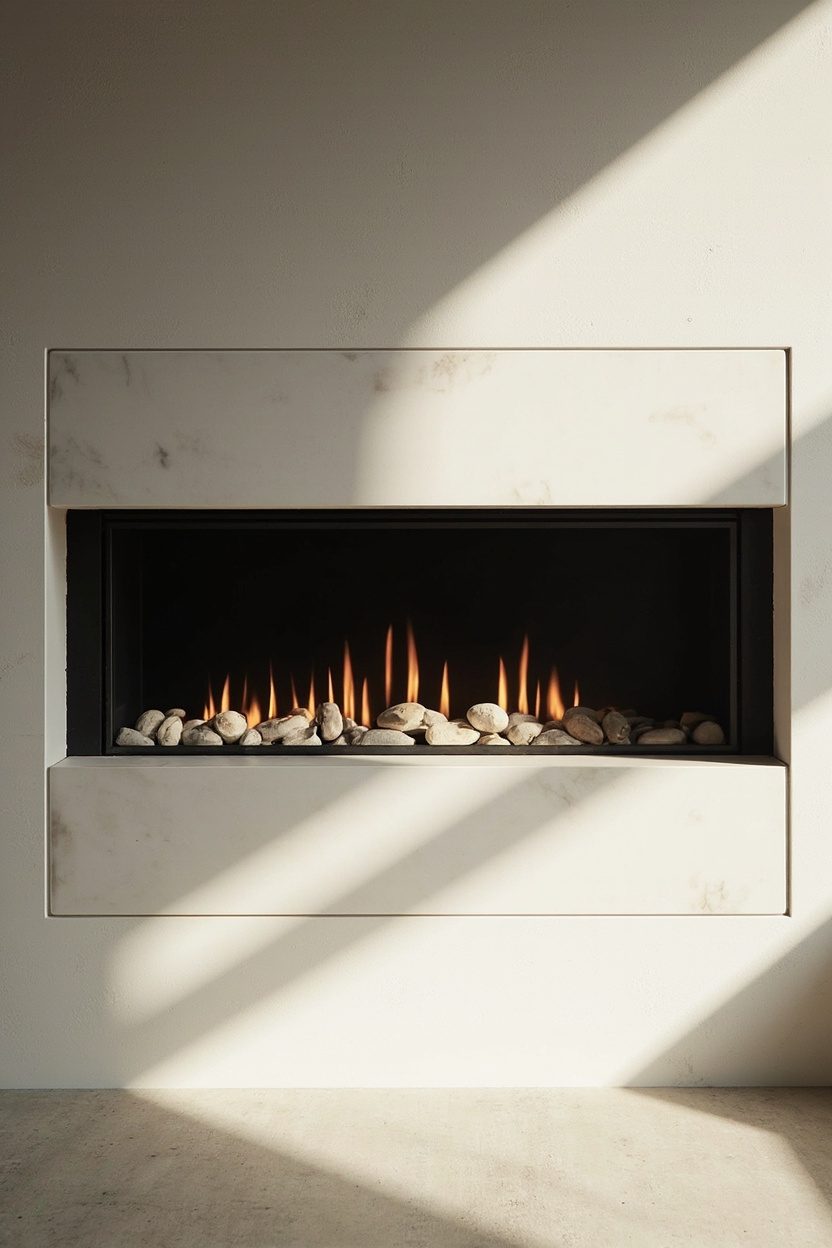
A long, linear firebox creates a horizontal anchor that reads as architecture, not decor. Choose a 60 to 80 inch proportion in a standard living room to keep the seat-to-fire sightlines balanced.
Stone or plaster surrounds work best in a narrow palette, with honed limestone or matte plaster avoiding glare and visual clutter. Opt for a slim black firebox trim to frame the flame without ornamentation.
Scale the hearth low and thin, under 4 inches high, to preserve the minimalist silhouette and prevent the hearth from dominating sightlines. Avoid stacked accessories on the mantel; limit to one sculptural object to maintain breathing room.
Essential Elements
- Choose a linear firebox sized to the room width, 60–80 inches for common living rooms, to maintain proportion.
- Use matte materials, like honed stone or plaster, to reduce reflections and visual noise.
- Keep the hearth profile low, under 4 inches, to preserve the horizontal line of the fireplace.
- Limit mantel objects to one sculptural accent, in a contrasting texture or tone.
2. Hidden Venting Slimline

Concealed venting lets the surround read as a seamless wall plane, which is essential in minimalist spaces. Choose models that integrate vents beneath the hearth or behind an ultra-thin slot to keep the surround unbroken.
Material continuity is crucial; match the surrounding material through the vent area to disguise the hardware, for example, a continuous plaster or slab that bridges the vent seam. Specify powder-coated internal grills in matte black to fade into the firebox opening.
Plan service access during installation, so the hidden vents remain functional without compromising the clean face; easy access panels can be discreetly placed in cabinetry flanking the fireplace.
Avoid perforated or ornate grills, which break the minimalist intent.
Styling Blueprint
- Select slimline inserts with under-hearth or slot venting to keep the surround uninterrupted.
- Extend the same surround material across vent areas to conceal seams for continuity.
- Plan hidden service access in adjacent cabinetry for maintenance without visible panels.
- Avoid decorative grills; use matte black functional trims that recede visually.
3. Floating Mantel Profiles

A thin floating mantel provides a defined shelf without anchoring heavy ornament, ideal for minimalist mantels that need breathing space. Use a 4 to 6 inch depth for a subtle projection that’s useful but not dominant.
Steel-reinforced wood or a cantilevered stone slab works well; specify internal steel brackets to keep the visible profile paper-thin. Opt for a single material finish, like oiled walnut or honed concrete, to maintain a quiet, cohesive look.
Position the mantel at eye level, typically 48 to 54 inches from the finished floor, depending on ceiling height, to keep sightlines balanced with art or a linear firebox. Avoid piling framed photos or multiple vases; stick to one low, wide piece.
What to Focus On?
- Pick a depth of 4–6 inches for function without visual weight.
- Specify steel reinforcement for a thin, cantilevered look that’s structurally sound.
- Match the mantel finish to the surround for a seamless, minimalist outcome.
- Place one low, wide object only, to preserve negative space and balance.
4. Fluted Texture Mantels

Fluted mantels introduce subtle rhythm without competing with the fireplace; they read as architectural detail rather than decoration.
Select a vertically fluted surround in painted oak or plaster, scaled to the hearth width for a proportional, tailored look.
Keep finish choices neutral, such as soft white or warm grey, to let light and shadow define the grooves.
Avoid over-accessorizing the shelf; fluting is the focal point, so limit objects to one low grouping, or nothing at all.
Essential Elements
- Material: painted oak, plaster, or MDF with a satin paint finish for refined shadow play.
- Scale: flute width 1 to 2 inches, spacing equal or slightly wider than the flute for balanced proportion.
- Color: off-white or warm grey to emphasize texture without contrast overload.
- Styling: one sculptural object or an empty shelf to preserve the minimalist intent.
5. Monochrome Hearths

A single-color hearth creates a serene stage, making the fireplace read as a calm architectural plane rather than a collection of objects.
Choose a dominant tone for surround, mantle, and hearth surface, keeping materials varied in sheen, for example, matte stone with a semi-gloss trim.
Introduce texture through material choice rather than color, such as honed limestone, smooth plaster, or rubbed concrete, to avoid visual flatness.
Limit contrast to one small accent, like a brass toolset or black log basket, placed low and off-center to maintain the minimalist silhouette.
Styling Blueprint
- Color strategy: pick a single hue within two tonal steps for subtle depth, for example, dove grey and charcoal accents.
- Material mix: combine matte and soft-sheen finishes to read layered despite one color choice.
- Scale tip: keep hearth depth proportional to room size, typically 12 to 18 inches for balance in living rooms.
- Accessory rule: maximum one bold accent item, placed asymmetrically to preserve calm composition.
6. Recessed Wall Fireplaces
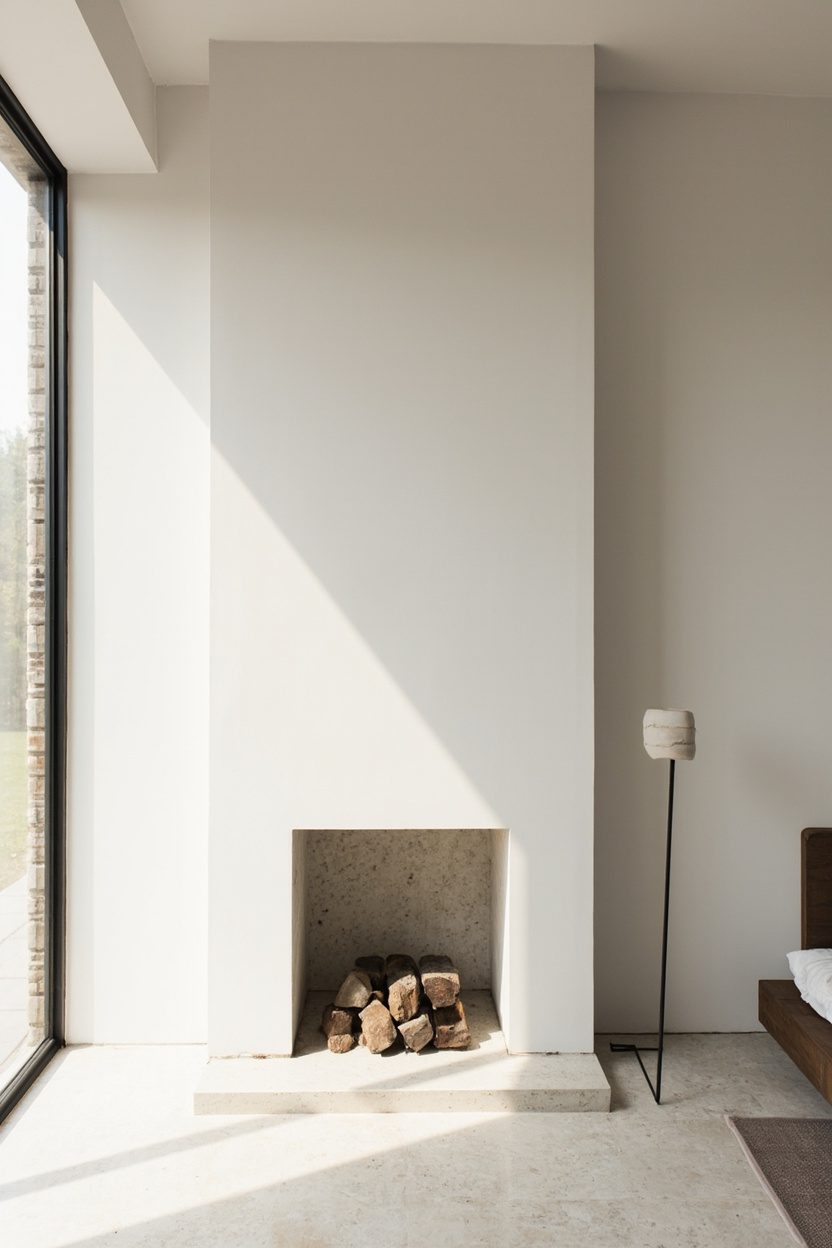
Recessed fireplaces vanish into the wall, offering a minimalist solution that emphasizes clean planes and uninterrupted sightlines.
Specify a linear, low-profile firebox set flush with drywall or continuous cladding, and conceal venting for a seamless effect.
Frame the recess with narrow trim or no trim at all, using the surrounding wall material to create a built-in, custom appearance.
Keep the ledge clear or use a single narrow shelf set low, avoiding tall objects that break the horizontal flow of the recess.
What to Focus On?
- Installation: ensure proper clearances and hidden venting, budget for professionally recessed-rated units.
- Finish: use continuous cladding, like plaster or large-format tile, to maintain unbroken planes.
- Scale: choose a linear length proportional to the wall, often 60 to 80 percent of the focal wall width.
- Styling: minimal low shelf or none, one small plant or tray if warmth is required.
7. Eco-Material Surrounds
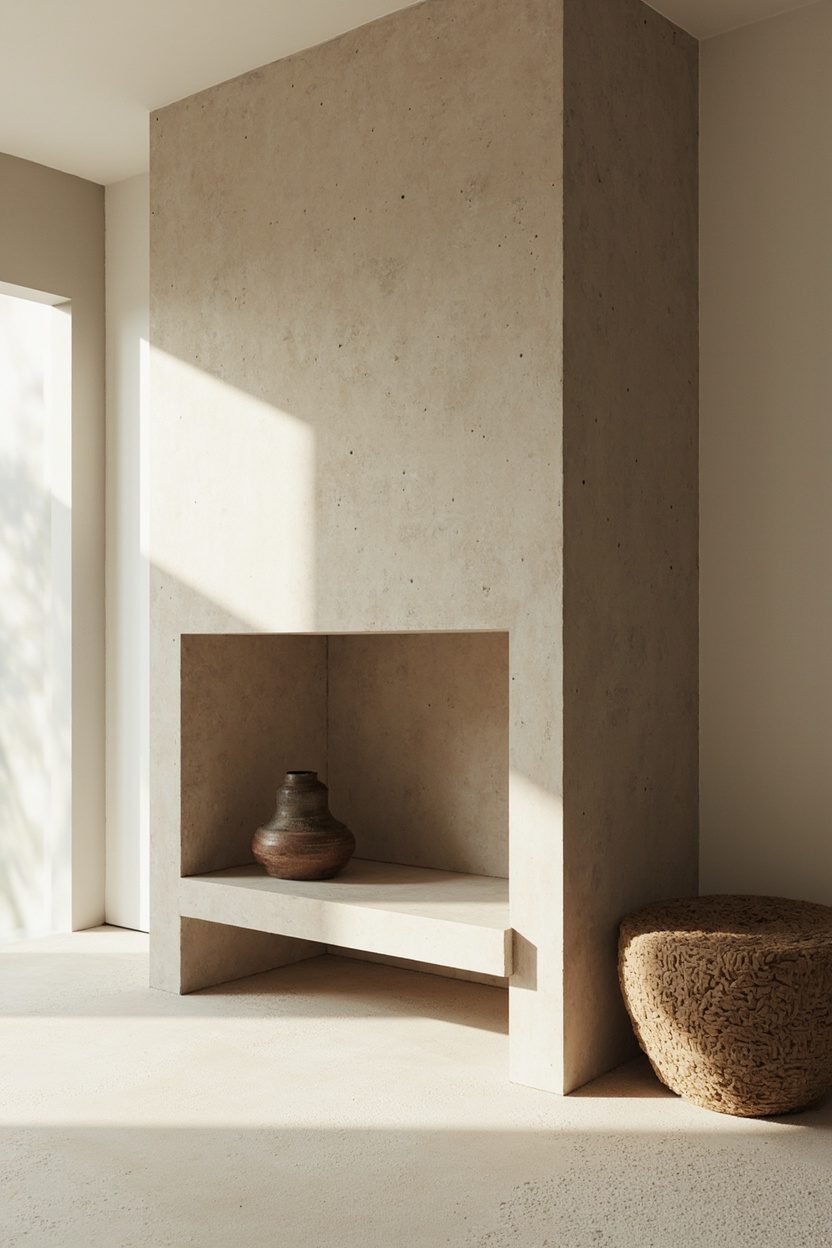
Use reclaimed wood or recycled metal for the fireplace surround to add texture without visual clutter. Keep joints tight and grain direction consistent, so the surround reads as a single, calm plane.
Select FSC-certified oak or weathered pine for warmth, and avoid ornate carving that defeats minimalism. A thin, 1.5–2 inch profile keeps the surround low in visual weight, and a matte finish hides minor imperfections.
For tighter budgets, cement board with a limewash gives the same muted, earthy tone as natural stone, while being easier to install and cheaper by about 30 to 50 percent, depending on the region.
Be mindful of fire safety ratings, and specify a noncombustible liner if the material sits within code-required clearance zones.
Essential Elements
- Choose FSC-certified or reclaimed material for sustainability and character.
- Keep profile slim, 1.5–2 inches, to preserve minimalist lines.
- Use matte finishes to reduce glare and conceal minor flaws.
- Confirm fire-rating and add noncombustible backing where needed.
8. Minimal Stone Cladding
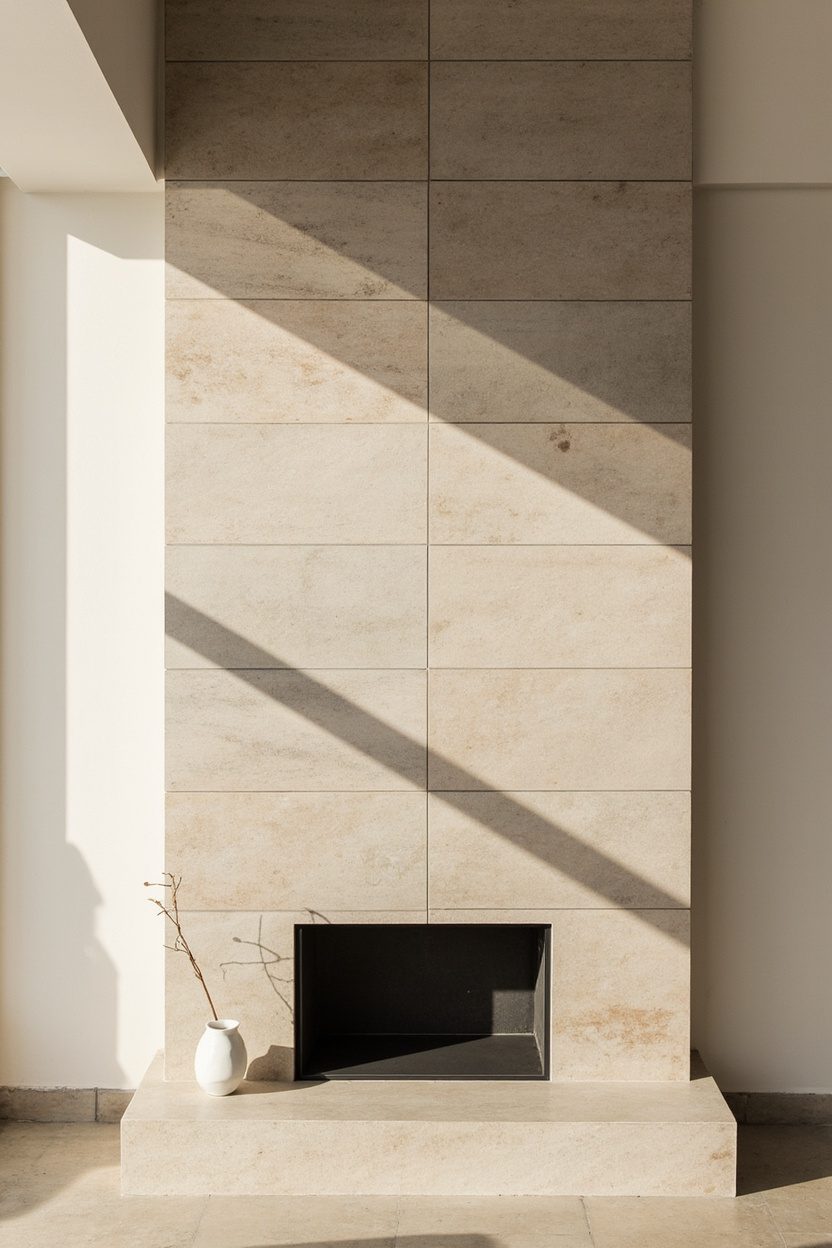
Opt for large-format stone slabs with book-matched seams to create a quiet, continuous face that reads like a single surface. Favor honed or leathered textures over polished finishes, to keep reflections soft.
Limit the stone palette to one neutral tone, such as warm gray or soft beige, so the fireplace anchors the room without competing with furnishings. Use groutless or tight joints under 1/16 inch for a seamless look.
Scale matters: stretch the cladding to full wall height when the ceiling is tall, or stop the stone at eye level and paint above for a lighter composition in cozier rooms. Budget for transport and installation, as large slabs raise costs but reduce visible seams.
Avoid heavy veining and small mosaic tiles, which read busy at a distance and break the minimalist intent.
Styling Blueprint
- Select large-format slabs with minimal veining for a calm, consistent surface.
- Use honed or leathered finishes to mute reflections and add tactility.
- Keep joints tight, under 1/16 inch, for a nearly seamless look.
- Match the stone scale to the ceiling height: full wall for tall rooms, partial for intimate spaces.
9. Concealed Storage Niches
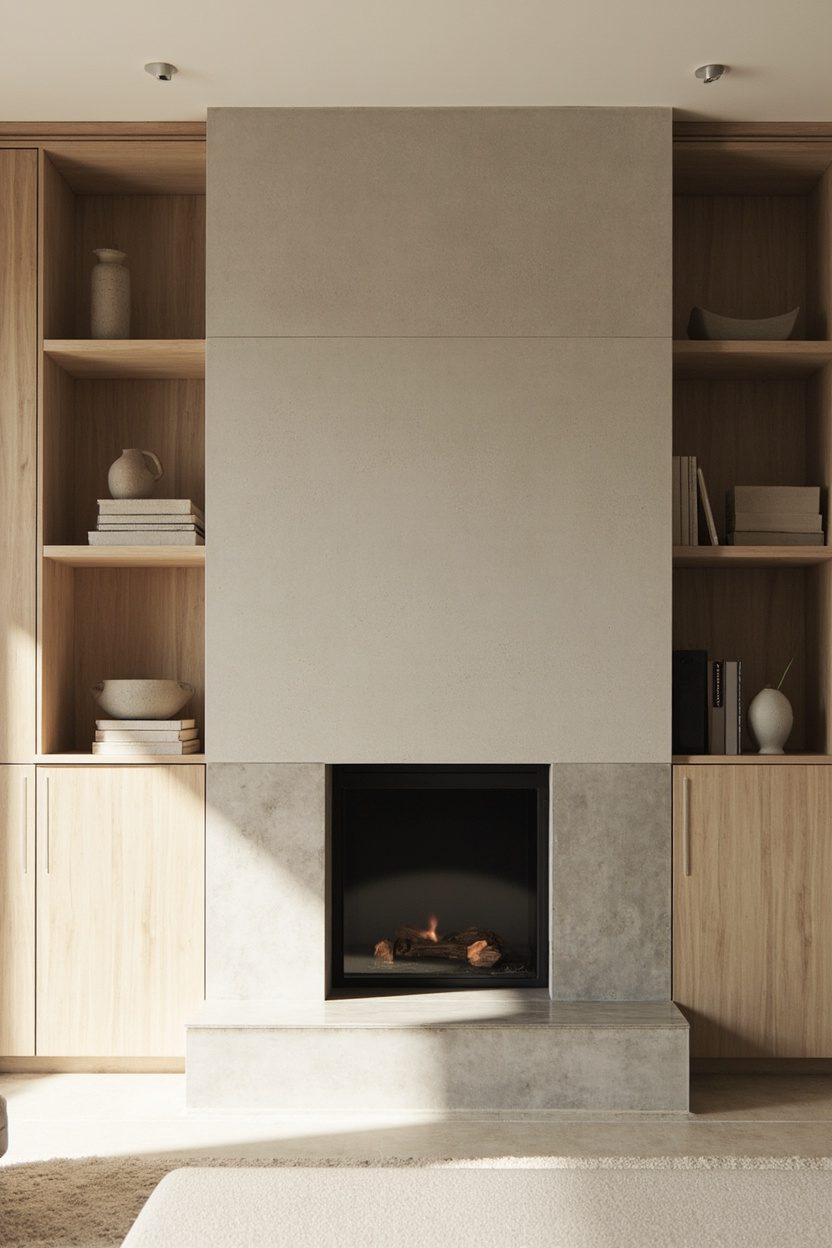
Integrate shallow recessed niches to keep wood, remotes, or reading materials out of sight, so the mantel area remains sparse. Make niches 4–6 inches deep to avoid interrupting the fireplace plane while still being functional.
Use the same finish inside niches as the surrounding wall to make them disappear when not in use, and add a hidden LED strip at the top for subtle illumination. Position niches asymmetrically for visual calm, for example, one low on the hearth side for wood, one higher for a slim magazine stack.
Frame niches with thin metal reveals, 1/8 inch, to give crisp edges without adding visual weight. Budget for drywall reinforcement and a carpenter’s finish, as precision matters to retain minimal lines.
Avoid open shelving crowded with decor, which undermines the breathing space the minimalist mantel aims to preserve.
What to Focus On?
- Keep niches shallow, 4–6 inches, to preserve the fireplace plane.
- Use matching wall finish inside niches, so they recede visually.
- Add concealed top LED lighting for soft, useful illumination.
- Frame with thin reveals, about 1/8 inch, for crisp, minimal edges.
10. Slim Glass Screens

Glass screens that read as negative space make a fireplace feel curated, not cluttered. Choose frameless tempered glass for a barely-there look that keeps sightlines clean and modern.
They protect surfaces and small children without adding visual weight, which is essential when the mantel is intentionally sparse. Opt for low-iron glass to avoid the green tint on wider panels.
Keep mounting simple, with minimal stainless steel standoffs or a recessed track so the screen floats slightly off the hearth. For gas models, confirm clearance and venting with the manufacturer before ordering.
A slim screen is best in neutral metal finishes, such as matte black or brushed nickel, to match trim and hardware without competing with the wall plane.
Styling Blueprint
- Choose frameless tempered glass for minimal profile and safety.
- Match standoff finish to room hardware, think matte black or brushed nickel.
- Specify low-iron glass for larger spans to avoid green tint.
- Verify clearances for gas fireplaces with manufacturer specs before installation.
11. Integrated Media Walls
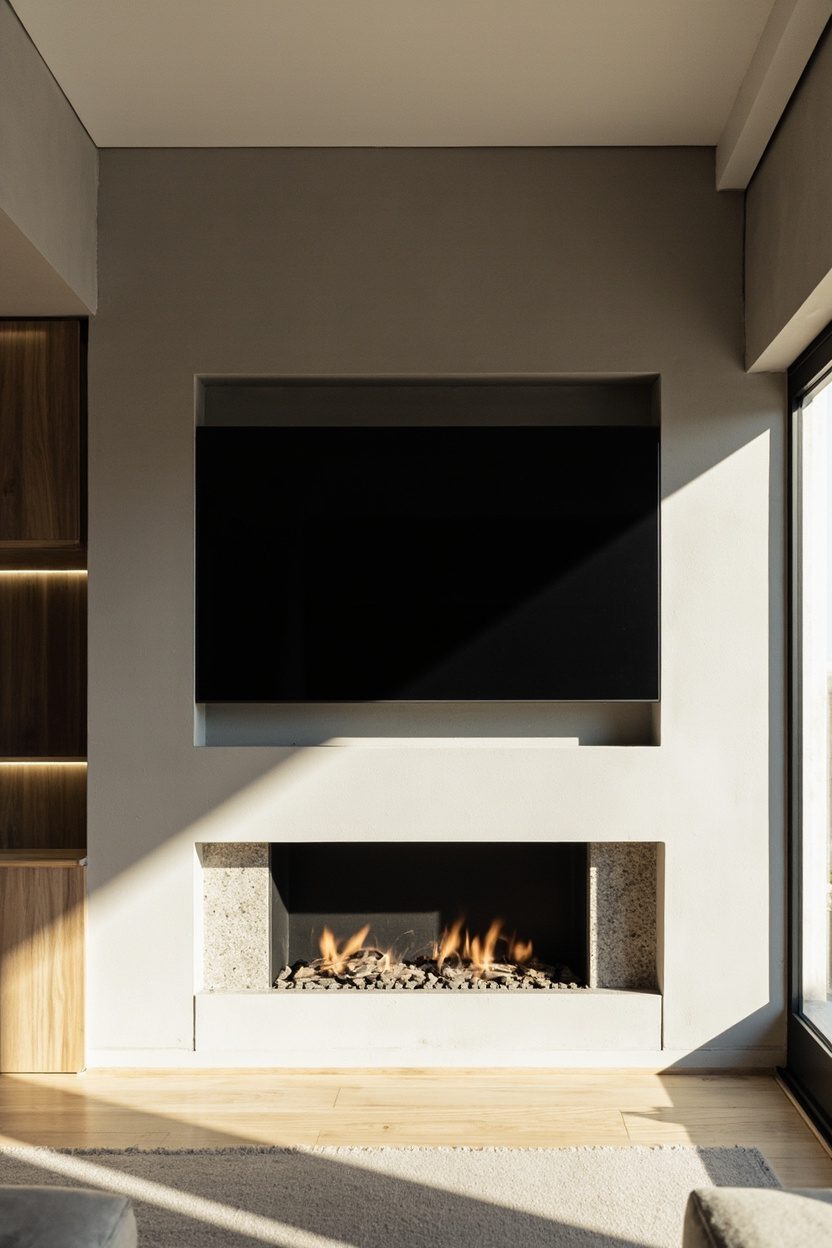
Combine the fireplace and TV within a single, recessed plane to eliminate competing focal points and preserve minimalist intent. A linear fireplace beneath a flush-mounted TV reads as one design gesture, not two.
Use a continuous material, such as plaster or a bookmatched stone, across the wall to reduce seams and visual breaks. Keep the color palette monochrome, within two tonal steps, to maintain cohesion.
Conceal cables and media components in a shallow cabinet below or behind the hearth, sized for the AV receiver and streaming box, so the mantel stays clear. Prioritize ventilation paths for heat-sensitive electronics, placing intake vents away from the TV.
If you prefer a suspended TV, allow at least 8 inches of vertical separation from the top of the fireplace opening, and select a fireplace with a cool-face profile, or add a slim heat deflector to protect screen electronics.
What to Focus On?
- Use a single wall finish to unify the fireplace and TV into one design statement.
- Plan an AV cavity with ventilation, sized to fit your receiver and streaming devices.
- Maintain at least 8 inches of vertical separation between the fireplace opening and the TV screen.
- Choose low-profile, cool-face fireplaces or add heat deflectors for screen safety.
For a related idea, see Western Farmhouse Living.
FAQ
Frameless glass reads lighter and suits minimalist rooms, while framed screens add an architectural edge and are easier to match to metalwork. Prioritize frameless for unobtrusive views, framed for a deliberate design accent.
Yes, if you manage heat and distance properly, select fireplaces with cool-face ratings, add a heat deflector, and maintain recommended clearances, typically about 8 inches or more above the opening, depending on manufacturer guidelines.
Continuous materials like microcement, plaster, or large-format stone slabs work best because they reduce joints and visual noise. Stick to a tight tonal range to keep the wall feeling calm and cohesive.
Tempered glass screens are safe because they are designed to shatter into small, blunt pieces if broken, but for extra protection, choose laminated glass or add low, clear plexi shields behind the screen. Always ensure proper mounting and anchoring for active households.
Final Thoughts
Minimalist fireplace decor is about subtracting, not settling; each element must earn its place through function, finish, and proportion. Keep lines clean, materials honest, and technical details resolved, and the mantel will breathe with purpose.