


Boho vase decor is about tactile, lived-in pieces that read as collected, not staged, and that balance organic texture with practical placement.
Use vases to anchor small seating areas and hall nooks, or to lift simple shelves with sculptural silhouettes, while keeping scale and maintenance realistic for everyday life.
Keep materials honest, choose one or two neutrals, and let shape and finish carry the look.
Below, I start with pieces that work across budgets and room sizes, with specific styling tips you can apply immediately.
My Pick: Boho Ceramic Vases with Fingerprint Glaze, I love them because the subtle irregularities read as handmade on sight, they layer easily with dried stems, and the shallow necks stop pampas from flopping, which makes them reliable in real homes.
- 1. Boho Ceramic Vases with Fingerprint Glaze
- 2. Terracotta Table Vases for Cozy Corners
- 3. Handmade Raku Vases for Organic Texture
- 4. Woven Basket Vase Covers for Tables
- 5. Muted Clay Vases in Calm Colourways
- 6. Tall Floor Vases for Reading Nooks
- 7. Matte Glazed Vases with Dried Grasses
- 8. Textured Stoneware Vases on Sideboards
- 9. Low Ceramic Bowls Used as Vases
- 10. Single Pampas Stem in a Tall Earthenware Vase
- 11. Clustered Dried Grasses in a Wide-Mouth Ceramic Jar
- FAQ
1. Boho Ceramic Vases with Fingerprint Glaze

- Effort Level: Weekend DIY.
- Estimated Budget: Under $100.
- Maintenance Level: Low.
- Best For: Small Living Rooms / Entryways.
Choose ceramics with a deliberate fingerprint glaze, where the maker’s marks show through the finish; this gives the vase instant authenticity.
Position a trio in varying heights on a narrow console, keeping the tallest at about two-thirds the height of the mirror or art behind it to maintain balance.
Styling detail: use a single stem type per vase, like white pampas or bleached wheat, and trim stems so the top third extends above the tallest vase rim; this proportion keeps the grouping readable without overwhelming the surface.
For care, dust with a microfiber cloth and avoid heavy water retention in porous glazes.
2. Terracotta Table Vases for Cozy Corners
- Effort Level: Weekend DIY.
- Estimated Budget: Under $100.
- Maintenance Level: Low.
- Best For: Cozy Corners / Reading Nooks.
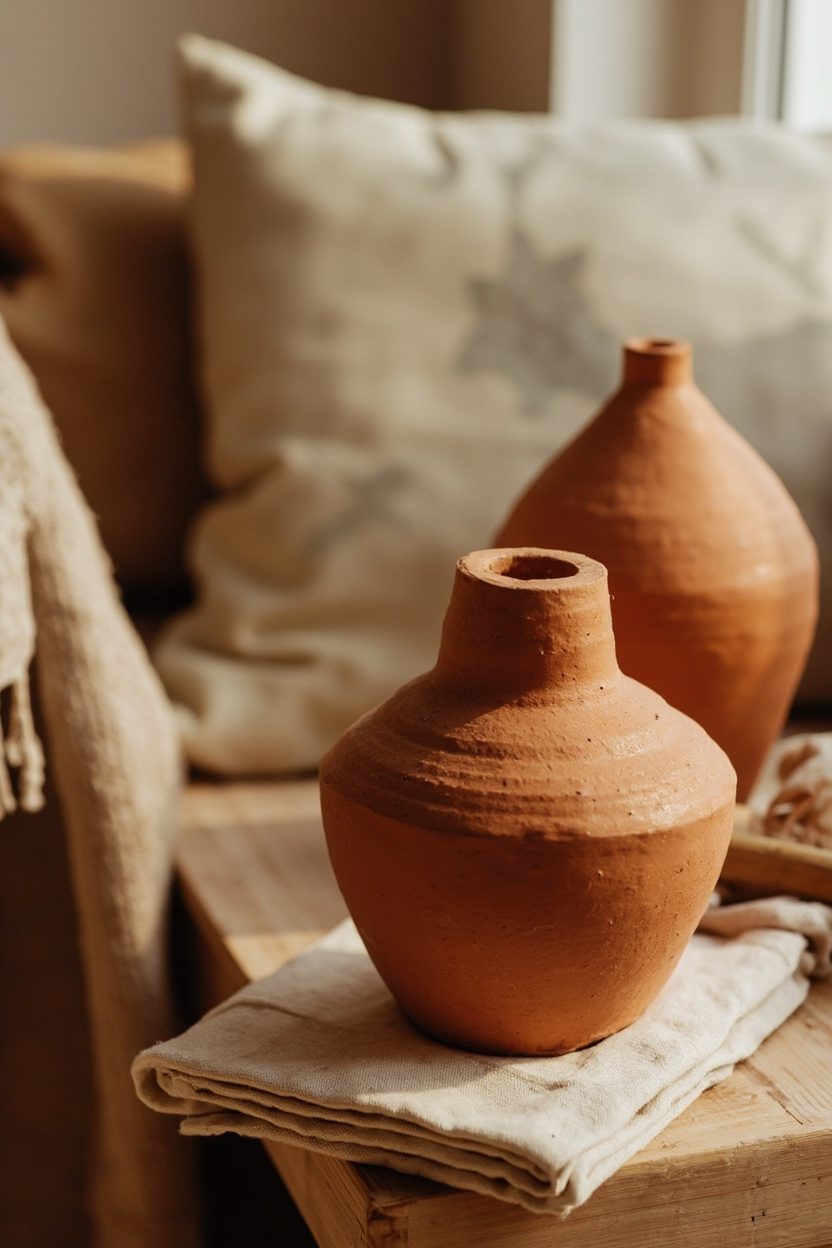
Terracotta brings warm, earthy color and absorbs light rather than reflecting it, so place one on a side table beside a lamp to soften glare and anchor a reading spot. Use compact dried stems, like small eucalyptus or millet pods, cut so the overall height is no more than 1.5 times the table height, to avoid blocking sightlines.
Execution tip: seal the inside with a clear food-safe wax if you plan to use fresh flowers; otherwise, leave unsealed for that signature matte boho look, and keep a small coaster under the vase to protect wood surfaces.
3. Handmade Raku Vases for Organic Texture

- Effort Level: Hire a Pro.
- Estimated Budget: $100-$500.
- Maintenance Level: Low.
- Best For: Statement Mantels / Dining Areas.
Raku finishes are about crackle, smoke, and subtle shine, which reads beautifully against linen and raw timber surfaces common in boho rooms. Use a single large raku vase as a focal point on a mantel or buffet, place it slightly off-center, and balance with a low stack of books or a small woven tray.
Styling detail: pair raku with neutral dried stems like pampas in natural tones to avoid competing textures, and keep placement away from direct sunlight, which can alter some reactive glazes.
For inspiration on updated boho trends, refer to a curated trend report that tracks slow living and organic forms.
4. Woven Basket Vase Covers for Tables
- Effort Level: Weekend DIY.
- Estimated Budget: Under 100.
- Maintenance Level: Low (requires occasional dusting).
- Best For: Renters / Dining tables.
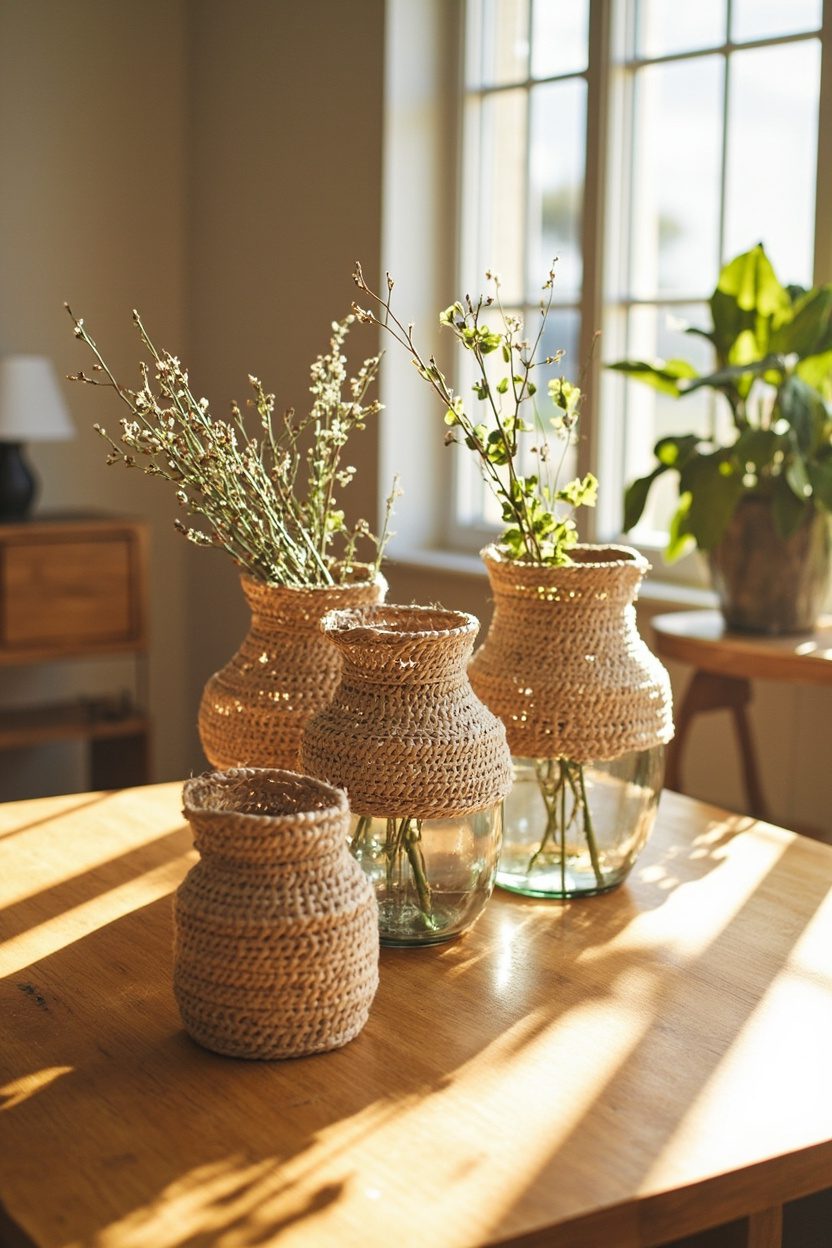
Wrap a simple glass jar or budget vase in a handwoven basket cover to add texture without committing to permanent ceramics, place the covered vase in the center of a dining table, and keep proportions at about one-third the table length to avoid overpowering the surface.
Choose natural fibers like seagrass or rattan, and secure the cover with a discreet ribbon or hot glue inside the lip so it does not slip when you refill water or switch stems.
A common mistake is using a cover that is too bulky for the vase opening, which looks clumsy and tips easily; measure the vase neck and pick a cover with a snug fit, or use a slender inner vase for stability.
For added layering, tuck a single pampas plume or a few dried stems at varying heights so the basket and botanical shapes read as one cohesive arrangement.
5. Muted Clay Vases in Calm Colourways
- Effort Level: Weekend styling.
- Estimated Budget: Under 100.
- Maintenance Level: Low.
- Best For: Living rooms / Bedrooms.
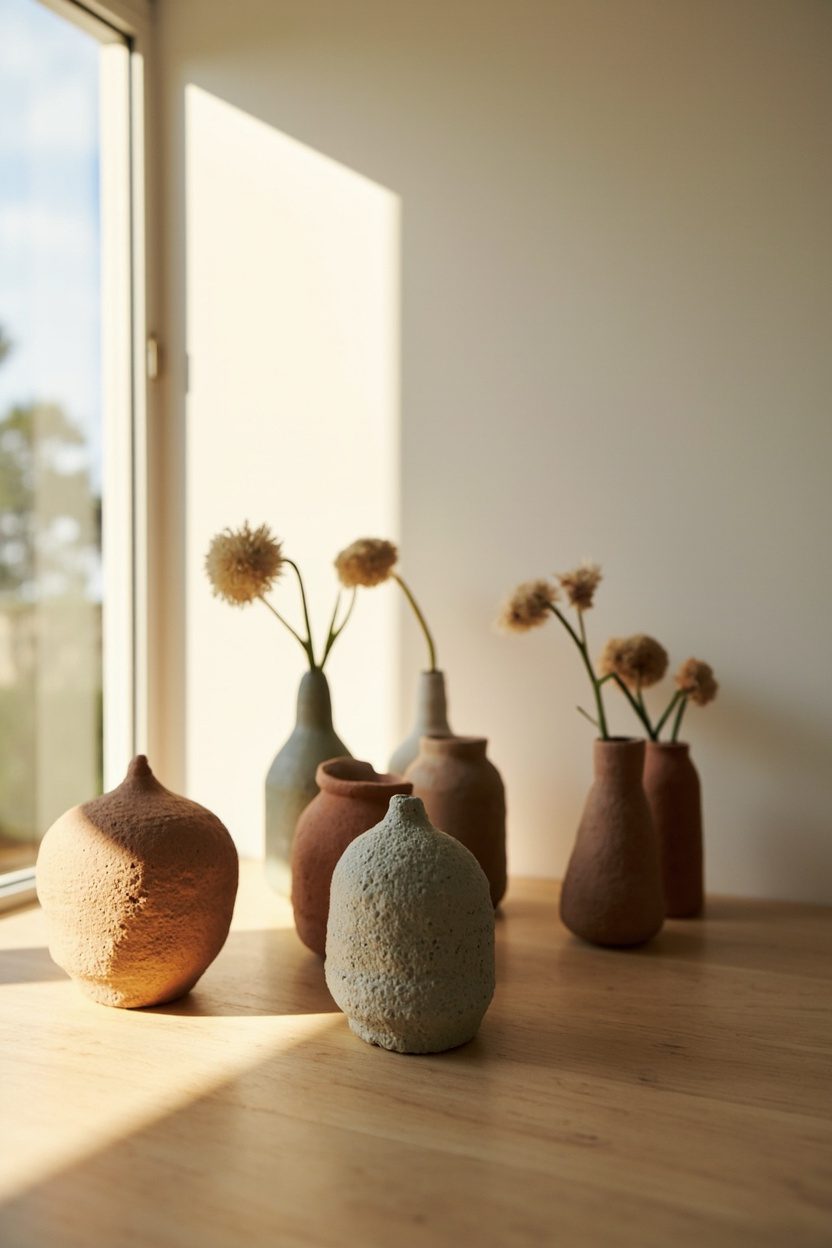
Matte clay vases in soft terracotta, sage, or warm beige anchor boho stems without stealing focus, use a trio of varying heights clustered on a console or bookshelf, and keep the tallest at roughly twice the height of the shortest to create a pleasing rhythm.
When I tried this in my own living room, I started with two similar vases and learned that adding one small, differently textured vase made the group feel intentional rather than matchy; the tiny variation is what reads as curated, not accidental.
Pick wheel-thrown or hand-textured pieces that show slight irregularities for authenticity, and avoid glossy glazed finishes, which fight the calm, earthy look; for budget buys, check local pottery markets or small makers to get unique shapes under 100.
For stems, pair dried grasses or single eucalyptus sprigs, trimming stems so the foliage sits just above the vase rim by about 6 to 8 inches.
6. Tall Floor Vases for Reading Nooks

- Effort Level: Weekend styling.
- Estimated Budget: 100-500.
- Maintenance Level: Low (requires occasional dusting).
- Best For: Small corners / Reading nooks.
Place a tall floor vase 6 to 12 inches from the chair base in a reading nook to define the space and balance vertical lines. Select vases at least 36 inches tall when paired with a standard armchair to ensure the vase feels proportionate and not dwarfed.
Use durable materials like terracotta or hand-blown glass for weight, fill with long willow stems, pampas grass, or bundled dried palm leaves, and position stems so the top third fans outward for reading light to remain unobstructed.
Avoid placing the vase where it blocks foot traffic or the light switch; instead, tuck it slightly behind the chair leg to anchor the corner while keeping circulation clear.
For safety with real stems, use a pebble-filled inner liner or a heavy base so tall arrangements do not tip when brushing past.
7. Matte Glazed Vases with Dried Grasses

- Effort Level: Weekend DIY.
- Estimated Budget: Under $100.
- Maintenance Level: Low.
- Best For: Renters.
Matte glazed vases read modern boho, they mute shine and let the texture of pampas or bunny tails take center stage. Place one large vase at floor level next to a reading chair for height balance.
Choose a vase about two-thirds the height of the stems. A common mistake is using a vase that is too tall, which makes stems look sparse. Trim stems so they fan slightly for a fuller silhouette.
For materials, pick stoneware or earthenware with a soft, tactile glaze; these hold dried grasses without water and resist tipping, and position near natural light but out of direct sun to prevent bleaching of neutral tones.
8. Textured Stoneware Vases on Sideboards
- Effort Level: Weekend DIY.
- Estimated Budget: $100-$500.
- Maintenance Level: Low.
- Best For: Living rooms.
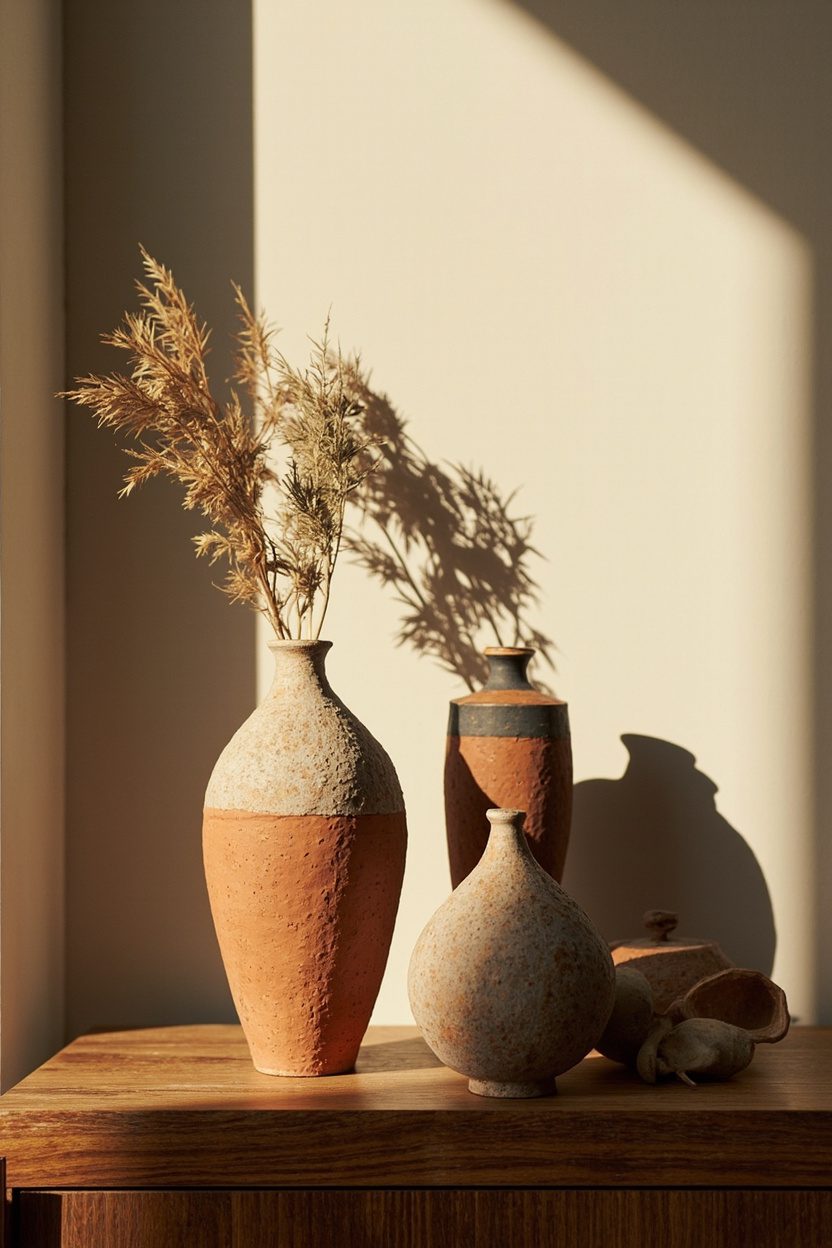
Group two or three textured stoneware vases of varying heights along a sideboard, keep one vessel at odd intervals from the edge for a crafted, collected look. An effective proportion is a 3:2:1 height ratio across the group.
Use stems with structural weight, like dried eucalyptus or preserved olive branches, and insert floral foam or glass tubes inside narrow openings to control placement without water.
Textured stoneware reads handcrafted, the tactile surface complements woven runners or brass hardware, and pairs well with a low mirror or art piece behind to catch light and add depth.
9. Low Ceramic Bowls Used as Vases

- Effort Level: Weekend DIY.
- Estimated Budget: Under $100.
- Maintenance Level: Low (requires dusting).
- Best For: Dining tables.
Low ceramic bowls make unexpected vessel bases for short stems, create a compact centerpiece by using floral frogs or a metal grid inside the bowl to hold stems of dried flowers and small pampas, and avoid overcrowding, which flattens the arrangement.
Keep bowls about 4 to 6 inches deep so stems sit securely without looking buried, and mix textures like matte glaze with a single glossy accent bowl for contrast.
This approach works well for meals since it keeps sightlines open, and using preserved stems eliminates water, reducing staining risk on wood surfaces.
10. Single Pampas Stem in a Tall Earthenware Vase
A single oversized pampas plume in a raw clay or terracotta vase creates an instant focal point; place it off-center on a console to balance other accessories.
Choose a vase 2 to 3 times the height of the stem; this proportion keeps the arrangement stable and visually grounded.
Keep color simple, match the vase finish to nearby wood tones, and trim stems to maintain an airy silhouette; misting the plume lightly every few weeks prevents brittleness and reduces shedding.
11. Clustered Dried Grasses in a Wide-Mouth Ceramic Jar
Use a wide-mouth ceramic jar to group several varieties of dried grasses, position taller stems at the back to create a layered height effect that reads well from multiple angles. Natural fiber ties or a leather strap around the neck add a handcrafted touch; use neutral tones to keep the look boho-calm.
Avoid overcrowding, allow 20 to 30 percent negative space between stems so each texture reads. This reduces bulk and slows dust buildup.
FAQ
Pampas sheds most when overly dry or handled too roughly. Lightly mist the plumes with water occasionally and avoid crushing them when moving furniture. Using a light spray of fabric starch can help the plume keep its shape and reduce loose fibers; test on a small area first.
Dried materials react to humidity by softening or growing mold. Avoid placing them in bathrooms or laundry rooms where moisture is high. If you need a long-lasting look in humid areas, opt for high-quality faux stems designed for humid environments.
A good rule is that the vase height should be one-third to two-thirds the height of the stems. This keeps the composition balanced and prevents top-heaviness. For mixed stems, choose a wider mouth vase to allow layering and breathing room between textures.
Look for local pottery studios or online craft marketplaces that list maker details and photos of the glazing process; authenticity is often visible in slight irregularities and maker marks. For trend context and material inspiration, credible design outlets cover updated boho approaches, such as this overview from a 2026 trend report.