


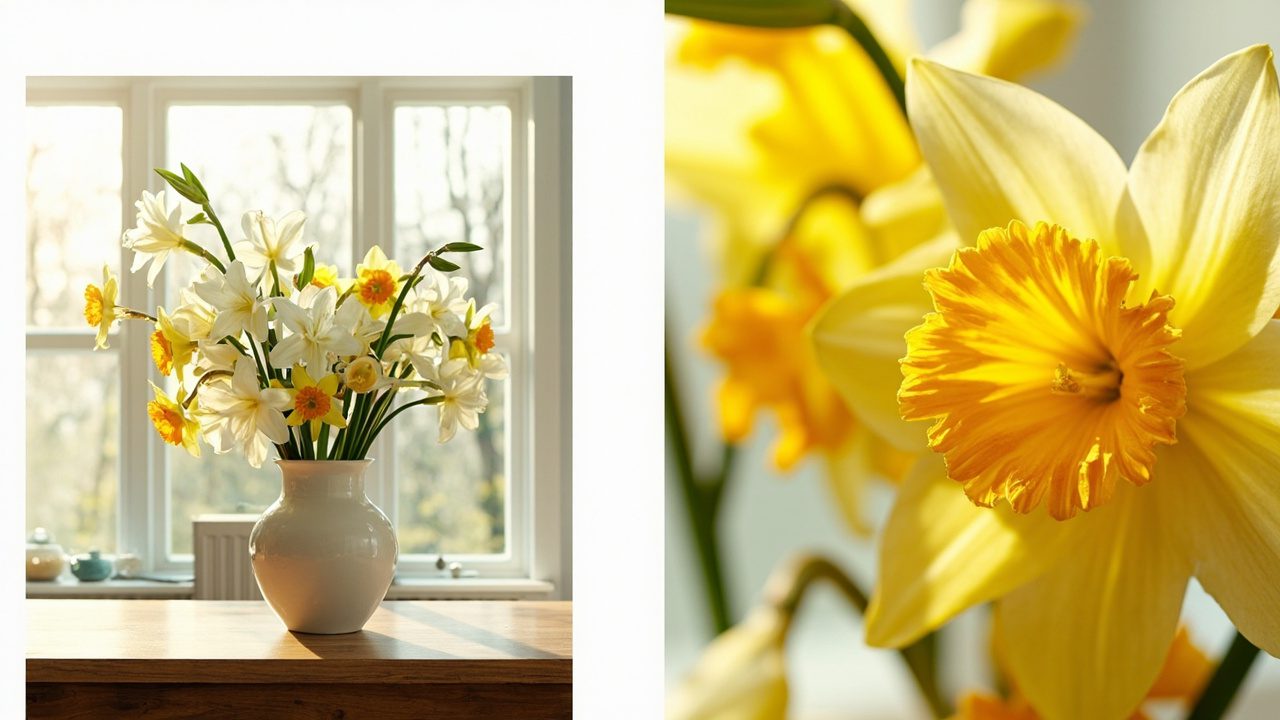
Easter flowers meaning blends centuries-old symbolism with today’s interior-driven sensibilities, and understanding that language elevates any arrangement from pretty to purposeful.
In my experience, clients respond to blooms that carry a clear message, whether celebrating rebirth, purity, or joyful renewal, so I focus on pairing meaning with how flowers live in a space, not just how they look in a vase.
Design-wise, the best Easter arrangements succeed when the symbolic intent matches practical factors like scale, scent, and longevity.
I continually see well-intentioned designs fail because scent overwhelms a small room, or a delicate bloom is placed where it won’t last; the sections below give concrete choices and setups you can use immediately.
- Easter flower symbolism by bloom: tulips, lilies, daffodils
- How do flower colors change Easter meanings today?
- Choosing budget-friendly blooms for seasonal arrangements
- Pairing textures and ribbons for modern Easter displays
- Care and longevity tips for Easter floral centerpieces
- DIY Easter bouquets that communicate specific sentiments
- Where to source sustainable Easter flowers and supplies?
- Communicating meaning through flower placement and accents
- FAQ
- Final Thoughts
- Related Decor Reads
Easter flower symbolism by bloom: tulips, lilies, daffodils
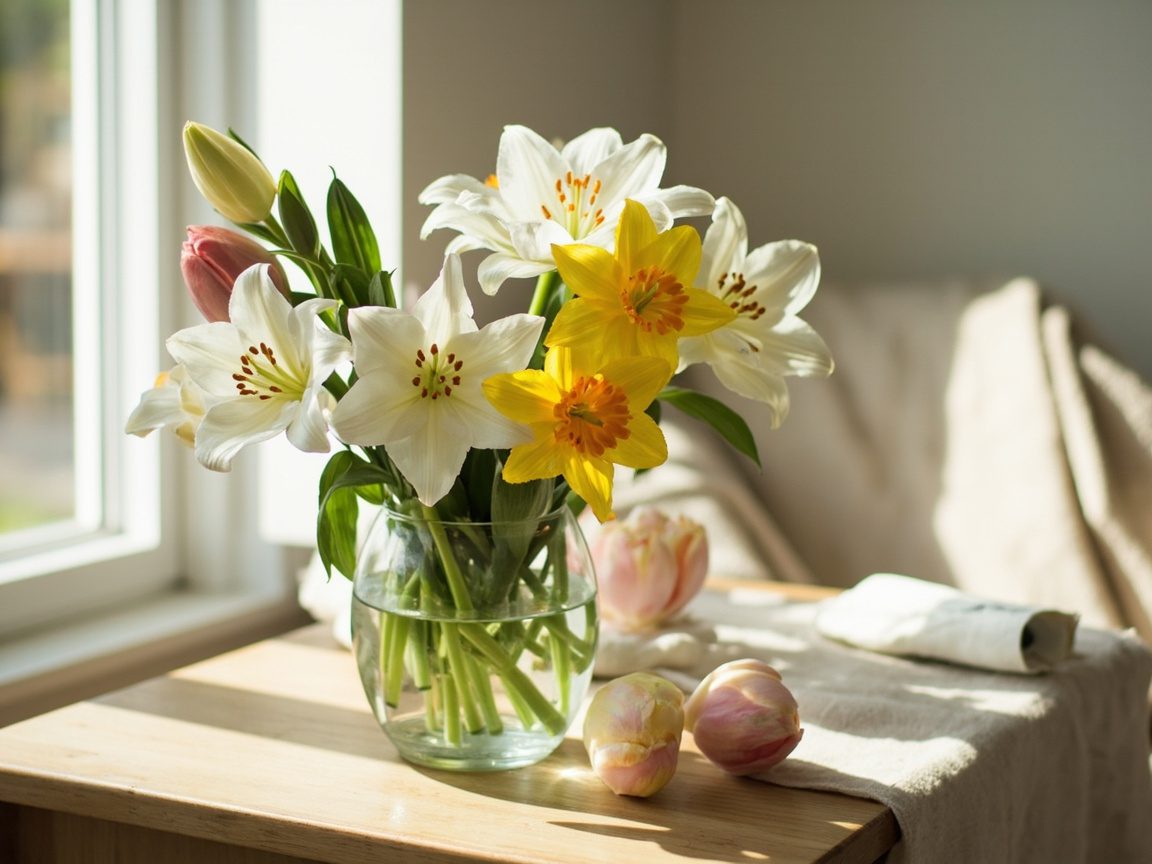
Tulips: love, renewal, and versatility
Tulips read as modern, optimistic flowers, often linked to perfect love and the first flush of spring. Their clean silhouettes and strong color family make them ideal for contemporary interiors, from a single-stem bud vase to a dense centerpiece.
When choosing tulips, pick varieties with sturdier stems like Darwin hybrids for taller displays, and cut stems on an angle to prolong life.
Lilies: purity, resurrection, and drama
Easter lilies, especially white trumpet lilies, are classic symbols of purity and resurrection, which is why they dominate many church and mantle displays.
They also bring fragrance, so place them where the scent complements, not overpowers, the room. Entry halls and dining rooms are usually safe.
For longevity, remove pollen-laden stamens as buds open, and rotate water daily to prevent staining and bacterial growth.
Daffodils: New beginnings and cheerful resilience
Daffodils signal new life and good fortune, with a springy, cheerful note that suits casual and farmhouse aesthetics.
Their hollow stems release sap that can shorten vase life, so condition daffodils in their own water for several hours before mixing with other blooms, or keep them grouped separately.
Use daffodils in looser, garden-style arrangements and pair with textured foliage to balance their bright, graphic forms.
| Bloom | Primary Symbol | Best Use in Home | Practical Tip |
|---|---|---|---|
| Tulips | Love, renewal | Slim vases, linear centerpieces | Choose Darwin hybrids, recut stems |
| Lilies | Purity, resurrection | Entry, mantel, formal centerpieces | Remove stamens, monitor fragrance |
| Daffodils | New beginnings, luck | Casual bouquets, farmhouse displays | Condition separately to remove sap |
How do flower colors change Easter meanings today?
Color as mood and message
Color now often speaks louder than species, because interiors trend toward curated palettes and seasonal accents.
For example, pastel pinks and soft lavenders suggest gentle renewal and intimacy, while saturated magenta or chartreuse ribbons communicate bold celebration.
In my projects, matching flower tones to a room’s secondary accents keeps arrangements intentional rather than decorative afterthoughts.
Contemporary shifts: bold accents and unexpected pairings
Recent trends push Easter beyond pale pastels into bright accents and ribboned installations, which change traditional meanings into statements of joy and optimism.
A yellow tiger lily no longer reads only as sorrow or remembrance; paired with citrus tones and architectural greenery, it becomes exuberant.
Use color strategically: keep one dominant hue, a supporting neutral, and a single punch color for contrast to avoid visual clutter.
Practical color selection by space
When selecting colors, consider light quality, room size, and existing finishes. In small, north-facing rooms, I recommend warmer blooms to counter cool daylight.
For open-plan living areas, echo one floral color in textiles or a throw pillow to create visual continuity.
Sample a single stem in a vase on-site before ordering bulk stems, because natural light shifts can make a color read differently than online photos.
| Color | Traditional Easter Meaning | Contemporary Use |
|---|---|---|
| White | Purity, resurrection | Minimal, Japandi or modern farmhouse accents |
| Pastel Pink/Lavender | Gentleness, renewal | Soft pillows, layered textures in living rooms |
| Bright Pink/Chartreuse | Less common historically | Bold focal ribbons, youthful seasonal vignettes |
Choosing budget-friendly blooms for seasonal arrangements
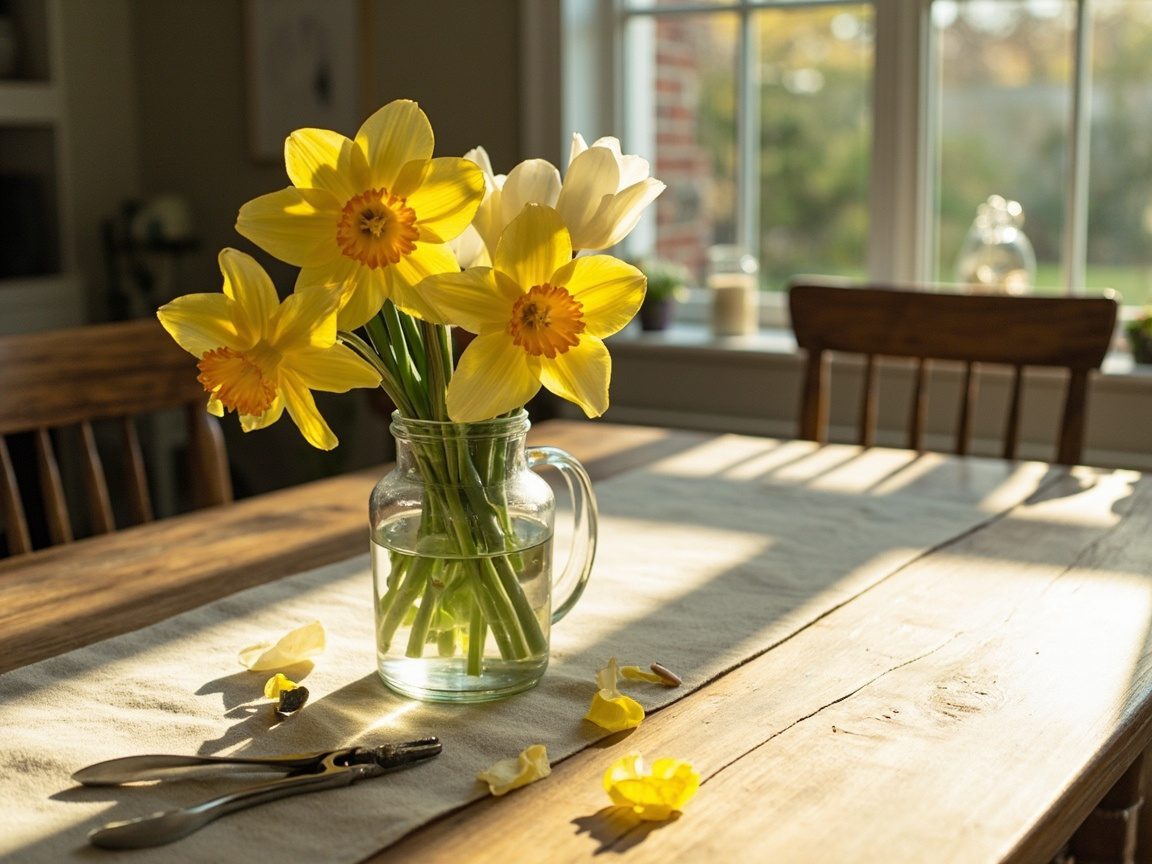
Prioritize what the eye sees
You can create an expensive look on a small budget by choosing a few focal stems and pairing them with inexpensive fillers and foliage.
I often recommend investing in three to five statement flowers per arrangement, then using greenery like eucalyptus, pittosporum, or local foraged branches to extend volume. This keeps costs down while preserving scale and impact.
Best-value blooms and substitutions
Some blooms deliver high visual impact at low cost: chrysanthemums, spray carnations, and local seasonal branches do heavy lifting.
Use tulips or daffodils sparingly as focal points, and substitute peonies with garden roses or ranunculus when budgets are tight. Below is a quick price-to-impact guide you can use at the florist or market.
| Bloom | Visual Impact | Relative Cost | Use |
|---|---|---|---|
| Tulips | High | Moderate | Feature stems, color blocks |
| Daffodils | Medium | Low | Clusters, casual displays |
| Spray Carnations | Medium | Low | Fillers, texture |
| Chrysanthemums | Medium-High | Low | Volume, longevity |
Assembly tips to stretch your budget
- Start with a clear focal cluster and build outward using greenery to add mass.
- Mix long-lasting stems with delicate ones placed higher in the arrangement to show, not waste, costly blooms.
- Buy locally and seasonally, you’ll save significantly on out-of-season imports and get fresher stems.
Pairing textures and ribbons for modern Easter displays
Why texture matters in Easter arrangements?
Texture shapes how an arrangement reads from across a table, and it determines the touch and movement people expect.
In my experience, combining at least three distinct textures creates depth: a soft, billowy element like tulip petals, a structured architectural flower such as ranunculus or anemone, and a fine, airy filler like jasmine vine or seeded eucalyptus.
These contrasts make colors read brighter, and they help bold accent ribbons feel intentional rather than decorative afterthoughts.
Choosing ribbons that complement, not compete
Ribbons should amplify the arrangement’s mood. For a minimal, sophisticated display, I use matte silk or cotton-linen ribbons in muted tones to echo the palette.
For joyful or statement Easter styling, satin or grosgrain in saturated pinks, sunshiny yellow, or verdant green will read contemporary, as trend reports show bright accents and ribbons returning in 2026.
Avoid overly shiny or patterned ribbons with already-busy florals; instead, pick one patterned ribbon to pair with two solids so the eye has a place to rest.
Practical pairing grid
| Style goal | Primary flower(s) | Texture partners | Ribbon type & width | Typical budget per centerpiece |
|---|---|---|---|---|
| Modern minimal | White tulips, calla lilies | Gloss foliage, thin wispy filler | Matte silk, 1–1.5 in | $35–$70 |
| Bright statement | Peonies, ranunculus | Textured berries, large-leaf greenery | Satin or grosgrain, 2–3 in | $60–$120 |
| Rustic farmhouse | Daffodils, tulips | Dry grasses, eucalyptus | Natural linen, 1.5–2 in | $30–$65 |
Mix-and-match rules I follow with clients
- Limit large-format patterns to one ribbon per arrangement; use solids to support it.
- Match ribbon width to stem scale: Thicker stems tolerate wider ribbons without overpowering.
- Use tactile repetition: echo a ribbon’s texture in a foliage choice to unify the display.
Care and longevity tips for Easter floral centerpieces
Immediate handling upon delivery or purchase
Trim stems at a 45-degree angle under running water, removing any foliage that will sit below the waterline. In my experience, many arrangements begin declining because leaves remain submerged and introduce bacteria.
Place flowers in cool, indirect light for the first 24 hours to reduce shock, and avoid fruit bowls nearby, since ethylene shortens bloom life.
Daily maintenance routine
Change the water every other day, and re-trim stems each time by about 1 cm to restore the vascular pathway.
Add a floral preservative when you change water, or use a DIY mix of one teaspoon sugar, a few drops of bleach, and a teaspoon of lemon juice per liter to feed blooms and discourage bacteria.
Keep centerpieces away from direct HVAC output, as moving hot or cold air accelerates dehydration.
Specific longevity tactics by flower type
| Flower | Typical vase life | Care tip |
|---|---|---|
| Tulips | 5–7 days | Keep cool, support stems if they droop, trim often. |
| Peonies | 5–10 days | Open buds before arranging for even bloom, change water frequently. |
| Daffodils | 6–8 days | Isolate from other blooms for 24 hours after cutting to condition sap. |
Problems to watch for and quick fixes
- Wilted heads: recut stems and submerge the whole bloom for 20 minutes to revive.
- Cloudy water: replace immediately and sanitize the vase to prevent spread.
- Petal browning: remove affected blooms to preserve the rest of the arrangement.
DIY Easter bouquets that communicate specific sentiments
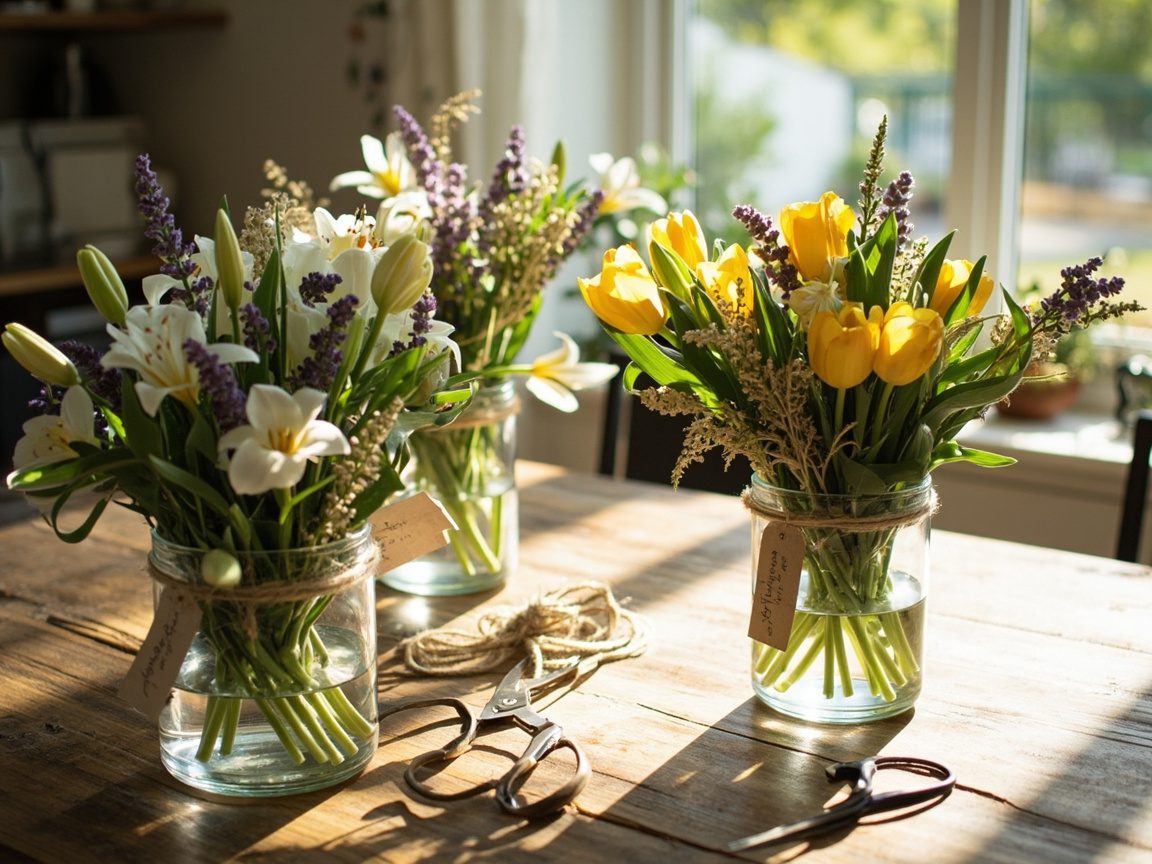
“Joyful Celebration” — bright, playful, sociable
Choose peonies, ranunculus, and tulips in saturated pink, coral, and sunny yellow. Add textural fillers like craspedia or bunny tail grass to keep the mood buoyant.
Wrap stems in a wide satin ribbon in a contrasting color; in my experience, this instantly signals festivity and modernity.
“Peaceful Reflection” — calm, contemplative, sincere
Use white anemones, soft cream roses, and pale blue hyacinths for a quiet palette. Add eucalyptus and wispy astilbe for subtle texture.
Finish with a narrow linen ribbon in oat or dove gray to reinforce the gentle sentiment without drawing attention away from the flowers.
“Gratitude and Warmth” — homey, thankful, intimate
Combine daffodils, garden roses, and ranunculus in warm yellows and soft apricots, plus dried wheat or millet for a harvest feel.
A natural jute or linen ribbon ties into farmhouse comfort; this pairing reads authentic and grounded, which I continually see resonate with hosts.
Step-by-step bouquet assembly (applies to all sentiments)
- Condition flowers: trim stems, remove lower leaves, hydrate for 1 hour.
- Create a loose spiral with focal blooms, adding textured elements between main flowers.
- Bind stems with floral tape about 3–4 in below the head, then wrap ribbon to conceal tape and finish with a knot or bow.
- Place in clean water or a foam-filled vessel, depending on the display; follow care tips above to extend life.
Budget and size comparisons
| Bouquet type | Size | Estimated cost | Best occasions |
|---|---|---|---|
| Small posy | 6–8 stems | $20–$45 | Place setting gift, hostess token |
| Table centerpiece | 12–18 stems | $50–$110 | Dining table, mantel |
| Large statement | 24+ stems | $120–$300+ | Entryway, ceremony focal point |
Where to source sustainable Easter flowers and supplies?
Why sustainability matters for seasonal flowers?
Sourcing sustainably reduces chemical runoff, protects pollinators, and supports growers who use fair labor practices. In my experience, clients underestimate how much supply chain choices change a bouquet’s story; a tulip from a certified regenerative grower feels different than one flown overnight.
Choosing sustainable sources also lengthens the ethical life of your arrangement, because responsibly grown stems are often healthier and last longer in water.
Local growers, farmers’ markets, and community-supported agriculture
Start with local flower farms and farmers’ markets, especially for seasonal bulbs and branch materials. Local stems typically travel fewer miles, arrive fresher, and are sold by growers who can tell you about their practices.
When evaluating vendors, ask about pesticide use, hoop-house vs open-field production, and post-harvest handling practices; these answers predict stem longevity and environmental impact.
Wholesale cooperatives and certified suppliers
For larger projects, look for wholesale co-ops or distributors that offer certifications like Rainforest Alliance, Florverde, or Certified California Grown.
These certifications indicate stronger environmental and labor standards than generic “eco” labels. Below is a practical comparison to help choose the right source depending on budget and scale.
| Source type | Typical price range (per stem) | Best for | Key sustainability signals |
|---|---|---|---|
| Local flower farm | $1–$4 | Small events, personalized sourcing | Direct questions on practices, seasonal availability |
| Farmers market/CSSA | $1–$3 | DIY arrangements, unique varieties | Transparency from grower, minimal packaging |
| Wholesale cooperative | $0.50–$2 | Weddings, large displays | Member standards, pooled resources |
| Certified importer/retailer | $1–$5 | Exotic or out-of-season stems | Third-party certifications like Florverde |
| Online eco-flower subscription | $3–$8 | Convenience, recurring seasonal bouquets | Clear sourcing policy, carbon offsets |
Supplies and greener alternatives
Choose floral foam alternatives like chicken wire, reusable pin holders, or biodegradable foam for centerpieces.
I continually see designers default to single-use floral foam; switching to mechanics that reuse or compost makes a measurable environmental difference.
For wrapping and accents, prioritize unbleached paper, recyclable ribbon, and natural twine instead of metallized tape or plastic mesh.
Decision criteria for buyers
When selecting a vendor, weigh these practical criteria: proximity to event date for freshness, transparency about growing practices, volume capacity, cost per stem, and transport emissions.
If budget is tight, prioritize local seasonal varieties over imported exotics; they offer the best balance of beauty, price, and sustainability.
Finally, ask for a care sheet that responsible sellers provide, and it tells you how long stems should last and what post-harvest treatments were used.
Communicating meaning through flower placement and accents
Placement as nonverbal language
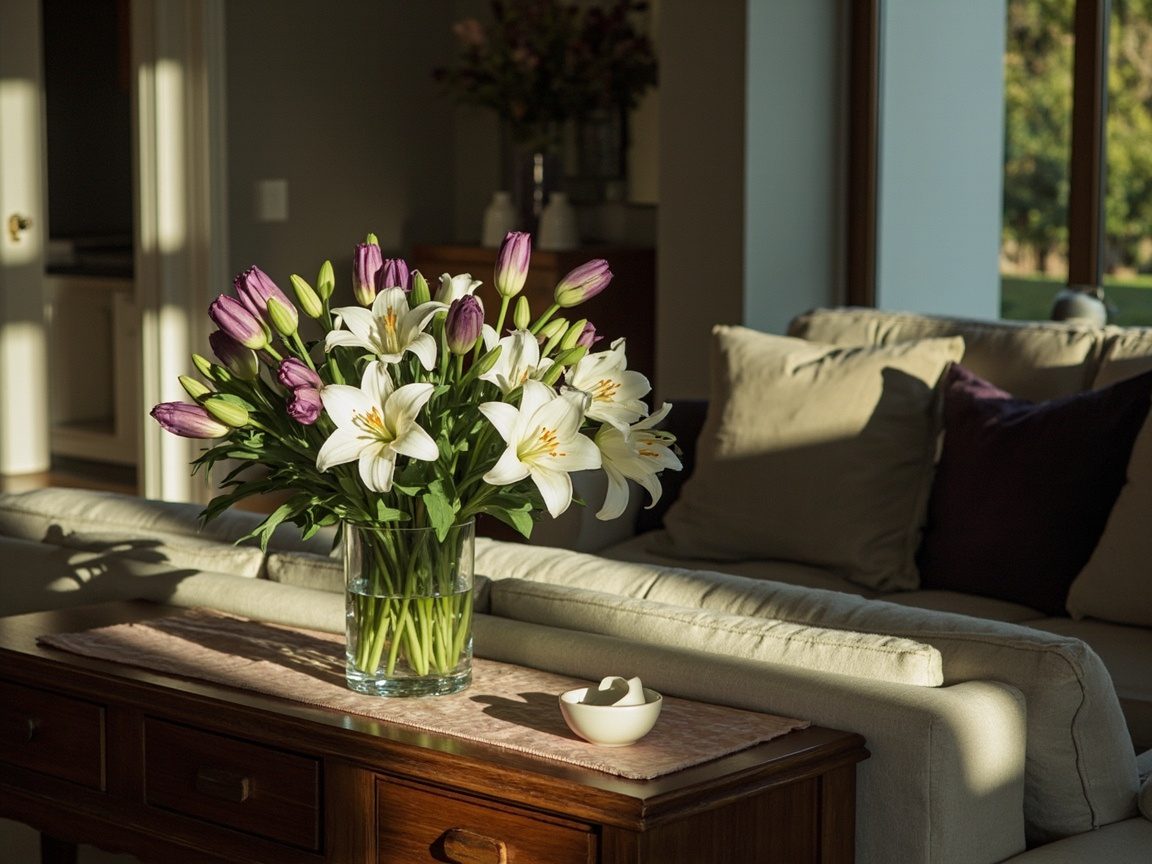
Flower placement communicates hierarchy, focus, and emotional tone, much like composition in a painting. In my experience, guests read arrangements before they consciously notice individual blooms; a tall central stem signals celebration, while low, scattered posies feel intimate.
Decide whether the arrangement should anchor a room, invite conversation, or act as a subtle accent, then place stems to support that goal.
Center vs. clusters: how placement changes meaning
Center-dominant arrangements convey formality and ritual, which suits an Easter dinner table or altar.
Clustered, off-center groupings create a relaxed, bohemian mood and work well in casual brunch settings. Use the following table to match placement style with intent and visual cues.
| Placement style | Visual cues | Emotional message | When to use |
|---|---|---|---|
| Central, vertical | Tall focal stems, symmetrical | Formal, celebratory | Formal meal, entryway |
| Clustered, low | Grouped blooms, varied heights | Warm, intimate | Dining table, coffee table |
| Trailing, asymmetrical | Overflowing greens, cascading accents | Romantic, abundant | Buffet, mantel, staircase |
| Single-stem accents | Isolated blooms in bud vases | Contemplative, symbolic | Place settings, small altars |
Accents that reinforce meaning
Ribbons, eggs, and foliage change the reading of a bouquet with minimal effort. Bright ribbons or satin communicate joy and festivity, while natural twine or linen conveys rustic simplicity.
I often add a single painted egg or a sprig of rosemary to indicate remembrance or blessing; small accents anchor the arrangement’s narrative without overpowering the flowers.
Practical placement techniques and mistakes to avoid
Step-by-step for purposeful placement:
- Define the focal point, then place your strongest bloom there.
- Support it with secondary stems at two-thirds the height for visual balance.
- Add foliage or trailing elements last to soften edges and integrate accents.
Common mistakes:
- Overcrowding the focal area, which confuses the eye and shortens the stem life.
- Using too many competing accents, which dilutes the intended message.
- Ignoring scale, small arrangements near tall place settings read awkwardly.
FAQ
Properly sourced and cared-for seasonal stems usually last 5–10 days, depending on variety. Local, freshly harvested blooms often sit at the longer end of that range when recut and kept in clean water.
Yes, mixing is fine if you match stem health and stem life. Pair shorter-lived exotics with hardier local fillers, and stagger placement so the most delicate blooms are easier to replace.
Use single white blooms, rosemary sprigs, or a solitary unadorned egg to signal remembrance. Keep placement restrained and central so the symbol reads clearly.
Yes, use chicken wire, reusable pin holders, or a grid of tape across a vessel’s mouth for structure. These methods provide stability and are far less harmful than single-use floral foam.
Final Thoughts
Choosing sustainable flowers and placing them with intention elevates an Easter arrangement from decoration to story.
Focus on source transparency, practical mechanics, and small accents that reinforce your message, and your arrangements will feel both beautiful and thoughtful.