


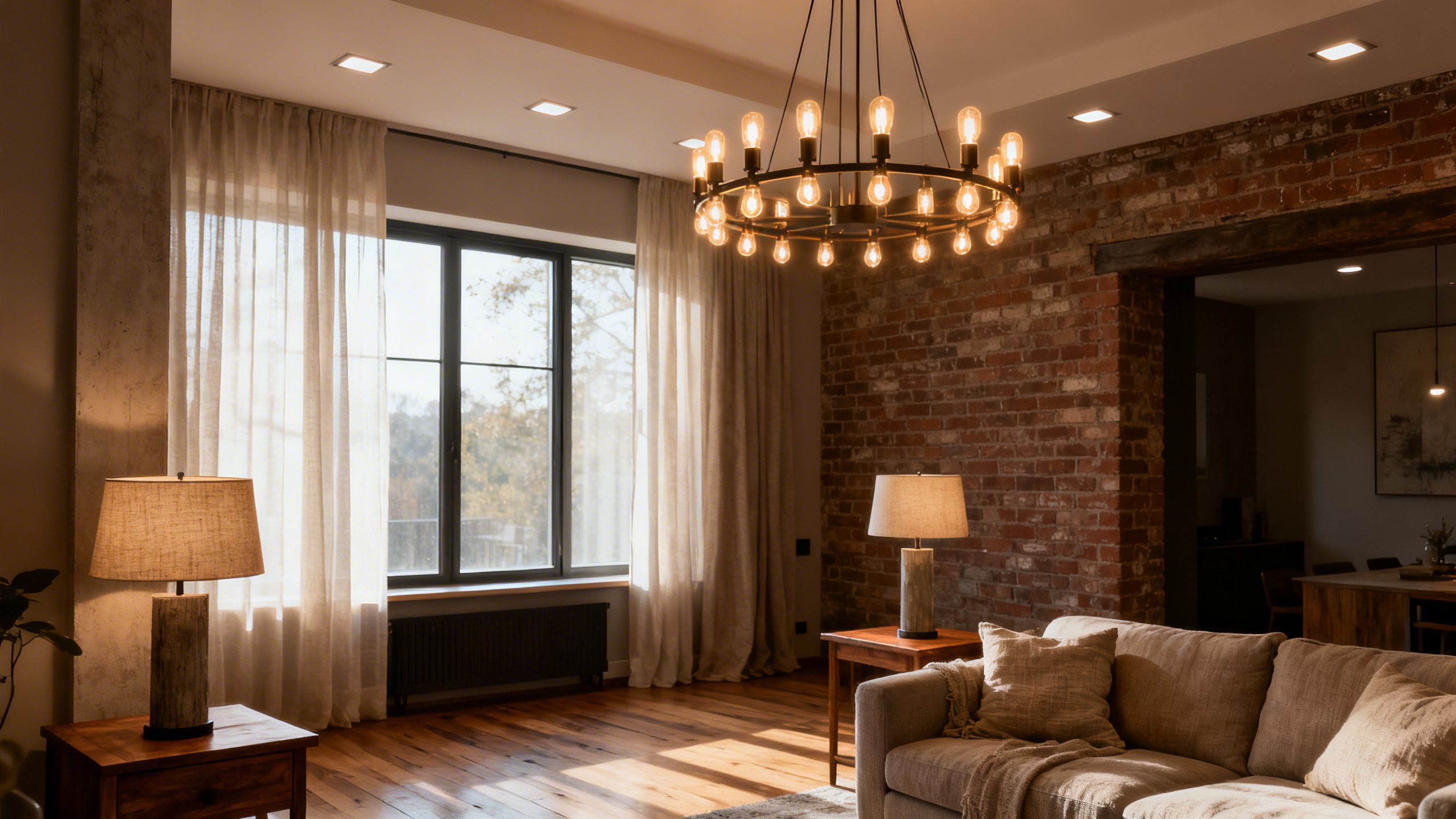
Great rooms are not bright; they are balanced. In home lighting design, I prioritize layers that serve how you live hour by hour, then I tune color temperature, dimming, and beam spread so the space feels intentional from sunrise emails to midnight tea. Expect specifics here, not vague “ambient-task-accent” platitudes.
I design with real life in mind. That means measuring sightlines, planning switching you can operate half-asleep, and ensuring fixtures flatter skin, art, and finishes.
- Layered bedroom lighting for rest and reading
- Choosing soft overheads without sacrificing brightness
- Wall-mounted bedside lights vs table lamps
- Portable, rechargeable lamps for flexible ambience
- Warm color temperature strategies for wind-down
- Dimmers, smart controls, and scene setting
- Materials and finishes that feel timeless 2026
- Budgeting your lighting plan room by room
- FAQ
- Final Thoughts
Layered bedroom lighting for rest and reading
Map the jobs, then assign the light
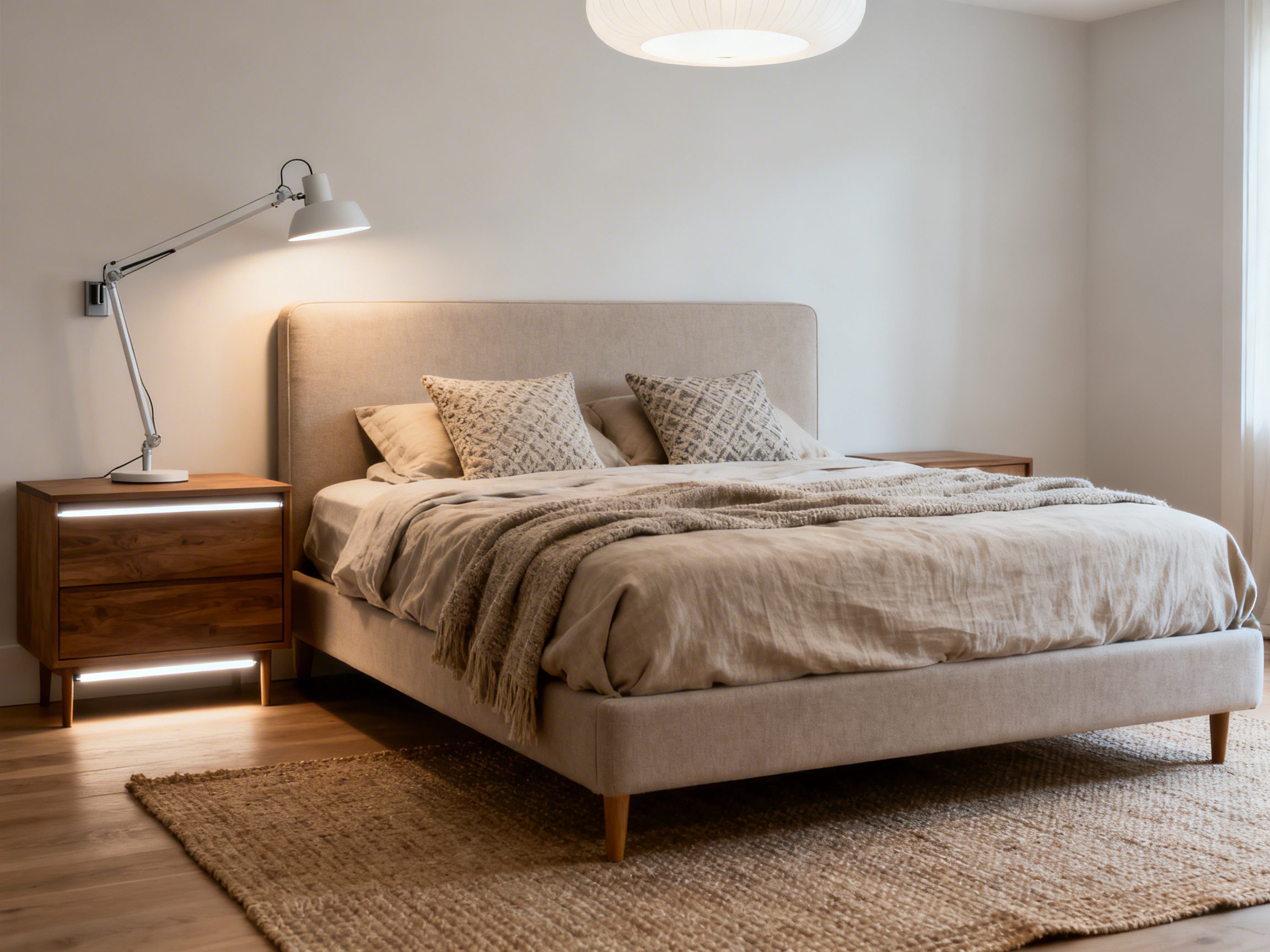
Bedrooms need calm, controllable light that shifts from evening unwind to focused reading. I start by zoning: general fill, bedside task, and soft accents that visually lower the ceiling at night.
Per current designer guidance, a mix of bedside wall lights, soft overheads, and portable lamps creates a wind-down-ready space that supports both reading and sleep.
Color temperature and dimming that protect the circadian rhythm
Even the prettiest fixture fails if the spectrum is wrong. Use warm 2700K lamps for evenings, then add a secondary 3000K channel if you dress or do makeup here.
Pair with ELV or 0–10V dimming for flicker-free control, and aim for 1 percent low-end dimming so late-night light is truly gentle.
Beam control, glare, and bedside reach
Reading wants a tight beam that hits pages, not pupils. Position the light source 20 to 24 inches above the top of the mattress and 7 to 10 inches to the side of the centerline.
I prefer shades or snoots that hide the lamp when you are reclined, and I place the switch at 28 to 32 inches above the floor within easy reach.
| Skipping dimmers, pushing the room too bright | Purpose | Fixture Types | Specs to Target | Common Mistake |
|---|---|---|---|---|
| General fill | Soft, even illumination for dressing | Flush/semiflush with diffuser, cove LED | 2700–3000K, CRI 90+, 10–20 lm/sq ft | Exposed bulbs that glare from bed |
| Bedside task | Focused reading without spill | Wall sconces with shade, swing arm, pin lights | Beam 30–60°, dimmable, switch at 28–32 in AFF | Placing too high so light hits eyes |
| Accent | Relaxing mood and depth | Picture lights, toe-kick LED, small lamps | Warm 2400–2700K, 2–5 lm/sq ft | Skipping dimmers, pushing room too bright |
Wiring and switching that feel intuitive
Use three circuits minimum: overhead, bedside, and accent, each dimmable. Add a master all-on by the door and duplicate bedside controls so you never cross a dark room.
In small spaces, portable lamps earn their keep, especially if your style leans organic like a Modern Boho palette, where texture matters as much as lumen count.
- Measure mattress height before mounting sconces to fix the beam aiming.
- Specify CRI 90+ lamps so wood tones and fabrics read true.
- Use warm dim LED to shift from 3000K to 2200K in the evening.
Choosing soft overheads without sacrificing brightness
Diffusion first, then output
A soft ceiling fixture should disappear into the experience, not the finish schedule. I vet overheads for two things: a true diffuser that hides diodes or bulbs, and enough delivered lumens to meet tasks.
For a 150 sq ft bedroom, I target 1,500 to 2,500 delivered lumens on the main fixture, then let bedside and accent layers carry the rest.
Semiflush vs flush, and when to add cove
Ceiling height sets the choice. Under 8 feet, flush with a wide diffuser keeps sightlines calm. At 8.5 to 10 feet, a semiflush drum 12 to 18 inches diameter softens light without reading like a chandelier, and in taller rooms I add perimeter cove LED at 2 to 3 inches from the ceiling for a floating glow that eliminates harsh shadows.
| Overhead Type | Ceiling Height | Typical Size | Pros | Watch-outs |
|---|---|---|---|---|
| Flush mount with diffuser | 7.5–8 ft | 12–18 in diameter | Even, low profile, minimal glare | Choose high CRI and opaque sidewalls to avoid hotspots |
| Semiflush drum | 8–10 ft | 14–22 in diameter | Soft bounce, decorative presence | Watch drop length so you do not see the bulb from bed |
| Cove/valance LED | 9 ft+ | Linear, 2–4 in channel | Ceiling wash, luxurious calm | Specify 2700K and a high-density strip to avoid scallops |
Brightness without harshness
If you need more illumination, increase surface area, not wattage. Fabric or acrylic drums spread light across a larger plane, which reads softer at the eye.
Pair with a matte ceiling paint to boost bounce, and set dimming curves so the first 30 percent of the slider makes meaningful changes.
Style integrations that actually help the light
Opal glass, dense linen, and etched acrylic diffuse best, while clear glass exposes glare. In coastal or cottage rooms, woven shades can be beautiful, but line them with vellum so you diffuse the diode pattern.
For a relaxed coastal mix where overhead softness matters, browse ideas in Coastal Farmhouse Homes and adapt them with dim-to-warm LED.
- Specify 2,700K lamps labeled warm dim for evening softness.
- Choose CRI 90+ for accurate skin tones and textiles.
- Use a larger diameter shade to raise perceived brightness gently.
Wall-mounted bedside lights vs table lamps
What changes in real use?
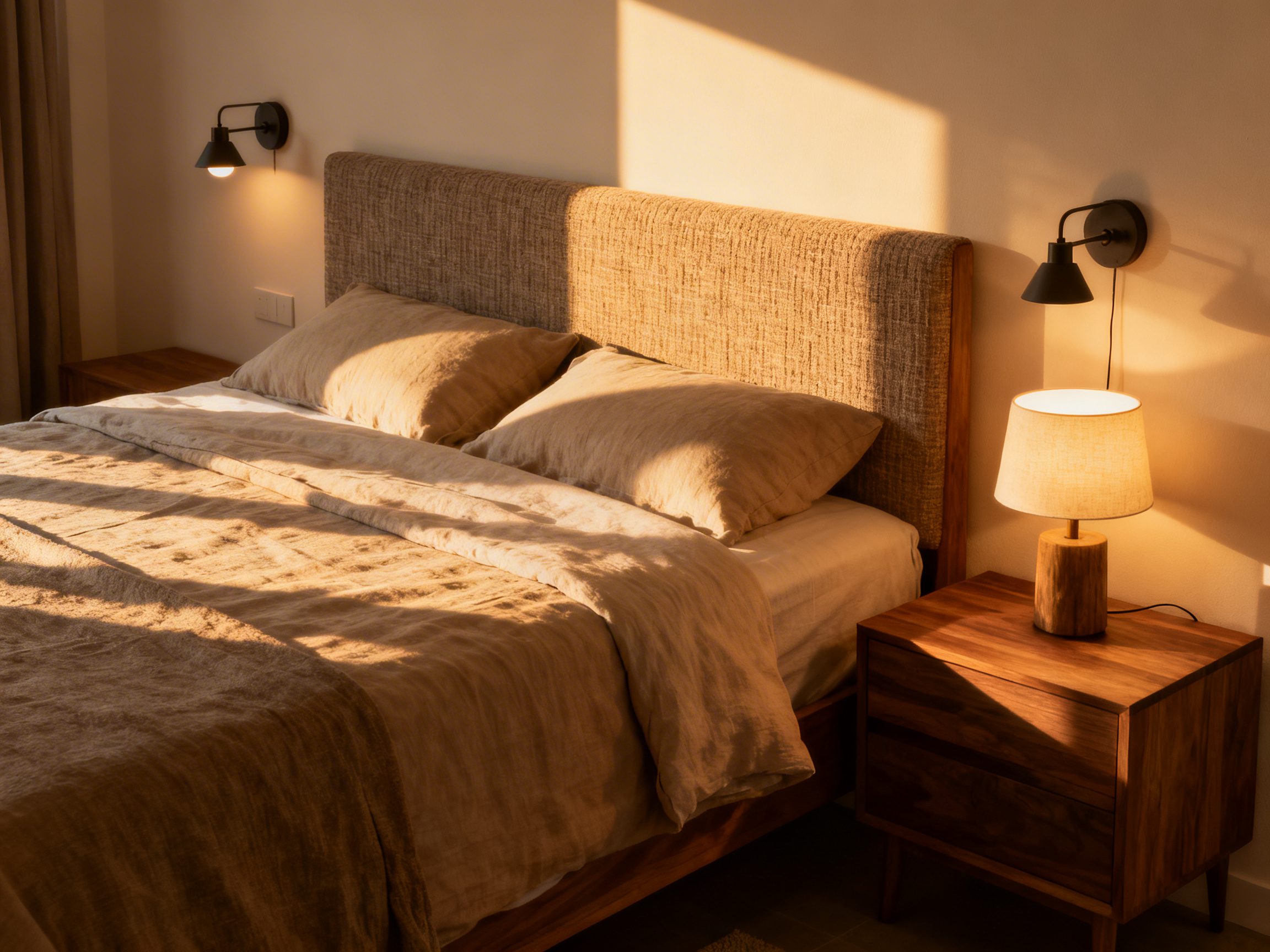
I ask clients one question: do you read nightly or want a hotel-like nightstand? Wall lights free the surface, give precise aiming, and simplify all-off control.
Table lamps add coziness, flexible styling, and are far easier to swap seasonally or when you change the headboard.
| Option | Best For | Aim/Glare Control | Dimensions | Budget Range | Install Notes |
|---|---|---|---|---|---|
| Wall-mounted sconces | Nightly readers, small nightstands | Excellent with shades or swivel heads | Center 20–24 in above mattress top, 7–10 in off center | $$–$$$ incl. wiring | Plan junction boxes at rough-in, add dimmers and USB in cover plates |
| Pin-up swing arms | Renters, flexible layouts | Good, depends on shade depth | Mount backplate ~40–48 in AFF, cord covers keep tidy | $–$$, no hardwiring | Use smart bulbs for dimming if no wall control |
| Table lamps | Atmosphere, layered styling | Moderate, pick tall shades to shield lamp | Lamp + shade ~24–28 in tall for a 25–28 in high nightstand | $–$$$ depending on base material | Ensure switch is reachable from pillow, not behind decor |
Criteria that keep glare away
Choose opaque or lined fabric shades that block direct view of the bulb at pillow height. If you prefer metal library shades, use lower wattage and a tight beam to keep light on the page.
For table lamps, select a shade with an 8 to 10 inch bottom diameter so the spread reaches pages without hot spots.
Styling and maintenance realities
Sconces demand commitment, but they look crisp with a tailored headboard and small nightstands. Table lamps invite seasonal shifts, like swapping to a woven shade in summer or a ceramic base in winter, and you can update fast without an electrician.
If your bedroom style leans boho, a patterned shade or rattan base pairs well with the layered schemes shown in this edit of Boho Wallpaper ideas.
- Hardwire when you can for cleaner switching and fewer cords.
- Use warm dim LED A15 or G16 bulbs to fit smaller shades without glare.
- Add a master all-off at each bedside to end nighttime negotiations.
Portable, rechargeable lamps for flexible ambience
Why cordless lighting changes how you use a room?
Portable, rechargeable lamps free you from wall outlets, which means light now follows activity instead of dictating it.
In my projects, I use them to pull focus to a reading chair at night, then migrate the same light to a bar cart for guests. The effect is calmer, more intentional rooms, because you stop overlighting and start spotlighting.
Where do they excel, and what to look for?
I lean on cordless lamps for dining tables, nightstands, balconies, and shelves where cords would clutter sightlines.
Prioritize models with replaceable batteries, at least 200 to 400 lumens for task-adjacent use, and glare control through diffusers or opal shades. A stable base matters more than you think, especially on dining tables, coffee tables, and kids’ spaces.
Battery life, charging, and finish choices
Aim for 8 to 12 hours on medium brightness, which comfortably covers an evening without dimming anxiety. USB‑C is the most practical charging standard, while pogo-pin charging docks make daily use effortless, especially for hospitality-style setups. I specify satin or matte finishes, not glossy, since fingerprints on small lamps cheapen the look fast.
| Use Case | Recommended Lumens | Battery Life Target | Material/Finish | Budget Range |
|---|---|---|---|---|
| Dining table ambience | 80–200 | 8–10 hrs | Opal glass, satin metal | $60–$180 |
| Bedside reading | 200–350 with dimmer | 10–12 hrs | Fabric shade, anti-glare diffuser | $90–$250 |
| Shelf or art accent | 50–120 | 6–10 hrs | Matte metal, linen shade | $50–$150 |
| Outdoor balcony | 150–300 | 10–12 hrs | IP54+ resin or powder-coated metal | $80–$220 |
Placement and layering tips
Cluster two or three on a long table instead of one bright fixture, which creates a restaurant-grade glow and avoids face shadows. In living rooms, I pair a rechargeable lamp at sofa end tables with a dim floor lamp, so conversation zones read warm while TV glare stays low.
If your home leans boho or coastal, a woven shade cordless lamp integrates beautifully with textures, similar to the relaxed layers I use in Coastal Farmhouse Homes projects, see Coastal Farmhouse Homes.
Common mistakes to avoid
Do not let a portable lamp become your only task light, or you will chase brightness and kill battery life. Avoid exposed filaments without diffusers, since hotspots feel harsh at eye level.
Finally, mismatched color temperatures look chaotic, so standardize your portables at 2700 K to keep scenes coherent.
Warm color temperature strategies for wind-down
Why warmth calms the eye and brain?
As evening approaches, your pupils dilate and surfaces read richer, so cooler light looks clinical. In my experience, switching a room from 3000 K to 2700 K after sunset instantly softens edges, while 2200 K creates a candlelike hush ideal for pre-sleep routines. The goal is not darkness, it is contrast and warmth that cue relaxation.
Set a temperature curve across the day
Use 3000 K for daytime brightness in kitchens and offices, then step down to 2700 K by dinner and 2200–2400 K an hour before bed.
Blend warmth with layered output, meaning table lights and sconces do the heavy lifting while overheads sit at 10 to 30 percent. I like amber-tinted or opal glass shades because they further mellow a 2700 K source without muddy color.
Choosing bulbs and calibrating rooms
Pick high-CRI LEDs, 90+ CRI if possible, so skin tones and woods stay flattering even at warmer temps. Bedrooms benefit most from 2200–2700 K, especially if you already use bedside wall lights and soft diffused overheads, a trend designers keep citing for restful spaces.
In open plans, designate islands or dining tables with warmer pendants to visually signal evening mode.
| Room/Zone | Daytime CCT | Evening CCT | Fixture Type | Notes |
|---|---|---|---|---|
| Kitchen worktops | 3000 K | 2700 K | Under-cabinet linear LED | High CRI for food colors, dim to 30% post-dinner |
| Dining table | 2700–3000 K | 2200–2400 K | Pendant with fabric or opal diffuser | Warm bulbs beat tinted glass for accurate skin tone |
| Living room seating | 3000 K | 2700 K | Table and floor lamps | Layer three points of light, keep overheads low |
| Bedroom | 2700 K | 2200–2400 K | Bedside sconces, portable lamps | Introduce amber night mode 60 minutes pre-sleep |
Fine tuning with shades and materials
Natural linen, rattan, and parchment shades warm light by perception, so a 2700 K bulb reads closer to candlelight. Glossy white shades reflect light as glare, whereas eggshell or opal diffusers spread light gently and hide the diode.
Mistakes to avoid
Do not mix 4000 K task spots with 2200 K lamps in the same sightline, the clash feels jarring. Skip RGB “amber” modes that tank CRI, faces will look sallow. And never assume a warm label equals comfort, check actual Kelvin on packaging.
Dimmers, smart controls, and scene setting
Why control is as important as the fixture
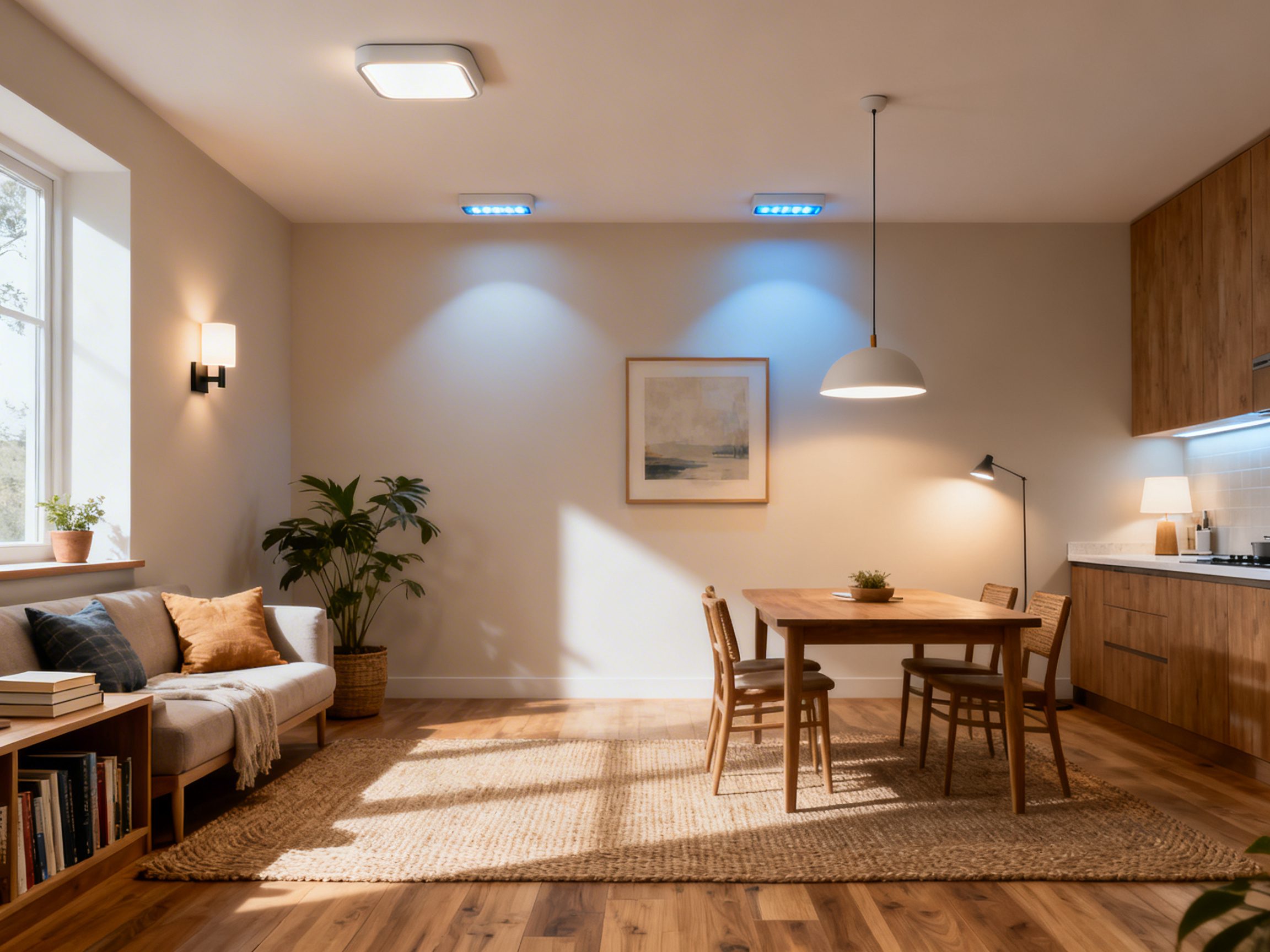
Without dimming, even gorgeous fixtures feel one-note and fatiguing. I specify dimmers on almost every circuit, because the real luxury is sculpting light level to match mood, task, and time. Smart controls take this further, automating scenes so you stop micromanaging switches.
Picking the right dimming standard
Match your LED bulbs to the dimmer type, since incompatibility causes flicker and dropout. For retrofit work, forward or reverse phase wall dimmers are fine, though many LEDs behave better on reverse phase.
New builds should consider 0–10 V or DALI for smoother low-end dimming, especially in kitchens and media rooms.
| Control Type | Best For | Pros | Watch-outs | Budget (per zone) |
|---|---|---|---|---|
| Wall dimmer, triac | Retrofits, table/floor lamp circuits | Low cost, easy install | Possible LED flicker, limited low-end range | $25–$90 |
| Reverse phase ELV | Modern LED fixtures | Smoother dimming, quieter drivers | Needs neutral, check compatibility | $60–$150 |
| 0–10 V | New builds, large spaces | Excellent low-end control | Extra low-voltage wiring required | $120–$300 |
| Smart switches/hubs | Whole-home scenes | Automation, remote control, schedules | Ecosystem lock-in, network setup | $80–$250 |
Scene recipes that actually work
I build four universal scenes: Morning, Work, Dinner, and Wind Down. Morning lifts kitchens and bathrooms to 70 percent at 3000 K, Work isolates task zones while keeping the ambient low.
Dinner warms pendants to 2200–2700 K at 40 percent, and Wind Down caps everything at 20 percent with table lamps on. Keep scenes simple and named by feeling, not rooms, or you will never use them.
Sensor logic and circadian schedules
Motion sensors belong in hallways, pantries, and kid zones where hands are full and lights get left on. Tie schedules to local sunset, so living areas automatically ease from 3000 K to 2700 K, then 2200 K before bed, a strategy echoed by many 2026 lighting trend roundups.
If you prefer manual control, at least create a single-button “All Off” by the bedroom door.
Integration details that save headaches
Confirm your bulbs are dim-to-warm if you plan warm scenes, otherwise Kelvin will stay fixed and only brightness will change.
Group fixtures by function, not by wall, so one scene can lower all glare-prone downlights while keeping sconces cozy. Label switches cleanly, and document loads and drivers for future upgrades, you will thank yourself later.
Materials and finishes that feel timeless 2026
Metals that age well, not date fast
In my experience, the safest metals are those that patinate gracefully and mix without shouting. Unlacquered brass, antique brass, and soft bronze read warm and classic, while brushed nickel or stainless keeps kitchens and baths calm.
Avoid ultra-yellow brass and mirror chrome in multiples, they highlight every fingerprint and feel trend led unless used sparingly.
Glass, stone, and natural fibers for layered tactility
I continually see clients underestimating the power of shade material to soften light. Opal glass and parchment diffuse glare beautifully, while clear ribbed or prismatic glass throws elegant patterns without harshness.
Stone bases, like travertine or marble, ground a lamp visually, and woven rattan or linen shades bring air and warmth that still look fresh in five years.
Finish combinations that mix across rooms
To keep a whole home coherent, I cap the palette at two primary metals and one accent texture. For example, antique brass with blackened steel, plus linen shades, moves comfortably from living room to bedroom.
If your hardware is chrome heavy, counter it with warm shades and natural stone to prevent the space from feeling cold.
Durability, maintenance, and glow quality
Timelessness is not only a look, it is how the finish holds up when touched daily. Unlacquered brass improves with use, while powder coated black resists scratches better than cheap paint.
Most importantly, pair finishes with the right diffuser, brass with opal glass or linen gives a forgiving, flattering glow that I rely on for evening light.
| Material/Finish | Best Use | Why It Endures | Maintenance | Pair With |
|---|---|---|---|---|
| Unlacquered/Antique Brass | Living, dining, entry | Warm patina, classic profiles | Occasional polishing, patina acceptable | Opal glass, linen, marble |
| Oil-Rubbed/Bronze | Bedrooms, cozy dens | Soft contrast, not shiny | Low, wipe with dry cloth | Parchment shades, alabaster |
| Brushed Nickel/Stainless | Kitchens, baths | Clean lines, plays well with appliances | Low, resists water spots | Etched glass, linen drum |
| Blackened Steel | Modern hallways, dining | Graphic but quiet, frames forms | Low, touch up as needed | Opal globes, rattan shade as accent |
| Travertine/Marble Bases | Table and floor lamps | Visual weight, longevity | Seal if porous, gentle clean | Linen shades, warm LEDs |
| Linen/Parchment Shades | Bedrooms, living rooms | Soft diffusion, timeless silhouette | Vacuum with brush, replace liners as needed | Brass, bronze, stone |
Where to lean, trend versus classic?
Keep pendants and hardwired fixtures classic since they are costly to swap, choose brass, bronze, or nickel with simple silhouettes. Use trendier moves in portable lamps or shades, try a pleated stripe or ribbed glass that can be updated later.
Budgeting your lighting plan room by room
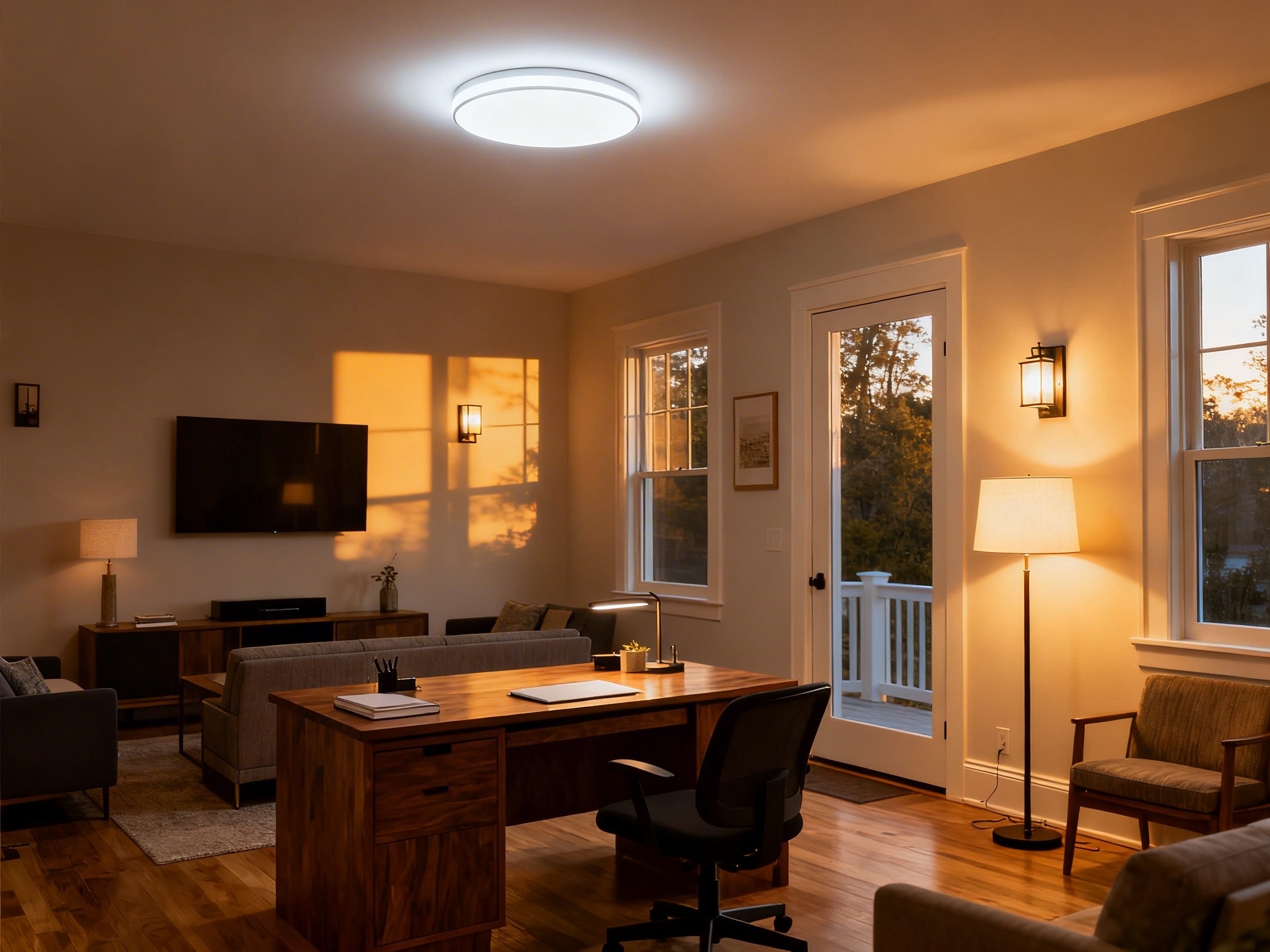
Start with priorities, not fixtures
I budget by task first, then fill with ambient and accent. Kitchens and baths get the largest share because precision lighting matters most there, living and bedrooms follow with layered dimmable sources.
Finally, I reserve 10 to 15 percent for decorative moments, like a sculptural sconce in the hall that makes daily life feel considered.
Suggested budget allocation by room type
Below is how I typically apportion a whole home lighting budget. Adjust for home size and renovation scope, but the ratios keep function and mood in balance.
| Space | % of Total Lighting Budget | Typical Fixture Mix | Notes |
|---|---|---|---|
| Kitchen | 20–25% | Ceiling grid or track, island pendants, under-cabinet | Quality dimmable drivers, high CRI 90+ LEDs |
| Primary Bath | 12–15% | Vanity sconces, overhead ambient, shower-rated recessed | 2700K to 3000K, avoid downlights only at mirror |
| Living Room | 12–15% | Ceiling ambient, floor lamps, table lamps, picture lights | Layered circuits with dimmers |
| Dining Room | 8–10% | Centerpiece pendant or chandelier, wall wash | Oversize one focal piece, 2700K for warmth |
| Primary Bedroom | 8–10% | Soft overhead, bedside sconces, portable lamps | Follow 2026 bedroom trend of mixed sources for wind down |
| Secondary Bedrooms | 6–8% | Ceiling ambient, bedside lamps | Keep scalable, add dimmers later |
| Entry/Hall/Stairs | 6–8% | Flush mounts, step lights, decorative sconces | Safety and welcome lighting |
| Outdoor | 8–10% | Wall lanterns, path lights, soffit wash | Wet rated, consider holiday flexibility |
| Home Office | 5–6% | Task lamp, ceiling ambient, backlight | 3000–3500K for alertness, low glare |
Fixture cost tiers and where to spend or save
Spend where aiming, task, and comfort are critical. Save on decorative shades and simple flush mounts in secondary spaces.
I upgrade drivers, dimmers, and color rendering first because poor control makes even beautiful fixtures feel cheap.
| Category | Save Tier (Approx.) | Invest Tier (Approx.) | Decision Criteria |
|---|---|---|---|
| Kitchen Under-Cabinet | $40–$80 per bar | $120–$250 per bar | Look for CRI 90+, flicker free, good diffusion |
| Pendants/Chandeliers | $150–$500 | $800–$2,500+ | Invest in primary focal points, quality finishes |
| Bathroom Sconces | $120–$250 | $300–$900 | Even face illumination, damp rating, durable finish |
| Recessed/Downlights | $35–$80 per can | $120–$220 per can | High CRI, tight beam control, quiet trim |
| Portable Lamps | $60–$180 | $250–$900 | Spend for statement bases, save on simple readers |
Room-by-room line items and quantities
When clients ask why the lighting adds up, it is usually quantity. Kitchens need layers, bedrooms require at least three sources, and halls multiply fixtures quickly. Use this simple estimating grid to sanity check plans.
| Room | Typical Quantity | Unit Cost Range | Subtotal Range |
|---|---|---|---|
| Kitchen | 6–10 fixtures total | $60–$600 | $1,000–$4,000 |
| Primary Bath | 4–6 fixtures | $80–$900 | $800–$3,000 |
| Living Room | 4–7 fixtures | $80–$1,500 | $900–$4,500 |
| Dining Room | 1–3 fixtures | $200–$2,500 | $300–$3,500 |
| Primary Bedroom | 4–6 fixtures | $60–$900 | $500–$2,500 |
| Entry/Hall | 3–8 fixtures | $60–$600 | $400–$3,000 |
| Outdoor | 4–10 fixtures | $80–$500 | $600–$3,500 |
Controls, installation, and hidden costs
Add 15 to 25 percent for controls and electrical labor, more for plaster or stone walls. Smart dimmers, neutral wire requirements, and low voltage drivers can nudge labor up, so confirm early with your electrician. I always include spare shades and one extra driver for critical zones to avoid long lead time headaches.
Seasonal and decorative flex
If you decorate seasonally, plan for swappable lamps or cordless pieces on consoles and porches. It is cheaper than rewiring, and it keeps evening rituals pleasant.
You can pair this with ideas from 17 Home Decor Trends You’ll See Everywhere This Year.
FAQ
Limit to two core metals plus one accent texture. Repeat each at least twice per floor so it looks intentional.
Use 2700K in living and bedrooms for warmth, 3000K in kitchens and offices for clarity. Keep it consistent within each room.
Dimmers in the living room, dining, and primary bedroom first. Add a kitchen island and under-cabinet next for task to mood flexibility.
Yes for shelves, small consoles, and rental spaces where outlets are awkward. Choose models with 3 step dimming and replaceable batteries.
Final Thoughts
Timeless finishes and a disciplined budget are the backbone of a lighting plan that endures. Spend where performance meets daily touch, then let texture and shade choice refine the glow. If you plan the layers, the home will feel considered from breakfast to bedtime.