


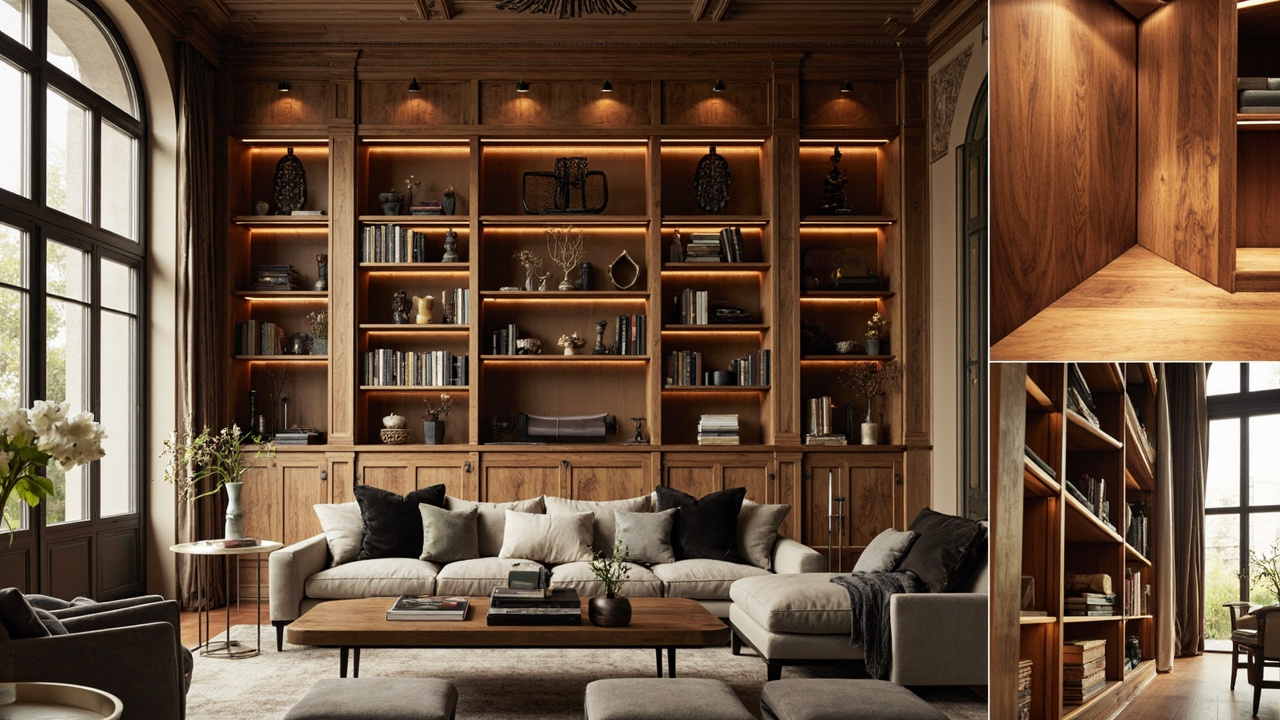
Built-ins transform awkward nooks into purposeful storage without needing a pro. These three starter projects focus on mudroom and entryway solutions that balance function with a clean, custom look — great for renters with permission or homeowners ready to commit.
Each idea includes simple construction notes and styling tips so you can match finishes to farmhouse, boho, or minimalist schemes. Use the build as a base: tweak shelf spacing, add cubbies, or swap hardware to make the piece yours.
- 1. Built-In Mudroom Storage Bench
- 2. White Mudroom Wall Cabinet
- 3. Beadboard Entryway Bookcase
- 4. Armoire-Style Entryway Unit
- 5. Built-In Beach House Shelving
- 6. Bathroom Built-In Vanity Storage
- 7. Bookshelves Around Doorway
- 8. Custom Pantry Dishware Shelves
- 9. Built-In Shelves With Bench
- 10. Built-In Shelving For Nooks
- 11. Tall Built-In Display Cabinets
- 12. Integrated Window Seat Bookcase
- Final Thoughts
- FAQ
1. Built-In Mudroom Storage Bench
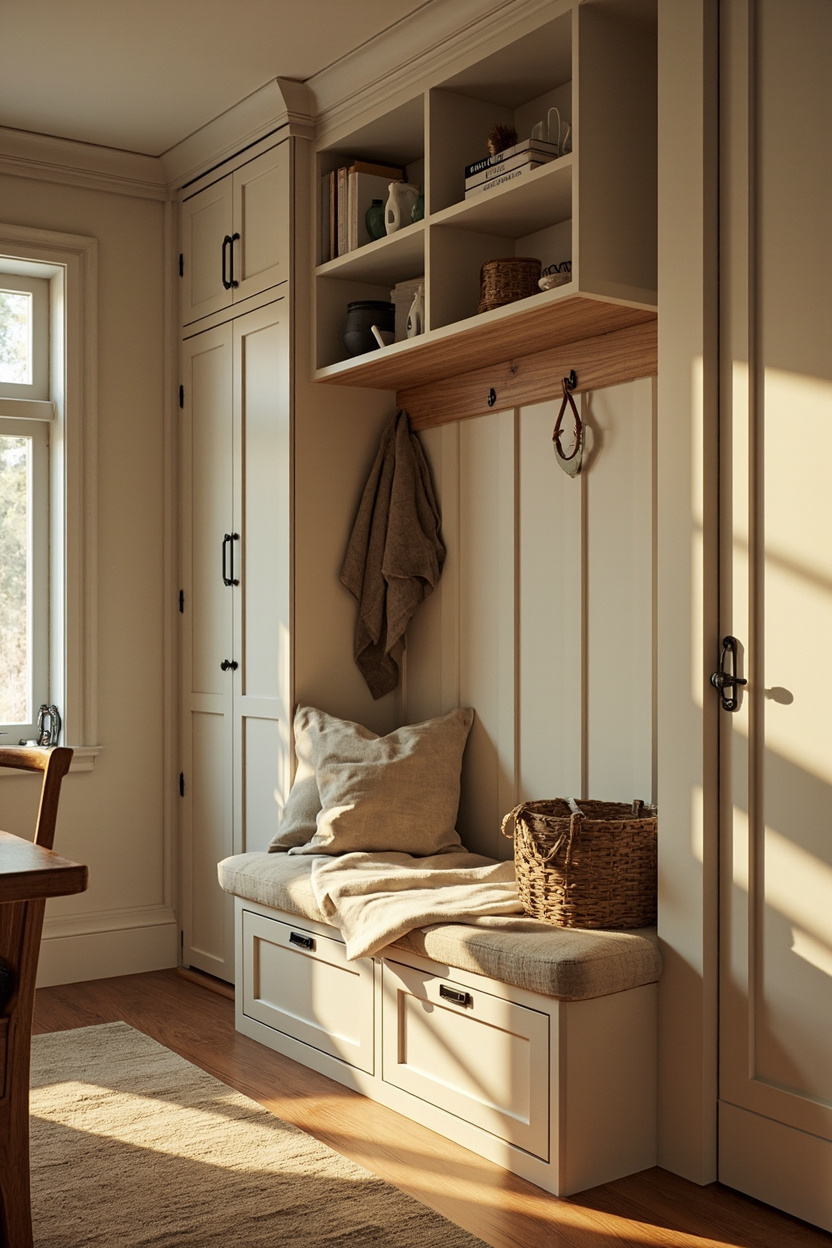
A mudroom bench with built-in storage combines seating and shoe or gear organization in one compact unit. Frame the bench from simple 2x framing with a plywood seat and add cubby dividers for baskets to keep the area tidy and kid-ready.
Finish with beadboard or a shiplap face for visual interest and a cushioned seat for comfort. Paint the exterior to coordinate with a farmhouse kitchen or add rustic hooks above to create a cohesive entry zone.
2. White Mudroom Wall Cabinet
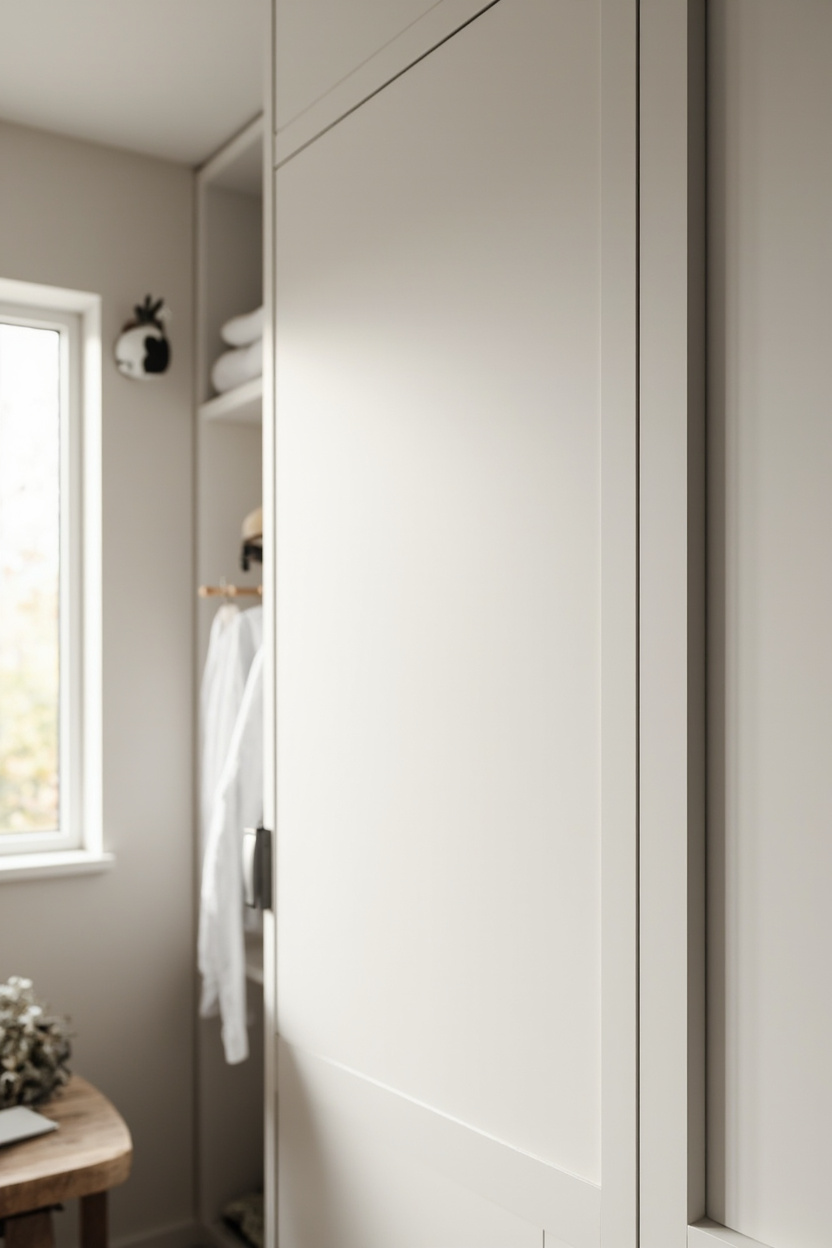
A white wall cabinet brightens entry spaces while freeing floor area beneath; mount a shallow cabinet above a bench or along a hallway for out-of-season storage. Use simple shaker doors and adjustable shelving so the cabinet adapts as needs change.
Choose semi-gloss white for easy cleaning and pair with brass or matte black pulls to update a traditional look. For boho-inflected homes, layer woven baskets inside and add open shelving below to display plants or baskets from a Boho Home Decor palette.
3. Beadboard Entryway Bookcase
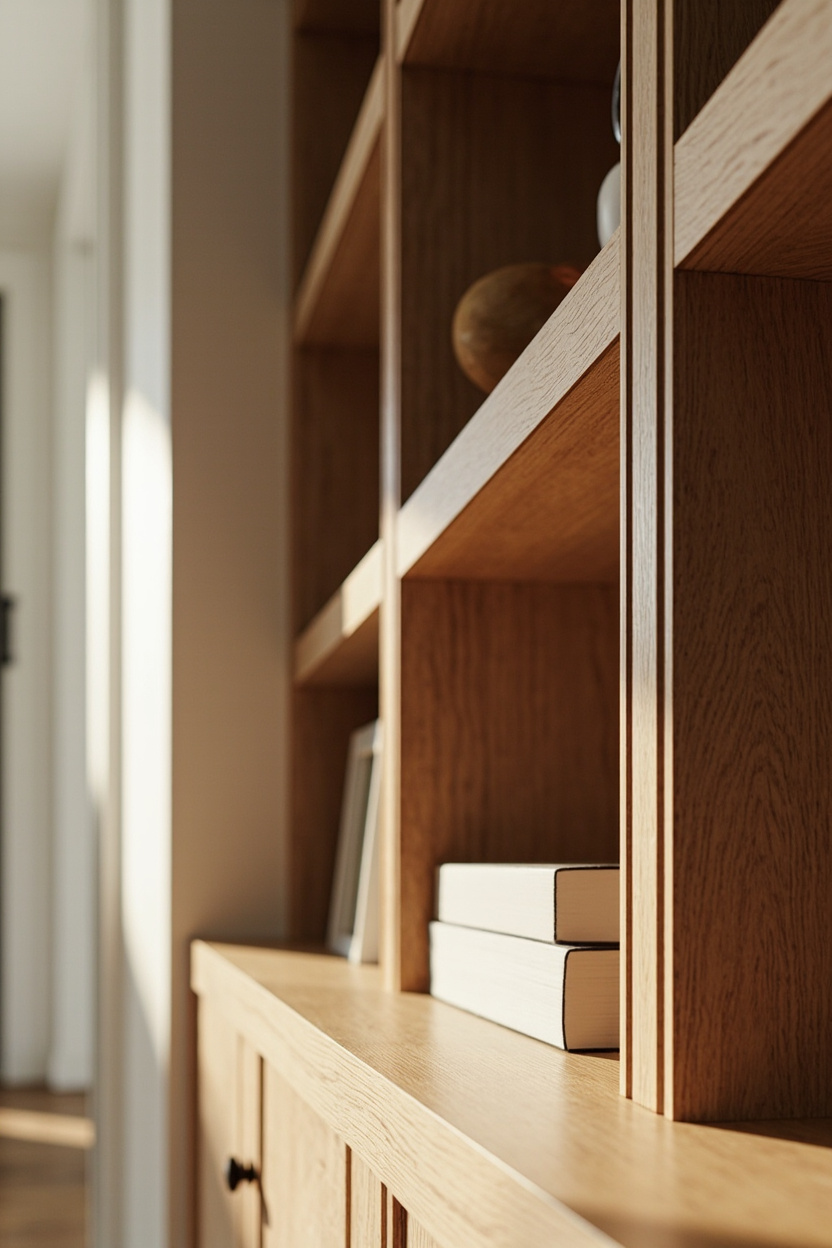
Beadboard bookcases bring texture and a custom built-in feel to narrow entryways; run beadboard backer panels and frame with tall side jambs for a furniture-like presence.
Combine open shelves for display with lower cabinets for concealed storage to balance aesthetics and function.
Keep shelf heights varied to accommodate tall vases, art, or a stack of seasonal books; stain or paint the trim for contrast. This treatment echoes classic Old Farmhouse charm and pairs well with farmhouse hooks or a woven runner.
4. Armoire-Style Entryway Unit
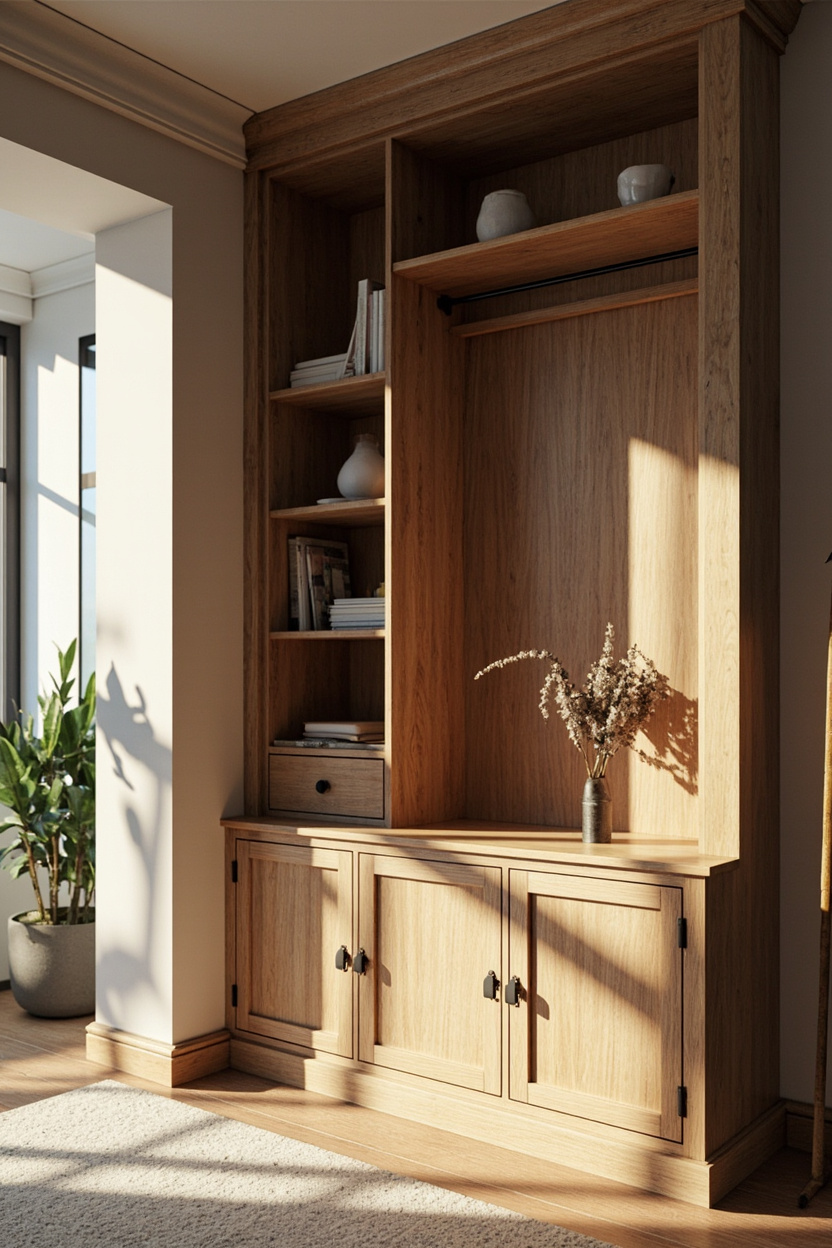
An armoire-style built-in creates a tidy, furniture-like focal point for an entryway while hiding clutter behind doors.
Frame the unit to floor and ceiling, add a bench at hip height, and fit full-height doors for coats and seasonal gear to keep the space streamlined and easy to maintain.
Incorporate hooks and a mix of open cubbies and closed drawers so small items have dedicated homes and the look reads custom. Choose a durable finish and hardware that complements nearby moldings to make the piece feel integrated rather than added later.
5. Built-In Beach House Shelving
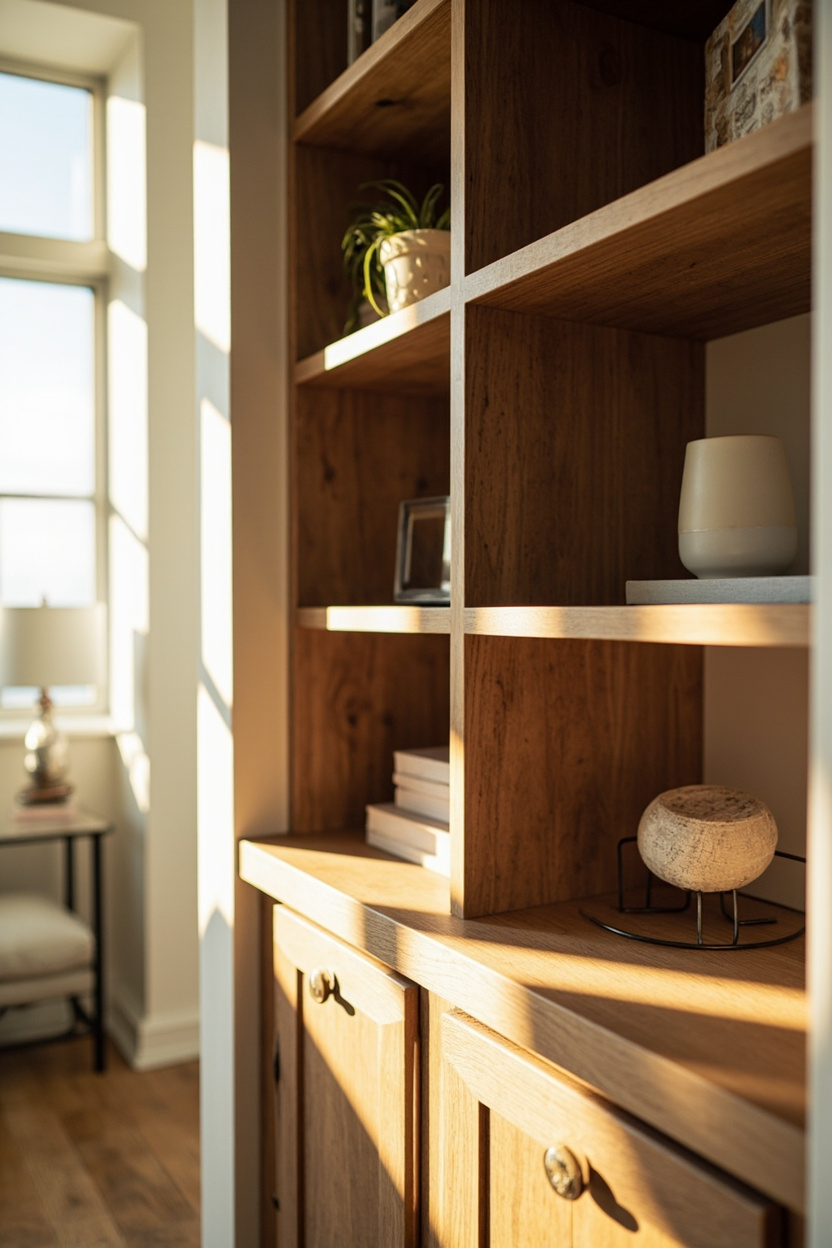
Beach house built-ins lean light and airy: use beadboard backing, open shelving, and a soft white or sand tone to showcase shells, glassware, and landscape prints.
Keep shelf depths shallow near high-traffic corridors and vary shelf heights to accommodate tall driftwood sculptures and stacks of coastal coffee-table books.
Use moisture-resistant materials and finishes if the home is near the water, and consider inset lighting to prevent sun-fade on delicate items. For a relaxed vibe, mix in woven baskets and a few closed cabinets to hide less photogenic storage.
6. Bathroom Built-In Vanity Storage
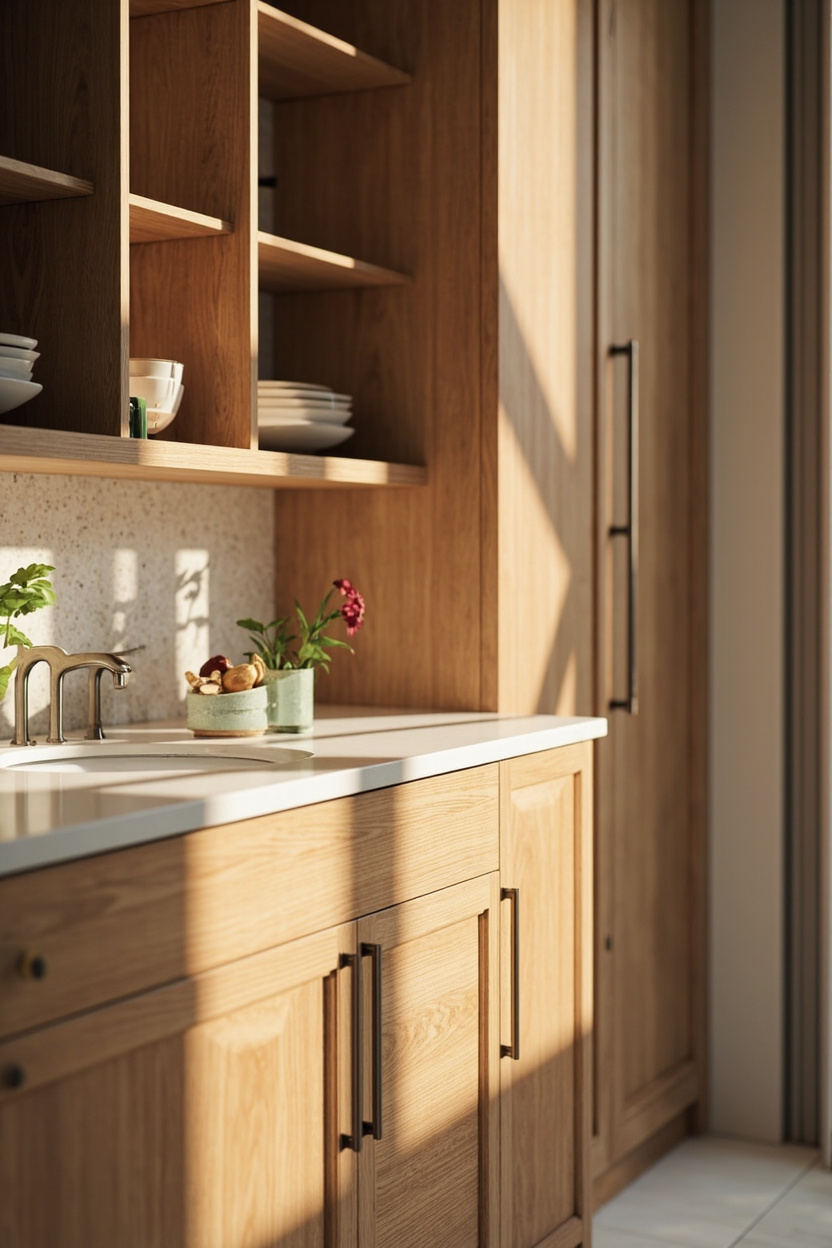
Built-in vanity storage transforms cramped bathrooms by maximizing every inch of wall space with shallow cabinets, open shelving for towels, and recessed niches for toiletries.
Plan pull-out trays and divided drawers for grooming tools and cosmetics to keep counters clear and daily routines efficient.
Match the vanity’s face frame to existing millwork and seal all surfaces against moisture to ensure longevity. If space allows, integrate a tall linen cabinet or recessed medicine cabinet to centralize storage without encroaching on floor area.
7. Bookshelves Around Doorway
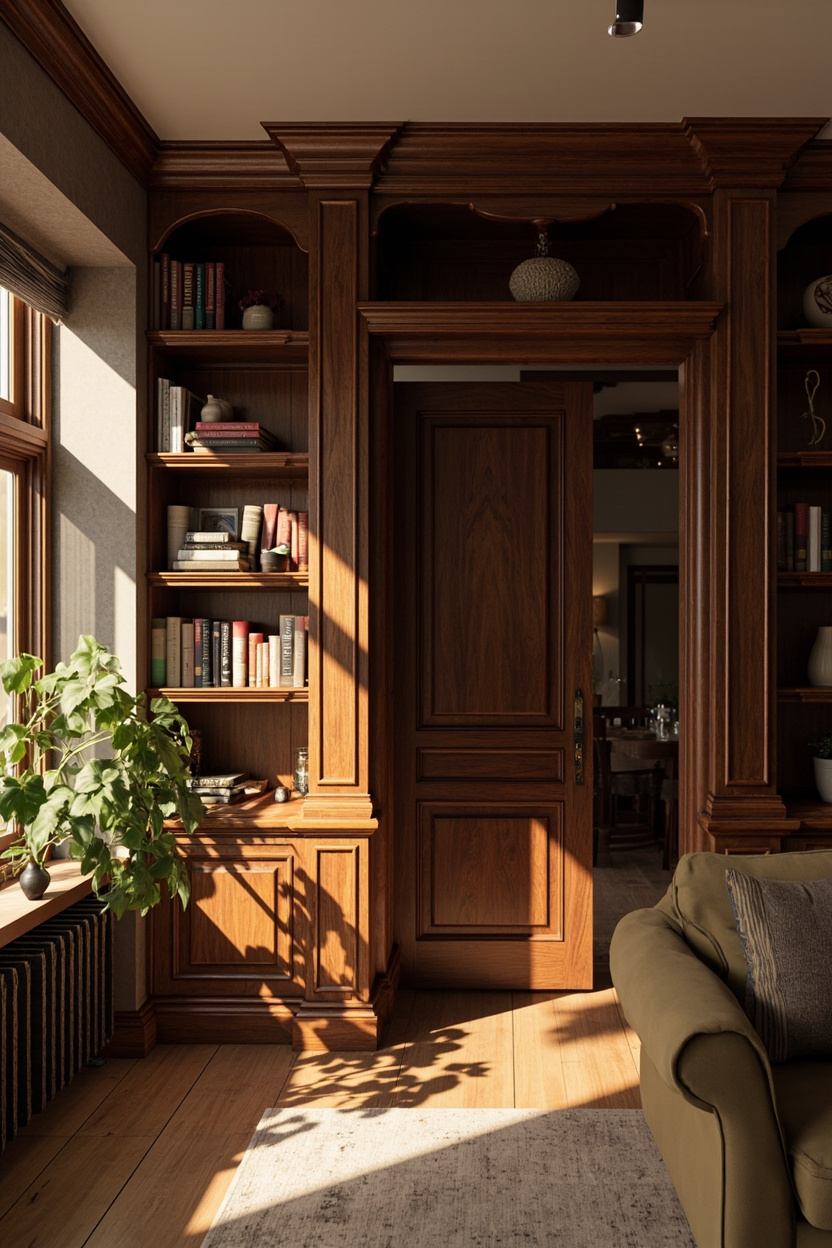
Framing bookshelves around a doorway turns awkward wall space into smart storage while keeping traffic flow clear. Use a simple header and matching trim to make the shelves read as a built-in architectural element rather than add-on furniture.
For a straightforward DIY, build narrow adjustable shelves on either side and cap them with a continuous top shelf to unify the opening; paint the whole assembly the wall color for a custom, seamless look.
This approach is great for displaying books and rotating decor without crowding the doorway.
8. Custom Pantry Dishware Shelves
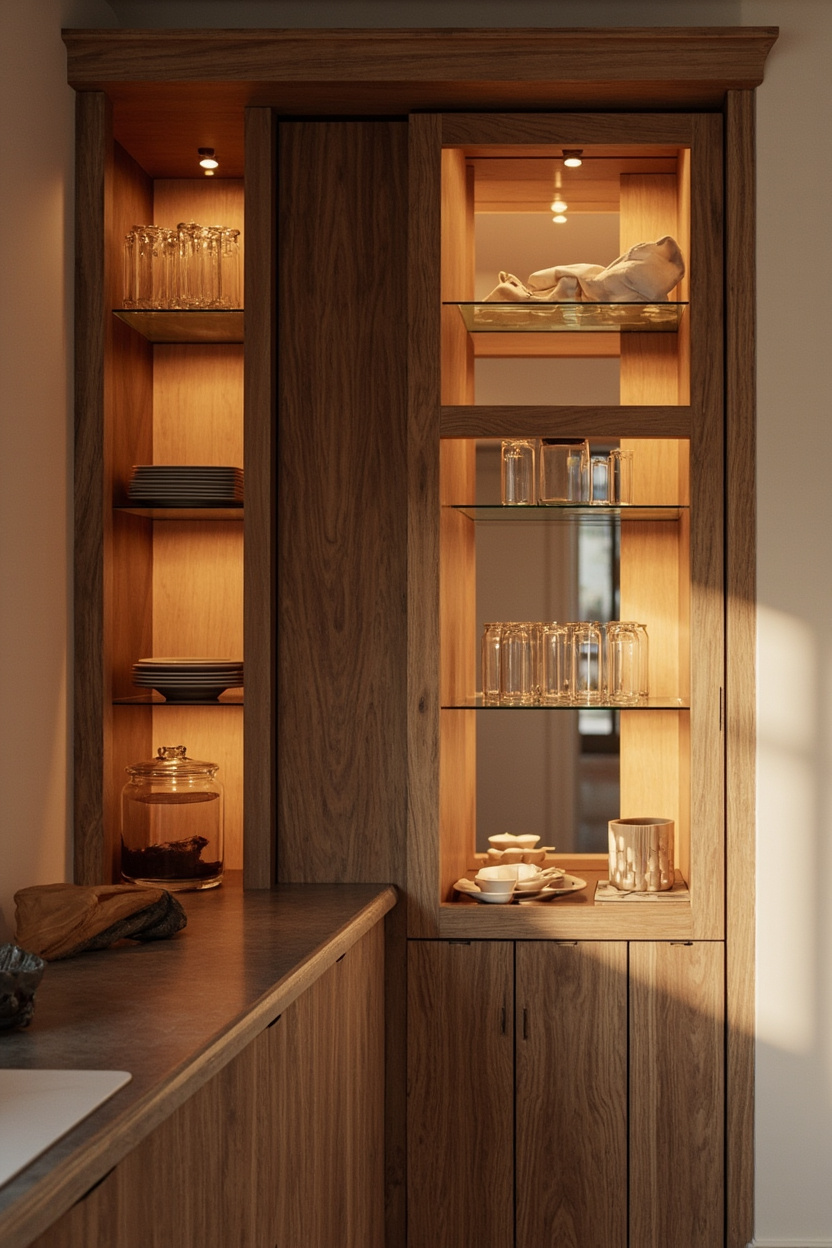
Convert pantry dead space into tailored dishware storage by adding shallow built-in shelves sized to plates, bowls, and serving pieces. Fixed shelves at standard dish heights reduce shifting, while integrating pull-out trays or risers keeps fragile items accessible and visible.
Use plywood faced with solid wood trim for a sturdy, inexpensive solution that you can finish to match kitchen cabinetry; seal with a durable paint or lacquer where humidity is a concern.
For farmhouse or cottage kitchens, styling these shelves with open-access dishware makes the pantry feel curated and practical—pair with pantry organization strategies to maximize capacity.
9. Built-In Shelves With Bench
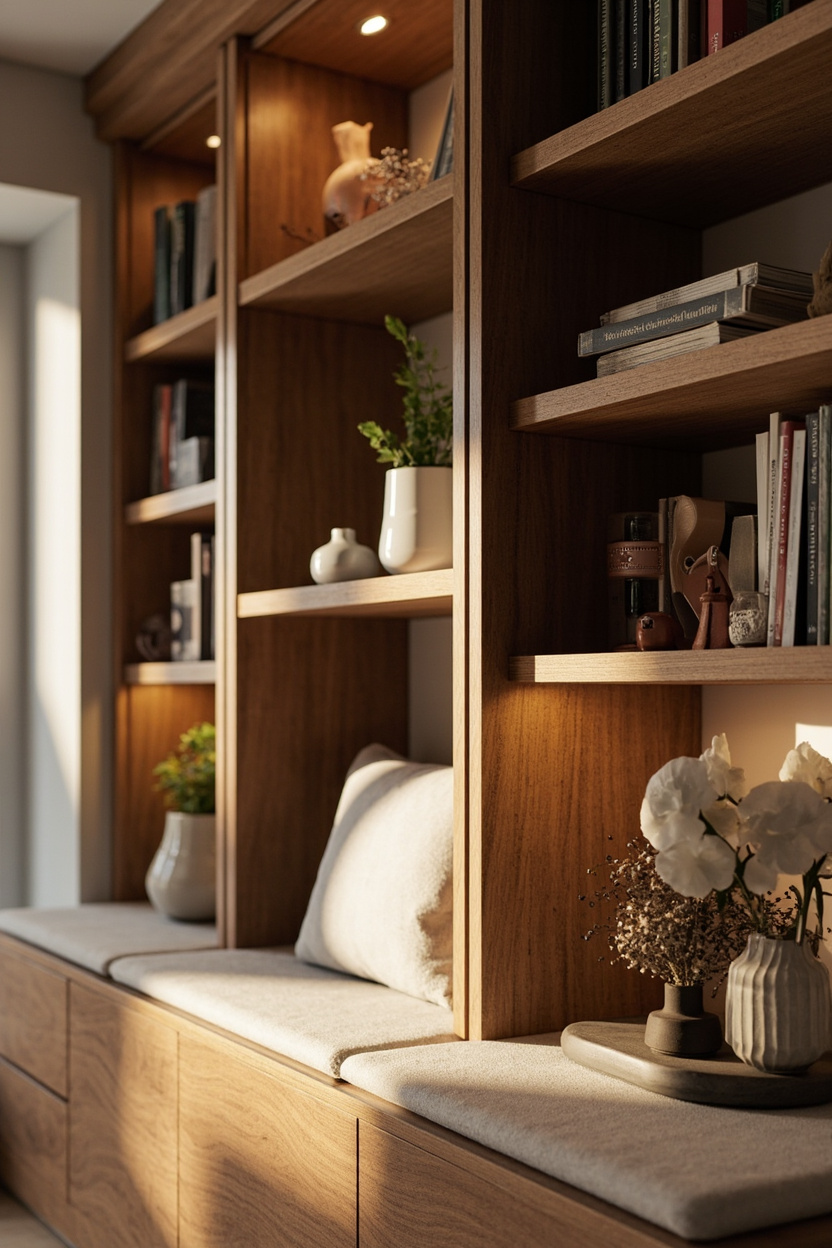
Combining lower storage bench seating with upper built-in shelves creates a multifunctional entryway or reading nook that works in small homes. Build a framed bench with interior cubbies or drawers for shoes and baskets, then extend vertical uprights into shelving that’s either open or behind cabinet doors.
Choose beadboard or shiplap backing and a cushioned seat to add warmth and comfort; painting the unit one tone ties it into adjacent millwork for a cohesive look.
This hybrid unit is especially useful in mudrooms and entries where you want seating, storage, and display in one compact footprint. Consider durable finishes to handle daily use.
10. Built-In Shelving For Nooks
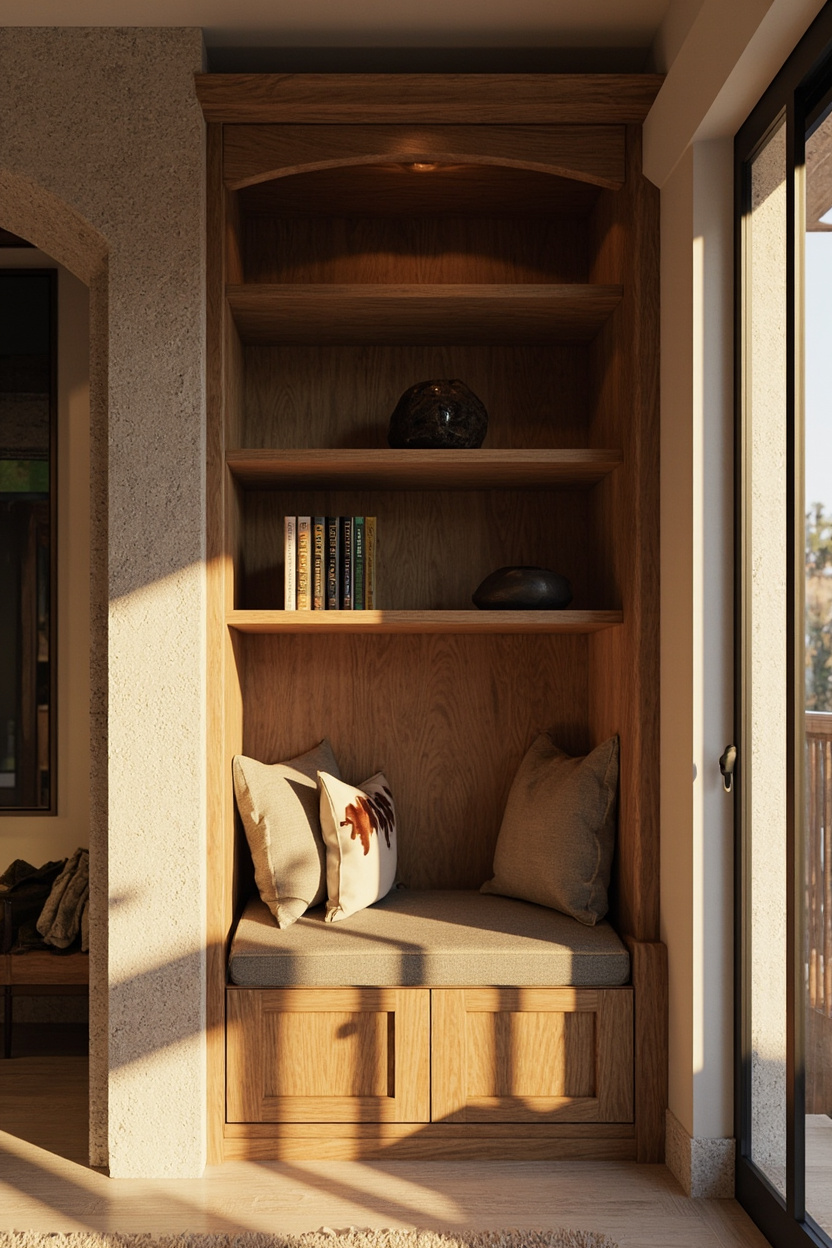
Built-in shelving tailored to awkward nooks turns wasted space into a high-impact display or storage zone. Measure carefully, use thin plywood backing to maximize depth, and stagger shelf heights so books, baskets, and decorative objects coexist without looking crowded.
If you’re comfortable with a circular saw and pocket-hole jig, a simple face-frame kit with adjustable shelf pins gives the flexibility to change layouts as needs evolve.
Pair painted millwork with a contrasting wall color to make the niche read as intentional architecture rather than an afterthought.
11. Tall Built-In Display Cabinets
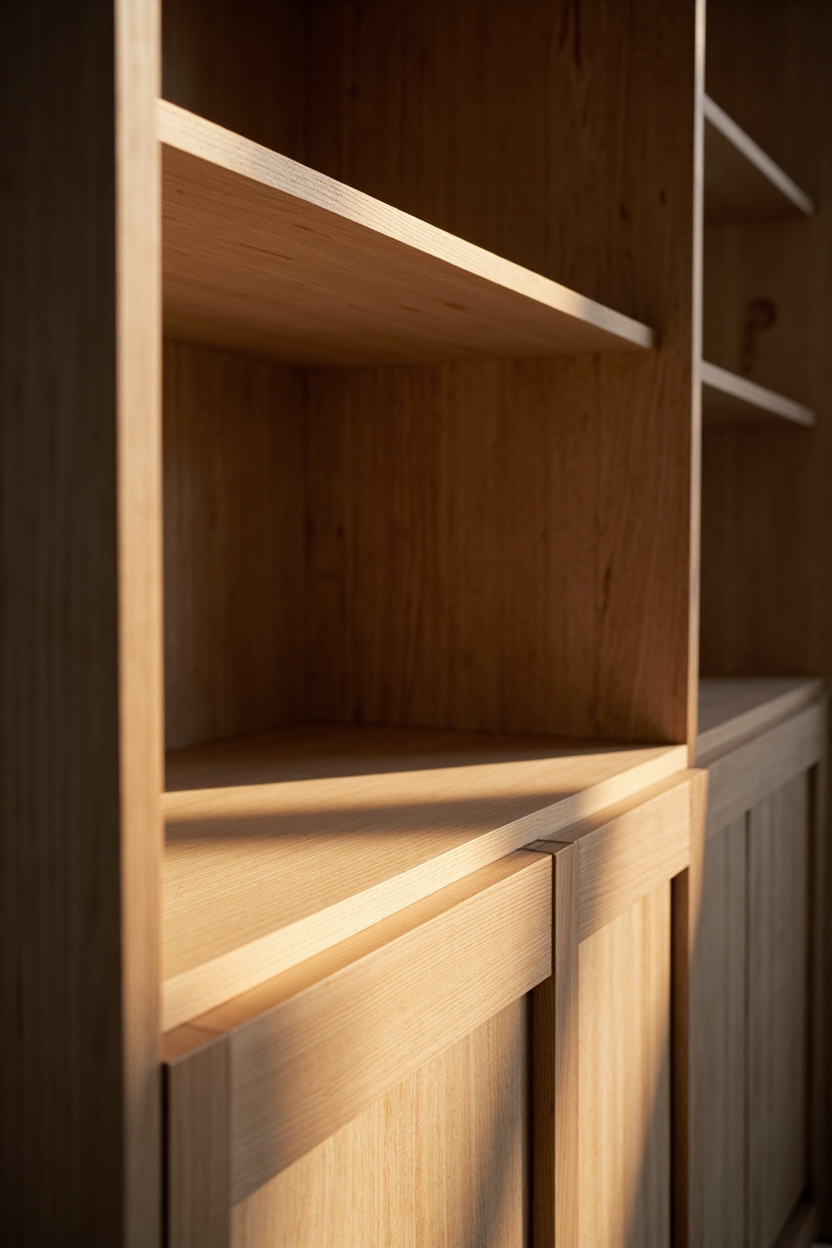
Tall built-ins create a dramatic vertical presence and are ideal for showcasing ceramics, framed photos, or a curated book collection; plan internal lighting or glass-front doors to protect fragile pieces.
Use plywood carcasses with solid wood face frames for durability, and add crown molding to blend the cabinet tops into existing millwork for a custom look.
For beginners, break the build into stacked modules, base cabinets, middle shelving, and upper crowns—so you can assemble and level each section independently.
Consider adjustable shelving and concealed hardware to keep lines sleek while still offering functional versatility.
12. Integrated Window Seat Bookcase
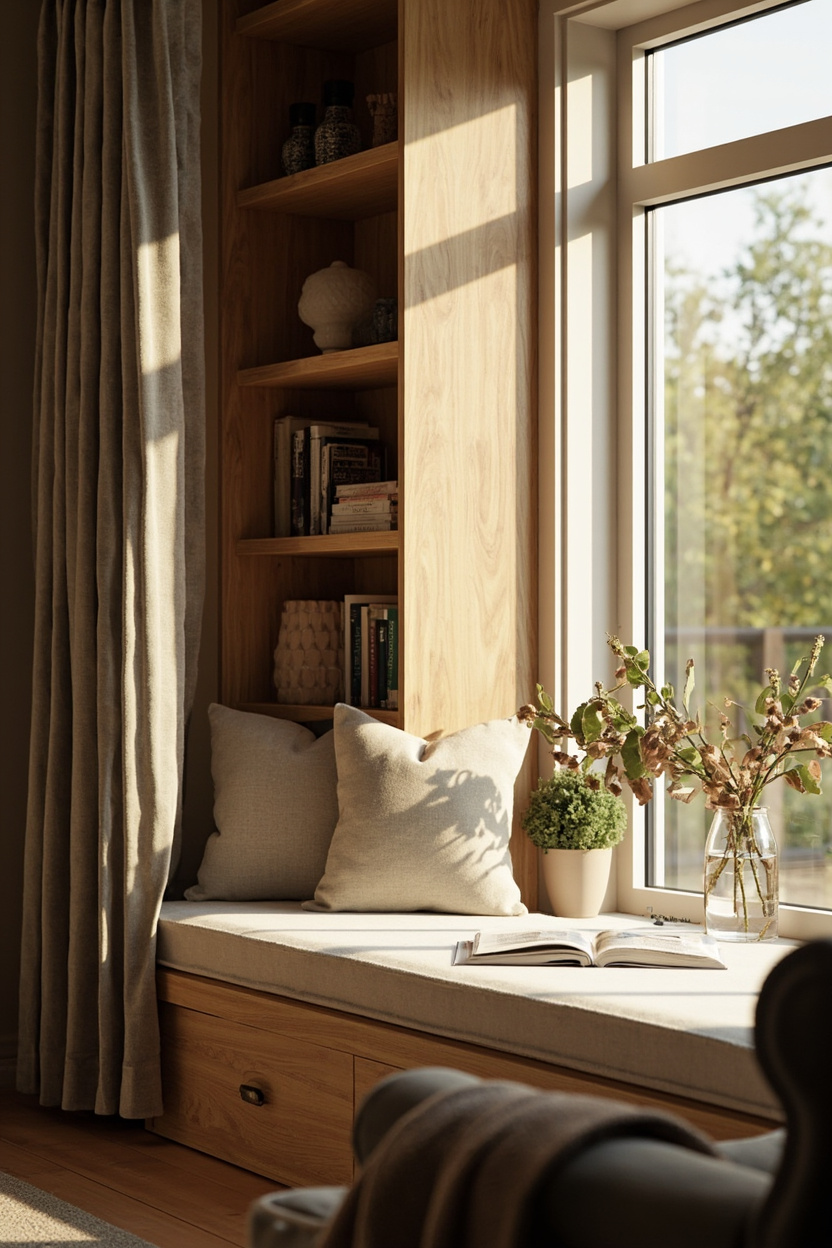
Combining a window seat with bookcase storage maximizes function and creates a cozy reading alcove; design the bench with a shallow storage compartment or deep drawers beneath for blankets and board games.
Reinforce the bench with a hidden cleat system and use seat cushions with removable covers for easy laundering and seasonal updates.
Place lower cubbies at kid-friendly heights and reserve upper shelves for less-used items or decorative displays to maintain a tidy everyday appearance. Integrating trim that matches your window casing makes the unit feel built-in rather than furniture added later.
Final Thoughts
Well-planned built-ins transform storage, scale, and style in any room while adding long-term value.
Start with accurate measurements, choose materials that balance budget and durability, and break projects into manageable steps so even first-time builders can achieve a polished result.
FAQ
A circular saw or table saw, a drill/driver, a level, a stud finder, and clamps cover most basic builds; a pocket-hole jig and router are helpful but not mandatory.
Most interior built-ins don’t require permits, but check local codes if you alter structural walls, add electrical lighting, or significantly change egress paths.
Use painted MDF or birch plywood for visible faces, add simple trim and baseboard to blend with existing millwork, and invest labor in precise gaps and caulking rather than expensive materials.
Yes—build free-standing, anchored units that sit against the wall and are secured with brackets into studs; keep finishes reversible to ease removal.