


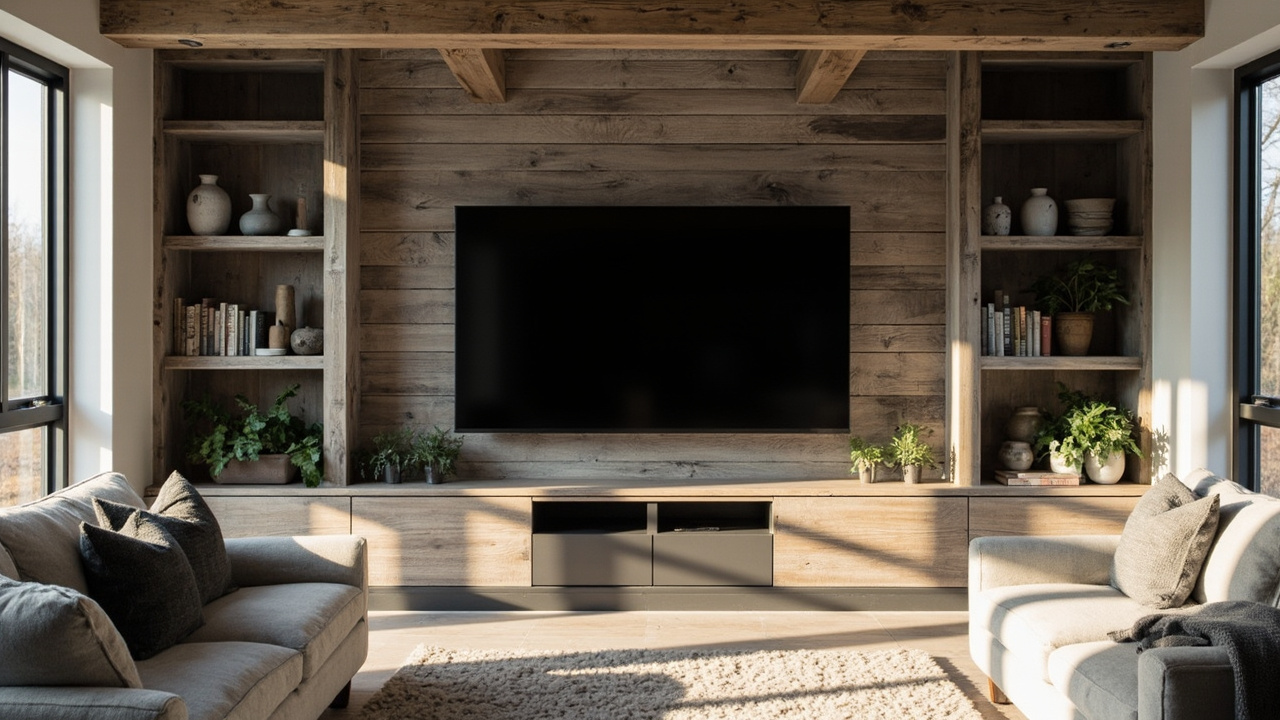
Create a TV wall that feels like part of the room, not an afterthought. These farmhouse ideas focus on proportion, texture, and placement so the screen reads as a designed element, think reclaimed wood, balanced negative space, and a deliberate mix of antique and modern finishes.
Use scale first: choose a TV size that leaves at least 6–12 inches of visible wall on each side in standard living rooms, or mount it above a low credenza for a built-in look.
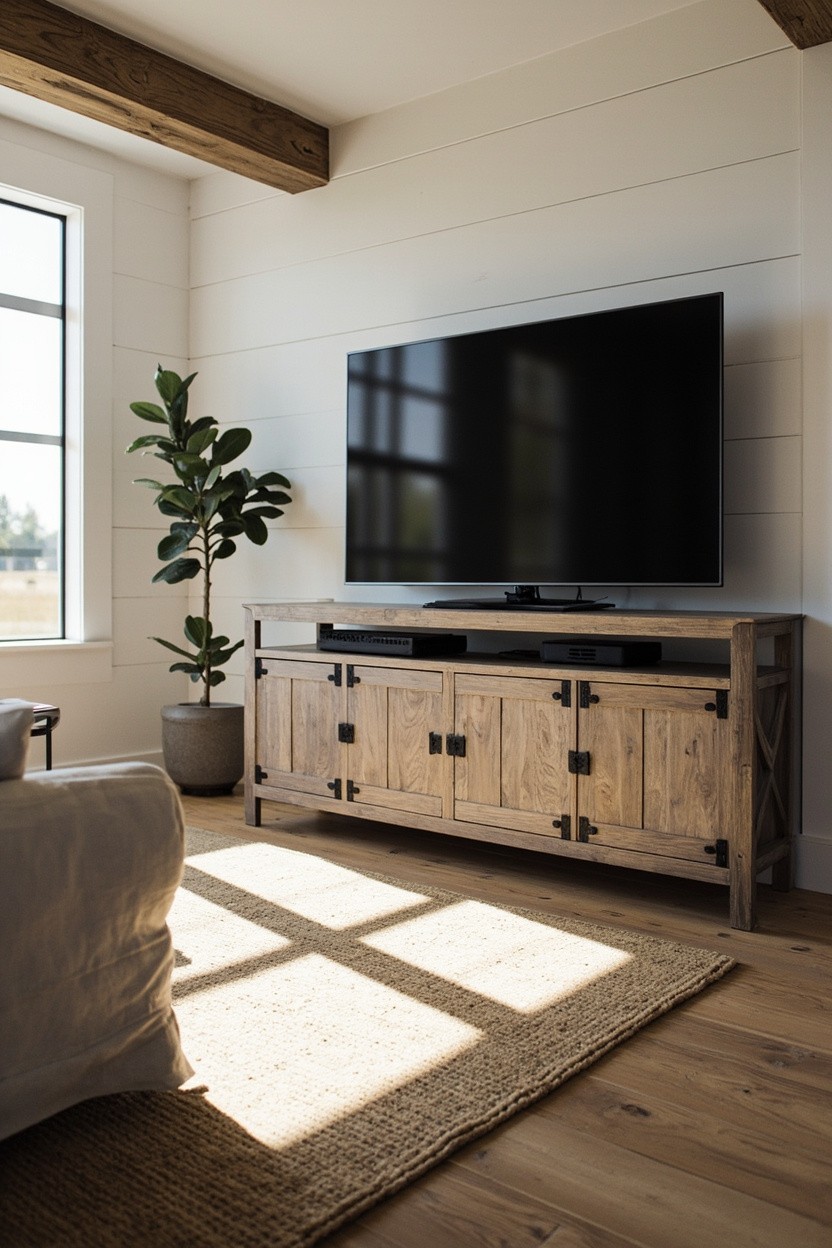
For finishes, pair matte black or oil-rubbed bronze brackets with reclaimed pine or painted shiplap to avoid glare and to read cohesively from the seating area.
- 1. Farmhouse TV Wall Styling Essentials
- 2. Centering Your TV with Rustic Mantels
- 3. Oversized Wall Clock Above TV
- 4. Symmetrical Floating Shelves Flanking TV
- 5. Layered Gallery Wall and TV Combo
- 6. Textured Shiplap Backdrop Ideas
- 7. Neutral Palette with Warm Accents
- 8. Woven Baskets as Decorative Storage
- 9. Antique Mirrors to Brighten Space
- 10. Built‑in Cabinets for Hidden Tech
- 11. Soft Lighting: Sconces and Pendants
- 12. Mixing Vintage and Modern Pieces
- FAQ
- Final Thoughts
1. Farmhouse TV Wall Styling Essentials
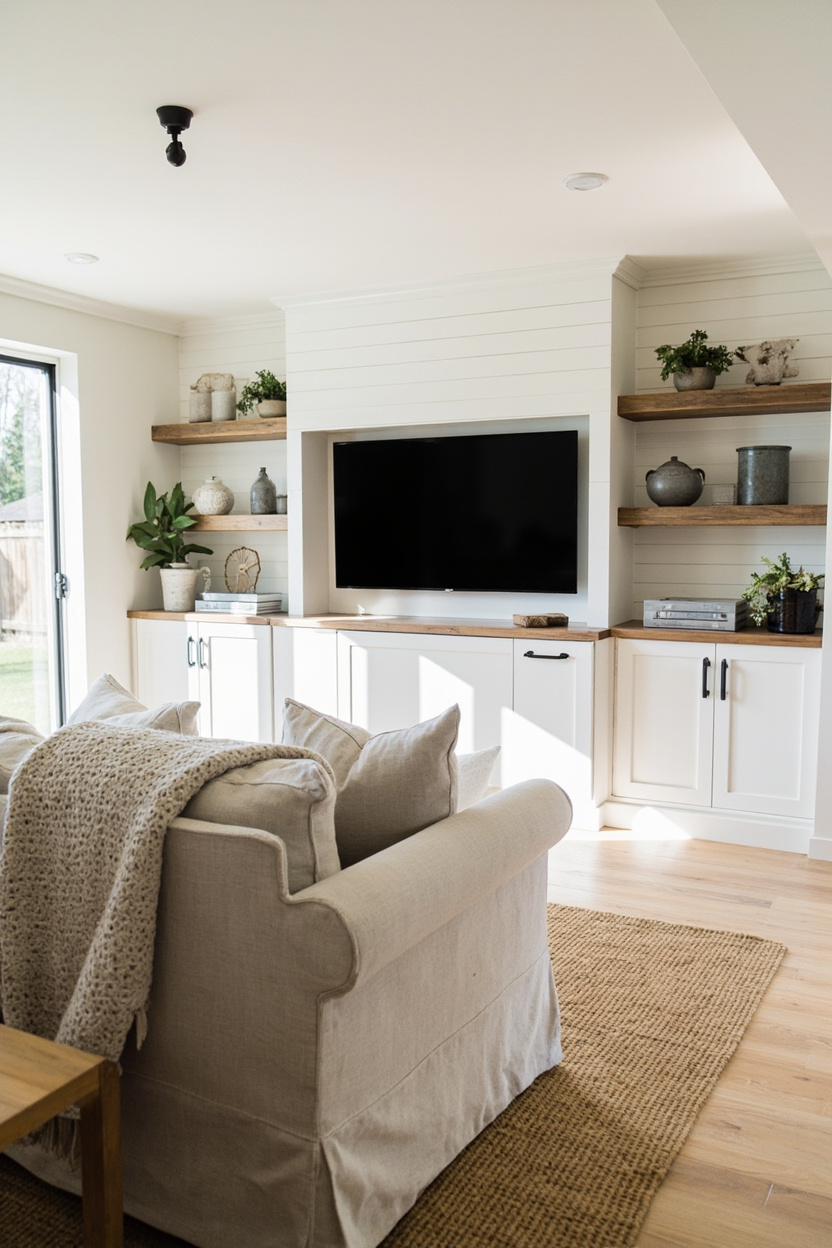
Start with a neutral textured backdrop board-and-batten, shiplap, or a lime-washed plaster—to give the TV a grounded frame. Keep the surround color within two tones of your sofa to maintain visual continuity; paint the wall one shade darker than adjacent walls for subtle contrast without isolating the screen.
Anchor the TV with low furniture: a 28–34 inch-high console or a built-in bench keeps the viewing axis comfortable and creates room for styling. Use hidden-cord channels and a wireless AV hub behind the cabinet to keep the face of the unit clean; cluttered shelves are the most common mistake in farmhouse TV styling.
2. Centering Your TV with Rustic Mantels
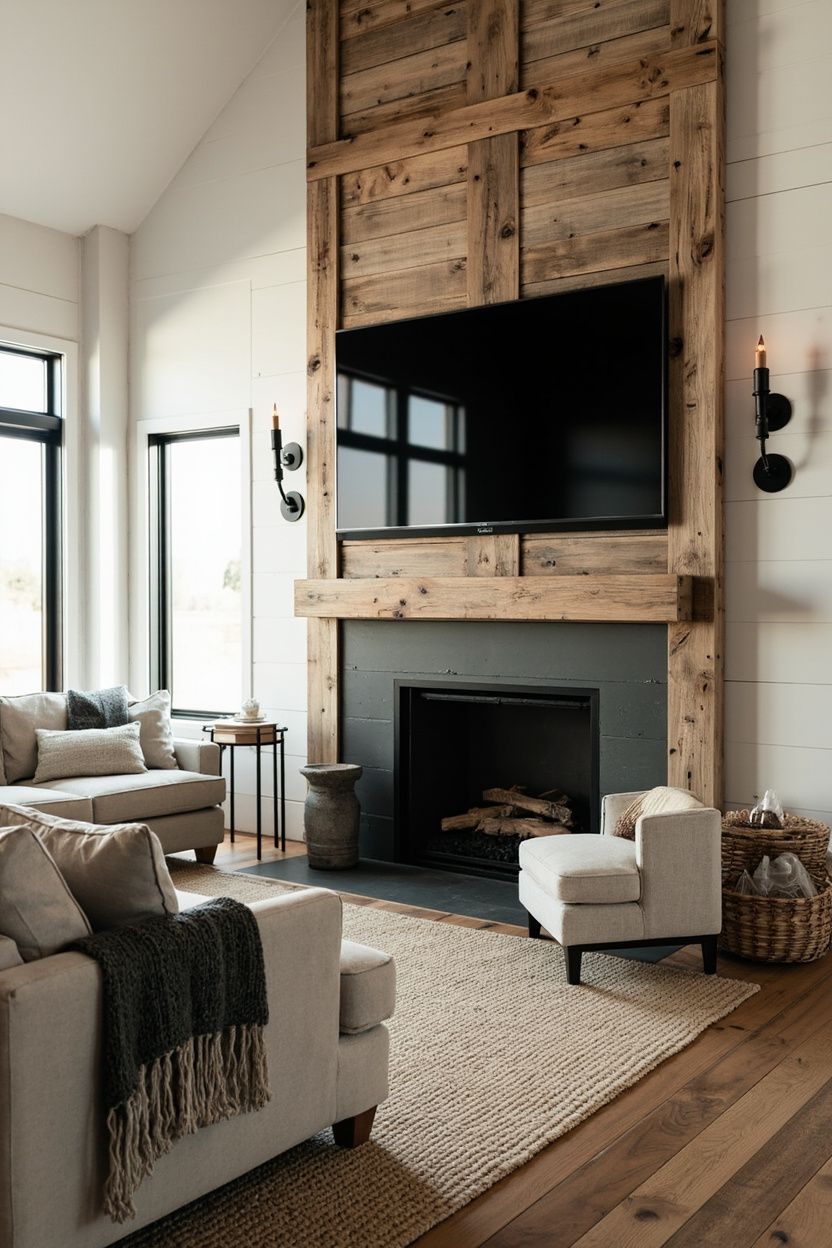
Mount the TV above a chunky reclaimed wood mantel for a cozy focal point, but respect clearance—allow 4–8 inches between the bottom of the TV and the mantel to avoid heat buildup and awkward sightlines.
Use a slim-profile tilting mount so the screen angles slightly downward for relaxed viewing without raising the TV too high.
Balance the mantel with asymmetrical styling: a tapered candleholder and framed vintage print on one side, a stack of linen-bound books and a small ceramic pot on the other.
Choose a mantel depth of at least 6–8 inches if you plan decor on top; anything shallower looks precarious and invites clutter.
3. Oversized Wall Clock Above TV
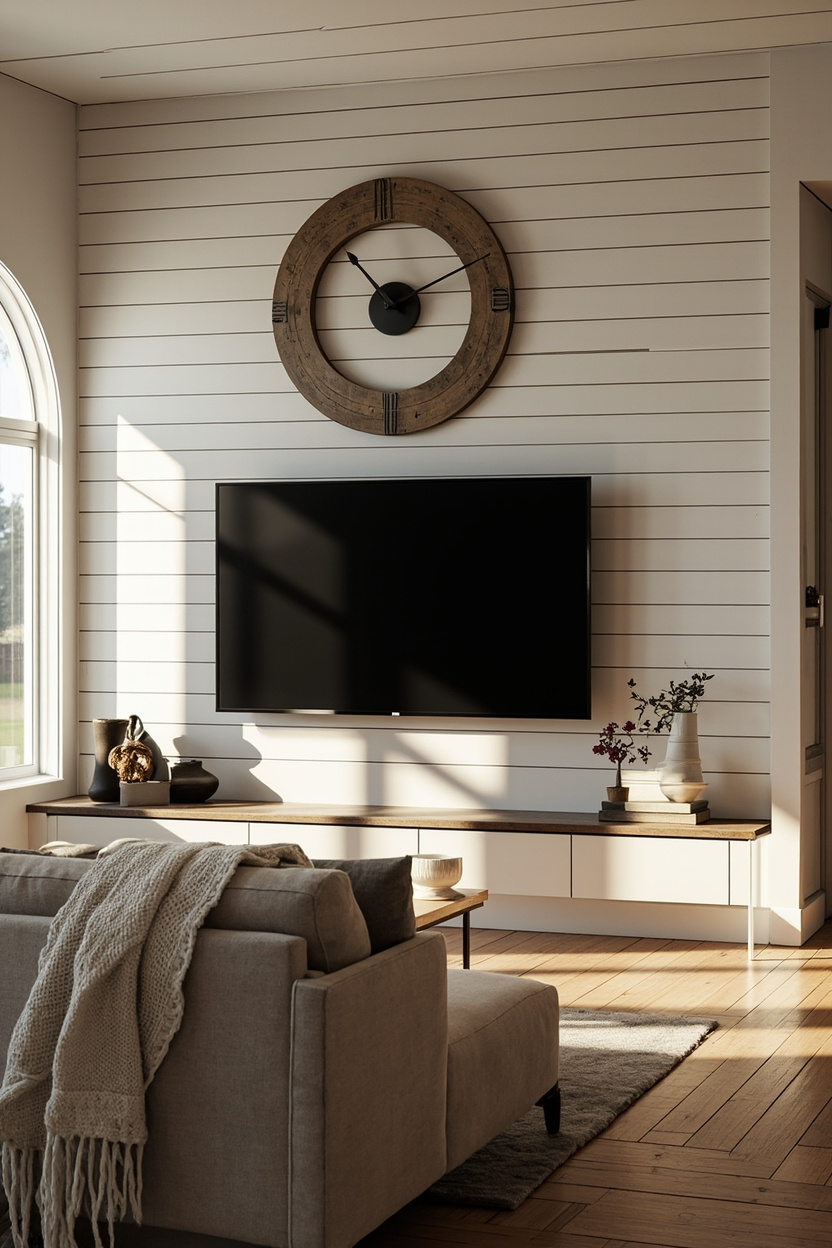
An oversized metal or weathered wood clock provides scale and farmhouse character while masking the dead space above a wall-mounted TV.
Opt for a diameter 1.2–1.5 times the TV height for pleasing proportion. Center the clock on the same wall plane and keep it at least 6 inches above the TV to avoid visual collision between the two elements.
Select a low-reflective finish and place the clock off-center vertically if you use floating shelves beside the TV; this prevents a static, museum-like layout.
For practical styling, choose a clock with a simple, open-face design so time is readable even from a sofa across the room.
For more farmhouse wall treatments and how to layer trims and paint, see our pieces on Farmhouse Interior and practical shelving ideas in Diy Built In Bookcase Projects.
4. Symmetrical Floating Shelves Flanking TV
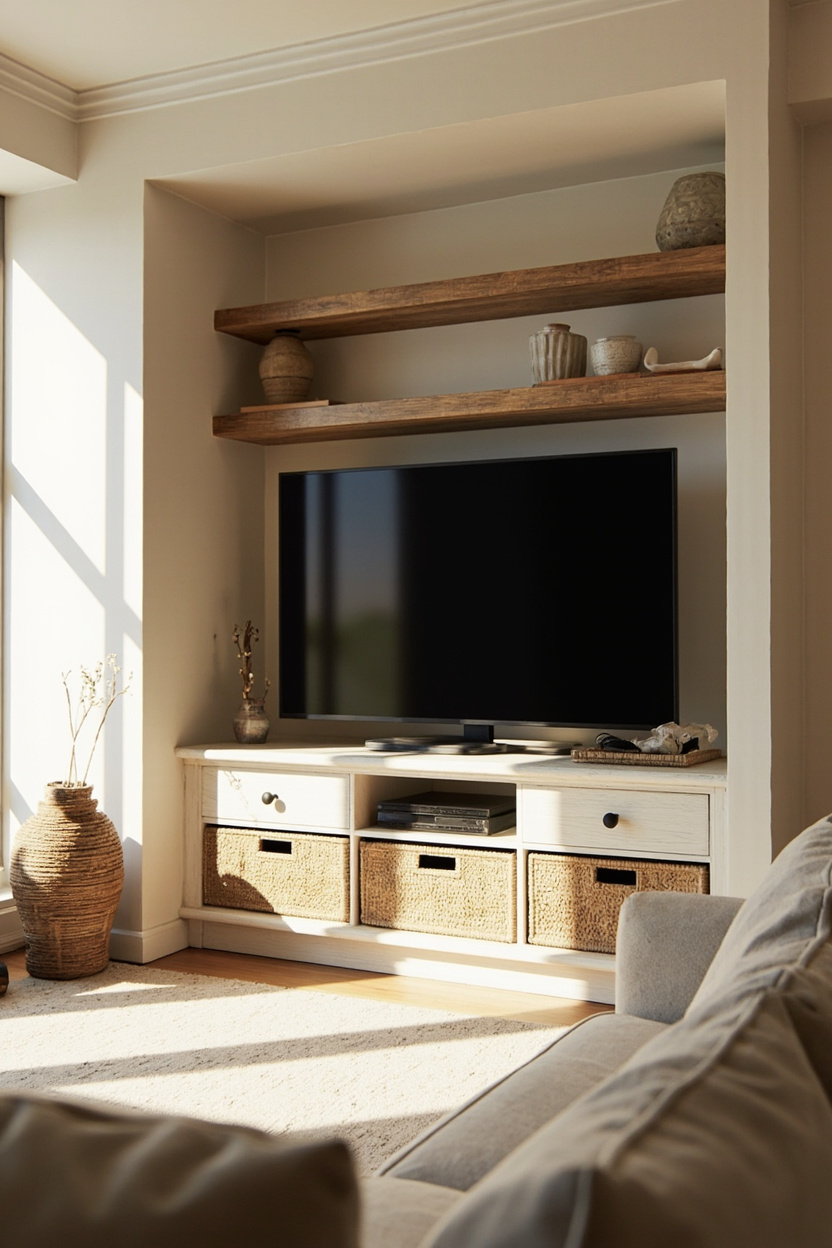
Fit two identical floating shelves on either side of the TV at eye level, spacing them so the outer edge aligns roughly with the sofa’s arm.
This keeps proportions balanced and avoids a top-heavy look. Style each shelf with a mix of low stacks of books, a small ceramic vessel, and a single framed photo; repeat the objects in mirrored pairs to sell the symmetry and make the arrangement feel intentional.
Use warm wood tones or painted white MDF trimmed with a 1″ lip to match baseboard height; anchoring into studs or using heavy-duty wall anchors is essential when displaying ceramics or speakers, especially on shelves that are 8–12″ deep to comfortably hold both decor and functional items like remotes.
5. Layered Gallery Wall and TV Combo
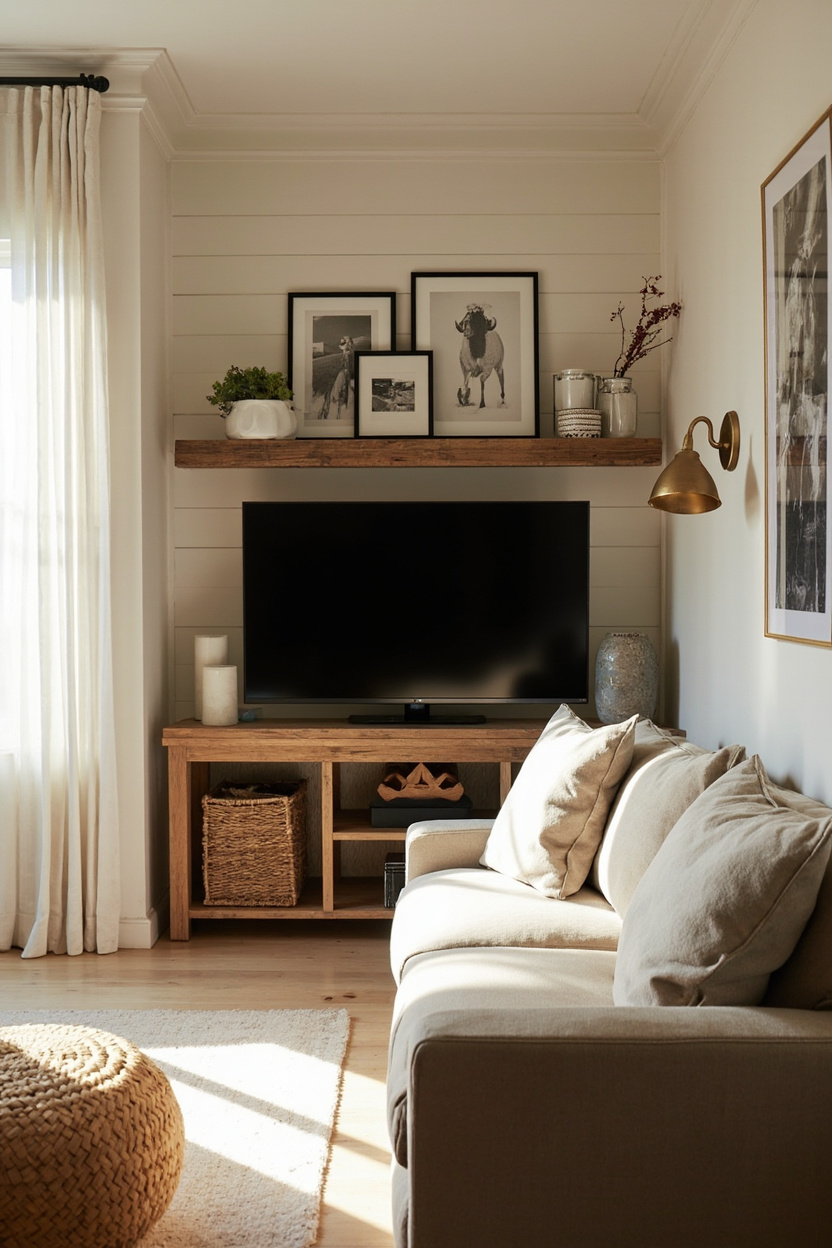
Create a layered gallery by mounting the TV slightly off-center within a grid of frames and adding deeper elements like woven trays or a vintage mirror to break the flat plane; maintain a consistent frame color (black or distressed wood) and keep mat sizes similar to prevent visual chaos.
Place the largest piece roughly 6–8″ from the TV edge and build outward, stepping down in scale to the room’s corners so the composition reads as one cohesive installation.
For a true farmhouse finish, include three-dimensional accents such as a small sculptural candle sconce or a pair of galvanized metal letters; secure heavier pieces to studs and limit total frame depth variance to under 2″ to keep flush mounting feasible and safe.
6. Textured Shiplap Backdrop Ideas
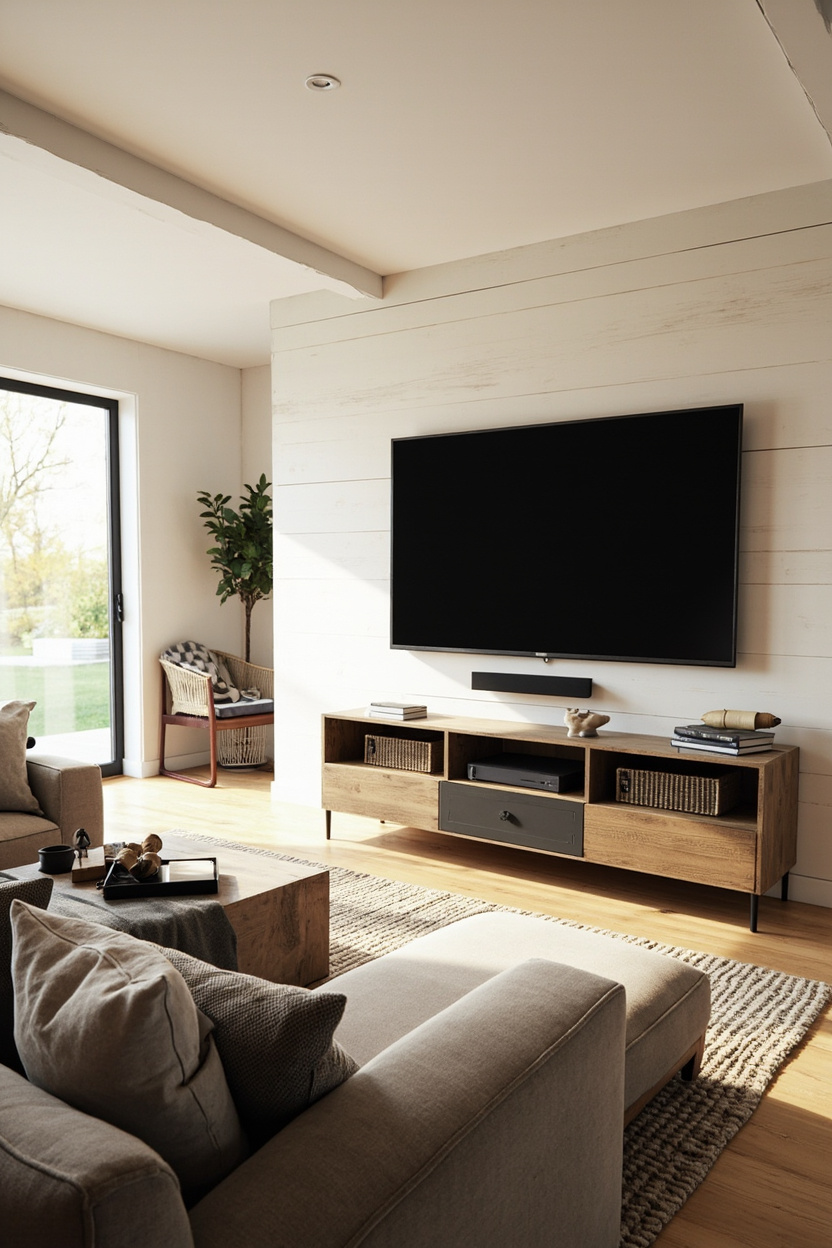
Run horizontal shiplap behind the TV, painted in a muted cream or soft gray to add rhythm and a cottage-weathered feel; use 4–6″ boards for a classic farmhouse scale and butt joints filled with a light glaze to emphasize the seams without creating a fussy look.
Mount the TV on a low-profile bracket so the shiplap remains visible above and below the screen, and consider a slim mantel ledge beneath the screen for seasonal styling and cable concealment.
Avoid painting the shiplap bright white if your sofa and rug are pale. Pick a slightly warmer white or greige to prevent the wall from appearing to float and to maintain cozy farmhouse warmth; for budget builds, use primed MDF shiplap panels cut to size and sealed with satin paint for easy cleaning.
7. Neutral Palette with Warm Accents
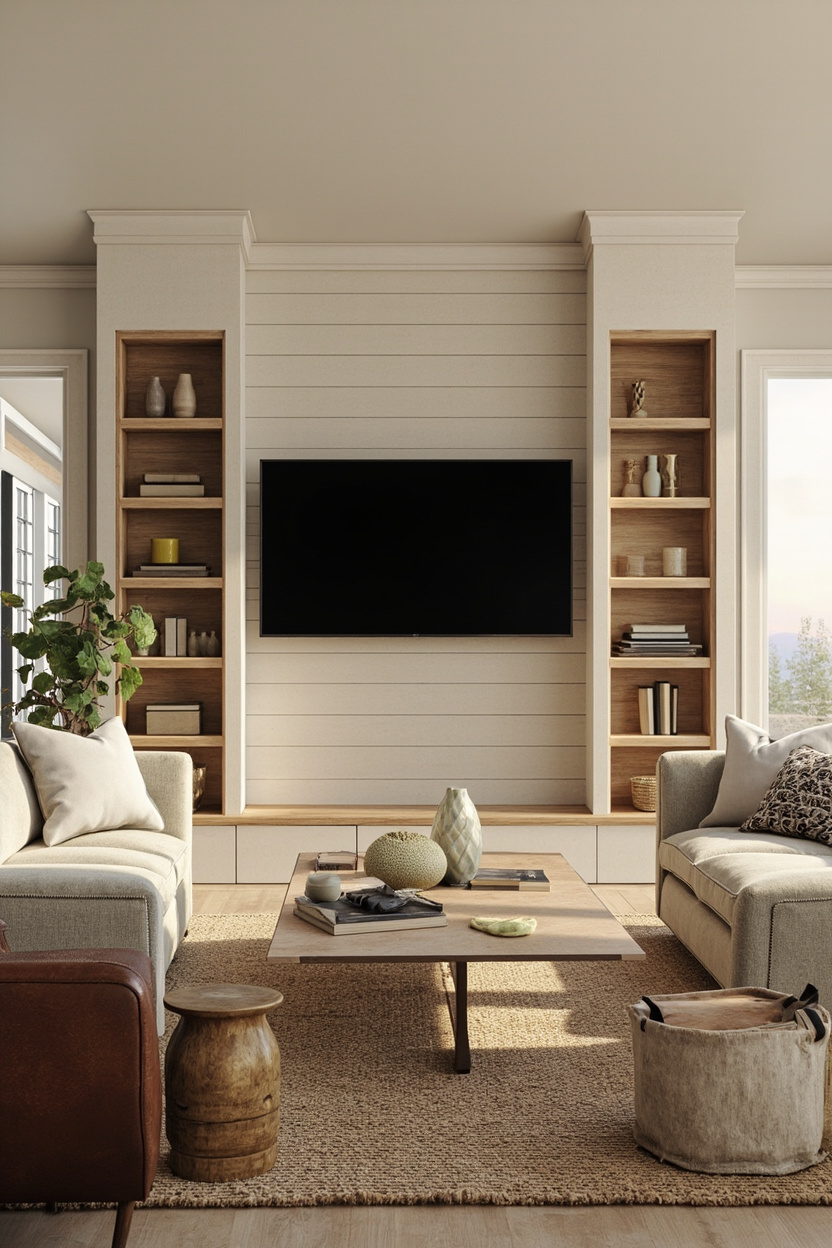
A soft neutral backdrop—think warm off-white walls and a linen-textured mantle—lets the TV recede while wood tones and leather bring cozy depth.
Anchor the screen with a 2:1 ratio console (two drawers for storage, one open shelf) to keep electronics hidden and maintain clean farmhouse lines.
Introduce warm accents in measured doses: a caramel leather pouf, brass picture frames, and a woven wool throw in a 2:3 proportion to the sofa so the color feels deliberate, not accidental. For more ideas on balancing neutrals and rustic pieces in other rooms, see Farmhouse Interior.
8. Woven Baskets as Decorative Storage
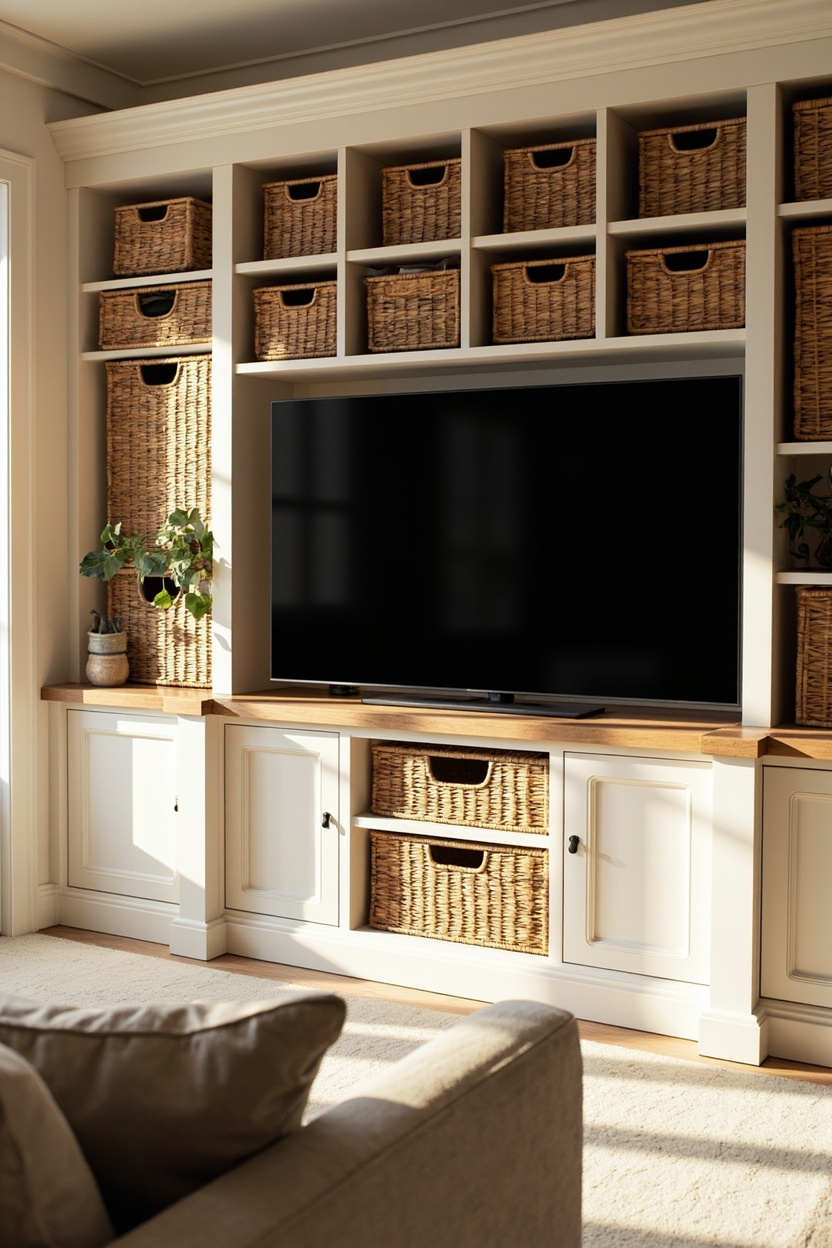
Use a trio of woven baskets beneath the TV unit to conceal remotes, game controllers, and stray cables while adding texture. Choose seagrass or rattan in varying sizes (small, medium, large) for layered interest.
Place the largest basket closest to the TV stand for bulky items and the smaller ones to the side for magazines and throws, keeping the visual weight grounded.
Avoid overcrowding: leave at least an inch of visible floor between baskets and the baseboard to read as intentional styling rather than clutter.
Pair this approach with floating shelves above the TV for a lighter look; see practical shelf styling in Diy Built In Bookcase Projects.
9. Antique Mirrors to Brighten Space
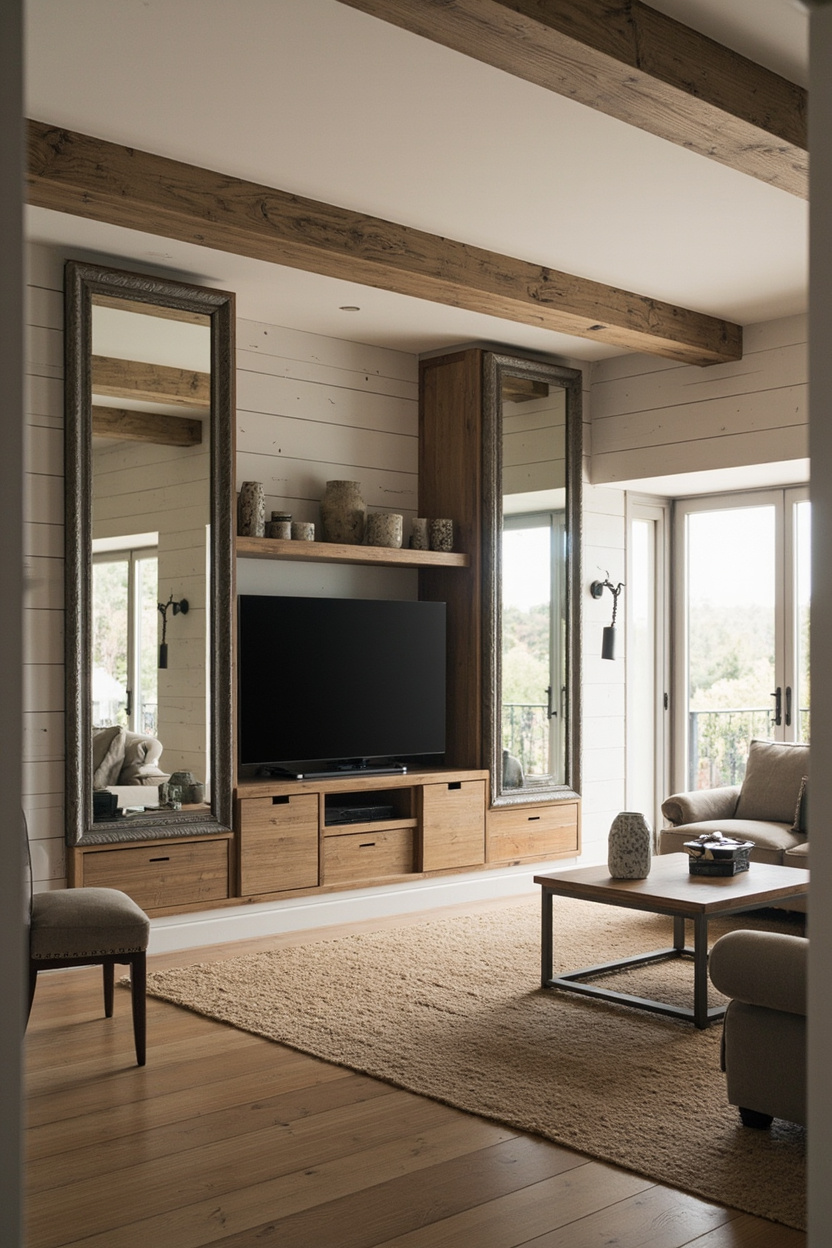
Hang an antique mirror off-center above the TV to reflect light and create the illusion of a larger room; choose a distressed wood or gilt frame about two-thirds the width of the screen so it complements rather than competes.
Position it to catch natural light from a nearby window. Angled mirrors work best to bounce daylight into darker corners.
Be cautious with glare: keep the mirror at least six inches above the TV to avoid reflecting the screen and disrupting viewing.
For inspiration on mixing vintage pieces with farmhouse finishes, consult a trend overview from a reputable design outlet like Homes & Gardens.
10. Built‑in Cabinets for Hidden Tech
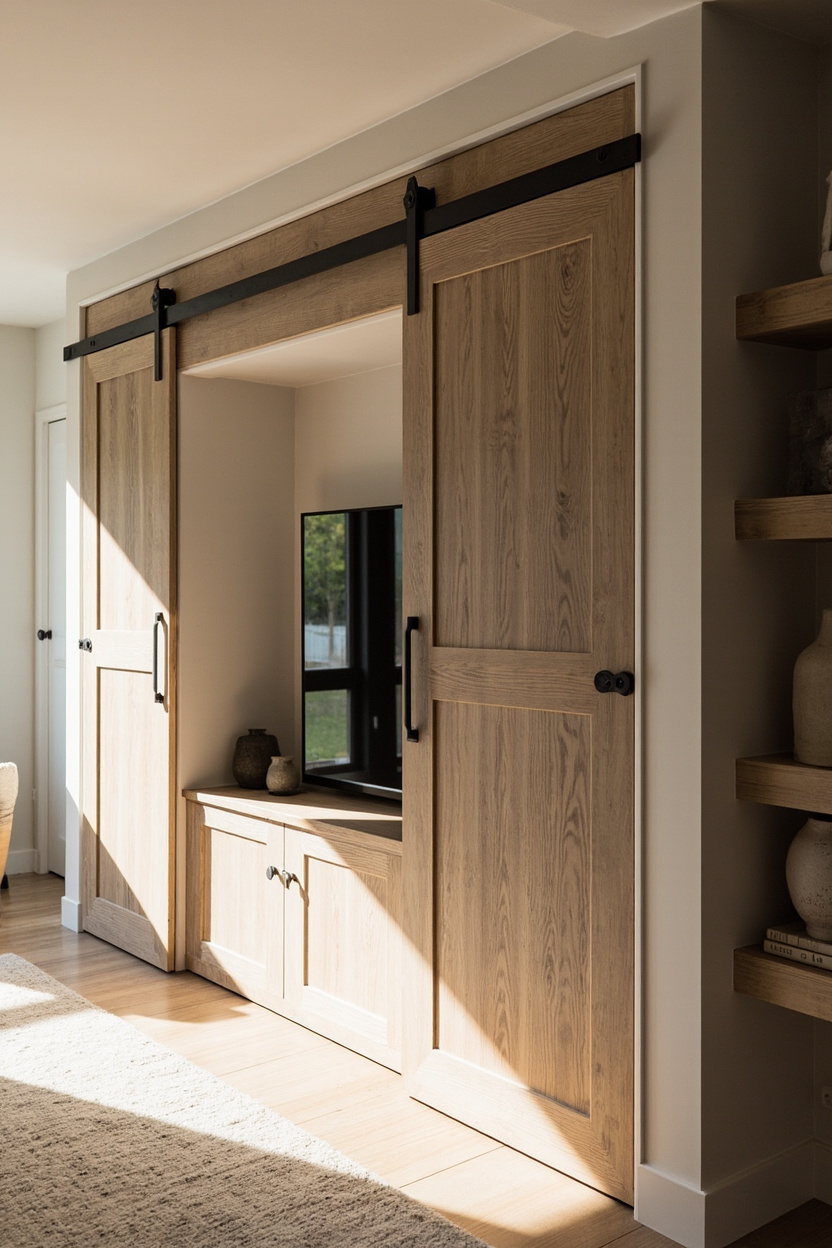
Custom built-in cabinets beneath and around the TV allow you to hide routers, receivers, and game consoles behind ventilated doors; specify perforated back panels or louvered doors to maintain airflow.
Keep shelves 12–15 inches deep for AV components and install an easy-access cable chase behind the TV to prevent unsightly wires from appearing on the face of the cabinetry.
11. Soft Lighting: Sconces and Pendants
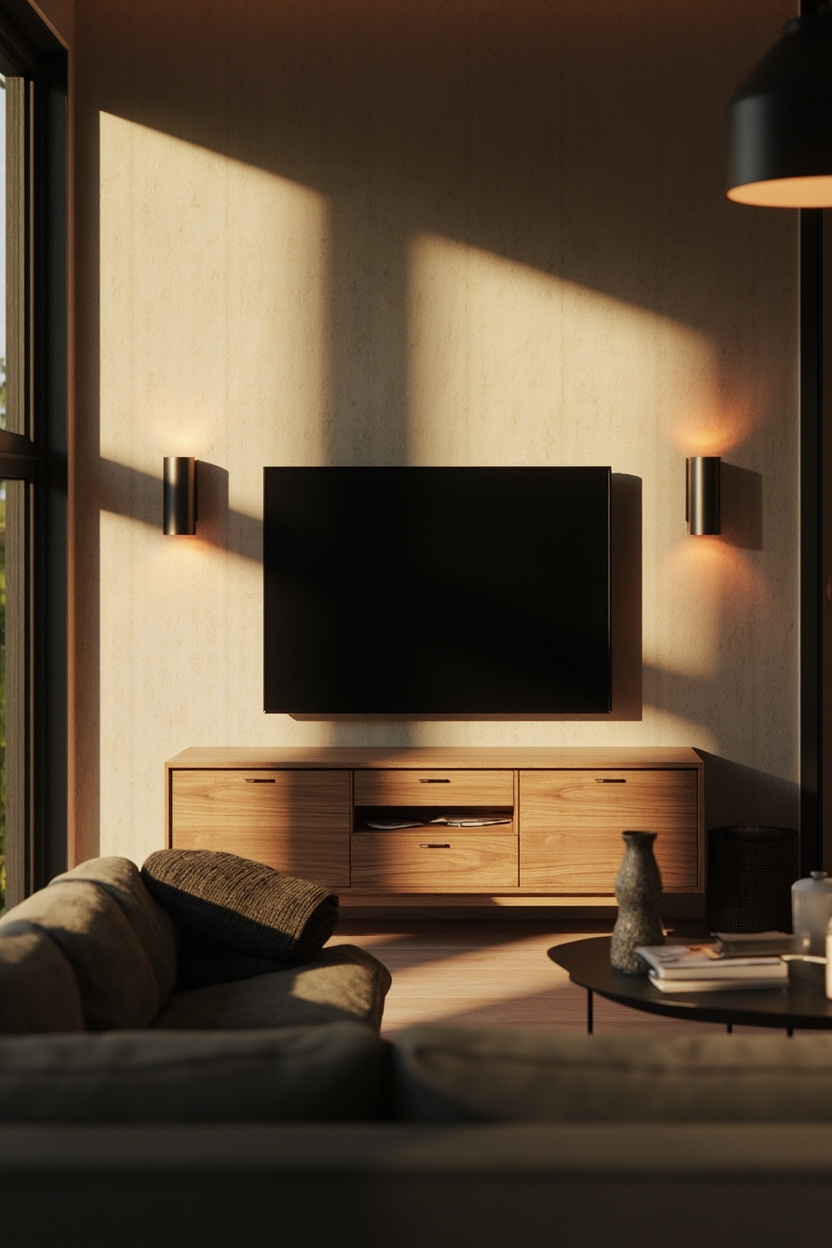
Wall sconces flanking the TV provide soft, directional light that reduces eye strain without reflecting off the screen; mount sconces 6–8 inches outside the TV’s outer edge and about 60–66 inches from the floor for optimal illumination.
Small pendant lights over side consoles create vertical interest. Choose dimmable fixtures and bulbs under 800 lumens so the glow complements rather than competes with the screen.
12. Mixing Vintage and Modern Pieces
Combine a midcentury modern media console with a vintage farmhouse clock or crate to balance clean lines and patina; set the TV on or above the modern unit and place a single aged item (no more than one per side) to avoid a cluttered look.
Use finishes that repeat elsewhere, such as brass hardware or matte black, so the modern and vintage pieces feel deliberately paired rather than mismatched.
FAQ
Aim for the center of the screen to sit roughly 42 inches from the floor for seated viewing; if mounting above a mantel, lower the mantel or use an articulating mount to angle the screen down.
Use cord covers painted to match the wall or a slim in-wall cable kit; interior raceways behind a console also stay discreet and cost under $100.
Yes—well-executed built-ins add perceived value and function; stick to classic proportions and neutral paint to appeal to buyers.
Install layered window treatments—a sheer for daylight diffusion and heavier curtains for evening—to control glare while keeping that soft farmhouse light.
Final Thoughts
Designing a farmhouse TV wall is about purposeful layers: texture, scale, and concealment.
Prioritize ventilation and placement so the TV reads as part of the room’s story rather than an afterthought, and borrow one or two styling cues like a reclaimed wood tone or soft woven textile throughout the space for cohesion.