


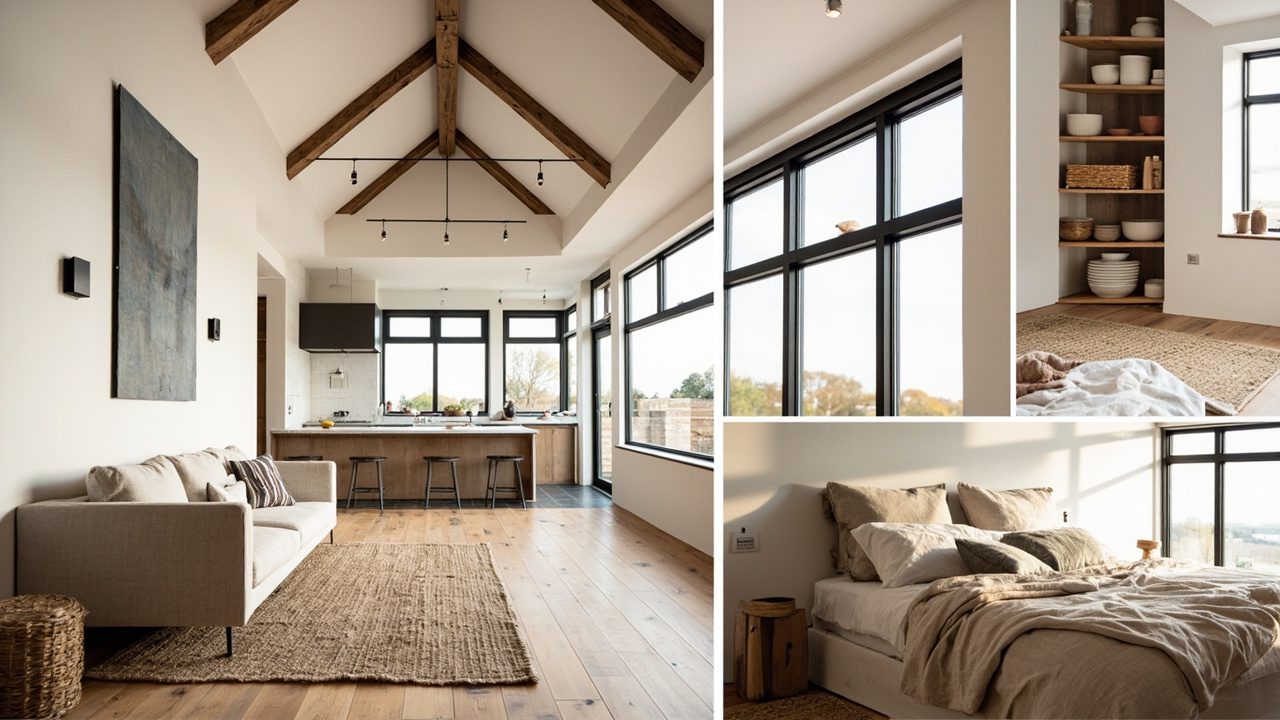
For anyone weighing small farmhouse plans, the magic lives in proportion, light, and an honest materials palette.
Under 1,800 square feet, rooms must multitask, yet still breathe. Therefore, the best plans privilege smart circulation, scaled-down storage that works hard, and porches that extend daily living.
You feel the ease at the entry, then again at the kitchen, where zones are clear and clutter slips from view.
Smart Pick: 1,520-sq-ft two-bedroom with a wraparound porch and side-entry mudroom, because it isolates mess, supports indoor-outdoor flow, and keeps the great room calm.
- 1. Compact Gabled Cottages
- 2. Open-Concept Great Rooms
- 3. Lofted Sleeping Nooks
- 4. Wraparound Porches
- 5. Board-and-Batten Exteriors
- 6. Deep Porch Swings
- 7. Galley Farmhouse Kitchens
- 8. Shaker Cabinetry
- 9. Butcher-Block Islands
- 10. Vintage Brass Hardware
- 11. Curved Farmhouse Settees
- 12. Warm Terracotta Palette
- 13. Forest Green Feature Walls
- 14. Antique Pine Accents
- FAQ
1. Compact Gabled Cottages
- Effort Level: Weekend DIY.
- Estimated Budget: 100-500.
- Maintenance Level: Low (Wipe clean).
- Best For: Small, low-light spaces.
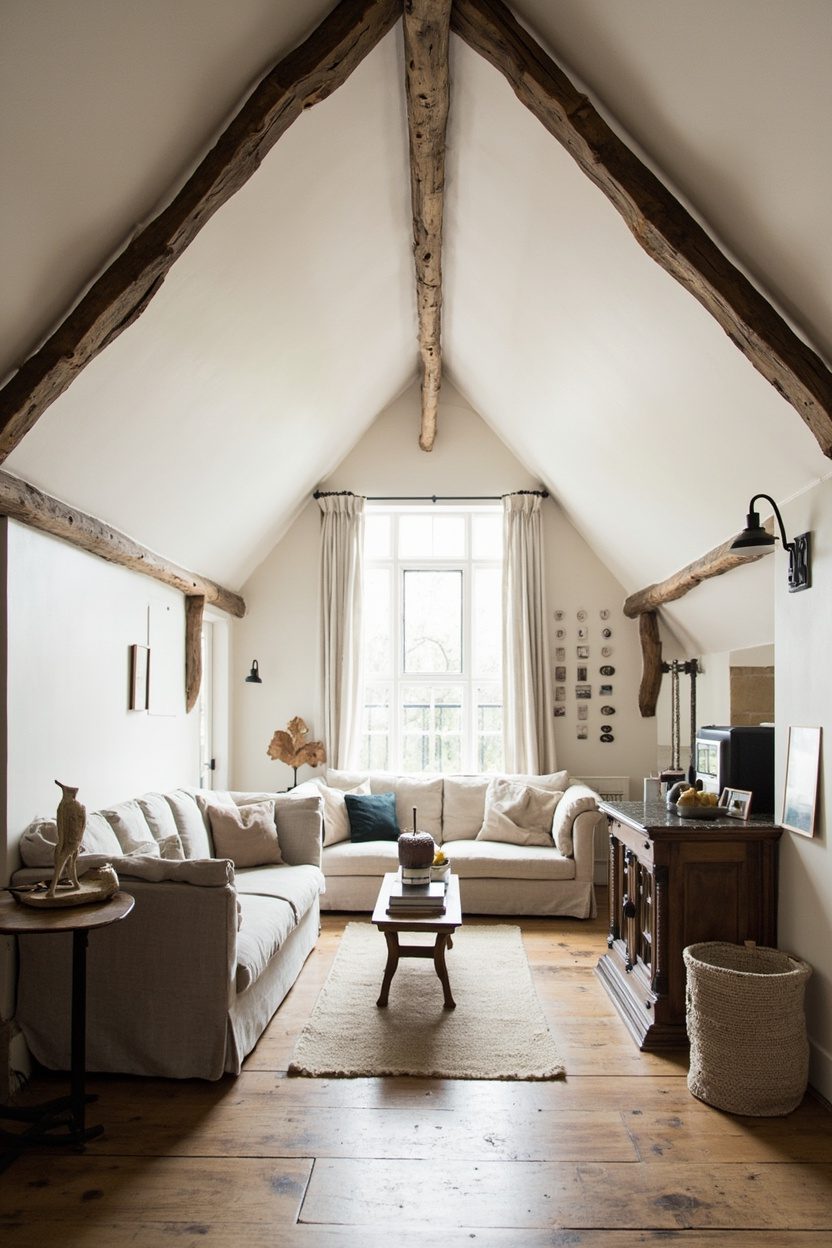
A steep front gable, a centered door, and a modest porch create instant charm. Keep eaves simple, fascia clean, and specify 6-over-6 windows for a timeless profile.
Inside, prioritize an L-shaped kitchen with a 36-inch aisle on the closed sides. This keeps circulation open, while a 24-inch counter-depth fridge preserves precious inches.
Because storage matters, build a 5-by-7 mudroom with bench, pegs, and concealed shoe drawers. It protects sightlines into the main room, so the cottage reads larger.
Choose fiber-cement lap in a soft white with warm gray trim. Meanwhile, a medium-stain oak floor grounds the palette and hides daily scuffs beautifully.
Finally, push ceilings to 9 feet if possible. Even an extra foot changes daylight angles and improves perceived scale in compact rooms.
Why This Works?
The gabled cottage gives you farmhouse DNA without square-foot bloat. Clean roof geometry reduces framing waste, and the porch doubles as a seasonal living room. If you want personality, paint the door in a muted moss or deep navy from a matte exterior line.
For planning comparisons by size and style, skim Farmhouse Floor Plans. It helps benchmark bedroom counts, bath ratios, and porch depth before you finalize elevations.
2. Open-Concept Great Rooms
- Effort Level: Weekend DIY.
- Estimated Budget: 100-500.
- Maintenance Level: Low (Wipe clean).
- Best For: Small, low-light spaces.
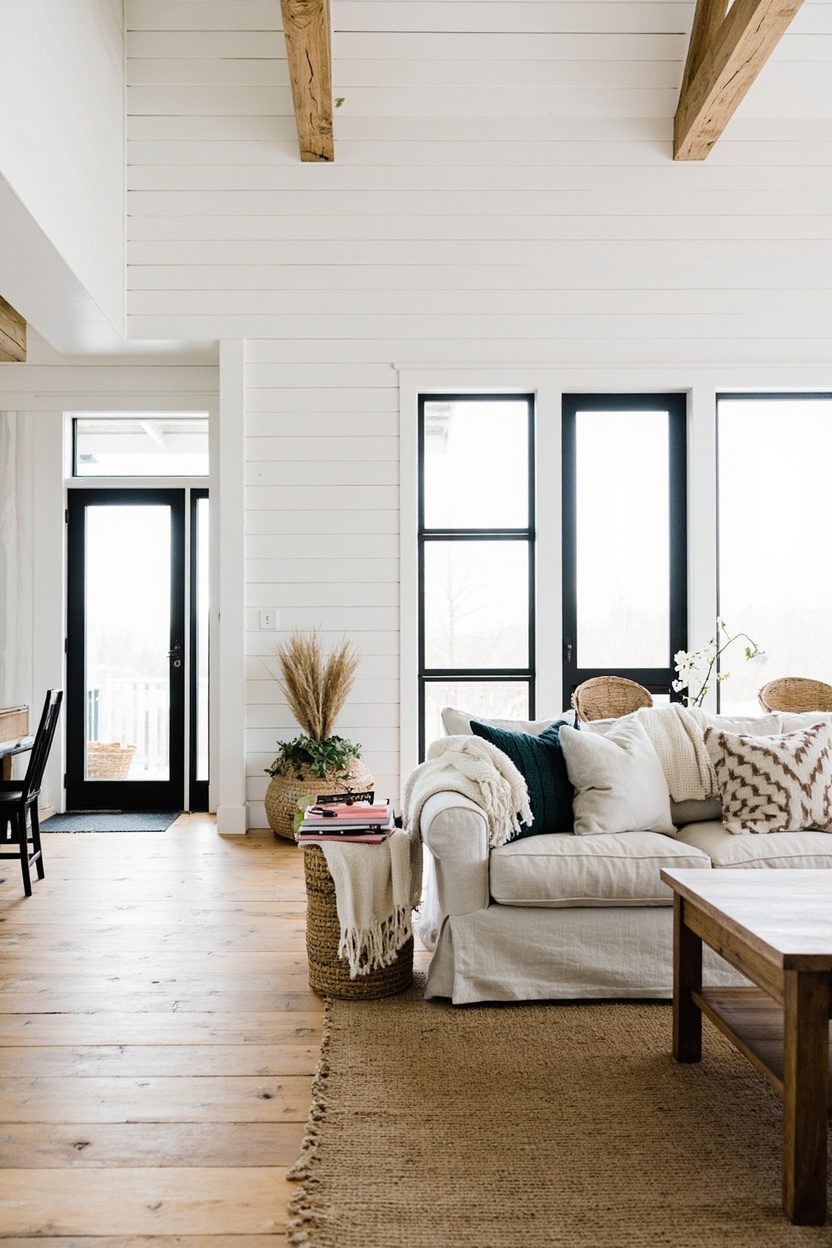
In small farmhouse plans, open great rooms win because they consolidate circulation. Anchor with a 7-by-10 rug, a 72-inch sofa, and a 36-inch-wide traffic path behind seating.
Zone the kitchen side with a 7-foot island, seating on one face only. Therefore, you avoid crisscross pathways and keep prep edges safe and calm.
Use a restrained palette: warm white walls, putty cabinets, and blackened hardware. Also, slip in one rustic counter stool detail, like oak with a curved back, to soften the lines.
Add statement lighting at the human scale. Two 14-inch metal pendants over the island, plus a 36-inch chandelier centered on the living rug, keep the volume balanced.
Designer Secret
Float the sofa 10 to 12 inches off the rug’s back edge to fake breadth. It invites a narrow console for lamps and corded cords. Because sightlines matter, mount the TV on a swivel so it vanishes from main views.
For style direction on current rustic tones and curated warmth, this design trend roundup outlines deeper greens, navy, and terracotta that read modern, not theme-y.
3. Lofted Sleeping Nooks
- Effort Level: Weekend DIY.
- Estimated Budget: 100-500.
- Maintenance Level: Low (Wipe clean).
- Best For: Small, low-light spaces.
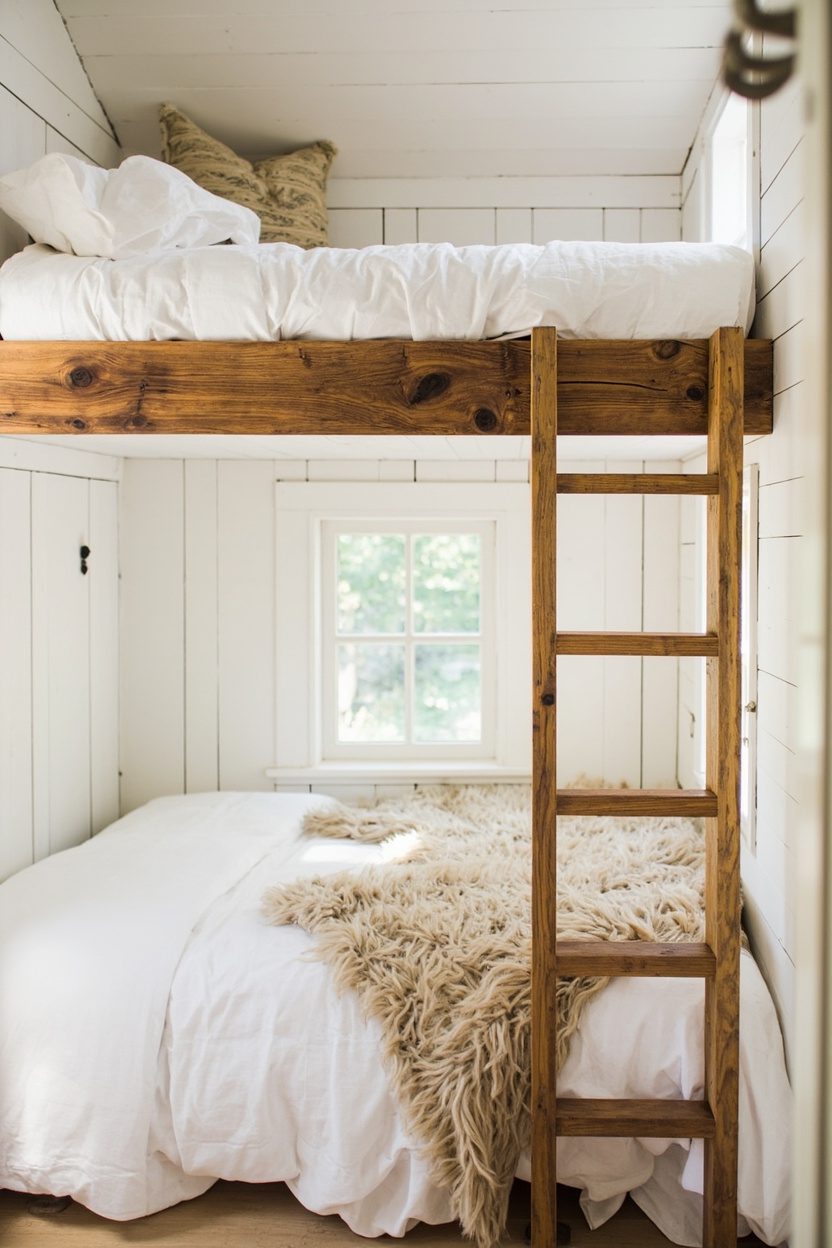
A lofted nook over a mudroom or hallway stacks function without stealing daylight. Specify 7 feet clear below and target a 36-inch guard height with simple pickets.
Because acoustics matter, add a wool runner to the loft stairs and acoustic felt behind shiplap. This keeps bedtime gentle, even when the great room is active.
Choose a twin XL built-in with two 24-inch drawers and a sconce centered at 42 inches. Meanwhile, a small bookshelf headboard handles nightly reads without cluttering floors.
Ventilation is key. Include an operable awning window, plus a low-profile ceiling fan. Therefore, warm nights feel restful under the rafters.
Make It Your Own
Panel the nook in vertical v-groove, then paint it the same color as trim for a cocooned feel. A ticking stripe duvet and a petite kilim pillow add texture without noise.
If you need more plan ideas that balance lofts with living, browse Small Home Floor Plans for smart footprints that translate well to farmhouse architecture.
4. Wraparound Porches
- Effort Level: Pro install.
- Estimated Budget: 8,000-35,000.
- Maintenance Level: Moderate (Seasonal sealing).
- Best For: Sun control and outdoor living.
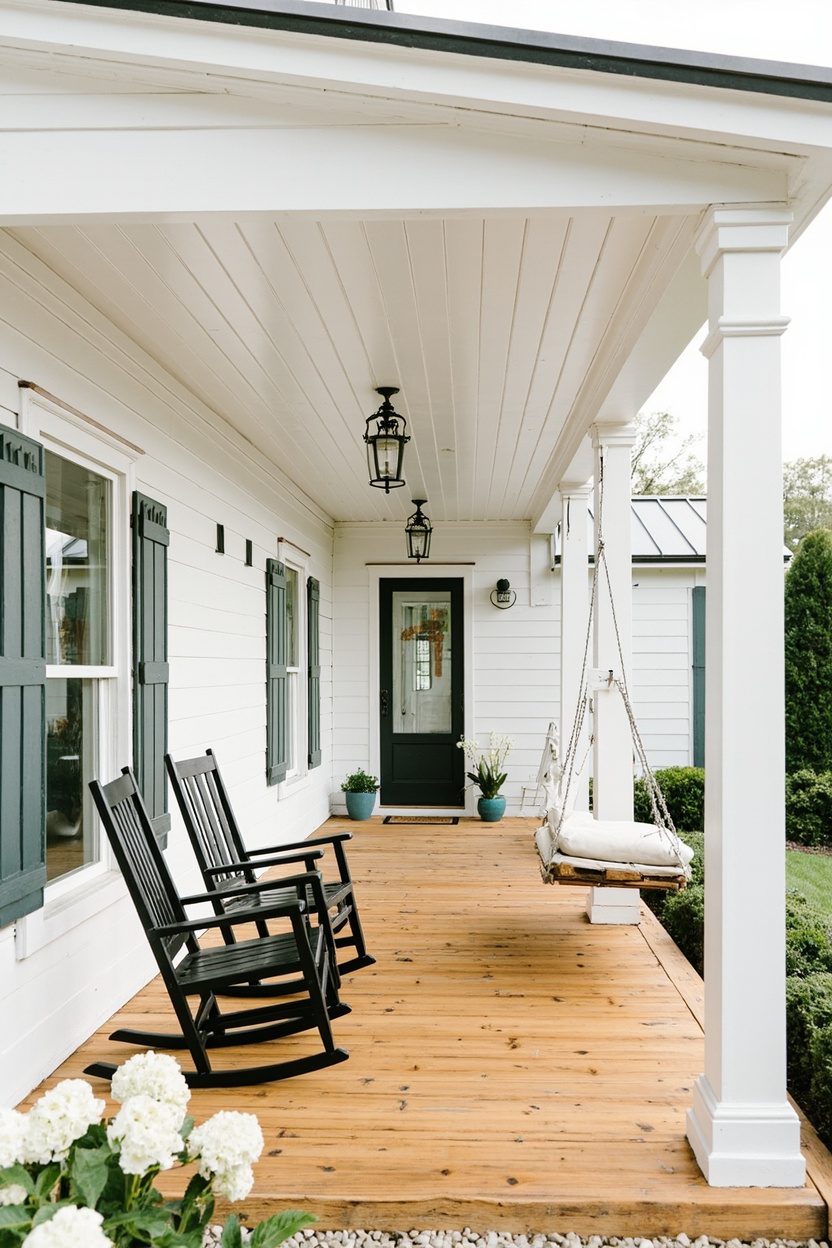
Wraparound porches give small farmhouse plans real breathing room. They add shade, extend circulation, and create outdoor rooms that feel generous without adding square footage.
Choose decking with a 5.5-inch board for a classic scale. Composite keeps upkeep low, while cedar offers warm grain and patina if you prefer natural character.
Meanwhile, a 7 to 8-foot porch depth suits dining and seating. However, keep traffic paths clear by anchoring furniture to corners and near entries, not mid-span.
Paint railings in satin white, but let the floor read mid-tone for dirt forgiveness. Benjamin Moore Cape May Cobblestone is a forgiving porch gray that stays calm in sunlight.
Why This Works?
Because the porch wraps, it modulates light on every side. Morning coffee on the east, golden hour on the west, and always a breeze where you need it.
If you are mapping layouts, pair the wrap with a corner kitchen or great room. Then add a French door off the dining area for flow. For more plan inspiration, tour Farmhouse Floor Plans and compare porch depths side by side.
5. Board-and-Batten Exteriors
- Effort Level: Weekend DIY to Pro.
- Estimated Budget: 2,000-12,000.
- Maintenance Level: Moderate (Repaint 5-7 years).
- Best For: Compact facades needing height.
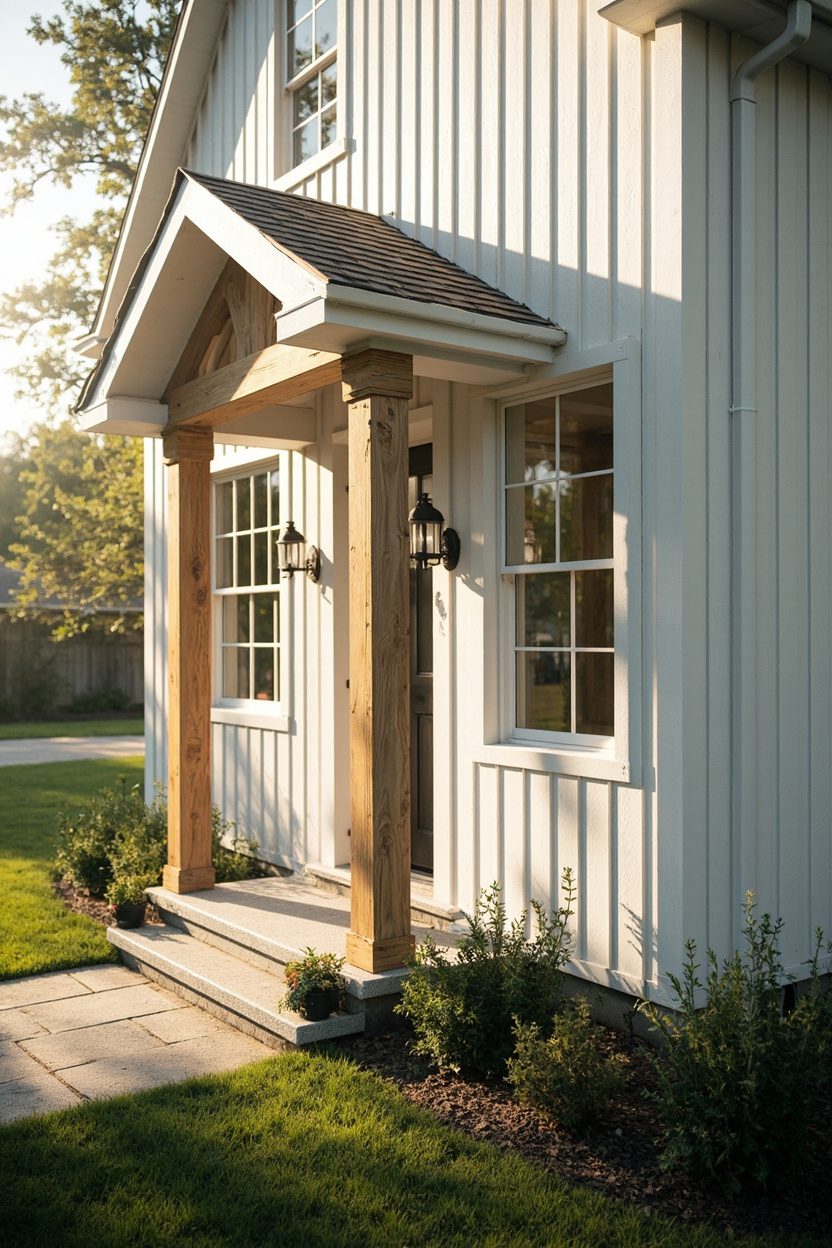
Vertical rhythm flatters small farmhouse plans by drawing the eye up. Board-and-batten adds shadow lines, so modest elevations feel crisp and architectural.
Choose fiber cement for longevity, or real wood for depth and texture. Either way, keep batten spacing consistent, typically 12 to 16 inches on center for balanced proportion.
For color, consider a softened white with contrast trim. Alternatively, a moody charcoal with wood doors can ground a petite footprint, a trend noted by Hello Lovely for 2026.
When I specified this on a tight facade, I kept the window casings chunky at 4 inches. The extra thickness feels generous, and it prevents the battens from visually crowding the openings.
Real-Talk Warning
I made this mistake once: I painted before caulking every vertical seam. The hairline gaps telegraphed by winter, and we had to revisit the whole elevation. Always back-prime cut ends, then caulk, then spray.
If you want a bolder exterior study, compare proportions with Black And White Farmhouse Exterior. The lessons on contrast scale translate beautifully to board-and-batten fronts in small farmhouse plans.
6. Deep Porch Swings
- Effort Level: Weekend DIY.
- Estimated Budget: 250-1,200.
- Maintenance Level: Low (Seasonal wipe-down).
- Best For: Covered porches and breezeways.
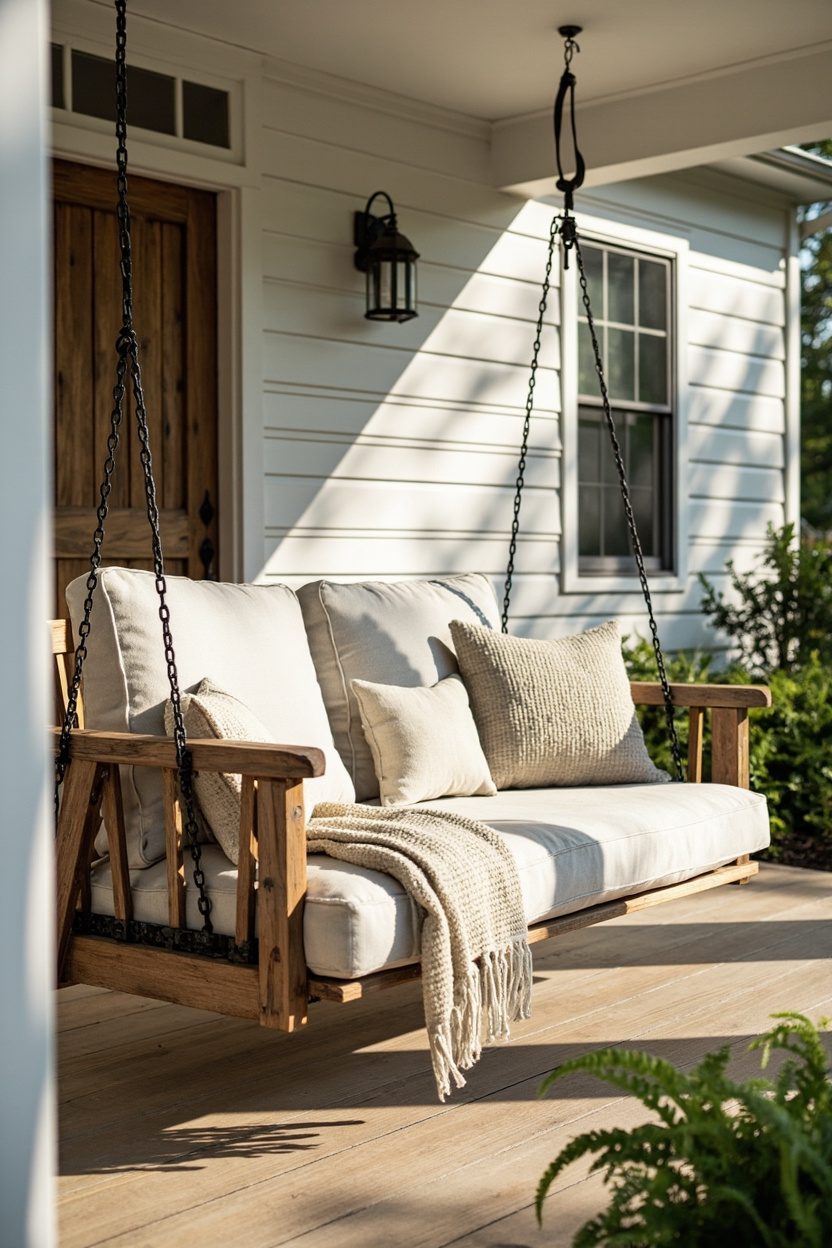
A 26 to 30-inch deep swing feels like a daybed for two. In small farmhouse plans, that single piece can replace an entire outdoor furniture set.
Hang with 3/8 inch stainless chain or 5/8 inch rope, anchored to joists, not ceiling finish. Therefore, verify load paths and use rated eye bolts and through-bolts.
Cushions in performance linen or marine vinyl keep the look refined. Plus, a 24-inch back pillow height supports reading without crowding the rail.
Choose a soft white, a driftwood stain, or a painted color borrowed from the front door. Meanwhile, keep the swing 18 inches off the floor for easy rise and a balanced sway.
Stylist’s Note
Layer one patterned lumbar with two plains to avoid visual clutter. Because the swing is deep, a slim bolster keeps posture comfortable and the silhouette tidy.
If the porch is narrow, mount it to a corner so the arc clears traffic.
7. Galley Farmhouse Kitchens
- Effort Level: Weekend DIY.
- Estimated Budget: 100-500.
- Maintenance Level: Low (Wipe clean).
- Best For: Small, low-light spaces.
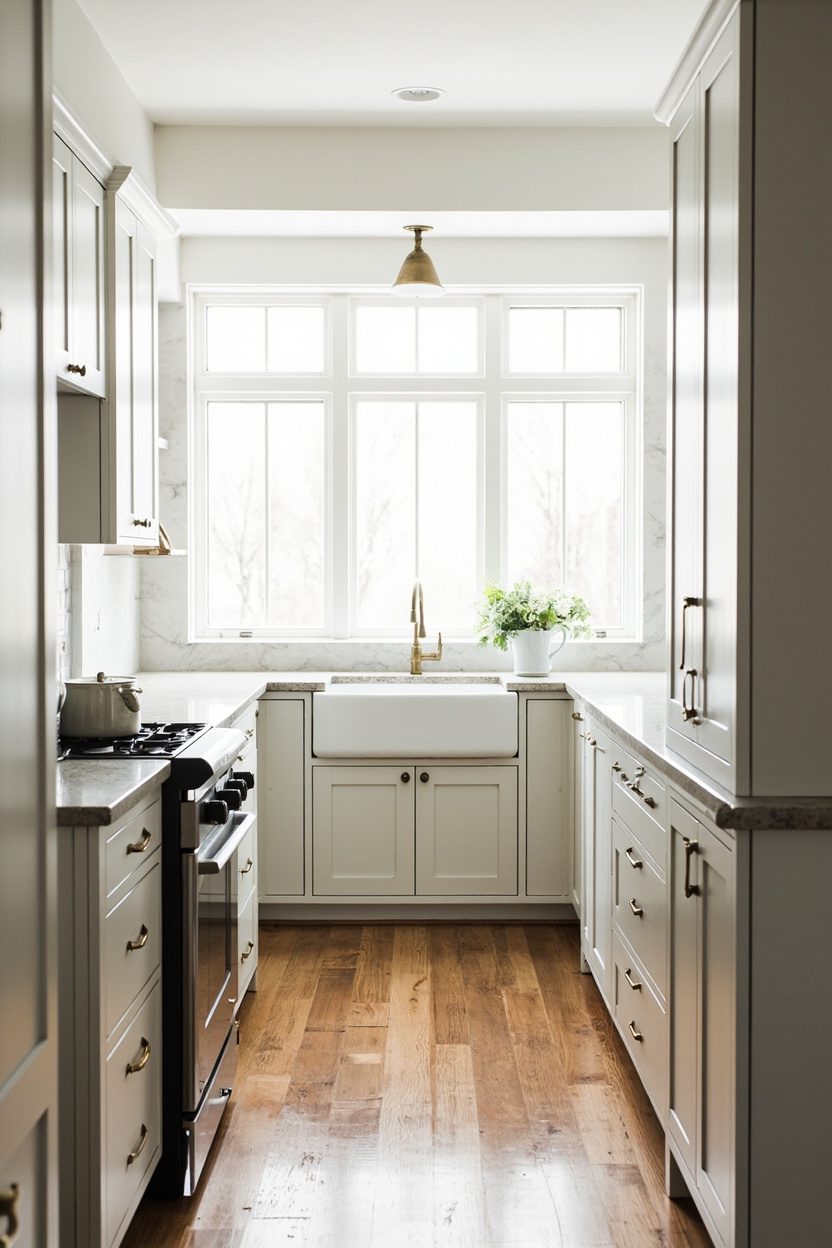
Lean galley layouts suit small farmhouse plans because they favor flow over footprint. Keep counters clear, then rely on tall cabinets and a single run of open shelves for display and daily reach.
Choose warm white paint for walls, then add contrast with black or oil-rubbed bronze hardware. Because light matters, specify glass shades over the sink and warm 2700K bulbs.
Use a 30 to 36 inch aisle on the working side, and a 42 inch clearance on the pass-through if possible. Meanwhile, place the sink and range on one wall for safer, simpler cooking.
For materials, pick matte porcelain tile underfoot and a honed quartz counter that resists stains. A beadboard backsplash, painted in soft putty, delivers texture without visual clutter.
Finally, anchor the space with a petite runner in jute or wool. It softens sound, adds warmth, and can handle high traffic with a quick shake and vacuum.
Why This Works?
A galley thrives on discipline. You make fewer turns, so cooking feels quicker and calmer. The farmhouse notes, from beadboard to aged brass pulls, keep it cozy instead of clinical.
8. Shaker Cabinetry
- Effort Level: Weekend DIY.
- Estimated Budget: 100-500.
- Maintenance Level: Low (Wipe clean).
- Best For: Small, low-light spaces.
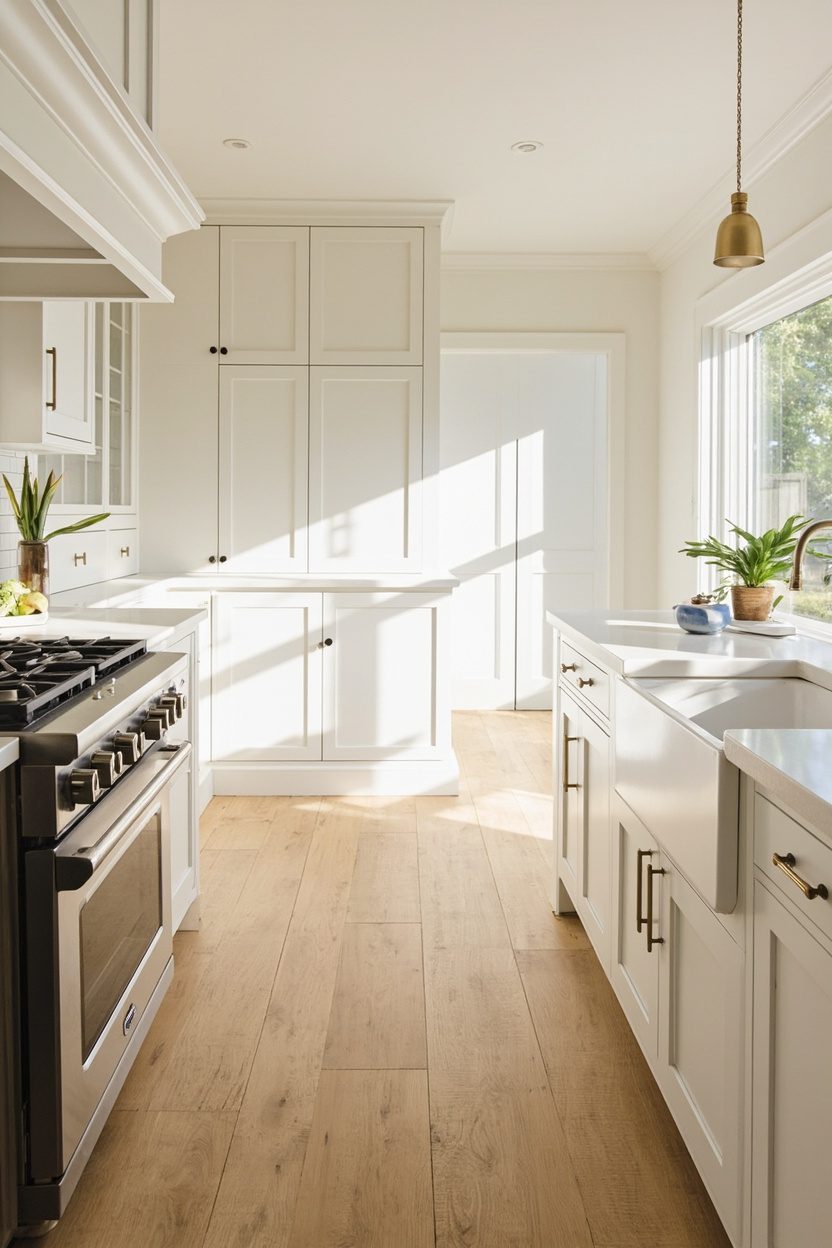
Classic Shaker doors ground small farmhouse plans with honest lines and quiet detail. Their simple rails and stiles keep sightlines clean, which makes modest kitchens feel calmer and larger.
Paint finishes read beautifully in tight rooms. Choose warm white, French gray, or a deep marine blue for the island. Because sheen matters, go satin to hide fingerprints yet reflect light.
Pair with cup pulls and unlacquered knobs that patinate over time. Meanwhile, limit upper cabinets on the window wall and add one open shelf for everyday mugs and tumblers.
Inside the boxes, prioritize full-extension drawers over doors below counter height. You will store more, waste less space, and keep counters clearer. It is the small-home advantage.
If budget allows, add a simple furniture toe kick and a single glass-front cabinet. These two upgrades create rhythm without tipping into fussiness.
Splurge vs. Save
Save by ordering stock Shaker boxes, then swapping in upgraded soft-close hinges and better drawer glides. Choose a factory-painted finish in a standard color, and add quality hardware later for a tailored look.
Splurge on custom heights and deeper drawers where inches are tight. Consider maple interiors, integrated trash, and a hand-brushed paint in a nuanced neutral. The touch, the color depth, and the fit are worth it in high-use zones.
9. Butcher-Block Islands
- Effort Level: Weekend DIY.
- Estimated Budget: 100-500.
- Maintenance Level: Low (Wipe clean).
- Best For: Small, low-light spaces.
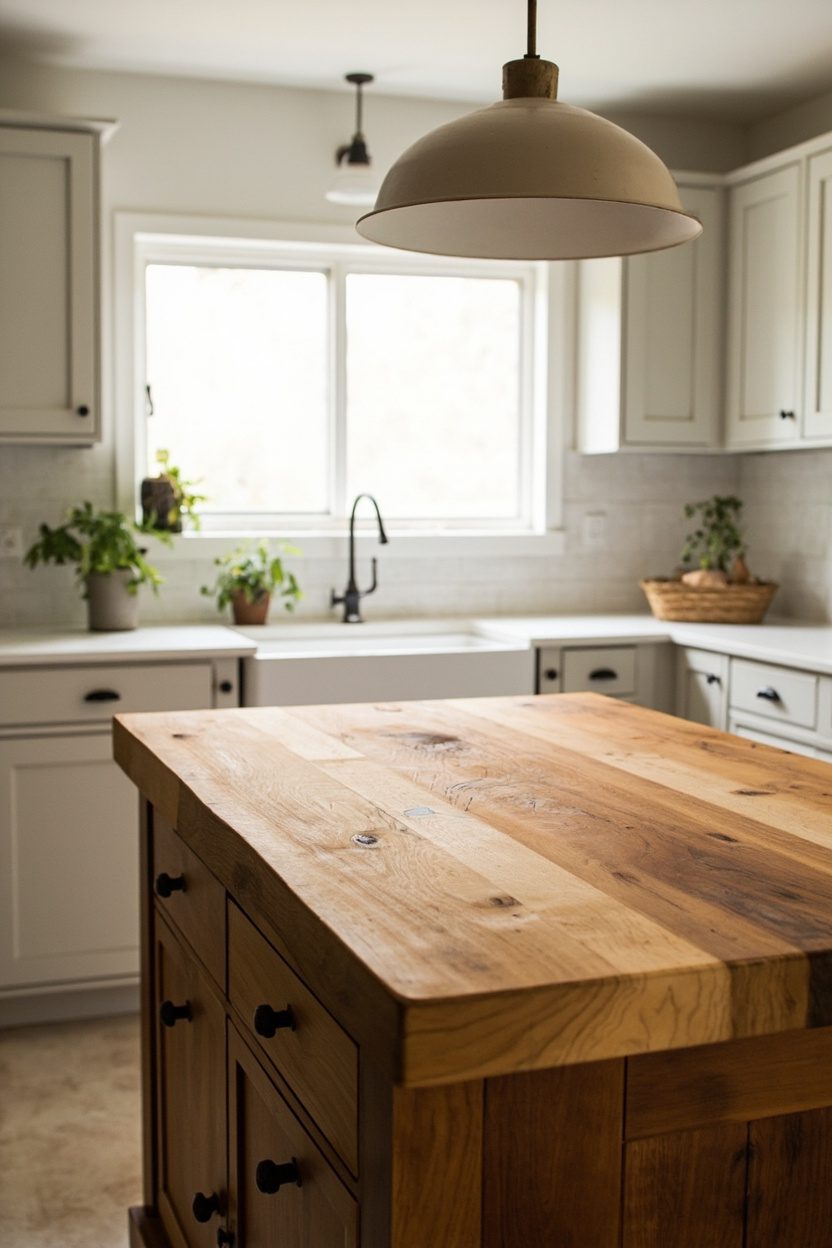
A slim butcher-block island brings warmth and real utility to small farmhouse plans. Opt for a 24 by 48 inch top, rounded corners, and open lower shelves to keep the footprint airy.
Choose hard maple or white oak for durability, then finish with food-safe mineral oil. Because water is the enemy, set a simple trivet zone beside the sink to catch damp dishes.
On the lighting front, a single linen drum pendant keeps it soft. Meanwhile, add a wall sconce over the prep side if a pendant feels heavy in a low ceiling room.
For legs, painted bases look fresh in putty or clay, while a stained base reads classic. Fit locking casters if you need clearance for holiday crowds or deep cleaning days.
Finally, keep tools close: a magnetic knife strip and one rail with S-hooks for towels and ladles. It keeps the top clear, which is the point.
Designer Secret
Treat butcher block like a living surface. Oil monthly at first, then quarterly. Small scratches sand out with 220 grit, a wipe of oil, and patience. It ages handsomely, like good leather.
10. Vintage Brass Hardware
- Effort Level: Weekend DIY.
- Estimated Budget: 100-500.
- Maintenance Level: Low (Wipe clean).
- Best For: Small, low-light spaces.
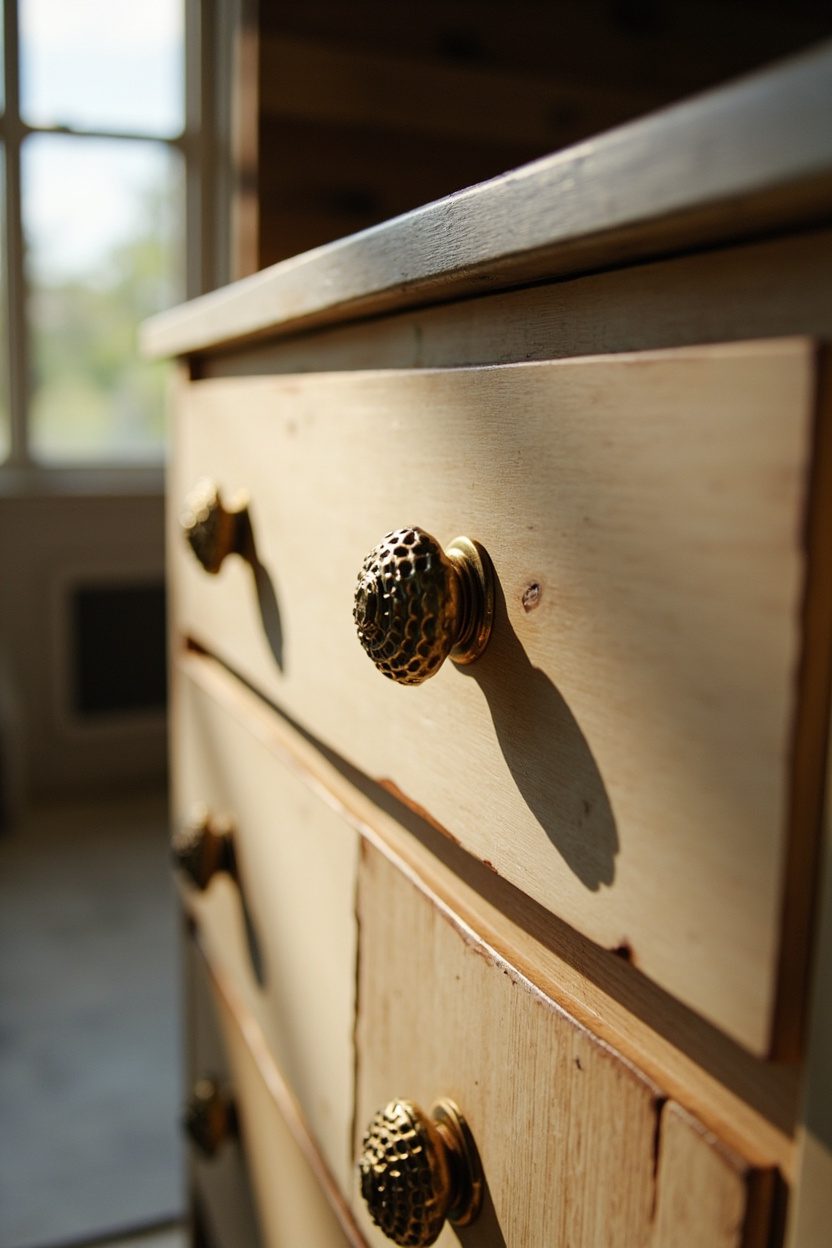
Small farmhouse plans benefit from details that read warm, not weighty. Swapping in unlacquered or antique brass leans classic, yet it still suits compact kitchens and baths.
Choose solid brass, not plated. It patinas gracefully, so your cabinet pulls and latches gain depth rather than looking tired after a year.
Keep profiles slim. Bin pulls at 3 inches, mushroom knobs under 1.25 inches, and backplates with tight margins avoid clutter on narrow drawer faces.
Match undertones across the room. Pair brass with cream paint, oiled oak, and soft black accents, therefore the metal feels intentional, not random.
Mind placement height and spacing. Consistent center lines and a small jig save time and keep sightlines clean in a tight footprint.
Designer Secret
Mix two finishes, but limit them. For example, use aged brass on cabinets and blackened steel on the range or door set. The contrast looks curated and prevents a brassy overload.
Also, anchor the metal story with one vintage piece, like a salvaged thumb latch or a reeded backplate. It gives the new hardware a believable history without blowing the budget.
11. Curved Farmhouse Settees
- Effort Level: Weekend DIY.
- Estimated Budget: 100-500.
- Maintenance Level: Low (Wipe clean).
- Best For: Small, low-light spaces.
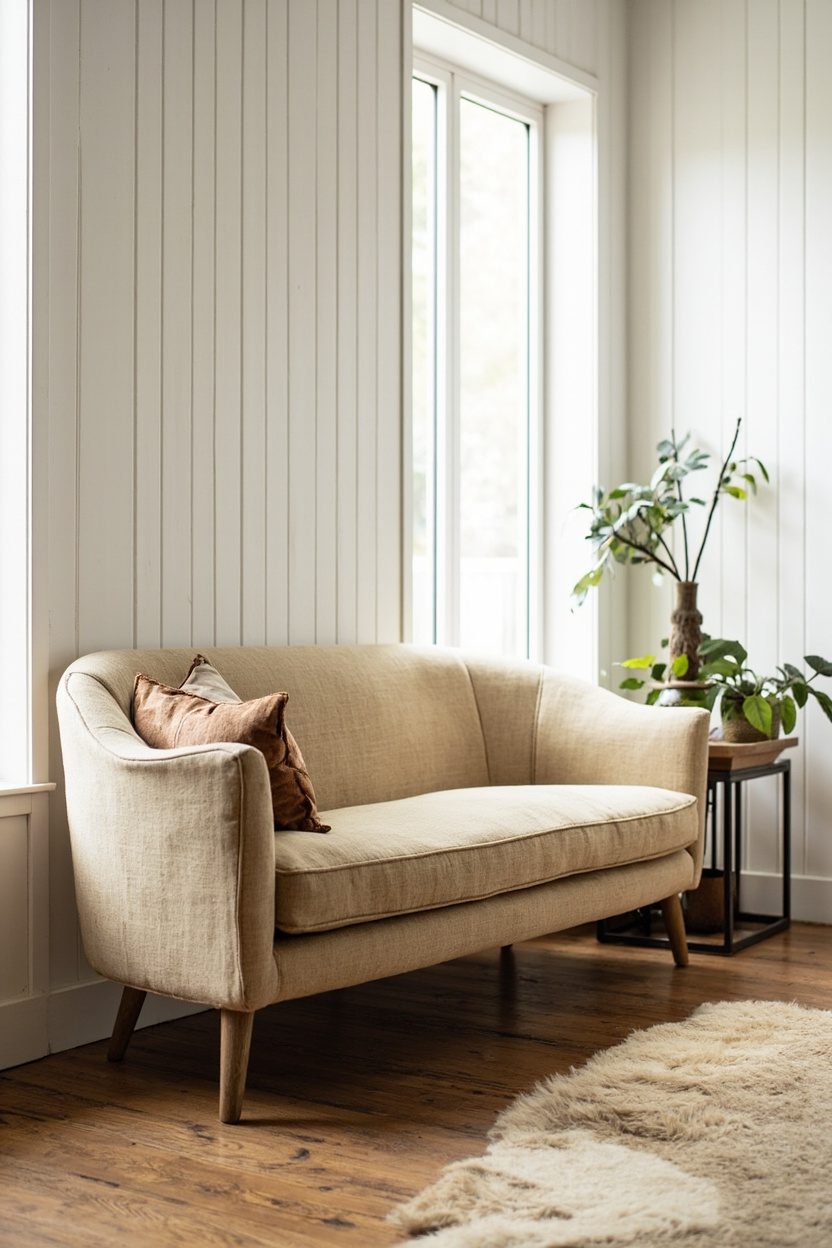
Curved profiles soften tight rooms in small farmhouse plans. A petite, bench-style settee hugs a breakfast nook without stealing walkway width.
Look for lengths between 48 and 66 inches. Meanwhile, a tight seat and a 30 to 33 inch height keep it visually light under windows.
Linen blends and performance tweeds behave best. They wear well with pets and wipeable spills, yet still read cottage-chic next to shaker millwork.
Choose light oak or painted legs in matte black for contrast. Therefore the settee frames out the curve and grounds pale textiles.
Place it on a striped flatweave runner, not a plush rug. The low pile keeps the arc crisp and the room easy to clean after breakfast.
Why This Works?
Straight benches can feel rigid in compact kitchens. A gentle arc tucks into corners, creates a natural conversation zone, and sneaks in seating for one more without extra inches.
Plus, the curve echoes rounded vintage pieces trending in modern farmhouse rooms, as noted by Thrifty and Chic. It is cozy, but it still looks current.
12. Warm Terracotta Palette
- Effort Level: Weekend DIY.
- Estimated Budget: 100-500.
- Maintenance Level: Low (Wipe clean).
- Best For: Small, low-light spaces.
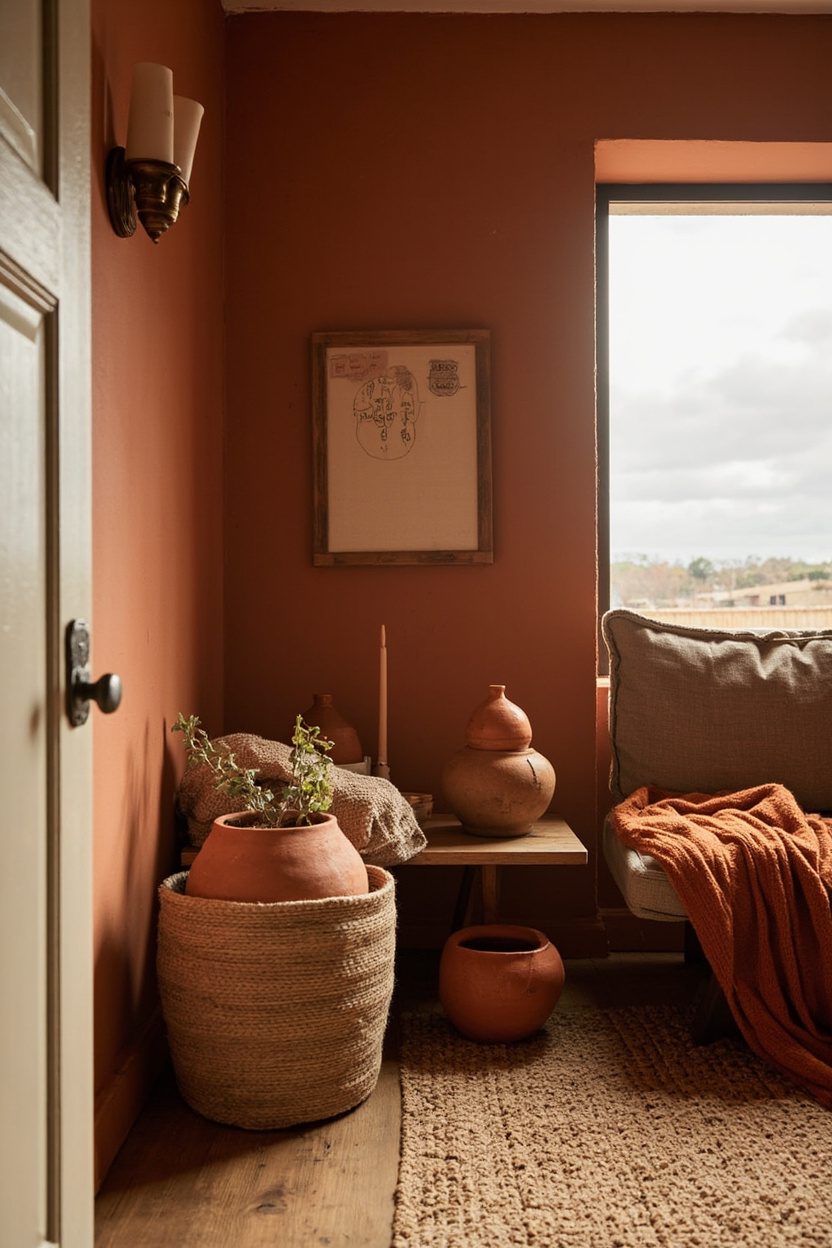
Small farmhouse plans sing with color that flatters low winter light. Terracotta delivers warmth on walls, tile accents, or textiles without closing in the room.
Start with a muted, pink-leaning clay at 60 to 70 percent saturation. It pairs beautifully with creamy trim and brushed brass hardware.
Balance it with natural textures. For example, oiled butcher block, woven jute, and white oak floors prevent the scheme from skewing heavy.
Use the hue in measured hits. A kitchen island, a mudroom beadboard, or terracotta checker tile in a 4 by 4 format can be enough.
Coordinate with deeper notes like forest green or soft black, a direction echoed in 2026 farmhouse palettes by Hello Lovely. The contrast sharpens the warmth.
Real-Talk Warning
When I tried this in my own living room, I first chose a bright, orange terracotta. Under afternoon light, it screamed. I repainted with a dustier clay and everything calmed instantly.
Test three swatches on different walls, then live with them two days. Also, photograph them morning and evening. Small rooms shift fast with light, and terracotta is happiest slightly grayed.
13. Forest Green Feature Walls
- Effort Level: Weekend DIY.
- Estimated Budget: 100-500.
- Maintenance Level: Low (Wipe clean).
- Best For: Small, low-light spaces.
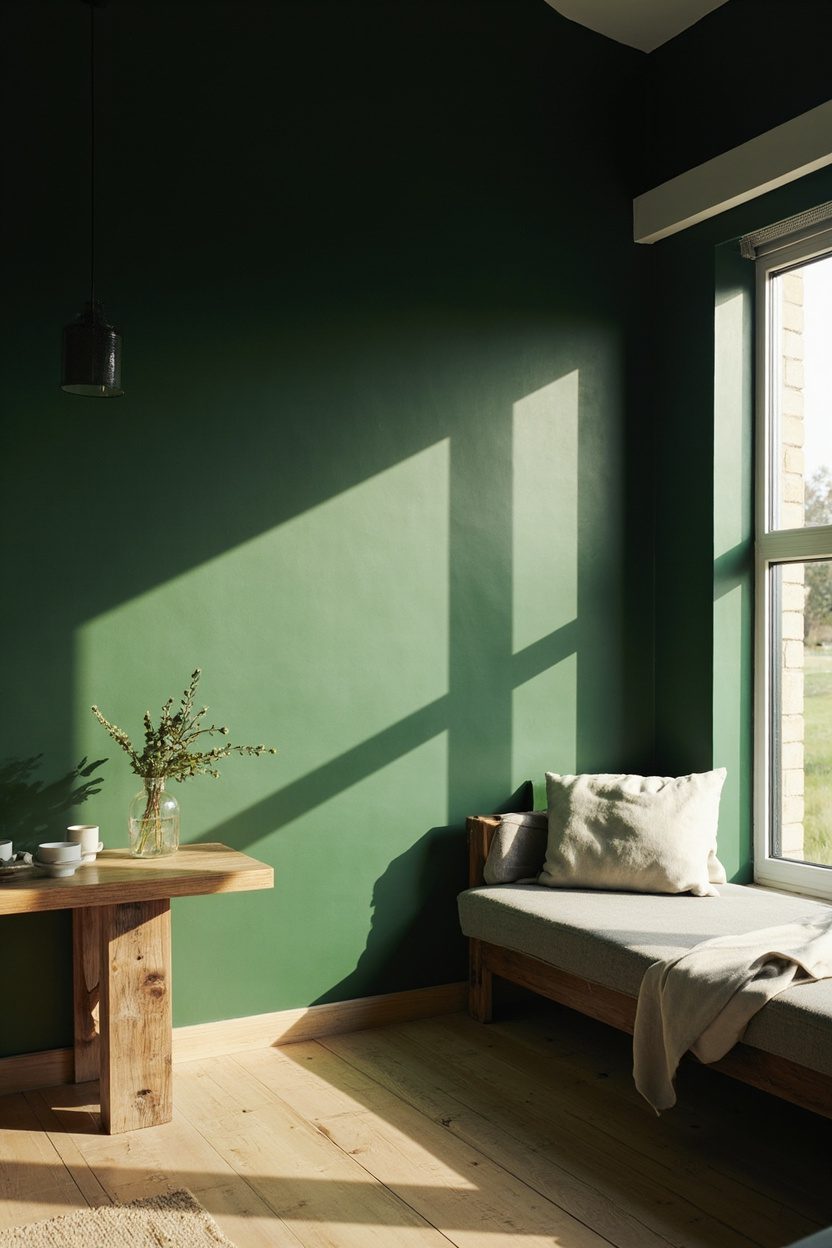
In many small farmhouse plans, a single deep-green wall anchors the main room. It frames vintage woods and black metal, while softening bright whites that can skew stark in compact footprints.
Choose a moody forest green with a muted base, not a bright emerald. Because natural light varies, sample it on two walls and watch it morning to evening before committing.
Pair the green with matte black hardware and linen drapery. The contrast feels tailored, yet the texture keeps it from reading cold or glossy.
Paint the wall behind open shelving or the window seat. It pulls architecture forward and makes collected objects feel intentional, even when storage runs lean.
If your plan is open concept, echo the tone on a kitchen island. However, keep surrounding cabinetry warm white to preserve airiness in under-1,800-square-foot layouts.
Designer Secret
Test three depths of the same green, then choose the darkest that still looks rich at midday. Small rooms handle saturation well, especially when trim stays crisp.
For paint, look for an eggshell finish that hides scuffs but still reads velvety. I also like repeating the green in a narrow runner to link zones without visual clutter.
14. Antique Pine Accents
- Effort Level: Weekend DIY.
- Estimated Budget: 100-500.
- Maintenance Level: Low (Wipe clean).
- Best For: Small, low-light spaces.
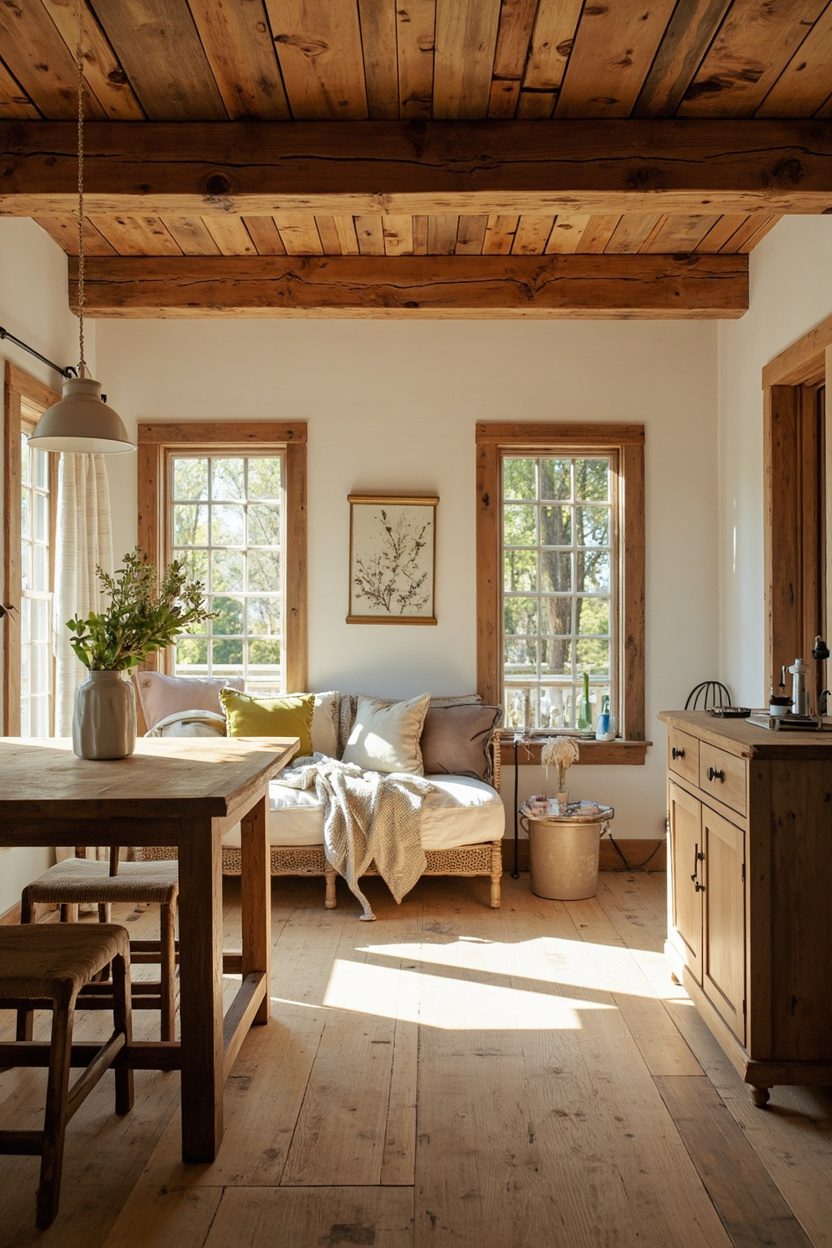
Antique pine settles beautifully into small farmhouse plans because its honey tone warms all the painted surfaces. It brings friendly age without fuss, and it pairs gracefully with iron, stone, and slipcovered linen.
Start with one hero: a slim console, a mantel shelf, or pegged rail. Keep profiles simple, since heavy carving can crowd rooms under 1,800 square feet.
Mind the finish. Choose a water-based matte poly or a hardwax oil that keeps the grain visible. Glossy coatings read suburban, while matte keeps it heritage and tactile.
Balance pine with cooler elements, such as putty walls or honed charcoal. Therefore, the palette feels layered rather than orange or overly rustic.
When budgets are tight, harvest antique pine from salvage yards. A single reclaimed board can become a ledge, a bath shelf, or a narrow headboard cap.
When I tried this in my own living room, I underestimated how yellow some vintage pine can swing under warm bulbs. I swapped to 3000K lamps and added a charcoal throw, and the tone clicked into place.
Real-Talk Warning
Old pine can bleed tannins, especially under water-based finishes. Seal first with a dewaxed shellac so knots do not ghost through paint or topcoat.
Also, place pine away from direct sun where it can deepen too fast.
15 Farmhouse Bedroom Ideas for Couples Who Want Cozy Not Cute gives the topic a complementary decor approach.
FAQ
Eggshell is usually ideal because it diffuses light gently and hides minor wall texture. Satin can feel slick, while matte scuffs faster in busy living rooms and hallways.
Balance it with cooler wall colors, use UV-filtering window film, and choose a clear, non-ambering topcoat. Hardwax oils with low amber shift also help maintain that mellow honey tone.
Yes, but sample generously and consider a slightly warmer green. Add layered lighting, like a linen-shaded floor lamp and picture light, to keep the tone plush rather than murky.
Invest in flooring, lighting, and built-ins because they define the architecture. Save on accent furniture and textiles, which you can refresh later as the space evolves.