


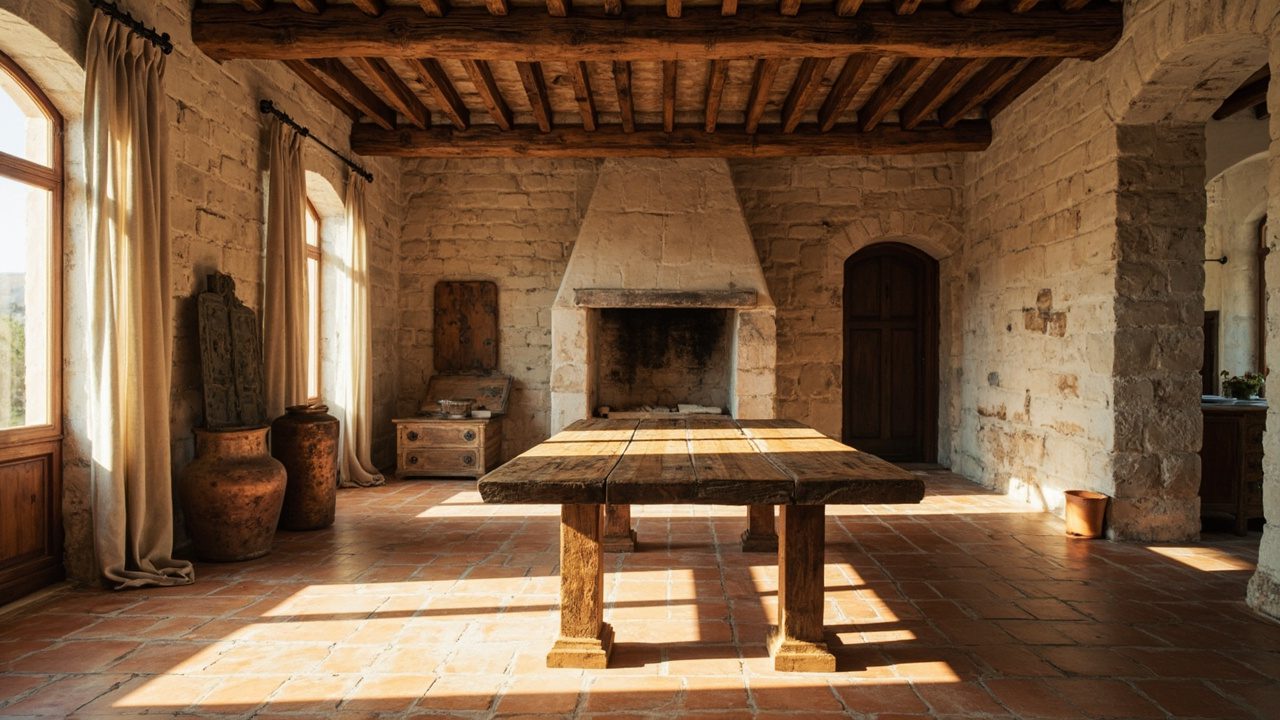
French farmhouse is less about fuss, more about quiet luxury that lives well. Think creamy plaster tones, timeworn woods, and heirloom textiles used with restraint.
Below, I’ve gathered 13 ideas that balance softness and structure. Each one includes practical notes on materials, proportion, and the small choices that make rooms feel considered.
- 1. Soft Neutrals, Muted Hues Palette
- 2. French Blue Accents with Faience
- 3. Gypsum Moldings and Wall Panels
- 4. Ivory and Beige Painted Walls
- 5. Solid Wood Floors with Patina
- 6. Marble Checkered Kitchen Floors
- 7. Carved Oak Buffets and Consoles
- 8. Velvet Upholstered Accent Chairs
- 9. Aged Brass and Metal Trims
- 10. Linen Slipcovers and Stoneware
- 11. Antique Lighting with Candles
- 12. Cottage Bedrooms with Toile
- 13. Weathered Oak Dining Table
- FAQ
1. Soft Neutrals, Muted Hues Palette
- Effort Level: Weekend DIY.
- Estimated Budget: 100-500.
- Maintenance Level: Low (requires dusting).
- Best For: Living rooms, bedrooms.
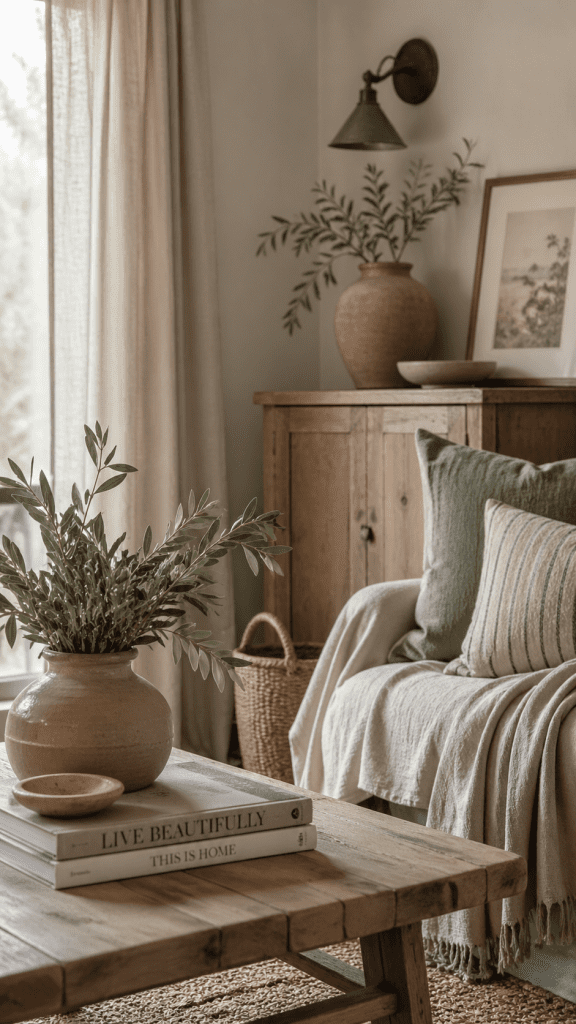
Start with a warm ivory on walls, then layer oatmeal, putty, and pale greige in textiles. Because undertone matters, sample in daylight and evening light.
Mix matte finishes with a soft eggshell on trim for subtle contrast. Also, add one grounded note, like a tobacco linen or natural oak, so the scheme does not float.
For budget paint picks and hardware swaps that keep the palette consistent, the ideas in French Farmhouse Kitchen On Budget translate easily to living spaces.
2. French Blue Accents with Faience
- Effort Level: Weekend DIY.
- Estimated Budget: 100-500.
- Maintenance Level: Low (requires dusting).
- Best For: Kitchens, dining nooks.
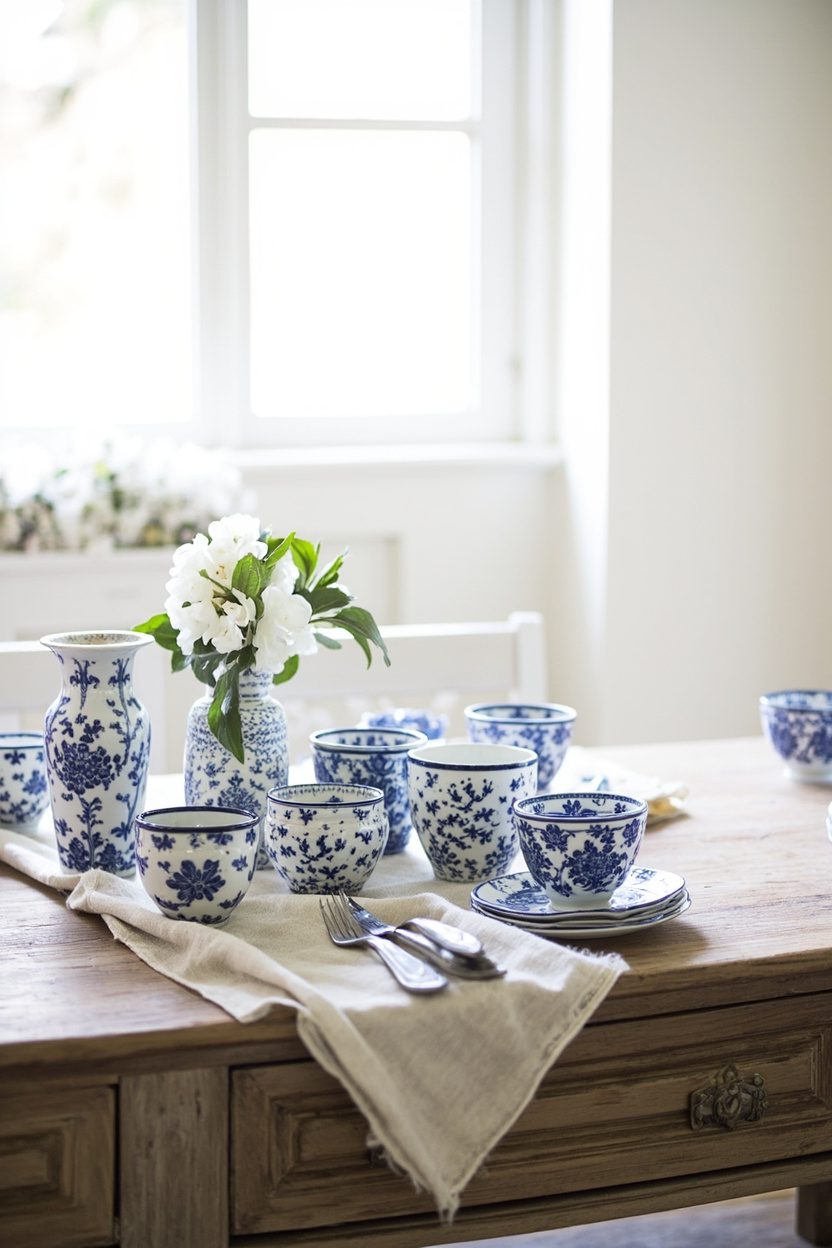
Introduce French blue in measured hits, like two faience plates over a console or a striped linen runner. Keep it to one or two tones for harmony.
Balance the cool blue with warm stoneware or brass, because metal warmth keeps the look lived in. Avoid matching every blue, which reads theme-y.
For context on heritage hues and why blue-white ceramics endure, this Modern Heritage guide to French Blue offers helpful references.
3. Gypsum Moldings and Wall Panels
- Effort Level: Pro install or advanced DIY.
- Estimated Budget: 500+.
- Maintenance Level: Low (occasional caulk touch-ups).
- Best For: Entryways, formal living rooms.
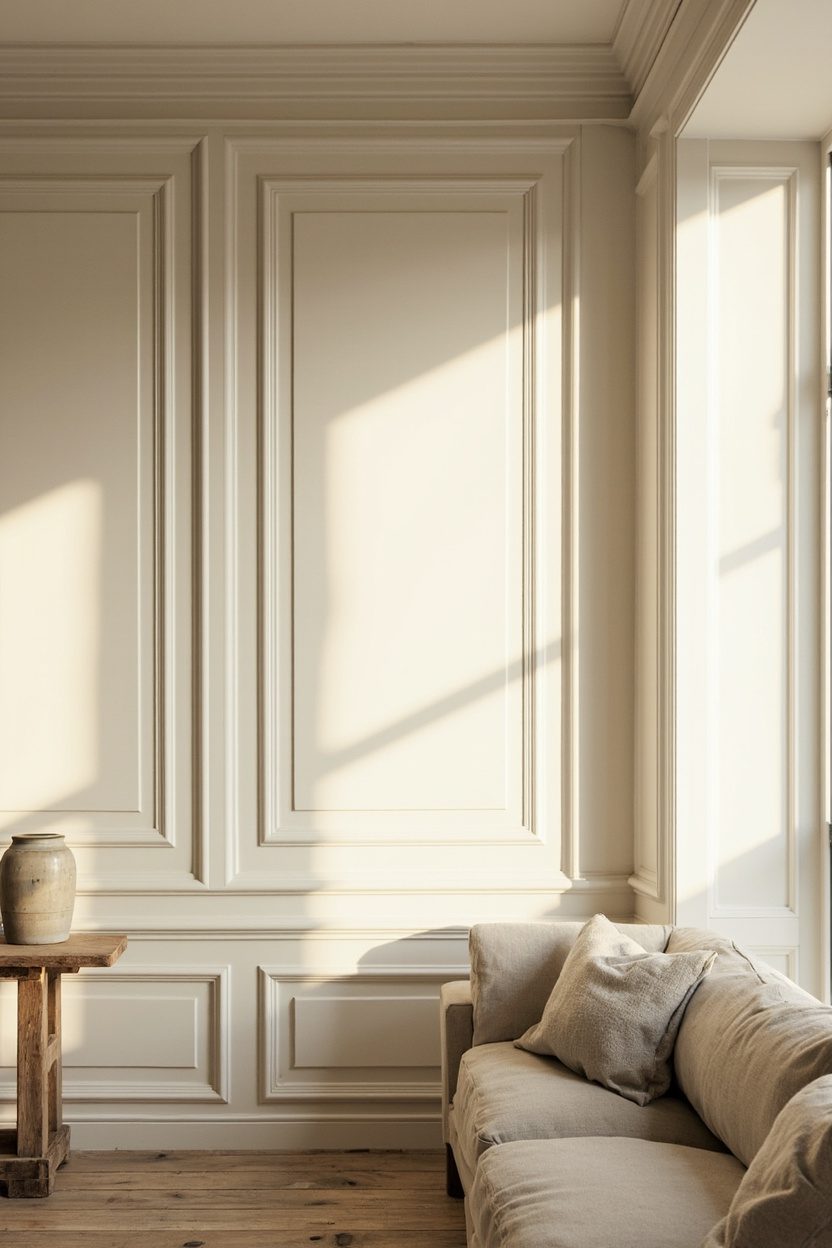
Frame walls with simple gypsum chair rails and slim panel molding, then finish in ivory or beige. Proportion panels to thirds or half-wall heights for balance.
Use a high-quality primer before painting to sharpen profiles. Meanwhile, align outlet covers within panel fields so trim lines stay uninterrupted.
Current French interiors favor pared-back profiles over heavy scrolls, as noted in this trend briefing. For rustic pairings, layer with the moody textures in Dark Farmhouse Decor for depth.
4. Ivory and Beige Painted Walls
- Effort Level: Weekend DIY.
- Estimated Budget: 100-500.
- Maintenance Level: Low (wipeable finish).
- Best For: Living rooms and bedrooms.
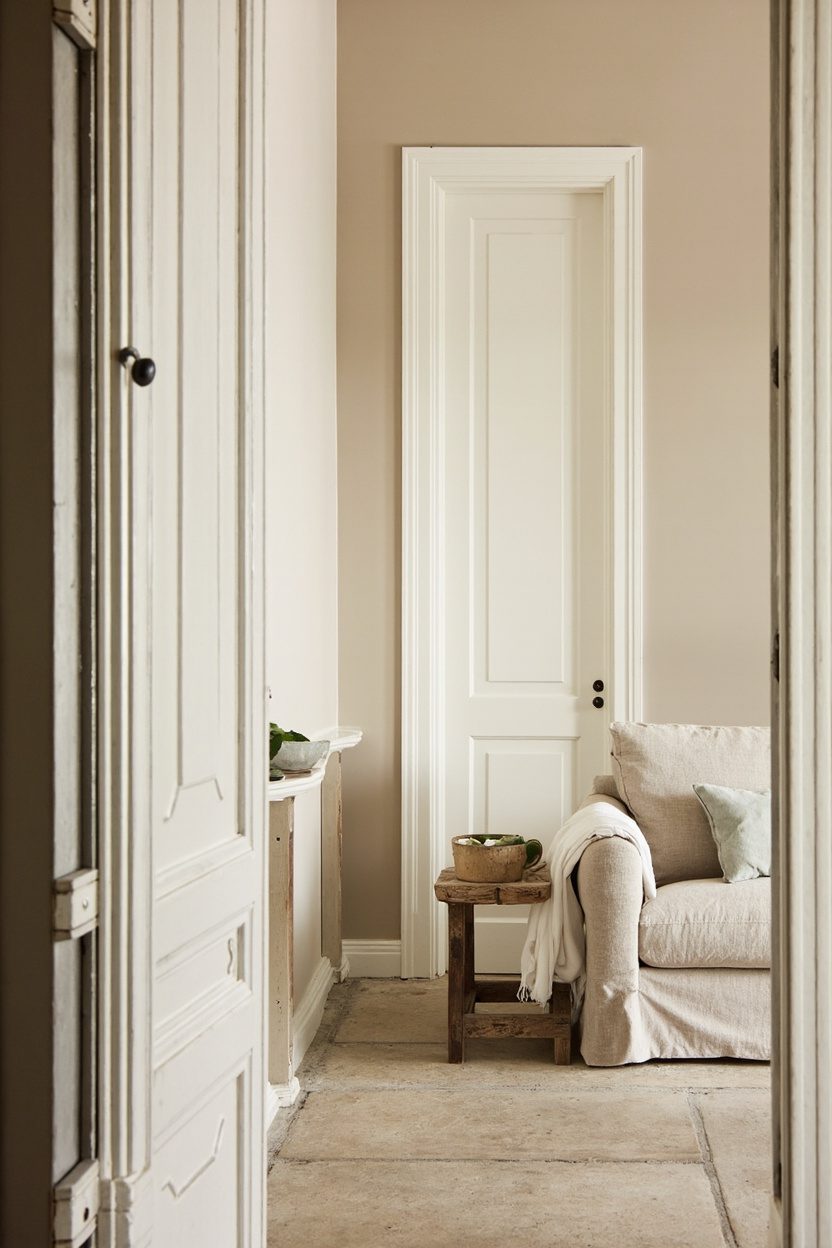
For a French farmhouse envelope, choose soft ivory or warm beige with a matte or eggshell sheen. It flatters rustic beams and antique wood without glare.
Test three tones on two walls, because light shifts. In north light, lean warmer, for example Benjamin Moore White Dove; in bright rooms, try Farrow & Ball Joa’s, White.
If you love paneling, simply apply moldings painted to match add quiet architecture. Current French trends also favor gypsum wall panels and ivory tones, as noted by Indeco Material.
5. Solid Wood Floors with Patina
- Effort Level: Pro install recommended.
- Estimated Budget: 500+.
- Maintenance Level: Medium (occasional re-oil).
- Best For: Main living areas.
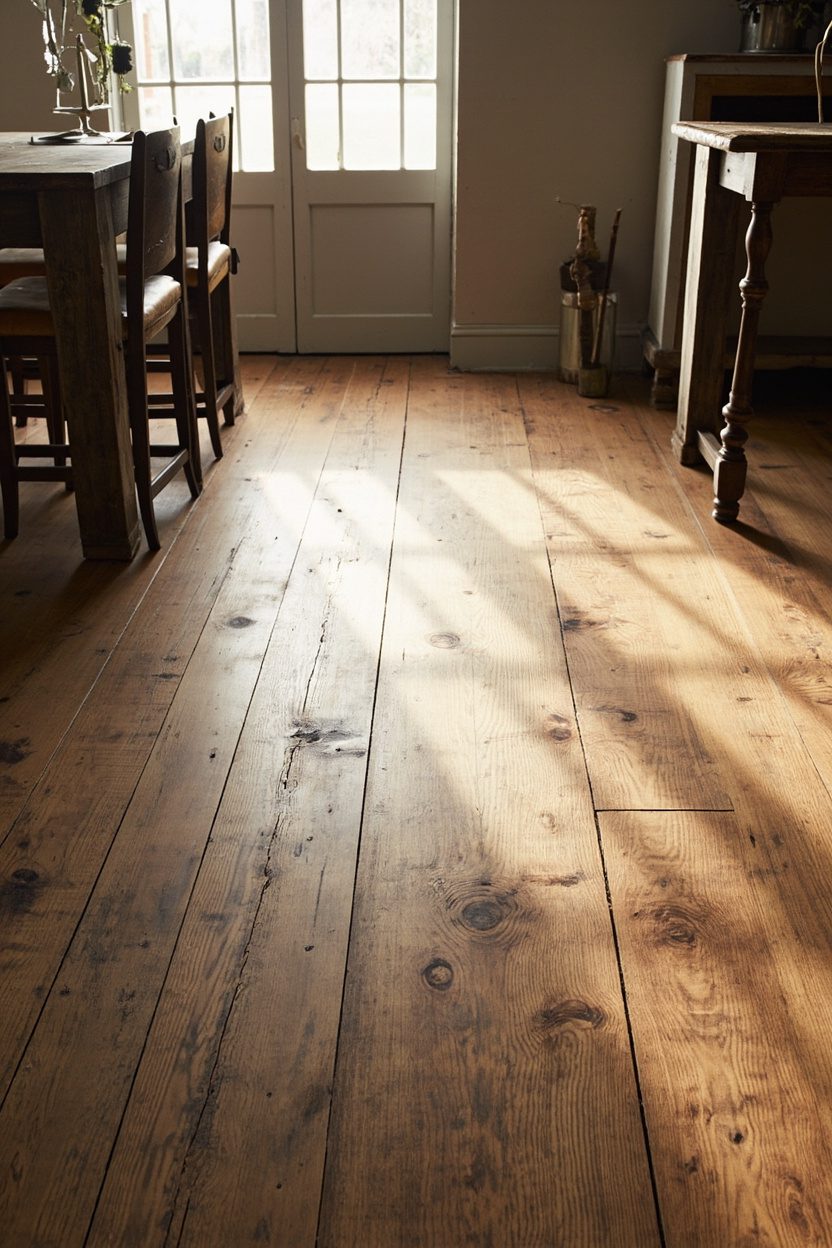
Choose wide-plank oak in 6 to 9-inch boards, because proportion matters under big farmhouse ceilings. A low-sheen oil finish lets grain and knots read as character.
When I tried this in my own living room, I skipped a sample board, and the stain pulled red against cool walls. Always sample on your subfloor, and specify a cooler, desaturated brown to dodge orange tones.
If the budget is tight, mix reclaimed boards in hallways and new planks in larger rooms, then color-match on site.
For styling, layer a hand-knotted rug with 8 to 12 inches of wood showing all around.
6. Marble Checkered Kitchen Floors
- Effort Level: Pro tile setter.
- Estimated Budget: 500+.
- Maintenance Level: Medium (seal annually).
- Best For: Kitchens and entries.
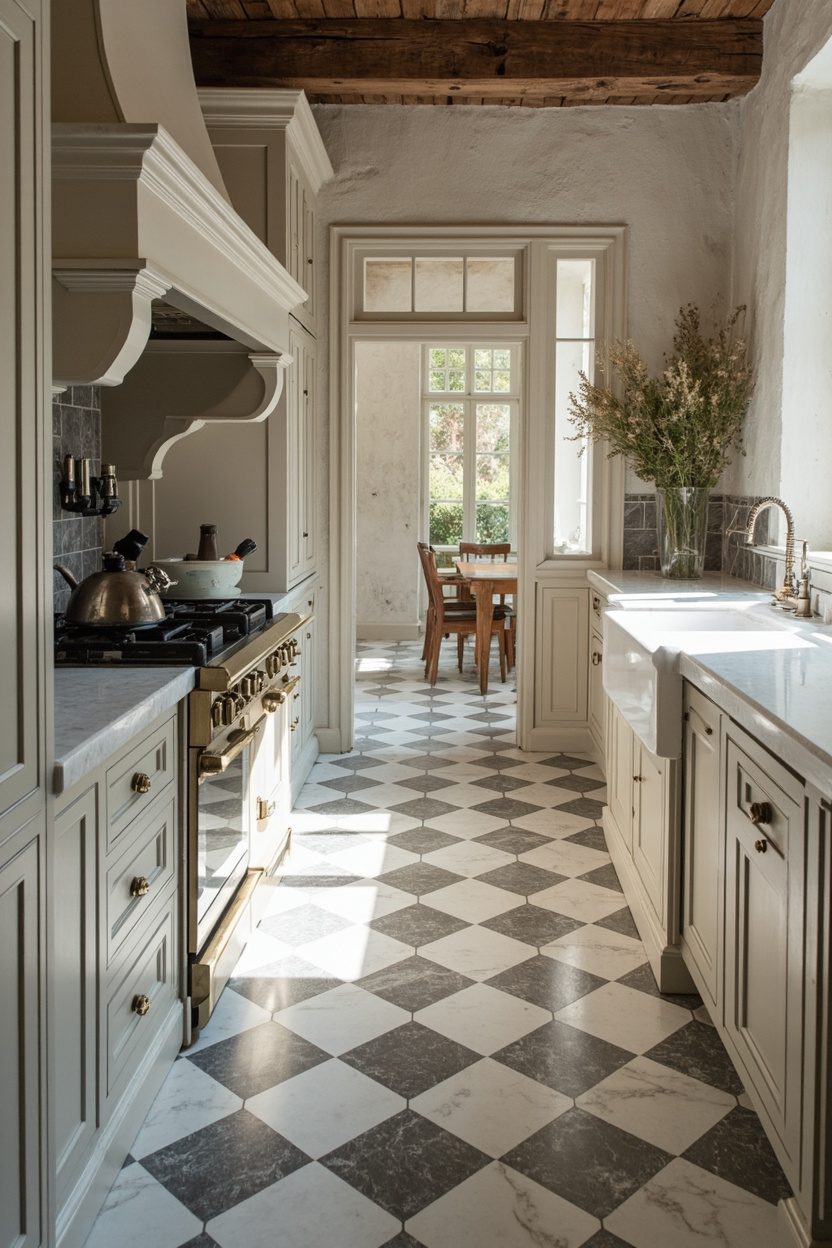
Carrara and Bardiglio or Nero Marquina laid on the diagonal gives classic French farmhouse energy without shouting. Keep tiles 12 by 12 for balance, or 16 by 16 in large rooms.
Dry-lay to perfect the pattern, then set with tight 1/16 inch grout lines, because wide joints cheapen the look. Seal before and after grouting to prevent marble haze.
If you want a softer read, swap black for a mid-gray to reduce contrast. Recent tours spotlight muted checkers alongside soft neutrals, a note echoed in this 2026 decor refresh.
For wall art near the kitchen sitting nook, these above-couch ideas translate well to a banquette wall.
7. Carved Oak Buffets and Consoles
- Effort Level: Weekend treasure hunt.
- Estimated Budget: 500+.
- Maintenance Level: Low (requires dusting).
- Best For: Dining rooms and long halls.
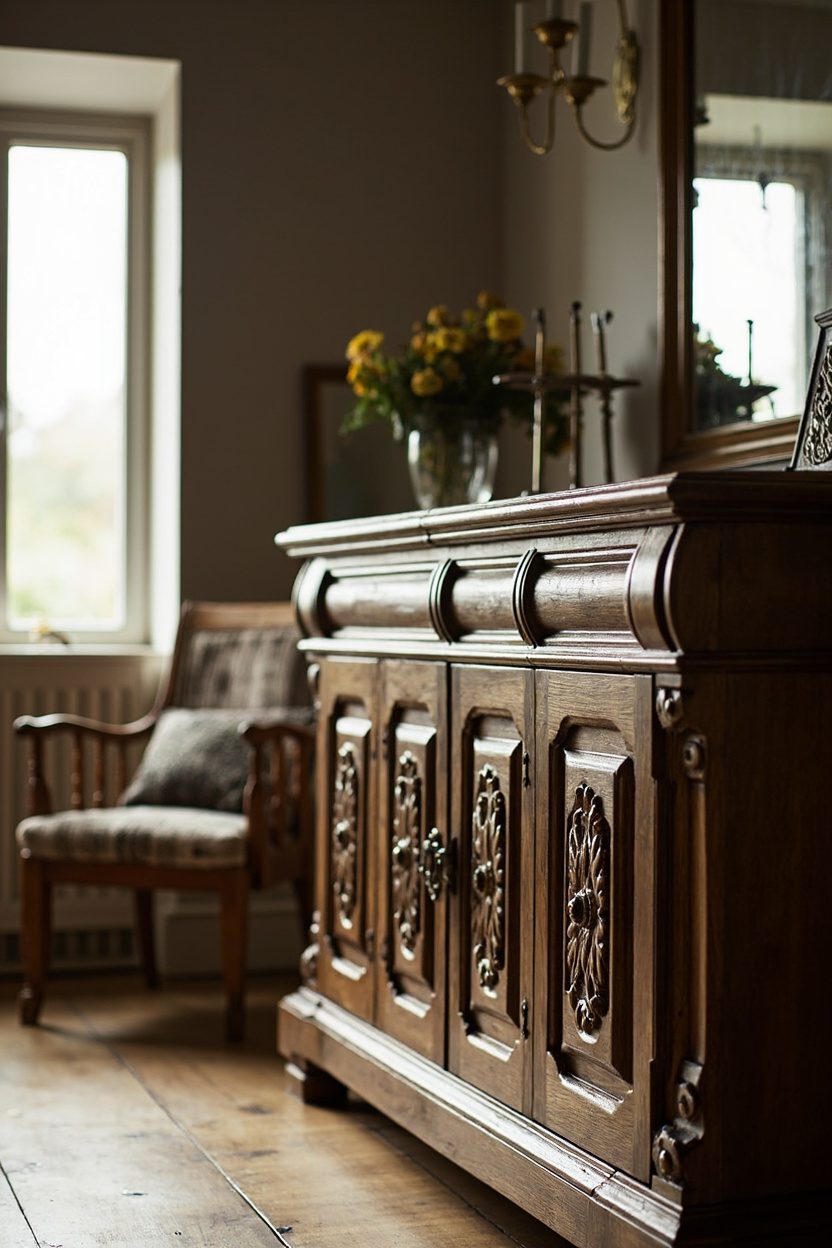
Look for solid oak with hand-carved aprons and cabriole legs, not routed MDF. The weight and grain give true French farmhouse gravitas.
Style with a restrained vignette, like a linen runner, three ceramic pitchers, and one antique mirror. Keep proportions generous, not cluttered.
If the finish skews orange, mute it with a light matte wax or a wash of limed wax. Avoid high gloss, because it kills the patina.
8. Velvet Upholstered Accent Chairs
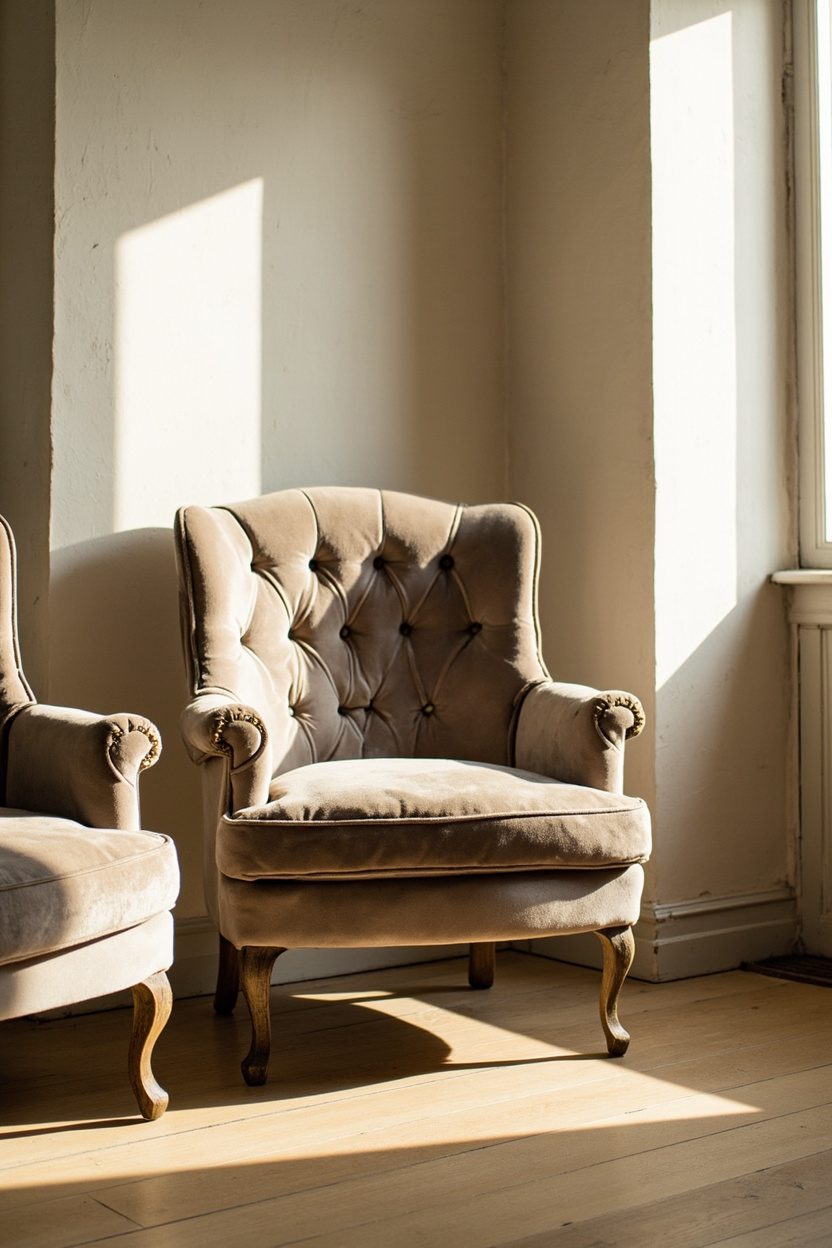
- Effort Level: Simple swap-in.
- Estimated Budget: 100-500.
- Maintenance Level: Medium (spot clean, gentle brush).
- Best For: Living rooms and bedrooms.
Choose tight seats with slender turned legs or a delicate slipper profile. Muted moss, mushroom, or French blue feels luxe quietly.
Place as a pair flanking a stone fireplace or a carved console for balance. Leave 18 inches between chairs for a small drinks table.
Velvet marks easily, so brush the nap in one direction and rotate the cushions. Performance velvet helps in busy homes, yet still reads refined.
9. Aged Brass and Metal Trims
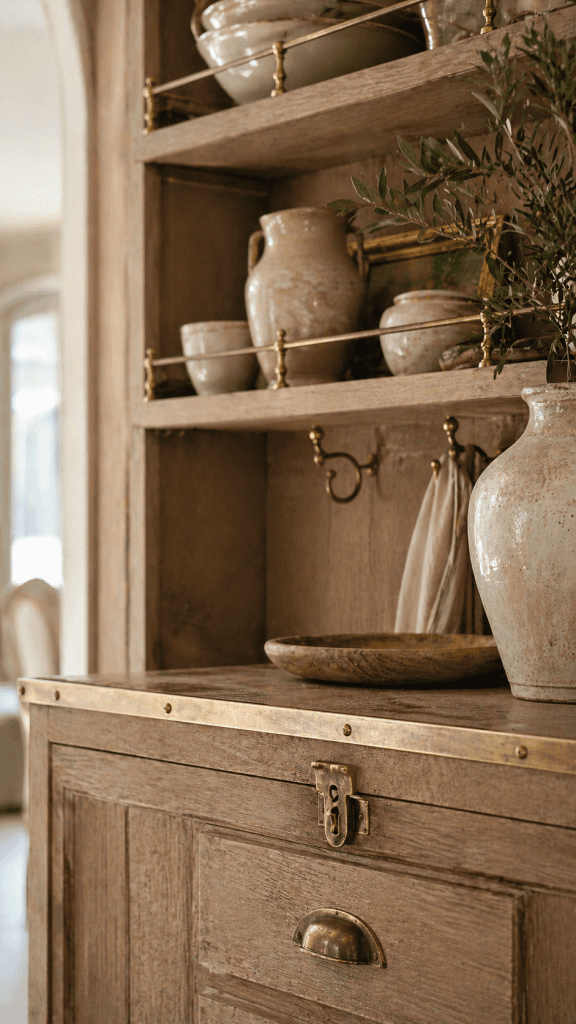
- Effort Level: Afternoon update.
- Estimated Budget: Under 100.
- Maintenance Level: Low (occasional polish optional).
- Best For: Kitchens and entries.
Swap shiny hardware for unlacquered brass latches, bin pulls, and hooks. The gentle tarnish pairs beautifully with French farmhouse woods.
Layer in a petite gallery rail on open shelves or a brass edge on a console. Keep profiles slim so the metal reads as jewelry, not armor.
For authenticity, let the brass age naturally instead of coating it. Current French interiors embrace this softness, including carved wood with metal trims, as noted by Indeco Material.
10. Linen Slipcovers and Stoneware
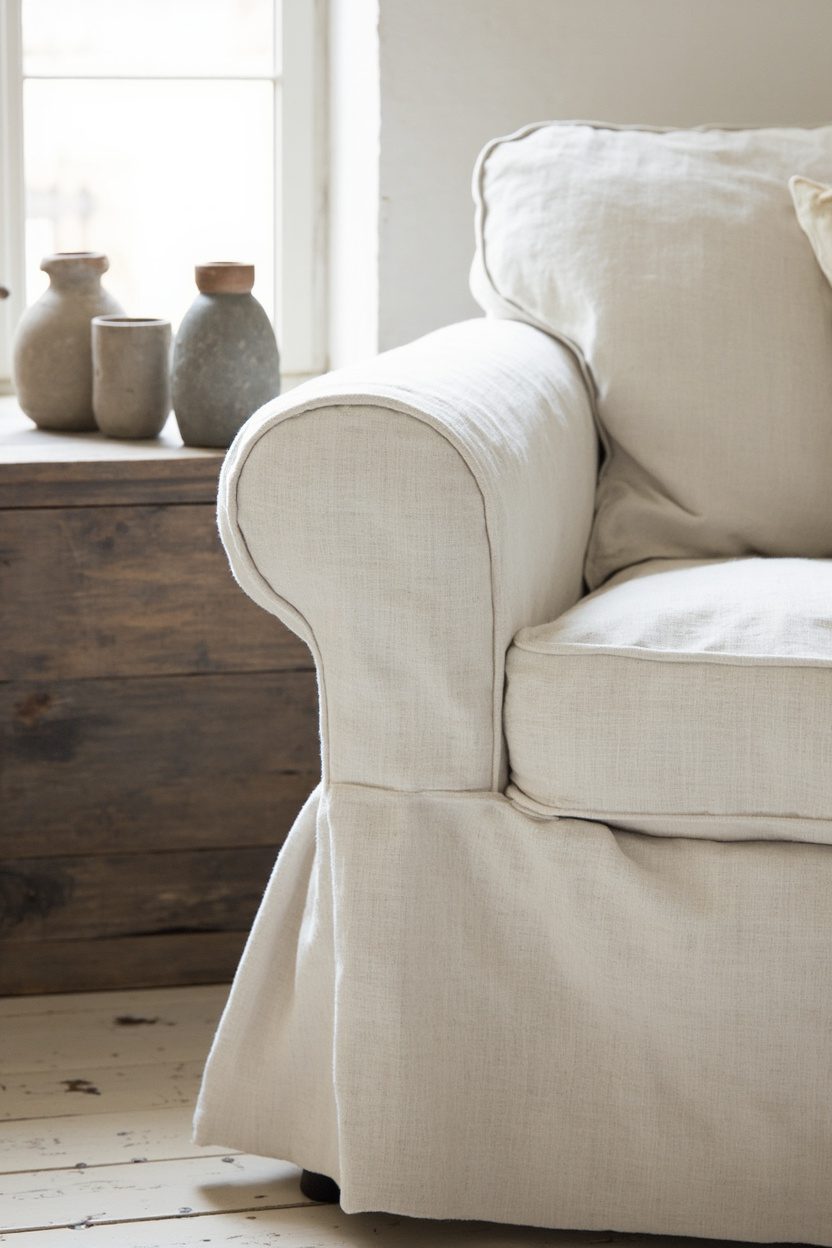
- Effort Level: Weekend DIY.
- Estimated Budget: 100-500.
- Maintenance Level: Medium (washable covers).
- Best For: Renters.
For true French farmhouse ease, drape sofas and dining chairs in prewashed linen slipcovers. Choose a weighty 10 to 12-ounce fabric so it puddles softly, not stiffly.
Balance the textile with honest materials. Group antique stoneware jugs and confit pots on a sideboard, leaving negative space so the silhouettes read.
If you are budgeting, slipcover just seat cushions first, then add matching ties to unify mismatched chairs. Vintage stoneware is plentiful at markets, so mix creamy glaze with matte earthenware.
For kitchens, these layers pair beautifully with budget kitchen updates in the same palette, because the textures do the heavy lifting.
11. Antique Lighting with Candles
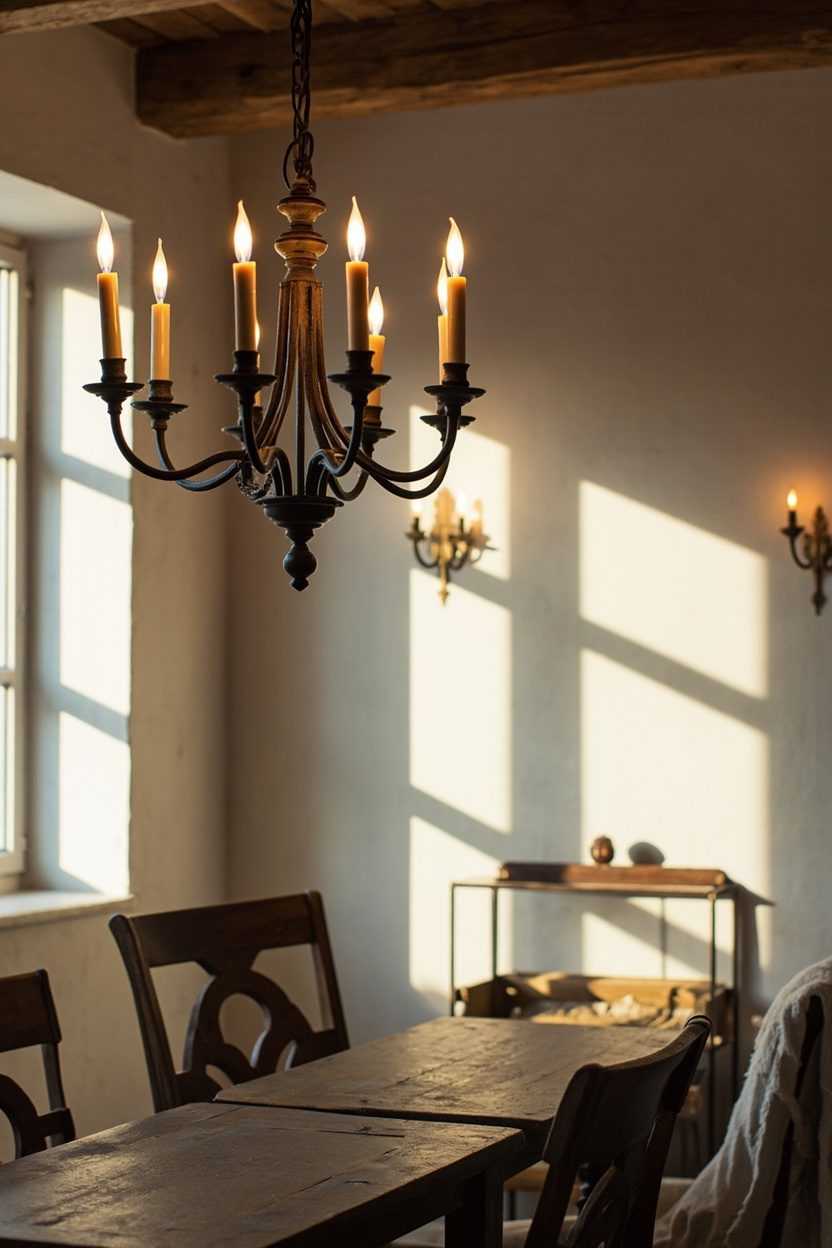
- Effort Level: Weekend DIY.
- Estimated Budget: 100-500.
- Maintenance Level: Medium (wax cleanup, dusting).
- Best For: Dining rooms.
Marry a timeworn chandelier with real taper candles for that gentle, flickering patina. If wiring is dated, use beeswax tapers in safe hurricane sleeves during meals only.
Look for curved arms, cast brass, or tole leaves, then keep shades in linen or parchment. Scale matters, so aim for a fixture 12 inches smaller than the table width.
For apartments, install a plug-in pendant and style candlesticks on the table instead. Choose unscented beeswax to avoid competing with food, a classic French farmhouse move supported by current Parisian trends on walls and lighting finishes.
If the living area skews dramatic, tie in iron accents you already own, or borrow notes from dark farmhouse so the metalwork feels intentional.
12. Cottage Bedrooms with Toile
- Effort Level: Weekend DIY.
- Estimated Budget: 100-500.
- Maintenance Level: Low (spot clean, wash on cold).
- Best For: Small bedrooms.
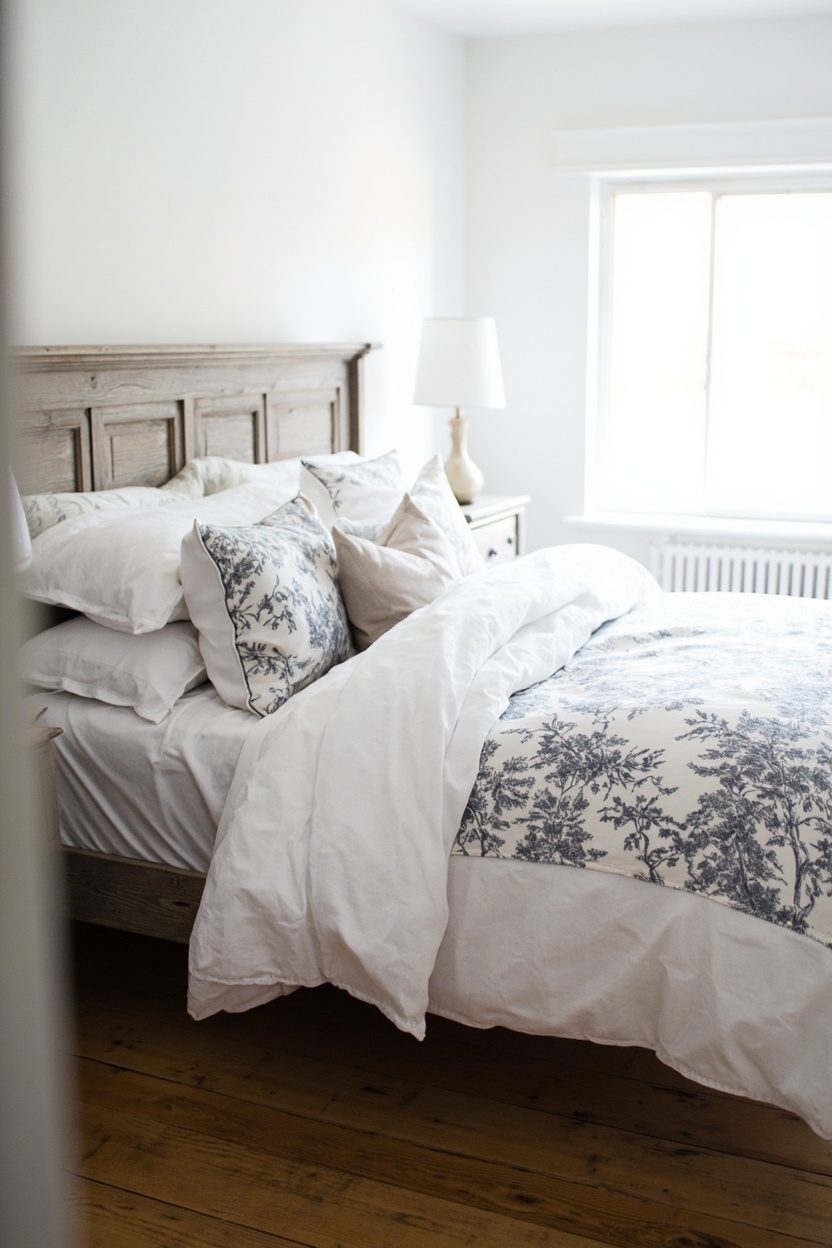
Toile belongs in a French farmhouse bedroom, but keep it focused. Use it on drapery or a duvet, then ground with chalky walls and a simple iron bed.
Choose a single color print, like French blue or sepia, so the scene reads restful. If walls are textured, a small ticking stripe on shams keeps the look from feeling busy.
When I tried toile on both curtains and the headboard, it overwhelmed a narrow room. I scaled back to a toile duvet and plain linen panels, and the architecture breathed again.
For a polished palette, layer in heritage blues that reference historic faience.
If you prefer a casual note, pair the bed wall with a slim rustic shelf and restrained art, echoing ideas from bookshelf styling.
13. Weathered Oak Dining Table
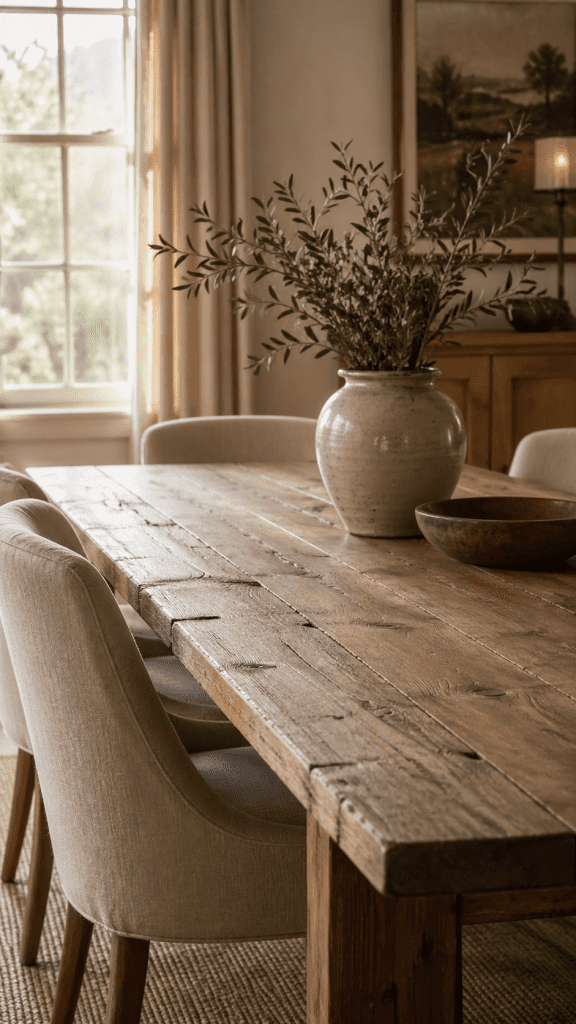
Start your French farmhouse story with a hefty oak table, 36 to 40 inches wide, for everyday ease. Choose a matte wax finish so spills wipe, but patina still builds.
Pair with woven rush seats for texture, or slipcovered chairs for softness. However, avoid glossy stains, which read suburban rather than timeworn.
FAQ
Think chalky neutrals first, like ivory, putty, mushroom, and warm gray, with small moments of French blue or soft sage. These hues keep rooms gentle and light while letting wood and stone read as the main event.
Limit repeating motifs, like signs or roosters, and focus on material honesty. Mix two or three real textures, such as linen, oak, and iron, then edit accessories so the largest shapes carry the mood.
Yes, if silhouettes are clean and colors are quiet. A simple modern sofa in bone linen or a slim metal floor lamp can sit comfortably beside a rustic table, because balance, not imitation, is the goal.
Use warm lamps around 2700K to flatter plastered walls and aged metals. Cooler bulbs can make brass look brassy and desaturate the nuanced neutrals that define the style.