


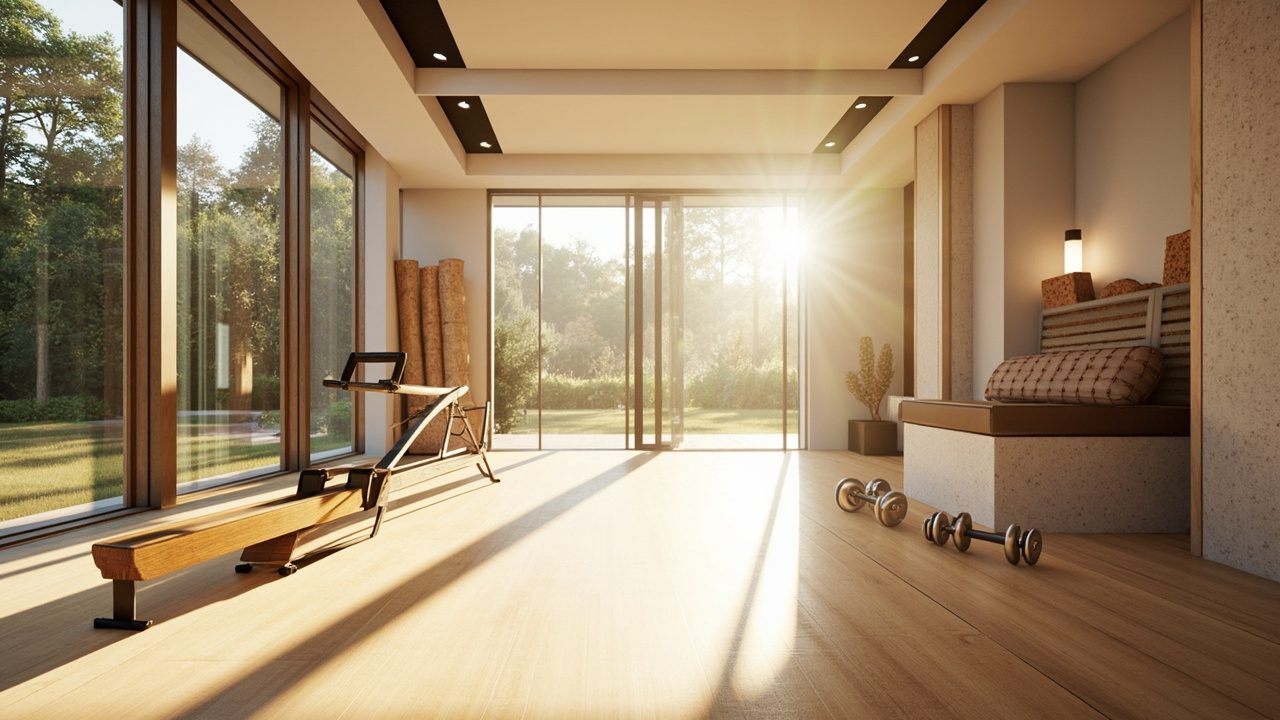
Designing a home gym that gets real use means treating it like any other important room in the house, not a closet of forgotten equipment.
Start by deciding the primary purpose (strength, cardio, mobility) and allocate real square footage to it; even a defined 6 × 8-foot strength zone changes behavior compared with a scatter-of-weights approach.
Prioritize sightlines, durable finishes, and lighting so the space reads as intentional rather than temporary.
A successful gym also respects the household: store gear out of circulation, dampen noise for shared walls, and choose surfaces that survive sweat and drops.
Commit to one cohesive palette and a few high-impact investments, a good mat, a stable rig, or a foldaway cardio piece, then complement with affordable accessories.
- 1. Multifunctional Zones
- 2. Built-In Pull-Up Bar
- 3. Compact Folding Equipment
- 4. Mirrored Accent Wall
- 5. Biophilic Greenery
- 6. High-Contrast Flooring
- 7. Integrated Storage Walls
- 8. Smart Lighting Scenes
- 9. Acoustic Soundproofing
- 10. Outdoor Backyard Studio
- 11. Vintage Strength Corner
- 12. Minimalist Weight Rack
- 13. Wall-Mounted TVs
- 14. Glass Partitioning
- 15. Warm Wood Finishes
- 16. Flexible Flooring Tiles
- Final Thoughts
- FAQ
1. Multifunctional Zones
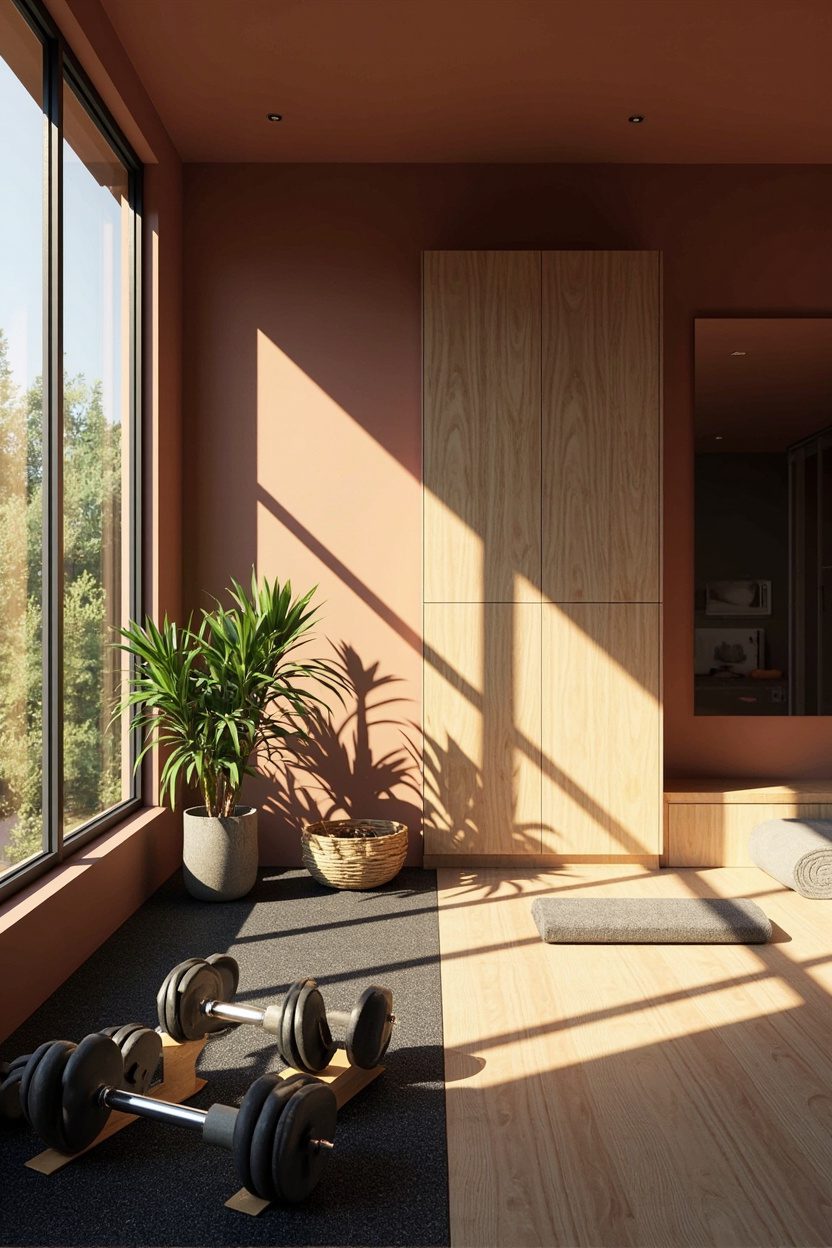
Treat the room as a series of purpose-built pockets: a strength corner with a rack, a mobility strip for stretching and yoga, and a cardio bay for a treadmill or bike. Physically define each zone with flooring changes — 6mm horse stall rubber under weights, cork for mobility, and textured vinyl for cardio — so equipment sits where it belongs and the eye reads order, not chaos.
Dimension everything to movement patterns: leave at least 36–48 inches in front of a rack for bar path and 24–30 inches on either side for landing plates. A deliberate layout prevents collisions and forces you to store gear properly. Avoid the mistake of cramming a full rack into a tight corner; scale down to a half rack or wall-mounted anchors if you have under 8 feet of clear width.
What to Focus On
- Flooring transition: rubber under weights, cork or EVA for mobility, vinyl for cardio machines.
- Clearances: 36–48 inches in front of racks, 24–30 inches side clearance for safe movement.
- Visual separation: low shelving or a bench to demarcate zones without blocking sightlines.
- Storage strategy: vertical racks and wall hangers to keep zones unobstructed.
2. Built-In Pull-Up Bar
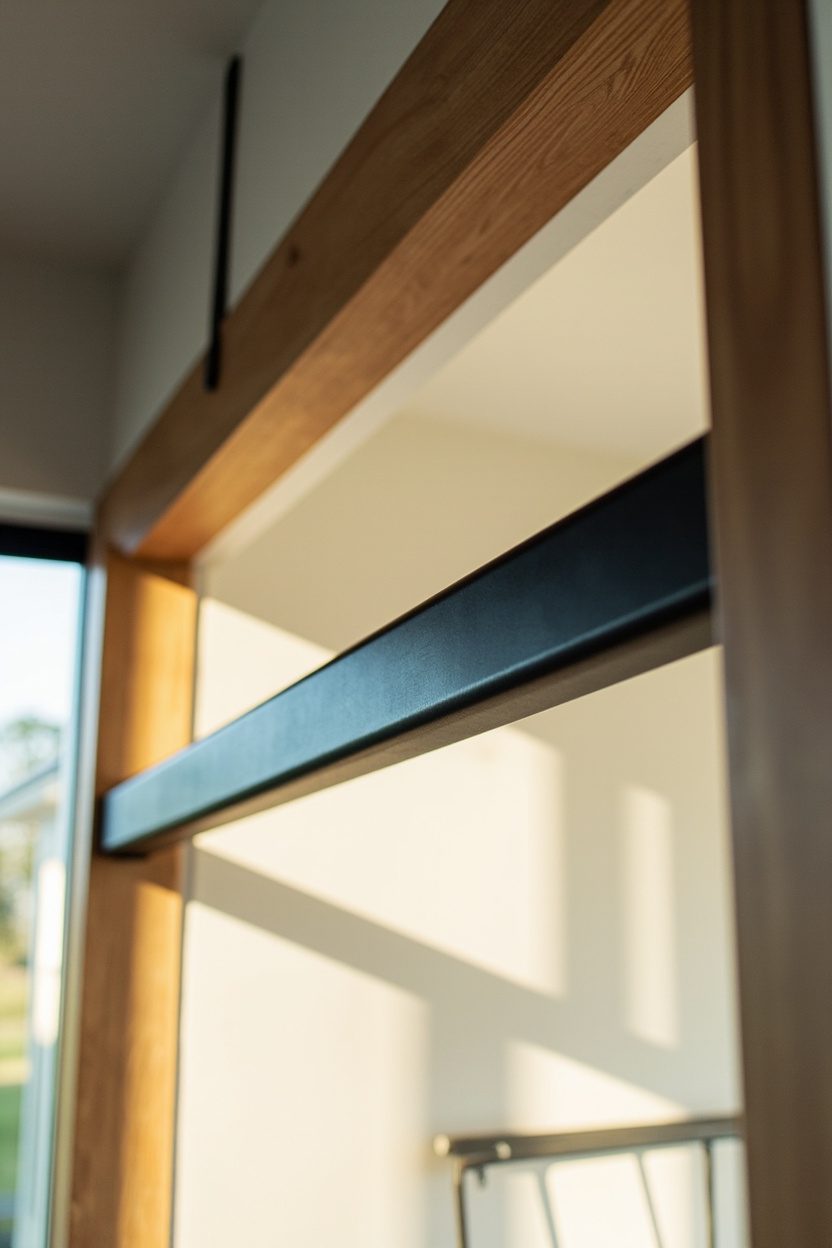
Install an integrated pull-up bar into a stud-reinforced wall beam or a ceiling-mounted frame to avoid freestanding clutter and to add a daily-use strength anchor. Choose a steel bar with a 1.25-inch diameter and knurled grips for secure holds; if you prefer less permanence, use a wall-mounted unit that bolts into multiple studs and is rated for at least 500 pounds.
Position the bar over a rubberized landing pad and at a height that accommodates kipping and full extension — typically 7.5 to 8.5 feet depending on ceiling height — and include adjacent mounting points for bands and suspension trainers. A common mistake is mounting into drywall alone; always reinforce with blocking or use a framed rig to protect both the structure and your safety.
Essential Elements
- Bar spec: steel, 1.25-inch diameter, knurled grips, 500+ lb rating.
- Mounting: bolt into studs/blocking or tie into a framed rig for safety.
- Clearance: 7.5–8.5 ft height for full ROM and kipping clearance.
- Accessory anchors: include band pegs and suspension trainer points nearby.
3. Compact Folding Equipment
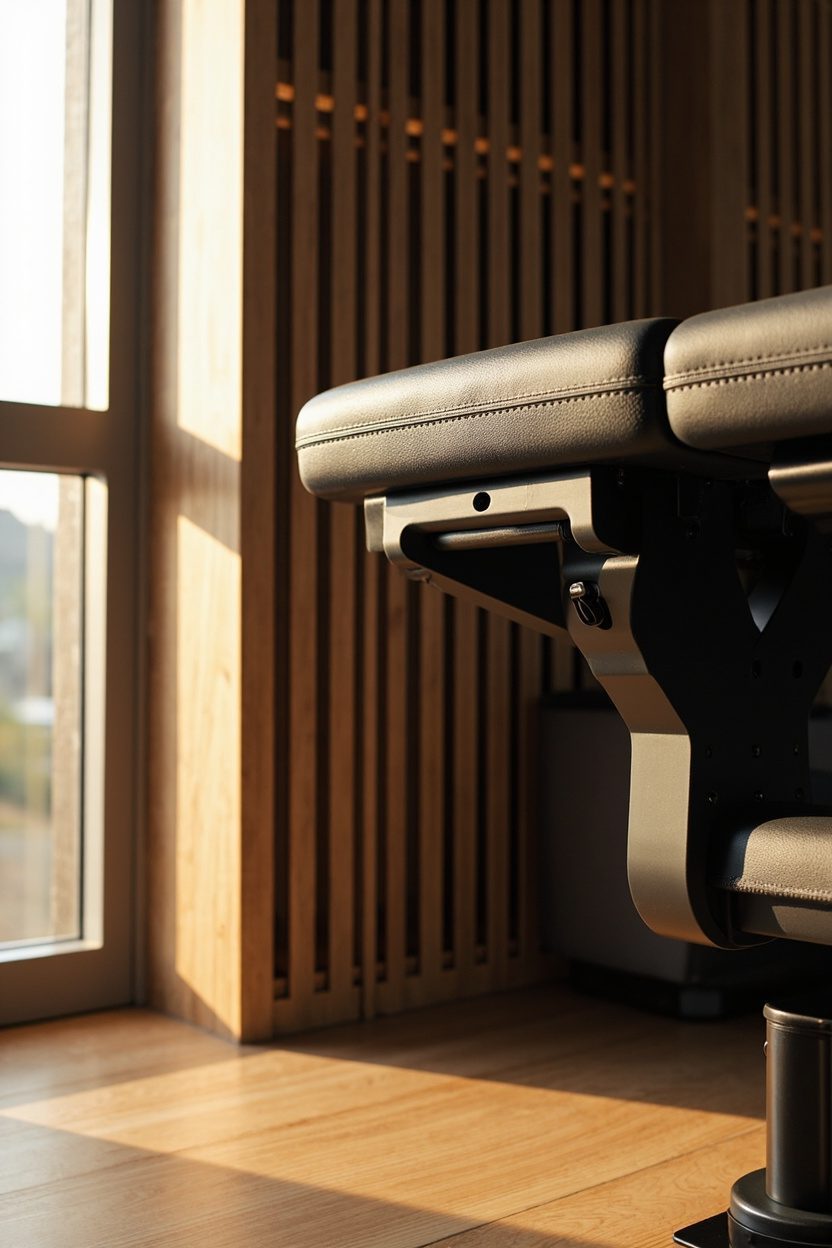
For rooms that double as offices or spare bedrooms, foldaway machines make the gym a reversible space rather than a permanent takeover. Prioritize folding treadmills and vertical-row machines that collapse to a depth under 18 inches; verify hinge quality and locking mechanisms and test the fold/unfold cadence before purchase to avoid heavy, awkward pieces that discourage use.
Consider weight and noise: choose models with softer deck cushioning and magnetic resistance to reduce impact and neighbor complaints. Allocate a dedicated storage wall or alcove with hooks for folded items and small wheels for mobility so the equipment can be stowed confidently when not in use. Avoid cheap folding mechanisms — spend up-tier for gas-assist or spring-assisted units that lock securely.
Styling Blueprint
- Target folded depth under 18 inches for easy vertical storage.
- Choose magnetic or frictionless resistance for quieter operation.
- Gas-assist hinges or reliable locks to prevent sagging over time.
- Designate a storage wall with hooks and wheels for quick stowage.
4. Mirrored Accent Wall
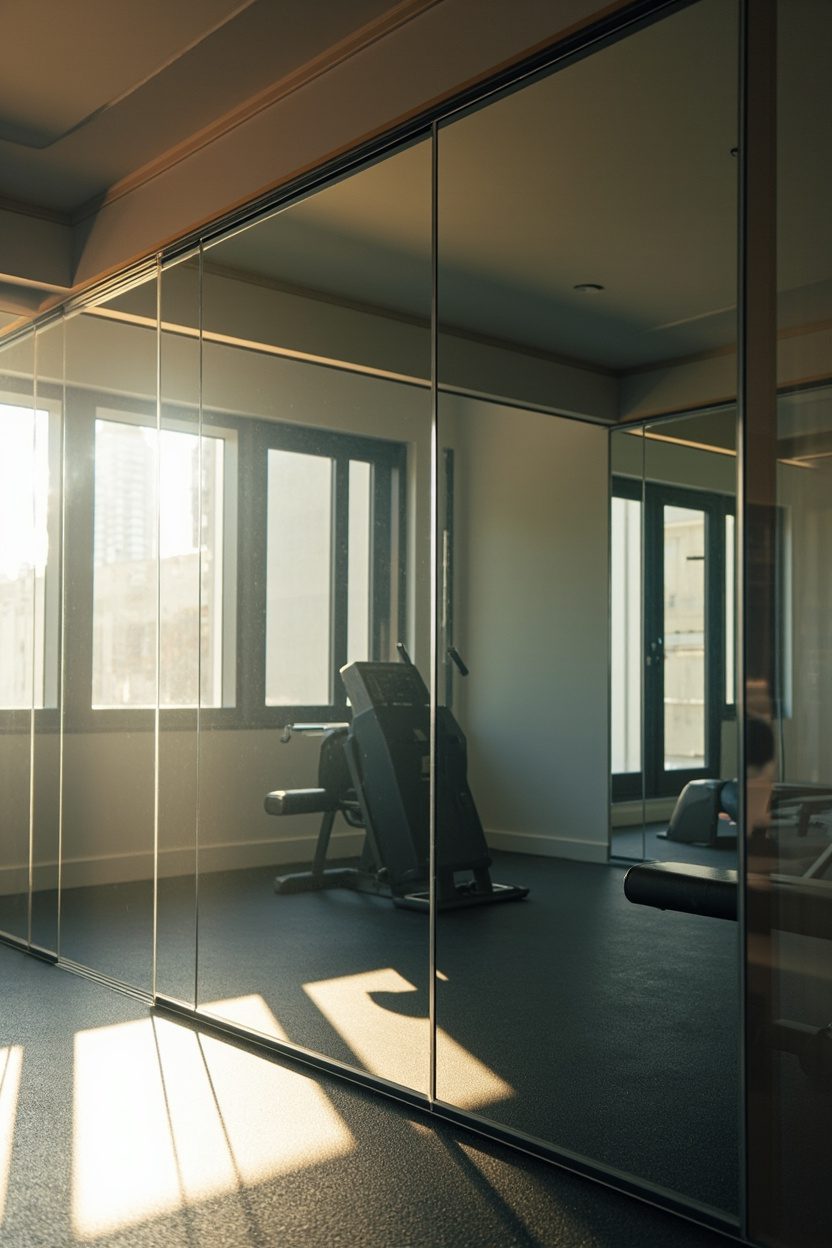
A full-length mirrored wall doubles perceived square footage and forces better form when you lift, hinge, or hold plank positions. Opt for vertical panels with narrow aluminum trims instead of one giant sheet to control costs and simplify replacement; panels in 3–4 mm tempered glass are a safe midrange choice for durability and clearer reflections.
Mirrors also bounce light, so place the wall opposite a window or layered light source rather than directly facing bright fixtures to avoid glare. A common mistake: mounting mirrors without leaving a 1–2 cm gap from the floor and ceiling—allowing for expansion prevents cracking and preserves alignment over time.
What to Focus On
- Choose tempered mirror panels, 3–4 mm thick, for safety and clarity.
- Install vertically with 1–2 cm expansion gaps to avoid stress cracks.
- Position opposite windows or layered lighting to maximize bounce without glare.
- Frame in slim aluminum to hide seams and simplify future repairs.
5. Biophilic Greenery
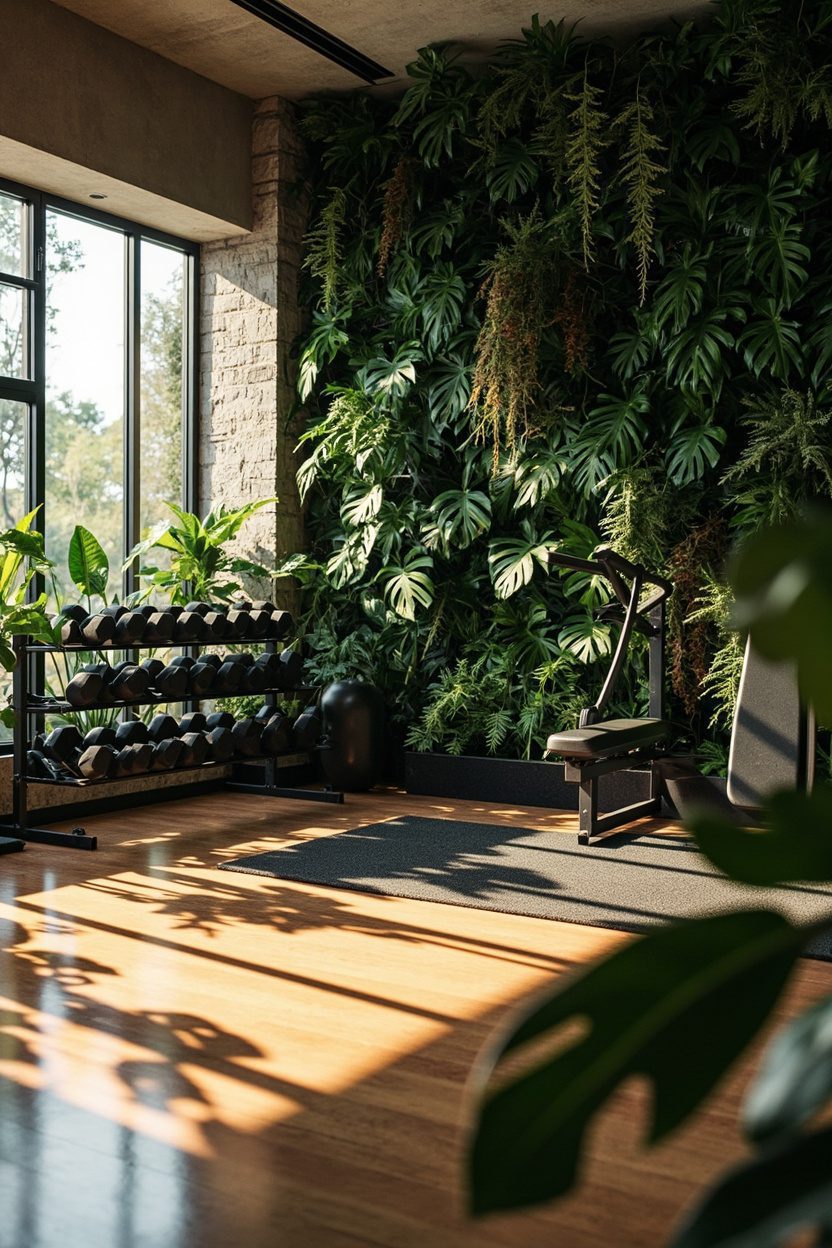
Introduce real or high-quality faux plants to soften the cold minimalism of equipment and improve air quality for longer cardio sessions. Use larger potted plants (Ficus, rubber plant) at 3–6 ft scale in unused corners, and add a living wall panel or modular planters near the cardio zone to provide visual relief during steady-state workouts.
Select moisture- and light-tolerant species if the gym lacks natural sun—ZZ plants and snake plants survive low light and tolerate temperature swings. Budget detail: invest in self-watering planters for real plants if you travel; they reduce maintenance and protect equipment from accidental overwatering.
Essential Elements
- Place 3–6 ft potted plants in corners to frame workout zones.
- Use a living wall or modular planters near cardio for visual distraction during endurance work.
- Pick low-light, low-maintenance species (ZZ, snake plant) for inconsistent daylight rooms.
- Choose self-watering pots if you need low-maintenance green solutions.
6. High-Contrast Flooring
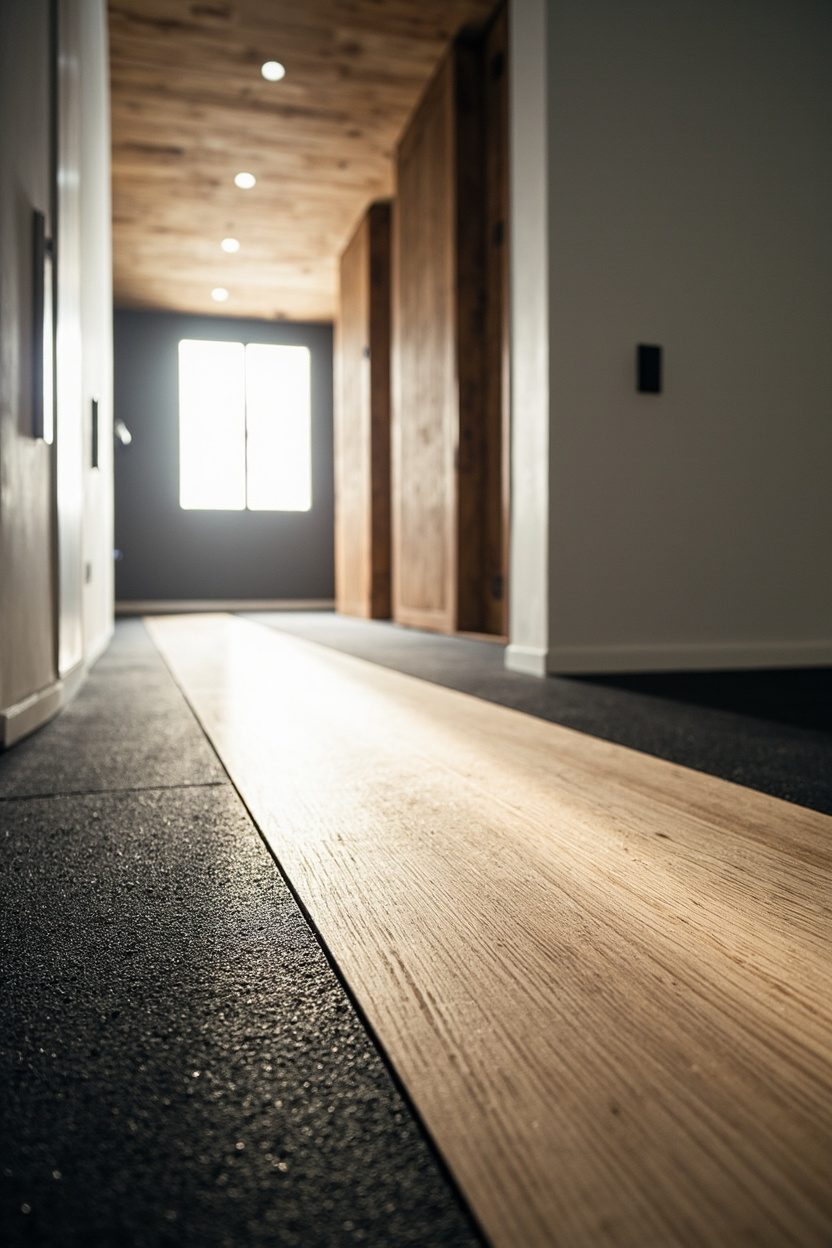
High-contrast flooring—think charcoal rubber tiles alongside light oak laminate—defines zones for lifting, stretching, and cardio without erecting walls. Use 1/2″ commercial-grade rubber under free weights and 6–8 mm cushioned vinyl or engineered wood in movement areas; this combination prevents equipment damage while keeping impact zones comfortable and visually distinct.
Avoid visual busy-ness: limit the contrast to two complementary tones and use 3–6 ft transition strips at edges to prevent tripping. For a professional touch, align tile seams perpendicular to the main movement direction (e.g., the treadmill’s length) to maintain visual flow and hide wear lines longer.
Styling Blueprint
- Install 1/2″ commercial rubber tiles in weight zone for shock protection.
- Choose light engineered wood or cushioned vinyl for movement/stretch areas.
- Limit palette to two tones and use transition strips for safe, clean edges.
- Lay seams perpendicular to major movement directions to disguise wear.
7. Integrated Storage Walls
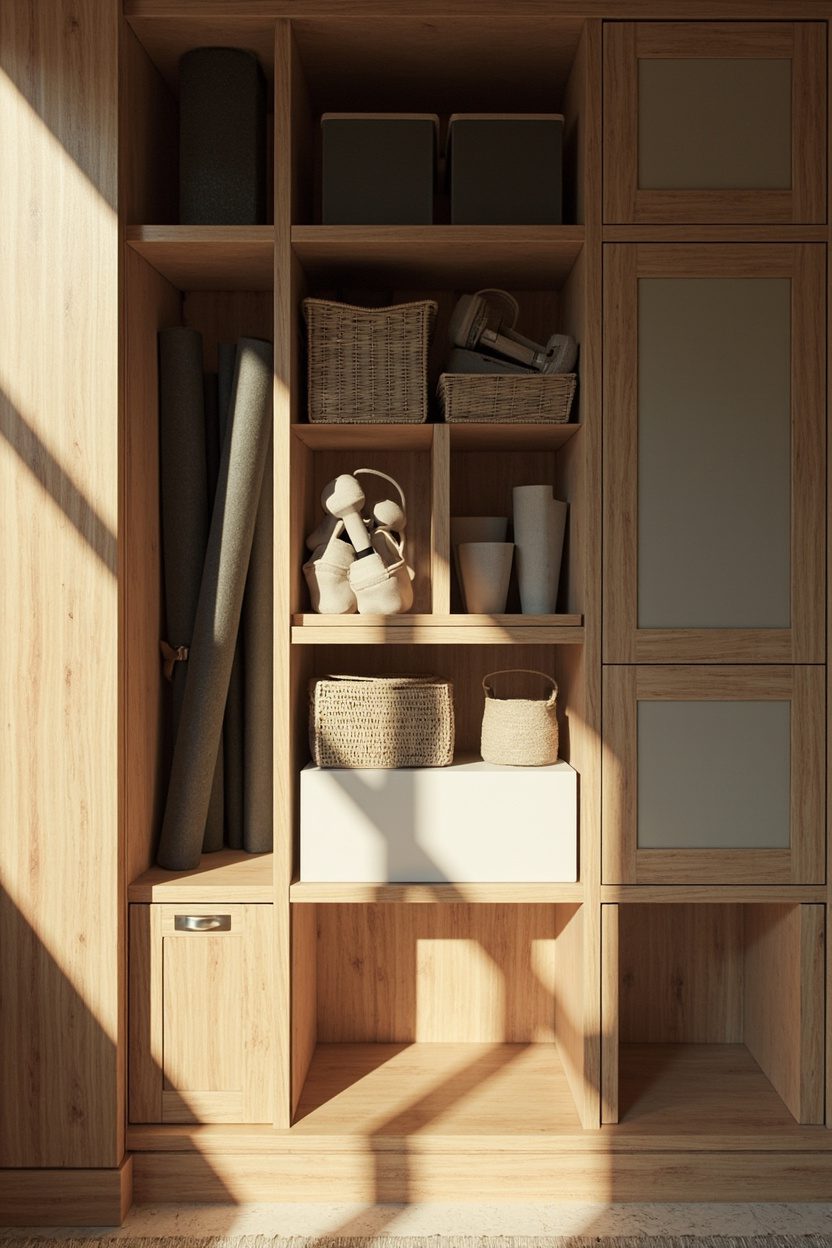
Built-in storage walls turn a cluttered equipment pile into a composed, functional backdrop that actually encourages use. Specify full-height cabinets with ventilated steel lockers for sweaty gear and closed wood grain cupboards for yoga mats and electronics; aim for 12–18 inches deep upper cabinets and 24 inches for lower drawers so kettlebells and dumbbells store neatly without protruding into the workout zone.
Practical detailing matters: add recessed hand grips, soft-close hinges, and a dedicated vertical slot for mats to prevent warping. For a midrange budget, choose MDF with a durable laminate finish; for a premium look, use painted birch with iron hardware and concealed wall anchors rated for the intended load.
Storage Strategy
- Plan zones: heavy equipment low, textiles high, accessories central for easy reach.
- Include 2–3 adjustable shelves per bay to adapt as your routine changes.
- Install ventilation panels or a small exhaust fan in the cardio bay to control odors.
- Add labeled pull-out bins for bands, gloves, and tech cords to reduce decision fatigue.
8. Smart Lighting Scenes
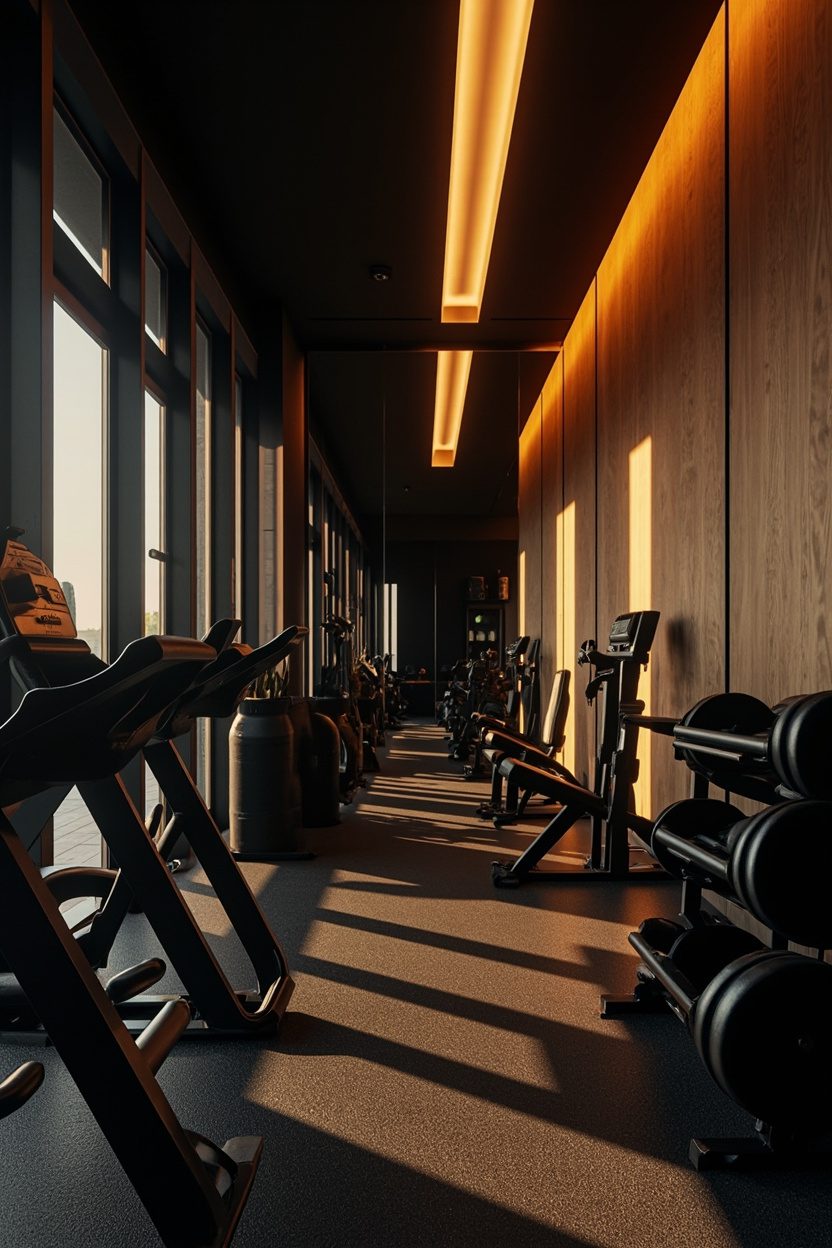
Layered, programmable lighting converts a neutral room into a motivating training space—bright, cool light for HIIT, warm, dim scenes for yoga, and directional task lights for strength work. Use tunable white LEDs with at least 90 CRI, and plan 300–500 lux for general workouts, boosting to 700 lux for precise movement stations like a lifting platform or boxing bag.
Integrate scene presets into a wall keypad or phone app and wire in a motion-operated path light for late-night sessions. Keep fixtures low-profile: recessed cans with baffles, an adjustable track above the mirror area, and an IP-rated strip under storage for safety around sweat-prone zones.
What to Program
- Create 3 presets: Warm Recovery (2,700K, 30%), Focused Strength (4,000K, 80%), High-Energy Cardio (6,500K, 100%).
- Map lights to zones so only the active area illuminates, saving energy and improving contrast for video feedback.
- Add a soft-color accent (amber or teal) behind mirrors to reduce eye strain during screen-led sessions.
- Ensure manual override and battery backup for smart controls to avoid downtime during workouts.
9. Acoustic Soundproofing
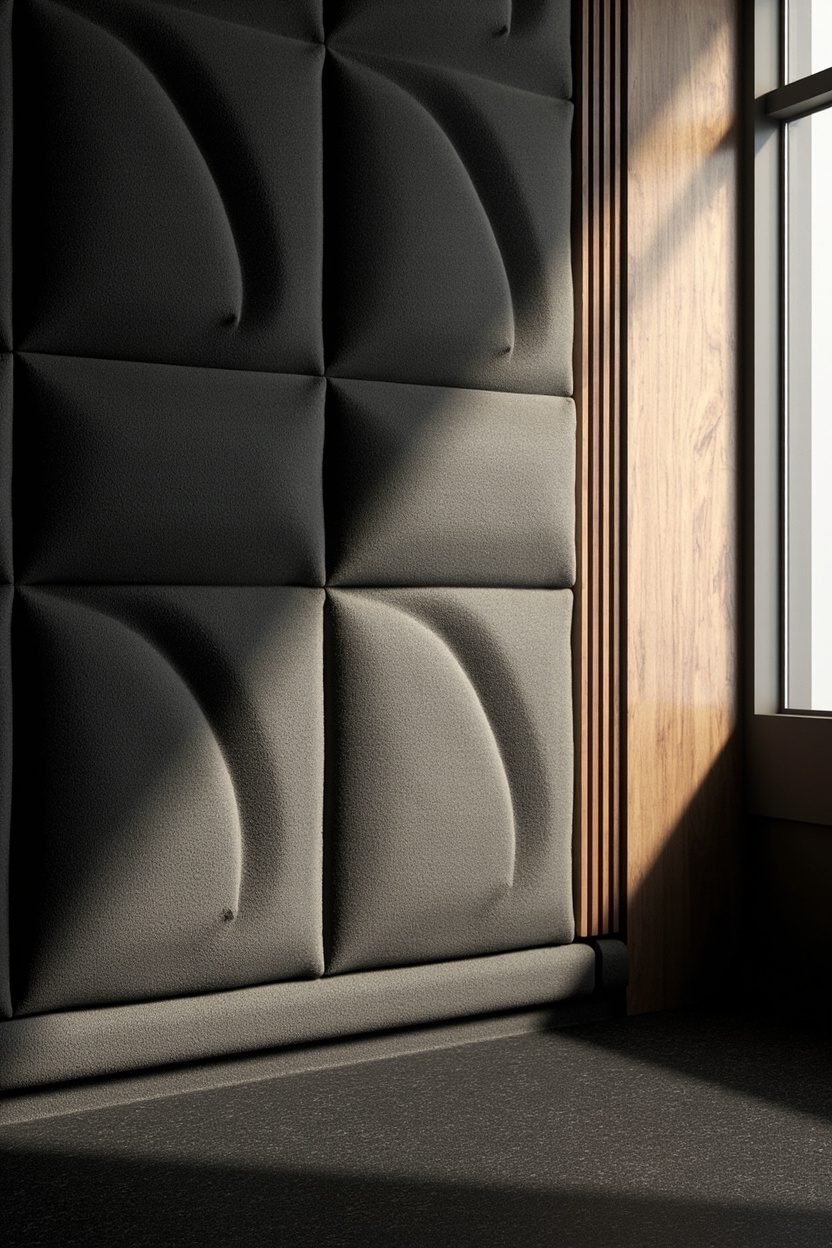
Effective acoustics make a gym tolerable for household members and neighbors—absorbent surfaces reduce bounce, and isolation prevents structural noise. Combine mass-loaded vinyl (MLV) under new flooring for impact reduction with 2–3 inches of acoustic insulation in walls and ceilings; add a floating floor system if you plan heavy dropping or plyometrics to protect both hearing and structure.
Address reflective surfaces with anchored acoustic panels and bass traps in corners; choose fabrics and performance finishes that tolerate sweat. Don’t forget doors—install a solid-core door with perimeter seals and an automatic bottom sweep to close the acoustic gap.
Soundproof Checklist
- Install MLV beneath the top layer of flooring for immediate impact noise reduction.
- Use 2–3″ rigid acoustic panels on the wall opposite mirrors to tame mid/high frequencies.
- Add corner bass traps if using heavy metal plates or a stereo subwoofer for class music.
- Seal penetrations for pipes and ventilation with acoustic foam to prevent flanking noise.
10. Outdoor Backyard Studio
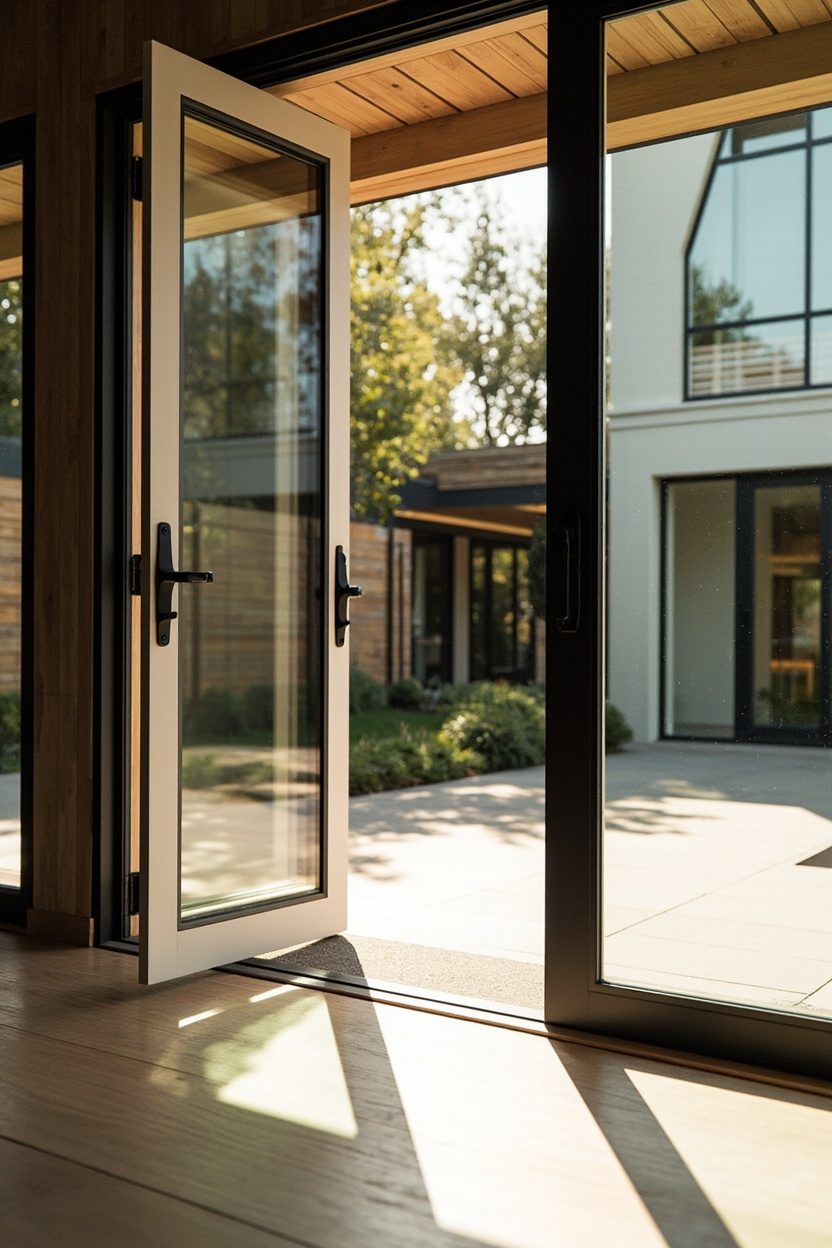
Turning a spare patch of backyard into a dedicated studio gives you fresh air, daylight, and a clear boundary between home life and training. Prioritize a weatherproof flooring like 3/4″ rubber tiles over a treated timber platform; it’s a budget-smart choice (mid-tier: $1,200–$4,000) that resists moisture and protects equipment, and place the platform under a simple pergola or corrugated roof to extend usable days during rain or hot sun. Angle the structure to capture morning light but avoid direct glare during peak hours—plant a fast-growing vine or install adjustable louvers for seasonal shading and privacy.
Design around compact, multi-use gear: a fold-down bench anchored to a wall saves footprint, and an integrated pull-up bar or rig can double as suspension anchor for bands and rings. Run a 20-amp circuit for a small heater/fan and directional LED strips so evening sessions are viable; conceal wiring in conduit behind panels to keep the aesthetic clean and weather-tight.
What to Focus On
- Weatherproof rubber or composite deck flooring for traction and drainage to avoid rot or mold growth.
- Shade strategy: pergola with louvers or retractable canopy to control sun and ventilation.
- Multi-function fixtures like a wall-mounted fold bench plus integrated pull-up bar to maximize limited square footage.
- Dedicated outdoor-grade electrical outlet and weatherproof lighting for safe, year-round use.
11. Vintage Strength Corner

A vintage strength corner celebrates cast-iron plates, worn leather, and warm patinas—think an old-school gym feel without feeling kitschy. Anchor the space with a restored barbell and bumper plate set (prioritize urethane bumpers if you’ll drop weight), a heavy-duty iron rack with a raw steel finish, and a reclaimed wooden bench with treated leather upholstery; these tactile materials age beautifully and reward regular care rather than replace cheap modern pieces. Use a deep, moody paint (charcoal or olive) on one wall to make the metal and leather pop and mount a retro mirror sized to the rack to check form while visually enlarging the corner.
Balance the heaviness with functional modern touches: a small wall shelf for chalk, lifting straps, and a timer keeps the vintage vibe usable, while rubber matting beneath the rack protects flooring and preserves the historic equipment. Avoid mixing in too many period styles—choose either 1930s industrial or 1970s gym aesthetics and keep hardware finishes consistent to prevent a fragmented look.
Essential Elements
- Restored cast-iron barbell and iron rack with urethane bumpers for safety when dropping weights.
- Reclaimed wood and leather bench—seal leather with conditioner and wood with matte polyurethane.
- Heavy-duty rubber mats under the lifting area to protect subfloor and reduce noise.
- Moody accent wall color and a frameless mirror sized to the rack for depth and form checks.
12. Minimalist Weight Rack
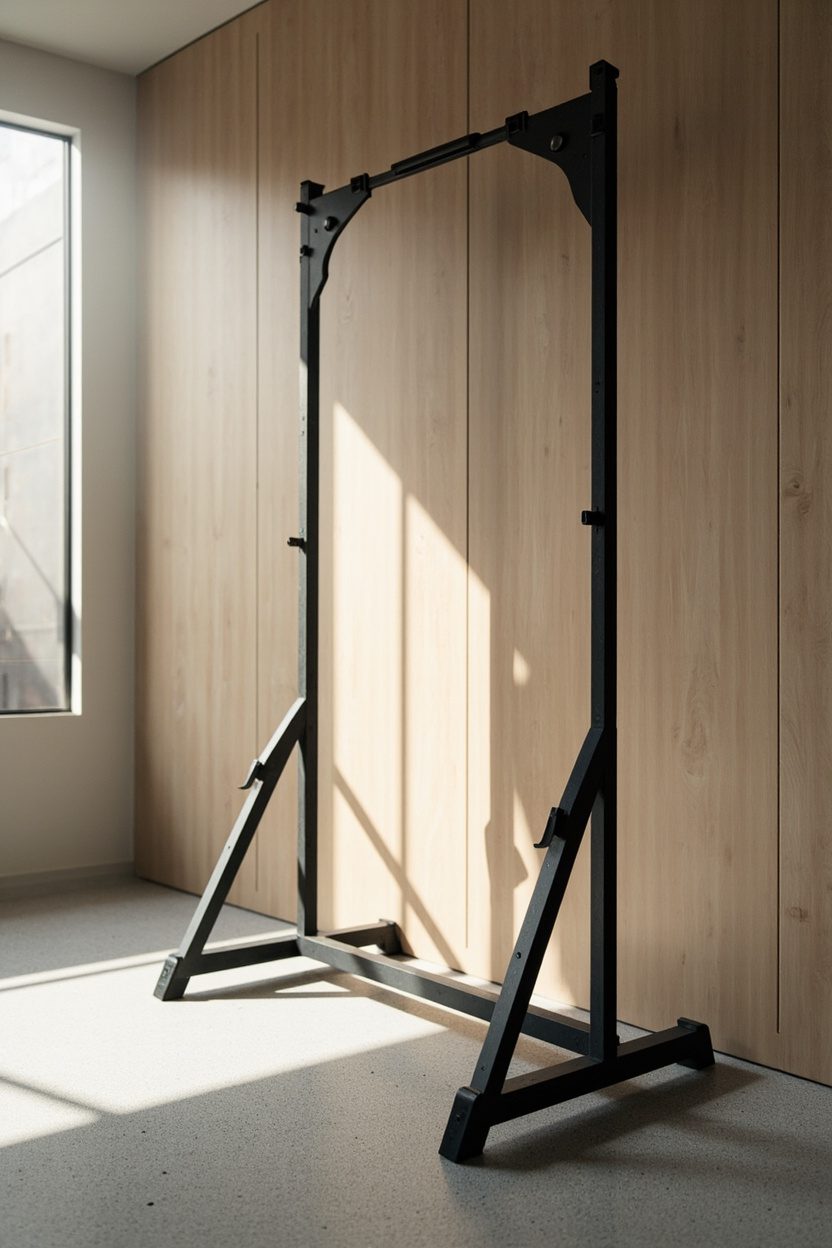
The minimalist weight rack is about restraint—clean lines, hidden storage, and equipment that doubles as sculptural furniture. Choose a slimline powder-coated steel rack (60–80 cm deep) in matte black or soft white and pair it with a compact set of hex dumbbells or adjustable dumbbells to avoid clutter; keep the color palette monochrome so each piece reads as part of the composition rather than an appliance. Position the rack against a crisp white wall with a narrow lino or rubber mat and leave breathing space around it—visual scale matters more here than cramming maximum weight.
Add one thoughtful accessory: a wall-mounted pegboard or narrow shelf for towels, a jump rope, and a single plant to avoid the sterile gym look. Lighting should be directional—an adjustable track light or a slim sconce—to create soft shadows that emphasize the clean geometry while keeping the cost and footprint low.
Styling Blueprint
- Slim powder-coated steel rack with adjustable shelves to conceal smaller items behind a consistent silhouette.
- Compact dumbbells or adjustable set to limit visual clutter and make efficient use of floor space.
- Monochrome palette and a single accent texture (matte metal or natural jute) to maintain calm minimalism.
- Directional lighting (track or sconce) and one plant to add warmth without disrupting the pared-back look.
13. Wall-Mounted TVs
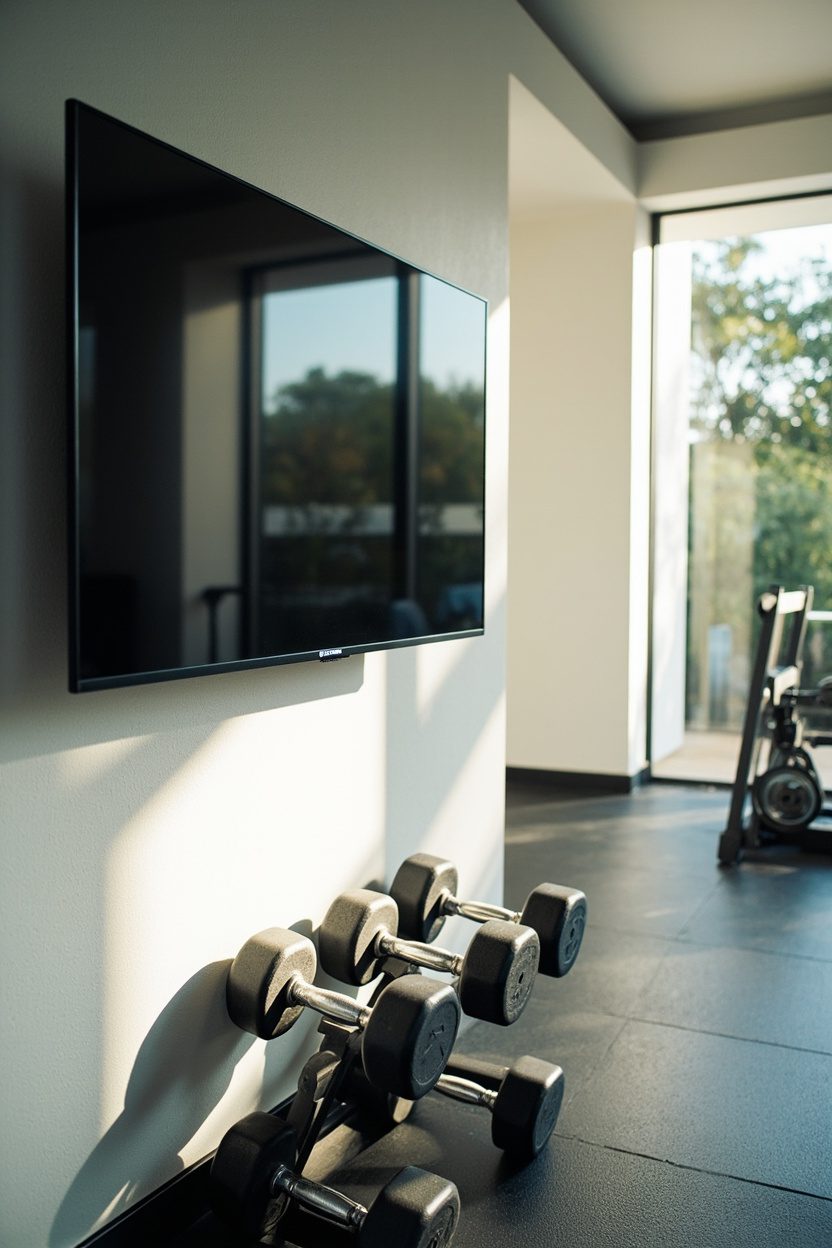
A wall-mounted TV transforms a home gym from a blank workout box into an engaging training theater, keeping cardio sessions and follow-along classes immersive without stealing floor space. Choose a 43–55-inch screen for small to medium rooms and mount it at eye level when standing on a treadmill or rower — typically 60–66 inches from the floor to the center of the screen — to avoid neck strain and awkward viewing angles.
Paired with a low-profile swivel mount and recessed cable chase, the installation looks custom and reduces clutter; opt for a matte anti-glare screen finish if your room gets bright light. Avoid the mistake of mounting too high: if you have classes where you lie on the floor (yoga, Pilates), ensure the tilt range accommodates a downward angle so instructors remain visible.
What to Focus On
- Pick screen size proportionate to workout distance (43–55″ for 6–10 ft.).
- Use a tilt/swivel mount and recess cables for a clean, durable install.
- Prioritize anti-glare and sufficient brightness for sunlit rooms.
- Place controls and streaming device in a ventilated, hidden shelf near the mount.
14. Glass Partitioning
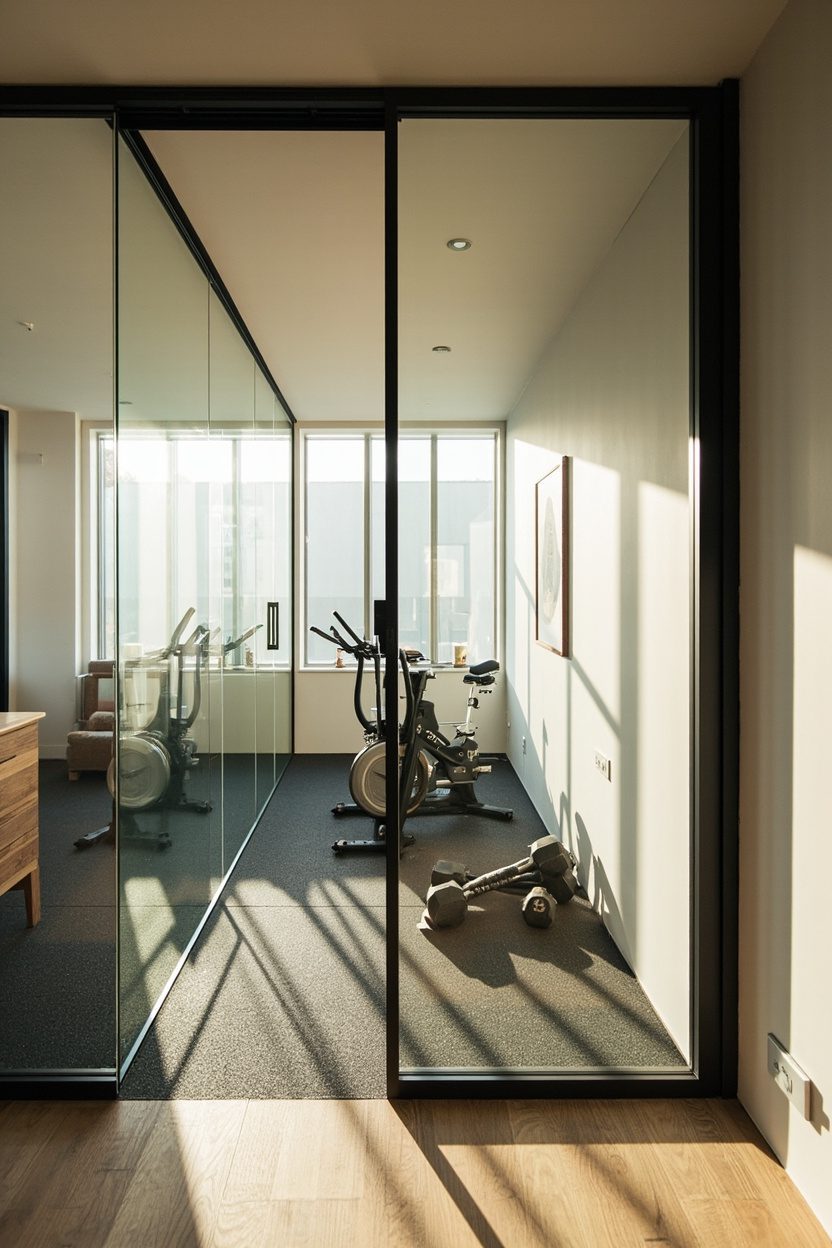
Glass partitioning keeps a gym visually open while isolating sound and sweat from adjoining living areas; it’s a designer move that reads high-end and helps maintain home value. Frameless tempered glass panels or steel-framed industrial panes (for a loft look) work well — choose 10–12 mm tempered glass for durability and minimal flex in daily use.
When planning, factor in acoustic seals and a threshold mat to stop vibration and protect adjacent flooring; don’t skimp on hardware quality, since cheap pivots creak and fail under frequent use. For privacy during early-morning sessions, install motorized translucent shades or switchable smart glass that toggles from clear to frosted with a button.
Essential Elements
- Use 10–12 mm tempered glass for strength and minimal visual distortion.
- Install acoustic seals around doors to reduce equipment noise transfer.
- Choose corrosion-resistant hardware for humid or sweat-prone environments.
- Add privacy film or switchable glass if the gym faces living spaces or neighbors.
15. Warm Wood Finishes
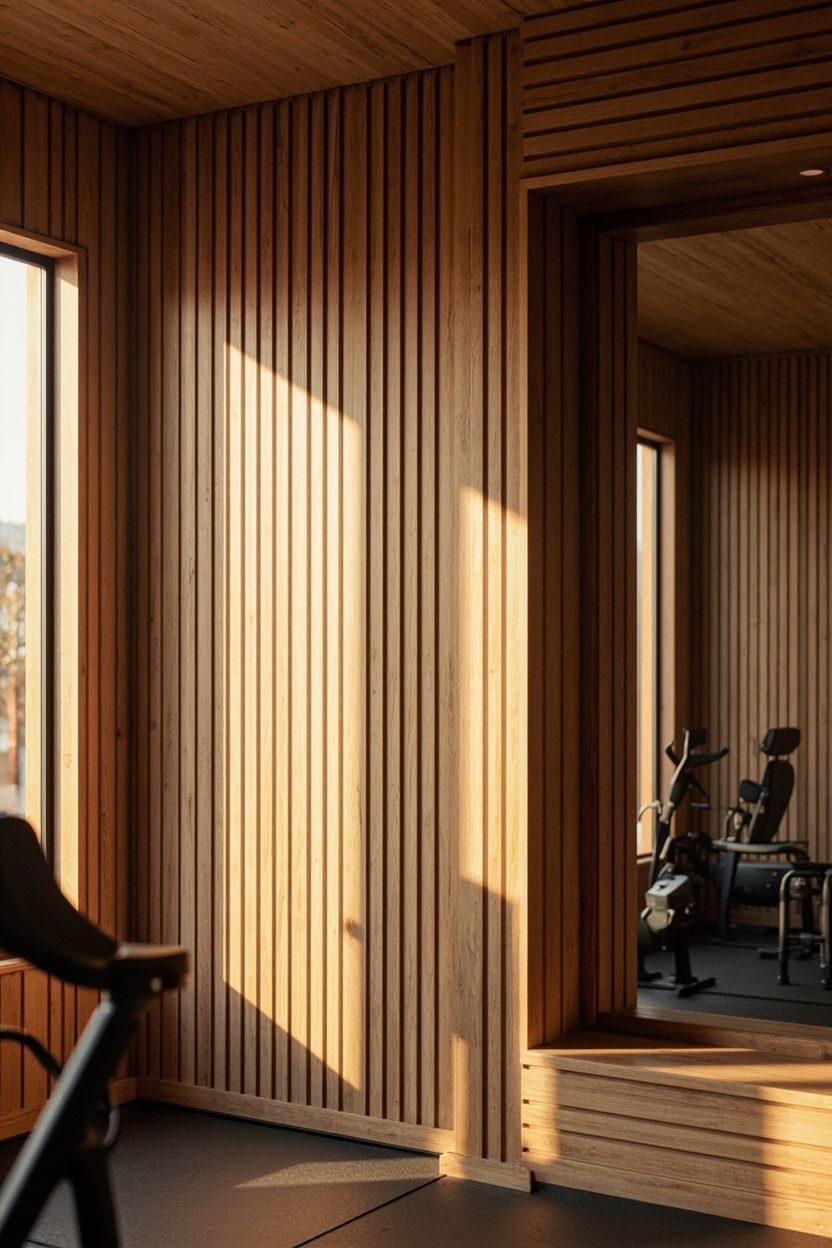
Warm wood finishes — think engineered oak planks or teak-look panels — introduce a human, calming layer to a gym that might otherwise feel clinical, helping you actually want to enter the room. Use wood on one feature wall or around a mirrored zone to create depth; keep the floor durable with rubber or vinyl planks that mimic wood grain rather than real hardwood, which warps under humidity and heavy weights.
For cabinetry and storage, select closed-grain veneers in warm tones (honey oak, walnut) and matte finishes to hide scuffs; reserve real solid wood only for benches and accessory details where impact risk is low. Budget tip: luxury vinyl planks with a hand-scraped wood look deliver the warmth at a modest price and stand up to dropping kettlebells far better than natural wood.
Styling Blueprint
- Feature one wood-accent wall; pair with durable rubber or luxury vinyl plank flooring.
- Choose warm tones (honey oak, walnut) to soften the space and aid recovery mood.
- Use veneer cabinetry for storage to balance cost and resilience.
- Protect high-wear areas with mats and avoid solid hardwood near heavy equipment.
16. Flexible Flooring Tiles
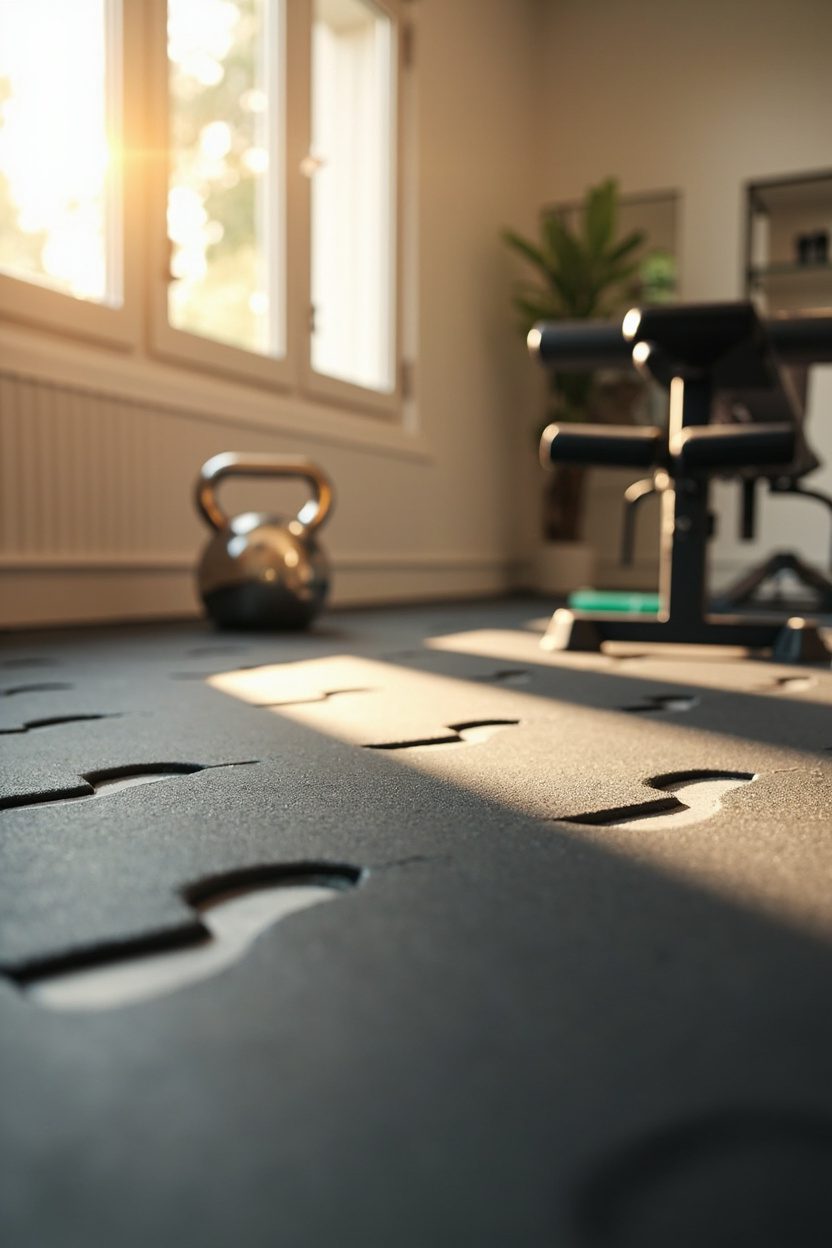
Flexible flooring tiles are the easiest retrofit that makes a garage or spare room feel like a real workout zone. Choose interlocking EVA foam or rubber tiles in 6–8 mm thickness for light cardio and stretching; bump up to 10–15 mm recycled-rubber tiles where kettlebells, Olympic lifting, or dropping weights are planned. Opt for tiles with beveled edges in a neutral charcoal or slate to hide scuffs and keep your sightlines calm — bright colors are fine for kid zones but can make a serious gym feel amateur if overused.
Installation is straightforward and reversible, so you can test layouts before committing to a permanent subfloor upgrade. Measure the largest equipment footprints (treadmill: ~30″ x 72″; power rack: ~84″ x 48″) and leave a 6–12″ buffer around them to prevent tile lifting and tripping hazards. Avoid thin peel-and-stick options for heavy-duty use; they compress, trap moisture, and lead to premature replacement — plan for a mid-tier budget of $3–6 per square foot for durable interlock tiles, or $6–12 for thicker rubber square tiles designed for free-weight areas.
What to Focus On
- Tile material and thickness matched to equipment load (EVA foam 6–8 mm for cardio, 10–15 mm rubber for weights)..
- Measure equipment footprints plus a 6–12″ safety buffer when planning coverage area.
- Choose beveled-edge interlocks in neutral tones to disguise wear and maintain a mature aesthetic.
- Allocate budget: $3–6/sq ft for quality foam, $6–12/sq ft for heavy-duty rubber tiles; avoid thin peel-and-stick for weight areas.
For a related idea, see Gray Farmhouse Kitchen Ideas.
Final Thoughts
Flexible flooring tiles are a transformative, cost-efficient upgrade that instantly elevates a workout area from makeshift to purposeful.
With the right material, thickness, and coverage plan, you get impact protection, noise reduction, and a long-lasting surface that supports consistent training without permanently altering the room a practical first move for anyone serious about keeping a home gym in use.
FAQ
Use at least 10–15 mm recycled-rubber tiles under free-weight zones to protect the subfloor and equipment and reduce bounce and noise.
Yes, ensure the concrete is clean, level, and dry. Use interlocking tiles without adhesives or add a moisture barrier if humidity is high.
Sweep or vacuum regularly, mop with mild detergent and water, and avoid harsh solvents that degrade EVA foam and rubber compounds.
Most thin EVA tiles are compatible with low-temperature underfloor heating; check manufacturer specs and avoid thick rubber over electric mats that could trap heat.