


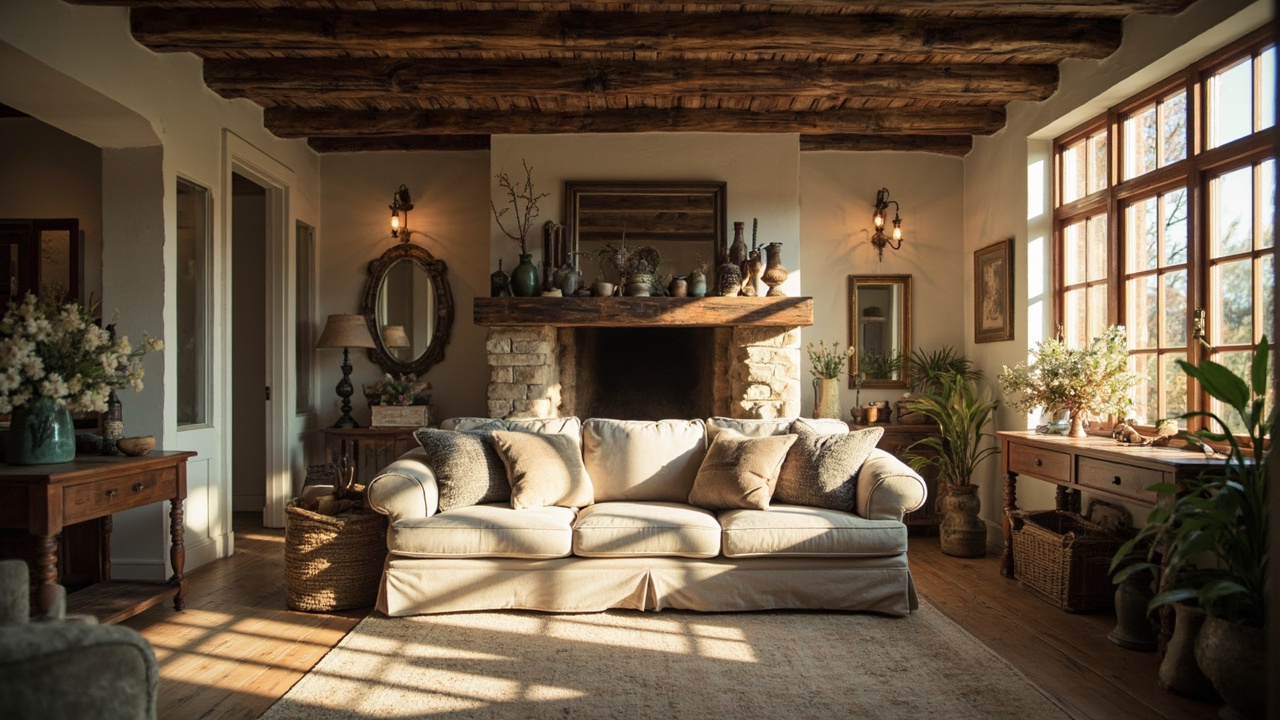
Farmhouse Decor brings warmth, practicality, and timeless charm to any home, and these 12 Beautiful Farmhouse Decor You’ll Love show how simple pieces can transform ordinary spaces into welcoming, lived-in rooms.
Each selection blends rustic textures, muted palettes, and functional design to create comfortable, stylish environments that work for modern lifestyles and suit every room in the house.
- 1. Modern Farmhouse Basics
- 2. Palette Play
- 3. Kitchen Charm: Shaker Cabinets, Apron Sinks, and Open Shelving
- 4. Textile Talk: Layering Linens, Quilts, and Natural Fibers
- 5. Furniture Finds: Mixing Distressed Wood with Streamlined Pieces
- 6. Lighting That Works: Barn Pendants, Lanterns, and Subtle Metals
- 7. Entryway Styling: Practical Hooks, Vintage Mirrors, and Welcome Textures
- 8. Green Touches: Potted Herbs, Dried Blooms, and Simple Floral Arrangements
- 9. Accessorizing with Purpose: Curated Collections, Trays, and Clayware
- 10. Bathroom Retreats: Spa-Neutral Tones with Rustic Accents
- 11. Outdoor Farmhouse: Porches, Rockers, and Weathered Wood Details
- 12. Seasonal Switches: Easy Updates with Throws, Wreaths, and Tabletop Vignettes
- Final Style Tip
- FAQs
1. Modern Farmhouse Basics
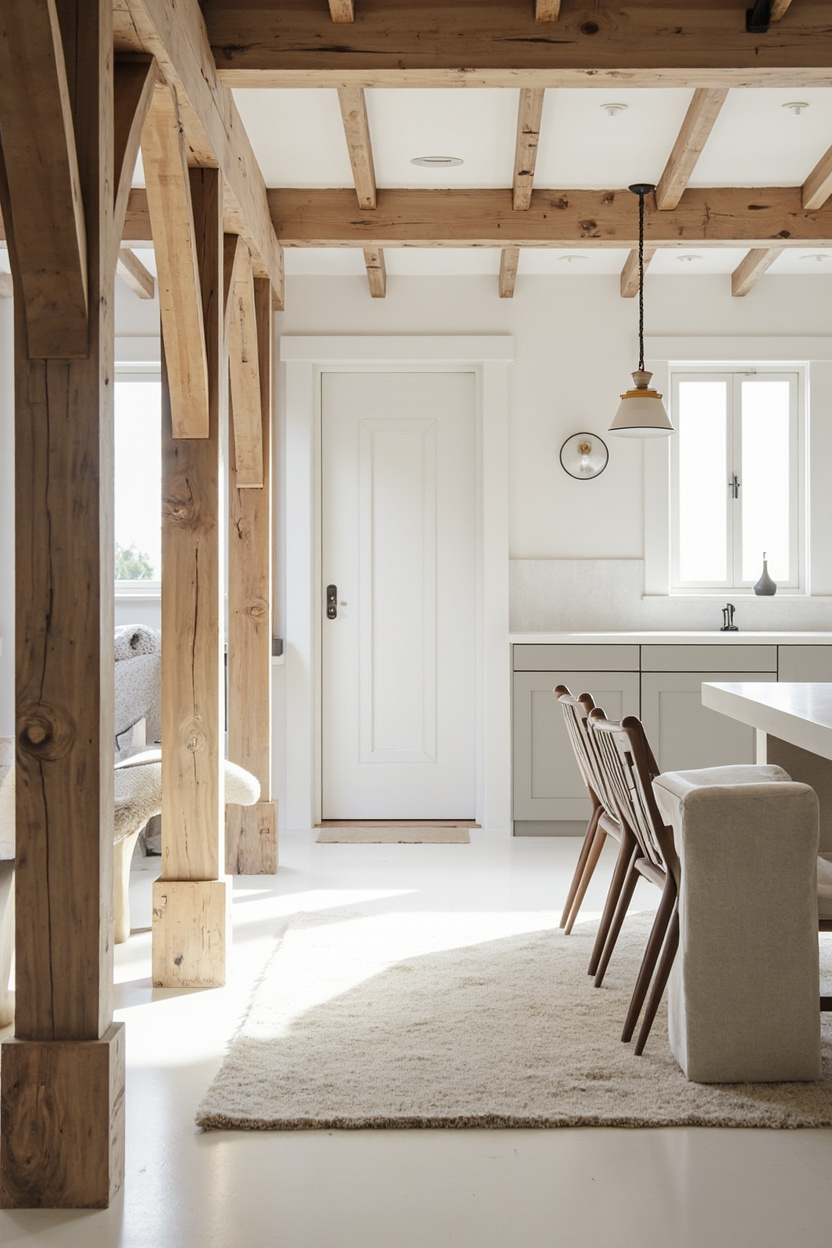
Start with a neutral backbone—matte whites, soft greys, and warm beiges—to let architectural details read modern yet cozy.
Introduce one or two raw materials like reclaimed wood beams or iron light fixtures to anchor the rustic character without cluttering the silhouette.
Keep trims and moldings simple and squared-off; this preserves clean lines while allowing artisan textures (brick, shiplap) to provide warmth.
2. Palette Play
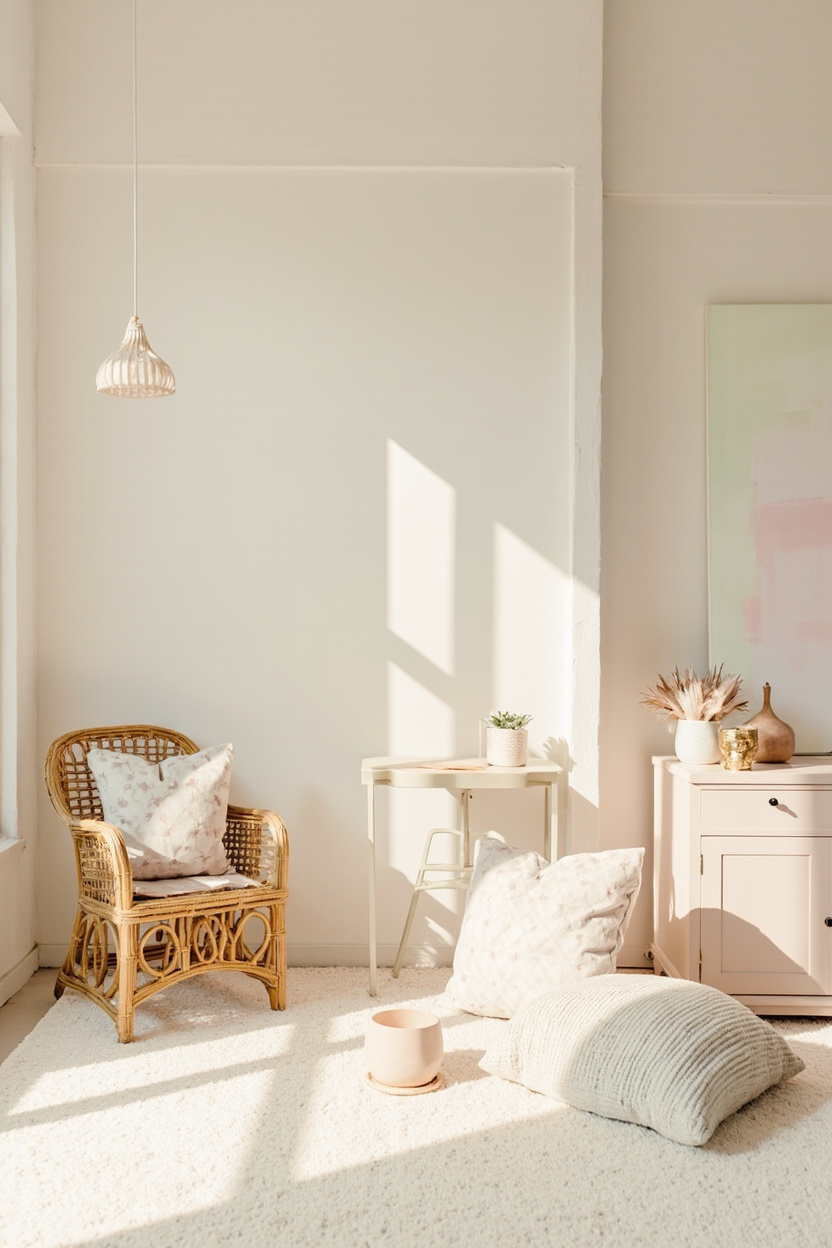
Choose pale wall colors with low chroma to reflect light and make rooms feel airy; use pastel accents sparingly to prevent a washed-out look.
Balance cool pastels (sage, dusty blue) with warm neutrals (linen, taupe) to maintain the farmhouse warmth and avoid a strictly coastal aesthetic.
Anchor the palette with darker accents—matte black hardware or deep wood tones—to add visual weight and prevent the space from feeling floaty.
3. Kitchen Charm: Shaker Cabinets, Apron Sinks, and Open Shelving
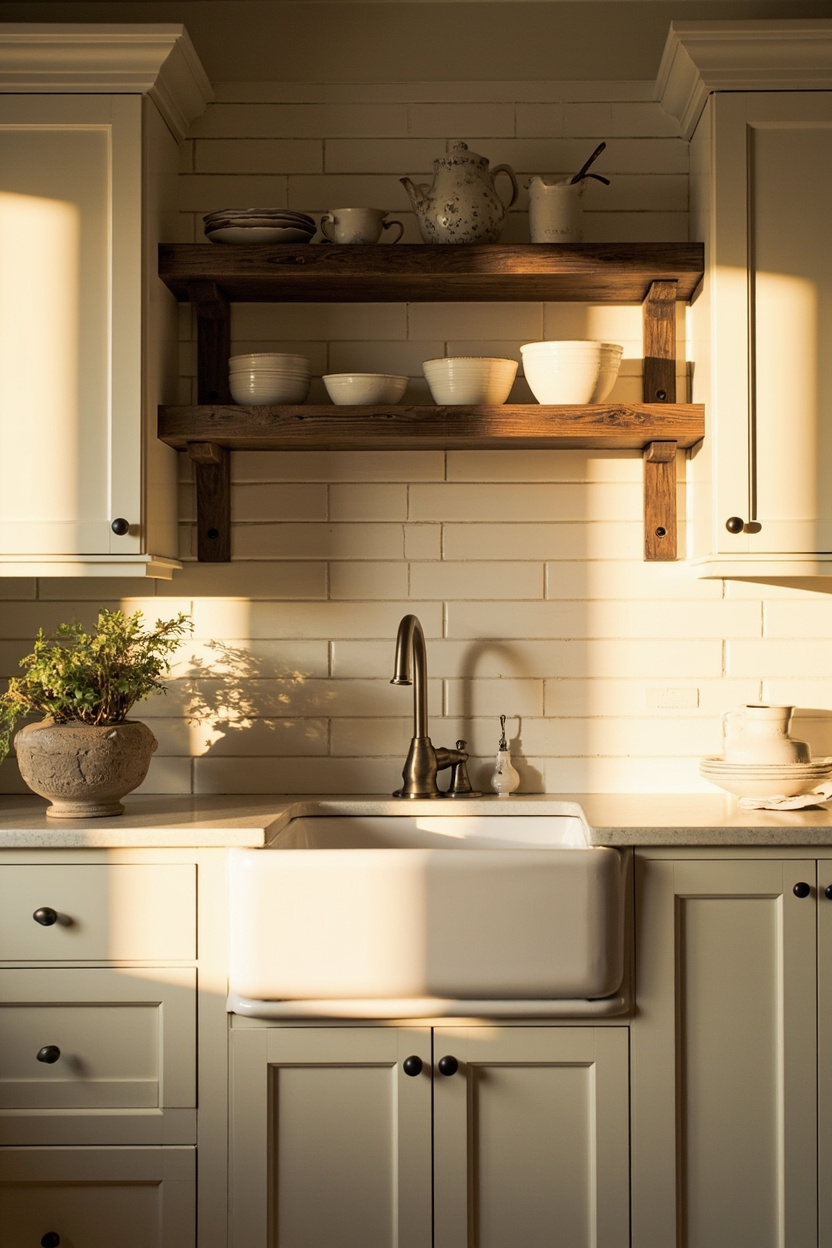
Specify shaker cabinets in a painted finish for timeless simplicity; pair with solid-surface countertops or honed stone for durability and subtle texture.
An apron-front sink in fireclay or stainless steel becomes a focal point—scale it properly to cabinet run and plumbing access.
Limit open shelving to one wall or a small run and style it with functional groupings: matching glassware, woven baskets, and a few curated ceramics.
4. Textile Talk: Layering Linens, Quilts, and Natural Fibers
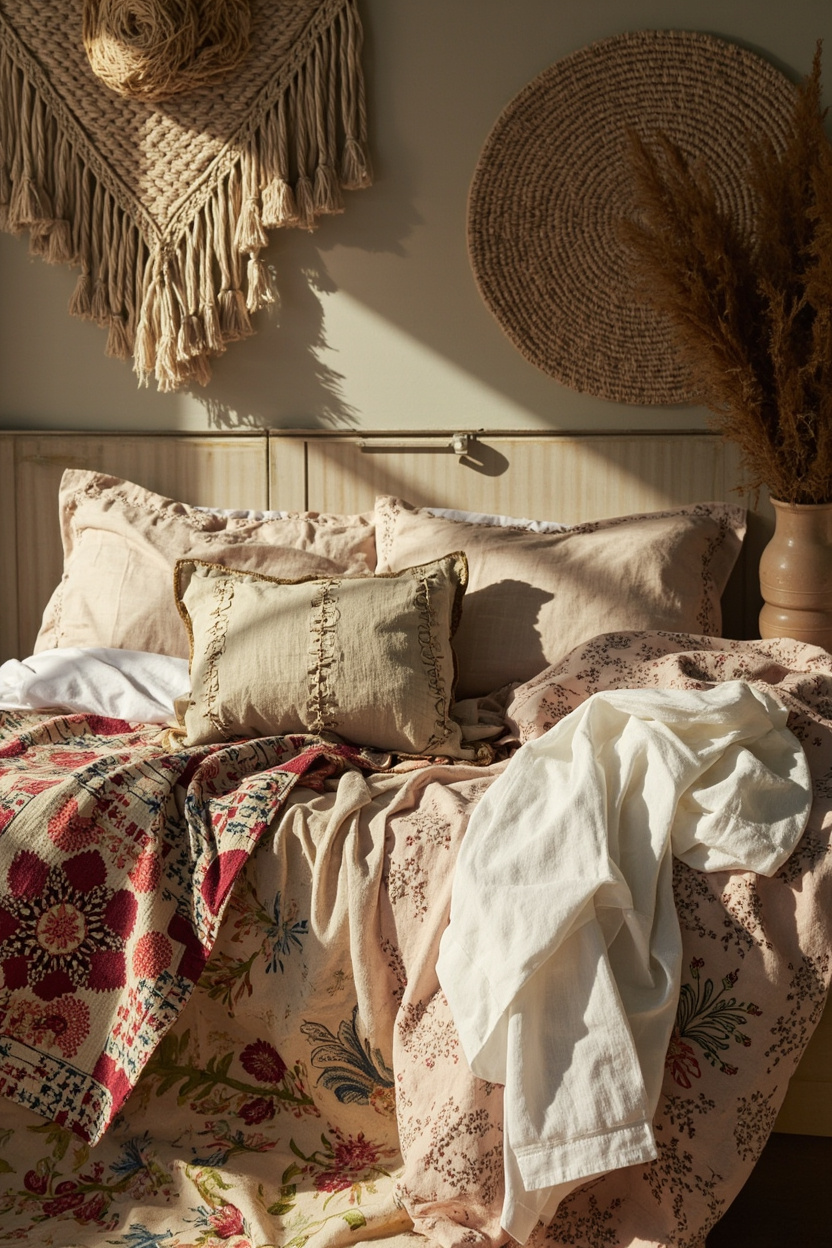
Start with a durable base (linen slipcovers, jute rugs) and layer softer textiles—quilts, wool throws—for comfort and seasonal flexibility.
Use scale and pattern sparingly: one large-scale pattern, one medium, and one small neutral to avoid visual conflict.
Prioritize washable, low-maintenance fabrics in high-use areas and reserve delicate weaves for bedrooms or accent chairs.
5. Furniture Finds: Mixing Distressed Wood with Streamlined Pieces
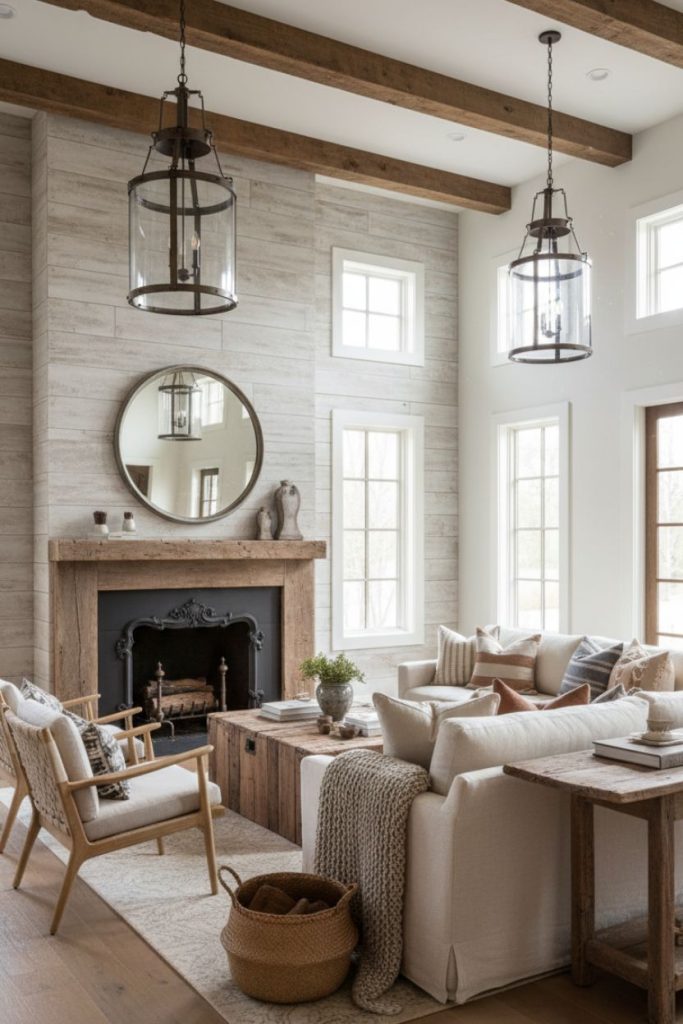
Pair a single distressed wood anchor piece—dining table or console—with streamlined seating to keep spaces grounded yet modern.
Match finishes by undertone rather than exact color: warm-grain woods work with warm-painted metal and brass, cool greys with black iron and chrome.
Keep proportions balanced—avoid oversized rustic pieces in small rooms and introduce simple silhouettes to maintain flow and sightlines.
6. Lighting That Works: Barn Pendants, Lanterns, and Subtle Metals
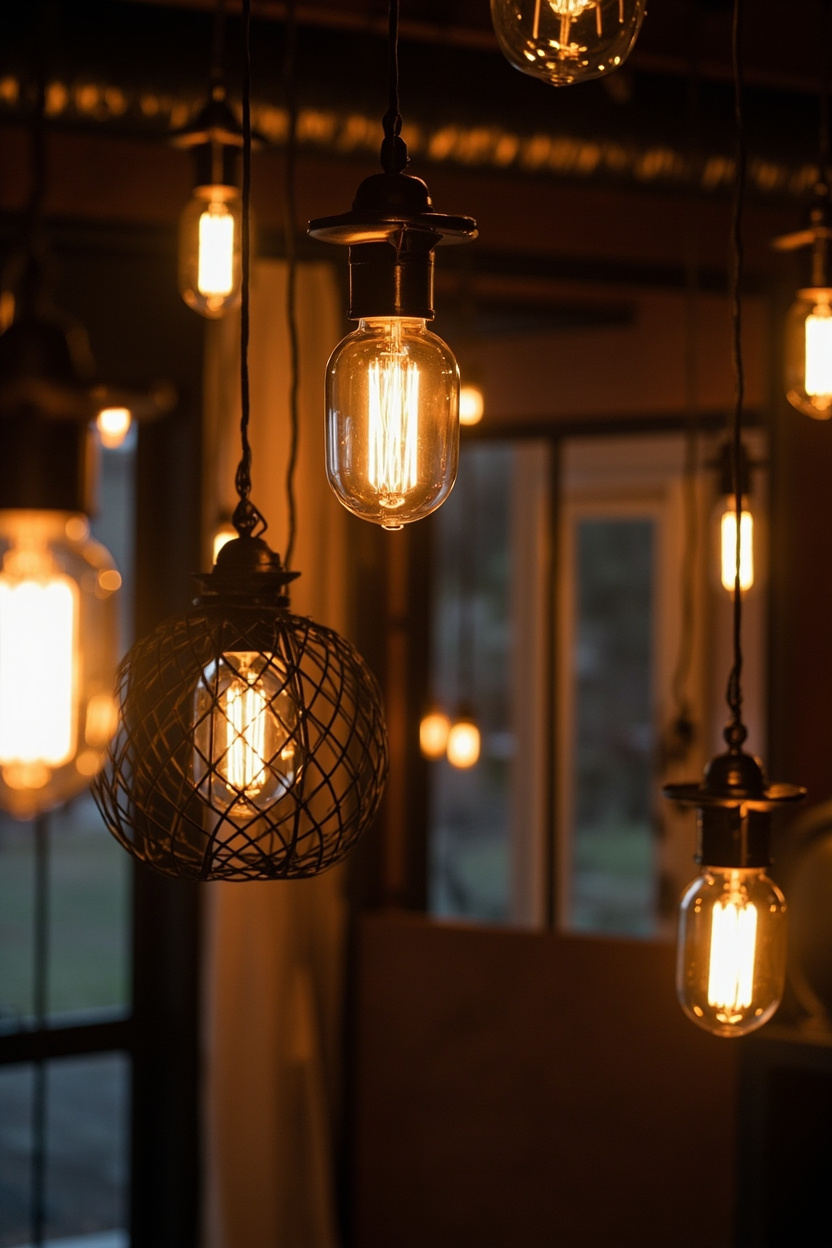
Choose layered lighting: combine overhead barn pendants for a statement, task lights where needed, and wall lanterns to wash texture and avoid harsh shadows.
Balance metal finishes with warm woods and matte ceramics to keep the farmhouse look grounded without feeling dated.
Scale fixtures to room proportions—oversized pendants over islands, smaller lanterns in hallways—and dimmers to control mood and highlight architectural details.
7. Entryway Styling: Practical Hooks, Vintage Mirrors, and Welcome Textures
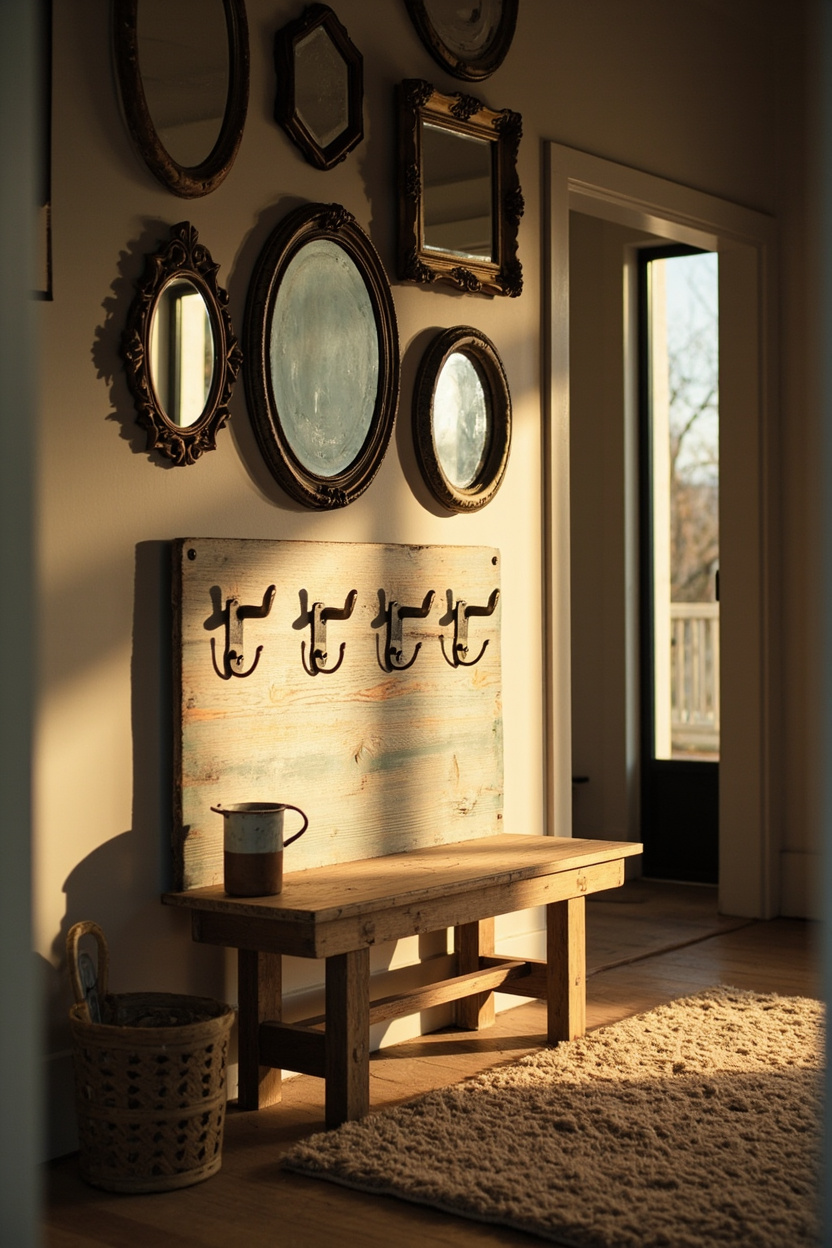
Anchor the entry with a durable console or bench and a row of sturdy hooks at varying heights for coats, bags, and daily use.
Add a vintage mirror to reflect light and make the space feel larger while choosing a frame finish that ties to other metals in the home.
Layer a natural-fiber rug and a woven basket for shoes to introduce texture and keep clutter contained without sacrificing style.
8. Green Touches: Potted Herbs, Dried Blooms, and Simple Floral Arrangements
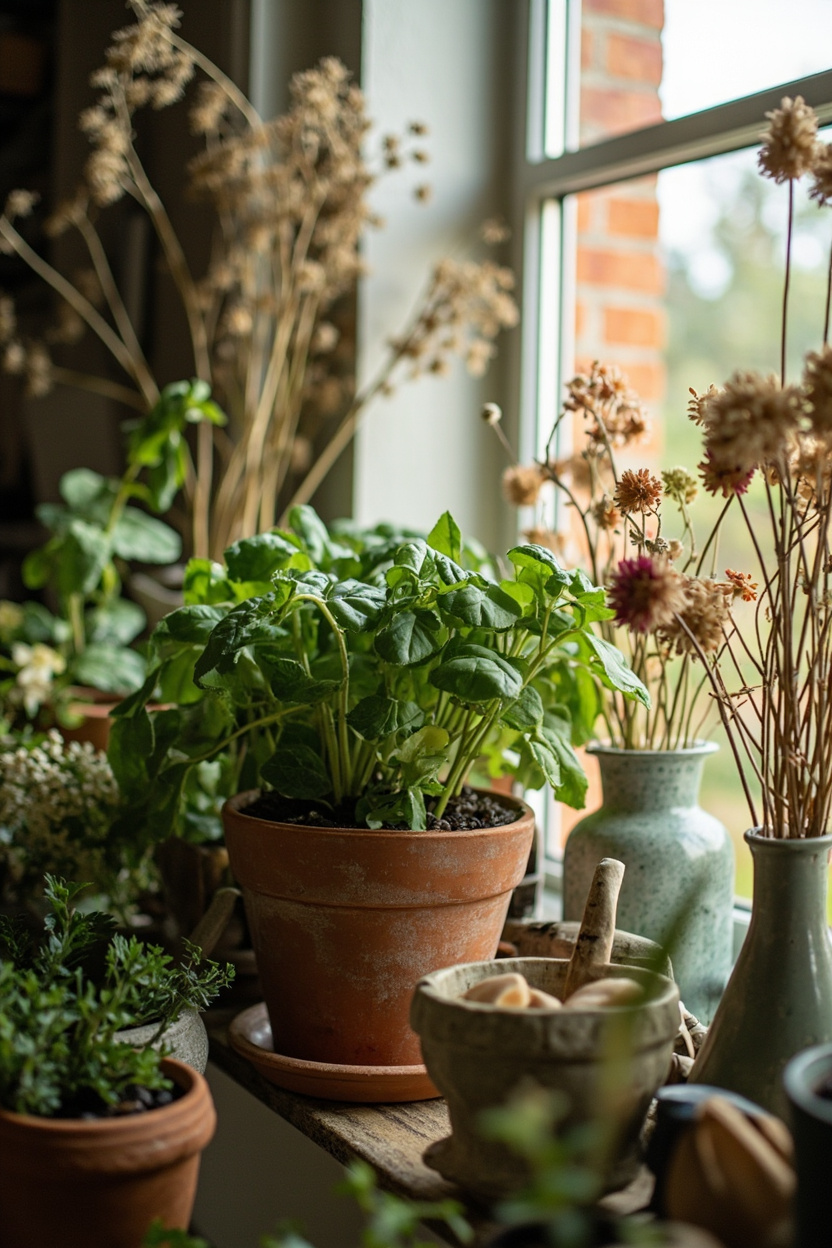
Use small terracotta or galvanized pots on windowsills for herbs that provide scent, color, and function in the kitchen.
Incorporate dried blooms like lavender or wheat in simple bundles to add permanence and subtle color without maintenance.
Keep floral arrangements minimal—one focal vase per surface—so greenery complements rather than competes with farmhouse elements.
9. Accessorizing with Purpose: Curated Collections, Trays, and Clayware
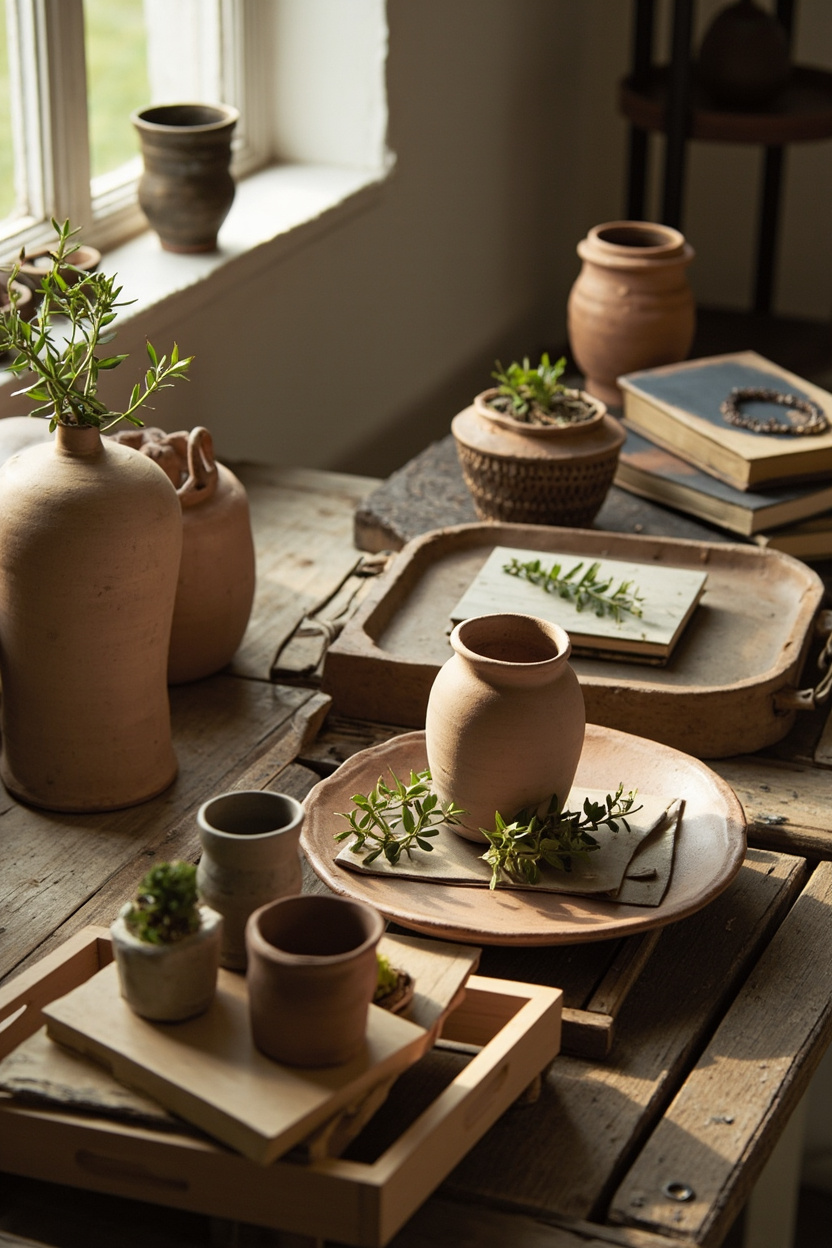
Group objects by material or theme on trays to create intentional vignettes and make surfaces easy to clear when needed.
Select clayware and ceramics in muted glazes to add tactile warmth and tie together wood and metal finishes.
Edit collections down to odd-numbered groupings and vary heights for visual interest while keeping the overall palette restrained.
10. Bathroom Retreats: Spa-Neutral Tones with Rustic Accents
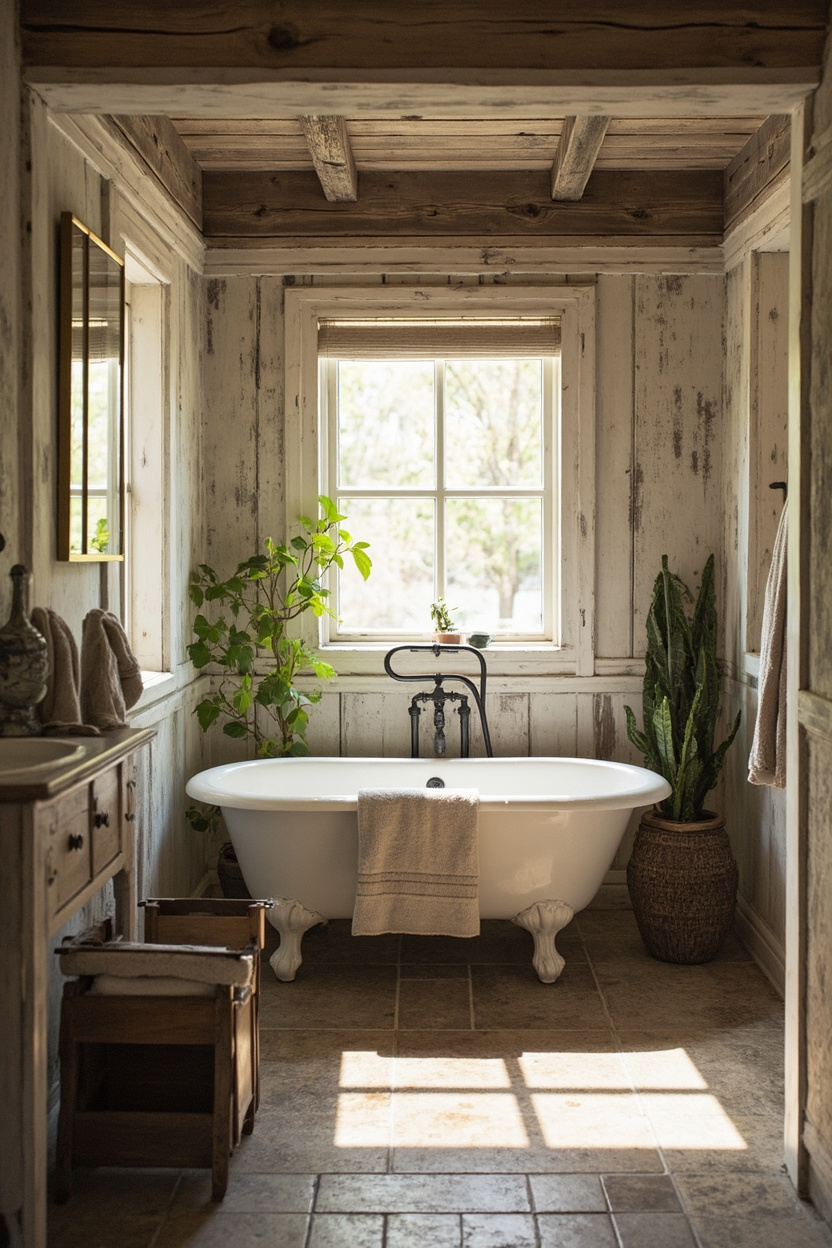
Start with a neutral base—soft whites, warm greys, and linen tones—to create a calm, spa-like foundation that suits farmhouse style.
Introduce rustic accents like reclaimed-wood vanities, matte black hardware, and open shelving for towels and baskets to add character and function.
Prioritize durable, easy-clean materials (large-format tile, sealed wood, and stone) and layered lighting for a serene, practical bath environment.
11. Outdoor Farmhouse: Porches, Rockers, and Weathered Wood Details
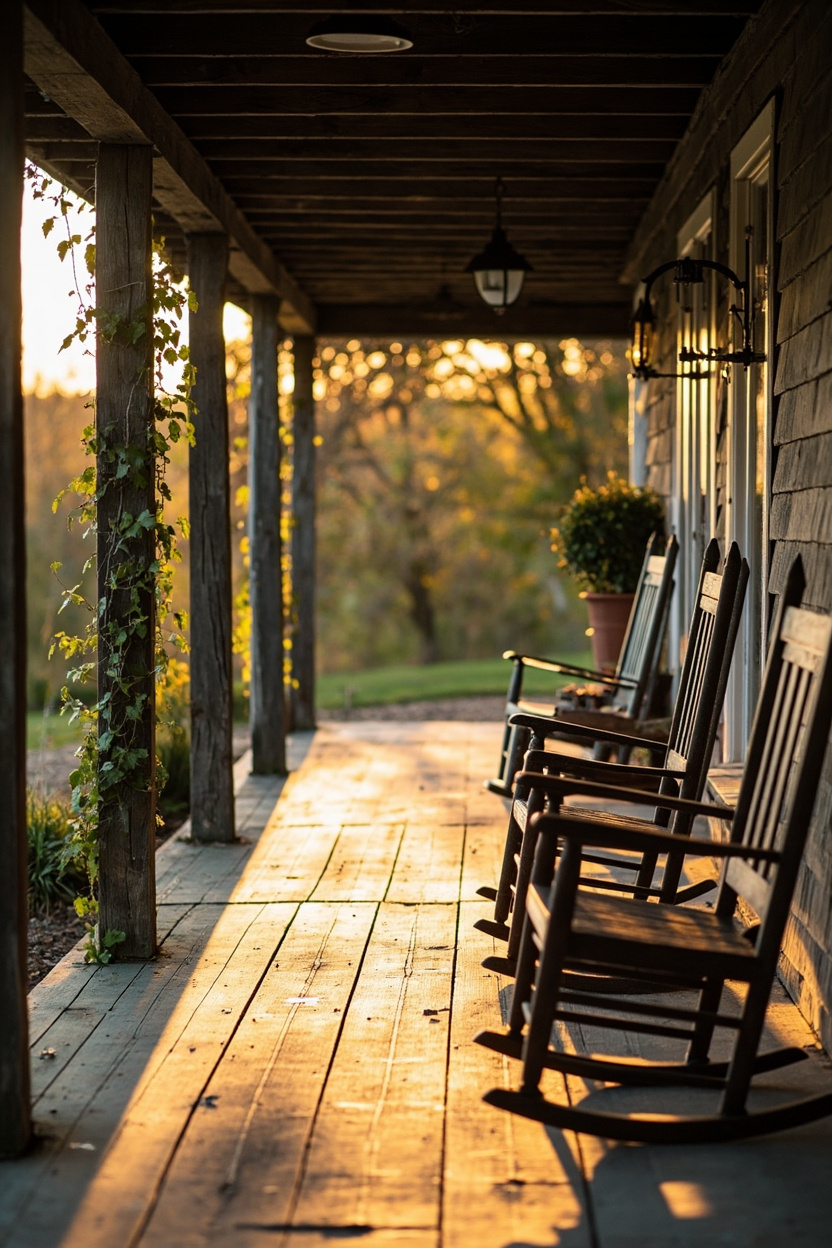
Use durable, low-maintenance materials—cedar, pressure-treated pine, or composite decking—to achieve a weathered wood look that holds up to sun and rain while reducing upkeep costs.
Choose seating with scaled proportions like rocker chairs or a two-seater bench to maintain conversational spacing and allow visual flow between the porch and landscape.
Layer textiles in neutral stripes or checks and add galvanized or enamel planters to reinforce farmhouse character while keeping patterns simple and easy to refresh.
12. Seasonal Switches: Easy Updates with Throws, Wreaths, and Tabletop Vignettes
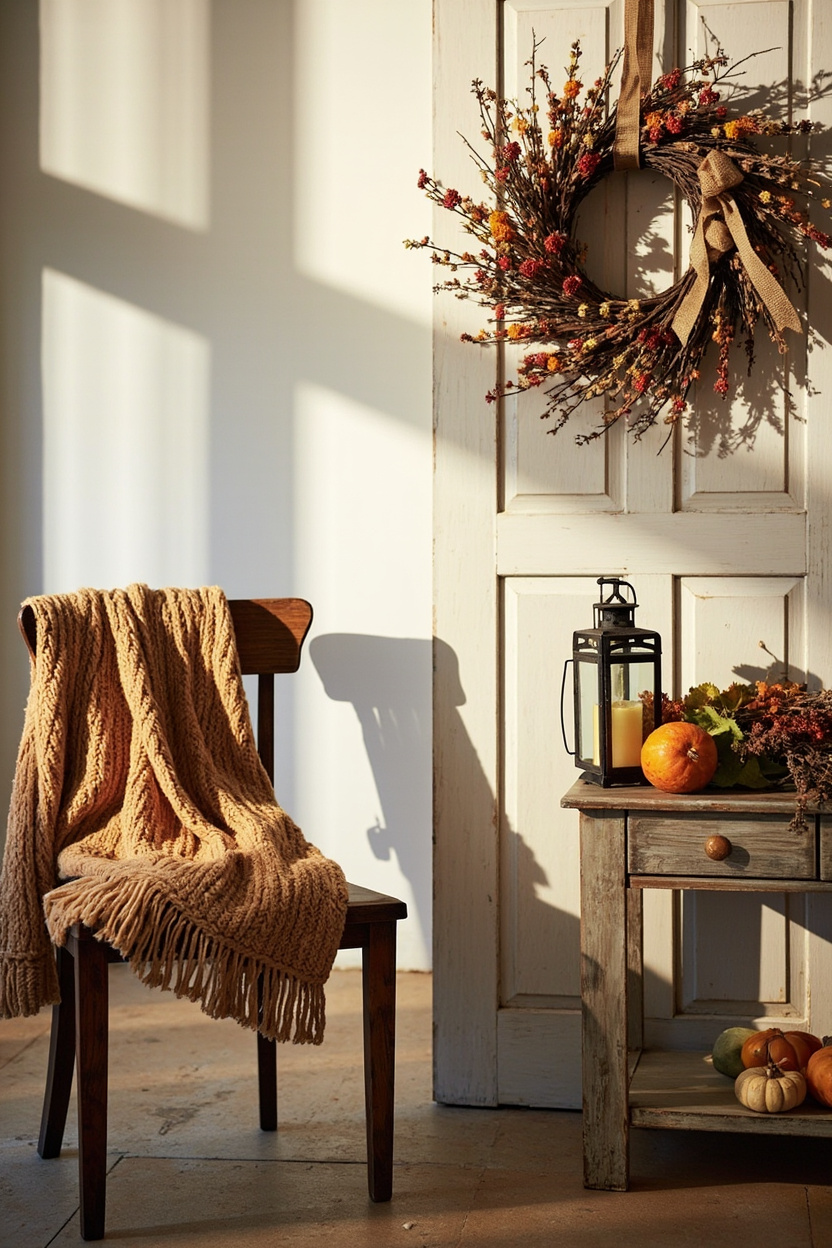
Keep a core palette of neutrals and swap accent colors seasonally through throws and pillows to change mood quickly without overhauling the room.
Design wreaths and tabletop vignettes on a consistent scale—small groupings (3–5 items) with mixed heights create impact without clutter.
Store seasonal textiles and decor in labeled bins and rotate items monthly to avoid decor fatigue and make transitions effortless.
Define the mood first: choose one dominant palette and two supporting neutrals to keep the space cohesive and calming.
Prioritize scale and proportion—select furniture that leaves clear circulation paths and balances the room’s volume with layered lighting for function and ambiance.
Final Style Tip
Anchor the room with a textured rug and repeat a single accent color in three places (art, cushion, accessory) to create rhythm without clutter.
FAQs
Start with a neutral base across floors and large pieces, then choose one dominant accent color plus a softer secondary accent to delineate zones while keeping flow.
Use light, warm neutrals on walls, keep furniture low and leggy, maximize natural light, and use mirrors to reflect depth.
Combine ambient (ceiling or recessed), task (reading lamps), and accent (wall or picture lights) so each zone has purpose-driven illumination controlled by dimmers.
Scale is key—art should cover roughly two-thirds to three-quarters of the wall space above a sofa or console; group smaller pieces at eye level for a curated look.