


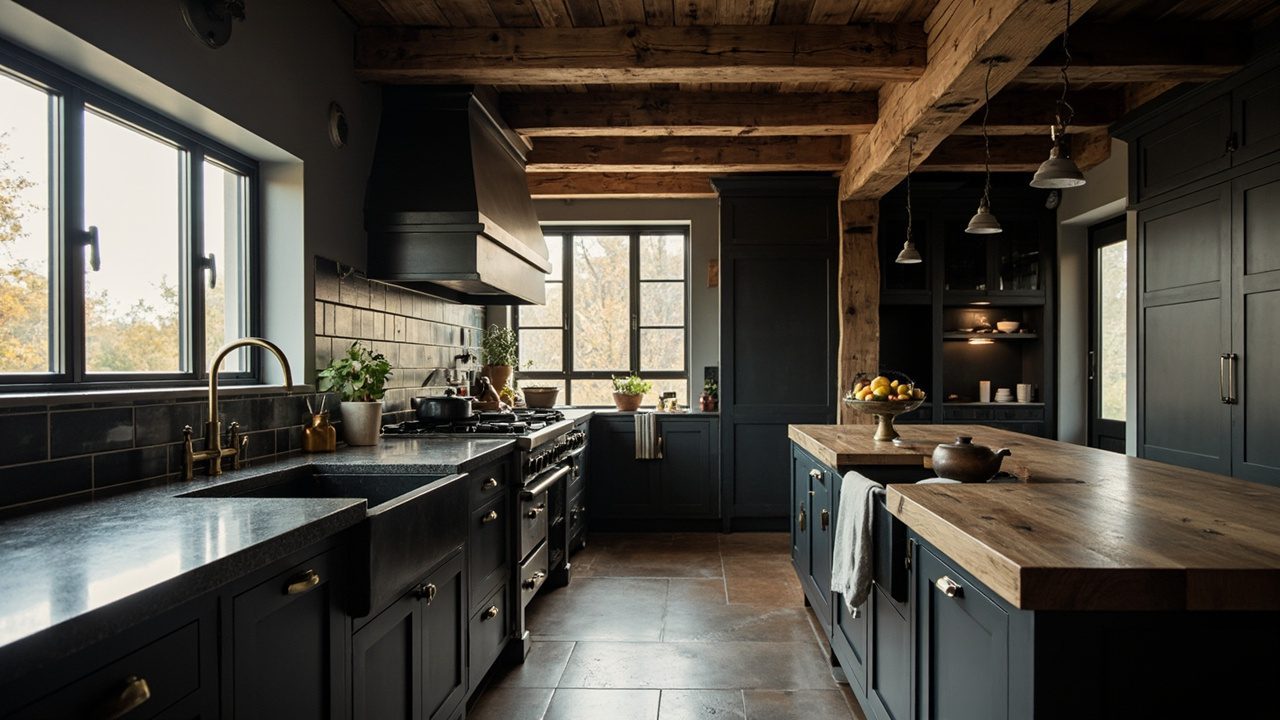
If your kitchen runs dim, farmhouse dark kitchen ideas can feel like a relief, not a risk. The trick is pairing deeper finishes with honest texture, soft light, and a few hardworking materials that bounce brightness right where you need it.
I look for finishes that age well, because patina keeps darker rooms from feeling flat. Think brushed metals, soapstone, iron, and wood with visible grain. Trends back this up, since designers are leaning into character and mood, not glossy perfection, in 2026. For more context on where kitchens are headed, Country Living’s 2026 kitchen trends highlight nostalgia and tactile materials, which sit comfortably with a darker farmhouse palette.
Smart Pick: Antique brass bin pulls, because the warm sheen reads as a soft highlight on dark cabinetry and does not require constant polishing.
- 1. Matte Black Shiplap
- 2. Charcoal Beadboard Walls
- 3. Soapstone Perimeter Counters
- 4. Vintage Brass Hardware
- 5. Blackened Oak Cabinets
- 6. Teal-Blue Island Pop
- 7. Aged Iron Pendants
- 8. Patinaed Copper Range Hood
- 9. Apron-Front Sink, Dark
- 10. Checkerboard Stone Floors
- 11. Smoked Glass Fronts
- 12. Reeded Wood Paneling
- 13. Antique Rug Runners
- 14. Exposed Timber Beams
- 15. Moody Floral Wallpaper
- FAQ
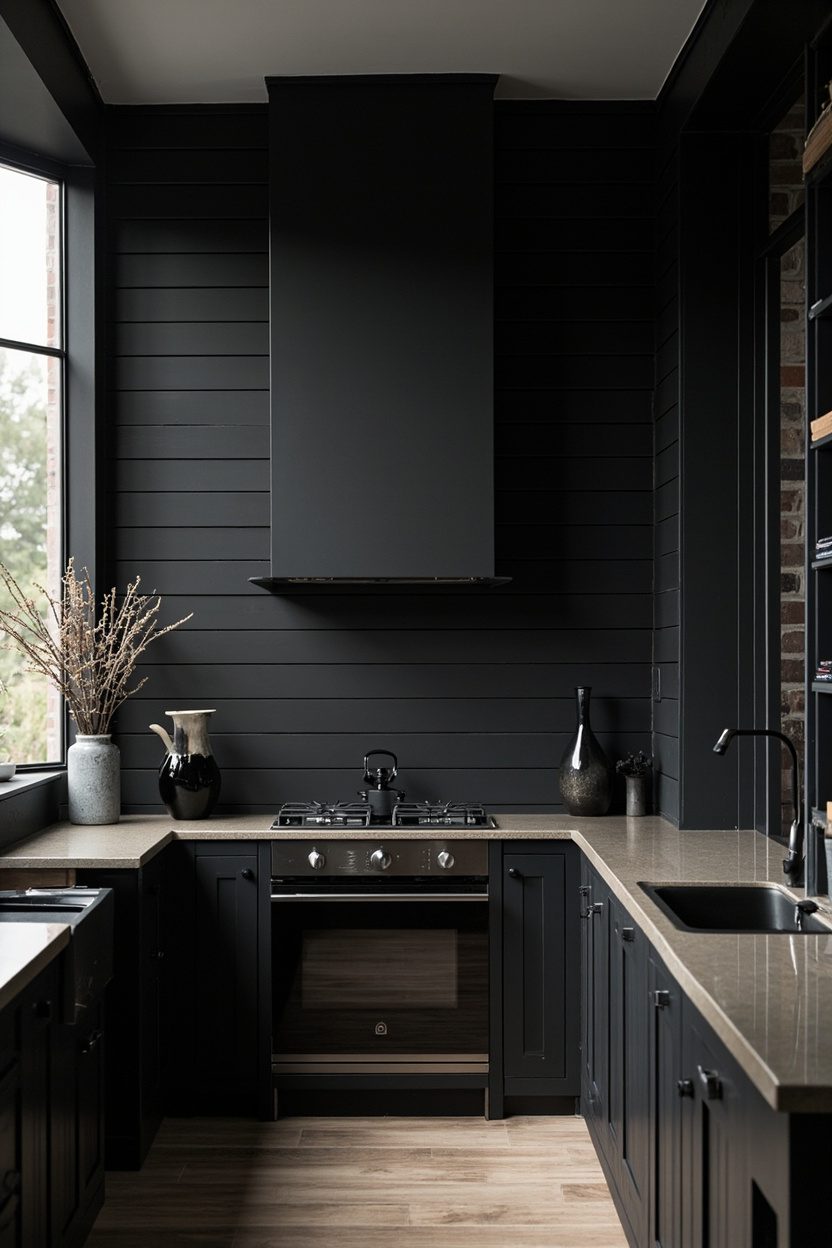
1. Matte Black Shiplap
- Effort Level: Weekend DIY.
- Estimated Budget: 100-500.
- Maintenance Level: Low (Wipe clean).
- Best For: Small, low-light spaces.
Matte black shiplap adds quiet texture that absorbs glare and hides scuffs. Because it runs horizontally, the lines widen small kitchens without shouting.
Choose finger joint pine if you are painting, since knots telegraph through darker paint. Priming with stain blocking primer prevents tannin bleed, which is a common mistake in farmhouse dark kitchen ideas.
Keep sheens flat or eggshell so the grooves stay shadowy and soft. High gloss on black can look plastic and shows every dust line.
Balance the depth with creamy counters or light floors, like natural oak or tumbled limestone. These elements temper the mood and reflect task lighting back up.
Swap in unlacquered brass hooks on a rail for everyday tools. The warm metal reads like jewelry against the matte boards.
Why This Works
Shiplap is inherently casual, so the black never turns severe. The boards add rhythm, the matte finish calms reflections, and the brass or wood accents keep it grounded. If you worry about darkness, limit shiplap to one feature wall and paint adjoining walls a soft putty.
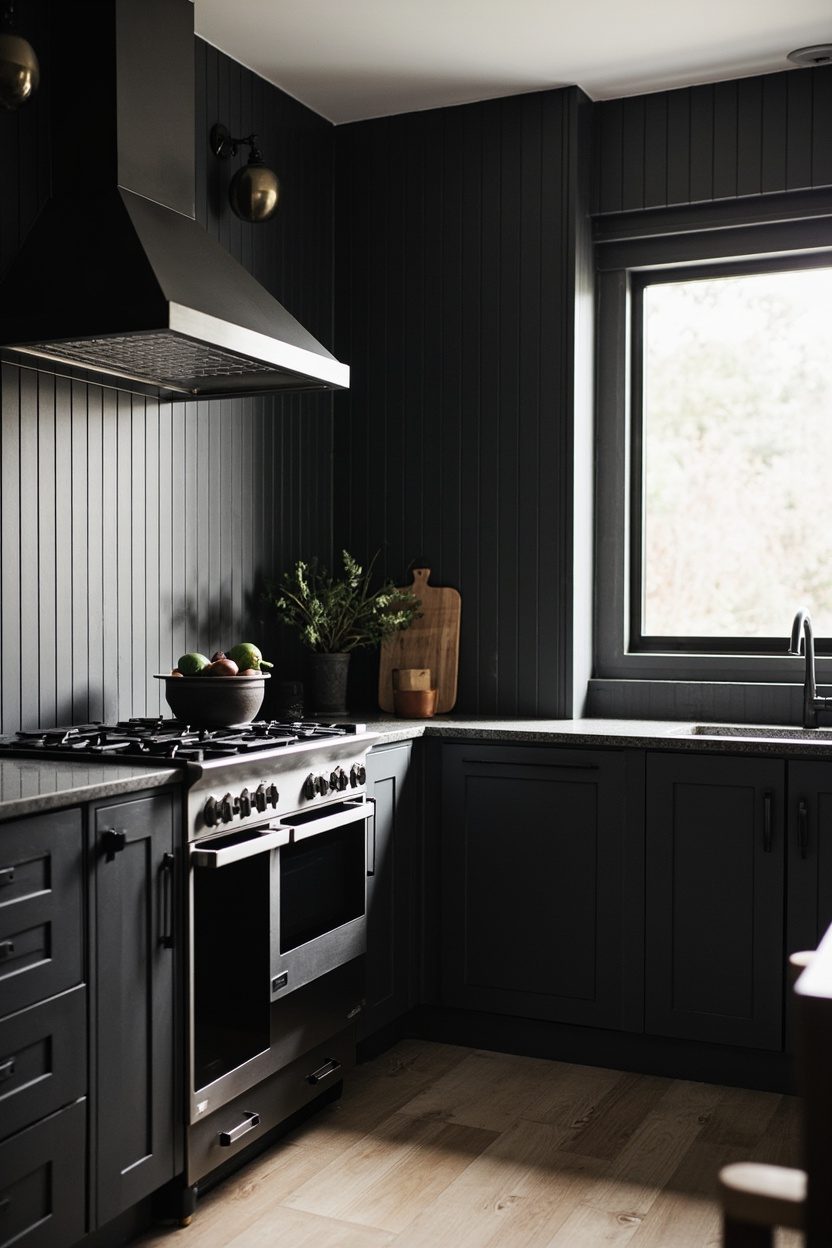
2. Charcoal Beadboard Walls
- Effort Level: Weekend DIY.
- Estimated Budget: 100-500.
- Maintenance Level: Low (Wipe clean).
- Best For: Small, low-light spaces.
Charcoal beadboard brings cottage detail that reads beautifully in low light. The vertical grooves stretch the walls upward, which helps a short ceiling feel taller.
Use a warm charcoal with brown or green undertones. Cool grays can skew flat under warm bulbs, while earthy charcoals feel richer in farmhouse dark kitchen ideas.
Cap the beadboard with a slim ledge rail. It offers a spot for shallow plates, cutting boards, and art, adding highlights and daily function.
Pair with a beadboard height of 48 inches in tight rooms. Taller wainscot keeps splashes contained behind the range and sink, while saving paint above.
Finish with a scrubbable satin on the beadboard and matte on the upper walls. The contrast adds a subtle, tailored line.
Save: Buy primed MDF beadboard panels and paint them the same day. MDF is stable indoors, cuts cleanly, and the grooves look crisp once painted.
Splurge: Specify real tongue and groove beadboard in cedar or poplar, then spray-finish it for a furniture-level surface. Add a custom rail profile and integrated LED strip under the ledge for soft wash lighting.
Stylist’s Note
Beadboard loves company. Layer in a classic runner with paprika or cocoa threads, then repeat the warmth with aged brass switches. For more farmhouse wall treatments, the ideas in Farmhouse Kitchen Backsplash pair nicely with charcoal paneling.
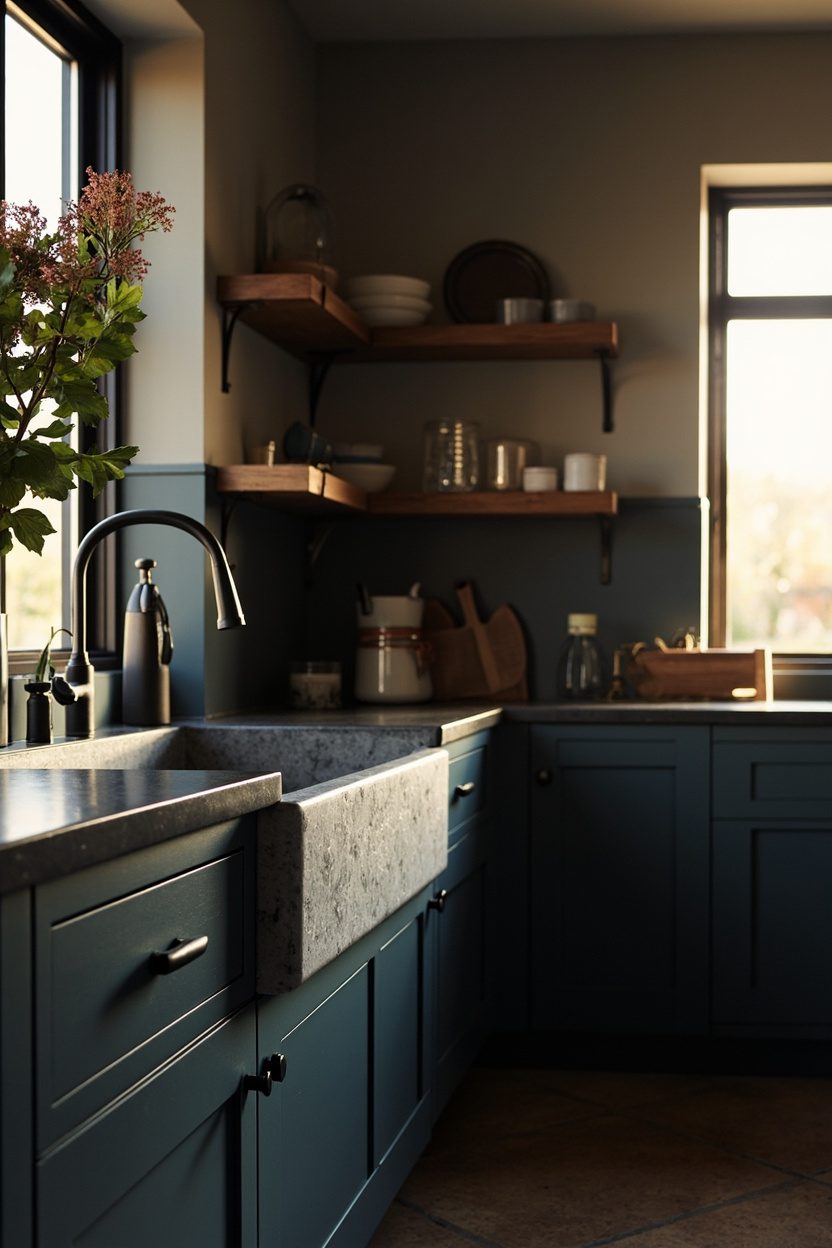
3. Soapstone Perimeter Counters
- Effort Level: Weekend DIY.
- Estimated Budget: 100-500.
- Maintenance Level: Low (Wipe clean).
- Best For: Small, low-light spaces.
Soapstone’s soft black base and pale veining add movement that dark rooms crave. Because it is dense and non porous, it shrugs off stains, citrus, and hot pots.
Choose a honed finish for a velvety look that diffuses light. Oiling deepens the tone, while leaving it unoiled keeps a smoky gray, both options suit farmhouse dark kitchen ideas.
Keep perimeters in soapstone, then switch to butcher block on the island. The mix cuts cost and layers contrast that reads warm in photographs and in person.
Edge detail matters here. A simple eased or small radius edge looks timeless and prevents chips on softer corners.
Light with under cabinet bars, not pucks, for even wash across the surface. The matte stone then glows softly instead of spotting.
The Golden Rule Here
Commit to one dramatic dark surface, not three. Let soapstone be the star, then echo its tone in a single accent, like iron brackets. For island inspiration that plays well with soapstone, browse Farmhouse Kitchen Island Ideas, and if you prefer moodier palettes throughout the home, Dark Farmhouse Decor offers room to roam.
4. Vintage Brass Hardware
- Effort Level: Weekend DIY.
- Estimated Budget: 100-500.
- Maintenance Level: Low (Wipe clean).
- Best For: Small, low-light spaces.
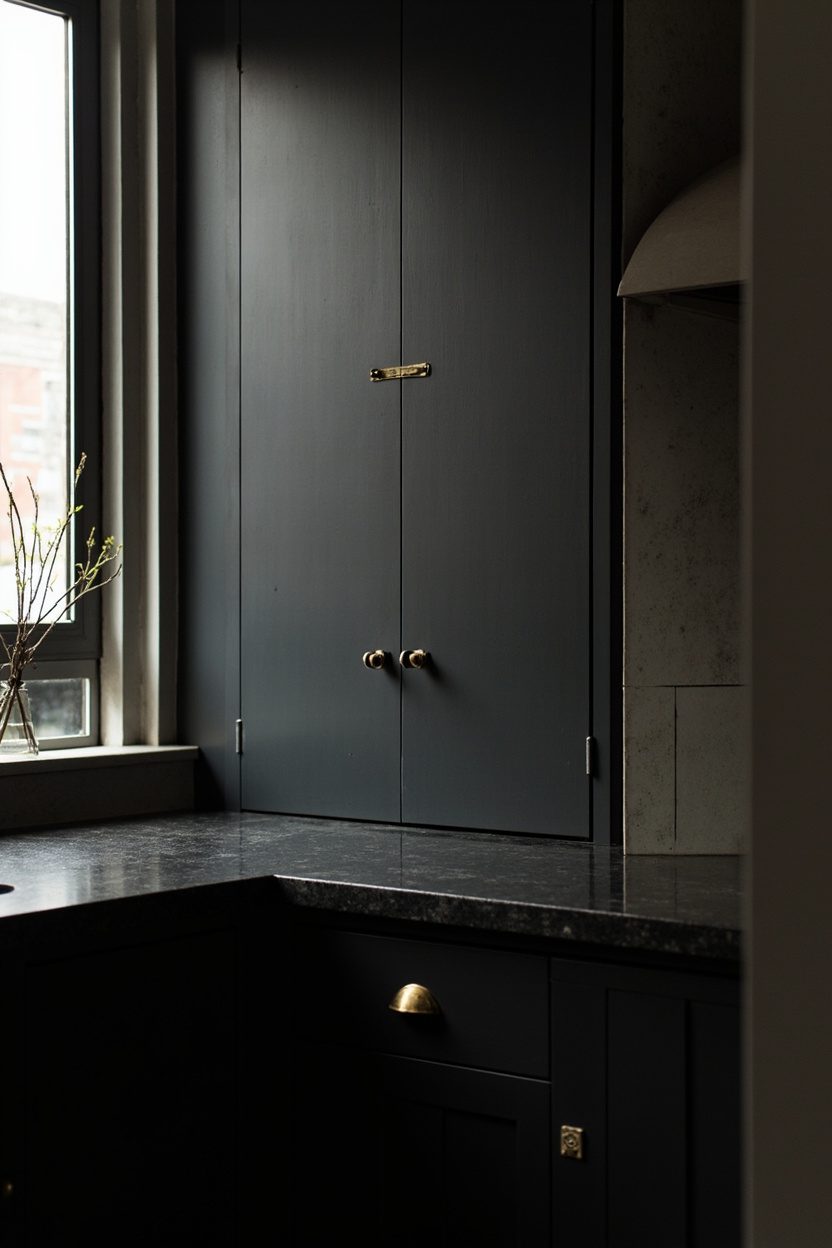
- What You’ll Need: Solid brass knobs and bin pulls, a screwdriver set, measuring tape, and a template jig for consistent drilling.
Warm metal is magic in shadowy rooms, and this is one of the easiest farmhouse dark kitchen ideas to try. Aged brass adds a soft glow that black or chrome will not give you in low light.
Choose unlacquered brass if you love patina, or lacquered if you want it to stay shiny. Either finish sits nicely with shaker doors and beadboard, which keeps the farmhouse note clear.
Match your hinge finish to your pulls, because mixed metals can read busy in a small, dim kitchen. However, you can layer in iron on lighting for contrast if the layout feels flat.
Size matters. Bin pulls at 4 inches center to center feel proportional on 18 to 24 inch drawers, while 1.25 inch knobs suit upper doors. Therefore, measure twice before you commit.
If you have heavy drawers, pick solid brass with threaded posts, not hollow backs. They hold up better, and the hand feel is worth the few extra dollars in daily use.
Before You Buy
Brass varies wildly by tone. Hold a sample against your countertop and paint in daylight and at night. The right shade can swing green, pink, or honey, so test in both conditions for confidence.
Also, keep screws consistent in length. Older cabinet faces can be thin, and long screws can poke through. I keep 1 inch and 1.25 inch on hand, then swap as needed for a clean install.
Farmhouse Kitchen Backsplash can help you decide if brass pairs better with beadboard, handmade tile, or stone.
5. Blackened Oak Cabinets
- Effort Level: Pro install or advanced DIY.
- Estimated Budget: 1500-6000.
- Maintenance Level: Medium (Oil or wax refresh).
- Best For: Larger kitchens with some natural light.
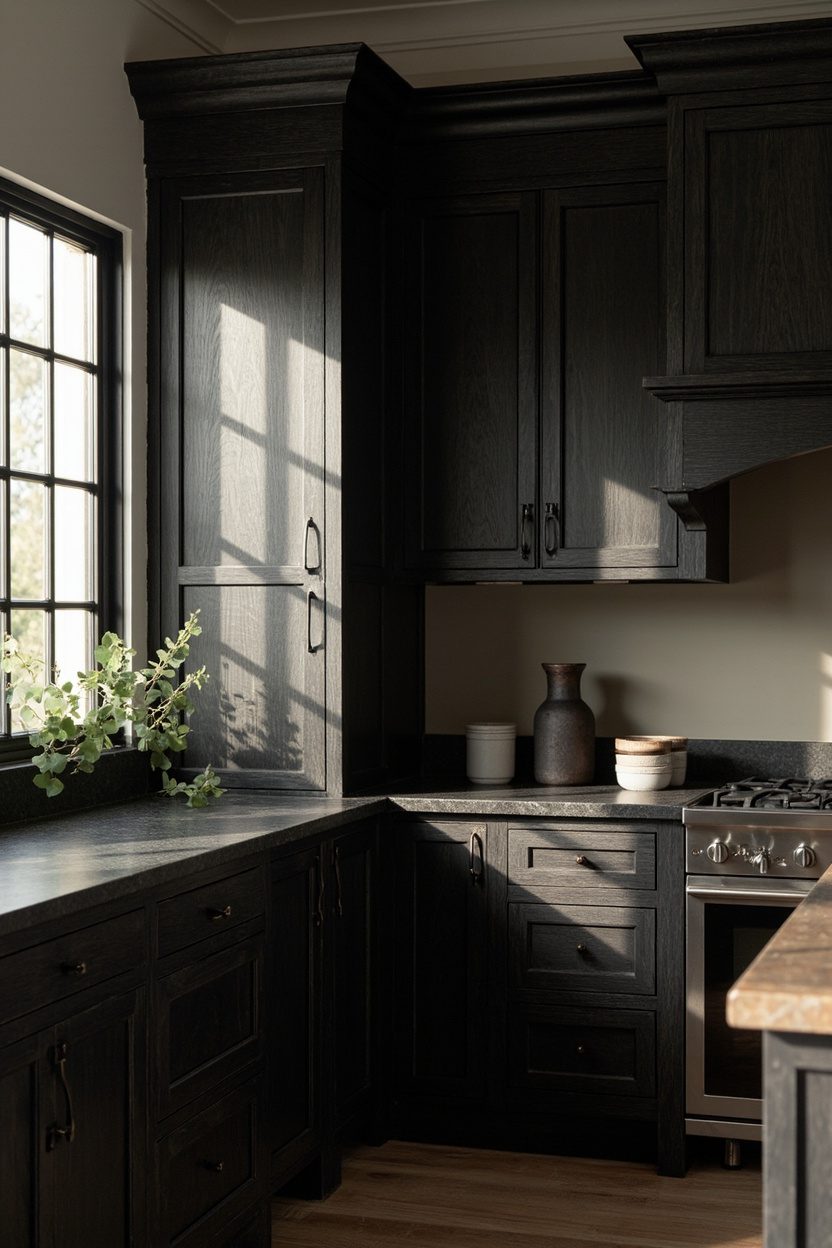
Grain-forward oak finished in a blackened stain feels grounded but not cold. The visible cathedrals break up the dark tone, which helps in rooms that lack windows.
Opt for quarter sawn or rift sawn oak for straighter grain and less visual noise. Because the color is deep, the cleaner pattern reads modern farmhouse, not rustic cave.
Pair the cabinetry with creamy walls, soft white tile, and warm metals. For balance, consider a lighter countertop like honed limestone or quartz with subtle veining.
Keep the sheen at matte or low satin. High gloss on dark oak shows every fingerprint in low light, and it can glare under pendants.
When I tried this in my own kitchen, I skipped a sample door and went straight to full stain. I regretted it. The first mix skewed too brown in evening light, so I had to restain two fronts.
Stylist’s Note
Ask your finisher to raise the grain with water, then sand before the final stain. It keeps the texture pleasant to the touch, which matters when everything is dark and tactile.
Also, specify edge profiles. A simple eased edge on doors and a slim 1.5 inch cabinet rail keep the look crisp, so the black reads tailored, not heavy-handed.
For more color balance ideas, the palette in Gray Farmhouse Kitchen Ideas pairs nicely with blackened woods.
Designers are leaning into richer tones in coming seasons, and complex blues are on the rise, according to Livingetc.
6. Teal-Blue Island Pop
- Effort Level: Weekend DIY.
- Estimated Budget: 200-1200.
- Maintenance Level: Medium (Touch-up paint).
- Best For: Dark rooms with a central island.
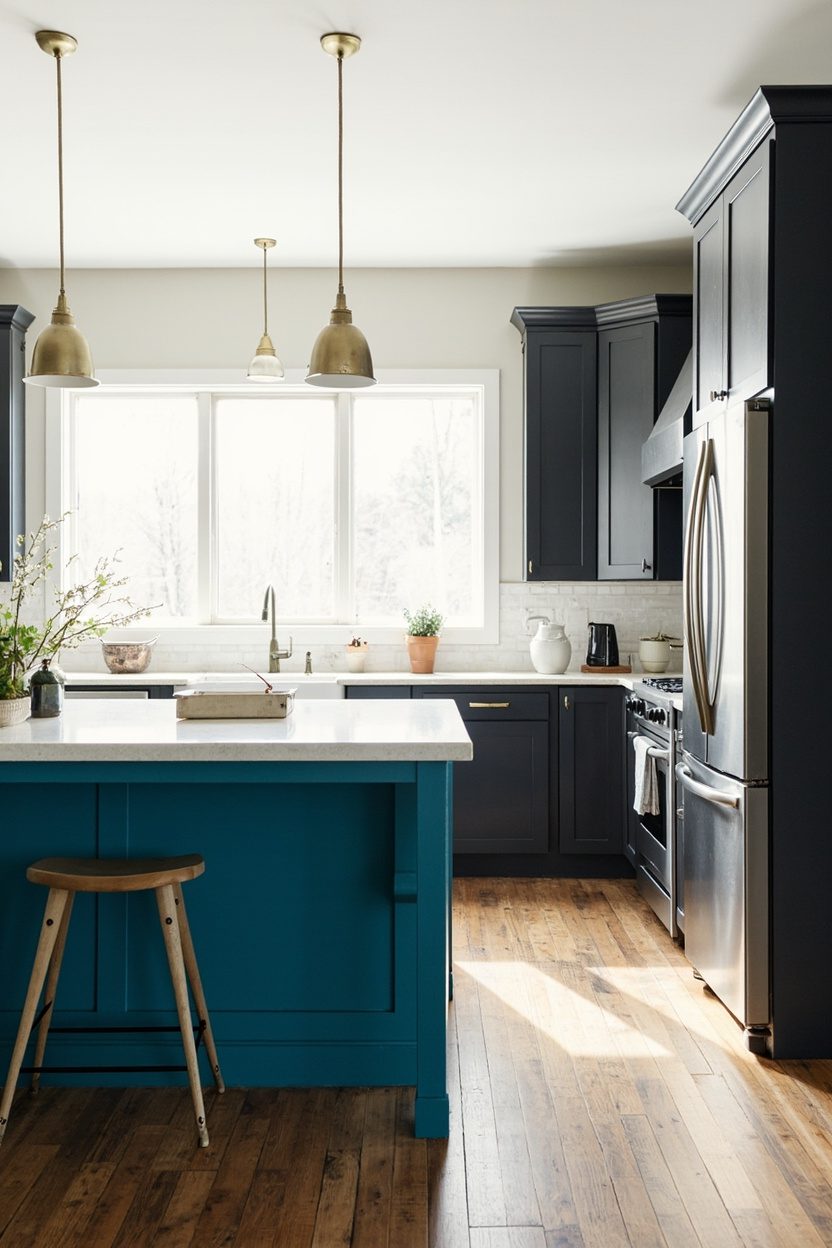
A teal island cuts through the shadows and sets a friendly focal point. It is one of the most reliable farmhouse dark kitchen ideas when the perimeter is moody.
Pick a teal with a hint of gray, not neon. Complex, teal-inflected blues behave well in low light, shifting warmly through the day for a lived-in feel.
Use satin or semi-gloss for wipeability, especially if kids snack here. However, keep surrounding cabinets matte, so the island does the talking.
Tie the color back with one other accent, like a stripe on café curtains or a vintage runner. Because restraint looks intentional, the room stays calm.
Top the island in warm butcher block if your counters are dark stone. The wood keeps it farmhouse, and it prevents the island from reading like a lone paint chip.
Make It Your Own
Test swatches on the island itself, not a wall. The horizontal plane catches light differently, and teal can jump greener under warm bulbs. Paint two coats of sample, then live with it for a week.
If you are adding seating, choose matte black stools or woven rush. Both ground the color, while still feeling at home in a country kitchen. And yes, a little brass on the hardware ties it all together.
For island sizing and layout tips, browse Farmhouse Kitchen Island Ideas. If you are building a whole scheme, Farmhouse Kitchen has more foundations to mix with these tones. Designers also predict whimsical, characterful kitchens ahead, as noted by Country Living.
7. Aged Iron Pendants
- Effort Level: Weekend DIY.
- Estimated Budget: 100-500.
- Maintenance Level: Low (Wipe clean).
- Best For: Small, low-light spaces.
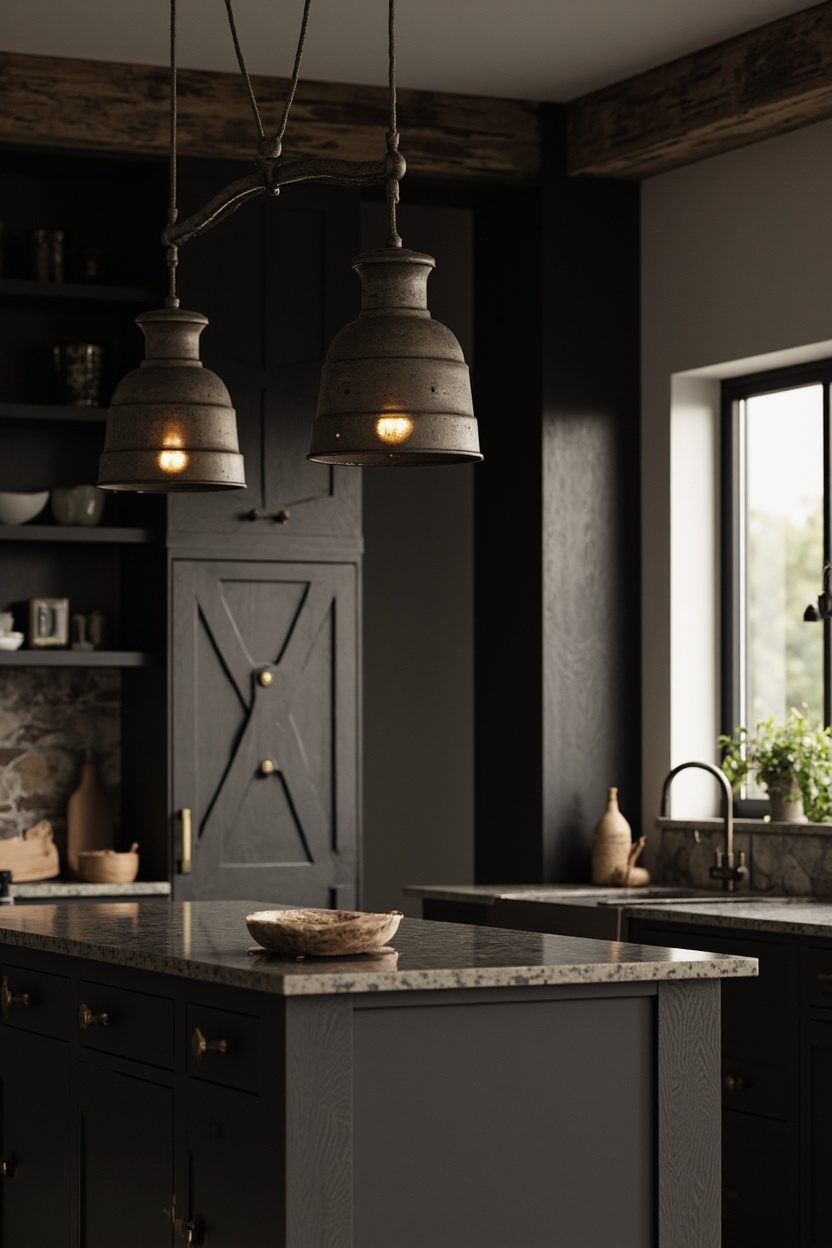
Go for hand rubbed, aged iron pendants with warm Edison bulbs. The moody finish adds weight, yet the warm light softens shadows in a dark room.
Hang two medium fixtures over an island, 28 to 32 inches apart. Keep the bottom of each shade 30 to 34 inches above the counter for glare free prep.
Choose wide bell shades, 12 to 14 inches, to throw light down and out. However, skip glossy black, which can feel flat against dark cabinetry.
Match the metal tone to your faucet or pulls for calm cohesion. Or, mix aged iron with antique brass for a layered farmhouse look.
If ceilings are low, pick a shallow dome profile. Therefore, you avoid sightline chop and gain a cleaner silhouette.
Stylist’s Note
Aged iron works because it has texture and depth, which reads warm, not cold. If your kitchen skews cool, add a linen wrapped cord for a softer note.
When shopping, look for real iron or powder coated steel with visible mottling. Perfectly smooth paint often looks mass produced under bright bulbs.
8. Patinaed Copper Range Hood
- Effort Level: Pro install.
- Estimated Budget: 800-3500.
- Maintenance Level: Medium (Occasional wax).
- Best For: Open kitchens with an island.
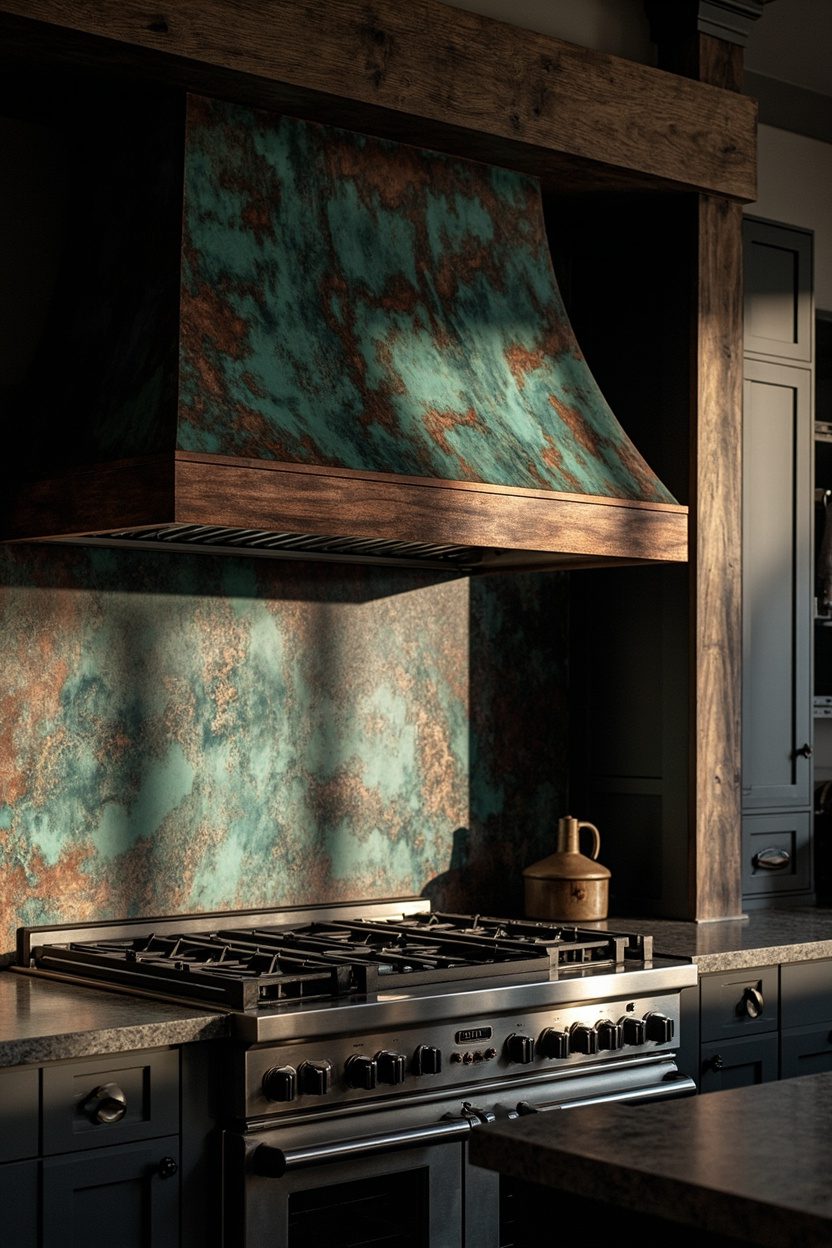
A patinaed copper hood is a warm anchor in a dark farmhouse kitchen. Because copper shifts with time, the surface brings life to deep cabinets and stone.
Aim for a soft verdigris or bourbon penny tone, not mirror polished. The slight matte finish absorbs light, which keeps glare down at night.
Size matters. Choose a hood 6 inches wider than the range for good capture, and mount 30 to 36 inches above the cooktop.
Pair it with unlacquered brass or iron hardware. However, keep backsplash tile simple, like off white zellige, so the hood remains the star.
For farmhouse dark kitchen ideas that feel timeless, pick simple strapping in blackened steel. Avoid ornate rivets that skew theme park rustic.
Splurge vs. Save
Save: Order a stock size copper shell and wrap a standard insert. Ask the fabricator for a light hand patina and simple strap detail. You get real copper presence without custom curves or extra seams.
Splurge: Commission a fully custom hood with tapered sides, a soft radius front, and hand hammered texture. Specify thicker copper and hidden seams. It looks heirloom, vents better, and ages with rich character.
9. Apron-Front Sink, Dark
- Effort Level: Pro install.
- Estimated Budget: 400-1500.
- Maintenance Level: Medium (Wipe dry).
- Best For: Busy family kitchens.
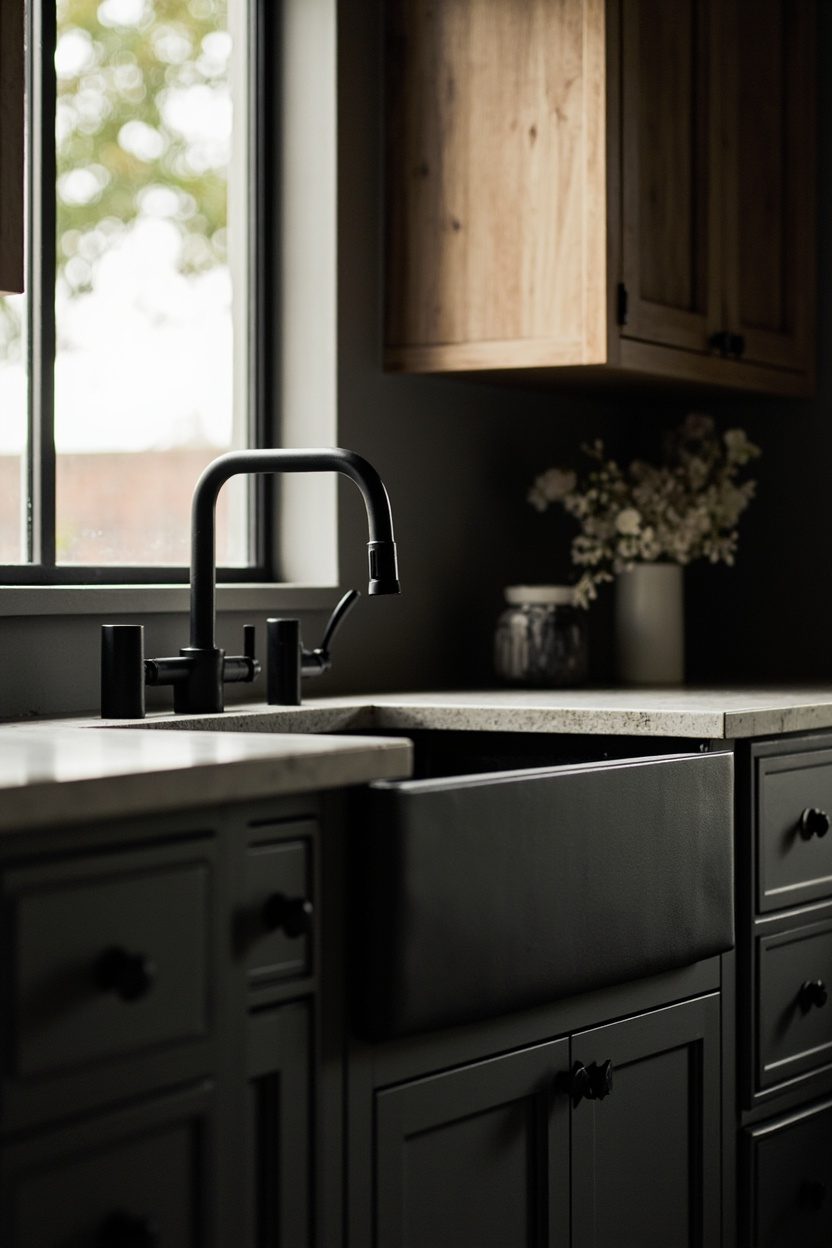
Choose a dark apron front sink in matte black fireclay or graphite composite. The deep color grounds the room while hiding scuffs and tea stains.
Go single bowl at 30 to 33 inches wide for sheet pan ease. However, add a stainless grid to protect the base from pots.
If you cook often, composite granite runs quieter and resists chips. Fireclay looks classic, but the corners chip if you drop cast iron.
Balance the darkness with a light, tactile counter, like honed soapstone or creamy quartz. Therefore, the sink reads intentional, not like a black hole.
Tie it to hardware and lighting with blackened or oil rubbed finishes. For farmhouse dark kitchen ideas, this trio feels cohesive and sturdy.
Before You Buy
Measure your cabinet face frame twice, because apron fronts vary in height by an inch or two. Ask the fabricator to notch the cabinet after the sink arrives, not before.
If your water is hard, keep a microfiber towel by the faucet. A quick nightly wipe prevents mineral spots and keeps that matte finish handsome.
10. Checkerboard Stone Floors
- Effort Level: Weekend DIY.
- Estimated Budget: 100-500.
- Maintenance Level: Low (Wipe clean).
- Best For: Small, low-light spaces.
- What You’ll Need: 12×12 honed stone or porcelain tiles, tile spacers, notched trowel and thinset, dark grout and sealer.
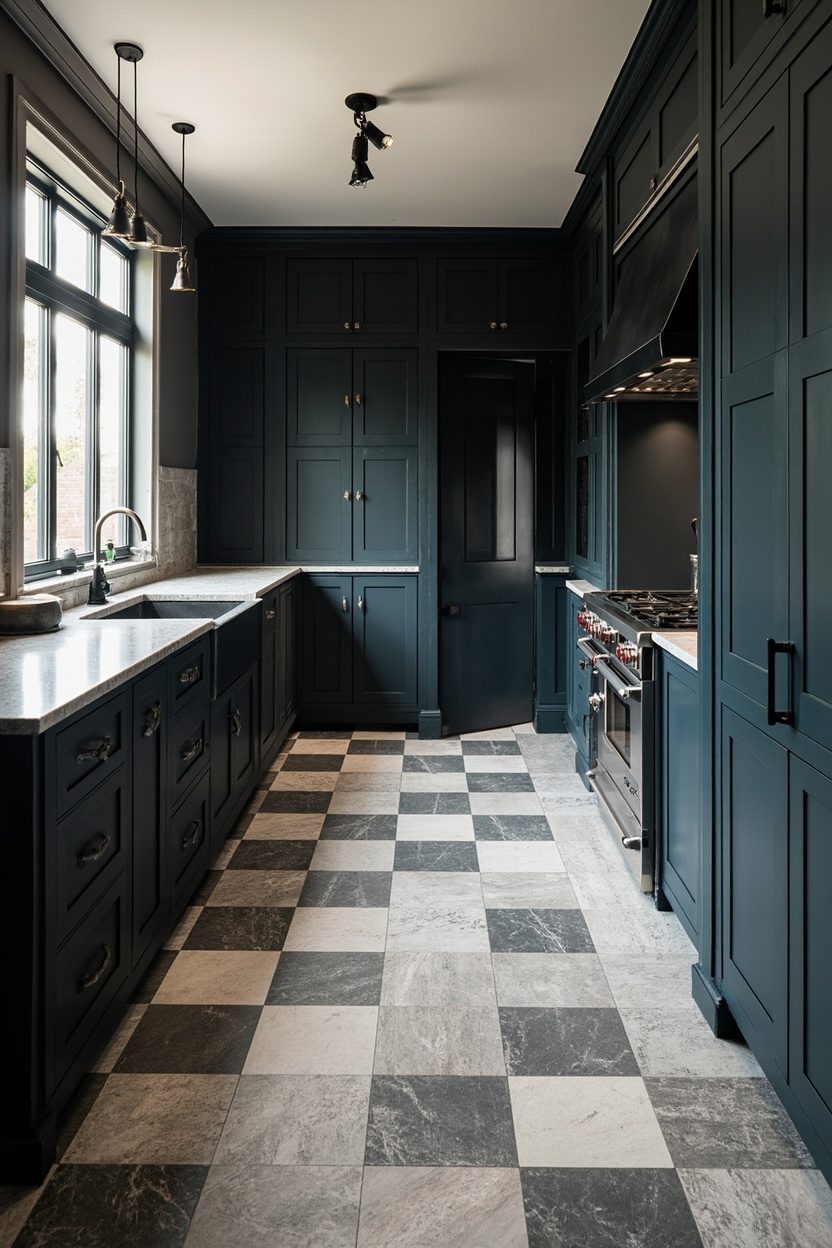
Dark floors ground a dim kitchen, and checkerboard adds rhythm. For farmhouse dark kitchen ideas, try warm charcoal and limestone instead of stark black and white. The softer contrast keeps it cozy, not graphic.
Lay tiles on the diagonal if the room is narrow. Angling the pattern visually stretches tight galley kitchens, because the eye follows the longest line.
Honed finishes read quieter under low light. Polished stone can glare under pendants, while honed absorbs light and feels timeworn.
If stone is out of budget, consider porcelain lookalikes. They mop easily, and grout in a matching dark tone to hide everyday wear.
Before You Buy
Measure from the doorway and dry lay a few rows first. You want full tiles greeting you at the entry, not a thin sliver that screams “last minute cut.” If cuts are inevitable, tuck them under cabinets.
Also, bring home two tile colors and test them morning and night. Dark floors can swing cool or muddy fast. The right warm gray or putty beige will echo soapstone, old beams, and iron hardware beautifully.
11. Smoked Glass Fronts
- Effort Level: Weekend DIY.
- Estimated Budget: 100-500.
- Maintenance Level: Low (Wipe clean).
- Best For: Small, low-light spaces.
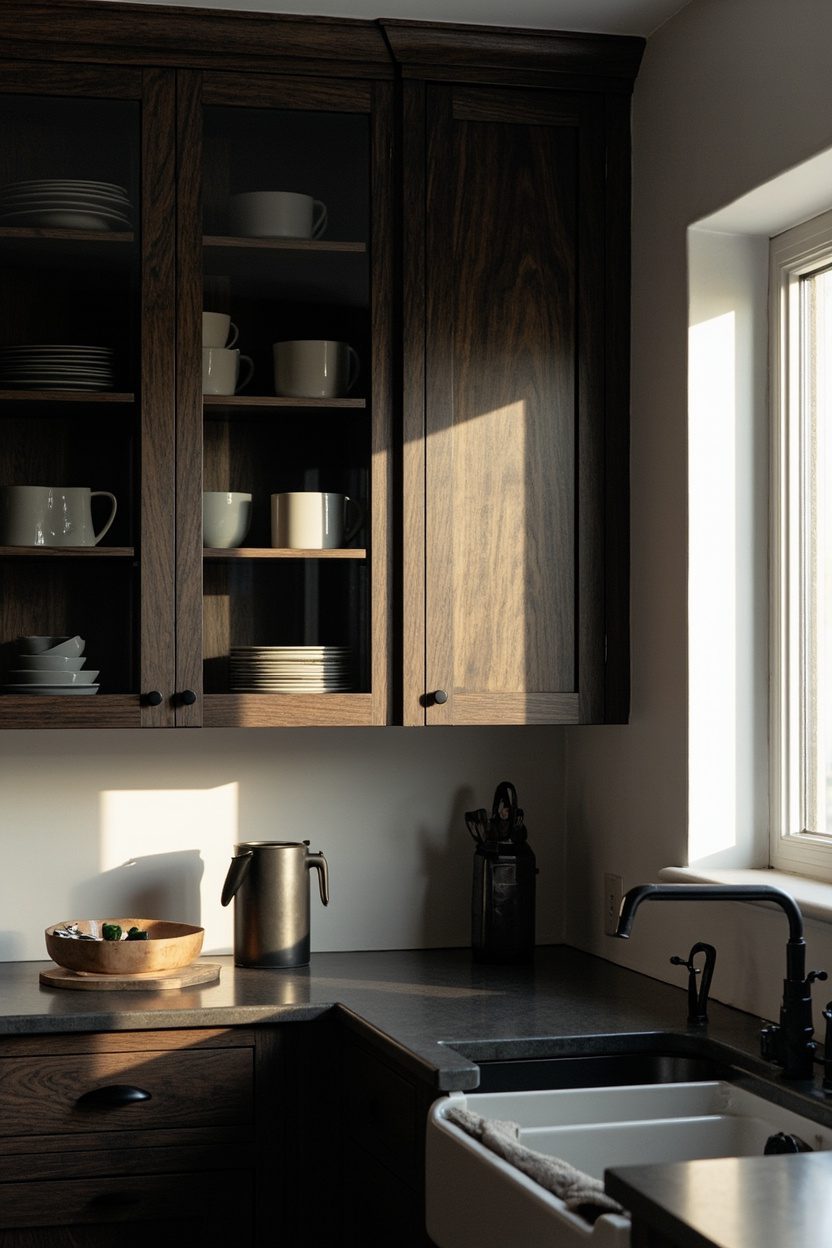
Smoked glass reads moody, but it still bounces light around. It softens clutter, which is helpful in farmhouse dark kitchen ideas with open shelving and deep paint.
Swap a few upper cabinet panels for bronze or gray-tinted glass. Keep frames chunky, like shaker rails, so the look stays farmhouse rather than ultra modern.
Use warm brass or black latches to tie the glass into your hardware story. Because details matter, repeat the metal in pendants and the range pull.
Inside, stick to pale dishware. Cream stoneware, wood bowls, and clear jars glow behind the tint, and they will not fight the shadow.
Stylist’s Note
Smoked glass is forgiving, but not magical. Edit down mismatched plastic and stack the pretty everyday pieces front and center. You will love opening those doors when everything has breathing room.
If you are replacing panes yourself, order tempered glass with a soft bronze tint. It leans cozy, not gray, and plays well with soapstone and aged brass. For more cabinet direction, skim ideas in Farmhouse Kitchen and storage-friendly picks in Farmhouse Kitchen Island Ideas.
12. Reeded Wood Paneling
- Effort Level: Weekend DIY.
- Estimated Budget: 100-500.
- Maintenance Level: Low (Wipe clean).
- Best For: Small, low-light spaces.
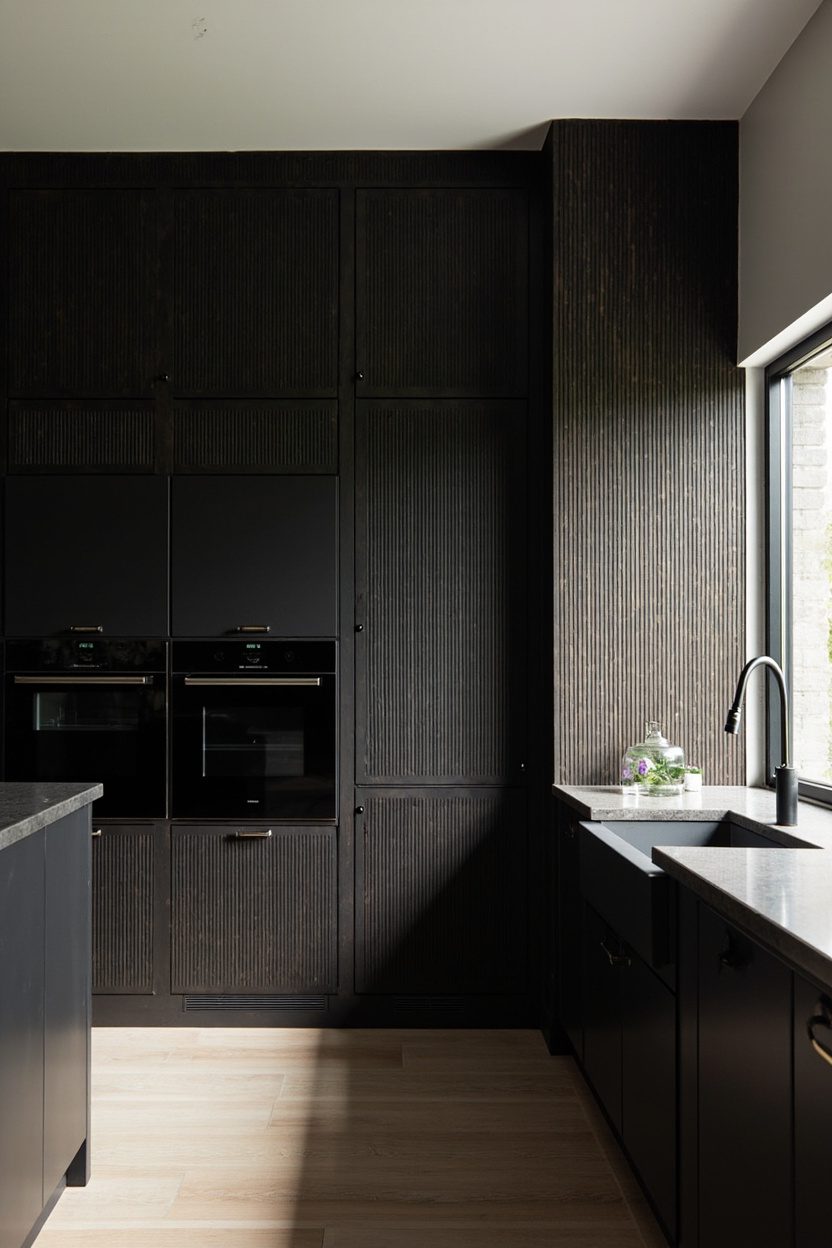
Reeded panels add shadow and texture that feel right in a moody farmhouse. They catch light on the ridges, which is gold for farmhouse dark kitchen ideas that need dimension.
Run vertical reeds on an island or end panels. Vertical lines lift a heavy base, while horizontal boards can feel squat in short rooms.
Choose oak or ash if you plan to stain dark. These grains hold color without going flat, and a matte topcoat keeps the look soft.
Avoid super tight reeds near the sink. Crumbs collect, so reserve them for the island back, breakfast nook, or a pantry door.
When I tried this in my own kitchen, I stained the sample too dark. It turned inky at night. Going one shade lighter kept the grain visible and the room warmer.
Make It Your Own
If you love painted cabinetry, try a two tone move. Paint the frames a deep charcoal, then oil the reeded panels in a mid walnut. The mix reads layered, not busy.
For a weekend win, use pre-made reeded MDF on a flat island back. Cut cleanly, glue, and pin nail, then cap with a simple oak rail. It is a classic partner to a checkerboard floor and a patinated faucet. For backsplash pairings, browse textures in Farmhouse Kitchen Backsplash and moody palettes in Dark Farmhouse Decor.
13. Antique Rug Runners
- Effort Level: Weekend DIY.
- Estimated Budget: 100-500.
- Maintenance Level: Low (Wipe clean).
- Best For: Small, low-light spaces.
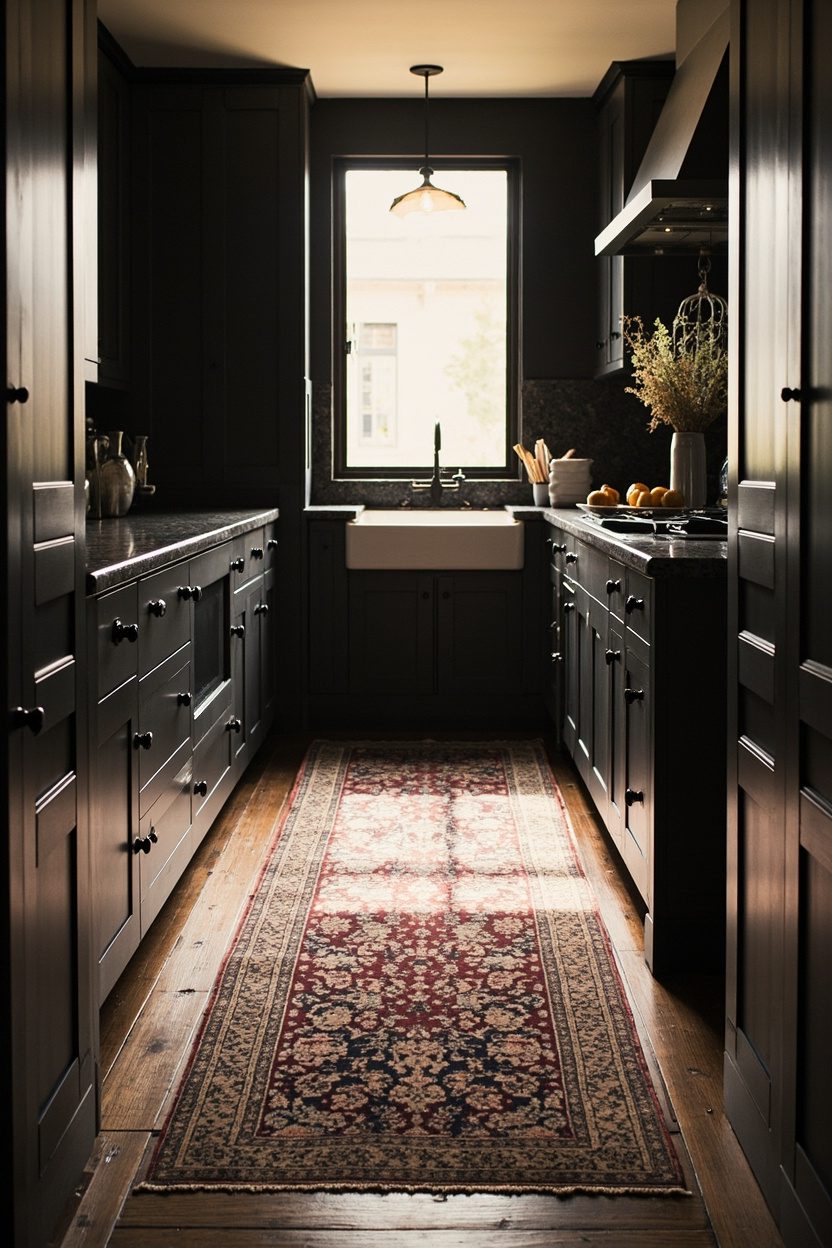
A narrow antique runner softens a dark floor and adds warmth fast. Choose wool with low pile so crumbs vacuum easily, and edges do not curl underfoot. It is an easy win for farmhouse dark kitchen ideas.
Because pattern hides stains, you can go richer in color. Try berry, inky blue, or tobacco brown with a worn, sun-faded look. The age brings soul without fighting your cabinets.
Measure toe-kick to island clearance before buying. You want at least 2 inches of reveal on each side, so it looks tailored and safe. Standard runners are 2.5 by 8 feet, but hall sizes vary.
Layering matters. If your floor is glossy, add a thin rug pad cut 1 inch smaller. It keeps the runner in place and adds a touch of cushion, which helps during long prep sessions.
For balance, repeat one rug color in your hardware or pottery. Even one copper bowl can echo a rug stripe and make the whole kitchen feel intentional.
Stylist’s Note
Vintage versus vintage-look is a budget call. True vintage wool handles traffic better and cleans up with a dab of dish soap and water. However, a good machine-washable replica is smart for homes with dogs. If your space is very tight, pick a runner that stops short of appliance doors. You will appreciate that extra clearance on busy mornings.
14. Exposed Timber Beams
- Effort Level: Weekend DIY.
- Estimated Budget: 100-500.
- Maintenance Level: Low (Wipe clean).
- Best For: Small, low-light spaces.
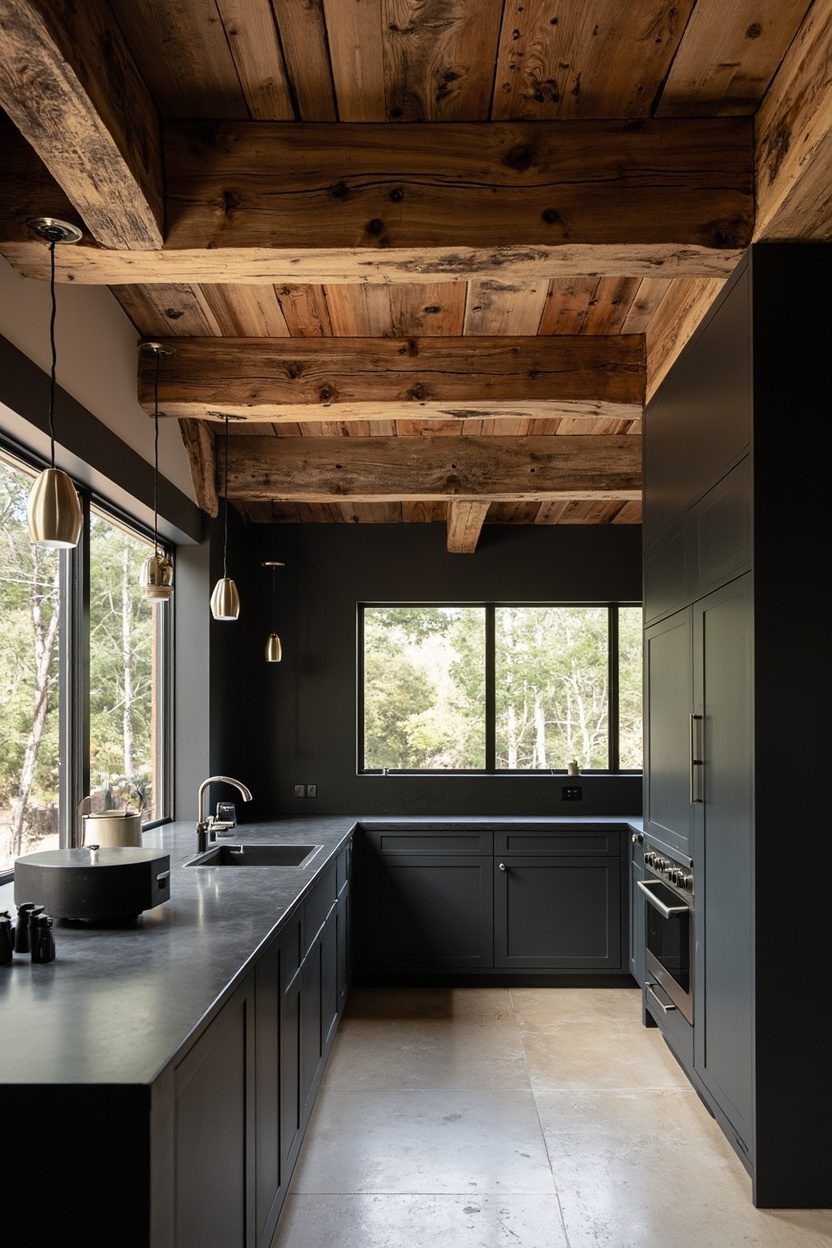
Real or faux beams add structure and shadow play that flatter darker palettes. Choose species with visible grain, like white oak or reclaimed fir, then stain to a medium walnut so it reads warm, not heavy.
Because ceilings vary, scale is key. A 7.5 to 8 foot ceiling needs slimmer beams, around 3 by 5 inches. Taller rooms can carry chunkier profiles. Keep spacing even, roughly 4 to 6 feet apart.
Faux box beams keep weight down and hide wiring. Use mitered three-sided wraps over blocking for a neat install. A hand-brushed matte finish keeps the surface from feeling plastic.
Mind lighting. Recessed cans tucked between beams can create stripes of brightness. Alternatively, run a track along a beam spine to wash wall tile and worktops evenly.
When pairing with other farmhouse dark kitchen ideas, repeat the beam tone in a cutting board or stool legs. The eye connects those moments and the room feels grounded.
When I tried this in my own cottage kitchen, I stained too dark on the first pass. The beams swallowed the light. I sanded back and layered a mid-tone walnut with a sheer white wax. It instantly felt calmer and cozier.
Before You Buy
Measure your ceiling joist direction first. Running beams perpendicular to joists speeds installation and reduces extra blocking. Also, sample stains on offcuts and check them morning and night. Dark wood shifts a lot under warm bulbs, so test with your actual 2700K or 3000K lamps before committing.
15. Moody Floral Wallpaper
- Effort Level: Weekend DIY.
- Estimated Budget: 100-500.
- Maintenance Level: Low (Wipe clean).
- Best For: Small, low-light spaces.
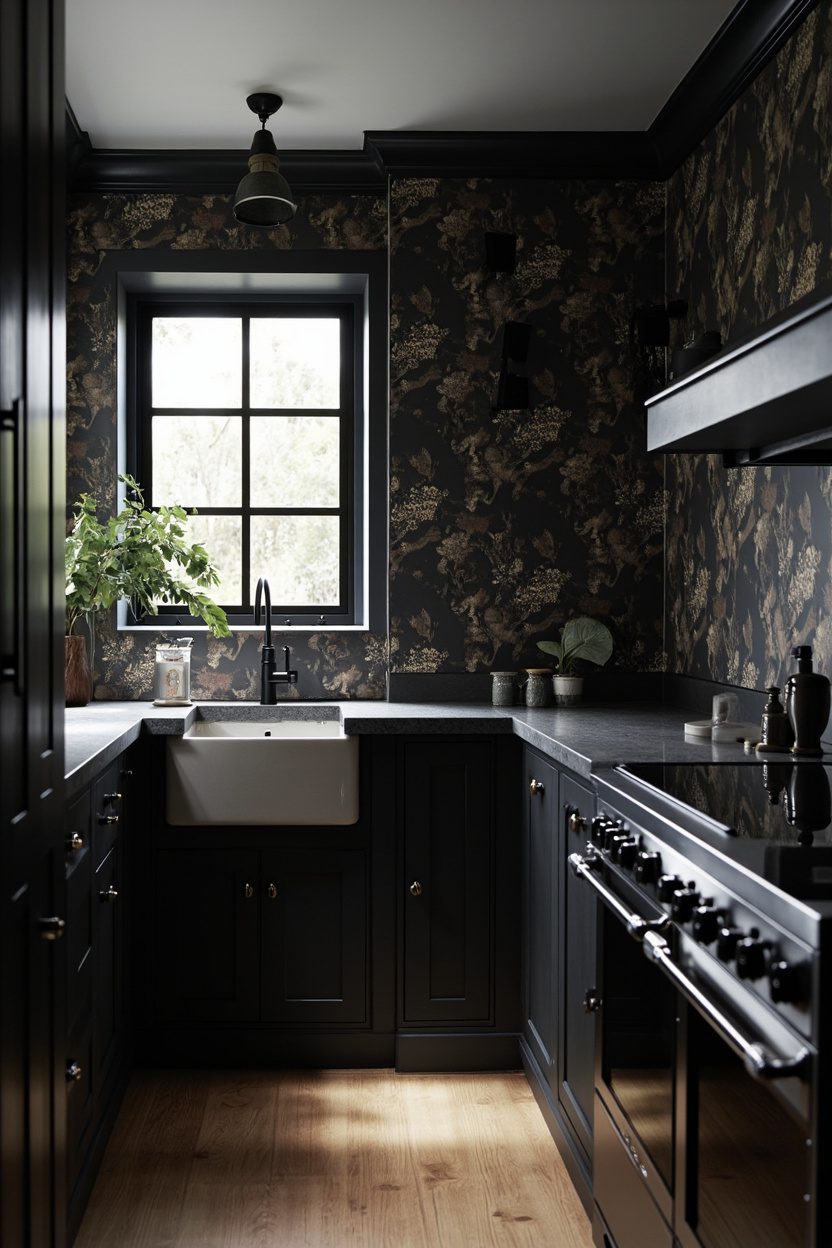
A dusky floral creates a cocoon effect that suits dark cabinetry. Choose vinyl-coated or scrubbable paper for splashes, especially near the coffee station or banquette.
Go large scale in a small nook, like a pantry wall or breakfast corner. Big blooms feel modern and reduce visual clutter. A charcoal ground with soft mauve or olive reads farmhouse, not gothic.
Because pattern competes with tile, avoid busy backsplashes. Pair the paper with a simple beadboard or a quiet zellige in bone. If you need backsplash ideas, browse Farmhouse Kitchen Backsplash for clean, compatible options.
Sample swatches at full size. Tape two or three repeats to the wall and watch them over a few days. Evening light matters in dark rooms, so check under your pendants too.
To tie it back to other farmhouse dark kitchen ideas, pull a leaf tone into your linens. Even two olive tea towels can make the wallpaper feel at home with your wood tones.
Make It Your Own
If you love the look but worry about commitment, line only the upper third of the wall and cap it with a simple 1 by 2 pine rail. Paint the lower wall in the darkest shade from the print. It keeps costs down, protects the high-traffic zone, and still brings that moody bloom moment.
FAQ
How do I keep a dark farmhouse kitchen from feeling cave-like?
Layer light sources. Use warm 2700K to 3000K bulbs, under-cabinet strips, and one statement pendant. Then add reflective moments, like satin nickel hardware or a soft-gloss backsplash, to bounce light without killing the mood.
What wood stain works best with dark cabinets?
Aim for a mid-tone walnut or smoked oak that is two to three shades lighter than the cabinets. The slight contrast adds definition. Test in your actual lighting, since warm bulbs can push brown stains more red.
Are antique rug runners practical in a kitchen?
Yes, if you choose low-pile wool and use a thin rug pad. Wool naturally resists stains and cleans easily. Pattern helps too. Spot clean with mild dish soap, and rotate seasonally to even out wear.
Can I mix moody floral wallpaper with shiplap or beadboard?
Absolutely. Keep beadboard simple and paint it in a quiet neutral pulled from the wallpaper. A satin finish on the lower wall wipes clean. The mix feels layered and farmhouse, but still tidy in a dark space.