


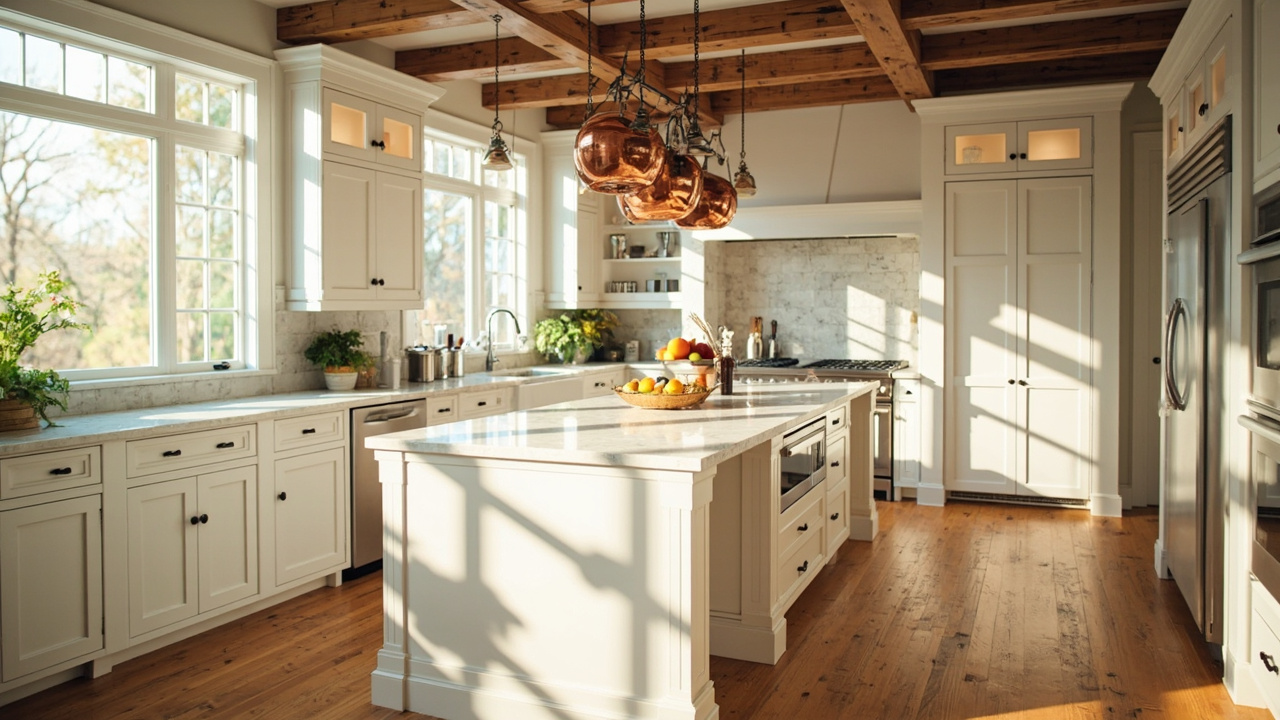
White farmhouse kitchens feel timeless because they start with a simple, forgiving palette and build personality through texture, proportion, and curated vintage details.
These spaces rely on tactile contrasts, think painted beadboard, weathered metals, and rough-hewn wood, to read as lived-in rather than sterile.
The goal is a kitchen that’s bright and practical but layered with character that tells a story.
In 2026, designers are leaning into European country influences and bolder material pairings to keep farmhouse kitchens current.
- 1. Bright White Shiplap
- 2. Natural Wood Accents
- 3. Butcher Block Countertops
- 4. Open Shelving Displays
- 5. Farmhouse Apron Sink
- 6. Black Matte Hardware
- 7. Beadboard Backsplash.
- 8. Vintage Pendant Lighting
- 9. Subtle Green Hues.
- 10. Distressed Cabinet Finish
- 11. Checkerboard Flooring
- 12. Paneled Refrigerator Integration
- 13. Indoor Herb Nook
- 14. Reclaimed Beam Mantel
- 15. Glass-Front Cabinets
- 16. Cozy Breakfast Nook
- Final Thoughts
- FAQ
1. Bright White Shiplap
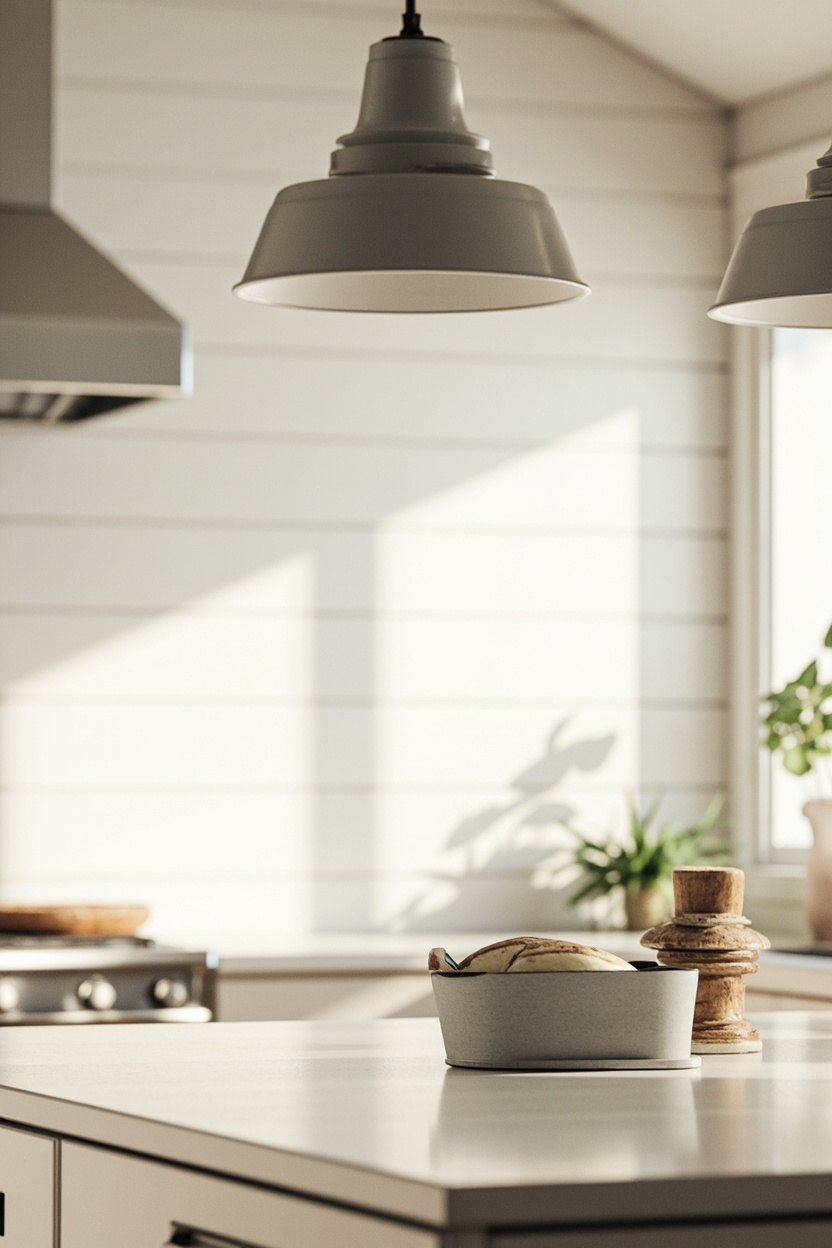
White shiplap elevates a farmhouse kitchen by adding subtle shadow lines that read as architecture rather than mere siding. When painted in crisp eggshell or matte white, shiplap brightens the room while providing a rhythmic backdrop for open shelving, vintage hooks, or a statement range hood.
Pair shiplap with warm metals and natural wood to avoid a cold feel; this approach mirrors the layered looks in many modern farmhouse renovations and pairs beautifully with curated farmhouse accessories found in our Farmhouse Kitchen 2 gallery. Use shiplap vertically behind islands or horizontally above counters to change perceived ceiling height and add visual interest.
The Vibe
- Clean, coastal-inspired brightness with subtle texture.
- Architectural rhythm that reads timeless and approachable.
- Backdrop for vintage and modern details to shine equally.
Key Elements
- Matte white paint to avoid glare and emphasize shadow lines.
- Strategic placement on focal walls or full perimeters for scale control.
- Contrast with warm hardware and wood to prevent sterility.
2. Natural Wood Accents
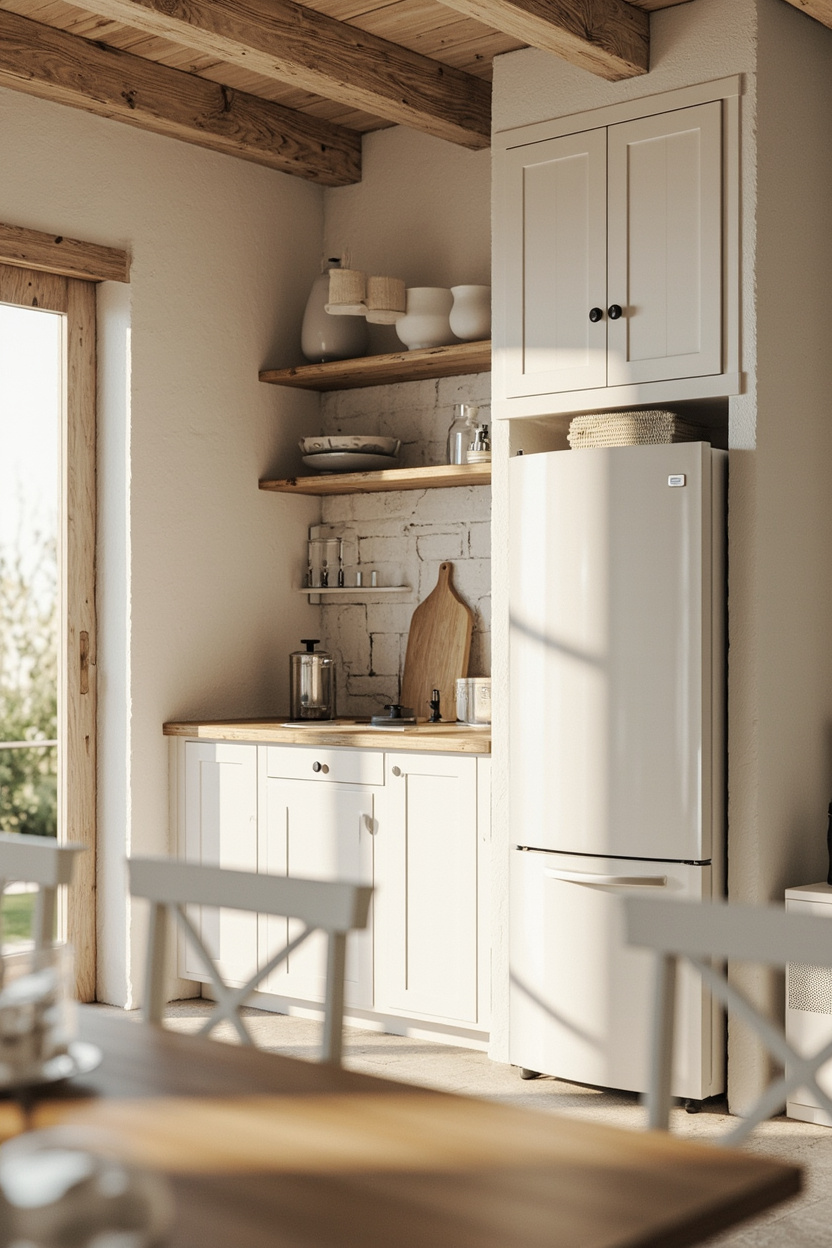
Natural wood elements, open shelving, ceiling beams, or a walnut island top ground a white farmhouse kitchen with organic warmth and tactile variety. These accents bridge the gap between bright, modern finishes and the rustic roots of farmhouse design, creating a comfortable, lived-in atmosphere.
Introduce varied wood tones to create depth: pale oak shelves, a mid-tone island, and reclaimed beams work together without overwhelming the white palette.
For dining-adjacent kitchens, lean on ideas from our Farmhouse Dining Room Designs to ensure a cohesive transition between cooking and entertaining spaces.
The Vibe
- Warm, inviting, and naturally textured without fuss.
- Balanced contrast between bright whites and organic tones.
- Casual elegance that welcomes everyday use and guests alike.
Key Elements
- Open wood shelving or butcher-block accents for daily utility.
- Mixed wood tones to add depth without clashing.
- Live-edge or reclaimed pieces for authentic character.
3. Butcher Block Countertops
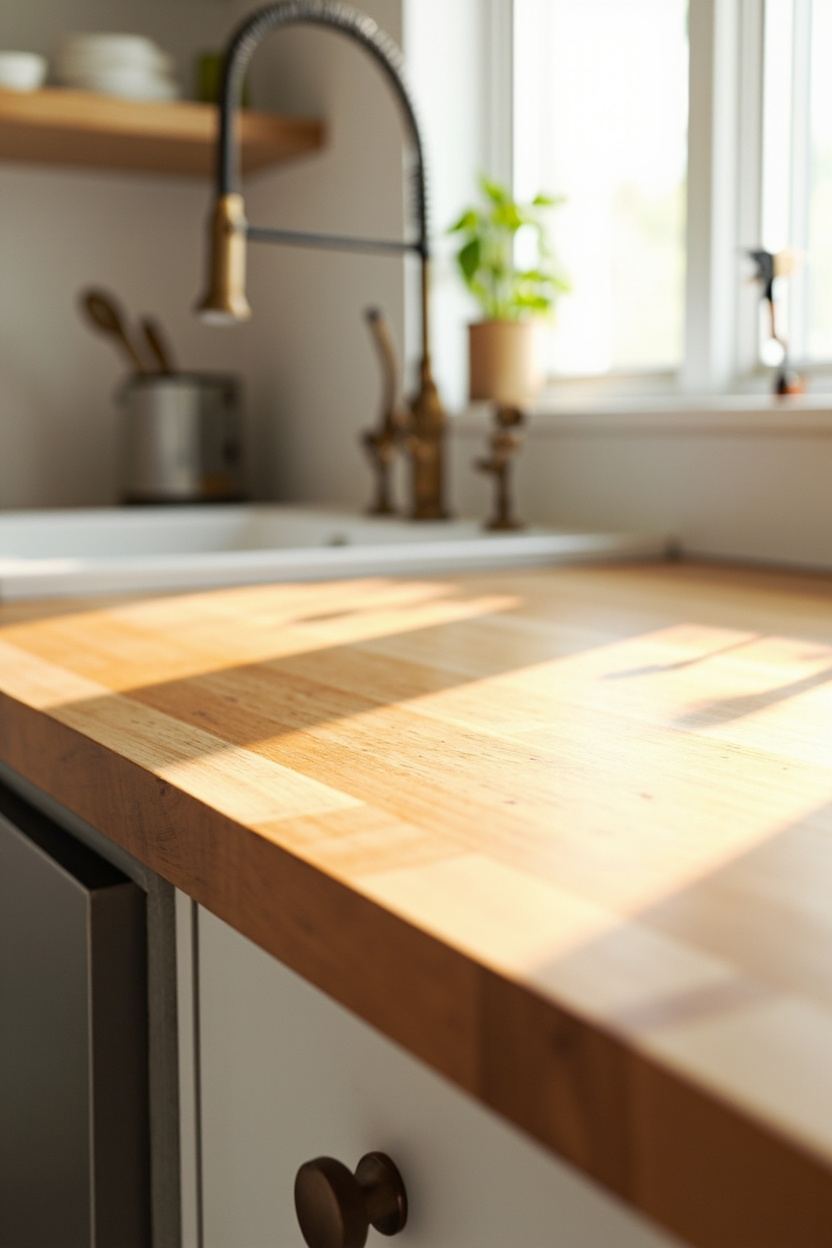
Butcher block surfaces bring hands-on warmth and a culinary sensibility to white farmhouse kitchens, softening bright painted cabinets with a tactile, food-friendly finish.
Properly sealed, they’re durable for prep work and introduce a patina over time that enhances the kitchen’s story.
Use butcher block on island tops or prep zones while keeping perimeter counters in quarried stone or quartz for contrast and durability near sinks.
This mix-and-match approach keeps the look practical and layered, similar to how designers are updating traditional country kitchens with contemporary materials for 2026 trends.
The Vibe
- Craftsman warmth with a functional, lived-in feel.
- Comforting, food-focused texture that invites use.
- Timeless, evolving surface that gains character over time.
Key Elements
- Food-safe finish and regular maintenance to protect the wood.
- Combine with stone perimeters for durability and contrast.
- Integrate matching wood accessories for a cohesive look.
4. Open Shelving Displays
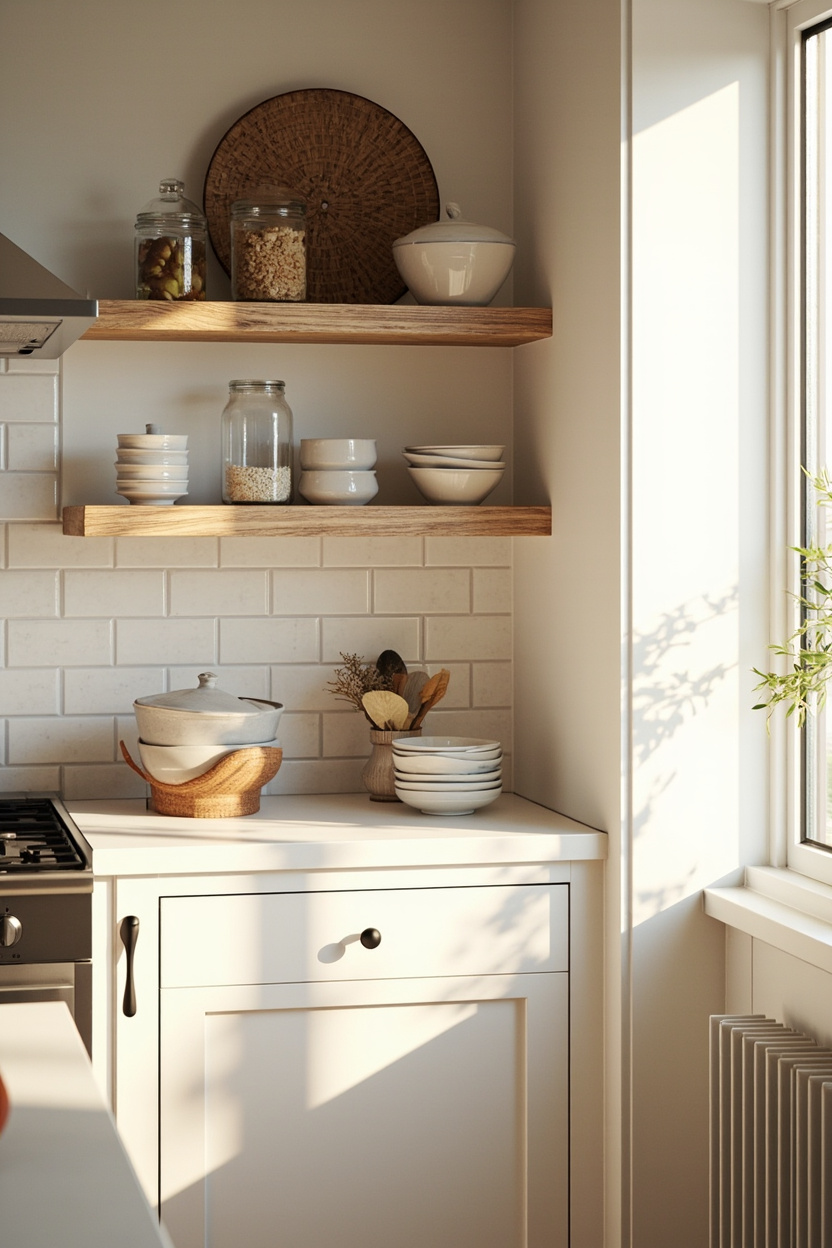
Open shelving replaces upper cabinets with curated displays of pottery, glassware, and wooden boards to make the kitchen feel lived-in and intentional.
Stagger shelves at varying heights and mix in baskets to prevent the look from appearing cluttered while keeping frequently used items within easy reach.
Combine painted lower cabinets with natural wood shelves to preserve the farmhouse balance between polished and rustic.
The Vibe
- Airy and collected with an effortlessly styled appearance.
- Practical, welcoming, and instantly personal to the homeowners.
- Balanced between rustic warmth and modern simplicity.
Key Elements
- Sturdy floating or bracketed wood shelves with concealed supports for a clean look.
- Coordinated collections—think white stoneware, clear glass, and woven baskets.
- Layered lighting, including under-shelf LED strips and pendant task lights.
5. Farmhouse Apron Sink
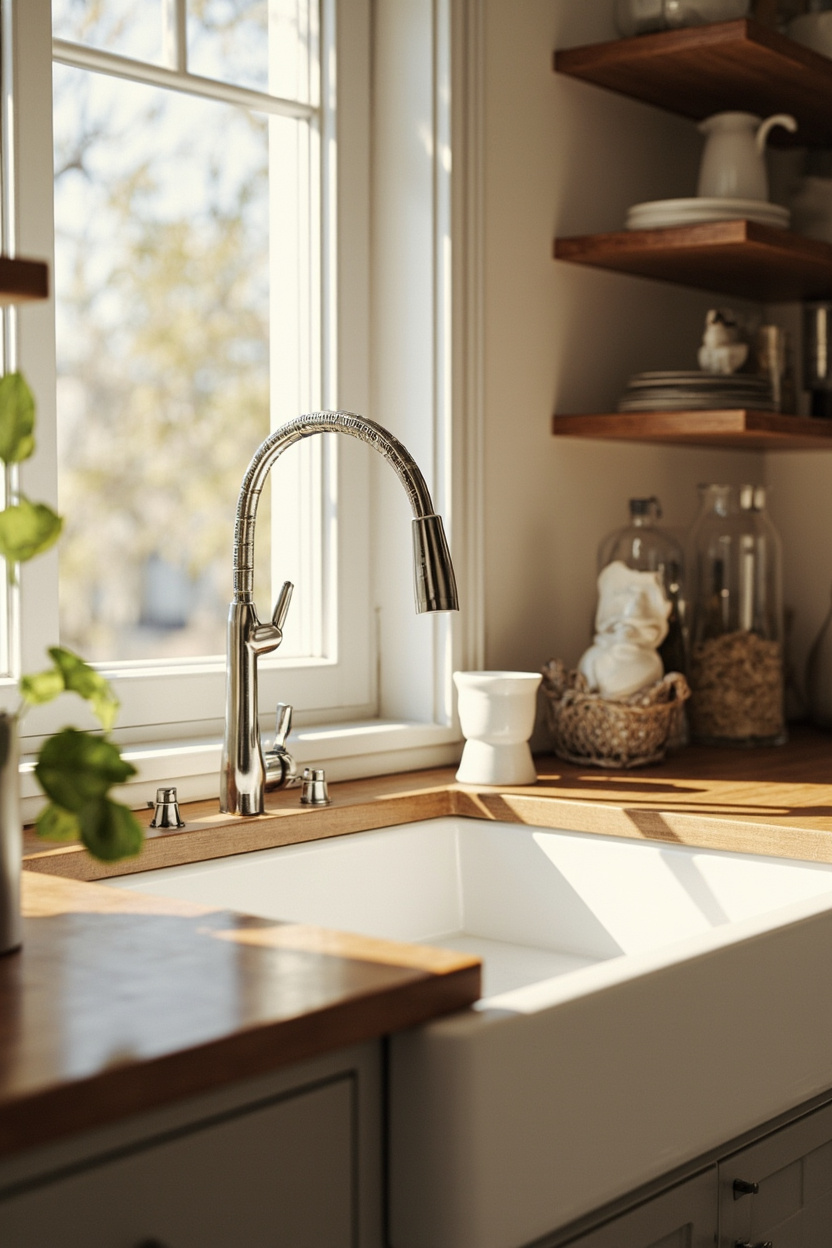
The farmhouse apron sink, typically deep and front-facing, is a functional centerpiece that anchors the kitchen with old-world charm.
Choose fireclay or porcelain for a bright, durable basin that resists staining and pairs beautifully with wooden countertops or butcher block islands.
When combined with a bridge faucet and exposed plumbing accents, the apron sink becomes a focal point that complements broader Farmhouse Interior schemes.
For a contemporary twist, flank the sink with slim drawers and cabinetry designed for modern ergonomics while preserving the heritage silhouette.
The Vibe
- Timeless, hardworking, and slightly nostalgic in tone.
- Warm and approachable with a lived-in elegance.
- Visually grounding—draws the eye and organizes the workspace.
Key Elements
- Large single-basin fireclay apron-front sink for versatility and durability.
- Classic bridge or gooseneck faucet in polished nickel or matte black finishes.
- Surrounding task lighting and splashboard materials that are easy to clean.
6. Black Matte Hardware
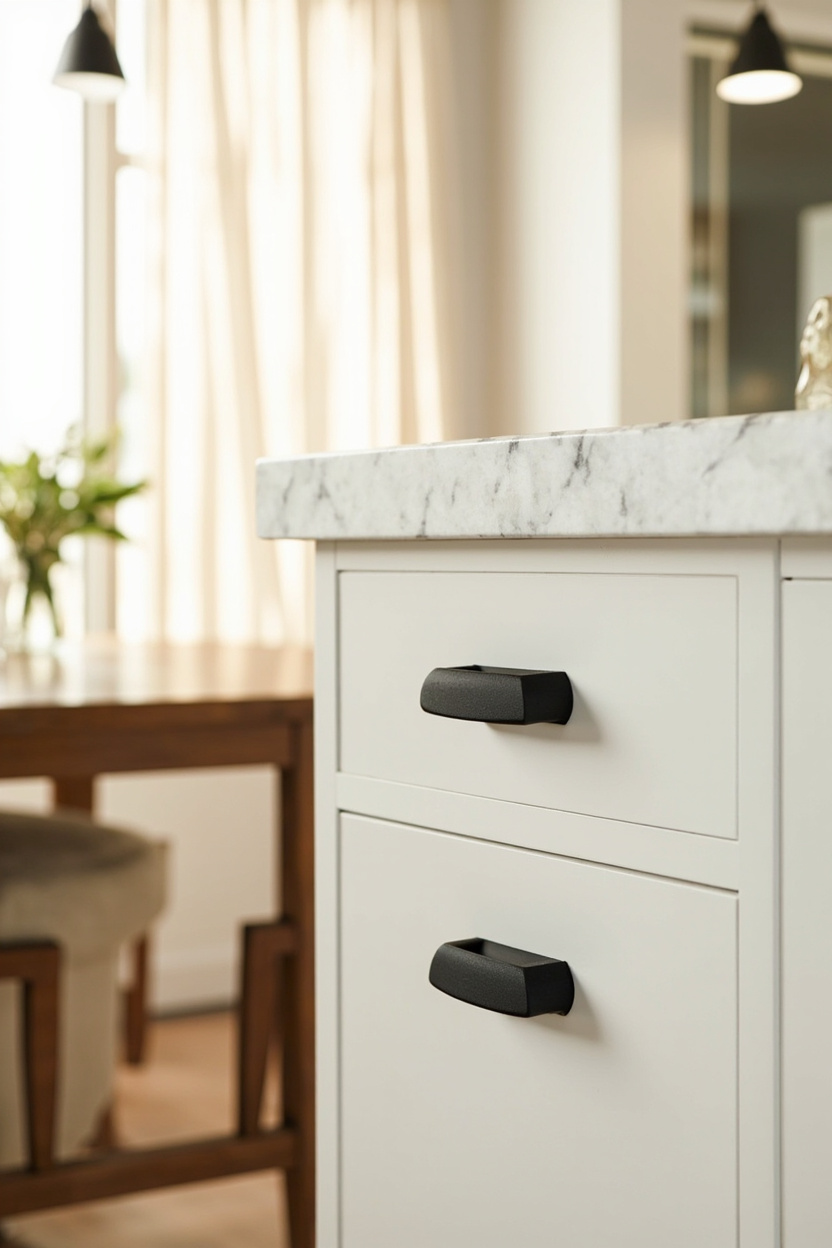
Matte black hardware provides a crisp, modern counterpoint to white cabinetry and natural wood, offering a clear contrast without overwhelming the space.
Swap out dated knobs and pulls for streamlined black pieces to instantly update shaker doors or beadboard panels in a farmhouse kitchen.
Use black hardware selectively—on drawers, cabinet doors, and even open shelf brackets—to create a cohesive thread throughout the room; this punchy detail pairs well with darker fixtures and can link to accent features like a black island or lighting.
The Vibe
- Modern contrast that sharpens a soft, rustic palette.
- Understatedly bold—refined without being flashy.
- Cohesive and design-forward when repeated throughout the space.
Key Elements
- Matte black cup pulls and slim bar handles for everyday functionality.
- Matching black faucets, lighting, or appliance accents for unity.
- Consistent mounting heights and proportions to maintain visual balance.
7. Beadboard Backsplash.
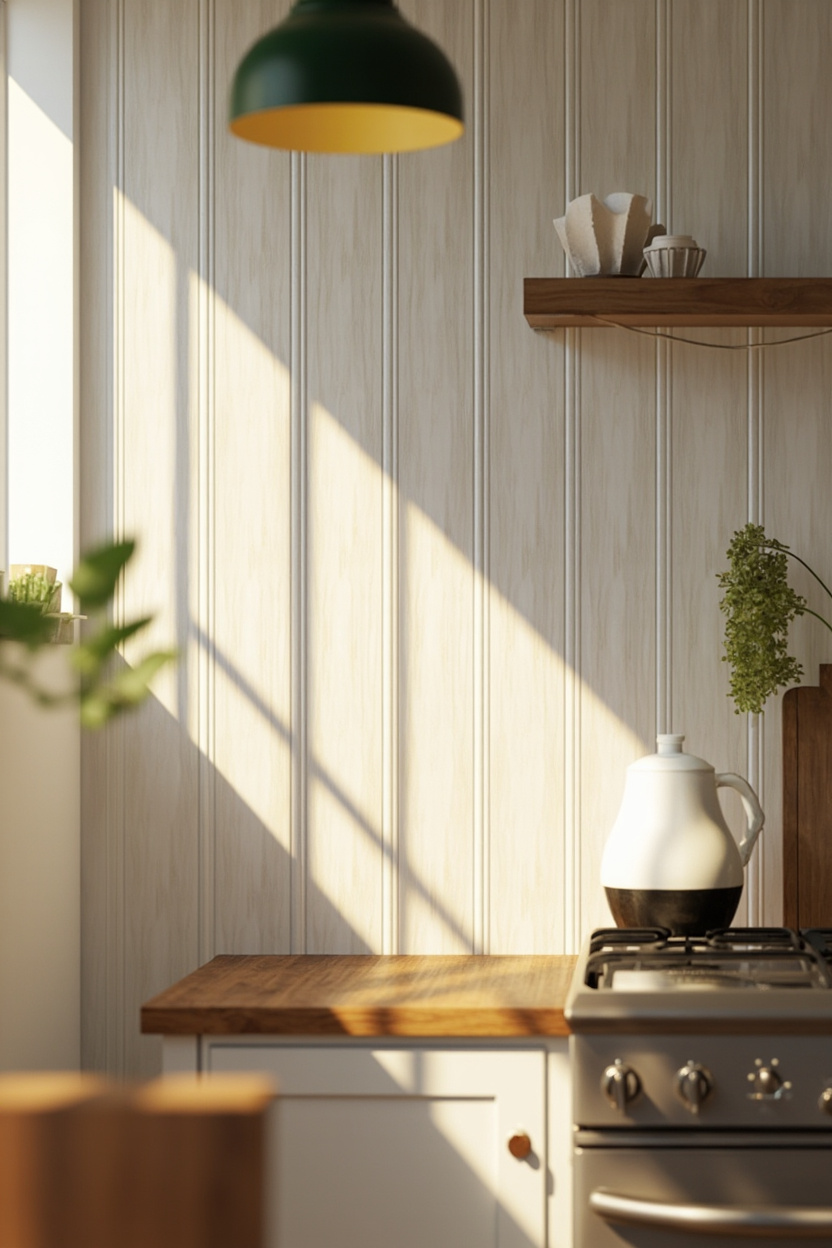
The vertical lines of a beadboard backsplash introduce quiet texture without overpowering a white farmhouse kitchen. Installed on the lower half of the wall or behind open shelves, it creates a tailored, tactile backdrop that plays beautifully with painted cabinetry and butcher block countertops.
Beadboard is budget-friendly yet instantly characterful; pairing it with simple shaker cabinets keeps the room feeling fresh rather than fussy.
The Vibe
- Warmly familiar and cottage-ready.
- Subtle vintage charm with modern simplicity.
- Calm, tactile backdrop that softens bright whites.
Key Elements
- Painted or primed beadboard panels installed vertically for height emphasis.
- Simple grout-free seams for a clean farmhouse look.
- Coordinate with open wood shelving or white shaker cabinets for cohesion.
8. Vintage Pendant Lighting
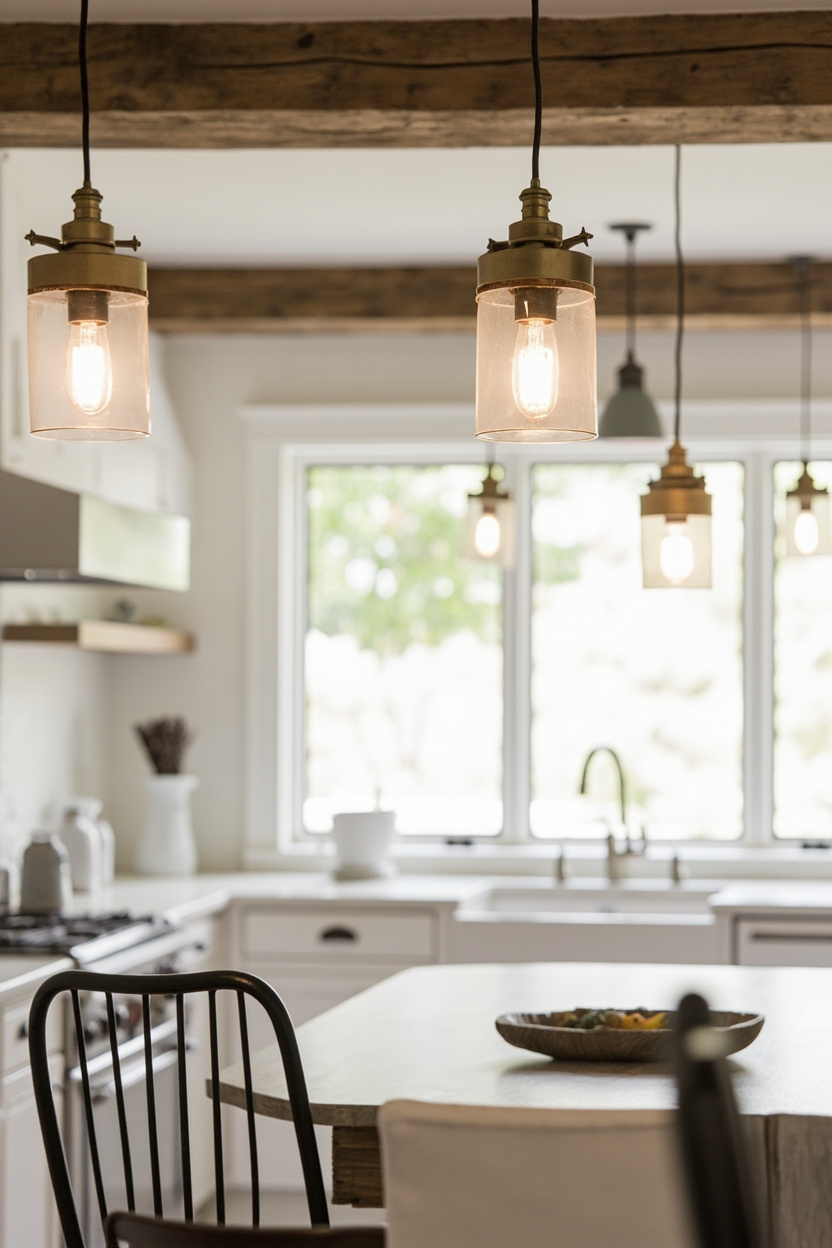
Antique-inspired pendant lights bring sculptural interest and a sense of history to a white farmhouse kitchen. Whether you choose aged brass, hand-blown glass, or enamel shades, pendants anchored above an island or sink create focused pools of warm light and become instant focal points.
Mixing vintage pendants with modern appliances keeps the look updated while honoring farmhouse roots; this balance mirrors how curated elements elevate spaces in features.
- Timeless with a lived-in, collected feel.
- Inviting warmth that layers into white palettes.
- Quietly ornate without being ornate overall.
Key Elements
- Cluster or row of pendant lights scaled to the island length.
- Mixed metals or aged finishes to add patina against white surfaces.
- Dimmer-capable wiring for adjustable ambiance and task light control.
9. Subtle Green Hues.
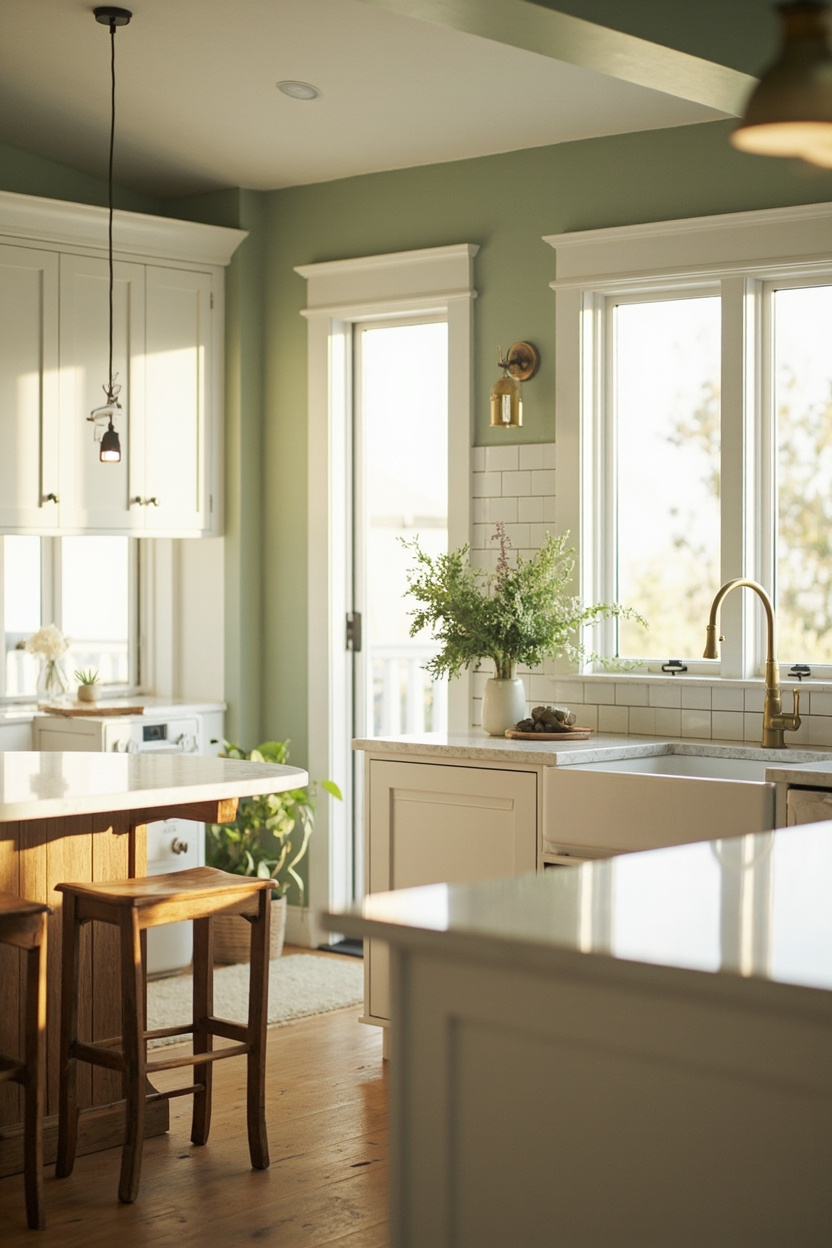
Introducing muted greens, sage, celery, or gray-green, adds depth to an all-white farmhouse kitchen while keeping the palette serene.
Use green on lower cabinets, an island, or in decorative tile to anchor the space and evoke an English countryside sensibility that designers are expanding on for 2026 trends.
Subtle greens work especially well with natural wood tones and woven textures, and they harmonize with vintage accessories or botanical accents for a homey, lived-in feel.
The Vibe
- Softly organic and comfortably sophisticated.
- Grounded, nature-adjacent calm within crisp white surroundings.
- Understated freshness that ages gracefully.
Key Elements
- Sage or olive paint on islands or lower run cabinets for contrast.
- Green-tinted subway or encaustic tiles for subtle patterning.
- Natural wood accents and potted herbs to reinforce the palette.
10. Distressed Cabinet Finish
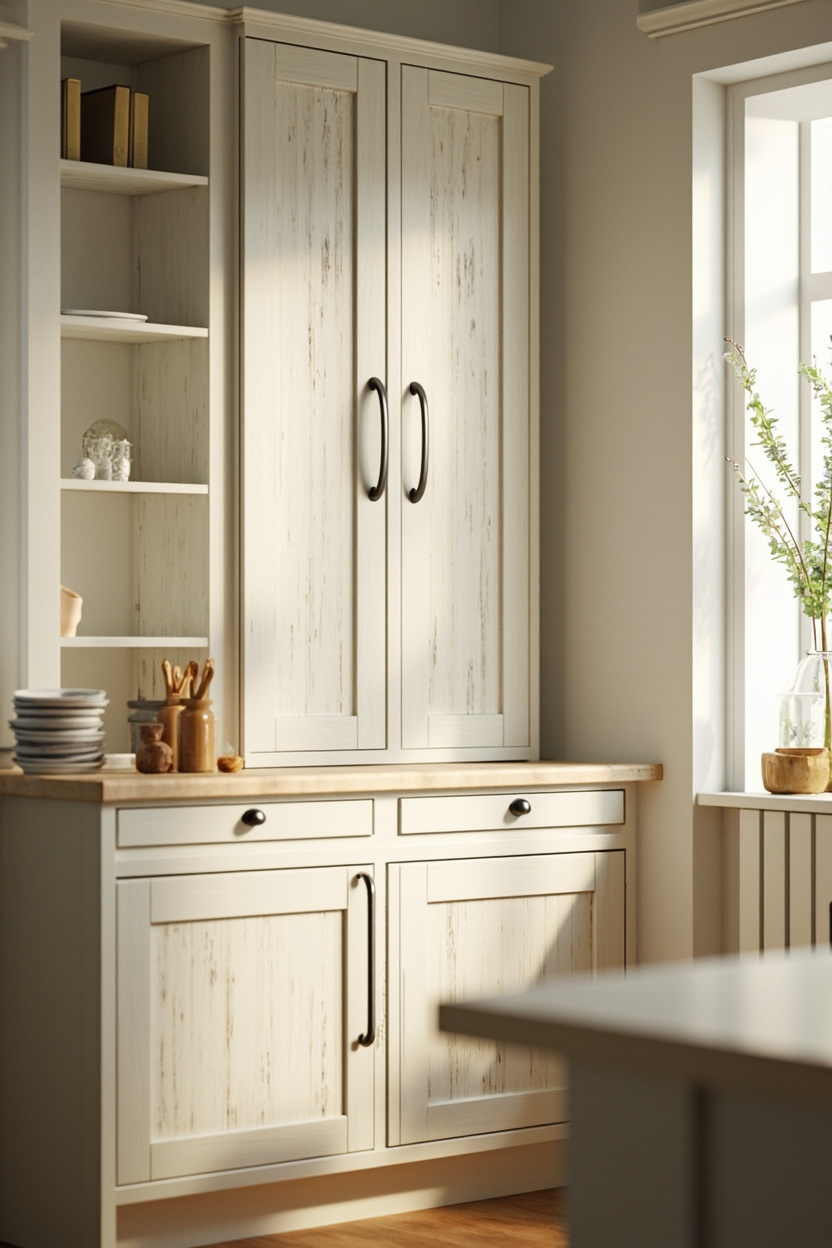
Weathered cabinetry brings a lived-in authenticity to a white farmhouse kitchen. A soft white base with sanded edges or a faint gray glaze reveals wood beneath, creating a tactile contrast that reads as curated rather than contrived.
Pair distressed cabinets with crisp quartz counters and matte black hardware to keep the look fresh and prevent it from feeling overly rustic.
The Vibe
- Warmly worn and approachable ambiance with vintage character.
- Casual elegance that suggests history without clutter.
- Balanced contrast between soft white paint and exposed wood tones.
Key Elements
- Lightly sanded edges or gray glaze on shaker-style cabinets for authenticity.
- Durable, modern countertops and simple hardware to update the aesthetic.
- Open shelving or glass-front uppers to mix texture and display ceramics.
11. Checkerboard Flooring
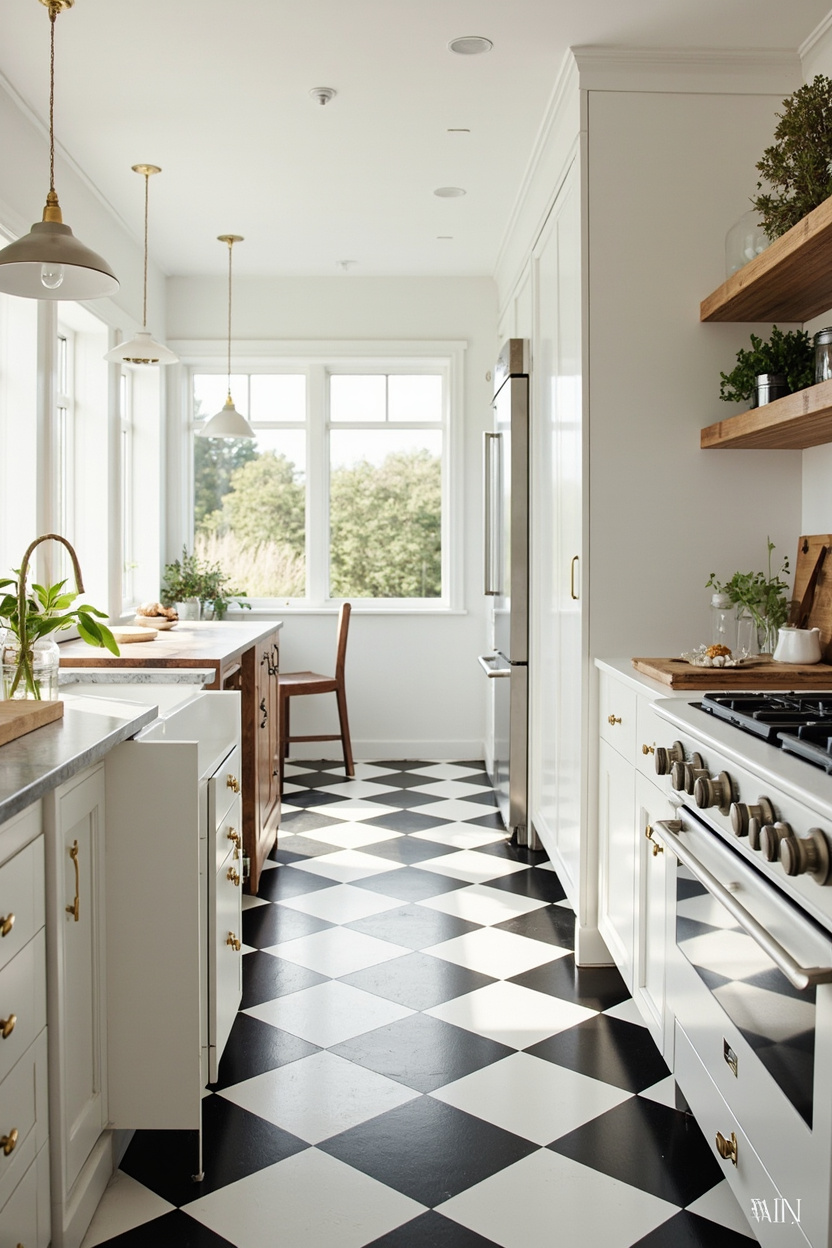
A classic checkerboard floor in muted tones instantly anchors a white farmhouse kitchen with graphic energy. Opt for large-format tiles in cream and soft gray or matte black for a contemporary twist that keeps the scheme grounded.
Checkerboard patterning pairs exceptionally well with simple white cabinetry and vintage-inspired lighting; it lends visual interest without overwhelming the calm palette.
The Vibe
- Timeless, structured look with a hint of retro charm.
- Graphic sophistication that livens an otherwise soft palette.
- Playful yet restrained, suitable for both modern and traditional homes.
Key Elements
- Matte or honed tiles in larger sizes for a modern farmhouse feel.
- Neutral color pairings—cream with gray or soft black—to keep warmth.
- Simple baseboards and understated rugs to let the floor take center stage.
12. Paneled Refrigerator Integration
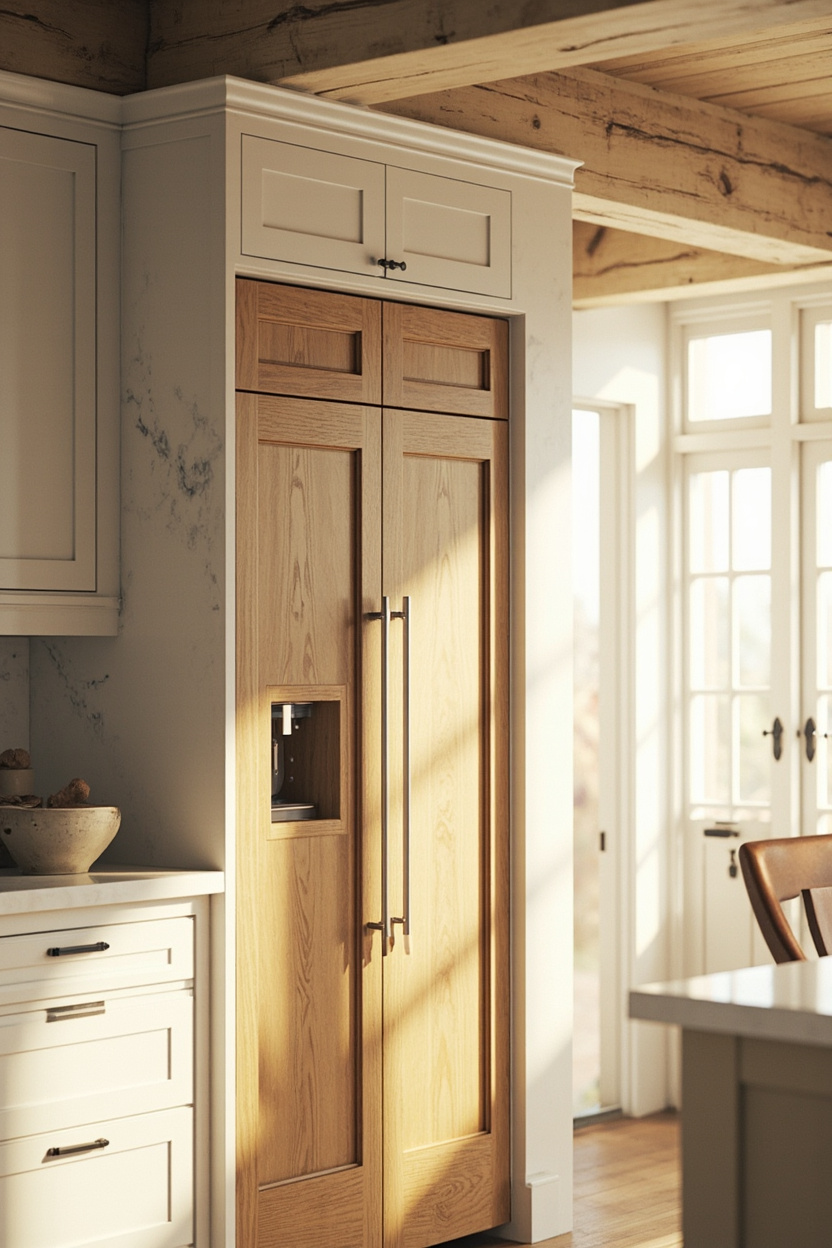
Camouflaging your refrigerator with custom panels creates a seamless white farmhouse kitchen that feels thoughtfully tailored. Matching the fridge to adjacent shaker cabinets maintains visual continuity and emphasizes the room’s architecture.
This built-in approach works best with warm white tones and beadboard or recessed panels for a true farmhouse sensibility.
The Vibe
- Polished, integrated appearance that elevates simplicity.
- Quiet luxury with an emphasis on cohesive cabinetry sightlines.
- Understated farmhouse charm that feels custom-crafted.
Key Elements
- Custom panels matching the cabinet profile and paint to disguise appliances.
- Ventilation and service access are planned behind removable panels.
- Contrasting hardware or plinth reveals to prevent a monolithic look.
13. Indoor Herb Nook
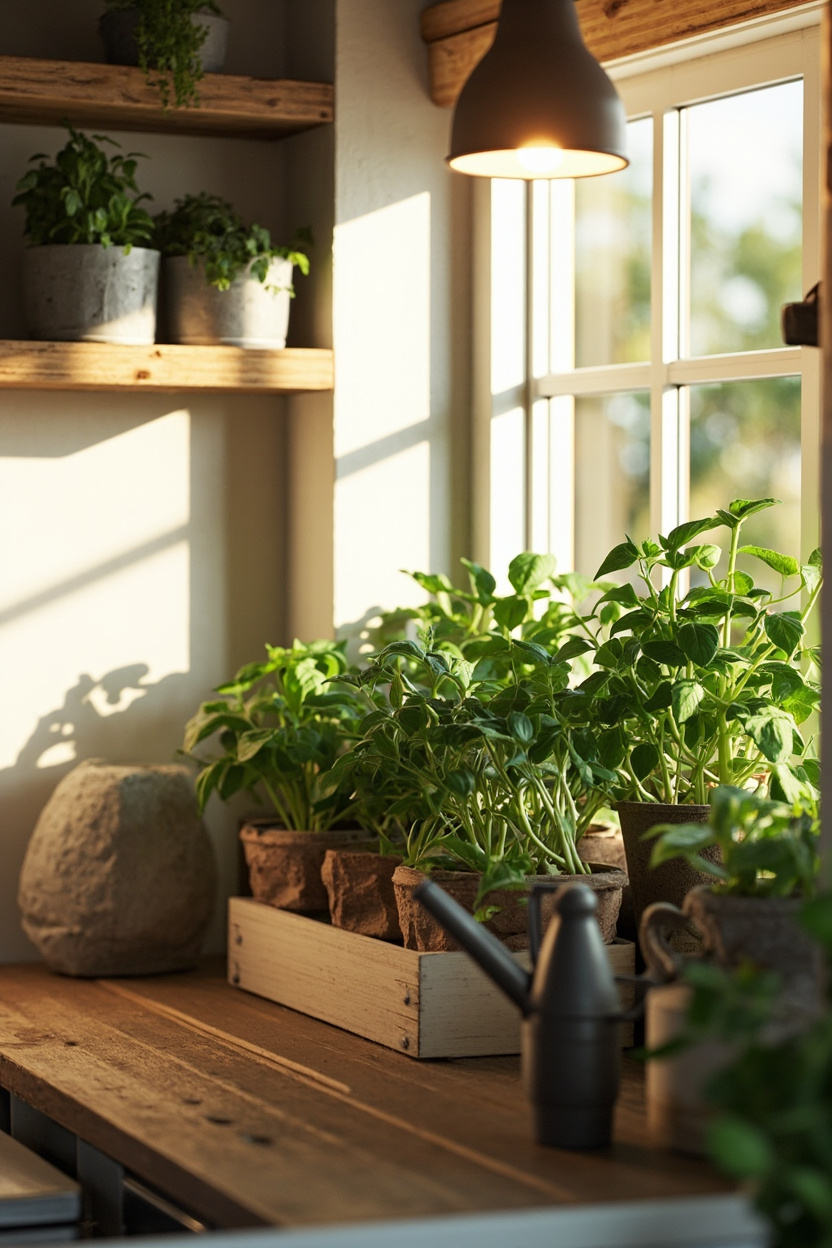
A compact indoor herb nook brings living greenery and fresh flavors into a white farmhouse kitchen without altering the clean aesthetic. Install a narrow shelf or recessed cubby near a sunny window and line it with matching terracotta pots to keep the look cohesive and practical.
Growing herbs inside transforms routine cooking into a sensory experience and adds subtle texture against white shiplap or beadboard.
Pair the nook with simple labels and a small watering can to make it useful and decorative, much like the calm, functional corners showcased in our Farmhouse Interior ideas.
The Vibe
- Fresh and aromatic with a lived-in, natural charm.
- Light-filled and utilitarian, emphasizing function as decor.
- Subtle contrast of green against crisp white surfaces.
Key Elements
- Southeast-facing window or grow light for healthy herbs.
- Narrow shelving or a recessed cubby sized for small pots.
- Terracotta or ceramic pots with simple labels for cohesion.
14. Reclaimed Beam Mantel
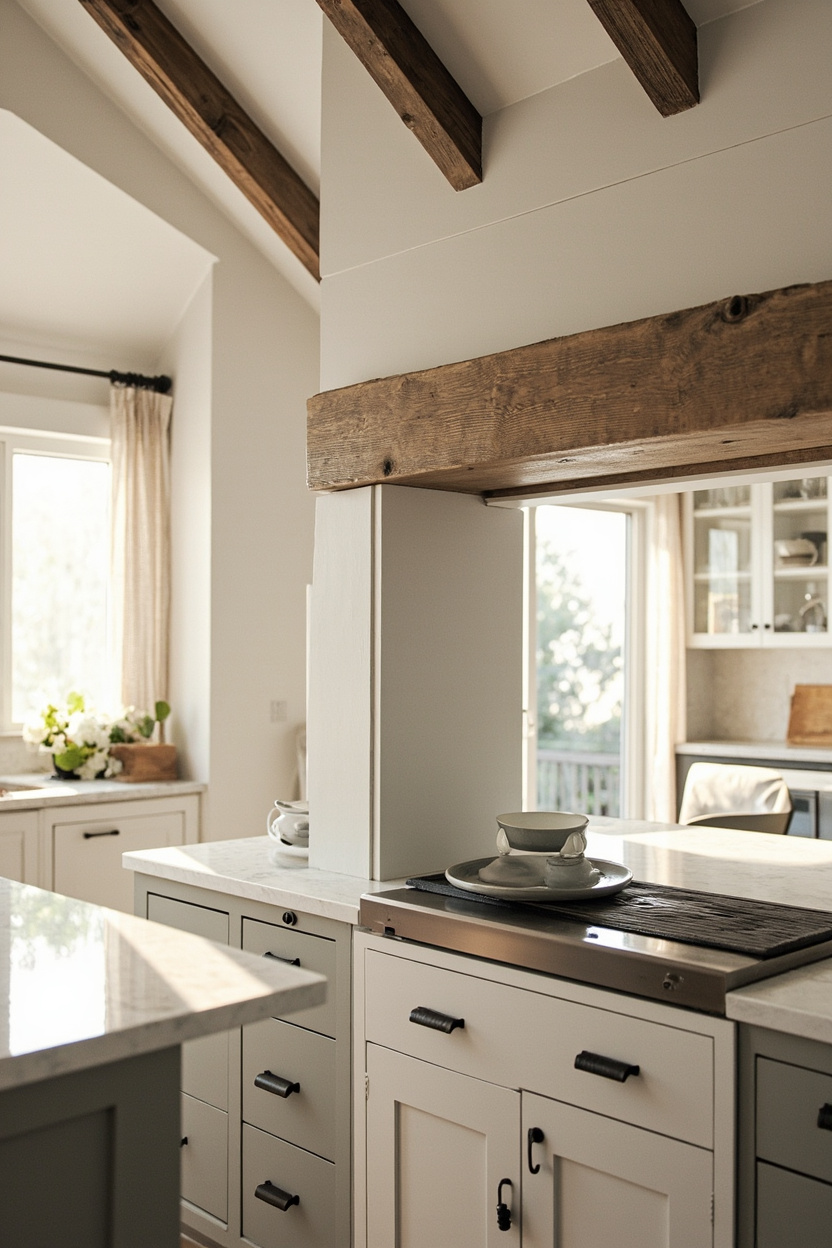
A reclaimed beam mantel over a farmhouse range or open hearth injects history and weight into a white kitchen, grounding the airy palette with tactile warmth.
Choose a salvaged oak or chestnut beam with visible patina to contrast clean white tile or plaster and to act as a sculptural focal point.
The raw character of reclaimed wood complements the layered simplicity the trend embraces and pairs beautifully with mixed-metal hardware and classic cabinetry.
The Vibe
- Historic, grounded, and quietly monumental.
- Earthy warmth that offsets bright white finishes.
- Textured and lived-in without feeling cluttered.
Key Elements
- Salvaged beam with authentic wear and secure mounting.
- Neutral surround like white tile, plaster, or brick to highlight the wood.
- Complementary accents in leather, iron, or aged brass.
15. Glass-Front Cabinets
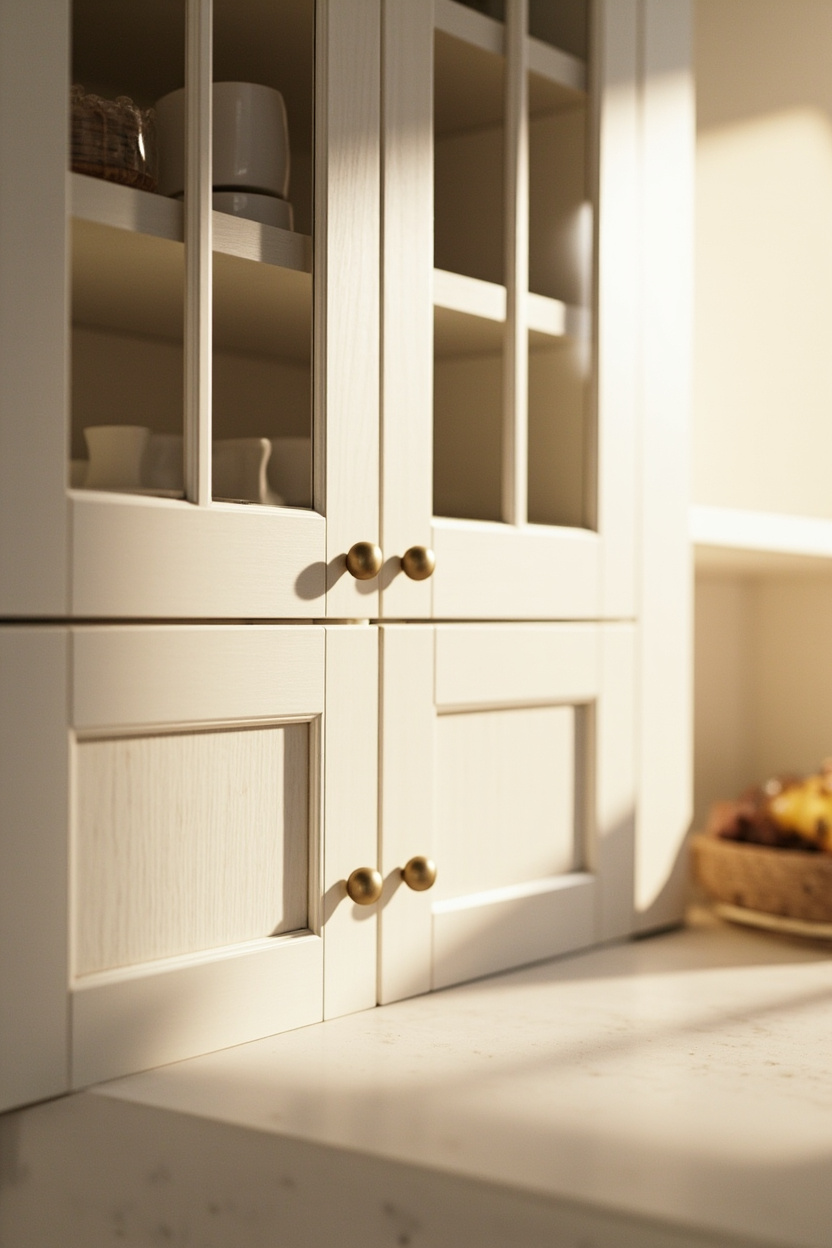
Glass-front cabinets open up white farmhouse kitchens visually, turning dishware and curated collections into part of the room’s styling.
Opt for mullioned panes or clear glass to maintain simplicity while displaying heirloom plates, woven baskets, and enamelware that add subtle warmth to the white backdrop.
Styling inside the cabinets is key: keep groupings consistent and rotate seasonal items to avoid clutter and keep the display intentional.
This approach works well with cottage-inspired palettes. See how curated displays influence overall charm in our Pink Cottage and farmhouse vignettes for ideas on balanced, approachable shelving.
The Vibe
- Open, airy, and elegantly unpretentious.
- Curated domesticity that feels both personal and polished.
- Light-reflective surfaces that enhance the kitchen’s brightness.
Key Elements
- Consistent dishware palette and spaced groupings for visual calm.
- Mullioned or clear glass doors with simple frames in white or soft neutrals.
- Interior lighting or painted back panels to emphasize displays.
16. Cozy Breakfast Nook
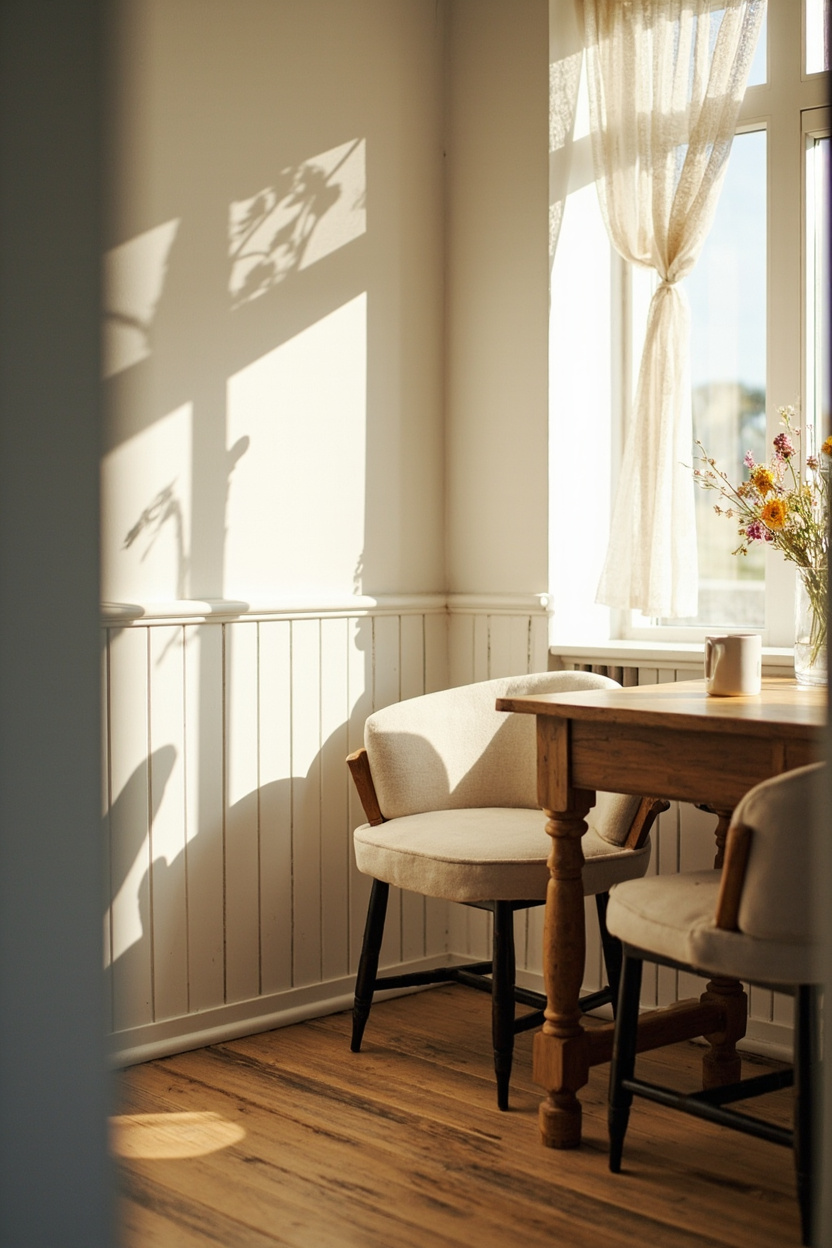
A small, sunlit corner turned into a breakfast nook makes a white farmhouse kitchen instantly livable and intimate.
Layered seating, a built-in bench with textured cushions, and a couple of spindle-back chairs, keep the palette light while introducing natural wood tones and tactile interest that prevent the space from feeling flat.
The table should be scaled to the nook and finished in warm, distressed wood or painted in a soft neutral to complement crisp white cabinetry.
Add a simple pendant or a cluster of vintage-inspired sconces to create focused warmth for morning coffee, and consider open shelving above the bench to display ceramics or a couple of potted herbs, echoing ideas.
The Vibe
- Intimate and inviting morning retreat for two or a small family.
- Casual elegance with handcrafted and well-worn finishes.
- Sunlit serenity that reads bright without feeling sterile.
Key Elements
- Built-in bench seating with layered cushions and a mix of natural and white textiles.
- Small-scale wooden table in a warm finish or muted paint tone to ground the corner.
- Soft, focused lighting and open shelving for personal objects and greenery.
Final Thoughts
A cozy breakfast nook proves that white farmhouse kitchens can be layered, personal, and wholly modern without abandoning their charm. Thoughtful scale, natural textures, and curated accents turn a simple corner into a daily haven that feels anything but basic.
FAQ
Use light-reflecting whites on walls and bench upholstery, add a mirror or glossy backsplash nearby, and choose a round table to improve flow. Keeping seating streamlined and incorporating open shelving instead of bulky cabinets helps maintain airiness.
Yes. Balance crisp white cabinetry and minimal lines with farmhouse touches like reclaimed wood, apron-front sinks, or spindle chairs. Mixing eras keeps the kitchen fresh.
Choose durable, washable fabrics for cushions (performance linen or canvas), sealed wood or butcher block for tabletops, and wipeable paint finishes. For high-use areas, consider removable cushion covers for easy laundering.
Introduce muted accents like sage, dusty blue, or blush through textiles, ceramics, or a painted table base. A nod to playful palettes, such as seen in the Pink Cottage approach, keeps the space warm while preserving a predominantly white backdrop.
Read Next: How to Create the Perfect French Farmhouse Kitchen on Any Budget
Read Next: 15 Farmhouse Kitchen Backsplash Ideas You Haven’t Seen Before