


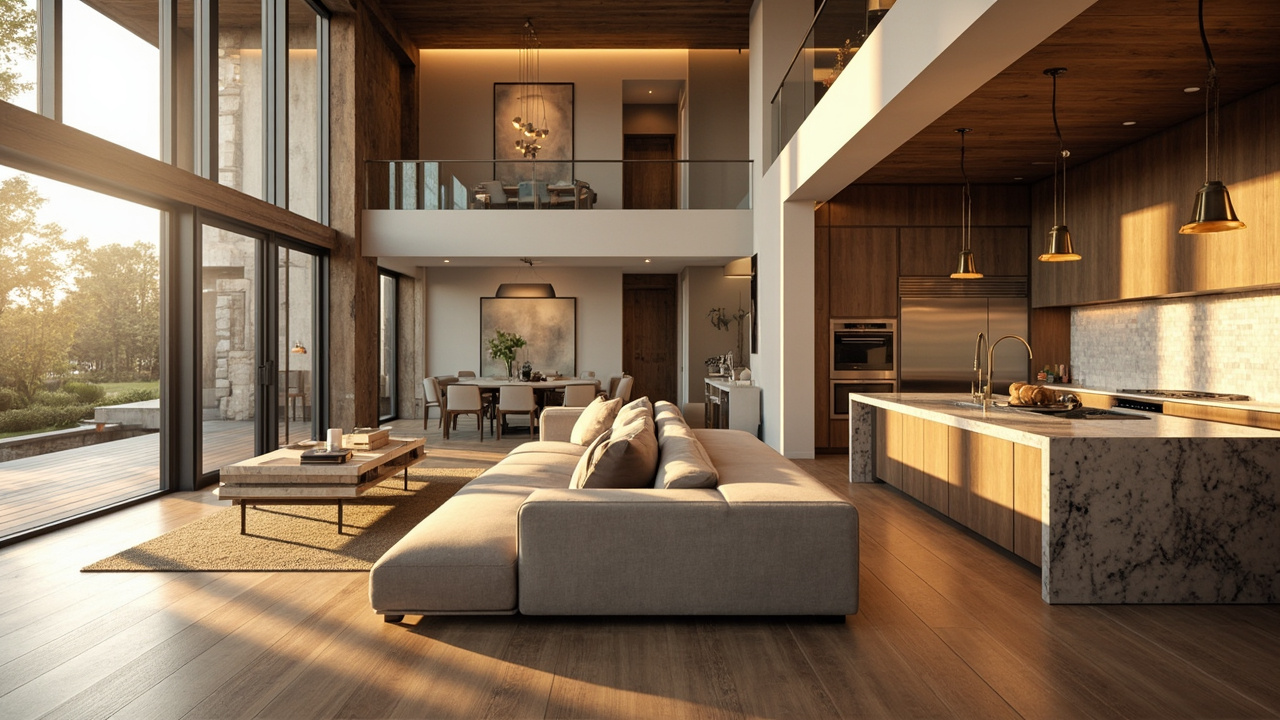
Open-concept living remains popular, but families need plans that tolerate noise, childcare routines, and real life.
These 20 layouts show how to keep visual connection without sacrificing function, blending openness with purposeful boundaries.
Design choices now favor warmth, texture,e and intentional zones over total openness. Expect semi-open partitions, clear sightlines that respect privacy, and flexible rooms that adapt as kids grow.
- Semi-Open Plans For Flexible Living
- Balancing Privacy With Open Flow
- Zoned Layouts For Multigenerational Homes
- Warm Textures In Open Spaces
- Defining Areas Without Walls
- Integrated Nooks For Focused Tasks
- Natural Materials Anchoring Open Plans
- Transition Elements: Screens And Slats
- Intentional Minimalism With Warmth
- Layered Lighting For Open Layouts
- Acoustic Solutions In Open Rooms
- Furniture Grouping To Create Zones
- Breakfast Nooks Within Open Kitchens
- Storage Strategies For Open Concepts
- Flexible Partition Ideas For Adaptability
- Personalized Finishes To Add Character
- Indoor-Outdoor Flow Enhancements
- Scale And Proportion In Open Areas
- Privacy Options For Work-From-Home
- Timeless Design Choices For 2026
- FAQ
- Final Thoughts
Semi-Open Plans For Flexible Living
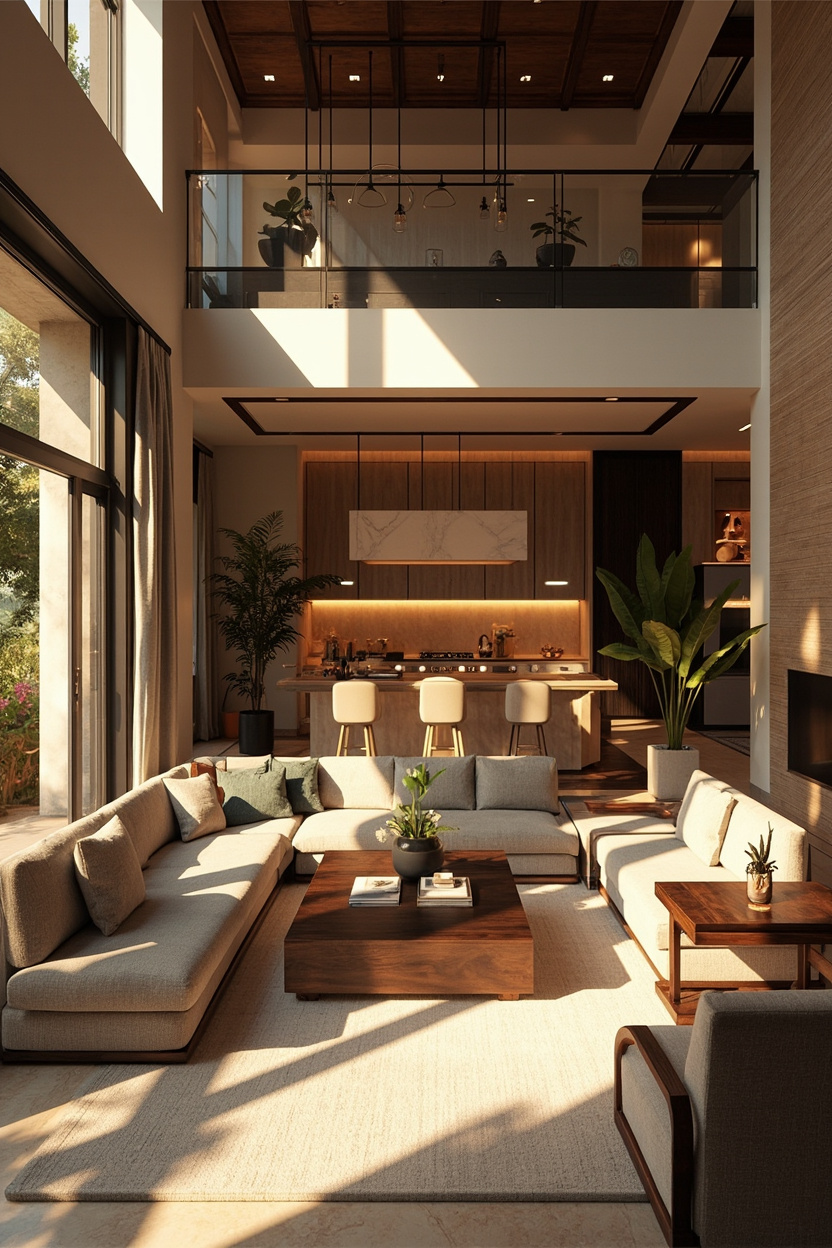
Semi-open plans use partial walls, wide openings, or glass partitions to define areas while preserving daylight and sightlines.
This approach gives parentsa visual connection to kids in the kitchen and living room without letting every noise or mess feel center stage.
Use furniture, rugs,s and different ceiling treatments to create implied boundaries that are easy to change as needs evolve.
Semi-open schemes pair especially well with warm materials and layered lighting to keep spaces cozy and intentional.
Balancing Privacy With Open Flow
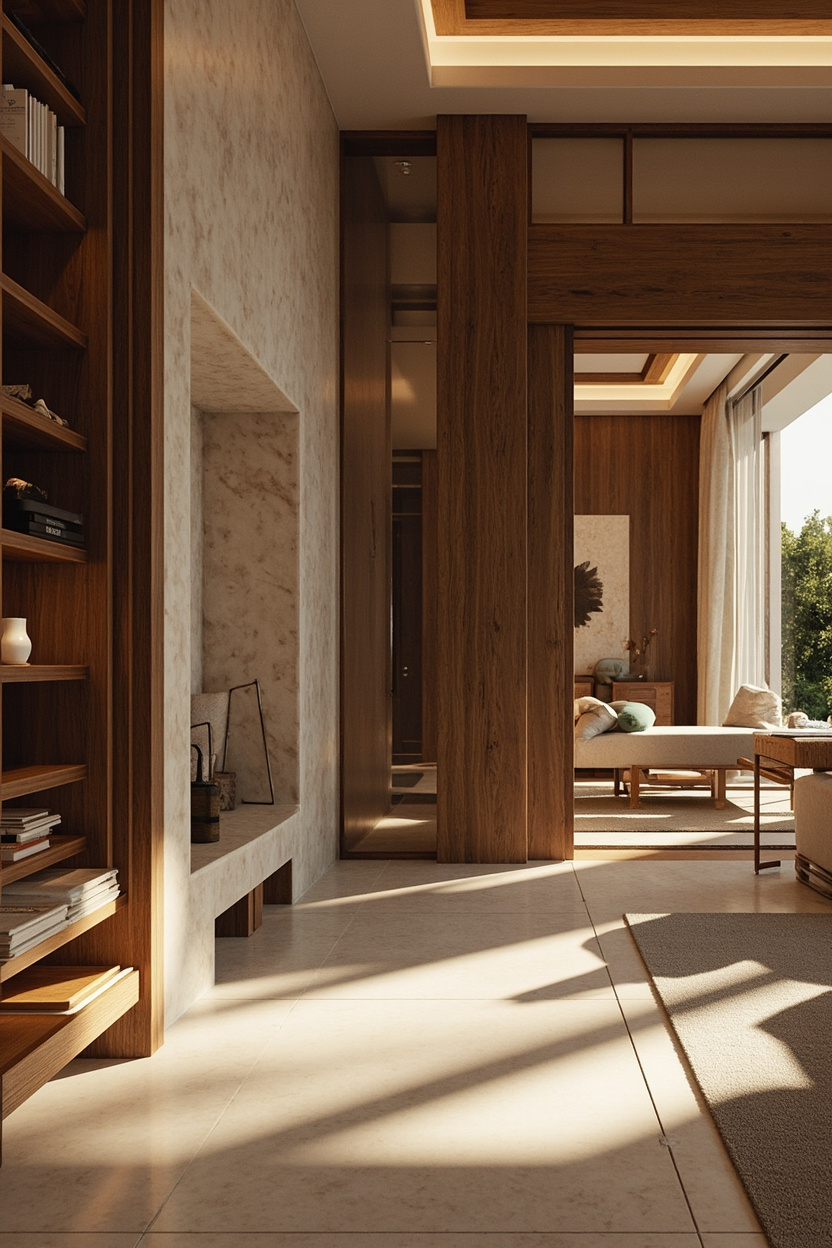
Strategic placement of bedrooms and quieter nooks preserves rest and work zones within an open plan. Buffer spaces, hallways, a mudroom, or a study can separate active family areas from private retreats without breaking the overall flow.
Acoustic treatments like soft floor coverings, upholstered panels, and door options let you tune noise transmission.
Thoughtful sightline planning ensures parental supervision where needed while allowing older children and adults to enjoy privacy.
Zoned Layouts For Multigenerational Homes
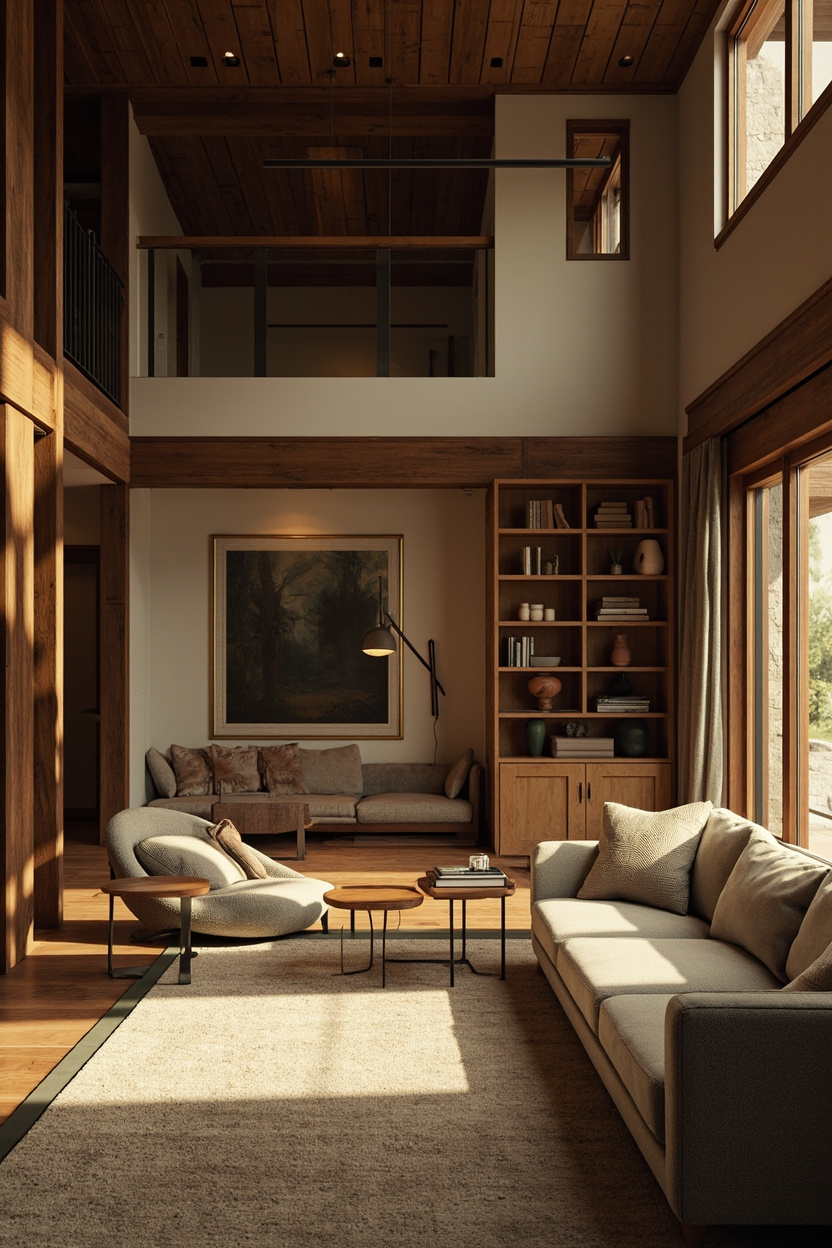
Zoned layouts create independent living pockets, such as a ground-floor suite or a tucked-away family room, so multiple generations coexist comfortably.
Each zone should have its own storage, seating, and access to a bathroom to reduce friction and preserve dignity.
Flexible partitions and convertible rooms allow zones to expand or contract as household composition changes.
These plans often borrow from farmhouse and cottage sensibilities, emphasizing warmth, durable finishes, and practical circulation for daily life.
Warm Textures In Open Spaces
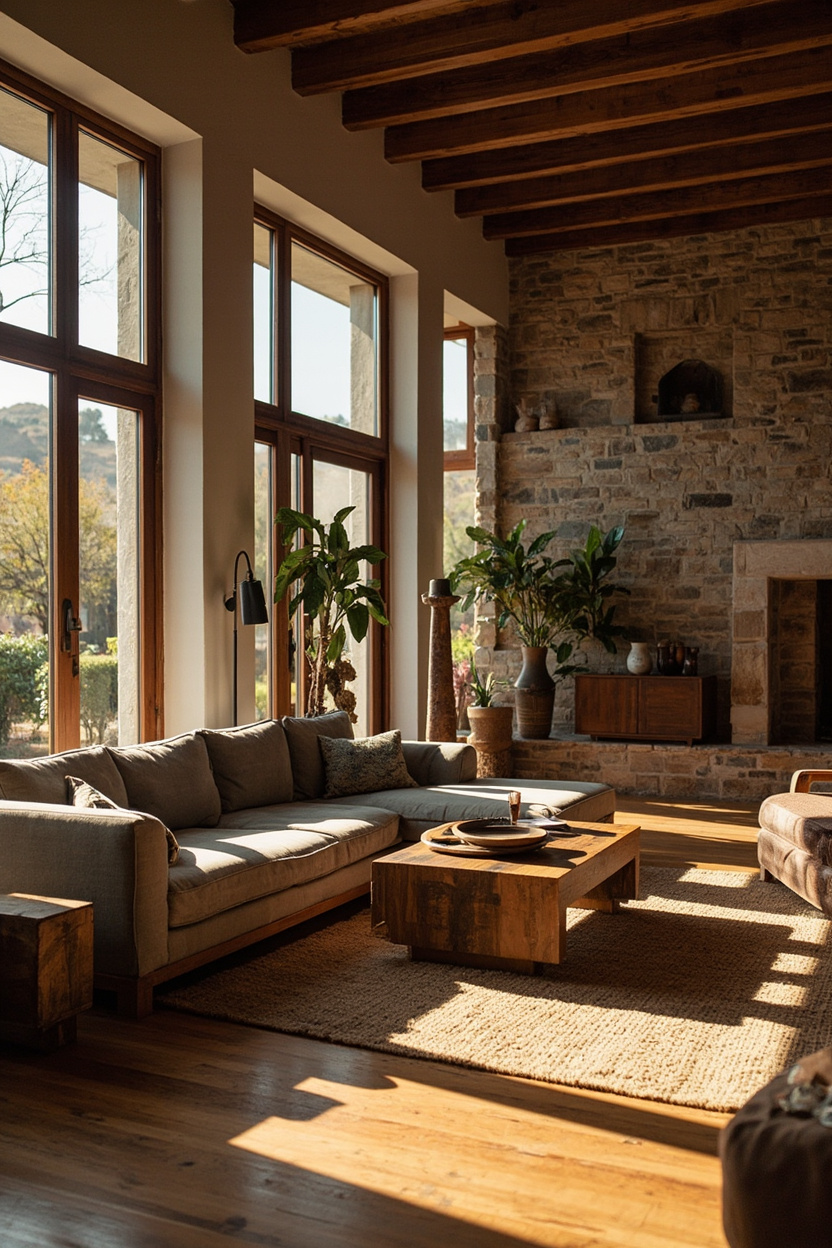
Layering natural materials, wood beams, woven rugs, and textured plaster adds depth and comfort to an open plan without closing it off.
Use a restrained palette of warm neutrals and tactile fabrics to create distinct zones that feel cohesive; this approach answers the 2026 shift toward warmth and character over stark minimalism.
Introduce upholstery and soft finishes where families gather to absorb sound and make long sightlines feel inviting rather than echoing.
For inspiration on balancing cosy touches with clean lines, see Cosy Minimalist Home Touches for practical pairings that work in family homes.
Defining Areas Without Walls
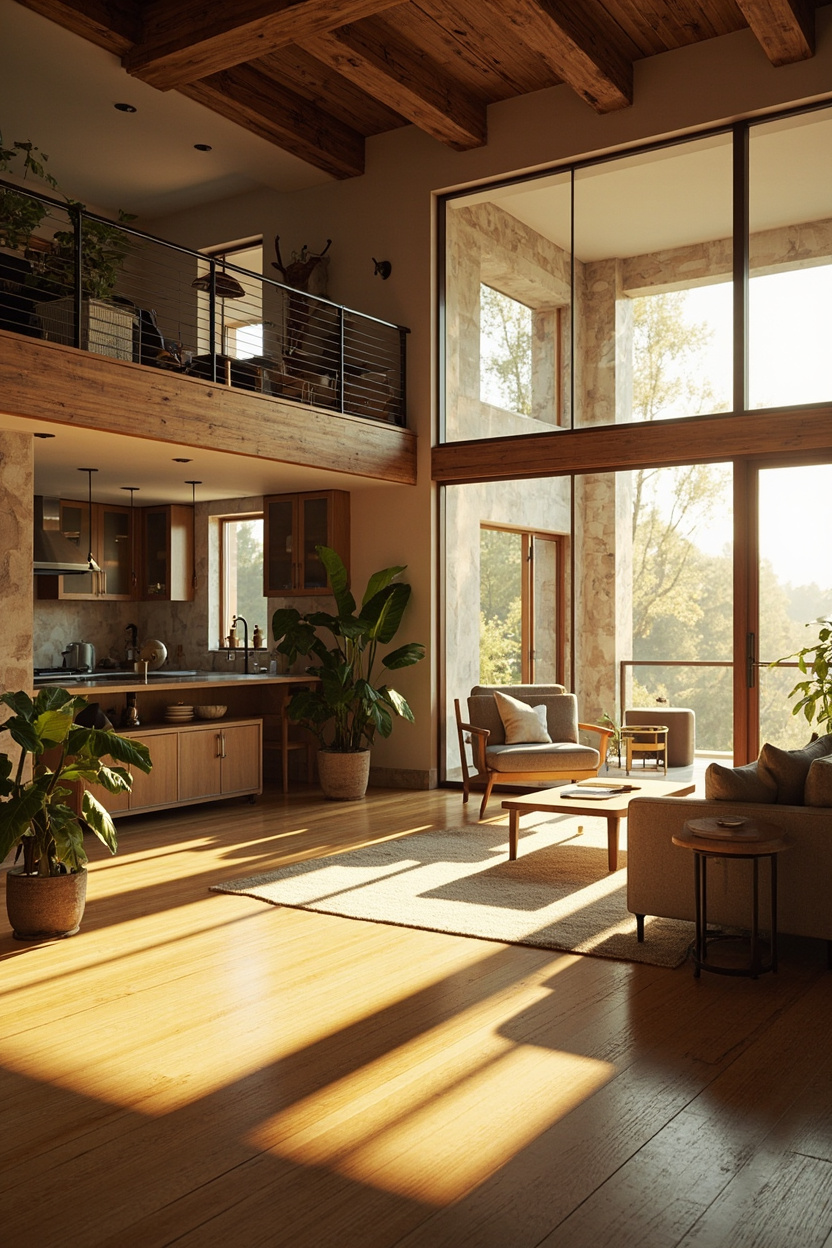
Use furniture placement, area rugs, and lighting to carve out function within one large volume—position a sofa to anchor the living area, add a runner to guide a traffic path, and hang pendants to signal the dining zone.
These layered cues maintain openness while giving each activity its own sense of purpose, reflecting the semi-open floor-plan trend gaining momentum for 2026.
Half-height partitions, open shelving, and glass dividers offer visual separation without blocking light or sightlines, preserving supervision and family connection.
This strategy supports buyers seeking homes that feel personal and practical, blending openness with distinct, usable areas.
Integrated Nooks For Focused Tasks
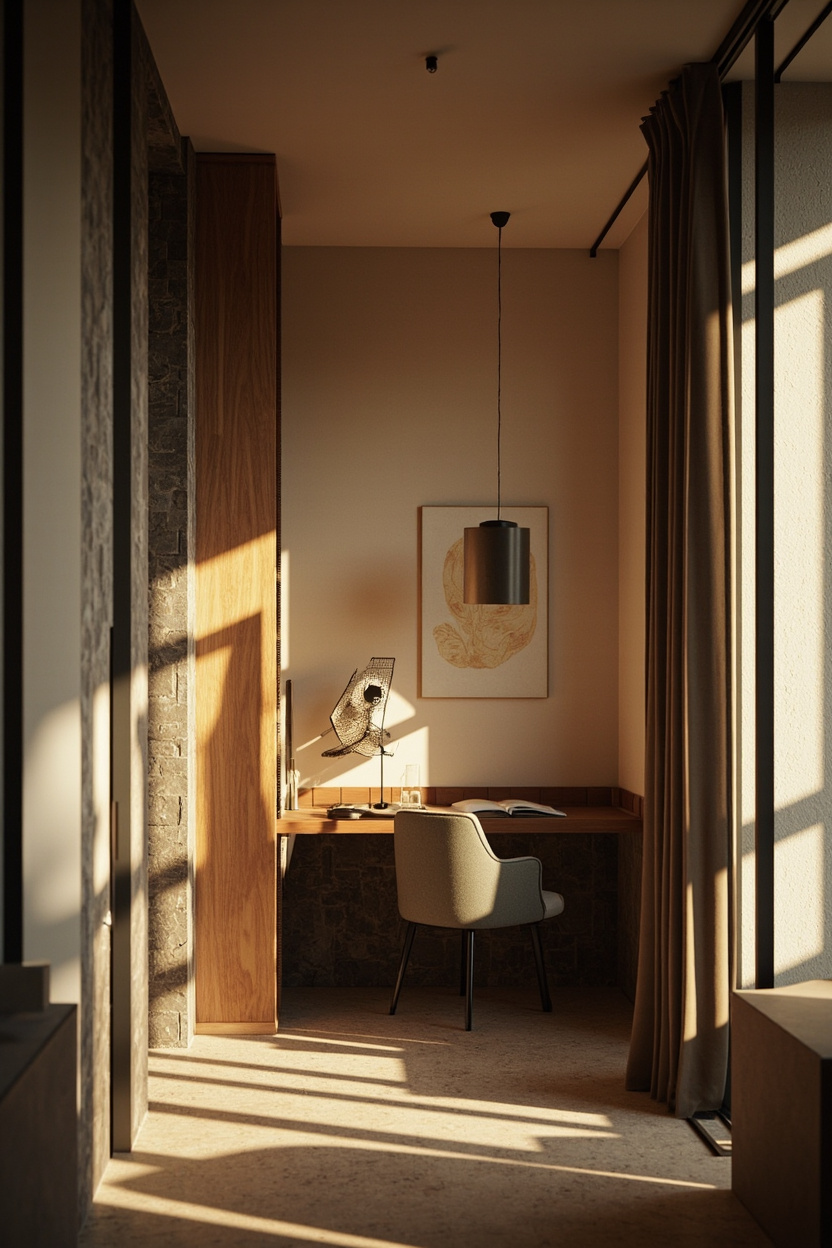
Carve compact built-ins like a homework bench, small home office, or reading niche into peripheral corners so focused tasks have a dedicated spot without sacrificing the open feel.
These integrated nooks provide privacy and storage while remaining visible enough for parents to stay connected to daily life.
Keep the scale human: narrow desks, vertical storage, and task lighting minimize footprint and maintain flow through shared spaces.
Thoughtful micro-zones make open concepts genuinely livable for families by balancing communal space with purposeful solitude.
Natural Materials Anchoring Open Plans
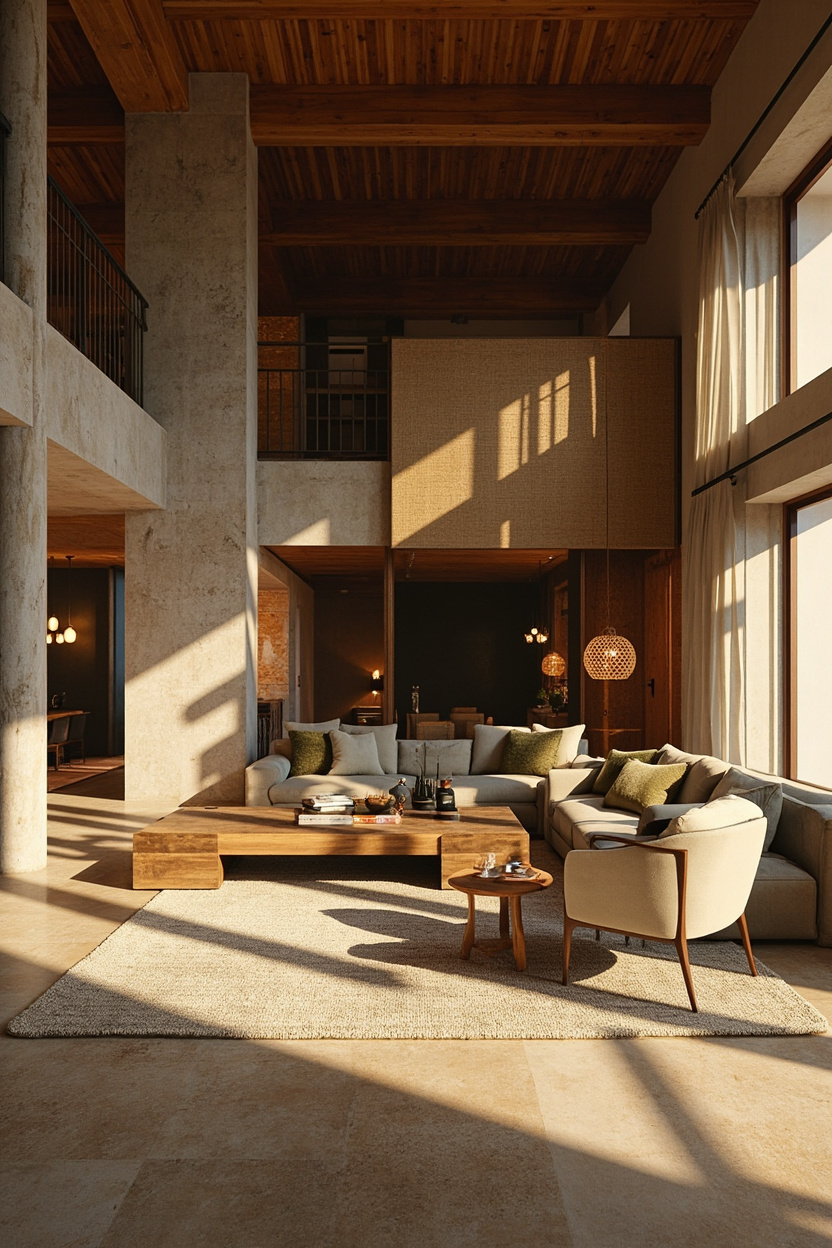
Using stone, wood, and woven textiles helps define zones without erecting walls. A reclaimed-wood island, a stone hearth, or jute rugs create tactile anchors that give each area its own visual weight while keeping sightlines open for supervision and conversation.
Layer finishes at different scales large-format floor planks, mid-size upholstery, and small decorative pottery to add depth and durability in family spaces.
These materials age gracefully and hide wear, making them practical for homes that need to look lived-in and considered rather than pristine.
Transition Elements: Screens And Slats
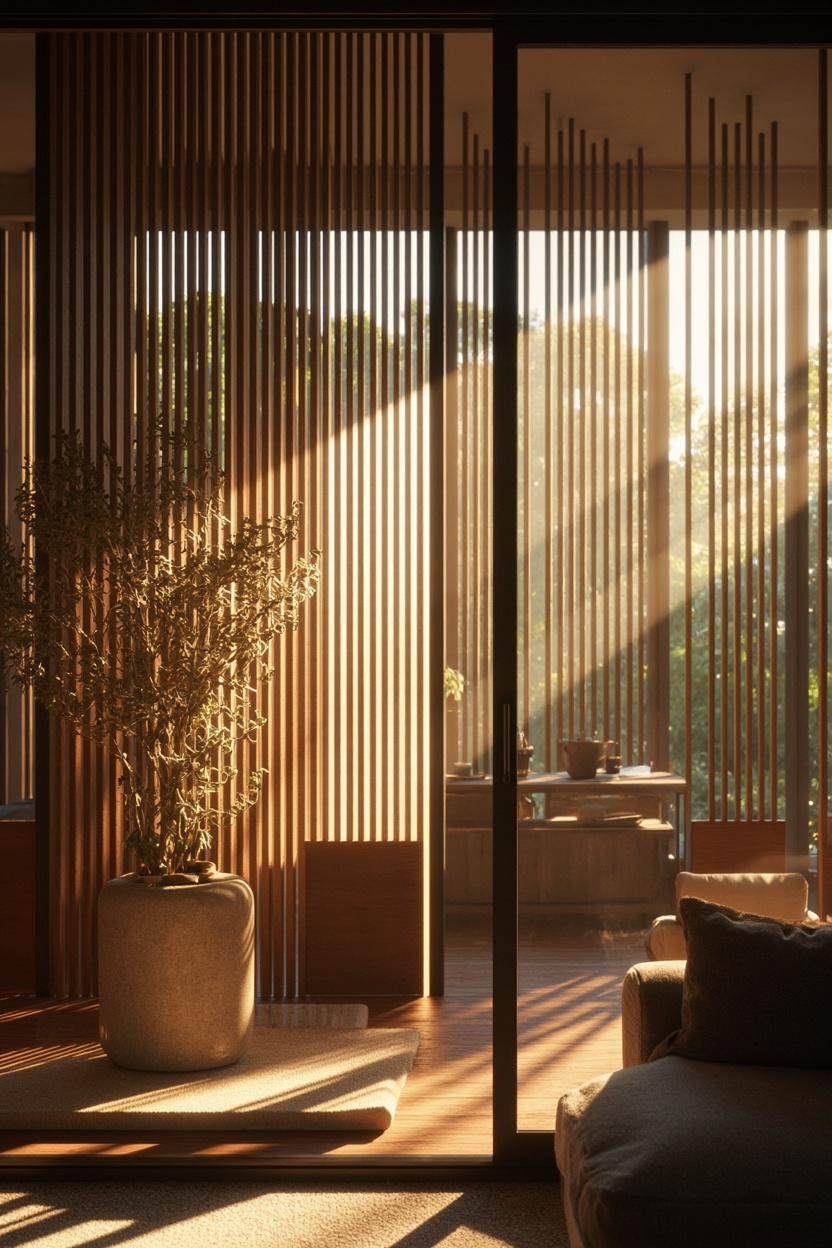
Vertical slats, open screens, and half-height partitions provide partial separation that preserves airflow and light while defining function.
Use them at the shift between the kitchen and living area to soften noise and create a visual cue for change without sacrificing connectivity.
Choose materials and spacing that complement the overall aesthetic: black metal for modern rooms, stained wood for farmhouse schemes. Consider installing them with built-in shelving or seating to maximize utility in family routines.
Intentional Minimalism With Warmth
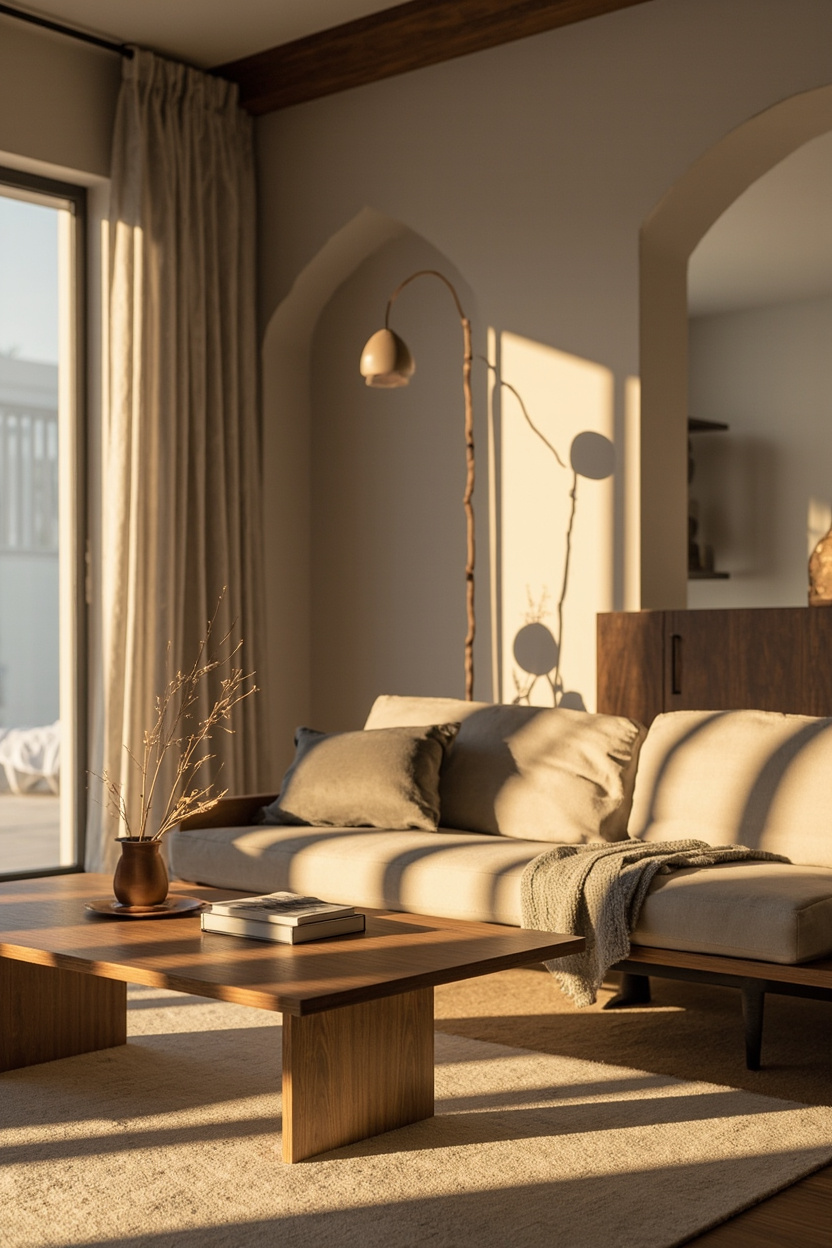
Streamlined layouts can still feel welcoming when you introduce warm tones, tactile fabrics, and a few meaningful objects.
Keep surfaces uncluttered and limit furniture to essentials, but layer in wool throws, linen curtains, and ceramic accents for comfort and personality.
This approach supports family life by making cleaning and maintenance straightforward while keeping spaces adaptable as needs change.
For inspiration on striking that balance between restraint and coziness, see ideas from Cosy Minimalist Home Touches and Minimalist Mantle Decor.
Layered Lighting For Open Layouts
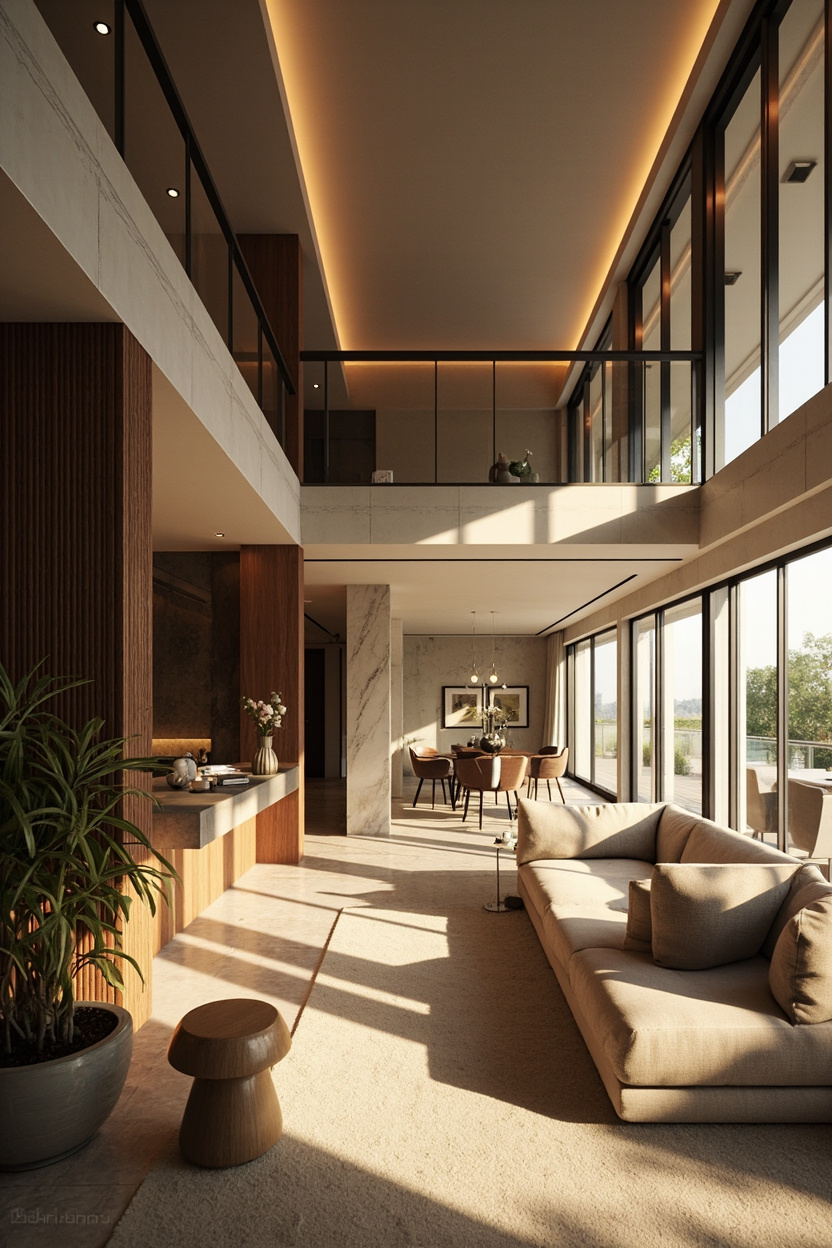
Good open-plan design relies on layered lighting to define function without walls. Combine recessed ambient lighting for overall brightness with task lights over counters and pendants above dining or island areas to create usable pockets of light that serve family routines.
Use dimmers and separate circuits so you can adjust zones independently, soft evening light in the living area, and brighter task lighting in the kitchen, helping the home feel both connected and adaptable for different activities.
Acoustic Solutions In Open Rooms
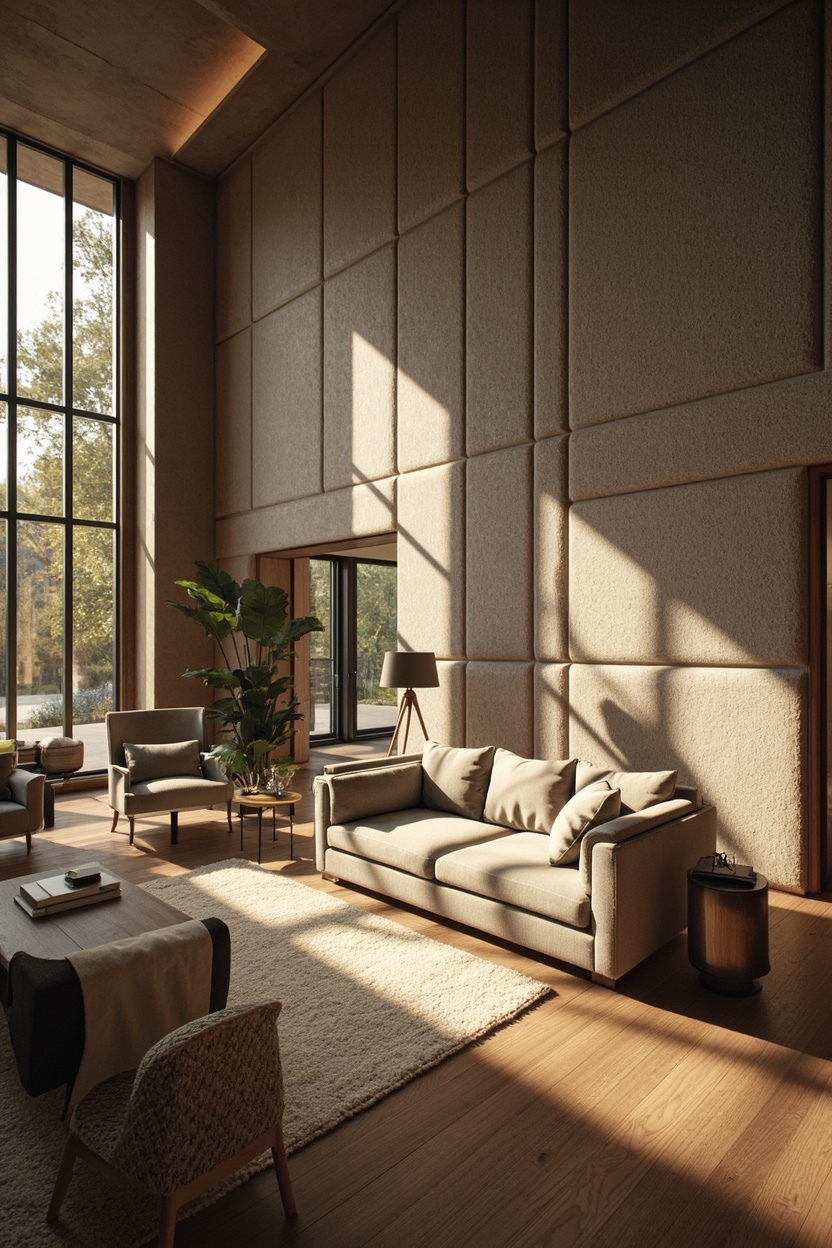
Open plans can amplify noise, so prioritize soft finishes and absorptive materials to manage sound. Area rugs, upholstered furniture, acoustic panels disguised as artwork, and heavy curtains reduce echo while adding texture and warmth.
Consider ceiling baffles or strategically placed bookcases to interrupt sound paths in high-traffic zones; these practical interventions preserve sightlines while making family life calmer and more pleasant.
Furniture Grouping To Create Zones
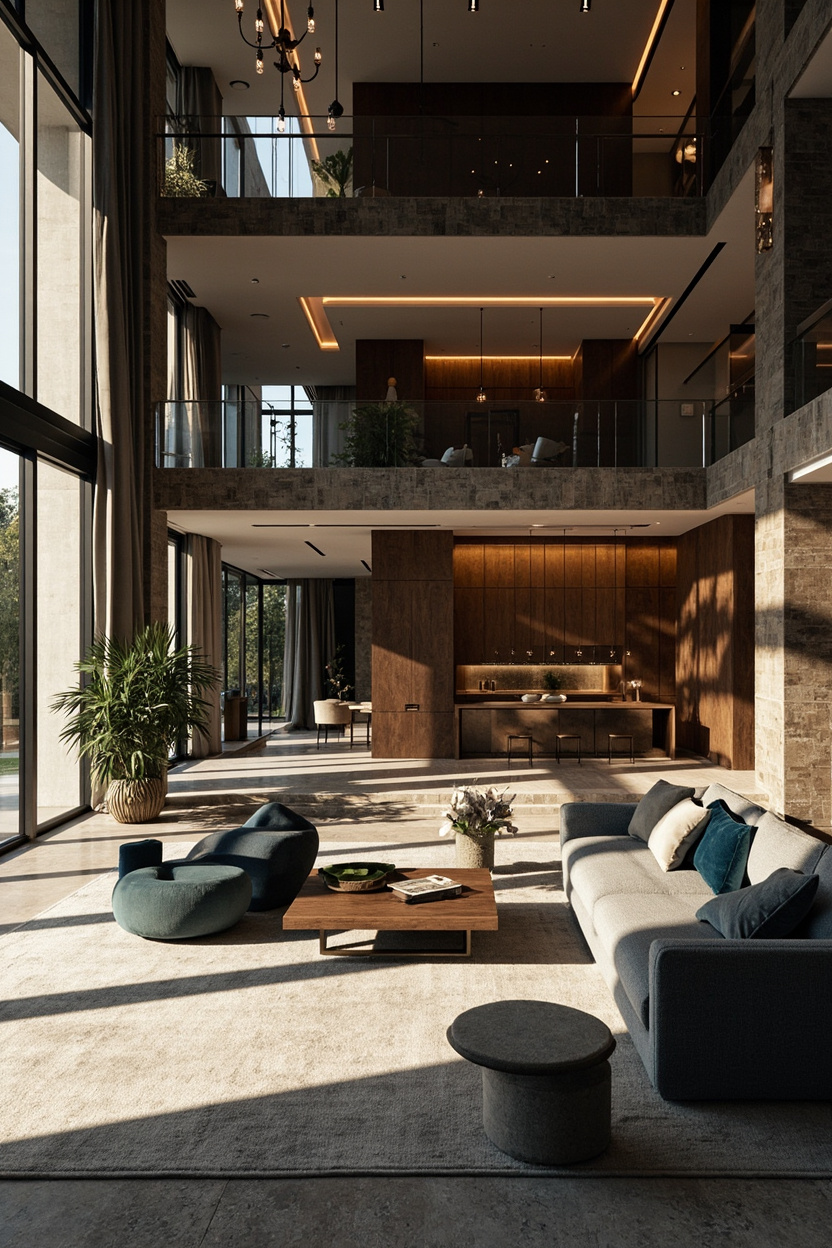
Use furniture to sculpt purpose in an open floor plan: orient sofas back-to-back to form distinct living and dining areas, or place a console behind a sofa to mark circulation lines.
Rugs, coffee tables, and differing lighting above each grouping reinforce those micro‑rooms without closing them off.
Choose scale and style consistently so zones feel cohesive; low storage units and open shelving can divide spaces while providing family-friendly function and sightline continuity.
Breakfast Nooks Within Open Kitchens
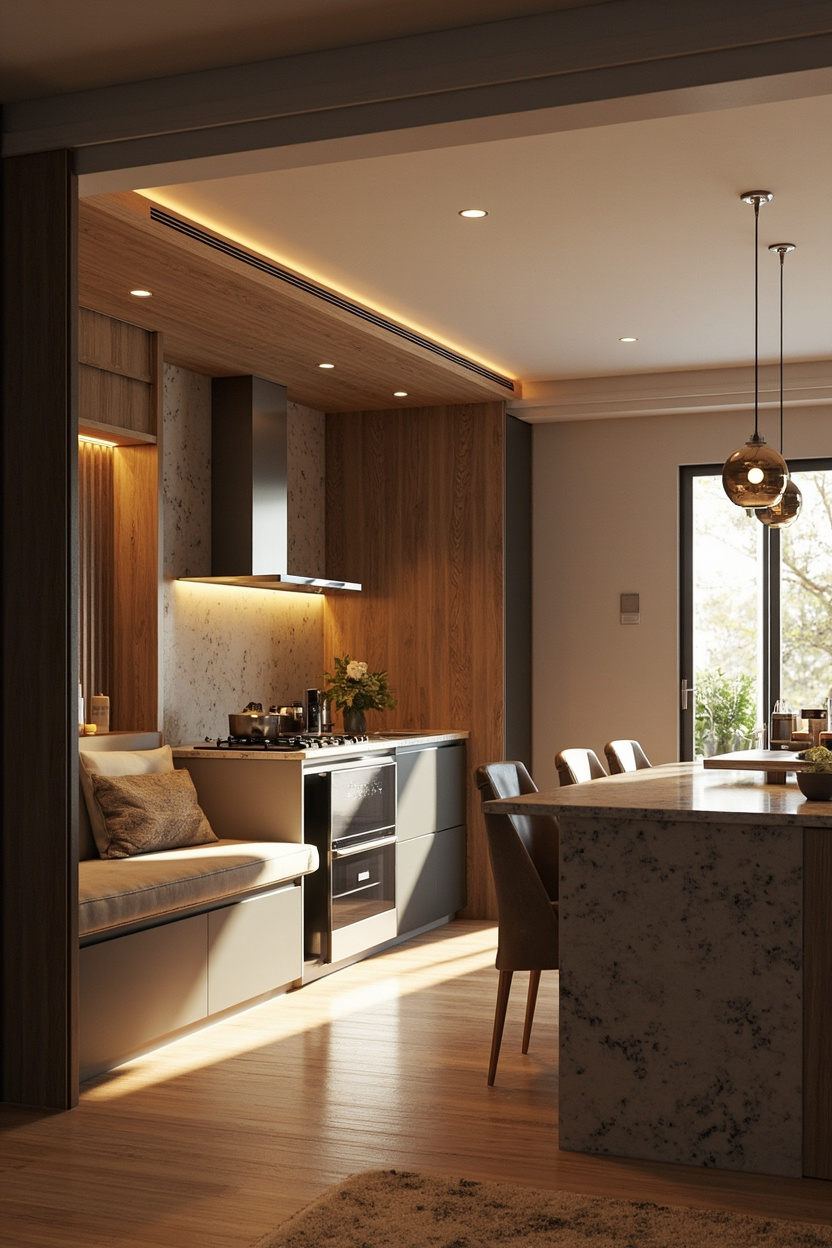
A built-in breakfast nook tucks a cozy dining spot into the kitchen footprint without breaking sightlines, making morning routines simple and social.
Choose a banquette with storage below and a durable table finish so the space handles homework, breakfasts, and weekend crafts with minimal clutter.
Soft textiles and layered lighting carve out a sense of place while keeping the plan open; a pendant over the table and a cushioned seat with washable fabric add warmth and practicality.
For a cohesive look, tie the nook’s materials to the kitchen palette, wood tone,s or matte metal hardware create a unified, family-friendly feel that aligns with farmhouse or minimalist schemes like those shown in Western Farmhouse Living and Minimalist Mantle Decor.
Storage Strategies For Open Concepts
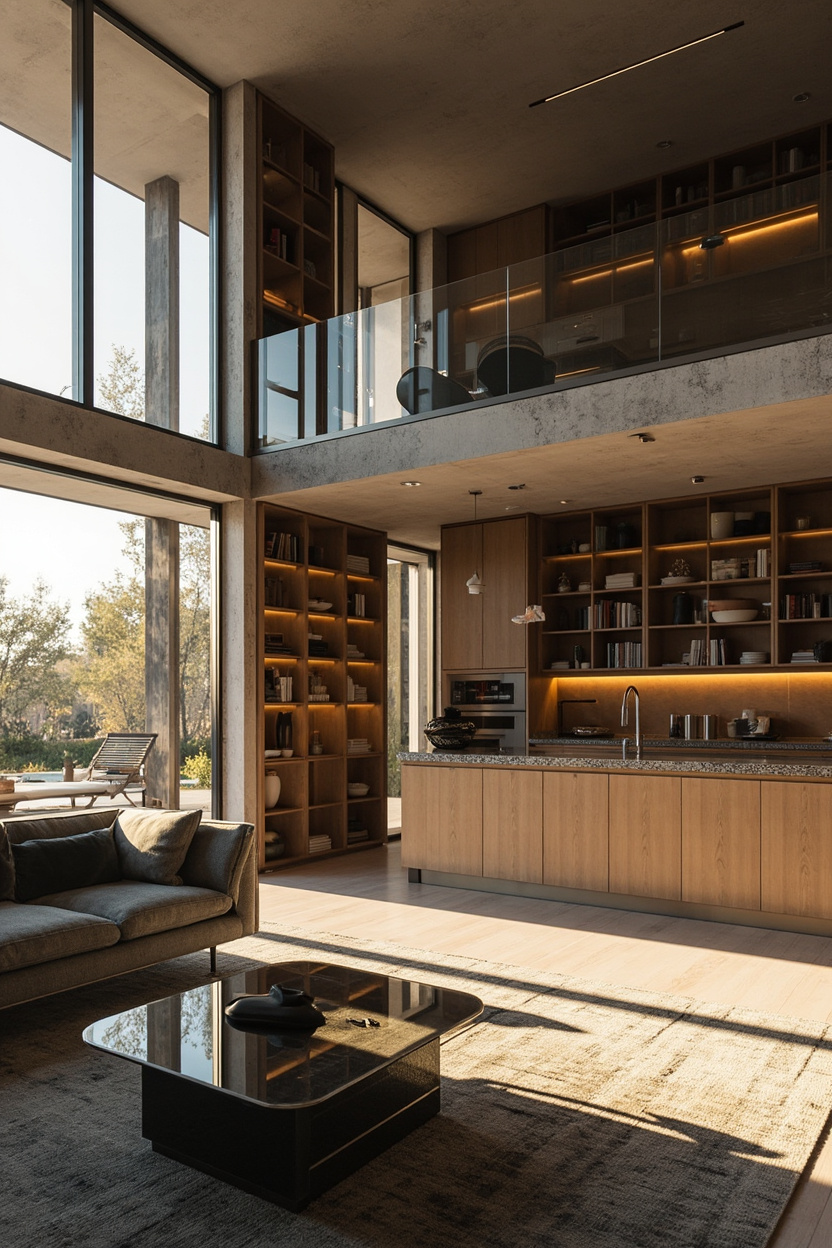
Open plans demand intentional storage to maintain calm visual flow; think continuous low cabinetry, integrated appliances, and furniture that doubles as storage.
Use base cabinets or a long console to anchor the living area while keeping toys, linens, and daily essentials out of sight but within easy reach.
Vertical storage, built-in shelving, and tall pantry units prevent countertop clutter and let decorative objects breathe, preserving the lived-in yet curated look buyers want.
Combining closed and open storage balances functionality with display opportunities, reflecting the trend toward homes that feel personal and textured.
Flexible Partition Ideas For Adaptability
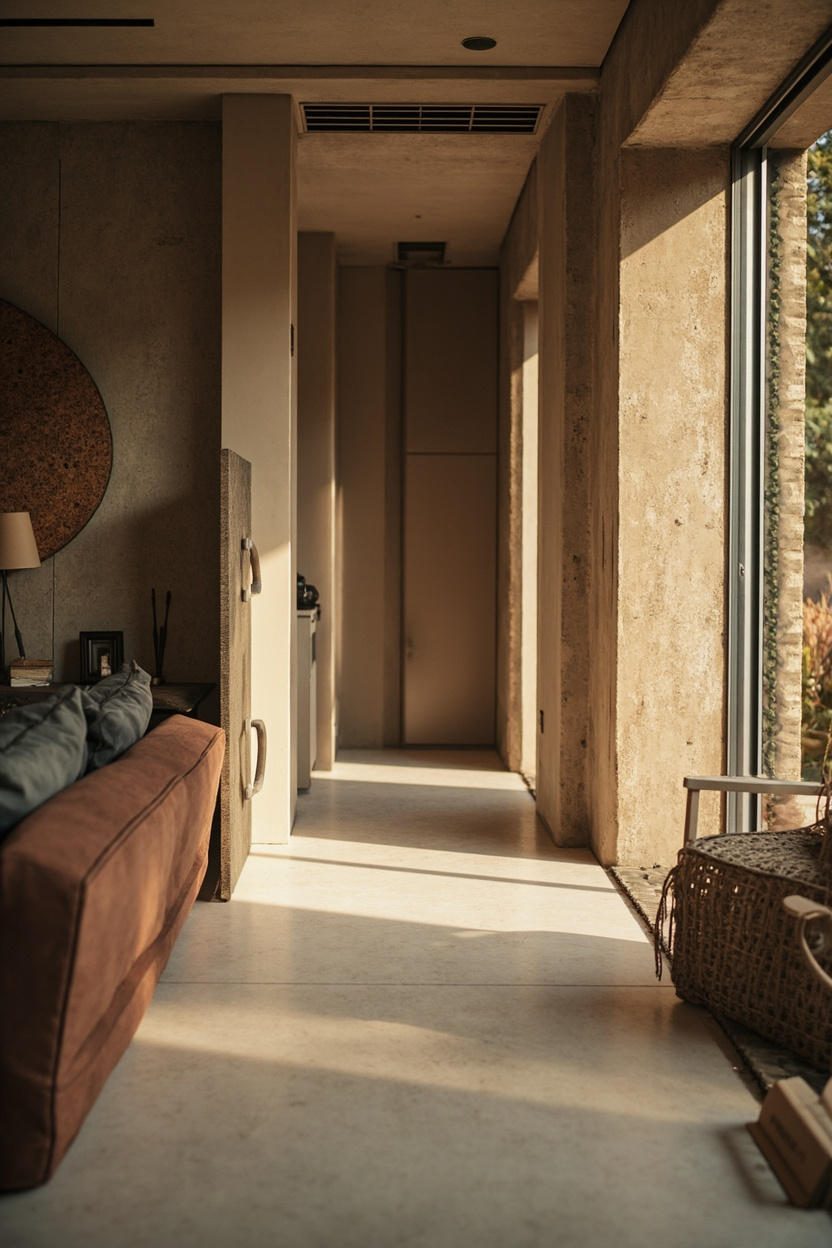
Semi-open partitions, such as slatted screens, glass dividers, or sliding panels, give families the choice between connectivity and privacy without permanent walls.
These solutions allow noise control, visual separation for homework or naps, and easy reconfiguration as kids grow or needs change.
Choose materials that complement the overall scheme so partitions read as design features rather than defenses; frosted glass,
Wood louvers, or operable shelving, provide adaptability and warmth in line with current trends favoring texture and intentionality.
Personalized Finishes To Add Character
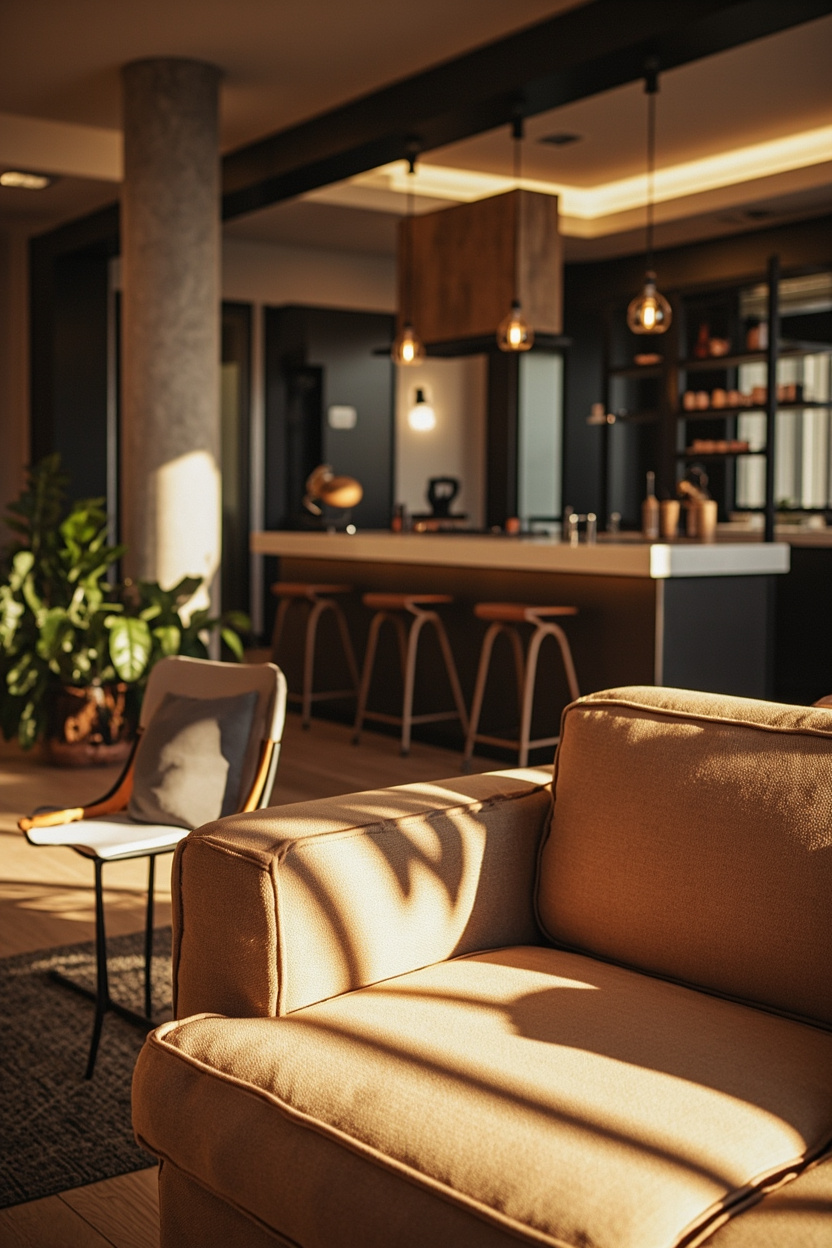
Personalized finishes anchor an open plan and make large shared spaces feel intentional rather than generic. Choose layered textures, reclaimed wood beams, plaster walls, or custom millwork to create distinct visual zones without adding walls.
Prioritize durable, family-friendly materials that still read as bespoke: matte porcelain tile for high-traffic areas, hand-finished cabinetry in the kitchen, or washable limewash paint in play-adjacent walls.
These choices add warmth and personality while standing up to everyday life; explore farmhouse and cottage approaches for inspiration in spaces that need character without clutter.
Indoor-Outdoor Flow Enhancements
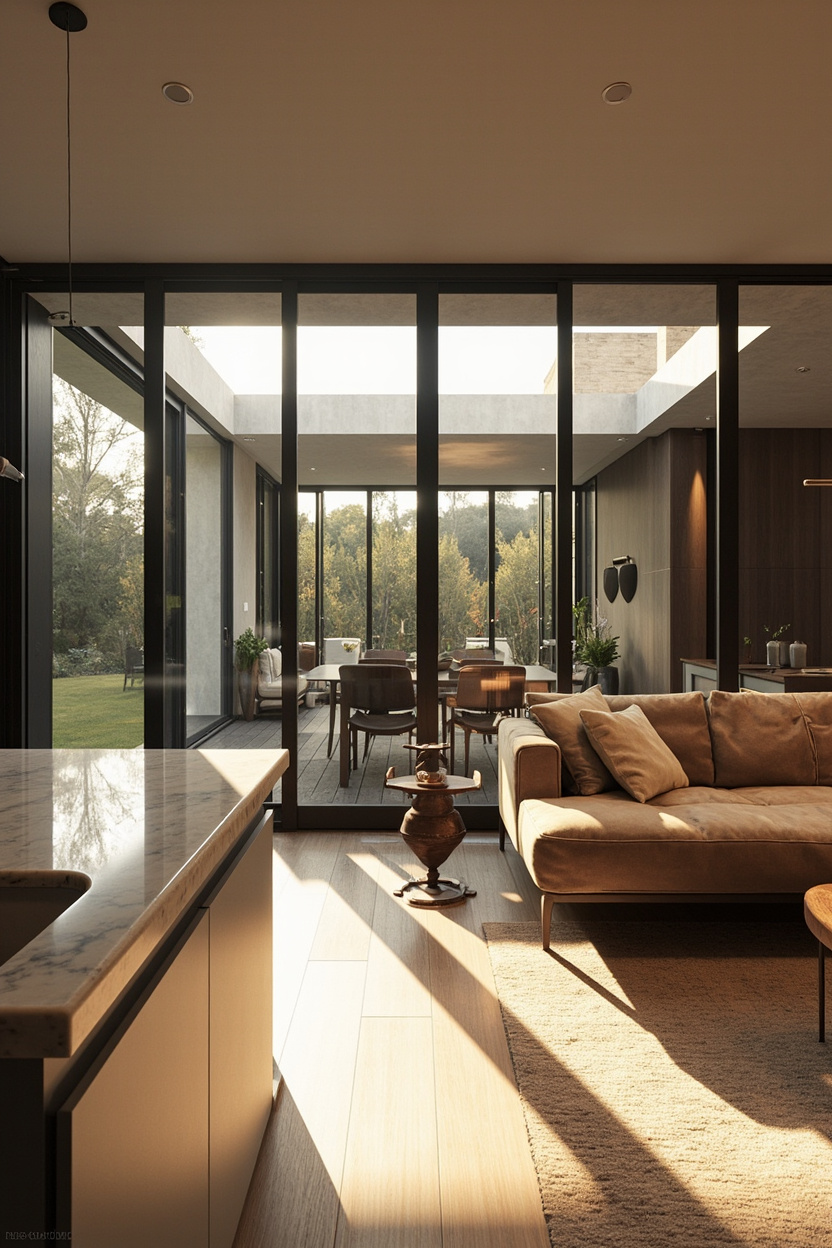
Expanding sightlines to the yard makes open plans feel larger and offers extra functional space for family life.
Use large sliding or folding doors, consistent flooring that runs from indoors to a covered patio, and a single color palette to blur the edge between inside and out.
Design transitional zones like a covered porch with storage benches or an all-weather dining area—so outdoor living becomes a natural extension of daily routines.
Consider durable outdoor fabrics and simple planting schemes to keep maintenance low while encouraging frequent use.
Scale And Proportion In Open Areas
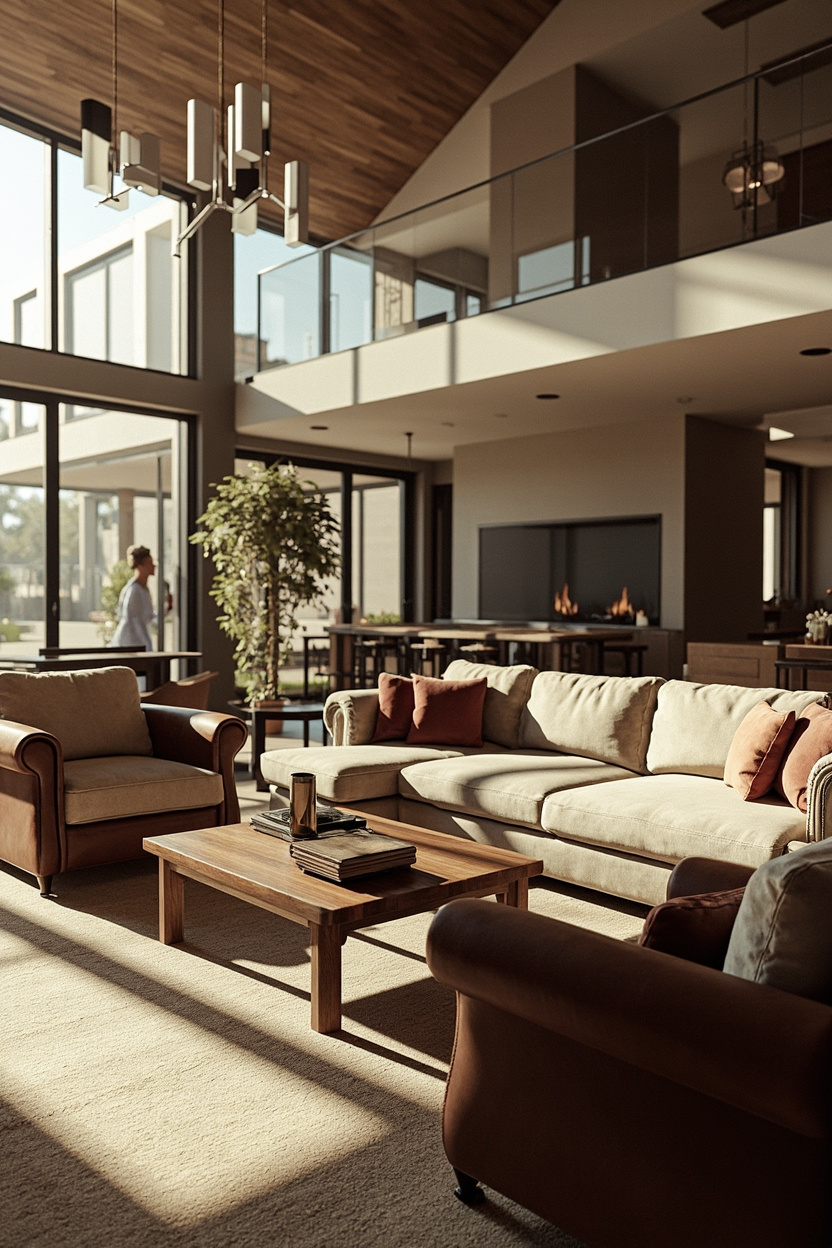
Getting scale right prevents an open plan from feeling either cavernous or cramped; furniture should read against the room’s volume rather than disappear within it.
Anchor seating with appropriately sized rugs, use larger-scale lighting over the main gathering spot, and balance tall elements (bookcases, fireplaces) with low, long seating to distribute visual weight.
Maintain human-scale touchpoints, lower counter heights in kid zones, reachable storage, and stepped lighting to keep the space comfortable for all ages. Thoughtful proportioning makes the plan flexible for family needs now and as they evolve.
Privacy Options For Work-From-Home
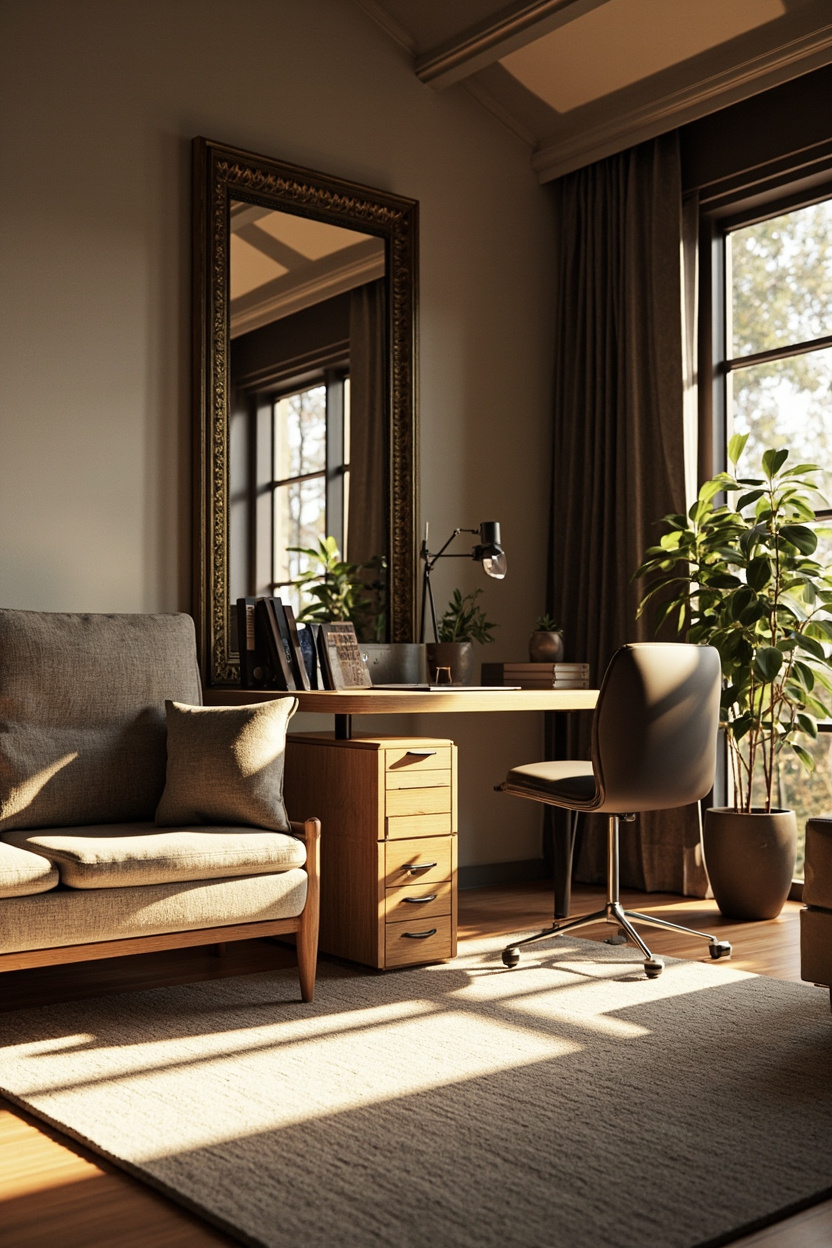
Open plans need not sacrifice focused work. Carve out acoustic-friendly nooks using half walls, built-in shelving, or a glass partition that preserves sightlines while damping sound, creating a predictable workspace that family members can respect.
Flexible doors and sliding panels let that workspace convert to a playroom or guest area when needed.
Pair a compact desk with concealed storage to keep clutter off the main living zone and make transitions feel intentional rather than ad hoc.
Timeless Design Choices For 2026
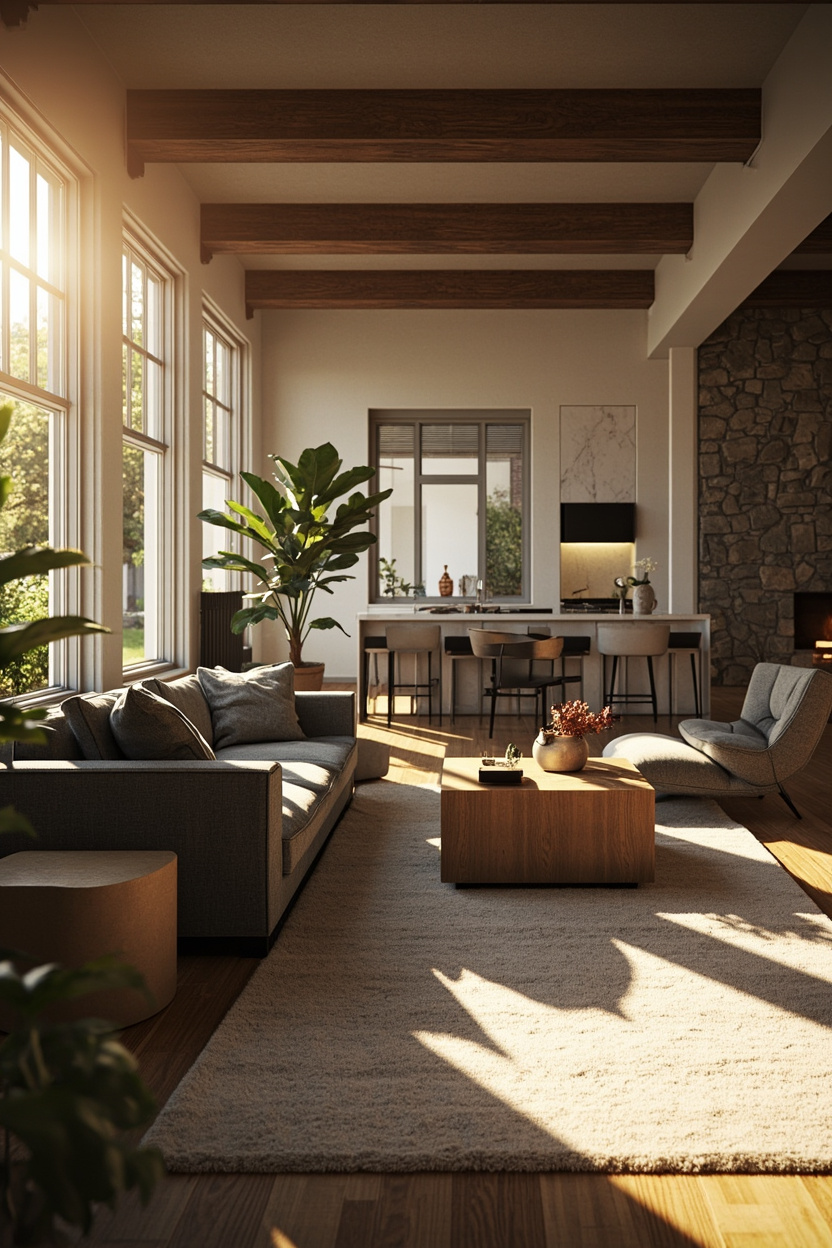
Prioritise natural materials and warm textures that age well; oak floors, honed stone counters, and linen upholstery resist trends while adding lasting character. These choices align with buyers’ desire for homes that “feel personal” and inviting rather than overly staged.
Keep layouts semi-open to balance connection with separate zones, a design direction gaining momentum for 2026.
Layering simple, neutral palettes with curated vintage pieces or earthy accents creates a timeless base that adapts easily to seasonal styling or a family’s evolving needs.
FAQ
Not inherently—buyers increasingly want warm, textured open spaces that still offer defined zones. Thoughtful transitions and flexible privacy options maintain broad appeal.
Use soft finishes—rugs, drapery, upholstered furniture—plus strategic partitions and doorable nooks to absorb sound without fully closing off rooms.
No, islands are useful for prep and seating, but a peninsula or generous counter with walkways can work better in tighter family layouts.
Designate clear play zones with low storage, rounded furniture, and visual boundaries like rugs or half-walls to keep toys contained while maintaining supervision.
Final Thoughts
Open concept floor plans can work beautifully for families when they combine flexibility, layered textures, and intentional privacy solutions. Aim for semi-open transitions and durable materials to create a home that’s both practical today and sought-after tomorrow.