


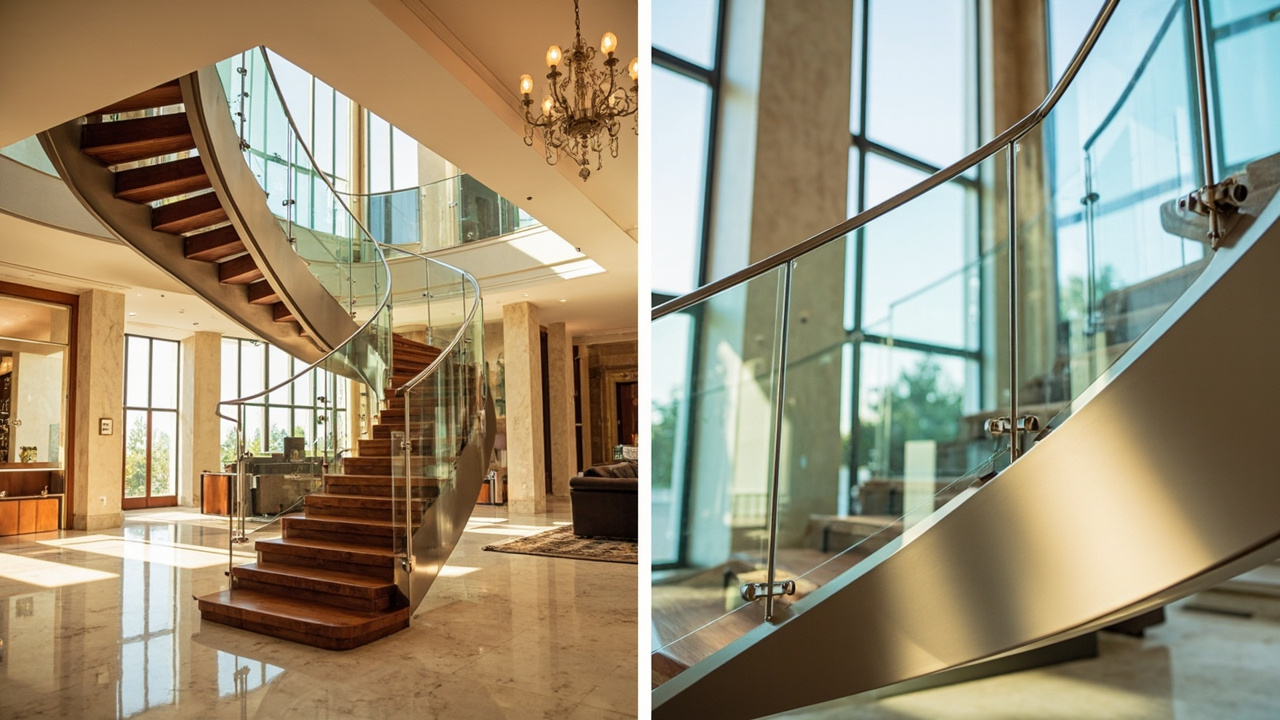
A staircase railing is more than a safety feature; it defines the room’s personality and circulation. These 18 curated ideas strike a balance between structure and style, allowing you to select a railing that complements your architecture, maximizes natural light, or adds handcrafted warmth to your landing.
Consider scale and sightlines before committing: choose glass or thin cables to preserve views and light, or opt for bold steel and wrought iron to anchor an industrial, farmhouse, or traditional scheme.
- 1. Minimalist Glass Panel Railings
- 2. Black Steel Frame Balusters
- 3. Geometric Wrought Iron Infill
- 4. Floating Wood Handrail System
- 5. Cable Railing With Wood Posts
- 6. Rustic Turned-Spindle Wood Railings
- 7. Brass Accents On Dark Rails
- 8. Slim Vertical Metal Balusters
- 9. Mixed-Material Staircase Collage
- 10. Curved Custom Handrail Designs
- 11. Laser-Cut Decorative Panels
- 12. Open-Riser Wood And Metal Blend
- 13. LED-Integrated Handrail Lighting
- 14. Midcentury Slatted Wood Screens
- 15. Industrial Pipe And Flange Rails
- 16. Frosted Glass Privacy Rails
- 17. Slim Stainless Steel Cables
- 18. Patterned Metal Baluster Inserts
- FAQ
- Final Thoughts
1. Minimalist Glass Panel Railings
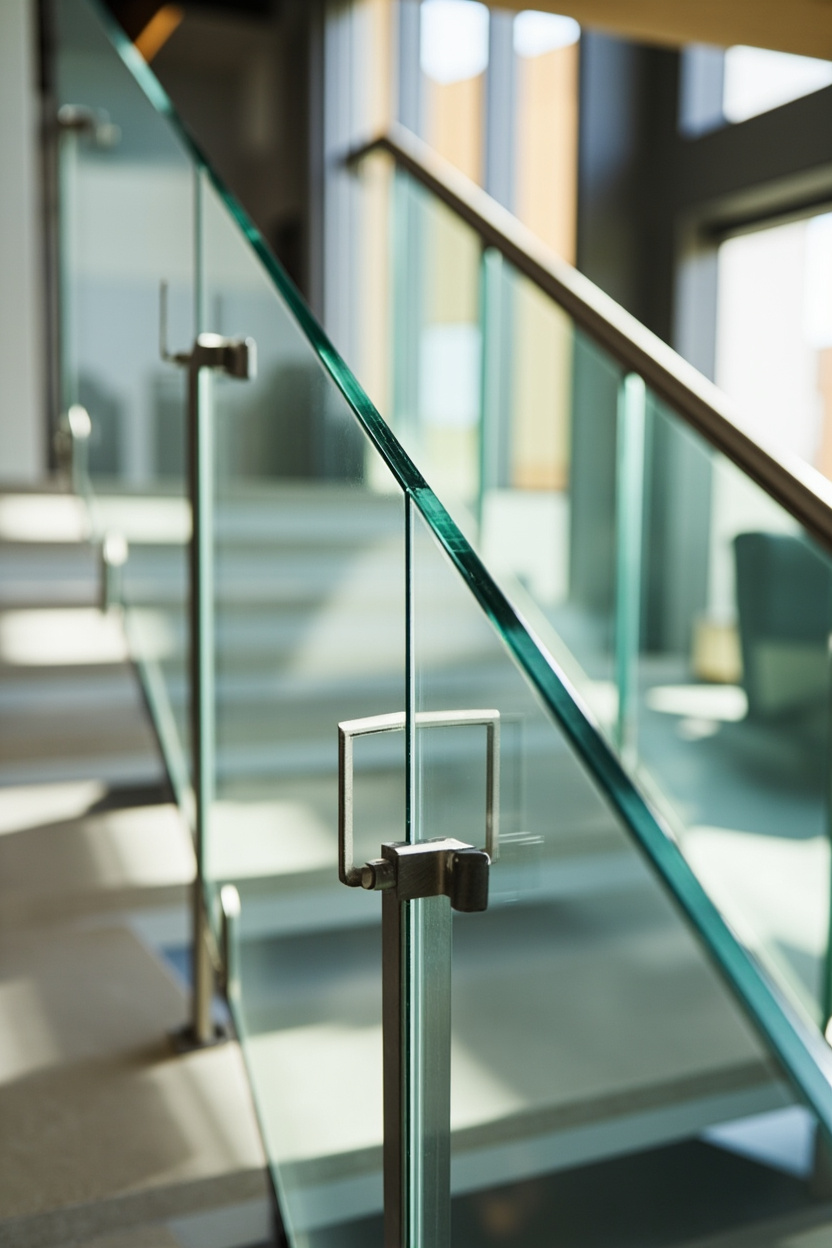
Glass panels deliver an airy, modern look that keeps sightlines open and lets natural light flow through stairwells.
Choose clear tempered glass with discreet stainless clips for a barely-there effect, or opt for frosted sections where privacy between levels is needed.
Framing can be ultra-slim or integrated into a wood or metal handrail to add warmth or contrast. Glass suits coastal, Scandinavian, and modern farmhouse homes that prioritize light and openness; pair with a white farmhouse kitchen or cosy minimalist touches for a cohesive interior.
2. Black Steel Frame Balusters
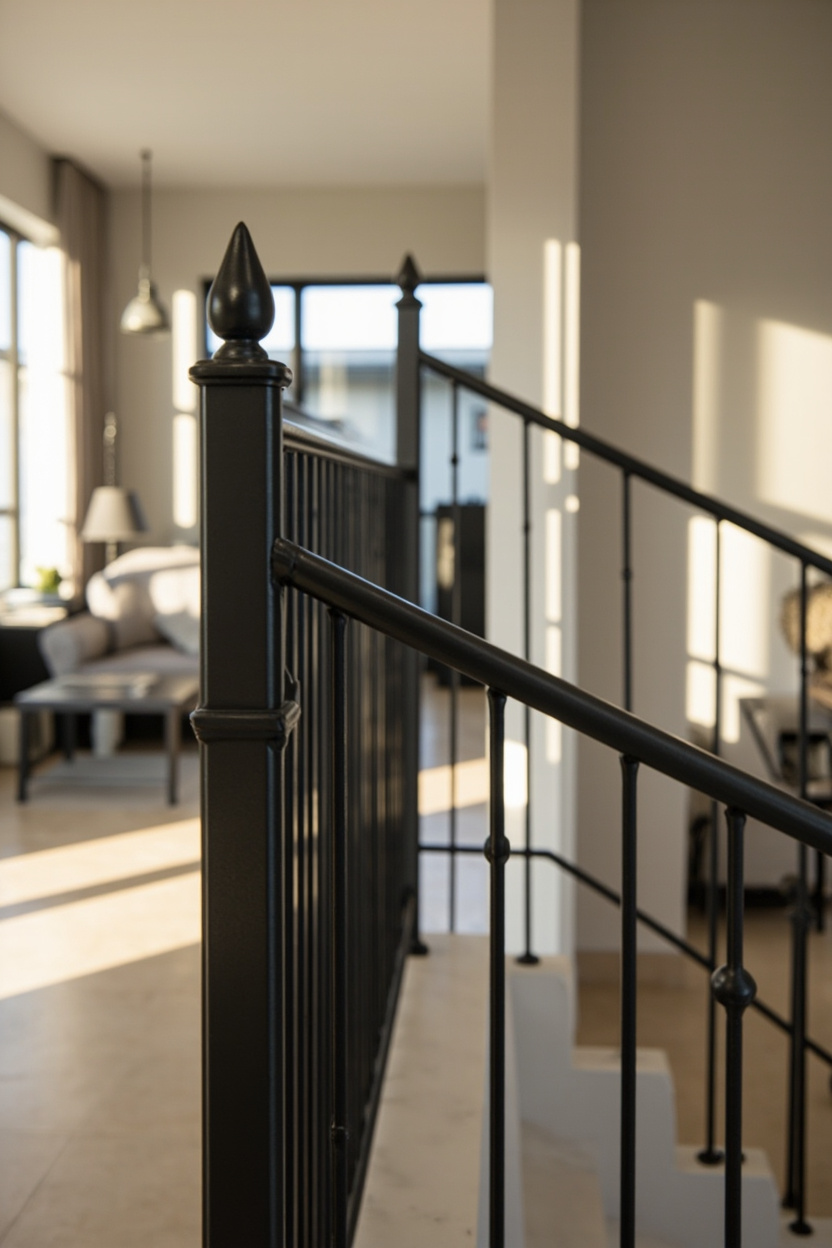
Black steel frames bring graphic contrast and a contemporary edge without overwhelming a space. Slim vertical balusters or rectangular profiles create a crisp silhouette that pairs well with warm wood treads or painted risers for balanced visual weight.
This look works across lofts and updated traditional homes: use matte black for subtlety or powder-coated finishes for durability in high-traffic areas.
Combine with minimalist gallery walls or a statement pendant to anchor the stairs as a design focal point.
3. Geometric Wrought Iron Infill
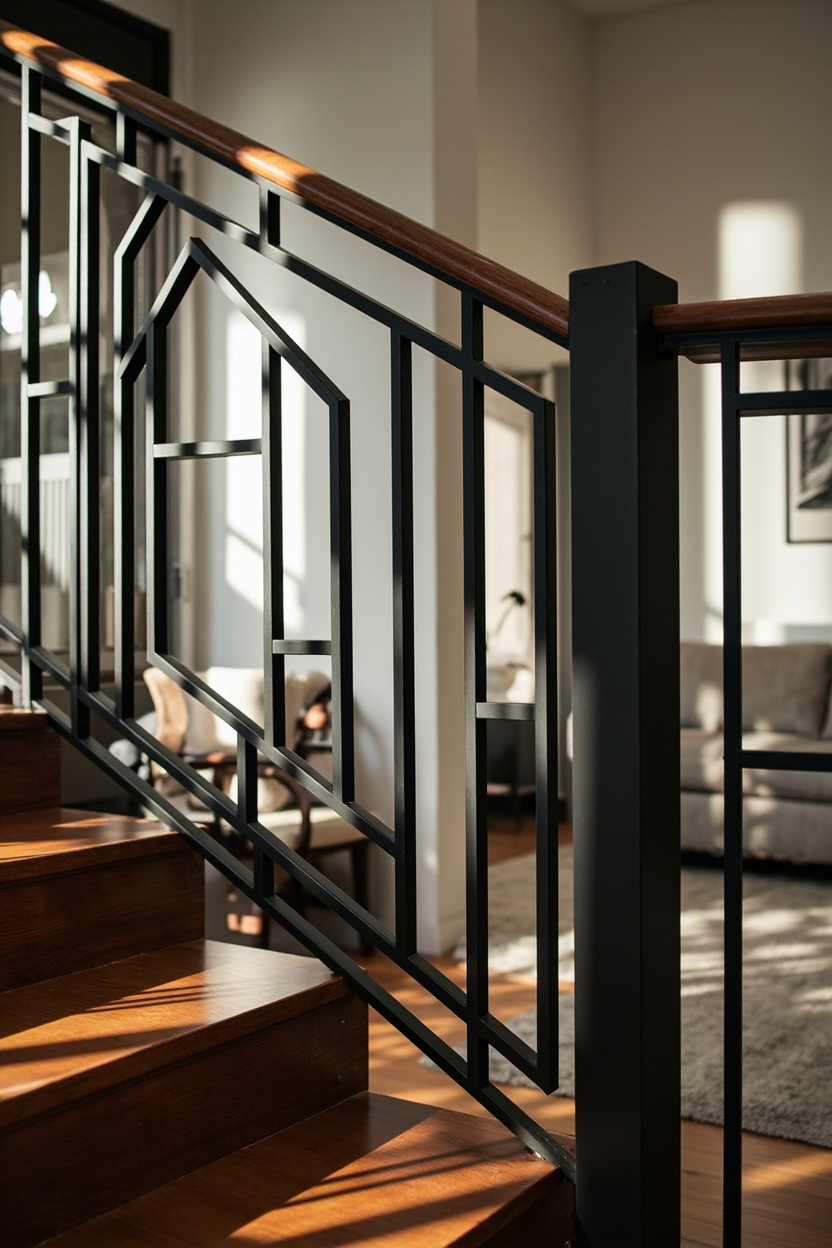
Custom geometric wrought iron infill—triangles, hexagons, and repeating angular motifs—adds rhythmic patterning and artisanal detail to a staircase. These motifs can be scaled to feel delicate or monumental, fitting both heritage homes and modern interiors seeking a crafted accent.
Wrought iron pairs naturally with rustic wood or painted spindles for farmhouse or cottage looks, and it can be finished dark for contrast or lightened with a metallic patina.
For inspiration that blends traditional charm and modern patterning, consider geometric ironwork as the anchor for an otherwise restrained staircase.
4. Floating Wood Handrail System
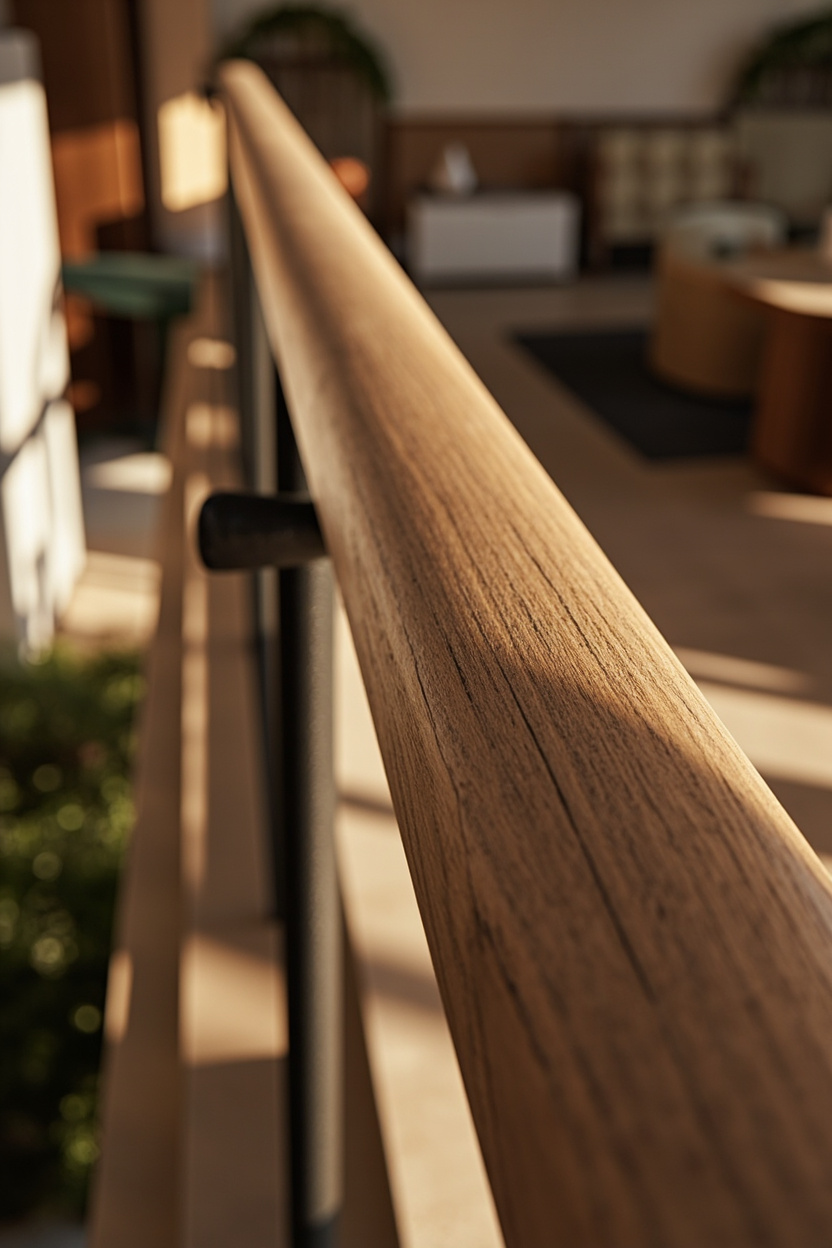
A floating wood handrail strips the staircase down to a sleek, uninterrupted line that reads modern and warm. Because it’s mounted with hidden brackets, the rail appears to hover off the wall, which visually widens narrow landings and keeps sightlines clean.
Select a hardwood like oak or walnut and finish it matte for a contemporary look, or oil it for rich depth in traditional schemes.
This approach pairs beautifully with minimalist treads and works well alongside glass balustrades to balance transparency and tactile warmth; see ideas for complementary minimal interiors in Cosy Minimalist Home Touches.
5. Cable Railing With Wood Posts
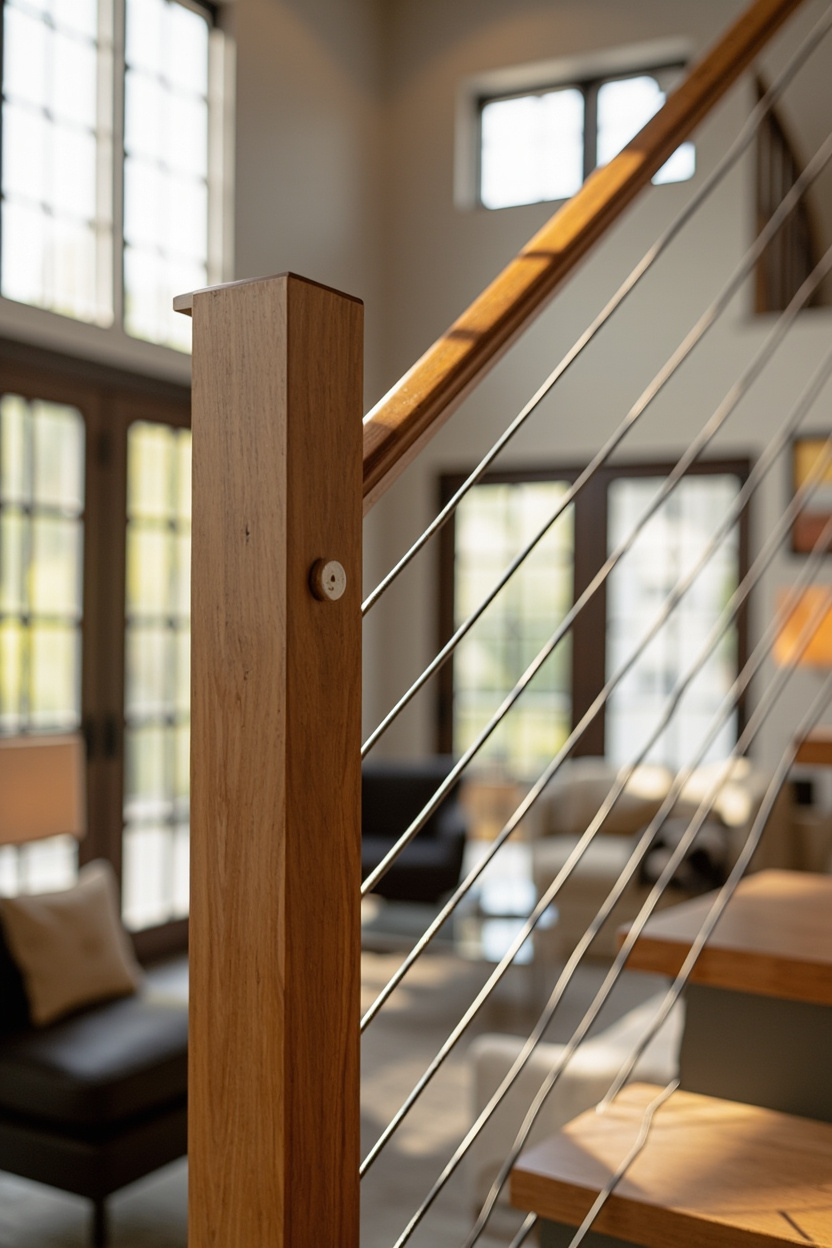
Cable railing paired with sturdy wood posts blends industrial crispness with natural texture, making it ideal for transitional homes. The stainless-steel cables provide unobstructed views while the wooden posts anchor the design with tactile warmth and grain interest.
To keep the cables taut and long-lasting, choose marine-grade fittings and specify intermediate posts for longer runs to prevent sagging.
This system adapts to outdoor decks and indoor staircases alike, and it complements farmhouse elements when you select reclaimed or distressed posts, tying into Farmhouse Kitchen and Farmhouse Dining Room Designs.
6. Rustic Turned-Spindle Wood Railings
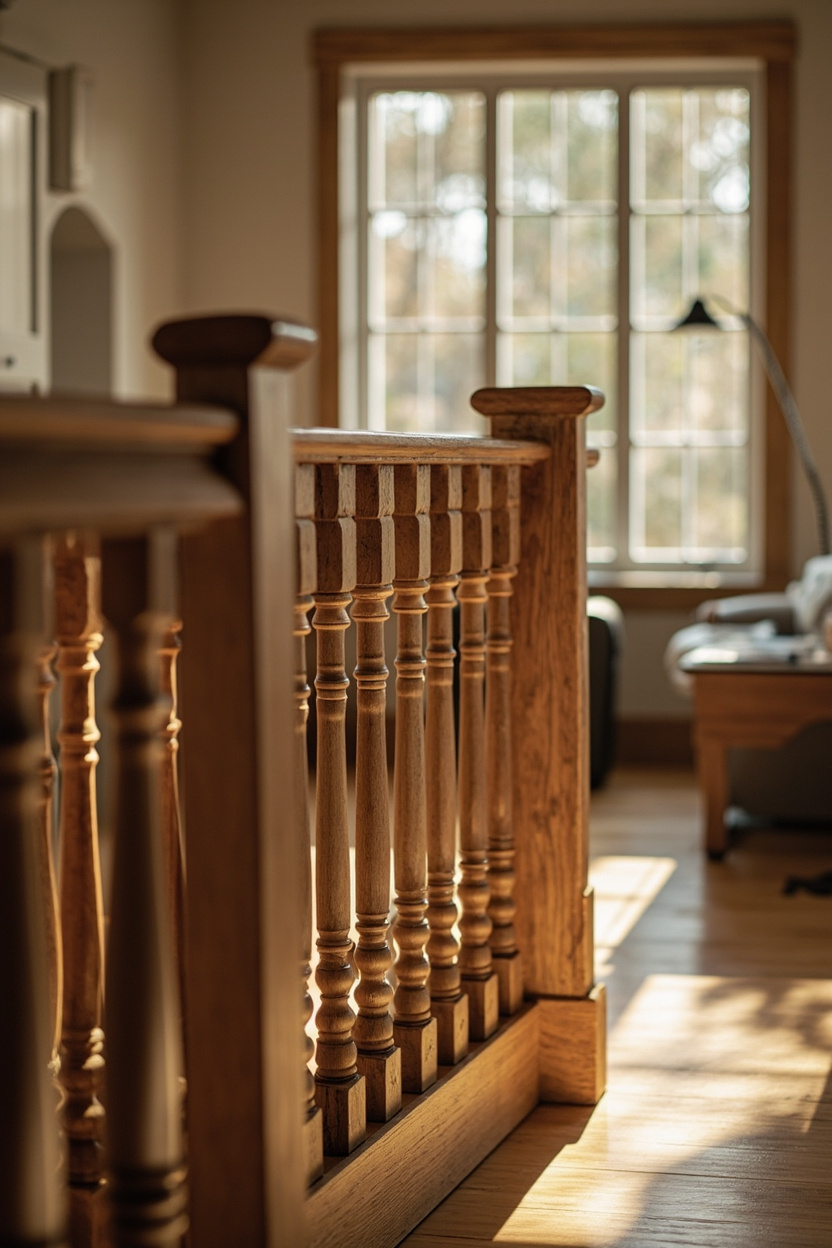
Turned-spindle railings bring handcrafted charm and a cozy, cottage-ready feel to staircases, perfect for homes aiming for warmth and personality.
The rhythmic repetition of spindles adds visual texture and historical character, especially when paired with beadboard or painted wainscoting.
For a modern twist, paint the spindles a soft neutral and keep the handrail natural, or mix stained spindles with a painted newel for subtle contrast.
This style dovetails with cottage bedrooms and pink-hued schemes when coordinated with complementary wall treatments and textiles; consider inspiration from Pink Cottage and Cottage Bedroom Wall Decor Planning.
7. Brass Accents On Dark Rails
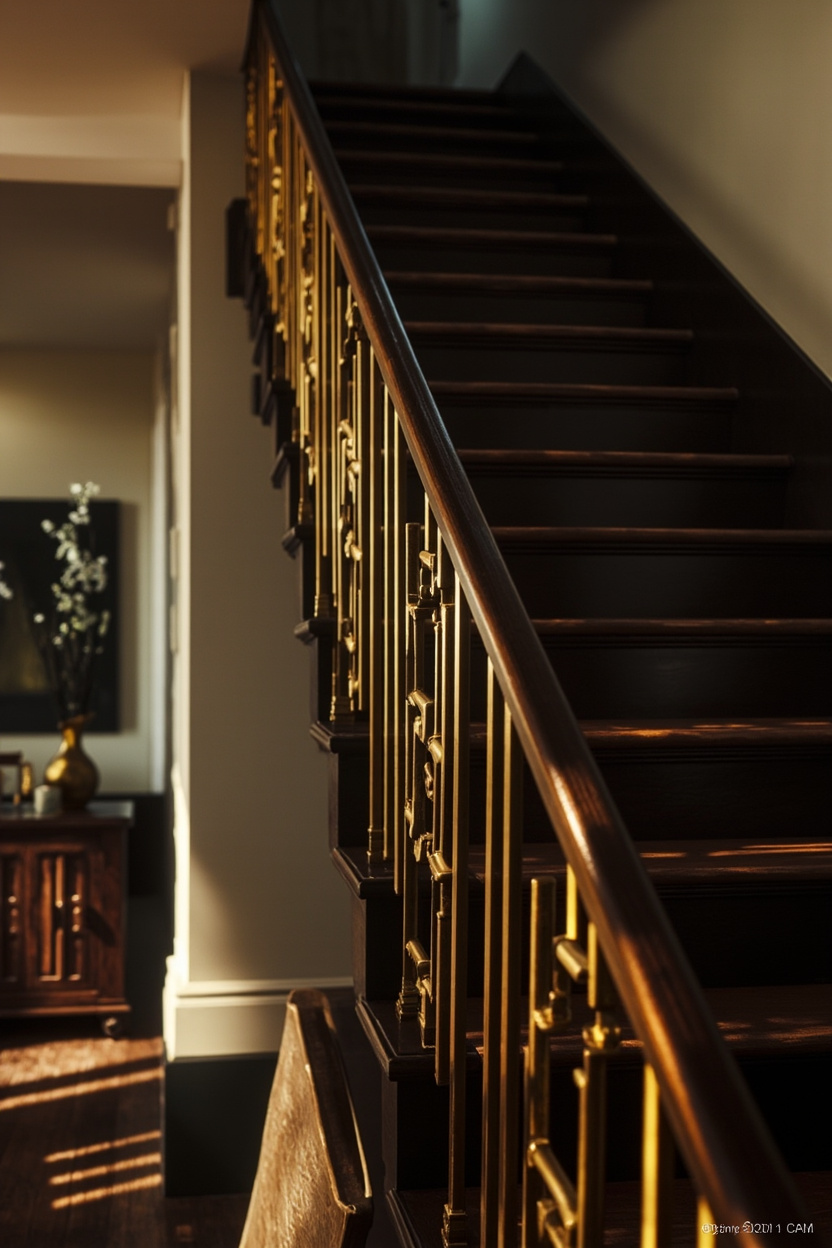
Brass insets or cap plates on a matte black or oil-rubbed steel handrail add a luxe, layered contrast without overwhelming a neutral staircase.
Small brass touches, end caps, screws, or a narrow top trim, catch light and age beautifully, creating a patina that feels intentional rather than ostentatious.
Use brass accents sparingly to highlight key junctions like newel posts or landing transitions; this keeps the look refined and lets the dark rail remain the visual anchor.
For homes leaning toward farmhouse or traditional, pair with warm wood treads to balance industrial edges with tactile warmth and reference schemes like a refined white farmhouse kitchen aesthetic.
8. Slim Vertical Metal Balusters
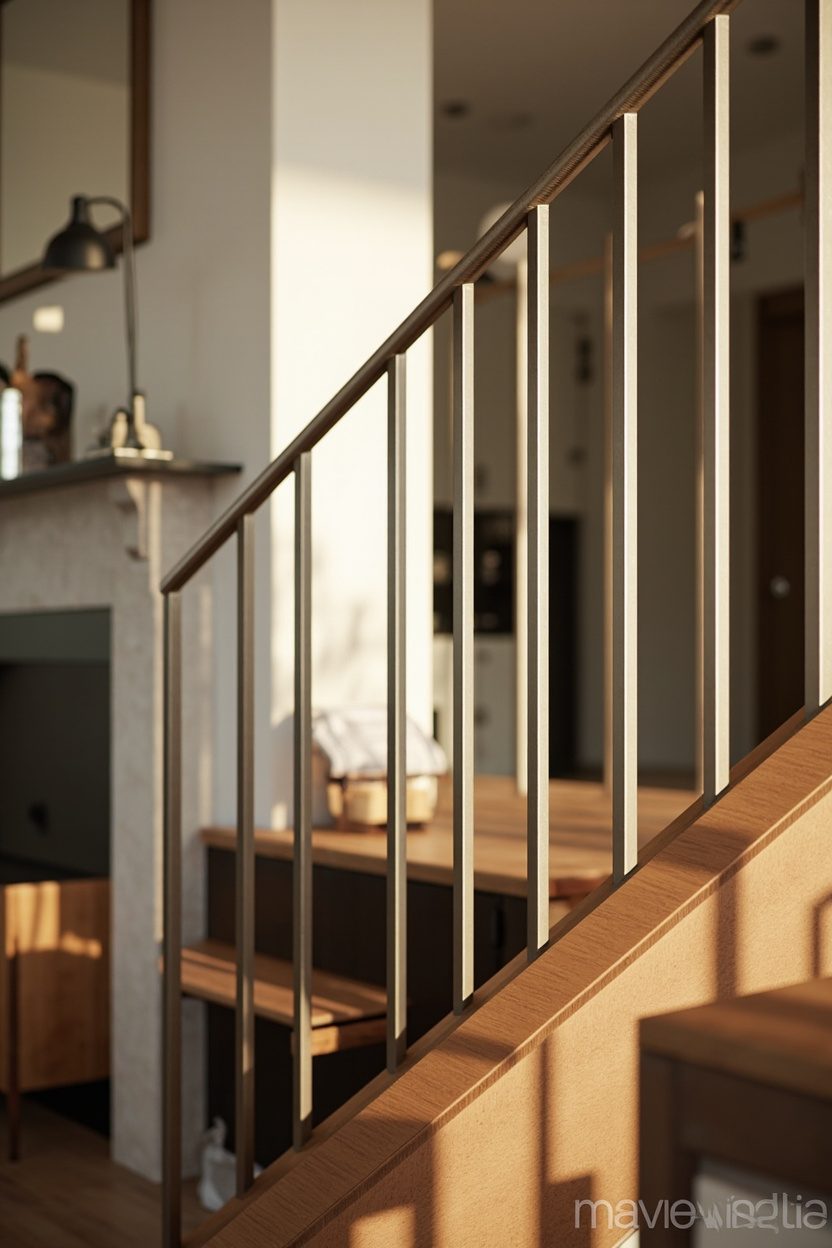
Slim vertical balusters deliver a clean, unobtrusive rhythm that visually opens a stairwell and lets light pass through freely. Spaced closer than chunky spindles, these slender rods feel modern yet timeless and work especially well in narrow staircases to reduce visual clutter.
Choose a matte finish in black, charcoal, or aged bronze to maintain subtlety; pairing with a continuous handrail enhances the linear effect and keeps sightlines uninterrupted.
For a softer approach, combine with lighter wall tones or a minimalist gallery wall treatment to emphasize negative space and proportion. See minimalist approaches like Minimalist Gallery Walls for complementary ideas.
9. Mixed-Material Staircase Collage
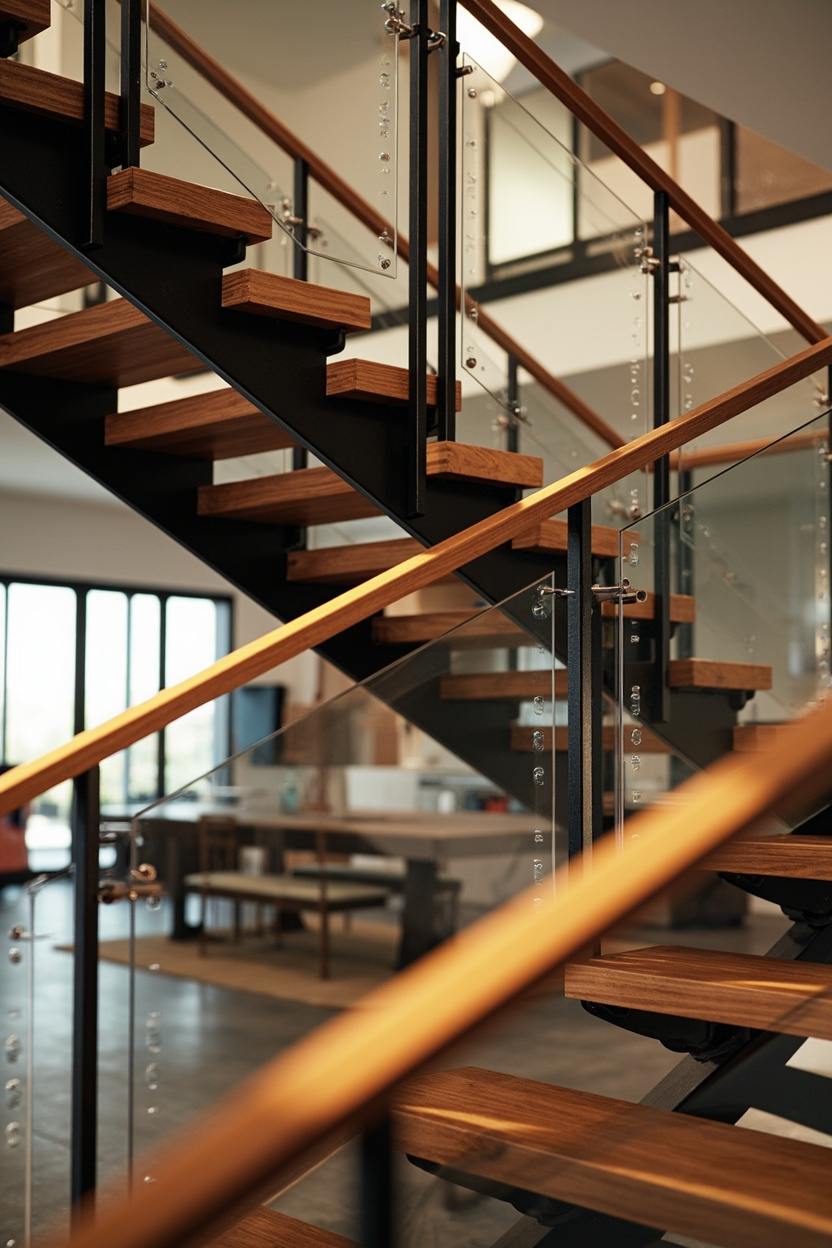
A mixed-material collage mixes wood, metal, glass, and even woven panels to create a stair railing that reads like an intentional patchwork of textures.
Use one dominant material for structure—typically wood or metal—and introduce contrasting infill pieces (brass accents, glass panes, or cable runs) in measured sections to avoid visual chaos.
This approach suits eclectic, modern farmhouse, or cottage interiors where curated variety feels natural; align colors and finishes with nearby elements like stair treads and balustrade posts to keep the composition cohesive.
For inspiration on blending cottage charm with modern touches, consider ideas from a cozy aesthetic like the Pink Cottage.
10. Curved Custom Handrail Designs
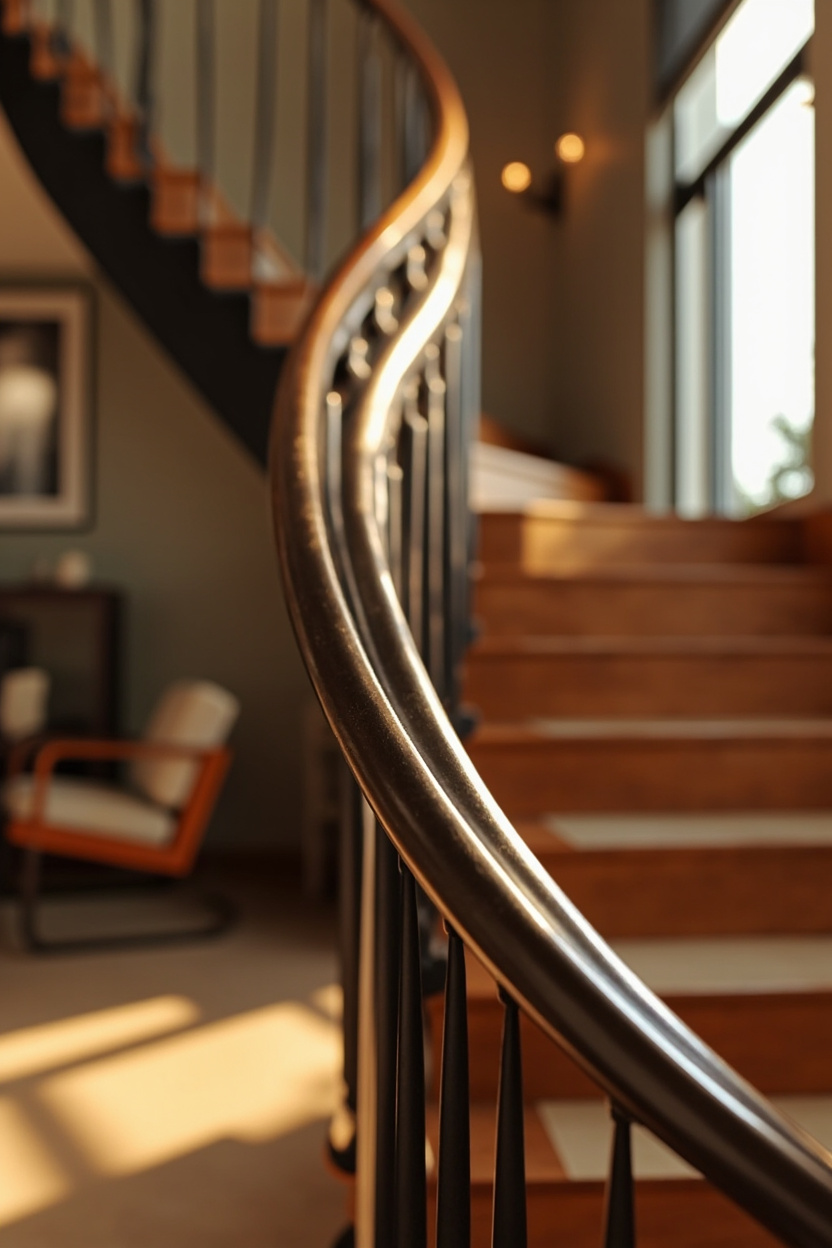
Curved handrails soften stair geometry and guide movement with a tactile, sculptural sweep—ideal for entryways and staircases with landings. Made from steam-bent wood, laminated oak, or molded metal, these rails can follow spiral, S-curve, or flowing balcony lines to make the staircase a focal point rather than just a connector.
Pair curved handrails with simple balustrades or glass panels to highlight their form without visual clutter. For period homes, a warm wood curve complements traditional details; in contemporary spaces, a painted or polished metal curve reads modern and minimal.
11. Laser-Cut Decorative Panels
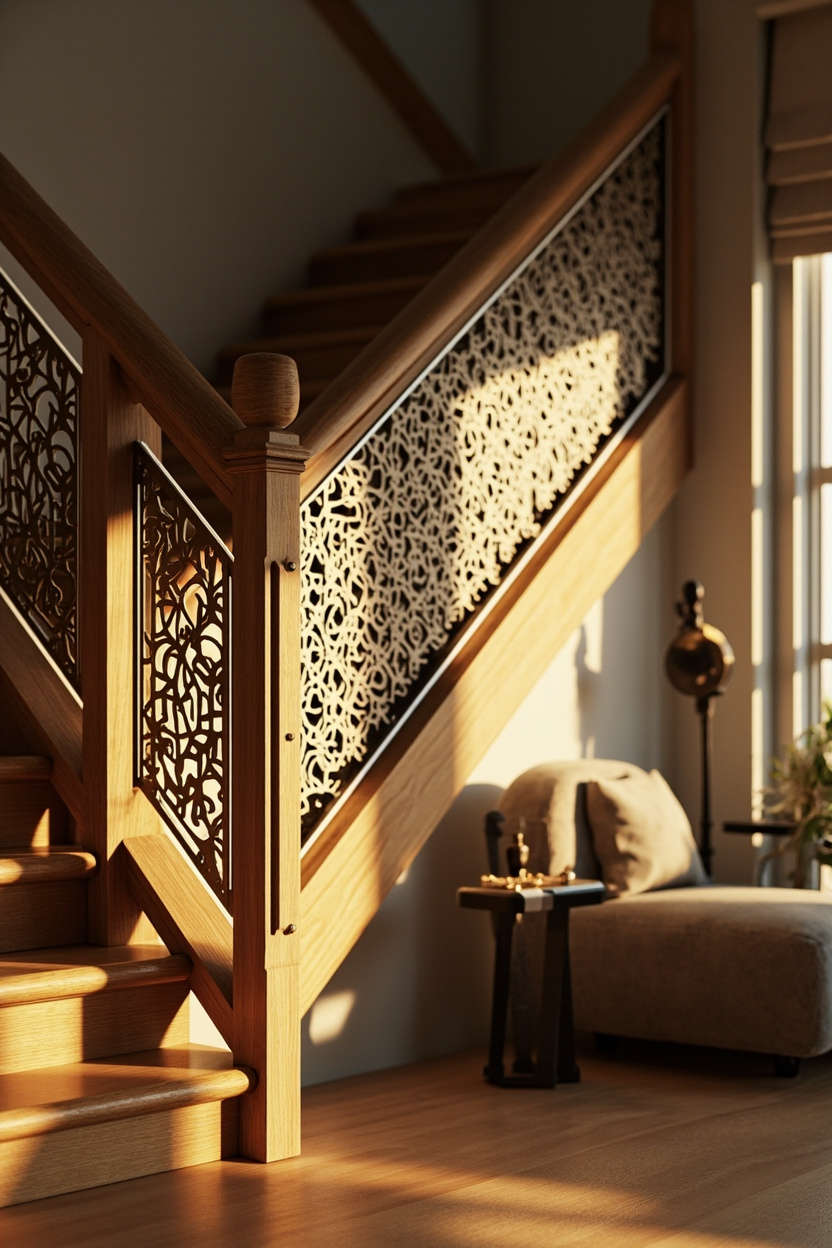
Laser-cut panels let you introduce intricate patterns—florals, geometric motifs, or bespoke logos—without bulky ornamentation.
These panels are typically made from powder-coated steel, brass, or aluminum and can be backlit or left matte to create contrast against stair treads and walls.
Because panels are available in modular sizes, they’re a practical choice for both new builds and retrofits: they slot into frames or replace traditional spindles for immediate visual impact.
For a cohesive look, mirror a panel’s motif elsewhere in the home, such as a gallery wall or kitchen backsplash, inspired by Minimalist Gallery Walls ideas.
12. Open-Riser Wood And Metal Blend
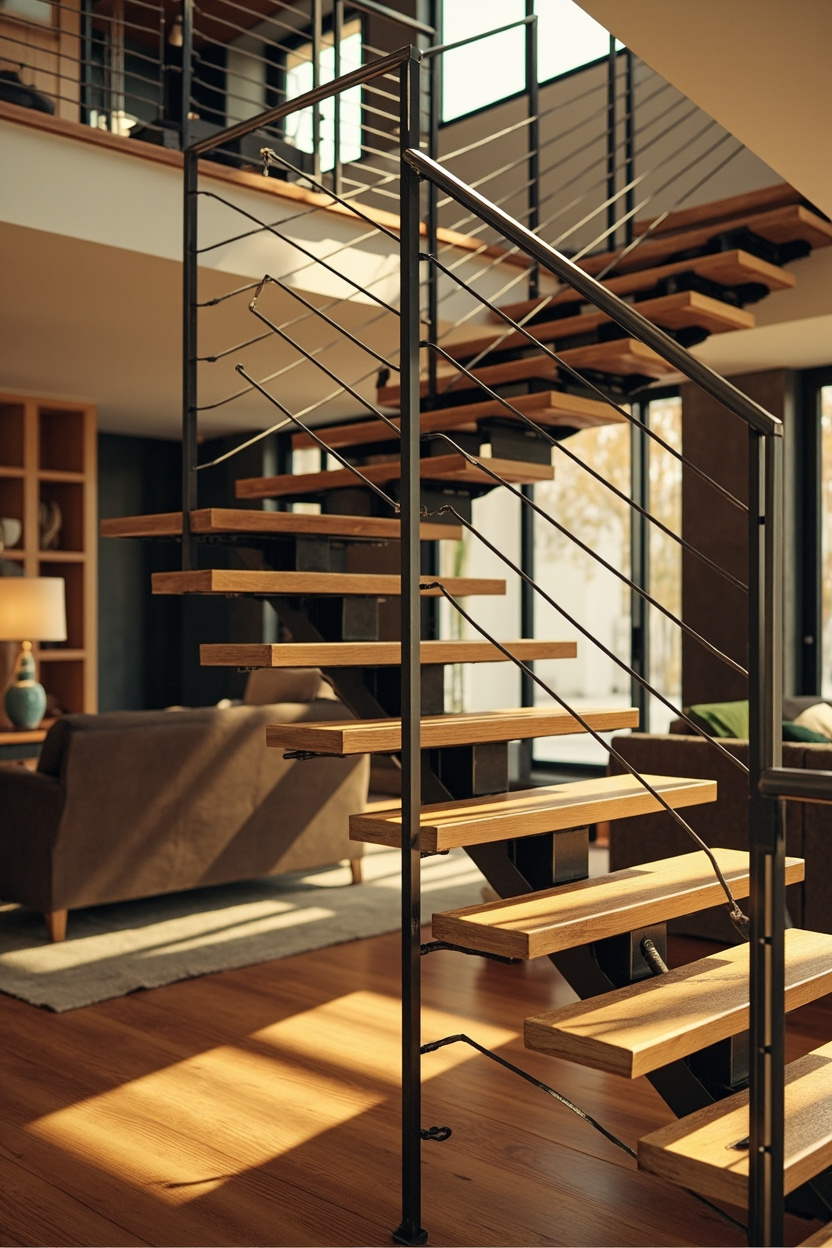
Open risers paired with wood treads and slim metal stringers create a light, floating staircase that reads contemporary while retaining warmth. The wood adds tactile comfort and noise dampening, while the metal provides structural thinness and a crisp graphic silhouette.
This hybrid works equally well in cosy minimalist interiors and rustic-modern schemes: choose warm oak treads with matte-black steel for contrast, or blond ash with brass accents for a softer look.
For kitchen-adjacent stairs or open-plan homes, match the wood tone to cabinetry or flooring. White Farmhouse Kitchen and Cosy Minimalist Home Touches offer ideas for complementary palettes.
13. LED-Integrated Handrail Lighting
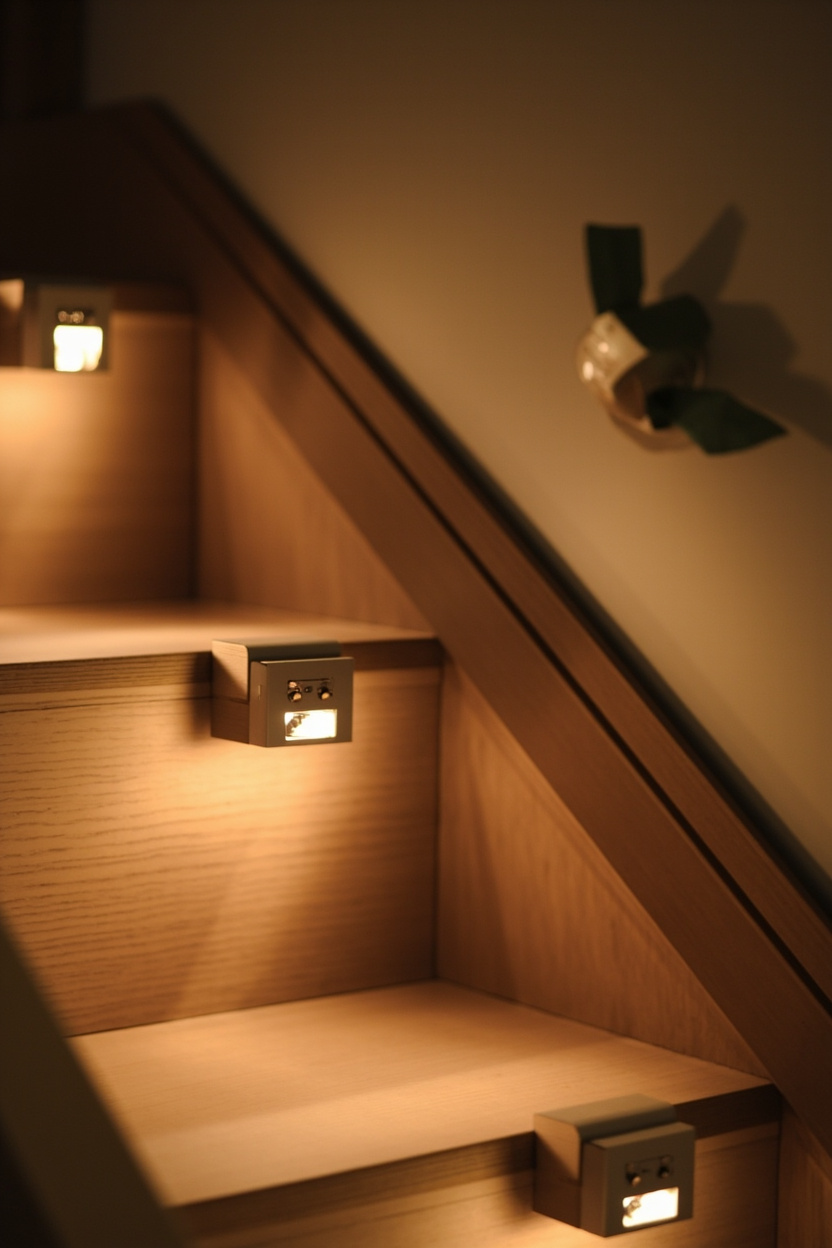
LED strips recessed into the underside of a handrail add subtle, even illumination that improves safety without overwhelming the stair’s aesthetic.
Choose warm white LEDs for a cozy look or tunable white to shift from a functional task light to a soft ambient glow in the evening.
Installations can be low-profile and hidden within metal, wood, or composite rails; power can run inside the balustrade or through nearby posts for a clean finish. Integrated lighting pairs well with minimalist materials, think slim iron or cable railings, to maintain a streamlined silhouette while increasing usability and visual interest.
14. Midcentury Slatted Wood Screens
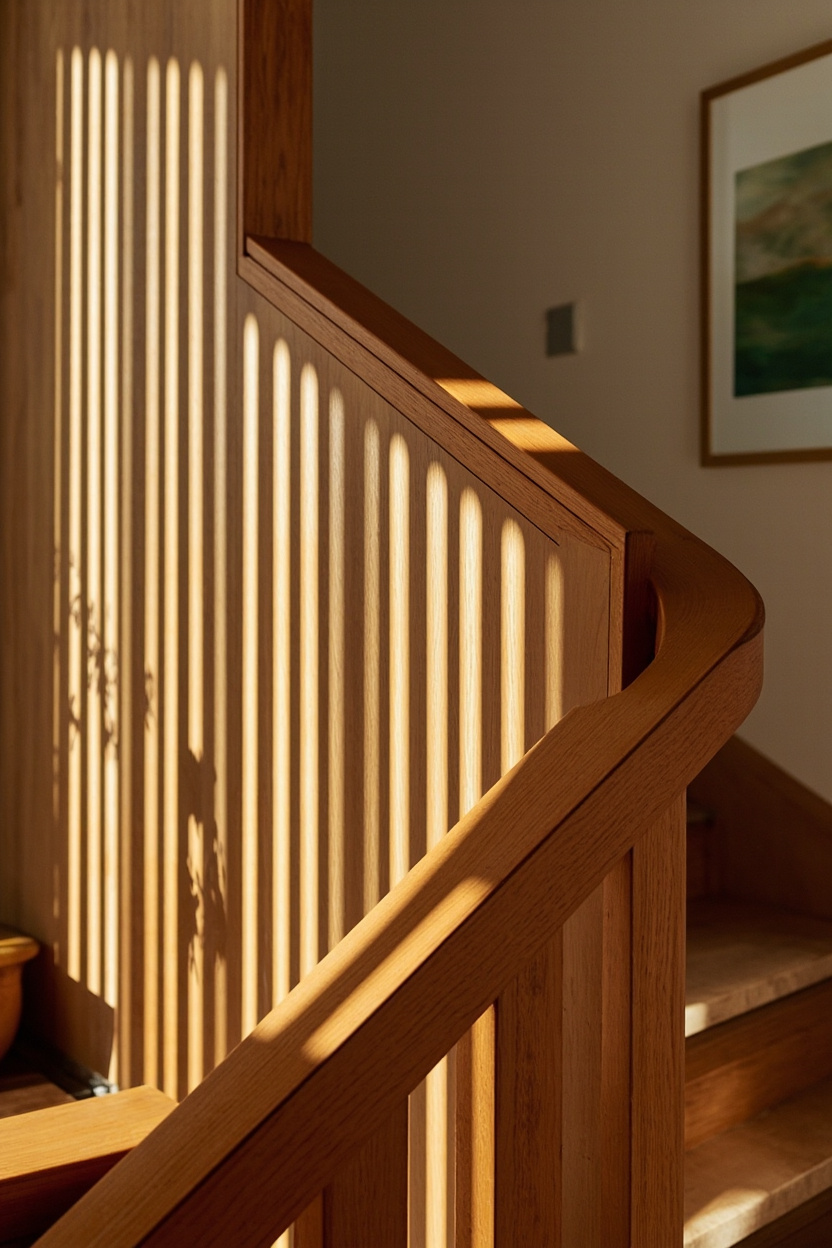
Slatted wood screens echo midcentury modern lines and provide a tactile, warm alternative to metal balustrades. Vertical or horizontal slats spaced evenly create rhythm and partial screening—excellent for open-plan homes that need separation without closing off light.
Use walnut or teak for authentic midcentury warmth, or choose painted poplar for a more contemporary twist; the screen can extend to a half wall or run full height from floor to ceiling.
These screens work well alongside teak furnishings and pair naturally with a white palette, similar to ideas in White Farmhouse Kitchen and Cosy Minimalist Home Touches for balanced opposites.
15. Industrial Pipe And Flange Rails
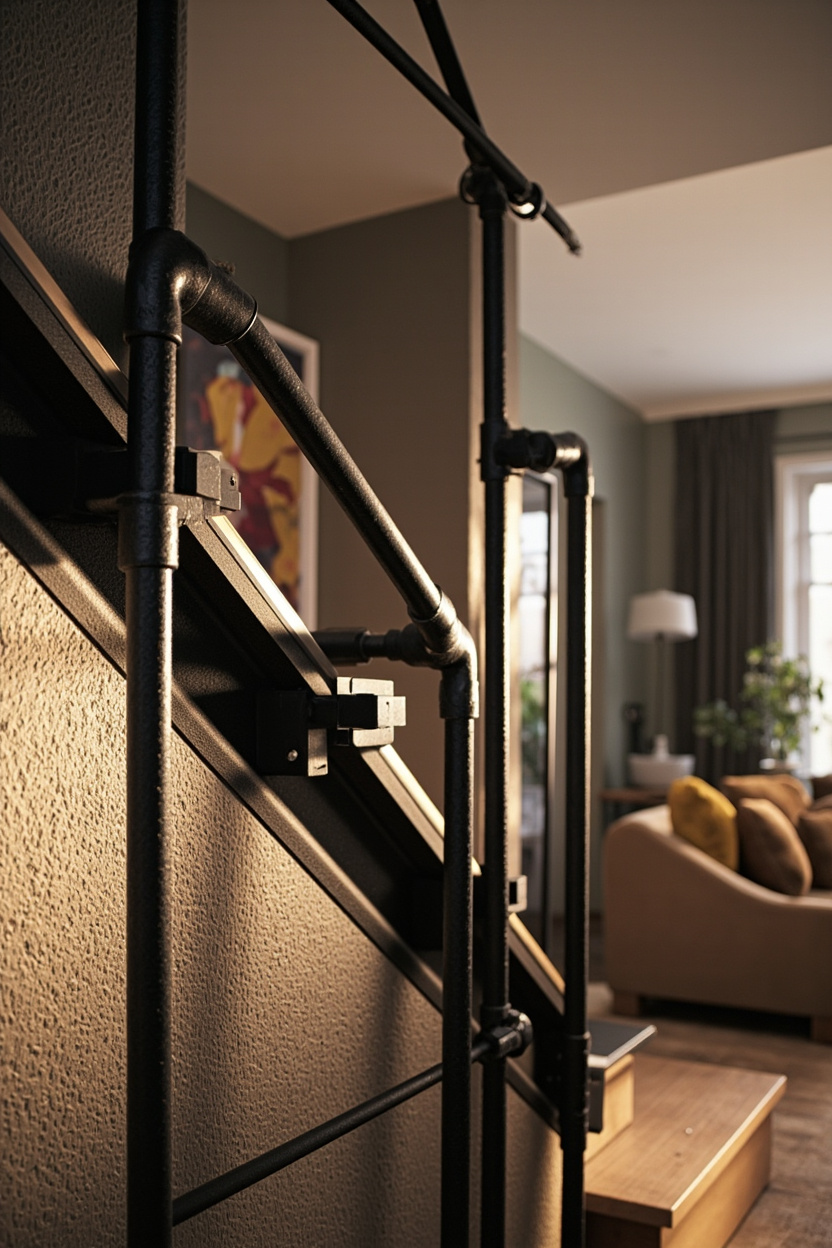
Exposed black or galvanized pipes teamed with flanges and elbow fittings deliver a rugged, utilitarian look that suits lofts and renovated warehouses.
The hardware can be assembled in modular sections, making it a practical DIY route that still reads high-design when paired with reclaimed wood treads.
Finish options range from matte black for a modern industrial feel to aged brass for a warmer tone; add glass or cable infill to soften the heavy look while retaining the pipe system’s structural honesty.
This approach complements farmhouse or cottage schemes when mixed with wooden elements and decorative accents for a curated, lived-in contrast.
16. Frosted Glass Privacy Rails
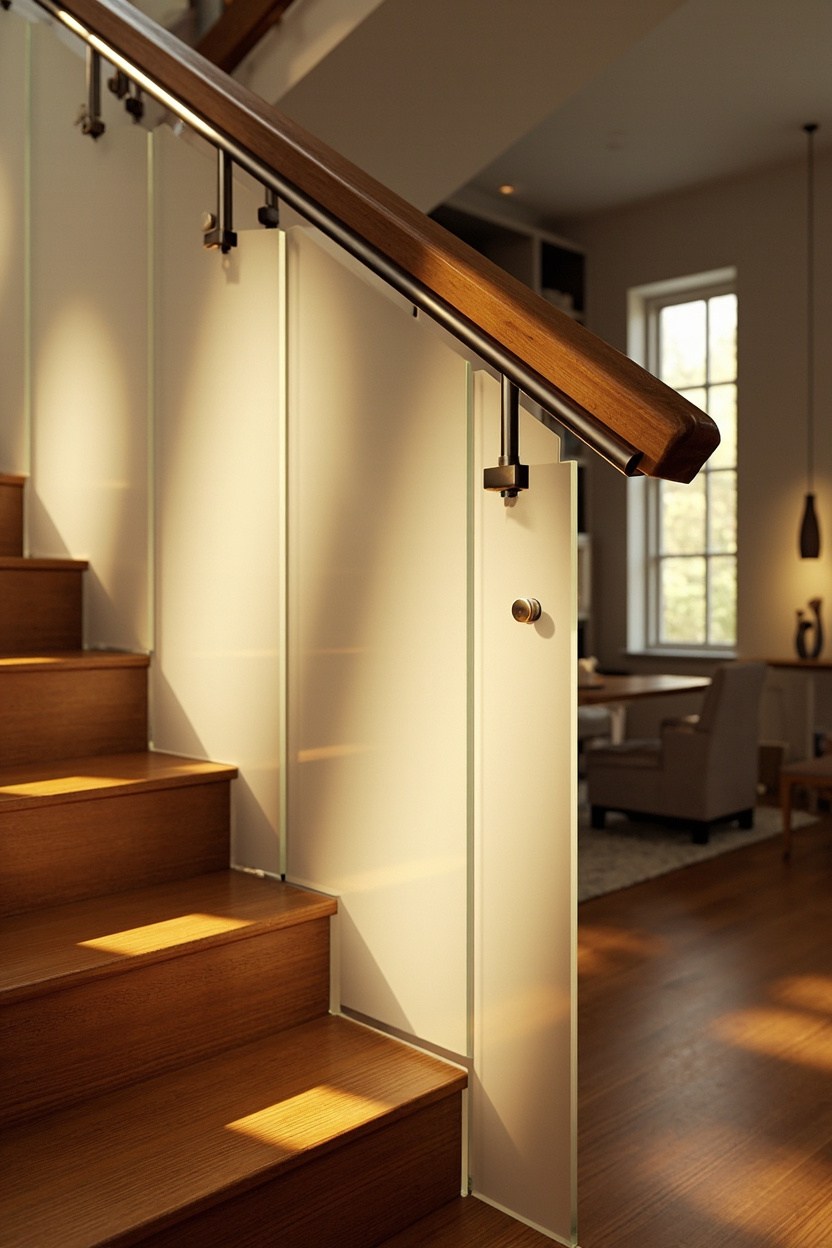
Frosted glass panels offer a soft, translucent barrier that preserves light while providing visual privacy between floors. They work particularly well in entryways or overlooking family rooms where you want openness without full exposure.
Installation-wise, glass rails pair smoothly with slim metal or wood frames for a refined edge; choose thicker tempered glass and discrete hardware to meet safety codes without compromising aesthetics. For a warmer read, combine frosted panels with wooden handrails to bridge modern privacy and traditional texture.
17. Slim Stainless Steel Cables
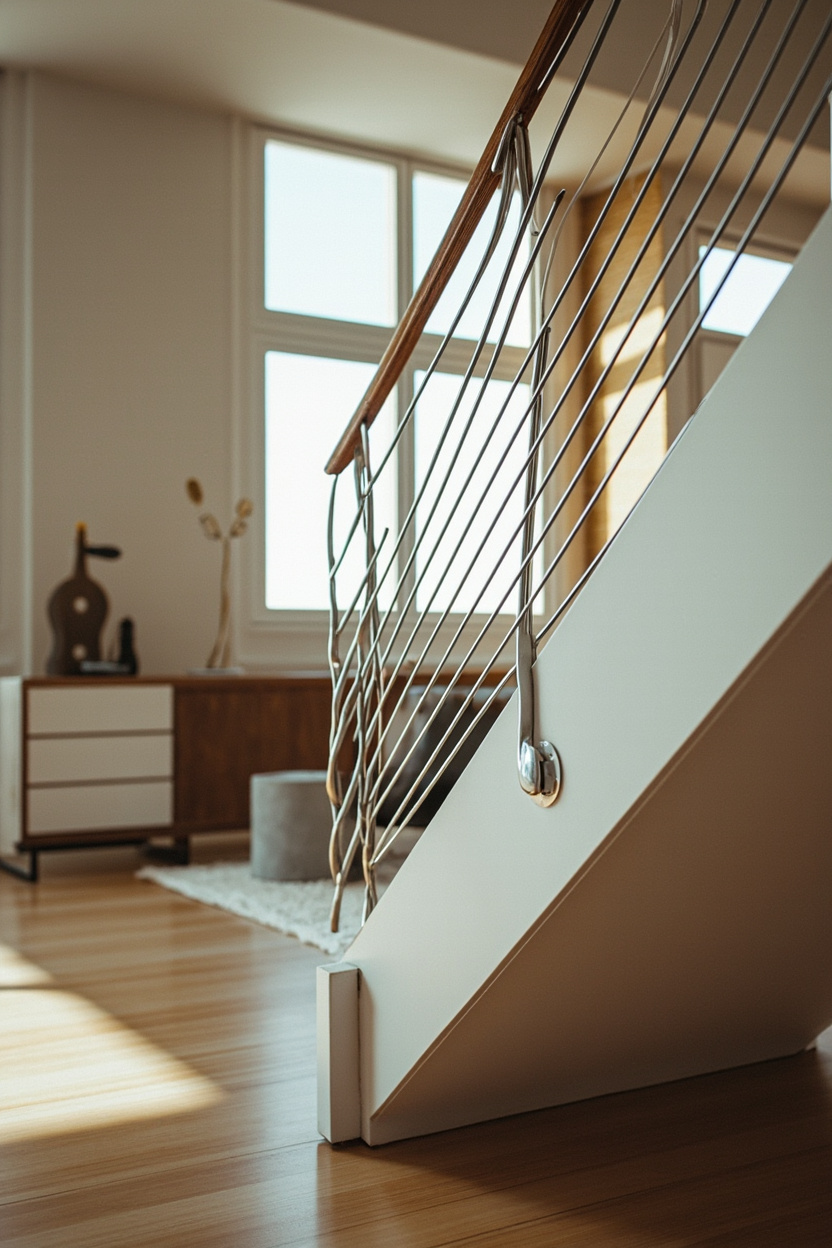
Cable railings use thin stainless steel wires stretched horizontally or vertically to create a minimal, almost invisible guard that keeps sightlines open. They’re ideal for modern, coastal, or industrial homes where maintaining a view and light flow is a priority.
Because cables require tensioning and proper end fittings, invest in high-quality marine-grade steel and professional installation to avoid slack over time. Cable systems pair well with posts of wood or powder-coated metal for contrast and durability.
18. Patterned Metal Baluster Inserts
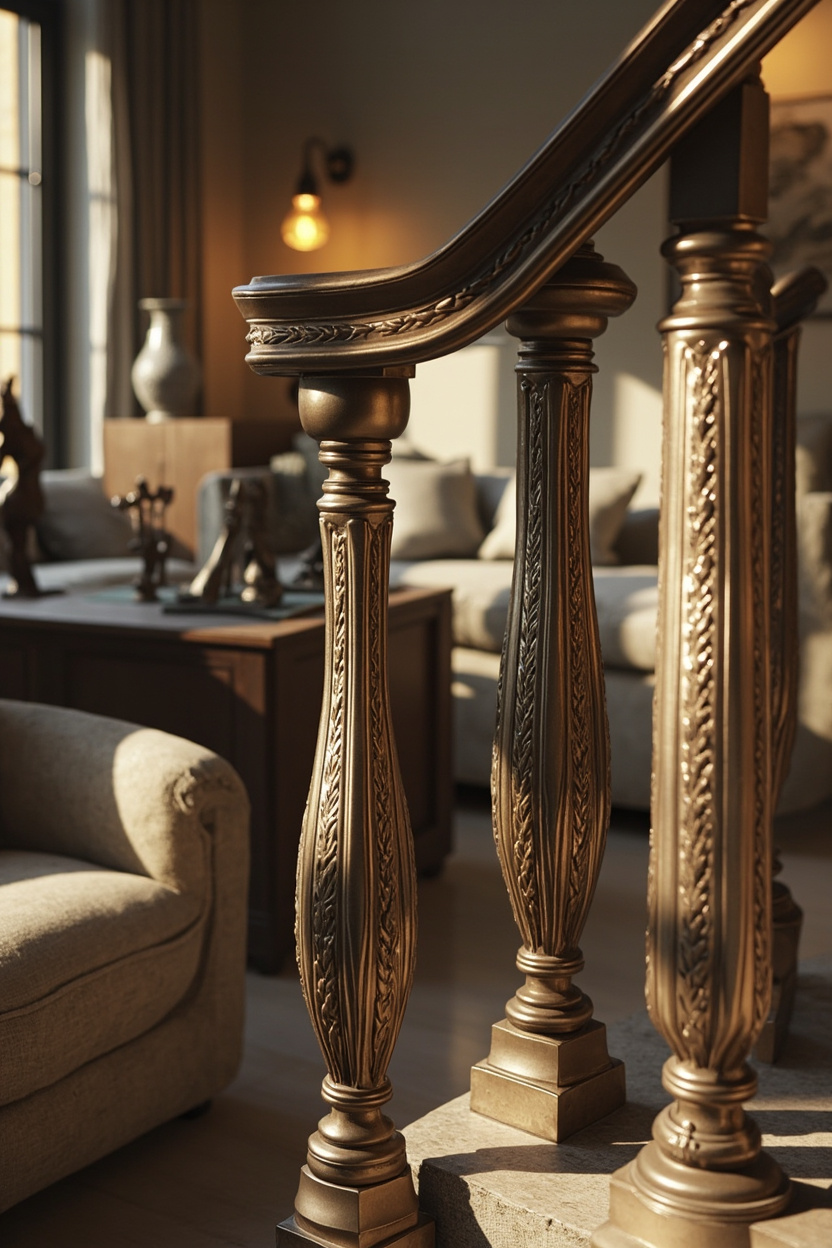
Patterned metal inserts let you introduce decorative motifs, geometric, floral, or custom silhouettes, without replacing an entire railing system. These infill panels slot between newel posts to create rhythm and a bespoke focal point along a staircase.
Wrought iron or laser-cut steel inserts can be finished in matte black, brass, or painted colors to match your scheme; they’re especially effective in transitional homes and can echo elements from a nearby fireplace or lighting. For inspiration on blending rustic and refined details, see farmhouse options that use decorative accents subtly.
FAQ
Prioritize local building codes and household needs—glass and cable preserve sightlines, while patterned metal adds visual interest. Combine materials (glass with wood handrails, or metal inserts with sturdy posts) to balance safety and style.
Horizontal cables can be climbable for young children; consider vertical cable runs, closer spacing, or switch to glass or solid panels if climbing is a concern. Always meet the maximum gap rules in your local code.
Choose stainless steel grade 316 for high-moisture areas, powder-coated steel for colored protection, or galvanized and sealed iron for longevity. Routine cleaning and protective finishes extend life regardless of metal type.
Yes—many inserts are designed to retrofit into standard post-to-post spans, but check dimensions and fastening methods first. For cohesive results, match the finish and scale to the original newel posts and handrail.
Final Thoughts
Select a railing that answers how you use your stairs: prioritize transparency for views and light, decorative inserts for personality, or solid panels for privacy and safety.
Thoughtful material choices and proper installation ensure the railing enhances both the look and function of your home.