


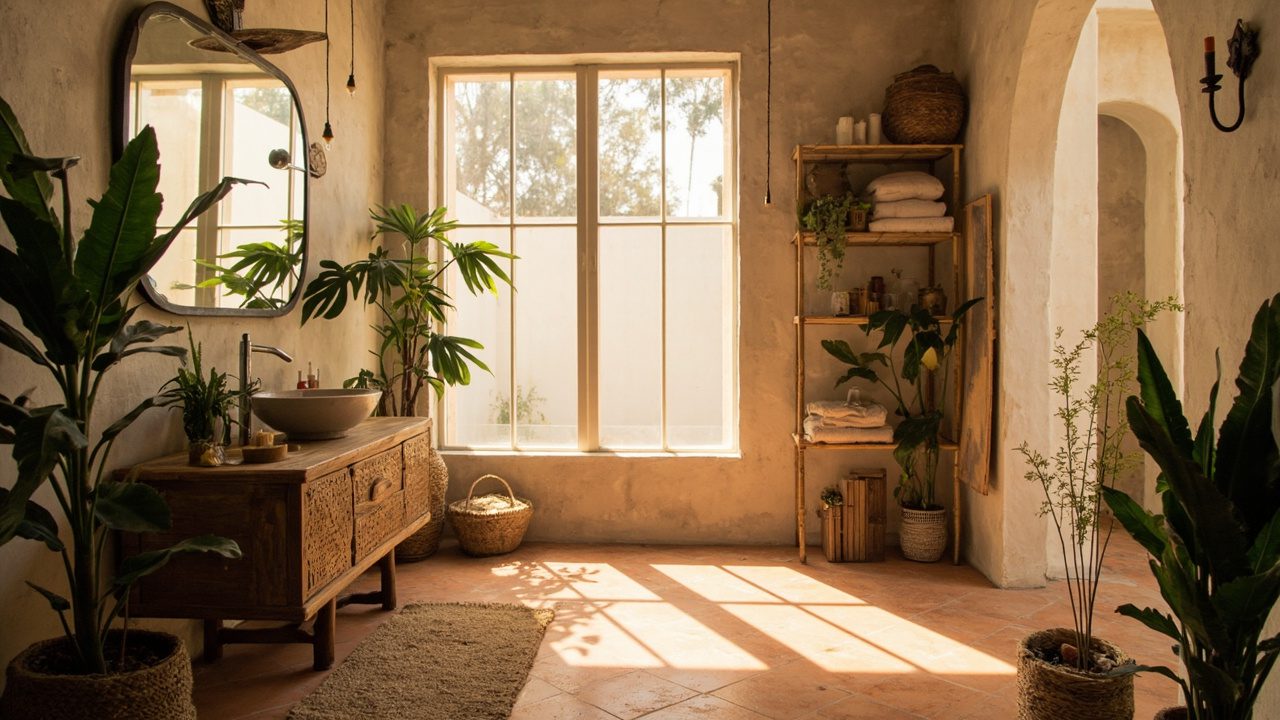
Soft, layered texture and a well-chosen material palette turn a sterile powder room into a calm, collected retreat. Think sun-bleached fibers, warm woods, and handcrafted accents that patina with use rather than hide it. This edit focuses on anchoring the scheme in tactile pieces—rattan mirrors, macramé holders, and natural stone—so the room feels curated, not staged.
Boho in bathrooms is less about matchy-matching and more about intentional contrast: pair a large woven mirror with matte black hardware; balance a busy patterned tile floor with a simple, raw-wood vanity. Below are 15 concrete treatments with specific materials, scale advice, and common pitfalls to avoid so you walk into a bathroom that looks effortless and functions without fuss.
- 1. Natural Rattan Accents
- 2. Macramé Wall Hangings
- 3. Terrazzo Vanity Tops
- 4. Woven Seagrass Rugs
- 5. Jute Basket Storage
- 6. Arched Mirrors
- 7. Warm Clay Tiles
- 8. Dried Flower Bouquets
- 9. Vintage Brass Fixtures
- 10. Patterned Cement Tiles
- 11. Layered Textiles
- 12. Boho Gallery Walls
- 13. Earthy Paint Palettes
- 14. Curved Freestanding Tubs
- 15. Tropical Indoor Plants
- FAQ
- Final Thoughts
1. Natural Rattan Accents
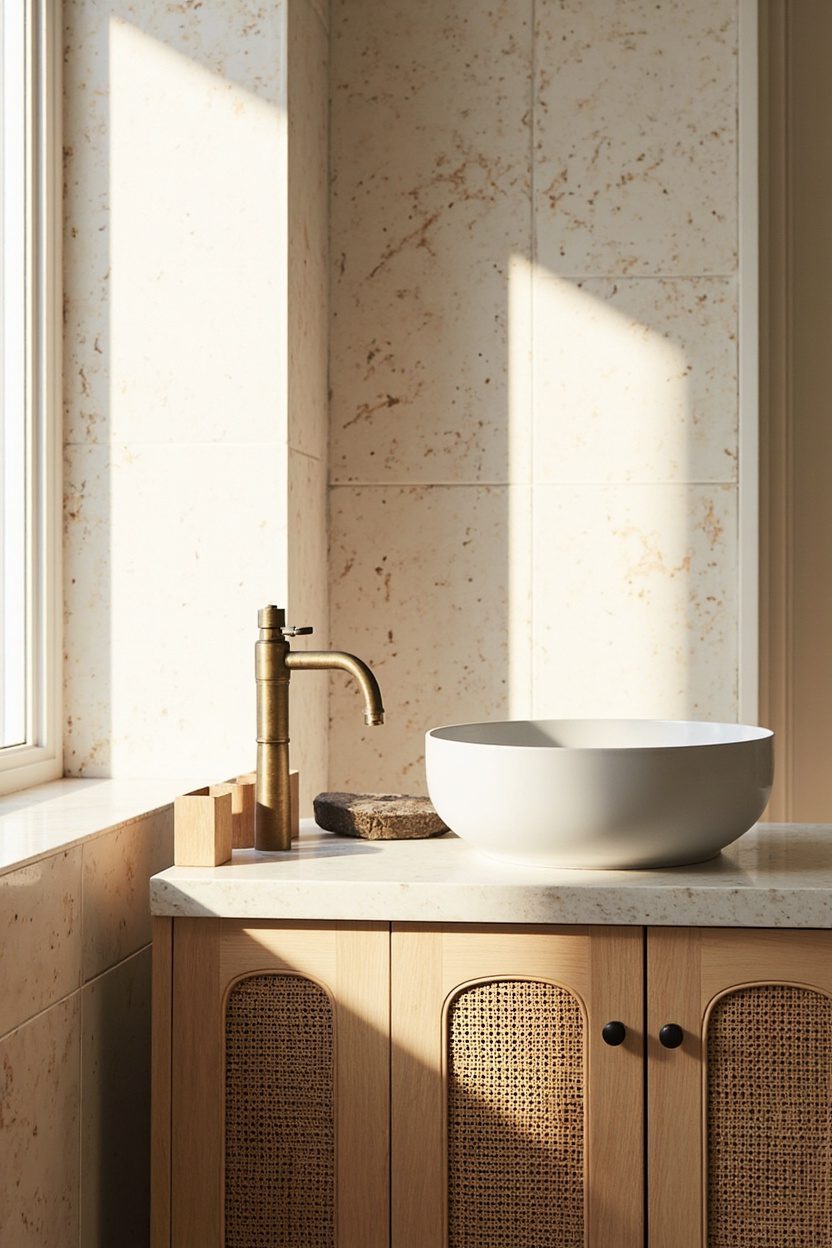
Rattan is the fastest way to soften a cold tile-and-porcelain palette. Choose wide-weave, steam-bent rattan for mirrors and shelving—it reads more durable and less like novelty. For a 5-6 ft vanity, opt for a 30–36 inch round rattan-framed mirror to keep proportions balanced and avoid overwhelming the sink area.
Use sealed rattan in humid bathrooms or place the pieces where they won’t sit in direct spray. If budget is tight, mix a large rattan mirror (mid-tier $150–$400) with inexpensive polypropylene baskets that mimic the look but stand up to moisture better.
Styling Blueprint
- Pick a mirror diameter that’s 2/3 the vanity width for visual balance.
- Seal rattan with matte water-based varnish in high-humidity zones.
- Mix natural rattan with one metal finish (brass or matte black) for contrast.
- Avoid thin, fragile rattan weaves near showers to prevent sagging.
2. Macramé Wall Hangings
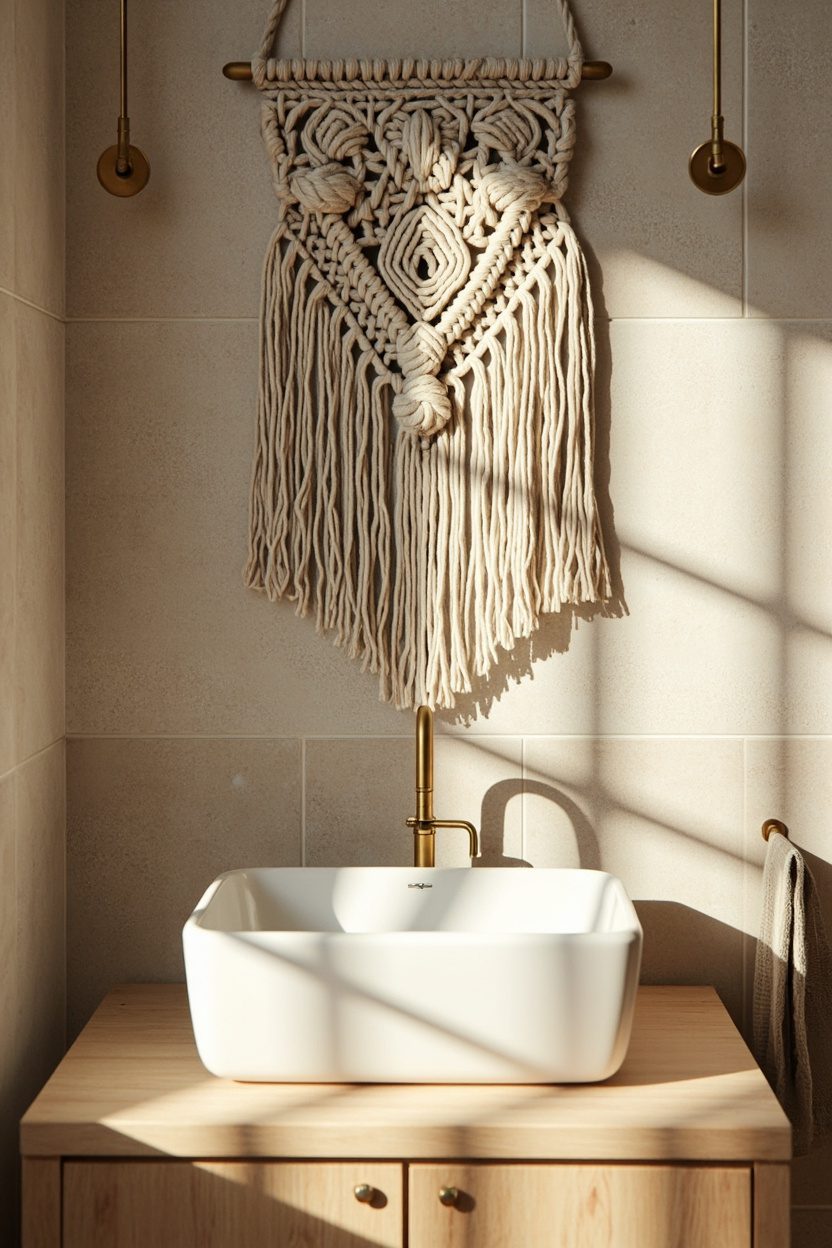
Macramé introduces handcrafted texture and a soft, boho edge without taking up floor space. Go for cotton cords in natural off-white or warm sand; avoid synthetic fibers that can look shiny and cheap. For a standard 8-foot ceiling, a wall hanging 36–48 inches long provides presence without crowding the room.
Mount macramé away from direct water spray and consider lining the back with a small clear acrylic plate if you must place it near damp areas. For an elevated look, combine a small macramé piece above a towel rail with a larger woven on an adjacent wall to create layered scale.
What to Focus On
- Choose 100% cotton cords for authentic texture and softer drape.
- Keep hangings at eye level—about 60 inches from the floor to the center.
- Protect fibers from steam by positioning above towel bars, not showers.
- Consider a washable backing or removable hanger for easy cleaning.
3. Terrazzo Vanity Tops
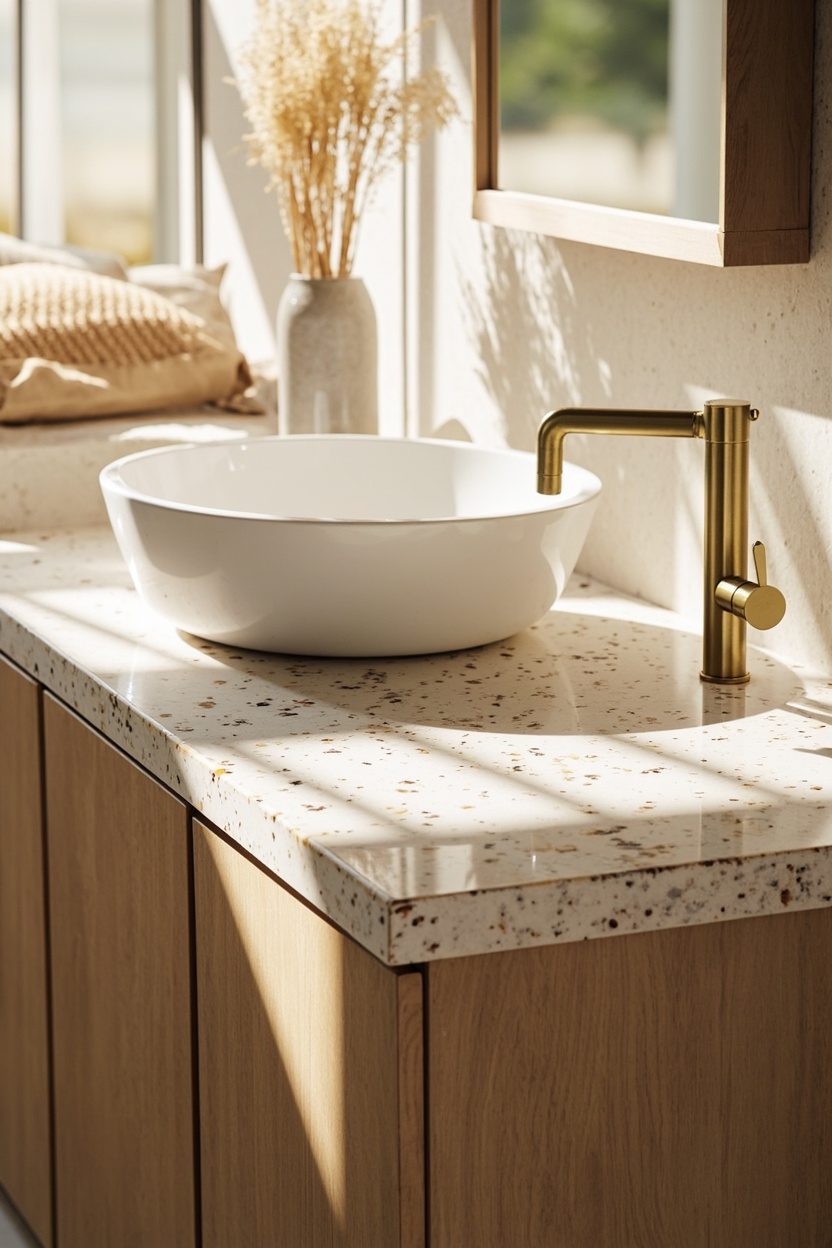
Terrazzo gives instant character—flecks of marble, glass, or quartz read artisanal and conceal water spots better than uniform stone. For a mid-range budget, choose engineered terrazzo with 10–20% recycled aggregate in a honed finish to minimize glare and maintain a matte, tactile feel. On a double vanity, use a continuous slab to emphasize horizontal lines and reduce grout joints.
Specify a sealed, non-porous resin binder in bathrooms to prevent staining; cement-based terrazzo needs a stronger sealer and more maintenance. Pair light terrazzo tops with warm wood cabinetry (oak or walnut veneers) to keep the boho warmth intact rather than creating a cold, clinical result.
Essential Elements
- Opt for honed resin terrazzo for low maintenance and a matte aesthetic.
- Use a continuous slab across double vanities to avoid visible seams.
- Select aggregate colors that complement the room’s palette (warm vs cool).
- Seal annually if using cement-based terrazzo; resin-based needs less upkeep.
4. Woven Seagrass Rugs
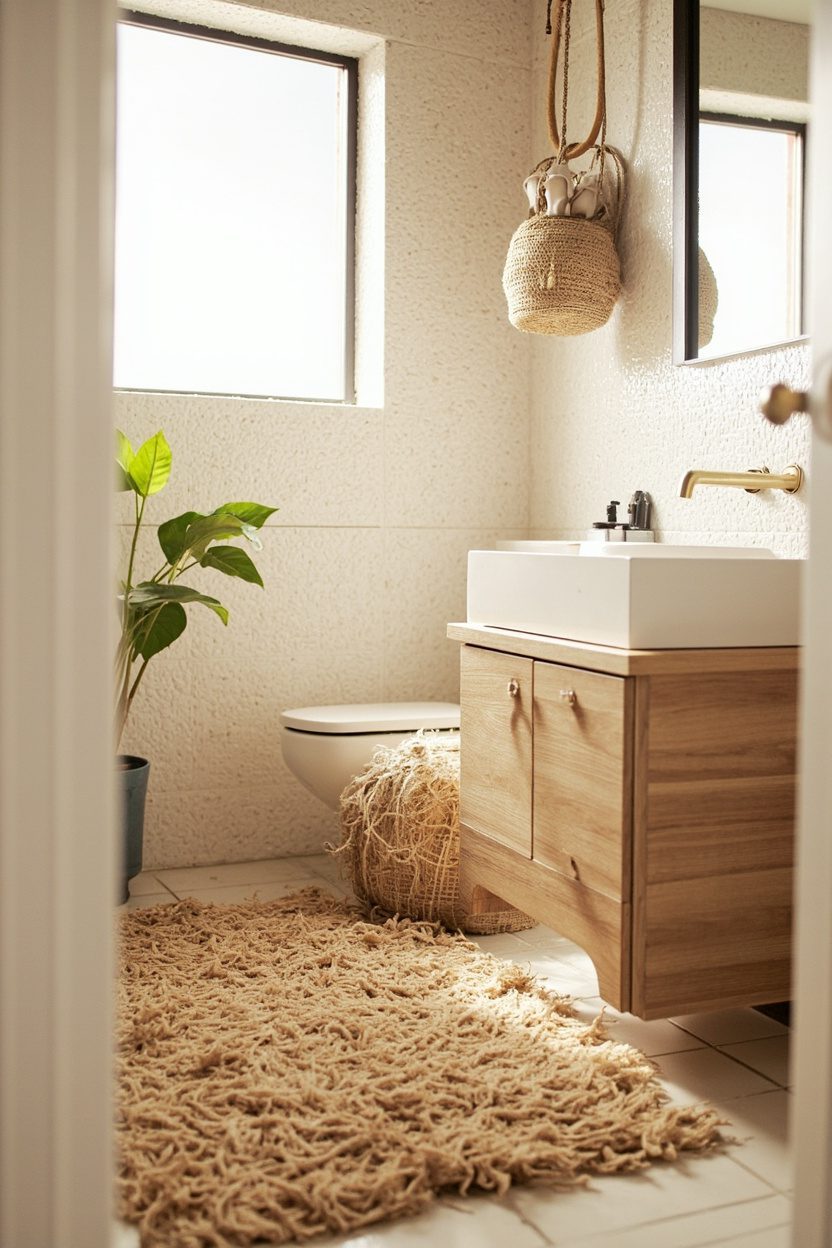
Woven seagrass rugs anchor a boho bathroom with honest texture and a driftwood palette that reads casual but curated. Choose a 100% natural seagrass mat with a tight, flatweave for high-traffic zones—avoid loose loops near tubs where fibers trap moisture and mold; aim for a 2–3 mm flat profile so the rug lies flush against tile and won’t obstruct cabinet doors or shower thresholds.
Seagrass pairs beautifully with warm plaster walls or matte white tile; pick a rug with a subtle braided border in tobacco or charcoal to add definition without stealing the spotlight. For rentals or budget-conscious installs (under $150), choose a reversible rug to get two looks out of one piece and rotate it monthly to extend lifespan.
Practical Placement.
- Place a 24″–30″ wide runner parallel to double sinks for continuous warmth underfoot.
- Position a small 18″ x 24″ mat in front of showers to catch drips while allowing airflow underneath.
- Choose low-profile seagrass near heated floors to avoid heat damage; test a corner first.
- Spot-treat with a mild soap and air-dry—never machine-wash full seagrass rugs to prevent warping.
5. Jute Basket Storage
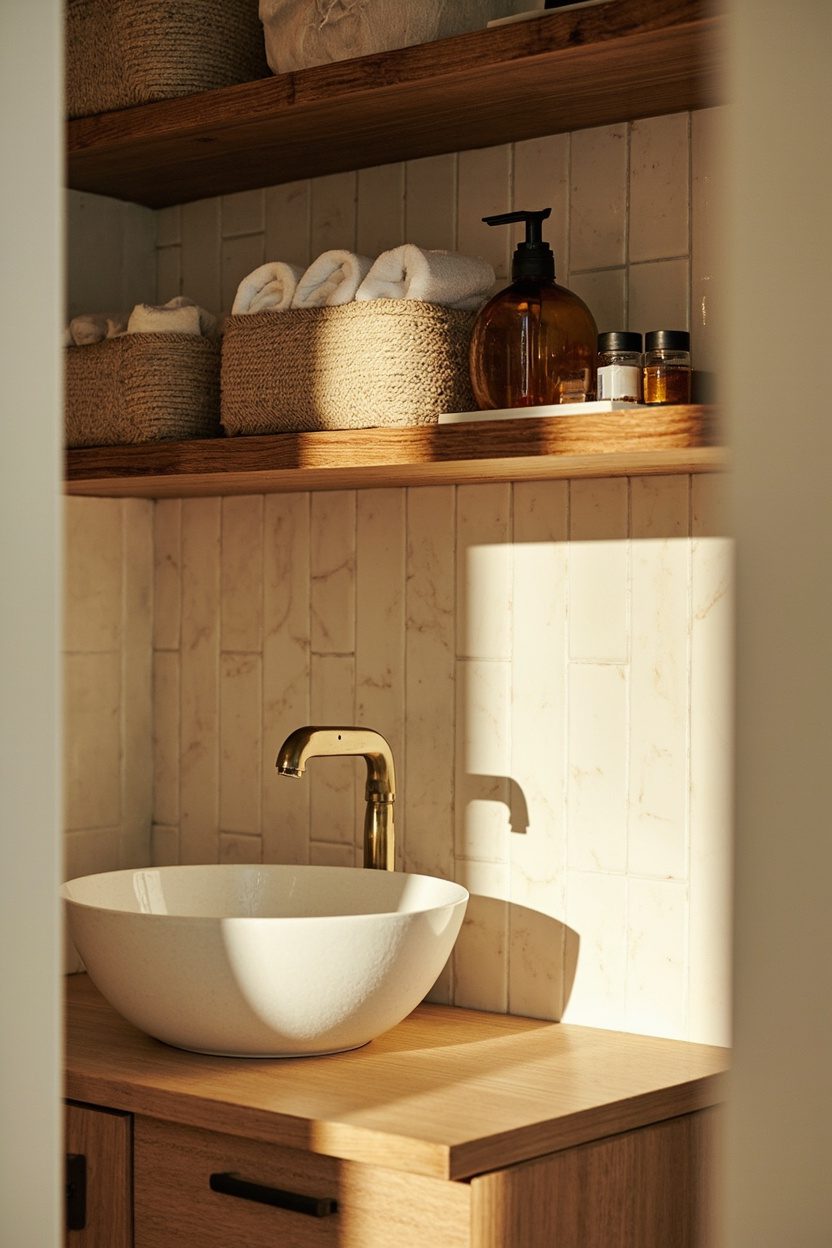
Jute baskets bring the effortless, layered look boho demands while solving practical clutter problems—think rolled towels, toilet-paper reserves, and kids’ bath toys. Opt for water-resistant liners (waxed canvas or removable cotton) when placing baskets near sinks or tubs; raw jute will mildew if it stays damp, so avoid direct floor contact with wet surfaces.
For scale, stack a large 16″ x 14″ open basket beside the vanity for towels and a smaller 10″ x 8″ lidded basket on shelves for toiletries. Budget tip: buy unlined baskets and add removable fabric bins inside—same look, easier to launder, and cheaper to replace if stained.
Styling Blueprint.
- Mix three sizes grouped together—large floor basket, medium shelf basket, small lidded box—for visual hierarchy.
- Keep liners in light colors (cream, oat) to maintain that airy boho palette and make contents visible.
- Use a treated bottom board or rubber feet to prevent moisture transfer to jute fibers.
- Label lids subtly with stitched tags for family bathrooms to keep daily clutter organized.
6. Arched Mirrors
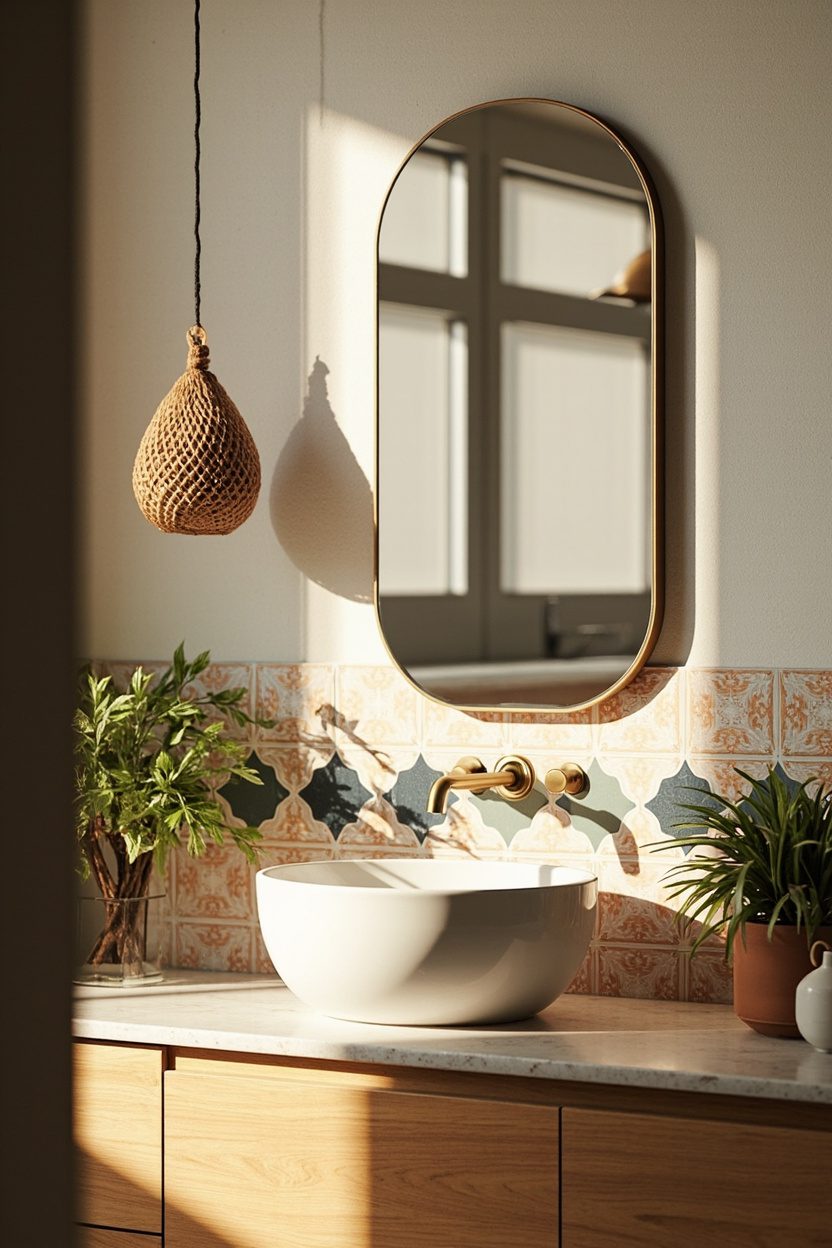
Arched mirrors are the single most transformative boho element for bathrooms—softening lines and adding that architectural hint of vintage vernacular without heavy renovation. Choose a 30″–36″ high arch for single-vanity setups; for double vanities, use twin 24″ arches spaced to mirror sink placement rather than one oversized mirror, which can flatten the layered look.
Frame materials change the mood: raw rattan or distressed oak reads relaxed and earthy, while thin black metal makes the arch modern-boho and works with industrial plumbing finishes. Avoid oversized beveled glass in high-humidity rooms unless you’ve got excellent ventilation, as the bevels can delaminate over time.
What to Focus On.
- Match mirror width to vanity width: leave 3–4″ clearance on each side for balanced scale.
- Mount at eye level—center of mirror roughly 60″ from floor for average households.
- Choose switchback clips or cleat hangers for secure mounting behind tile or plaster walls.
- Pair with warm LED backlighting for flattering skin tones and to enhance the boho glow.
7. Warm Clay Tiles
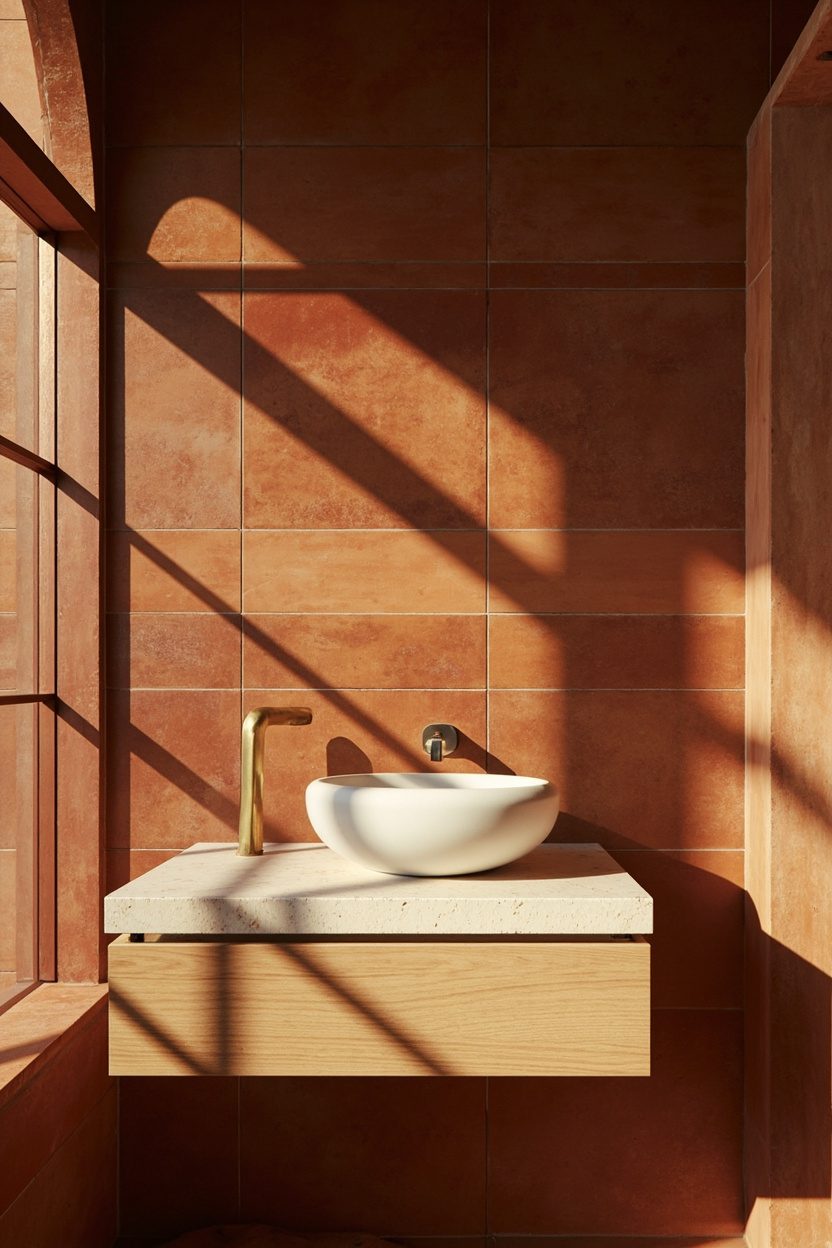
Warm clay tiles bring the earthy, sun-baked base that boho bathrooms need; choose unglazed terracotta or matte porcelain in a deep sienna to avoid that mass-produced orange tone. Use 6″x6″ or 8″x8″ tiles on a shower niche or backsplash rather than covering entire floors—this gives impact without overwhelming maintenance or budget (mid-tier budget: $8–$18/sq ft installed for porcelain; terracotta can be pricier and requires sealing).
Contrast with a pale lime-washed wall or soft ivory grout to keep the palette from feeling heavy, and avoid glossy finishes that read too polished for the boho ethos.
Styling Blueprint
- Scale: use smaller field tiles (6–8″) for pattern control and less slip risk on wet surfaces..
- Finish: choose matte or honed for authentic texture and less glare..
- Installation: layout tiles in a stacked or offset grid rather than herringbone to keep the look relaxed..
- Care: seal terracotta annually and pick a neutral grout color to hide water marks..
8. Dried Flower Bouquets
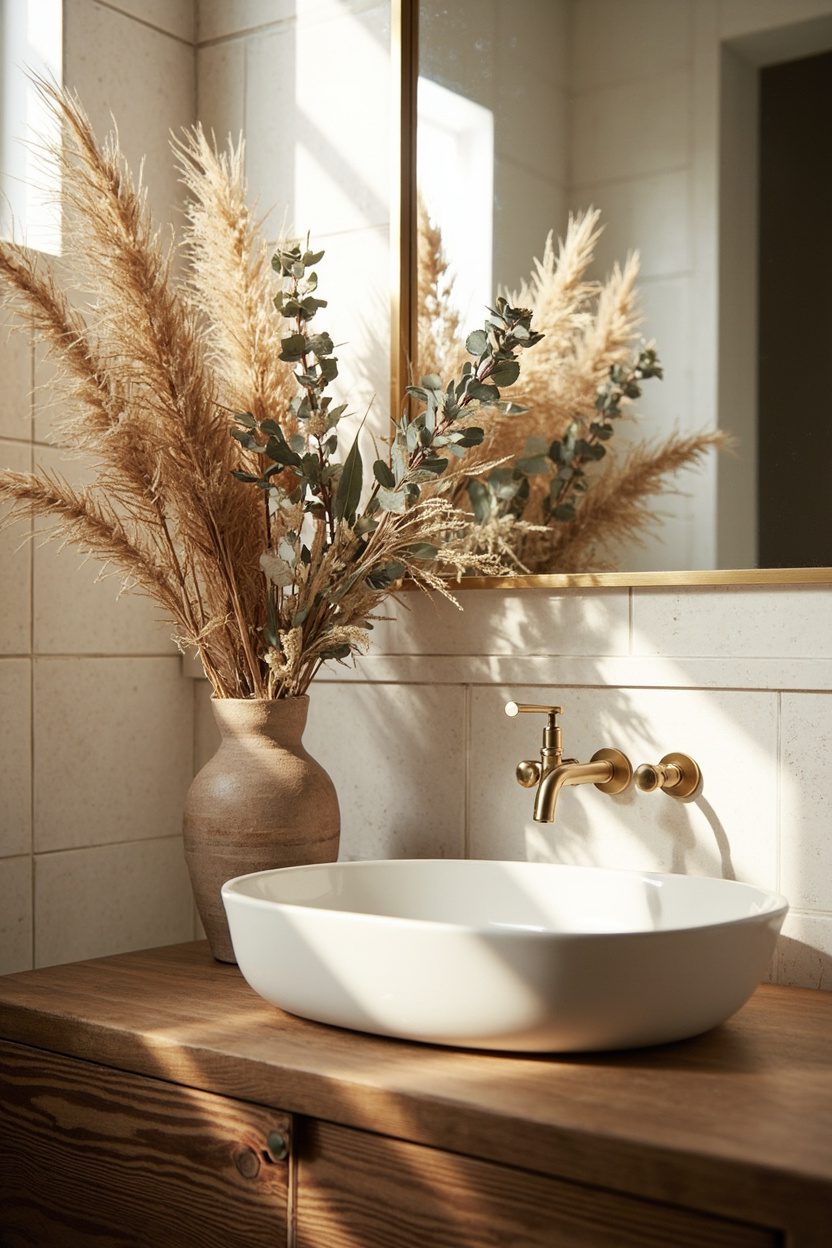
Dried flowers—lavender, bunny tails, pampas, and millet—are the boho accent that survives humidity if placed smartly: keep them out of direct shower spray by hanging them above towel rails or in a small vintage vase on a shelf. Stick to a restrained palette (muted ochres, soft mauves, and warm creams) so the arrangement complements tile and rattan rather than competing with it; avoid overly saturated dyed stems that read synthetic.
Rotate a few stems seasonally and replace every 6–12 months; drying your own from homegrown stems is cost-effective and gives you control of size and tone.
Essential Elements
- Placement: hang high or situate on open shelving to protect from moisture and steam..
- Vessels: pair with a short earthenware or matte-glass vase for scale and weight..
- Palette: stick to 3 colors max to maintain cohesion with larger materials like tiles and wood..
- Longevity: keep away from direct sunlight and replace annually to avoid dust and fragility..
9. Vintage Brass Fixtures
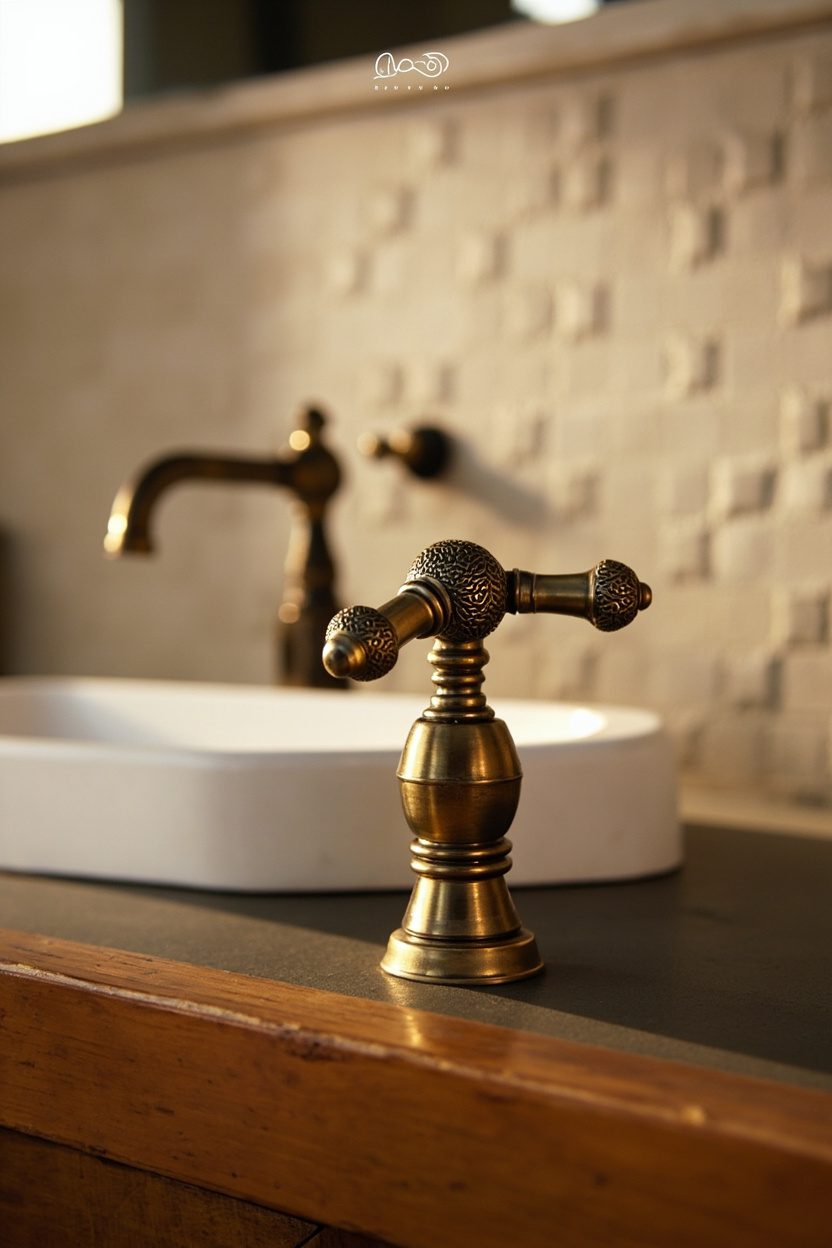
Aged brass faucets and shower valves give instant patina and warmth that mirrors the boho preference for collected, tactile surfaces; choose solid-brass fixtures with a brushed or unlacquered finish to allow gentle aging rather than bright polished brass that reads contemporary. Specify valve rough-in compatibility early (most vintage-style trims require specific valve types) to avoid costly retrofit issues—budget-tier: expect $200–$800 per fixture depending on brand and function.
Pair brass with matte black hardware sparsely—use it for a towel hook or shelf bracket only—to avoid overcompeting metal tones, and keep vented or gray-toned mirror frames to let the brass sing.
What to Focus On
- Finish: choose unlacquered or brushed brass for authentic patina over time..
- Compatibility: confirm valve and rough-in specs with plumber before ordering trims..
- Mixing metals: limit to two metal finishes and use brass as the primary warm accent..
- Maintenance: recommend a mild soap clean and avoid abrasive pads to preserve the finish..
10. Patterned Cement Tiles
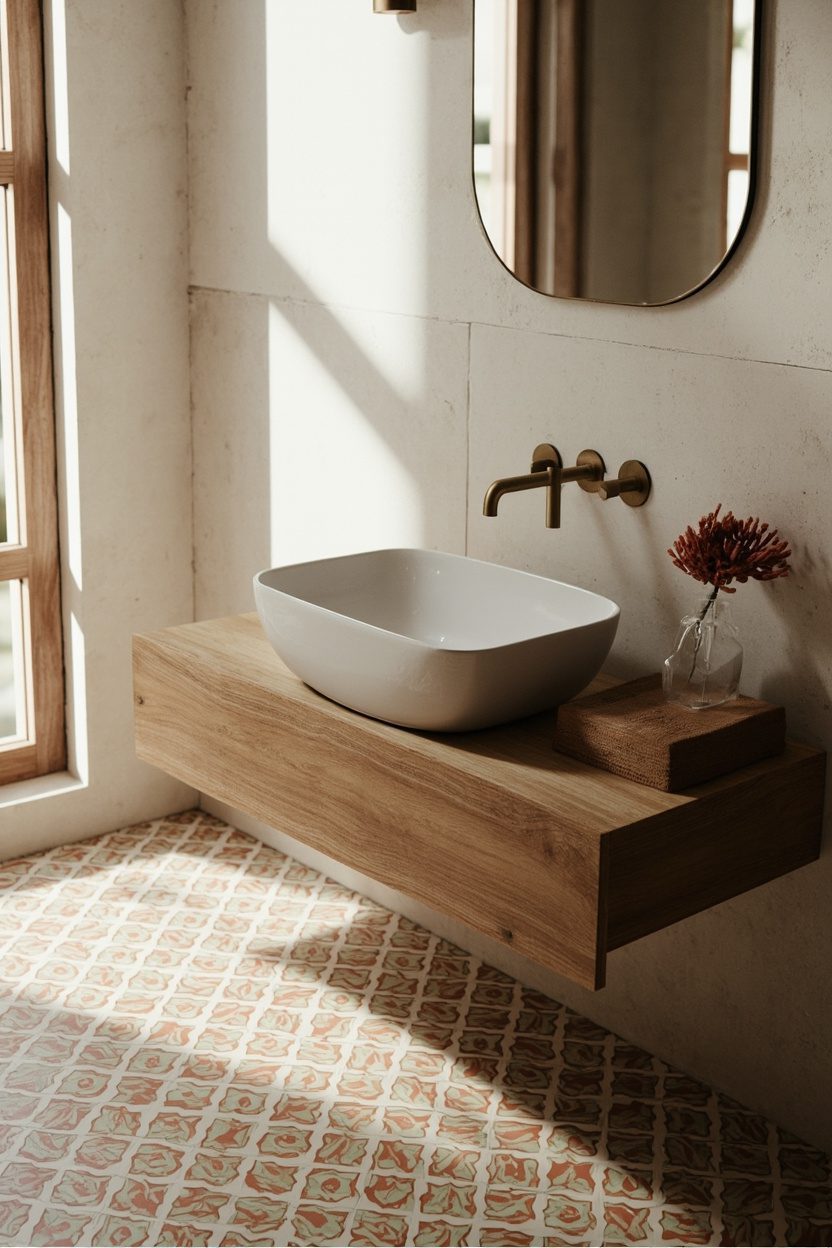
Patterned cement tiles give a boho bathroom instant character and read as artisanal rather than mass-produced when you pick encaustic-style patterns in muted pigments. Choose 20–30 cm square tiles in a restrained palette (terra cotta, deep indigo, and warm greys) and lay them in a focused zone—behind the vanity or as a shower floor—to avoid visual overload in a small bath. A practical decision: seal these tiles with a high-quality penetrating sealer and budget for professional grout sealing to prevent staining from soaps and oils.
Using patterned cement on floors demands attention to scale; pick larger motifs for small baths to avoid a “busy” look, or mix a patterned band with plain matte tiles for a curated contrast. Keep fixtures simple—matte black or aged brass work best—so the tiles remain the focal point without competing finishes creating visual noise.
What to Focus On
- Choose 20–30 cm tile size for balanced scale in small bathrooms.
- Select 2–3 repeating colors from the tile for wall paint and textiles.
- Seal tiles and grout immediately after installation to protect finish.
- Pair with matte black or aged brass fixtures to ground the look.
11. Layered Textiles
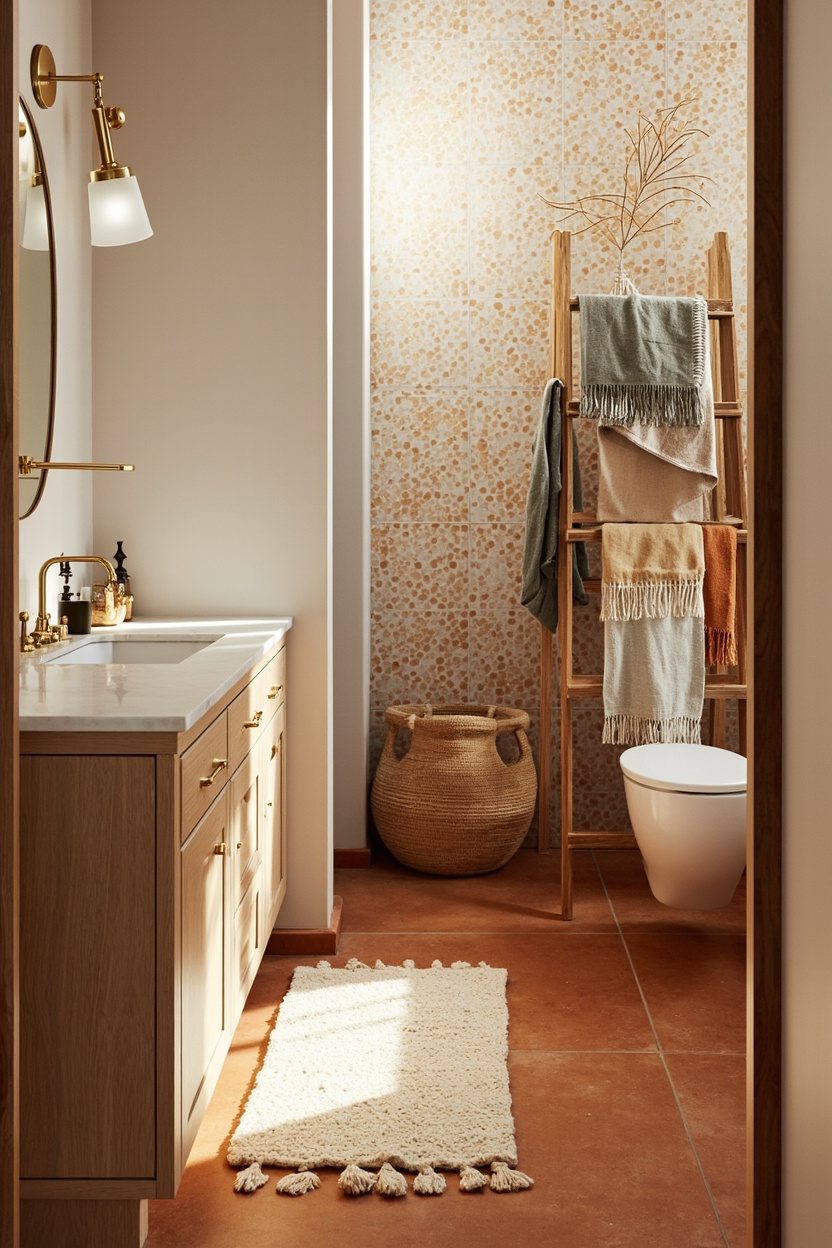
Layered textiles turn a cold bathroom into a tactile sanctuary—think woven bath mats, a lightweight linen shower curtain, and a macramé hand towel or wall hanging for texture contrast. For a boho result, mix natural fibers (cotton, linen, jute) with one plush, absorbent cotton bath rug; a rule of thumb: keep the budget mid-range for rugs (around $50–150) but invest more in a quality shower curtain that survives steam without mildewing.
Color and scale matter: anchor the palette with a neutral base (warm white or sand) and add one accent color across textiles—burnt saffron or dusty teal—to unify the scheme. Avoid dense prints on every textile; instead, combine one patterned piece with solid or subtly striped companions to maintain a relaxed, layered look.
Styling Blueprint
- Start with a neutral base textile and add one colorful accent across three pieces.
- Use natural fibers (linen, cotton, jute) for durability and breathability.
- Mix one patterned item with solids to avoid visual clutter.
- Choose washable pieces and keep at least one spare rug for rotation.
12. Boho Gallery Walls
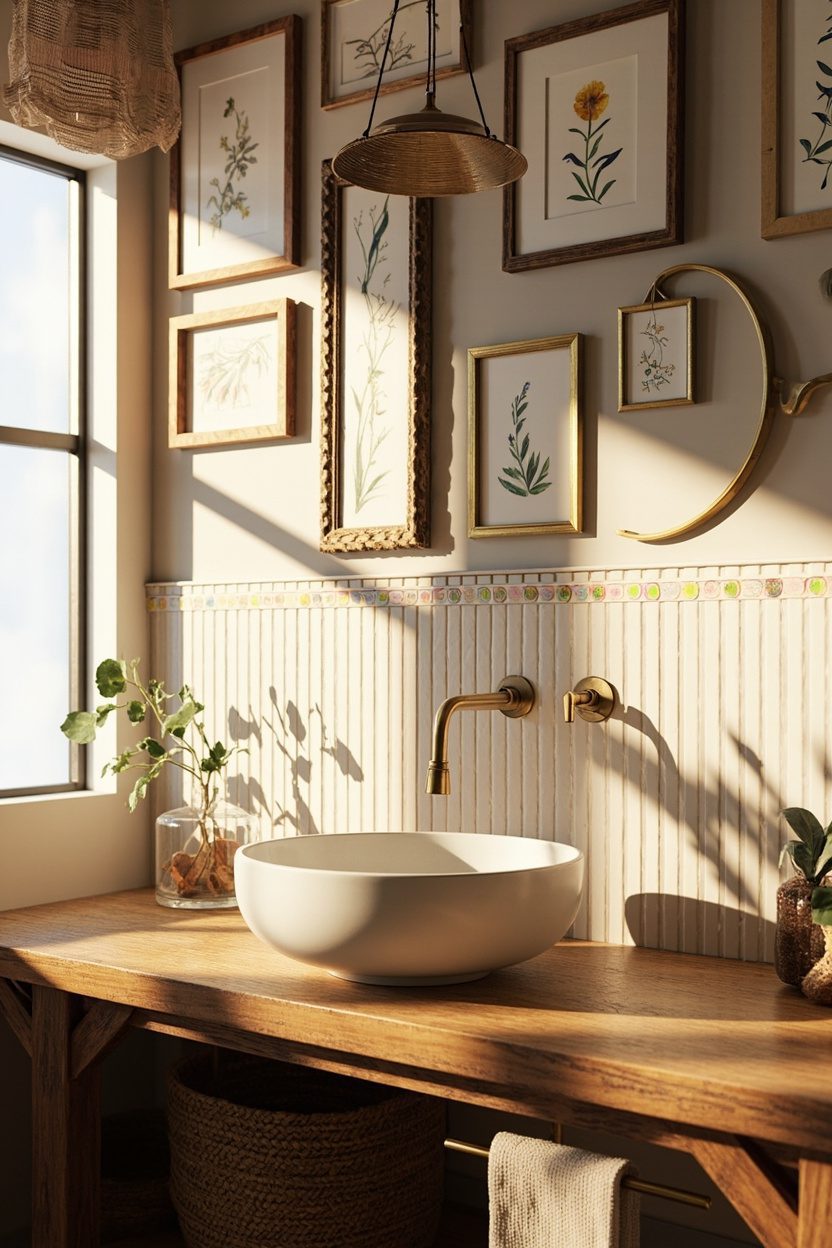
A boho gallery wall in the bathroom elevates small moments—think a cluster of framed botanicals, woven panels, and a small rattan mirror hung above a towel ladder. Curate pieces in similar wood tones or natural frames and stagger heights around the vanity or toilet wall; maintain a 5–10 cm spacing between frames for cohesion, and avoid overloading a humid wall—use moisture-resistant backing or seal frames with clear varnish.
For content, mix prints (vintage botanicals or line drawings), small shelves with ceramics, and textile art like miniature macramé pieces to amplify the boho spirit. If you need guidance on composition or frame scale, a good primer on how to read plans and proportion—like tips found when you learn to read architectural floor plans—helps translate wall area into an intelligent layout.
Essential Elements
- Use moisture-resistant frames or seal backs to prevent warping in humid spaces.
- Limit to one cohesive color or material family (e.g., natural wood + rattan).
- Arrange with 5–10 cm spacing and step back to test balance before drilling.
- Include at least one textile or 3D object for tactile boho interest.
13. Earthy Paint Palettes
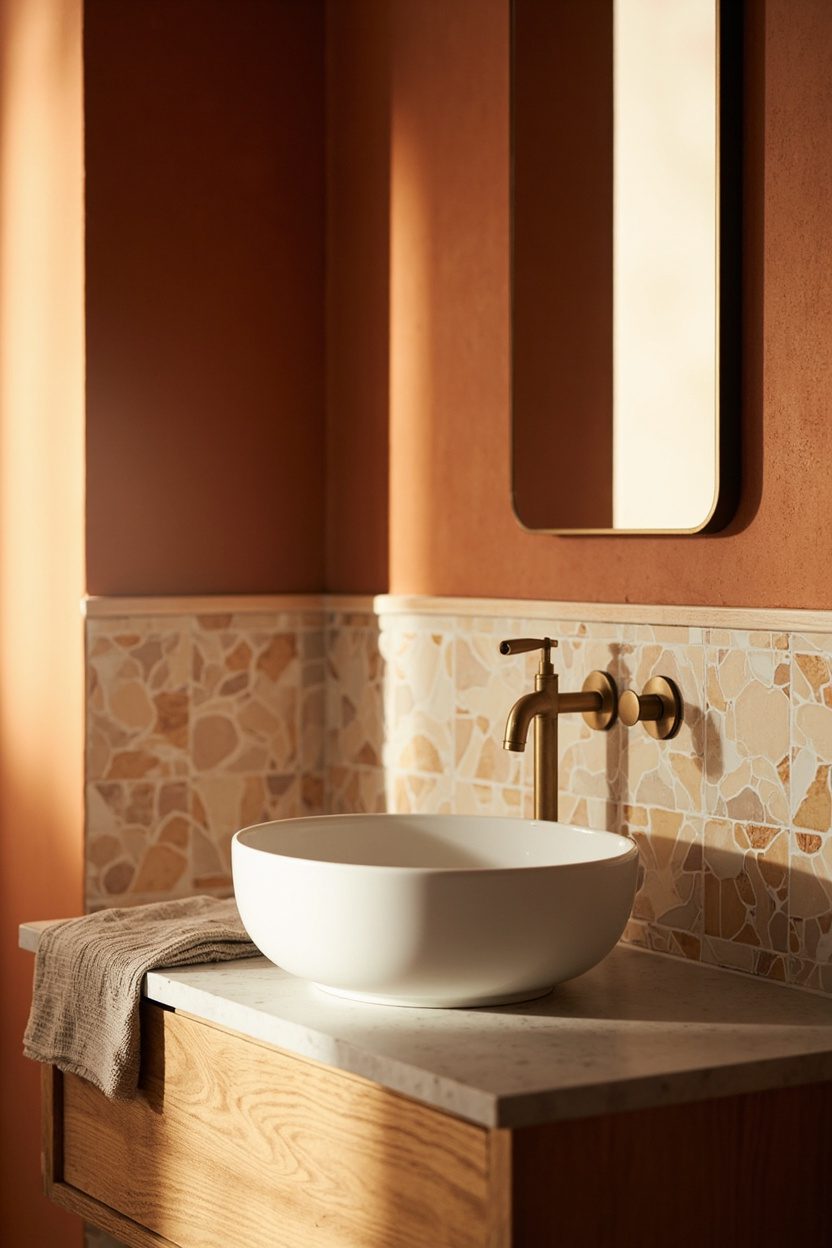
Warm, grounded color schemes anchor a boho bathroom the way a woven rug anchors a seating nook. Choose clay-rich terracottas, muted ochres, mushroom greys, or olive greens as the field color; these tones tolerate imperfections in trim and pairing with warm wood or rattan elements rather than demanding perfect crispness. For a practical decision: pick a low-sheen, washable eggshell for walls and a semi-gloss for trim—this balances texture with moisture resistance in a budget-friendly paint tier (mid-range paints perform well here).
Layering matters: use a single dominant earthy hue on three walls and a darker accent—think a deep sienna or forest green—on a feature wall behind the vanity or tub to create depth without clutter. Avoid tiny swatches; buy sample pots and paint 2’x2′ patches at eye height because undertones shift in bathroom light. For inspiration on pared-down displays and framing choices, see minimalist gallery arrangements to keep artwork cohesive with these palettes via Minimalist Gallery Walls.
Styling Blueprint
- Base color: choose one warm neutral (terracotta, ochre, mushroom)..
- Accent color: select a deeper earthy tone for one focal wall or vanity front..
- Finish: eggshell on walls, semi-gloss on trim and moisture-prone woodwork..
- Test: paint 2’x2′ patches in real lighting before committing to a full room..
14. Curved Freestanding Tubs
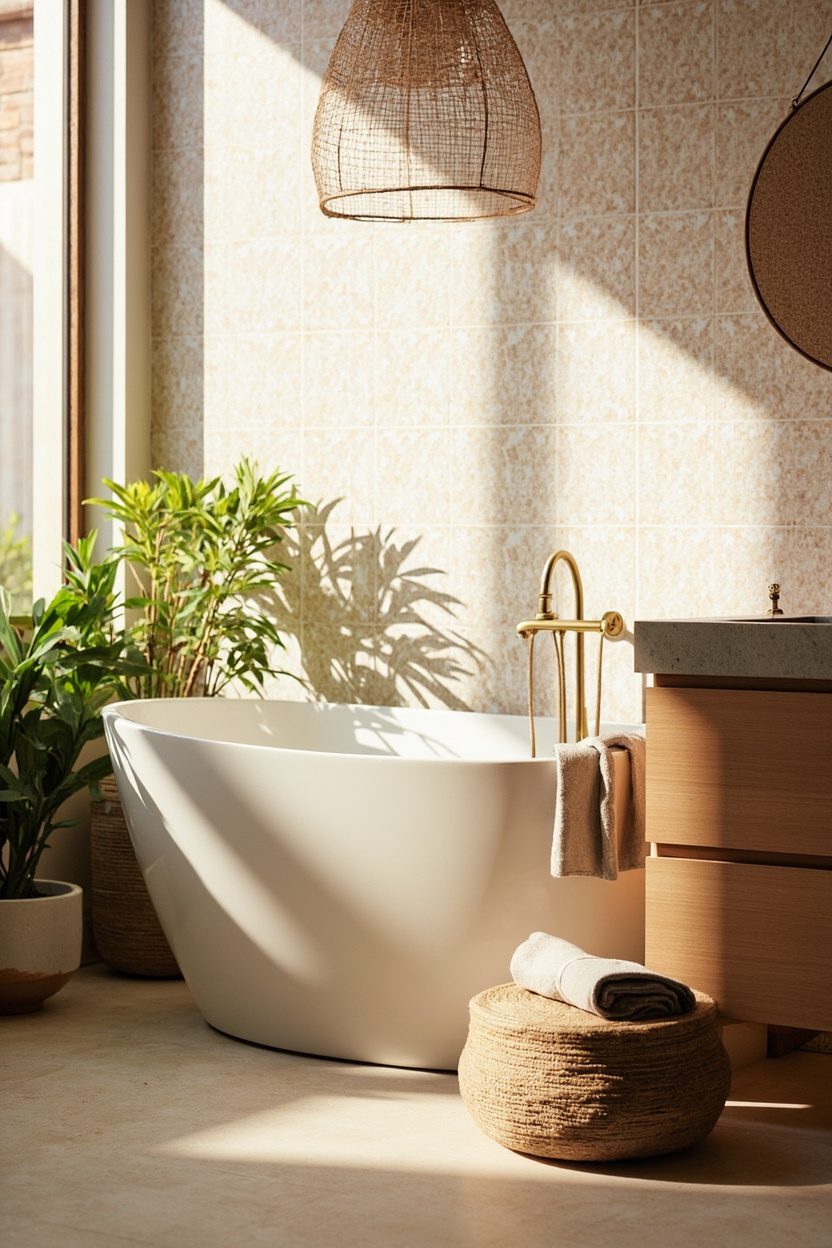
A softly curved freestanding tub introduces the sculptural, relaxed silhouette central to boho style while remaining highly functional; acrylic or composite stone tubs give you that organic curve at a practical price point, while solid cast materials lean luxury. Size matters: opt for a 60–72″ length for two-person comfort or 54–60″ for single-user rooms—measure doorways and floor load capacity before purchase to avoid installation heartbreak.
Placement creates atmosphere—float the tub away from walls where plumbing and a statement floor-mounted filler can be showcased, or set it against a textured tile or plastered accent wall to emphasize the curve. Accessorize with a rattan bath caddy, linen spa-style towels on macramé holders, and strategically placed plants for a lived-in, layered look; avoid ornate fixtures that compete with the tub’s simple silhouette.
What to Focus On
- Material choice: acrylic/composite for cost-effectiveness, stone for high-end permanence..
- Scale: match tub length to room size and doorway clearances (measure twice)..
- Placement: float if possible to show the curve and allow a floor filler tap..
- Styling: keep surrounding fixtures minimal; add natural textiles and a rattan caddy..
15. Tropical Indoor Plants
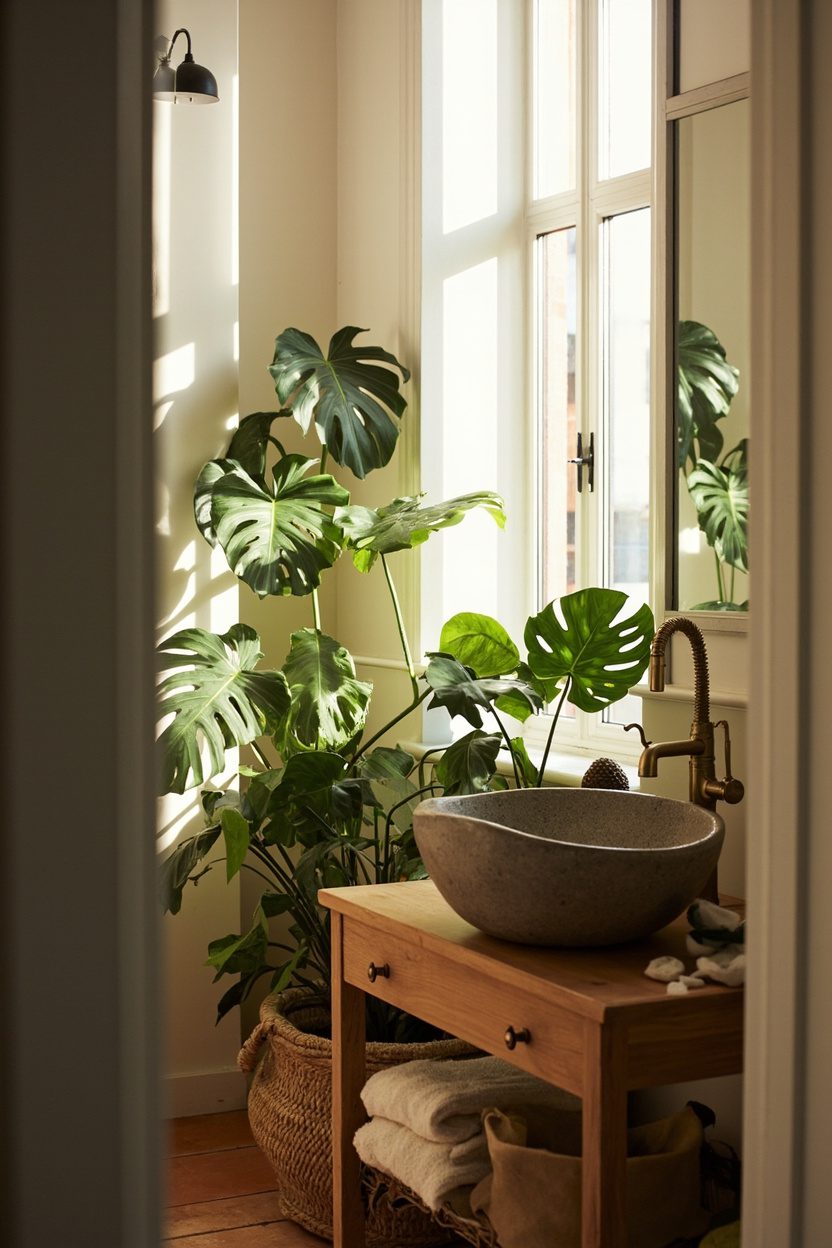
Tropical foliage—philodendron, bird of paradise, monstera, and ferns—brings the lush, textural layer every boho bathroom needs, and many of these species tolerate humidity well. Choose plants based on light: bright, indirect windows suit bird of paradise and monstera; lower light? Pick a fern or a pothos. Use terracotta or glazed ceramic pots with drainage, and elevate larger specimens on wooden stands to protect floors from water runoff.
Grouping plants at varying heights reads intentional rather than cluttered—place a tall specimen near the tub, mid-height plants on a ladder shelf, and trailing vines in hanging macramé planters over a towel storage area. Avoid overwatering; keep a moisture meter or stick your finger into the soil to avoid root rot. For layout cues in multi-level or open-plan wash spaces, cross-reference structural planning techniques at Read Architectural Floor Plans to ensure plant placement complements circulation and sightlines.
Essential Elements
- Pick plants by light level: bright indirect for monstera, low light for ferns/pothos..
- Pots: use drained terracotta or glazed ceramics; elevate with stands to protect floors..
- Arrangement: stagger heights and use macramé hangers for vertical interest..
- Care: avoid overwatering; use a moisture meter or finger-test before watering..
A useful follow-up is 14 Eclectic Cottage Decor Ideas That Look Curated Not Chaotic.
FAQ
How do I keep rattan and macramé in a humid bathroom?
- Ensure good ventilation with an exhaust fan and occasional dehumidifier use to prevent mildew growth on natural fibers..
- Spot-clean rattan with a damp cloth and mild soap; avoid soaking or direct prolonged water exposure..
- Rotate macramé pieces occasionally so all sides air out; if mildew appears, gently wash per care instructions and dry fully outdoors..
- Consider sealed or synthetic rattan for very damp bathrooms to reduce maintenance needs..
Can I mix modern fixtures with boho elements?
- Yes—use simple, matte-finish fixtures (black, brushed brass, or aged bronze) to bridge modern lines with boho textures..
- Keep fixture shapes restrained (round or soft-edged) to harmonize with natural materials like rattan and timber..
- Limit finishes to two at most in a small bathroom to avoid visual clutter..
- Select one statement natural element (curved tub or oversized mirror) and simplify other choices around it..
What flooring works best for a boho bathroom?
- Textured porcelain or matte ceramic tiles that mimic stone are durable and echo earthy palettes well..
- Heated floors pair beautifully with boho linens and keep natural-fiber rugs from staying damp..
- Use layered small rugs in natural fibers (jute or cotton) but ensure they’re washable or have rubber backing to prevent slipping..
- Avoid unfinished softwoods unless properly sealed for moisture resistance and regular maintenance..
How can I make a small bathroom feel boho without cluttering it?
- Prioritize three tactile elements: a rattan mirror, a plant, and a textured wall finish to suggest boho without overfilling the space..
- Use a narrow, tall shelving unit for vertical storage rather than wide horizontal furniture to free floor area..
- Choose a single warm earthy paint and one accent tile to add personality without busyness..
- Opt for multifunctional pieces (mirror with shelf, ladder towel rack) to keep styling minimal and purposeful..
Final Thoughts
A true boho bathroom balances tactile richness with thoughtful restraint: choose durable materials, prioritize scale and moisture-friendly finishes, and layer in plants, woven textures, and sculptural pieces like curved tubs or rattan mirrors. Make concrete decisions—paint finishes, tub material, plant species—upfront to avoid remodeling reversals later; the result is a relaxed, lived-in bathroom that performs as well as it looks.