


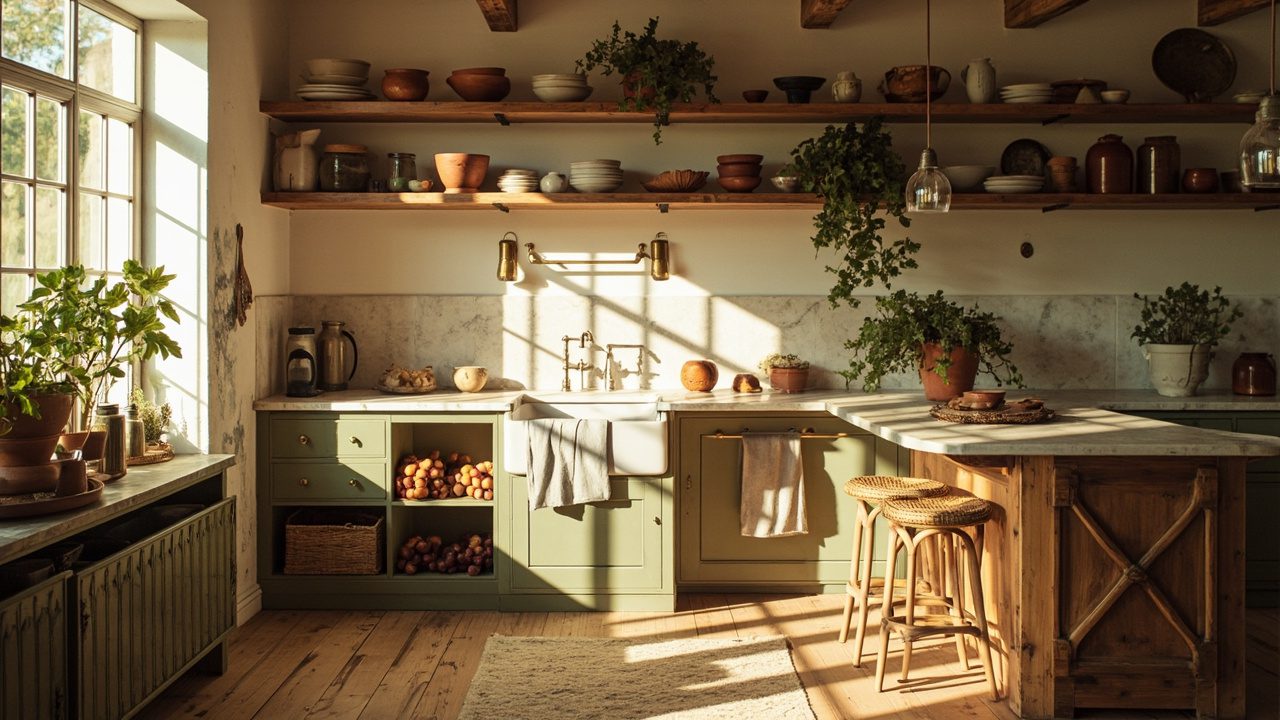
Boho kitchens are less about following a single look and more about summoning a lived-in warmth that engages all the senses. Think clay-rich colors, hand-loomed textiles, and the kind of surface textures you want to touch—each choice should feel intentional, tactile, and slightly imperfect. This approach makes everyday cooking feel like a ritual: lighting, materiality, and scent become part of the recipe as much as the ingredients.
These 16 boho ideas prioritize honest materials, human scale, and layered functionality. Below are three tested moves to start with—practical, budget-aware, and easy to scale—so your kitchen becomes somewhere you actively want to spend time rather than a sterile food-prep zone.
- 1. Earthy Terracotta Palette
- 2. Woven Textures Mix
- 3. Rammed Earth Walls
- 4. Mix-Match Cabinetry
- 5. Vintage Brass Fixtures
- 6. Open Shelving Vignettes
- 7. Terrarium Herb Corner
- 8. Handmade Ceramicware
- 9. Reclaimed Wood Island
- 10. Patterned Cement Tiles
- 11. Matte Black Accents
- 12. Macramé Light Shades
- 13. Curved Banquette Seating
- 14. Layered Rug Styling
- 15. Wabi-Sabi Imperfections
- 16. Biophilic Window Seats
- FAQ
- Final Thoughts
1. Earthy Terracotta Palette
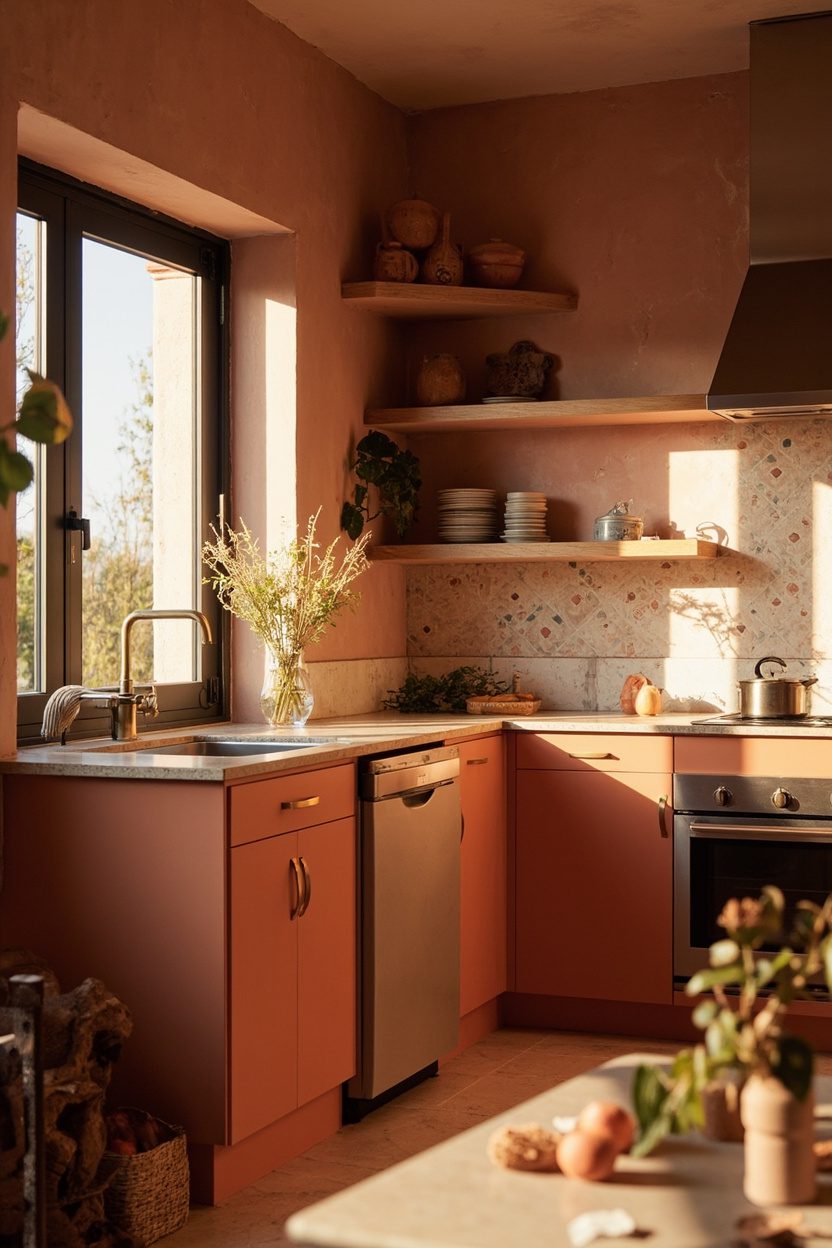
Terracotta is the shorthand of boho warmth: choose a dominant clay wall or subway tile in burnt-sienna tones and pair it with matte black fixtures to keep the palette grounded. For longevity, use glazed terracotta for backsplashes and a honed terracotta-look porcelain for high-traffic floors—real fired clay floors are gorgeous but require sealing and higher maintenance, so factor that into your budget decision.
Layer color with natural wood open shelving and rattan bar stools to prevent the scheme from feeling monochrome. Don’t overdo contrast—keep trim and ceilings in a warm off-white (eggshell with a yellow undertone) to preserve the cohesive, sunbaked vibe.
Essential Elements
- Burnt-sienna tiles or paint as the primary color choice for one wall or backsplash, not the whole room to avoid overwhelm.
- Matte black or aged brass hardware to anchor the warmth and provide a modern counterpoint.
- Natural oak shelving finished with oil rather than lacquer to maintain texture and patina over time.
- Budget option: terracotta-look porcelain tiles for durability and lower maintenance.
2. Woven Textures Mix
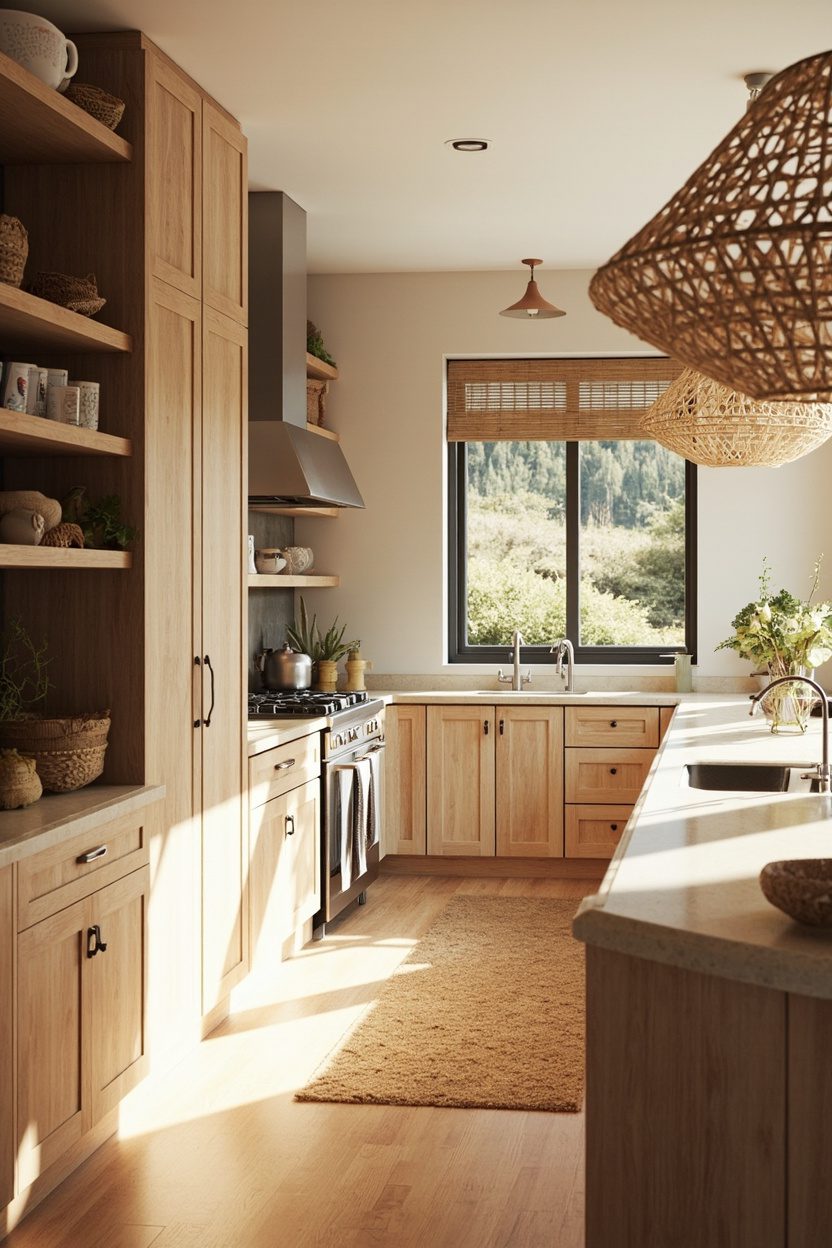
Introduce hand-woven elements—rattan pendant shades, seagrass placemats, and macramé wall hangings—to add depth without cluttering visual space. Keep scale in mind: a single large woven pendant over the island reads more intentional than several small ones, and it will cast a softer, more flattering light for evening cooking.
For easy cleaning in food prep areas, limit woven pieces to non-work surfaces like dining nooks, window seats, and open shelving accents. Where you need durability, choose closed-weave baskets with removable liners so they can hold produce or linens without trapping grease.
Styling Blueprint
- One statement woven pendant (36–48″ diameter for islands) rather than multiple small fixtures to create focus and reduce visual clutter.
- Mix natural fibers (rattan, seagrass, jute) but keep colors within a two-tone natural range to avoid looking chaotic.
- Use woven baskets with canvas liners for pantry storage to combine texture with hygiene and practicality.
- Spot-cleanables near the stove; reserve delicate artisanal weaves for dry zones and display only.
3. Rammed Earth Walls
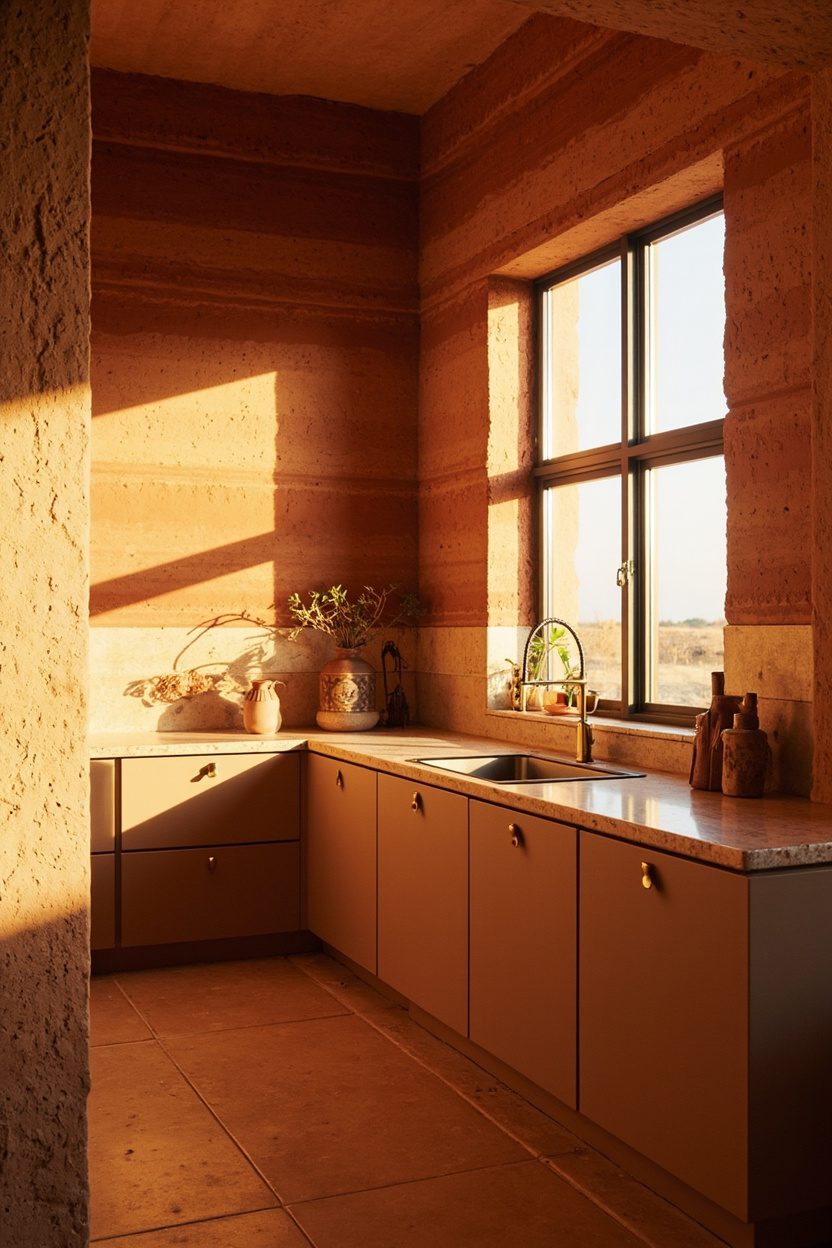
Rammed earth gives walls a monumental, tactile presence and a thermal mass benefit that’s both pretty and practical—ideal in regions with hot days and cool nights. If full-scale rammed earth is outside your budget or building regs, consider a rammed-earth plaster or lime-based render with natural pigments to mimic the effect at a fraction of the cost.
Placement matters: use rammed-earth finishes on a single feature wall or the cooking wall to avoid darkening a small kitchen. Pair with light cabinetry—painted in a soft sage or muted cream—to keep the room balanced and prevent the finish from feeling too heavy.
What to Focus On
- Limit rammed earth to a feature wall or backsplash alternative to control cost and light absorption.
- Opt for lime-based or clay plasters with pigment as a budget-friendly visual substitute for structural rammed earth.
- Coordinate cabinet color (sage, warm cream) to contrast the earth tones and maintain brightness.
- Ensure proper sealing or breathable finish to protect against kitchen humidity while preserving texture.
4. Mix-Match Cabinetry
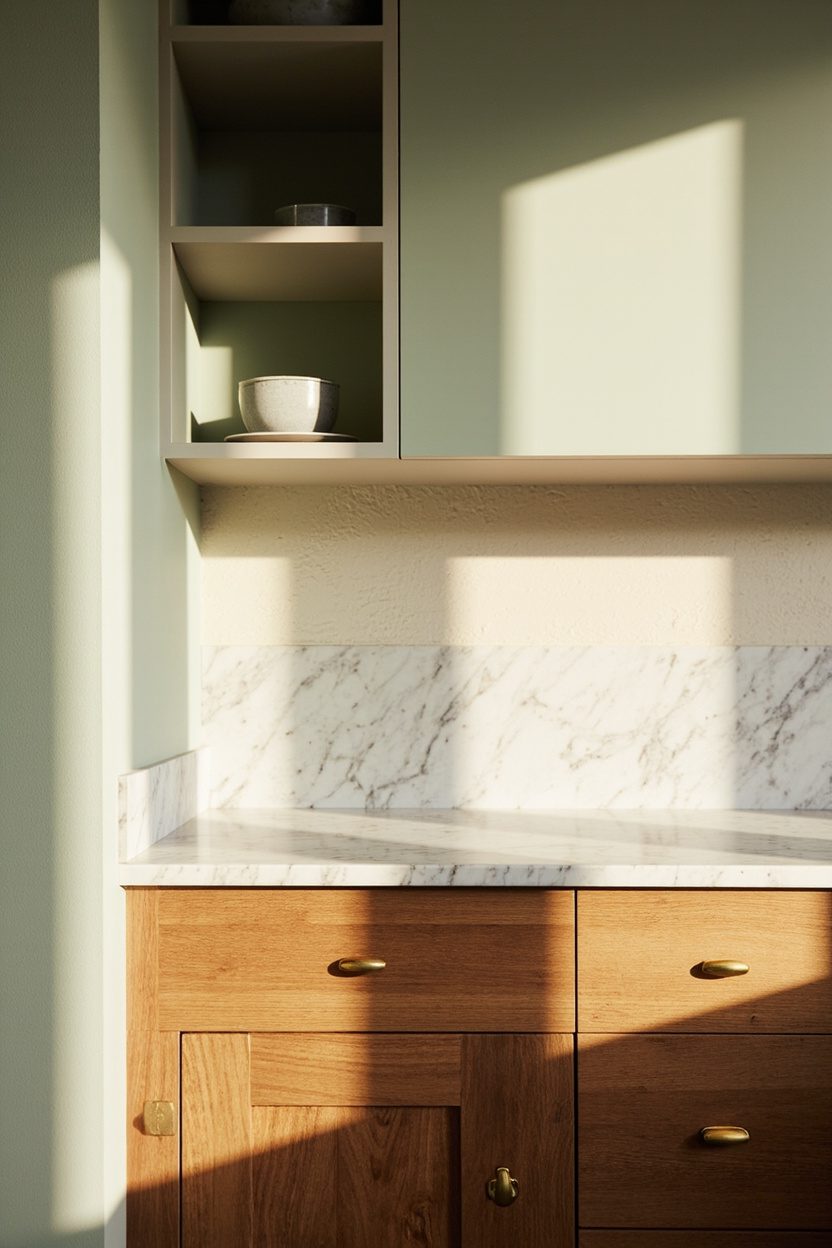
Layering different cabinet styles gives a boho kitchen its signature lived-in charm; pair a painted base run in matte sage with natural oak uppers to balance warmth and color saturation. Keep hardware consistent—choose 2″ diameter knobs in aged brass—to avoid visual chaos and specify soft-close hinges to modernize function without losing the eclectic feel.
Mix-match cabinetry works best when you control scale and rhythm: limit yourself to two primary finishes and change direction only at a natural break (island versus wall run). For a budget-friendly route, swap just the island or a single wall for a contrasting finish rather than refacing the entire kitchen—this yields maximum impact for mid-tier budgets ($1,200–$4,000 depending on materials).
Styling Blueprint
- Use two finishes maximum to maintain cohesion and prevent a cluttered look.
- Keep hardware consistent in finish and scale across all cabinet types.
- Introduce one natural material (oak or rattan) to warm painted surfaces.
- Change only the island or one elevation when working with a modest budget.
5. Vintage Brass Fixtures
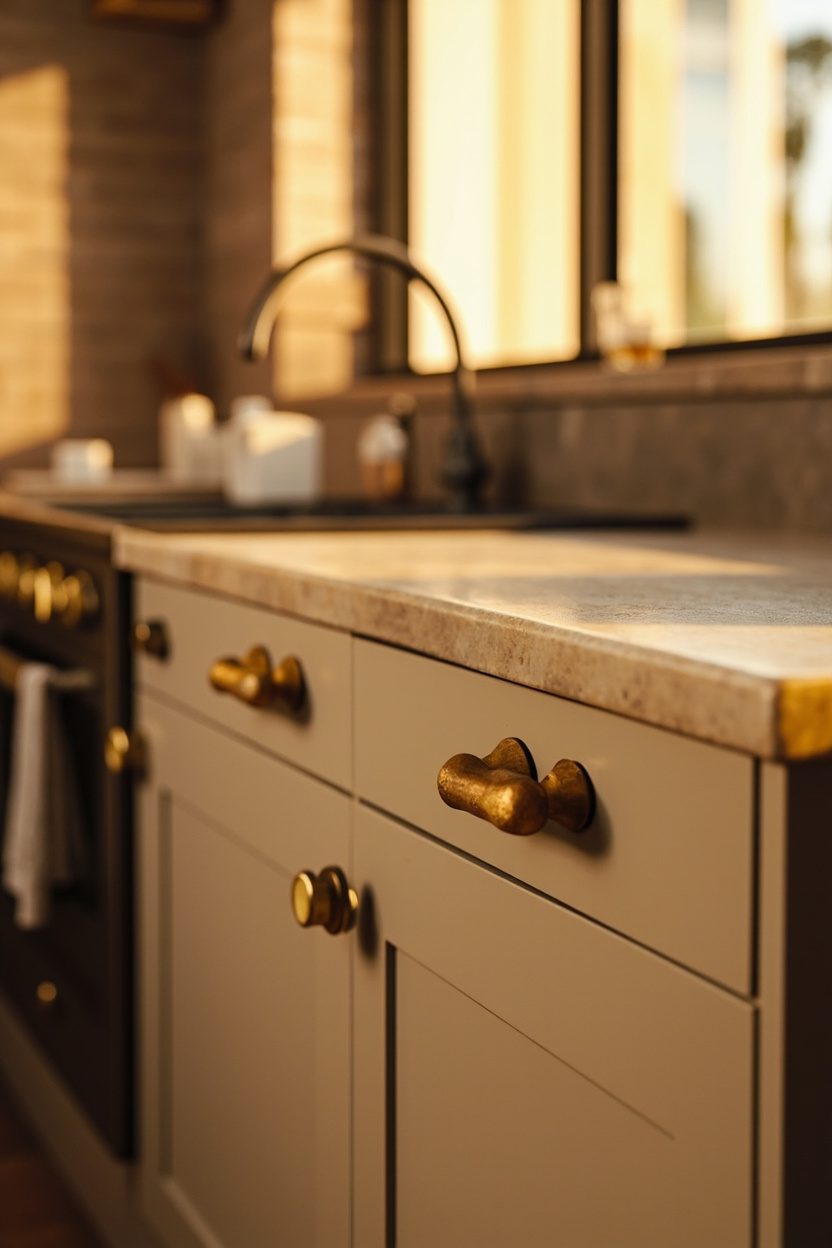
Vintage brass taps, pulls and pendant fittings add mellow patina that complements woven textures and terracotta tones common in boho kitchens; specify unlacquered brass for that slow-developing, authentic aging rather than polished finishes that feel new. Opt for a bridge faucet in antique brass above a white apron sink to anchor the prep area—choose a 12″ reach for better function with deep basins.
Don’t forget scale: slim, elongated spouts suit farmhouse sinks, while rounder cross-handle taps read better with ceramic basins. If you’re replacing lights, pick low-hanging brass pendants with woven shades to marry metal with texture and to avoid glare from bare bulbs—expect vintage-style fixtures to run from $150 to $600 each depending on provenance.
Essential Elements
- Select unlacquered brass for natural patina over time instead of mirror-bright finishes.
- Match faucet reach and spout height to sink dimensions to prevent splash issues.
- Coordinate fixture scale with cabinet and island proportions to keep balance.
- Combine brass with woven or ceramic shades to soften the metallic look.
6. Open Shelving Vignettes
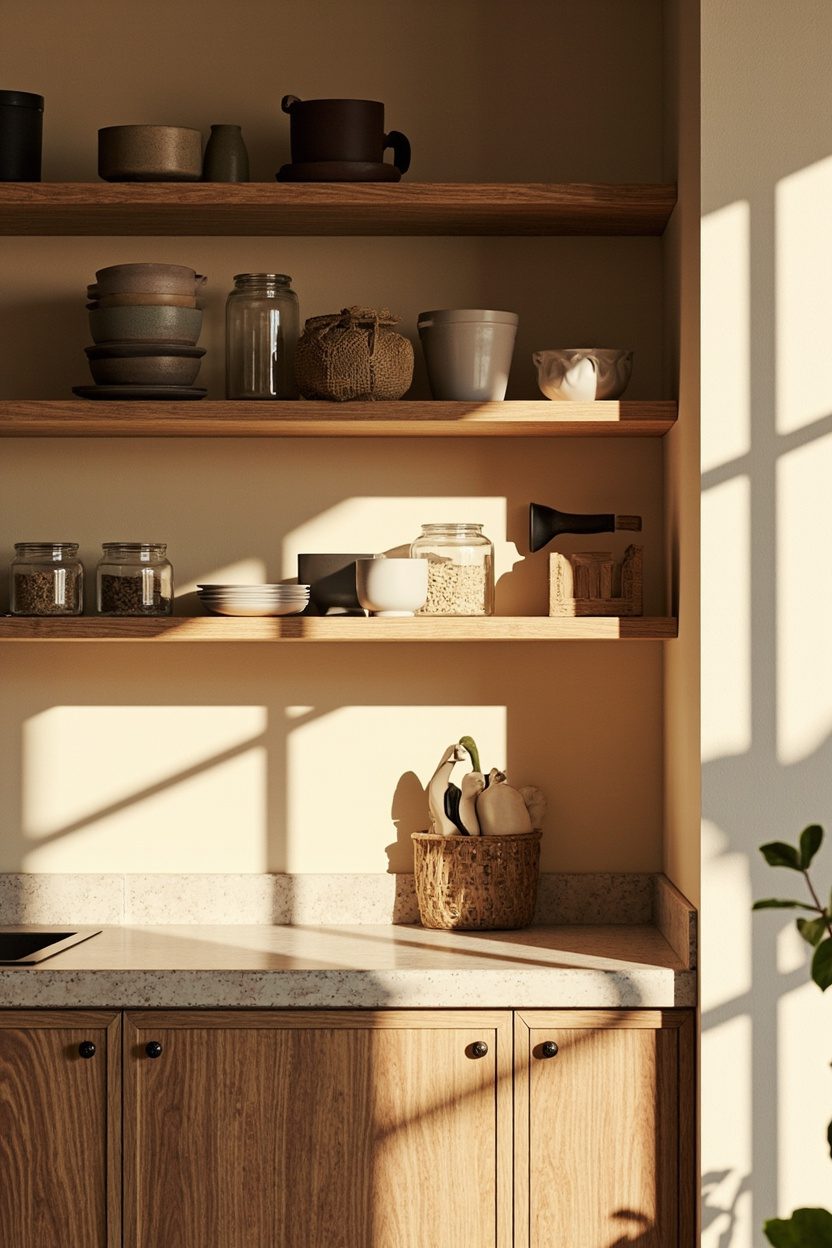
Open shelves are where boho kitchens show personality—curate a rotation of earthenware, rattan baskets and vintage cookbooks rather than leaving them sparsely populated. Plane shelves in stained walnut at 12″ depth work best for plates and bowls; for heavy cookware use 14″ depth with bracket reinforcement and screw-in toggles into studs for safety.
Styling matters: mix 60% functional items (plates, everyday glasses) and 40% decorative pieces (plants, sculptural ceramics) for a practical yet unstudied look. Group items in threes, keep colors within a muted palette, and avoid full-depth stacking which makes the shelves look cluttered—leave 2–3″ of negative space to preserve an airy rhythm.
What to Focus On
- Use 12″–14″ deep shelves depending on whether they store dishware or cookware.
- Anchor brackets into studs or use heavy-duty anchors for safety with heavy items.
- Style with a 60/40 split of functional versus decorative objects.
- Keep a limited color palette and leave breathing room to avoid visual clutter.
7. Terrarium Herb Corner
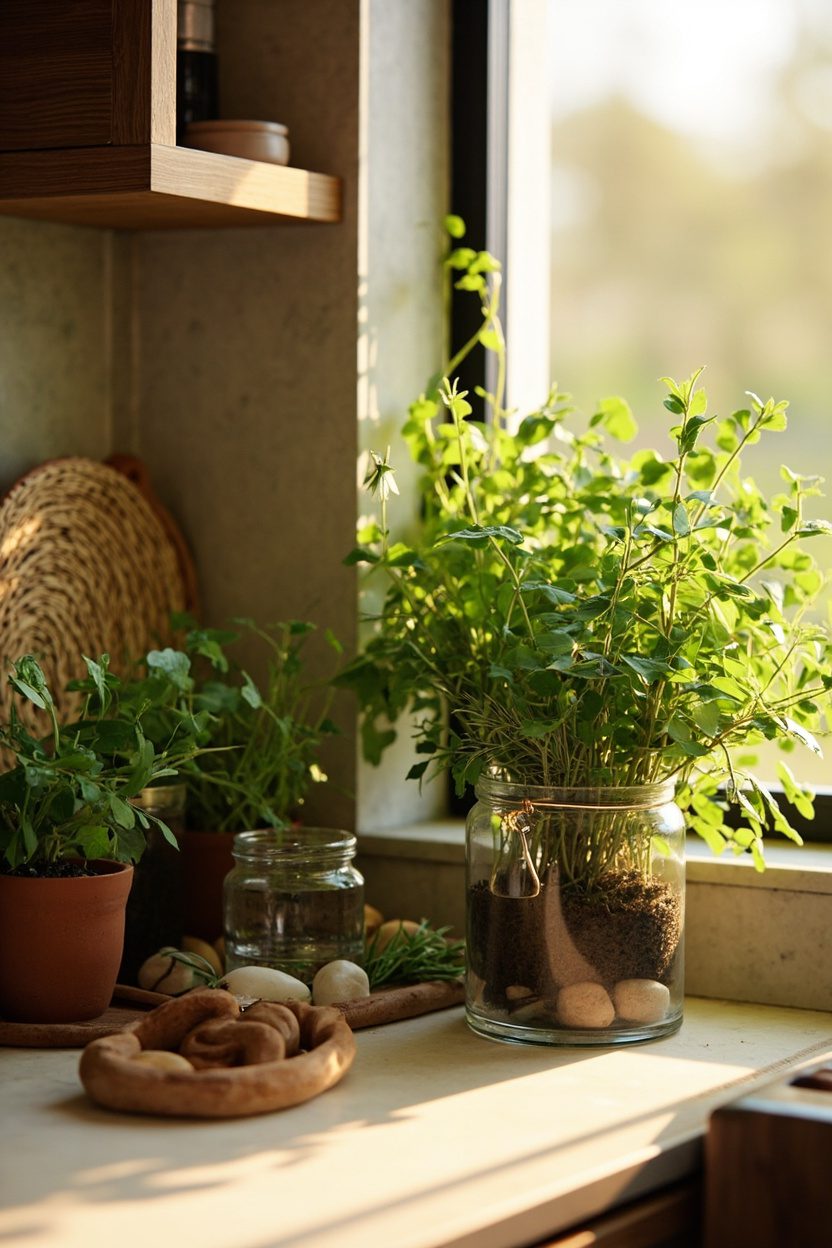
A terrarium herb corner brings living texture and instant fragrance to a boho kitchen, turning meal prep into a sensorial ritual. Position a cluster of glass cloches and open-top terrariums on a sunny windowsill or a narrow floating shelf; choose hardy herbs like rosemary, thyme and oregano planted in well-draining soil to avoid rot and reduce upkeep. Opt for mixed-height glass vessels (6–12 inches) to create a layered vignette and keep a small spray bottle and pruning shears within reach to maintain tidy growth.
This approach doubles as functional styling: fresh snips for finishing dishes and a green focal point against rattan or open shelving. Avoid overcrowding—limit to three to five pots to preserve airflow and light, and use charcoal layers under soil in closed terrariums to prevent mold. For a budget-conscious option, repurpose thrifted glass jars and label them with a wax pencil for easy rotation of herbs each season.
What to Focus On
- Choose sun-loving herbs and match pot size to root spread (3–6″ pots for most herbs)..
- Use clear glass vessels with drainage strategies (pebbles or charcoal for closed terrariums)..
- Place within 2–4 feet of a south- or west-facing window for reliable light exposure.
- Keep tools nearby: small snips, mister, and a moisture meter for precise care.
8. Handmade Ceramicware
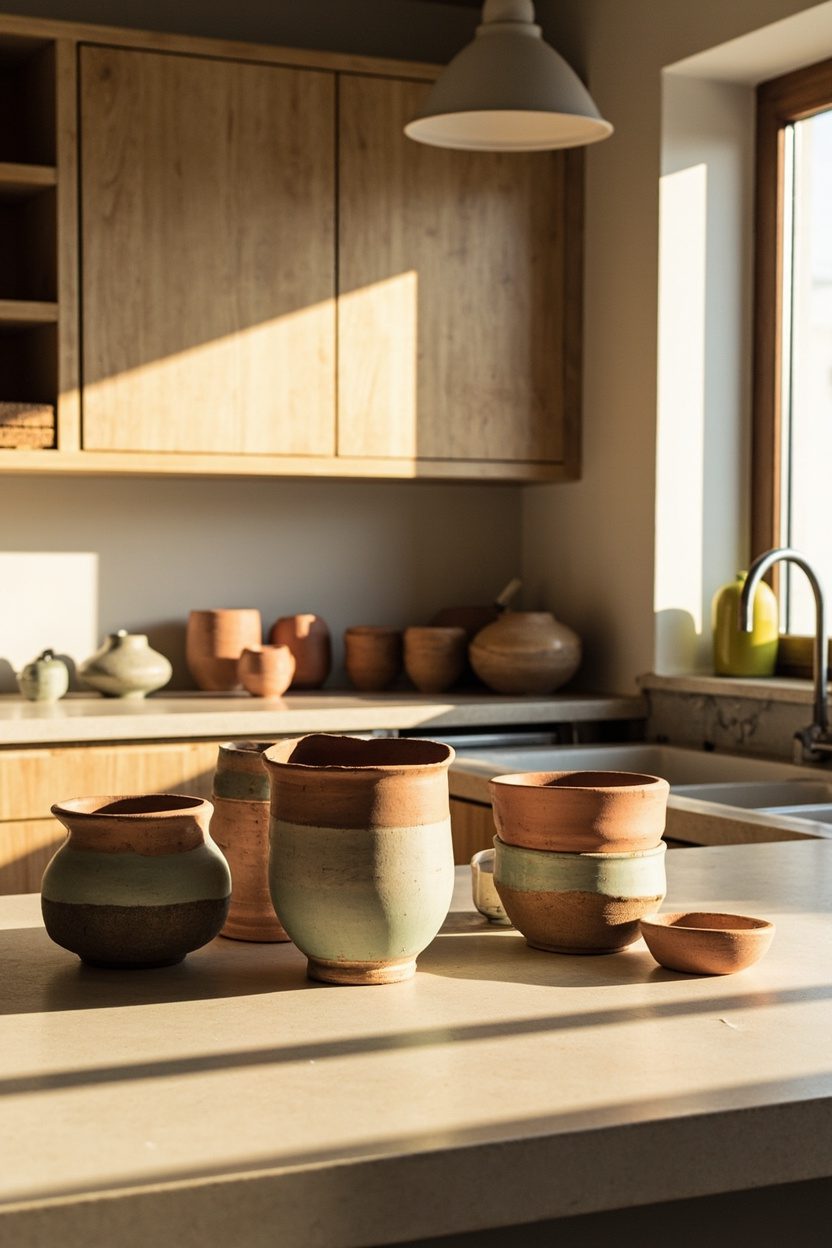
Handmade ceramic bowls and mugs lend an artisanal, tactile edge that’s essential to boho kitchens—think imperfect rims, glaze striations and warm, earthy tones. Source a few signature pieces from local potters: a large pasta bowl, a set of stackable side bowls and two handled mugs, prioritizing functional forms that stack well and survive the dishwasher if you need low maintenance. Choose clay bodies in speckled stoneware for durability; reserve delicate porcelain for special-serving pieces only.
Styling should feel curated, not cluttered: group ceramicware by color family on open shelving or use them as counterscape anchors near the stove. Mix matte and gloss glazes for visual depth, and avoid too many patterns at once—limit to one patterned collection paired with two solids to keep the aesthetic relaxed. If buying vintage, test for hairline cracks and lead-safe glazes before daily use.
Styling Blueprint
- Prioritize stoneware for daily use and one porcelain piece for occasional elegance.
- Mix two solid glaze colors with one patterned line to avoid visual chaos.
- Store stacked by size on open shelves for texture and quick access.
- Inspect vintage ceramics for cracks and food-safe glazes before use.
9. Reclaimed Wood Island
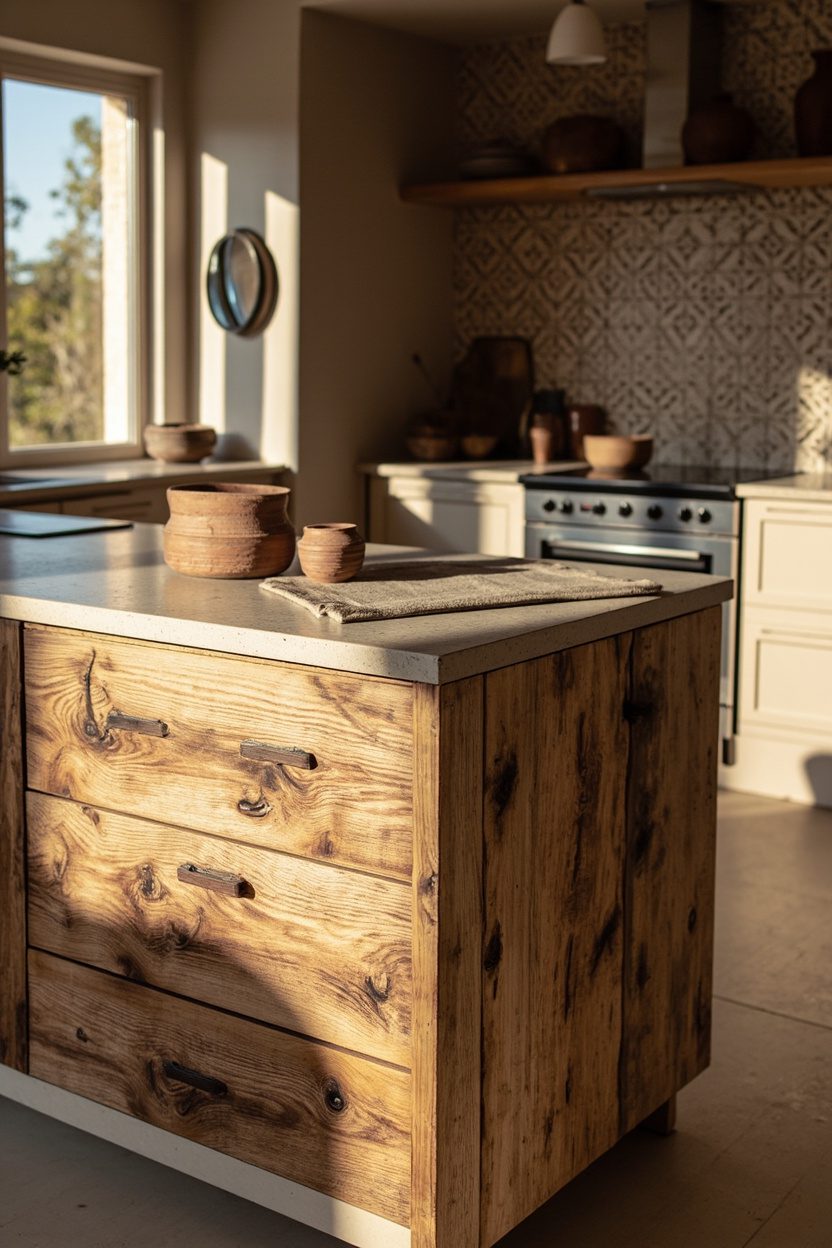
A reclaimed wood island anchors a boho kitchen with warmth, patina and a story—opt for a thick-plank top (1.5–2 inches) and a sturdy base to withstand everyday use and occasional chopping. Choose timber with visible knots and color variation (walnut, oak, or salvaged barn wood) and pair it with a streamlined matte-black or brass hardware to bridge rustic and modern sensibilities. For scale, an island 36–42 inches high and 24–48 inches deep makes a versatile prep surface and casual dining spot without overwhelming tight kitchens.
Function matters as much as looks: build in a deep drawer for linens, open cubbies for baskets, and a lower shelf sized for heavy cookware; keep the footprint within a 42–48 inch clearance from surrounding counters for comfortable movement. If budget is tight, top a prefab base with reclaimed planks to cut costs, or use butcher block edges and distress them lightly to mimic aged character. Avoid overly glossy finishes—choose a hardwax oil that enhances grain while allowing wear to develop naturally.
Essential Elements
- Select 1.5–2″ thick reclaimed planks with mixed grain for authentic patina and durability.
- Plan 42–48″ clearance around the island for ergonomic workflow and seating space.
- Incorporate mixed storage: one deep drawer, open cubbies, and a lower shelf for heavy pans.
- Finish with hardwax oil or matte varnish to protect while preserving texture and age marks.
10. Patterned Cement Tiles
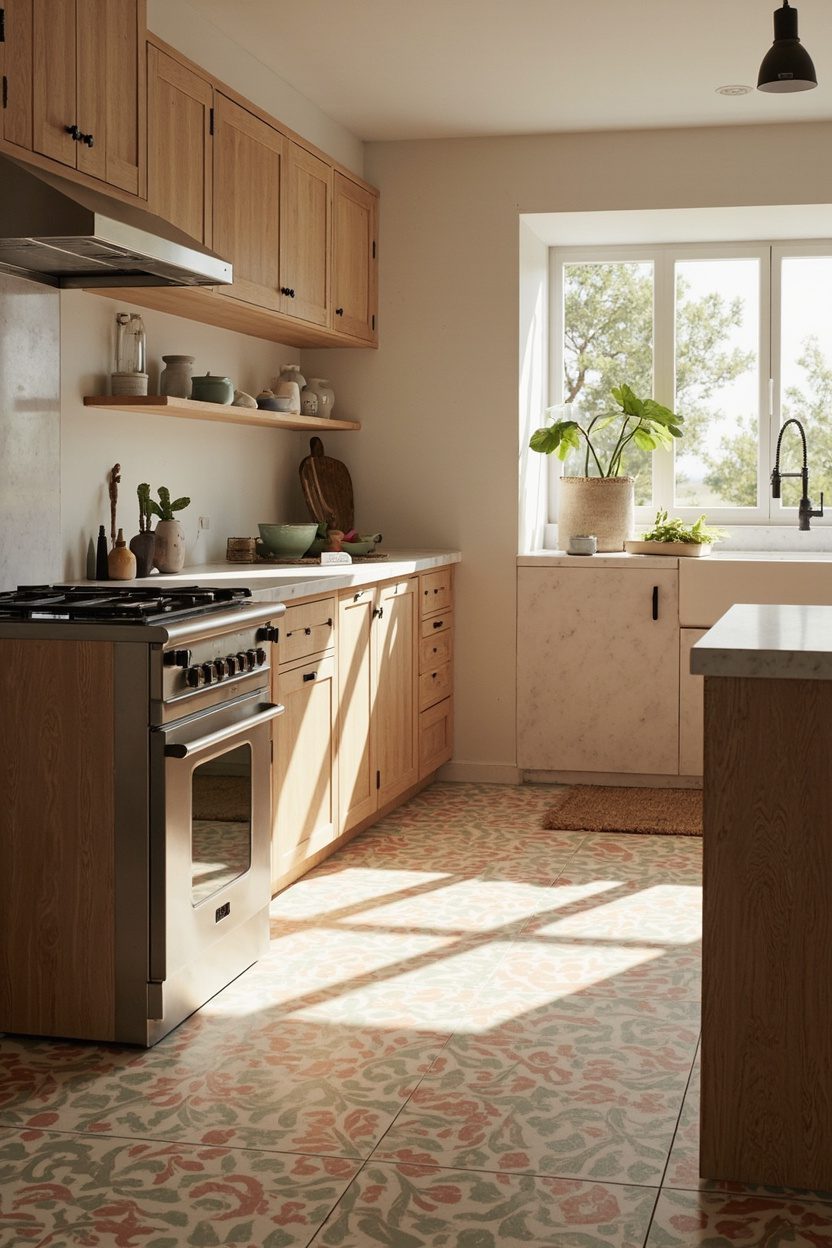
Patterned cement tiles inject immediate personality underfoot and on short walls—think encaustic motifs in terracotta, indigo, or sage instead of one-note black-and-white. Use them as a deliberate anchor: run them across a small kitchen floor, create a 4-6 tile-high backsplash strip behind the range, or set a patterned runner in front of the sink to contain the visual weight without overwhelming a compact space. Choose tiles with a matte, slightly worn finish to read as authentic; glossy replicas lose the boho soul and read too new.
Scale matters: pick larger repeat patterns for open-plan kitchens and tighter motifs for galley layouts to avoid visual fatigue. Cement tiles perform best when paired with warm wood islands or open shelving—avoid pairing them with too many competing patterns (curtains, rugs) in the same sightline to prevent chaos. A practical decision: budget for a 10–15% overage for cuts and breakage, and seal cement tiles immediately after installation to prevent staining and ease cleaning.
What to Focus On
- Choose matte, hand-crafted finishes for authentic texture and wearability.
- Limit patterned areas to focal zones (floor runner, backsplash band, or hearth strip).
- Pair with warm woods and single-tone counters to balance pattern scale.
- Budget 10–15% extra tiles and plan for sealing after install.
11. Matte Black Accents
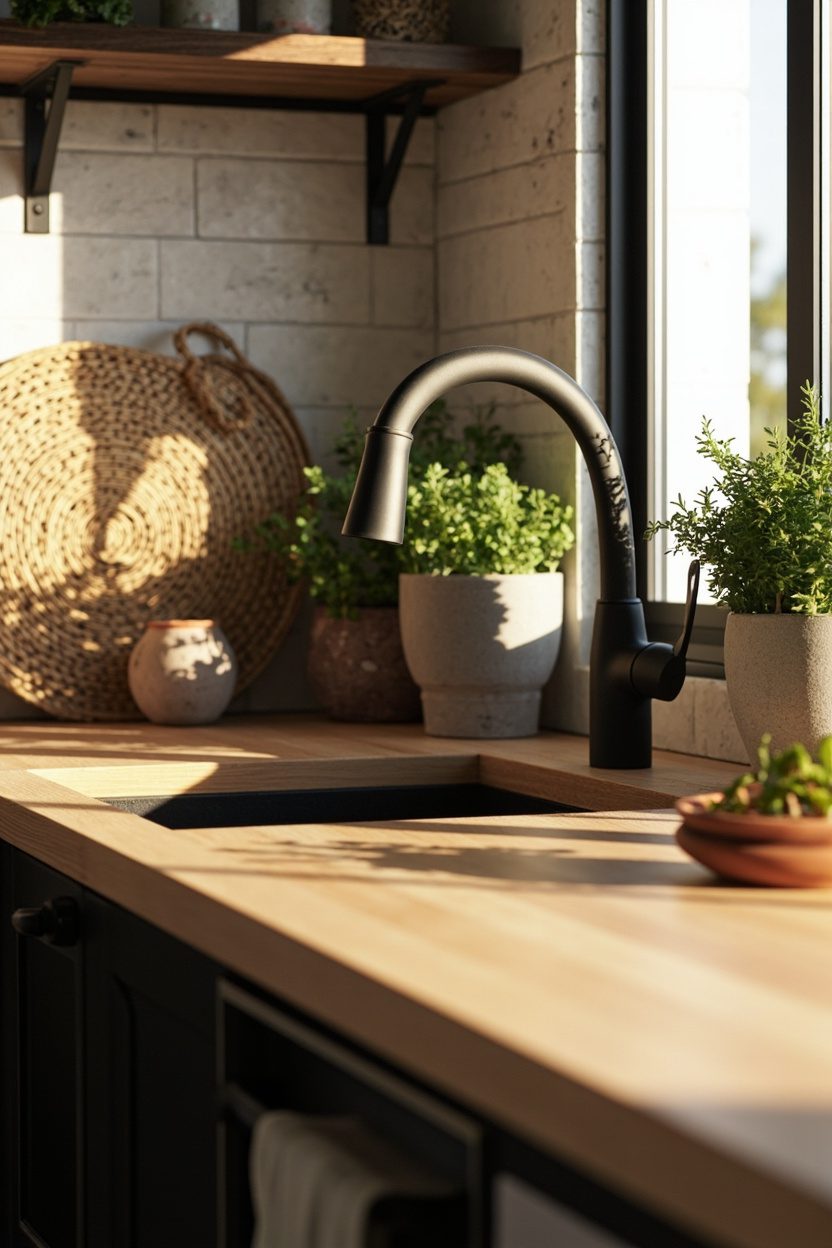
Matte black hardware, taps, and light fittings sharpen boho warmth and act as an anchoring contrast against rattan, terracotta, and linen tones. Use matte black deliberately—swap out cabinet pulls, a faucet, and a task light above the island rather than dousing the room; three to five black elements create cohesion without turning boho into industrial. Opt for powder-coated finishes to avoid fingerprints and maintain that soft, velvety look.
Placement and proportion are key: choose slimmer-profile black pulls on shaker-style cabinets and larger black knobs on flat-front doors to preserve scale. If you’re fitting a matte black sink or range hood, balance it with matte black trim on open shelving brackets or a framed mirror to keep the eye moving. For budget-conscious projects, start with replaceable items (pulls, faucets, pendant shades) in a mid-range price tier to get the look without splurging on every fixture.
Styling Blueprint
- Introduce 3–5 matte black elements as anchors rather than covering every surface.
- Match finishes (powder-coated matte) across hardware to avoid mismatched tones.
- Balance heavy black pieces with warm textures like wood, rattan, and linen.
- Upgrade replaceable items first (pulls, faucet, pendants) to test the look affordably.
12. Macramé Light Shades
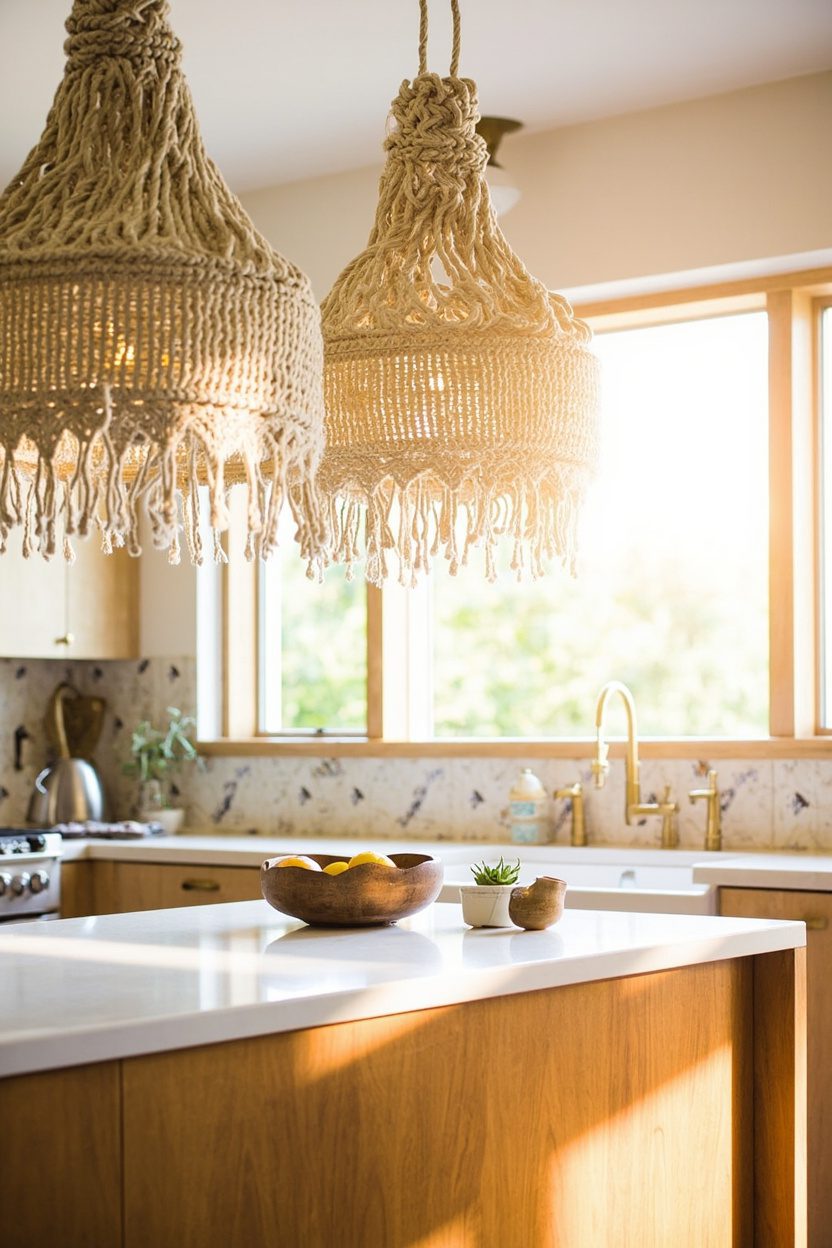
Macramé light shades are a signature boho move: they soften overhead lighting with hand-tied patterns and create inviting shadow play across counters and dining nooks. Use them in clusters of different sizes over an island or as a single pendant above a small breakfast table—natural cotton or jute fibers in off-white or honey tones read cozier than bleached white. For larger kitchens, combine one macramé pendant with a few minimalist metal or glass pendants to maintain task illumination.
Practical choices include lining shades with a thin, heat-resistant inner sleeve if you plan to use vintage-style incandescent bulbs; otherwise opt for LED globe bulbs that emit less heat. Keep the cords straight and uncluttered—macramé already provides texture, so avoid competing trim or tassels nearby. If you need inspiration for pairing boho lighting with cabinetry styles, see how woven elements work in varied layouts similar to advice in Boho Office Space Decor and Boho Cafe Interior approaches for proportional groupings.
Essential Elements
- Choose natural fibers (cotton/jute) in warm neutrals to enhance cozy light diffusion.
- Cluster pendants in odd numbers for visual rhythm and layered illumination.
- Use LED bulbs or add a heat-resistant liner for safety with warm-toned bulbs.
- Mix with one simple pendant style to avoid visual overcrowding in large kitchens.
13. Curved Banquette Seating
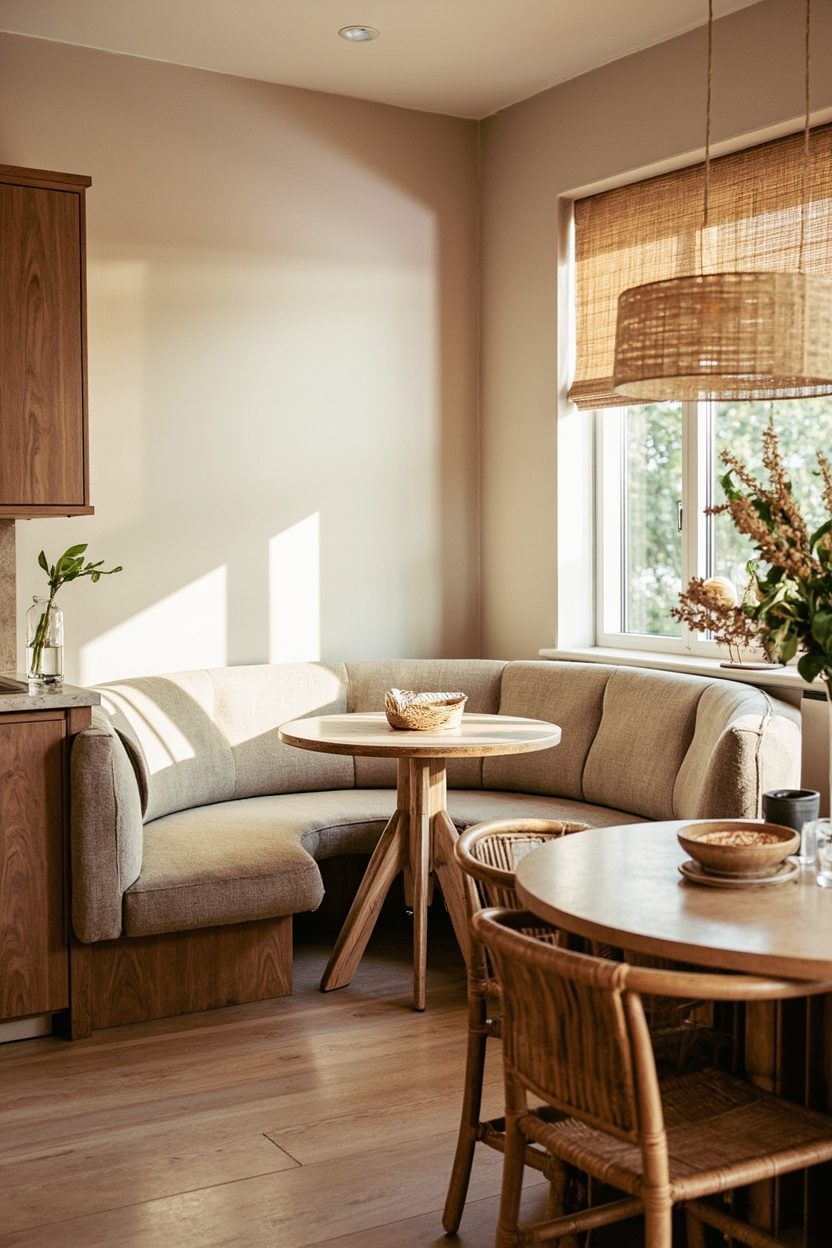
A built-in curved banquette softens hard kitchen geometry and creates a cocooned dining nook that invites lingering meals. Choose a low-profile banquette in steamed oak or walnut with a rounded back; scale the curve to fit a 36–48 inch radius so it reads intimate without eating the work triangle space.
Textiles make the boho intent: upholster in a warm, handwoven linen or boucle (cream or terracotta are dependable palettes) and layer with bolster cushions in mixed patterns to avoid looking too matchy. Avoid tight vinyl or slick synthetic fabrics—opt for natural fibers that patina, because visible wear is a deliberate part of the aesthetic.
What to Focus On
- Radius: keep seating curve between 36–48 inches for most kitchens to balance intimacy and flow.
- Frame material: choose solid oak or walnut for longevity and warm grain contrast with tile or stone floors.
- Upholstery: pick natural linen or wool blends that will soften and age pleasingly.
- Placement: position opposite an island or under a window to preserve prep sightlines and light access.
14. Layered Rug Styling
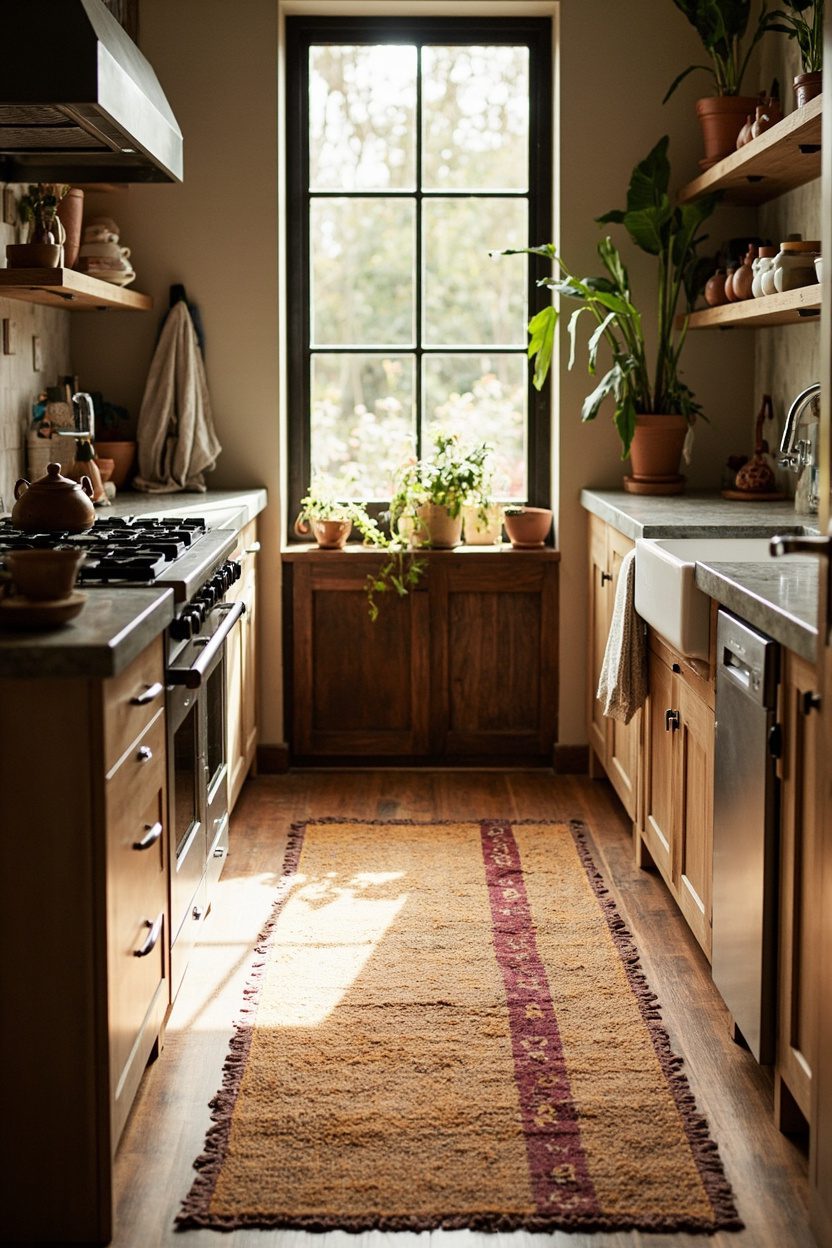
Layering rugs in the kitchen is a boho trick that brings pattern, softness underfoot, and distinct zoning without permanent changes. Start with a durable flatweave runner (natural jute or indoor/outdoor polypropylene for heavy-traffic areas) and top with a smaller, softer rug—think a low-pile kilim or vintage Persian fragment—to introduce color and hand-crafted motifs.
Keep proportions intentional: the bottom rug should extend at least 12 inches beyond the top layer on all visible sides to read as a deliberate anchor. Use rug pads to prevent slipping and to protect hardwood; avoid shag in cooking zones where crumbs and spills will mat the fibers quickly.
Essential Elements
- Base layer: choose a flatweave jute or indoor/outdoor runner for durability and stain resistance.
- Top layer: select a smaller kilim or dyed wool rug for pattern and tactile contrast.
- Proportion rule: bottom rug should exceed top rug by roughly 12 inches on each side for a layered look.
- Maintenance: use a non-slip pad and choose materials that tolerate spot cleaning or professional cleaning.
15. Wabi-Sabi Imperfections
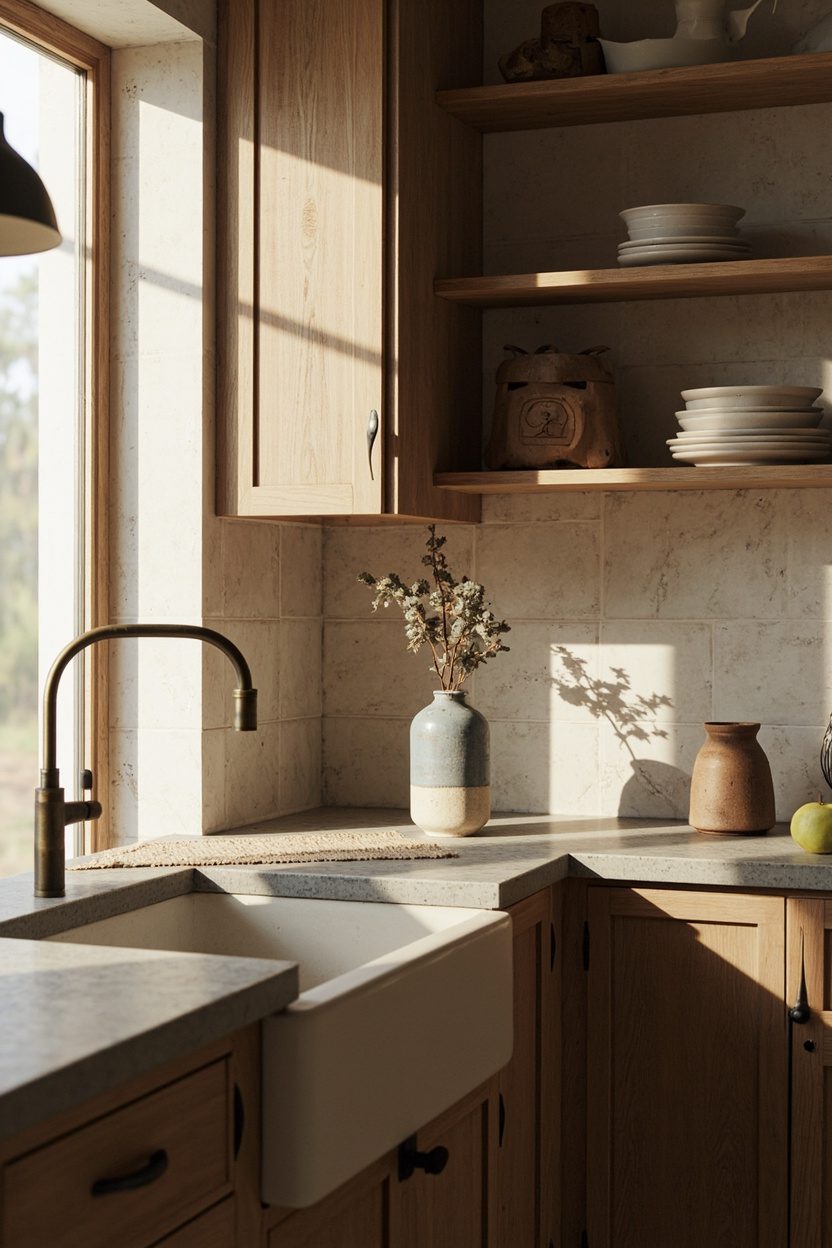
Wabi-sabi celebrates imperfection—embracing hand-thrown ceramics, rough-hewn timber shelving, and slightly uneven plaster walls to create a kitchen that feels human, lived-in, and comforting. Choose open shelving with reclaimed wood and pair with mismatched pottery for daily use; resist the urge to make everything perfectly symmetrical or color-coordinated.
Make one material decision the anchor—such as a honed soapstone countertop or a hand-glazed tile backsplash—and allow supporting elements to show wear: slightly sanded edges, hammered copper pans, and scumbled paint finishes. Avoid shiny, factory-perfect surfaces in key focal areas; instead, specify finishes that age well and invite touch.
Styling Blueprint
- Anchor material: select one durable, low-sheen surface (soapstone, honed marble, or raw timber) to age gracefully.
- Tableware: use hand-thrown ceramics and mix glazes to avoid uniformity and enhance tactile appeal.
- Shelving: install reclaimed wood with visible knots and tool marks for authentic character.
- Finish note: prefer matte or satin finishes over gloss to conceal minor nicks and to read as intentional.
16. Biophilic Window Seats
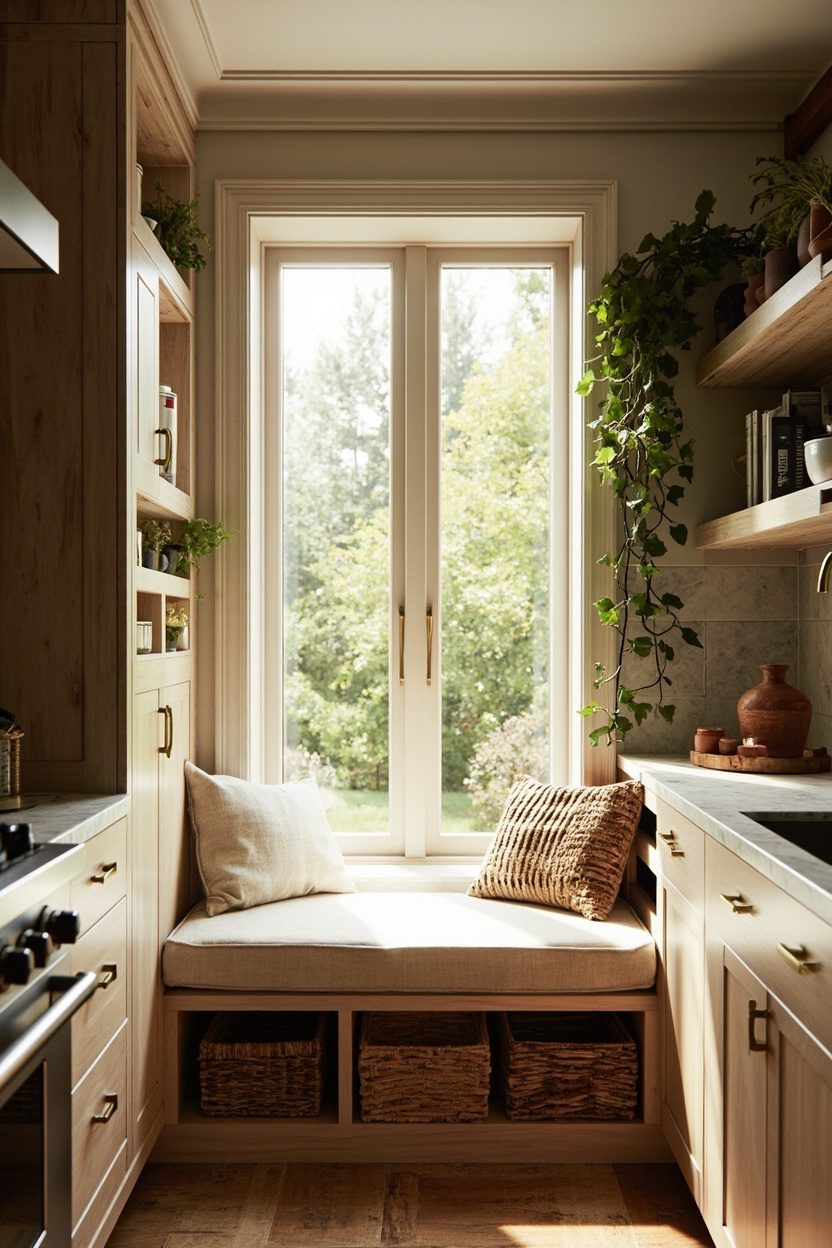
A biophilic window seat turns a kitchen’s daylight into a living ingredient—think a low bench framed by a deep sill for herbs and trailing plants that benefit from morning sun. Choose a durable, water-resistant upholstery like outdoor-grade Sunbrella in a warm ochre or forest green to resist spills; pair with a teak slatted base to avoid trapped moisture and allow airflow under cushions. Ensure the seat depth is 18–20 inches for comfortable dining nooks and 14–16 inches of sill width to accommodate pots without crowding the work surface.
Integrate natural materials in the surround: a reclaimed oak seat face, rattan storage baskets beneath for linens, and a matte black brass reading lamp for evening prep. Avoid placing the seat where cabinet doors swing into it—offset storage or use sliding doors to prevent a frequent bump. For urban apartments with limited light, install a narrow LED grow strip set on a timer rather than relying solely on decorative plants; it keeps herbs productive and the aesthetic authentic.
Styling Blueprint
- Seat depth: 18–20 inches for ergonomics and dining functionality.
- Upholstery: outdoor-grade Sunbrella or similar for spill resistance.
- Material mix: reclaimed oak bench + teak slatted base to manage moisture.
- Lighting: integrated LED grow strip or adjustable brass lamp for plants and tasks.
FAQ
How do I pick plants for a sunny kitchen window seat?
- Choose low-maintenance herbs (basil, chives, thyme) and trailing plants (pothos, string of hearts) that tolerate kitchen humidity.
- Match pot size to sill depth—use 4–6 inch pots on narrow sills to avoid overcrowding.
- Prefer terracotta or glazed ceramic for breathability; use saucers to catch runoff.
- Rotate pots monthly to encourage even growth and avoid one-sided legginess.
Can a window seat work in a small galley kitchen?
- Yes—opt for a shallow 14–16 inch bench and fold-down table to save circulation space.
- Use under-bench drawers or pull-out baskets to maximize storage without widening the footprint.
- Choose light upholstery and vertical planting to keep the visual weight minimal.
- A slim rail-mounted lamp or recessed LED keeps task lighting compact and effective.
What are budget-friendly materials for a boho window seat?
- Salvaged pine or pallet wood for the bench face finished with clear wax for warmth.
- Secondhand rattan baskets for storage and texture rather than custom cabinetry.
- Outdoor fabric remnants or drop-cloth linen dyed with pigment for cushion covers.
- Shop thrift stores for vintage brass lamps and repaint metalwork matte black for cohesion.
How do I integrate a window seat with an existing farmhouse or French kitchen?
- Echo existing cabinetry tones—paint the seat face in the same trim color for continuity.
- Use a simple beadboard panel or wainscot back to harmonize with farmhouse detailing; for French farmhouse, choose distressed whitewash finishes.
- Coordinate textiles with patterns from Cottage Bedding Ideas or sofa palettes—soft florals or ticking stripes work well.
- Keep plant styling relaxed and asymmetrical to maintain the informal, lived-in look typical of farmhouse boho hybrids.
Final Thoughts
A biophilic window seat is a small investment with outsized returns: it softens hard kitchen edges, introduces living textures, and creates a slow-moment in a hectic zone. Prioritize practical material choices—moisture-resistant upholstery, ventilated bases, and correct seat depth—so your cozy niche endures as both a styling statement and a hardworking spot in the kitchen.