


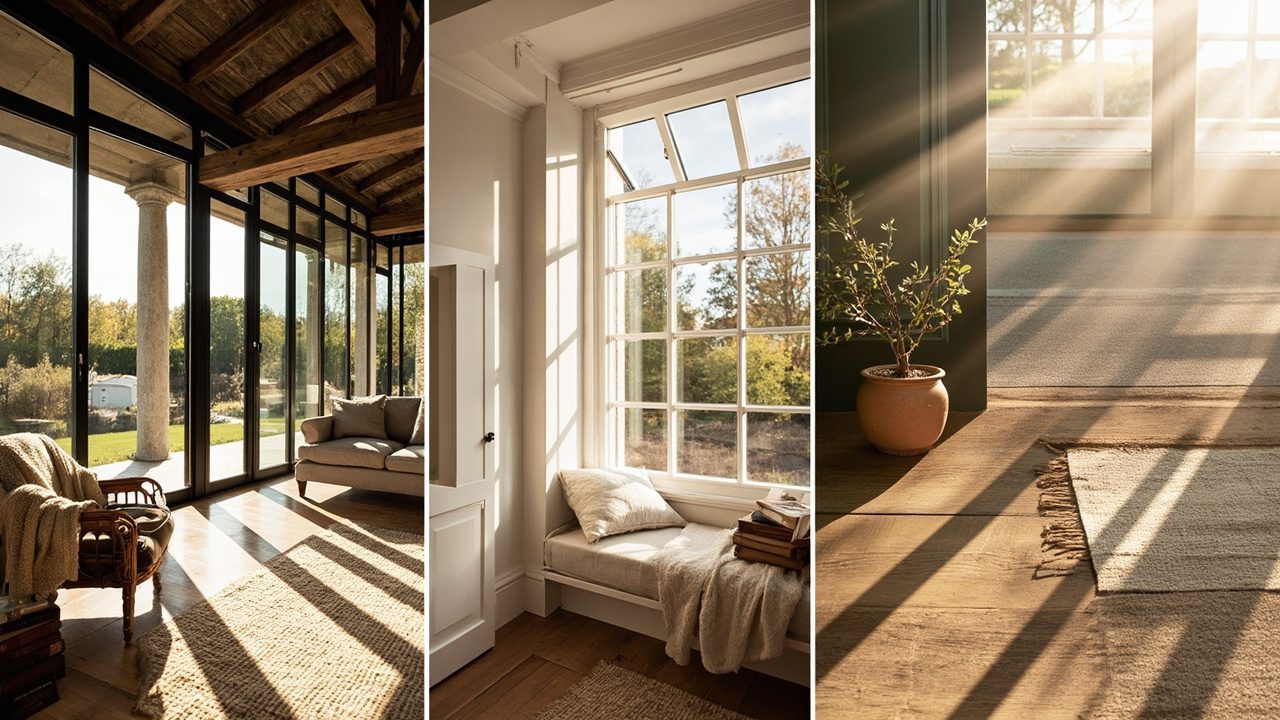
A farmhouse sunroom should feel like a natural extension of both the house and the landscape: airy, durable, and layered with lived-in textures. Think about sightlines, daylighting and materials first — good planning keeps the space usable year-round without sacrificing the casual charm farmhouse rooms are known for.
Prioritize durable surfaces and clear circulation paths so the room reads as an intentional living space rather than a porch. I’ll show concise, field-tested ways to marry structure and style so the line between inside and out is genuinely blurred.
- 1. Bright Modern Farmhouse Sunroom Layouts
- 2. Layered Textures for Cozy Sunrooms
- 3. Warm Wood Beams and Ceiling Ideas
- 4. Brick and Stone Flooring Options
- 5. Mixing Old and New Furnishings
- 6. Neutral Palettes with Rich Accents
- 7. Sunroom Window Treatment Solutions
- 8. Indoor-Outdoor Plant Styling Tips
- 9. Efficient Heating and Cooling Strategies
- 10. Multipurpose Sunroom Furniture Picks
- 11. Lighting Ideas for Day and Night
- 12. Blending Additions with Original Structure
- FAQ
- Final Thoughts
1. Bright Modern Farmhouse Sunroom Layouts
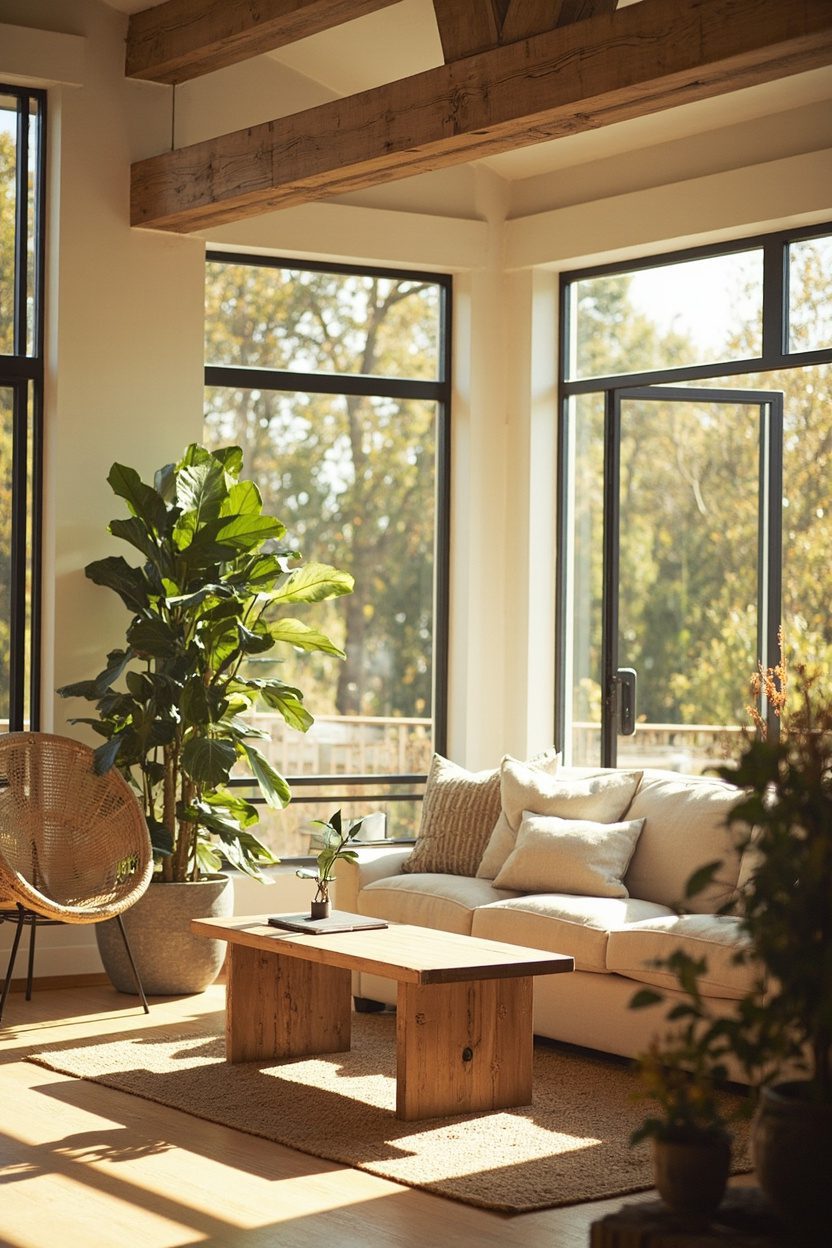
Orient seating clusters to face the garden and use a central rug to define the living area; choose a low, weather-resistant jute or indoor-outdoor wool rug scaled to leave 12–18 inches of floor visible around the edge for proportion. Position a narrow console or storage bench behind the main sofa to create a subtle foyer—this keeps traffic flowing and offers a place to set down plants or trays without blocking views.
Maximize light with three-sided glazing or oversized casement windows; install operable transoms or sliding glass panels to encourage cross-ventilation in warm months. For finishes, pair painted brick or lime-wash walls with matte white trim to keep the modern farmhouse look bright without feeling sterile.
2. Layered Textures for Cozy Sunrooms
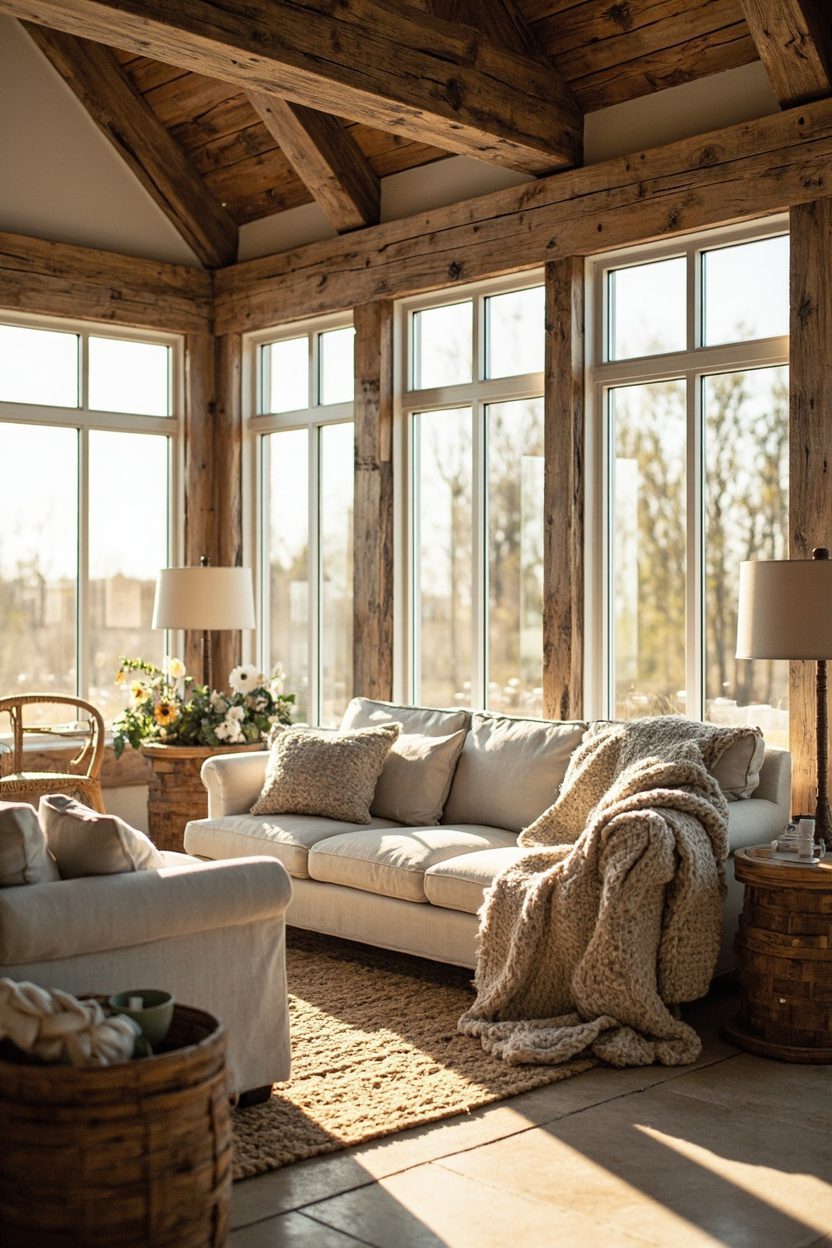
Layer natural textiles—linen slipcovers, a chunky wool throw and leather-accent pillows—to create depth while keeping the palette neutral; stick to 2–3 texture types per seating group to avoid visual clutter. Add a woven hanging planter and a rattan side table to introduce tactile interest at different heights, which steers the eye outward and connects with garden materials.
Use mixed flooring textures to signal indoor-outdoor transition: a perimeter of wide-plank oak with a central inset of textured tile or flagstone works well, and place rugs to unify zones. Avoid overly glossy surfaces that reflect glare; a low-sheen finish on wood and matte ceramic tile will read more natural and age gracefully.
3. Warm Wood Beams and Ceiling Ideas
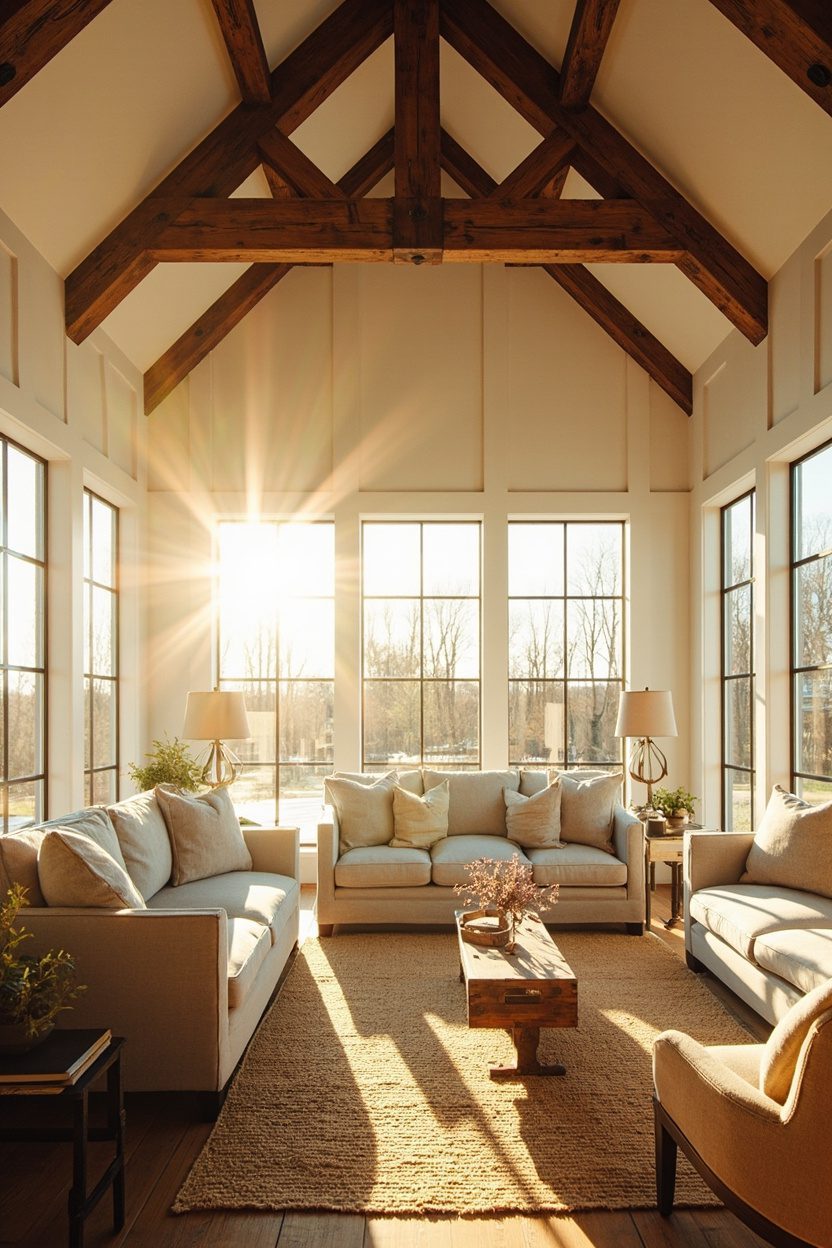
Expose timber beams or install faux beams in a warm tone like honey oak or reclaimed chestnut to add farmhouse character while keeping ceiling height feeling generous; run beams perpendicular to the primary window wall to draw attention to the view. If budget is tight, use engineered wood beams—lightweight, easier to install, and available pre-finished to match existing trim.
Consider a beadboard or tongue-and-groove ceiling painted a soft cream between beams to brighten the room while adding architectural interest; scale the beam width to ceiling height (wide beams for tall ceilings, slimmer for low ceilings) to avoid overwhelming the space. For moisture-prone sunrooms, seal wood with a satin water-based polyurethane to protect finish without altering color significantly.
External reference: For contemporary applications of farmhouse sunroom design and materials, Houzz offers a range of real-world projects that illustrate these layout and material choices. 75 Farmhouse Sunroom Ideas You'll Love.
Related farmhouse room inspiration: explore a classic White Farmhouse Kitchen and adaptable details from a Farmhouse Kitchen that translate well into sunroom shelving and millwork.
4. Brick and Stone Flooring Options
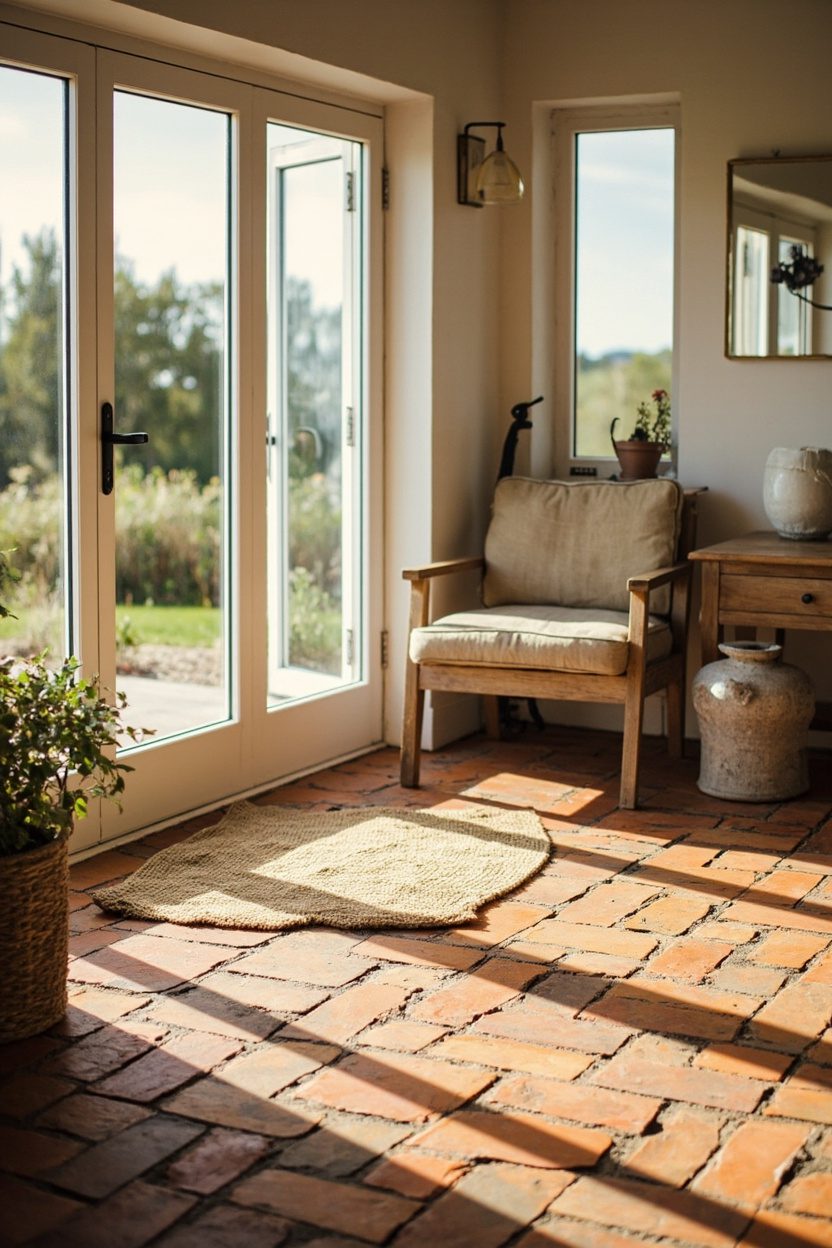
A brick or natural stone floor anchors a farmhouse sunroom with tactile, weathered character—choose reclaimed brick laid in a herringbone or basketweave for visual interest and better traction. Specify a 3/8″ grout joint and a penetrating sealer suitable for freeze–thaw climates; this keeps maintenance low while preserving patina without becoming slippery when wet.
Pair with an area rug in a durable indoor/outdoor weave to soften the footprint and protect high-traffic zones; position it so at least the front legs of seating rest on the rug to avoid a “floating” look and to define conversation areas effectively.
5. Mixing Old and New Furnishings
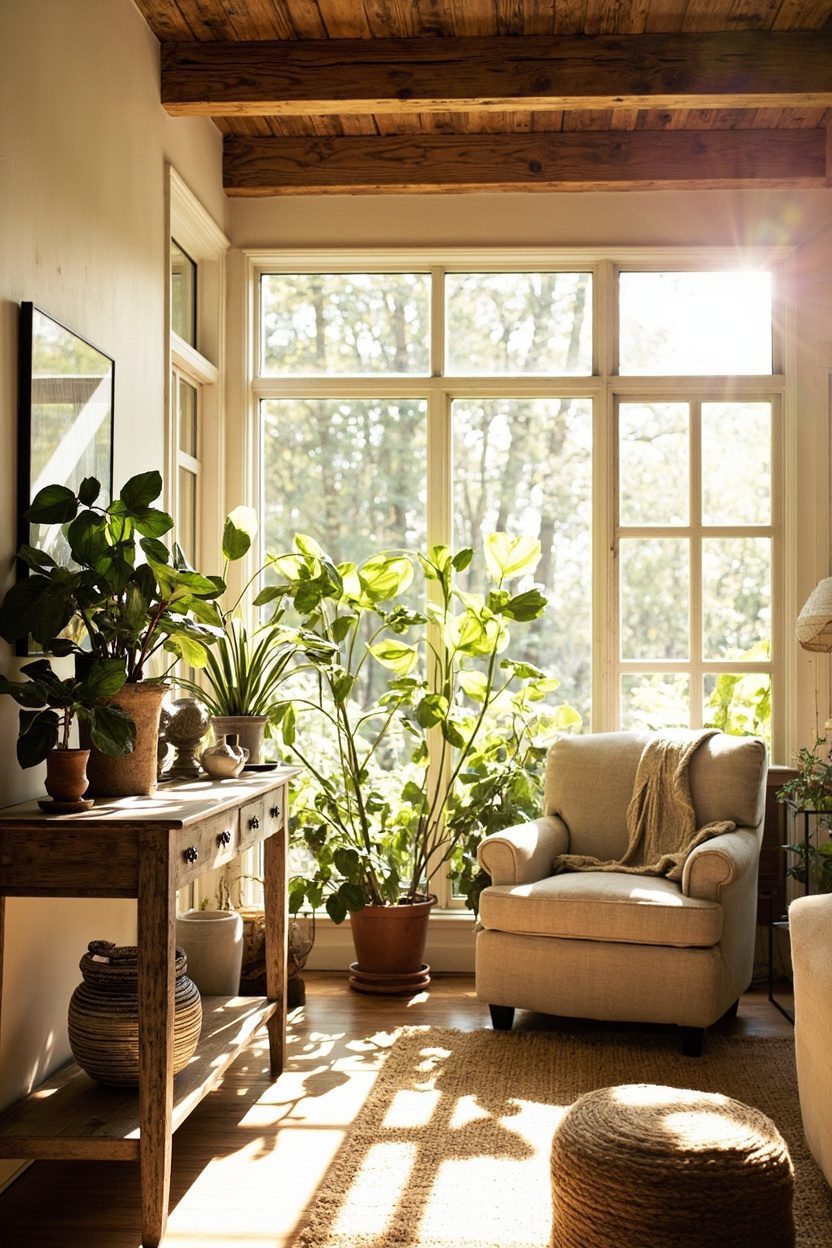
Blend a modern, streamlined sofa with an antique pine coffee table to get the lived-in contrast modern farmhouse craves—keep scale balanced by choosing a low, wide sofa (36–40″ seat height) to match the rustic table height and avoid awkward proportions. Resist the impulse to match finishes; instead, repeat a metal tone (like aged brass or matte black) across lamps and hardware to tie eras together.
For budget-friendly authenticity, refinish one thrifted piece (light sanding and a matte protective oil) rather than replacing multiple items; place it near a window and layer with textiles—wool throw and linen cushions—to visibly connect old textures with newer upholstery.
6. Neutral Palettes with Rich Accents
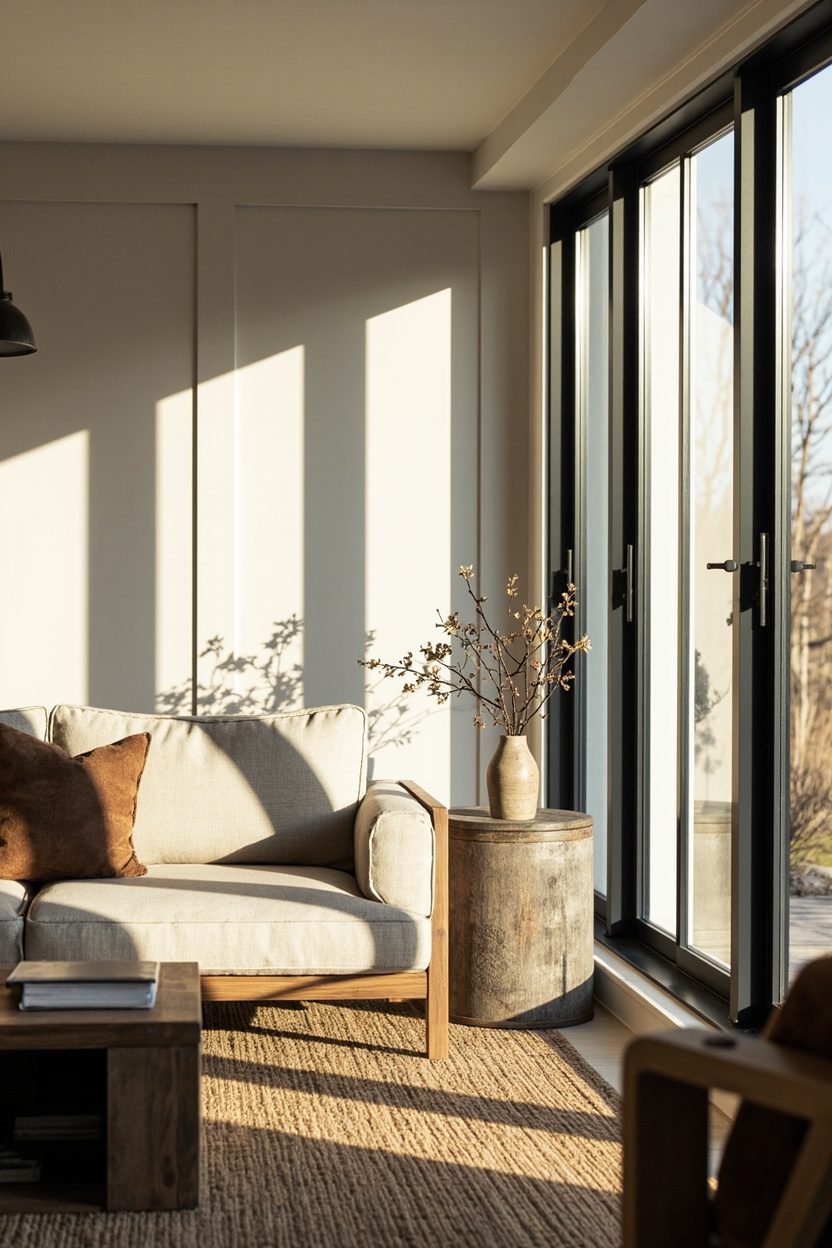
Start with a warm neutral base—cream plaster walls or soft greige trim—and introduce deep accent colors through paint on a single wall, pottery, or upholstery; consider a moss green or navy in a 5–10% ratio so the room stays airy but gains depth. Use a rich accent in no more than three elements (for example, a painted cabinet, two cushions, and one rug) to keep the look intentional rather than scattered.
Select finishes that read rich even in neutral schemes: matte black window frames, aged brass light fixtures, and a walnut side table provide contrast and tactile warmth. A common mistake is over-whitening the palette—add a few natural wood tones and woven textures to prevent the sunroom from feeling sterile.
7. Sunroom Window Treatment Solutions
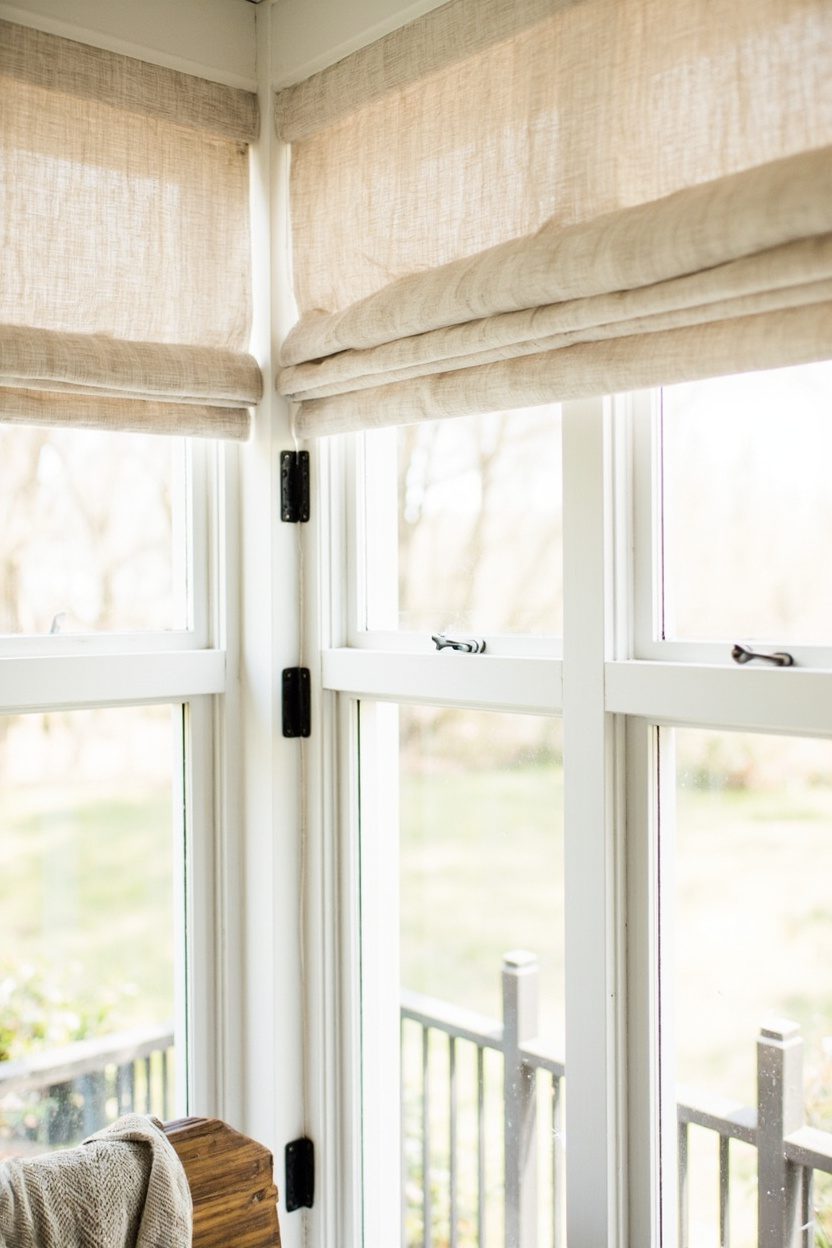
Choose layered window treatments to control light and privacy without losing the outdoor feel. Combine a sheer linen panel for daytime diffusion with a woven bamboo Roman shade for evenings; mount shades inside the window frame and sheers on a ceiling track to keep proportions clean and avoid blocking sightlines.
For durability and easy maintenance, pick UV-stable fabrics and corrosion-resistant hardware—aluminum or stainless-steel tracks and faux-wood slats work well in humid climates. A common mistake is overscaling: keep valances minimal and select treatments no deeper than one-third of the window height so you don’t cut off the view.
8. Indoor-Outdoor Plant Styling Tips
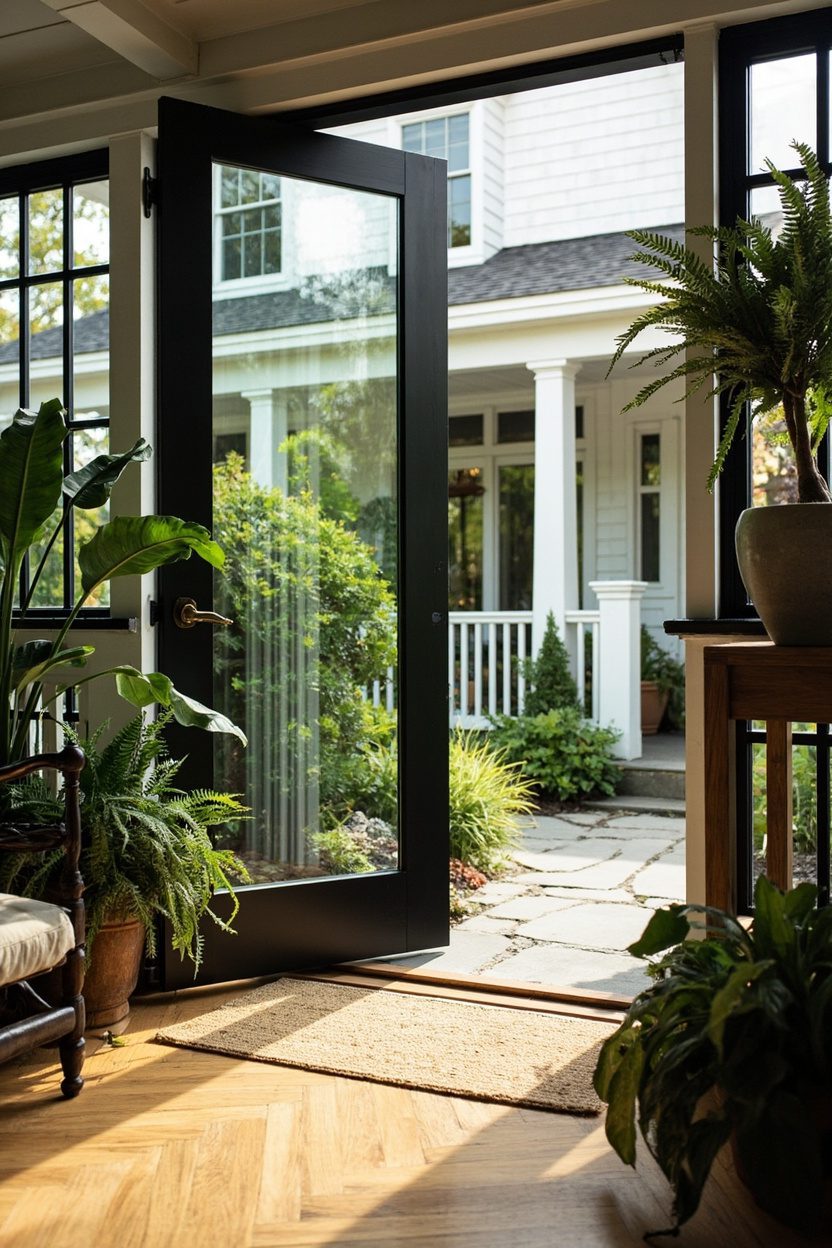
Group plants in odd-numbered clusters at varying heights to create a transition between the garden and the sunroom; use a tall fiddle-leaf fig in a textured clay pot, mid-height palms in woven baskets, and a low saucer of succulents on a reclaimed-wood bench. Place plants near thermal mass (stone or tiled surfaces) to moderate temperature swings—avoid crowding them against radiators or AC vents.
Integrate hardscaping details like terracotta trays and raised plant platforms to prevent water damage and add visual layering; use saucers and trays that match your floor material or paint them a complementary neutral to tie the scheme together. For care, choose mostly low-to-medium light varieties if the sunroom gets variable sun, and rotate pots monthly to promote even growth.
9. Efficient Heating and Cooling Strategies
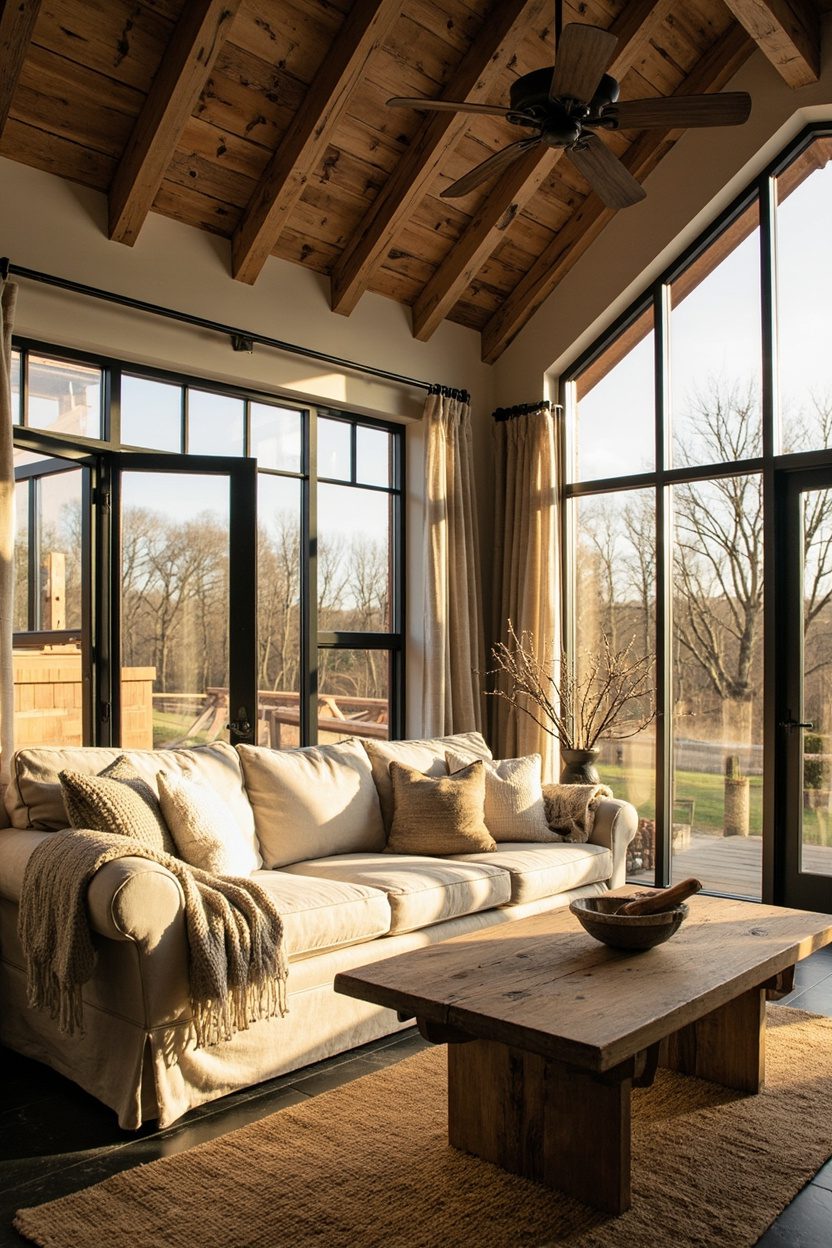
Treat the sunroom as a microclimate: install a mini-split heat pump for precise temperature control without ductwork, placing the indoor unit high on a side wall to distribute air evenly and avoid direct blasts on seating areas. Add thermal solutions like high-R-value insulated blinds, a radiant barrier under the roof, and rugs over tile to reduce heat loss and make the room usable year-round.
Don’t overlook passive strategies—orient operable windows for cross-ventilation, fit ceiling fans that reverse in winter, and use overhangs or exterior shades on south-facing glazing to block summer sun while admitting winter light. For budgeting, expect a quality mini-split installation to start around $3,000–$5,000; combine with inexpensive fixes like weatherstripping to get immediate comfort gains.
10. Multipurpose Sunroom Furniture Picks
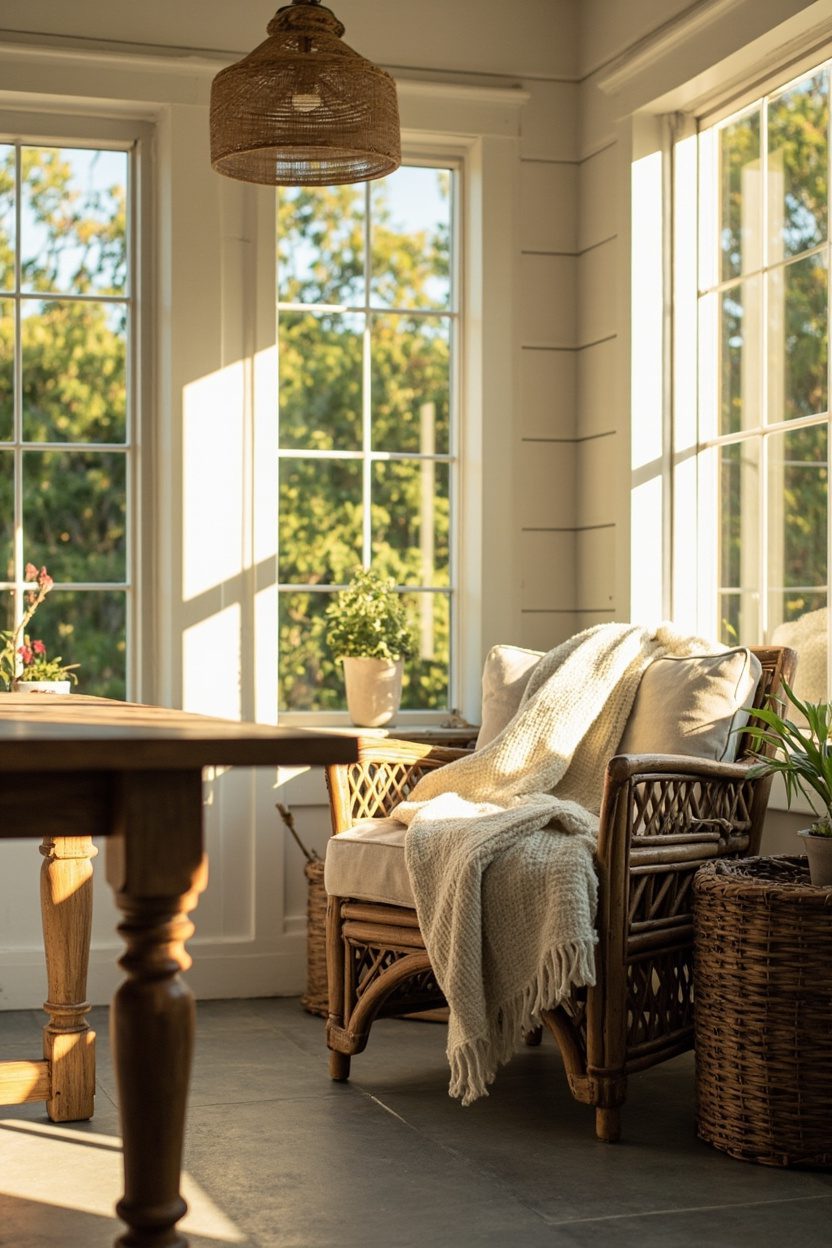
Choose modular seating that doubles as storage and can be reconfigured for plants, reading, or a casual dining setup. Opt for teak or powder-coated aluminum frames with quick-dry outdoor cushions to withstand humidity and occasional outdoor use; keep seat depth around 20–22 inches to stay comfortable without overpowering the sunroom’s scale.
Include at least one folding table or nesting side tables that tuck away when you want open floor for yoga or kids’ play; a bench with a concealed compartment is a high-value swap for a bulky console and keeps clutter minimal.
11. Lighting Ideas for Day and Night
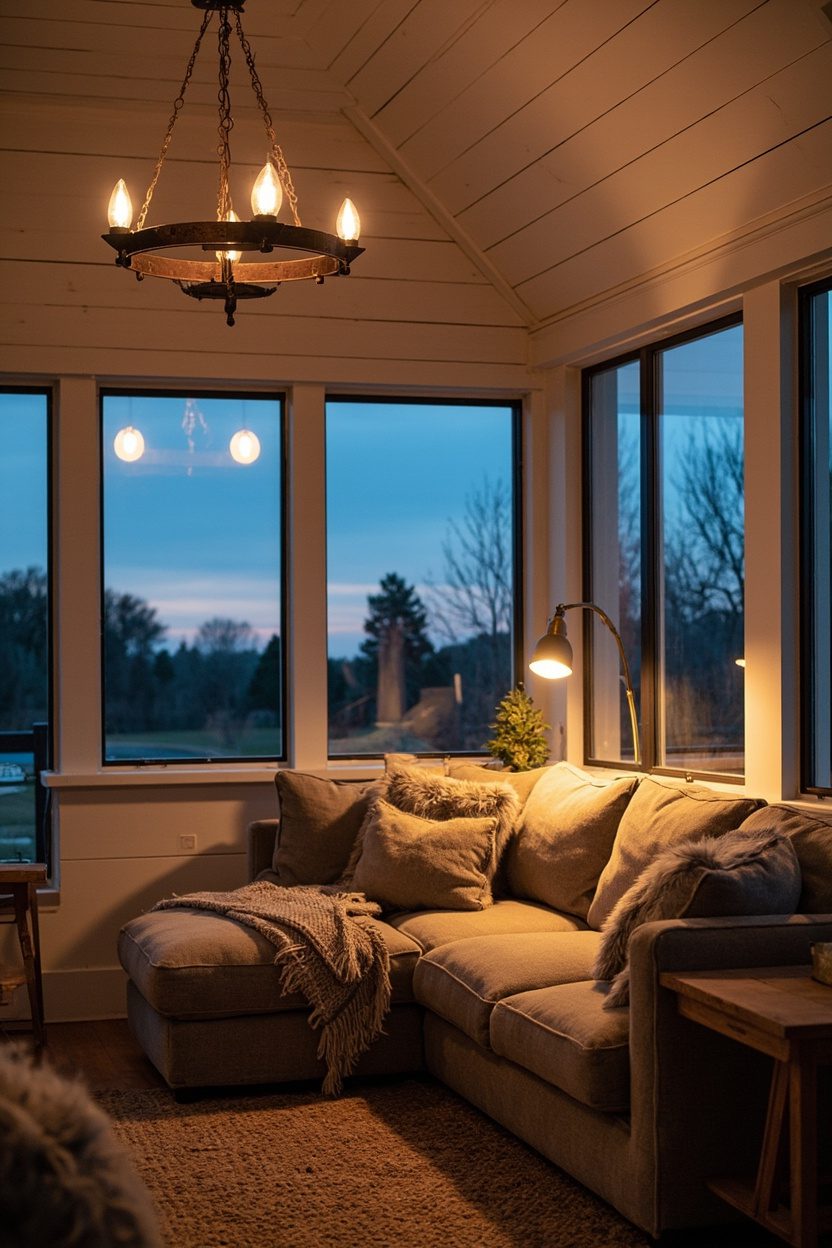
Layer daylight with dimmable overhead fixtures and task lamps so the room reads as exterior by day and intimate by night; choose warm 2700–3000K LEDs to preserve the farmhouse warmth. Install sun-tracking sheer shades or motorized blinds to control glare while keeping the view; position sconces or pendant lights at eye level (60–66 inches from the floor to the fixture center) to avoid harsh shadows.
Add low-voltage landscape uplighting outside large windows to blur boundaries after dusk, and use rope or puck lights under seating or planters to create depth without full illumination.
12. Blending Additions with Original Structure
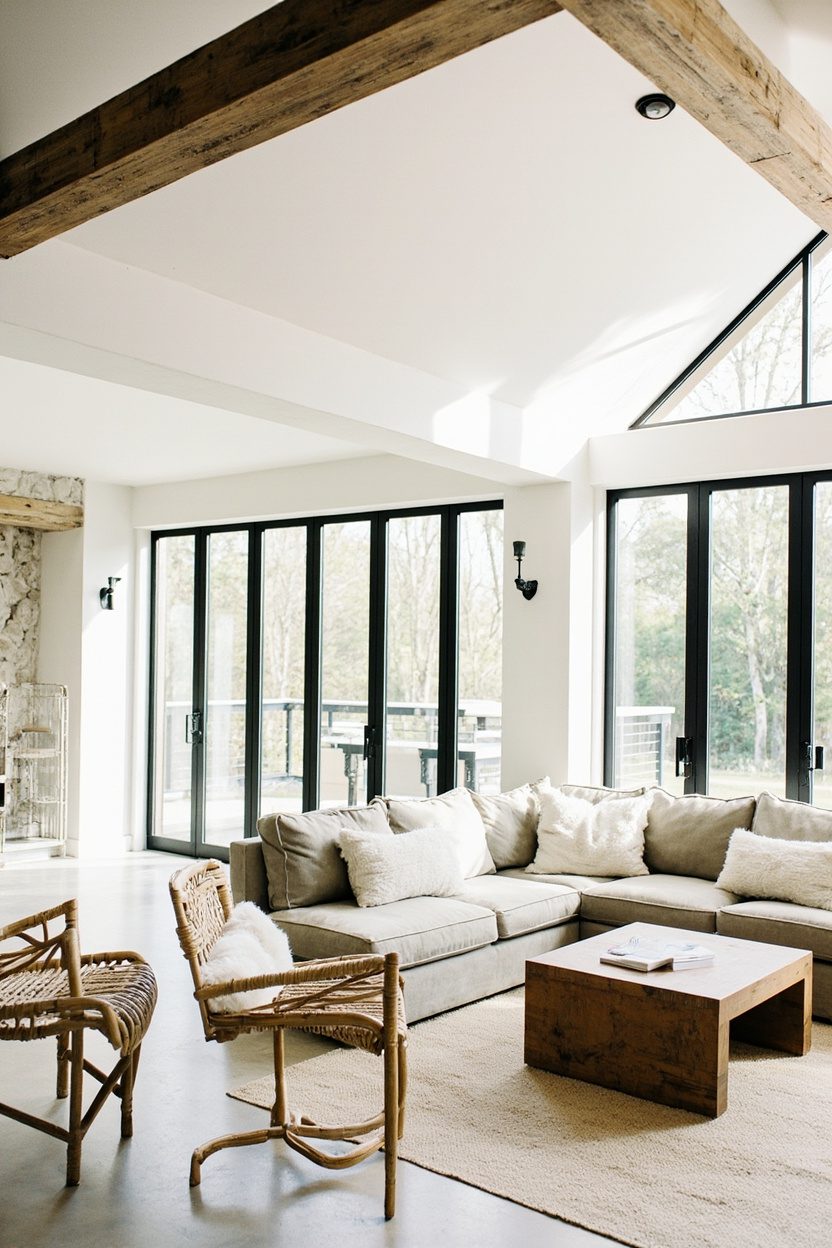
Match cornice heights, roof pitch, and exterior siding to the main house for a seamless addition; if exact materials aren’t available, use complementary textures like painted board-and-batten with reclaimed wood trim to make the transition look intentional. Carry key interior elements—think beam profiles, plaster or limewash wall finishes, and muted farmhouse paint hues—into the sunroom so the eye moves uninterrupted from old to new.
A common mistake is over-glazing on an addition; balance glass runs with solid wall planes and a thermal break in framing to keep the space energy efficient and aligned with the home’s original proportions. For inspiration on cohesive additions, see how thoughtful exterior choices can unite new with old on examples like modern pole barn integrations from industry portfolios (Houzz).
If you want another practical angle, read 12 Farmhouse Easter Floral Arrangement Ideas with Rustic Touches.
FAQ
Q: What flooring works best for a sunroom that feels like outdoors?
A: Porcelain tile with a textured finish or sealed reclaimed wood plank are durable, slip-resistant options that read natural; install with an appropriate vapor barrier and slightly raised transition to adjacent rooms.
Q: Can I use indoor furniture in a sunroom?
A: You can, but choose pieces with robust fabrics (performance linen or Sunbrella) and avoid delicate leathers; elevate legs slightly on protective pads to reduce moisture transfer.
Q: How do I prevent sunroom overheating in summer?
A: Use low-e glazing, exterior shade devices like pergolas or awnings, and operable vents or transom windows to promote stack ventilation and reduce solar gain.
Q: Is permitting required for a sunroom addition?
A: Usually yes—most municipalities require permits for structural changes, electrical, and glazing; consult local building codes and a licensed contractor before starting.
Final Thoughts
A farmhouse sunroom that blurs inside and out is about proportion, materials, and layered function—balance durable furniture, thoughtful lighting, and exterior-aligned detailing to create a timeless, livable space. For styling ideas that echo farmhouse character without pastiche, explore layouts and decor approaches in the White Farmhouse Kitchen and Boho Office Space Decor galleries for crossover inspiration.