


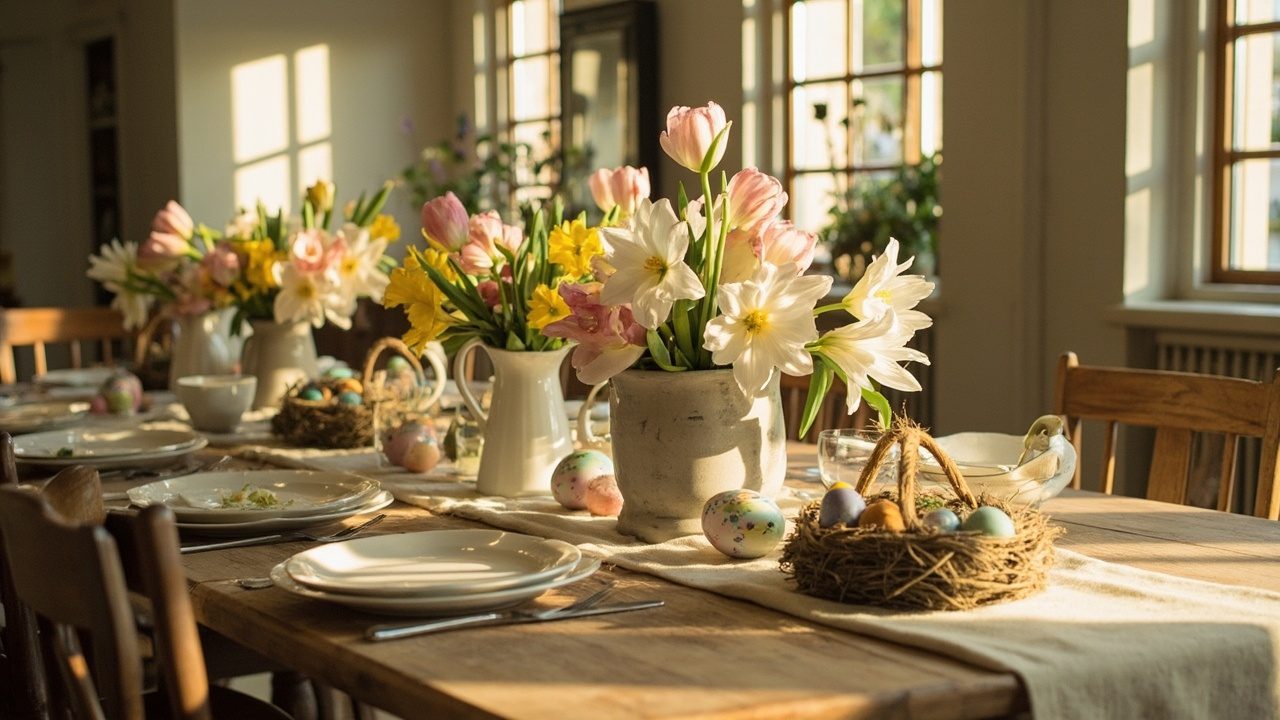
Soft spring light calls for arrangements that feel lived-in, not staged. These farmhouse Easter floral ideas favor muted palettes, tactile elements like twine and weathered wood, and just enough whimsy to read as seasonal, not costume-y.
Think of natural materials paired with simple blooms, where scale and placement matter more than floristry tricks.
I’ll focus on practical decisions, which vase shape keeps stems upright, when to choose dried over fresh for longevity, and where to add a rabbit motif without tipping into kitsch.
- 1. Neutral Wreaths with Bunnies
- 2. Gingham Table Runners
- 3. Dried Wheat Centerpieces
- 4. Mason Jar Bud Vases
- 5. Rustic Seedling Displays
- 6. Linen Bunny Napkins
- 7. Distressed Wood Signs
- 8. Clay Pot Herb Clusters
- 9. Soft Pastel Garlands
- 10. Wire Egg Caddies
- 11. Layered Plaid Throws
- 12. Cottagecore Floral Baskets
- FAQ
- Final Thoughts
1. Neutral Wreaths with Bunnies
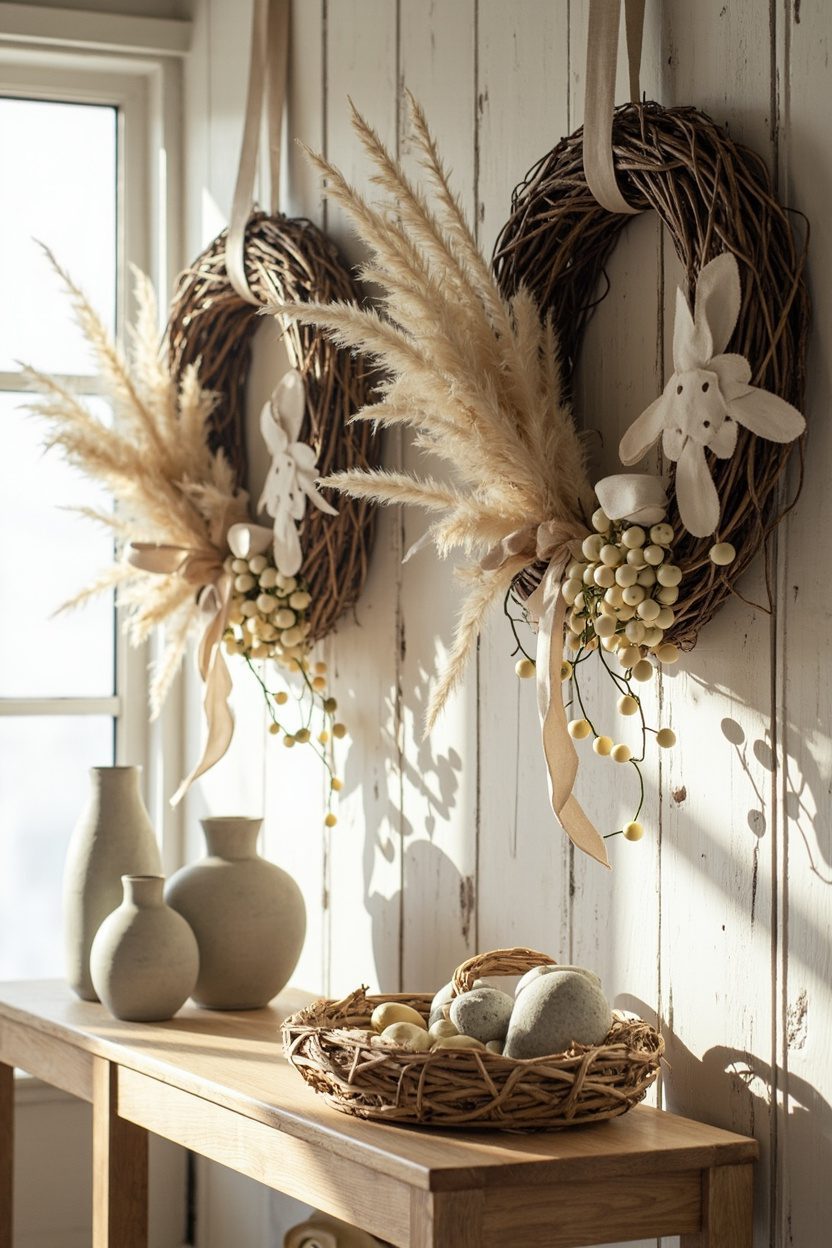
A neutral wreath sets a calm, classic tone for a farmhouse entry, using linen ribbon, preserved eucalyptus, and pale ranunculus for softness. Choose a 14-18 inch grapevine base so the wreath reads substantial without overpowering a standard front door.
Introduce a small ceramic or felt rabbit tucked into foliage, sized around 3-4 inches, to keep the theme subtle. Avoid glossy plastic figures; they break the tactile, vintage feel; go for matte clay or hand-felted options instead.
Color direction should stay within warm creams, soft taupe, and muted greens, which pair well with reclaimed wood doors and galvanized metal hardware. For durability in spring weather, use preserved greens and wired stems, so the composition survives wind and rain.
Essential Elements
- 14-18 inch grapevine base, for balanced scale on average doors.
- Preserved eucalyptus and linen ribbon, for longevity and texture.
- 3-4 inch matte ceramic or felt rabbit, tucked into foliage.
- Neutral palette: cream, taupe, muted green, to match farmhouse finishes.
2. Gingham Table Runners
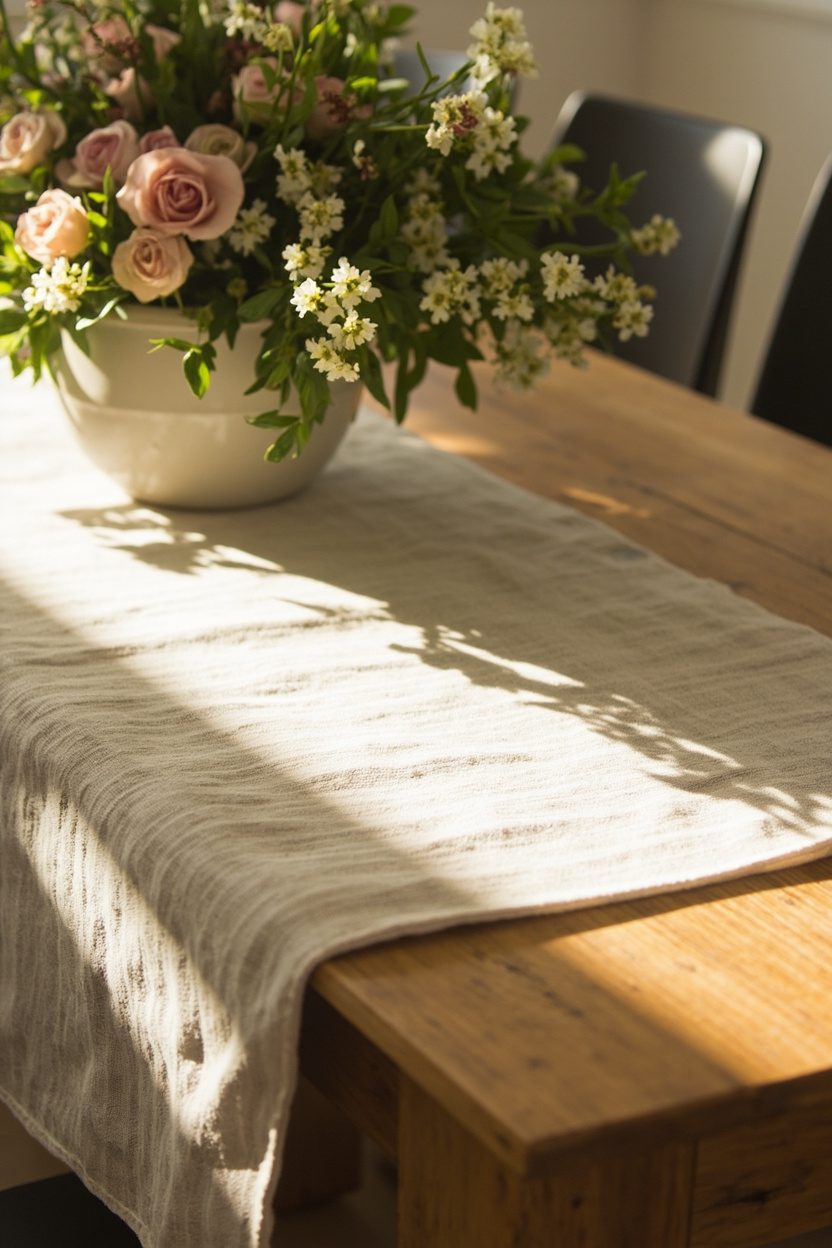
A gingham runner instantly reads farmhouse, and when paired with simple mason jar posies, it anchors a casual Easter spread. Pick cotton or linen blends in 18-24 inch widths; the fabric drape affects how tidy or relaxed the table looks.
For floral choices, pair small bouquets of baby’s breath, daisies, and olive sprigs in low mason jars, so patterns and blooms share the visual stage without clashing. Use a 2-3 inch fabric overhang at each end for a tailored finish.
Scale matters: on a 72-inch table, run a single 108-inch runner down the center for a continuous stripe, or use three staggered runners for a layered look. Avoid oversized florals that compete with the check pattern; they make the table feel congested.
Styling Blueprint
- Cotton-linen gingham, 18-24 inch width, for a natural drape.
- Mason jars with baby’s breath and olive sprigs, low and repeated.
- Runner length: 108 inches for 72-inch tables, ensuring balanced overhang.
- Keep blooms small, colors soft, to let the gingham texture remain visible.
3. Dried Wheat Centerpieces
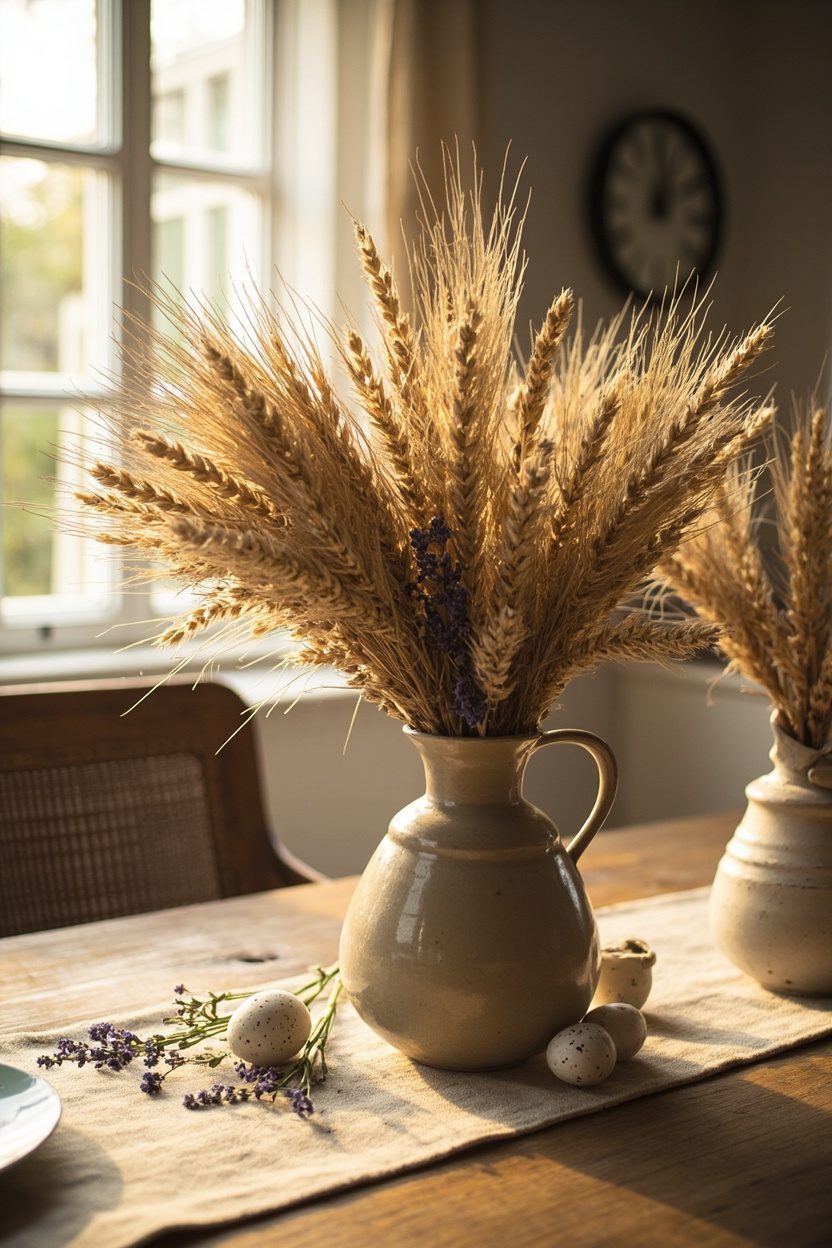
Dried wheat gives an earthy, farmhouse note that’s durable through holiday meals, and it reads seasonal without needing fresh blooms. Bundle stems in groups of 20-30 for visual weight, then secure with twine or leather cord for rustic detail.
Choose a narrow-necked stoneware jug or a vintage milk bottle to control spread and silhouette; the vessel dictates how vertical the arrangement stays.
For a softer composition, mix in a few dried bunny tails or oat stems, keeping the palette golden and warm.
Budget-friendly and low-maintenance, dried wheat works well on long farmhouse tables and mantel displays, and it avoids the expense of fresh flower delivery. Avoid plastic-coated stems; they look synthetic under close inspection.
What to Focus On?
- Bundle 20-30 wheat stems, tied with natural twine for rustic accuracy.
- Narrow-neck stoneware jug or vintage milk bottle, for controlled silhouette.
- Add a few dried bunny tails for softness, keep palette warm, golden hues.
- Avoid plastic stems; choose authentic dried grasses for texture and longevity.
4. Mason Jar Bud Vases
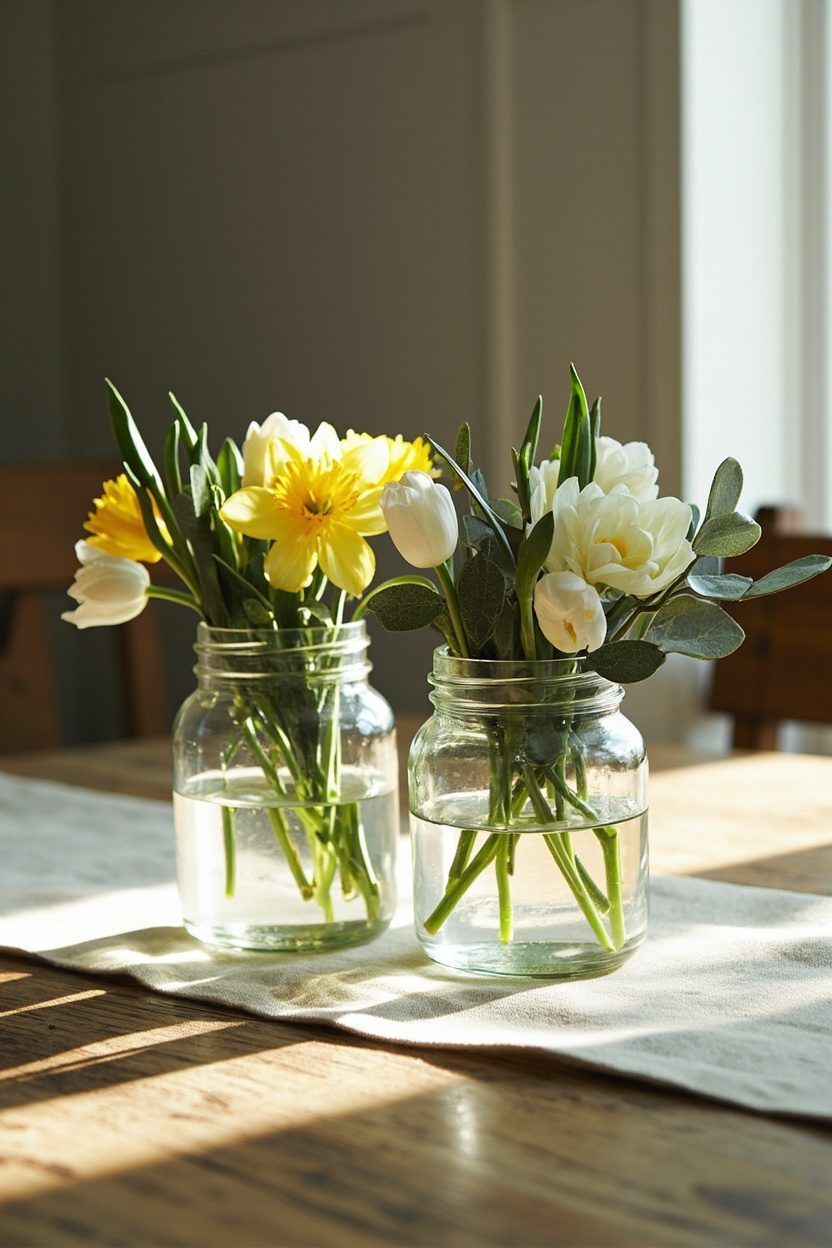
Mason jars are the workhorse of farmhouse florals. Choose clear or slightly tinted glass in pint size for proper scale on dining tables.
Group jars in odd numbers, three or five, to avoid a contrived look, and vary heights by using jars with rings or short tumblers.
Use single-flower stems, like ranunculus or tulips, trimmed to sit just above the jar rim for an effortless, airy silhouette.
Wrap twine or a strip of burlap around the jar neck, secure with a small vintage button, to give each vase a handmade, rustic finish.
Styling Blueprint
- Use 3 jars of mixed heights, same glass tone, for a centerpiece composition.
- Trim stems so blooms sit 1 to 2 inches above the rim for balanced proportion.
- Replace water and recut stems every 48 hours to extend vase life.
- Anchor jars on a small wood plank or runner to make a portable display.
5. Rustic Seedling Displays
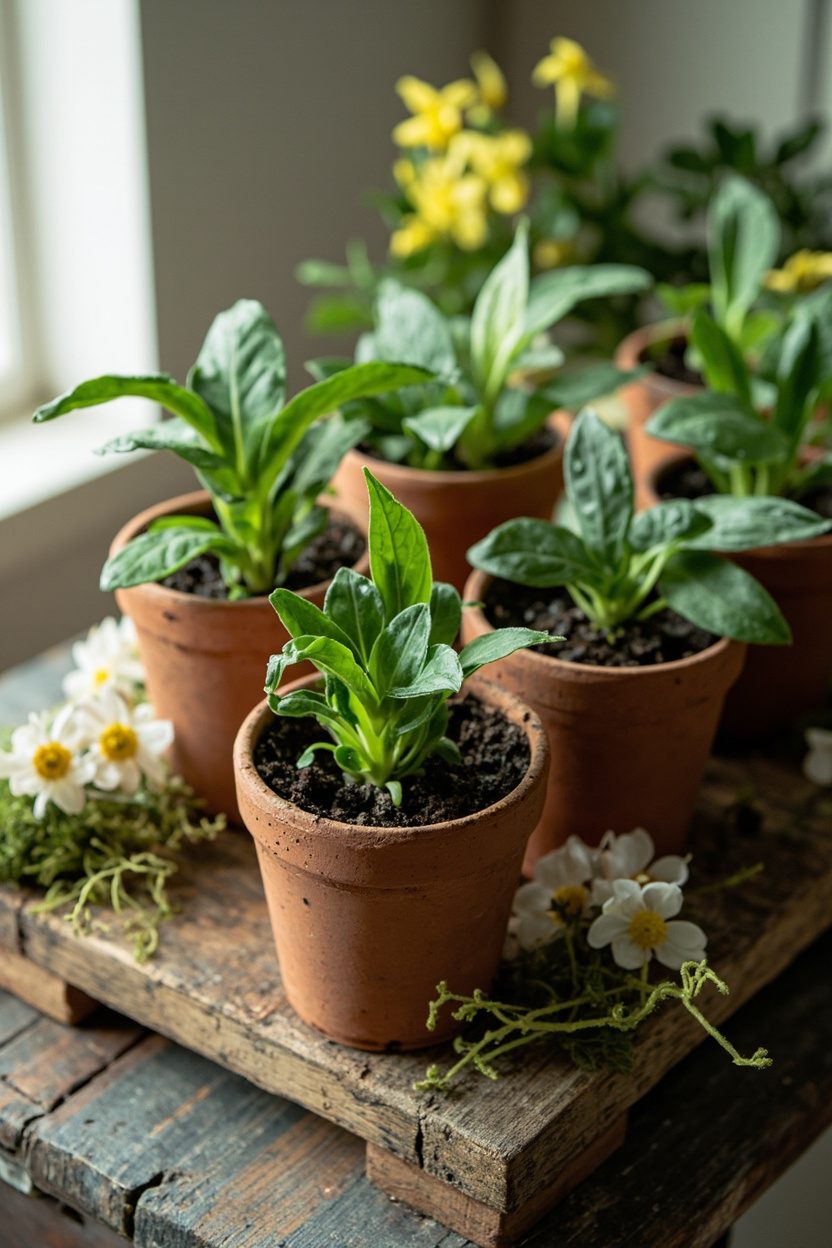
Seedlings in small pots bring spring growth into the room. Pick galvanized metal pots or terra cotta for an authentic farmhouse edge.
Plant quick-sprouting herbs like thyme, chives, or baby basil in seedling trays for scent and seasonal interest at the table.
Group seedlings on a shallow wooden tray or vintage breadboard, arrange by height and leaf texture for an edited, layered effect.
Label each pot with a kraft tag tied in jute. This practical detail helps guests identify herbs and reinforces the rustic vibe.
Essential Elements
- Use 2 to 3 pot varieties, mix metal and terra cotta for tonal contrast.
- Choose herbs that are both decorative and edible. Budget-friendly seed packs work well.
- Place trays near light, but out of direct hot sun, to avoid wilting during gatherings.
- Include a small watering can or mister nearby to keep seedlings fresh through the day.
6. Linen Bunny Napkins
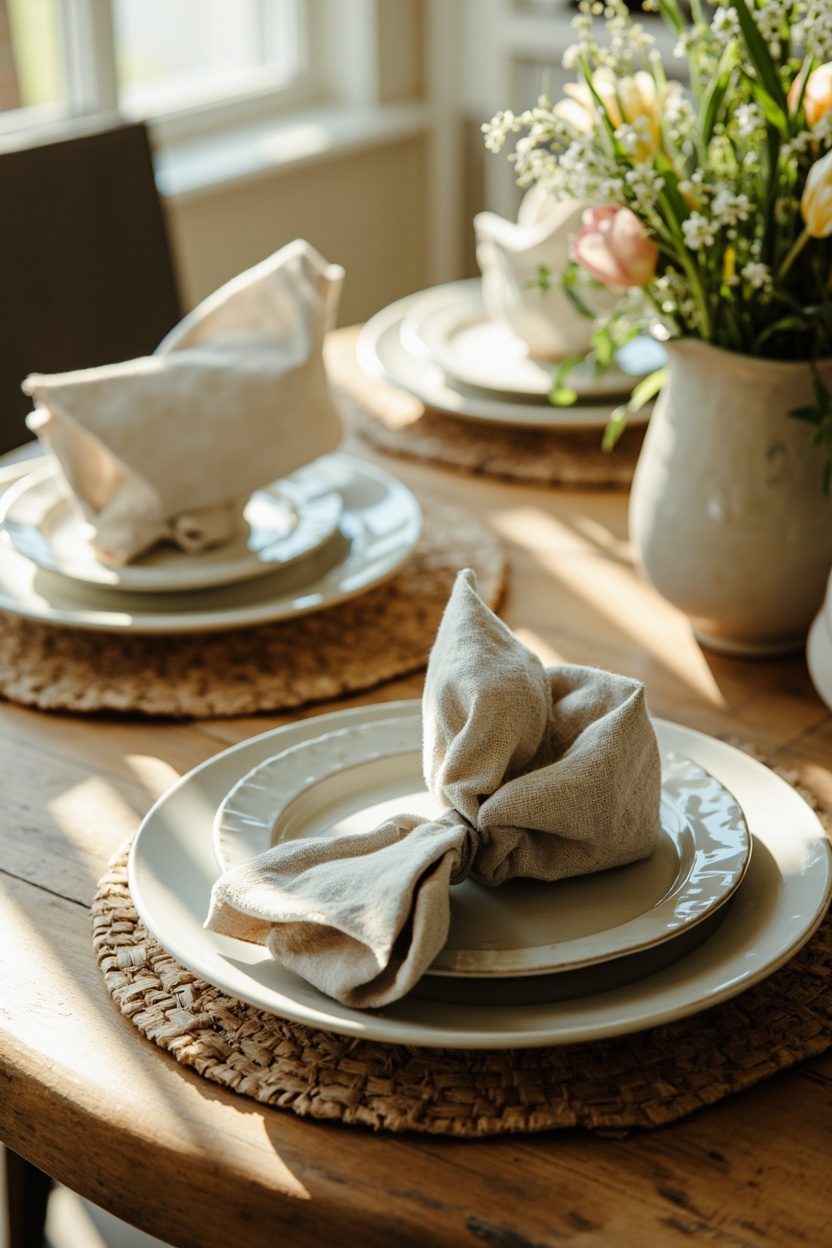
Linen napkins folded into simple bunny ears read as charming. Avoid stiff synthetic fabrics; choose washed linen for a relaxed texture.
Tie the base with raffia or thin leather cord and slip in a small sprig of dried wheat or lavender for a rustic, fragrant accent.
Scale matters; keep napkin folds shallow so plates and flatware still function, aim for a 6 to 8 inch folded height.
For a cohesive table, coordinate napkin tones with your centerpiece neutrals, selecting warm taupe or soft cream rather than stark white.
What to Focus On?
- Use pre-washed linen, medium weight, to achieve soft, effortless folds.
- Tie napkins with natural fiber, and avoid shiny ribbons to keep the farmhouse feel.
- Add a tiny name tag for seating, written on kraft paper with a felt-tip pen.
- Limit decorative extras to one sprig per napkin to prevent visual clutter.
7. Distressed Wood Signs
Plank-style signs with hand-lettered spring phrases make an instant focal point, especially when painted in chalky white or soft sage, with edges sanded back for authenticity.
Position a sign on the mantel or lean it on a sideboard, scale it to about two-thirds the width of the surface for balanced composition.
Attach small mason-jar vases or clip-on mini bunches of dried baby’s breath to the lower edge, for a layered, living-and-made look that reads as intentional, not cluttered.
Choose reclaimed pine or pine-look pine composite, because the grain takes paint and distressing beautifully while staying budget-friendly, about $30 to $80 depending on size.
Styling Blueprint
- Lettering color: charcoal or deep green for readable contrast.
- Sign size: 18×10 inches for mantel, 10×6 for tabletop accents.
- Attachments: two 4-oz mason jars with twine for fresh stems.
- Placement tip: lean at a 10-degree angle, don’t hang flat for casual charm.
8. Clay Pot Herb Clusters
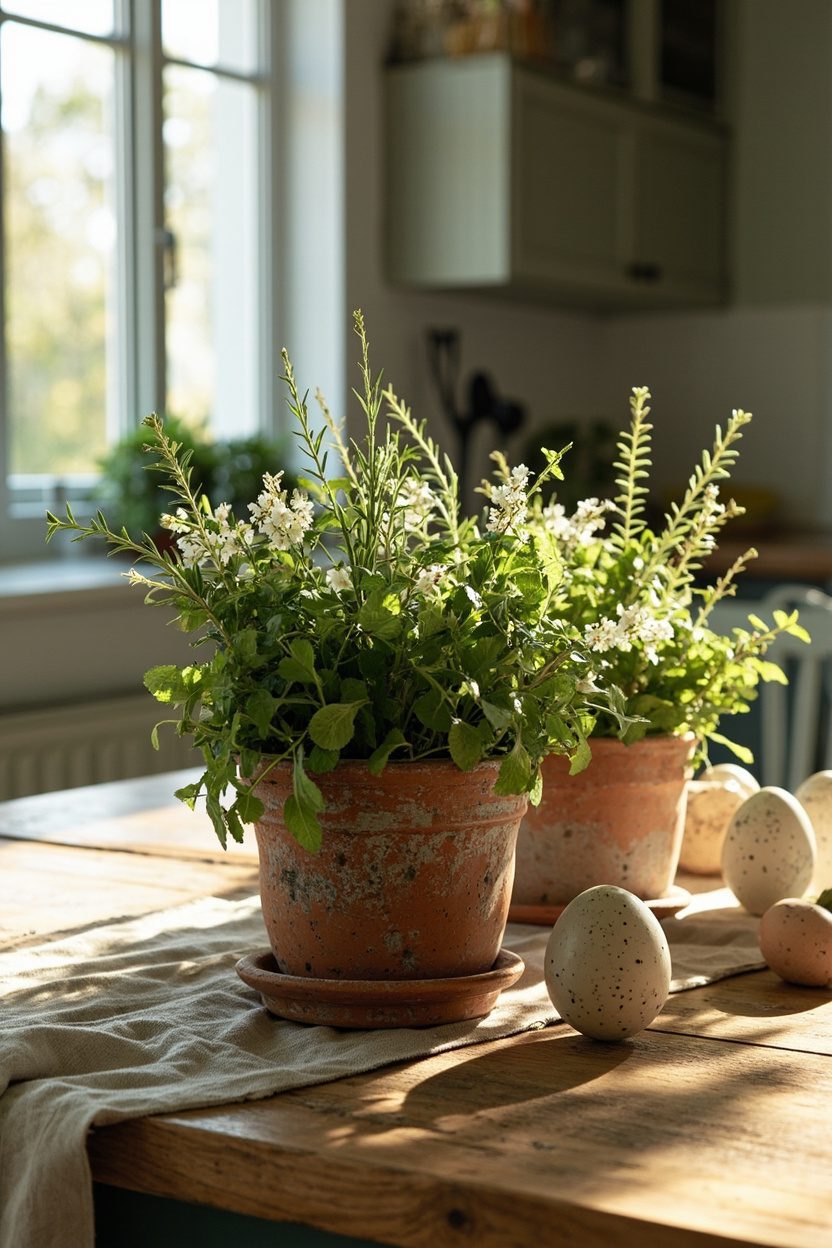
Grouping small terracotta pots filled with rosemary, thyme, and chives creates a living centerpiece, and herbs double as fragrant, useful decor.
Vary pot heights, use broken-edge pots for farmhouse character, and keep the palette earthy; avoid painted novelty pots that undermine the rustic feel.
Intermix early spring blooms like ranunculus or daisies in a few pots to lift the cluster, keep blooms low so the herbs remain the visual star.
For care, use well-draining soil and a shallow tray to catch water; this keeps tabletops safe and lets you move the cluster outdoors for sunlight between uses.
Essential Elements
- Pot material: unglazed terracotta for texture and breathability.
- Plant choice: rosemary, thyme, or dwarf lavender for form and scent.
- Arrangement size: group 3 to 7 pots for a grounded composition.
- Budget: Most small terra cotta pots run $3 to $12 each.
9. Soft Pastel Garlands
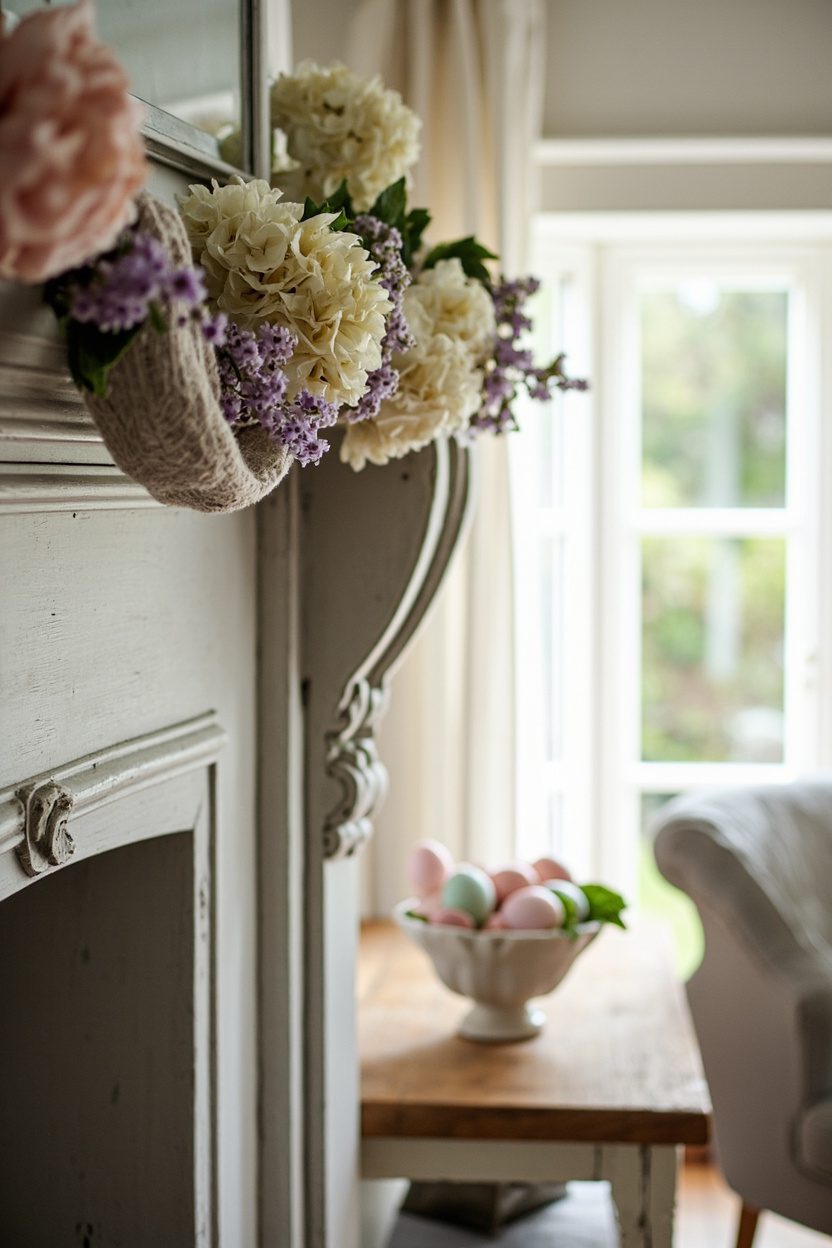
String garlands made from paper, felt, or dried flowers in blush, mint, and butter yellow add a gentle, vintage mood, draped across windows or door frames.
Mix materials for depth, combine a felt ball strand with a dried baby’s breath rope, and keep the color temperature warm to avoid a candy-like result.
Scale matters: use smaller motifs near windows, and longer, fuller strands above doorways, with spacing of motifs at 2 to 4 inches for a tidy rhythm.
For durability, stitch motifs onto natural twine rather than glue, so you can unhook and reposition the garland for future seasons without damage.
What to Focus On?
- Color palette: soft blush, sage, pale butter for cohesive farmhouse tone.
- Material mix: combine felt, paper, and dried florals for visual weight.
- Spacing: 2 to 4 inches between elements for balanced flow.
- Hanging tip: secure with removable hooks to protect the trim finish.
10. Wire Egg Caddies
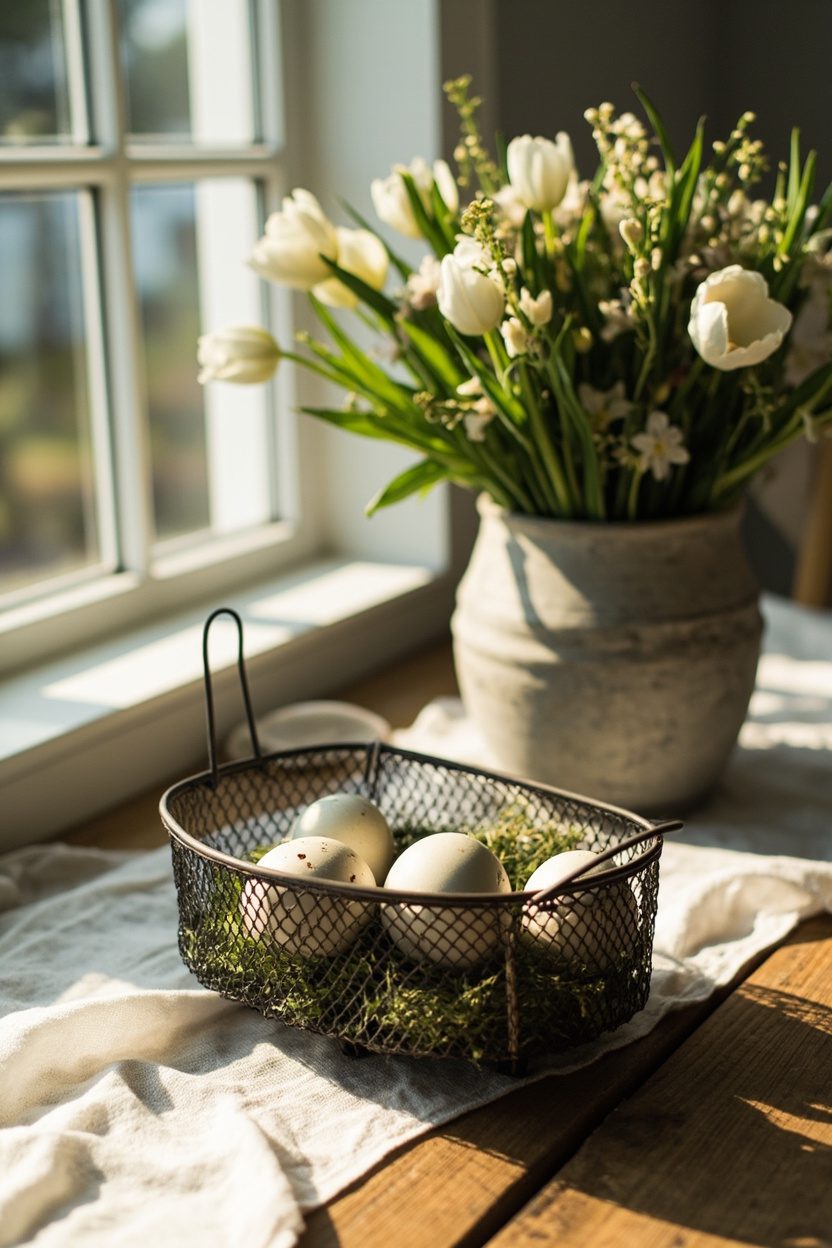
Vintage wire egg caddies are the perfect structural base for farmhouse Easter posies; they read rustic but stay airy, ideal for showing off small stems like ranunculus or baby’s breath.
Use aged metal finishes, choose caddies with dividers, and line each slot with moss or kraft paper to protect stems. This prevents water leakage and keeps the arrangements tidy.
Scale matters; place a single caddy as a centerpiece for a table up to six, or cluster three caddies of varying heights along a mantel for visual rhythm.
Budget-wise, thrift shops are gold for authentic patina, or buy new caddies with an oxidized finish if you want consistency across a larger table.
Styling Blueprint
- Use short-stem blooms and water tubes to fit divided slots safely and neatly.
- Mix textures, pairing dried bunny tail grass with fresh tulips for contrast.
- Wrap handles with twine or gingham ribbon to add a farmhouse accent.
- Group caddies on a wooden tray to create an anchored vignette for easy transport.
11. Layered Plaid Throws
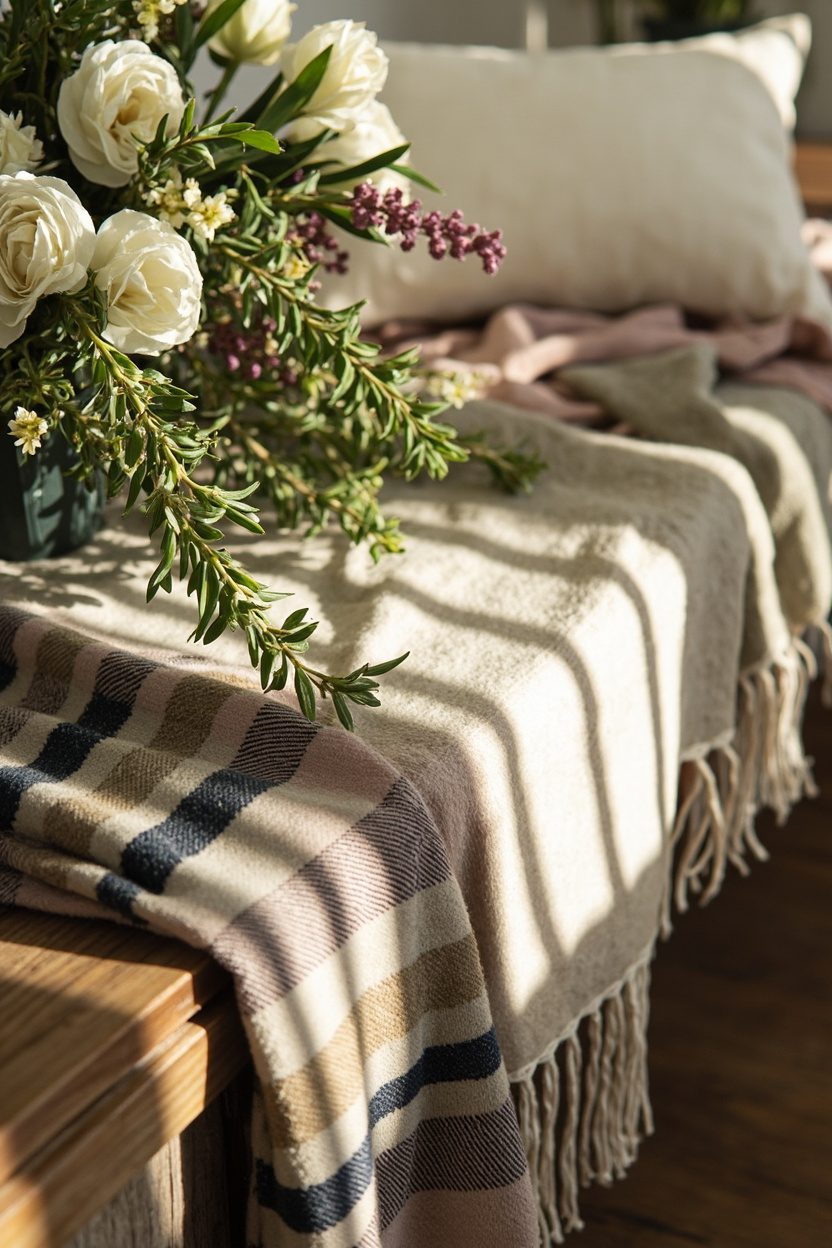
Plaid throws are rarely just for warmth; drape them under low floral bowls to add pattern and a cozy, cottage-like base that reads intentional, not afterthought.
Choose muted plaids in oat, flax, or faded red; the subtly worn color palette pairs with soft florals like peonies or ranunculus without competing.
Layer a lightweight wool throw over a linen runner, then place a low, wide vessel on top so the fabric peeks out and frames the arrangement.
Avoid heavy, bright plaids which can overpower delicate blooms; instead, select scaled plaids under 1 inch for a sophisticated, modern farmhouse look.
Essential Elements
- Select throws in natural fibers, like wool or cotton-linen blends, for tactile authenticity.
- Keep patterns small in scale when used under floral arrangements to avoid visual fighting.
- Secure throws with hidden non-slip pads to prevent sliding during use.
- Coordinate throw color with foliage tones to pull the vignette together cohesively.
12. Cottagecore Floral Baskets
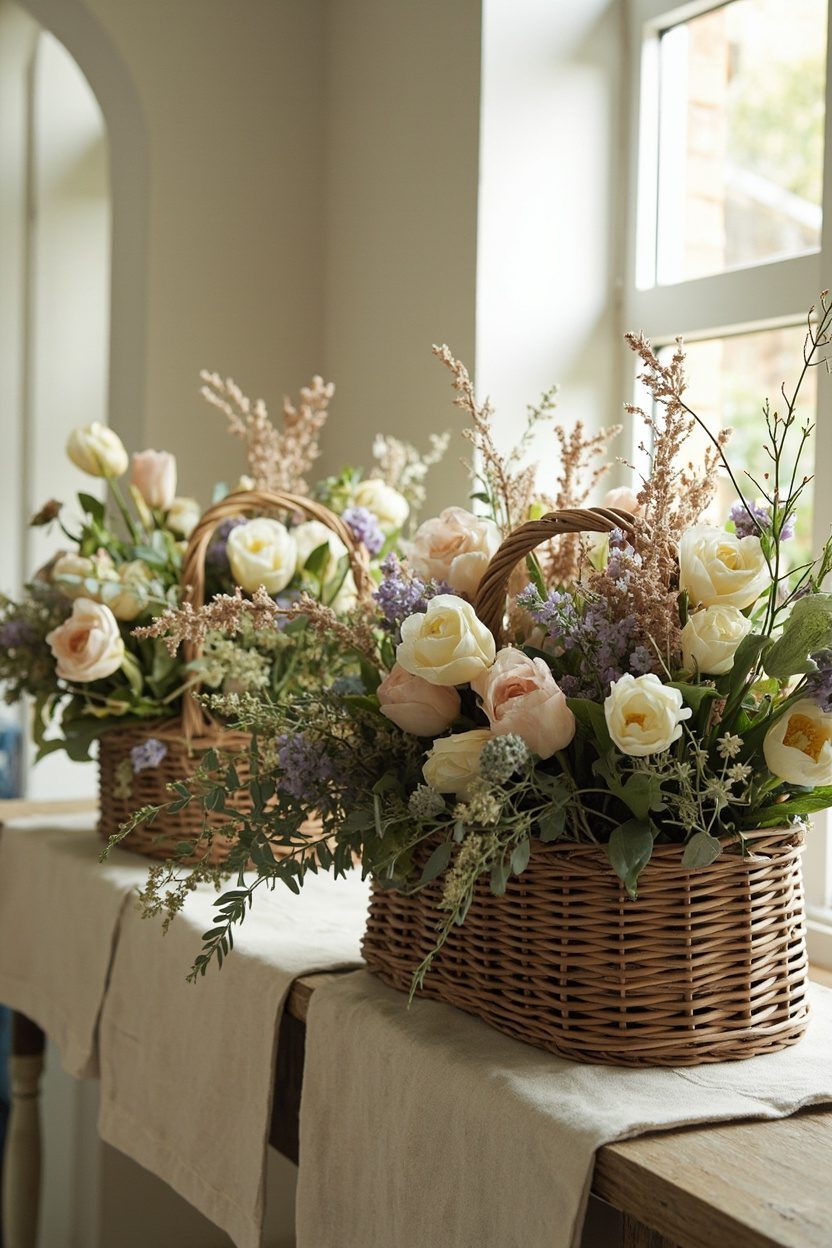
Woven baskets filled with a loose hand-tied bouquet capture that timeless cottagecore charm; they read casual, romantic, and perfectly at home on a farmhouse table.
Use a mixed palette of soft pastels and wildflower shapes, incorporating cosmos, sweet peas, and sprigs of rosemary for scent and structure.
Choose baskets with a shallow base and a wide mouth so the bouquet fans naturally, line with a small jar or water tube to protect the basket from moisture.
Select wicker in a warm honey tone rather than bleached rattan; it complements spring florals and holds up better to repeated use.
What to Focus On?
- Mix long, airy stems with compact blooms to create movement and fullness.
- Add foraged greens like lamb’s ear for texture and a muted color anchor.
- Use a floral frog or water-filled jar inside the basket for longevity and stability.
- Tie a simple ribbon or twine around the handle to reinforce the cottagecore aesthetic.
For a related idea, see Farmhouse Decor.
FAQ
Properly conditioned stems in clean water usually last seven to ten days, depending on flower type and temperature. Trim stems every two to three days, change water regularly, and keep arrangements out of direct sun and heat to maximize vase life.
Yes, baskets and wire caddies are durable and meant for repeat styling. Clean them gently and allow them to dry fully before storage. For longevity, avoid prolonged exposure to moisture, and line baskets with a washable liner or jar to protect the weave.
Peonies, ranunculus, tulips, and garden roses provide the soft, romantic shapes farmhouse schemes favor, while filler flowers like waxflower and baby’s breath add airy texture. Mixing in local seasonal blooms will give the most authentic, cost-effective result.
Limit pattern scale and color intensity; small-scale gingham or subdued plaid works as a grounding element under arrangements. Keep patterns in neutrals or faded hues, and balance them with plenty of plain textures like linen or raw wood.
Final Thoughts
These finishing touches wire caddies, layered plaids, and cottagecore baskets—are practical, adaptable moves that bring a lived-in, seasonal warmth to Easter styling.
Focus on material choices and scale, and your arrangements will look curated rather than contrived, season after season.