


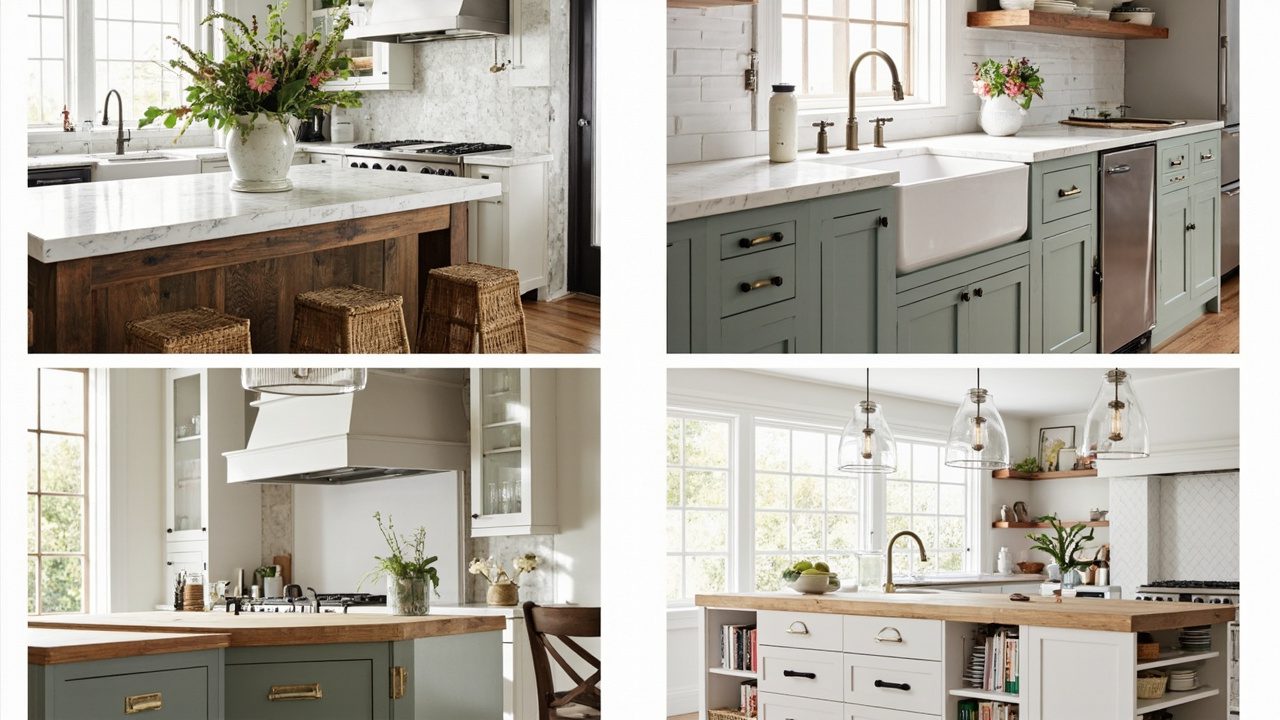
Farmhouse islands are where family life and kitchen work collide: they need to be rugged, beautiful and endlessly useful. This collection focuses on islands that read warm and grounded without sacrificing contemporary needs—think purposeful storage, comfortable overhangs, and surfaces that take spills and steady elbows. Expect concrete decisions: cabinet heights, overhang dimensions, material pairings and the kinds of accessories that actually get used.
I’m writing from years of specifying cabinetry and staging homes: the right island simplifies layout, anchors sightlines and becomes the room’s finishing touch. Below are 13 islands with clear style directions, scale notes and finish choices so you can pick one that fits your kitchen’s footprint, budget tier and daily rhythms.
- 1. Painted Two-Tone Islands
- 2. Deep Green Butcherblock
- 3. Creamy White Shaker
- 4. Charcoal Contrast Counter
- 5. Worktable Farm Islands
- 6. Mixed Open-Closed Storage
- 7. Turned-Leg Pedestals
- 8. Live-Edge Wood Tops
- 9. Barn-Door Cabinetry
- 10. Apron-Front Sink Islands
- 11. Hidden Appliance Panels
- 12. Textured Shiplap Bases
- 13. Brass Hardware Accents
- FAQ
- Final Thoughts
1. Painted Two-Tone Islands
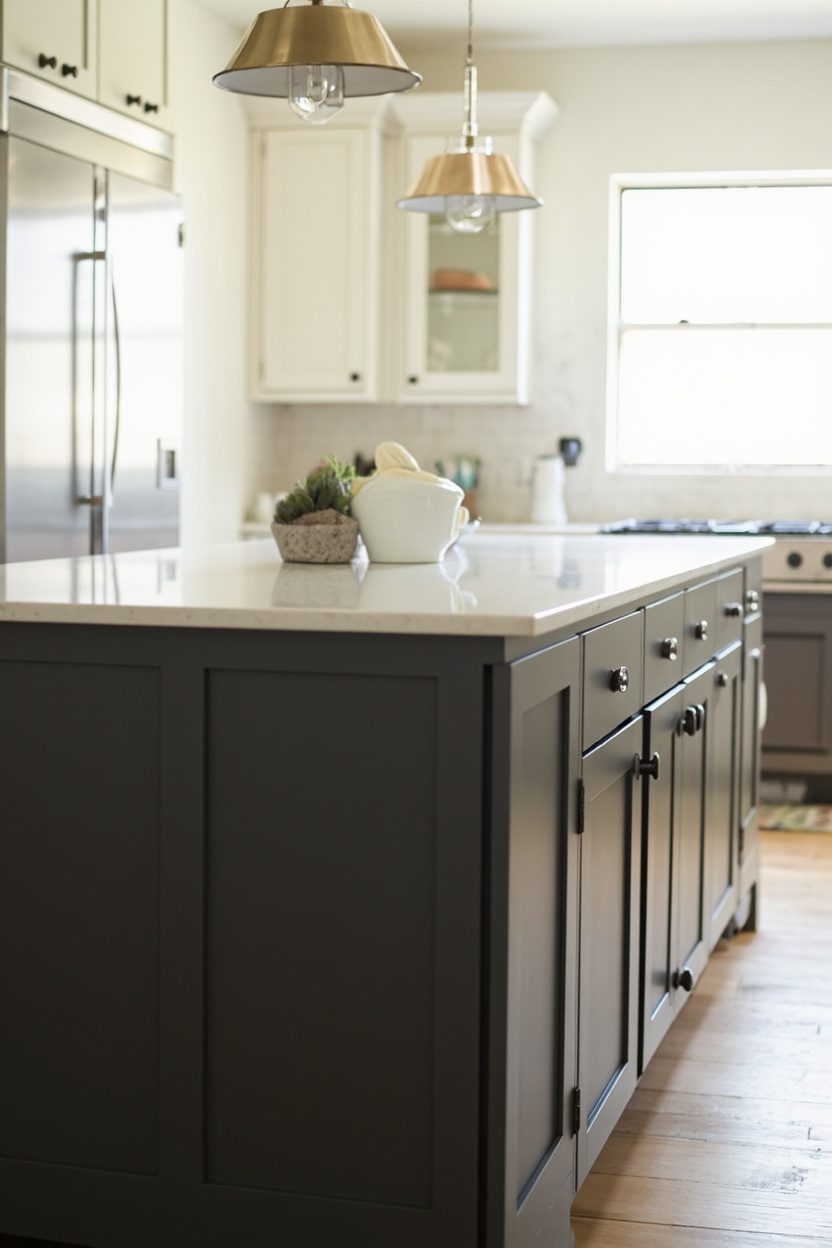
Two-tone painted islands split color to create visual interest without heavy trim work. Choose a darker base—navy, charcoal or a deep green—and a lighter top cabinet or butcherblock prep area to keep the island from feeling top-heavy; this balances perceived scale in rooms with 8–9 ft ceilings. For construction, use a hardwood base (maple or birch) under the painted finish to avoid paint failure in high-traffic zones, and specify a satin alkyd or hybrid waterborne enamel for durability.
Two-tone works in both modest and large footprints: for islands under 6 ft, keep contrasts subtle (muted blue with cream), while islands 7 ft and longer can accept stronger contrasts because the visual weight spreads across the length. Mistake to avoid: painting the entire island a saturated color without testing a countertop sample—colors read darker against wood tops, so always mock up the two together.
Styling Blueprint
- Paint base in a mid- to dark-tone satin enamel for wipeability and touch-up ease.
- Use a lighter top (marble-look quartz or oiled oak) to visually lift the island.
- Add a 12–15 inch overhang on one side to accommodate seating with counter stools of 10–12 inch seat height difference from counter.
- Install mixed open and closed storage: drawers for pots, open cubbies for cookbooks or baskets.
2. Deep Green Butcherblock
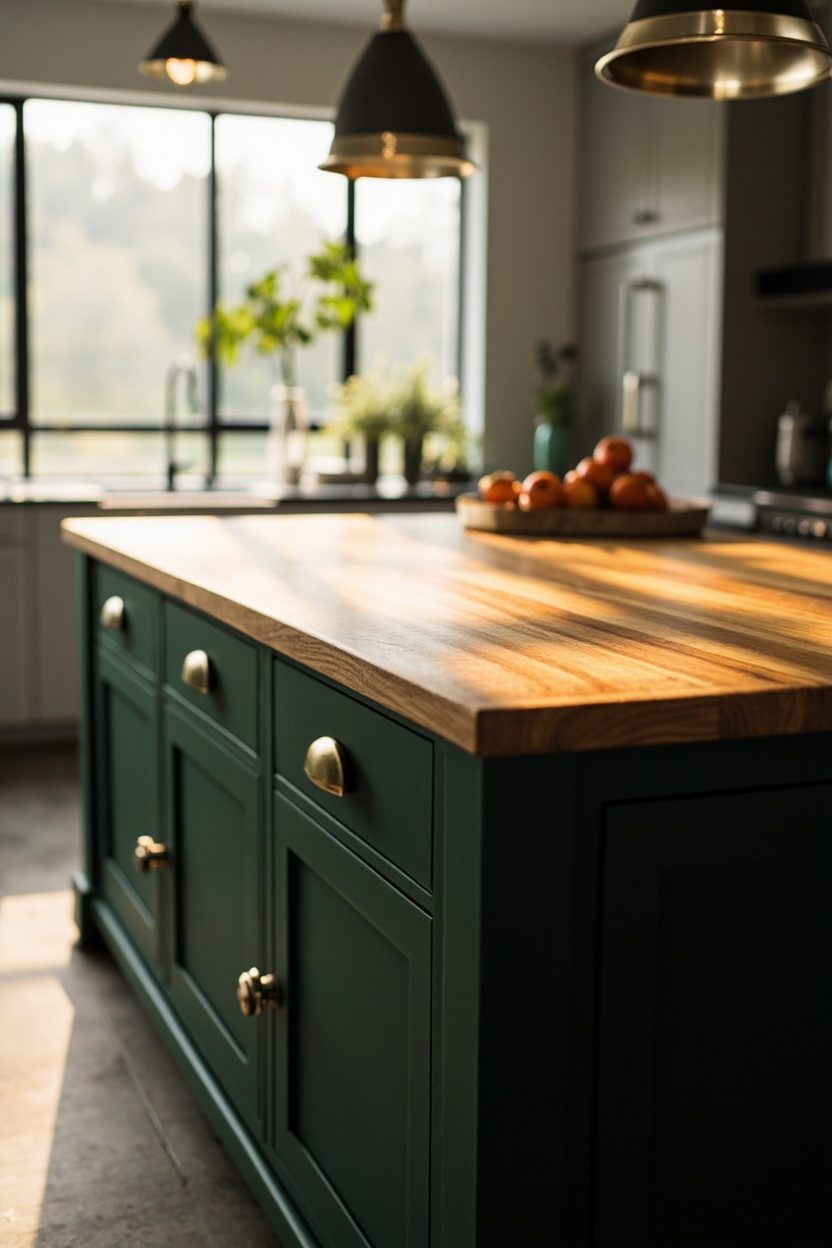
A deep green base paired with a butcherblock top reads earthy and modern-farmhouse—think SELVEDGE: rich pigment and tactile wood. Use hard maple or European beech butcherblock at 1½ to 2 inches thick for durability and refinishing; avoid softer woods like pine for large prep surfaces. Paint choice should be a muted forest or olive green with low sheen to hide fingerprints but still be washable.
Scale matters: in narrow galley kitchens, specify a butcherblock island no wider than 36 inches to allow 42–48 inches of walk space around it. Finish the wood top with food-safe oil or a hard-wax oil; reserve polyurethane only for non-food prep areas to prevent that plasticized look. A practical decision: incorporate a built-in cutting board end-grain block for heavy chopping—easier to replace than the whole top.
What to Focus On
- Choose 1½–2″ thick hard maple or beech butcherblock for longevity and refinishing ability.
- Seal with food-safe oil or hard-wax oil—recoat yearly in heavy-use kitchens.
- Keep island width ≤36″ in narrower kitchens to maintain 42–48″ clearances.
- Integrate a removable end-grain cutting board or drop-in block for heavy use.
3. Creamy White Shaker
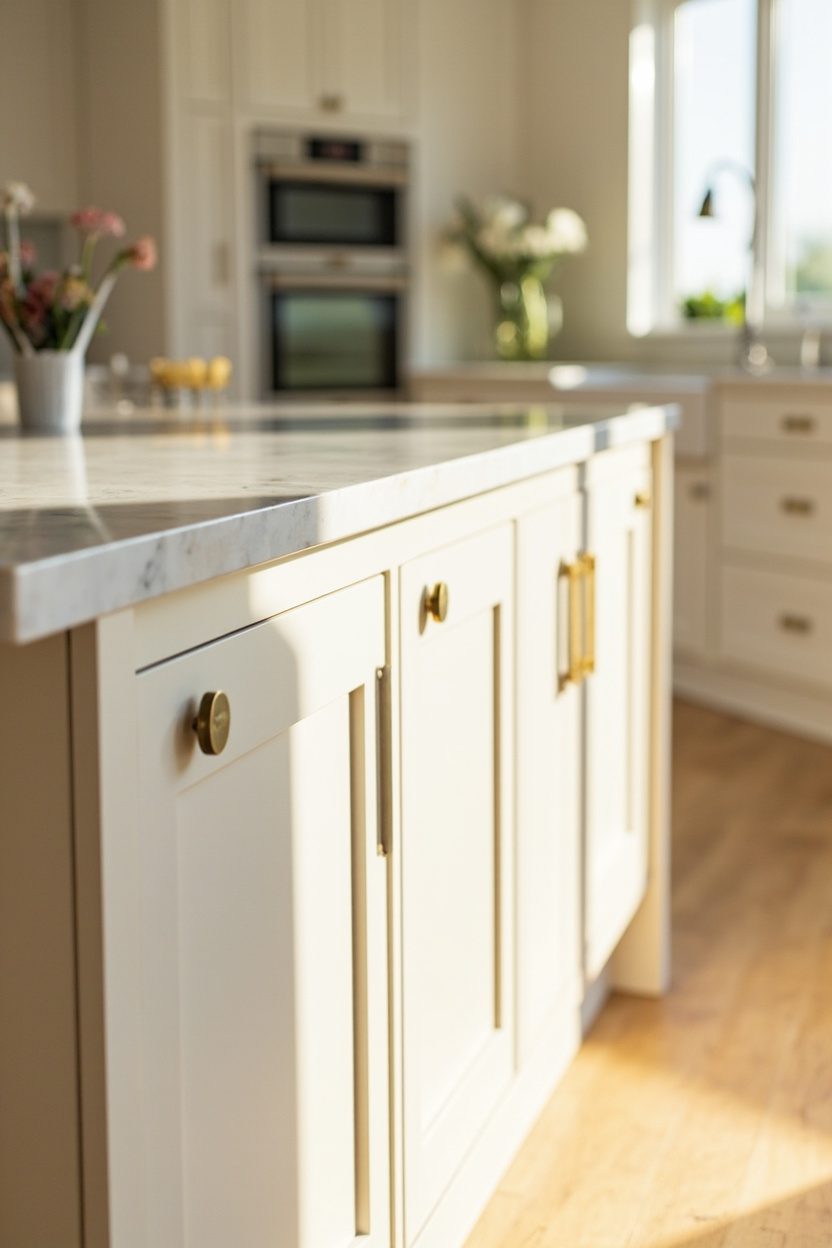
A creamy white Shaker island is the reliable farmhouse staple: clean lines, inset or flat-frame doors, and a neutral base that reflects light. Choose painted solid-wood or plywood cabinet boxes with 5-piece Shaker fronts; avoid MDF doors in humid climates if you want longevity. Countertop decisions matter here—pair with honed marble for a high-end look or warm honed quartz for toughness and less maintenance.
Proportion rules: for seating, allow a 15–18 inch knee space under a 12–15 inch overhang, and plan for 24–26 inches of linear space per seated person. To avoid the “too-clean” showroom trap, break up the all-white look with a reclaimed wood butcherboard inset or open shelving on one end for baskets and everyday wares.
Essential Elements
- Specify 5-piece Shaker doors on solid wood or plywood boxes for durability and classic profile.
- Pair with honed quartz or marble-look quartz for low upkeep and farmhouse warmth.
- Provide 15–18″ knee space and 24–26″ per seating position for comfort.
- Add open shelving or a wood inset to introduce texture and practicality.
4. Charcoal Contrast Counter
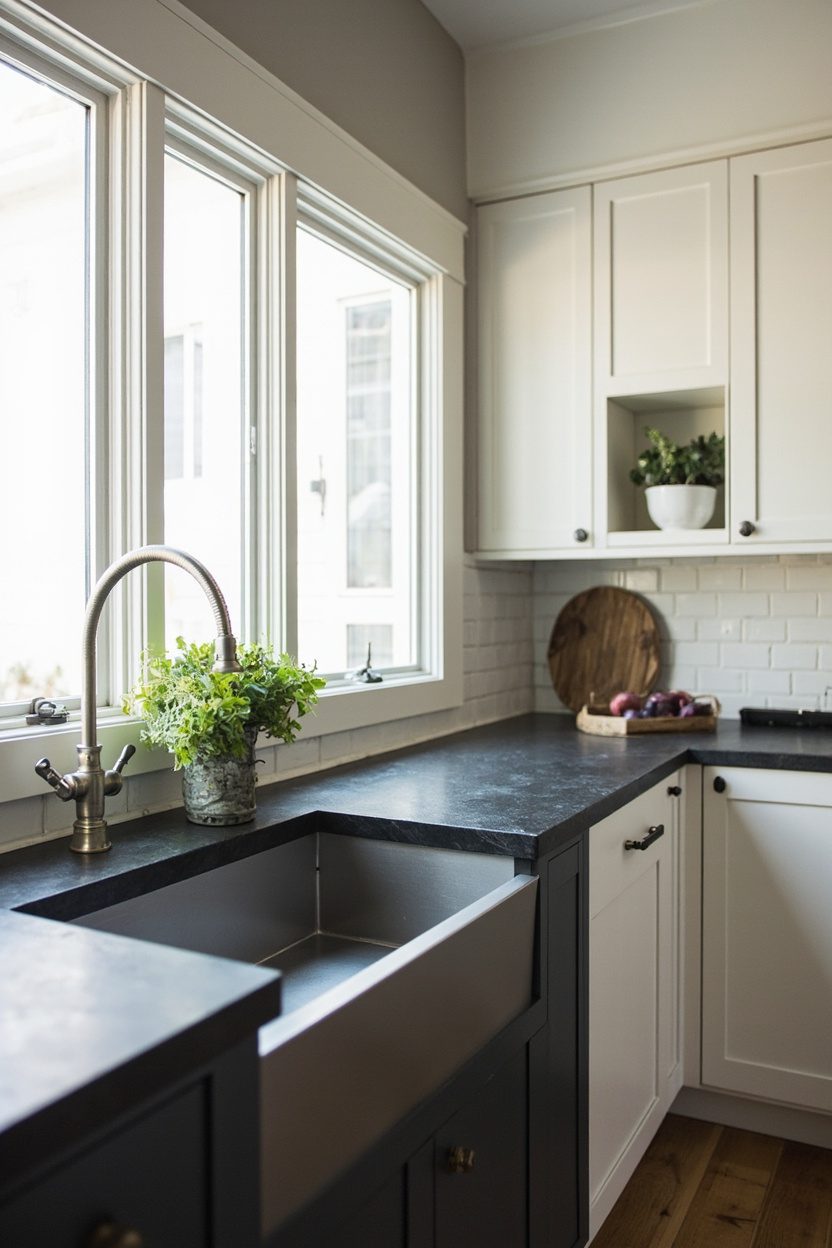
A charcoal island top anchors a farmhouse kitchen with modern gravitas; pair a honed black granite or matte quartz surface with painted shaker cabinetry in soft cream to get that intentional contrast. Choose a 3–4 inch eased edge on the countertop to keep the silhouette crisp but not sharp—this balances the rustic farmhouse base with contemporary materiality and resists chipping better than a thin mitered profile.
Keep the island scale modest: 48–72 inches long for two to three seats, and allow at least 42 inches of clearance to surrounding counters so open doors and pull-out drawers don’t collide. Avoid the common mistake of making the countertop too glossy—fingerprints and water spots on charcoal surfaces call for low-sheen finishes that hide wear and still read luxe.
Styling Blueprint
- Select matte charcoal quartz or honed granite for low maintenance and depth of color.
- Paint island base in warm cream or greige to soften the high-contrast look.
- Add brass or black hardware in 8–12-inch pulls for proportional balance on 18–24-inch drawer fronts.
- Top with a simple tray, matte mortar-and-pestle, and a single ceramic pitcher for restrained accessorizing.
5. Worktable Farm Islands
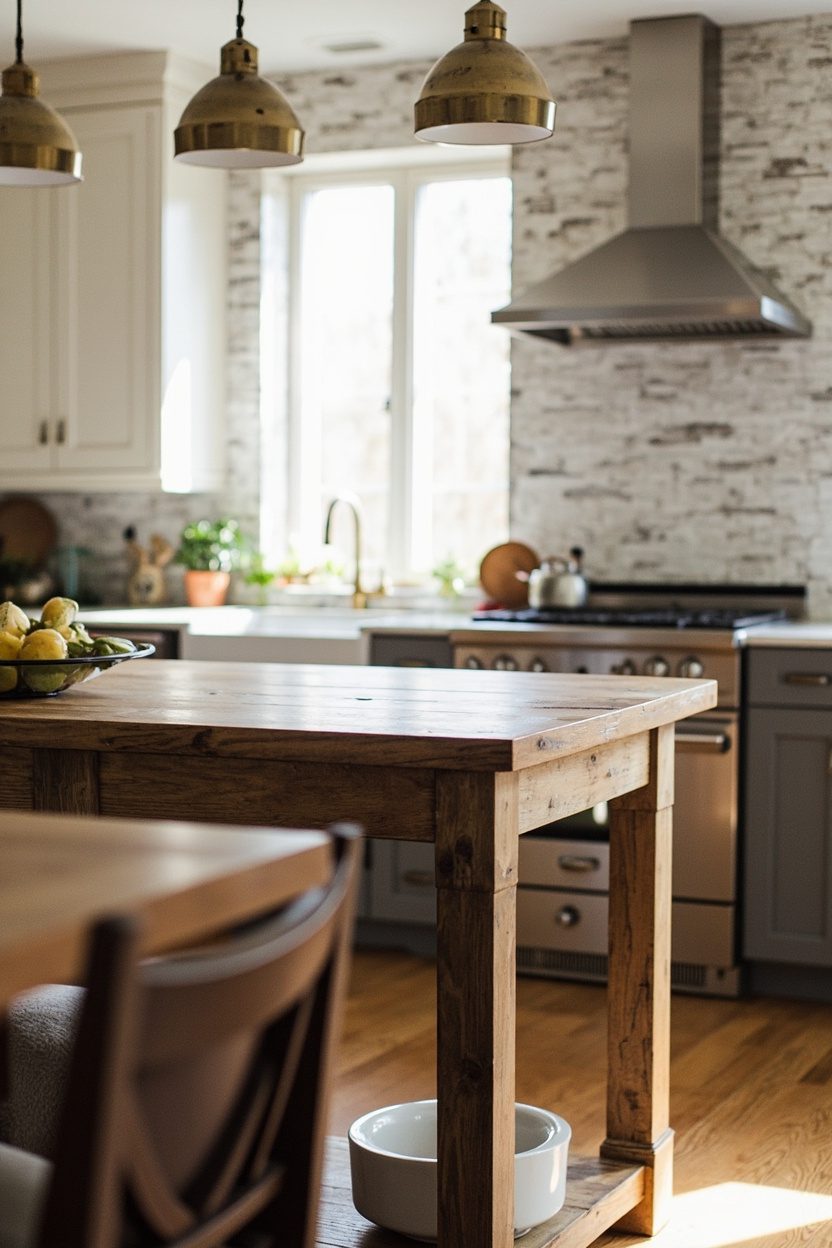
A worktable island channels true farmhouse function: reclaimed pine or a thick butcher-block top over a minimal base for easy access on all sides. Prioritize a solid wood top 1½–2 inches thick if you plan to use it for rolling dough or cutting—finish it with a food-safe oil and accept that periodic re-oiling is part of the charm rather than a flaw.
Keep the footprint flexible: a 72 x 30-inch table serves as a prep hub for a family kitchen, while a narrower 60 x 24 works in tighter galley kitchens. Forgo built-in sinks or plumbing here; the point is portability and multipurpose use—add casters (lockable, industrial-grade) if you want the option to move the table for gatherings or cleaning.
What to Focus On
- Use a 1½–2-inch solid wood top, preferably maple or European oak, sealed with food-safe oil.
- Choose lockable heavy-duty casters if you want mobility without wobble.
- Keep the base simple—open shelving or pegboard sides for hanging tools and bowls.
- Budget tier: mid-range ($800–$2,500) depending on reclaimed wood sourcing and joinery quality.
6. Mixed Open-Closed Storage
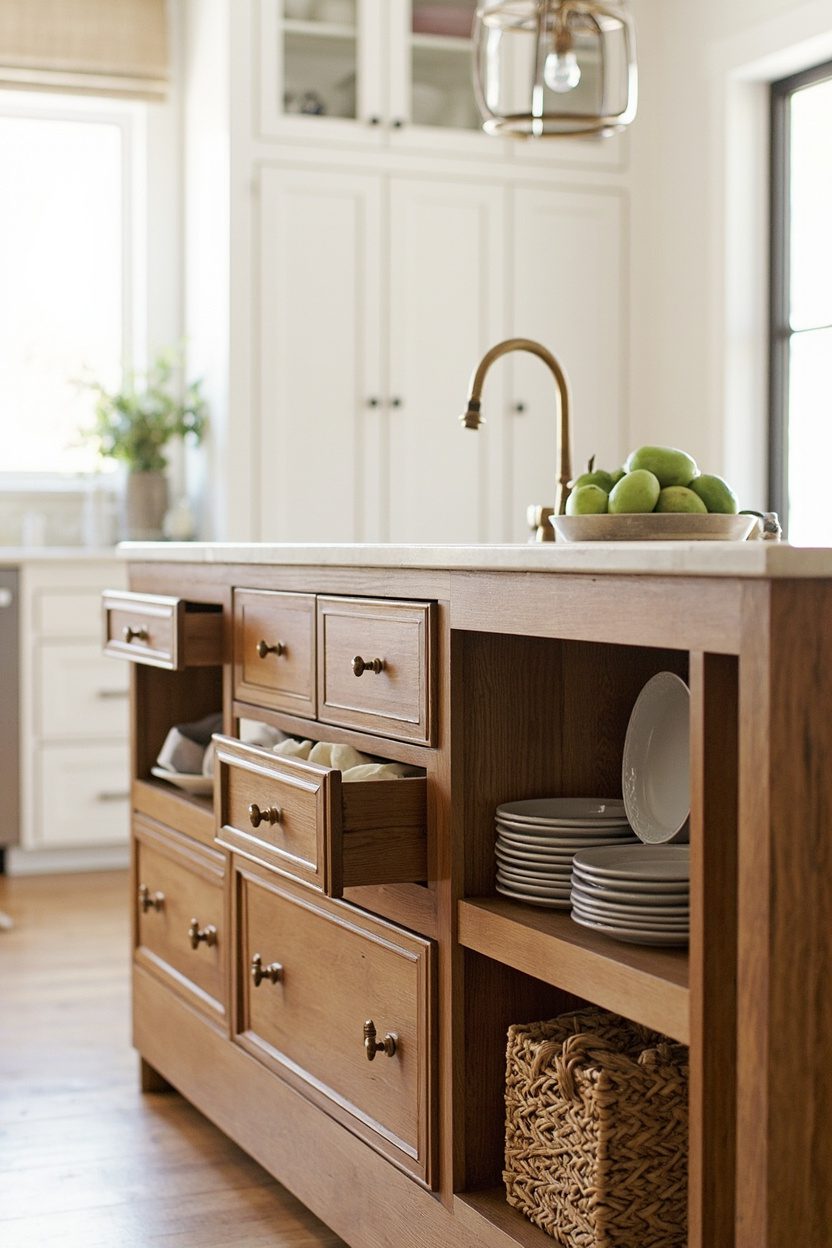
Combining open shelves with closed drawers on an island gives you the best of show-and-hide: dishes and cookbooks stay within reach on open cubbies, while pots, small appliances, and trash pull-outs hide behind cabinet fronts. Specify full-extension soft-close drawers for hidden storage and 12–15-inch-deep open bays for display items so plates and bowls don’t tip forward.
Consider materials that read cohesive: frame the open sections with the same trim as the cabinet doors and use beadboard or plank backing for texture. A common design pitfall is over-styling open storage—limit displayed items to 6–8 pieces per bay and rotate seasonally to keep the island from looking cluttered.
Essential Elements
- Mix closed drawers (full-extension, soft-close) with 12–15-inch-deep open cubbies for display and utility.
- Match face-frame trim across openings for a unified farmhouse aesthetic.
- Include a dedicated drawer for trash/recycling with a 12–18-inch access width to meet practical needs.
- Keep displayed items restrained—neutral ceramics, a cookbook stack, and one plant maximum per bay.
7. Turned-Leg Pedestals
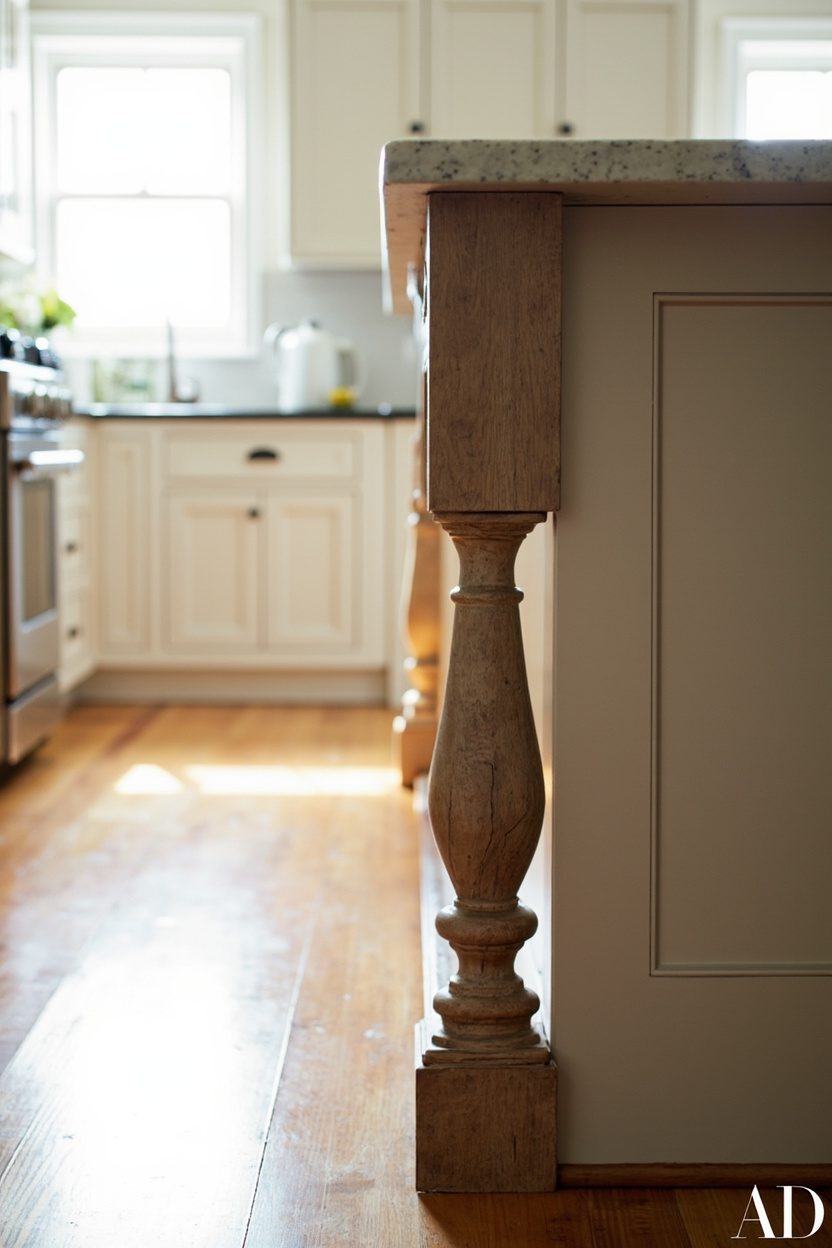
Turned-leg pedestals lend a traditional farmhouse softness to an island without feeling overly ornate; choose chunky, lathe-turned posts in solid hardwood (oak or maple) for durability and to avoid wobble over time. Keep the scale proportional: use thicker legs (3–4 in.) on islands wider than 36 in. to prevent a visually top-heavy silhouette and to support heavy stone tops if you plan to add one later.
This approach pairs well with a painted base—cream or muted sage—so the wood legs read as detailing rather than furniture legs. A common mistake to avoid is undersizing the apron depth; specify at least a 2–3 in. apron to hide joinery and make cleaning easier under the countertop edges.
Styling Blueprint
- Material: solid hardwood turned legs, sealed for moisture resistance.
- Color: contrast painted base with natural or stained legs for layered warmth.
- Scale: 3–4 in. leg diameter for islands 36 in. wide or more.
- Placement: anchor legs 6–8 in. from corners to preserve knee space at seating.
8. Live-Edge Wood Tops
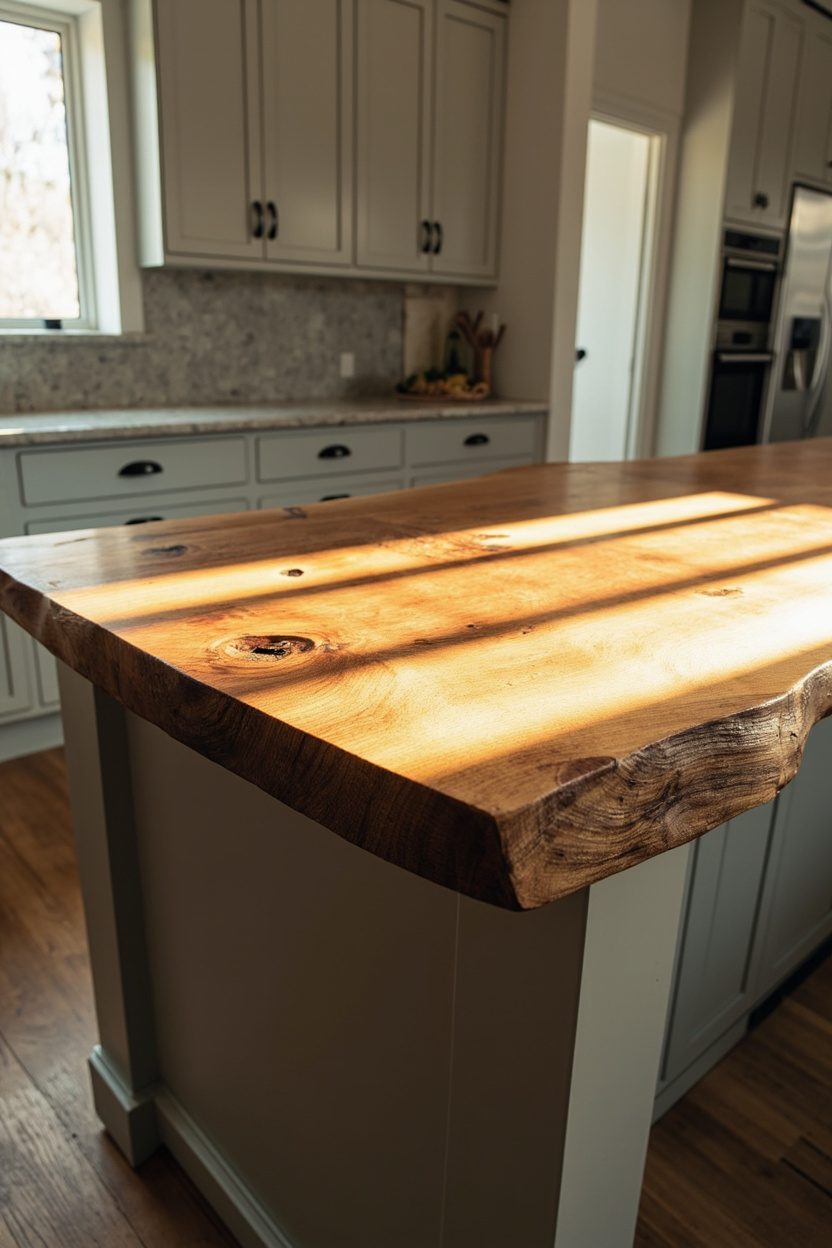
A live-edge wood top brings organic character into a farmhouse kitchen—select slabs with tight grain and quarter-sawn sections to reduce cupping; species like walnut, white oak, or elm offer the right balance of beauty and stability. Specify a 1.5–2 in. thickness for durability and to avoid excessive bowing; add a penetrating oil finish for food prep areas and a polyurethane topcoat near sinks to protect from water.
Use a mixed-material base (painted cabinetry or reclaimed-wood plinth) so the live edge reads intentional, not rustic clutter. If your island will be used heavily for food prep, include a removable butcher block section or a built-in cutting board to concentrate wear and accept periodic refinishing without compromising the whole slab.
Essential Elements
- Wood choice: walnut, white oak, or elm for stability and grain interest.
- Thickness: 1.5–2 in. with reinforced rail or steel channel underneath for flatness.
- Finish: penetrating oil plus polyurethane near wet zones.
- Function: integrate a replaceable butcher-block insert for heavy chopping.
9. Barn-Door Cabinetry
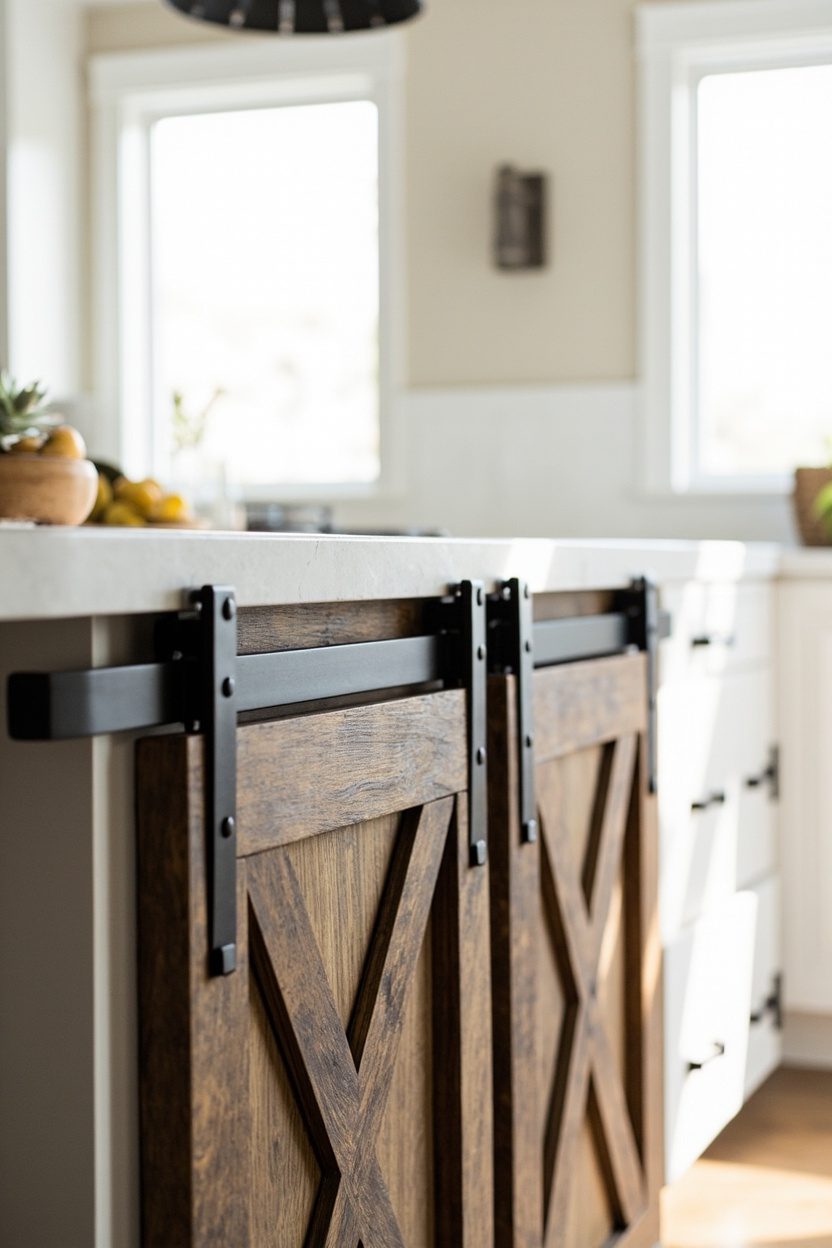
Sliding barn-door cabinets on the island add farmhouse vernacular while saving swing space—choose soft-close, top-hung hardware rated for the door weight and pair with inset guides to prevent jamming. For longevity, keep door widths under 30 in. or use doubled-track hardware to distribute weight; MDF faced with solid-wood stiles avoids warping better than full solid plank construction in humid climates.
Style the doors with shaker panels or beadboard for an authentic farmhouse look and paint them in a durable enamel (eggshell or satin) so they withstand constant handling. Inside, combine closed shelving for appliances with vertical dividers for baking sheets to make the barn-door facade highly functional rather than purely decorative.
What to Focus On
- Hardware: top-hung soft-close track rated for actual door weight.
- Door width: keep under 30 in. per door or use dual tracks to spread load.
- Construction: MDF core with solid stiles to resist seasonal movement.
- Interior layout: mix closed storage with appliance pullouts and vertical dividers.
10. Apron-Front Sink Islands
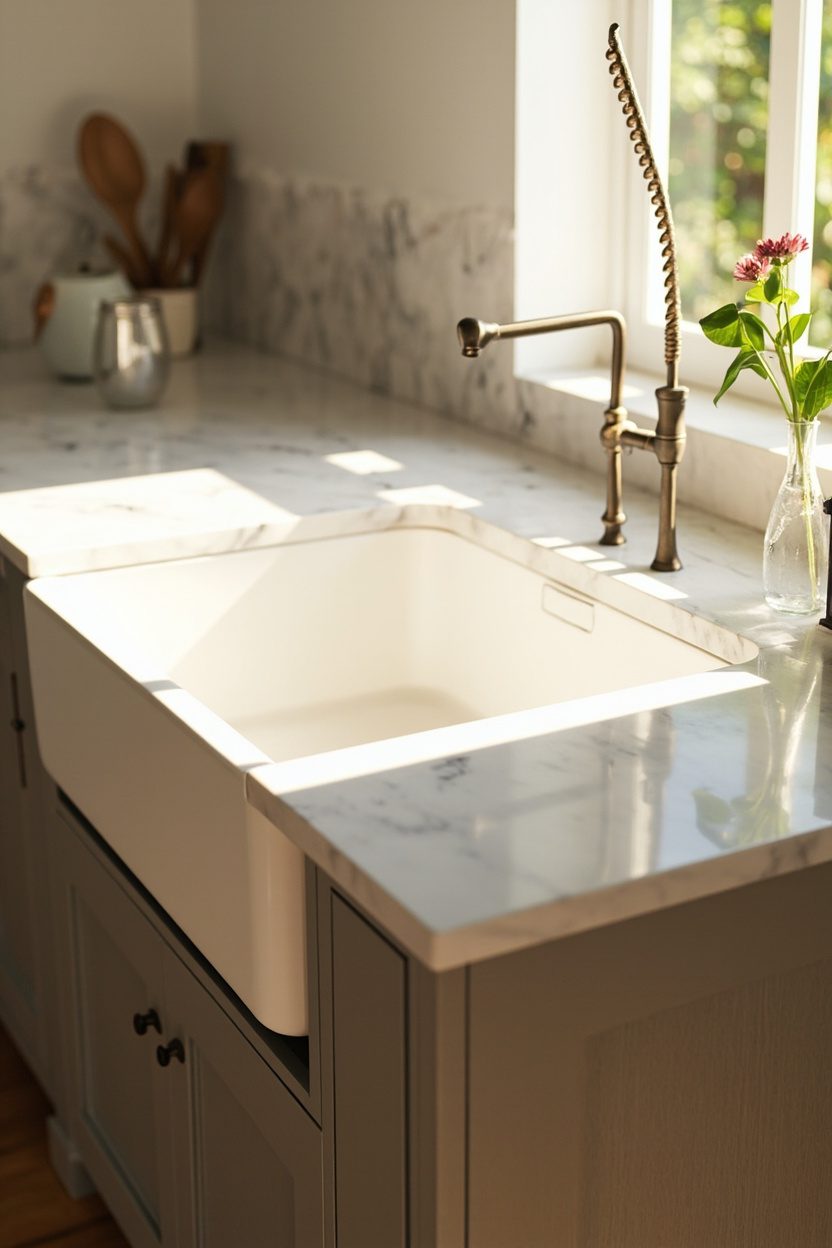
An apron-front sink island centers farmhouse character and daily utility in one decisive gesture. Choose a fireclay sink in a slightly over-scaled size (33″–36″) set into a butcher-block or honed marble top; the scale reads authentic and handles heavy-duty tasks while the material choice resists wear—avoid porous marble near high-stain cooking zones unless sealed and maintained regularly.
Position the sink toward one end of the island to preserve continuous work surface for prep and seating on the opposite side, and run plumbing into a framed false drawer base for concealed storage and sound dampening. For budget tiers: oak butcher block and porcelain sink hit mid-range; custom fireclay and honed marble sit at a higher budget point.
Essential Elements
- Fireclay or porcelain apron-front sink sized 33″–36″.
- Durable top: sealed butcher-block for warmth or honed marble for elegance.
- Shift sink to one end to keep uninterrupted countertop for seating or prep.
- Include a framed false drawer base for plumbing concealment and storage access.
11. Hidden Appliance Panels
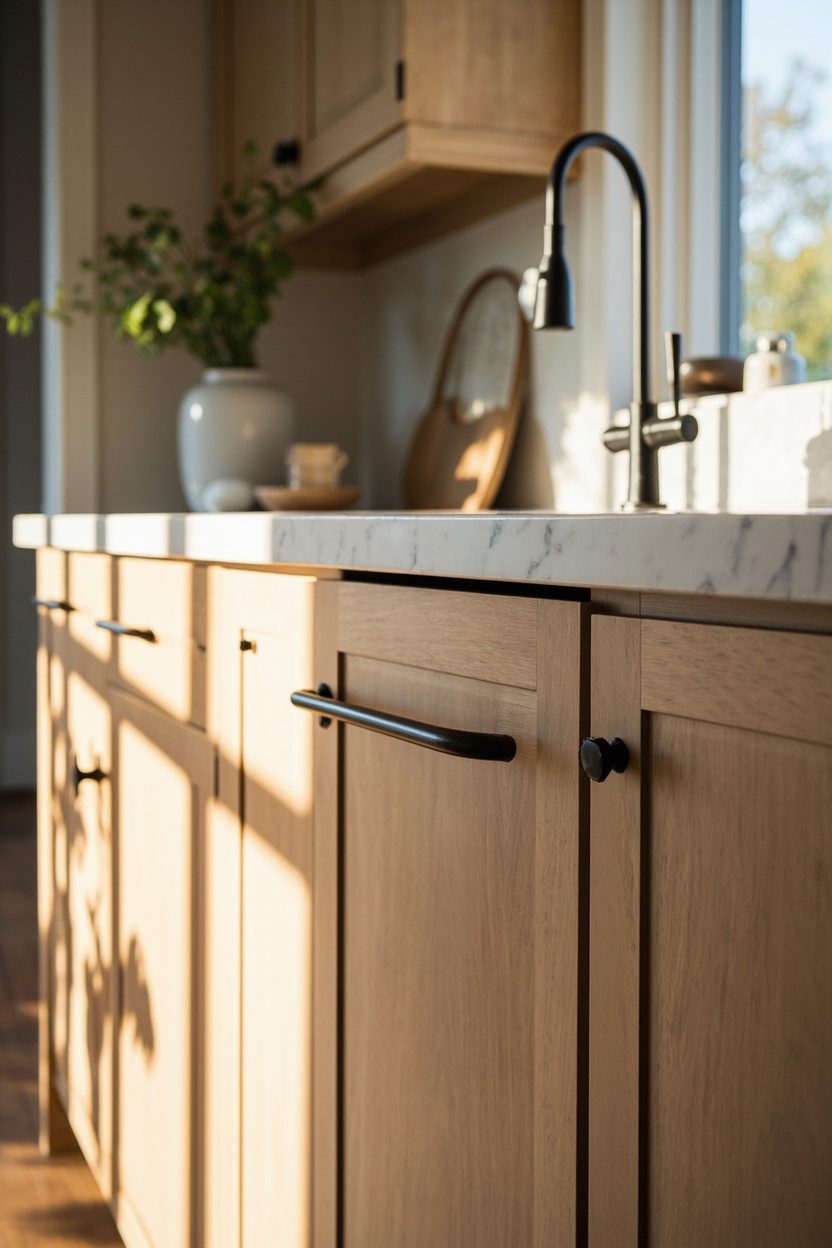
Integrating appliance panels into island cabinetry keeps a farmhouse kitchen visually calm while giving modern convenience a discreet home. Use the same shaker-style paneling and paint color across drawer fronts and panel-clad fridge or dishwasher to create a monolithic look; true-matching veneers or painted MDF are the easiest ways to avoid panel misalignment over time.
Plan door hardware and ventilation early: flush magnetic catches and concealed toe-kick vents maintain the seamless façade but require precise cabinetmaker tolerances. On scale, prioritize paneling on bulkier appliances (dishwashers, under-counter fridges) and leave small appliances exposed in designated nooks to avoid over-engineering.
Styling Blueprint
- Match panels to island paint and profile—painted MDF for seamless, budget-friendly match.
- Specify concealed ventilation and magnetic catches with your cabinetmaker upfront.
- Panel larger appliances; leave small ones accessible in open cubbies for practicality.
- Choose handleless push-to-open for ultra-clean lines or simple bar pulls for subtle farmhouse touch.
12. Textured Shiplap Bases
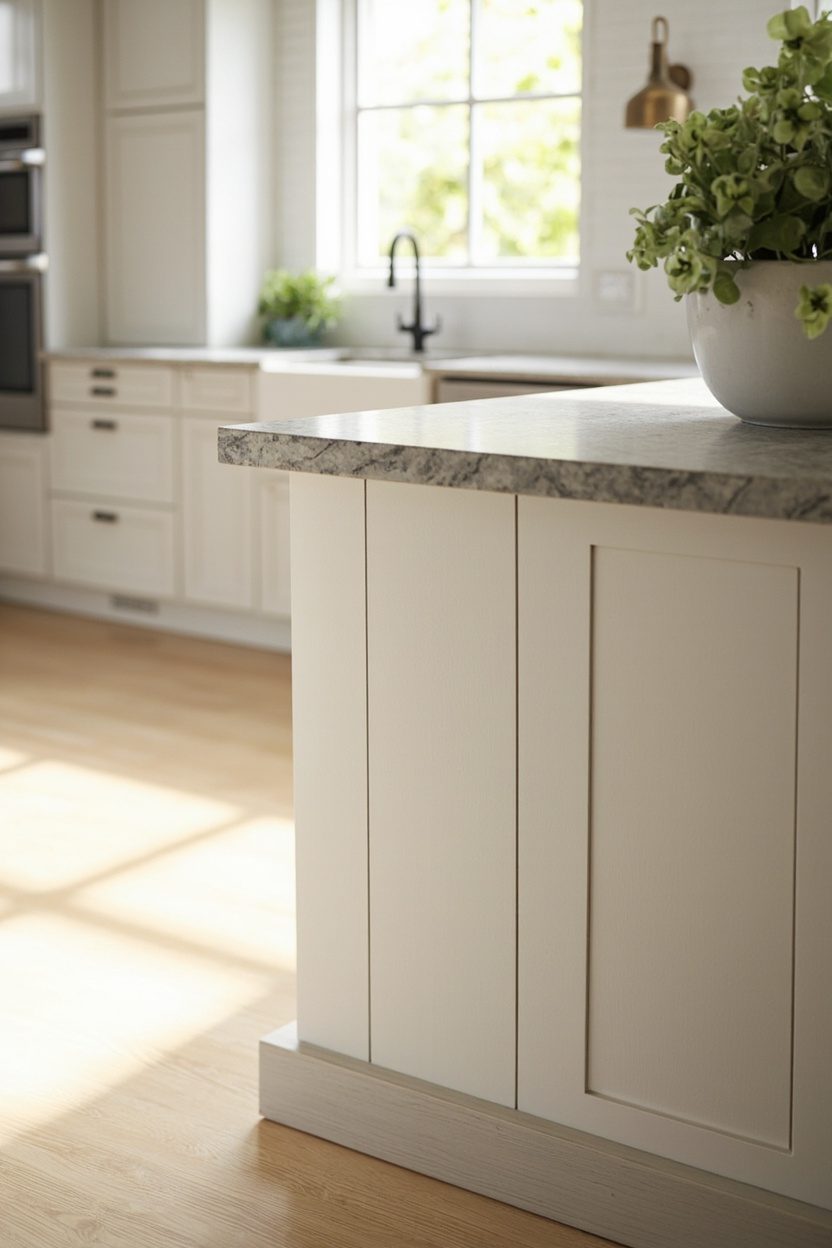
Shiplap-clad island bases are quintessential farmhouse but can read modern if executed with controlled texture and color. Opt for vertical or horizontal shiplap in a 4″ reveal painted in a moody charcoal or deep earthy green to align with 2026 palettes; this creates depth without the holiday-cottage cliché. Use hardwood or primed MDF routed on-site for crisp joints that withstand kitchen humidity.
Keep scale in mind—wide shiplap boards (4″–6″) work better on larger islands to avoid a “busy” look, while narrow boards suit compact islands. Combine shiplap bases with a smooth, honed countertop and sleek metal legs for seating to balance rustic texture with contemporary restraint.
What to Focus On
- Board width: 4″–6″ for balanced texture on standard islands.
- Material: primed MDF for cost control, hardwood for longevity where moisture is a concern.
- Color: choose deeper tones (charcoal, earthy green) for 2026-forward sophistication.
- Pair textured base with a smooth countertop and minimal seating legs to avoid visual clutter.
13. Brass Hardware Accents
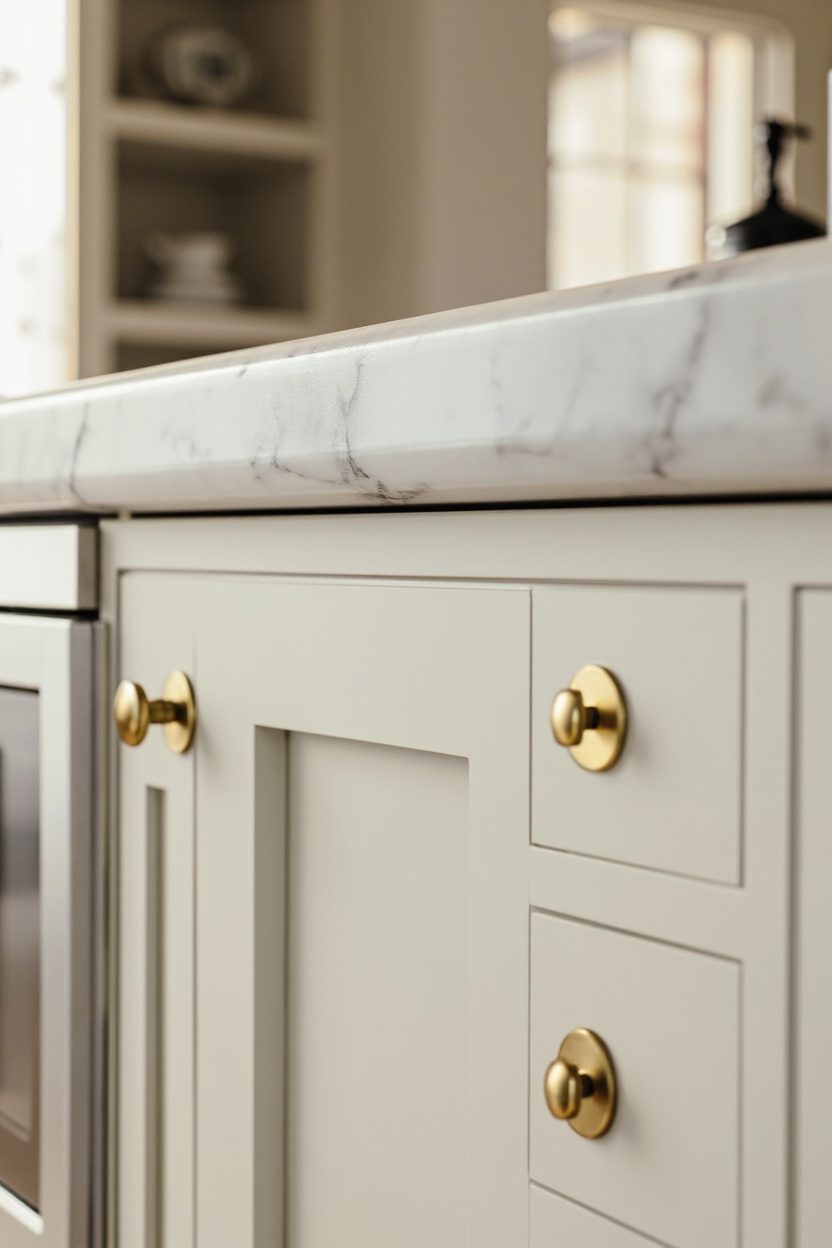
Brass hardware transforms a farmhouse island from predictable to polished without a full renovation. Choose unlacquered or satin-brass pulls and knobs to avoid the chrome coldness; the warm patina reads like aged heirloom, especially against painted island bases in deep greens or creamy whites — a decision that keeps the look authentic and ages gracefully. For scale, pick elongated bar pulls (6–8 inches) on wide drawers and smaller round knobs on shallow cabinets to balance proportion and hand clearance tied to real-world use.
Layering matters: pair brass with matte-black fixtures or warm nickel for contrast, but avoid mixing more than two metal finishes on a single island to prevent visual clutter. If your island includes open shelving, add brass-capped corbels or a brass towel bar as small but strategic details that echo the hardware. Budget tier note: solid brass is pricier but lasts longer; brass-plated or PVD finishes give the look at mid-range cost while resisting tarnish better than cheap coatings.
Essential Elements
- Choose satin or unlacquered brass for a warm, heirloom appearance that develops patina over time.
- Match pull size to drawer scale: 6–8″ bars for wide drawers, 2–3″ knobs for shallow doors.
- Limit metal finishes to two on the island to maintain cohesion and avoid a mismatched feel.
- Use brass accents (corbels, towel bars) to repeat the metal and tie open shelving or seating into the scheme.
If you want another practical angle, read 12 Farmhouse Easter Floral Arrangement Ideas with Rustic Touches.
FAQ
1. What size island works best in a farmhouse kitchen?
- Allow at least 42–48 inches of clearance on all sides for traffic and appliance doors to open comfortably.
- For a working island with seating, plan a depth of 36–42 inches and a length of 6–8 feet for three seats.
- Smaller kitchens benefit from a 3×5-foot worktable island to preserve flow while adding prep space.
- Use a scale mockup on the floor with painters’ tape before committing to cabinet footprints.
2. Should my island match the rest of the kitchen cabinetry?
- Contrasting islands are a classic farmhouse move: darker base (deep green, charcoal) against lighter perimeter cabinets creates depth.
- Match trim details or hardware finish to the main cabinetry for unity if you prefer a subtler look.
- Consider paint sheen—eggshell for walls, satin for cabinetry—to ensure wear resistance on the island.
- Referencing Farmhouse Interior palettes helps maintain style cohesion across the room.
3. What materials should I use for the island countertop?
- Durable choices: honed granite or quartz for heavy use; solid maple or walnut for a warm worktable top that can be sanded and re-oiled.
- Butcher block suits prep zones and pairs beautifully with brass hardware decisions; seal edges near sinks to prevent water damage.
- For mixed storage islands, use a hard surface (quartz) where heavy wear occurs and wood on a breakfast ledge for tactile contrast.
- Consider budget tiers: engineered stone for low maintenance mid-range, reclaimed wood for character on a tighter budget.
4. How do I style the top of a farmhouse island without cluttering it?
- Keep one functional cluster: a small tray with olive oil, salt mortar, and a tea towel near the prep zone.
- Add a single sculptural vase or bowl of seasonal fruit as an inviting visual anchor that’s easy to clear for cooking.
- For islands with seating, maintain a clear 12–18 inch eating/serving overhang to avoid crowding.
- Use storage strategy—baskets in open cubbies or a hidden drawer for napkins and placemats—to keep surfaces tidy.
Final Thoughts
Brass hardware is one of the simplest, most impactful upgrades for a farmhouse island: it refines the silhouette, ties in other warm metals, and withstands trend cycles. Make deliberate material and scale choices—brass finish, pull size, and a coherent metal strategy—and the island will feel purposeful, not tacked-on. For layout inspiration that pairs islands with traditional farmhouse plans and modern updates, see examples like Ranch Style Home Plans and keep the focus on durable finishes and practical ergonomics.