


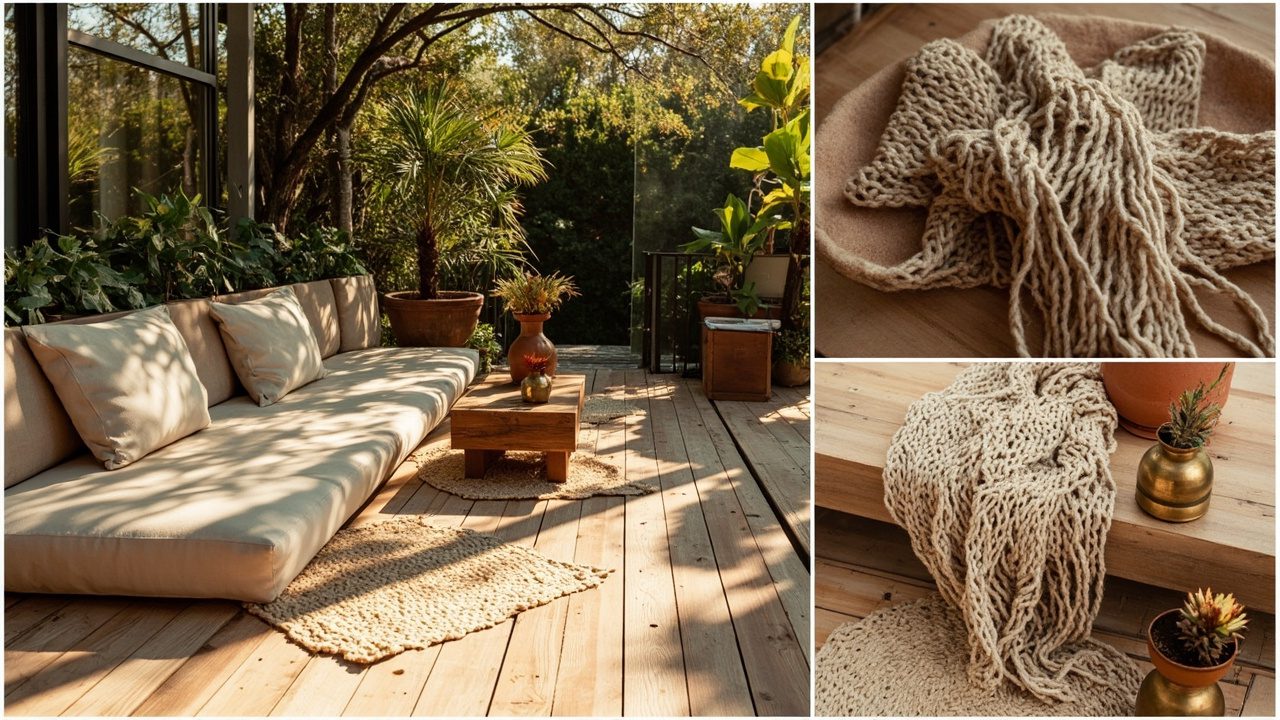
Soft sunlight, salt air, or a shady backyard: a boho low deck reads like a living room that sank to the ground and refused to hurry.
Think wide planks at knee height, poufs pulled close to a floor cushion, and furniture that prioritizes lounging over formality; the result is informal, tactile, and endlessly inviting.
This list focuses on practical, field-tested approaches to styling a low deck with bohemian soul.
Each idea includes a clear material choice, scale note, and one avoidable mistake, so you can build a space that reads collected, not cluttered.
1. Rattan Layering
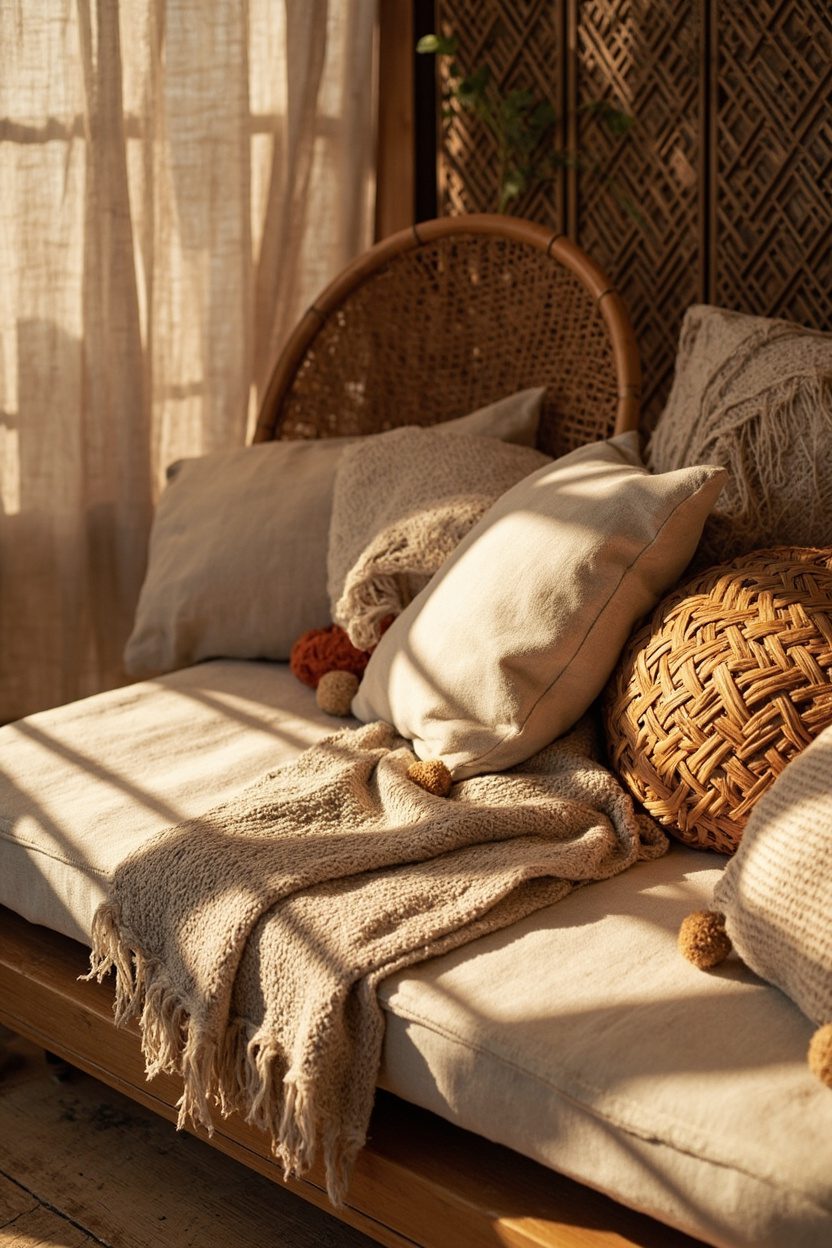
Rattan establishes a natural base, weathering well on covered decks and carrying that boho-by-the-sea vibe. Opt for flat-woven or cane pieces to keep silhouettes light and breezy rather than bulky.
Layering is essential; use a low rattan sofa plus wicker ottomans and a cane coffee table to build texture without raising scale. Choose warm honey tones for continuity, or pick a bleached finish for coastal lightness.
Protect rattan with UV oil if the deck is sun-exposed, and mix synthetic wicker for high-moisture tolerance in budget tiers.
Avoid tightly matching every piece; introduce one contrasting material like a teak tray or metal lamp for balance.
Keep cushions low and deep, with removable, washable covers in earthy textiles, cotton-linen blends are ideal for breathability and durability.
Essential Elements
- Choose flat-woven or cane rattan for a visually light profile and durability.
- Layer with low ottomans and a short coffee table to maintain deck-scale proportions.
- Use cotton-linen cushion covers, prioritized for breathability and easy washing.
- Apply UV oil to natural rattan or use synthetic options near water to prevent sun damage.
2. Woven Canopy
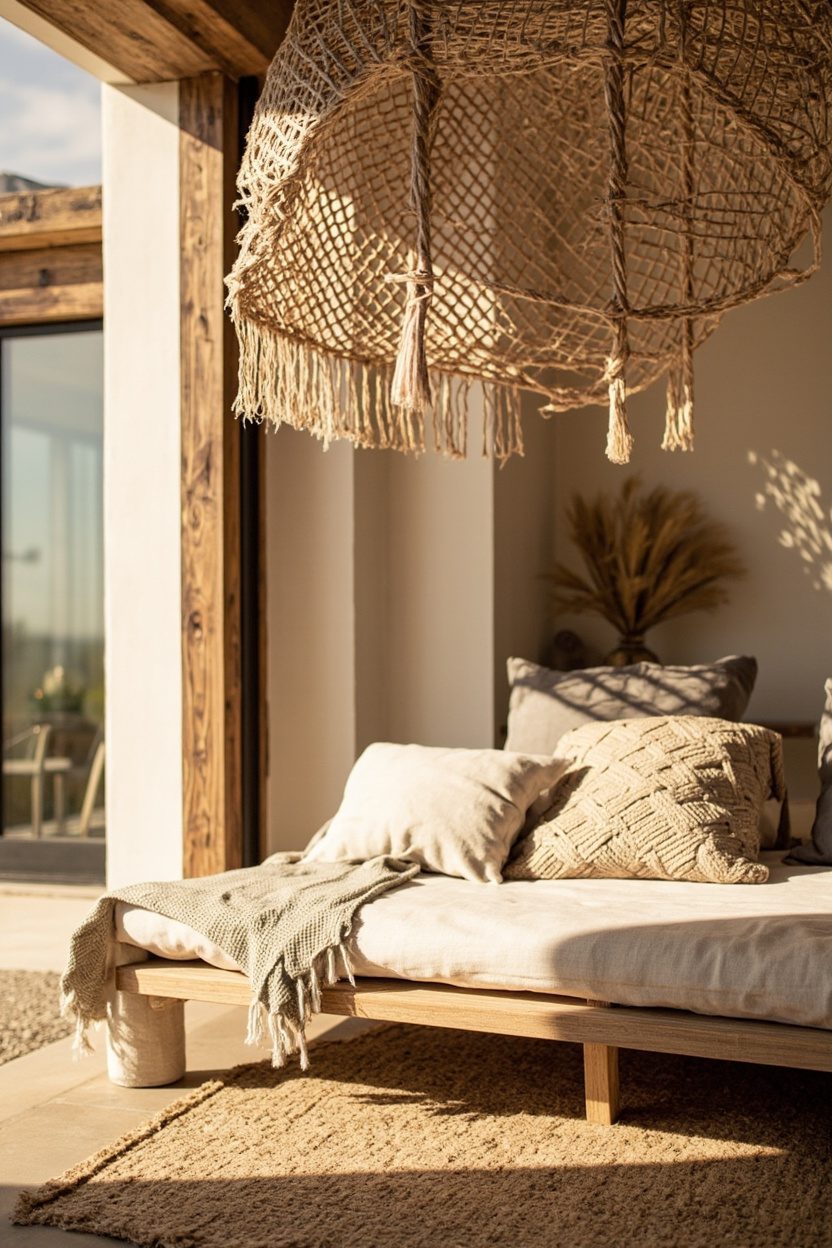
A woven canopy reads boho instantly, offering dappled shade and sculptural interest without raising the visual weight. Select a macrame or loose-weave jute canopy to filter light and add coastal texture.
Build the canopy on a low pergola or a simple frame that keeps the roofline under eight feet, preserving the intimate, nest-like feel of a low deck. For DIY, use weatherproof rope and stainless hardware to avoid corrosion.
Color-wise, stick to natural tones or a sun-faded white for maximum versatility and to keep glare controlled. Avoid heavy fabrics that flap in wind; choose loosely woven materials that breathe and move gracefully.
Anchor the canopy to low furniture: a long bench, floor cushions, or a daybed, so the structure feels integrated, not like a separate room.
Styling Blueprint
- Use macrame or jute weave for breathable shade and organic texture.
- Keep canopy height low, under eight feet, to preserve intimacy.
- Secure with stainless hardware and UV-resistant rope for longevity.
- Anchor the canopy visually by aligning it with low seating and floor cushions.
3. Low-Slung Daybeds
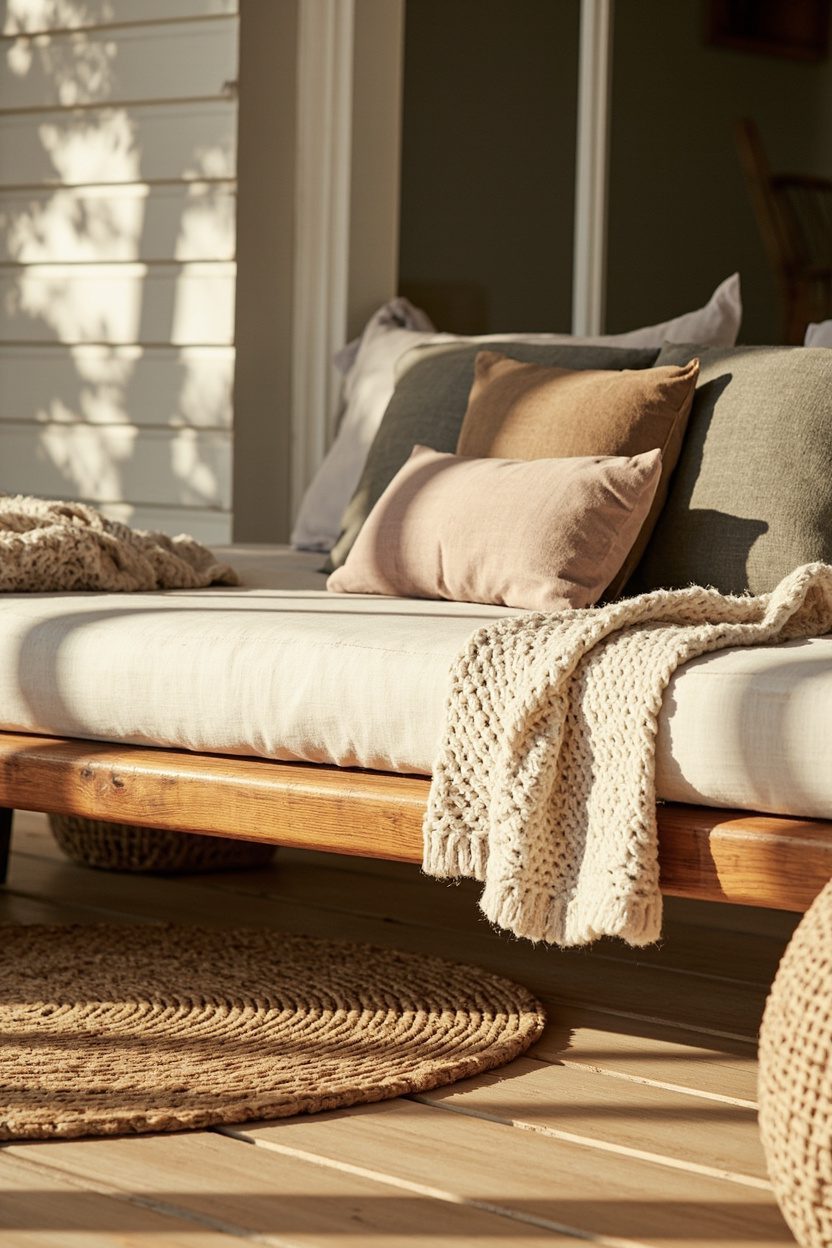
Low-slung daybeds are the cornerstone of a relaxed boho deck, offering generous lounging without the stiffness of conventional sofas. Aim for a mattress height of 8 to 12 inches above the deck surface to maintain that grounded aesthetic.
Choose teak or cedar frames for outdoor resilience, and pair with a weather-rated foam mattress topped with a removable cotton-linen cover. For a budget option, a protected deck accepts an indoor-grade mattress with a waterproof topper and seasonal rotation.
Scale is crucial; place the daybed perpendicular to the house or centered under a canopy to create a focal lounging zone. Avoid overly ornate frames; keep lines simple so textiles and pillows do the stylistic work.
Pile pillows in varying shapes—square, bolster, and a lumbar mixing ikat, stripe, and neutral woven fabrics for layered boho richness.
What to Focus On?
- Set mattress height between 8 and 12 inches for ground-hugging comfort.
- Use teak or cedar frames, or synthetic alternatives in high-moisture climates.
- Top with weather-rated foam and removable cotton-linen covers for maintenance.
- Arrange perpendicular to the house or centered under shade to create a focal zone.
4. Textured Throw Piles
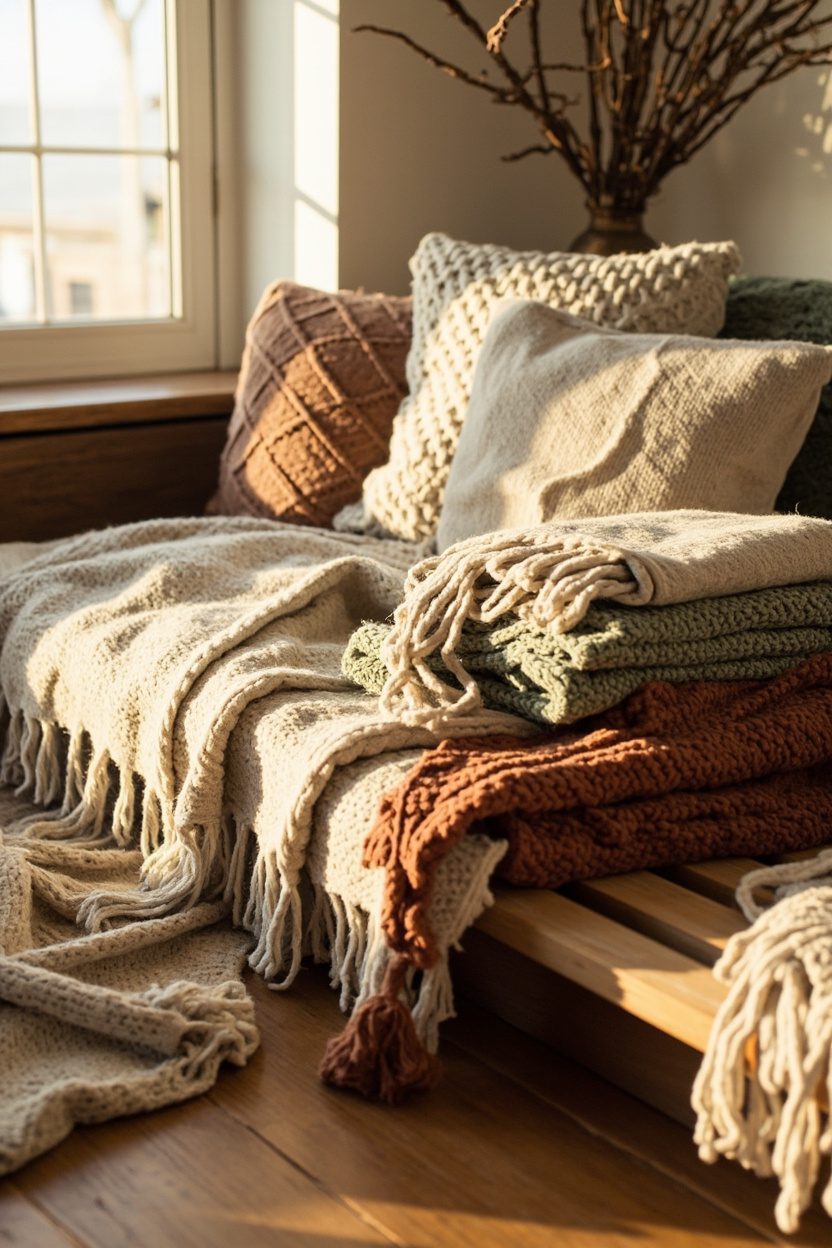
Layering throws is the fastest way to soften a low deck, and texture is your shorthand for comfort and depth.
Choose throws in natural fibers, like chunky cotton and linen blends, to survive sun exposure and frequent washing; avoid silk or delicate knits outdoors.
Stack by function: a weatherproof base throw for protection, a medium-weight for warmth, and a small chunky knit for visual punch and tactile contrast.
Limit the palette to three related hues, for example, warm sand, muted teal, and off-white, to keep the look collected rather than chaotic.
Styling Blueprint
- Use a waterproof throw on the bottom row to protect cushions and decking from moisture exposure.
- Select one bold texture, such as a large cable knit, to act as the focal throw.
- Fold throws into thirds lengthwise for neat stacking and easier use by guests.
- Reserve patterned throws as accents, no more than one per seating group to prevent visual clutter.
5. Macramé Backdrops
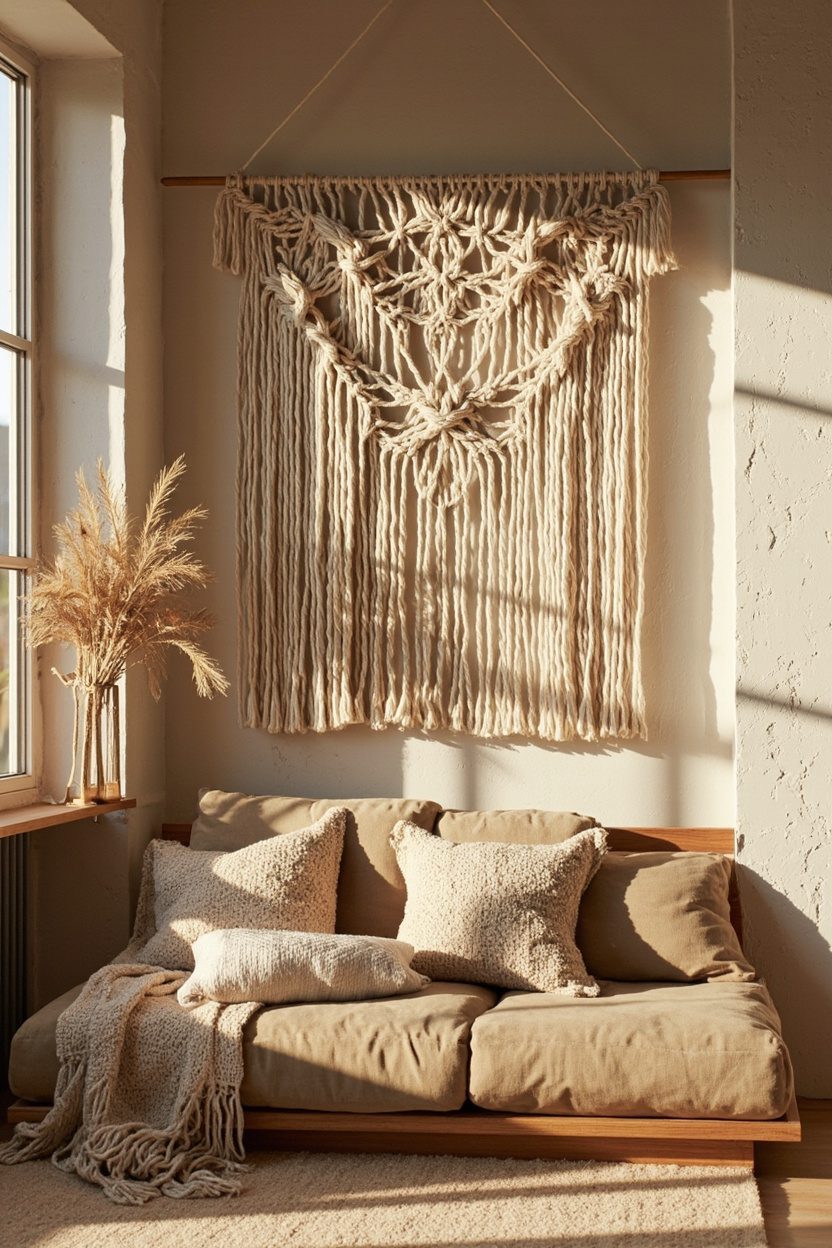
A large macramé panel turns a low deck into an intimate outdoor room, adding vertical interest without blocking breezes.
Opt for UV-stable, cotton-blend cord or weather-treated jute, so the piece softens with time instead of disintegrating after a season.
Scale matters: choose a panel width about two-thirds of your deck wall to maintain balance, or pair two narrower panels for a symmetrical frame.
Keep colors neutral, or dip the fringe in a single dye tone for a subtle coastal nod, avoiding highly saturated hues that fade quickly.
What to Focus On?
- Mount panels on a removable rod or beam for winter storage and easier cleaning.
- Position macramé behind seating at eye level to create a cozy focal point without reducing sightlines.
- Combine with a string of warm LED bulbs for evening texture and soft lighting.
- Avoid overly dense knotting, which blocks airflow and reads heavy on a low deck.
6. Driftwood Accents
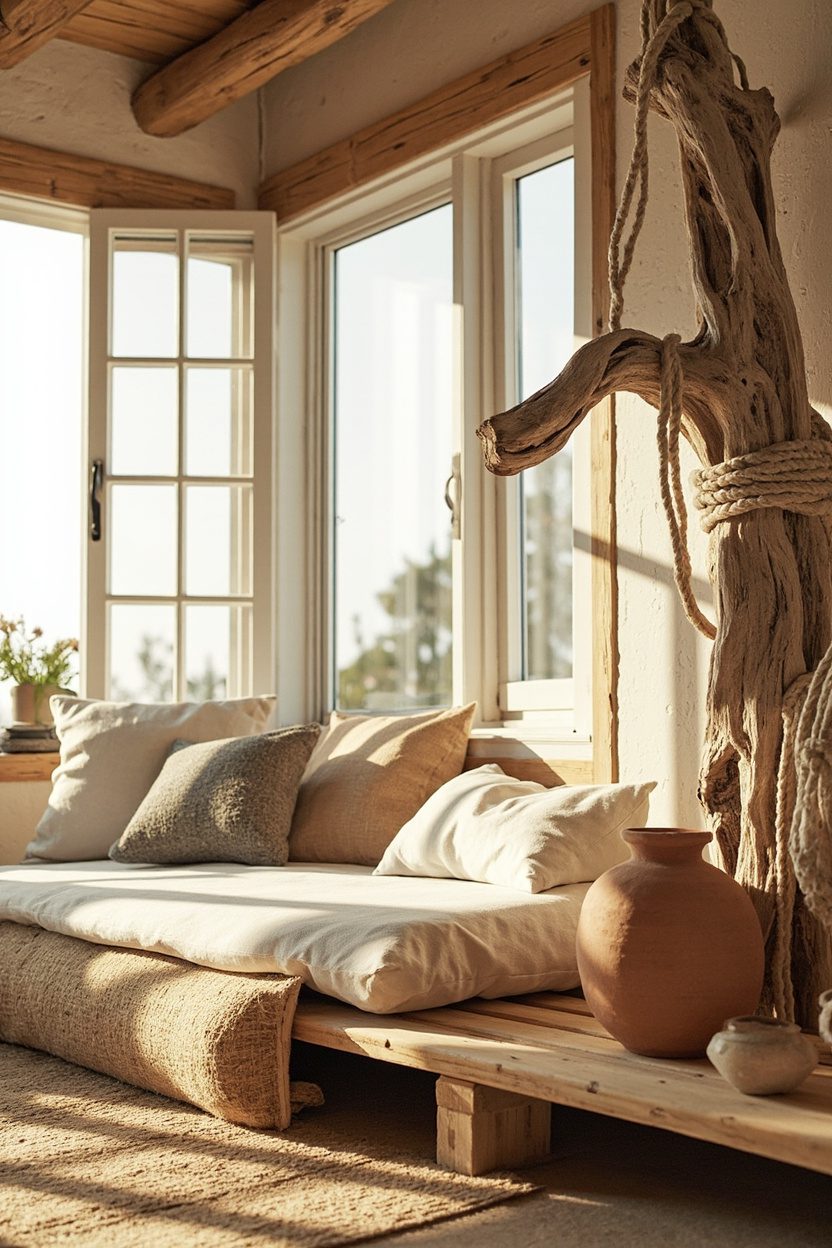
Driftwood brings authentic coastal texture, and a few well-chosen pieces instantly ground a boho low-deck aesthetic.
Select pieces with interesting silhouettes for sculptural impact, and seal them with a clear matte finish to lock in salt-streak character while protecting fibers.
Use driftwood horizontally as a coffee table or vertically as a freestanding screen element, paying attention to scale so it does not dominate low seating.
Pair with rattan and matte black metal for contrast; inexpensive mass-produced driftwood can look generic, so invest in one or two unique specimens.
Essential Elements
- Choose driftwood pieces that are proportionate to low seating, roughly the same visual height as cushions when used as tables.
- Anchor thin pieces on weighted bases or secure with hidden brackets for safety in windy conditions.
- Combine with ceramics in warm beige tones to reinforce a coastal boho palette.
- Use a clear marine-grade sealer if pieces will be exposed to rain or salt air for longevity.
7. Jute Rug Zones
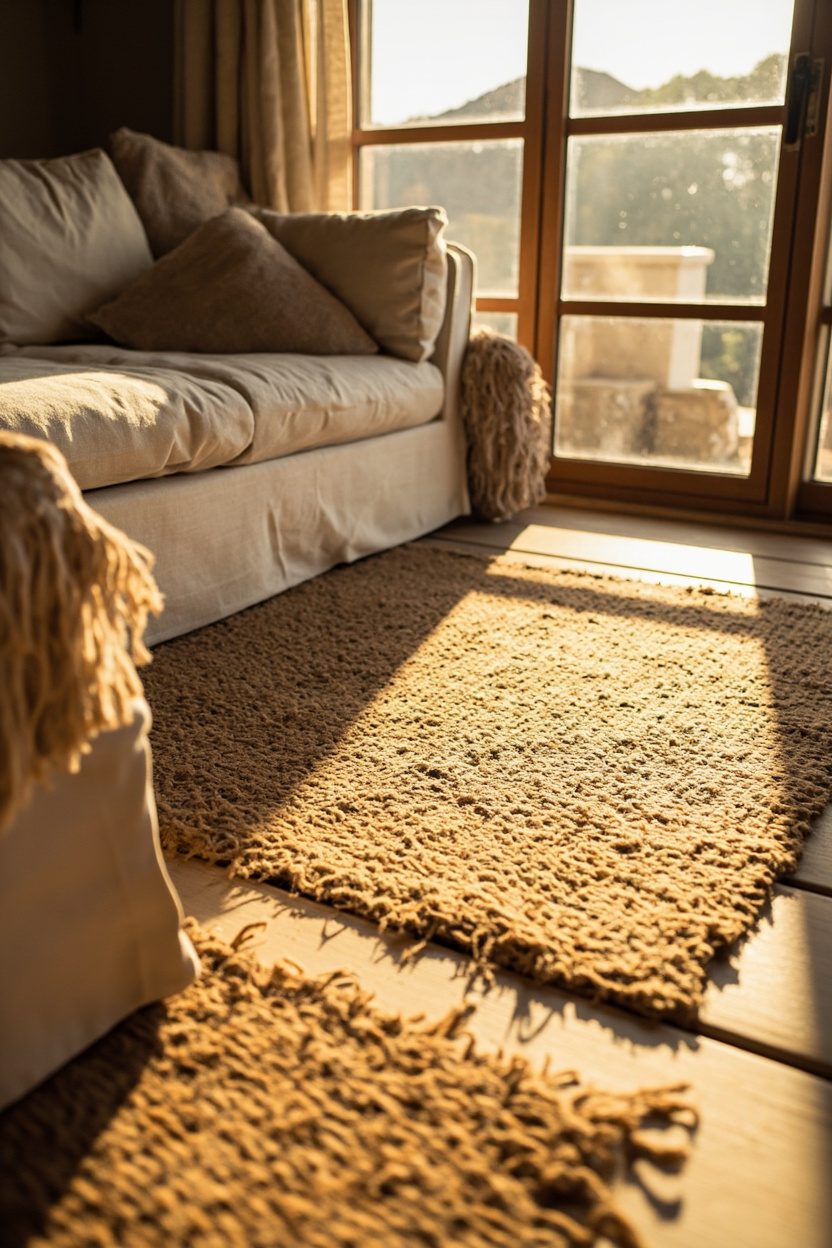
Layering a natural jute rug instantly grounds a low deck, giving it a tactile, boho essence that reads casual but edited.
Choose a 4×6 or 6×9 handwoven jute for small to medium decks, and keep edges raw for that lived-in texture.
Place the rug so the front legs of the seating sit on it; this anchors the grouping and avoids the floating, disconnected look.
Avoid synthetic blends; they look slick and cheap. Invest in a tightly woven natural jute, around $80 to $250, depending on size and weave density.
Essential Elements
- Size to fit the seating, front legs on the rug for scale and cohesion.
- Natural jute fiber, no synthetic blends for authentic texture.
- Neutral palette, consider a thin border to define edges without heavy contrast.
- Outdoor rug pad underneath to prevent slipping and extend the life.
8. Potted Palm Corners
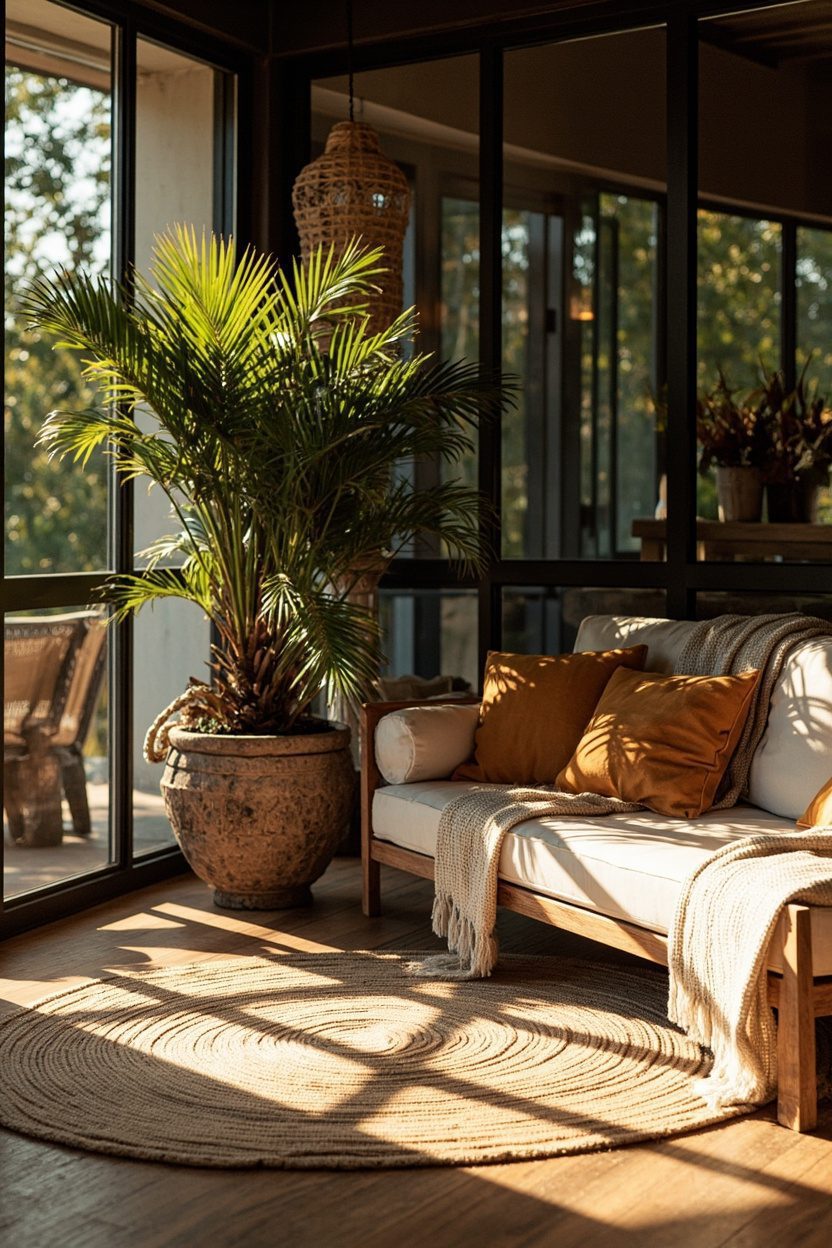
Tall potted palms soften the geometry of a low deck and bring an immediate tropical, boho vibe with minimal effort.
Opt for hardy palms like kentia or areca in 14 to 20-inch planters, which offer presence without overwhelming scale.
Group one large palm with a shorter textured pot of trailing foliage to create depth, and stagger heights near corners for natural framing.
Use lightweight fiberglass or resin planters in terracotta hues to keep the look breezy and portable, budget $60 to $200 per pot depending on finish.
Styling Blueprint
- Choose palms suited to your climate, kentia for shade, areca for bright indirect light..
- Pick a planter material that balances weight and aesthetic, resin for easy moving..
- Layer with a trailing plant like pothos to soften the planter rim..
- Group odd numbers, two or three pots, for a relaxed, intentional composition..
9. Terrazzo Side Tables
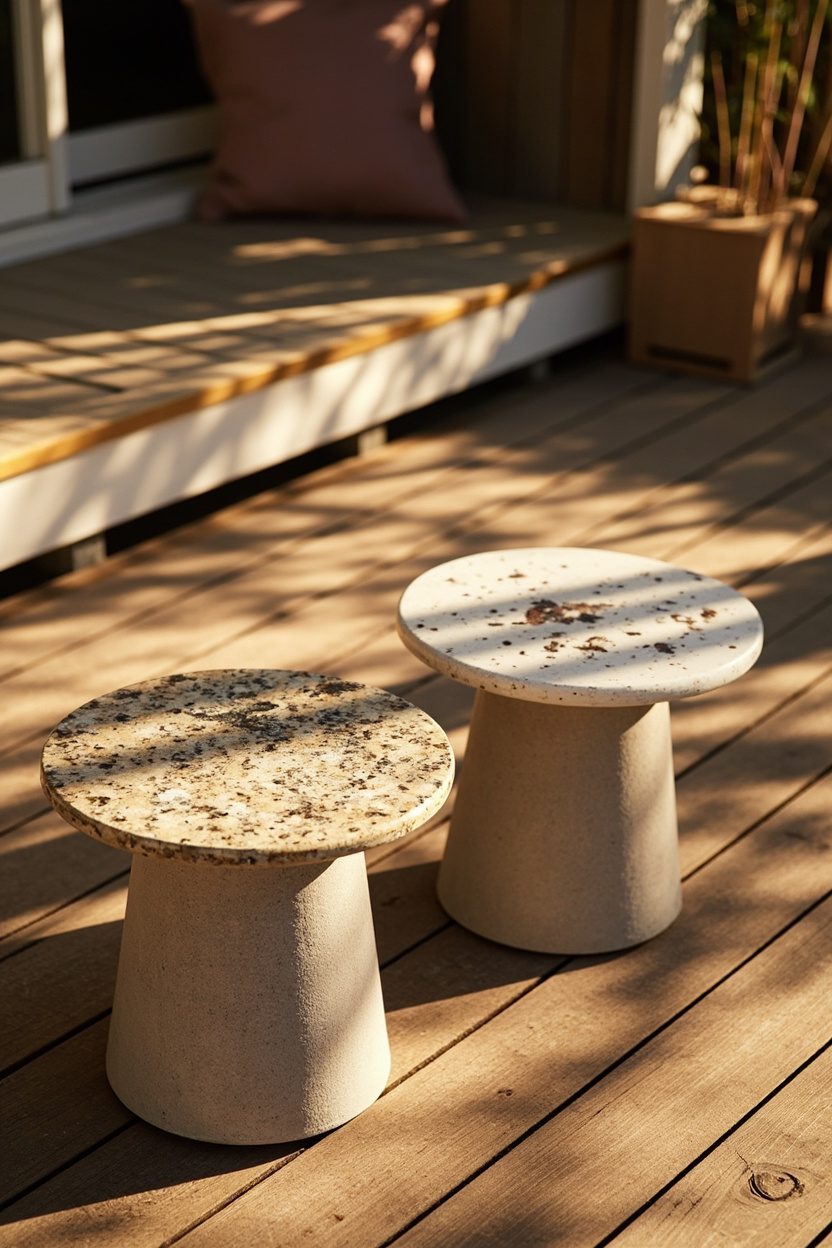
A small terrazzo side table reads modern while complementing boho textures, adding a durable surface without visual heaviness.
Select a compact diameter, 14 to 18 inches, so the table fits between low seating or beside a lounge cushion without crowding traffic.
White or warm beige terrazzo with flecks of warm terracotta and sea-glass tones ties into natural palettes and pairs with jute, rattan, or linen cushions.
If budget is tight, choose a terrazzo-look composite with a solid resin base; real stone runs higher, $250 plus, while composites can be under $100.
What to Focus On?
- Table height matched to seating, small tables should be within two inches of seat height.
- Terrazzo color flecks that echo other accents, pick at least one coordinating tone.
- Weight and stability for outdoor use, heavier pieces resist tipping in the wind.
- Easy-clean finish for outdoor durability, seal porous stone when necessary.
10. Sun-bleached Linens
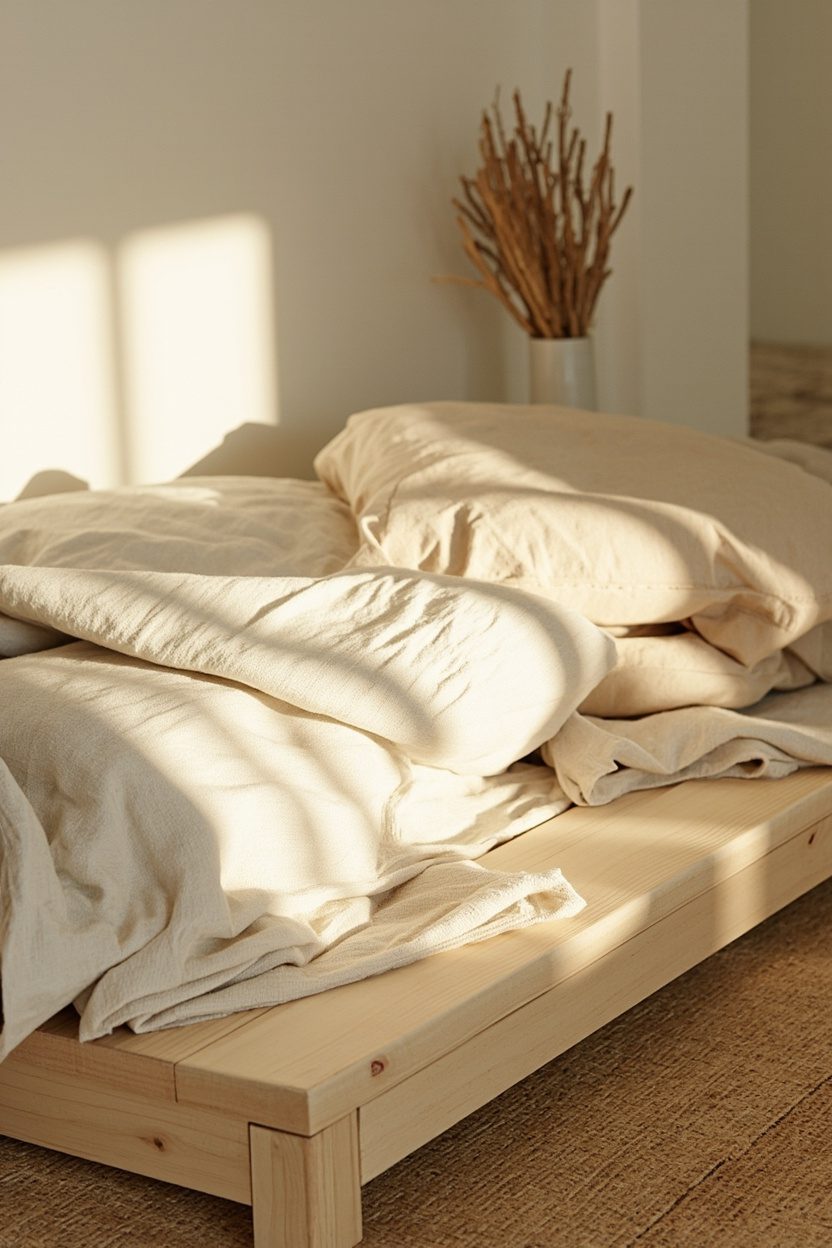
Light, faded linens read as effortless and intentional on a low deck; they mimic years of salt-and-sand living without the upkeep of true vintage fabrics.
Choose Belgian or washed linen in off-white, oat, or a pale coastal blue to keep the palette airy and rooted in beachy boho.
Keep scale in mind; oversized European shams on floor cushions anchor a low seating group better than tiny throw pillows, which get lost visually.
Avoid heavy patterning here; the point is texture and soft sun-faded color, not visual competition with rattan or large jute rugs.
Essential Elements
- Washed linen in neutral tones, pre-washed to soften the weave and prevent shrinkage.
- Oversized cushions or floor mattresses, slightly compressed for casual, low lounging.
- Layer a lightweight throw in natural cotton for evenings, in a complementary muted hue.
- Sun-protective fabric spray for outdoor exposure, applied seasonally to extend color life.
11. Mixed Pattern Throws
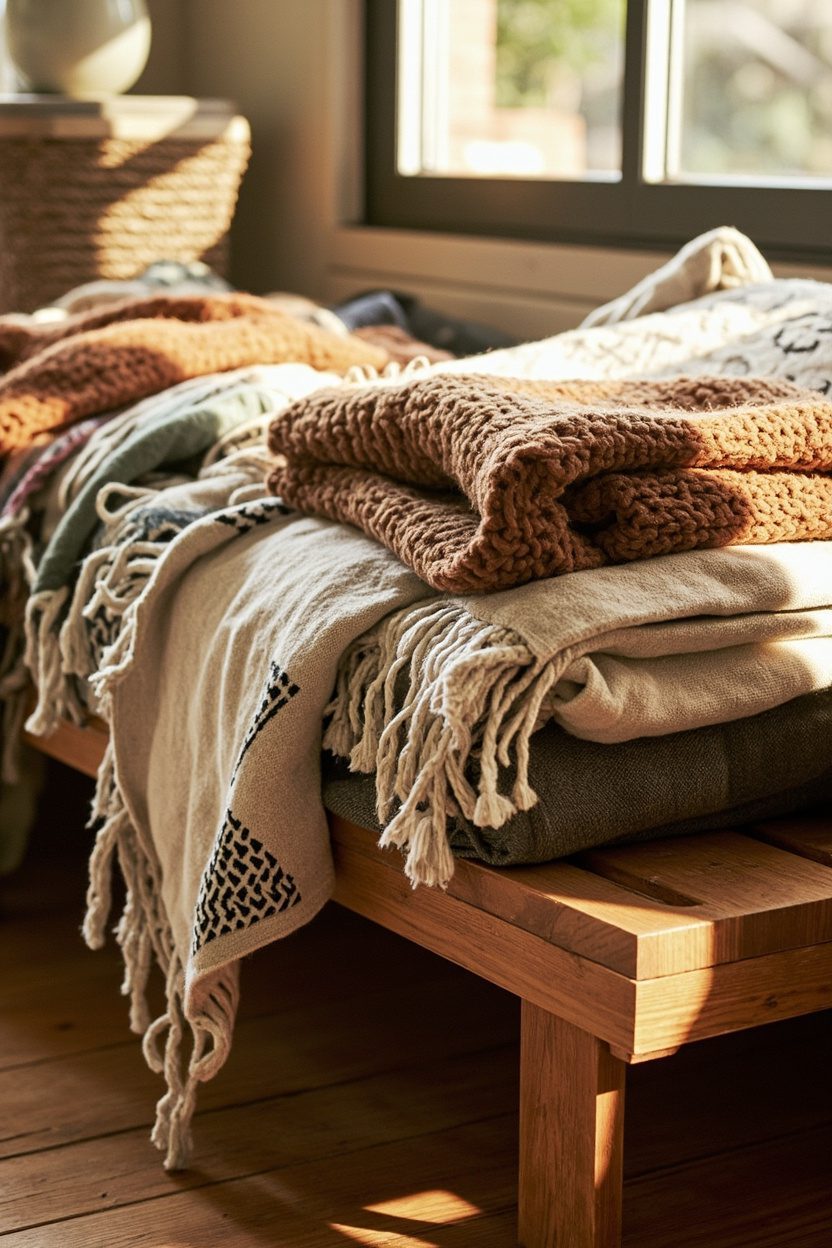
Pattern mixing is a boho staple, and on a low deck, it reads relaxed rather than busy when you limit the palette to two or three tones.
Pair a bold kilim or ikat throw with a smaller-scale stripe or tiny floral in the same color family to create depth without chaos.
Mind the material: open-weave cotton and light wool work outdoors in mild climates, but avoid heavy boucle that traps moisture and mildew.
Placement matters; drape a patterned throw over the back of a low bench or across a floor mattress so it invites touch and softens the silhouette.
Styling Blueprint
- Start with one dominant throw in a rich pattern, then add a secondary throw that echoes one color from the dominant piece.
- Mix textures, such as flatweave kilim with a slightly nubby cotton, to keep the ensemble tactile.
- Fold throws into quarters for neat draping that still looks casual, and avoid crumpled piles that attract dirt.
- Rotate and air throws monthly to prevent sun-uneven fading, store in a breathable bag off-season.
12. Hammock Corner
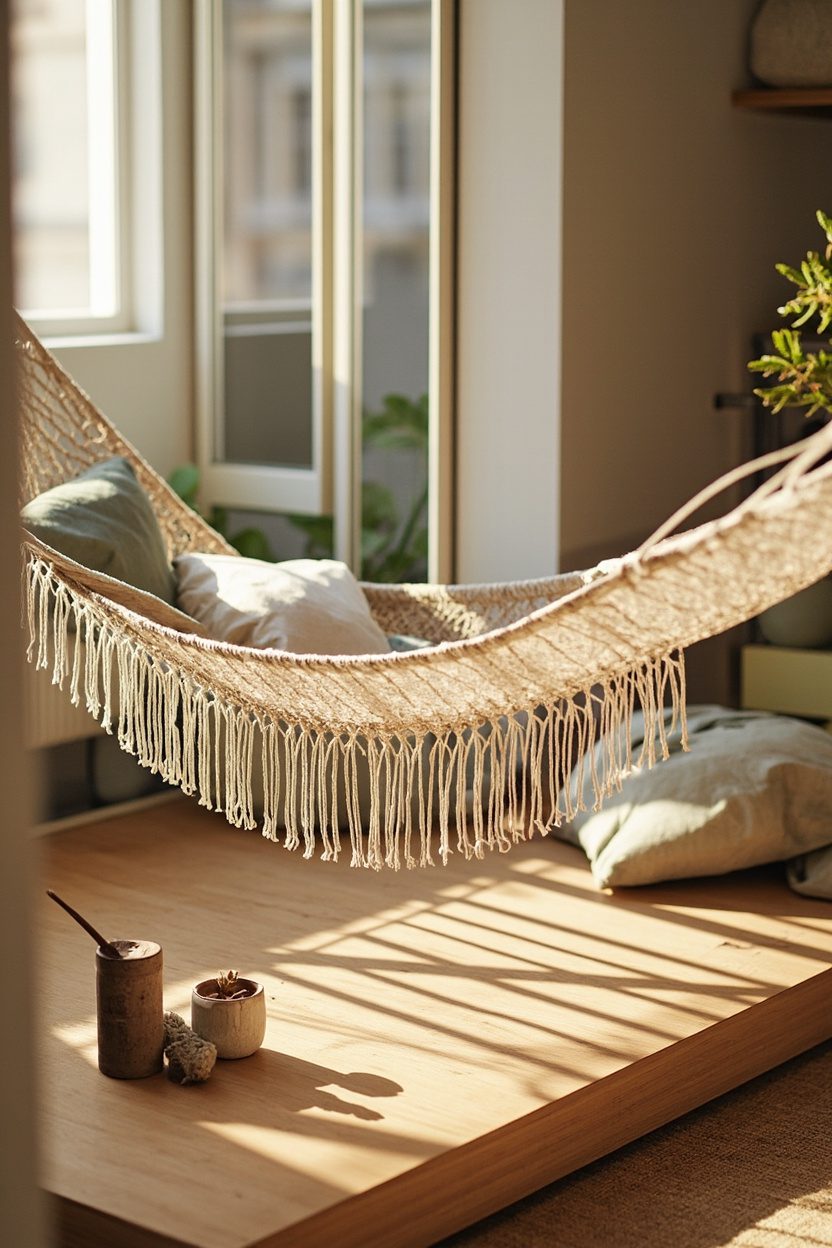
A hammock anchored low between two stout posts or a low pergola instantly creates a relaxed focal point that reads boho-coastal.
Choose a cotton rope hammock with wooden spreader bars for an authentic look, or a canvas hammock in a neutral tone for more support and longevity.
Position it so the lowest point sits about 12-18 inches off the deck, which makes getting in and out easy and keeps the profile low and lounge-friendly.
Add a small side table and a weighted throw pillow, and opt for rust-resistant hardware if the deck is exposed to sea air.
What to Focus On
- Secure anchors rated for the load, using stainless-steel eye bolts if attached to structural posts or beams.
- Canvas or marine-grade fabrics for durability, especially in coastal environments with salt exposure.
- Keep clearance of at least 18 inches from railings and walls to allow a gentle swing without abrasion.
- Choose a removable fabric hammock for easy cleaning, and store it indoors during heavy rain seasons.
For a complementary decor approach, see 15 Boho Chic Living Room Ideas That Balance Elegance and Ease.
FAQ
Air and sunlight are your best defenses, so remove cushions and throws to dry after any dampness, and store them under cover between uses. Lightly misting with fabric protectant designed for outdoor textiles helps repel moisture, and washing according to labels prevents mold growth.
Check joist spacing and load capacity before adding heavy elements; a simple rule is to confirm the deck can handle at least 40 pounds per square foot for seating and dynamic loads. When in doubt, reinforce attachment points with additional posts or consult a contractor; this information is useful when planning Home Renovations.
Natural materials like teak, cedar, or composite decking withstand weather and feel warm underfoot, while large outdoor rugs in flatweave jute or polypropylene define seating zones and reduce splinter risk. Pick rug sizes that allow furniture legs to sit fully on the rug to create a cohesive low-lounge area.
Prioritize one investment piece, such as a weatherproof hammock or quality floor mattress, and pair it with budget-friendly accessories like patterned cotton throws and thrifted woven baskets. Rotate and air textiles regularly to extend life, and choose synthetic blends only where necessary for high-exposure areas, another tactic in many Boho Interior Design projects
Final Thoughts
These last three treatments, sun-bleached linens, mixed-pattern throws, and a hammock corner, are simple, high-impact moves that make a low deck feel curated, not staged.
Choose materials for real-life weather, focus on scale so seating reads intentionally low, and mix textures to keep the setting tactile and invite lingering.