

Boho wall decor is no longer a one-trick pony of macramé and dream catchers; it has evolved into a textured, edited aesthetic that reads modern without losing its soul. Think layered surfaces, natural fibers, and artful imperfections that anchor a room while keeping things uncluttered and livable.
This list leans on what works in real homes: materials that survive humidity, scaled pieces that suit city flats and cottages alike, and styling moves that make boho feel intentional rather than accidental.
Expect concrete decisions on scale, color direction, and placement so you can swap sentimentality for strategy.
- 1. Macramé Wall Hangings
- 2. Rattan Mirrors
- 3. Woven Tapestries
- 4. Layered Gallery Walls
- 5. Dried Flower Displays
- 6. Woven Grass Baskets
- 7. Natural Wood Shelves
- 8. Hand-Painted Murals
- 9. Textured Wall Panels
- 10. Vintage Textile Frames
- 11. Neutral Clay Masks
- 12. Mixed-Material Shelving
- 13. Botanical Wall Grids
- 14. Fringe Accent Panels
- 15. Handmade Ceramic Hooks
- FAQ
- Final Thoughts
1. Macramé Wall Hangings
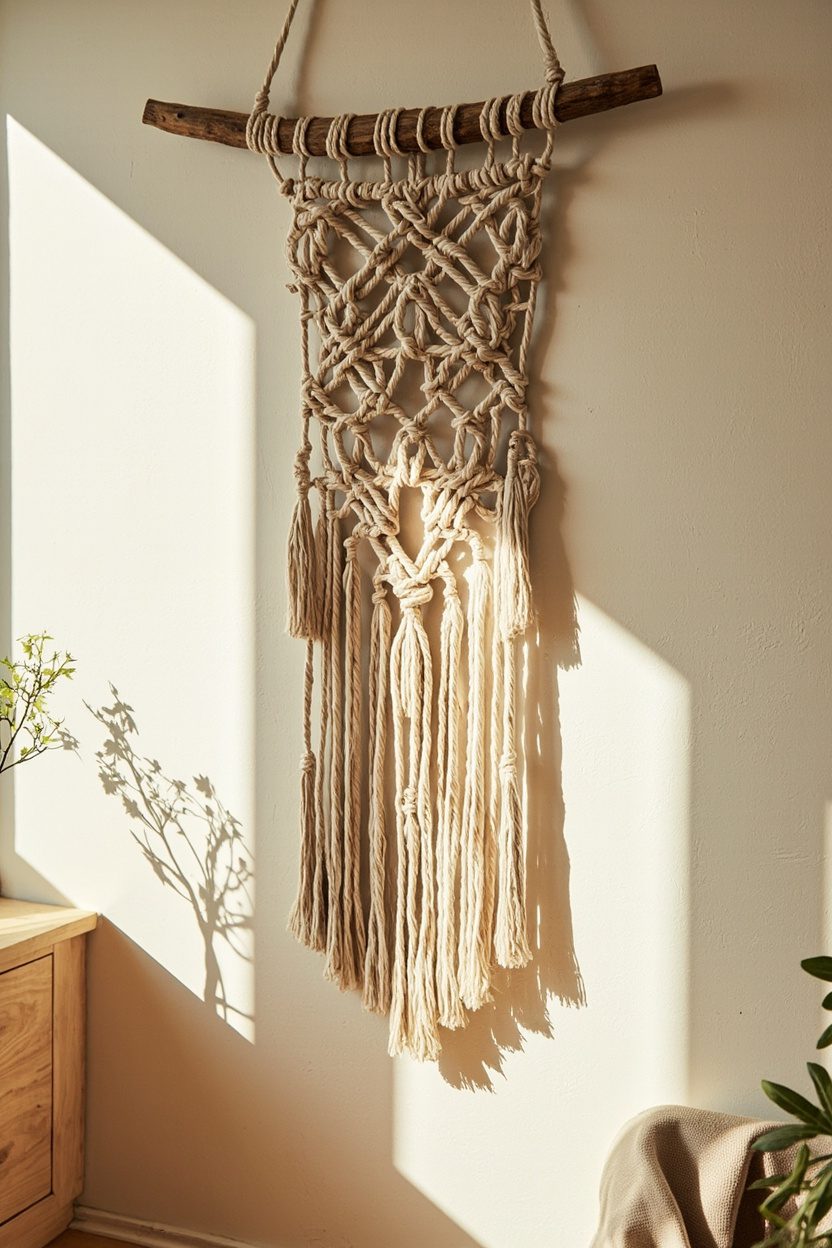
Macramé is the original boho staple, and it still works when updated with restraint and modern scale.
Choose chunky cord in an off-white or warm sand, and favor larger knots with negative space for a contemporary feel.
Place a single oversized piece above a sofa or bed, sized roughly two-thirds the width of the furniture, to maintain balanced proportion.
Avoid crowded fringe and tiny motifs that read dated, and opt for natural cotton or weatherproof polyester blends for durability.
Styling Blueprint
- Scale: aim for two-thirds the width of adjacent furniture for balance.
- Material: choose cotton for indoor warmth, polyester blends for humid rooms.
- Color: Stick to off-white, sand, or muted terracotta for a modern palette.
- Placement: hang at eye level, 6 to 10 inches above the furniture top.
2. Rattan Mirrors
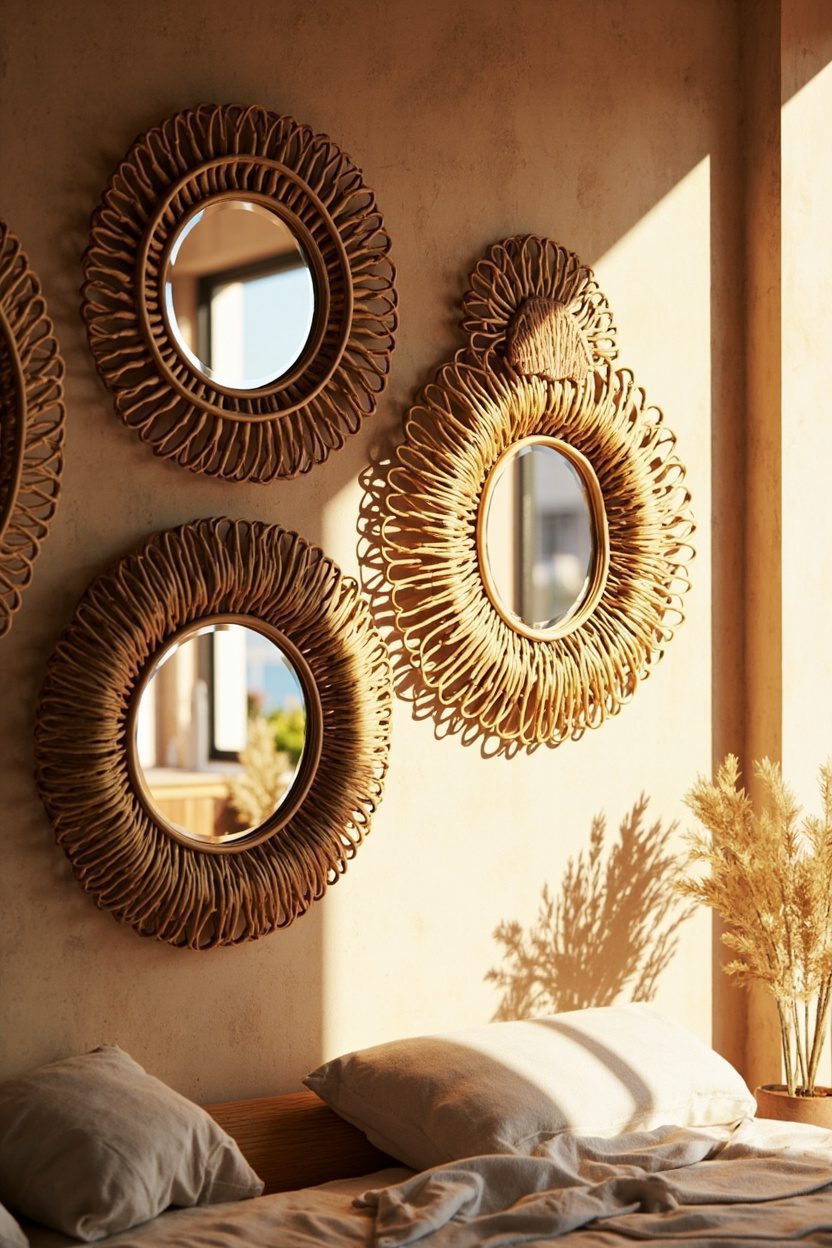
Rattan mirrors add organic shape and reflective light, which expands cozy boho spaces without heavy ornament.
Pick hand-woven frames with irregular weave for authenticity, and avoid uniform, machine-made silhouettes.
For living rooms, go round and generous, 30 to 40 inches in diameter, to function as a focal point and light enhancer.
Seal natural rattan in high-moisture rooms or choose synthetic wicker to prevent warping, especially in bathrooms.
Essential Elements
- Size: 30 to 40 inches for a living room focal mirror, smaller for entryways.
- Weave: favor hand-woven, irregular patterns for character.
- Finish: seal natural rattan in humid spaces, or use synthetic wicker.
- Placement: hang across from a window to maximize reflected light.
3. Woven Tapestries
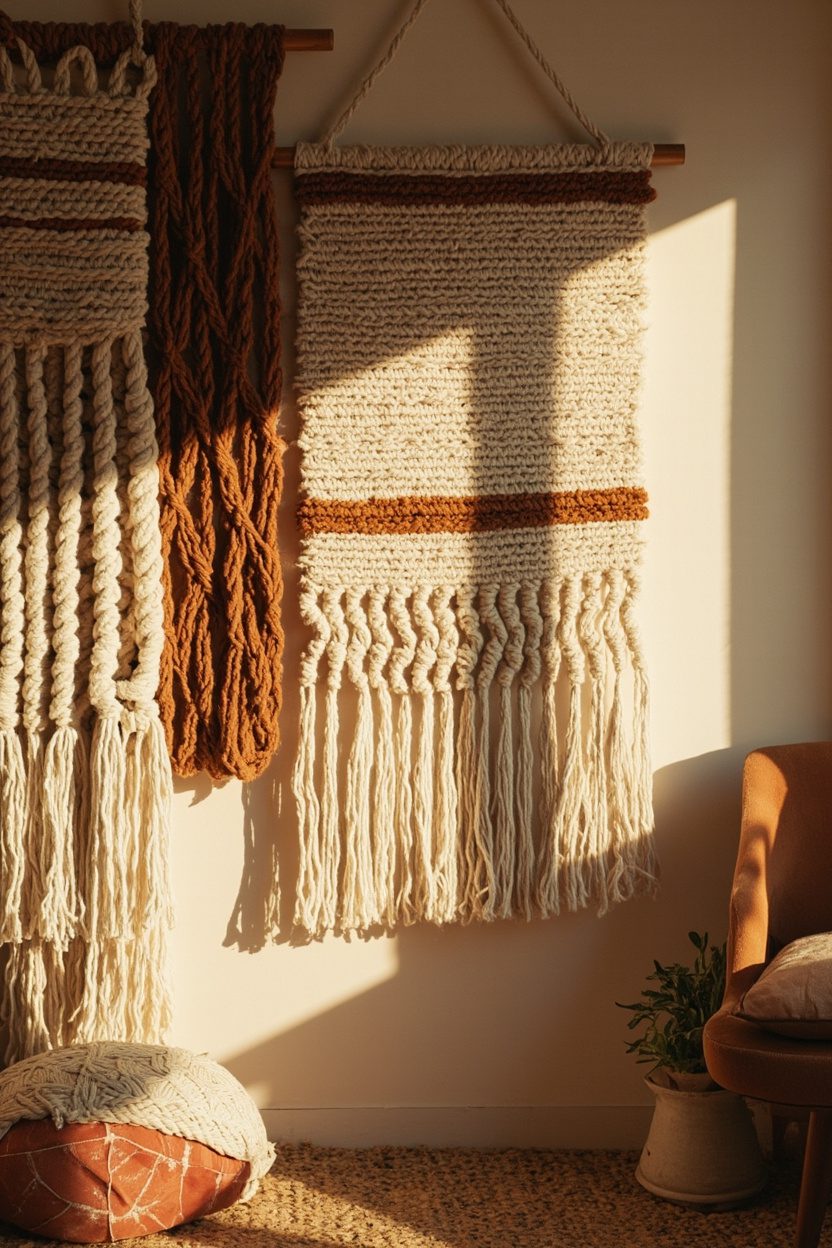
Woven tapestries bring color, pattern, and tactile depth, ideal for anchoring a neutral boho room.
Choose wool or mixed-fiber weaves with a low pile for easier maintenance and minimal dust trapping.
Scale matters: a tapestry 60 to 80 percent of the wall height reads intentional; avoid tiny pieces that disappear on large walls.
Coordinate tapestry hues with two room accents, such as a rug and a throw, to create a cohesive palette without overmatching.
What to Focus On?
- Material: pick wool or mixed fibers with low pile for easy care.
- Scale: aim for 60 to 80 percent of wall height for visual impact.
- Color: tie tapestry hues to two accent pieces in the room.
- Mounting: Use a slim wooden dowel or floating rail to keep edges flat.
4. Layered Gallery Walls
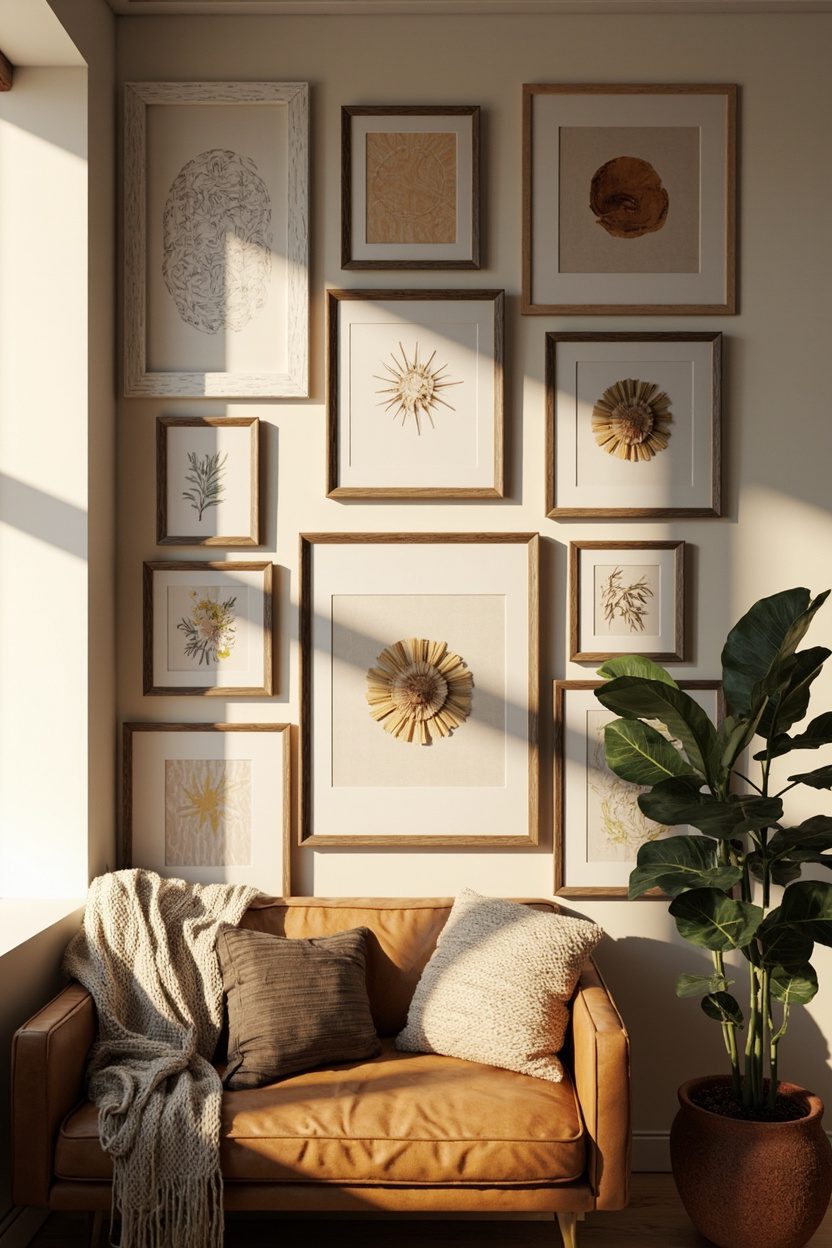
Start with a principal large piece, like a framed textile or abstract print, to anchor the composition and set the color story. I recommend a 36×24-inch scale for average living room walls.
Mix in smaller, tactile elements, such as a straw trivet or a carved wood panel, to introduce depth and shadow.
Place them a few inches off the wall if possible.
Vary frames, but keep a unifying detail, for example matte black frames with natural linen mats, that restraint stops the wall from feeling cluttered.
Balance negative space leave one vertical column intentionally sparse, so the eye rests and the arrangement reads as edited, not crowded.
Styling Blueprint
- Anchor with one sizeable focal piece, 30–40% of wall width, hung at 57 inches to eye level.
- Use three texture inserts, such as a woven plate, carved wood, and a small ceramic shelf, spaced 6–8 inches apart.
- Limit frame finishes to two kinds, for cohesion, like black metal and raw wood.
- Arrange on kraft paper templates first, to tweak spacing without extra holes in the wall.
5. Dried Flower Displays
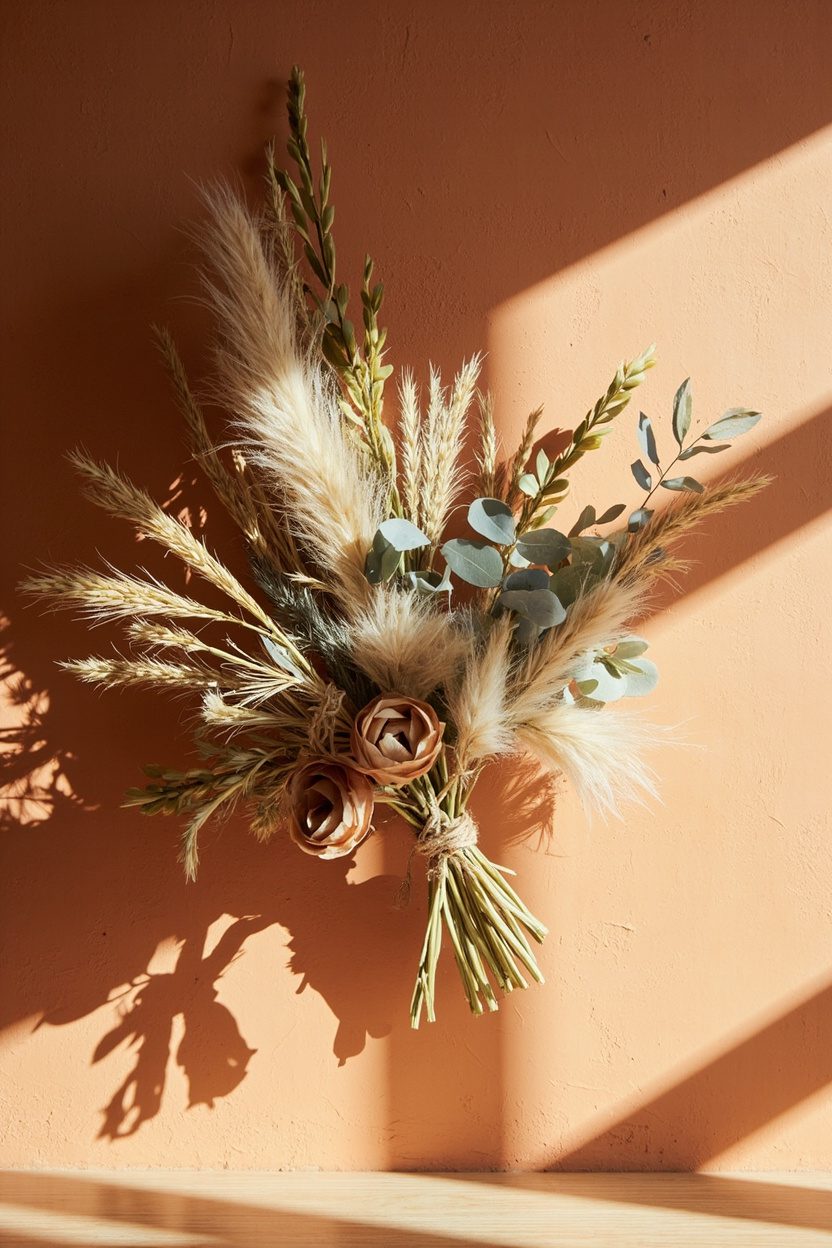
Choose preservation methods that match the space, like naturally air-dried stems for rustic rooms, or silica-dried blooms for preserved color that lasts longer under light.
Make the installation architectural by mounting a horizontal driftwood branch and suspending small bundles at staggered heights. Use cotton twine or brass clips for a crafted look.
Scale matters: single blooms in narrow wall vases work above a console, whereas a dense bouquet panel reads better over a bed; aim for 60–75% of the furniture width beneath.
Avoid over-sunlit spots, because even dried blooms fade; instead, place displays where indirect light keeps tone without bleaching, such as a north-facing wall.
Essential Elements
- Pick durable species, like bunny tail grass, pampas, and statice, for longevity and minimal shedding.
- Fix stems with floral adhesive or clear museum wax to prevent slippage and dust accumulation.
- Frame arrangements in shadowboxes for higher-traffic zones, to protect from pets and drafts.
- Refresh every 12–18 months, replacing faded stems to keep the display intentional and fresh.
6. Woven Grass Baskets
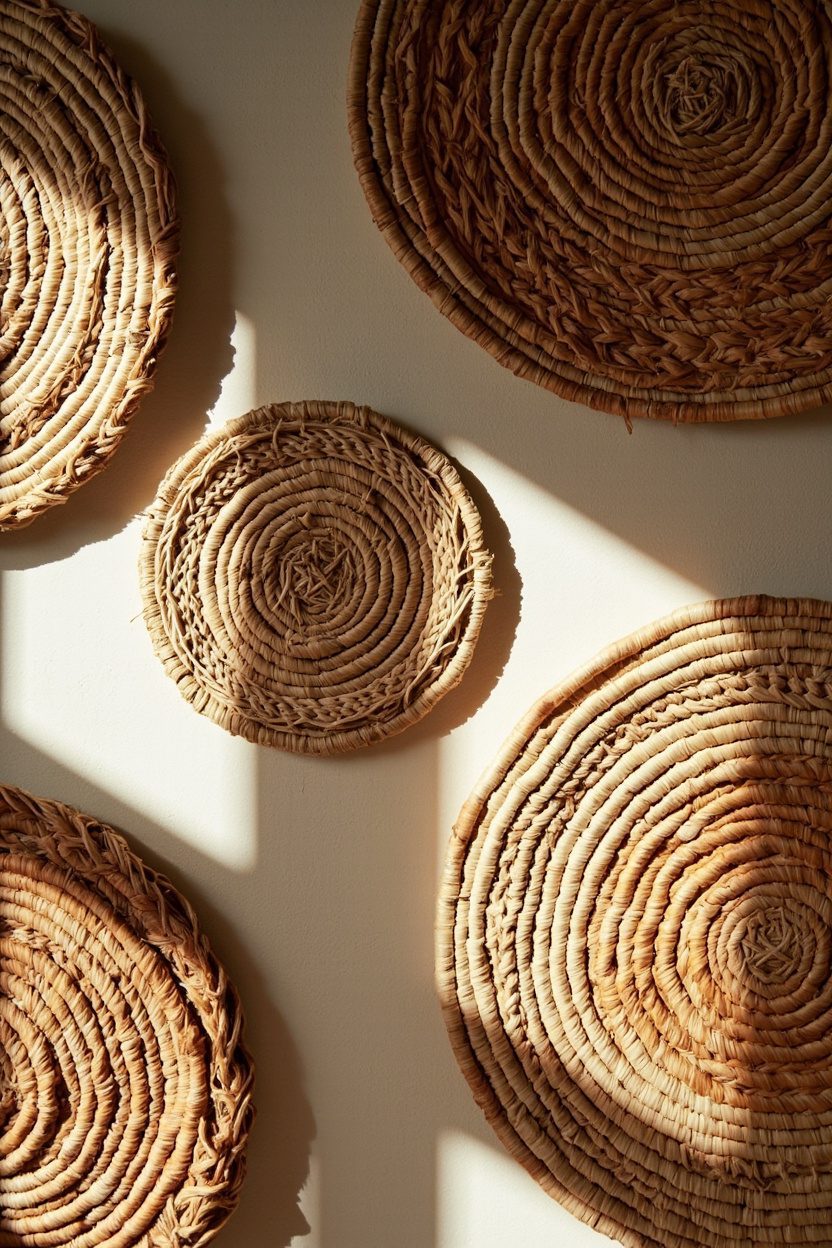
Select baskets in varying diameters, from small 8-inch to large 24-inch pieces, grouping three to five for a layered, sunburst effect on a single wall.
Play with finishes, mix bleached seagrass with dark-dyed raffia, so the wall reads like an intentional textile collage rather than matchy-matchy craft fair items.
Mount using a slim hook or hidden plate hanger anchored into a stud when possible, especially for heavier woven trays, to prevent sagging or warping over time.
Combine one or two baskets with a flat-backed mirror or a small macramé panel to break the circular repetition, and choose complementary tones within the same warm palette.
What to Focus On?
- Group in odd numbers, three or five, to maintain dynamic composition and visual rhythm.
- Vary depths, place some baskets ¾ inch off the wall using spacer pads for shadow play.
- Use natural rope loops or copper wire for invisible hanging, and hide hardware behind the weave.
- Keep the color palette restrained, natural tans, warm whites, and one accent dye tone like indigo.
7. Natural Wood Shelves
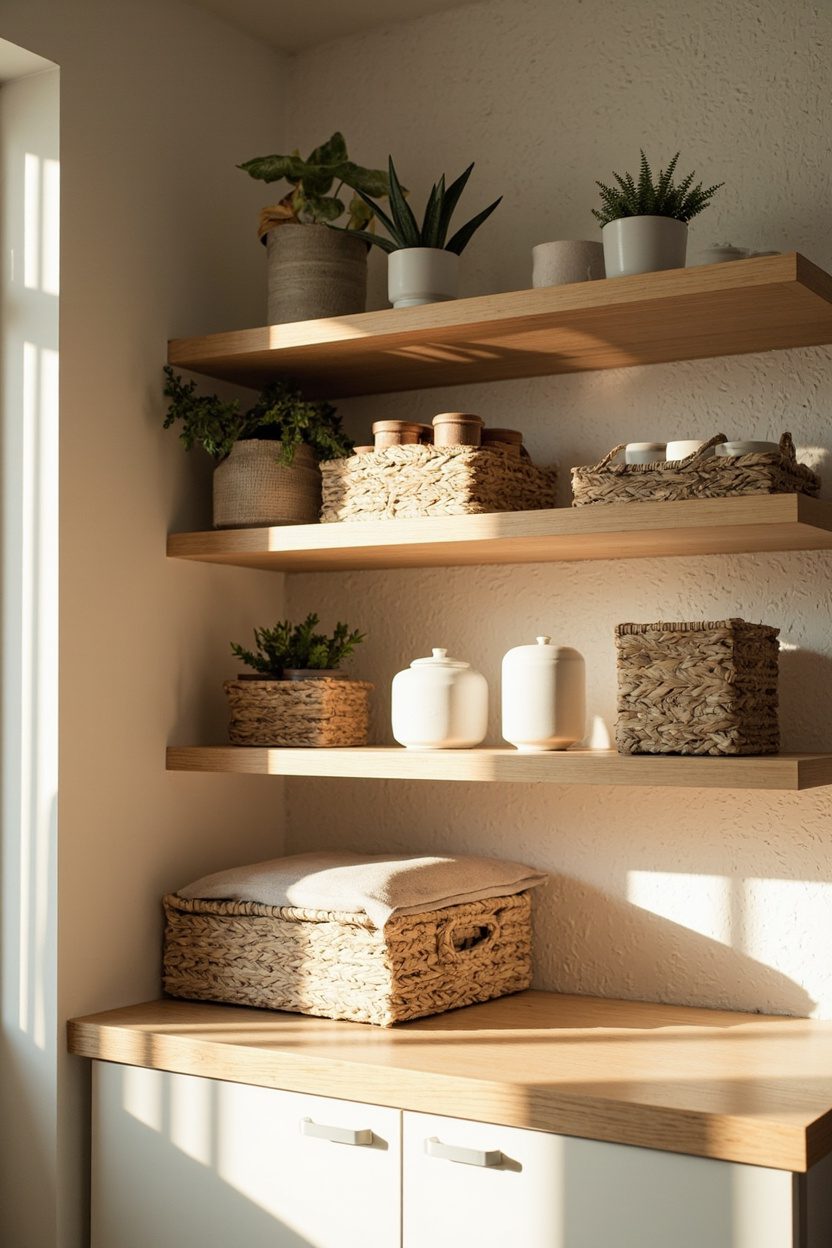
A set of floating walnut or reclaimed oak shelves adds instant warmth and anchors a boho vignette against a neutral plaster wall.
Keep the shelf widths narrow, 8 to 12 inches, to avoid overpowering woven art and plants, especially in small rooms.
Layer one or two framed prints, a low-profile planter, and a stack of vintage books to create a collected, lived-in look.
Avoid heavy brackets and glossy finishes; choose hand-sanded, oil-rubbed wood for an authentic, matte patina that wears well over time.
Styling Blueprint
- Choose shelf depth 8–12 inches, wood species walnut or reclaimed oak, matte finish.
- Anchor composition with one medium print, one plant, and one ceramic object, spaced asymmetrically.
- Use concealed floating hardware rated for at least 50 lbs per shelf, spaced 16 inches on center where possible.
- Stagger heights 6–10 inches between shelves for layered sightlines.
8. Hand-Painted Murals
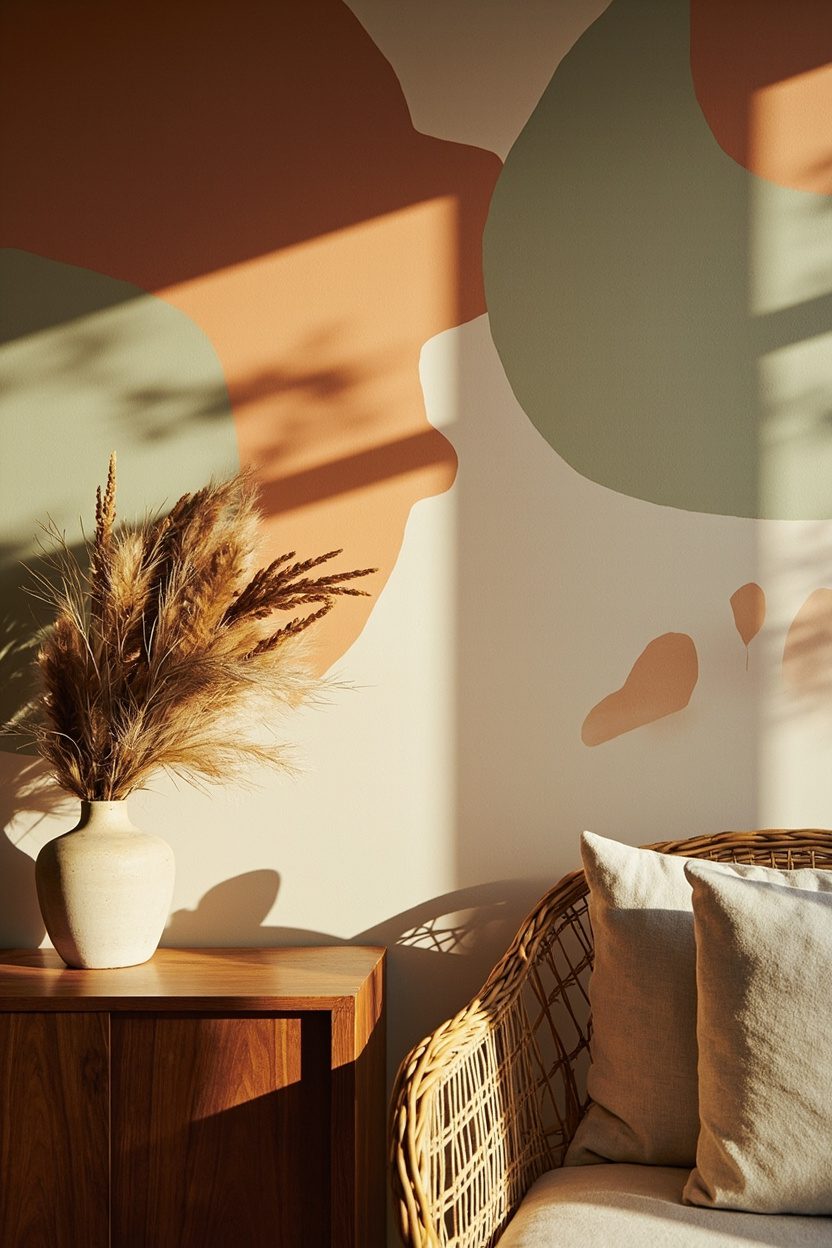
A pared-back botanical or abstract mural becomes a statement without the fuss of frames, and suits both small alcoves and full feature walls.
Select a limited palette of three colors, one dominant and two accents, to keep the boho energy free but visually coherent.
Commission a local artist for a custom scale plan, or paint a simplified version yourself using projector tracing for accuracy on complex motifs.
Protect the work with a water-based matte varnish, especially in kitchens or high-traffic corridors, to preserve color and texture.
Essential Elements
- Limit palette to three colors, choose one dominant muted earth tone plus two accents.
- Work with a local artist or use a projector for precise scale, budget $300–$1,500 depending on size.
- Finish with water-based matte varnish for durability, especially in humid areas.
- Keep surrounding decor simple, use natural fibers and rattan to complement mural tones.
9. Textured Wall Panels
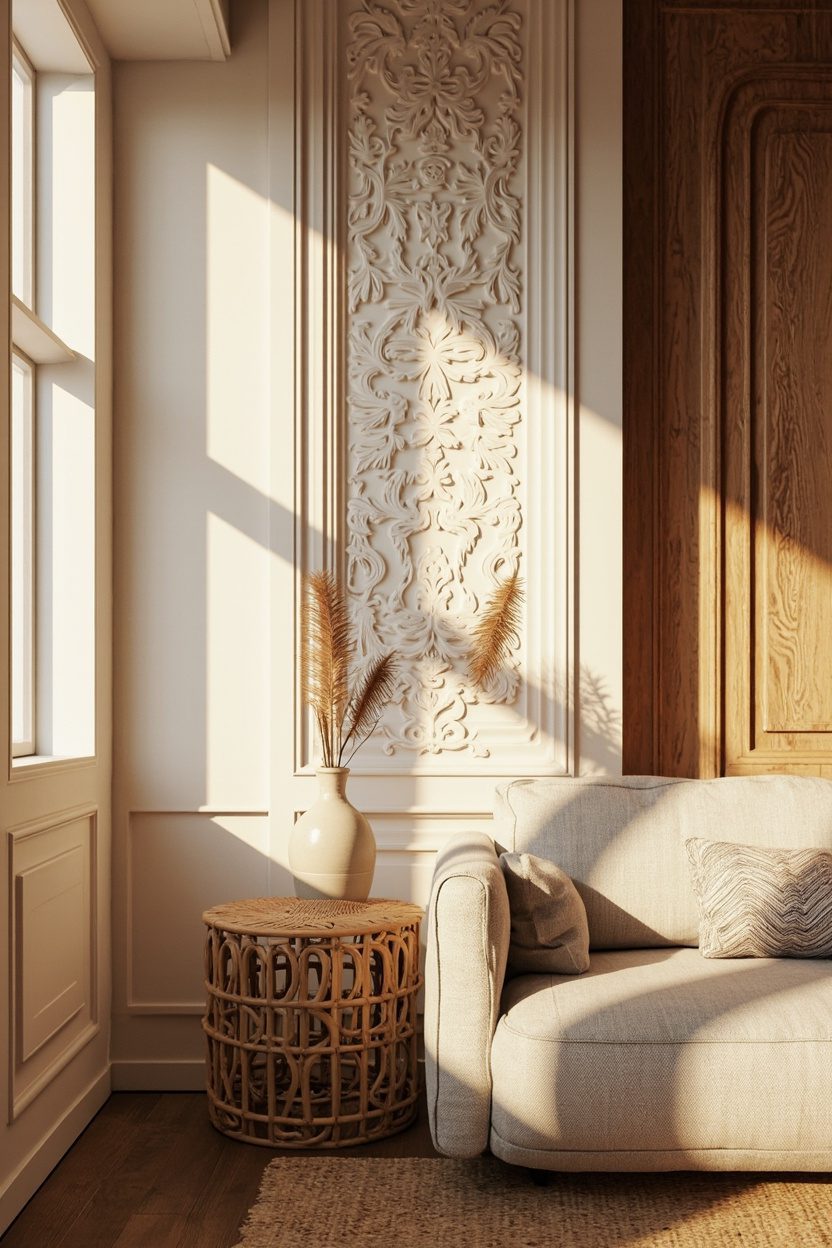
Textured panels, from hand-cast plaster tiles to cork and woven reed panels, introduce tactility that photographs poorly but reads beautifully in person.
Install panels in a grid or an irregular patchwork to create focal depth, and consider a horizontal band behind a sofa for 48–60 inches of impact.
Choose plaster for a sculptural, paintable surface, or cork for acoustic benefits and a warmer tone, matching panel scale to room size.
Avoid over-texturing in tiny rooms; select low-relief patterns under 1 inch if you have limited light or want a calmer backdrop.
What to Focus On?
- Select material by function: plaster for sculptural impact, cork for acoustics and warmth, reed for organic texture.
- Limit relief to under 1 inch in small, low-light rooms to prevent visual clutter.
- Install panels in rows or staggered patches; aim for 48–60 inch width behind seating for balanced scale.
- Paint plaster panels with breathable primer and low-VOC paint, match the tonal range to the textiles in the room.
10. Vintage Textile Frames
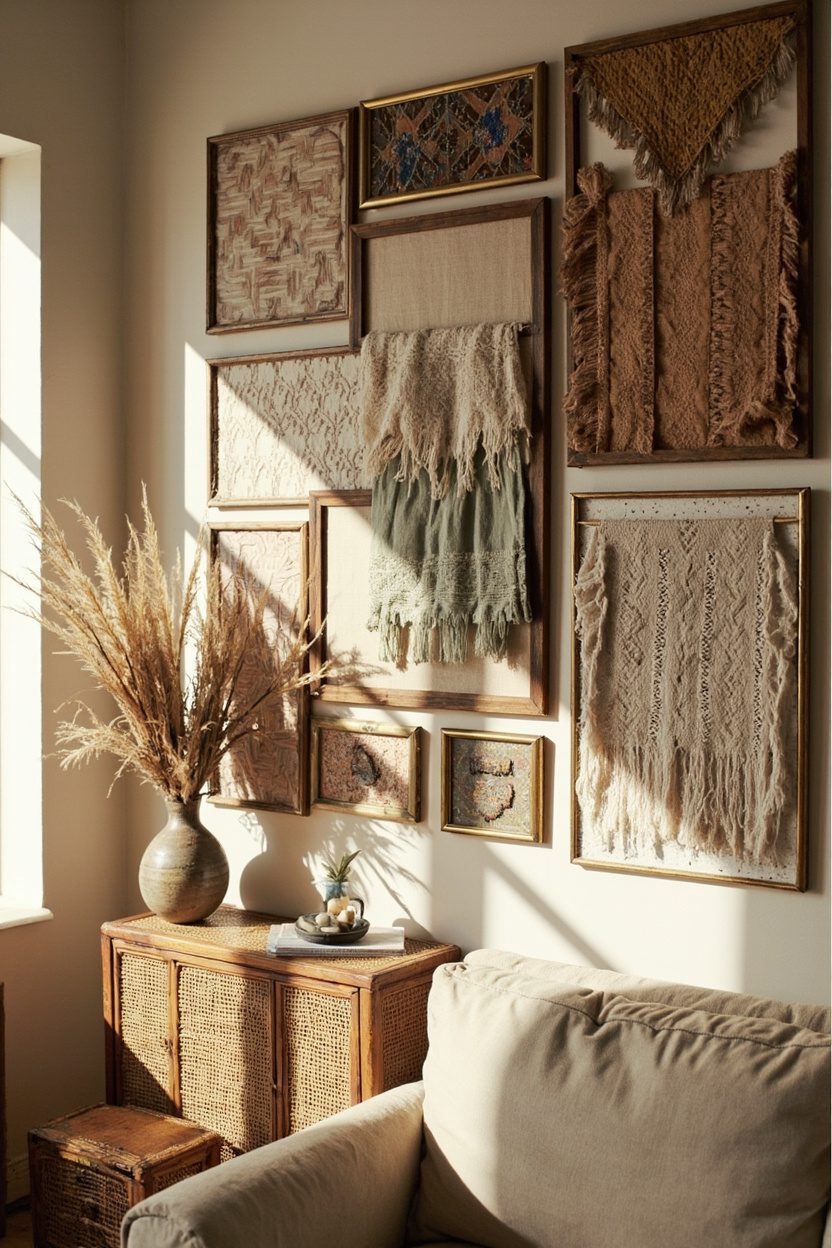
Vintage textiles anchor a boho wall with history, think kilims, indigo swaths, or embroidered panels sourced from flea markets or family trunks.
Frame them in shallow shadowboxes to protect fragile fibers; choose museum glass if sunlight is an issue.
Scale matters, so pair one large framed textile, roughly 3 by 4 feet, with two smaller 18 by 24-inch pieces for balance on a main wall.
Color direction: let one dominant tone in the textile guide nearby paint, rug, or cushion choices, avoiding competing bright accents that dilute the piece.
Styling Blueprint
- Choose archival backing and floating mounts to prevent creasing and allow airflow around the fabric.
- Match the frame wood tone to a major furniture finish, such as walnut or bleached oak, for cohesion.
- Position away from direct sun, or use UV-filtering glass for long-term color preservation.
- Group asymmetrically, anchoring the cluster to a piece of furniture or a wall switch point for natural sightlines.
11. Neutral Clay Masks
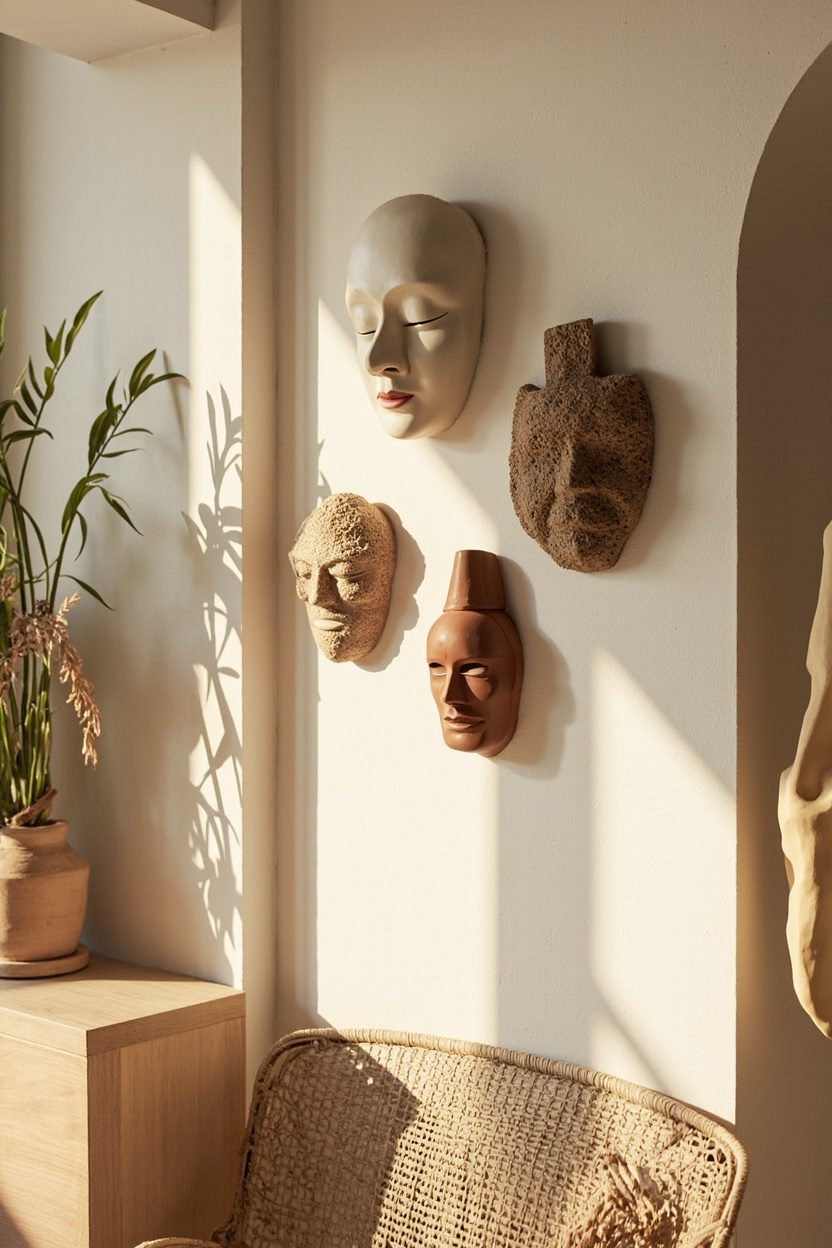
Handmade clay masks deliver tactile, sculptural presence without overwhelming a calm boho palette, favoring soft whites, warm beige, and terra tones.
Material choice is important; choose air-dry or low-fire earthenware with a matte finish to avoid a gallery-like sheen.
Placement tip: hang a single larger mask, around 20 to 24 inches, at eye level and flank it with small plants or woven trays to soften the composition.
Avoid cluttering a small wall; these masks read best when given negative space, which highlights their contours and handmade imperfections.
Essential Elements
- Opt for neutral glazes and slight surface texture to show hand-tool marks and natural firing variations.
- Secure with proper hanging hardware rated for ceramic weight, not just picture hooks.
- Mix materials in the vignette, such as a rattan mirror or wooden peg shelf, to echo boho layers.
- Keep lighting soft and directional, like a wall sconce that casts shallow shadows to reveal relief.
12. Mixed-Material Shelving
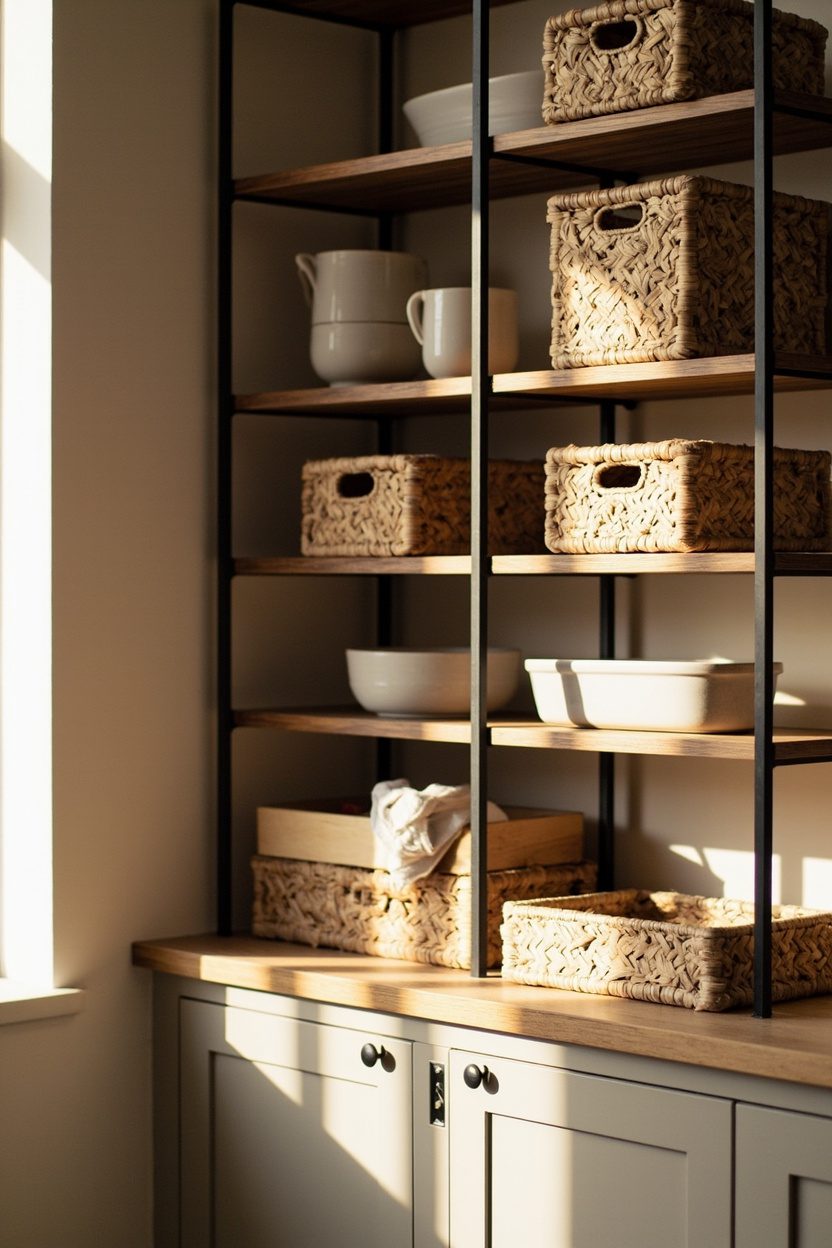
Shelving becomes wall art when you mix plywood, reclaimed wood, woven cane, and metal brackets for an eclectic layered look.
Decide scale by wall width: a run of staggered shelves 10 to 12 inches deep works for books, while 6 to 8-inch narrow shelves suit plants and small ceramics.
Material pairing rule: pair warm woods with black metal for contrast, or use brass brackets for a warmer, vintage lean that complements boho textiles.
Styling detail: alternate objects by height and texture, interspersing art books, clay pots, and a framed vintage print to avoid a matched-store look.
What to Focus On?
- Anchor the layout with one chunky shelf at eye level, then stagger lighter shelves above and below for rhythm.
- Use concealed fixings for a floating effect on at least one shelf to keep the installation feeling relaxed but intentional.
- Limit the color palette on the shelves to three tones, such as terracotta, cream, and olive, to maintain cohesion.
- Introduce live plants in trailing pots to add motion and soften the geometry of metal and wood.
13. Botanical Wall Grids
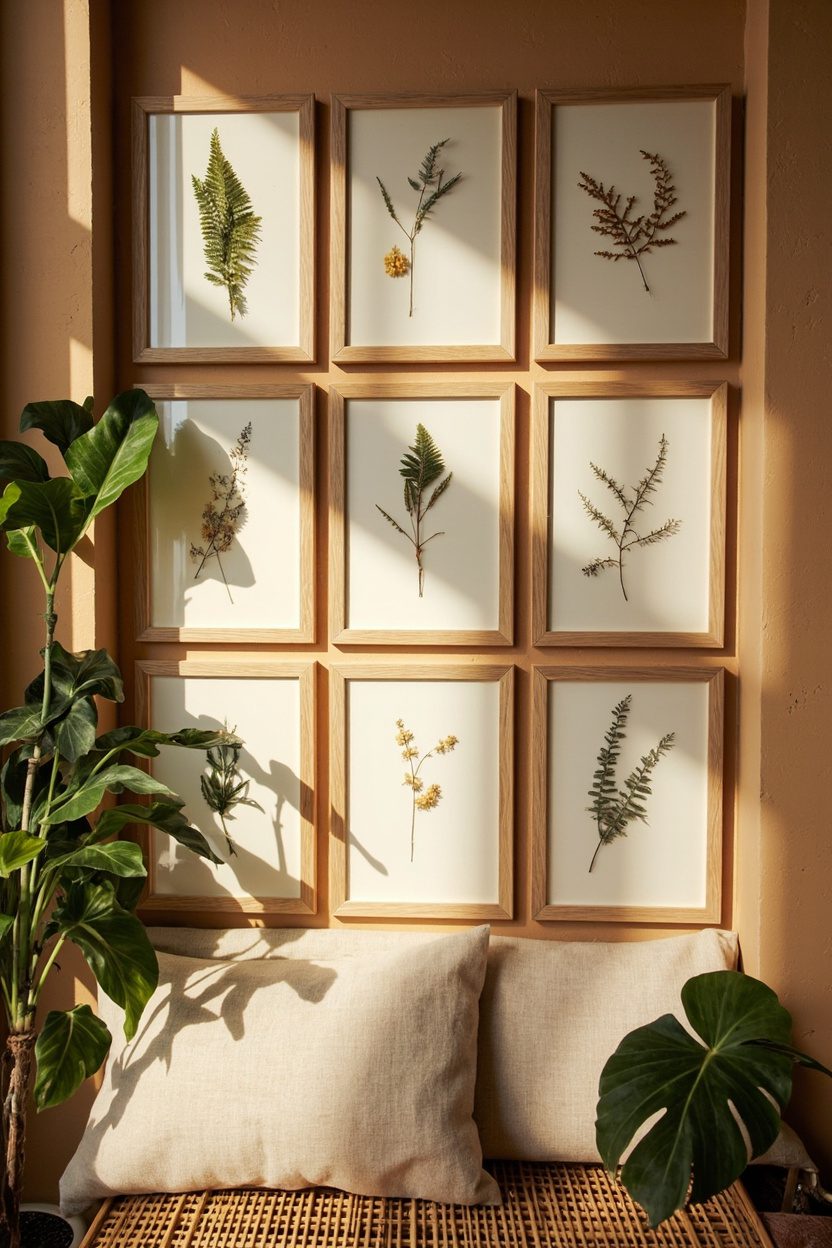
Botanical wall grids turn a blank wall into a living gallery, ideal for renters and homeowners alike.
Use a metal or bamboo grid about 3 to 4 feet wide to keep the scale balanced on medium walls.
Clip-on planters, pressed-plant frames, and small shelves let you layer textures without heavy drilling.
Favor hardy plants like pothos, string of pearls, or preserved moss if low maintenance is the goal, and space planters every 6 to 10 inches for rhythm.
Essential Elements
- Choose a grid size to match the wall span, aiming for one-third to half the wall width.
- Pick corrosion-resistant metal or finished bamboo for humidity-prone rooms.
- Mix live and preserved botanicals to reduce watering frequency and maintenance.
- Anchor with proper wall plugs for weight, or use tension mounting for rentals.
14. Fringe Accent Panels
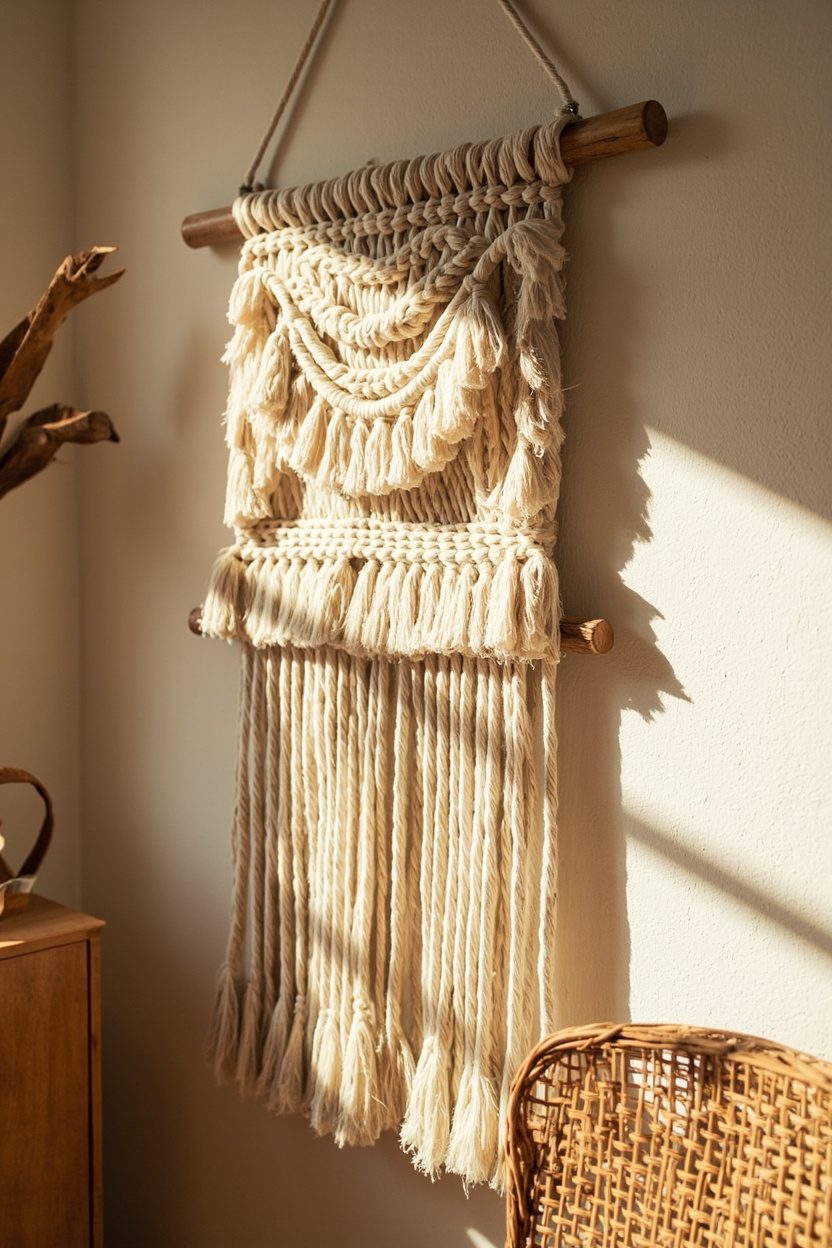
Fringe panels update boho texture without the stereotypical macramé knotwork; they read modern when kept minimal.
Work with cotton, linen, or silk-blend fringe in a single neutral or a restrained two-tone palette to avoid visual clutter.
Mount panels on slim wooden battens and space them evenly, 12 to 18 inches apart, to create a rhythmic, architectural look.
Use longer fringe, 18 to 30 inches, behind low furniture like sofas to add vertical movement and soften hard lines.
Styling Blueprint
- Select fringe weight to suit scale; heavier fringe hangs straighter and needs wider spacing.
- Limit the color palette to two tones maximum for a refined boho effect.
- Install with an invisible rail for a float appearance, or exposed dowels for rustic charm.
- Spot-clean fabric panels, and rotate occasionally to prevent sun fading on one side.
15. Handmade Ceramic Hooks
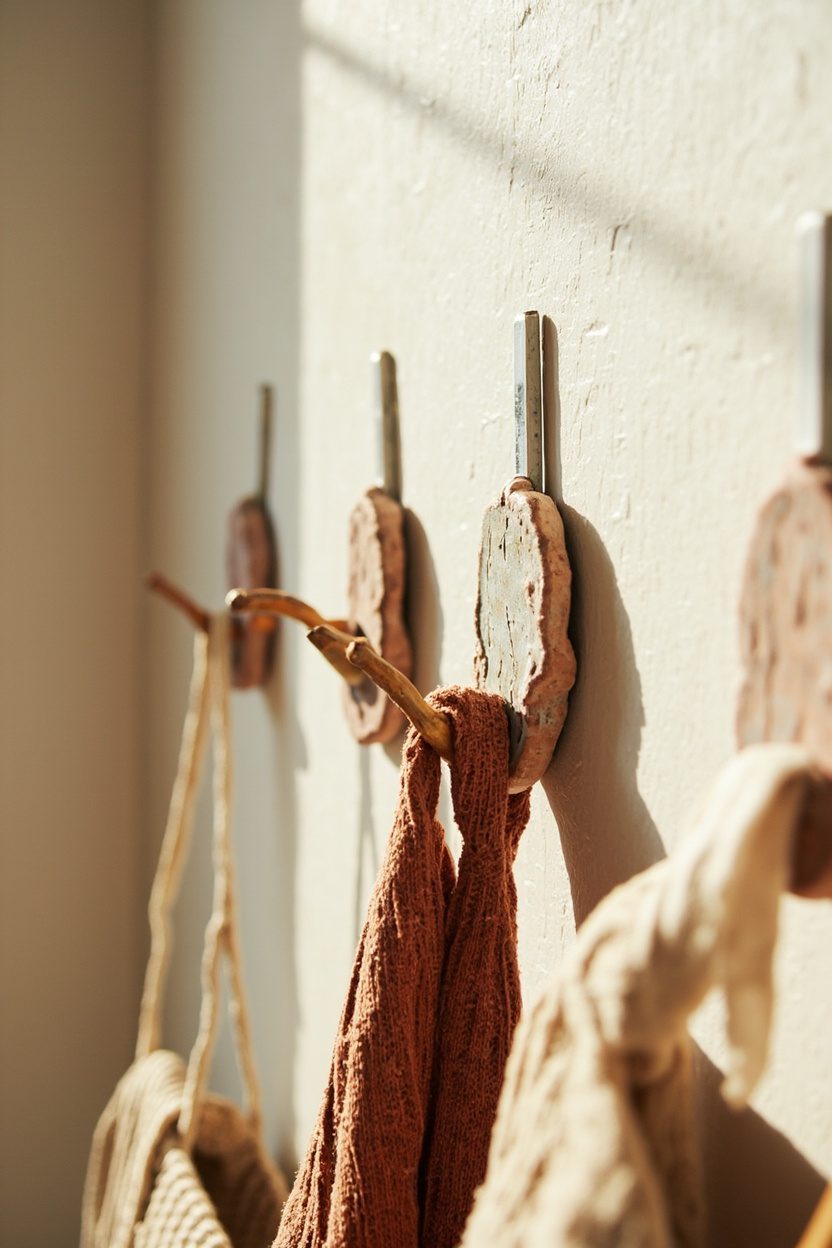
Handmade ceramic hooks are both decorative and functional, perfect for entryways, bathrooms, and gallery walls.
Opt for matte glazes in warm neutrals or muted terracotta to keep the look grounded and tactile.
Space hooks based on object size, place 6 to 8 inches apart for small items, and 10 to 14 inches apart for coats or woven bags to avoid crowding.
Mount to studs when used for weight-bearing items, or use heavy-duty anchors for stoneware pieces that can weigh 6 ounces or more each.
What to Focus On?
- Choose a glaze color that complements existing fixtures, and avoid high-gloss if you want subtlety.
- Size hooks to intended use, small for keys, larger for coats and baskets.
- Install with brass or stainless screws for longevity and visual contrast.
- Cluster in odd numbers for a curated look; three to five hooks work well above benches.
For a related idea, see Home Renovations.
You can pair this with ideas from 14 Boho Lighting Ideas from Rattan Pendants to Fairy Light Canopies.
FAQ
Keep a watering schedule based on plant types, water deeply but infrequently for succulents, and more often for trailing tropicals. Rotate planters monthly for even light exposure, and prune to maintain shape and airflow around the grid.
Yes, choose natural fibers with mildew-resistant treatments or use synthetic blends designed for moisture, and ensure good ventilation. Hanging panels away from direct spray and occasional gentle drying will extend their life.
They can be, if you select stoneware hooks rated for weight and install them with proper anchors or into studs. Verify the hook’s manufacturer’s weight rating, and prefer metal-backed or thick-walled ceramics for heavier loads.
Costs vary widely: botanical grids can be DIY for under $50 or $300+ with custom planters, fringe panels range from $40 to $250 depending on fabric and size, and handmade ceramic hooks typically run $12 to $60 each. Decide on the spend per wall feature, then scale quantity to the budget.
Final Thoughts
These three ideas move boho beyond predictable motifs by emphasizing scale, material choices, and practical installation details.
Integrate one or two approaches, align colors with your existing palette, and use quality fixings to keep the look curated and lasting.