


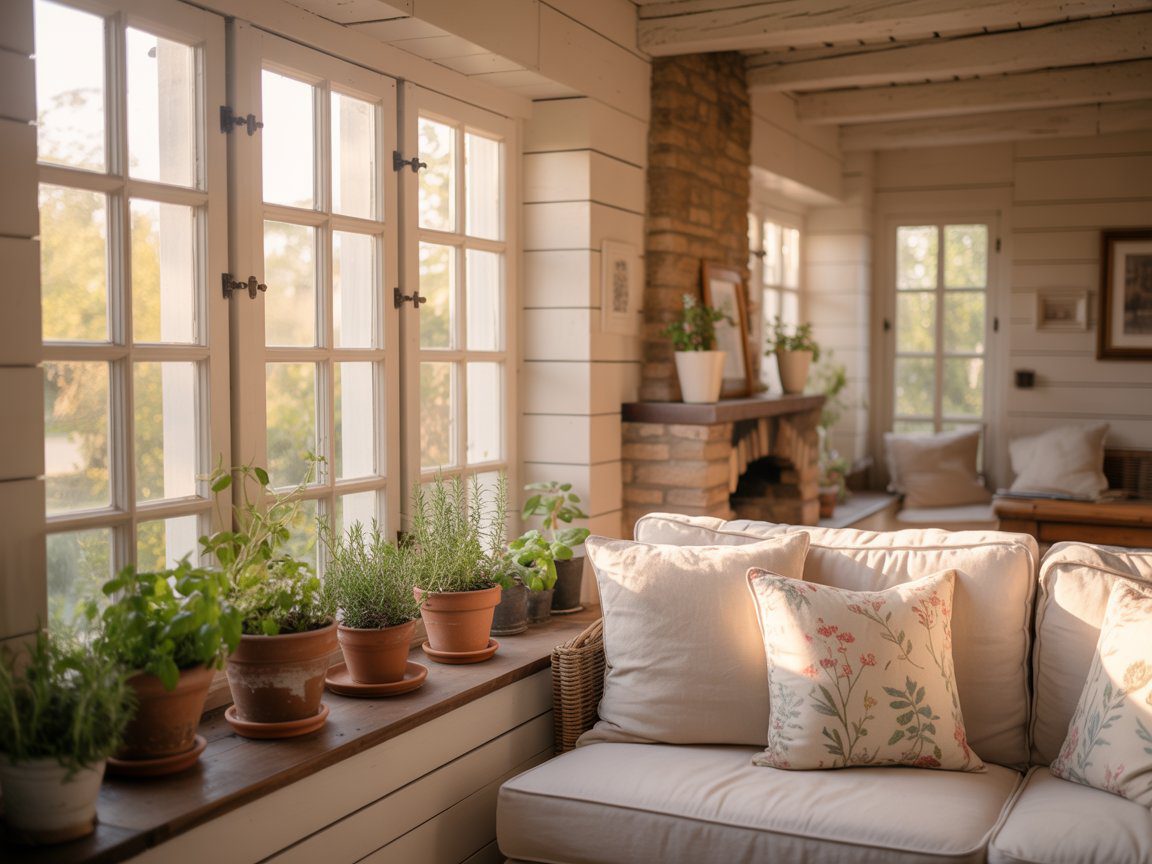
Cottage style in a small footprint is not about squeezing in more; it is about choosing cumulative, tactile details that read as intentional, not cluttered.
Think of materials and colors that soften and connect, sunlight that stages surfaces, and curated objects that tell a story rather than compete for attention.
When a room is petite, scale and restraint become your best moves. Opt for layered neutrals to open the space, then add texture and a few warm antiques to give depth without visual weight. This is cottage styling that feels collected over time, not applied overnight.
- 1. Layered Warm Neutrals
- 2. Cozy Lived-In Shelving
- 3. Vintage Books Styling
- 4. Pottery & Collected Decor
- 5. Light-Filled Kitchens
- 6. Mini Breakfast Nooks
- 7. Floating Shelf Vignettes
- 8. Built-In Display Shelves
- 9. Comfort Color Palettes
- 10. Soft Cottage Textiles
- 11. Mix-Matched Seating
- 12. Worn Wood Surfaces
- 13. Botanical Window Boxes
- 14. Heritage Hardware Touches
- FAQ
- Final Thoughts
1. Layered Warm Neutrals
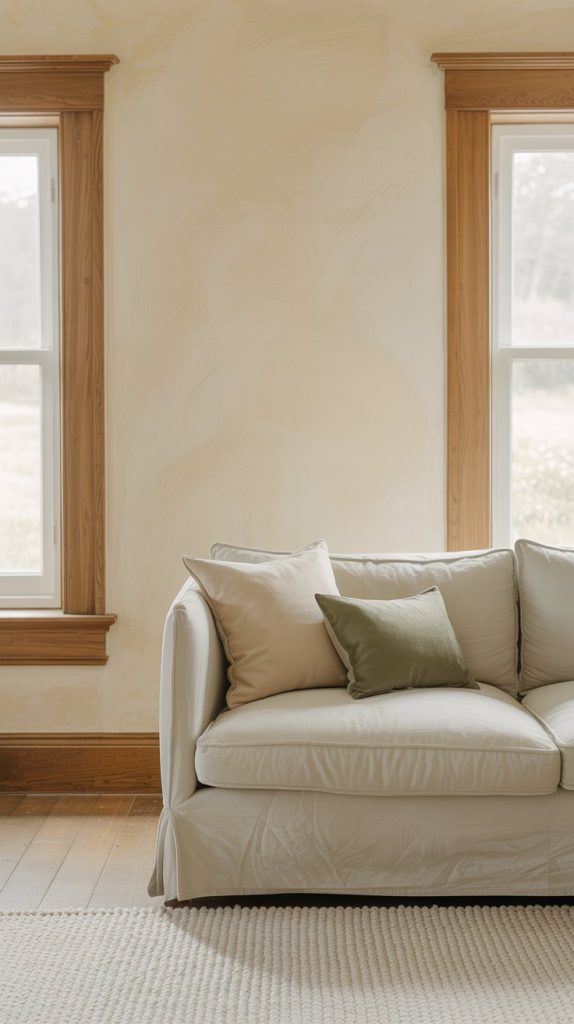
Start with a warm off-white wall, not a stark white, to prevent glare in a small room and to harmonize with wood tones and metals.
Use three to four neutral shades across paint, upholstery, and rugs to create gentle contrast and depth without shrinking the room.
Introduce tactile neutrals, such as a linen sofa or a looped wool rug, to add warmth and hide wear, which is practical in a lived-in cottage.
Limit high-contrast accents to small-scale elements like cushions or lamp shades, keeping the overall palette calming and cohesive.
Styling Blueprint
- Base wall tone: warm off-white, eggshell, or mellow cream, not pure white.
- Mix materials: linen upholstery, soft wool rug, matte plaster, and light oak trim.
- Accent color: pick one muted hue, such as sage or dusty blue, for textiles.
- Scale rule: larger furniture in the lightest neutral, accessories slightly darker for contrast.
2. Cozy Lived-In Shelving
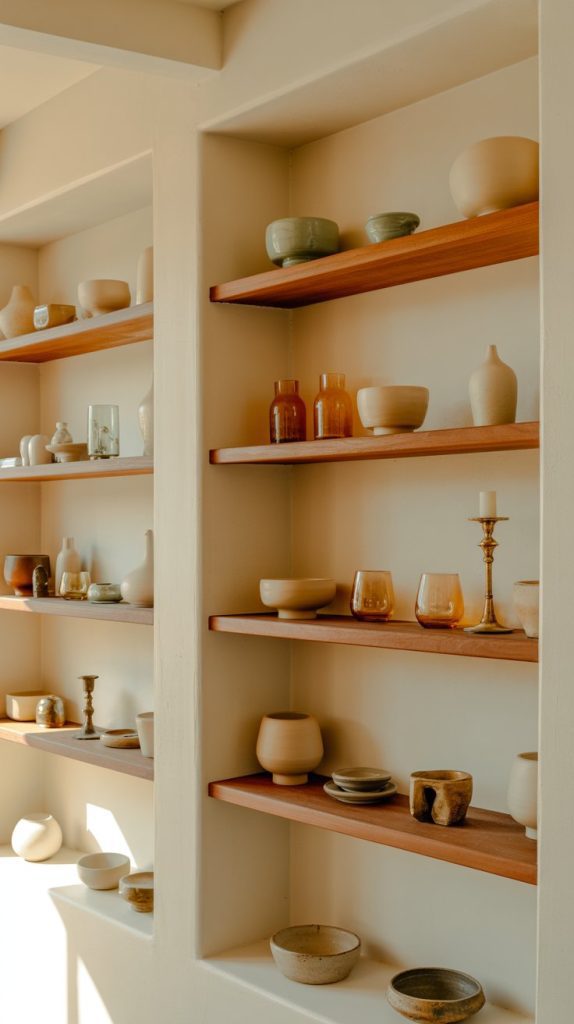
Favor open shelving or shallow built-ins to display daily items, rather than closed cupboards that make small rooms feel boxy.
Mix functional storage and decorative objects, placing frequently used pottery or glassware at eye level for accessibility and charm.
Keep negative space: avoid filling every shelf, leave breathing room to prevent a cramped look, and rotate items seasonally.
Include three material types: wood, ceramic, and metal on each shelf to read intentionally and layered, aiming for asymmetry in groupings.
Essential Elements
- Depth: Choose shelves 8 to 10 inches deep for proportion in small rooms.
- Grouping: cluster items in groups of three to five, varying heights and textures.
- Function: integrate baskets or lidded boxes for concealed clutter on lower shelves.
- Finish: Use painted shelves or light-stained wood to maintain brightness.
3. Vintage Books Styling

Stack vintage books horizontally to form casual pedestals for small vases or candles, keeping heights varied to create interest.
Show spines sparingly; pull a few titles forward and face others down to emphasize color and texture over perfect alignment.
Use books as both decoration and practical objects, for example, under a bedside lamp to raise the scale without adding furniture.
Select books with warm, muted covers and paper patina to complement the layered neutral palette, and avoid glossy, bright dust jackets.
What to Focus On?
- Condition: prefer well-worn covers and soft, yellowed pages for authenticity.
- Placement: horizontal stacks for small surfaces, vertical rows for shelving accents.
- Scale: keep stacks to two to four books high to avoid toppling and overcrowding.
- Mix-ins: add a small ceramic object or sprig of dried flowers on top of stacks.
4. Pottery & Collected Decor
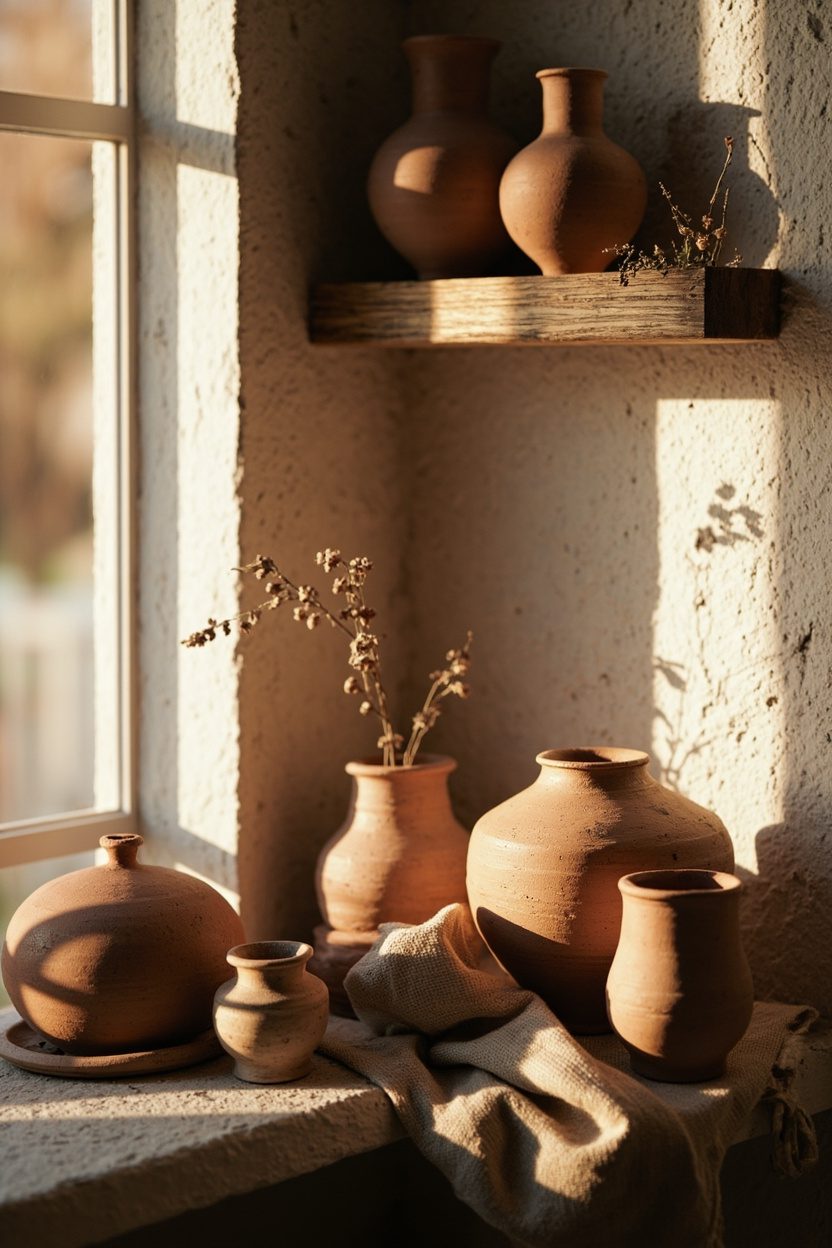
Handmade pottery anchors the cottage look, because tactile objects add warmth and imperfection that mass-made items cannot replicate.
Group 3 to 5 pieces on open shelves, varying heights and glazes, so the arrangement reads as edited, not cluttered.
Choose earthen tones, matte white, and a single-glazed accent piece in deep blue or sage to keep the palette cohesive.
Avoid tiny, fussy souvenirs; scale matters in small spaces, so prefer a few larger vessels over many micro trinkets to prevent visual noise.
Styling Blueprint
- Use odd-numbered groupings for visual interest, three to five pieces per vignette.
- Mix textures: matte stoneware, glossy glaze, and a woven basket base.
- Place pottery at eye level on open shelving for maximum presence.
- Limit color accents to one or two pieces to maintain a calm palette.
5. Light-Filled Kitchens
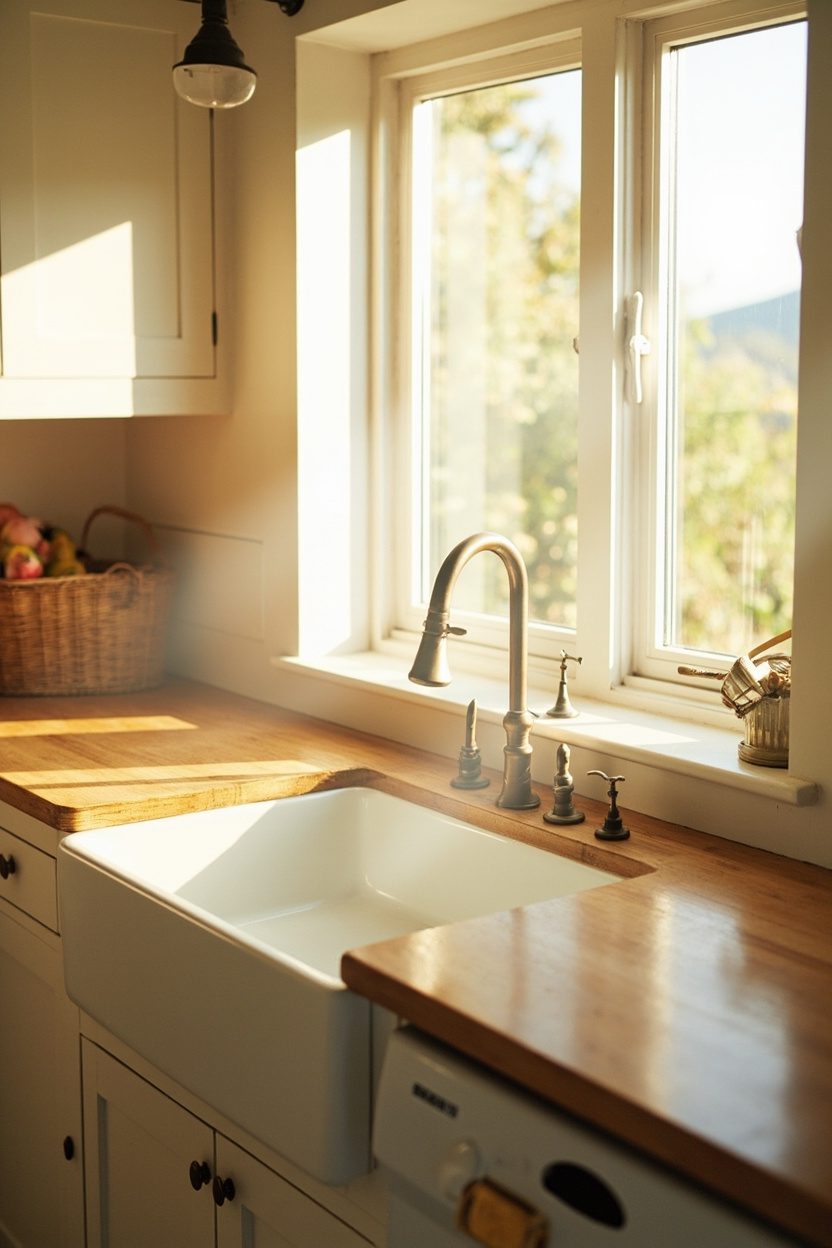
Prioritize windows, skylights, and reflective surfaces, because natural light makes a tiny kitchen feel expansive and cheerful.
White or warm neutral cabinetry paired with warm wood countertops creates that modern cottage softness, rather than stark clinical white.
Keep window treatments minimal, choose linen blinds or cafe curtains, so light floods the work zones without sacrificing privacy.
If the budget allows, replace a bulky upper cabinet with open shelving to display pottery and everyday dishes, tying back to the collected decor theme.
Essential Elements
- Install under-cabinet task lighting to supplement daylight and prevent shadows on work surfaces.
- Use warm, low-sheen paint on walls to bounce light without glare.
- Choose compact, integrated appliances to conserve counter space and visual calm.
- Keep countertops clear, storing frequently used items in shallow drawers for accessibility.
6. Mini Breakfast Nooks
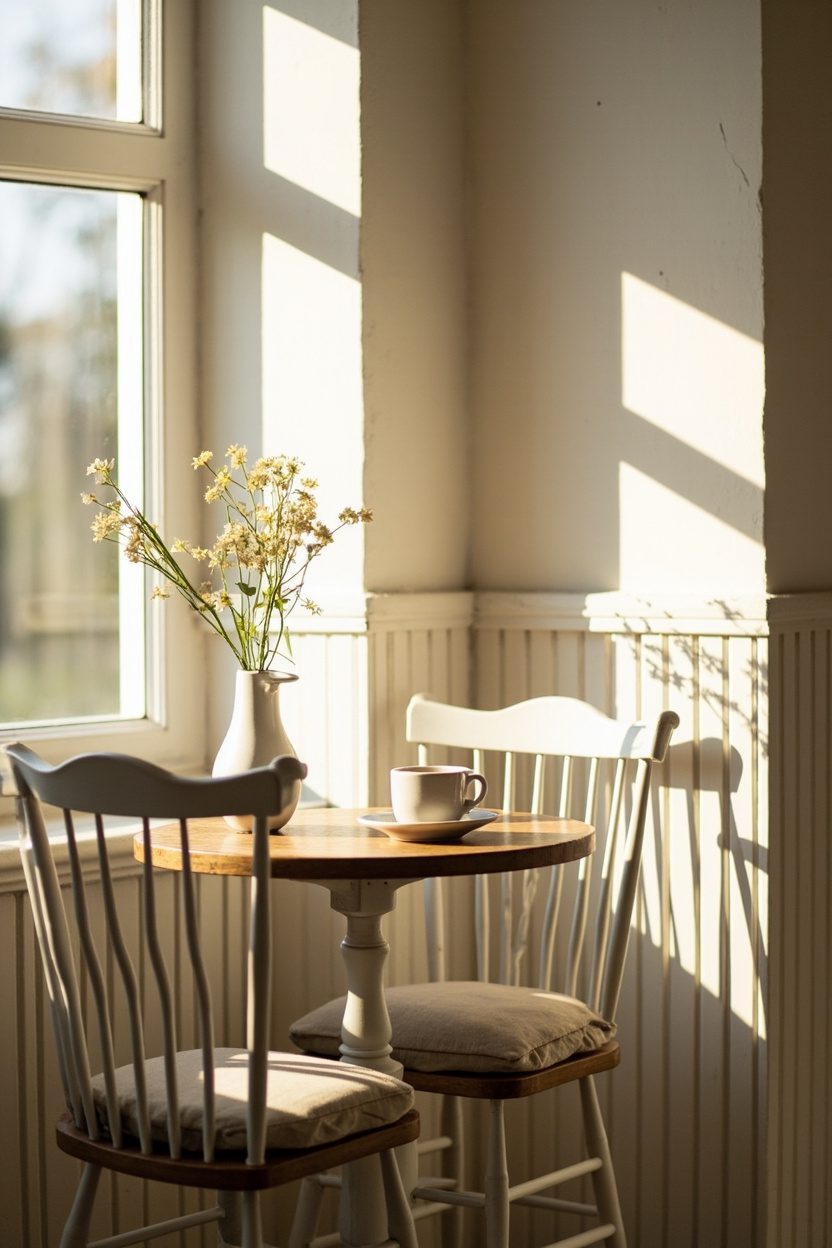
A properly scaled nook transforms a corner into a daily refuge, because seating proportion is everything in small cottages.
Opt for a built-in banquette when possible, with storage beneath, to double function without stealing floor area.
Choose a round or kidney-shaped table, roughly 30 to 36 inches across, to allow easy circulation and more seating in tight radii.
Soften the space with a textured cushion, 2-3 throw pillows in warm neutrals, and a small pendant light hung low for intimacy.
What to Focus On?
- Prioritize bench depth around 16 to 18 inches for comfortable, compact seating.
- Use a wall-mounted table or fold-down option for flexibility in multi-use rooms.
- Select durable, washable fabrics for cushions to withstand daily use in small homes.
- Add a slim shelf or peg rail above the nook for a couple of ceramics or small plants.
7. Floating Shelf Vignettes
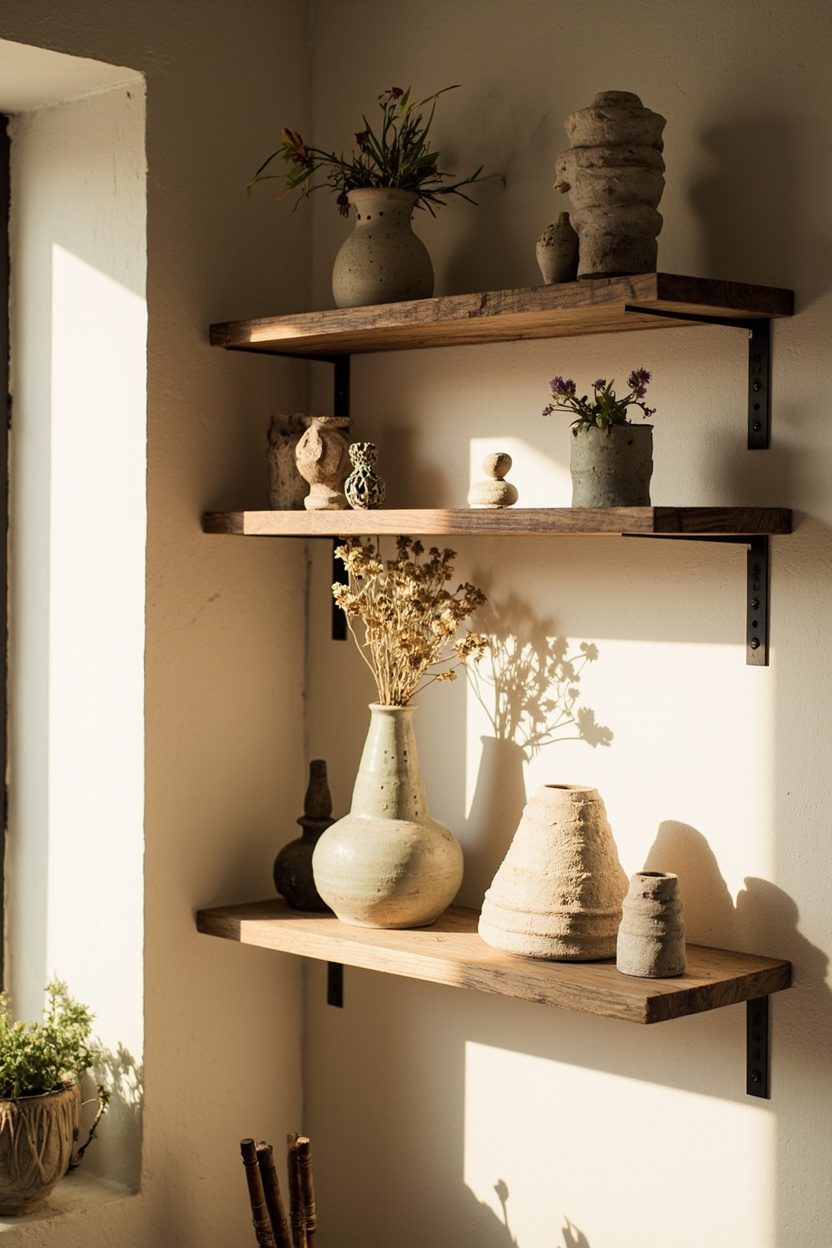
Floating shelves free the floor visually, essential in a compact cottage nook where every inch counts.
Group shelves in odd numbers to create rhythm, spacing them 8 to 12 inches apart for eye-friendly stacking.
Mix heights and textures, such as a small earthenware pitcher, a stack of vintage books, and a framed linen swatch, to read as curated, not cluttered.
Keep weight light, choose 1-inch-thick solid wood or painted MDF for a cleaner silhouette, and anchor into studs for safety in rentals. Use heavy-duty wall anchors.
Styling Blueprint
- Layer items front to back, with small framed art at the back for depth.
- Limit color accents to two tones plus neutrals for cohesion.
- Rotate one object seasonally to keep the vignette fresh.
- Balance left and right groupings, and avoid symmetrical mirror placements.
8. Built-In Display Shelves
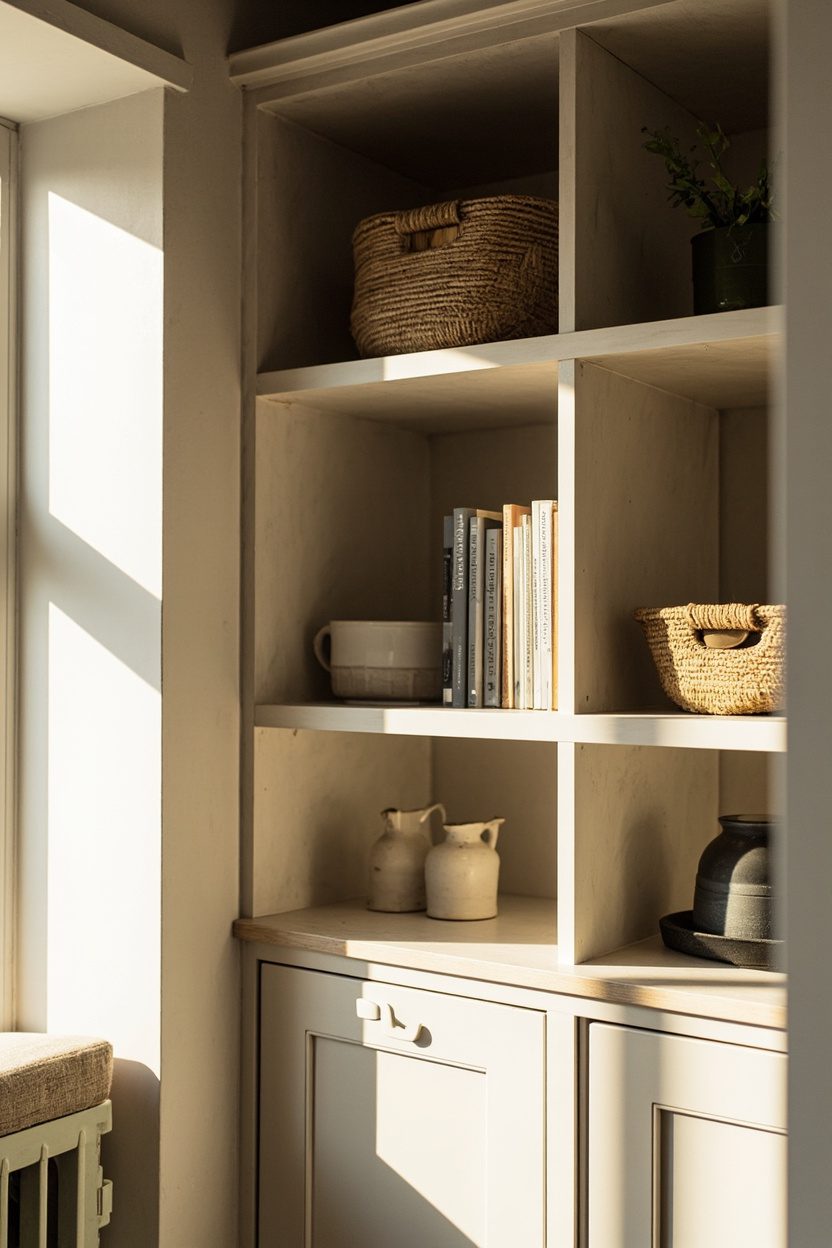
Built-ins are a space-maker, not just a storage solution; they visually expand walls and hide clutter in narrow cottages.
Design shelves to follow the room scale, 10 to 12 inches deep for books and ceramics, deeper for baskets or folded throws.
Paint the back panel a warm neutral or soft sage to give objects a subtle stage, rather than stark white, which can feel cold.
Integrate closed cabinetry at the bottom to stash electronics and less photogenic necessities, keeping the open shelves intentionally styled.
Essential Elements
- Use adjustable shelving hardware to accommodate varying object sizes over time.
- Mix open and closed storage, aim for one-third concealed, two-thirds display.
- Include integrated lighting, low-profile LED strips under each shelf for evening ambience.
- Choose hardwood or painted plywood for a durable finish that tolerates frequent styling changes.
9. Comfort Color Palettes
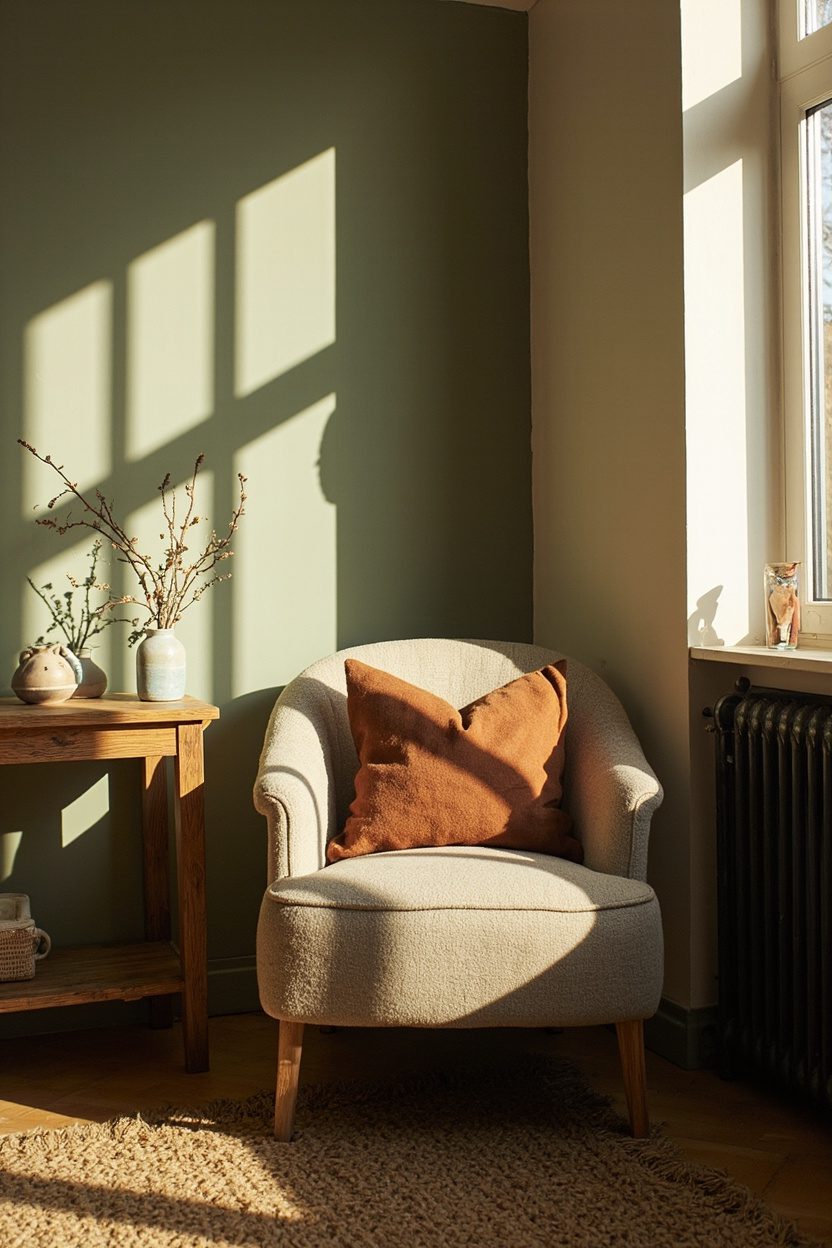
Comfort colors favor warm neutrals and muted pastels; they wrap a small space in a soft, lived-in glow rather than wash it out.
Start with a warm off-white base, add two coordinating accents like dusty blue and terracotta for contrast and personality.
Use color in measured doses, a painted door, a runner, or a single upholstered chair, keeping trim and ceilings lighter to preserve vertical height.
Test swatches at different times of day, natural light can shift a hue dramatically in compact rooms, plan for morning and evening tones.
What to Focus On?
- Anchor with a warm neutral (cream, warm gray) on walls and large textiles.
- Introduce one saturated accent, such as clay red or muted teal, in small furnishings.
- Keep metallics soft, choose aged brass or matte black for hardware, not chrome.
- Layer textures—wool, linen, nubby cotton—to make the palette feel tactile and cozy.
10. Soft Cottage Textiles
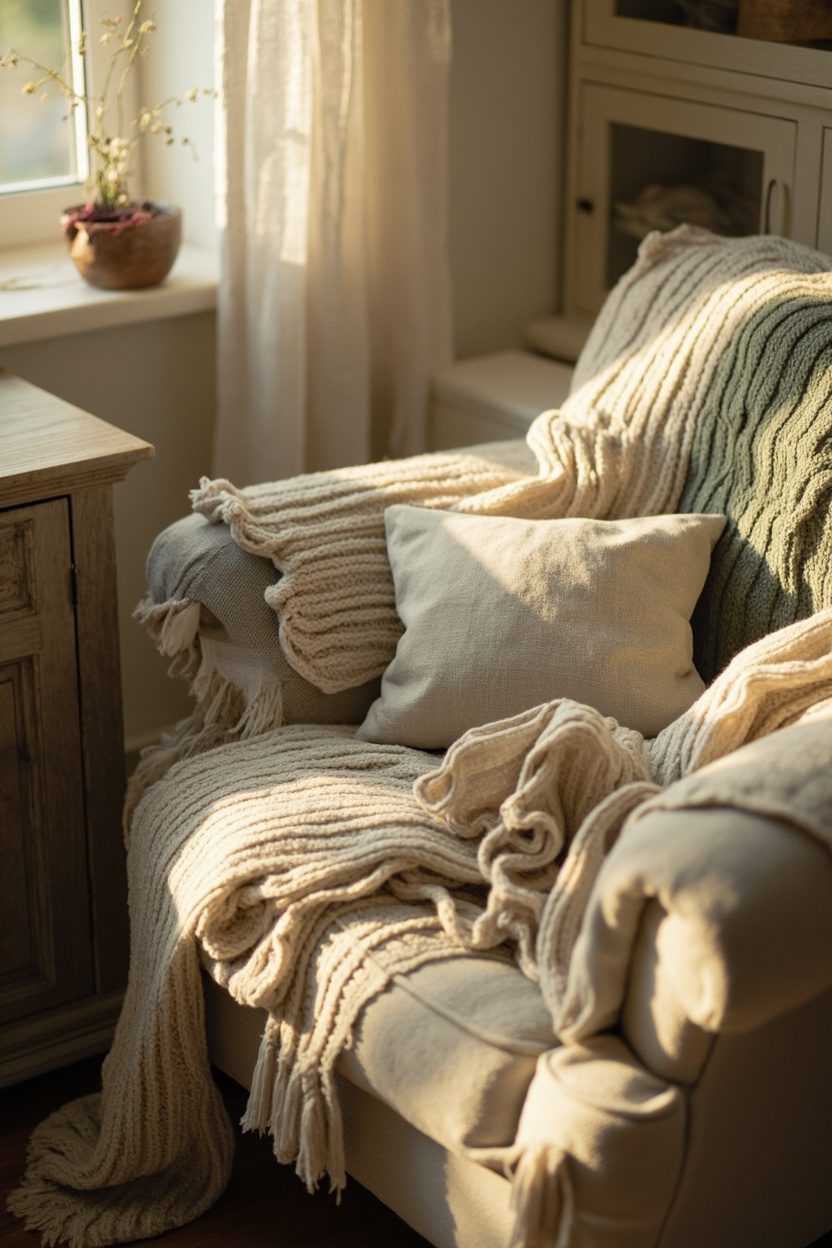
Layered textiles are the shorthand for cottage comfort, and in tiny rooms, they do heavy lifting without cluttering space. Think a thin wool throw over the back of a slim sofa, plus a lighter linen layer for summer use.
Choose warm neutrals with one muted accent color, for example, oatmeal, soft sage, and a faded rose, to keep the palette calm and cohesive. Opt for natural fibers, linen, and washed cotton, which soften with age and handle frequent washing, a practical plus in small homes.
Scale matters: use smaller scale patterns, like tiny florals or narrow stripes, so the print reads as texture from a short distance. Avoid oversized quilts that swallow a small chair or bed; instead, use folded coverlets to define zones.
Styling Blueprint
- Choose 100 percent linen pillow covers for breathability and a lived-in look, budget tier, mid-range to heirloom quality.
- Layer one textured throw and one flat blanket per seating spot to add depth without bulk.
- Select patterns at different scales, for example, a 6-inch repeat floral with a 1-inch stripe, to prevent visual competition.
- Keep the color family tight, two neutrals plus one faded accent, to avoid making the room feel fragmented.
11. Mix-Matched Seating
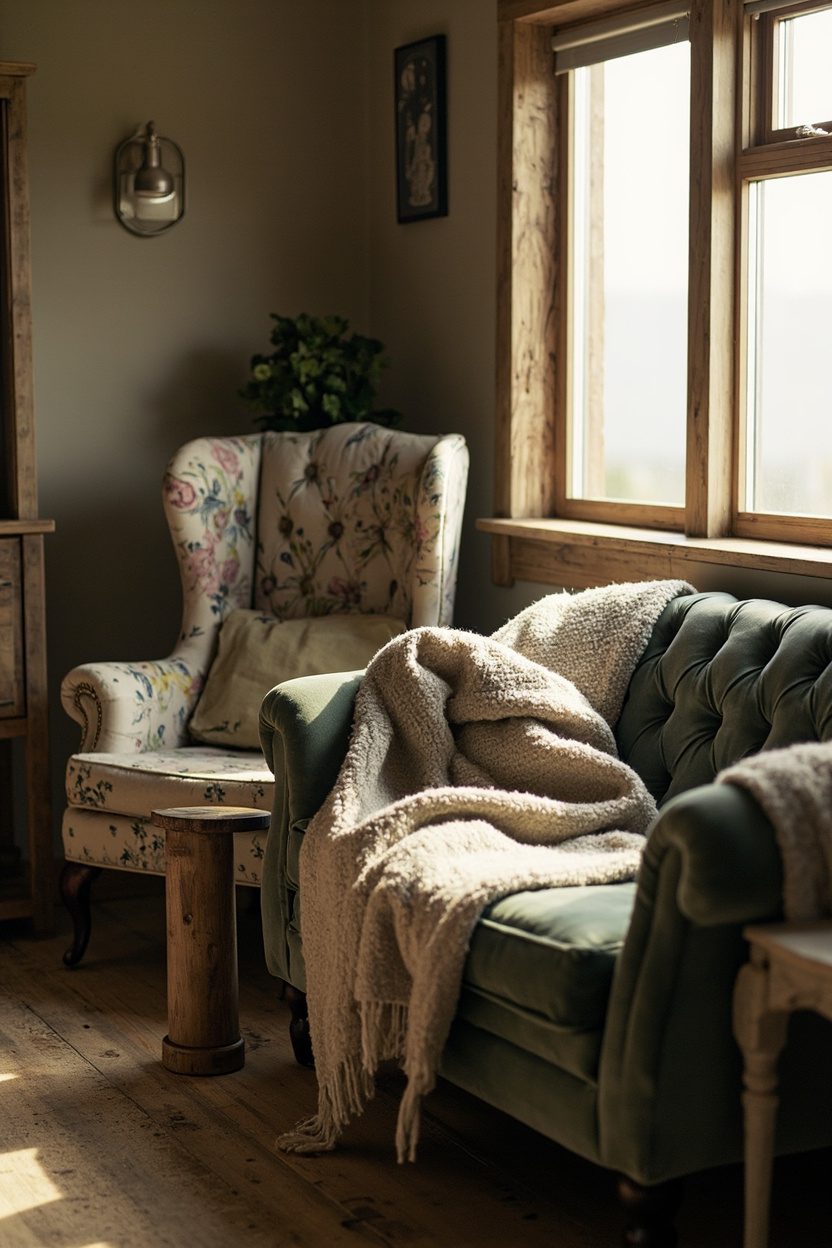
Mixing chairs is an efficient way to inject personality into a small cottage living area, while being budget-friendly and flexible. Pair a compact upholstered love seat with a single armchair and a painted spindle chair for contrast.
Balance is key; use similar seat heights and a unified color or material to keep the salon-style mix from looking chaotic. For instance, all seats can have the same cushion fabric, even if the frames differ.
Consider comfort and scale: choose shallow seat depths for small spaces, and avoid bulky arm profiles that block sightlines. One practical decision, pick at least one armless chair to slide under tables or tuck beside a window.
Essential Elements
- Select one unifying detail, such as matching cushion fabric or wood tone, to tie varied chairs together.
- Mix materials deliberately, for example, painted wood, rattan, and a small-scale upholstered piece, for layered texture.
- Keep seat heights within 1-2 inches to maintain visual harmony and usability at shared tables.
- Use two seating pieces maximum per small corner to preserve circulation and sightlines.
12. Worn Wood Surfaces
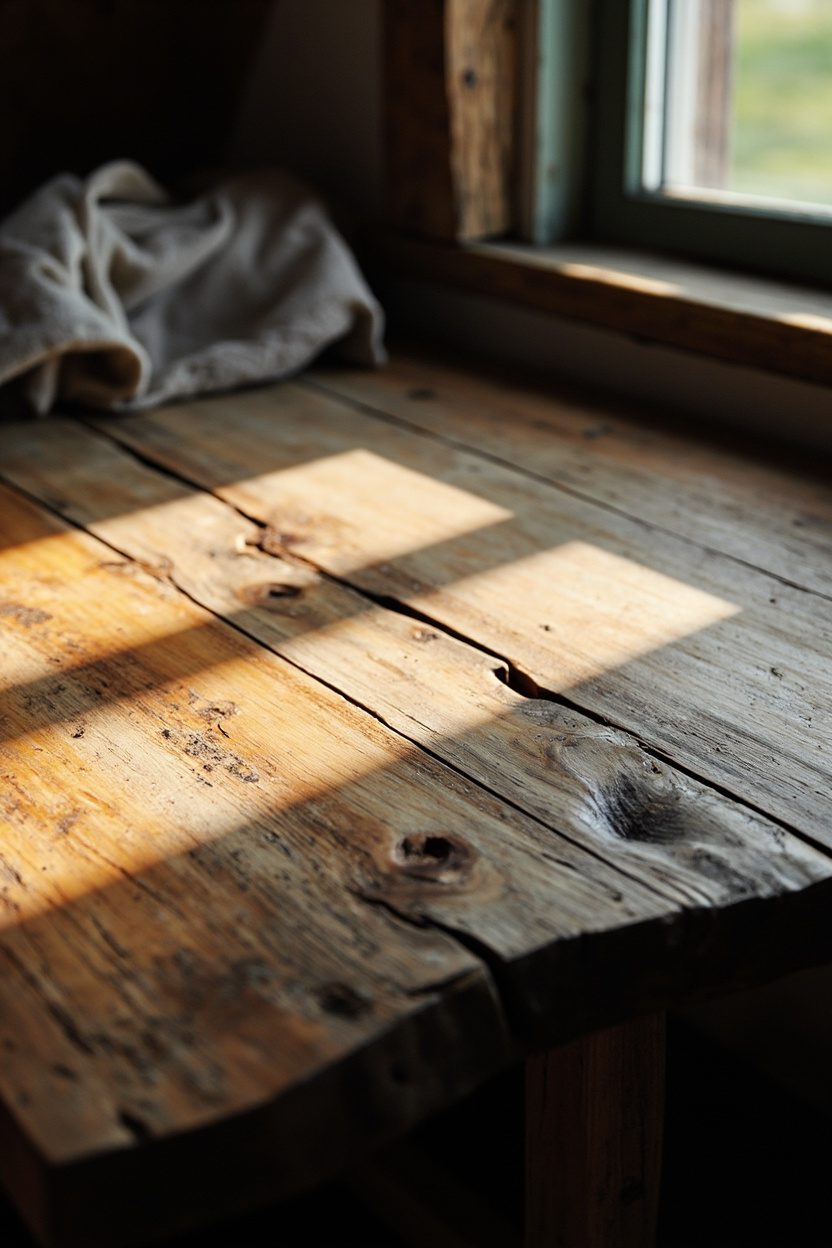
Worn, time-earned wood instantly anchors a cottage aesthetic and reads as collected rather than staged in compact spaces. Choose reclaimed planks or new wood finished with wire-brushing and a light stain for authenticity without the vintage hunt.
Keep surface finishes matte or low-sheen, which hide scratches and fingerprints better than glossy lacquers in high-use small homes. For tabletops, opt for softer woods like pine or maple finished in warm, honeyed tones to reflect light rather than absorb it.
Placement dictates treatment, so use a small, worn wood console against a wall instead of a large coffee table to preserve floor area.
Avoid overly dark woods on the floor in tiny rooms; they make the room feel smaller, prefer mid-tone floors with area rugs.
What to Focus On?
- Choose reclaimed or brushed finishes for character, budget permitting, or distress new wood lightly for a cottage feel.
- Match the wood tone to trim or a key piece to create continuity across small rooms.
- Use compact scaled pieces, like narrow console tables or slim dining tops, to maximize circulation.
- Protect tops with clear matte sealant to keep the worn look while allowing everyday durability.
13. Botanical Window Boxes
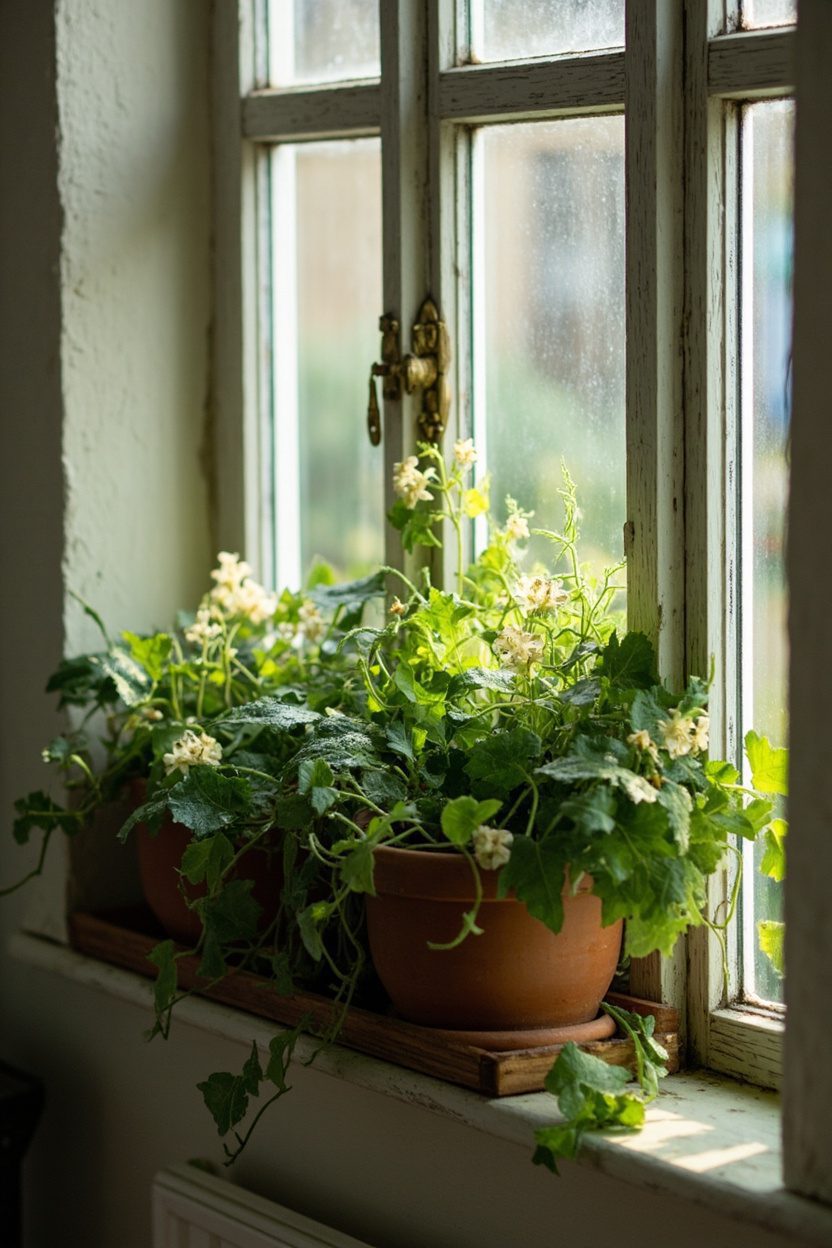
Layering window boxes outside or inside is the fastest way to add a lived-in cottage feel to a tiny home.
Select shallow cedar or galvanized metal boxes, wide rather than deep, to keep proportions right for small sills.
Choose a mix of trailing ivy, rosemary, and small geraniums for year-round texture and scent; avoid oversized specimen plants that overwhelm scale.
Mount boxes low on the exterior or on the inside sill to maintain sightlines and let light filter through foliage without blocking views.
Essential Elements
- Materials: cedar or galvanized metal, rust-proof brackets, and coconut fiber liners for breathability and weight control.
- Plant mix: one trailing, one aromatic, one seasonal bloom per box to keep the composition balanced.
- Scale rule: box length should be at least two-thirds of the window width, depth 6–8 inches max for small windows.
- Maintenance tip: incorporate a drip tray or self-watering inserts to reduce watering frequency and prevent water damage to sills.
14. Heritage Hardware Touches
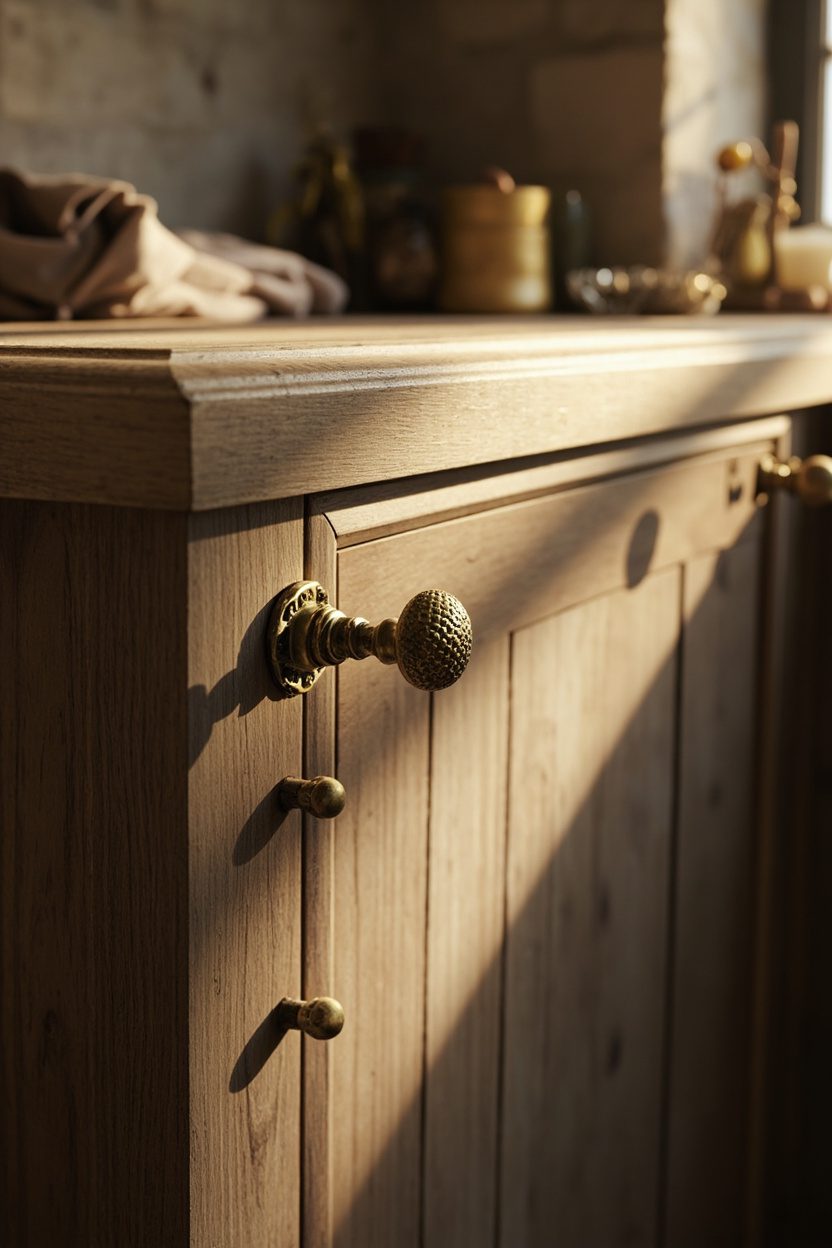
Small upgrades in hardware instantly read as intentional cottage style, more impactful than a full renovation in tight spaces.
Opt for aged brass, antique iron, or oxidized pewter for drawer pulls and cabinet hinges to introduce warmth and period character.
Keep the finish consistent across doors, cabinets, and key furniture pieces to avoid visual clutter, and replace minimal items first, like a bathroom vanity pull or pantry latch.
Budget-wise, start with high-touch pieces near the entry and kitchen, where tactile quality is most noticed, then expand as time and funds allow.
Styling Blueprint
- Finish choice: aged brass for warm neutrals, antique iron for rustic contrast, or pewter for soft, muted tones.
- Priority pieces: front door hardware, kitchen drawer pulls, bathroom faucet handles, and a hallway coat hook.
- Scale and proportion: choose pulls that match drawer width, typically 3–4 inches center-to-center for small cabinets.
- Installation note: swap backplates and screws to match finishes and reinforce old wood to prevent stripped holes.
For a related idea, see Plunge Pool Ideas Small Spaces.
FAQ
Pick drought-tolerant, compact varieties like rosemary, sedum, and trailing ivy, and use a quality potting mix with good drainage. Position boxes where they get the right light for the chosen plants, and add a self-watering insert to reduce attention needed.
Mixing can work if you limit it to two complementary finishes, for example, aged brass and matte black, and assign each to specific zones like plumbing versus cabinetry. Consistency across high-visibility pieces keeps the aesthetic cohesive in compact spaces.
Yes, use shallow, lightweight planters with liners to avoid water damage, and choose houseplants suited to indoor light levels, such as baby pothos, small ferns, or herbs. Ensure adequate ventilation and rotate plants seasonally to maintain vigor.
If you can remove items without damage, heritage hardware is a cost-effective, reversible upgrade that elevates photos and guest impressions. Focus on a few high-impact pieces so the improvement is noticeable without a large outlay.
Final Thoughts
Small, considered interventions like window boxes and period hardware deliver disproportionate charm in tiny cottages; they anchor the room with texture and tactility without stealing square footage.
Pick one or two focused upgrades, prioritize scale and finish, and the space will read as thoroughly curated and comfortably complete.