


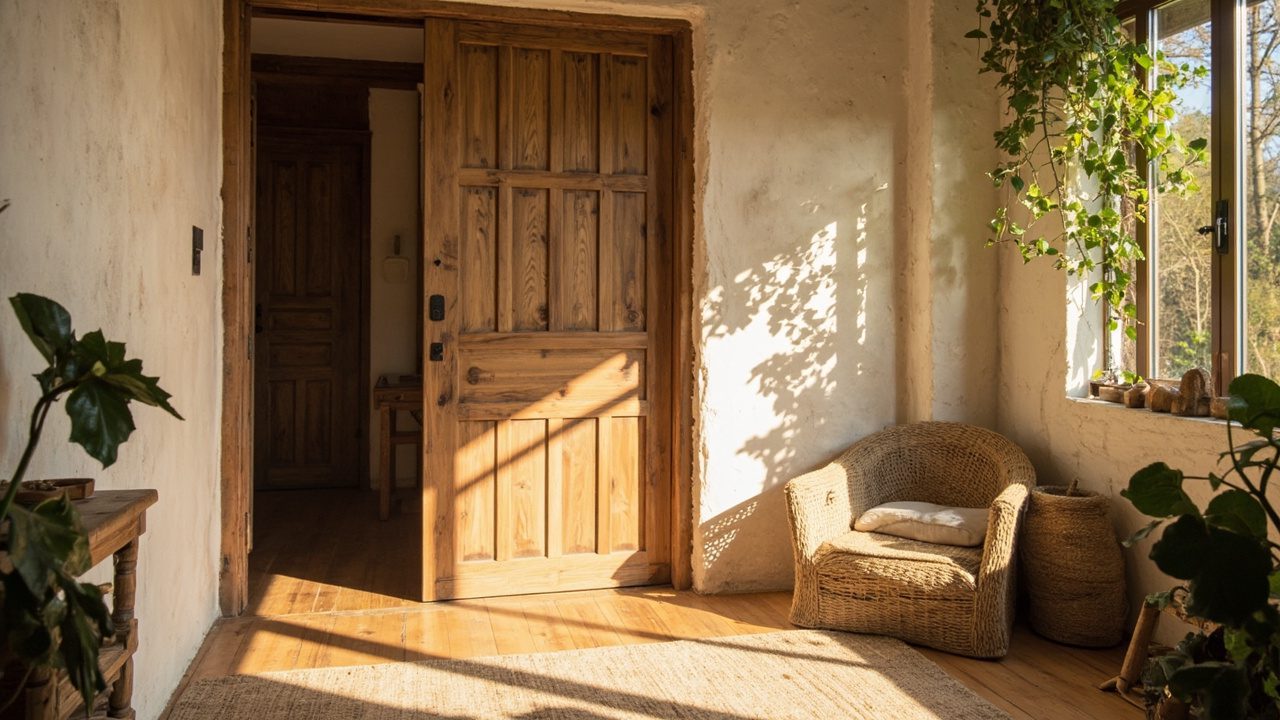
Fresh, lived-in, and just wild enough to feel effortless, boho spring door wreaths should read like a well-traveled homecoming. Think tactile weaves, weathered textures, and a palette of soft greens, sun-washed neutrals, and a single bright accent to catch the eye from the street.
These ideas are for readers who want a front door that promises personality without fuss. Below are three field-tested concepts that pair materials, scale, and placement guidance so the wreath looks intentional from 6 feet away and up close.
1. Botanical Macramé Wreaths
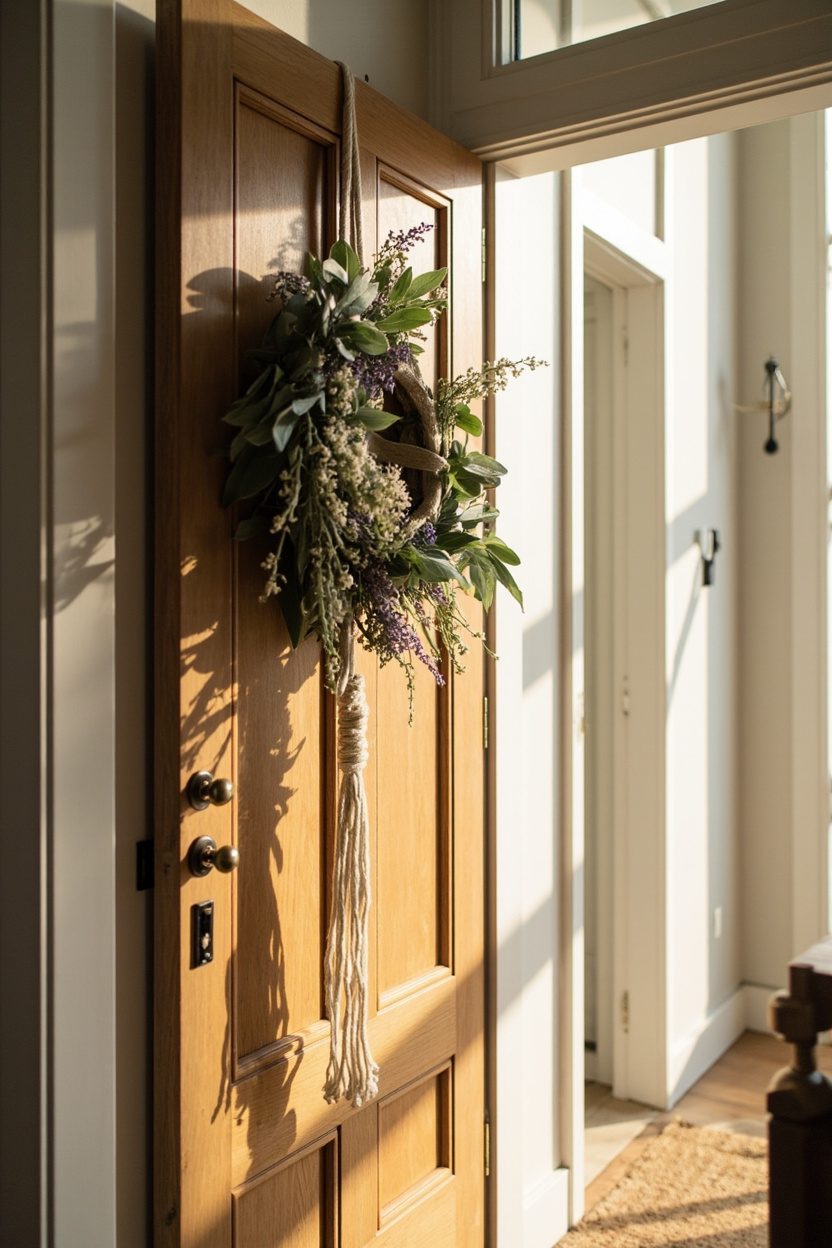
Macramé delivers that signature boho texture, and for spring, choose cotton cord in off-white or soft sage for a fresh, natural base.
Incorporate preserved eucalyptus stems or faux olive branches wired into the lower third of the wreath for longevity and a windproof profile.
Keep the diameter between 18 and 24 inches to balance most front doors, and use smaller knots and tighter patterns if your door has detailed panels.
Avoid oversized tassels that catch on hardware; instead, opt for a 6–8 inch fringe for movement without bulk.
What to Focus On?
- Use 3–4 mm cotton cord, natural dye, for weather resistance and crisp knots..
- Attach greenery with floral wire and hot glue at two points for stability..
- Choose eucalyptus or olive for a muted green that reads from the curb..
- Hang a 24-inch ribbon loop in linen, placed over a hook at the door’s center height..
2. Woven Rattan Accents
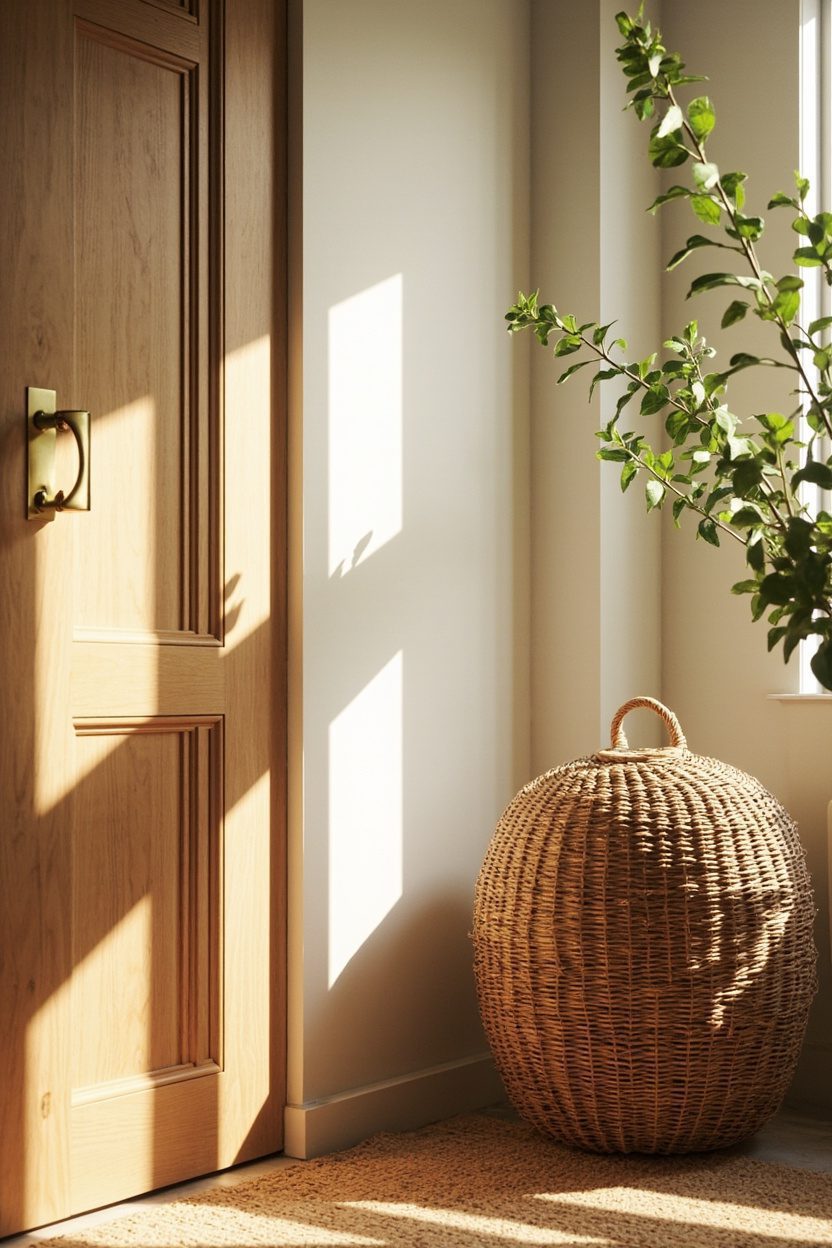
Rattan frames bring warm, organic structure and suit doors with darker stains or modern black hardware, providing a pleasing contrast.
Weave in spring florals like dried bunny tails, ranunculus stems, and small pampas plumes, anchoring them to the frame’s crossbars so they fan naturally.
Select a 20–26-inch rattan base for a bold statement; thinner bases work better if you layer additional textures behind the rattan.
Seal rattan with a matte clear coat if it will sit exposed to rain, to prevent swelling and mildew over the season.
Styling Blueprint
- Pick rattan with a 1–1.5 inch cane weave for visual depth and structural strength.
- Tuck stems into the weave and secure with green floral tape; conceal tape with a thin linen bow.
- Add one pop color, like a coral ranunculus, instead of many bright hues for coherence.
- Budget tier: mid-range, $40–$90, with DIY cheaper using a woven placemat as a base.
3. Layered Pattern Rugs
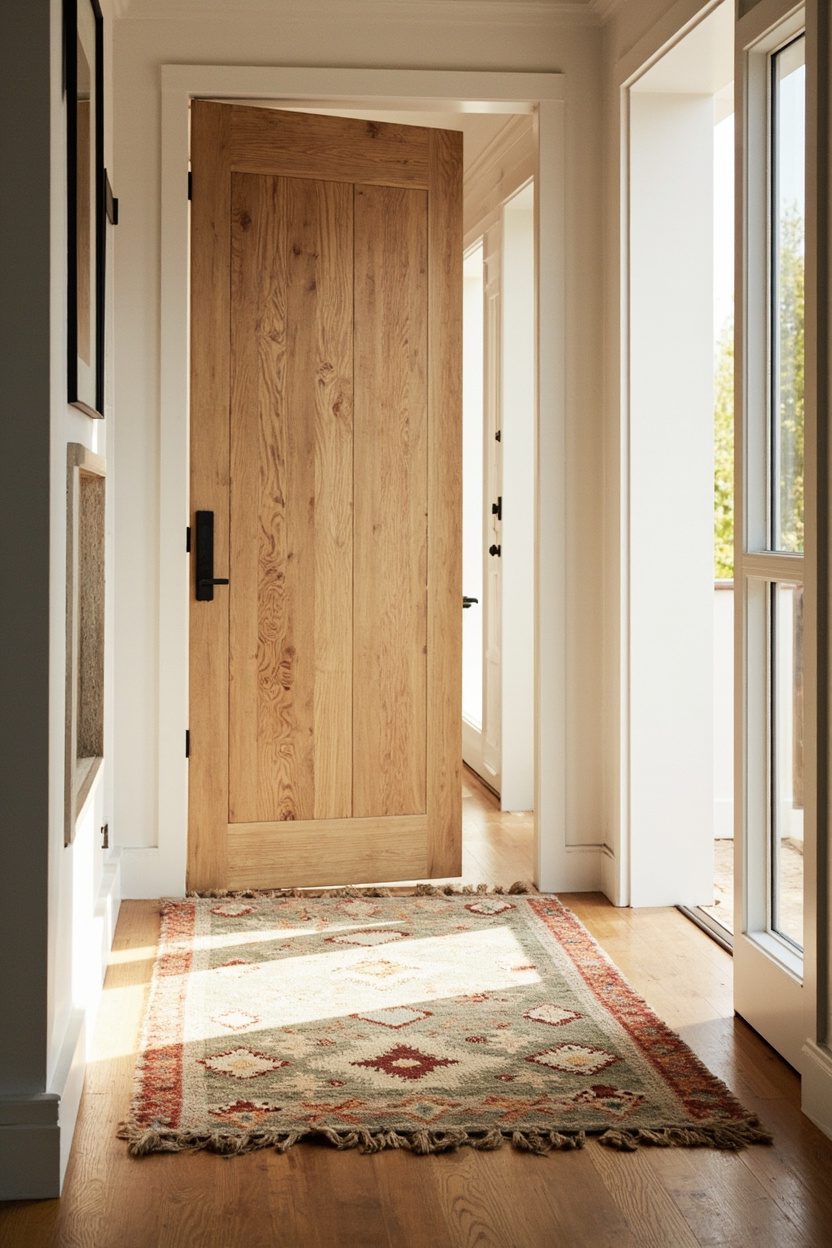
Repurposing a small patterned indoor-outdoor rug as a wreath backer gives an unexpected boho graphic that reads well across distance.
Cut a 16–20-inch circle from rug samples, bind the edges with jute, and layer macramé or dried florals on one side for asymmetry.
Choose rugs with muted blues, warm terracotta, or spring greens; scale the pattern to door size, avoiding tinyditsy prints that disappear at a distance.
Use a lightweight foam core behind the rug to keep the wreath stiff without adding weight to the hanging hardware.
Essential Elements
- Select an outdoor-rated rug sample for colorfastness and easy cleaning.
- Bind raw edges with jute webbing sewn or hot-glued for a rustic finish.
- Layer florals on one third of the circle for that curated, boho imbalance.
- Mount with a heavy-duty removable hook, rated for at least 10 pounds.
4. Earthy Pastel Palettes
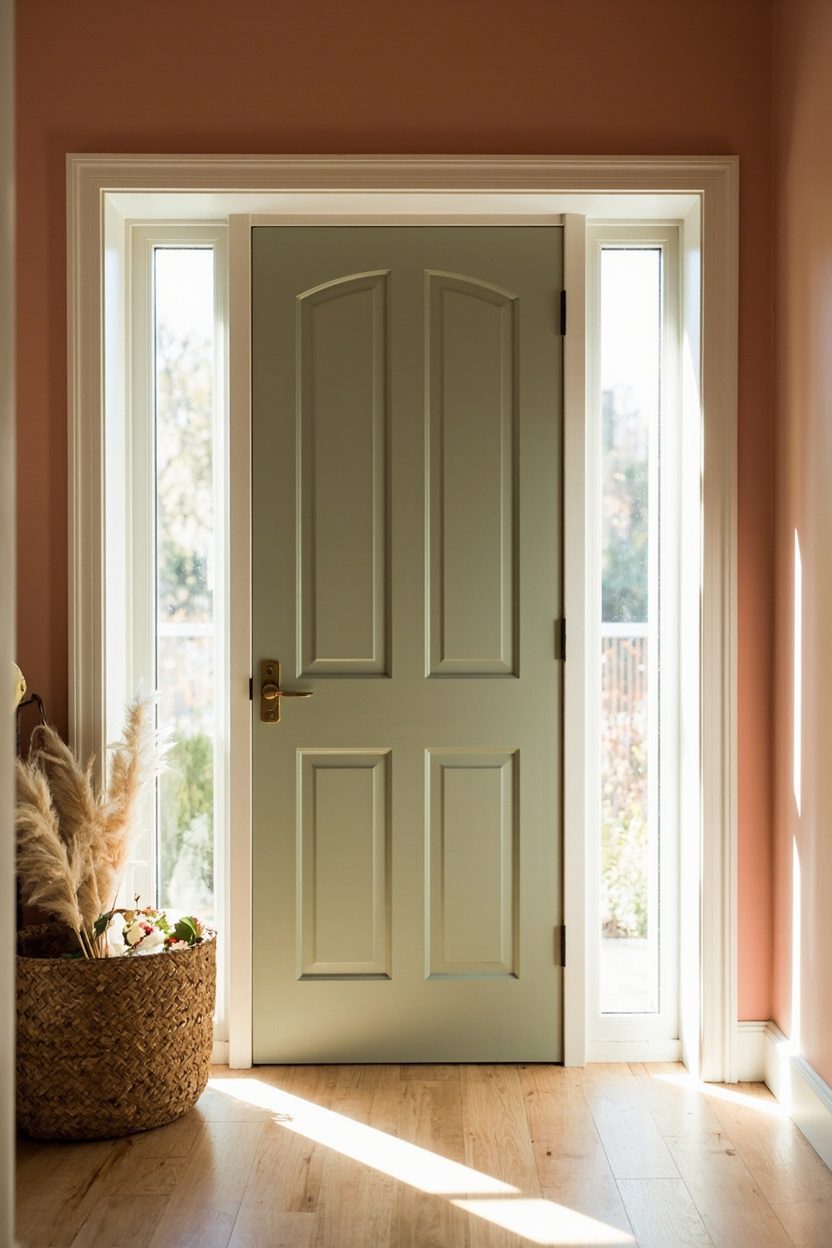
Soft, mineral-driven pastels bring boho warmth without feeling saccharine, think sage, clay pink, and muted mustard paired with raw linen ribbons.
Choose natural-dyed fabrics and dried grasses; the subtle irregularities sell the handcrafted, bohemian aesthetic better than mass-produced hues.
Scale matters: keep color blocks roughly the size of a hand towel or smaller so the wreath reads textured, not washed-out, from the street.
Budget tip: swap expensive preserved flowers for dyed palm fronds and small ceramic beads, you keep a luxe look for under $40 in supplies.
Essential Elements
- Palette: sage, terracotta, blush, and ochre accents.
- Materials: dried grasses, linen ribbon, wool tassels, and clay beads.
- Scale: 14–18 inch base for suburban doors, 12 inch for smaller entrances.
- Finish: matte varnish on any clay elements to protect from moisture.
5. Stained Glass Insets
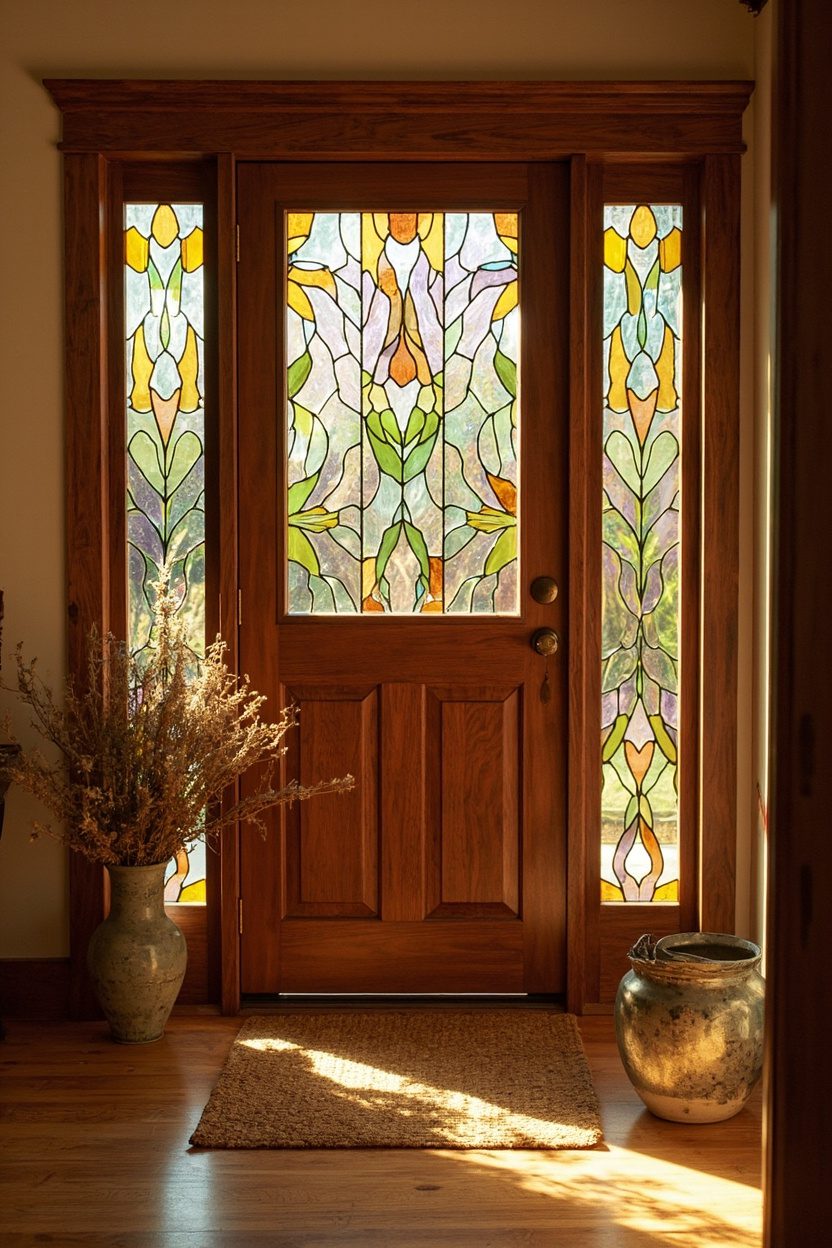
Introduce a small stained-glass insert tucked into a wreath, and the colored light creates a magnetic focal point during morning sun.
Opt for fused or faux stained glass panels rather than full leaded work; they’re lighter, less fragile, and easier to attach to a grapevine base.
Color direction: pool blues and warm amber fragments contrast beautifully with rattan and eucalyptus, echoing spring’s fresh-meets-warm mood.
Avoid overly heavy hardware; use brass twist ties or a leather cord to secure the inset, which keeps the wreath safely suspended without damaging glass edges.
What to Focus On?
- Insert size: 4–6 inches, weight under 1 lb for safe hanging.
- Contrast: pair cool glass with warm, matte botanicals for balance.
- Attachment: leather cord or brass twist ties, no direct glue on glass.
- Maintenance: indoor-sheltered placement if using real glass panels.
6. Vintage Ceramic Door Knockers
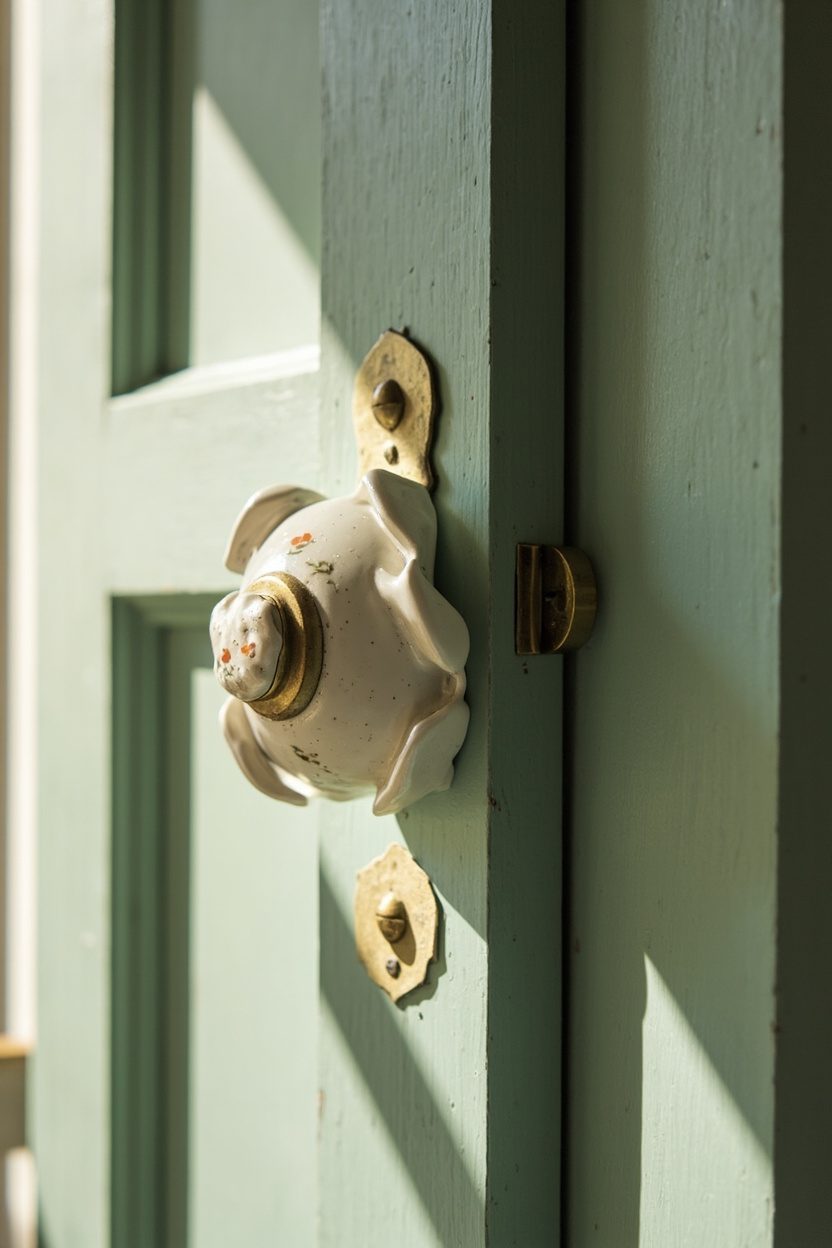
Pairing a vintage ceramic knocker with a boho wreath creates an intentional, collected look, as if the door evolved over decades.
Choose a knocker with glazed arabesque or floral motifs in soft blues or mint; the small painted details complement natural wreath textures.
Fixation detail: mount the knocker first, then build the wreath around it on a removable hook so the piece remains functional and the wreath sits snug.
If sourcing vintage proves costly, select a reproduction ceramic with a distressed finish; it reads authentic at a fraction of the price.
Styling Blueprint
- Knocker scale: 5–7 inches to remain proportional to standard doors.
- Placement: center wreath ring 2–3 inches above knocker for layered depth.
- Materials: mix rattan, dried lavender, and soft pampas plumes.
- Care: clear silicone pad behind the ceramic to prevent surface scratches.
7. Dried Flower Bundles
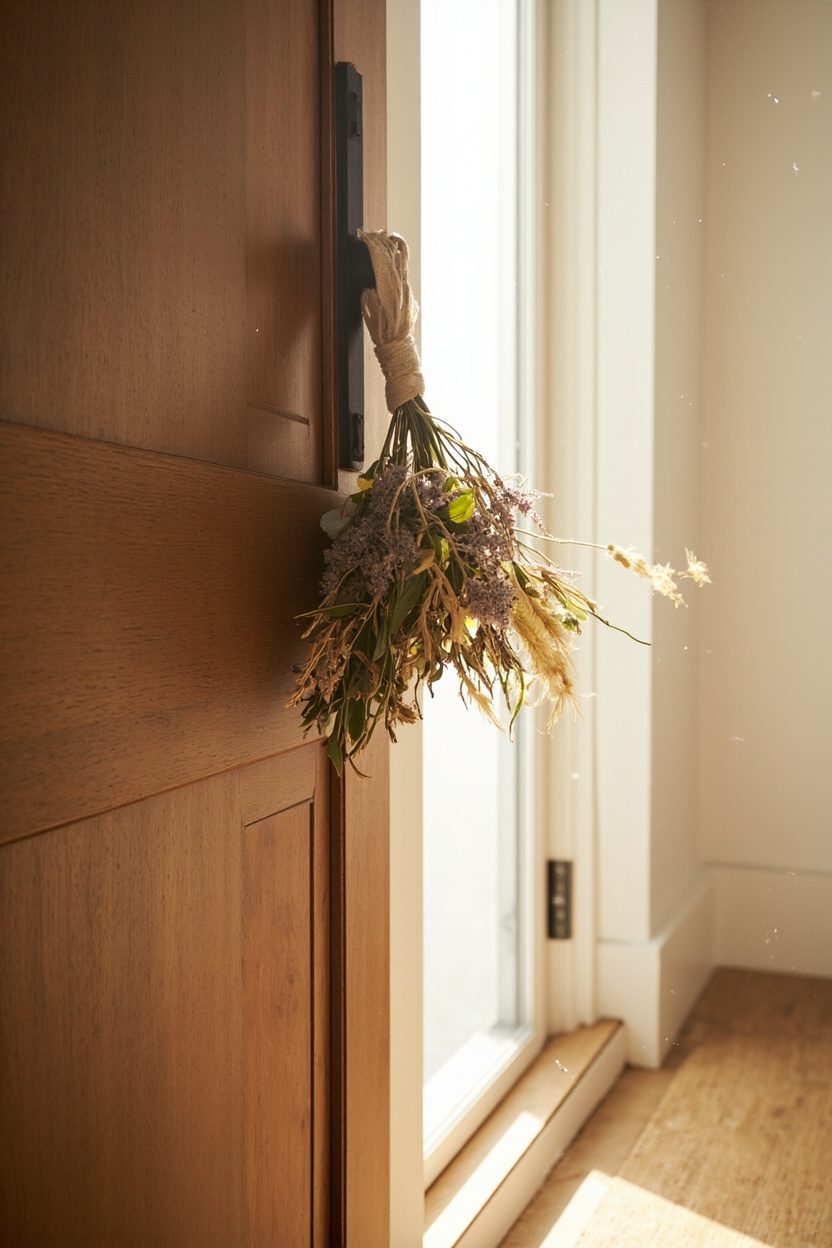
Dried flowers read like weathered poetry on a door, offering longevity and low maintenance compared to fresh blooms.
Choose stems with varied silhouettes, like bunny tails, strawflowers, and preserved eucalyptus, to create dimensional interest and seasonal texture.
Tie bundles with natural jute or a narrow leather strap for an earthy, tactile detail, and keep each bundle relatively small, about 8–12 inches, to avoid overwhelming standard doors.
Color-wise, aim for muted terracotta, wheat, and dusty rose tones that work with both dark and light door finishes, and avoid neon or overly glossy sprays that break the boho mood.
Styling Blueprint
- Bundle 5–7 stems per bunch, varying heights for depth.
- Secure with hot glue plus twine for outdoor durability up to a sheltered porch.
- Place bundles asymmetrically around a small hoop or cluster vertically for modern contrast.
- Rotate every 12–18 months to prevent brittleness, budget-friendly under $30 per wreath.
8. Boho Fringe Curtains
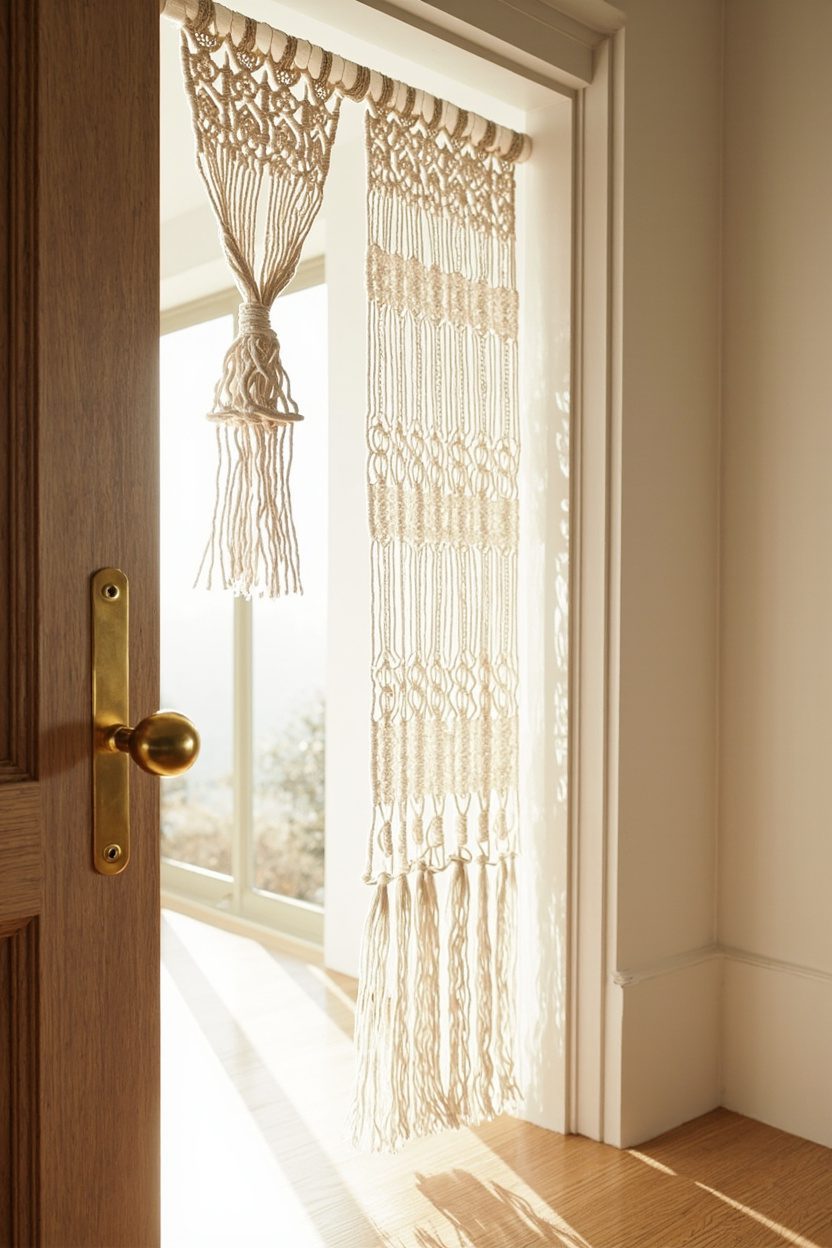
Fringe curtains convert an ordinary wreath silhouette into a relaxed, tactile statement that reads like a mini macrame doorway.
Use cotton or linen fringe, 2–4 inches wide, layered to create movement without weight, which keeps the wreath weather-friendly on covered porches.
Pick a natural base, such as an oak or rattan hoop, sized 16–20 inches for balanced proportion on standard doors, and hang fringe so it cascades slightly below the hoop’s bottom.
Add one anchor element, like a single ceramic bead or small driftwood piece, at the center to avoid a generic look and reinforce scaled detail.
What to Focus On?
- Select 100% cotton fringe for easy dyeing and soft drape; avoid synthetic shine.
- Attach fringe in 2–3 overlapping rows to mask gaps and create lush movement.
- Keep the overall color palette neutral or muted terracotta to maintain boho cohesion with spring trends like those in our designers’ picks.
- Hang with an invisible loop at the door top to let fringe sway without banging against hardware.
9. Textured Natural Fibers
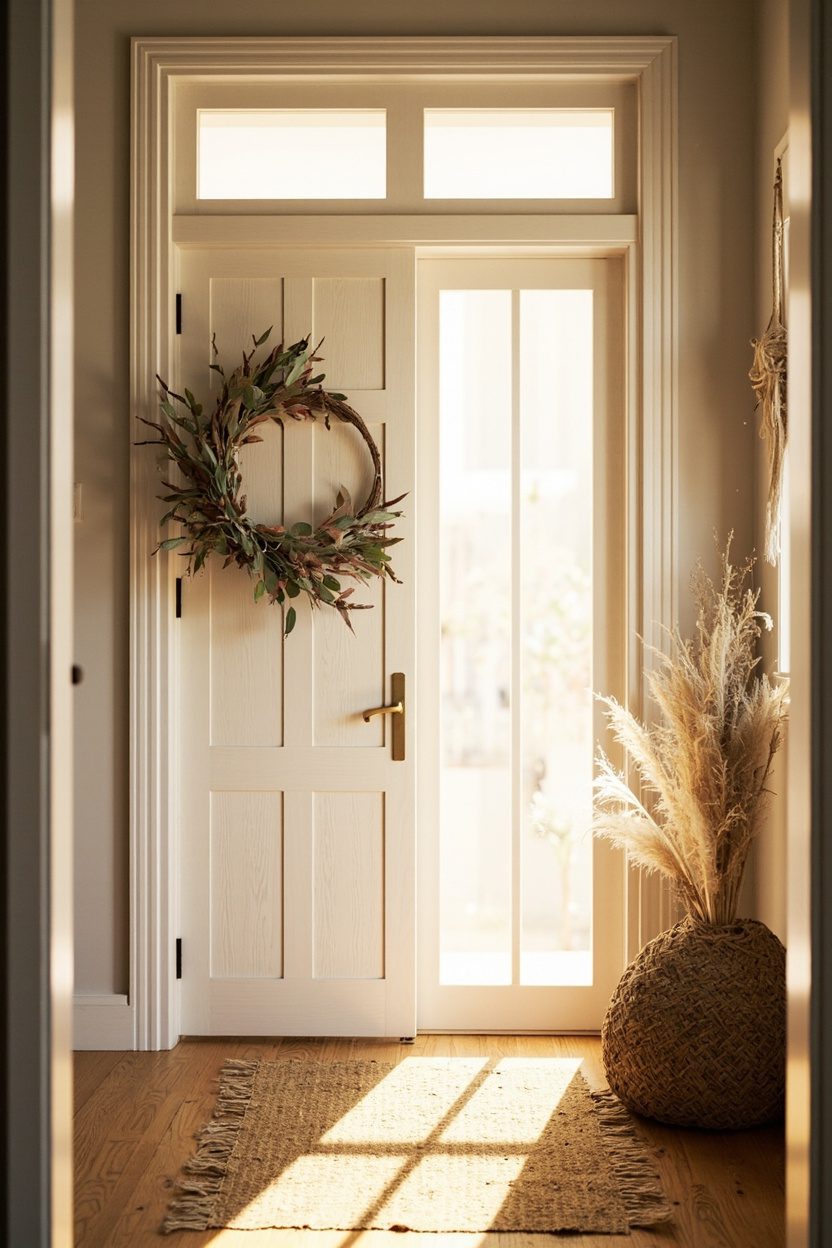
Wreaths made from textured natural fibers, such as seagrass, sisal, and raffia, deliver an organic, sun-bleached look that reads both coastal and bohemian.
Work with a sturdy base, like a 14–22 inch wire hoop wrapped tightly in braided seagrass, to prevent sagging and to support heavier embellishments.
Combine fibers with a single accent color, for example, a blue-grey ribbon or a cluster of ceramic beads, to nod to spring palettes without disrupting the textural focus.
Avoid over-embellishing; let the weave and natural variation in fibers be the hero, and keep outdoor exposure limited to covered porches to prevent fiber breakdown.
Essential Elements
- Start with a wrapped wire hoop for structural strength and longevity.
- Weave two fiber types together for contrast, such as sisal braid with thin raffia trims.
- Add one small focal accent, like a wooden bead strand or a single preserved leaf, not more than 3 inches wide.
- Seal lightly with a matte clear coat if the wreath will see occasional dampness; test on scrap fiber first.
10. Handpainted Welcome Signs
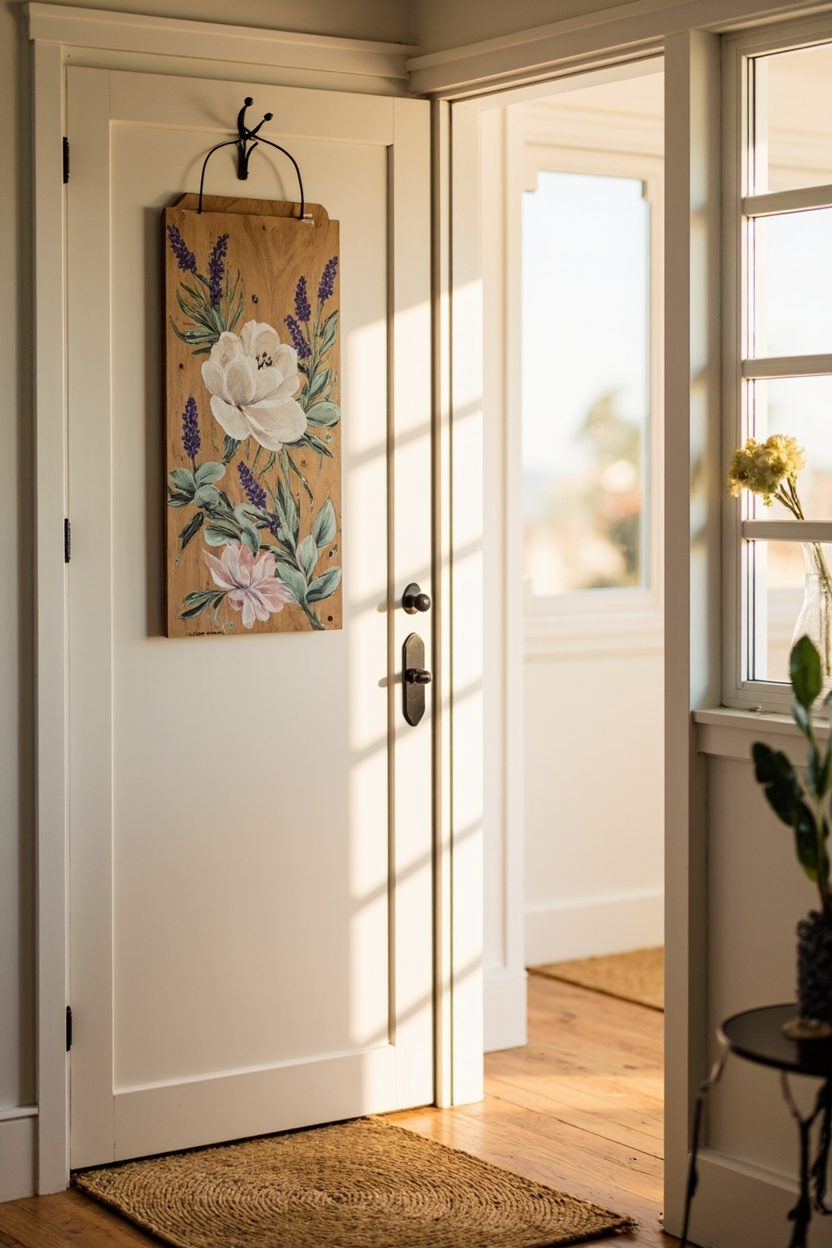
Handpainted welcome signs give a homemade, textural counterpoint to boho wreaths, and they work especially well on weathered wood or rattan-backed doors.
Choose a soft, matte paint palette—sage, terracotta, or faded indigo—to keep the sign feeling organic and spring-appropriate.
Scale matters: a sign about 12–18 inches wide pairs well with a 20–24 inch wreath, so the two elements read as a single curated vignette.
For longevity, seal with a clear satin exterior varnish, and mount with matching jute or brass hooks to reinforce the boho aesthetic.
Styling Blueprint
- Paint material: acrylic on kiln-dried pine, sealed with exterior satin varnish for durability.
- Color tip: mix 70% muted hue, 30% off-white for a sun-faded look.
- Placement: hang the sign slightly off-center above or below a 20–24 inch wreath for layered interest.
- Hardware: use brass D-rings or knotted jute for authentic, tactile detail.
If you want another practical angle, read 3 Stunning Boho Home Decor Ideas.
FAQ
Use a marine-grade or exterior satin varnish applied in two thin coats, allowing proper drying between layers; that prevents peeling and keeps colors from shifting under UV. For extra protection, position the sign under an overhang or use a removable clear acrylic cover in exposed entries.
Yes, simple stenciling or hand-lettering with lined guides produces a professional result, and textured backgrounds, like dry-brushed strokes or washed stains, mask imperfections. Practice the lettering on scrap wood first, then transfer the design with carbon paper or light pencil marks.
Signs between 12 and 18 inches wide visually balance most wreaths in the 18–24 inch range; for oversized doors, scale up to a 24–30 inch sign and proportionally larger wreath. Keep the thickness under one inch to avoid heavy shadowing and installation issues.
Choose high-contrast, rounded serif or relaxed script fonts for a boho vibe, and pair muted background hues with off-white or deep charcoal lettering for readability. Avoid ultra-condensed fonts; legibility at a distance matters more than ornate flourishes.
Final Thoughts
A hand-painted welcome sign is a low-cost, high-impact way to augment boho spring wreaths, lending personality and cohesion to your entry.
Make deliberate choices about scale, material, and finish, and the sign will age gracefully, becoming a seasonal staple that feels both wild and beautiful.