


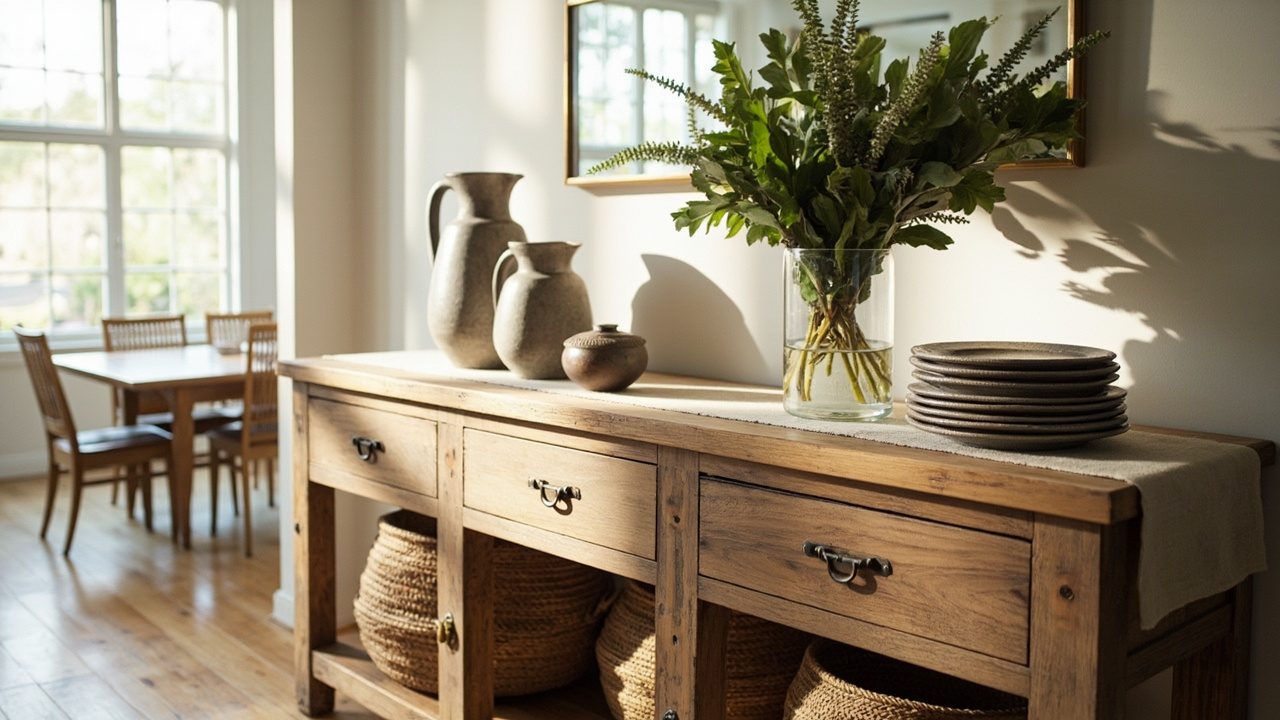
Farmhouse Buffet Decor Ideas for a Dining Room should feel collected, hospitable, and purposeful, not like a staged showroom.
Think durable surfaces for daily use, layered textures that read as relaxed luxury, and storage that actually works during family dinners and holiday spreads.
My Pick: Cerused Oak Finish — I love how cerused oak reads light and modern but holds honest texture; it brightens a room without losing farmhouse soul, and its grain detail hides everyday marks beautifully, making it my go-to for real family dining rooms.
1. Distressed Wood Layers
- Effort Level: Weekend refresh.
- Estimated Budget: Under 600.
- Maintenance Level: Medium (dust, occasional touch-up).
- Best For: Rustic or transitional dining rooms.
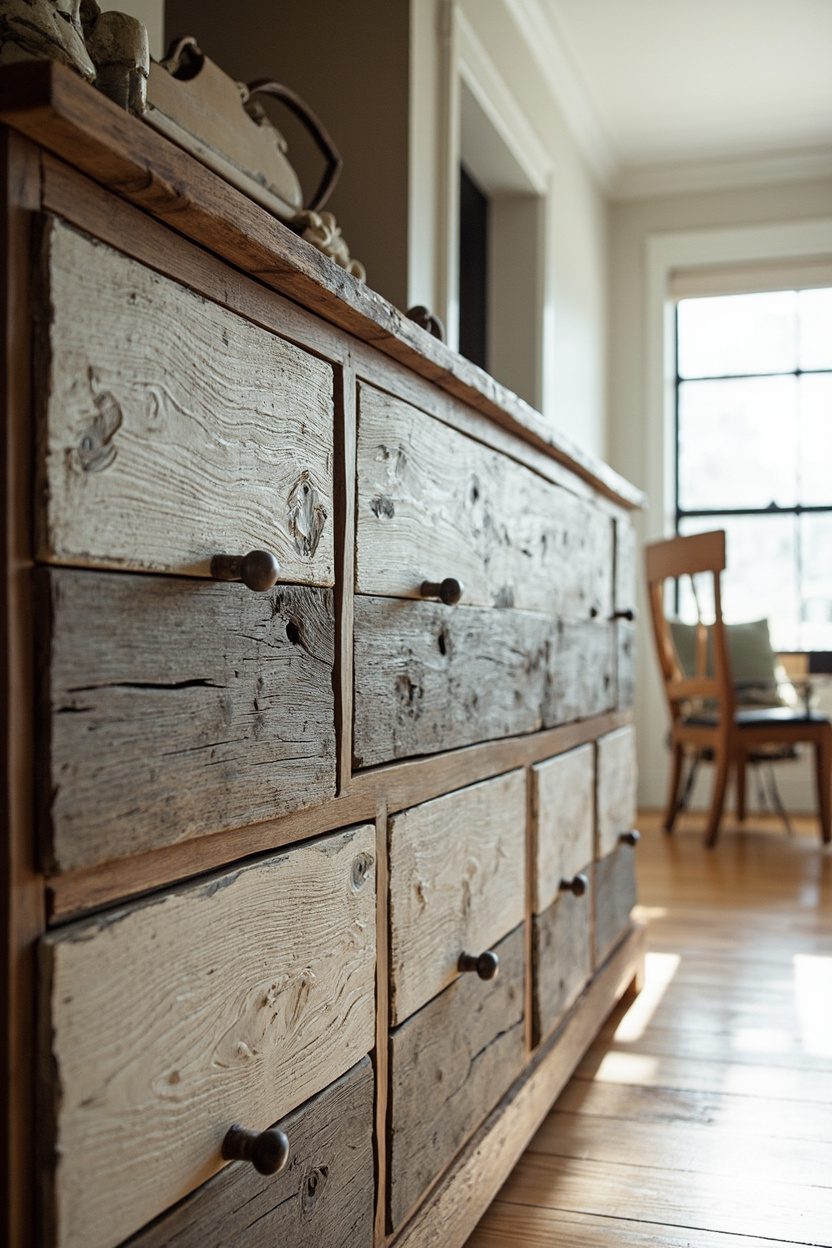
The starting point is a buffet in a distressed oak or pine finish that shows character from knots, saw marks, and softened edges.
Layering is essential; pair the buffet with a reclaimed wood mirror or open shelving above, so finishes feel intentional, not accidental.
Keep hardware slightly oversized in matte black or aged brass to anchor the worn wood and prevent the look from feeling too fragile.
For color direction, choose warm neutrals like creamy whites and muted olive accents to complement the wood’s honey tones.
Why This Works?
Distressed wood reads as lived-in and forgiving, which is perfect near a dining table where spills and activity happen.
The texture conceals minor wear, and pairing with simple, modern accents keeps the overall effect fresh rather than kitschy.
2. Cerused Oak Finish
- Effort Level: Professional refinish or cabinet order.
- Estimated Budget: 1,000–4,000.
- Maintenance Level: Low (wipe clean).
- Best For: Bright, airy farmhouse dining rooms.
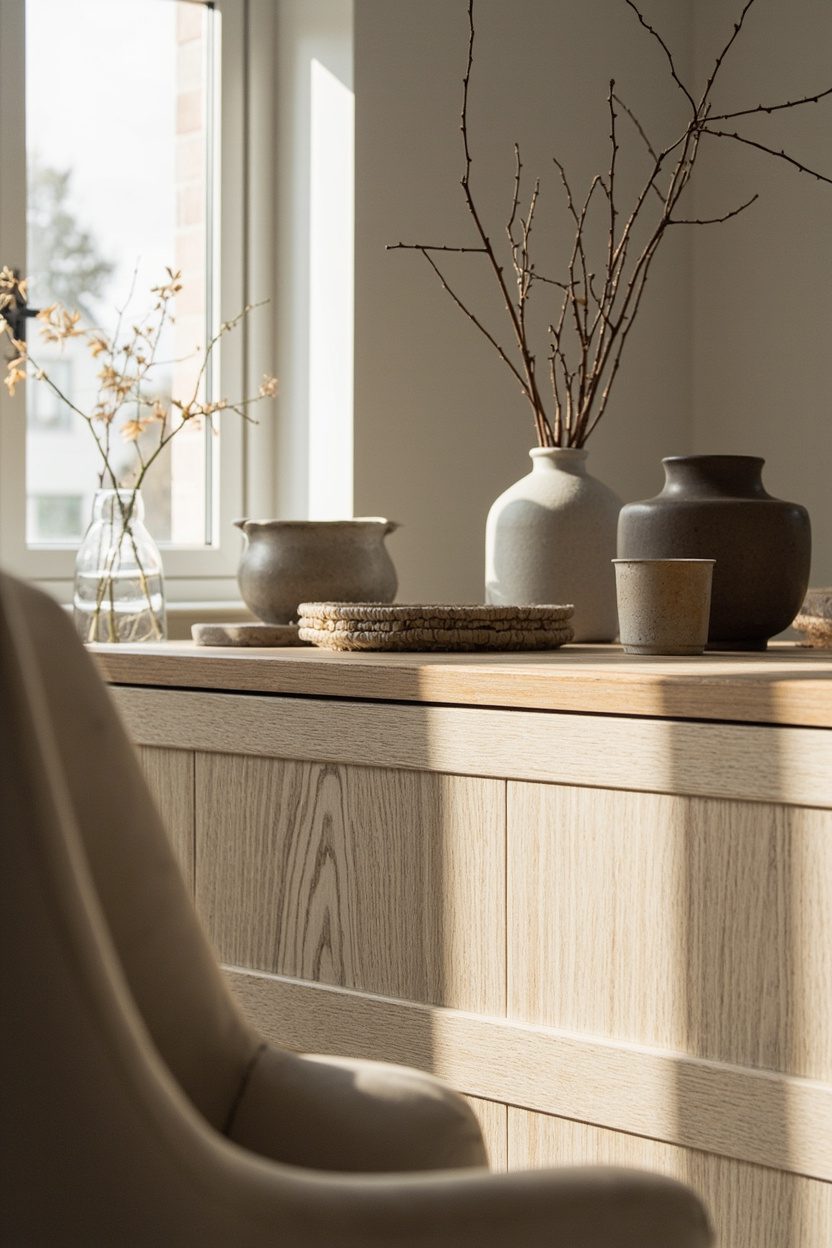
Cerused oak is a technique where a white or pale pigment is rubbed into the grain, creating a soft, linear texture against a light-toned wood base.
This finish lifts the room visually, keeping the palette airy while preserving the tactile grain that defines farmhouse character.
Scale matters: choose a buffet with substantial proportions so the light finish doesn’t get lost against white walls or open plan spaces.
Pair with warm metal pulls in aged brass or soft iron to provide contrast without heavy visual weight.
Splurge vs. Save
If you want the cerused look on a budget, refinish an existing solid wood buffet with a whitewash glaze, then hand-brush the grain to mimic cerusing; this weekend project costs a fraction of custom carpentry and offers authentic texture.
For a long-term, flawless result, commission a cerused oak buffet or order a custom finish through a reputable cabinetmaker; invested craftwork delivers consistent grain highlighting and a durable sealed surface that stands up to daily use.
3. Built-In Buffet Styling

- Effort Level: Contractor project.
- Estimated Budget: 3,000–10,000.
- Maintenance Level: Low to medium, depending on materials .
- Best For: Homes with architectural interest or open-plan dining.
Built-in buffets give a room architectural permanence, framing the dining area and providing integrated storage for serving ware, linens, and display pieces.
Design the scale to leave comfortable clearance from the table, and include deep drawers for platters plus adjustable shelving behind doors for taller items.
Pick durable materials, like veneered plywood with a cerused or painted finish, for clean lines and easier long-term maintenance than raw softwood.
Incorporate recessed lighting or a tiled backsplash above the counter for a thoughtful, finished look that’s both beautiful and practical.
Stylist’s Note
Built-ins anchor a room like nothing else, making the buffet feel like it has always belonged there.
Work with your contractor to plan door swing and drawer depth early, and consider integrated power for warming drawers or a display area, so the built-in functions as a true hospitality hub.
4. Mixed-Metal Hardware
- Effort Level: Half-day project.
- Estimated Budget: $50–$250.
- Maintenance Level: Low (occasional polish).
- Best For: Neutral or two-tone buffets.
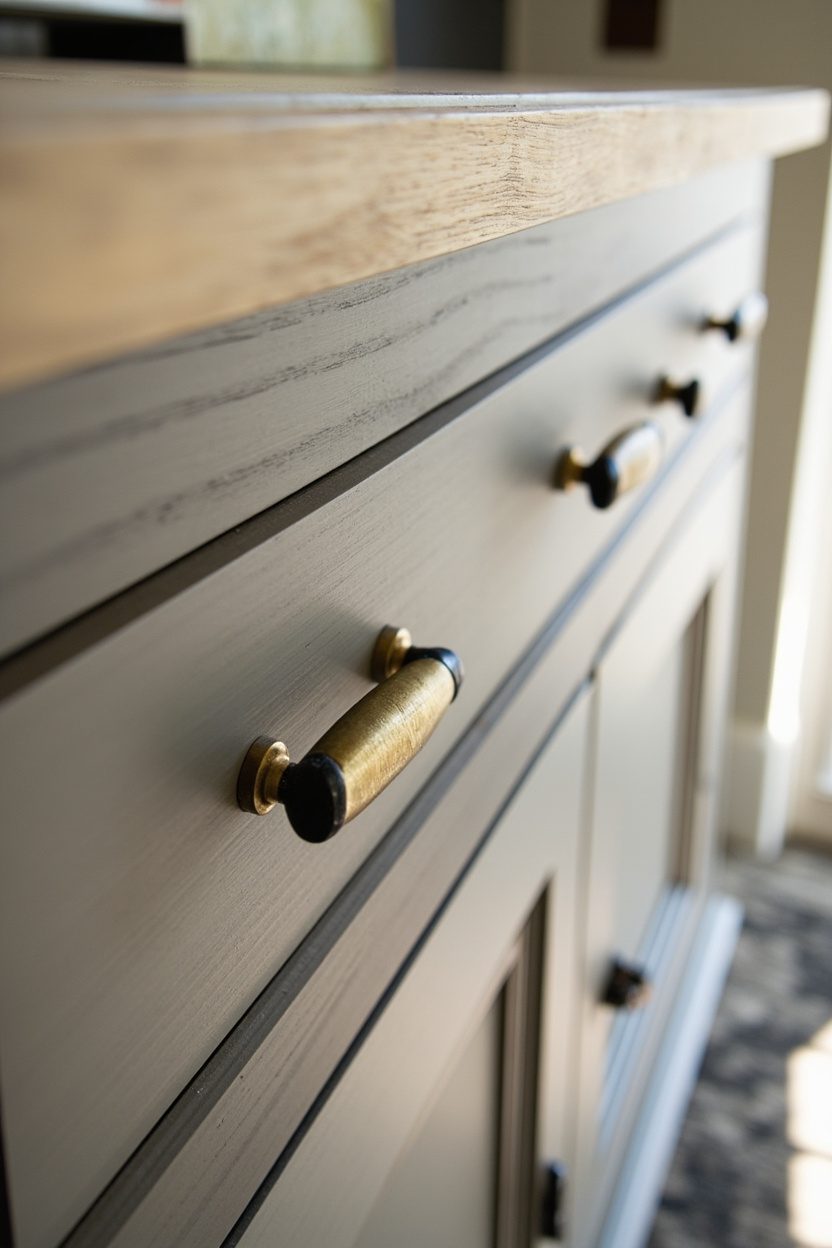
Swapping out a buffet’s knobs and pulls for mixed metals immediately refreshes the piece without a full refinish.
Choose two complementary metals, for example, aged brass for larger pulls and matte black for smaller knobs, to create deliberate contrast at a modest cost.
Scale matters: use larger hardware on doors and slim, simple knobs on drawers to keep proportions balanced and visually pleasing.
Avoid mixing more than three metal finishes, or the look can feel cluttered rather than curated.
What You’ll Need?
- Assorted hardware: aged brass pulls, matte black knobs, or antique pewter accents.
- Basic tools: screwdriver, drill with bit set, tape measure.
- Optional supplies: matching screws, touch-up paint for small holes, and wood filler.
Designer Secret
Pick one metal to read as the dominant finish, then use the secondary metal as an accent at focal points like the center doors or top drawer pulls. This keeps the mix intentional and stylish.
If holes don’t align, use wood filler and reposition hardware for better spacing, or embrace asymmetry by placing contrasting pulls on opposite ends for a modern farmhouse twist.
5. Greenery and Herbs
- Effort Level: Quick styling.
- Estimated Budget: Under 75.
- Maintenance Level: Medium (watering).
- Best For: Sunlit or kitchen-adjacent dining rooms.
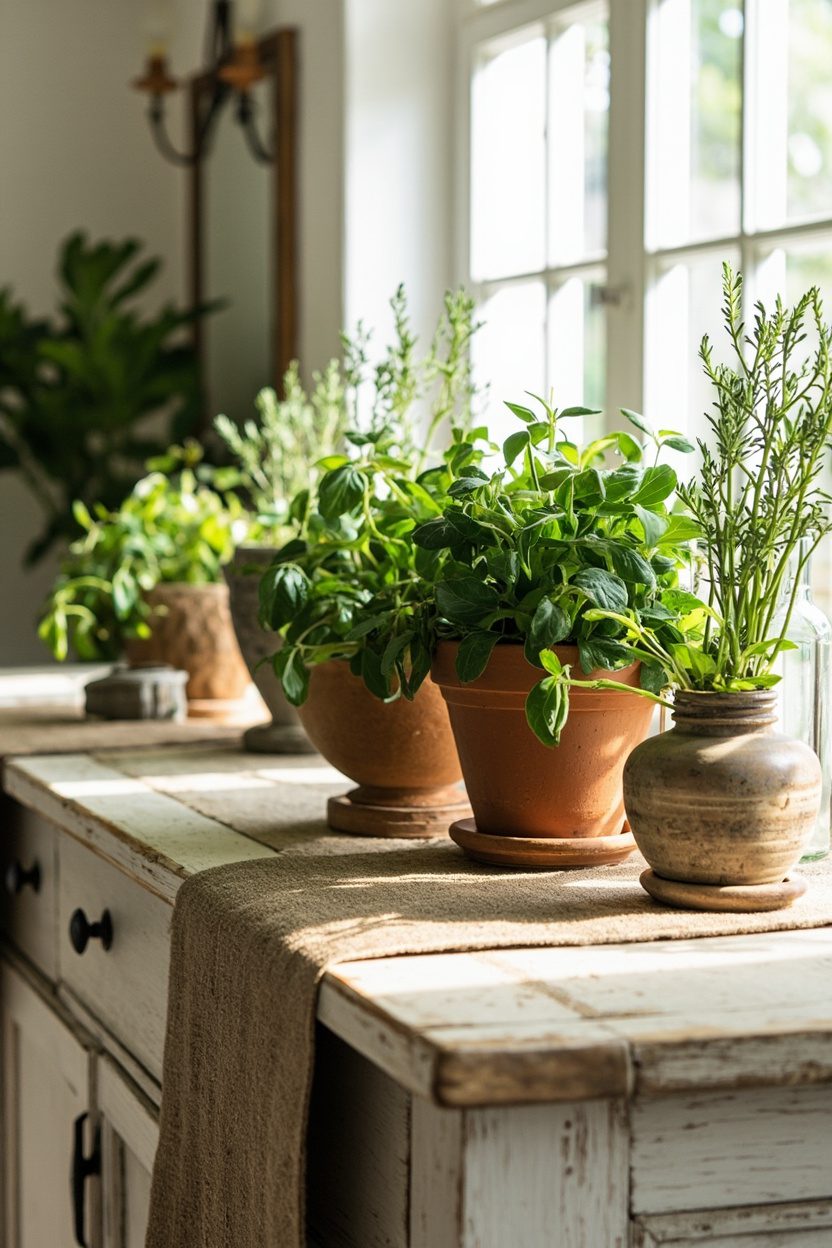
Fresh plants wake up a buffet, adding life and seasonal scent when you include herbs like rosemary or basil in ceramic pots.
Group three pots in varied heights, using terracotta for warmth, glazed ceramics for polish, and a woven planter for texture to complement farmhouse materials.
Place taller greenery at one end of the buffet and low herb pots toward the center, creating a gentle visual slope that guides the eye across the surface.
Rotate pots seasonally — spring herbs, summer blooms, and a sculptural olive branch in winter — to keep the vignette feeling current.
When I tried this on my own oak buffet, I overcrowded the surface at first, which hid my favorite dishes; paring back to three pots made the arrangement breathe and actually invited me to use the space more.
Make It Your Own
If your dining room gets limited light, choose hardier plants like snake plant or ZZ, and swap herbs for fragrant dried bundles such as lavender. This keeps the botanical feel without the daily care.
For a culinary touch, mount a small chalkboard above the buffet to note which herbs are ready to clip, or write a simple menu for guests, linking the decorative to the practical.
6. Woven Baskets Display
- Effort Level: Easy styling refresh.
- Estimated Budget: $30–$150.
- Maintenance Level: Low (dust occasionally).
- Best For: Textured, cozy dining rooms.
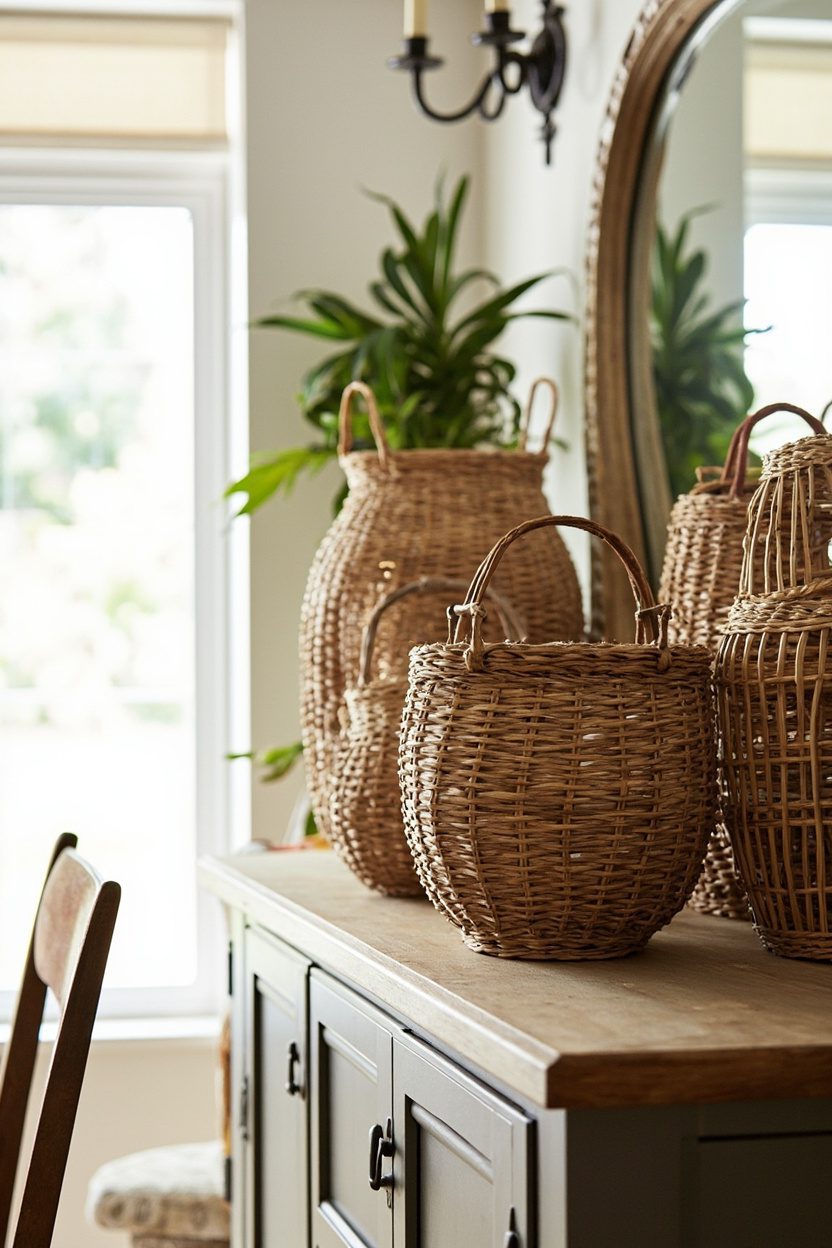
Layering woven baskets on and above a buffet introduces warm fiber and an organic silhouette that reads authentic in farmhouse decor.
Select baskets in varied weaves and tones, such as flat seagrass trays, deep willow baskets, and a small coiled-rush bowl to create rhythm and depth.
Use larger baskets on lower shelves for hidden storage and smaller, decorative baskets on top to display linens, napkins, or seasonal accents.
Be mindful of scale; a tiny basket next to a long buffet lamp will disappear, so choose a statement basket roughly one-third the buffet height for balance.
Stylist’s Note
Stack baskets loosely to avoid a contrived look, and let one or two pieces peek onto the floor beside the buffet for a lived-in feeling. This adds personality without sacrificing function.
If you want a softer approach, weave in a folded burlap runner beneath the top baskets to protect the surface and introduce another layer of farmhouse texture.
7. Antique Mirror Backdrop
- Effort Level: Easy upgrade.
- Estimated Budget: $100–$600.
- Maintenance Level: Low (dust and occasional polish).
- Best For: Narrow dining rooms, buffets needing height.
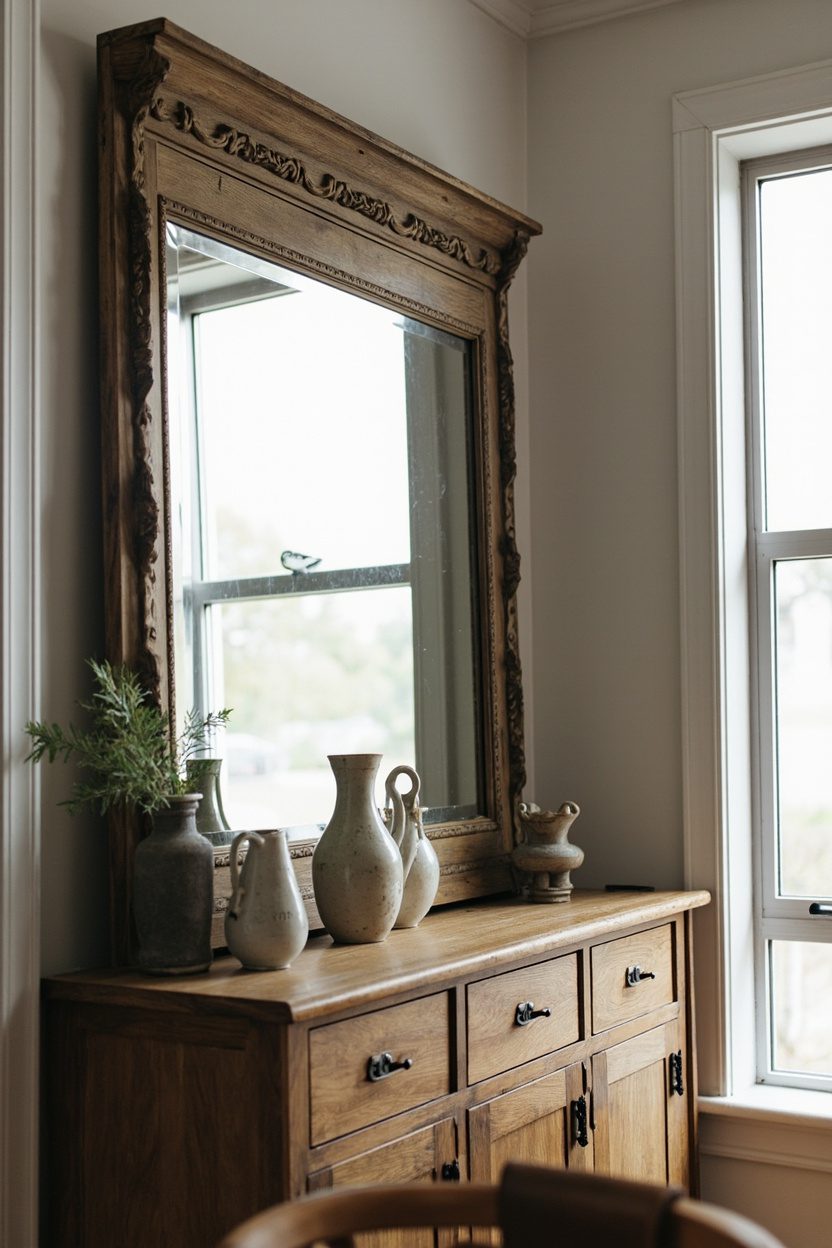
An antique mirror behind a buffet instantly reflects light, making a dining room feel larger and more welcoming.
Choose a piece with patinaed silvering or a worn wood frame to reinforce farmhouse character, rather than a perfect modern glass surface.
Scale matters: pick a mirror roughly two-thirds to three-quarters the width of the buffet to keep proportions balanced and avoid overpowering the wall.
Mount the mirror slightly above the buffet surface so decorative items sit comfortably in front without blocking reflections or looking crowded.
Stylist’s Note
Aged mirrors bring history and texture, especially when paired with layered tableware or a pair of tapered lamps on the buffet.
Lean into chipped paint or hand-carved frames for authenticity, and avoid over-polishing the frame; it’s the blemishes that read as charming rather than neglected.
8. Ceramic Pitcher Grouping
- Effort Level: Weekend styling.
- Estimated Budget: Under $150–$400.
- Maintenance Level: Low (wipe clean).
- Best For: Casual, sunlit dining rooms.
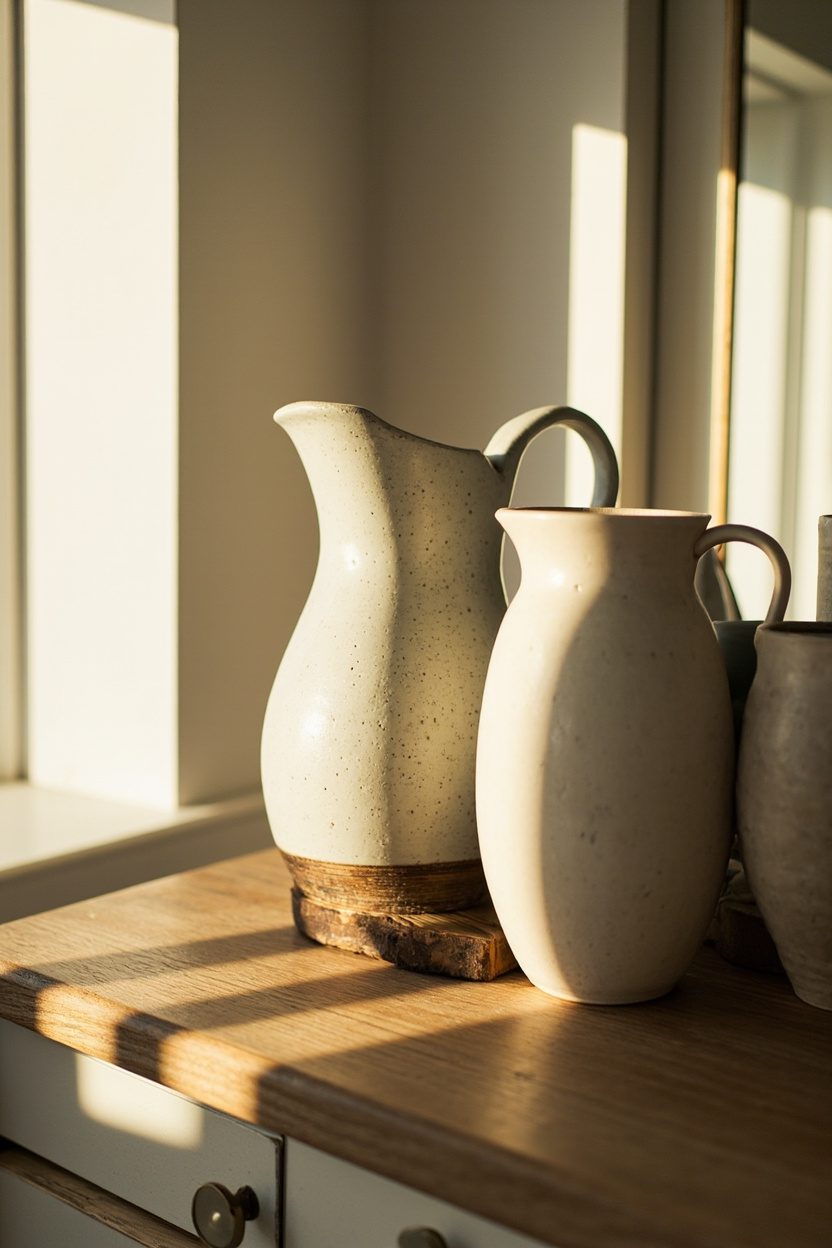
A cluster of ceramic pitchers is an approachable way to add farmhouse shape and softness to a buffet surface.
Mix sizes and silhouettes, from tall narrow pitchers to squat creamers, for visual rhythm and practical layering possibilities.
Stick to a restrained palette, like cream, soft blue, or celadon, to keep the grouping cohesive and farmhouse-appropriate.
Use one pitcher for seasonal stems and leave others empty, or nest tactile linens and wooden spoons inside for texture and function.
Before You Buy
Hunt at flea markets, thrift shops, and estate sales for authentic, budget-friendly pitchers with glaze imperfections, which add charm and story. Mixing in a few secondhand finds keeps the look relaxed and gives you more pieces for less money.
If you want a statement set, invest in handmade stoneware from a local potter or a limited-run ceramic collection, focusing on weight, glaze depth, and kiln marks. Paying more gets you richer color variation and a heft that reads high-quality on a buffet.
9. Soft Contrast Fabrics

- Effort Level: Simple swap.
- Estimated Budget: Under $100–$300.
- Maintenance Level: Medium (occasional laundering).
- Best For: Buffets that double as serving stations.
Drape a linen runner or layer a neutral cotton throw across the buffet to introduce a soft, tactile contrast to wood or metal surfaces.
Choose fabrics with subtle patterning, like faded stripes or small-scale floral, to nod to cottage farmhouse without competing with larger decor items.
Keep colors muted—cream, stone gray, washed sage—so textiles support the room rather than dominate it.
Anchor the fabric with weighted accessories at each end, such as a small stack of books or a low clay bowl, to prevent shifting during use.
Make It Your Own
Rotate fabrics seasonally, using heavier wools in winter and airy linens in summer, and consider local textile artisans for custom runners in a scale and length that exactly complements your buffet.
Small edits in fabric weight or color make a big difference in how cozy and considered the whole dining room feels.
10. Dark Farmhouse Accent

- Effort Level: Intermediate refinishing.
- Estimated Budget: $300-$900.
- Maintenance Level: Medium (dust and touch-up).
- Best For: Rooms with natural light or high-contrast schemes.
What You’ll Need:
- Black or charcoal milk paint..
- Steel wool, wax, and a soft rag..
- Weathered hardware (oil-rubbed bronze or matte black)..
- Clear protective wax or matte polyurethane..
Start by choosing a buffet with good scale, ideally 60 to 80 inches long for a typical dining wall, so the dark finish reads as deliberate, not overpowering.
Prep is everything, so sand just enough to remove gloss and allow the milk paint to bite, focusing on edges and raised panels for natural distressing later.
Add contrast with light stone or oak tabletop accents, or place a pale linen runner to keep the overall dining room from feeling too heavy.
Swap in low-profile hardware in matte black or bronze to maintain the moody look while keeping functionality smooth.
Designer Secret
Layering is the trick: paint the base in charcoal, then sand back selectively to reveal a warmer undercoat or natural wood at high-touch areas, so the piece feels aged, not freshly painted.
Finish with a clear wax rather than high-gloss varnish for a subtle, tactile sheen that’s easy to maintain.
11. Architectural Trim Details

- Effort Level: Weekend carpentry.
- Estimated Budget: $150-$600.
- Maintenance Level: Low (occasional dusting).
- Best For: Buffets with flat fronts or shallow panels.
Think moulding frames, applied beadboard, or shallow shaker trim to add depth and farmhouse character to an otherwise plain buffet.
Select trim profiles in poplar or MDF for ease of cutting, and paint them in the same color as the buffet for a seamless, built-in look.
Scale matters: keep trim pieces proportional to the buffet face—typically 1 to 3 inches wide for horizontal rails, and larger stiles for vertical emphasis.
Avoid overdoing ornate profiles; the farmhouse aesthetic reads best with simple, crisp lines and honest materials.
Stylist’s Note
Install trim using wood glue and finishing nails, then fill and sand before painting to make the work read like original millwork.
If you’re nervous about carpentry, consider pre-cut appliques or a professional carpenter for a cleaner finish; the small investment upgrades the entire dining room.
FAQ
Consider the room’s light and existing wood tones; lighter cerused or oak finishes brighten and highlight grain, while dark paints create contrast and drama. Match the scale and color temperature of nearby furniture for cohesion.
Yes, use contact adhesive and small brad nails through the veneer into the substrate, then fill and paint the seams carefully. Test on an inconspicuous area to ensure adhesion and prevent veneer lifting.
Matte black, oil-rubbed bronze, and aged brass all read as authentic farmhouse choices; pick one finish and repeat it in lighting or cabinet pulls for a coordinated look. Avoid overly polished chrome, which can feel too modern.
Introduce light textiles, a pale rug, or reflective elements like a mirror above the buffet to offset the weight. Keep walls in warm neutrals rather than stark white to maintain a cozy farmhouse atmosphere.