


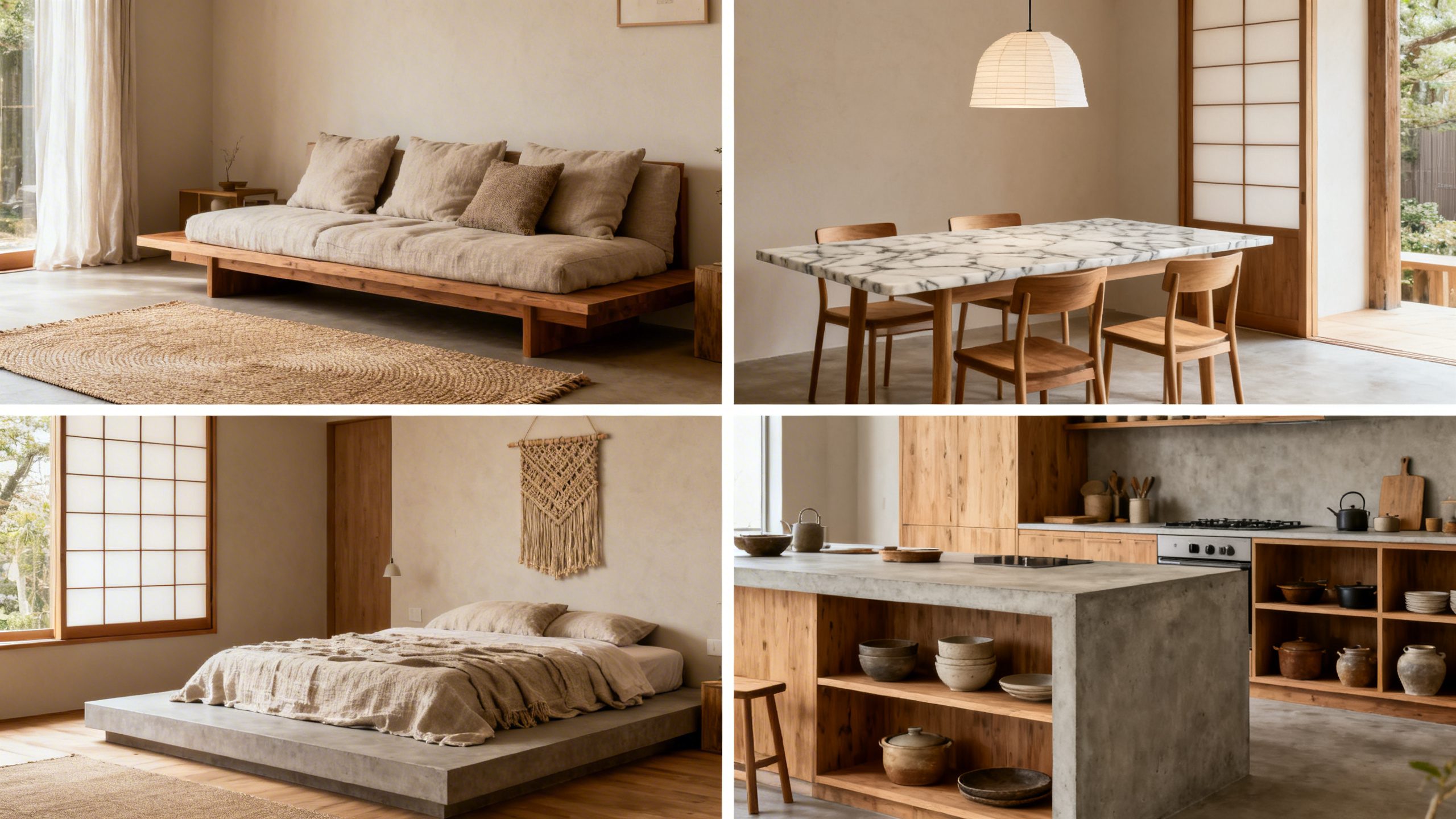
Japandi home design earns its quiet power by pairing Japanese restraint with Scandinavian warmth, prioritizing function, light, and tactile natural materials. The result is a home that feels intentional, not empty, where every line and texture supports daily life.
Think fewer, better pieces, a measured palette, and generous negative space that lets wood grain, linen, and stone breathe.
This edit zeroes in on decisions that matter, from circulation paths to seat heights, so your rooms feel grounded, useful, and beautifully calm.
My Pick: Japandi home design low-profile furniture — I love how lowering sightlines instantly calms a room, making ceilings feel taller and conversations more intimate without adding clutter.
- 1. Japandi home design living room layout
- 2. Japandi home design neutral palette tones
- 3. Japandi home design low-profile furniture
- 4. Japandi home design natural wood finishes
- 5. Japandi home design Tatami and rugs
- 6. Japandi home design shoji-inspired screens
- 7. Japandi home design linen and cotton textiles
- 8. Japandi home design stone and ceramic accents
- 9. Japandi home design wabi-sabi decor moments
- 10. Japandi home design minimalist storage solutions
- 11. Japandi home design warm ambient lighting
- 12. Japandi home design black contrast details
- 13. Japandi home design indoor greenery styling
- 14. Japandi home design entryway bench setup
- FAQ
1. Japandi home design living room layout

- Effort Level: Weekend DIY.
- Estimated Budget: Under 100.
- Maintenance Level: Low (requires dusting).
- Best For: Renters.
Float seating off the walls to create a slow, circular flow, leaving 30 to 36 inches for walkways and 16 to 18 inches from the sofa edge to the coffee table. Anchor the zone with a flat-weave 8×10 rug, its edges visible to emphasize negative space.
Prioritize one hero sofa and two lightweight accent chairs in wood or rattan, then keep side tables slim at 14 to 18 inches in diameter. Hide remotes and cords in a lidded ash box on a single media bench, not a bulky cabinet, to keep sightlines clean.
Use layered task lighting instead of one overhead blast, for example, a linen-shaded floor lamp paired with a dimmable rice paper lantern.
If your room includes a hearth, frame it with restrained millwork ideas from Diy Fireplace Surround Ideas to maintain the calm envelope.
2. Japandi home design neutral palette tones
- Effort Level: Afternoon refresh.
- Estimated Budget: Under 100.
- Maintenance Level: Low (wipeable finishes).
- Best For: Small Living Rooms.
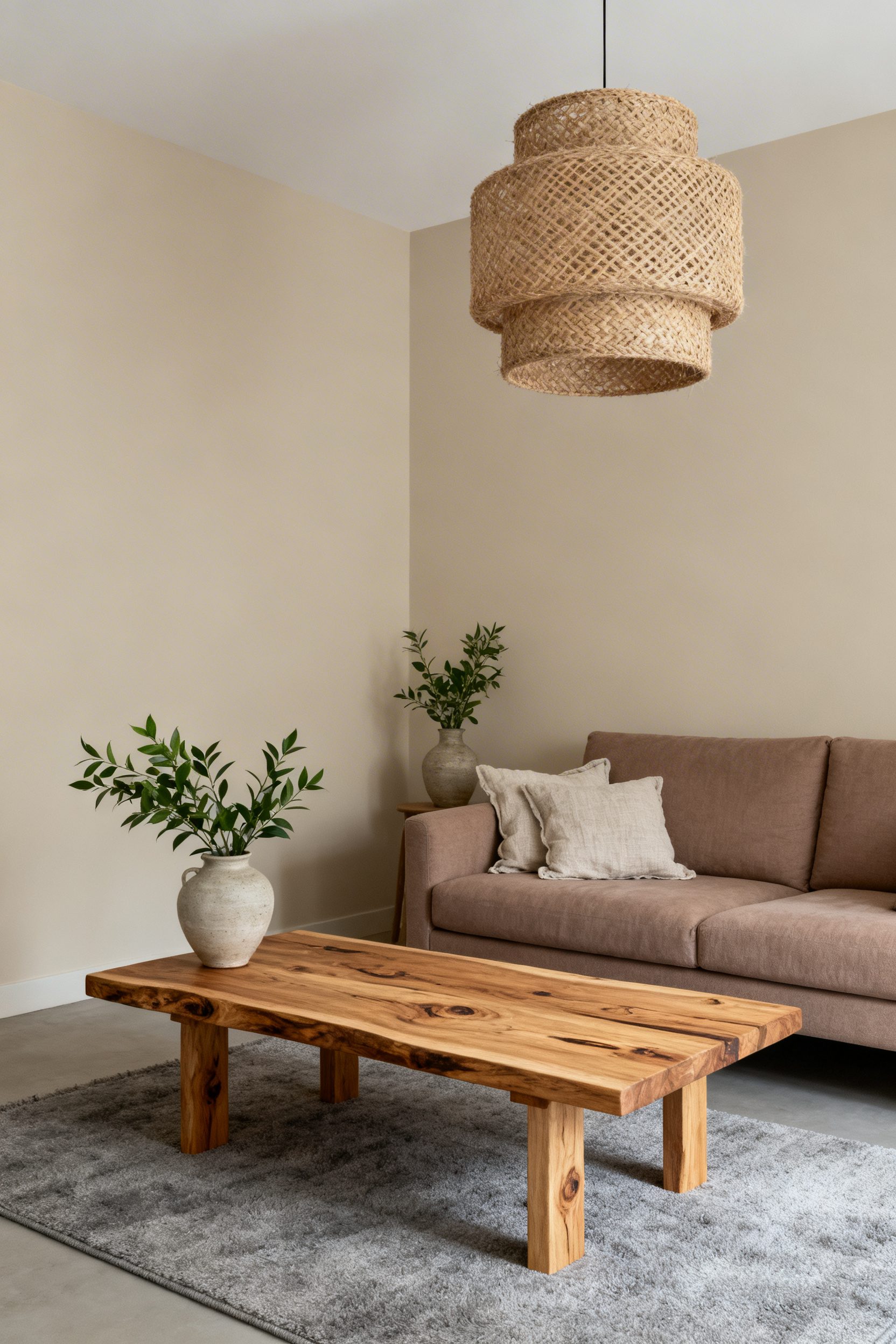
Build a three-step palette, warm white walls, a mid-tone wood like white oak, and one grounding charcoal accent. Keep contrast gentle, LRV 70 to 85 for walls, 30 to 40 for accents, to soften edges and calm the eye.
Test undertones in morning and evening light; many taupes skew pink or green in low sun. Bring in life with textures, nubby linen, tatami, ceramic glaze, rather than extra colors, a principle echoed in emerging Japandi guidance from J-Life International.
If your architecture is cottage-forward, temper neutrals with handcrafted patterns from Eclectic Cottage Decor in small doses, a seat cushion or a single kilim, to keep warmth without visual noise.
3. Japandi home design low-profile furniture
- Effort Level: Weekend sourcing.
- Estimated Budget: 500+.
- Maintenance Level: Medium (vacuum upholstery).
- Best For: Open-Plan Spaces.
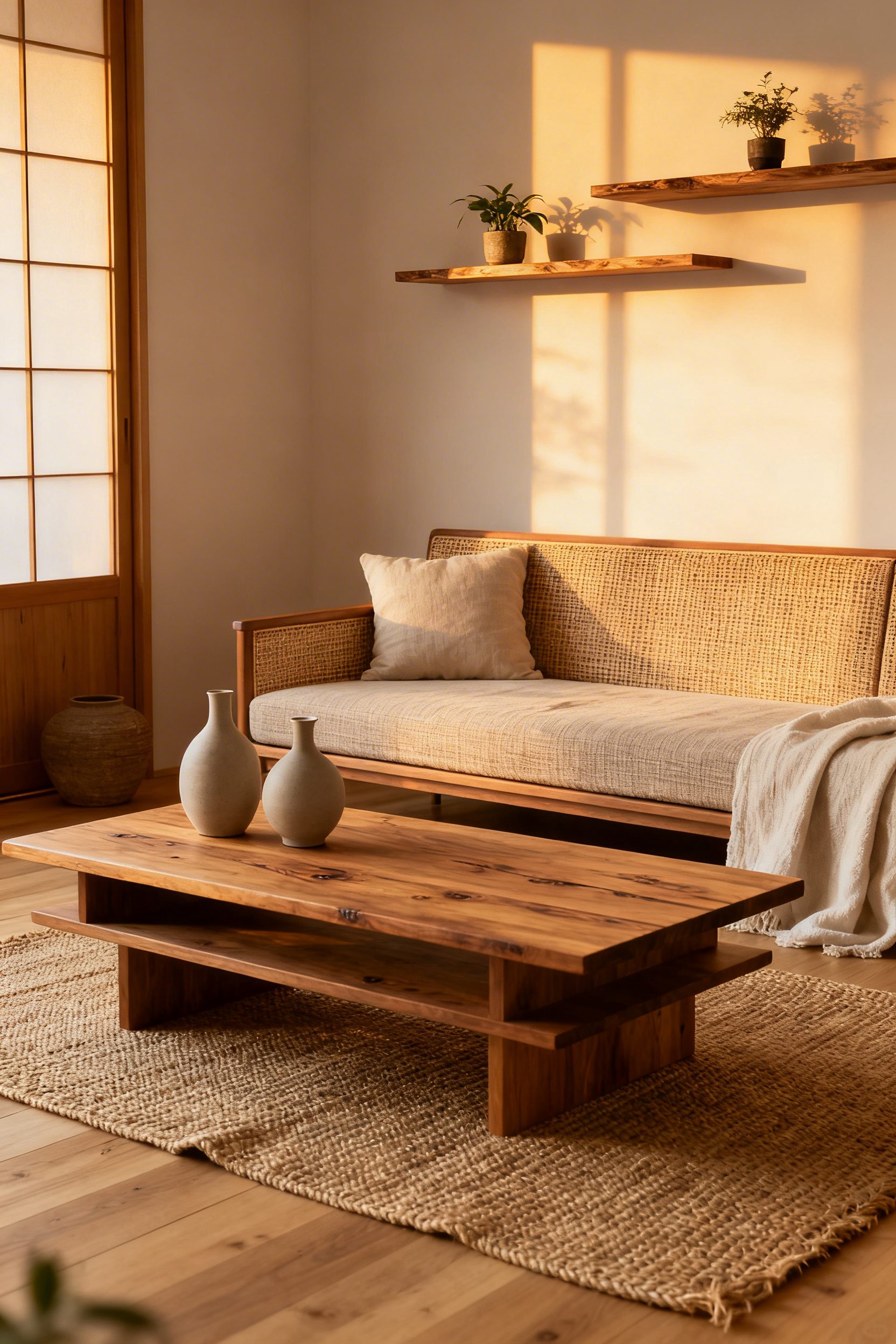
Aim for seat heights of 15 to 17 inches and back heights under 30 inches to lower the visual horizon and make ceilings read higher. Pair a slim bench or platform sofa with a 12 to 14-inch high coffee table to keep proportions cohesive.
Choose solid ash, oak, or beech frames with visible joinery and linen or wool bouclé covers; slipcovers are smart for families and rentals. Avoid bulky arms thicker than 5 inches; they crowd small rooms and kill the serene line.
Finish with a single paper lantern at 24 to 28 inches in diameter hung low over the table, or explore softly diffused fixtures in Boho Lighting that lean natural and quiet. Keep the surrounding wall decor minimal; one large wood-framed print is plenty.
4. Japandi home design natural wood finishes
- Effort Level: Weekend DIY.
- Estimated Budget: 100-500.
- Maintenance Level: Medium, oil every season.
- Best For: Living rooms and dining nooks.
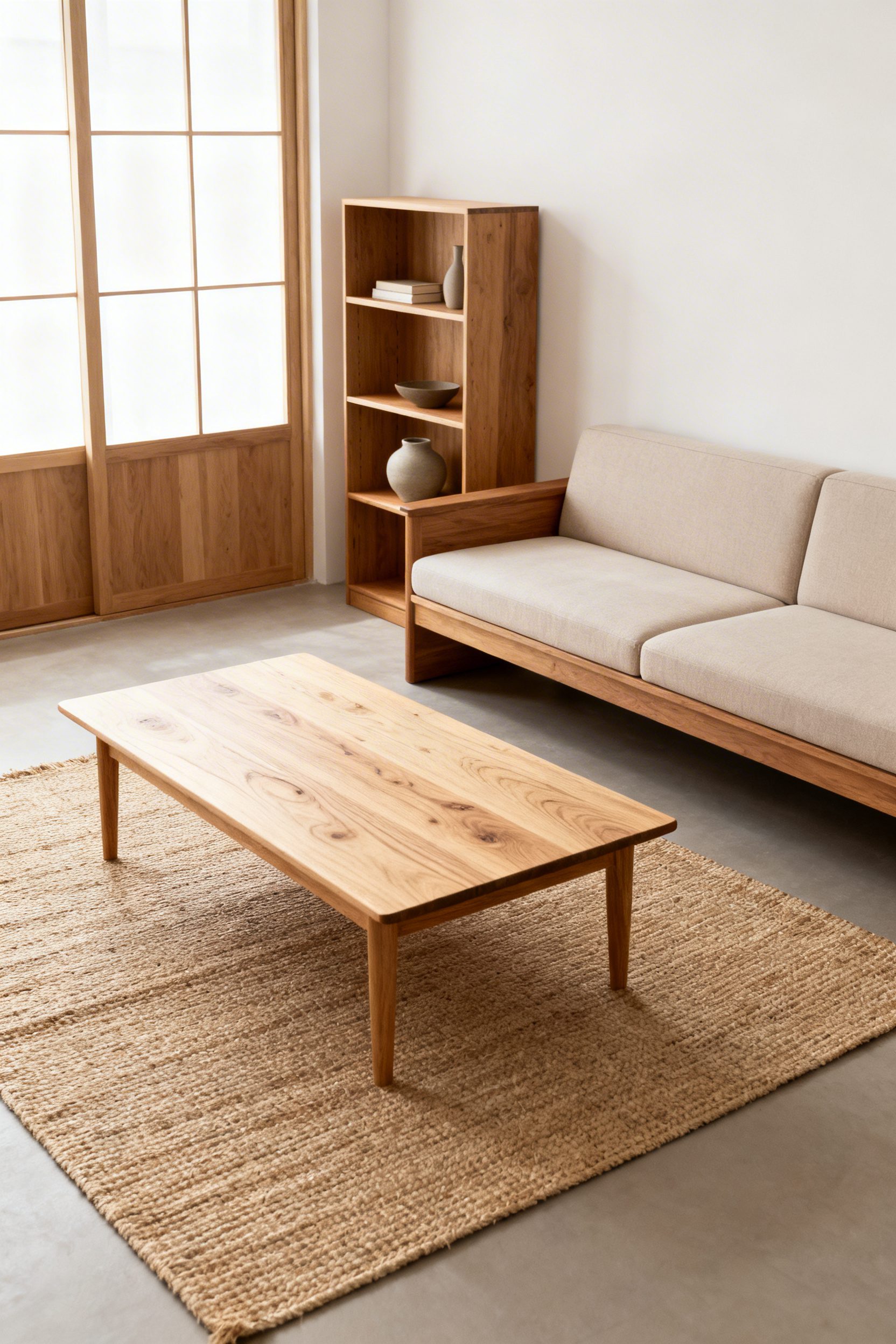
Prioritize honest materials, think matte oak, ash, or elm with a light oil that lets grain show rather than a high-gloss varnish. Keep tones consistent across floors, furniture, and trim within two shades; it reads calm and intentional.
Swap bulky profiles for slim, squared edges; a 3 cm tabletop with chamfered corners feels refined without shouting. If you are mixing species, repeat each wood at least twice, for example oak table and frame, a walnut tray and lamp base, to avoid visual noise.
Anchor the look with a single statement piece, such as a low oak bench under art, and keep metals warm and quiet, blackened or brushed bronze.
For stair environments, pair pale treads with a minimalist rail, as in Staircase Railing Ideas, to keep lines crisp.
5. Japandi home design Tatami and rugs

- Effort Level: Easy afternoon.
- Estimated Budget: 100-500.
- Maintenance Level: Low, regular vacuum and sun airing.
- Best For: Small bedrooms and meditation corners.
Layer a modular tatami base, igusa rush, or foam-core for apartments, with a flat-woven wool or jute rug on top for warmth. Keep pile low, under 10 mm, so doors clear and furniture sits level, use rug pads cut 2.5 cm shy of edges for a flush look.
When I tried this in my own living room, I learned the hard way that tatami must breathe, never trap it under wall-to-wall rubber, or it will warp. Leave a slim 5 mm perimeter gap from baseboards, rotate panels seasonally, and air them in indirect sun to preserve that fresh grass scent noted by J-Life’s Japandi insights.
Choose a rug palette that whispers rather than competes, oatmeal, stone, or inky charcoal, grounded by pale tatami.
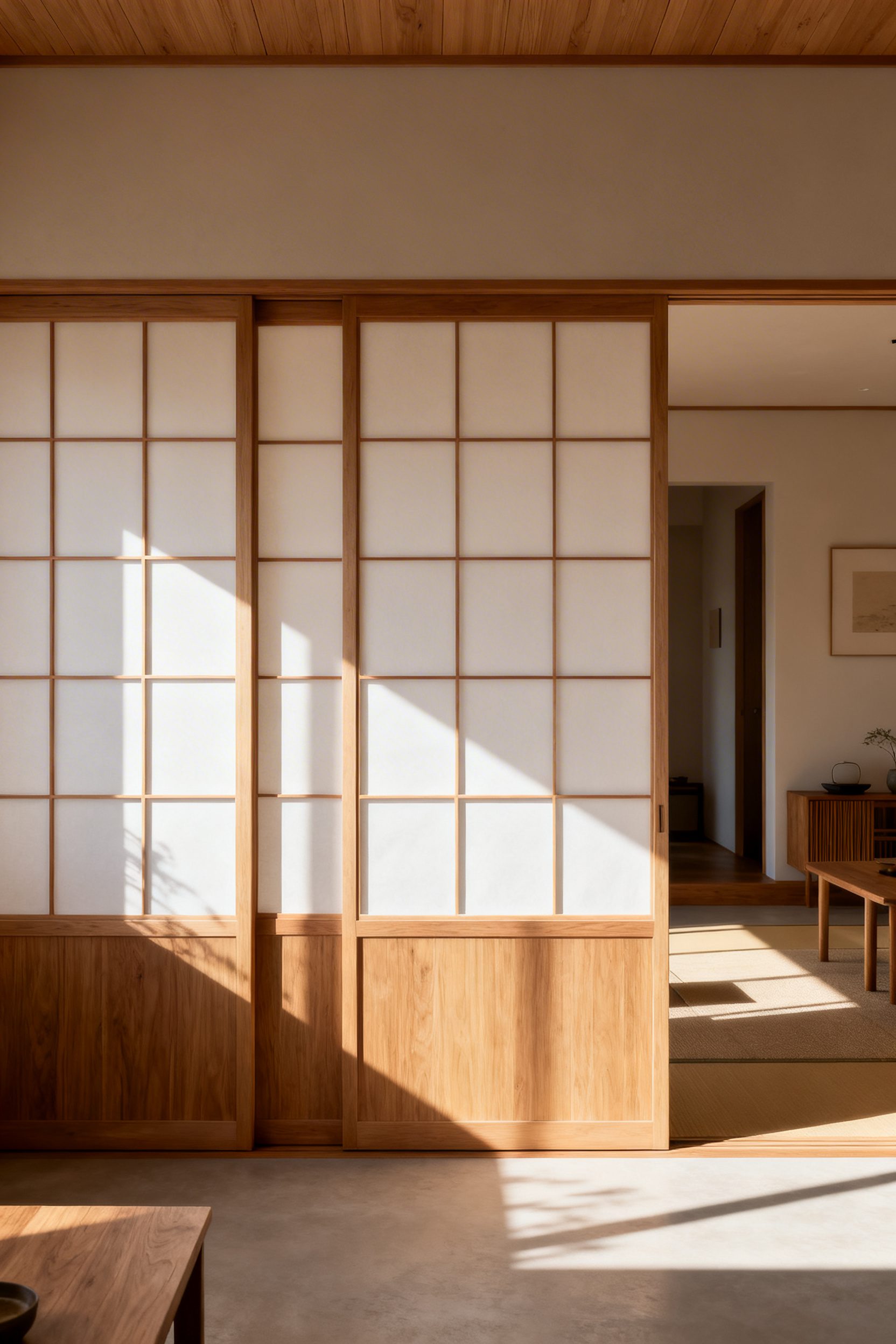
6. Japandi home design shoji-inspired screens
- Effort Level: Weekend DIY.
- Estimated Budget: 100-500.
- Maintenance Level: Low, dust and spot-clean.
- Best For: Studios and open-plan zones.
Use slim poplar or oak frames with rice paper or polyester shoji film; the latter is renter-friendly and more durable. Aim for a grid ratio of roughly 1 to 1.6, tall rectangles that echo room height, and mount on ceiling tracks for seamless glide.
Place screens where they modulate light, not block it, near windows to diffuse harsh glare or around a low platform bed for a cocooned feel. Complement the soft translucency with warm pools from Boho Lighting, keeping bulb temperatures near 2700K for evening calm.
Avoid crowding with busy trim or heavy drapery nearby; the simplicity is the point. If privacy is critical, double up panels with a 5 cm overlap, which eliminates light seams without thickening the profile.
7. Japandi home design linen and cotton textiles

- Effort Level: Weekend DIY.
- Estimated Budget: 100-500.
- Maintenance Level: Medium (gentle wash, line dry).
- Best For: Renters.
Choose washed linen curtains in oat or stone, hung high with simple clip rings, to soften light without visual noise. Pair with cotton percale pillowcases and a linen duvet for tactile layering that stays breathable year-round.
Keep patterns quiet, think narrow pinstripes or slub weaves, and prioritize proportional drape; curtains should kiss the floor, not puddle. Use a 1.5 to 2 times fullness ratio so panels look intentional, not skimpy.
Anchor textiles with a flat woven rug in undyed wool to ground the palette. If you lean eclectic, weave in a single handmade runner as a bridge to your existing pieces, then reference it with restrained art from Boho Wall Decor Ideas.
8. Japandi home design stone and ceramic accents

- Effort Level: Easy afternoon.
- Estimated Budget: Under 100.
- Maintenance Level: Low (requires dusting).
- Best For: Small living rooms.
Cluster two or three pieces in varying heights, like a matte ceramic vase, a travertine catchall, and a small raku bowl, on a low tray. Keep the finish palette chalky, not glossy, for quiet light absorption that suits Japandi restraint.
Mind negative space, leave at least a palm’s width around each form so silhouettes read clearly. On shelves, repeat tones every third cubby to create rhythm without clutter, and cap each vignette at three objects.
If your hearth needs a lift, set a narrow limestone slab as a ledge and echo the texture with a ceramic lantern. See more layering ideas in Diy Fireplace Surround Ideas.
9. Japandi home design wabi-sabi decor moments

- Effort Level: Thoughtful edit session.
- Estimated Budget: Under 100.
- Maintenance Level: Low (occasional dusting).
- Best For: Minimal entryways.
Highlight one imperfect piece, a crackle-glazed bowl, a hand-carved stool, or a repaired vase, on a clean plane like a console or alcove shelf. Use a single stem or branch cut to the shoulder height of the vessel, never wider than the shelf depth.
Embrace patina on woods and metals, but avoid mixing too many stories at once; cap each room at two wabi-sabi moments. Keep sightlines calm by aligning objects with architectural lines, center to window muntins or stair spindles, see proportion cues in Staircase Railing Ideas.
Lighting matters; aim for warm 2700K lamps to graze textured surfaces and reveal grain gently. A small rice paper shade on a dimmer will flatter irregularities and keep the scene feeling restorative, not rustic.
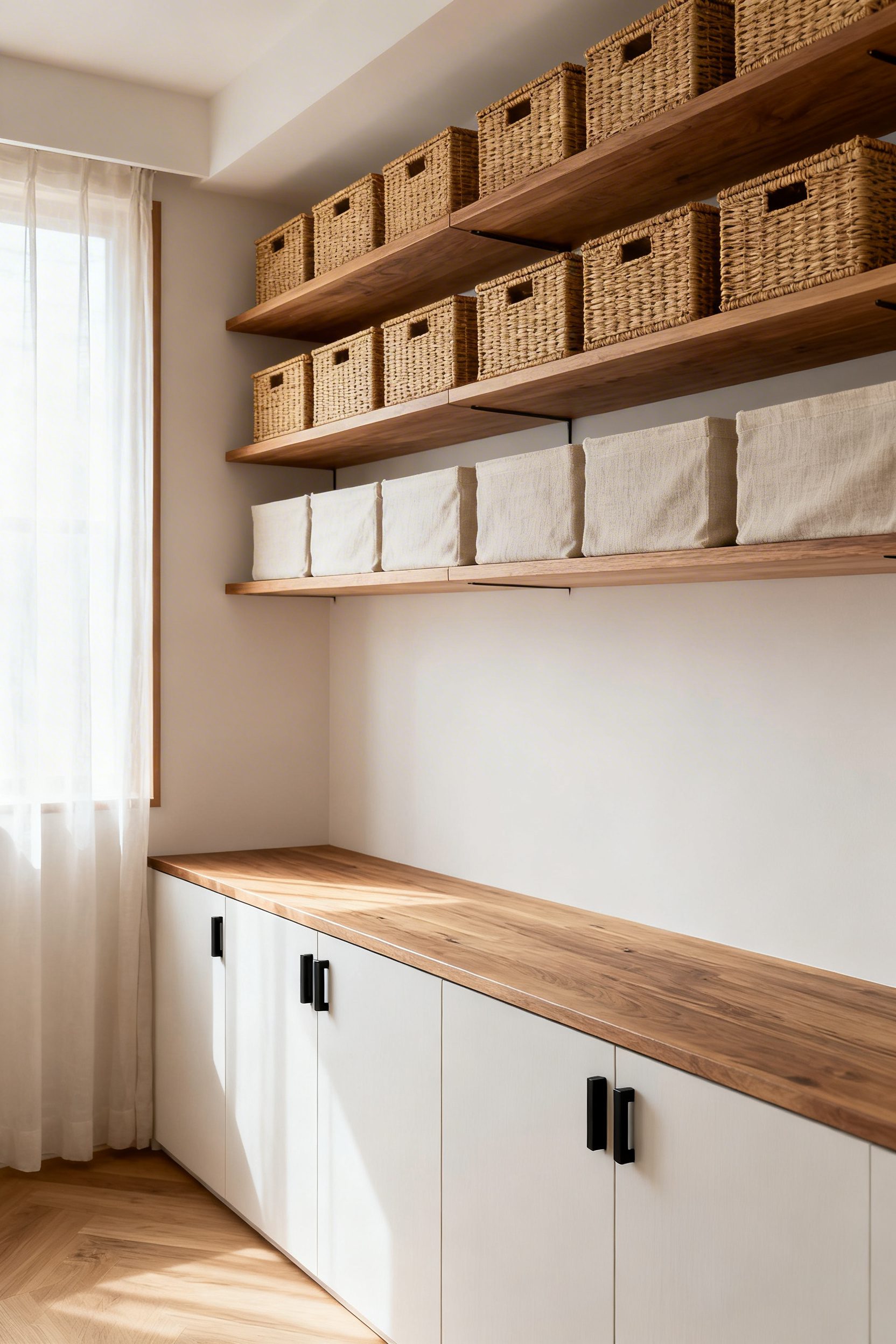
10. Japandi home design minimalist storage solutions
- Effort Level: Weekend DIY.
- Estimated Budget: 100-500.
- Maintenance Level: Low (requires dusting).
- Best For: Small bedrooms.
Opt for low, wall-hung cabinets in white oak with slab fronts, keep hardware minimal or use discreet finger pulls. Align edges with door casings for a clean sightline, and cap units at 12 to 15 inches deep to stay visually light.
Swap bulky bookshelves for shoji-inspired sliding fronts or linen curtains on ceiling tracks to conceal clutter without adding depth. Use uniform baskets, rattan or canvas, sized to the shelf bay; never mix more than two textures.
If you are renting, modular cubes in ash or birch let you stack to the window sill height, then top with a 1-inch thick wood plank for a calm, continuous surface. Label inside, not outside, so the façade remains uninterrupted.
11. Japandi home design warm ambient lighting

- Effort Level: Afternoon refresh.
- Estimated Budget: 100-500.
- Maintenance Level: Low (requires dusting).
- Best For: Renters.
Layer a paper lantern pendant at 2700K, a floor lamp with a linen shade, and a hidden LED strip under a shelf at 90 CRI or higher. Aim for three light sources at different heights to avoid glare and create softness.
Choose dimmable bulbs and matte opal diffusers so the glow feels cocooning, not clinical. For a gentle decorative accent, reference soft forms from boho lighting while keeping finishes in natural wood or black.
For deeper context on the Japandi shift toward calm, diffuse light grounded in craft, see this overview of emerging trends in 2026 at J-Life International.
12. Japandi home design black contrast details

- Effort Level: Weekend DIY.
- Estimated Budget: Under 100.
- Maintenance Level: Low (requires dusting).
- Best For: Living rooms.
Introduce slim black moments, think 3/8 inch metal frames on artwork, a powder-coated tray, or a single graphite vase, to outline the room without hardening it. Keep the ratio tight, about 10 percent black against warm woods and bone whites.
Swap busy hardware for knurled matte black pulls, and repeat the tone on a lean reading lamp or window rod. If your architecture allows, a restrained railing in black steel pairs beautifully with quietly grained timber, as explored in Staircase Railing Ideas.
When I tried this in my own living room, I overdid it with a black media unit, lamp, and oversized frame; the room felt top-heavy by afternoon. I pared back to a single lamp and thin frames, then added a pale linen runner to rebalance the composition.
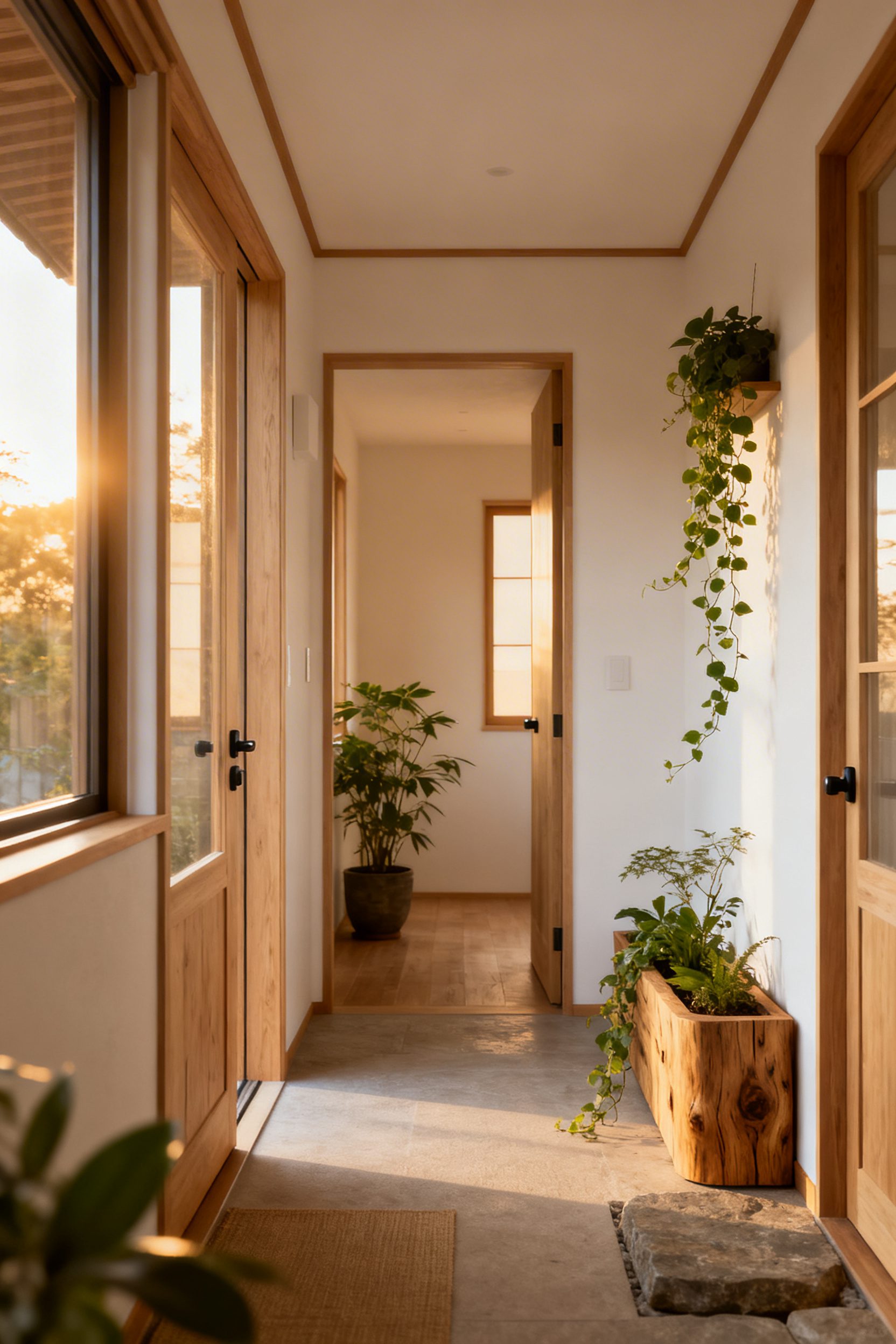
13. Japandi home design indoor greenery styling
- Effort Level: Weekend DIY.
- Estimated Budget: Under 100.
- Maintenance Level: Low (requires pruning and watering).
- Best For: Renters.
Prioritize sculptural foliage in matte vessels, think a single rubber tree or bonsai on a low oak stool, not a jungle of mismatched pots. Keep containers in unglazed clay, ash wood, or papercrete for a quiet texture that complements pale floors and linen drapery.
Group plants by light needs, then align them in a clean row or triangular cluster for balance, tallest in back, smallest front left or right. Leave negative space around each pot, about one hand width, to keep the silhouette breathable and calm.
Elevate one specimen on a 12 to 16-inch stool to vary sightlines without clutter. If you crave a wall moment, a single narrow ledge with two identical planters feels disciplined and intentional, avoiding the common mistake of overloading shelves.
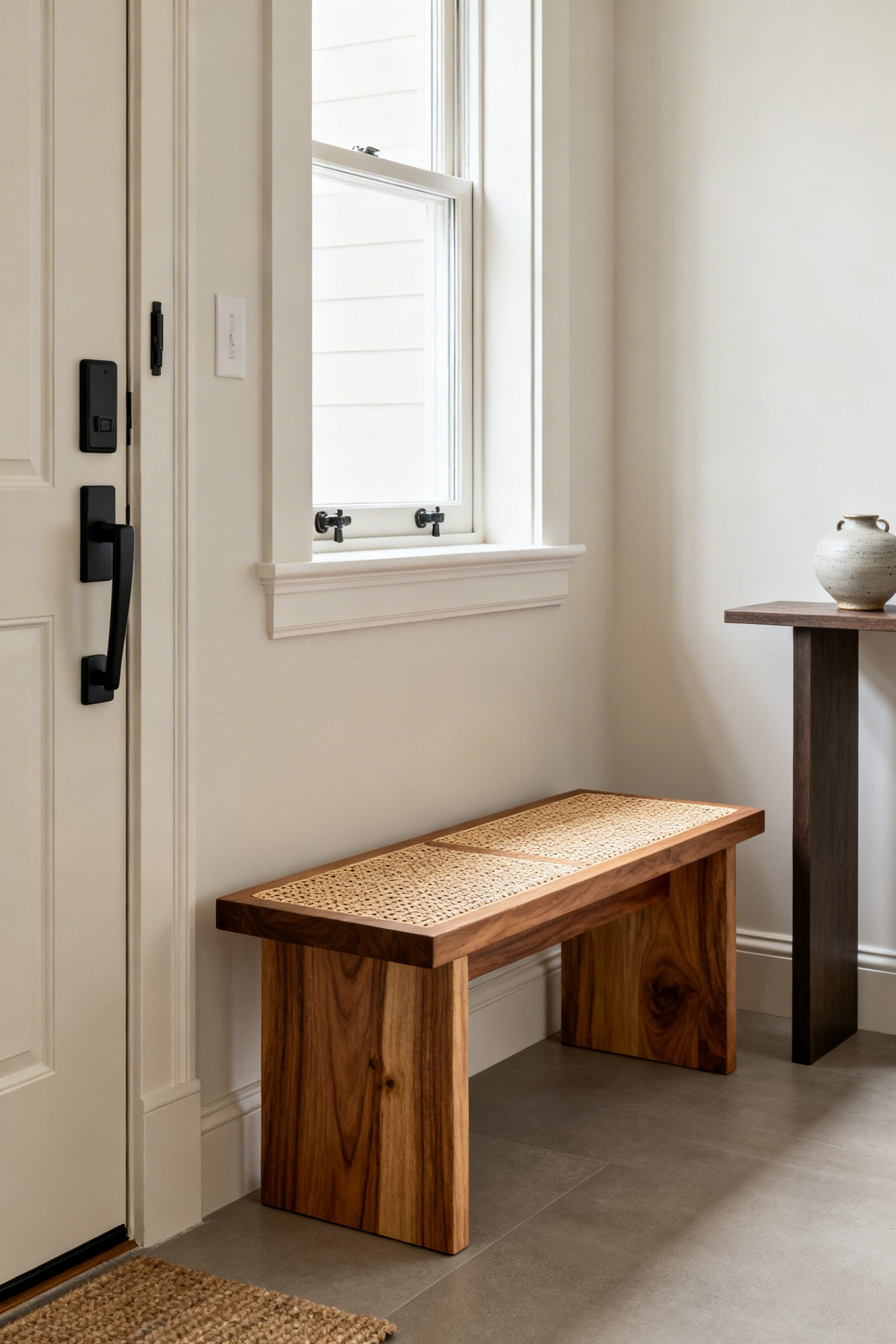
14. Japandi home design entryway bench setup
- Effort Level: Afternoon refresh.
- Estimated Budget: 100-500.
- Maintenance Level: Low (requires dusting).
- Best For: Small entryways.
Choose a solid wood bench with a slim profile, 48 to 60 inches long and 14 to 16 inches deep, finished in natural oak or blackened ash. Anchor it with a low pile runner and a single tray for keys, then add one woven basket beneath for shoes to keep lines clean.
Mount a three to five-peg rail 6 to 8 inches above the bench back for symmetry, leaving one peg empty to maintain visual quiet. A small paper lantern sconce or warm globe pendant, similar to ideas in Boho Lighting, softens the utilitarian zone while respecting Japandi restraint.
When I tried this in my own entry, I initially crammed two baskets under the bench, and it looked busy. Removing one and limiting the peg rail to three hooks made the space feel serene, and I added a single branch in a stoneware vase for seasonal lift.
A useful follow-up is 13 Earthy Bedroom Accent Ideas Using Terracotta Painted Pots.
FAQ
Opt for light to mid-tone species like oak, ash, or beech with a natural oil or soap finish for a soft sheen. If you prefer contrast, ebonized ash keeps the grain visible without the plastic look of heavy lacquer.
Two to three well-scaled plants are usually enough for a living area, one statement piece and one supporting accent. Focus on form, such as rubber tree, olive, or ZZ, in matching or tonal pots to maintain cohesion.
Yes, but keep patterns subtle and grounded, like narrow stripes or small checks in undyed or muted tones. Limit pattern to one element, for example, the runner, and keep pillows or throws solid and textured.
Choose warm white bulbs at 2700 to 3000K with dimming to soften edges in the evening. Paper, linen, or frosted glass shades diffuse light evenly and reduce harsh shadows in tight zones like the entry.