


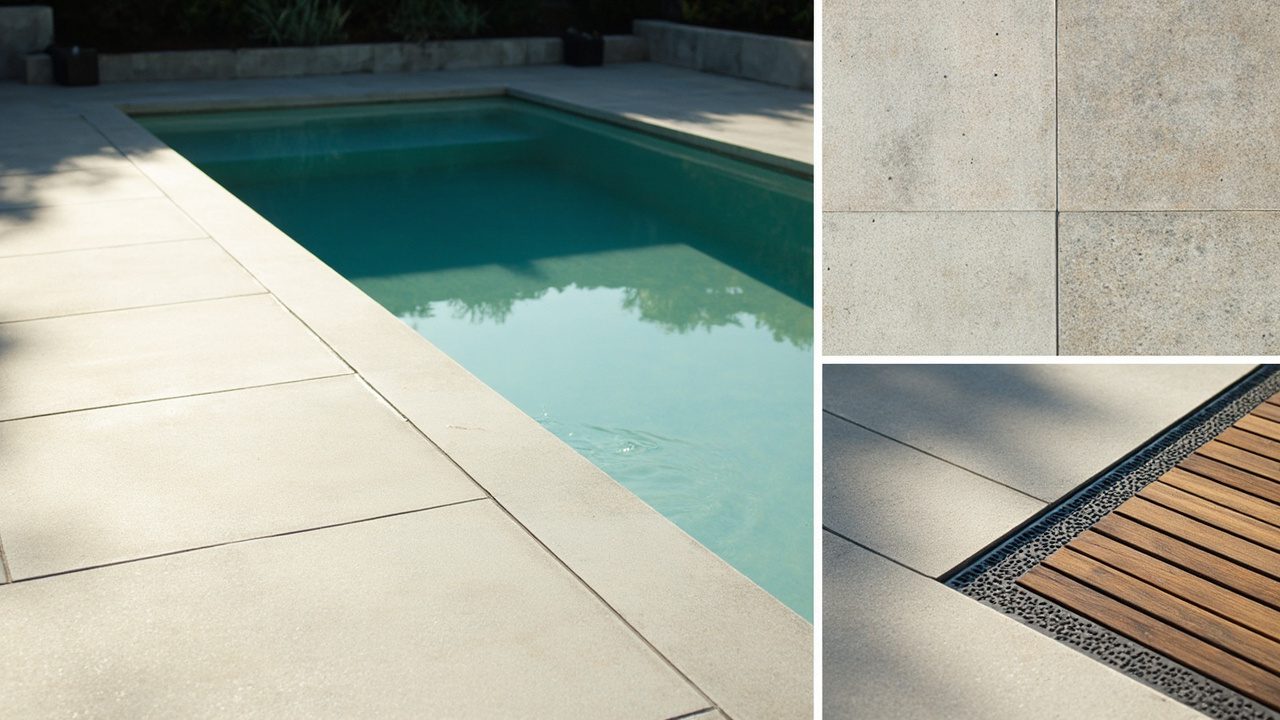
Plunge pools demand surroundings that balance scale, slip resistance, and atmosphere. Think of the area around a tiny basin as a frame rather than an afterthought; the wrong material or cluttered layout will make even a beautiful pool feel cramped.
Prioritize choices that read as both finished and purposeful, whether you’re working with porcelain tile or rough-cut travertine.
These twelve ideas move from minimalist to lush, and each entry includes a concrete decision detail you can act on, like grout width, threshold height, or how to set seating for conversation.
Use the suggestions to match material performance with the kind of use you want, from barefoot family afternoons to cocktail-hour entertaining.
- 1. Minimalist Lounging Nooks
- 2. Floating Deck Platforms
- 3. Sunken Conversation Pits
- 4. Integrated Planter Borders
- 5. Glass-Rail Balustrades
- 6. Tiled Mosaic Accents
- 7. Natural Stone Coping
- 8. Shade Sail Structures
- 9. Compact Water Features
- 10. Concrete Bench Seating
- 11. LED Perimeter Lighting
- 12. Privacy Bamboo Screens
- FAQ
- Final Thoughts
1. Minimalist Lounging Nooks
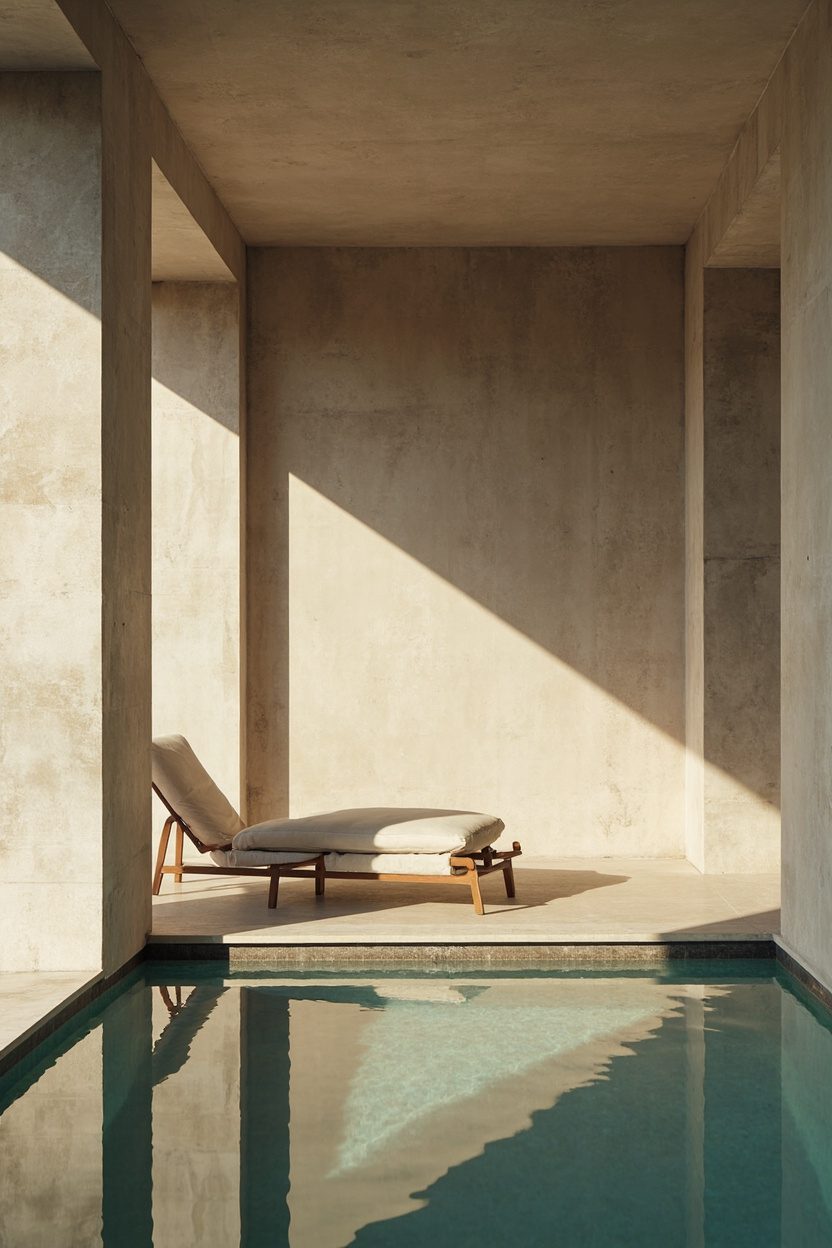
Siting slim, low-profile loungers tight to the pool edge keeps the silhouette simple and the circulation clear, which is critical for narrow yards under 15 feet wide.
Choose large-format porcelain pavers, 600 x 1200 mm or bigger, in a matte finish to reduce grout lines and visual clutter, while maintaining slip resistance when wet.
Keep color muted, warm grey or soft beige, so reflections from the water feel intentional, and add one sculptural umbrella rather than multiple smaller shades to preserve sightlines.
Avoid dense planting immediately next to loungers; leaf litter and damp soil stain pale pavers and create slip hazards, so place pots on a raised plinth instead.
Styling Blueprint
- Material: large-format porcelain, matte, rectified edges, 600 x 1200 mm minimum.
- Color direction: warm greys or sandy neutrals to complement the water tone.
- Scale: keep lounger height within 350 mm of pool coping for easy step-in access.
- Mistake to avoid: narrow grout joints less than 3 mm with textured tiles, which trap debris and look messy when wet.
2. Floating Deck Platforms
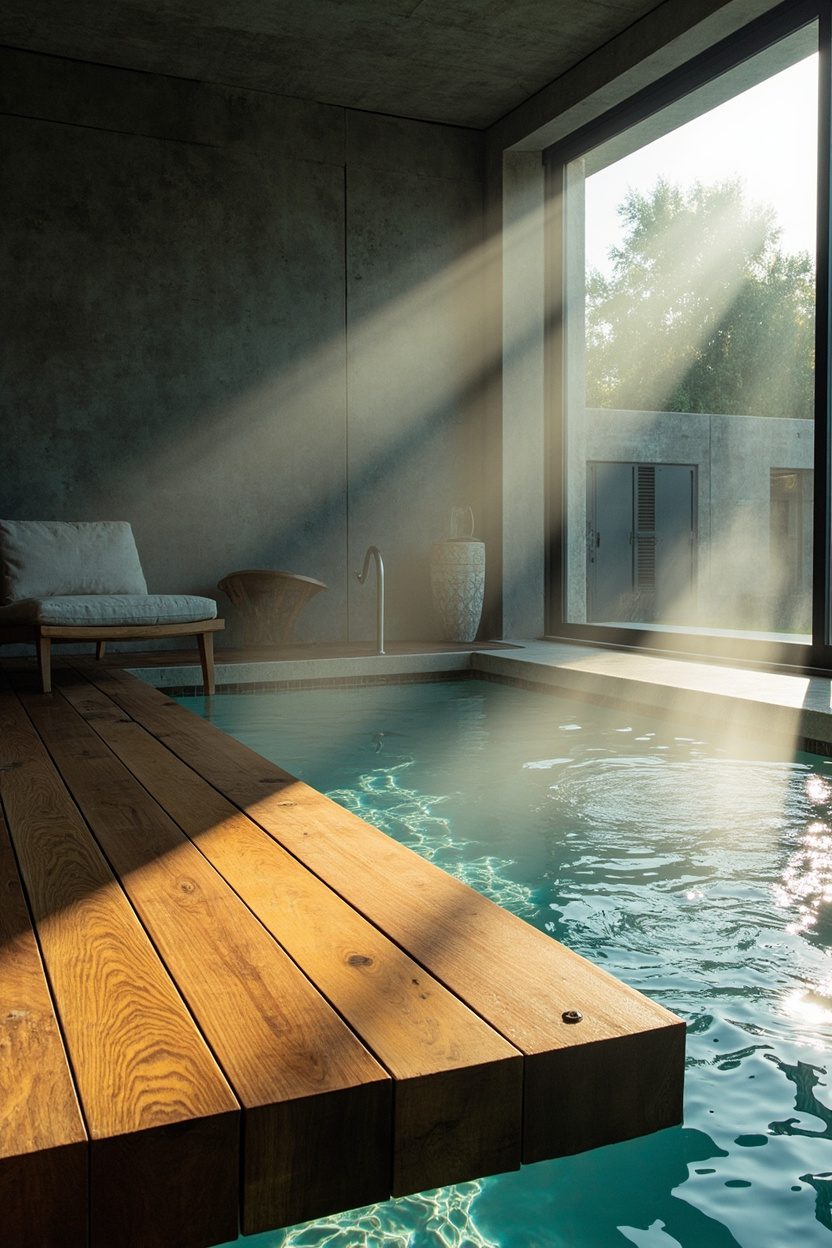
A raised timber or composite platform that appears to float above the pool’s edge creates visual drama without expanding the pool footprint, ideal for steep or sloped sites.
Opt for seasoned, dense hardwoods like Ipe or thermally modified ash for longevity, or choose capped composite decking if maintenance needs to be minimal and budget is mid-range.
Set the platform with a 10–20 mm reveal above the coping to allow drainage, and ensure joists are stainless steel or galvanized, particularly where saltwater pools are involved.
Keep lighting recessed into the platform perimeter, avoiding pole lamps that disrupt the floating illusion and clutter the compact surround.
Essential Elements
- Material choice: Ipe or thermally modified timber for high durability, capped composite for low upkeep.
- Height detail: 10–20 mm reveal over coping for drainage and a floating look.
- Fasteners: stainless steel or hot-dipped galvanized for longevity near pools.
- Budget tier: hardwood is high, composite is mid to low maintenance cost.
3. Sunken Conversation Pits
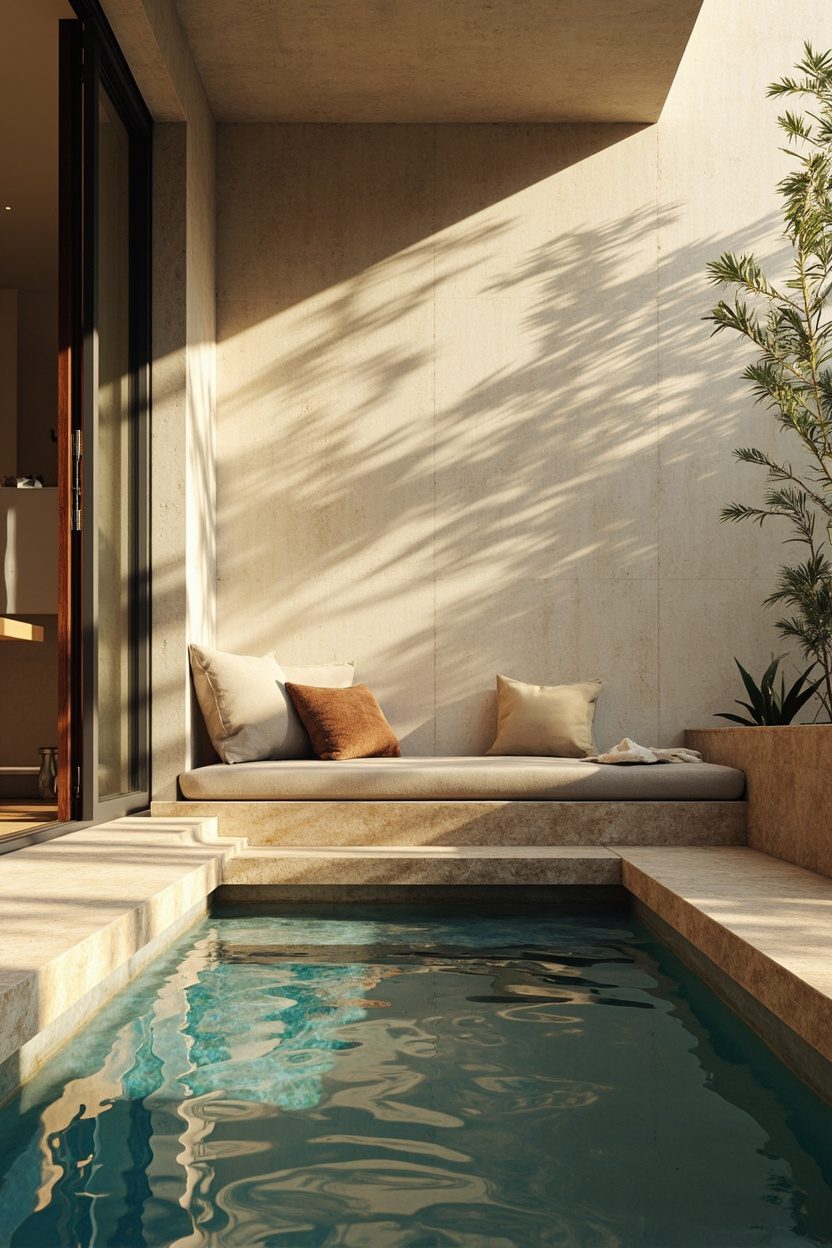
Dropping a seating well into the surround converts a tiny plot into a sociable zone, and gives guests a private, wind-sheltered place to sit without increasing pool scale.
Build the pit with natural stone risers, like honed limestone or travertine, which age well and provide a tactile counterpoint to water, but specify honed or brushed finishes to prevent slipperiness.
Position bench backs roughly 400–450 mm above seat height to support leaning, and incorporate waterproof cushions with quick-dry foam to keep maintenance manageable after rainy spells.
Integrate a gradual step or two rather than a single deep drop, for safer access for children and less puddling after rain.
What to Focus On?
- Material: honed limestone or travertine, textured finish to reduce slip risk.
- Seating scale: bench back 400–450 mm above seat, seat depth 450–550 mm.
- Access: include 1–2 shallow steps to the pit for safety and drainage.
- Detail: Use outdoor quick-dry foam cushions and removable covers for easy cleaning.
4. Integrated Planter Borders
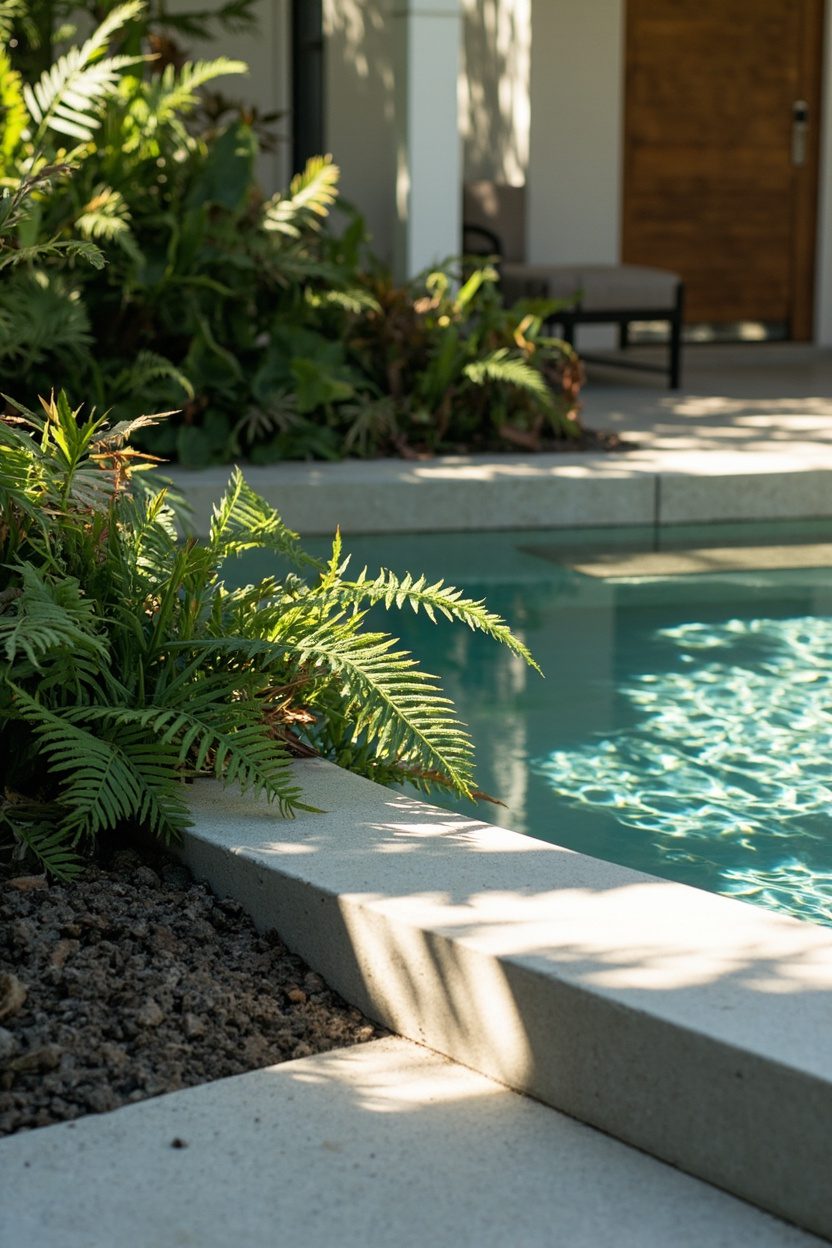
Sculpted planter borders turn the edge of a plunge pool into a living, practical frame, softening the hard line of water with foliage, without losing usable deck area.
Choose drought-tolerant Mediterranean species, like lavender or rosemary, in linear planters to resist splashing and minimize maintenance, keeping soil depth around 30–40 cm for root health.
Set planters flush with the deck in weatherproof concrete or Corten steel, the latter providing a warm, rusted patina that coordinates with natural stone palettes.
Avoid tall, leaf-shedding trees in the border; they create debris and clog filters. Keep plants low, fragrant, and spill-resistant for clean water and reduced upkeep.
Styling Blueprint
- Material: Corten steel or sealed concrete planters for durability and visual weight, budget mid-range to high-end depending on finish.
- Plant selection: Lavender, ornamental grasses, rosemary, and succulents, chosen for low litter and salt tolerance.
- Scale: Planter depth 30–40 cm, width 20–40 cm, run continuous along the pool edge for a cohesive silhouette.
- Practical detail: Install a narrow root barrier and a discrete drip irrigation line to reduce maintenance and runoff.
5. Glass-Rail Balustrades
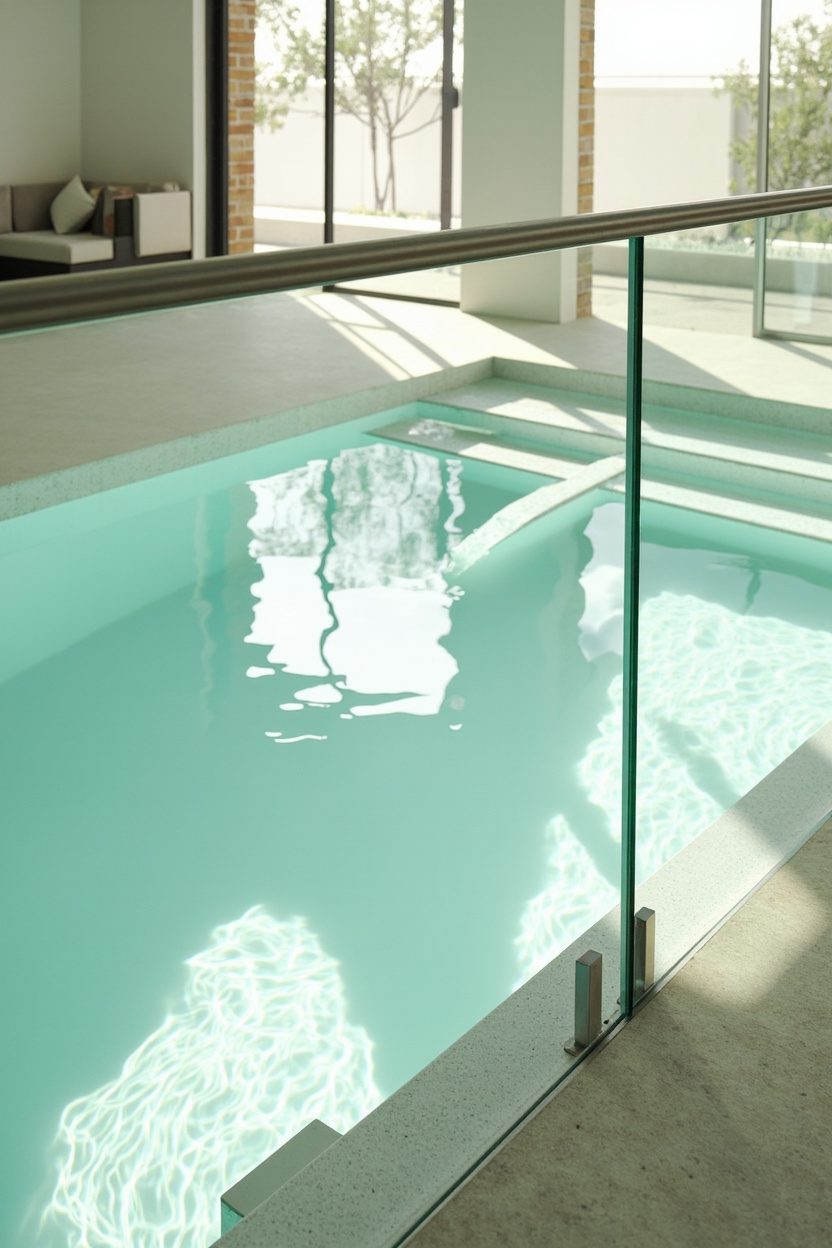
Glass balustrades keep sightlines open, making a small plunge pool feel larger while providing a modern safety barrier that doesn’t block sunlight or views.
Opt for 12 mm laminated toughened glass panels with minimal stainless steel spigots; the combination gives structural reliability and a refined, nearly invisible edge.
Use clear silicone seals and polished stainless fixings near pool water to resist corrosion, and position rails at least 1.1 m high for compliance with most safety codes.
Avoid frameless systems when privacy is needed; pair glass with etched panels or a low hedge if you need screening, but keep corner posts unobtrusive to maintain the clean aesthetic.
What to Focus On?
- Safety spec: 12 mm laminated toughened glass for resilience, with stainless steel fittings rated for marine environments.
- Finish: Polished stainless or powder-coated aluminum spigots to prevent staining from pool chemicals.
- Visibility: Choose clear glass to expand sightlines, or frosted panels for privacy where required.
- Maintenance: Access for periodic cleaning and check seals yearly to avoid calcium build-up and leaks.
6. Tiled Mosaic Accents
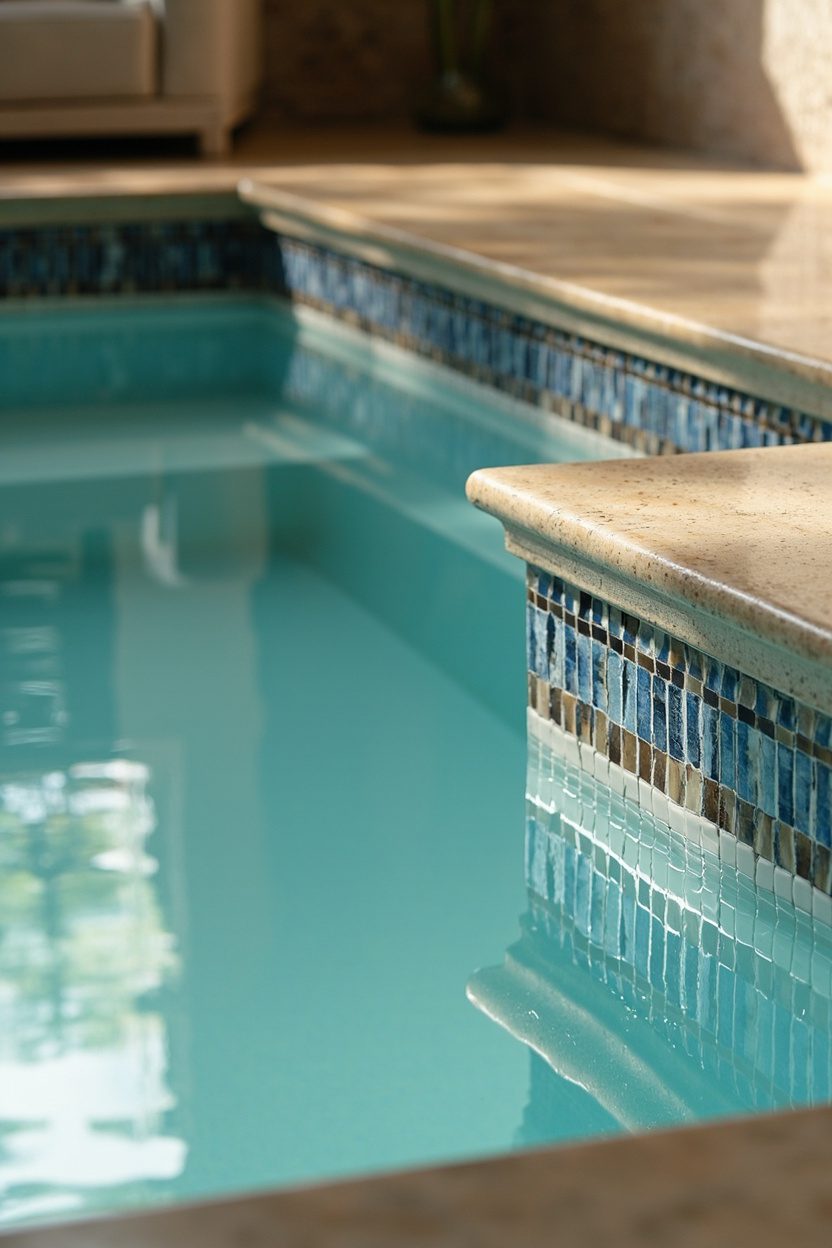
Tiled mosaics at the plunge pool edge create a crafted, jewel-like detail that reads as art from the terrace, ideal for injecting color and personality.
Select porcelain or glass mosaic tiles with a pH-resistant glaze, and set them on a reinforced substrate to prevent cracking from freeze-thaw or movement.
Design mosaics as a continuous waterline band, a focal step, or as in-deck inserts, keeping grout joints tight and using epoxy grout to resist staining and chlorine damage.
Avoid overly busy patterns if your surrounding palette is also active; instead, pick one accent color and tie it to cushions or an umbrella for cohesion.
Essential Elements
- Tile choice: Glass or porcelain mosaics with a glazed finish, rated for pool use and UV stable.
- Installation: Reinforced cement board substrate and epoxy grout to minimize water ingress and staining.
- Scale: 10–20 mm tesserae for curved edges, larger tiles for linear bands, maintain consistent grout width.
- Budget note: Glass mosaics sit in the medium to high price tier, but small accent bands reduce cost while keeping impact.
7. Natural Stone Coping
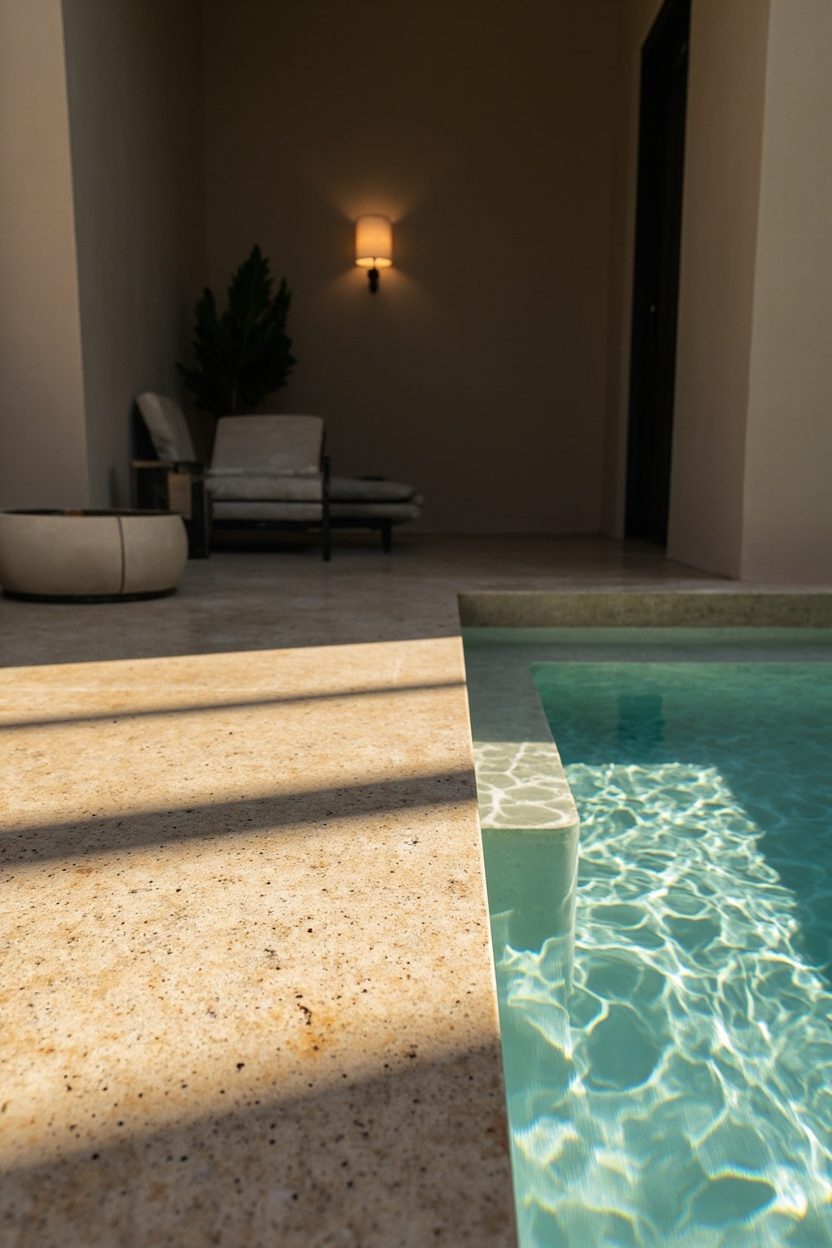
Natural stone coping gives a plunge pool instant credibility, with materials like travertine, limestone, or bluestone matching both modern and rustic homes.
Choose a honed finish for slip resistance and a warmer tone to hide watermarks, key when the pool sits near deciduous trees.
Keep coping widths modest, 4 to 8 inches, to preserve the compact feel of a plunge pool and avoid swallowing the surrounding deck visually.
Budget-wise, slate and bluestone sit in a mid-to-high range, while local limestone can be a cost-saving, durable alternative if sourced regionally.
Essential Elements
- Select honed or brushed finishes for traction and maintenance simplicity.
<li.anchor 4="" 8="" coping="" to="" a="" compact="" perimeter,="" inches="" wide,="" keep="" scale="" appropriate.- Seal porous stones annually, especially in freeze-thaw climates, to avoid staining.
8. Shade Sail Structures
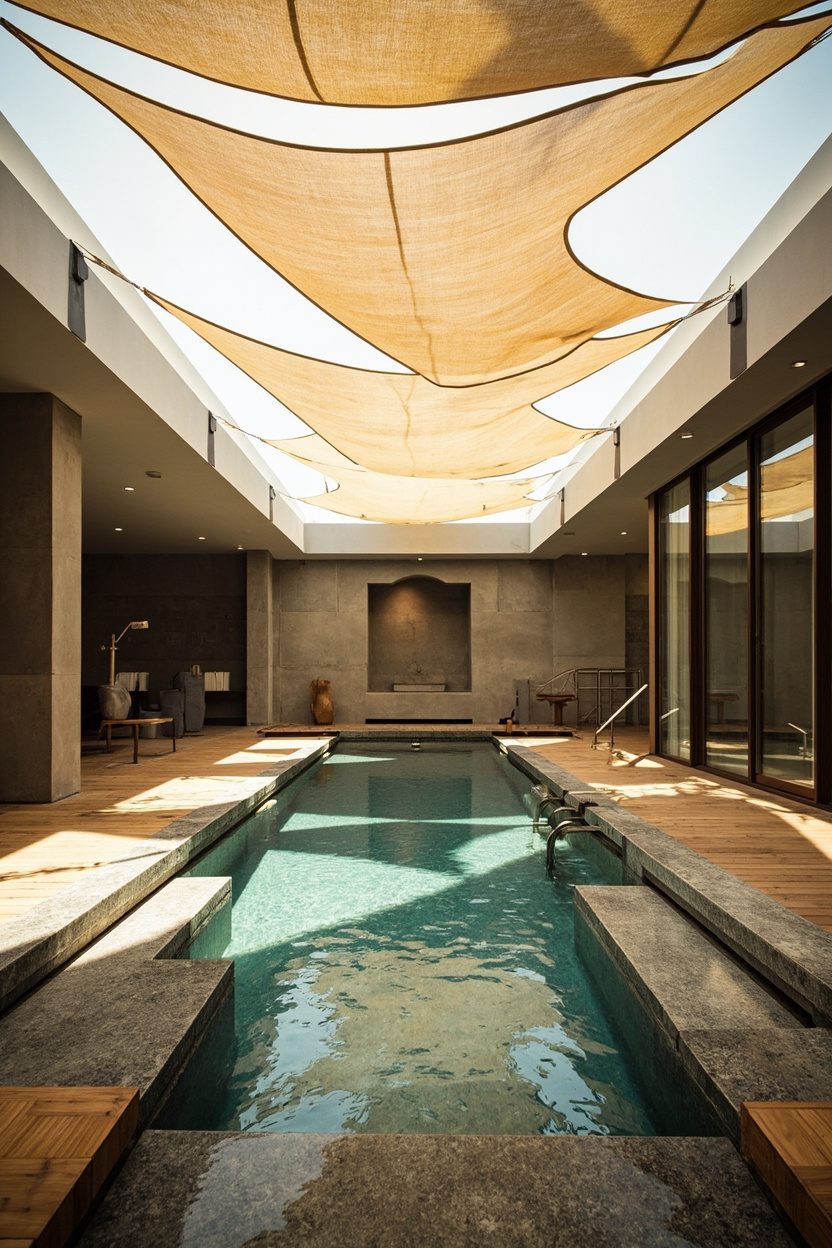
Shade sails are a sculptural, affordable solution when space is tight, and you need sun control without a heavy frame.
Opt for UV-stable, breathable fabric in muted neutrals to align with the minimalist trend, and avoid bold colors that date quickly.
Anchor points should be placed with future furniture layout in mind, and stainless-steel hardware keeps tension clean and corrosion-free near chlorinated water.
A well-tensioned sail that sits 8 to 12 feet above the pool prevents dripping and improves airflow, which keeps the pool area comfortable in summer.
Styling Blueprint
- Choose a triangle or asymmetrical sail for visual interest without overpowering a small yard.
- Place posts at least 6 feet outside the pool edge to minimize splash contact with fabric.
- Use stainless turnbuckles and pad eyes for secure, low-maintenance anchors.
- Select light-colored fabric to reflect heat and reduce UV degradation over time.
9. Compact Water Features
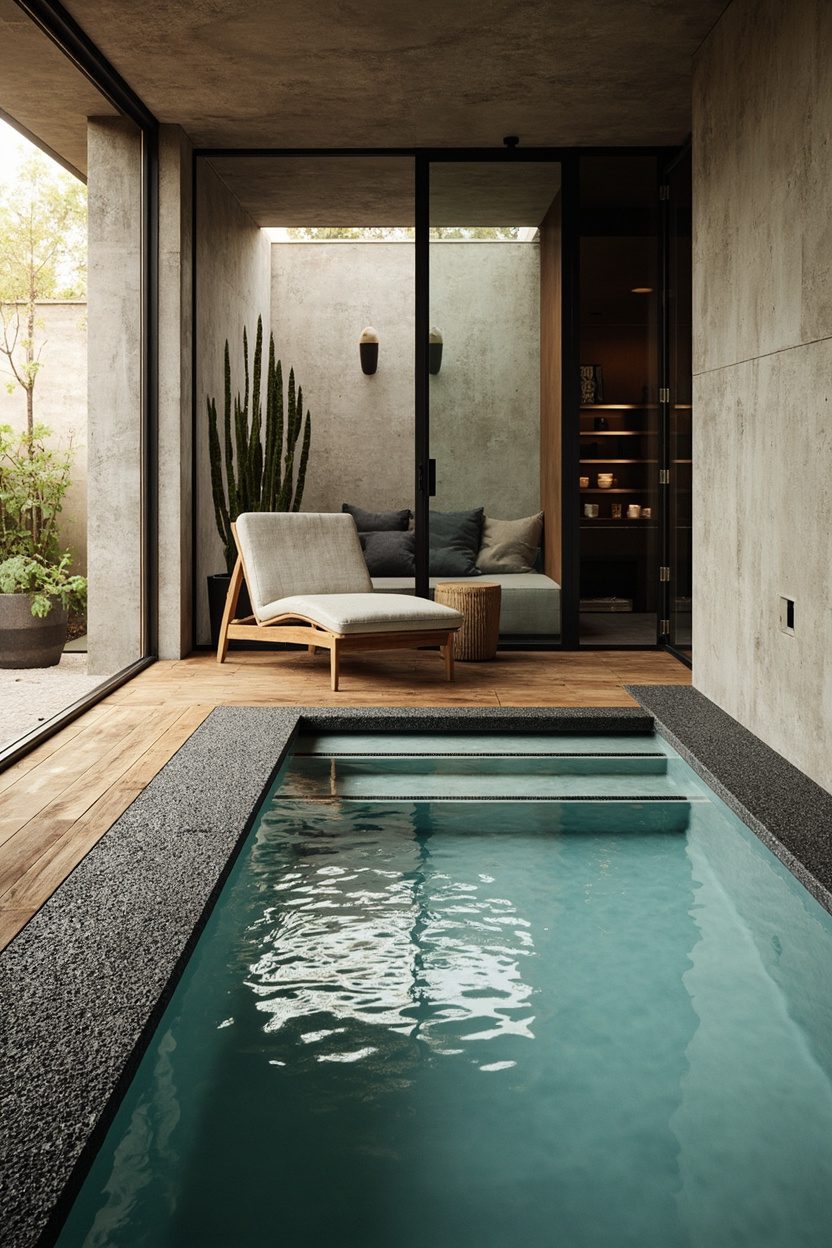
Small-scale water features, like a narrow spillway or integrated bench bubblers, add sound and movement without eating into the deck area.
Choose a linear spill that runs the length of a short wall, sized about 2 to 6 inches wide, so it reads as a refined detail rather than a separate installation.
Material choices matter; pick matching natural stone or a dark porcelain tile for the face to control splash visibility and blend with coping.
Mechanically, keep pumps right-sized, quieter, and equipped with variable speed controls, to save energy and avoid overpowering a small outdoor room.
What to Focus On?
- Scale the feature to pool length; a 6-foot spill suits a 10-foot plunge, for proportionate effect.
- Use dark finishes to minimize visible water lines and calcium buildup on the feature face.
- Install a separate small pump with a timer and variable speed for gentle, adjustable flow.
- Position the plumbing access discreetly, behind a removable stone panel for serviceability.
10. Concrete Bench Seating
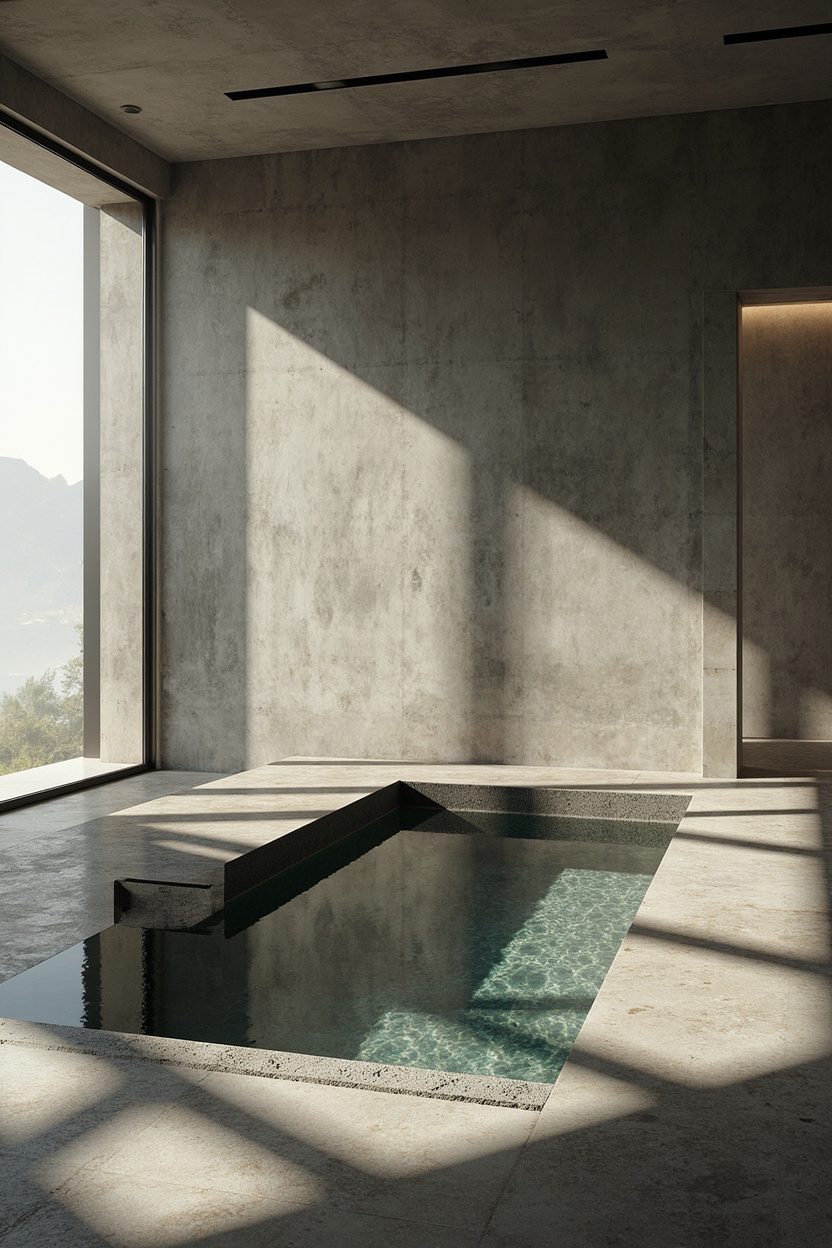
Concrete benches knit seating and circulation into the plunge pool surround, giving the terrace a built-in, low-maintenance anchor.
Use off-form or board-formed concrete for tactile grain, or smooth-blended mixes for a modern, Mediterranean vibe.
Scale the bench to 16–18 inches high for comfortable lounging, and leave 18–24 inches of clearance in front to avoid a cramped swim path.
Specify a sealed, non-slip finish and a light buff tone to keep the surface cool underfoot, or add integrated teak slats for a warmer touch.
Styling Blueprint
- Finish: sealed board-formed concrete for texture, or microtopping for a smooth look.
- Dimension: 16–18 inches seat height, 18–24 inches front clearance.
- Comfort: add removable cushions in quick-dry fabrics for budget flexibility.
- Placement: run along the long edge to maintain circulation and sightlines.
11. LED Perimeter Lighting
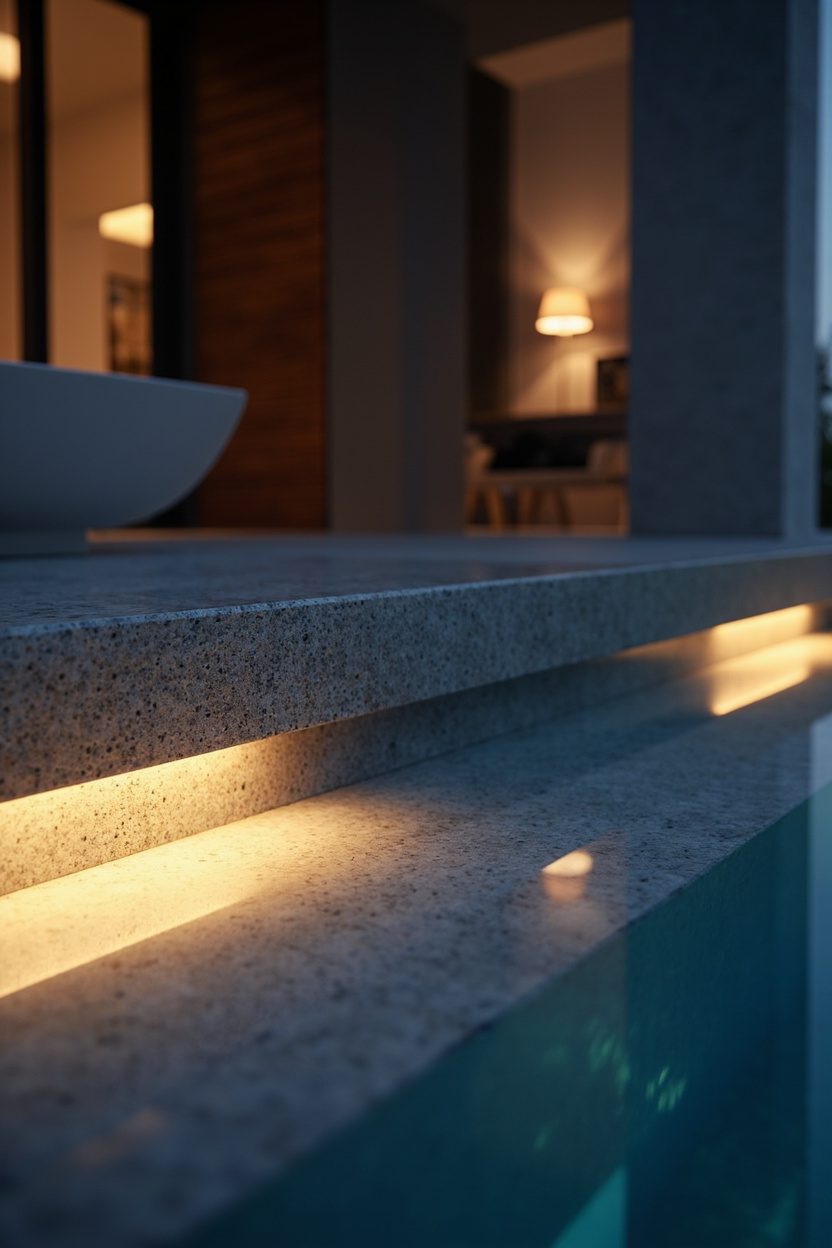
LED perimeter lighting reads like jewelry around a plunge pool, improving safety and stretching usable hours into the evening.
Choose low-voltage, warm white LEDs for flattering color rendition, or tunable fixtures if you want seasonal ambiance changes.
Embed linear LEDs into a coping or a slim recessed channel to avoid glare, and pair with a dimming control for graduated brightness.
Prioritize IP68-rated fixtures for wet-area resilience, and separate zones so bench, steps, and water each have tailored intensity.
Essential Elements
- Color temp: 2700–3000K for warm, skin-flattering light.
- Mounting: recessed channels in coping to hide fixtures and reduce glare.
- Controls: low-voltage, dimmable drivers with zone switching for flexibility.
- Durability: IP68 rating and marine-grade connectors for longevity.
12. Privacy Bamboo Screens
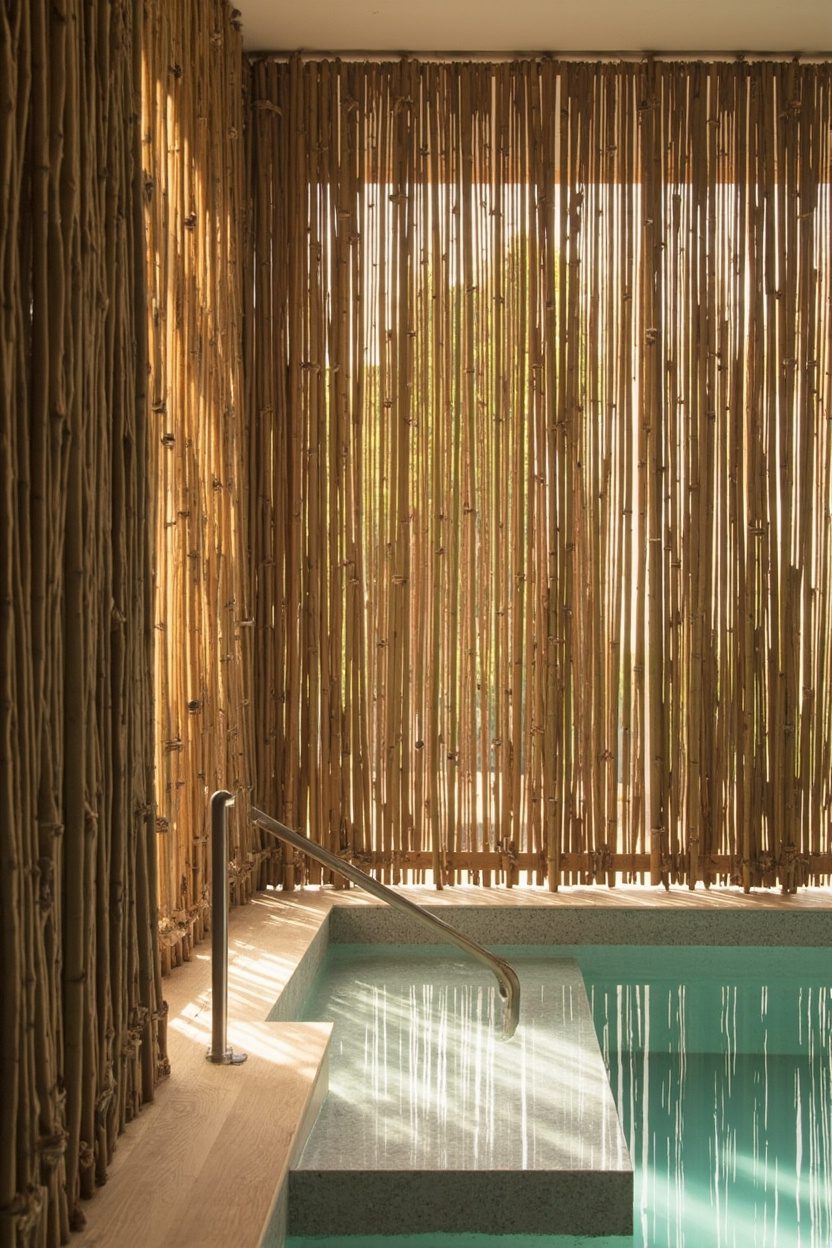
Bamboo screens lend instant vertical texture and a tropical mood to tight plunge pool yards, while screening neighbors with a natural aesthetic.
Select mature, kiln-dried bamboo poles or woven panels, and mount them on a stainless steel or powder-coated aluminum frame to prevent rot.
Leave a 1–2 inch gap at the bottom for drainage and airflow, and plant a narrow dripline of shade-tolerant ferns to soften the base.
For higher wind zones, choose thick poles, cross-braced framing, or staggered panels to reduce flex and increase longevity.
What to Focus On?
- Material: kiln-dried bamboo on metal framing for weather resistance.
- Height: 6–8 feet for effective screening without overpowering the yard.
- Base detail: 1–2 inch gap and gravel drainage to prevent rot.
- Windproofing: cross-braces or staggered panels in exposed locations.
You can pair this with ideas from 15 Low Deck Lighting Ideas from String Lights to Lanterns.
FAQ
A textured natural stone like honed travertine, flamed granite, or calibrated limestone offers grip and a refined look, while textured porcelain tiles provide consistent slip ratings. Always choose materials specified with a wet coefficient of friction suited to pool areas, and add a clear, non-slip sealer where appropriate.
Low-voltage LED systems appear simple, but wet-area electrical work and proper grounding require a licensed electrician in many jurisdictions. Hire a pro to size drivers, meet local codes, and ensure fixtures are correctly IP-rated and installed for long-term reliability.
Treat kiln-dried bamboo with a penetrating UV-stable sealer on installation, and inspect annually for fastener corrosion or splits. Good airflow, a gravel base, and metal framing reduce moisture-related decay, extending the screens’ service life significantly.
Cast-in-place concrete benches can be moderate to costly, depending on formwork complexity and finishes, but they offer durability and low maintenance, which often offsets upfront cost. For a budget alternative, consider prefabricated concrete or concrete-look porcelain benches paired with removable cushions.
Final Thoughts
These final three ideas are concrete benches for structure, LED perimeter lighting for evening use, and bamboo screens for privacy, balancing durability, comfort, and style.
Prioritize material decisions, technical grades like IP and slip ratings, and site-specific details such as wind exposure to ensure a plunge pool surround that performs as well as it looks.
For broader renovation strategies, consider integrating these features into a comprehensive Home Renovations plan to capture value and cohesion.