


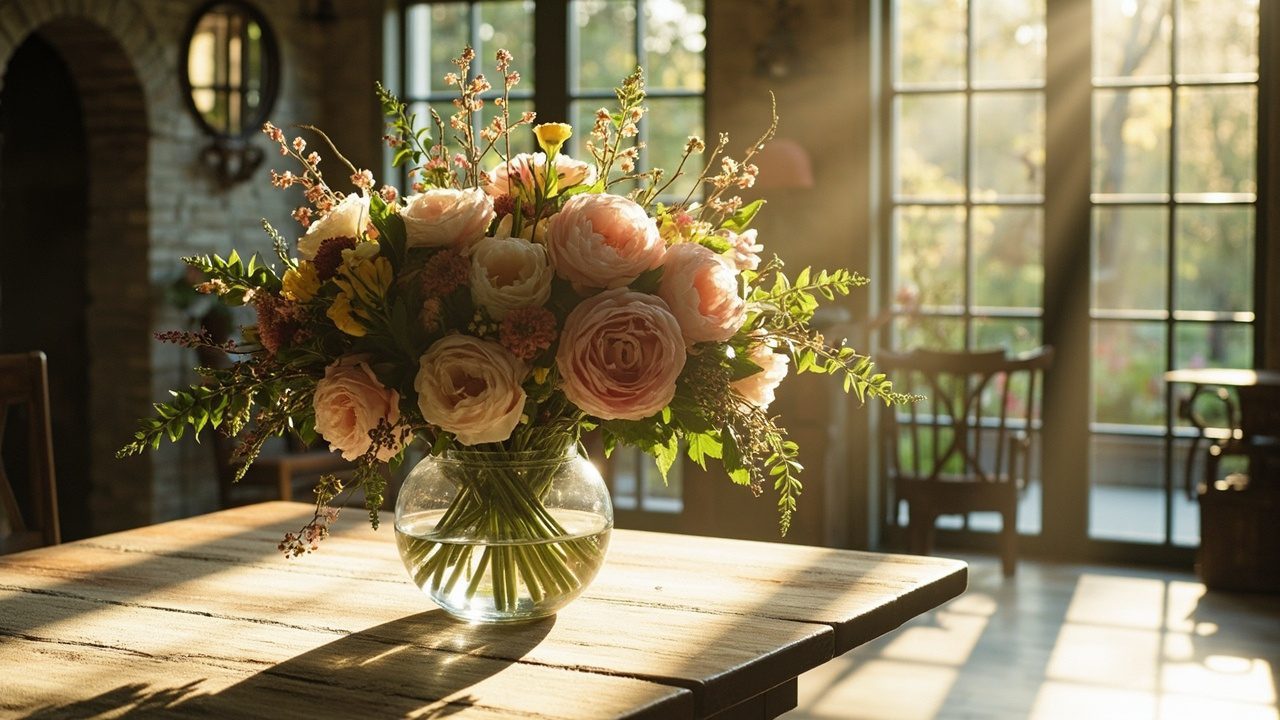
Spring brings a chance to rework floral styling for everyday life, focus, and interiors, not just holiday centerpieces.
These ideas favor longevity, texture, and scale, so arrangements feel intentional in living rooms, kitchens, and entryways.
- 1. Textural Hybrids: Mix Dried and Fresh
- 2. Sculptural Bouquets for Modern Rooms
- 3. Farm-to-Vase: Local Spring Picks
- 4. Layering Colors for Fresh Impact
- 5. Tiny Buds, Big Visual Interest
- 6. Sustainable Choices for Floral Design
- 7. Long-Lasting Spring Arrangement Tips
- 8. Combining Classic and Unexpected Blooms
- 9. Vase Styling for Seasonal Statements
- FAQ
1. Textural Hybrids: Mix Dried and Fresh
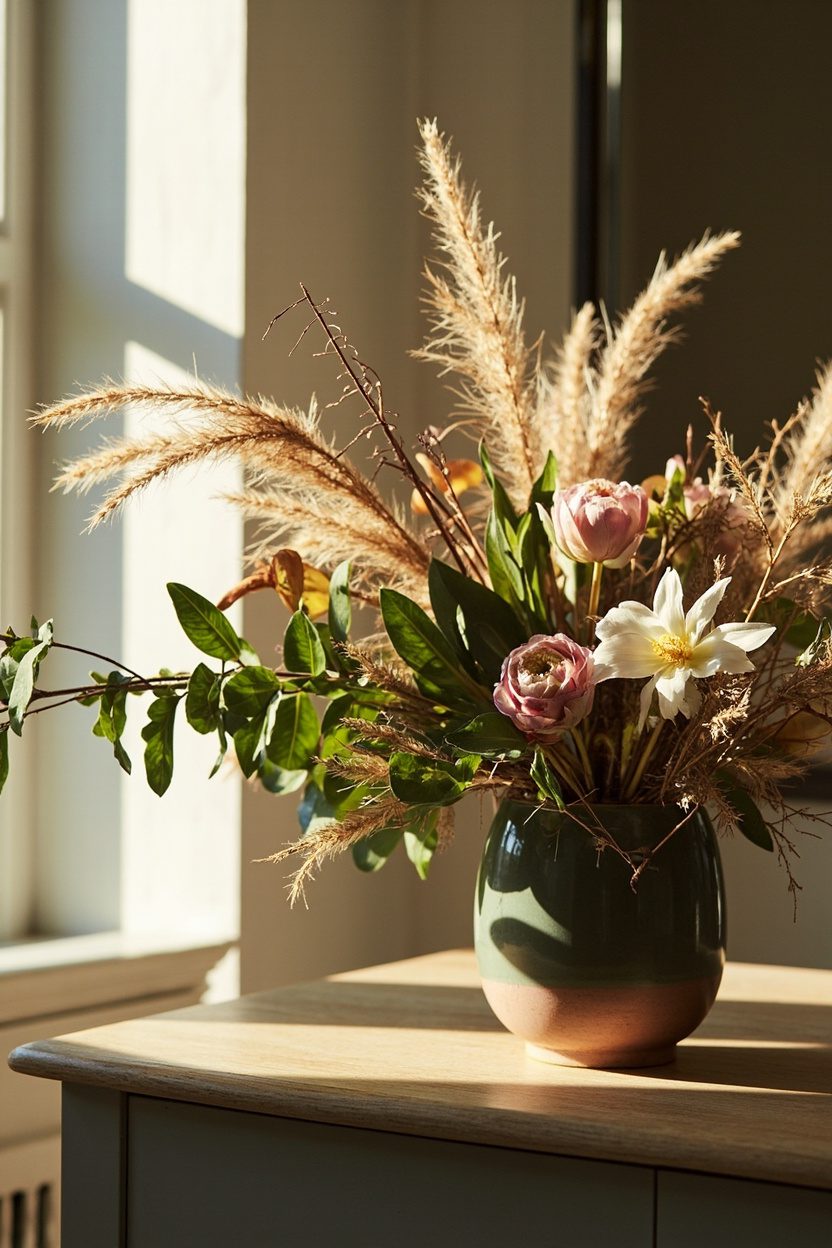
Combine dried elements like pampas grass or preserved palms with a handful of fresh tulips or ranunculus to stretch floral life and add sculptural contrast. Use a 2:1 ratio of preserved to fresh material, placing taller dried stems at the back for support, so the fresh blooms sit in the visual foreground without being overwhelmed.
Choose vessels with a narrow neck and weight at the base to anchor taller dried pieces, and trim fresh stems slightly longer than usual so water sits deeper, extending vase life.
Avoid over-clustering fresh flowers next to dried pieces that shed, a common mistake that accelerates decay and muddies texture.
2. Sculptural Bouquets for Modern Rooms
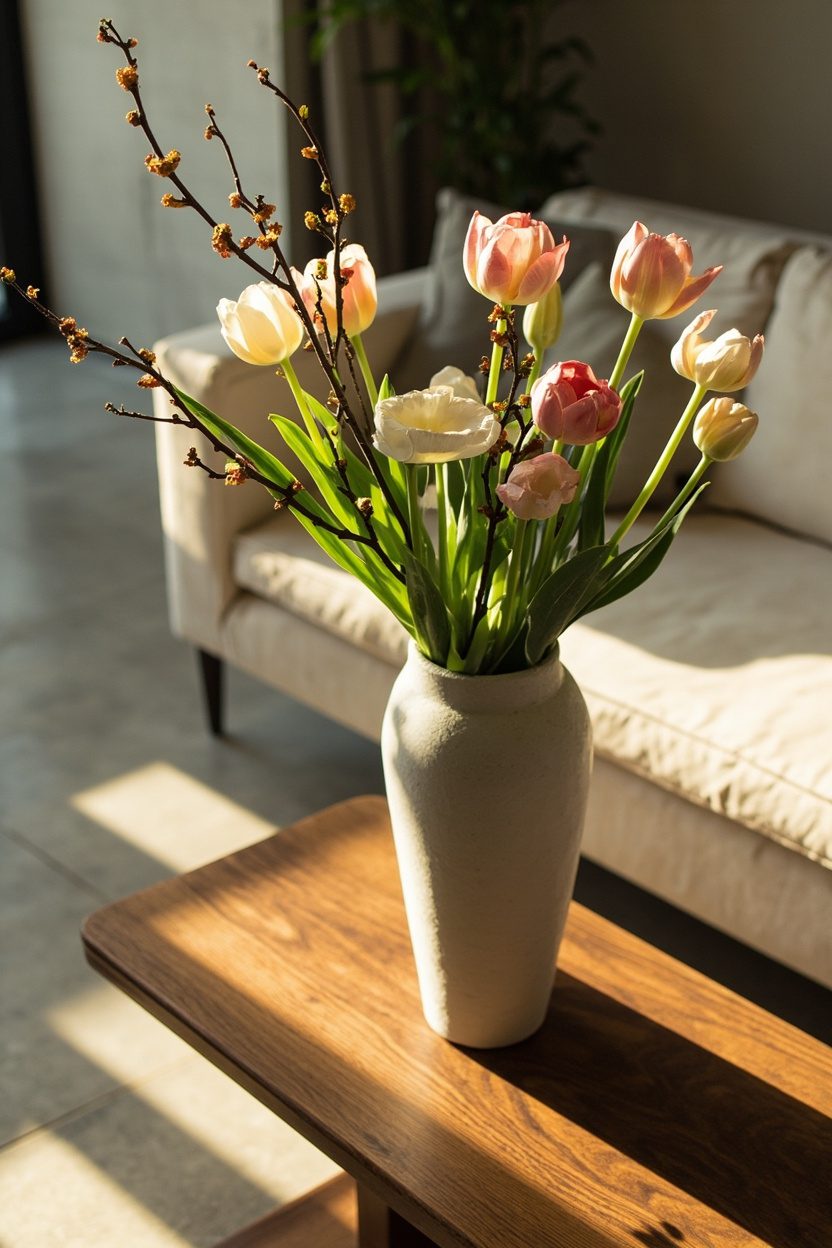
Aim for architectural balance by combining three to five focal stems, such as calla lilies, anthurium, or branches of cherry blossom, with one or two structural accents like eucalyptus or bear grass.
Keep proportions clean, use negative space deliberately, and mount the arrangement off-center in a low-profile, matte container to suit minimalist interiors.
For true sculptural effect, wire a couple of stems to hold an intentional curve, and keep the overall height to about one-third taller than nearby furniture to prevent visual competition.
If the budget is tight, concentrate on shape over quantity, using fewer premium stems spaced thoughtfully rather than crowded bunches.
3. Farm-to-Vase: Local Spring Picks
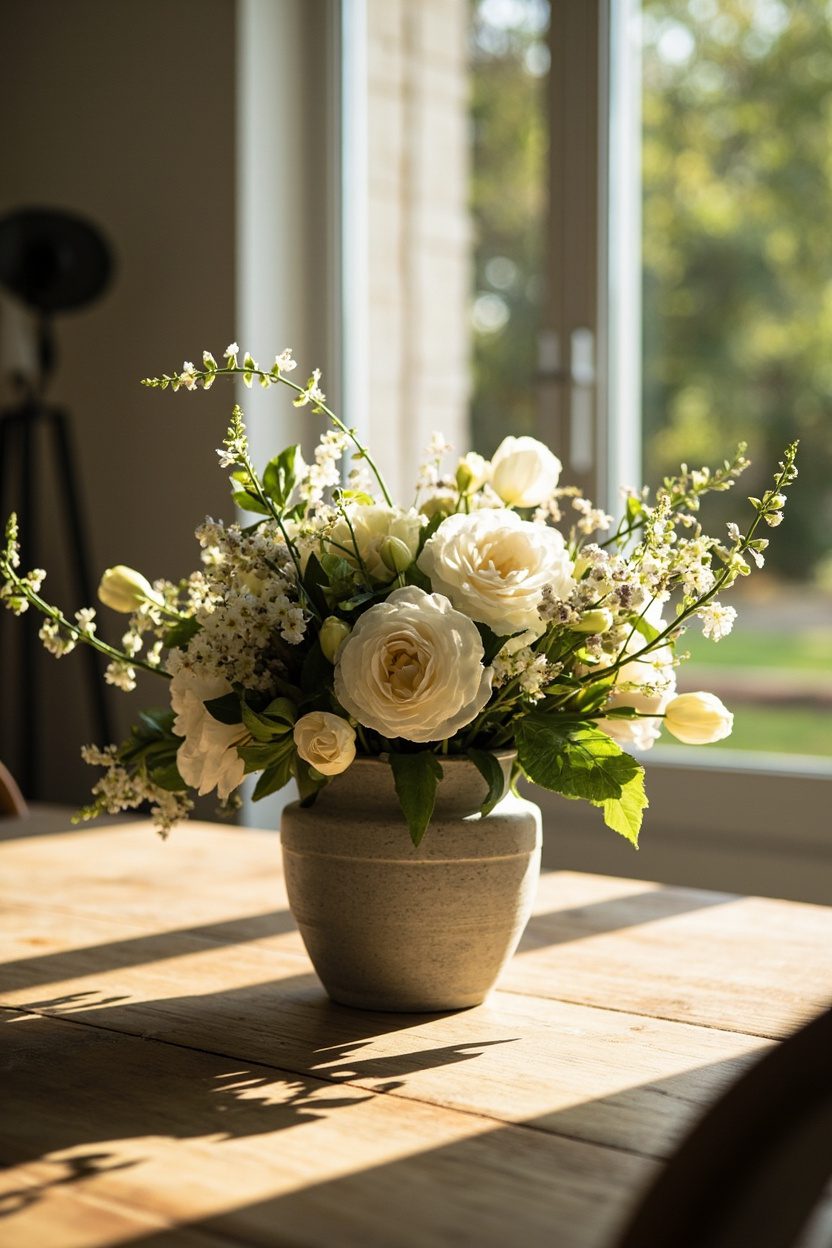
Select locally grown spring varieties such as peonies, sweet peas, and snapdragons for peak scent and color; they arrive fresher and last longer than shipped blooms.
Ask your farmer or market vendor for stems harvested within 24 to 48 hours, and condition them at home in cool water with a clean cut, removing any foliage that will sit below the water line.
Design with seasonality in mind, grouping like colors and repeating one foliage type to create cohesion, and keep stems proportionate to the vase mouth, no wider than the vase opening to ensure stability.
For sourcing guidance and emerging seasonal mixes, regional trend roundups are useful. See a briefing on evolving floral textures and hybrids.
4. Layering Colors for Fresh Impact
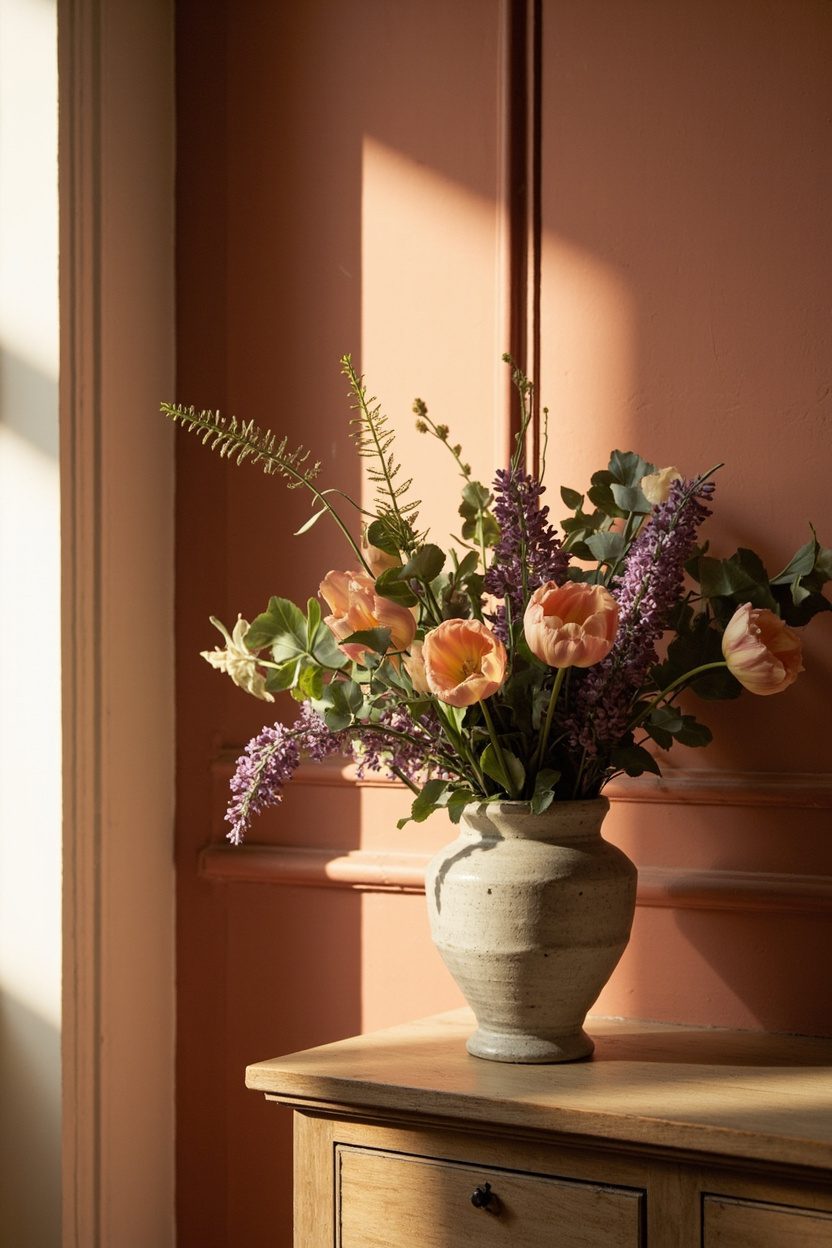
Start with a dominant hue, add a secondary color at roughly two-thirds scale, then a highlight color in small doses to create depth and readability, for example, coral peonies, dusty rose ranunculus, and a lemony spray of forsythia.
Place the strongest color at eye level, keep the secondary blooms slightly shorter by 1–2 inches, and tuck the highlights into clusters of three to five to read from a distance.
Avoid matching stems exactly; instead, mix foliage textures such as matte eucalyptus with glossy pittosporum to separate bands of color. This prevents a flat, candy-colored look and gives the arrangement a professional, layered finish.
5. Tiny Buds, Big Visual Interest
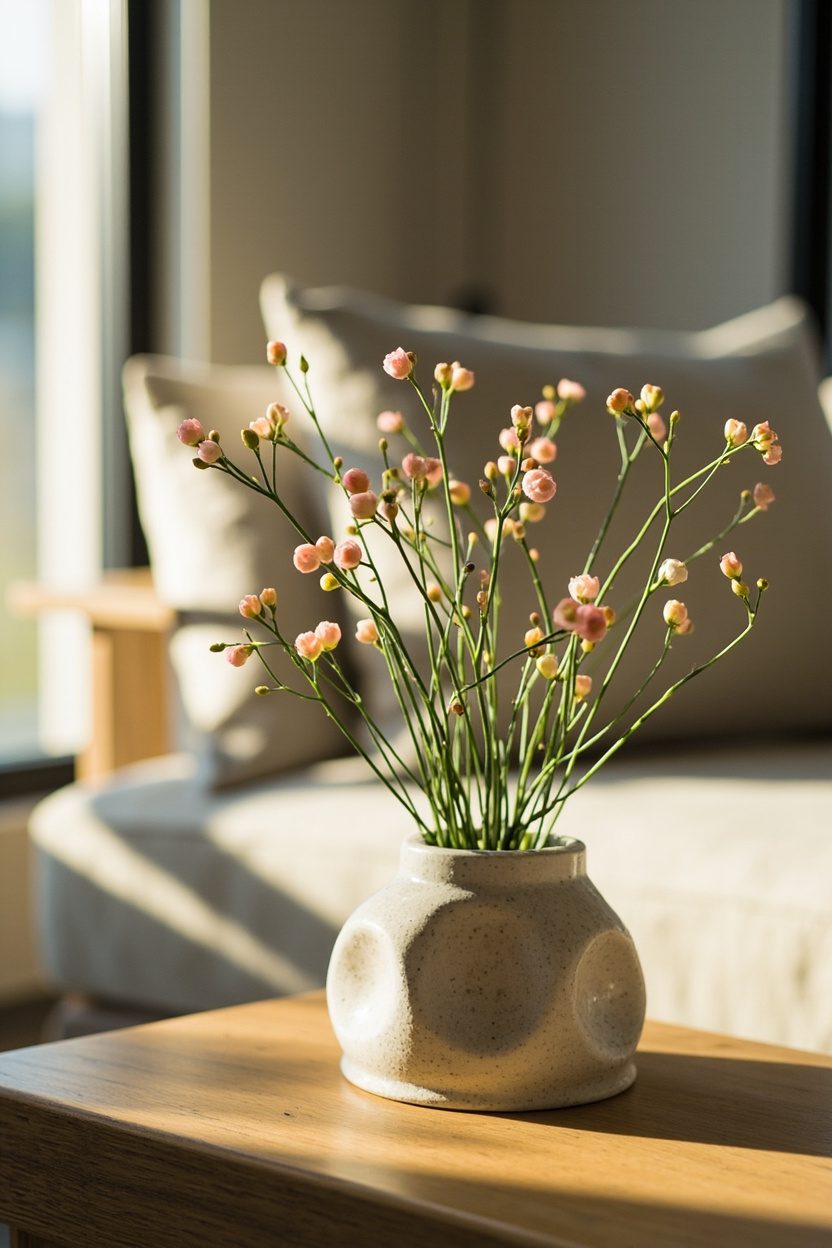
Use small-flowered species like chamomile, mini carnations, or waxflower to fill negative space and create a halo effect around larger focal blooms. Plant stems at alternating heights of 1/2 inch to 2 inches apart to make the group read as a single mass.
Group tiny buds in odd-numbered clusters and repeat that cluster at least three times around the vase to establish rhythm without clutter.
A common mistake is over-wiring or over-trimming these delicate stems; instead, leave slightly longer stems and use floral foam or a narrow-neck vase to control placement. This keeps the tiny flowers looking fresh while stretching your budget since these stems are highly cost-effective.
6. Sustainable Choices for Floral Design
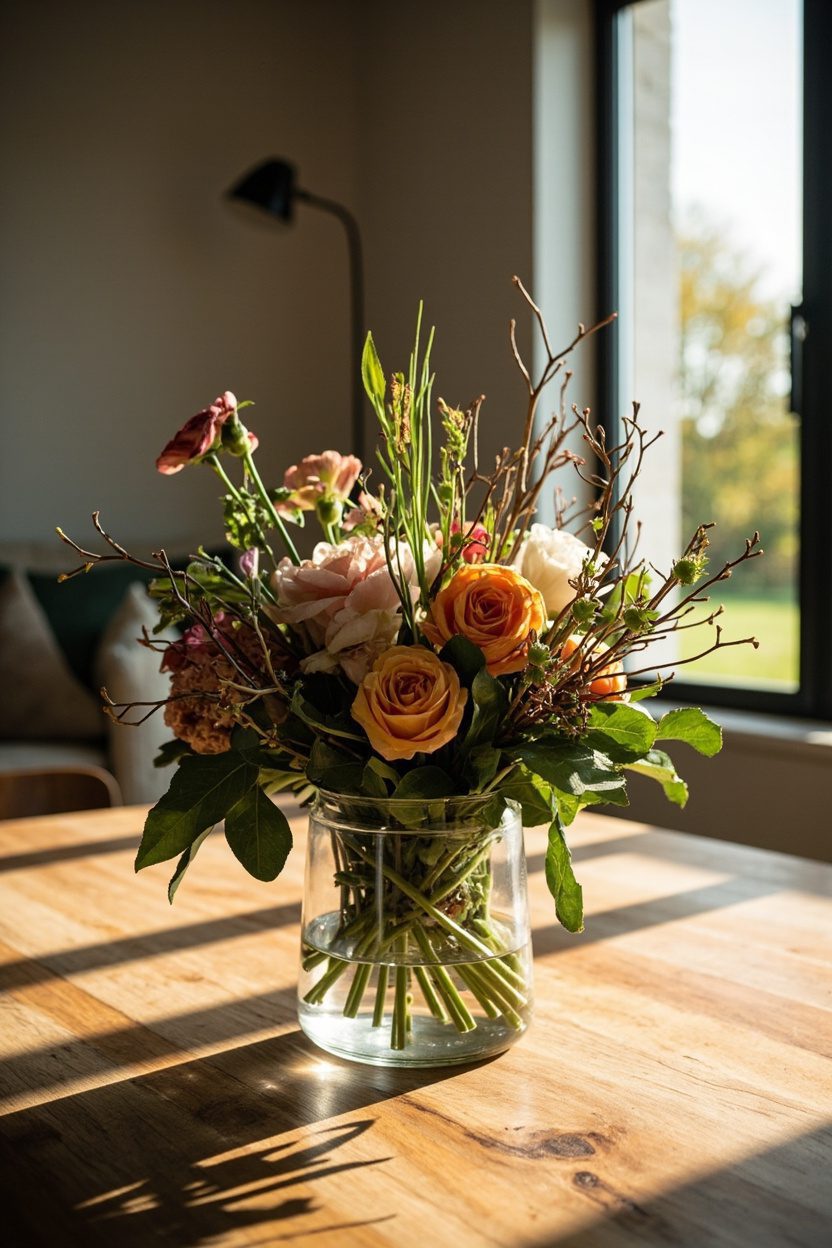
Prioritize locally grown, seasonal blooms and preserved elements such as dried palm fronds or pampas grass to stretch a bouquet further; these textural hybrids cut costs and reduce carbon miles while staying on trend for 2026.
Reuse containers, choose compostable floral foam alternatives like chicken wire or moss, and source stems from growers who avoid heavy pesticide use to make an arrangement both beautiful and responsible.
A practical execution detail is to bulk up arrangements with seed pods, branches, or seeded eucalyptus at a ratio of roughly 1 part filler to 2 parts focal blooms.
This lowers per-arrangement spend while maintaining volume and proportion.
7. Long-Lasting Spring Arrangement Tips
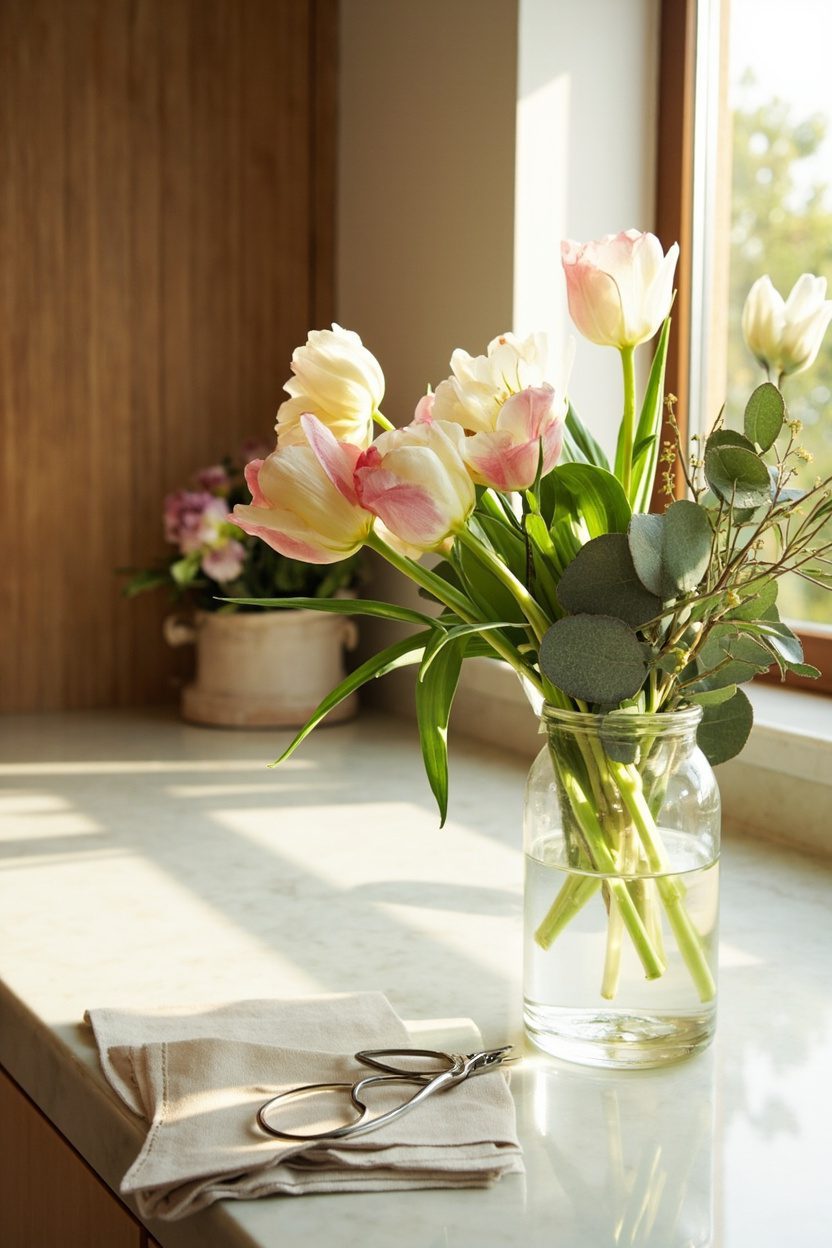
Start with flower selection that favors longevity, such as tulips, ranunculus, spray roses, and waxflower, then add dried accents like preserved palm fronds to carry texture as fresh blooms fade.
Trim stems on an angle, remove lower foliage, and change water every two days to cut bacterial growth. Aim for a water depth of about one-third of the stem length for most varieties.
Use a clean, heavy-bottomed vase to reduce tipping and keep stems upright. Place arrangements away from direct sunlight and heating vents, and budget for a small packet of floral preservative or a teaspoon of sugar plus a drop of bleach to extend vase life by several days.
8. Combining Classic and Unexpected Blooms
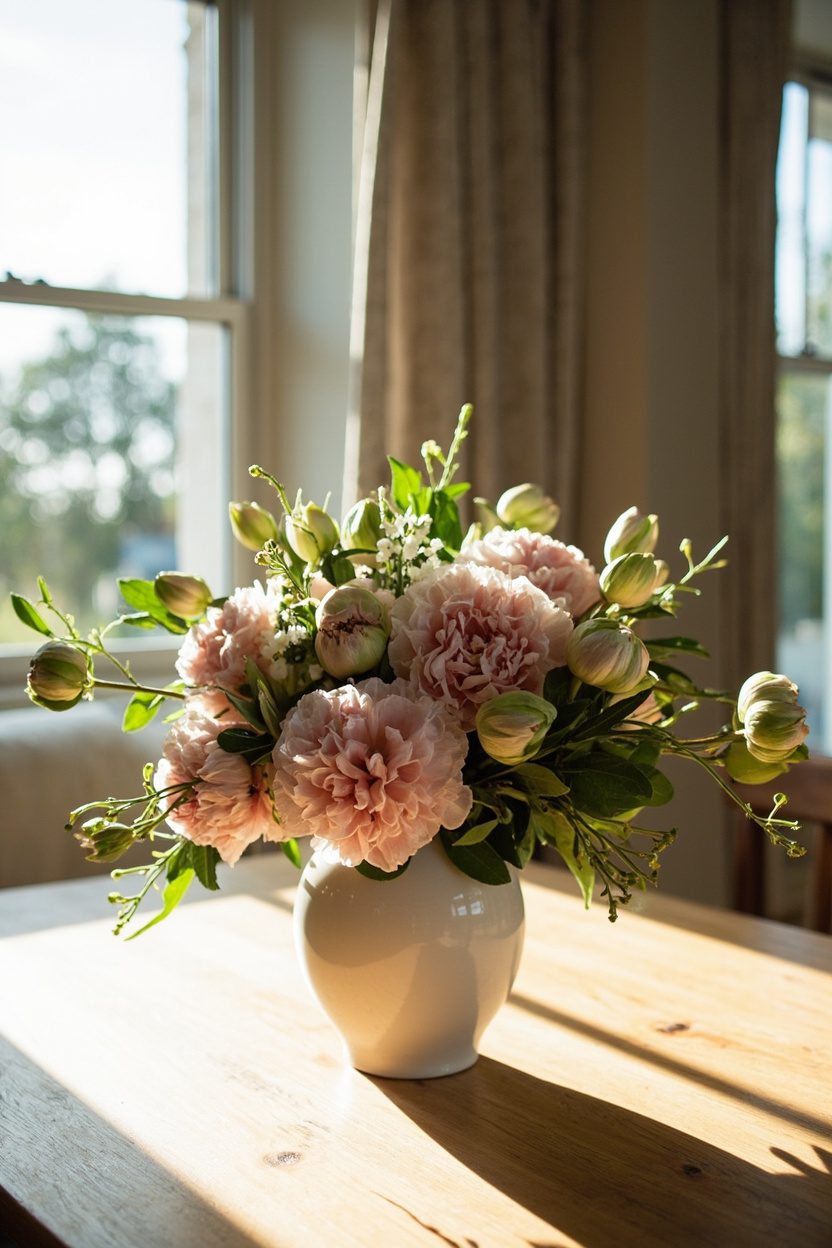
Pair classic spring flowers like peonies and lilacs with surprising elements such as allium blooms or dried bunny tails to create contrast in scale and seasonality. Keep proportions balanced by using one large focal bloom per three smaller accents.
Place the unexpected element as a vertical or textural counterpoint, for example, a single allium stem rising above a low cluster of peonies, to avoid visual competition.
Mind material choices, choose stems with compatible stem diameters so they cluster naturally, and remember a common mistake is overcrowding the vase, aim for negative space roughly equal to the floral mass to let each bloom read clearly.
9. Vase Styling for Seasonal Statements
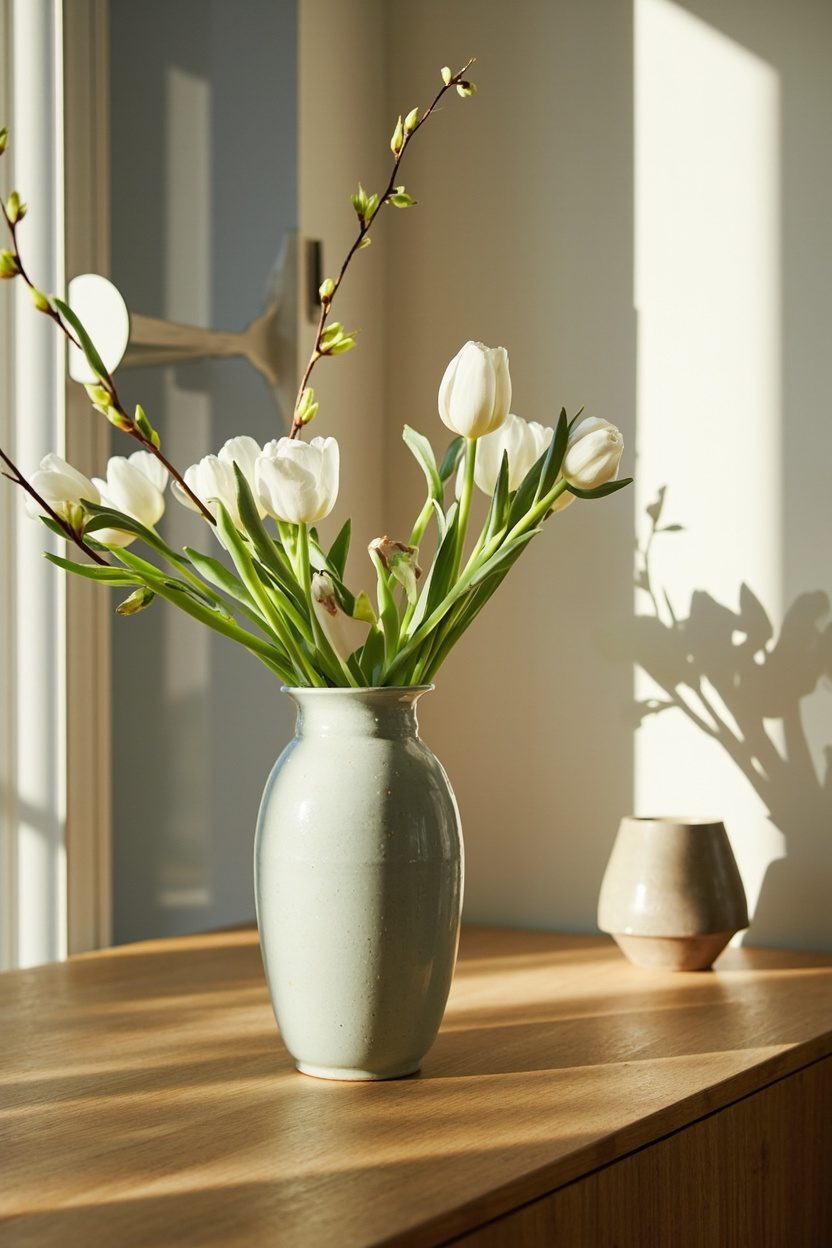
Select a vase that complements your arrangement by scale and material. Use a clear cylinder for tight, garden-style bouquets, choose a wide, shallow bowl for low, sprawling spring centerpieces, and pick colored glass or terracotta when you want the vessel to read as part of the palette.
For proportion, the vase mouth should be about one-half to two-thirds the width of the floral spread to support stems without constriction.
Add detail by wrapping stem bundles with a ribbon or natural twine just above the waterline to control placement, or insert a simple grid of tape across the mouth for precise sculptural positioning. This technique helps maintain shape in mixed-height designs and prevents drooping focal flowers.
For practical sourcing and trend context, floral stylists often combine fresh and preserved materials as outlined in a recent trend report, which offers useful notes on texture and longevity.
You can pair this with ideas from 12 Spring Front Door Ideas That Impress Every Visitor.
FAQ
Use a vase where the stems are two to three times the height of the vase; this keeps proportions natural and prevents top-heavy topple.
Change water every 48 hours, give stems a fresh trim, and rinse the vase to remove bacteria that shorten bloom life.
Yes, but place dried elements slightly higher and away from water to avoid rehydration and mold, and choose sturdy dried materials like preserved pampas.
Are scented flowers suitable for small rooms? Use sparingly; one to two fragrant stems are usually enough in small spaces to avoid overwhelming the room.