


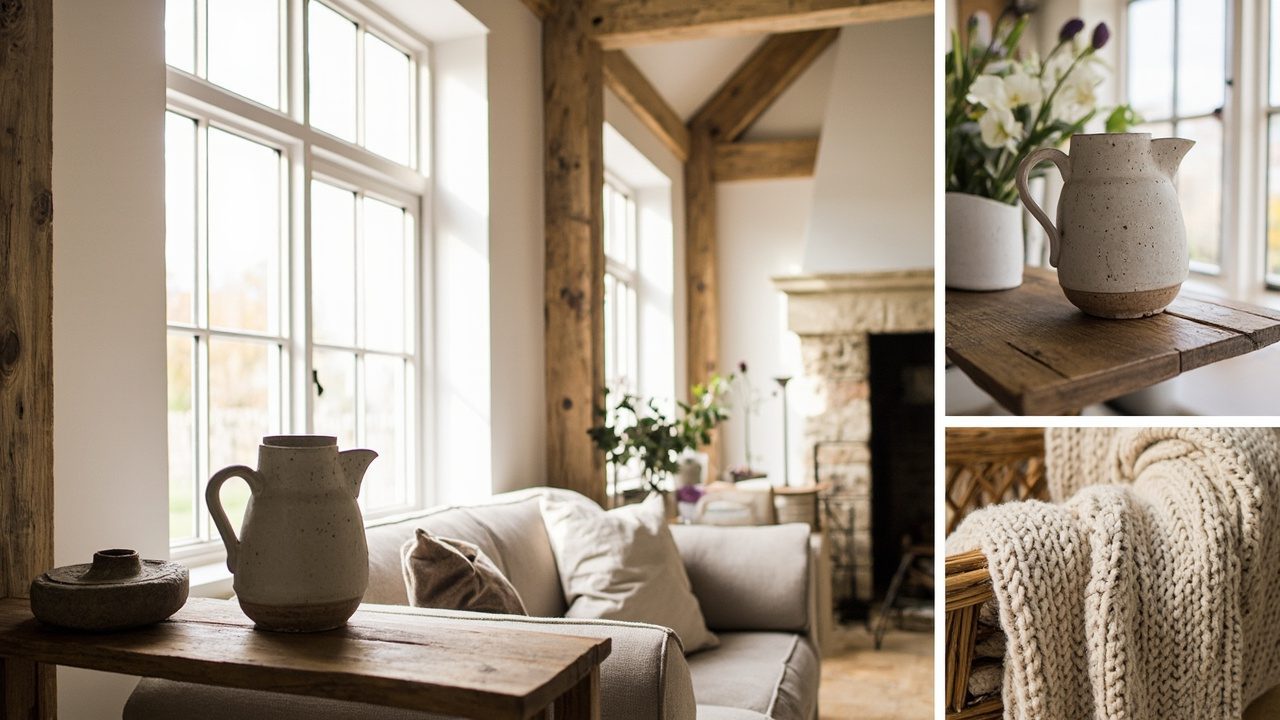
A cottage house should feel intentionally lived-in: soft edges, comforting scale, and material choices that invite you to stay. Think beyond cute knickknacks—prioritize tactile details (linen, worn wood, matte glaze) and furniture with human scale so every corner reads as an invitation rather than a showroom piece. These ideas focus on decisions that matter: seat depth for curling up, throw weight for seasonality, and paint undertones that keep sunlight from washing the space out.
This collection is practical, not precious. Expect budget-friendly swaps, a couple of sourcing tips, and a handful of styling moves that make a modern cottage feel cohesive—whether you’re renovating a farmhouse or softening an apartment with cottage bones. Two internal references below point to deeper room-specific collections for beds and dining spaces to help you execute the look with clarity.
- 1. Cozy Reading Nooks
- 2. Layered Textiles
- 3. Warm Neutral Palette
- 4. Soft Ambient Lighting
- 5. Vintage Brass Accents
- 6. Cottagecore Florals
- 7. Woven Natural Rugs
- 8. Multipurpose Islands
- 9. Curated Bookshelves
- 10. Handmade Ceramics
- 11. Plaid & Gingham Mix
- 12. Exposed Beams
- 13. Slipcovered Sofas
- 14. Botanical Prints
- 15. Rustic Wood Finishes
- 16. Nook Window Seats
- FAQ
- Final Thoughts
1. Cozy Reading Nooks
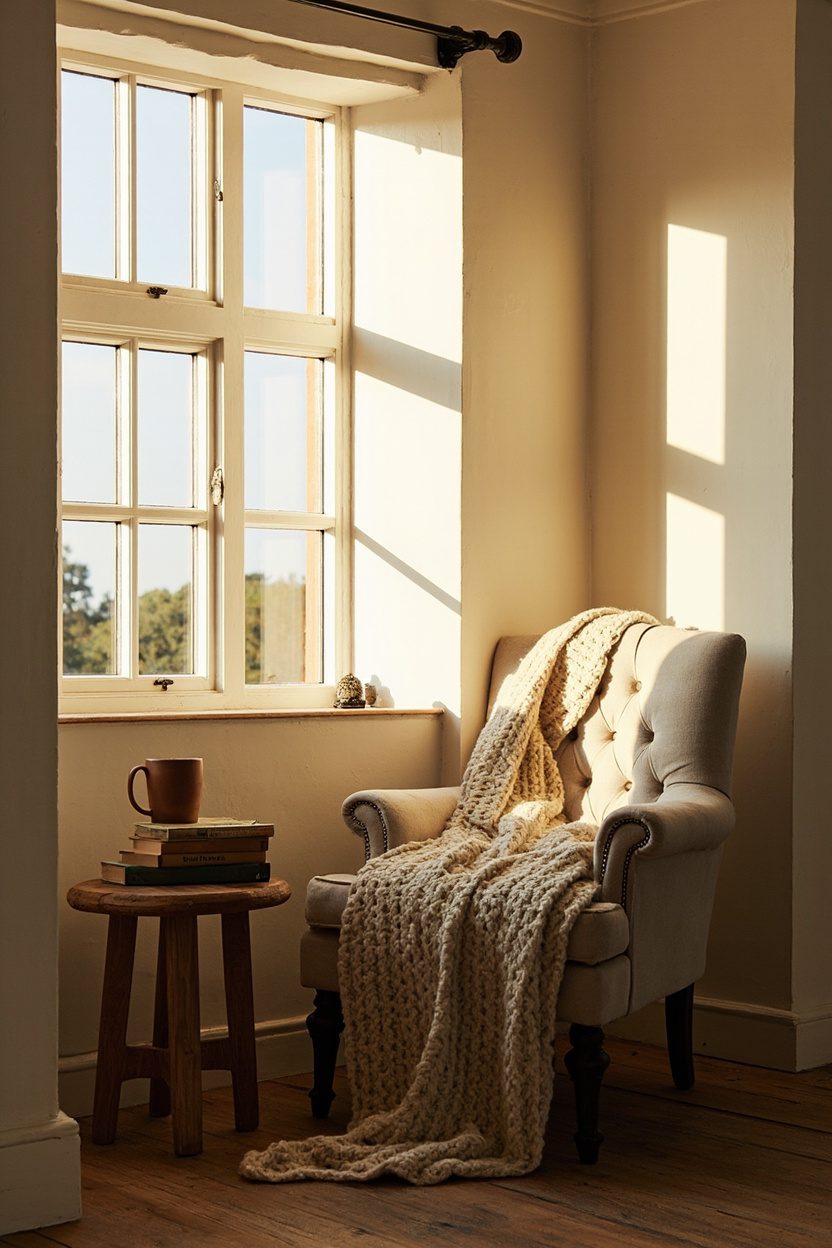
A proper reading nook is a micro-room within a room: a chair with 20–22″ seat depth for comfort, an ottoman at the same height to support legs, and angled task lighting at 30–40 lux for late-night pages without glare. Situate the nook by a window or a sheltered corner; if space is tight, a built-in bench with a 20–24″ deep cushion and storage below turns an awkward alcove into a practical retreat. Avoid overly deep sofas—choose a compact slipper chair or a small-scale wingback in boucle or linen for a tactile, cottage-appropriate feel.
Layering is crucial: a wool throw for winter, a cotton-linen blend for summer, and a lumbar pillow for back support. Anchor the nook with a small side table—18–24″ tall—so mugs sit level with your lap. If you have a budget cap, prioritize a durable upholstery fabric (performance linen or Crypton) over an expensive frame; upholstery is what gets daily wear. Keep a low, easy-to-reach basket for books to maintain that lived-in, hygge-like mood.
What to Focus On
- Chair with 20–22″ seat depth for true comfort and curling up capability.
- Task lamp with adjustable arm and 30–40 lux reading level for eye comfort.
- Three-layer textiles: wool throw, light cotton layer, lumbar pillow for posture and seasonality.
- Small table 18–24″ high and a basket for current reads to keep clutter curated.
2. Layered Textiles
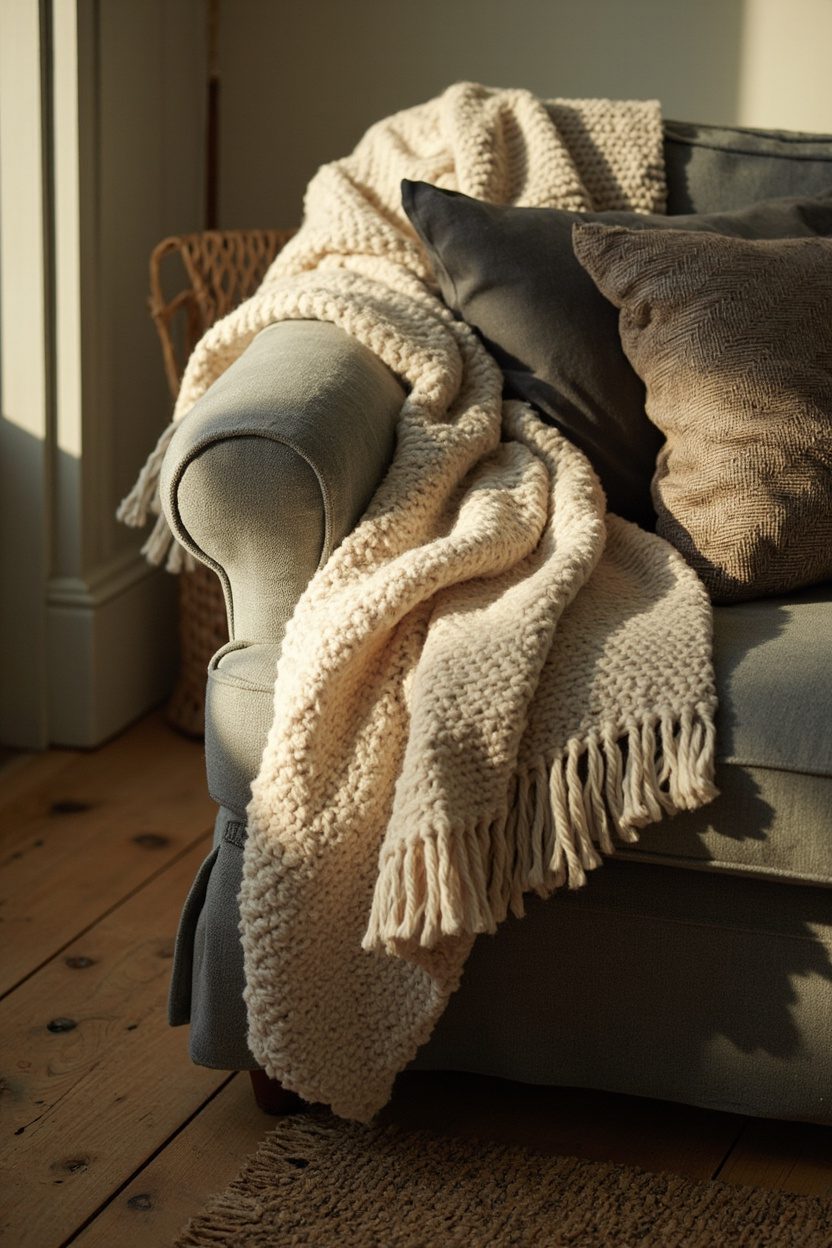
Layered textiles define cottage interiors—think a base of natural fiber rugs (jute, sisal) topped with a softer wool or flatweave for warmth underfoot; select rug sizes that allow at least 18″ of rug in front of seating to balance scale. Use mix-and-match textures rather than matchy patterns: washed linen curtains, nubby wool throws, and a toile or small-scale floral for accent pillows. Choose washable or spot-cleanable textiles for high-use areas; linen blends and performance-cottons give you the lived-in look without constant dry-clean bills.
Color and scale matter: combine a large-ground neutral rug with mid-scale woven throws and one small patterned cushion to avoid visual clutter. For upholstery, pick a neutral base in cotton-linen or boucle, then inject seasonal color through changeable pieces like quilts or slipcovers. Mistakes to avoid—too many slick synthetics that slip and fray, or layering identical patterns that flatten the room’s depth.
Essential Elements
- Base rug in jute or sisal topped with wool or flatweave for comfort and durability.
- Upholstery in neutral linen-blend or boucle for longevity and texture.
- Mix scales: large neutral ground, mid-scale throws, one small patterned cushion for contrast.
- Washable covers or performance fabrics for sofas and frequently used cushions.
3. Warm Neutral Palette
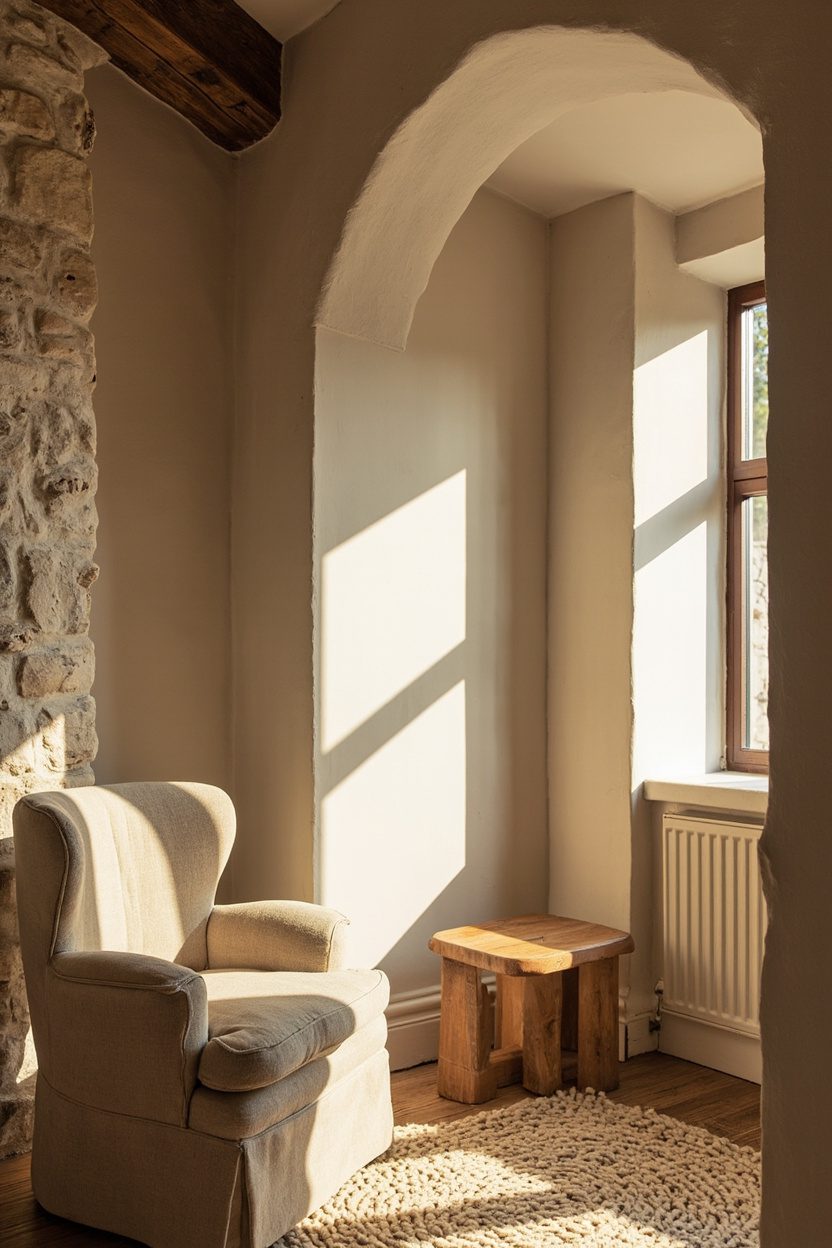
A warm neutral palette—creamy off-whites, soft greiges, gentle clay, and muted sage—creates that enveloping cottage feel without looking monotonous. Choose a dominant neutral with a warm undertone (e.g., a greige with yellow or peach base) so sunlight reads as glow rather than glare; test swatches on three walls and observe at noon and dusk before committing. Reserve pure white for trim and ceilings and pick a single deeper accent (burnt umber, charcoal green) for anchors like a fireplace surround or kitchen island to keep the scheme grounded.
Paint finish and trim decisions are practical: use eggshell for walls to hide imperfections, satin for trim to allow wipe-clean durability, and matte on ceilings to visually lower height for a cozy effect. Avoid high-contrast bright whites next to warm neutrals—those whites will read clinical. If you want specific bedroom palettes and layering ideas, the guide on Cottage Bedding Ideas pairs neatly with these tones for calm, sleep-focused schemes.
Styling Blueprint
- Select one warm undertone dominant paint and test at different times of day before finalizing.
- Use eggshell on walls, satin on trim, matte on ceilings to balance sheen and maintenance.
- Add one deeper accent color (e.g., charcoal green or burnt umber) as an anchor point.
- Avoid stark bright whites adjacent to warm neutrals to prevent a clinical contrast effect.
4. Soft Ambient Lighting
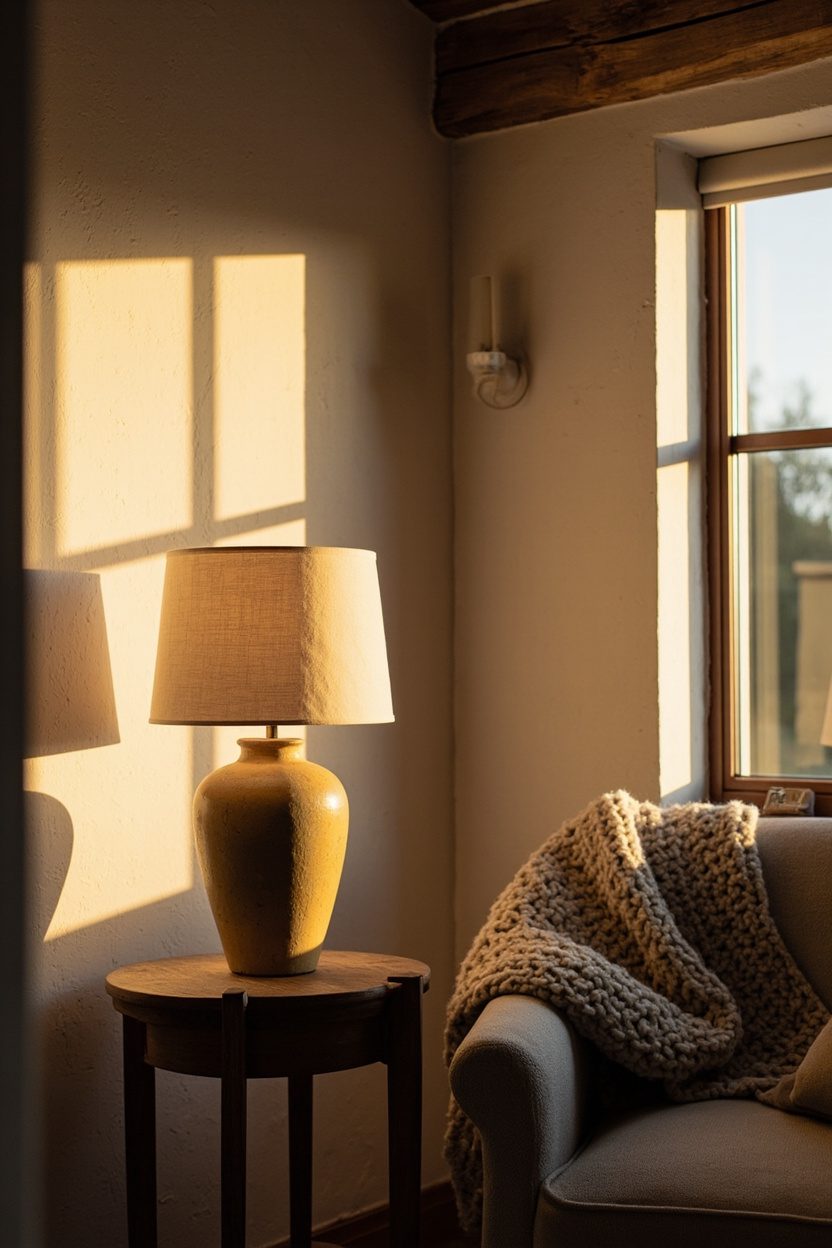
Warm, layered light is the difference between a pretty room and one that actually invites lingering. Prioritize low-glare sources: dimmable overheads, wall sconces with frosted glass, and table lamps with linen shades. Choose warm LED bulbs (2700K–3000K) to keep wood tones and woven textures glowing rather than washed out, and hide a plug-in dimmer behind a bookshelf or within a nightstand for easy access without rewiring if you’re on a tight budget (under $75 for a quality dimmer and compatible lamp).
Positioning matters: place a small lamp on the far side of seating to create depth, hang a sconce slightly above eye level (60–66 inches from the floor) to avoid spotting, and add a low-wattage footlight or LED strip behind open shelving for soft backlighting. Avoid harsh recessed cans in primary living areas; if you must use them, offset with warm accent fixtures to reclaim that cushioned cottage feel.
What to Focus On
- Use 2700K–3000K warm LEDs for all primary fixtures to maintain cozy color temperature.
- Install dimmers on at least two circuit groups in living areas for layered control.
- Prefer frosted glass or fabric shades to diffuse light and reduce glare.
- Place lamps asymmetrically (opposite corners) to create depth and warm pockets of light.
5. Vintage Brass Accents
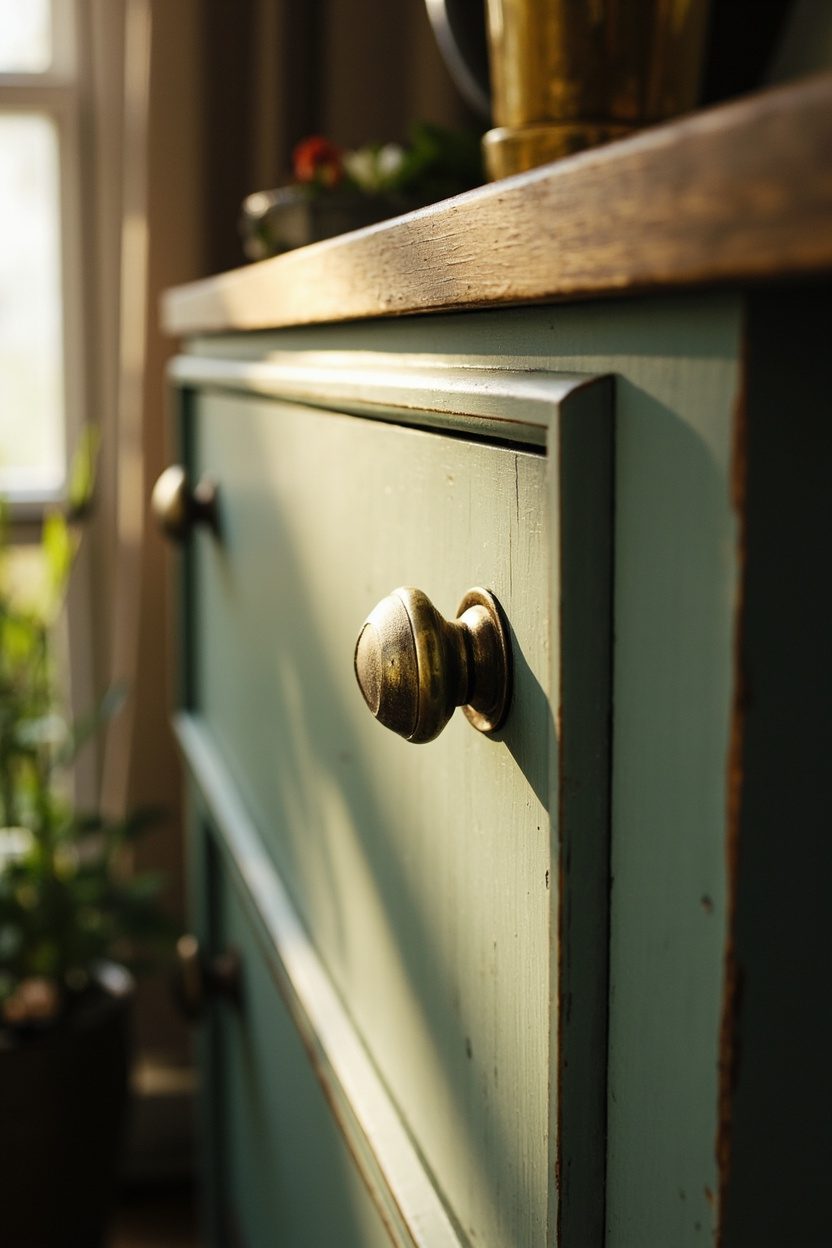
Brass brings a lived-in patina that reads as both classic and cottage—think cabinet pulls, mirror frames, and small tabletop objects rather than entire lighting suites. Opt for unlacquered or satin-finish brass so it develops a natural warmth over time; polished bright brass reads too polished and modern for cottage interiors. For kitchens, choose 2.5–3-inch cup pulls on lower cabinets and 1.5–2-inch round knobs up high to keep scale balanced and tactile.
Mixing metals is fine, but keep the ratios deliberate: brass as the primary warm metal, a little aged iron for contrast (hinges or towel bars), and minimal chrome if needed for plumbing fixtures. Avoid matching every accessory exactly—select a statement brass pendant over the dining table and repeat the tone in smaller items like picture frames and a bedside alarm clock to create cohesion without feeling manufactured.
Styling Blueprint
- Choose unlacquered or satin brass for pieces that will age naturally and soften over time.
- Scale hardware: 2.5–3″ cup pulls on lower cabinets, 1.5–2″ knobs on upper cabinets or drawers.
- Pair brass with one contrasting metal (aged iron or matte black) for depth, not clutter.
- Limit brass to 3–5 focal points per room to avoid visual overload.
6. Cottagecore Florals
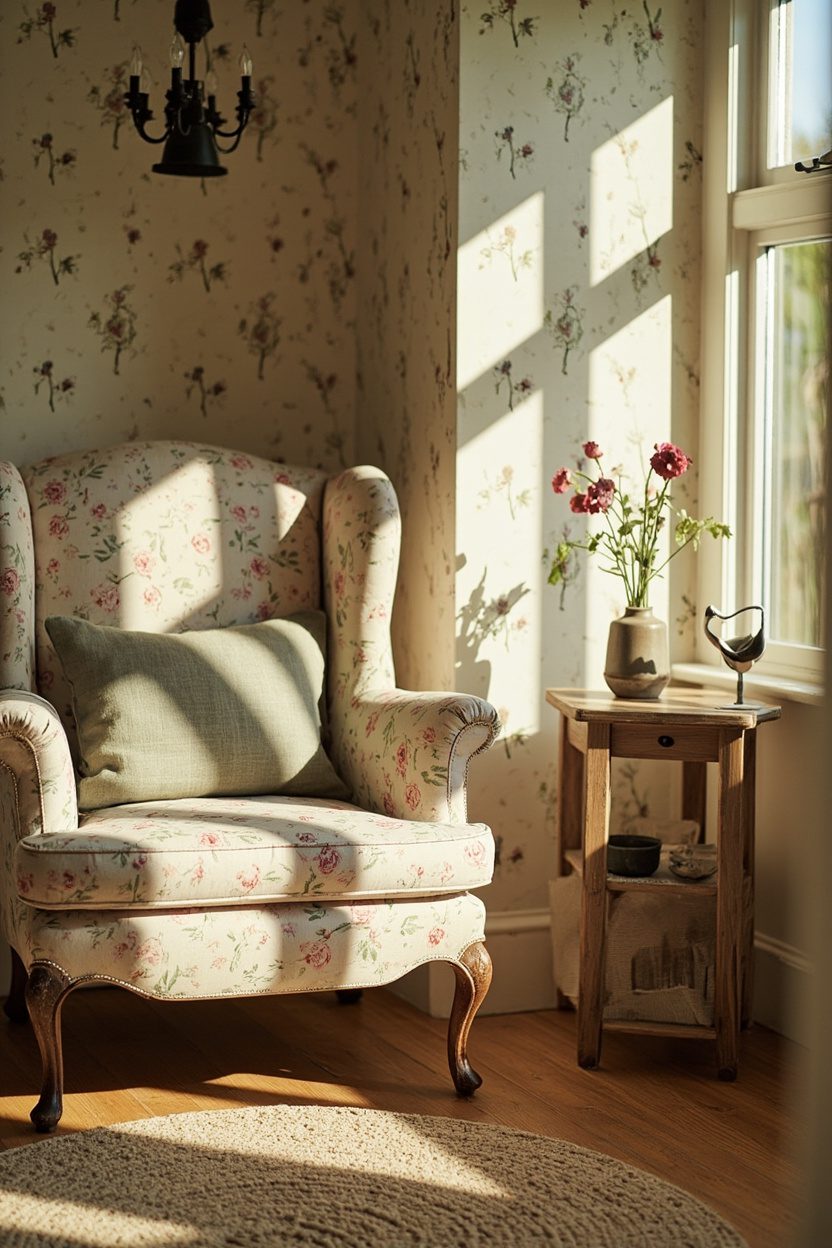
Floral patterns are essential but subtlety wins: use small-scale ditsy prints on throw pillows, slipcovers, or curtains rather than wall-to-wall wallpaper to avoid overwhelming a compact room. Choose a restrained palette—sage greens, faded rose, and biscuit neutrals—to keep the look modern-cottage rather than retro costumey. When buying textiles, favor natural fibers like cotton or linen for breathability and the authentic, slightly rumpled appearance that defines cottage style.
Layering is key: anchor the seating with a neutral base (oatmeal sofa or linen slipcover), add a single floral cushion, then introduce a secondary stripe or gingham in a coordinating color to break up pattern. For a current take, place floral fabric on one window and repeat the color in a woven throw or bedside rug to create rhythm. For more bedding-specific direction, consider the time-tested approach used in cottage bedding collections to mix scale and texture effectively (Cottage Bedding Ideas).
Essential Elements
- Use small-scale floral prints on textiles, not all four walls, to keep spaces calm.
- Select natural fibers (cotton/linen) for authentic texture and easy laundering.
- Repeat a floral’s dominant color in a secondary pattern (stripe or gingham) for cohesion.
- Limit floral focal points to one per room to prevent visual clutter and maintain balance.
7. Woven Natural Rugs
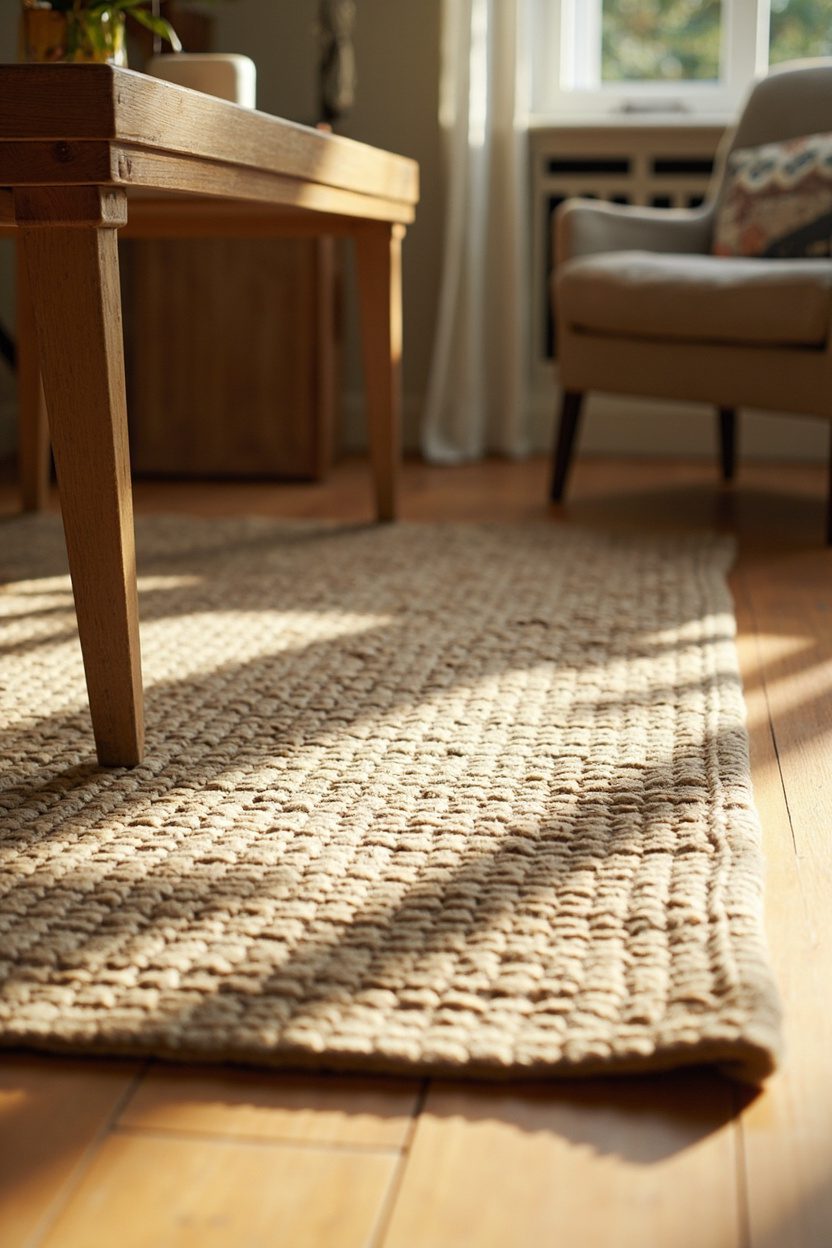
Woven natural rugs—think jute, seagrass, sisal—anchor a cottage room with tactile warmth and forgiving neutrals. Choose tight, low-profile weaves in larger-scale pieces (8×10 or bigger for living rooms) to withstand foot traffic while keeping maintenance simple; avoid whitewashed fibers that show stains quickly and opt for natural tan or honey tones for longevity and hiding wear.
Layer a smaller patterned wool or kilim on top for softness underfoot and visual interest, keeping the palette within two warm neutrals to avoid visual clutter. For kitchens and entryways, select rugs with a synthetic backing or add a thin rug pad to prevent slipping and protect hardwoods—budget tier: mid ($150–$600) for quality handwoven styles, premium for artisanal exports.
Essential Elements
- Material: jute or sisal for durability and texture, wool for softer layered pieces.
- Scale: choose a rug at least as wide as the front legs of furniture to anchor the seating area.
- Finish: pick natural tones (honey, tan) and avoid bleached whites that show dirt easily.
- Practicality: use a non-slip pad and consider a sealer for high-traffic zones.
8. Multipurpose Islands
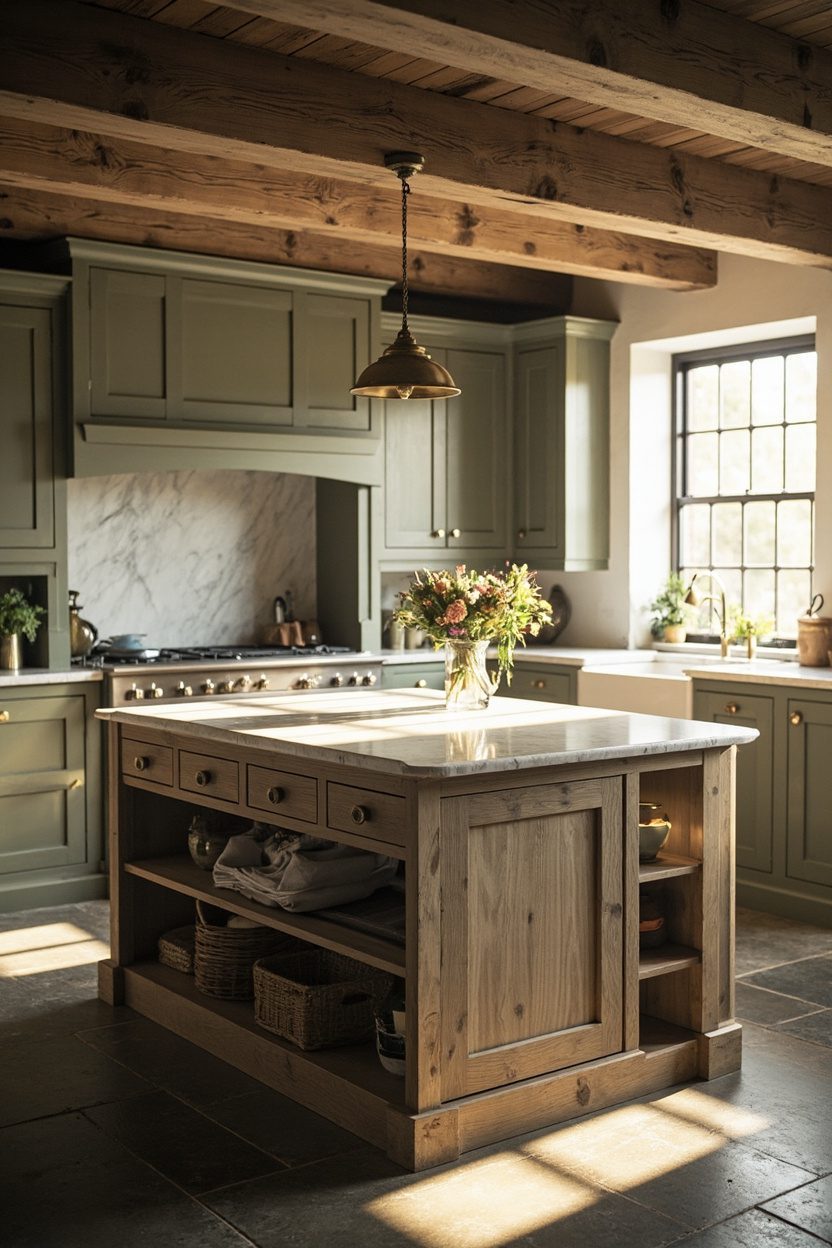
A multipurpose island turns the kitchen into a communal hub—meal prep, homework station, and impromptu dining spot—without sacrificing the cozy cottage vibe. Opt for a mixed-material island: solid wood butcher-block countertop for warmth paired with painted beadboard base (sage, muted navy, or chalky cream) to introduce color and resist showing chips; include overhang seating on one side and deep drawers and open shelving on the other.
Plan the island at standard counter height (36 inches) for prep, but integrate a lowered 28–30 inch section or pull-out table for children’s work or casual seating to increase ergonomics. For kitchens on a budget, buy a prefabricated island and upgrade the top with an affordable hardwood butcher block—this one material decision elevates the look without custom pricing.
Styling Blueprint
- Height: keep island at 36″ with a lowered work surface if space allows.
- Materials: butcher block top + painted beadboard base for authentic cottage character.
- Storage: combine deep drawers, cabinet organizers, and one open shelf for display.
- Placement: maintain 42–48″ clearance around island for proper circulation.
9. Curated Bookshelves
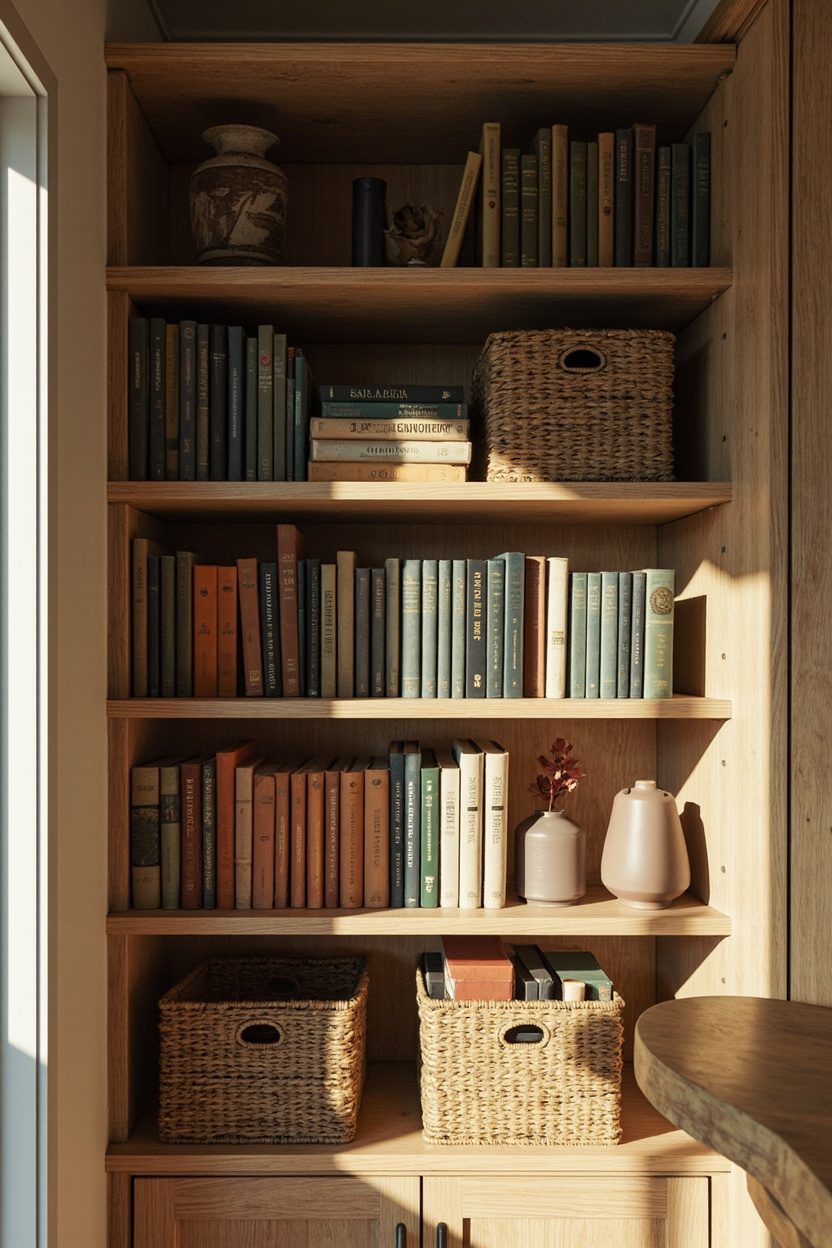
Curated bookshelves are the soul of a cottage interior—mix hardback books, ceramic objects, framed botanical prints, and woven baskets to achieve an edited, lived-in look. Arrange books both vertically and horizontally in stacks of 3–7, interspersing tactile items (dried flowers, small wooden bowls) to break monotony; avoid lining every shelf edge-to-edge with books, which reads cluttered rather than cozy.
Use consistent color anchors (cream, muted sage, and warm wood tones) across the shelves to create cohesion, and reserve the top shelf for art or larger objects to draw the eye upward. Install adjustable shelving so you can accommodate taller pieces later; if you want a visual how-to for bedding or bedroom vignettes that pair well with shelving styling, see Cottage Bedding Ideas for complementary textures.
What to Focus On
- Scale: keep decorative objects about one-third the height of the shelf opening for balance.
- Rhythm: alternate book orientations and group items in odd-numbered clusters.
- Texture: include woven baskets and ceramic pieces for tactile contrast.
- Flexibility: use adjustable shelves and a couple of removable baskets for seasonal rotation.
10. Handmade Ceramics
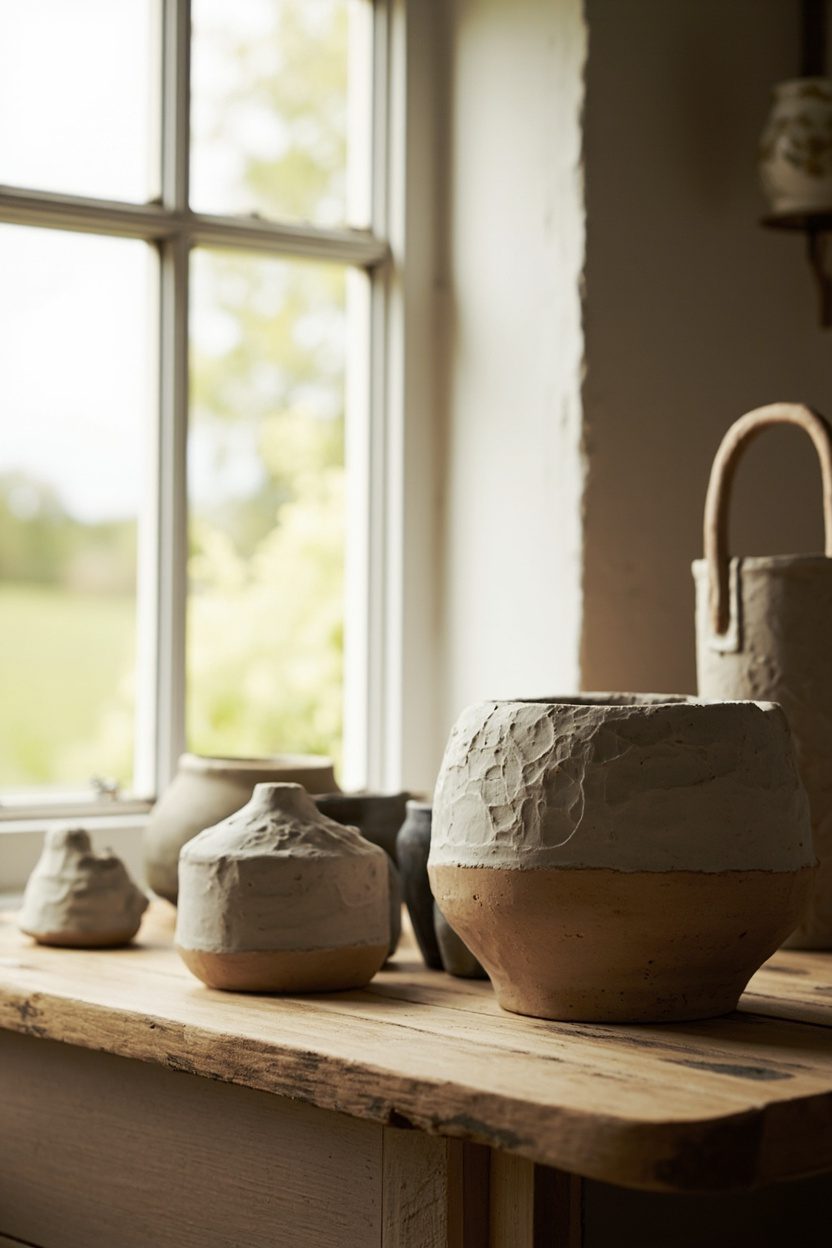
Handmade ceramics lend tactile warmth to cottage interiors—think irregular rims, matte glazes, and visible throwing marks that read as human-made. Use a tight palette: off-white, celadon, and speckled gray to keep the collection cohesive, and display pieces on open shelving at eye level so each vessel becomes a quiet focal point rather than clutter.
Collectors should prioritize functional pieces that are food-safe if they’ll be used daily; budget tier: invest in 2–3 statement bowls from local potters (about $75–$250 each) and fill out the set with studio finds under $50 to avoid an overly precious look. Avoid lining every surface with tiny pots—scale matters; larger pitchers and serving bowls anchor the group better than dozens of thimbles.
Styling Blueprint
- Group three to five pieces of varying heights on a single shelf or island corner for visual impact and balance.
- Choose one dominant glaze tone and mix two supporting colors for cohesiveness.
- Leave negative space between objects to showcase handmade texture and imperfections.
- Use ceramics functionally—display a stack of cereal bowls or a bread bowl to justify placement and wear.
11. Plaid & Gingham Mix
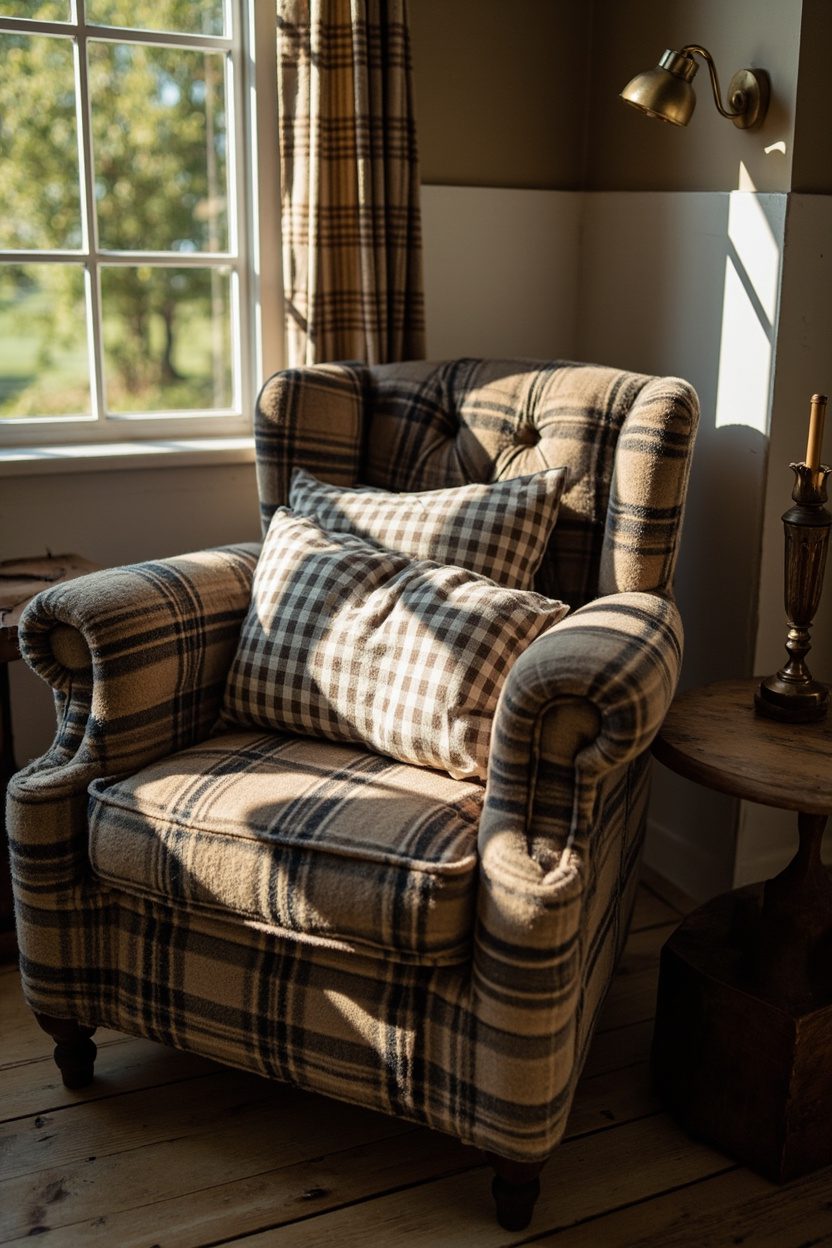
Plaid and gingham together are cottage shorthand for comfort; the trick is disciplined mixing—keep one pattern large-scale (oversized plaid in muted tones) and the other small-scale (tiny gingham in a complementary color) so they read as layered, not loud. Limit the palette to two neutrals plus one accent (for example: oatmeal, charcoal, and a muted mustard) to avoid visual noise.
Use pattern placement strategically: large plaids on upholstery or a statement armchair, small gingham for seat cushions, napkins, or a bedskirt. Avoid matching exactly—if the plaid has 2-inch squares, let the gingham sit at 1/8–1/4 inch checks to create depth rather than competition.
What to Focus On
- Anchor the room with a large plaid piece (sofa or rug) and sprinkle gingham in smaller textiles like throws and placemats.
- Stick to matte, natural fibers—cotton or linen for cloths, wool blends for throws to keep cottage authenticity.
- Introduce one smooth solid (leather or plain-painted wood) to break patterns and give the eye rest.
- Avoid more than three pattern types in the same room to maintain a calm, cozy atmosphere.
12. Exposed Beams
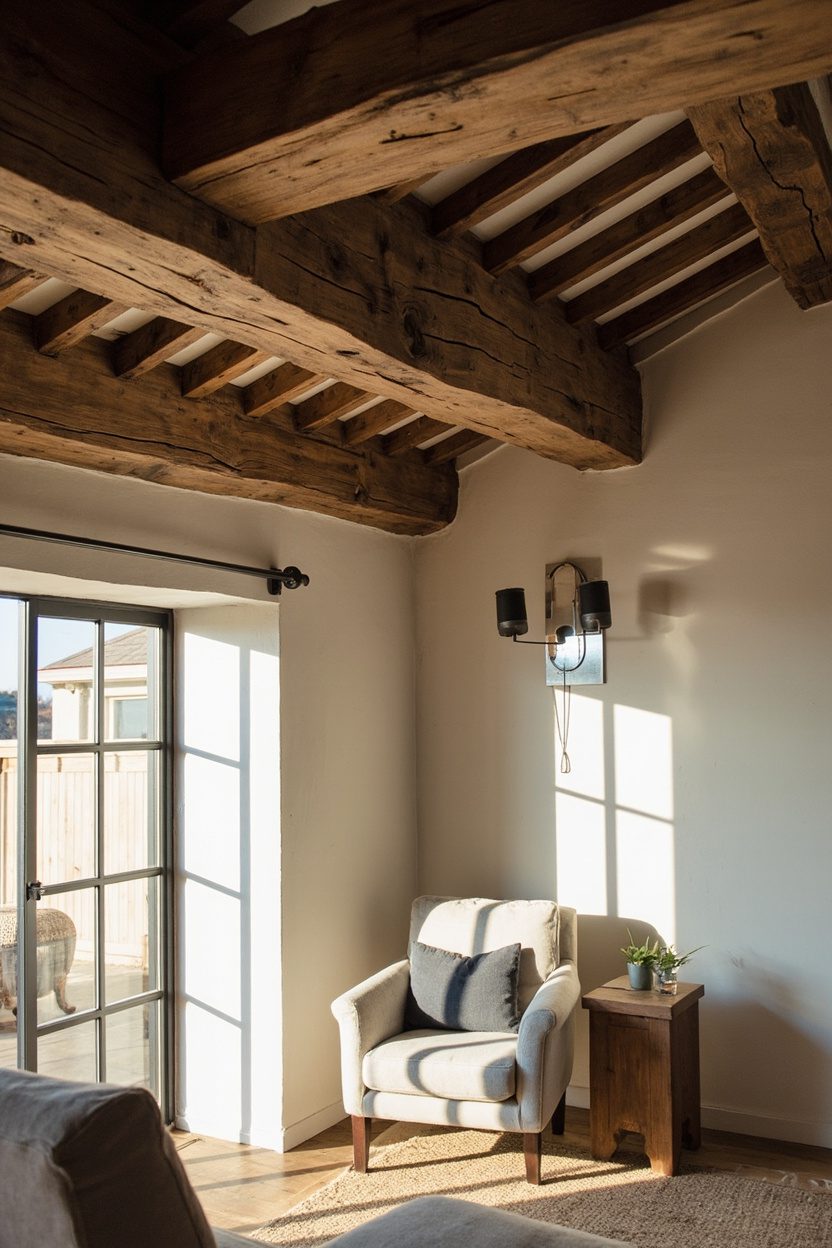
Exposed beams add structural drama and instant cottage character—select true timber or engineered beams with a distressed finish to avoid a theme-park look. In rooms with low ceilings, choose slimmer beams and stain them a shade darker than the ceiling to visually raise the space rather than overwhelm it.
When installing, coordinate beam spacing with lighting runs: recess lights between beams or mount pendant fixtures off the beam face for clean wiring and purposeful illumination. A common mistake is over-darkening beams in small rooms; keep beams within two tones of the ceiling for balance and to preserve light reflection.
Essential Elements
- Use reclaimed or riven oak for authentic texture if budget allows; engineered faux beams work for tight budgets under $200 each.
- Align beam placement with structural lines or furniture layout to make them feel integral, not tacked-on.
- Pair beams with pale plaster or warm white paint to maintain a cozy, luminous interior.
- Conceal wiring by routing it alongside the beam center and use surface-mounted hardware sparingly for a polished look.
13. Slipcovered Sofas
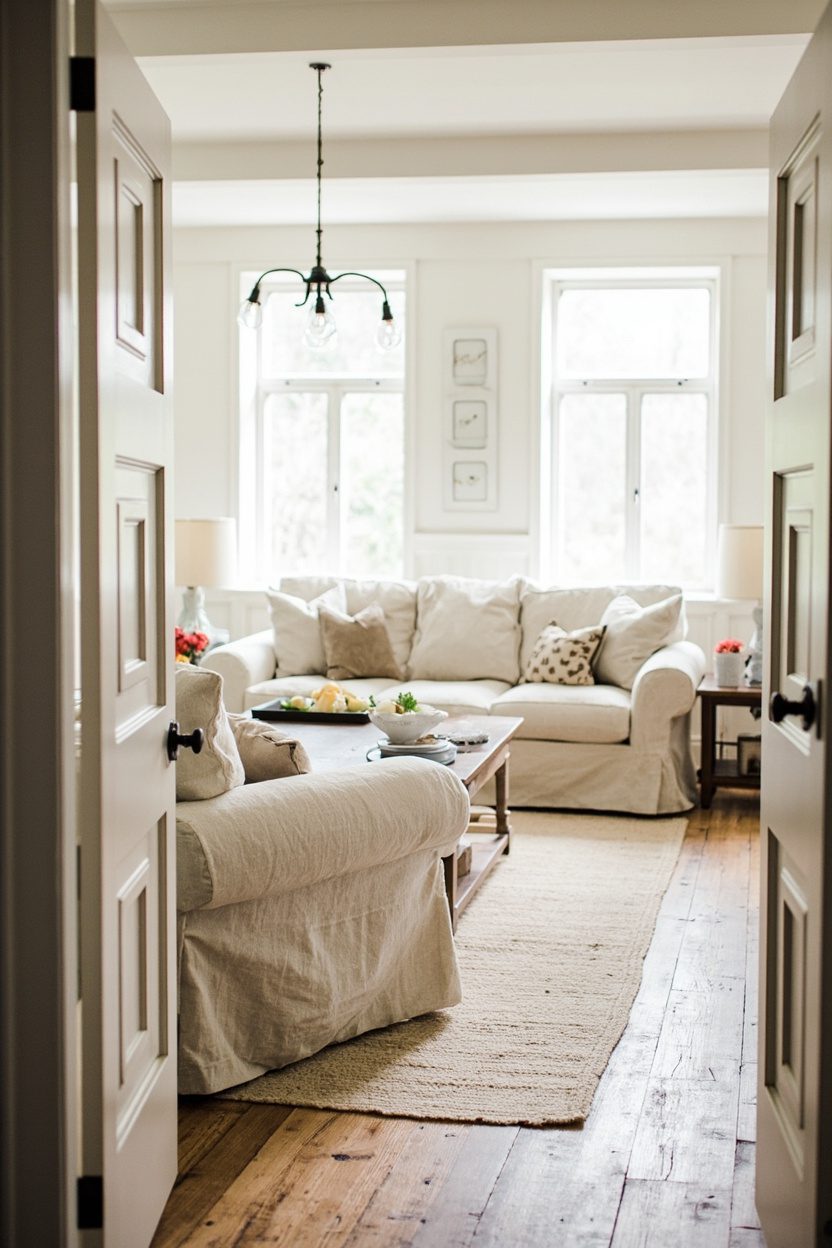
Slipcovered sofas are the practical backbone of a lived-in cottage living room; choose heavyweight linen or cotton duck for durability and a relaxed drape that softens the room’s silhouette. Opt for a tailored skirt or a casual puddle hem depending on scale—tailored for low-profile 72–84-inch sofas, puddle hems for oversized, deeper-seated models to emphasize comfort rather than formality.
They’re also a budget-smart play: buy a neutral base sofa and two interchangeable slipcovers (one light, one patterned) so you can refresh seasonally without replacing furniture. Avoid flimsy ties or thin fabric—pick machine-washable covers with reinforced seams and consider a hidden zipper at the base for easier removal and a neater fit.
What to Focus On
- Choose fabric: heavyweight linen or cotton duck for longevity and texture.
- Fit matters: measure seat depth and arm width before ordering covers.
- Keep two covers: a light neutral and a patterned option for seasonal refreshes.
- Finish details: reinforced seams and hidden zippers for cleaner lines and durability.
14. Botanical Prints
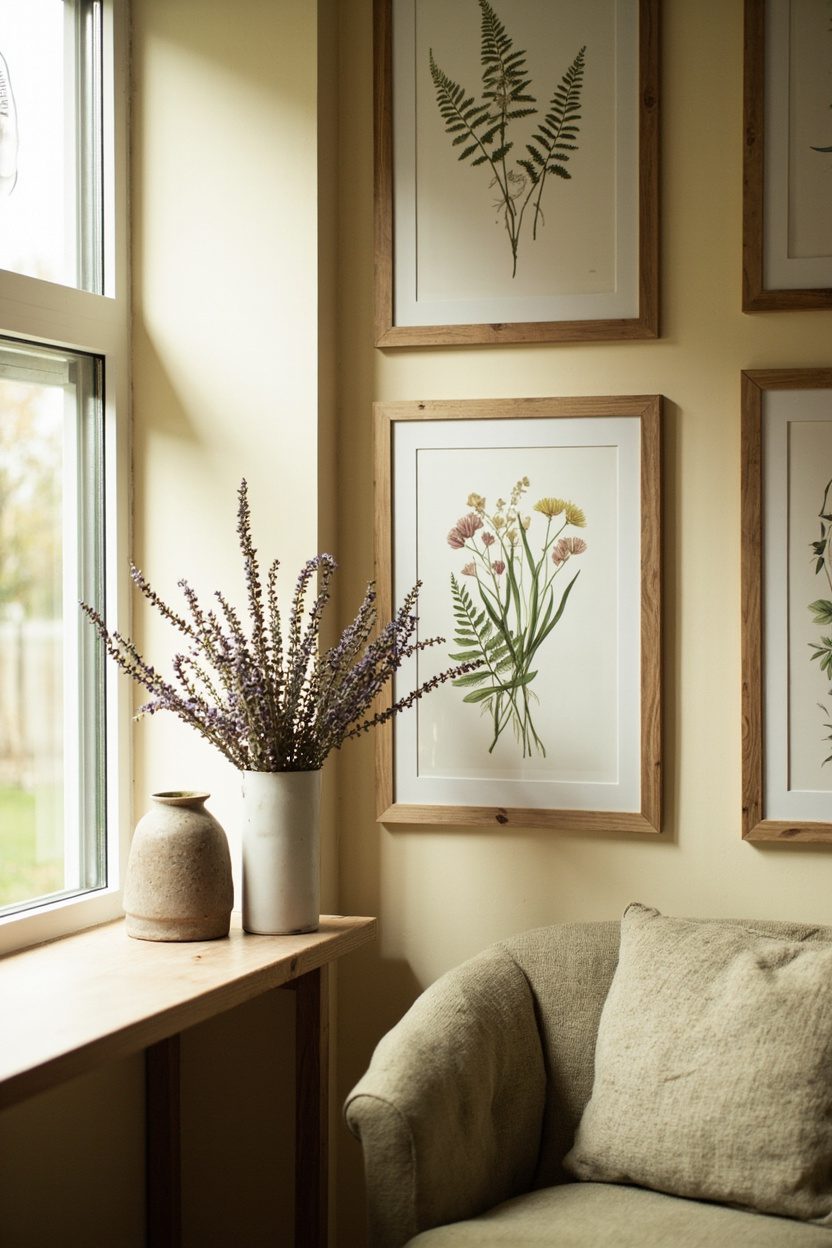
Botanical prints bring the outdoors in without clutter—select scale wisely: one large-scale print (24×36″ or larger) over the mantel anchors a room, while a trio of 8×10″ studies works better for a narrow hallway. Pick muted greens on warm paper tones to maintain the cozy cottage mood rather than vivid, laboratory greens that read too modern.
Mix framed prints with a pressed-leaf shadow box or a vintage botanical plate to introduce depth and an heirloom feel. When choosing frames, go for distressed wood or thin black metal depending on whether you want an English cottage or a slightly modernized twist; avoid glossy acrylic mats that sap an authentic, tactile look.
Essential Elements
- Scale: one large focal print or a balanced small-grid arrangement for impact.
- Color direction: muted greens and warm neutrals for a cozy palette.
- Frame choice: distressed wood for traditional, thin metal for modern-cottage contrast.
- Mix mediums: framed prints + pressed botanicals for layered authenticity.
15. Rustic Wood Finishes
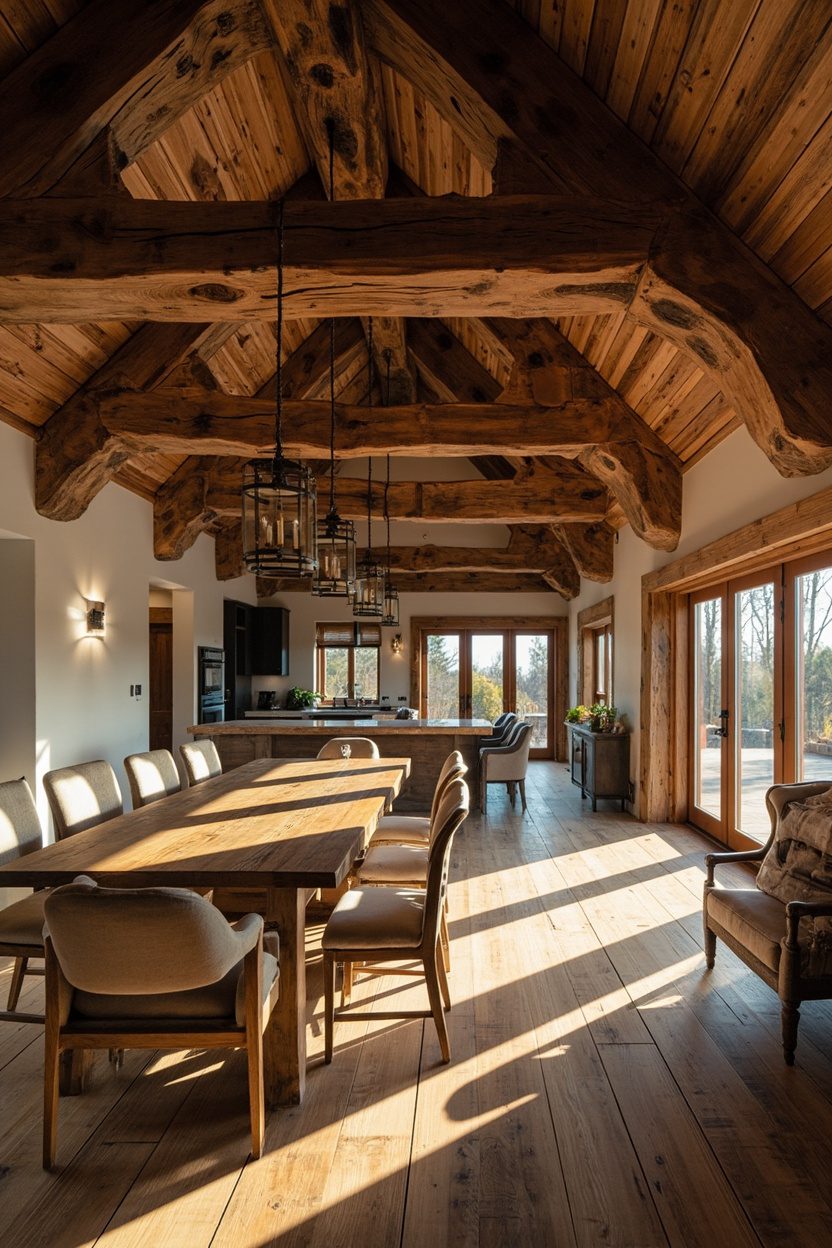
Rustic wood finishes ground a cottage interior—pick planks with visible knots and saw marks for tables and open shelving to add texture and history. For floors, choose a wide-plank oak in a medium walnut or limed finish rather than dark stain; the mid-tone shows wear gracefully and pairs better with layered textiles common in cottage rooms.
When combining woods, keep to two dominant tones: a warm walnut for large surfaces and a lighter, whitewashed piece as accent to avoid a chaotic palette. Refrain from over-sanding reclaimed pieces; leaving some patina preserves character and hides future dings, a practical decision for busy family homes.
Styling Blueprint
- Select wide-plank oak or pine with visible knots for authenticity.
- Use a mid-tone finish to balance wear and light reflection in living spaces.
- Limit to two wood tones to maintain cohesion across rooms.
- Preserve patina on reclaimed pieces; it conceals wear and adds story.
16. Nook Window Seats
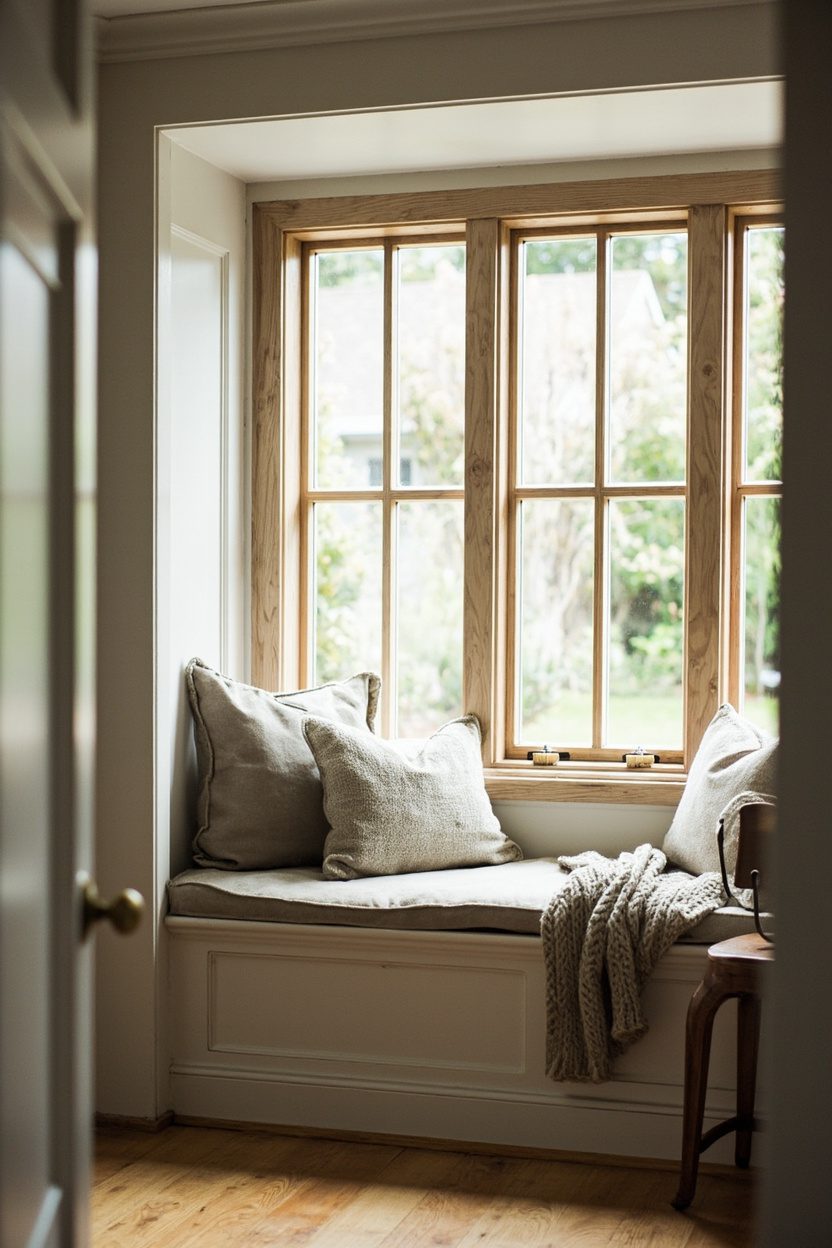
A built-in window seat transforms an underused corner into a daily retreat that reads like a warm embrace. Choose a deep seat—20–24 inches of cushion depth—so adults can curl up comfortably; shallow cushions look pretty but feel impractical. Opt for a kiln-dried pine frame for budget-friendly durability or birch plywood trimmed with painted MDF for a crisp, custom look if you plan to add storage drawers beneath (soft-close slides are a must to avoid noisy mornings).
Layer textures for tactile comfort: a linen-blend cushion in a warm oatmeal tone for neutral longevity, a 22–26 tog wool throw for winter weight, and one or two lumbar pillows in mixed patterns to keep the silhouette casual. Keep the window treatment minimal—a sheer Roman shade or top-down cellular blind—to preserve daylight for reading while maintaining privacy; heavy curtains will swallow the nook’s intimacy and scale it down visually.
Styling Blueprint
- Seat depth 20–24 inches and cushion foam: 3–4 lb density for resilient comfort.
- Material: kiln-dried pine or birch plywood frame with painted MDF trim for a refined budget build.
- Textiles: linen-blend cushion, wool throw (22–26 tog), and 1 lumbar + 1 square patterned pillow.
- Window treatment: sheer Roman shade or top-down cellular blind to preserve light and privacy.
For a complementary decor approach, see 16 Shabby Chic Decor Ideas That Feel Romantic Not Tired.
FAQ
1. How wide should a window seat be to fit two people?
- For two adults, aim for at least 48–56 inches wide to allow comfortable sitting without feeling cramped.
- Include 20–24 inches of depth and a 16–18 inch seat height to match standard chair ergonomics.
- If you plan storage, add 6–8 inches for drawer or cabinet face thickness in the overall width calculation.
- Test the fit with cushions before finalizing framing to avoid rework.
2. What cushion materials hold up best in a sunny window?
- Sun-resistant performance linen blends or acrylic-linen blends resist fading while feeling natural to the touch.
- Choose high-resilience foam (3–4 lb) with a Dacron wrap for shape retention and comfort.
- For upholstery, look for solution-dyed fibers or UV-stable performance fabrics for longevity.
- Rotate and air cushions seasonally to prevent uneven sun bleaching and compression.
3. Can a window seat work in a bay window or only flat walls?
- Window seats are ideal for bay windows—build a continuous curved seat or sectional boxes to follow the bay’s geometry.
- For angled bays, create separate bench modules joined with internal brackets for easier transport and installation.
- Maintain consistent seat height across modules to keep the look cohesive and the cushions interchangeable.
- Consider hinged lids for each module if you need segmented storage access in a bay configuration.
4. How do I style a window seat to match a cottage interior without looking twee?
- Anchor the seat with warm neutrals—oatmeal, cream, soft gray—and introduce cottage grit with a worn leather or indigo-checked lumbar pillow.
- Limit small florals; instead use one handwoven texture pillow and one graphic stripe to feel curated rather than costume-y.
- Add a practical basket underneath or to the side for throws to keep the space lived-in rather than staged.
- Finish with an overhead pendant or a swing-arm sconce for reading light that reads purposeful and grown-up.
Final Thoughts
A window seat is the single most effective way to add daily coziness to a cottage interior: it creates a private pause point, increases storage, and layers texture without major renovation. Prioritize proper seat depth and durable textiles, balance built-in craftsmanship with simple styling, and you’ll have a corner that feels like a hug every time you sit down. For more cottage-layering ideas, consider complementary concepts like classic bedding treatments and relaxed boho accents from Cottage Bedding Ideas and Boho Chic Decor.