


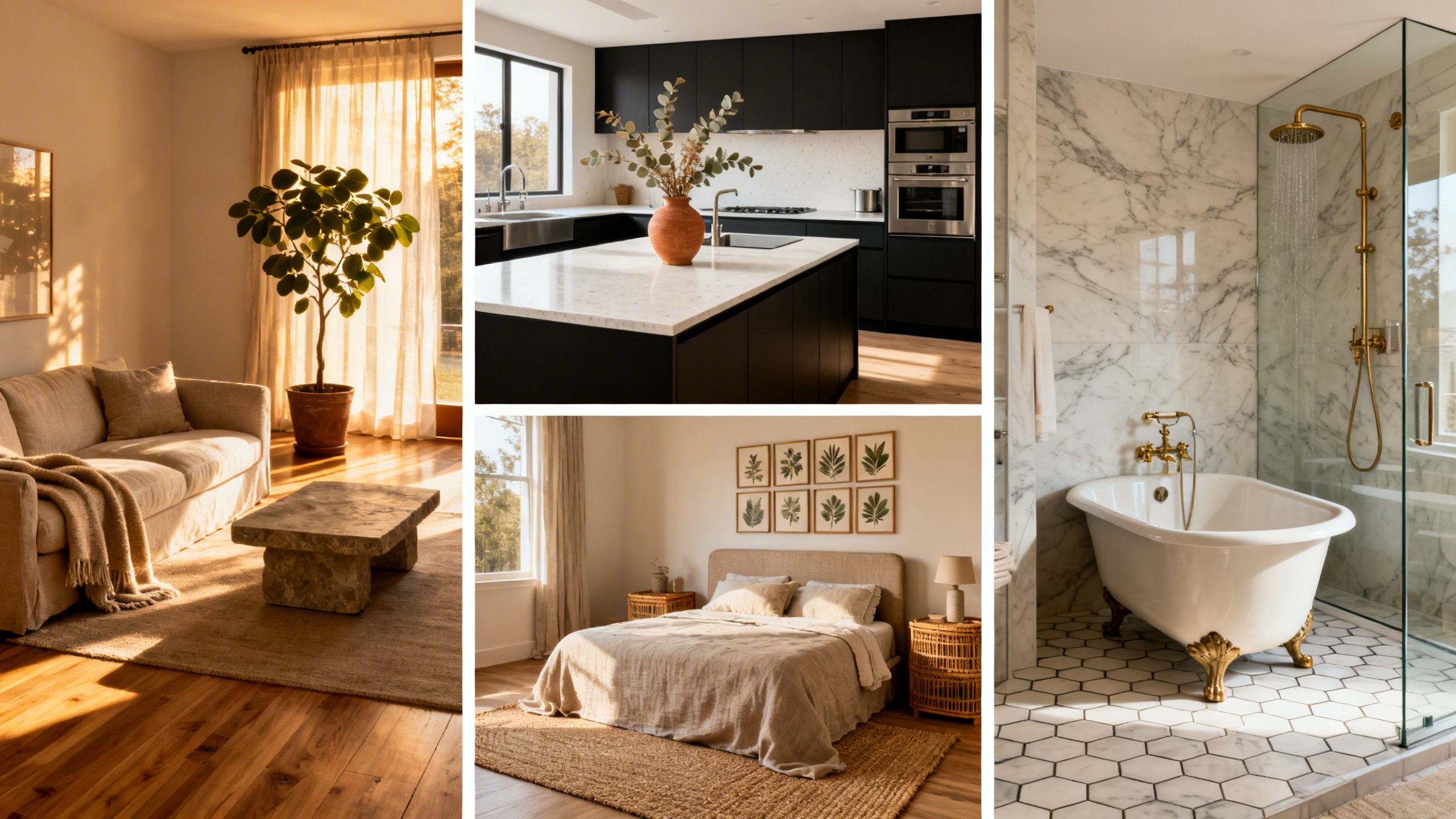
The best home interior design never shouts; it balances. In my experience, the rooms that age well combine sculptural silhouettes, honest materials like terracotta, and a disciplined neutral palette that still feels alive.
This guide shows you how to start, what to prioritize, and which rules matter, so your home reads cohesive from the front door to the breakfast nook.
I continually see clients paralyzed by choice, then defaulting to safe but flat spaces. Meanwhile, 2026’s softer lines and earthier finishes reward restraint plus a few bold moves.
We will translate those trends into decisions you can make this weekend, from the curve of your sofa to the grout of your tile, and link you to deeper dives, such as Earthy Cottage Home Decor Ideas and Farmhouse Kitchen, if you’re looking for room-specific tactics.
- Designing with Sculptural, Organic Silhouettes at Home
- How to Mix Terracotta Tile Without Going Tuscan?
- Neutral Palettes That Feel Layered, Not Flat
- Floor-to-Ceiling Windows: Privacy, Glare, and Budget
- Specifying Curved Furniture: Scale, Flow, Clearance
- Textural Pairings: Bouclé, Woodgrain, and Stone
- Sourcing Sustainable Materials That Don’t Sacrifice Style
- What does “sustainable” really mean in interiors?
- High‑impact swaps I specify again and again
- Material guide with cost, care, and look
- How to verify the claims without greenwashing?
- Design moves that keep it stylish, not preachy
- Budget strategy that still reads elevated
- Mistakes I see and how to avoid them
- Lighting a Soft-Edged Space: Fixtures, Lumens, Zones
- Why do soft forms need a layered plan?
- Lumen targets those who actually work at home
- Fixture types that flatter curves and texture
- Beam spreads, mounting heights, and spacing
- Controls, color, and flicker that make or break the mood
- Step‑by‑step: zoning a living room with soft lines
- Budgets that deliver softness without overspend
- Common mistakes to avoid
- FAQ
- Final Thoughts
Designing with Sculptural, Organic Silhouettes at Home
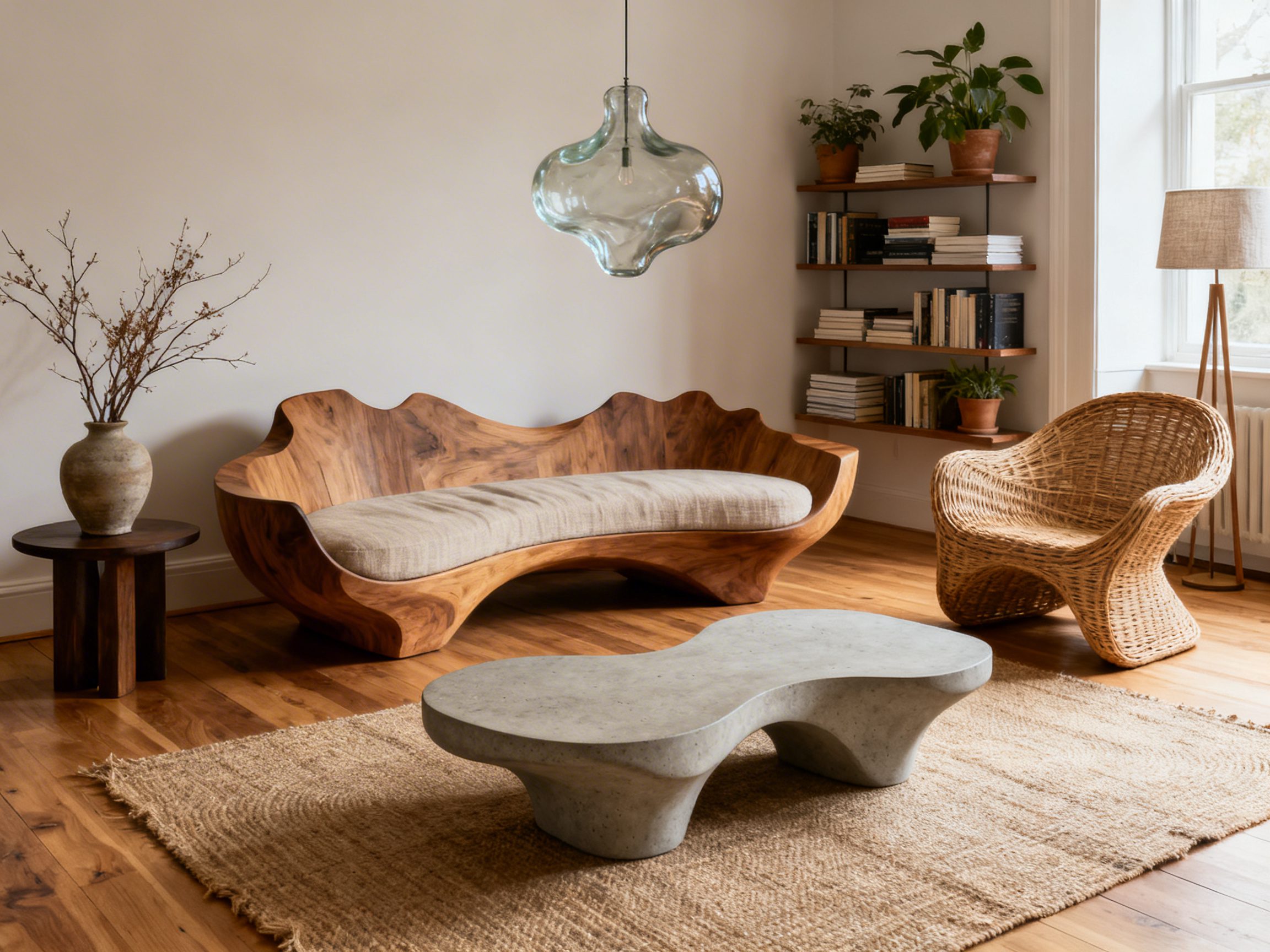
Why curves matter now?
Sculptural, organic shapes add softness, movement, and a collected feel that rectilinear rooms often lack.
As Woodgrain’s 2026 trend report notes, flowing lines are rising because they calm the eye and create better circulation.
I find a single curved anchor piece can reframe an entire living room, especially in tight city apartments with boxy architecture.
Where to start, by room?
Begin with one hero curve per space, then echo it subtly. In living rooms, a barrel armchair or a waterfall coffee table introduces motion without stealing function.
In dining rooms, a racetrack oval table improves sightlines and walkability, while in bedrooms, an upholstered radius headboard softens morning light and feels tailored.
| Room | Hero Shape | Recommended Dimensions | Material Guidance | Budget Range |
|---|---|---|---|---|
| Living | Barrel chair | 28–32 in W, 30–34 in H | Performance bouclé, mohair blend, or tight-weave linen | $450–$2,500 |
| Dining | Racetrack oval table | 78–96 in L for 6–8 seats | Solid oak, walnut veneer with solid edge, honed stone | $1,200–$6,500 |
| Bedroom | Radius headboard | 60–66 in H for presence | Channel tuft, performance velvet, wool felt | $600–$3,800 |
| Entry | Half-moon console | 12–14 in D for tight halls | Forged iron base, limestone or wood top | $350–$2,200 |
Pro composition rules I actually use
- Limit curves to 30–40 percent of major forms, so the eye has tension against straights.
- Keep 16–18 inches between a curved sofa front and coffee table to preserve knee room.
- Echo the hero curve twice in smaller accents, like a dome sconce and a rounded tray, then stop.
Styling details that sell the silhouette
Curves can vanish under visual clutter. Float sculptural pieces off walls by 3 to 6 inches and light them from the side, not overhead, to reveal contour. Use low-profile rugs without heavy borders, since borders fight the lines.
Mistakes to avoid
Do not buy every curved piece from one collection; it reads theme-y. I also see oversized bouclé everything, which mats down in high traffic.
Mix textures, and if you love the look, reserve bouclé for a single chair and balance with tight-weave linen on the sofa. For further softness cues that still feel grounded, explore Earthy Cottage Home Decor Ideas.
How to Mix Terracotta Tile Without Going Tuscan?
Choose the right tone and finish
Terracotta is back for 2026, but the palette is subtler than the heavy, orange Tuscan of the 90s. Look for desaturated clay tones with pink, cocoa, or plum undertones, and specify a honed or matte finish.
In practice, I pull three tones and lay them dry on site for 24 hours, since natural light swings can push a tile too warm.
Scale, layout, and grout that feel current
Modern terracotta succeeds on proportion. Larger formats or elongated bricks read crisp, and a basketweave or herringbone adds finesse without going rustic.
Keep grout tight, 1/8 inch when possible, and color match to the dominant clay to reduce grid lines.
| Application | Tile Size | Layout | Grout Spec | Notes |
|---|---|---|---|---|
| Kitchen floor | 12×12 or 16×16 | Standard stack or brick offset | 1/8 in, color matched | Seal with penetrating sealer, satin sheen |
| Mudroom | 2×10 or 3×12 | Herringbone | 1/8 in, warm gray | High slip resistance, doormat at entries |
| Fireplace surround | 4×4 or 2×6 | Stacked vertical | 1/16 in, color matched | Keep edges crisp with square trim |
| Backsplash | 2×6 zellige-look | Stacked horizontal | 1/16 in, light taupe | Expect variation, embrace wabi-sabi |
Pairing materials so it feels elevated
Terracotta loves contrast with cooler stones and refined woods. I pair it with honed marble, soapstone, or bleached oak to reset the vibe from rustic to tailored.
Metal finishes should be quiet, brushed nickel or aged brass, rather than shiny.
Sealing and maintenance, the practical bit
Unsealed clay will stain, so use a penetrating sealer with a natural finish, then a top-up every 12 to 18 months in kitchens.
Avoid topical glossy sealers, which create a plastic film and date the look. If you are coordinating across rooms, this surface sits beautifully beside a warm, textural Farmhouse Kitchen scheme without tipping into pastiche.
What not to do?
Do not combine terracotta with heavy faux Tuscany details like ornate corbels or creamy faux finishes. Keep cabinetry simple and hardware lean, and let the tile be the texture.
As Good Housekeeping notes, terracotta’s comeback is about warmth and craft, not nostalgia.
Neutral Palettes That Feel Layered, Not Flat
Build a tonal map first
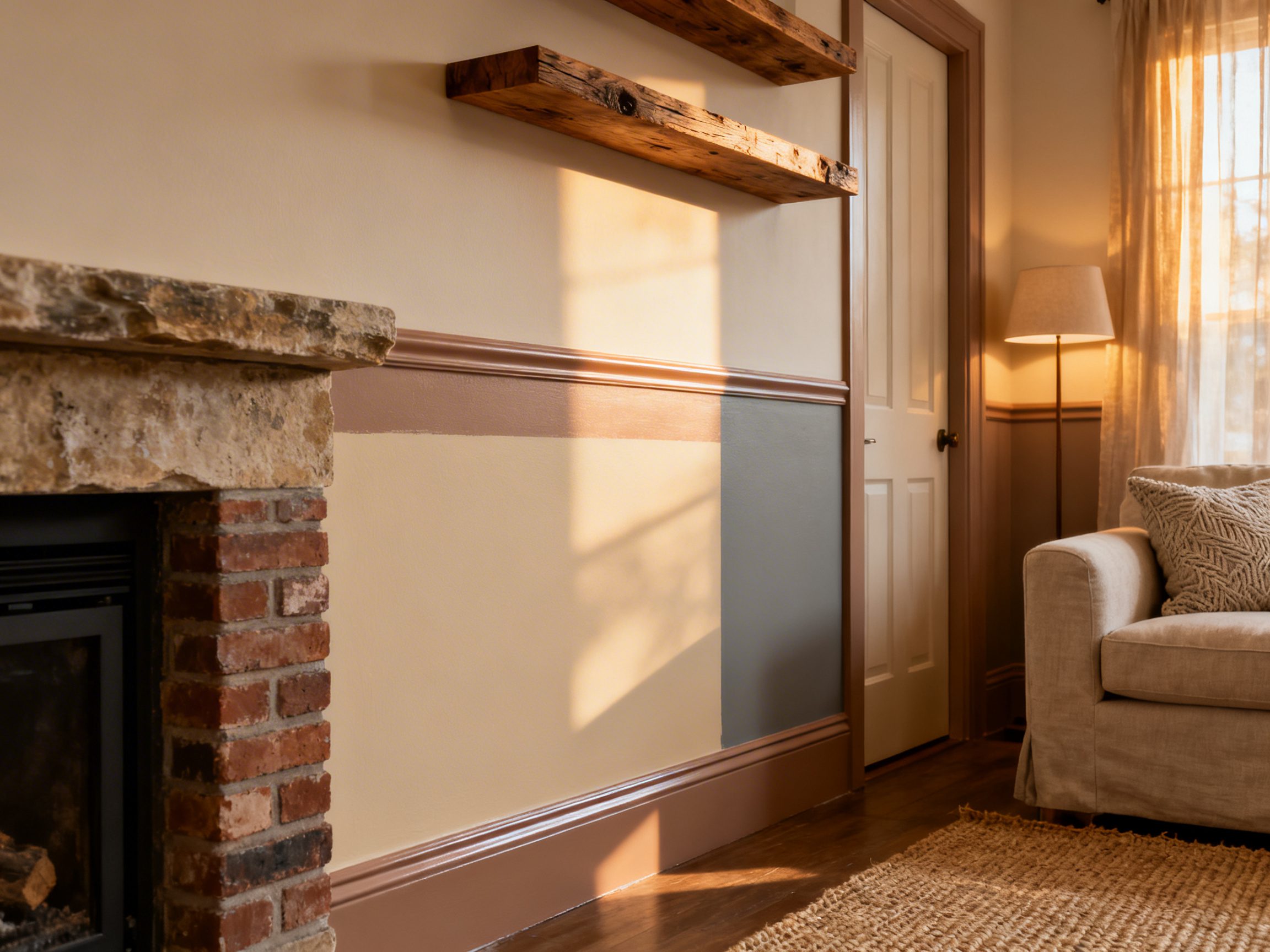
Flat neutrals happen when everything shares the same value. I map light, mid, and deep tones across the room, then assign each to a category: walls, upholstery, casegoods, and accents. The goal is gradient, not matchy-matchy, so the eye travels.
| Category | Light Tone | Mid Tone | Deep Tone | Material Examples |
|---|---|---|---|---|
| Walls/Trim | Bone white | Greige | Charcoal window sash | Matte paint, satin trim |
| Upholstery | Ivory linen | Oatmeal wool | Chocolate velvet | Linen, wool, performance velvet |
| Casegoods | Bleached oak | Natural walnut | Smoked oak | Open grain wood, matte lacquer |
| Accents | Polished nickel | Aged brass | Oil-rubbed bronze | Metals, leather, stone |
Texture and sheen variation are non-negotiable
Layering is as much about hand feel as color. Pair a tight linen weave with a nubby bouclé, then add a ribbed wool throw and smooth leather.
Vary sheen, matte walls, low-sheen wood, and a small hit of gloss in a lamp base, to keep light moving.
Accent strategy that keeps it calm
Neutrals can handle a single chromatic accent, but be surgical. I like eucalyptus green or oxblood in small hits, a glazed pot, a velvet pillow, or an art frame, rather than large furniture. Seasonal swaps, think Minimalist Fall Decor Ideas, let you change your mood without repainting.
Lighting that flatters neutrals
Neutrals die under cold light. Specify 2700K to 3000K bulbs, 90+ CRI if possible, and use three layers: ambient, task, and accent. Place a picture light or directional sconce to graze textured walls so every weave and grain reads.
Mistakes I see constantly
All-gray rooms with cool light, no contrast, and flat paint everywhere. Correct by deepening one anchor piece, like a chocolate leather ottoman, darkening window sashes, and warming bulbs.
If your dining area needs softness within neutrals, borrow slipcovered forms and simple beams as in a well-edited Cottage Dining Room.
Floor-to-Ceiling Windows: Privacy, Glare, and Budget
Privacy without killing the view
Floor-to-ceiling glazing needs layered control. I specify a two-tier system in most projects: sheer solar shades for daytime privacy and light control, plus a heavier drapery or lined Roman for nighttime.
In my experience, clients skip the sheer layer and end up living in a fishbowl by day and a cave by night.
Glare and heat: treat the glass first, then the dressing
If the room faces south or west, start with low‑e or spectrally selective window film to cut UV and heat before you invest in textiles.
Then add solar shades at 3 to 5 percent openness where screens or TV viewing matter, and 10 percent where you prioritize the view. I continually see people spec blackout first, only to reopen it all day because the room feels dead.
Budget planning: know what you are actually paying for
Hardware, yardage, labor, and access are the real cost drivers with tall windows. Double-height installs need ceiling-mounted tracks, sometimes motorization, and often a lift rental.
The right combinations can save thousands without compromising performance.
| More fabric, more hardware, higher labor costs | Best For | Typical Cost (installed) | Pros | Watch Outs |
|---|---|---|---|---|
| Solar roller shades, 3–5% openness | Glare control, TV rooms, west exposures | $14–$28 per sq ft | View preserved, clean lines, motorization friendly | Night privacy is poor without a second layer |
| Sheer drapery + blackout drapery (double track) | Bedrooms, formal spaces | $70–$150 per linear ft of track | Day/night flexibility, acoustic softening | More fabric, more hardware, higher labor |
| Architectural films (low‑e/UV) | Heat gain, fading prevention | $8–$18 per sq ft | Cuts heat and UV at the source | Does not solve nighttime privacy |
| Motorized shades on fascia or recessed pocket | Hard-to-reach heights, clean aesthetic | $900–$2,200 per opening | Convenience, integration with scenes | Electrical prep required, plan in framing phase |
Planning details that avoid expensive mistakes
Mount shades to ceilings, not fragile window mullions, and confirm blocking during framing. For stack-back, leave 10 to 14 inches per side for pleated drapery so you do not lose glass when open.
If your project leans cottage or farmhouse, a relaxed linen read pairs well with the view, then weave in the warmth elsewhere, as in these Earthy Cottage Home Decor Ideas.
Specifying Curved Furniture: Scale, Flow, Clearance
Why curves work and when they do not?
Sculptural, organic silhouettes are rising for 2026, and for good reason: they soften rectilinear architecture and guide circulation.
In my projects, a single curved sofa can correct an awkward traffic pinch better than moving a wall. However, curves need breathing room, or they look like swollen rectangles.
Scale and radius: match the room’s architecture
Measure the primary radius you can accommodate by mapping traffic arcs with painter’s tape.
A sofa with a gentle curve reads elegant in a 14-by-20-foot room, while tight semicircles suit conversation pits or small lounges. Keep the tallest curve below window sills where sightlines matter.
| Use an oval or round table to echo the arc | Ideal Room Size | Recommended Clearance | Typical Dimensions | Notes |
|---|---|---|---|---|
| Curved sofa, gentle arc | 12×16 ft and larger | 36 in behind, 18 in to coffee table | 100–120 in W, 38–42 in D | Use oval or round table to echo arc |
| Serpentine sectional | 16×20 ft and larger | 42 in primary path, 30 in secondary | 130–180 in overall | Great for zoning open plans |
| Curved lounge chair | Any, vignette seating | 30 in around footprint | 28–34 in W, 30–36 in D | Pair two angled at 20–25 degrees |
| Pedestal or round dining table | 10×12 ft and larger | 36–44 in to walls | 48–60 in diameter | Pedestal base improves leg clearance |
Flow and composition: anchor the curve
Curves need a visual foil, usually a rectilinear rug or console, or the architectural axis of a window wall. Align the sofa’s apex with the focal point, not the doorway, then rotate the coffee table to center on seating, not the room. I like to float curved pieces off the wall by 8 to 12 inches to keep their profile intentional.
Clearance rules I enforce on every plan
Maintain 42 inches for primary traffic between entry and kitchen routes, and never drop below 30 inches elsewhere.
Keep 16 to 20 inches from the seat front to the table edge for comfortable reach. For curved dining, stick to 24 inches per diner and 12 to 14 inches elbow clearance from table edge to chair back when pushed in.
Material and trend alignment
Sculptural forms read current when paired with organic finishes. If your kitchen leans farmhouse, a curved banquette softens shiplap and ties beautifully to a Farmhouse Breakfast Nook.
Meanwhile, 2026’s move toward organic shapes brings softer silhouettes that still feel tailored, not blobby.
Textural Pairings: Bouclé, Woodgrain, and Stone
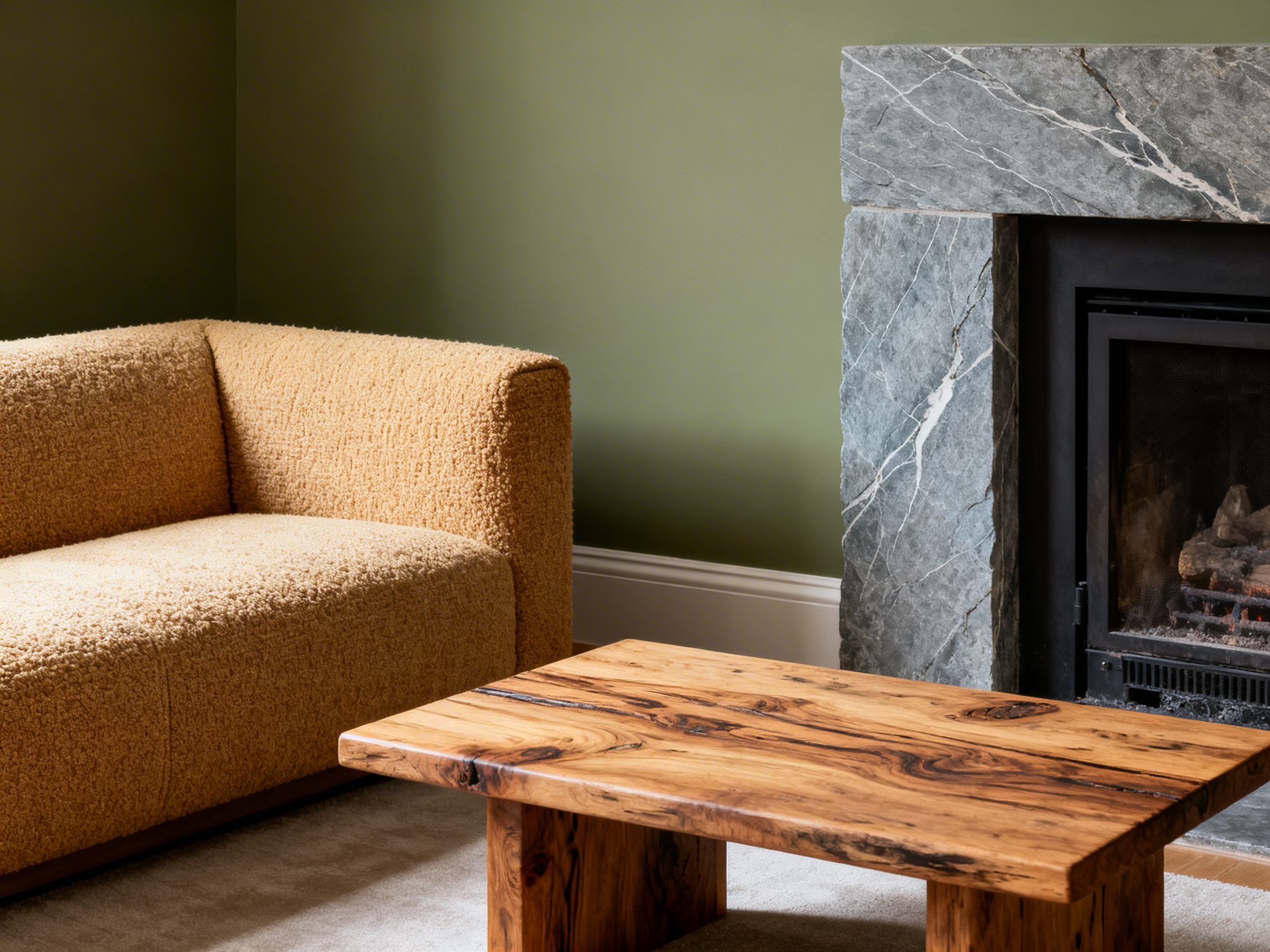
Why does this trio work?
Bouclé brings loft and light absorption, woodgrain adds warmth and pattern, and stone grounds with weight and permanence.
The contrast keeps spaces tactile without visual noise. What I love most is how these materials age differently, creating a layered patina over time.
Selecting the right bouclé for real life
Bouclé ranges from plush, large-loop wools to tight, performance blends. In family rooms, I favor tight, low-loop performance bouclé at 30,000+ double rubs and a stain release finish.
Reserve nubby, open-loop bouclé for accent chairs or pillows where snag risk is lower.
| Material | Best Use | Finish/Spec | Maintenance | Budget Guide |
|---|---|---|---|---|
| Bouclé upholstery | Sofas, accent chairs, pillows | Low-loop, performance, 30k+ double rubs | Vacuum weekly, professional clean annually | $35–$110 per yard |
| White oak, wire-brushed | Casegoods, floors, millwork | Mid-tone, matte waterborne finish | Damp mop, felt pads on furniture | $9–$16 per sq ft floor, $1.5–$3k console |
| Travertine, honed | Coffee tables, fireplace surrounds | Honed, filled for spill resistance | Seal 1–2x per year | $30–$75 per sq ft slab |
| Soapstone, leathered | Kitchen counters, accent tables | Leathered finish, oil optional | Light oiling as desired, low stain risk | $70–$120 per sq ft installed |
How to compose the palette?
Start with a mid-tone wood, then calibrate the bouclé brightness according to the room’s light. In north light, choose creamy off-white, not stark white, to avoid a gray cast. Let stone be the contrasting temperature, for example, warm travertine against cool-toned oak, or vice versa.
Proportion and balance in a single room
Give each material a role and a percentage. I often target 60 percent wood, 25 percent upholstery, 15 percent stone in living spaces, adjusting for kitchens with more stone mass. If everything is nubby, add a flat weave rug or satin metal to keep the mix legible.
Styling moves that make it feel intentional
Tie the bouclé to wood by repeating a tone from the oak in a throw or trim, then bridge stone with a similar undertone in ceramics. Use curved, organic forms in at least one element, like a stone pedestal or rounded-edge console, to echo 2026’s sculptural trend noted by design sources.
For seasonal shifts, swap in raw linen and grounded greens, taking cues from Minimalist Fall Decor Ideas to keep the palette calm without losing texture.
Sourcing Sustainable Materials That Don’t Sacrifice Style
What does “sustainable” really mean in interiors?
Sustainability is not a single label; it is a stack of choices about source, lifespan, and end of life. In my experience, the most stylish rooms pair responsibly sourced structure, like FSC wood or recycled metal, with tactile finishes that age well, such as wool, linen, and terracotta.
This mix avoids the brittle, disposable look while lowering embodied carbon and keeping maintenance realistic.
High‑impact swaps I specify again and again
Flooring, upholstery, and surfaces drive most environmental and visual impact. I continually steer clients toward engineered wood with thick wear layers, natural fiber rugs, and low‑VOC paints, because these anchor a space without reading “eco” in a try‑hard way.
For tile and counters, recycled content porcelains and sintered stone provide a refined, contemporary look and outperform many quarried options in durability.
Material guide with cost, care, and look
| Material | Why It’s Sustainable | Look & Feel | Typical Cost | Durability/Maintenance | Best Use |
|---|---|---|---|---|---|
| FSC-Certified Solid or Engineered Wood | Responsible forestry, long lifespan, repairable | Warm grain, timeless | $8–$18/sq ft installed | Refinishable, avoid standing water | Floors, millwork, beams |
| Bamboo or Fast-Growth Hardwoods | Rapid renewability, lower harvest impact | Clean, linear grain | $6–$12/sq ft installed | Hard, can be brittle at edges | Cabinetry, accents |
| Wool Upholstery and Rugs | Renewable, biodegradable, long wear | Plush, matte, luxe | $10–$40/sq ft rug, $45–$120/yd fabric | Spot cleanable, naturally stain resistant | Living rooms, bedrooms |
| Linen and Hemp Textiles | Low water crops, durable fibers | Dry hand, elegant slub | $25–$80/yd | Wrinkles gracefully, washable | Drapery, bedding, slipcovers |
| Recycled-Content Porcelain Tile | Post-industrial content, long life | Stone, cement, or terracotta looks | $6–$15/sq ft + install | Near zero maintenance | Kitchens, baths, mudrooms |
| Sintered Stone/Ultra-Compact Surfaces | No resins, long‑lasting, recyclable in some streams | Matte stone or concrete aesthetic | $60–$120/sq ft installed | Heat, stain, and UV resistant | Countertops, outdoor kitchens |
| Reclaimed Wood | Reuses material, preserves character | Weathered patina, unique | $12–$30/sq ft installed | Requires sealing, check for pests | Feature walls, shelving, islands |
| Low-VOC Paints and Finishes | Improved indoor air quality | Any color, rich matte sheens | $45–$90/gal | Comparable to conventional | Walls, trim, cabinetry |
How to verify the claims without greenwashing?
I always ask vendors for documentation, not marketing copy. Look for third‑party certifications like FSC for wood, Greenguard Gold for finishes, and published recycled content percentages for tile and stone. If the supplier cannot provide a spec sheet, I consider it a red flag and move on.
Design moves that keep it stylish, not preachy
Mix textures to avoid the earnest “eco catalog” look. Pair a wool rug with a crisp linen sofa, then bring in sculptural wood or terracotta accents, a combination that also nods to 2026’s sculptural shapes trend highlighted by Woodgrain and Good Housekeeping.
If you love cottage warmth, ground the room with natural fibers and layered woods, then borrow ideas from Earthy Cottage aesthetics for color and pattern balance.
Budget strategy that still reads elevated
Spend on touch points and permanence, save on scale. I allocate more to countertops, foundational upholstery, and the primary rug, while sourcing vintage casegoods and lighting to add soul and save carbon.
The result feels collected and luxurious, which is the whole point.
Mistakes I see and how to avoid them
Overusing reclaimed wood can make a space feel theme‑y, so limit it to one or two statements and contrast with refined finishes. Avoid cheap “eco” textiles that pill and fade; they look tired within a season and undermine the goal.
Finally, confirm repairability and parts availability for fixtures, because sustainable also means fixable.
Lighting a Soft-Edged Space: Fixtures, Lumens, Zones
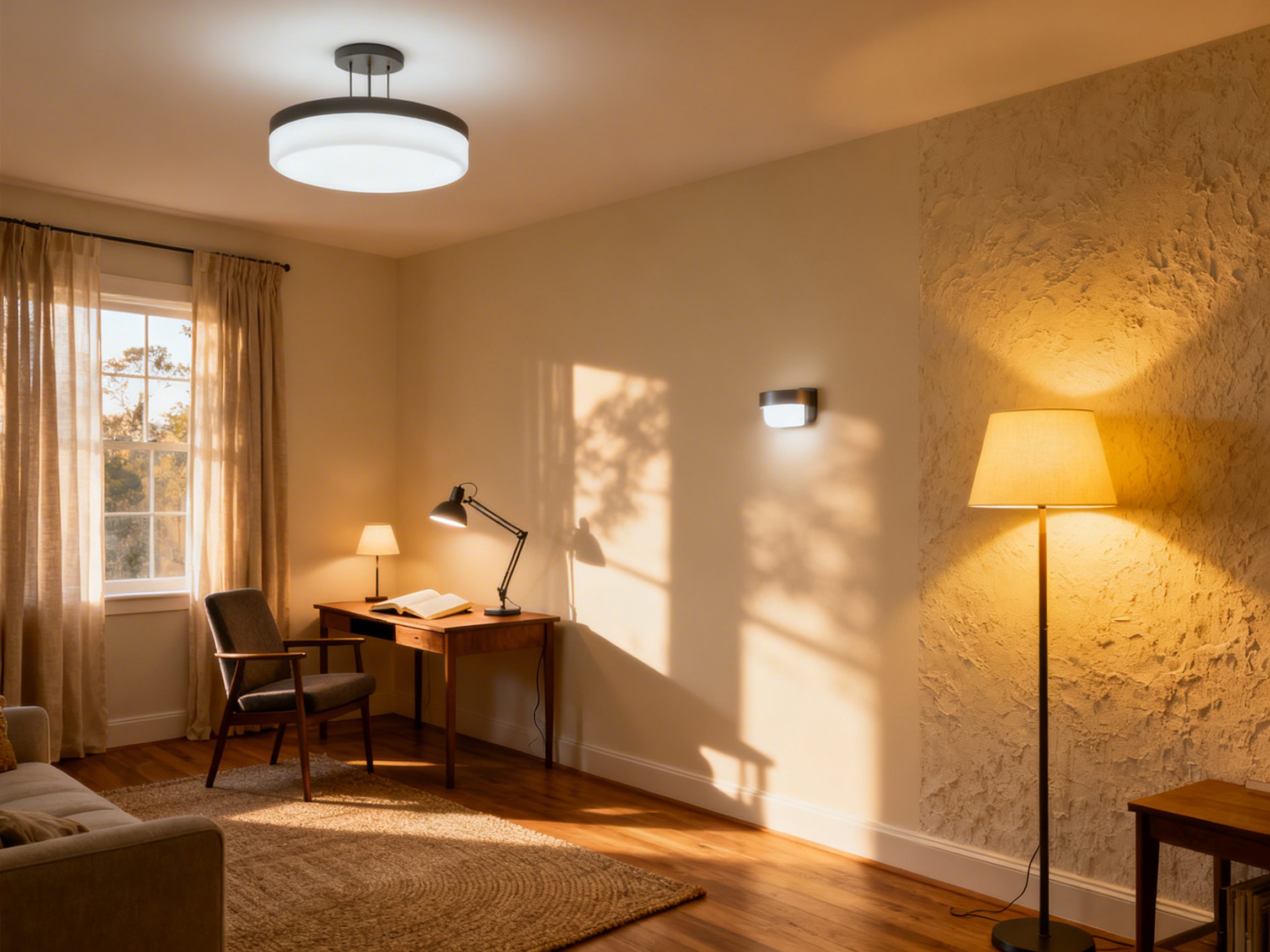
Why do soft forms need a layered plan?
Curvy furniture and organic silhouettes absorb and scatter light, which can flatten a room if you rely on a single overhead. I design soft‑edged spaces with three layers, ambient, task, and accent, each on separate controls to sculpt volume and shadow. This preserves the room’s flow while giving the eye points of focus.
Lumen targets those who actually work at home
Forget vague “bright enough” guidance. Use lumen ranges that suit human comfort and materials, then tune with dimmers. In my projects, these targets are reliable starting points before site adjustments.
| Zone | Ambient Lumens (per sq ft) | Task Lumens (at surface) | Color Temperature (K) | Notes for Soft-Edged Rooms |
|---|---|---|---|---|
| Living Room | 10–20 | 1,000–1,500 per reading seat | 2700–3000 | Diffuse sources, fabric shades, wall washers |
| Kitchen | 20–30 | 500–700 per linear ft of counter | 3000–3500 | Continuous undercabinet, frosted lens pendants |
| Dining | 10–15 | 3,000–6,000 over table total | 2700–3000 | Central fixture plus dimmable perimeter sconces |
| Bedroom | 5–15 | 800–1,200 per bedside | 2700 | Opal glass globes, low-glare shades |
| Bath/Vanity | 15–25 | 1,500–2,500 at face | 3000 | Vertical sidelights, avoid top-down shadows |
| Hallways | 5–10 | — | 2700–3000 | Wall grazing to soften curves and niches |
Fixture types that flatter curves and texture
Soft‑edged rooms call for diffuse, low‑glare optics. I reach for opal glass globes, fabric drum pendants, and saucer forms, which cast wide, even pools and avoid harsh cutoffs on rounded profiles.
For accents, linear wall washers and petite pin spots skim plaster, wood slats, and boucle, revealing depth without hotspots.
Beam spreads, mounting heights, and spacing
Get technical so the room reads intentional. Use 40–60 degree downlight beams for general illumination, then add 10–15 degree pin spots to highlight sculpture or a console.
Mount pendants 30–34 inches above dining tables, 66–72 inches above islands, depending on sightlines, and space small recessed lights about 1.2 times the ceiling height for even overlap.
Controls, color, and flicker that make or break the mood
Layered circuits and dimmers are nonnegotiable, ideally with 1 percent capable drivers for smooth fades. Specify 90+ CRI LEDs so woods, terracotta, and textiles read true, a must with the terracotta and organic shapes trend surfacing for 2026.
Always choose flicker‑free drivers, as curved forms exaggerate strobing more than flat planes.
Step‑by‑step: zoning a living room with soft lines
- Map activity nodes, conversation, reading, art, and circulation.
- Place an ambient, a central drum or tri‑globe, and two wall washers on one dimmer.
- Add task, swing‑arm, or table lamps at each seat, on a lamp circuit or smart plugs.
- Layer accent, two pin spots for art, and one cove or shelf LED, on a third dimmer.
- Tune levels at night, set scenes for “movie,” “reading,” and “company.”
Budgets that deliver softness without overspend
If the budget is tight, invest in fewer, better diffuse fixtures and skip grids of recessed cans. A quality fabric drum pendant, two good table lamps, and a pair of wall washers will outclass eight generic downlights.
When funds allow, add a dimmable cove to float the ceiling, a subtle trick that makes curved cornices sing.
Common mistakes to avoid
Downlight glare on rounded upholstery is the fastest way to make a room feel cheap, so soften it with shades and diffusers. Avoid mixed color temperatures in one zone; curvy rooms look disjointed when half the bulbs are 4000K and half 2700K.
Finally, do not mount sconces too high; keep centers around 60–64 inches so light grazes the form, not the ceiling.
FAQ
Pick two big-impact upgrades, flooring and paint, then verify certifications. Choose FSC or reclaimed wood for floors and a low‑VOC paint; these anchor the room responsibly and stylishly.
Stick to 2700–3000K for living, dining, and bedrooms. It preserves warmth and shadow detail on curves without going orange.
Yes, when certified and properly installed, they meet the same wear and water absorption standards. Maintenance is identical, typically just mild cleaner and grout care.
Retrofit with high‑CRI LED bulbs and, if needed, new dimmable sockets or drivers. I often rewire vintage pieces to ensure safety and flicker‑free dimming.
Final Thoughts
Choose materials that age gracefully, then light them to reveal depth and softness. When you validate claims, plan layers, and control color and glare, sustainability and style reinforce each other.
If you lean cottage or farmhouse, borrow texture and tone cues while keeping the lighting plan disciplined, and explore related ideas here: Farmhouse Kitchen.