


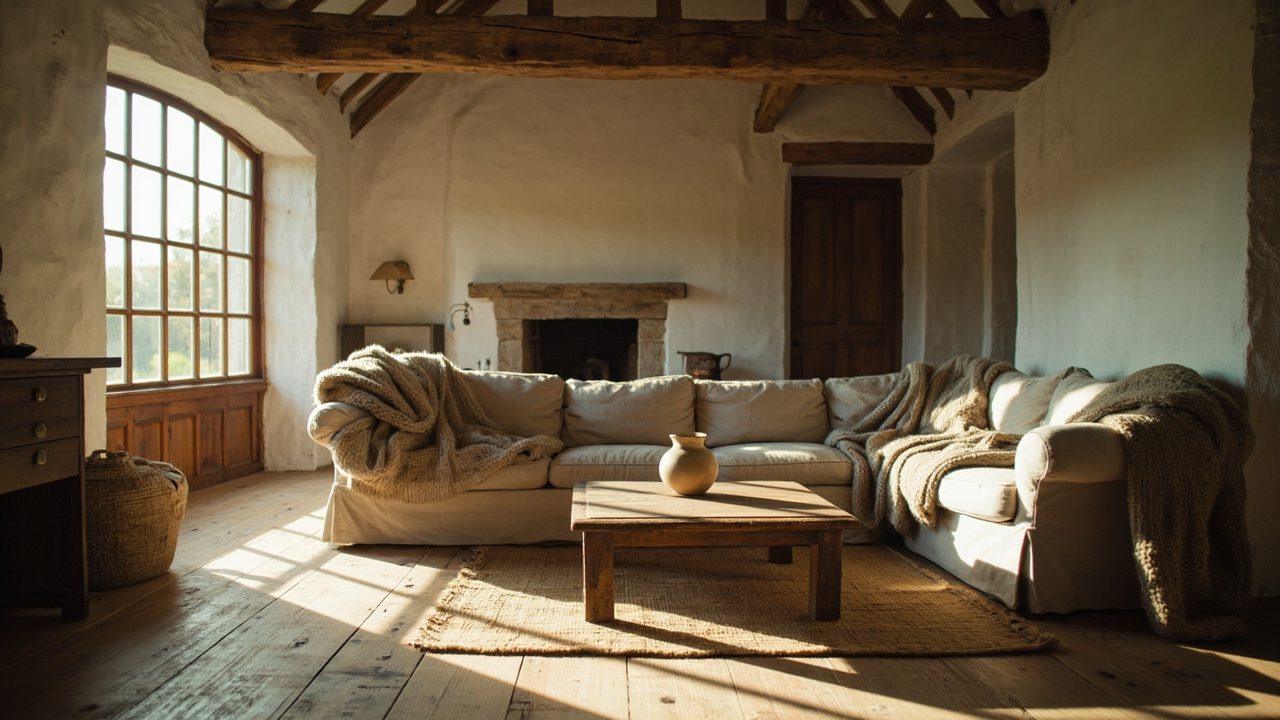
A cottage home should read like a well-loved book: worn edges, thoughtful margins and characters (rooms) that invite you to linger. These 18 ideas concentrate on making every inch matter—prioritizing texture, proportion and intentional ornament so a small footprint reads as rich, not cramped. Think of scale as the chief editor: choose pieces that breathe, routes that flow, and finishes that age gracefully.
Cottage style in 2026 leans softer and more tactile—comfort colors, vintage-inspired fabrics and layered lighting turn compact rooms into immersive retreats. Below are the first three approaches that set the tone for a small home that feels both curated and comfortably lived-in, with specific material, color and placement calls you can act on immediately.
- 1. Cottage Porch Charm
- 2. Granny Chic Textiles
- 3. Hollywood Cottage Layering
- 4. Timeless Leaded Glass
- 5. Cozy Nook Seating
- 6. Botanical Wallpaper Prints
- 7. Worn-Wood Flooring
- 8. Handcrafted Ceramic Accents
- 9. Pastel Comfort Palettes
- 10. Lace-and-Ruffle Linens
- 11. Curated Vintage Finds
- 12. Wrought-Iron Details
- 13. Wicker Swing Seating
- 14. Herb Garden Windowboxes
- 15. Checkerboard Rug Mix
- 16. Quilted Throw Staples
- 17. Porch Swing Lighting
- 18. Arched Doorways
- FAQ
- Final Thoughts
1. Cottage Porch Charm
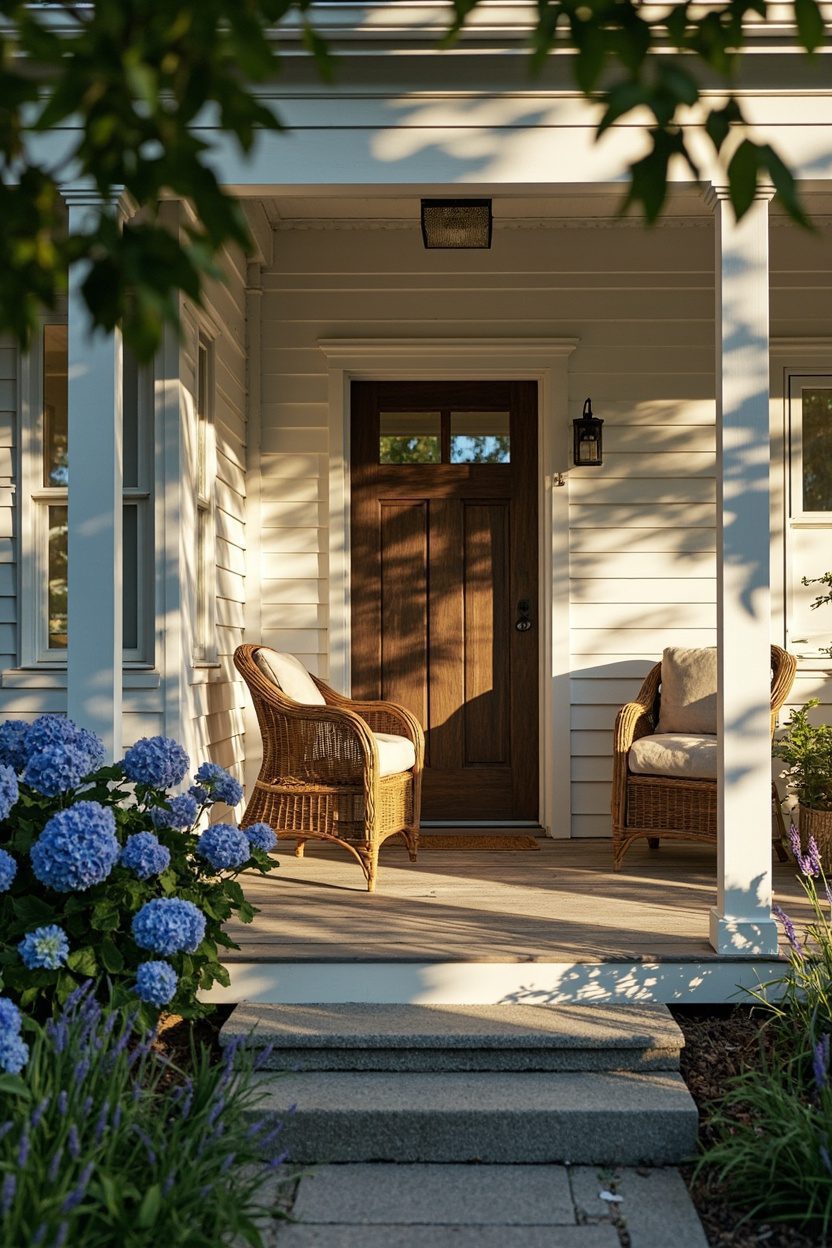
A small covered porch acts as an immediate mood-setter for a cottage home; treat it like an outdoor foyer rather than overflow storage. Opt for a painted beadboard ceiling in a pale blue to trick the eye into height, pair with a narrow two-seater bench in rot-resistant cedar (oil-finished for a richer tone), and anchor the space with a 2×3 polypropylene rug in muted gingham to withstand foot traffic and wet shoes.
This is not the time for oversized planters—choose three slim containers (terracotta or galvanized steel) placed asymmetrically to keep the approach clear and inviting. For lighting, a single wall-mounted lantern in aged brass at eye level provides charm and scale—avoid pendants on low porches which will feel heavy and reduce clearance.
What to Focus On
- Ceiling color raises perceived height—use pale blue beadboard rather than white on low porches.
- Bench materials: rot-resistant cedar with oil finish for longevity and warm tone.
- Scale planters narrow (max 12–14″ diameter) and group of three for visual balance.
- Lighting: one wall lantern in aged brass at eye level for proportion and weather resistance.
2. Granny Chic Textiles
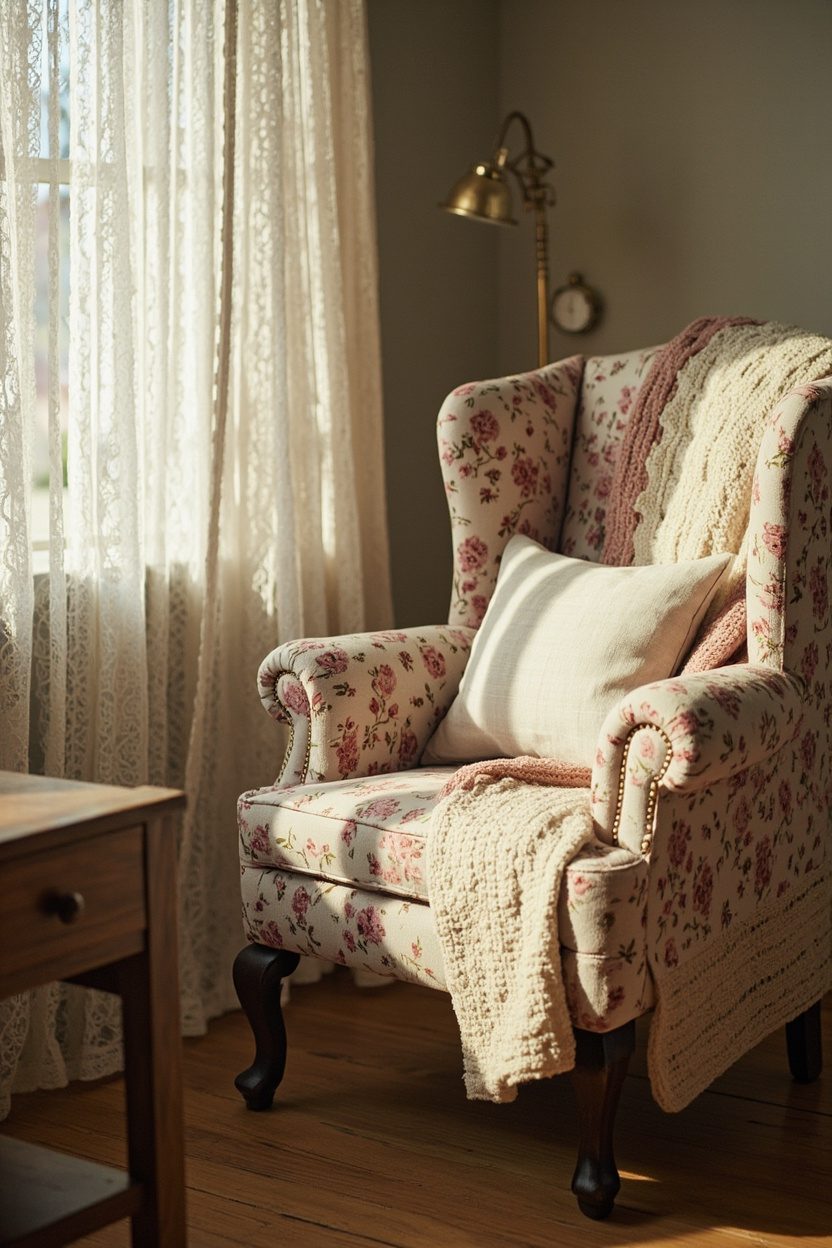
Granny chic is less about literal antiques and more about curated textiles that read as cozy heirlooms—crocheted throws, floral chintz, and small-scale embroidered pillows. Mix patterns deliberately: pair a ditsy floral armchair in cotton-linen with a solid-woven throw in warm oatmeal; keep contrast moderate by limiting palette to three colors maximum (cream, faded rose, and sage).
Choose upholstery fabrics with a Martindale abrasion rating suitable for frequent use (20,000+ for sofas in active homes) so your vintage vibe isn’t fragile. Place a small ottoman instead of a bulky coffee table in compact living rooms—upholstered piece doubles as seating and keeps circulation clear.
Styling Blueprint
- Limit palette to three complementary colors to avoid visual clutter in small rooms.
- Use durable fabrics (20,000+ Martindale) on frequently used seating for longevity.
- Favor an upholstered ottoman over a large coffee table to free up floor space.
- Layer one embroidered pillow, one textured knit, and one patterned cushion per seat for balanced charm.
3. Hollywood Cottage Layering
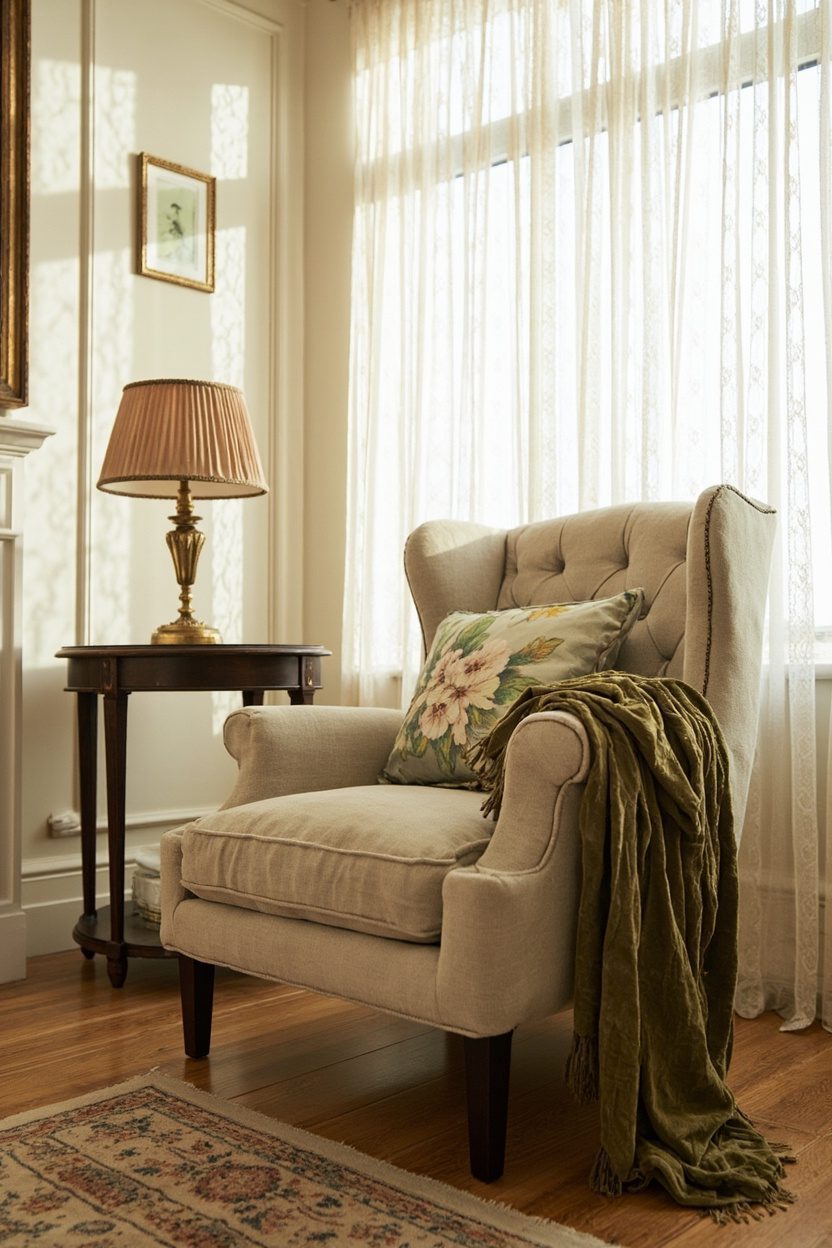
Hollywood Cottage marries lived-in warmth with a touch of polish—think velvet armchair beside a distressed pine side table and a vintage gilt mirror hung low over a narrow console. Prioritize layering: area rug, runner, small piled throw and mixed metals in lighting to create richness without crowding. Choose one luxe material (e.g., low-pile velvet in a jewel tone) as an accent and keep surrounding fabrics matte to avoid over-glossing a small room.
Scale is critical—use narrow-based sconces and slim-profile furniture to maintain sightlines. Incorporate mirrored surfaces intentionally: a small, antique mirror behind a console doubles perceived depth but avoid floor-to-ceiling mirrored expanses which will flatten the cottage character. For sourcing and styling cues that lean minimalist-cottage hybrids, see the Bed Wall Decor Minimalist piece for wall treatment restraint.
Essential Elements
- Pick one luxe accent fabric (velvet or silk) and keep others matte to prevent visual overload.
- Use narrow-profile furniture (20–24″ deep seating) to preserve circulation in compact rooms.
- Add one small antique mirror above a console to increase depth without losing charm.
- Layer two rugs (jute base + small wool rug) for texture while protecting floors in high-traffic zones.
4. Timeless Leaded Glass
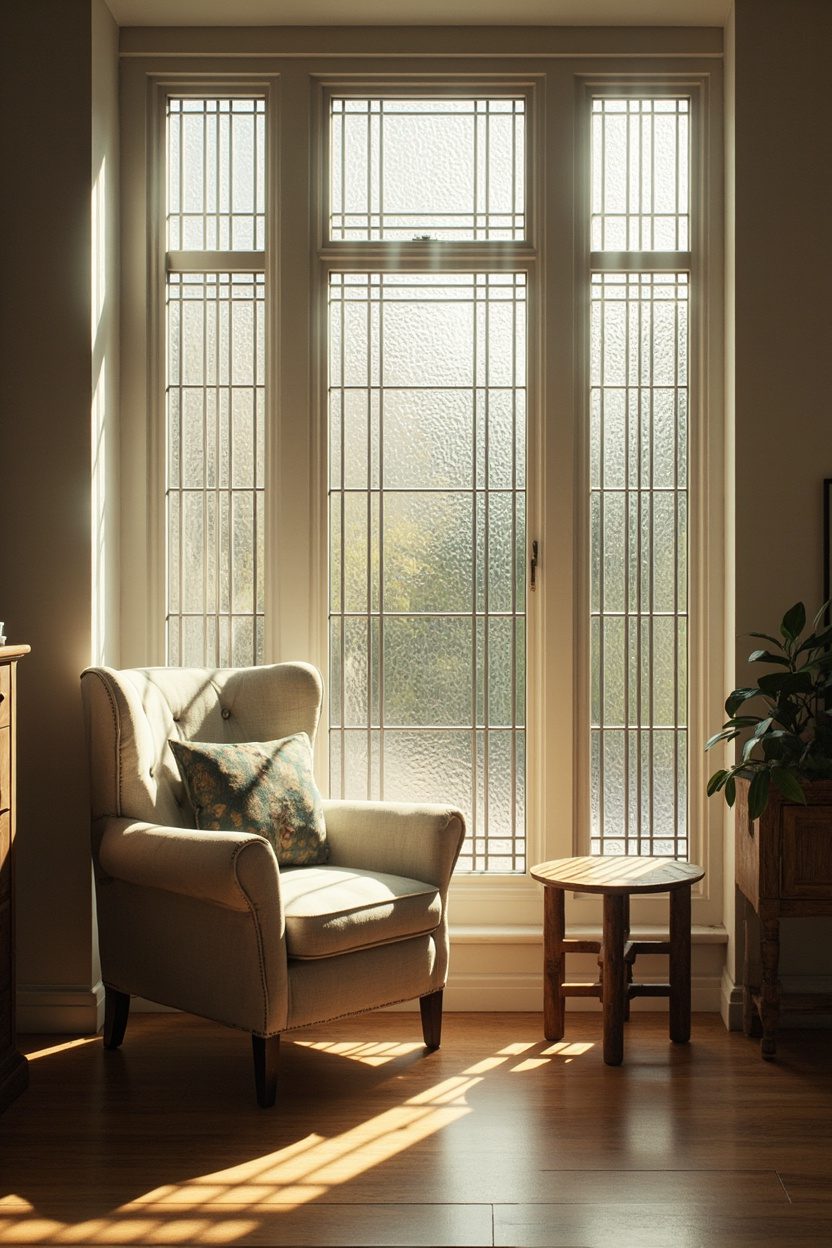
Leaded glass windows and cabinet doors anchor a cottage interior with instant authenticity; choose clear textured or subtly colored glass rather than stained panels for longevity and resale appeal. In a small home, install a single leaded transom over a kitchen sink or a slim cabinet door in a narrow pantry to add sparkle without sacrificing light—opt for lead cames in antique bronze for warmth, not shiny lead for a more period-accurate look.
Introduce leaded glass selectively to avoid visual clutter: a single focal window in the living room or a pair of upper kitchen cabinets. Avoid oversized patterns that dwarf small openings—scale the motif to the pane size and keep surrounding trim painted in a soft off-white or muted sage to read as intentional, not fussy.
What to Focus On
- Use clear textured or pale colored glass to maximize light transmission and privacy while keeping vintage charm.
- Limit to one or two architectural spots (transom, cabinet doors) to maintain a sense of spaciousness.
- Choose cames in antique bronze or aged pewter for a cottage-appropriate finish.
- Avoid large, bold patterns; scale motifs to small panes to prevent overwhelming the room.
5. Cozy Nook Seating
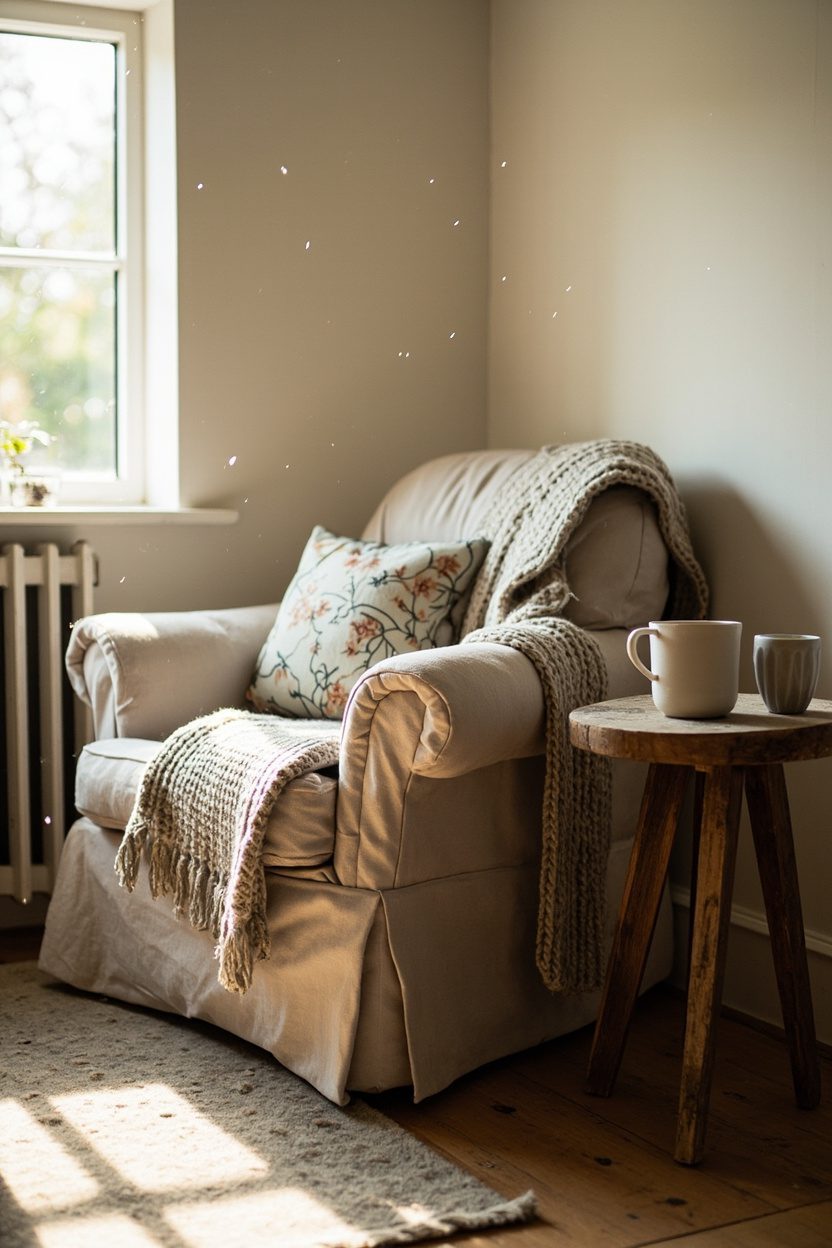
A built-in window seat or corner banquette transforms an awkward gap into a signature cottage moment—specify a seat depth of 18–20 inches for a compact but comfortable perch and a 16–18-inch height to align with standard chair ergonomics. Use kiln-dried plywood carcasses wrapped in medium-density foam (2″ seat foam over a 1″ base) for durability in a small home where every inch is lived in.
Lean into layered textiles: a single fitted cushion in a tightly woven linen blend for daily use, topped with two lumbar pillows in weather-resistant yet soft fabric for touchability. If budget is tight, frame the nook in painted pine, hide the storage beneath with simple shaker-style fronts, and reserve upholstery spend for a high-traffic seat fabric rated for 50,000+ rubs.
Styling Blueprint
- Specify 18–20″ seat depth and 16–18″ seat height for compact comfort and standard dining alignment if paired with a table.
- Build on kiln-dried plywood with foam layering (2″ top, 1″ base) for longevity and firm support.
- Use washable linen-blend cushion covers and add two lumbar pillows for back support and visual layering.
- Include under-seat storage with shaker fronts to maximize function in small footprints.
6. Botanical Wallpaper Prints
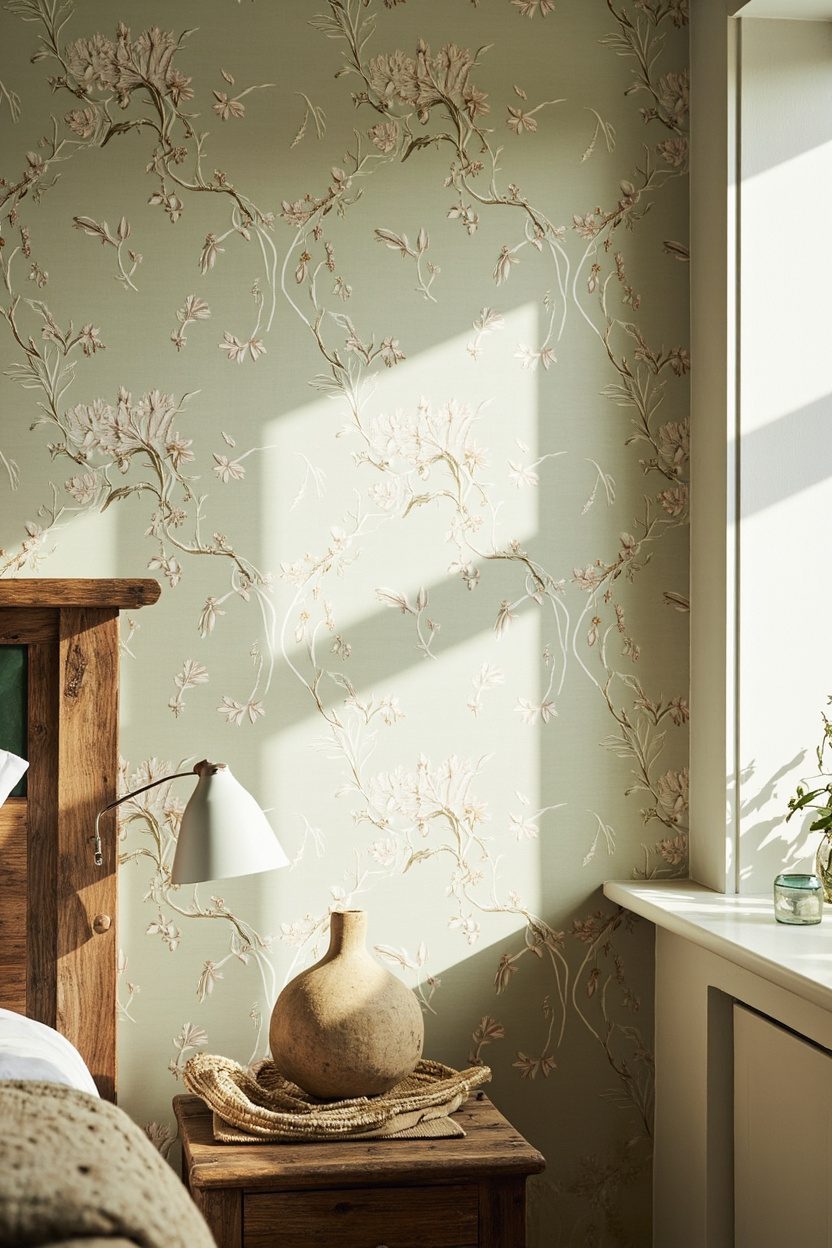
Botanical prints are the fastest way to bring cottage warmth indoors—select a print with a subtle, small-scale repeat to suit narrow walls and avoid making rooms feel busy. For a small home, apply the wallpaper to a single wall (behind a bed or the back of a bookcase) as an accent rather than papering the entire room; this keeps the effect intimate and adaptable.
Match the paper’s color temperature to larger furnishings: warm-toned greens and ochres pair with honeyed wood and brass, while cool green-and-blue palettes pair with white-washed floors. If you want a modern take on classic motifs, pick non-woven, peel-and-stick papers that allow easy changes and less prep—budget-friendly and renter-safe.
Essential Elements
- Choose small-scale repeats for narrow walls to keep visual flow without overpowering the room.
- Paper a single accent wall (headboard wall or bookshelf backing) to enhance depth without shrinking the space.
- Coordinate the palette with major finishes—warm prints for honey woods, cool prints for white-wash schemes.
- Consider non-woven peel-and-stick options for easy installation and future updates; test a sample on-site for light effect.
7. Worn-Wood Flooring
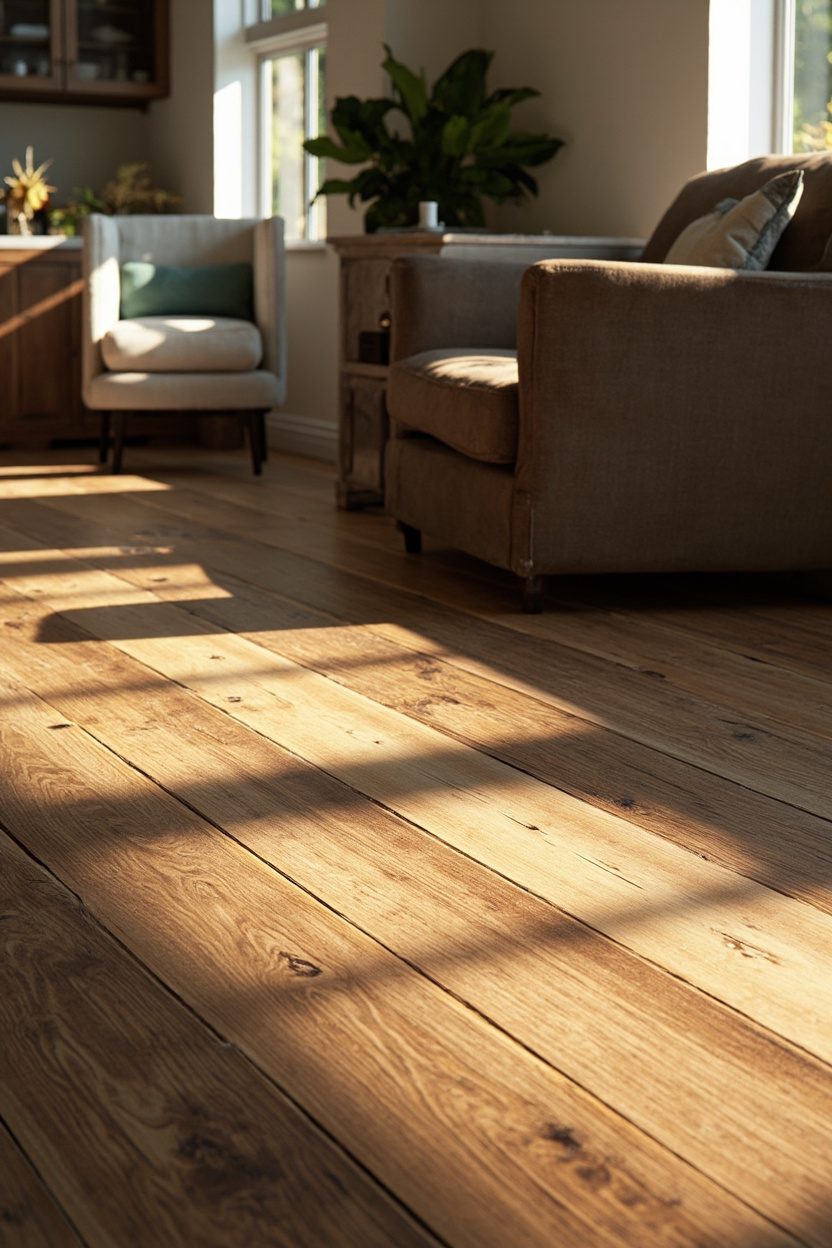
Worn-wood flooring is the backbone of cottage charm: choose wide planks in oak or pine with a low-sheen whitewash or soft gray stain to read as both relaxed and deliberately aged. Opt for real hardwood where possible; engineered boards with a 4–6 mm wear layer are an economical alternative for rental or high-moisture zones, and avoid overly distressed factory finishes that look manufactured rather than lived-in.
Install planks perpendicular to the longest sightline to visually lengthen small rooms, and keep baseboard profiles simple—3–4 inch painted boards in the same tone as the trim maintain that seamless, collected look. A costly mistake to avoid is pairing overly dark floors with heavy drapery in tiny rooms; the scale will feel closed-in rather than cozy, so favor lighter flooring if you plan deep fabrics.
What to Focus On
- Plank width: 6–8 inches for authentic cottage scale; wider can overwhelm small rooms.
- Finish: matte or satin whitewash/gray for timeless patina, not glossy lacquer.
- Installation direction: runs along longest axis to expand perceived space.
- Budget tip: engineered hardwood with thick wear layer for reduced cost and stability in humid areas.
8. Handcrafted Ceramic Accents
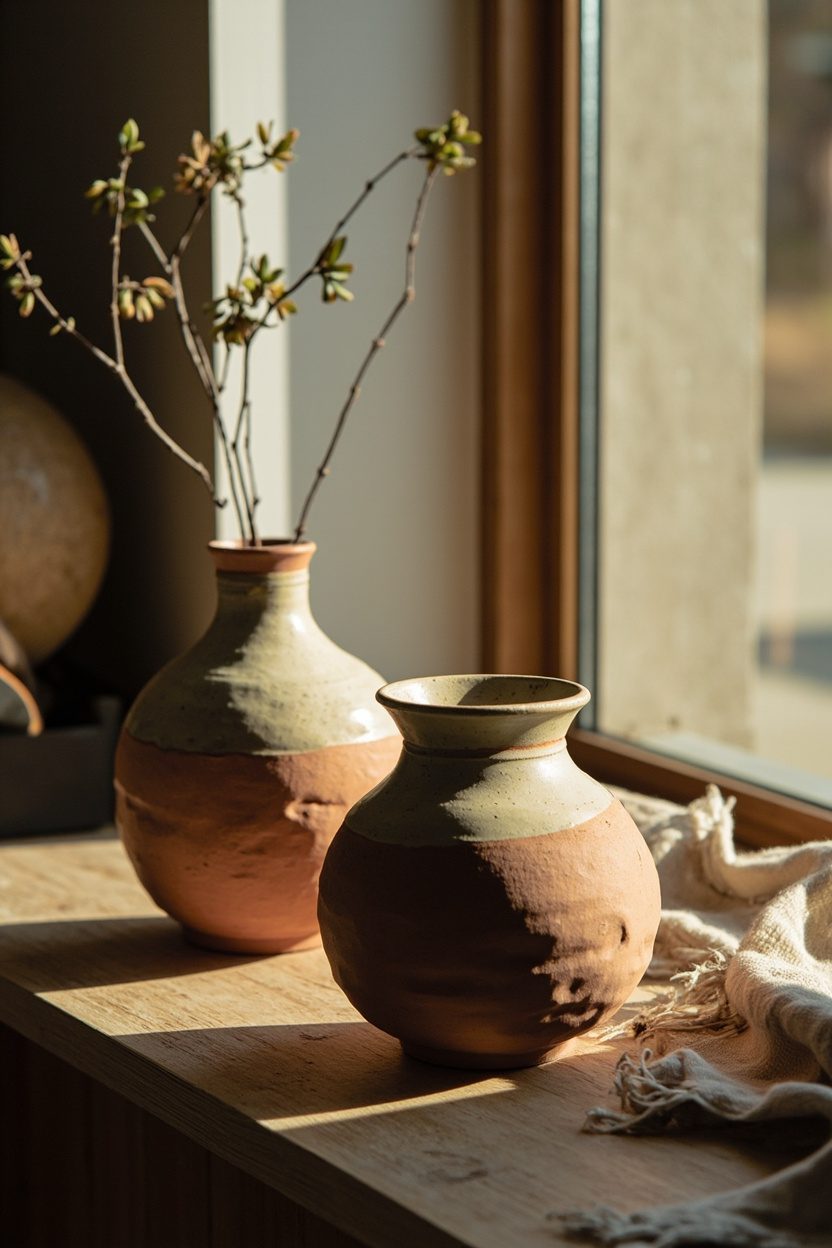
Handmade ceramics—mugs, jugs, and small planters—add tactile warmth and imperfect beauty that mass-produced pieces can’t match; choose glazes in soft matte creams, speckled celadon, and muted blue to anchor a cottage palette. Mix a few vintage pieces with new artisanal objects to avoid a “catalog” look; a single larger statement pitcher (8–12 inches tall) on open shelves reads like sculpture and works as functional storage.
In the kitchen, display ceramics on open shelving rather than behind glass to keep the visual texture approachable and everyday. Be deliberate about scale: small ceramics grouped tightly read cluttered on a narrow shelf, so reserve groupings of three to five with one taller piece to create rhythm and balance.
Styling Blueprint
- Color choices: cream, celadon, muted blue for cohesive cottagecore harmony.
- Groupings: odd-numbered clusters (3 or 5) with a taller central piece for visual flow.
- Placement: open shelves, window sills, and bedside nooks for everyday delight.
- Care: seal porous pieces used for plants to prevent staining and salt damage.
9. Pastel Comfort Palettes
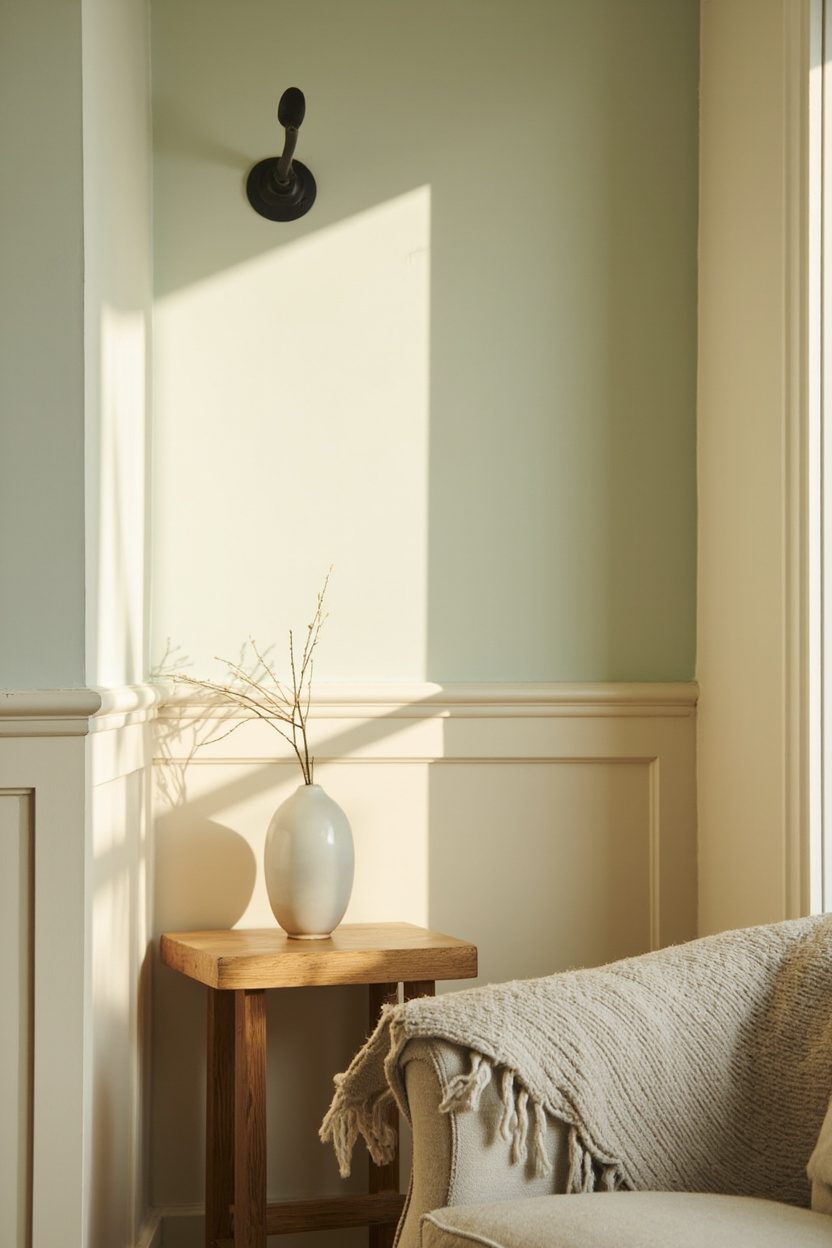
Pastel color schemes—think soft blush, dusty mint, and warm butter yellow—are the quiet heroes of small cottage homes, reflecting light and making rooms feel airier without feeling saccharine. Use neutrals (soft ivory or warm greige) as the base on walls and trim, then introduce pastels through upholstery, throw pillows, and a single painted piece of furniture to keep the scheme sophisticated rather than saccharine.
Balance is crucial: limit the number of pastels in any one room to two main hues plus neutrals to prevent a toy-like effect, and use texture (linen, boucle, hammered metal) to ground the palette. If you’re unsure which pastel to choose, test large swatches on different walls and observe at morning and evening light before committing.
Essential Elements
- Base layer: soft ivory or warm greige walls to let pastels sing without overpowering.
- Accent use: one painted cabinet or sofa in a pastel as the focal point.
- Textural contrast: linen, wool, and woven rugs to prevent flatness in pale schemes.
- Lighting check: verify hues under natural and artificial light before finalizing paint.
10. Lace-and-Ruffle Linens
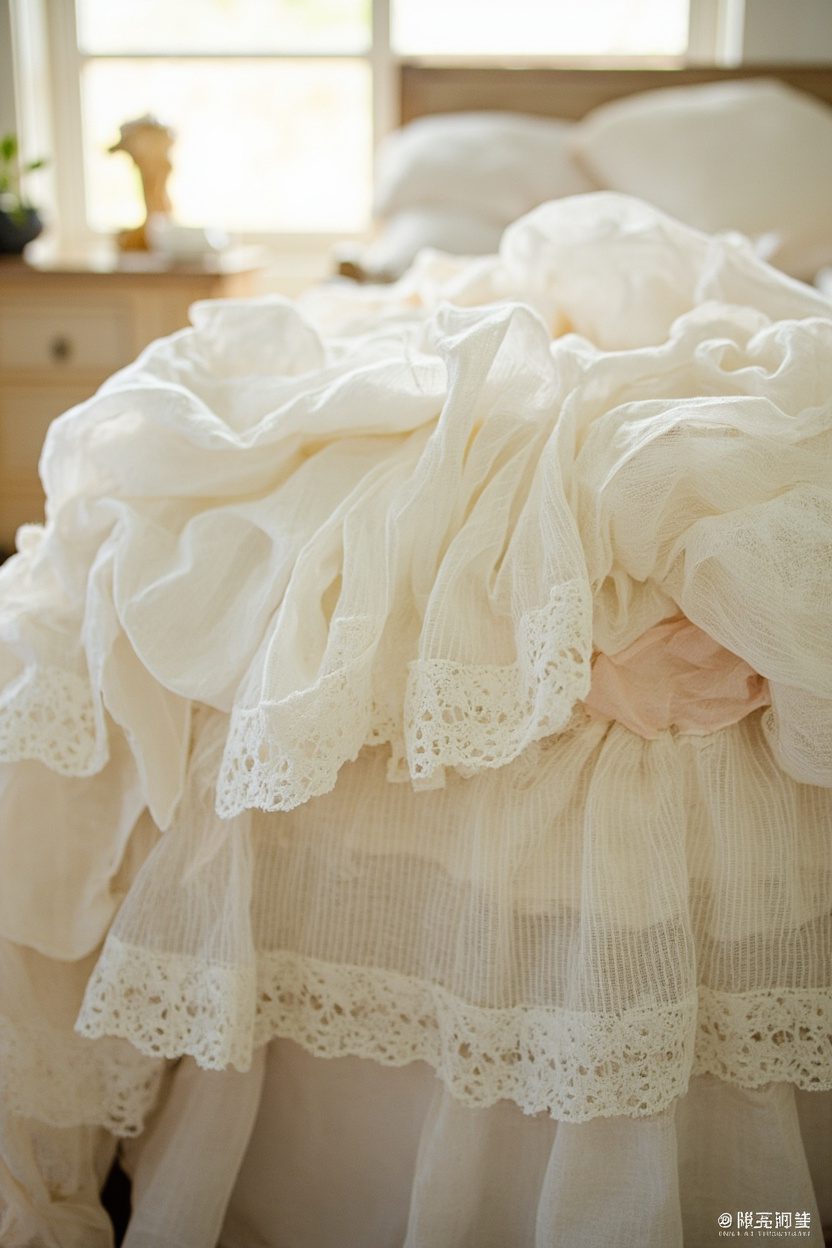
Lace-and-ruffle linens anchor the cottage bedroom’s softness; think cotton percale sheets with scalloped edges and a linen duvet trimmed in eyelet for a timeless, tactile bed. Choose off-white or warm ivory rather than stark white to keep the look aged and welcoming, and limit ruffles to one or two pieces (a pillow and a bedskirt) so the room reads curated rather than costume-y.
Introduce pattern sparingly: a tiny floral bolster or a gingham throw at the foot of the bed in a muted color (sage, dusty rose, or faded blue) keeps the linens from feeling saccharine and ties into other cottage touches in the room. For durability, select pre-washed linen or combed cotton—they soften with wear and hide small stains better than crisp new fabrics.
Styling Blueprint
- Color: warm ivory base with one muted accent color for trims or pillows like dusty rose or sage.
- Material: pre-washed linen or combed cotton for longevity and a lived-in texture.
- Scale: limit ruffles to 1–2 pieces to avoid visual clutter.
- Placement: add a small patterned bolster at the bed foot to anchor the palette.
11. Curated Vintage Finds
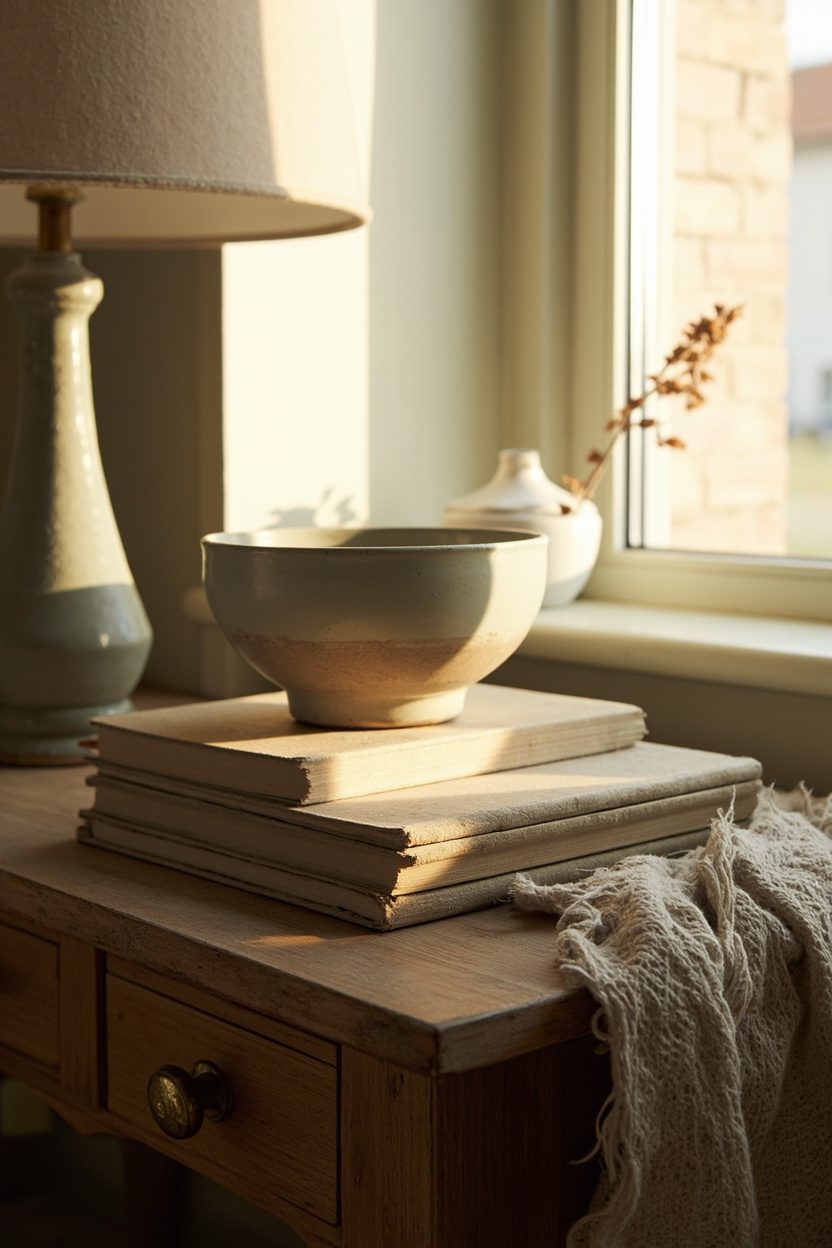
A handful of curated vintage pieces gives a small cottage instant character—look for a 1940s sideboard in chipped paint, a well-proportioned dressing table, or brass candlesticks with patina. When shopping, vet scale carefully: choose furniture with slimmer profiles and exposed legs so the eye can pass underneath, making rooms feel airy rather than crowded.
Mix eras but repeat finishes to maintain cohesion: if you bring in an antique mirror with a gilt frame, echo that warm metal in small accents like picture frames or a lamp base. Budget tip: prioritize one statement vintage item (under $400 at markets) and balance it with economical reproductions in neutral tones to avoid overspending.
What to Focus On
- Scale: pick smaller-footprint vintage furniture with exposed legs for visual lightness.
- Finish: repeat one finish (brass, warm wood, or painted white) to unify mixed eras.
- Condition: accept surface wear but avoid structural damage—check joints and drawers.
- Budget strategy: one statement vintage purchase plus affordable complements.
12. Wrought-Iron Details
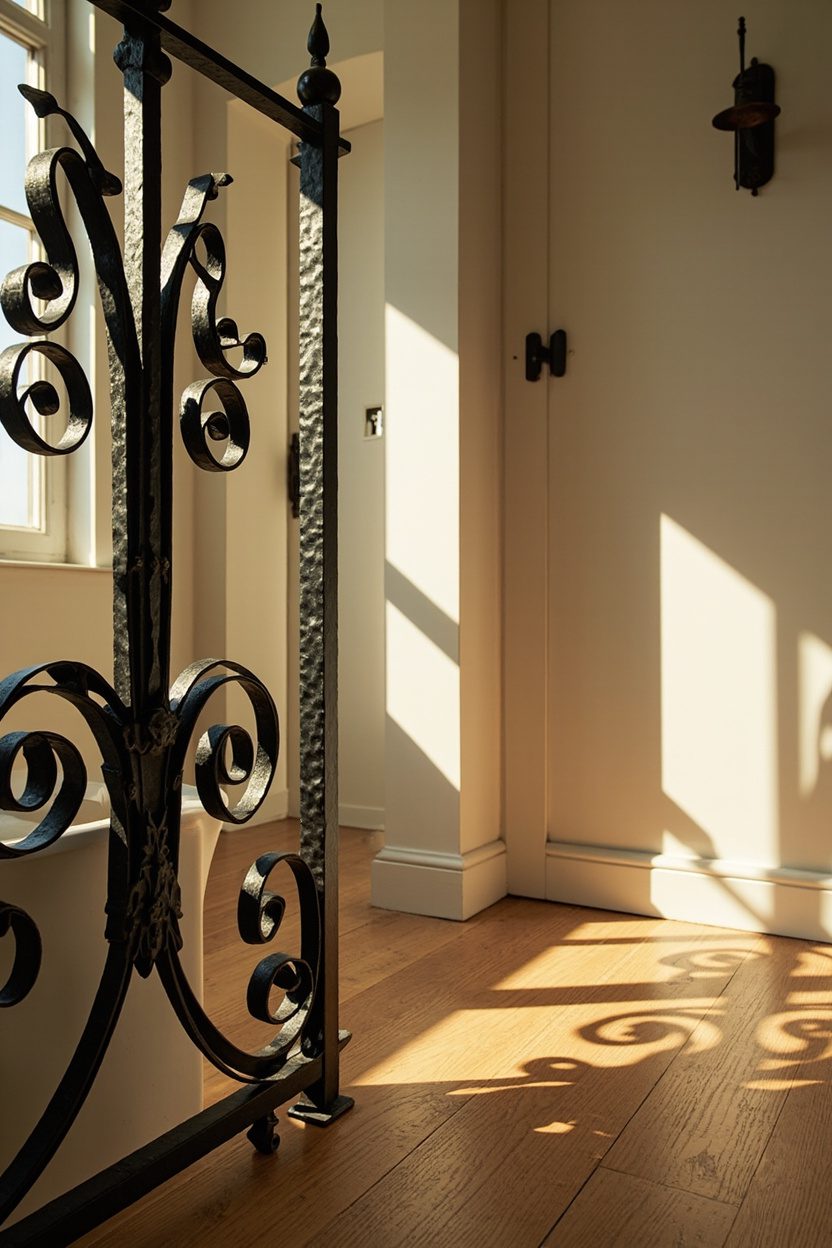
Wrought-iron elements—think slender curtain rods, a petite garden gate repurposed as headboard, or delicate balusters—add cottage charm with architectural interest. Opt for matte black or aged bronze rather than shiny black; the softer finish reads more handcrafted and pairs better with florals and painted woodwork.
Use iron sparingly as a counterpoint to softer materials: a narrow iron console by the entry, hooks for aprons in the kitchen, or a small iron pendant over a breakfast nook. Avoid heavy, ornate pieces in tight spaces; choose streamlined profiles to prevent visual heaviness and to keep circulation unobstructed.
Essential Elements
- Finish: matte black or aged bronze for a handcrafted, softened look.
- Placement: use small-scale iron pieces—rods, hooks, a narrow console—to avoid weightiness.
- Contrast: pair with painted wood and linens to balance hard/soft textures.
- Scale tip: keep iron elements proportionate to room size—slimmer profiles only for small homes.
13. Wicker Swing Seating
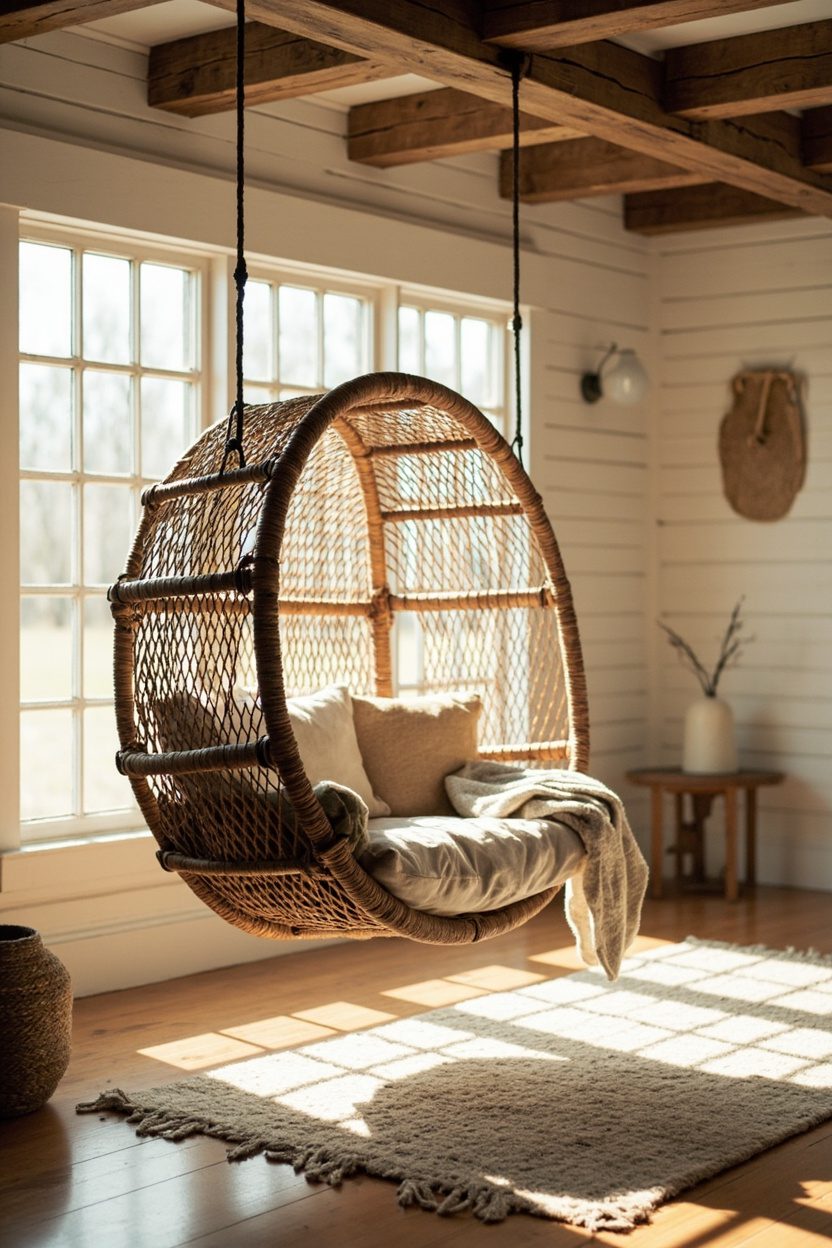
A wicker swing hung on a covered cottage porch is more than charm—it’s an outdoor room decision that adds usable seating without crowding small yards. Choose a tightly woven natural wicker in a medium brown for durability and to conceal wear; pair with weather-resistant cushions in a muted floral to stay true to cottagecore without looking costumey. Avoid oversized swings that overwhelm a 6–8 ft porch—opt for a 4–5 ft seat to preserve circulation and sightlines to the garden.
Frame and hardware matter: use marine-grade stainless steel chains and a reinforced ceiling beam to prevent sagging over time, and finish the beam in the same paint as the house trim for cohesive scale. For a cozier feel, anchor one end of the swing with a potted hydrangea and the other with a slim side table—this keeps the seating functional and staged for living rather than only for looks.
Styling Blueprint
- Pick mid-brown synthetic wicker for longevity and easy cleaning (budget: $300–$900)..
- Use 4–5 ft swing width on small porches to maintain flow and sightlines to the yard..
- Install stainless steel chains and reinforce joists to handle 400+ lb dynamic load..
- Add one patterned cushion + two lumbar pillows in complementary hues for cottage layering..
14. Herb Garden Windowboxes
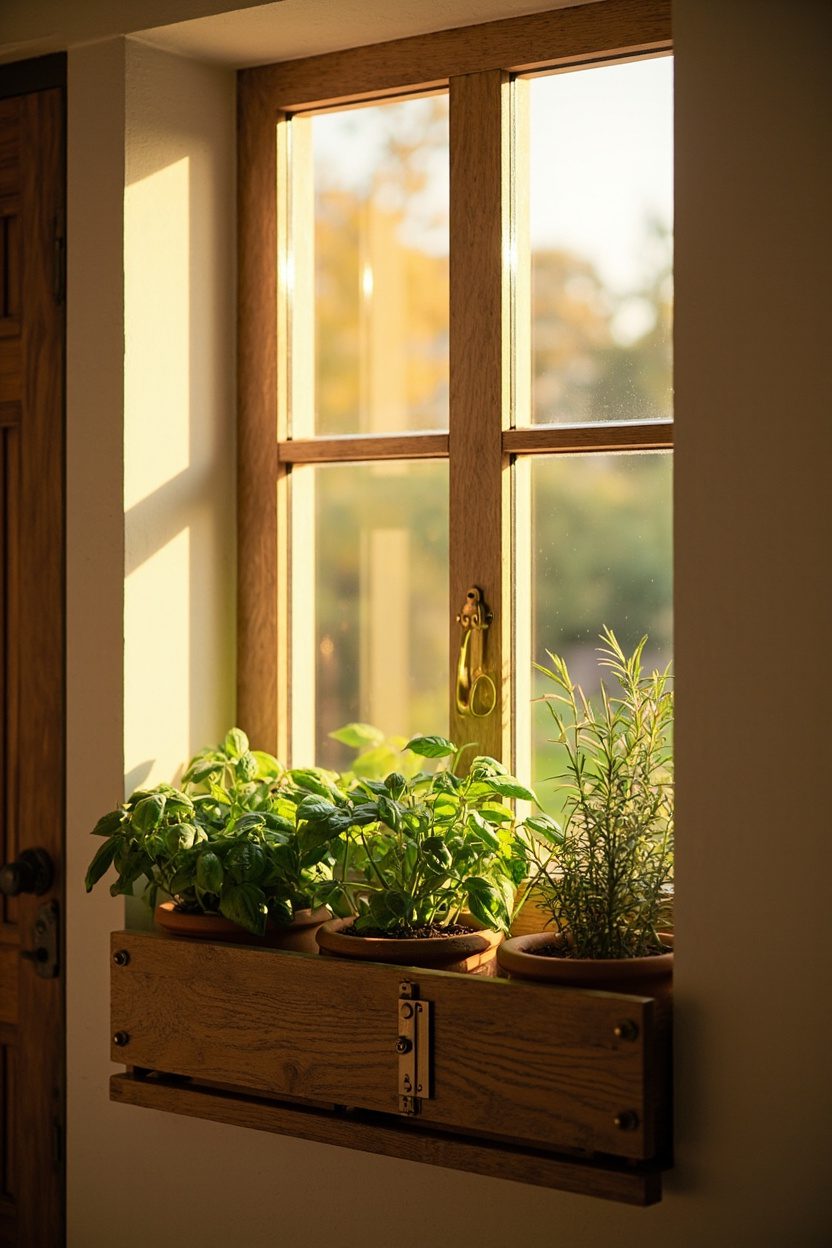
Windowboxes filled with rosemary, thyme, and basil are a classic cottage tactic that gives your small home layered texture, scent, and practical function. Opt for treated cedar or powder-coated aluminum boxes—cedar lends warmth and ages to gray, while aluminum is lighter and better for east-facing windows prone to moisture. Install boxes with through-bolt brackets rather than hangers to secure them permanently and avoid sagging over seasons.
Choose a mix of heights and leaf textures—taller herbs like rosemary at the back, trailing thyme and oregano at the front—to create depth against the window. For winter interest, include a rosemary topiary or switch to boxwoods; this keeps the facade considered year-round and prevents a bare-window look in colder months.
Essential Elements
- Use cedar boxes for warmth or powder-coated aluminum for lightness and rust resistance..
- Mount with through-bolts into studs or masonry using stainless anchors for long-term security..
- Plant tall (rosemary), medium (basil), and trailing (thyme) for layered texture and visual depth..
- Rotate to winter-hardy plants (boxwood, hebe) to maintain year-round curb appeal..
15. Checkerboard Rug Mix
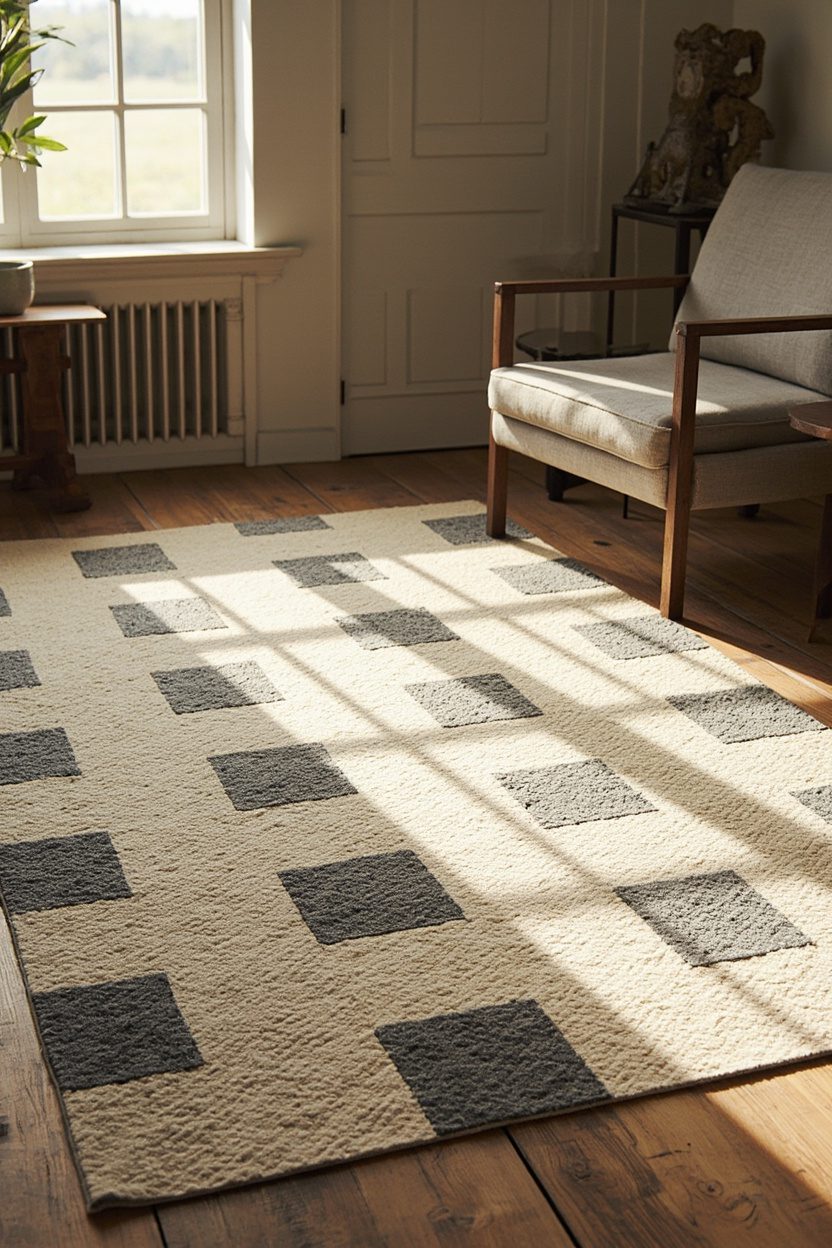
A small cottage living room gets instant personality when you layer a classic black-and-cream checkerboard rug under a textured wool or braided rug—this is a deliberately edited chaos move that reads collected, not cluttered. Keep the checkerboard piece in a smaller scale (about 4×6 ft) so it reads as a graphic accent rather than overpowering the room; top it with a neutral-toned 6×9 wool rug to anchor seating and soften acoustics.
Balance is key: pair the high-contrast checkerboard with warm wood furniture (oak or pine, not dark mahogany) and soft linen throws to prevent the pattern from feeling cold or retro diner-like. One practical pitfall to avoid is mixing too many bold patterns at once—limit strong prints to the checkerboard and use solids or tonal stripes elsewhere.
What to Focus On
- Select a 4×6 checkerboard in wool or indoor-outdoor polypropylene for easy maintenance and scaled proportion..
- Layer with a larger neutral wool rug (6×9) to soften contrast and define the seating area..
- Coordinate with warm wood tones and linen textiles to keep the palette cozy and cottage-appropriate..
- Avoid adding another bold pattern—use textured solids for pillows and throws to maintain balance..
16. Quilted Throw Staples
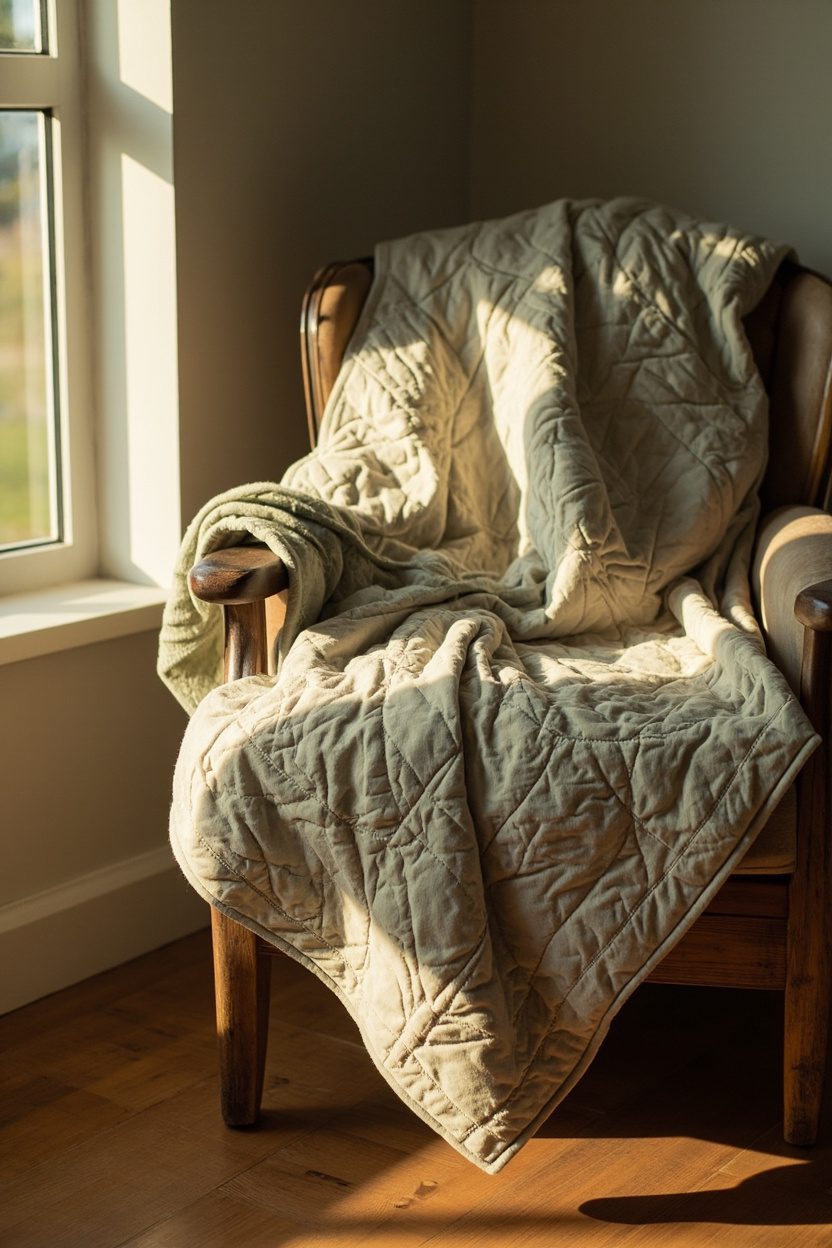
Quilted throws are the quiet workhorses of cottage interiors — they bring pattern, texture and an immediate sense of layering without overwhelming a small room. Choose cotton or linen-backed quilts in a 50×60 to 60×70-inch size for sofa or bed placement; the smaller scale reads right in compact spaces and avoids the frumpy, oversized look that swallows visual square footage. Opt for a color story: muted rose, faded teal, or warm cream with a subtle floral or geometric repeat will harmonize with vintage finds and modern pieces alike.
Treat the throw as both accessory and durable piece: machine-washable cotton quilts hold up to daily use, while hand-stitched or heirloom-quality quilts can be used as focal throws on a budget bed or a reading nook. Avoid heavy, velvet-based throws in small cottages — they add warmth but can feel visually dense. Instead, layer a lightweight quilt over a neutral wool blanket in cooler months for depth without bulk.
What to Focus On
- Pick a throw width proportionate to furniture — 50–60 inches for narrow sofas or twin beds.
- Favor cotton or linen with a 200–400 GSM for durability and washability.
- Limit pattern scale — small repeats play better in tight spaces than oversized motifs.
- Use one quilted throw as an anchor piece, then add a contrasting solid pillow for balance.
17. Porch Swing Lighting
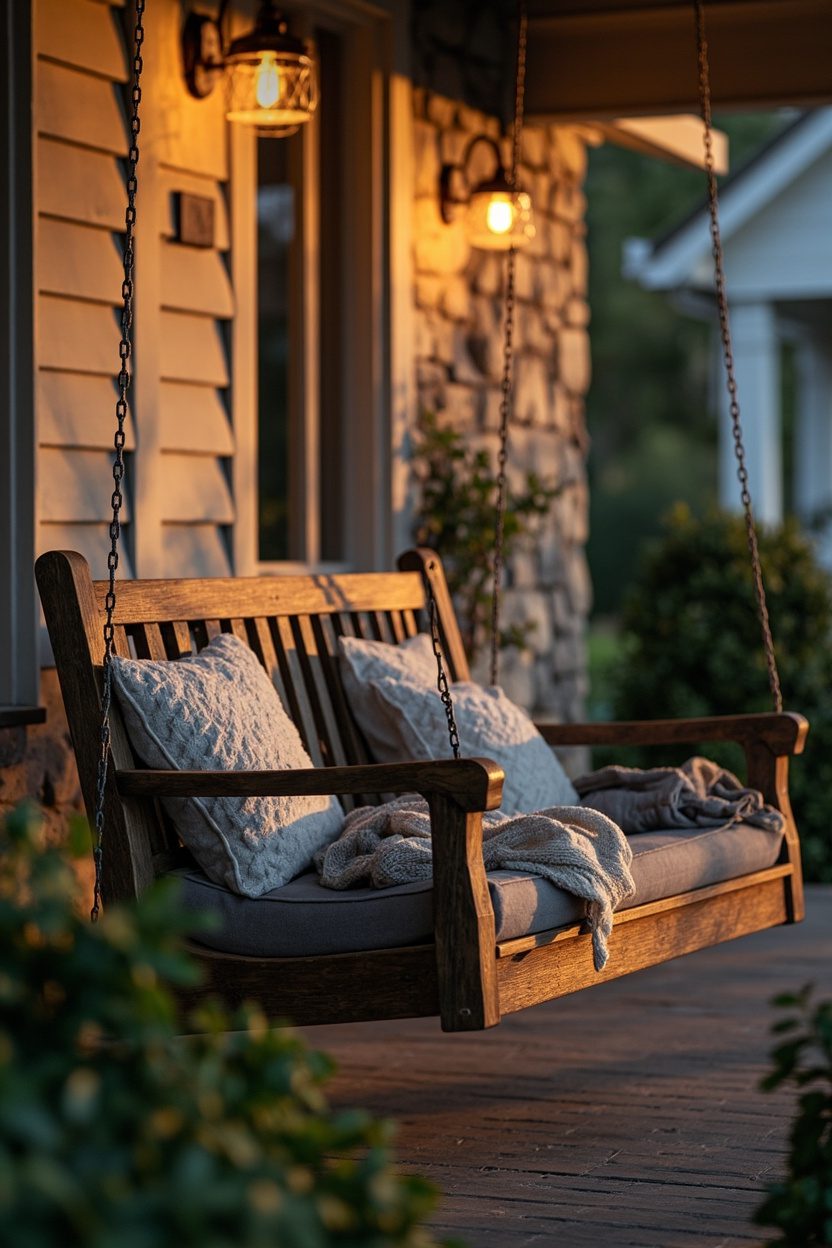
Porch swing lighting turns a simple covered porch into an evening destination — the right fixture sets mood and usability. For cottage porches, choose warm 2700K LED bulbs and fixtures with a slightly antique finish such as aged brass or black iron to complement classic porch swing materials like painted pine or whitewashed cedar. If you have eaves, hardwired lantern-style sconces flanking the swing create symmetry; for open rafters, string Edison-style LEDs with a dimmer for a softer glow.
Pay attention to scale and placement: hang pendants 30–36 inches above the swing seat to avoid glare and preserve sightlines, and size fixtures proportionally — a small porch needs a 10–14 inch lantern or a single strand of bulbs, while deeper porches can carry two matching fixtures. For a budget-friendly, low-install option, use solar-powered hanging lanterns or plug-in vintage cage sconces that clamp to porch posts, but ensure they’re rated for outdoor use to avoid corrosion.
Essential Elements
- Choose 2700K warm LEDs for cozy, cottage-appropriate light quality.
- Hang fixtures 30–36 inches above the swing seat to prevent glare.
- Match finish to porch hardware — aged brass, black iron, or white enamel work well.
- Use dimmers or multi-level bulbs for adjustable ambiance in evenings.
18. Arched Doorways
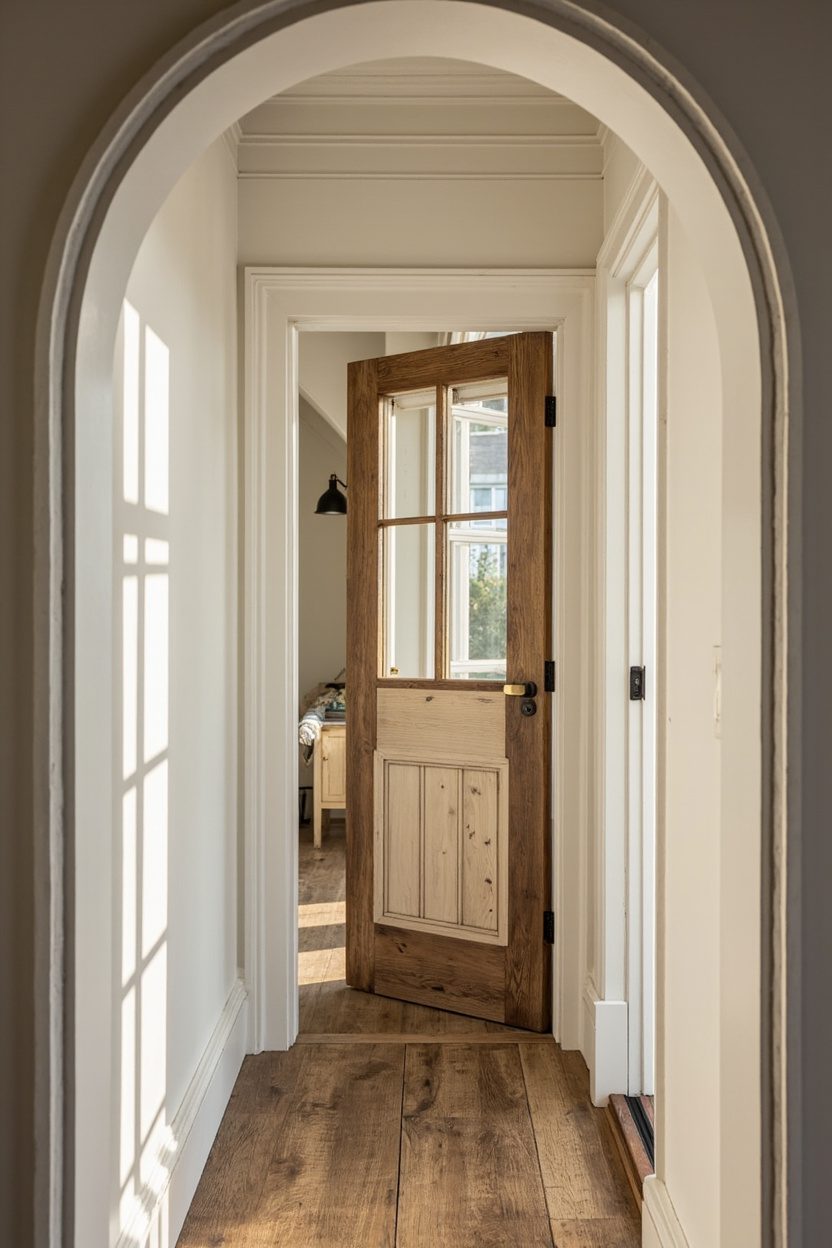
Arched doorways are an architectural shortcut to charm — they soften sightlines and add an instant historic note even in new construction. For small homes, shallow arches (with a 6–8 inch rise) maintain ceiling height and visual flow, while full-height cathedral arches can feel grand but may overwhelm very tight corridors. When retrofitting, opt for a trimmed drywall arch with a simple quarter-round casing; it’s less invasive than reframing and keeps costs in a moderate renovation tier.
Material and finish choices matter: paint the arch in the same color as adjoining walls to create a subtle, integrated look, or highlight it with a contrasting trim color (for example, soft sage or warm cream) to make it a focal moment. Avoid overly ornate millwork on narrow arches — delicate beading or a single-step molding is enough to read as intentional without cluttering the space. For more planning resources on small layouts, reference small home ideas like Small Home Floor Plans when considering traffic flow and sightline impacts.
Styling Blueprint
- Use a shallow arch (6–8 inch rise) in tight spaces to preserve perceived height.
- Choose paint-match or subtle contrast for the arch to control visual emphasis.
- Select minimal trim — single-step molding or quarter-round keeps the look clean.
- Consider doorway width: keep at least 30–32 inches for comfortable passage in cottages.
For a complementary decor approach, see 16 Shabby Chic Decor Ideas That Feel Romantic Not Tired.
FAQ
How do I choose the right quilt pattern for a small cottage bedroom?
- Select small- or medium-scale repeats to avoid overpowering the bed in compact rooms.
- Stick to two to three colors maximum in the quilt to keep the palette calm and layered.
- Match quilt texture to seasonality: lightweight cotton for summer, layered wool underneath for winter.
- Measure bed and allow 8–12 inches overhang on each side for a polished look.
Can I install porch lighting myself or should I hire an electrician?
- Simple plug-in lanterns or solar fixtures can be DIY-friendly and lower-cost solutions.
- Hardwired fixtures or any changes to exterior circuits require a licensed electrician for safety and code compliance.
- Use outdoor-rated fixtures and corrosion-resistant hardware for coastal or humid locations.
- Consider adding a dimmer or smart switch for flexible evening ambiance rather than multiple fixtures.
Will an arched doorway reduce usable wall space for furniture?
- Shallow arches minimize intrusion into vertical wall space compared with deep niche arches.
- Plan furniture placement with the arch swing and sightlines in mind; avoid blocking the curvature with tall pieces.
- Use lower-profile storage or built-ins on adjacent walls to preserve function without competing with the arch.
- Refer to floor-plan templates for small homes to verify circulation — see Sitemap.html for layout inspiration.
What maintenance do quilted throws and outdoor fixtures need?
- Follow washing instructions: most cotton quilts tolerate gentle machine cycles and air-drying to prevent shrinkage.
- Rotate throws seasonally to distribute wear and fading from sunlight exposure.
- Wipe outdoor fixtures quarterly and check seals to prevent moisture ingress.
- Replace bulbs with the same color temperature to maintain consistent lighting ambiance.
Final Thoughts
Cottage style in a small home is a study in deliberate choices: scale down fixtures, pick fabrics for both beauty and durability, and introduce modest architectural details like arches that read as timeless rather than decorative excess. Prioritize materials and proportions that enhance flow and functionality — those are the decisions that make small spaces feel curated, not cramped.