


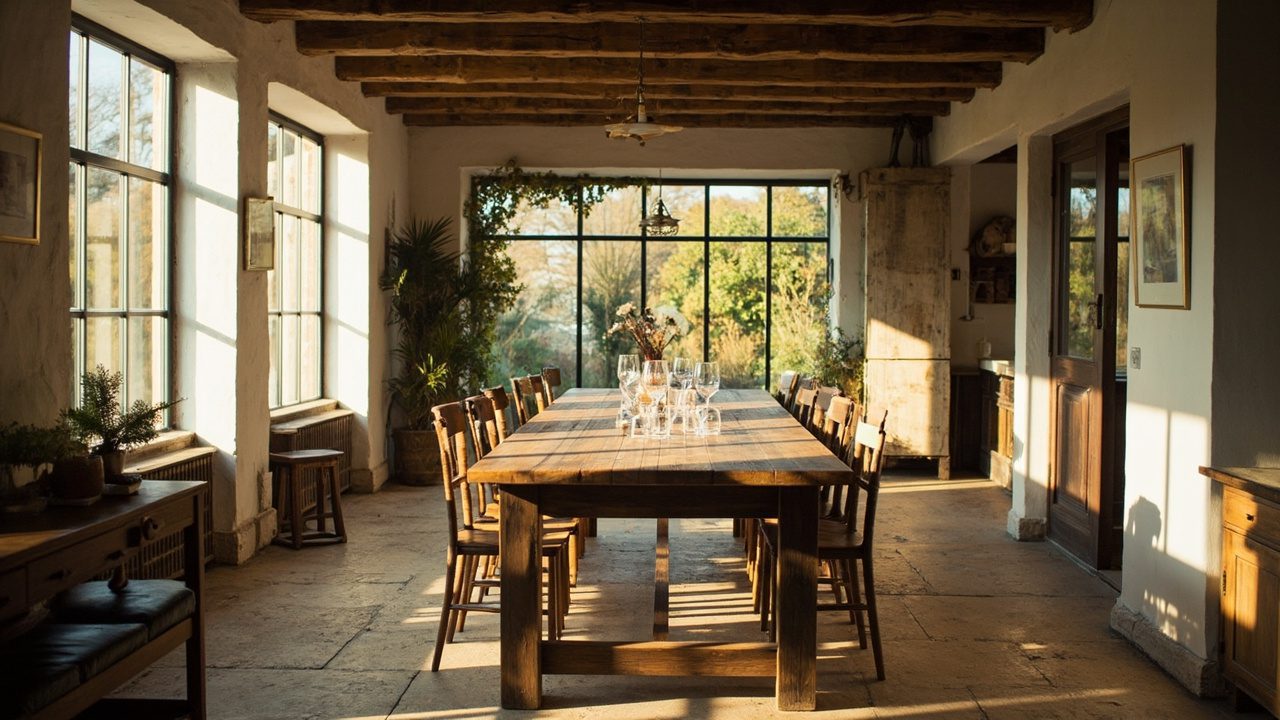
Cottage dining should feel inevitable the moment you step in, like a family recipe that’s been improved over time.
Think curved chairs that invite lingering, textiles that soften echoes, and a table that wears a few stories, not just placemats.
This list focuses on tangible choices, not abstract trends, so you can make immediate edits that change how the room feels at table time.
I favor rooms that are designed for conversation, not catalog shots. That means scale matters, lighting is functional and flattering, and finishes are chosen to patina rather than polish away personality.
Below are 13 concrete directions, starting with three core moves that reshape a dining room into a proper cottage scene.
- 1. Curved Furniture Silhouettes
- 2. Warm Neutral Layers
- 3. Antique Wooden Finds
- 4. Wainscoting Revival
- 5. Board-and-Batten Walls
- 6. Soft Pastel Accents
- 7. Mixed Metal Fixtures
- 8. Natural Fiber Rugs
- 9. Weathered Farm Table
- 10. Botanical Centerpieces
- 11. Built-in Bench Seating
- 12. Textured Linen Drapes
- 13. Handcrafted Ceramics
- FAQ
- Final Thoughts
1. Curved Furniture Silhouettes
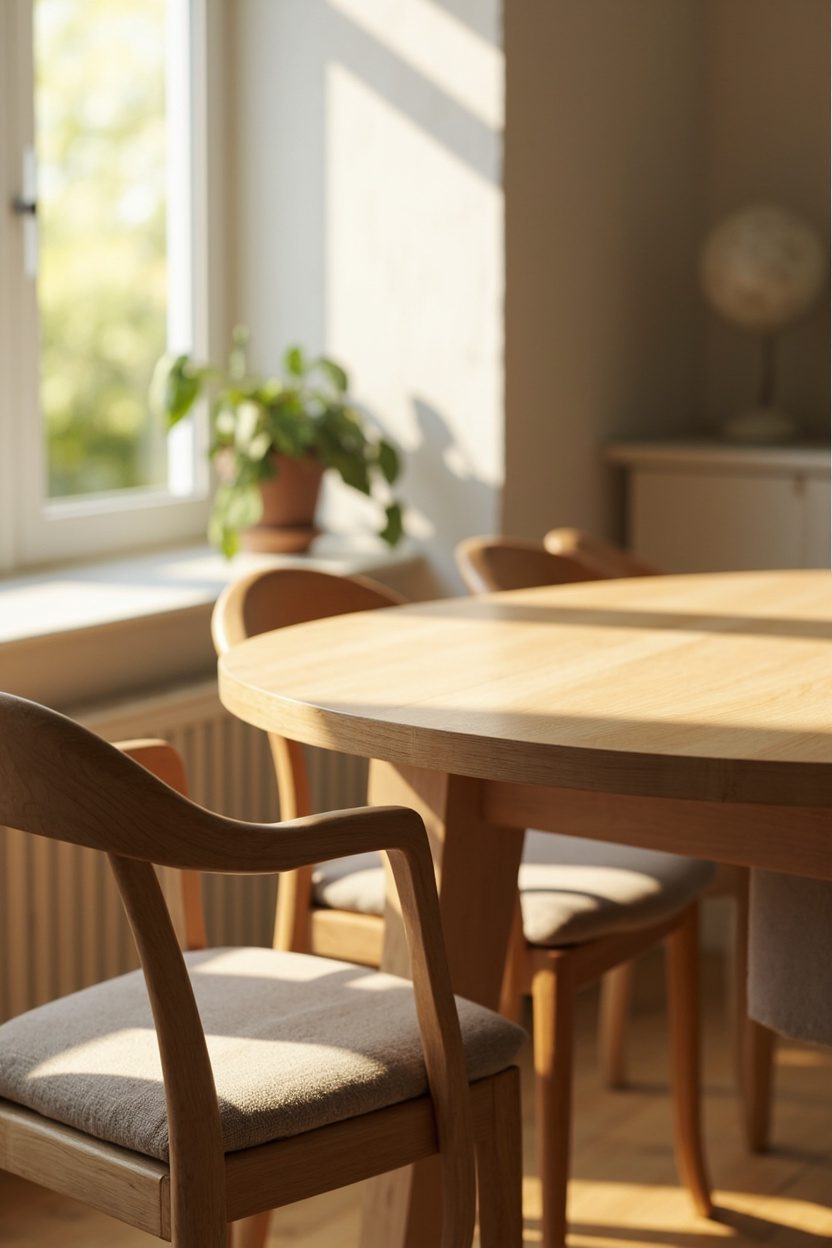
Curves erase the formality a straight-lined dining set brings, softening sightlines so the room feels more welcoming from the doorway. Choose rounded chair backs and a table with a turned pedestal to reduce visual rigidity and invite people to sit longer.
Scale your curves to the room size, avoid oversized barrel chairs in a compact breakfast nook, and pick chairs with exposed wood arms for durability.
For material, oak with a warm stain reads classic cottage, while painted curves in a soft sage or cream add a vintage, collected feel.
Mix one angular piece, like a rectangular sideboard, to give the eye a counterpoint and prevent the room from feeling twee.
Keep upholstery practical, go for linen blends or tightly woven cotton that can be spot-cleaned, and choose foam density that retains shape under daily use.
For lighting, pair a rounded pendant that echoes the chair backs, sit it 30 inches above the table for 36-42 inch tables, and scale up for larger top sizes.
Styling Blueprint
- Choose a pedestal or round table for a cohesive curved vocabulary with chairs.
- Select chair upholstery in durable linen blend, medium weight, neutral tone.
- Match wood stains across seating and table for visual harmony, or paint chairs for contrast.
- Suspend a round pendant centered 30 inches above the table to complement curves.
2. Warm Neutral Layers
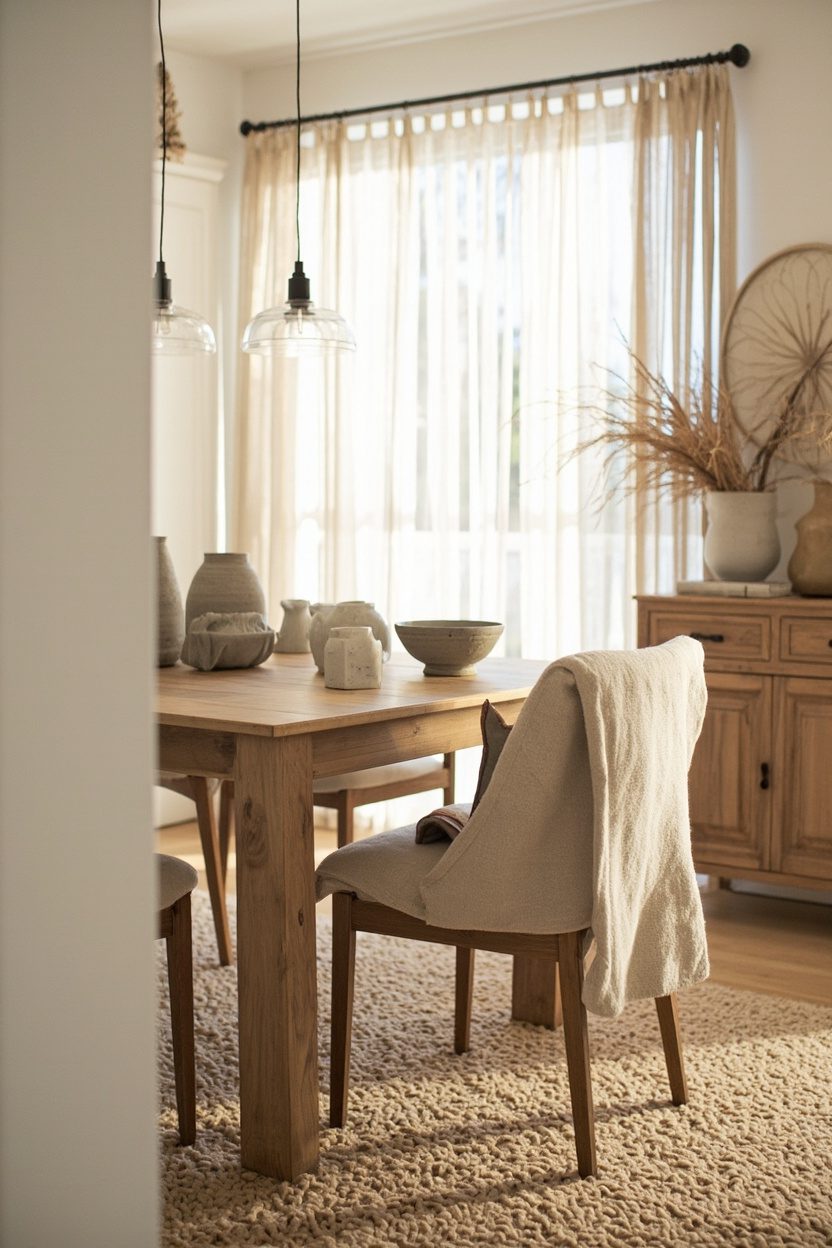
A warm neutral palette gives cottage dining that cozy, lived-in sense without feeling fussy, so start with a base of warm whites, taupes, and muted greiges.
These tones reflect natural light and make food colors pop, which matters for how meals read on the table.
Layer texture to prevent monotony, choose a jute or low-pile wool rug underfoot, and add linen napkins and a soft cotton runner.
Introduce one or two muted accent colors, like dusty rose or sage green, to avoid a monochrome look and to coordinate with seasonal centerpieces.
Use trim details, such as a slightly darker baseboard or chair rail in a complementary warm shade, to anchor the room and hide scuffs. Consider matte finishes on walls and cabinetry to minimize glare and create a tactile, calm backdrop.
For paints, pick mid- to low-sheen eggshell on walls, reserve semi-gloss for trim, and plan a sample swatch in morning and evening light before committing.
Essential Elements
- Base palette: warm white, greige, and soft taupe for walls and large pieces.
- Textile layers: jute rug, linen napkins, wool throw on a bench for texture contrast.
- Accent picks: one muted color, like dusty rose or sage, in accessories only.
- Finish choices: eggshell walls, semi-gloss trim for cleanability and depth.
3. Antique Wooden Finds
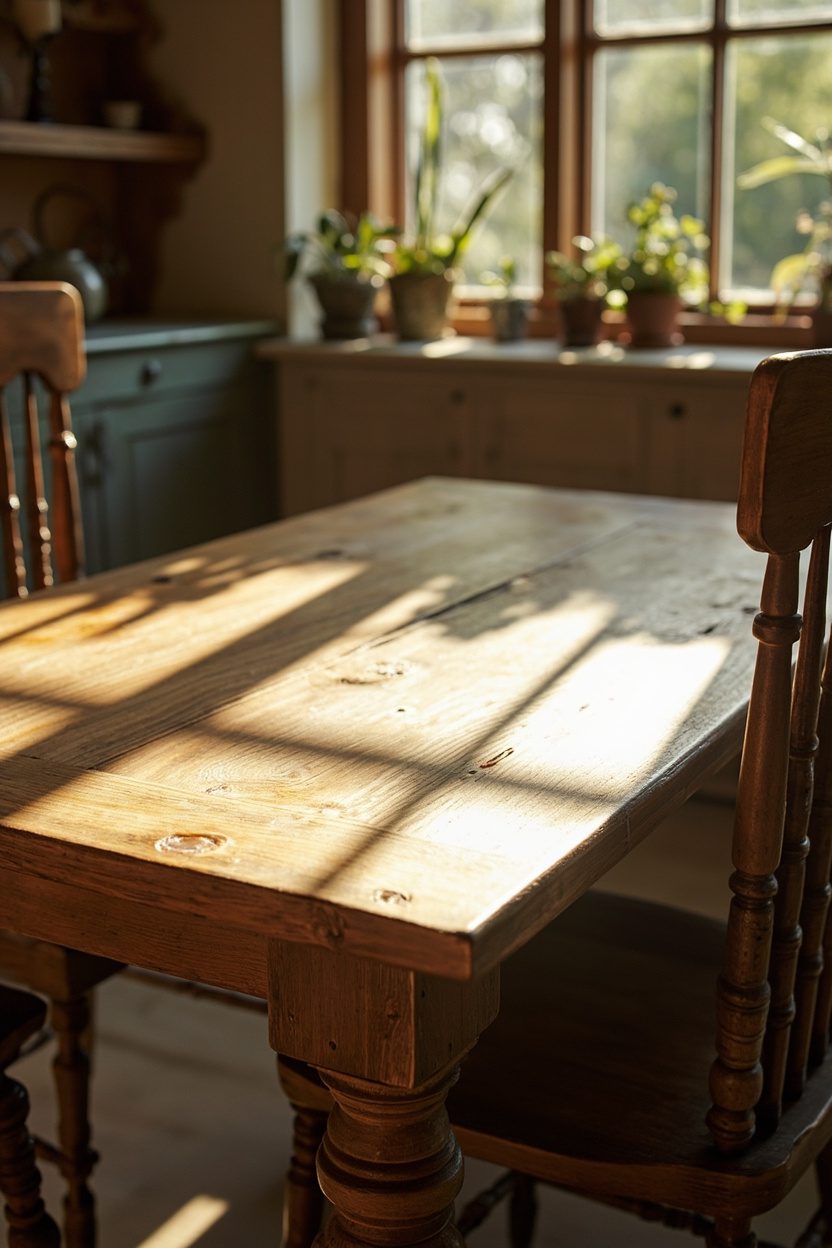
Antique wooden pieces add instant credibility to a cottage dining room; they bring patina and stories that factory-made items cannot replicate.
Look for aged oak or pine sideboards and tables with visible tool marks or dovetail joints to signal authenticity.
When integrating antiques, decide whether to refinish or preserve the original surface; keep the original finish when it’s structurally sound to maintain charm, and only light-sand then seal if you need to level an uneven tabletop. Balance one substantial antique with modern, lighter pieces so the room avoids feeling like a period set.
Placement matters; place an antique server against a wall used for staging meals, and clamp-mounted warm LED under-cabinet lights to highlight wood grain without heat damage.
For a budget strategy, search estate sales and local auctions where prices are lower than those on online marketplaces.
Avoid over-restoring, keep hardware and small imperfections as part of the piece’s character, and select protective solutions like felt pads to prevent scratches from dining use.
What to Focus On?
- Prioritize structural integrity and joinery over perfect finish when buying antiques.
- Keep one major antique and modernize surrounding pieces to prevent a museum look.
- Use soft lighting to emphasize grain, and avoid hot bulbs directly on wood surfaces.
- Consider light sanding and a clear satin sealer only if the surface is unstable or flaking.
4. Wainscoting Revival
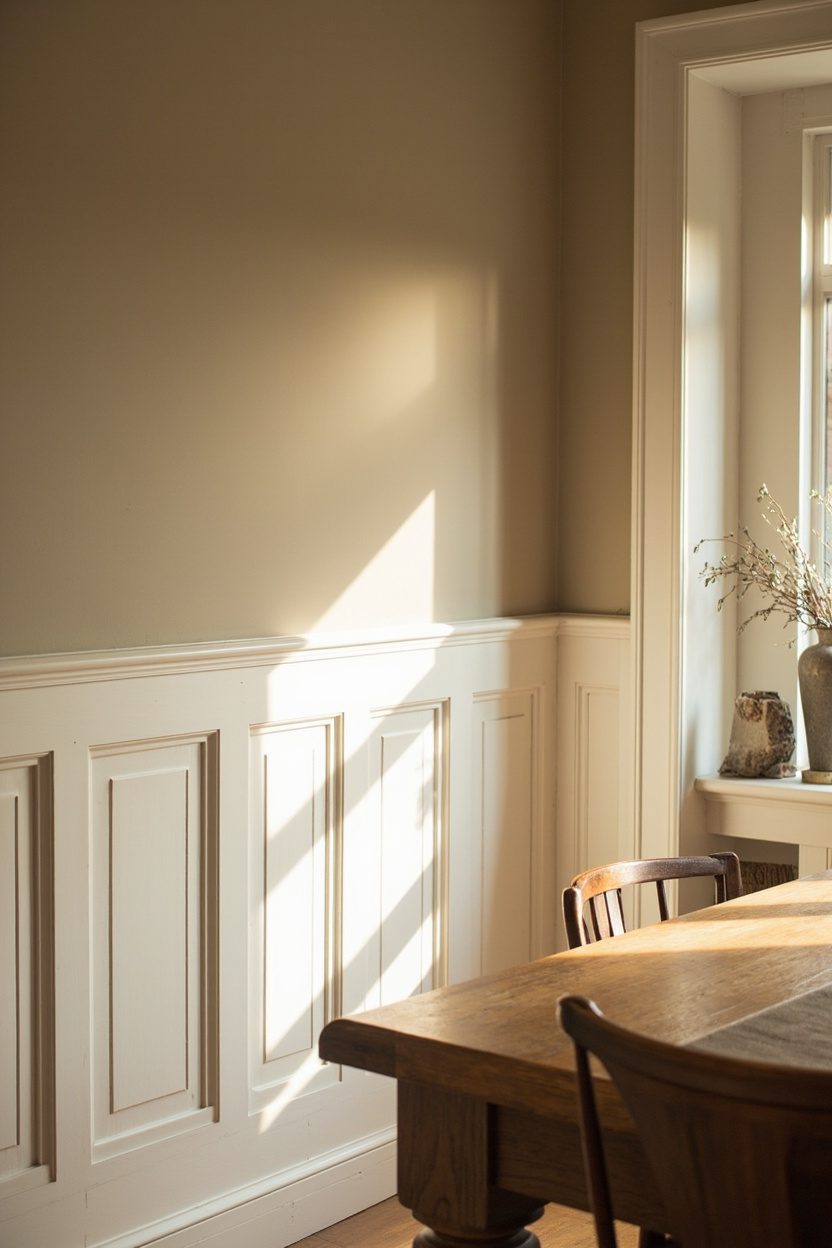
Wainscoting instantly grounds a dining room, adding tactile detail and protecting walls from chair scuffs. Choose a 32-inch height for balanced proportions in standard 8-foot rooms.
Paint the lower panels in a muted sage or warm cream to keep the room cozy, avoiding stark white, which reads too formal for cottage charm.
Use beadboard or recessed panels, depending on budget; beadboard is economical and suits casual cottages, and recessed panels are more tailored and can support a higher-end table.
Pair the wainscot with a wallpapered upper half in a small floral or faded stripe to add vintage personality. Keep the scale small so the pattern doesn’t overwhelm the space.
Essential Elements
- Panel height is around 32 inches for 8-foot ceilings, adjust taller for higher ceilings.
- Choose beadboard for budget builds, recessed panels for a polished look.
- Lower paint in warm neutrals, upper wall in soft pattern or matte finish.
- Add a simple chair rail molding to cap the wainscot neatly.
5. Board-and-Batten Walls
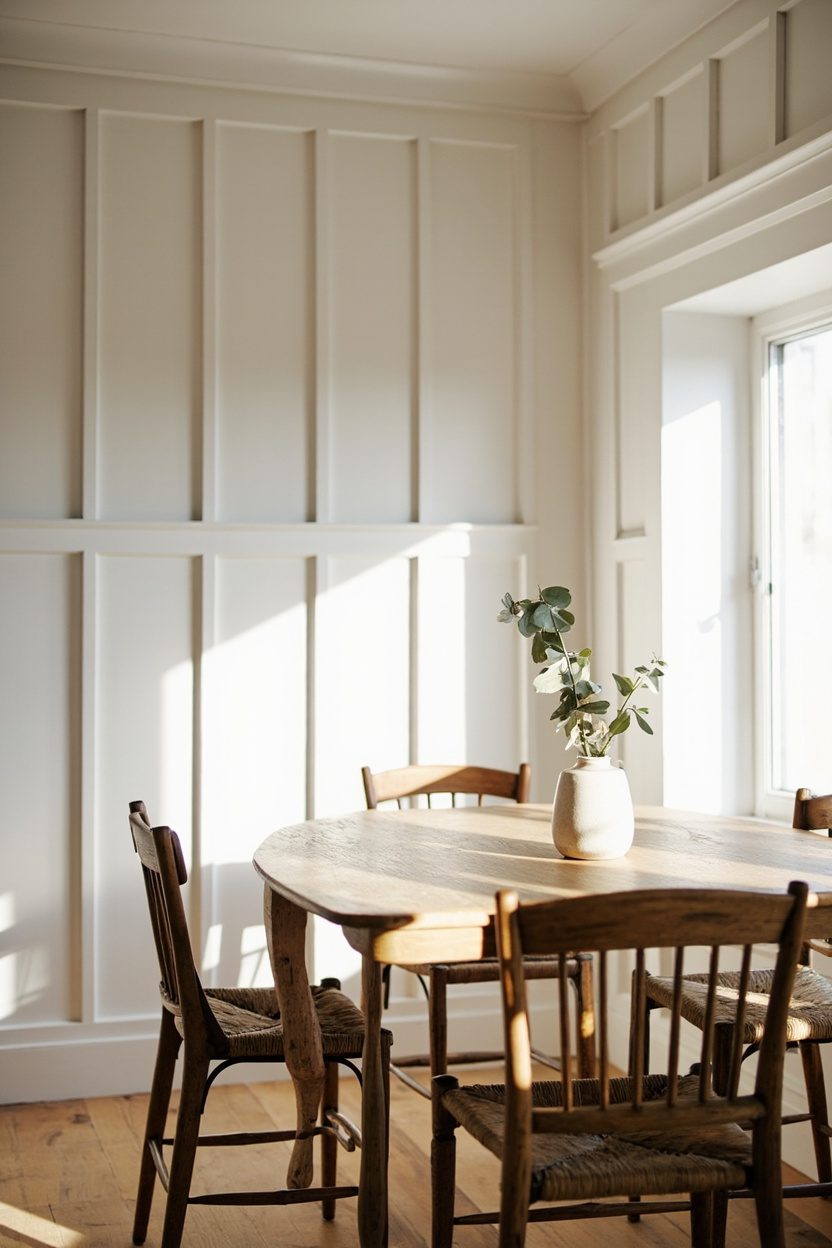
Board-and-batten brings vertical rhythm, making low rooms feel taller. Plan battens spaced 12 to 18 inches apart for visual harmony.
Opt for slim 1×3 battens painted the same color as the wall for a subtle, modern-cottage effect, or contrast with a darker stain for rustic drama.
Install a moisture-resistant backer in dining areas that open to kitchens, to prevent warping from humidity or splatters. This is a small technical detail that saves headaches.
Combine with a reclaimed wood table to echo the vertical lines, keep chair styles mixed—one upholstered bench softens the geometry and adds comfort.
Styling Blueprint
- Space battens 12–18 inches for proportionate panels across typical walls.
- Paint battens and walls the same for modern subtlety, or stain battens for contrast.
- Use moisture-resistant substrates near kitchens or exterior doors.
- Balance with softer seating, like a bench or upholstered chairs, to avoid rigidity.
6. Soft Pastel Accents
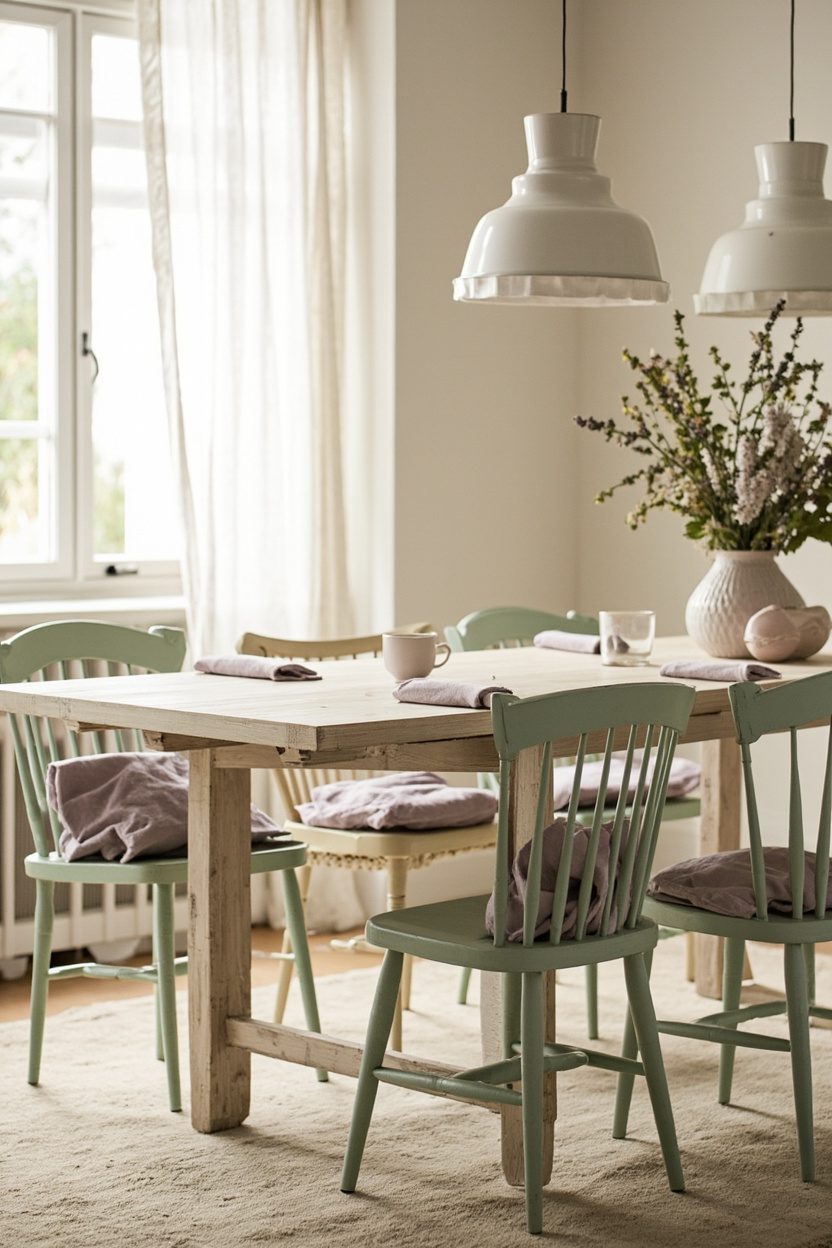
Introduce pastels as accents, not the main field, use them on napkins, chair cushions, or a runner so they read intentional, not saccharine.
Choose a restrained palette: pea-green, dusty blush, and pale butter—limit to two hues plus neutrals to maintain sophistication.
Coordinate with natural textures, linen tablecloths, and matte-glazed ceramics, the juxtaposition of soft color and tactile materials keeps the look lived-in and layered.
If you paint cabinetry or a single wall in pastel, test in different light; a morning room can make pale tones read brighter, so sample large swatches before committing.
What to Focus On?
- Use pastels as accents: textiles, ceramics, or a single painted surface.
- Limit palette to two pastels plus neutrals for cohesion.
- Pair with natural textures like linen, rattan, and matte ceramics.
- Always test large paint swatches in the room’s light before finalizing.
7. Mixed Metal Fixtures
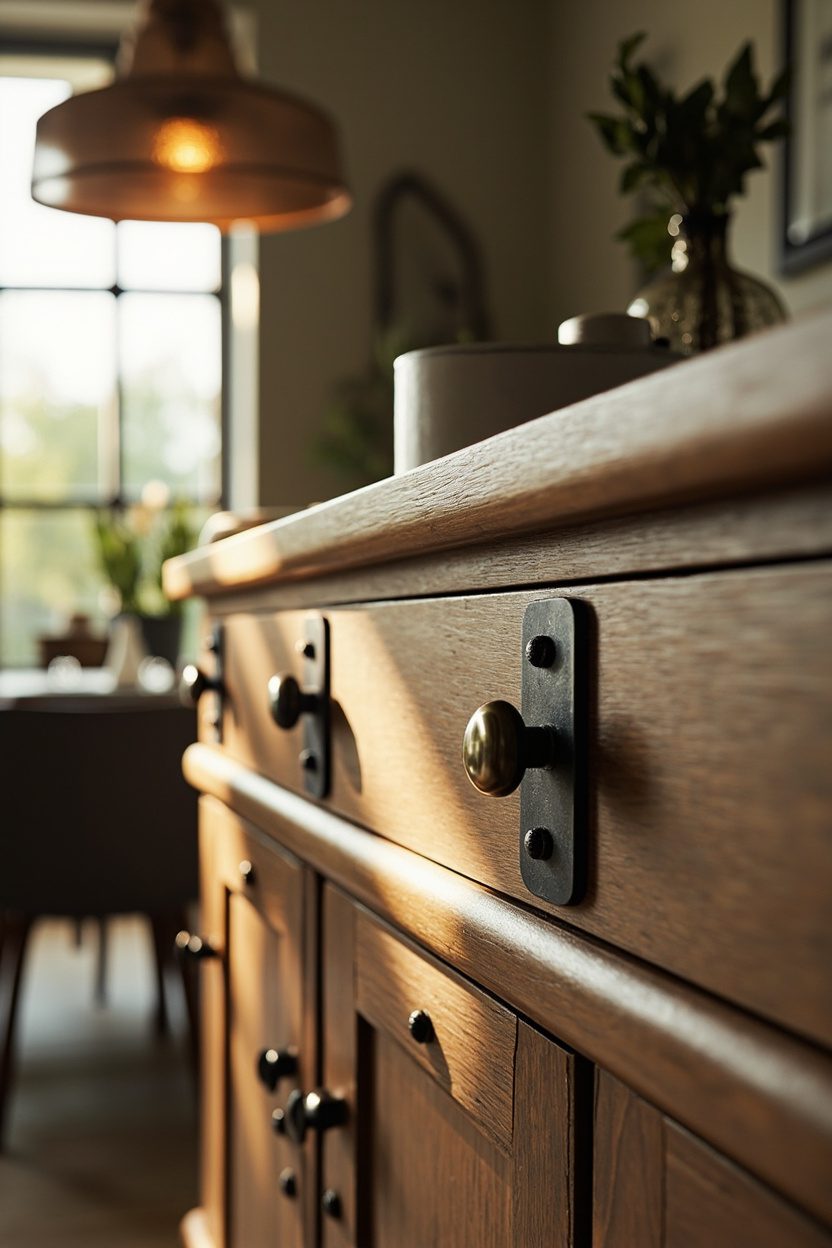
A cottage dining room feels curated when metal finishes vary, not match exactly. Mix aged brass, antique nickel, and matte black in light fixtures and cabinet hardware for a collected look.
Limit the palette to two dominant metals plus one accent, so the room reads intentional rather than chaotic. Keep a single finish for large pieces like the chandelier, then introduce others in smaller touches.
Avoid high-shine chrome, it fights the soft cottage vibe; choose hand-hammered brass or brushed nickel to keep surfaces warm and tactile.
Scale matters; select a chandelier that’s proportionate to your table, generally 12–14 inches across per foot of table width.
Pair mixed metals with warm paint tones, like chalky cream or soft sage, to tie the hardware into the overall palette.
A practical decision: swap only the most visible pulls and the light, leaving unseen hinges for later, to spread the cost.
Styling Blueprint
- Choose one dominant metal for large fixtures, and one accent metal for pulls and lamps.
- Select finishes with similar patina, for example, brushed rather than polished surfaces.
- Limit to three metal types max, to maintain cohesion.
- Match metal warmth to wall color, warm metals with warm paints, cool metals with cool paints.
8. Natural Fiber Rugs
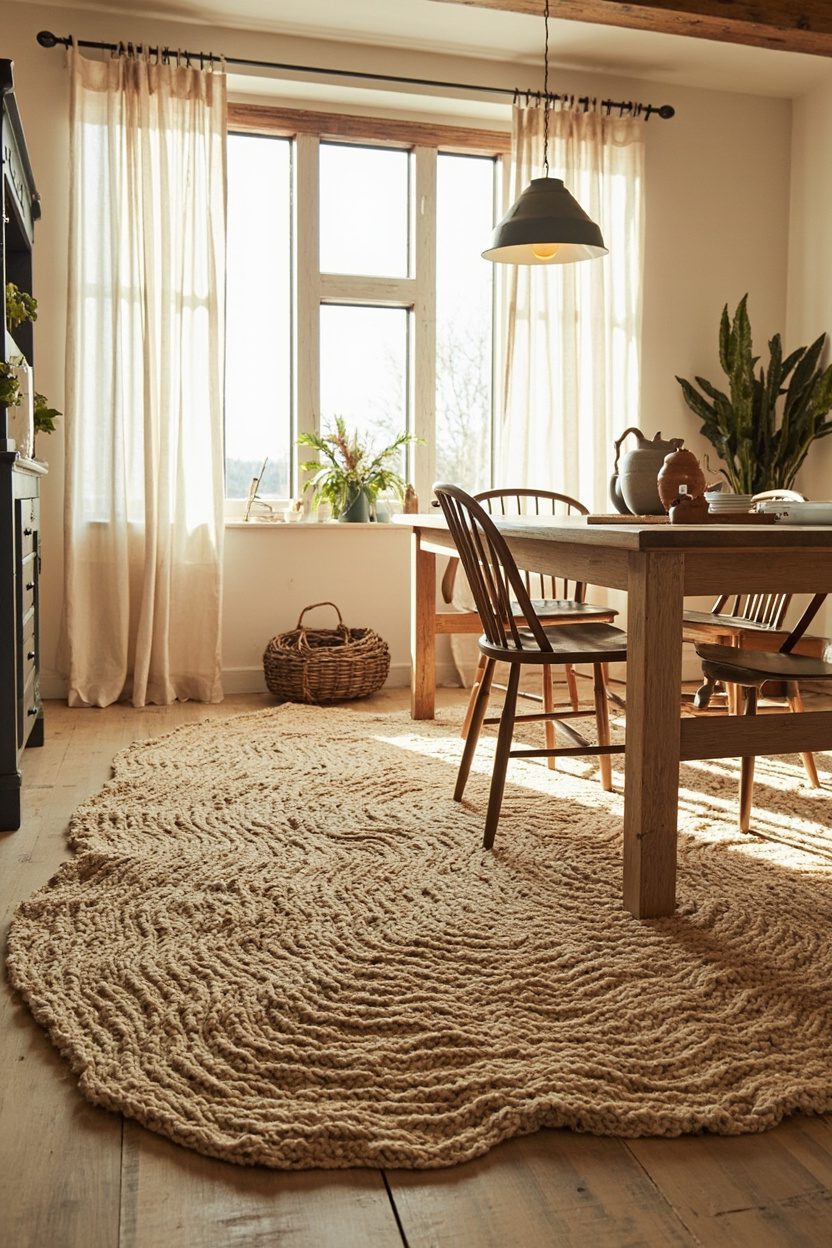
A jute or sisal rug grounds a cottage dining area with organic texture, and tolerates chair movement and occasional spills. Pick low-pile weaves for chairs to glide smoothly without snagging.
Color should be neutral, think oatmeal, dune, or soft gray, to let layered florals or painted walls remain the focal point. Rug size matters: extend at least 24 inches beyond each side of the table so chairs stay on the rug when pulled out.
Opt for a rug with a bias-cut edge or sewn binding to prevent fringe fraying under table traffic. For a budget-friendly route, vinyl-backed jute works in high-use homes, while wool flatweave gives a softer, higher-end feel.
Maintenance tip: vacuum regularly and spot-treat with a mild detergent; avoid soaking natural fibers. If dining is daily, place an inexpensive indoor rug pad beneath to prevent slipping and wear.
Essential Elements
- Choose low-pile natural fiber, like jute or sisal, for durability and chair movement.
- Select a neutral tone that complements the wall color and textiles.
- Size the rug to extend 24 inches beyond the table edges at a minimum.
- Use a thin, breathable rug pad to reduce movement and prolong life.
9. Weathered Farm Table
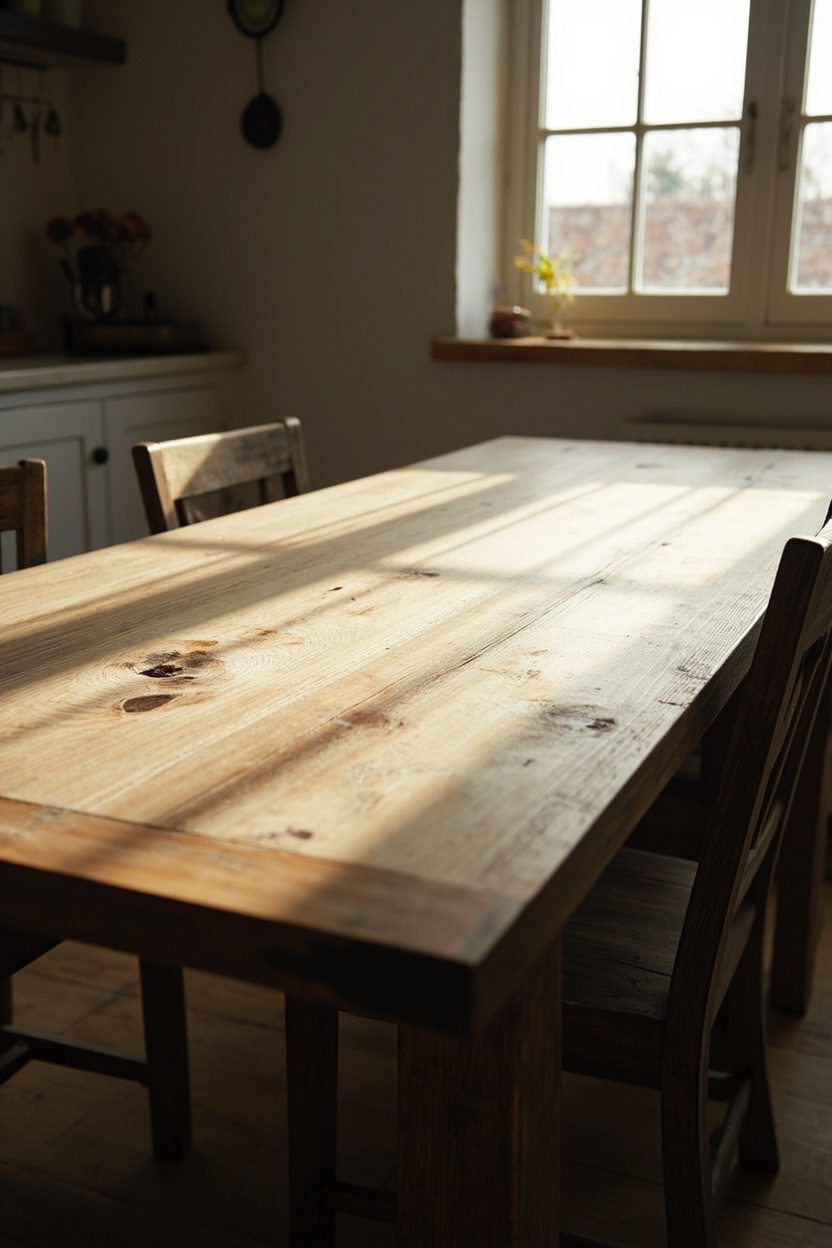
A weathered farm table is the anchor of cottage dining, trading showroom perfection for lived-in warmth and dents that tell family stories. Look for hardwoods with hand-sawn planks and soft, distressed edges for authenticity.
Finish choice directs the room, a gray-white limewash reads modern cottage, while a warm honey stain leans toward farmhouse. Decide first on the room’s light levels; pale finishes brighten small spaces, darker tops ground airy rooms.
Measure clearance carefully, aim for 30–36 inches between the table edge and the wall or sideboard so guests can move comfortably. For versatility, choose a table with an easy leaf mechanism or a trestle base that allows bench seating.
Avoid thin veneers that flake; invest in solid timber for longevity and future refinishing. If the budget is tight, pair a salvaged tabletop with new legs in painted wood to mimic an authentic weathered look affordably.
What to Focus On?
- Prioritize solid hardwood over veneer for durability and future refinishing.
- Choose a finish based on room light, pale for brightness, warm stain for coziness.
- Ensure 30–36 inches of clearance around the table for comfortable movement.
- Consider a trestle or farmhouse leg for bench compatibility and visual weight.
10. Botanical Centerpieces
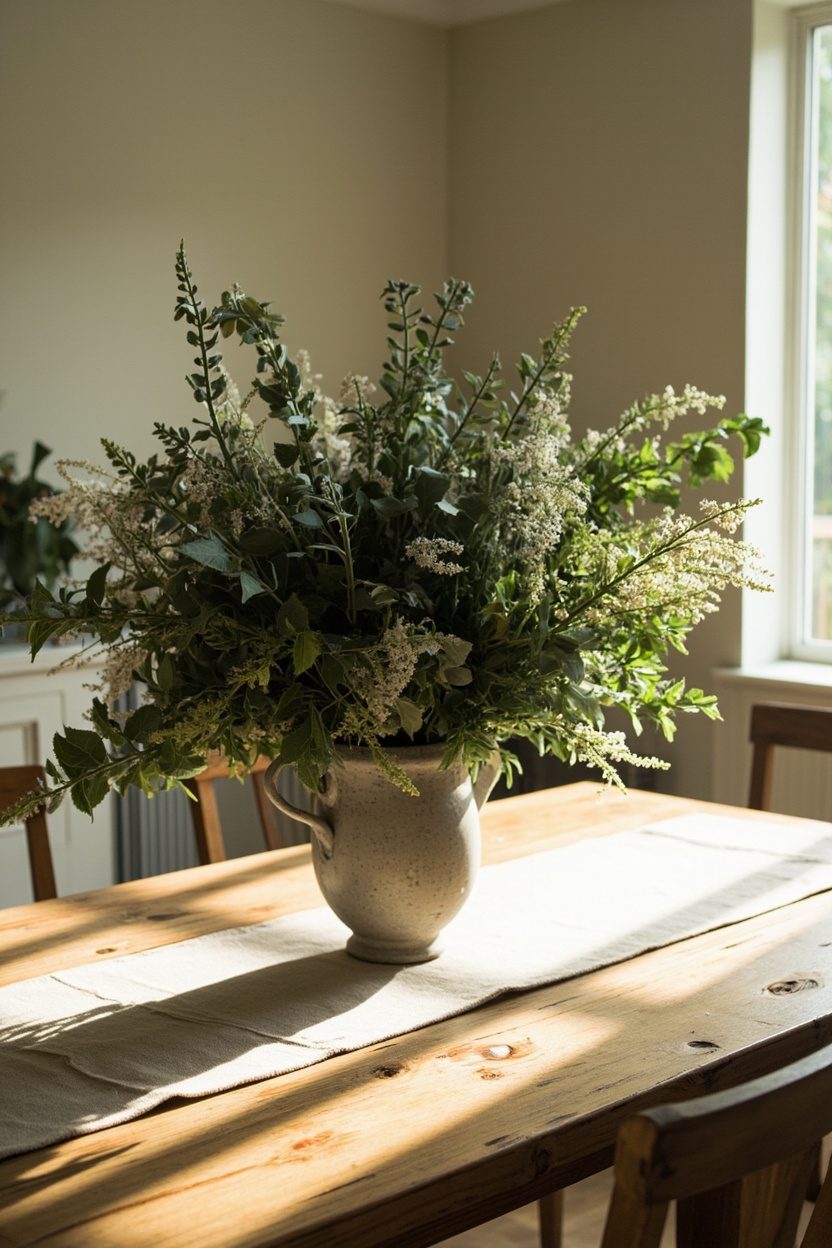
A cluster of mismatched glass bottles makes a relaxed, collected centerpiece that reads effortless, not staged. Choose clear and amber glass in varying heights, group them centrally, and rotate foliage seasonally for low-cost updates.
Keep the color story simple, favoring soft greens and cream blooms to maintain that cottage calm, and skip glossy, sculptural flowers that fight the room’s warmth. Use clipped stems from the garden or market for authenticity, and avoid perfectly symmetrical arrangements.
Scale matters: for a 6-foot farmhouse table, aim for a centerpiece spread no wider than 18 inches and under 12 inches tall, so sightlines aren’t blocked during meals.
If you want longevity, mix fresh sprigs with dried hydrangea or wheat for texture and months of interest.
One practical mistake to avoid is over-accessorizing the table; a single informal runner under the bottles is enough, rather than layered linens and placemats that dilute the botanical focus.
Styling Blueprint
- Use 3–7 bottles in mixed heights for balanced composition, avoiding even-numbered groupings.
- Pick foliage with different leaf textures, such as eucalyptus and fern, for depth.
- Keep the centerpiece height under 12 inches for easy conversation across the table.
- Swap a few stems weekly to freshen the look, or add a dried element for longevity.
11. Built-in Bench Seating
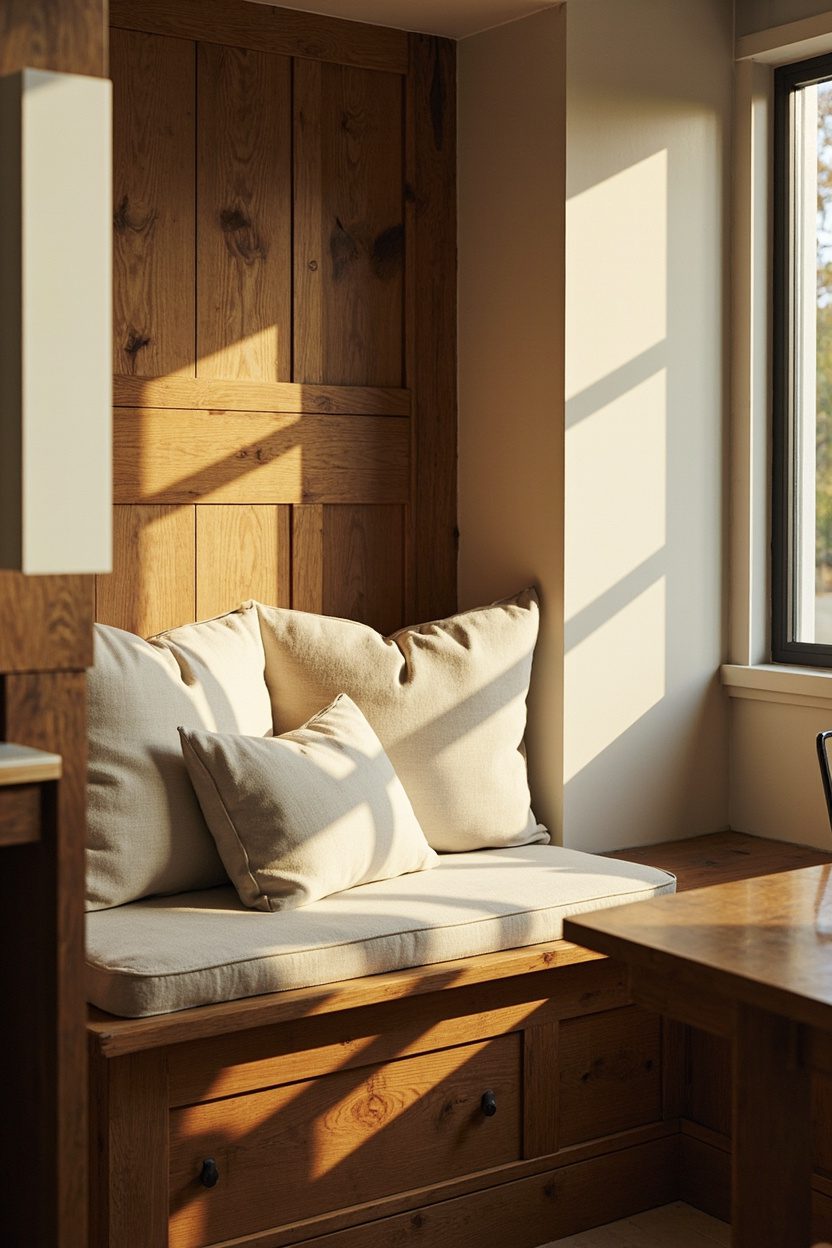
A built-in banquette instantly maximizes a narrow dining footprint and adds the lived-in charm of a cottage kitchen, especially when finished in painted beadboard. Opt for a seat depth of 18 to 20 inches to keep the bench comfortable without swallowing table space.
Incorporate storage beneath the bench with lift-up seats or front-facing drawers, choosing soft-close hardware to keep the look refined and the function practical. Paint the bench a warm off-white or muted sage to ground the room while allowing cushion fabrics to be the accent.
Cushion scale is key; choose a 4–6-inch-thick seat cushion in a durable linen-cotton blend, and add two or three lumbar pillows in mixed patterns to avoid a matchy, showroom feel. Keep cushion covers removable for easy washing. Natural fibers will patina, not pill.
Avoid a common error, positioning the banquette too high; the seat height should be 17 to 19 inches off the floor to pair comfortably with standard table heights, and verify overhang so knees clear the tabletop edge.
Essential Elements
- Seat depth 18–20 inches, height 17–19 inches, to fit standard tables comfortably.
- Use painted beadboard or shiplap for a cottage-accurate finish, sealed for durability.
- Add under-seat storage with soft-close mechanisms for practical use.
- Choose removable, natural-fiber cushion covers for longevity and ease of cleaning.
12. Textured Linen Drapes
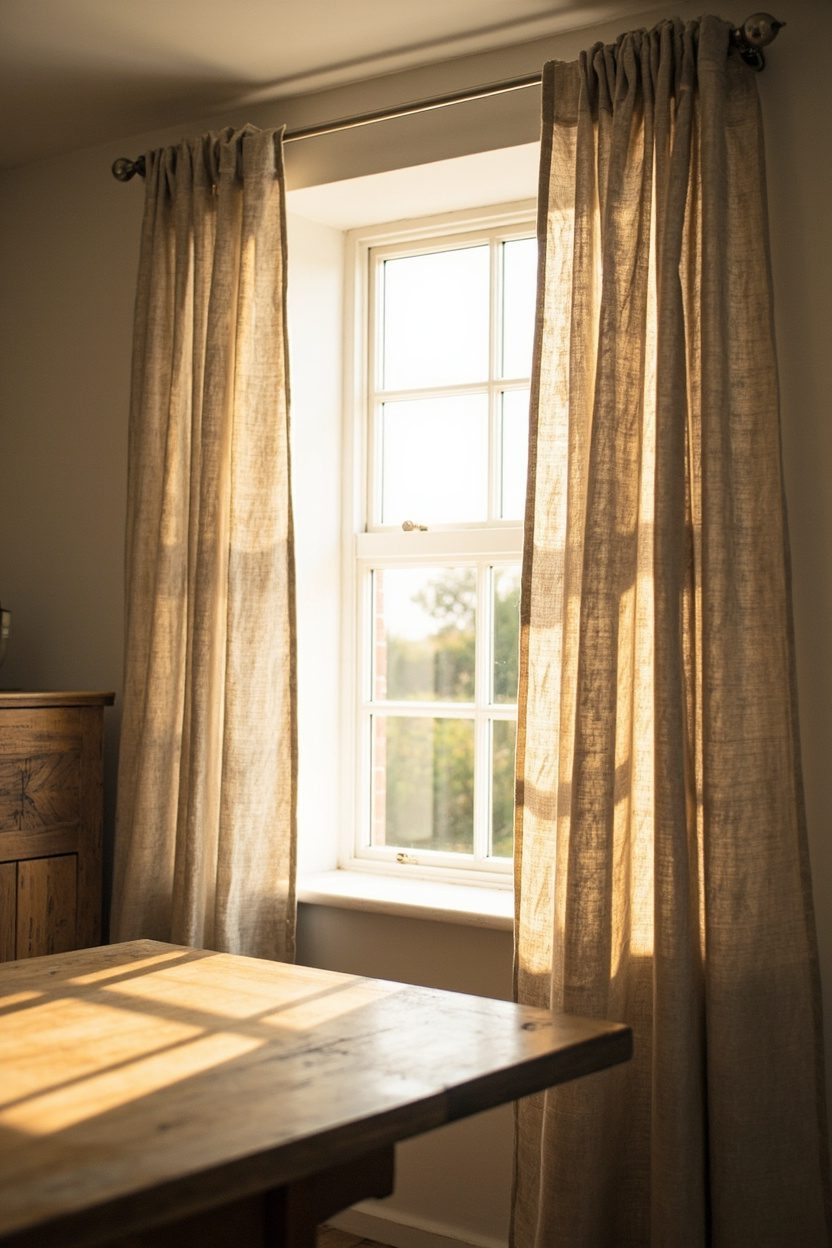
Linen drapes soften window light and add that lived-in cottage texture, working best in natural hues like oatmeal, flax, or faded blue for an understated, sun-dimmed effect.
Choose a medium-weight linen blend so the panels hang with a relaxed, elegant fold.
Mount the rod close to the ceiling and extend it beyond the window frame by 4–8 inches to make the windows read larger and let more light in when the panels are open. For a cottage mood, aim for 2 to 2.5 times the window width in total fabric fullness.
When pairing with other textiles, keep contrast in mind, for example, coarse linen complemented by smooth painted trim or a subtle patterned runner on the table. Hem length matters: floor-grazing panels that puddle slightly look intentional, while exact-length hems feel too formal.
A frequent mistake is choosing lined drapes that look stiff; instead, pick unlined or lightly lined linen to allow a soft translucency, unless you need blackout for orientation or privacy.
What to Focus On?
- Choose medium-weight linen or linen blends for structure with soft drape.
- Mount rod high and wide to visually enlarge windows and increase light control.
- Aim for 2–2.5 times fabric fullness for a relaxed, luxurious fold.
- Prefer unlined or lightly lined panels unless blackout is required for function.
13. Handcrafted Ceramics
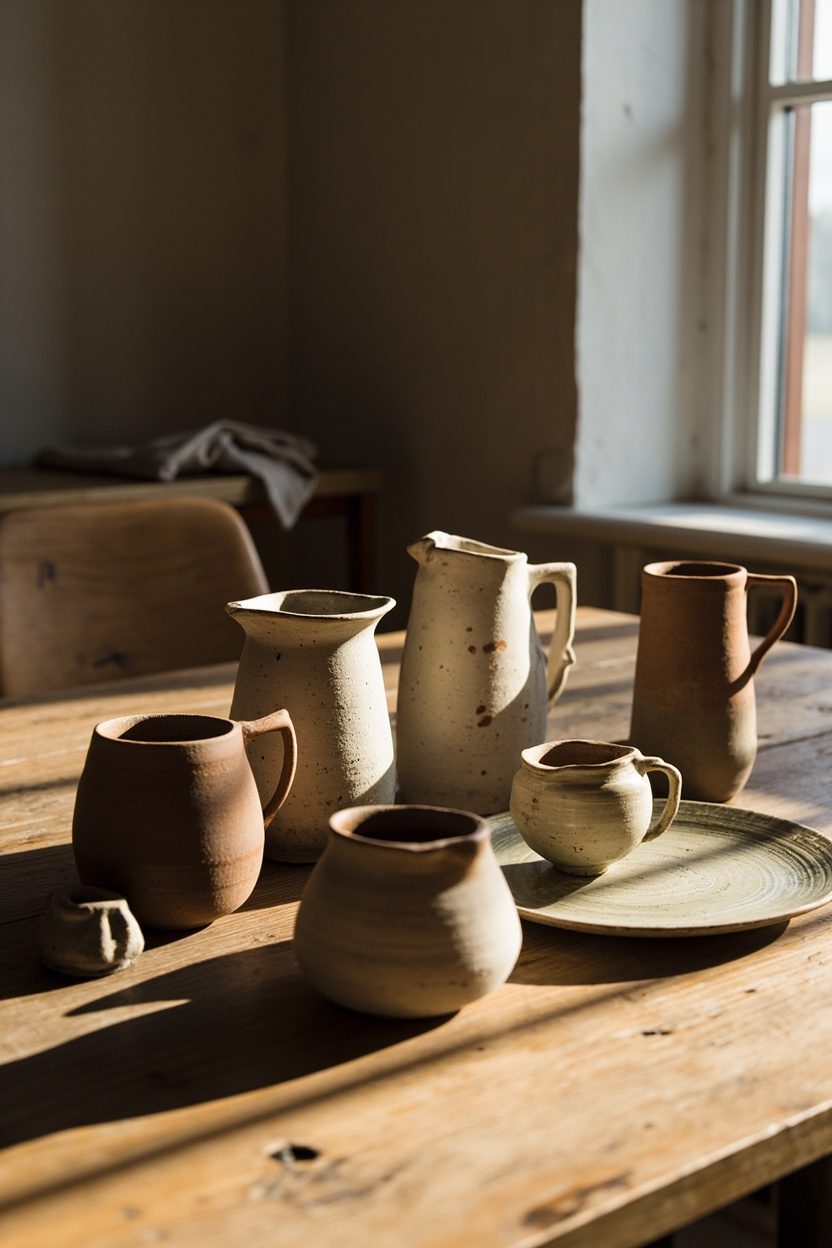
Earthenware plates and matte stoneware mugs anchor a cottage table with honest texture, and they age beautifully with regular use. Choose slightly irregular shapes for that made-by-hand look, avoiding perfectly round, factory-perfect pieces that read too manufactured.
Limit your palette to two coordinating glaze tones, for example, a warm cream and a soft sage, to keep visual clutter low and stacking simple. Pick stackable forms for everyday practicality, but reserve a few statement serving bowls in a contrasting color for Sunday lunches.
Mix one antique platter into the set to nod to the modern cottage trend of blending old and new, and place it at the table’s center to set the tone.
When buying, prioritize vitrified stoneware for durability, aim for a mid-range budget per piece to balance craft quality with everyday sturdiness.
Store ceramics on an open shelf near the dining area, spaced so edges don’t chip, and display a small grouping as functional decor between meals. Avoid heavy glazes with crazing that trap food odors; choose lead-free finishes for safety.
Styling Blueprint
- Pick two glaze colors, one neutral and one soft accent tone, for cohesion.
- Include one antique or thrifted piece per place setting for character.
- Stack plates and bowls on lower open shelves, with felt pads between pieces.
- Use vitrified stoneware for daily use, reserve delicate porcelains for guests.
For a related idea, see Cold Plunge Aesthetic.
FAQ
Start with a core set of 12 plates, 8 bowls, and 8 mugs, which covers daily use plus guests; add two serving pieces that coordinate, so you can rotate and wash without stress.
Many modern stoneware pieces are formulated to be dishwasher safe, but handmade glazes vary, so check the maker’s guidance; when in doubt, hand-wash items with soft cloths to preserve glaze and prevent chipping.
Limit contrast by matching scale and a shared color family, for example, mixing a rustic platter with smoother, matte plates in the same warm cream tone, which keeps the table coherent while showing intentional layering.
Look for local pottery co-ops, craft markets, and small online studios that sell seconds or smaller runs, and consider one standout investment piece paired with more affordable everyday items to stretch your budget.
Final Thoughts
Handcrafted ceramics bring tactility and warmth to a cottage dining room, turning routine meals into sensory rituals. With practical storage, intentional color choices, and one or two vintage pieces, your table will feel collected, not staged, and Sunday lunches will naturally taste better.