


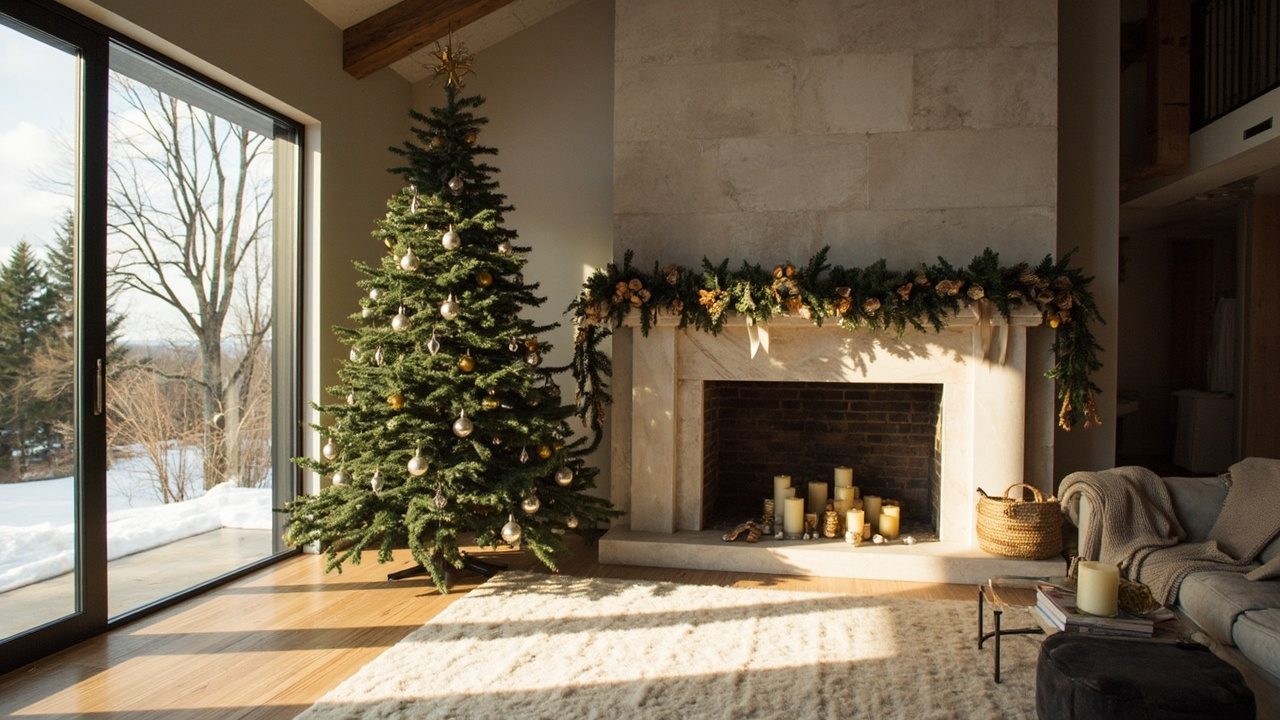
Decking the house for the holidays shouldn’t feel like theatrical set design. Think of seasonal décor as targeted dressing: a few decisive moves in each room that elevate mood, work with existing finishes, and can be dismantled without damage. This set of 14 room-friendly ideas favors scale, material choices, and a couple of tricks I’ve used on real projects to keep a home looking festive rather than overdone.
I focus on pragmatic, repeatable solutions — how to pick a color accent that reads across a living room and kitchen, where to place smart outdoor lights for curb appeal, and how to make tiny vignettes that feel intentional. Expect recommendations on materials, placement, and a common budget bracket for each idea so you can execute efficiently.
- 1. Whimsical Color Pop
- 2. Smart Outdoor Lighting
- 3. Miniature Holiday Vignettes
- 4. Eco-Friendly Greenery
- 5. Fanciful Ornament Mix
- 6. Oversized Ribbon Statements
- 7. Vintage Glass Baubles
- 8. Cozy Cottage Textiles
- 9. Neon Neon Accents
- 10. Mixed-Metal Layers
- 11. Themed Table Scapes
- 12. Scandinavian Minimalism
- 13. DIY Upcycled Crafts
- 14. Mood-Boosting Candles
- FAQ
- Final Thoughts
1. Whimsical Color Pop
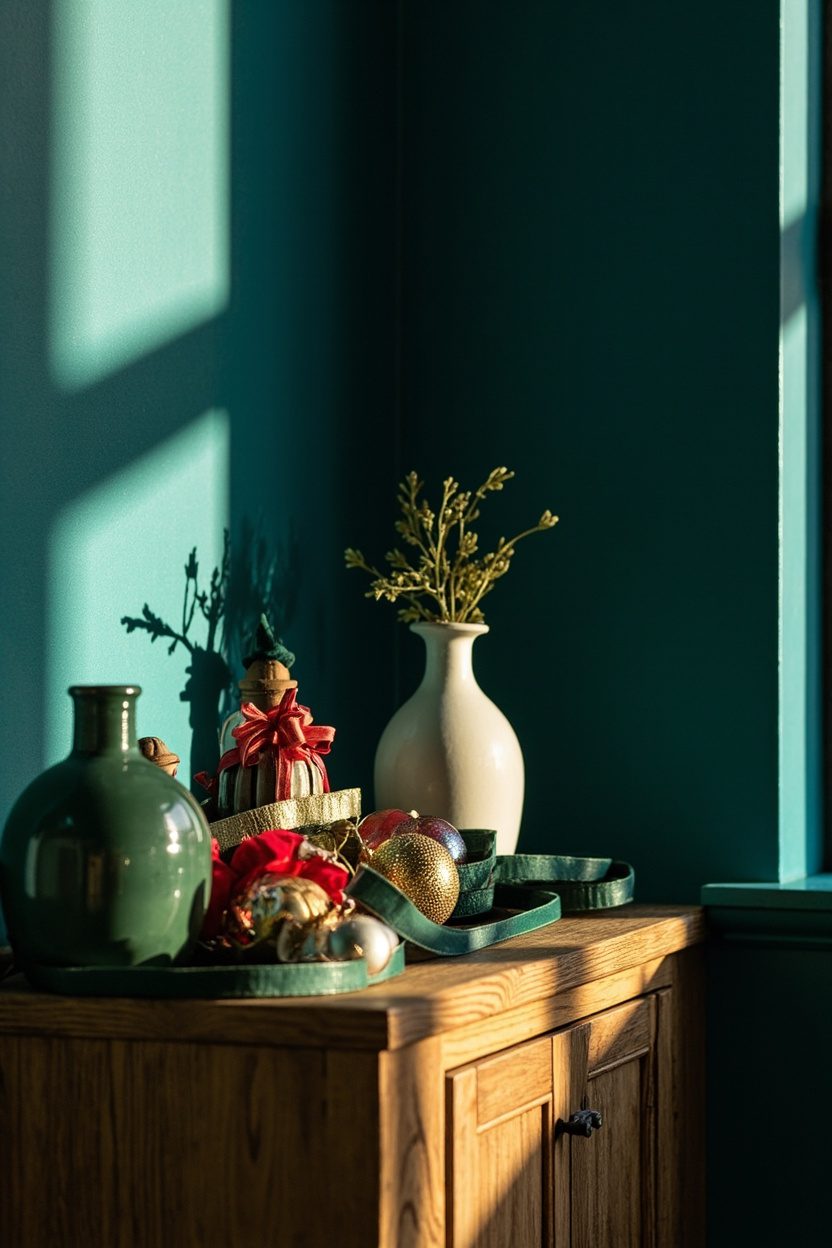
A single nontraditional accent color—think saturated teal, candy apple red, or matte gold—changes the holiday narrative without overhauling your palette. Apply it in three-to-five small doses across a room: a throw pillow on the sofa, a runner for the dining table, two tapered candles on the mantel; keep fabrics in natural textures (linen, cotton-linen blends) so the hue reads festive not glossy. For scale, choose one larger element (an 18–22″ cushion or a 24″ wreath) and balance with smaller accents to avoid visual clutter.
Break the “matching everything” trap by pairing your color pop with a consistent neutral base: warm wood, plaster walls, or a gray-beige sofa. Avoid shiny plastics for higher-end feel; instead use hand-blown glass ornaments or matte ceramic pieces that catch light without cheap gloss. If you’re on a tight budget (under $50), focus on textiles—the quickest, most impactful swap.
Styling Blueprint
- Pick one saturated accent color and limit to three to five objects per room.
- Use one sizeable element (20–24″ wreath or large pillow) for scale balance.
- Prefer natural textures (linen, wool, ceramic) over glossy plastics.
- Budget tip: swap textiles first—throws and runners under $50 each.
2. Smart Outdoor Lighting
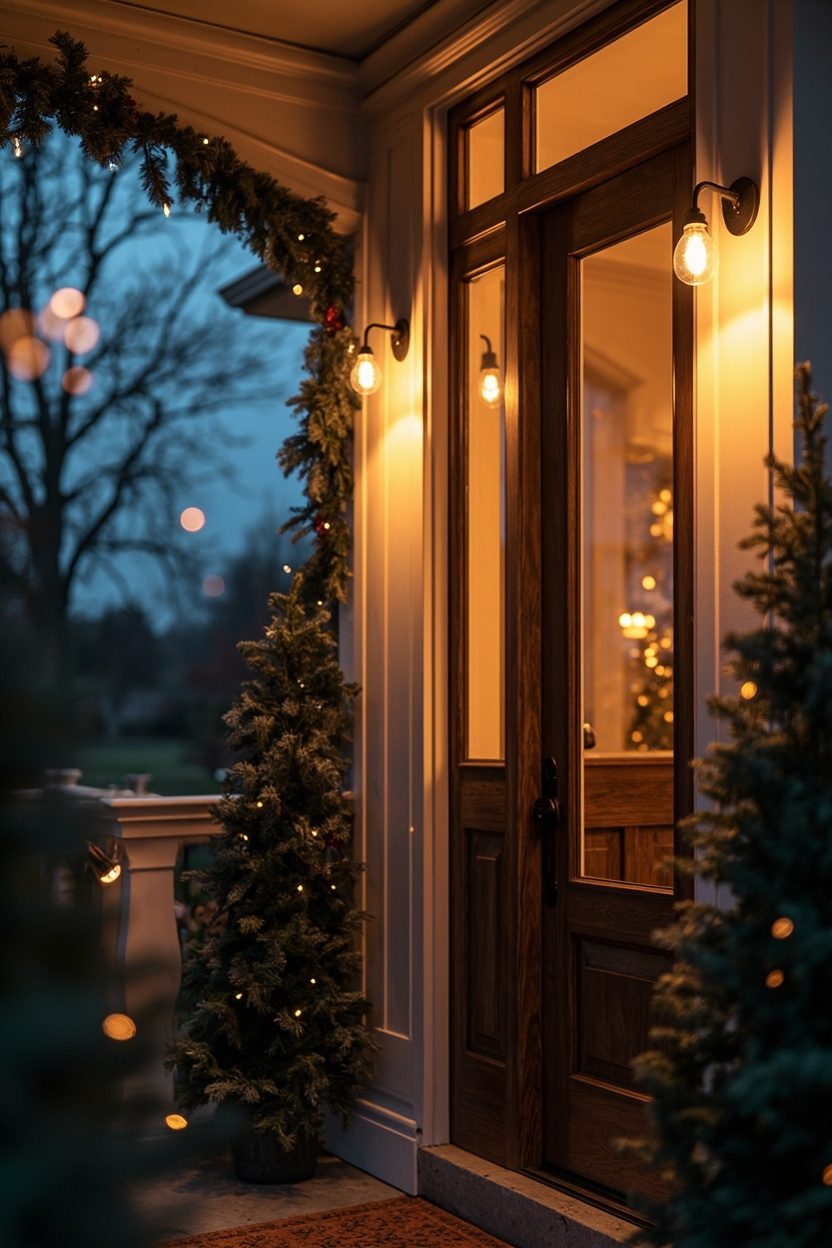
Outdoor lighting is holiday décor that doubles as curb appeal and safety—choose tunable LED fixtures you can schedule and dim. Use warm white for classic looks or set RGBW bulbs for color scenes (cool for modern homes, jewel tones for eclectic vibes). Mount flood or path lights low and aim them to graze architecture; avoid direct glare into windows by placing fixtures 6–8′ from façades and angling downward.
Integrate lighting controls into your home automation or a simple app-driven timer to vary scenes (welcome, party, quiet). For hardscape, line walkways with solar stake lights for a low-cost accent; for an elevated look, install house-flanking uplights (bronze finish) to highlight texture. Keep a $100–$400 budget tier in mind: smart bulbs and a couple of path lights versus a full professional uplighting package.
What to Focus On
- Choose tunable LEDs for warmth control and color flexibility.
- Place fixtures 6–8′ from façades and angle downward to avoid window glare.
- Use automated schedules for varied scenes and energy savings.
- Budget levels: solar stakes <$100, smart bulbs $100–$200, pro uplights $200+.
3. Miniature Holiday Vignettes
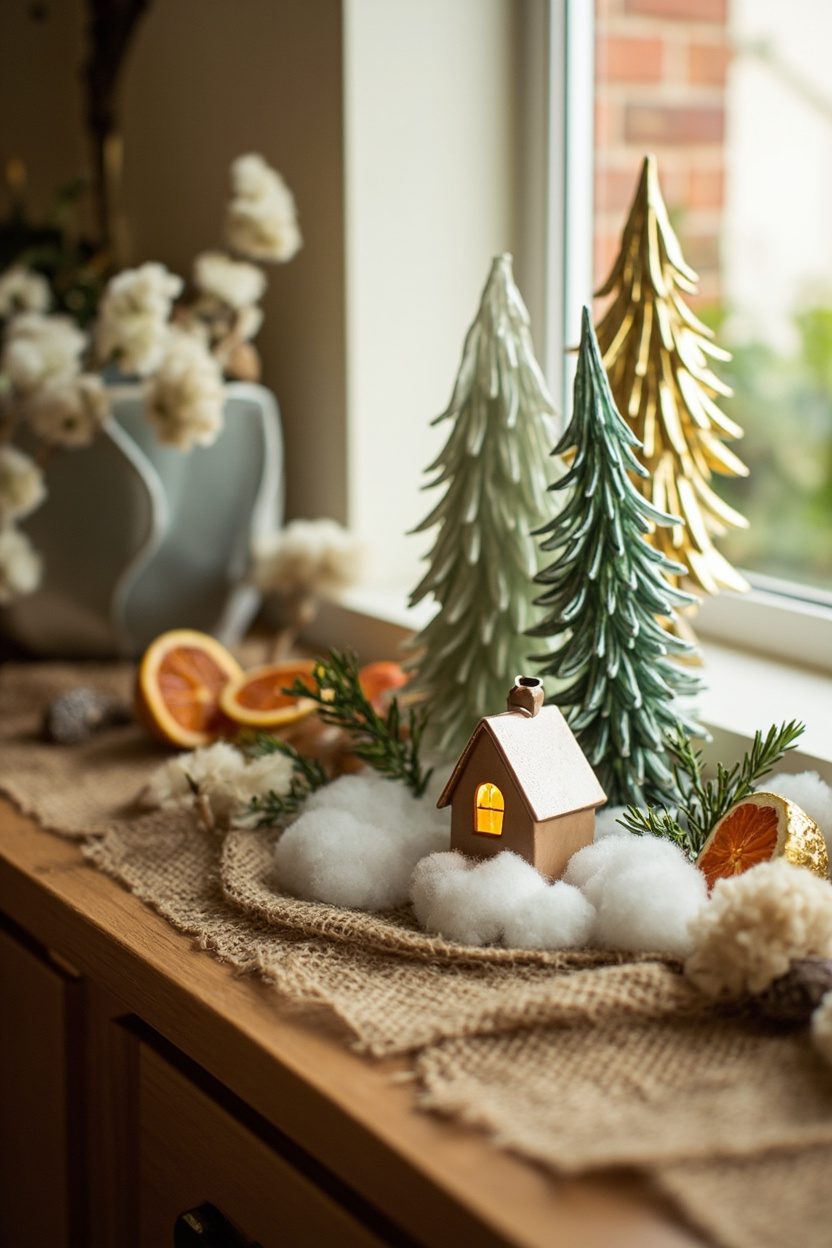
Tiny vignettes are the secret to a cohesive holiday story that travels room to room—think a 12″ tray with three ornaments, a battery candle, and a sprig of evergreen on a bathroom vanity. Scale is crucial: keep groupings under the scale of the surface (for a 24″ console, use a 12–14″ focal cluster) and anchor with an odd number of objects (three or five) for visual tension. Choose materials that read seasonal but timeless—oxidized metal, matte ceramic, and real or realistic preserved greenery.
Vignettes are also low-commitment testing grounds for trends like whimsical color pops or mixed metals; swap one element and the whole mood shifts. Place vignettes where people pause—a bedside table, entry console, kitchen island—and ensure nothing blocks functional use or creates fire hazards (use LED candles near linens). For a quick, cost-effective approach, assemble most vignettes for $20–$60 using thrifted trays and a handful of curated items.
Essential Elements
- Keep vignette diameter at roughly half the surface width for proportional balance.
- Use odd-number groupings (3 or 5) anchored by a single focal piece.
- Prefer LED candles and preserved greenery for safety and longevity.
- Budget-friendly: thrifted tray + 3 curated items = $20–$60 total.
4. Eco-Friendly Greenery
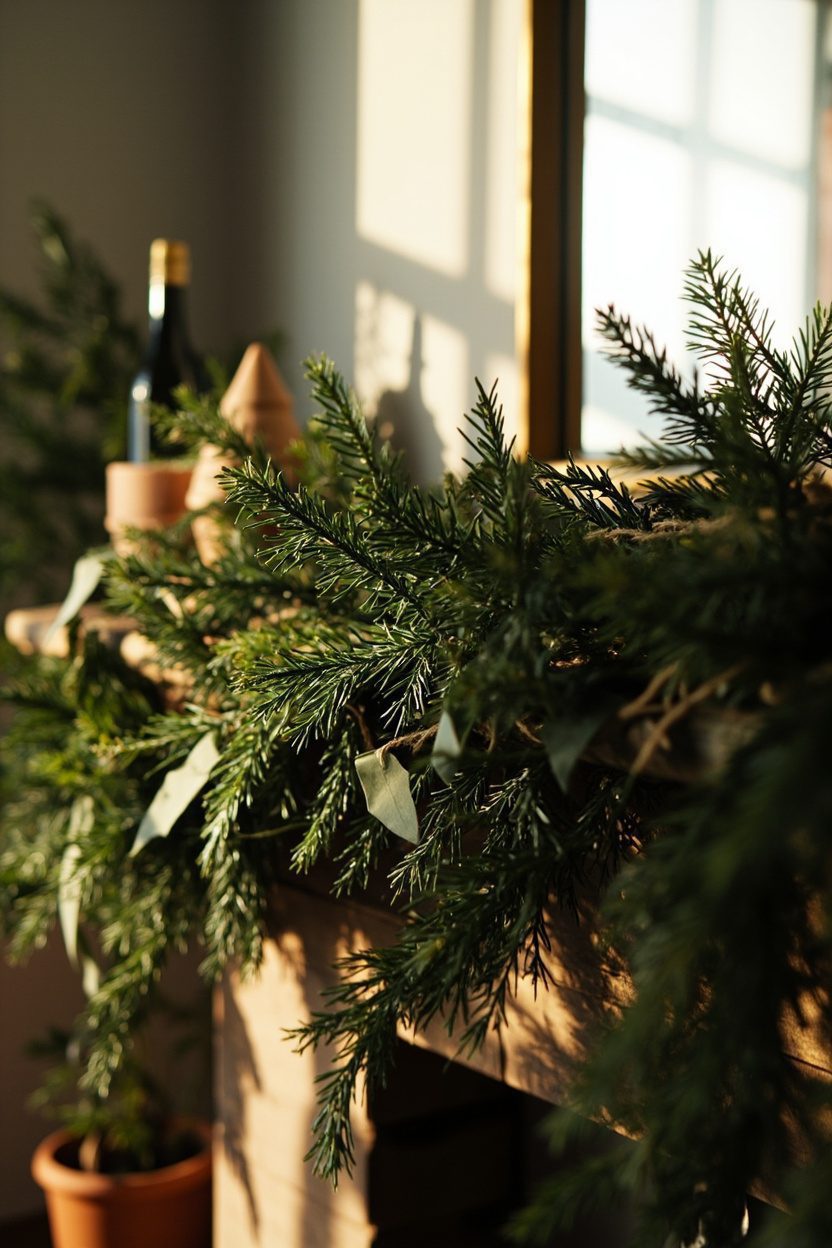
Harness live and foraged greenery to create holiday displays that feel intentional rather than bought. Use locally sourced boughs—spruce, cedar, and eucalyptus—for mantel garlands; mix textures and snip lengths so the garland reads layered rather than uniform. For a concrete decision: choose cedar for durability and scent in high-traffic zones, eucalyptus for bathrooms (its oils handle humidity), and keep spruce only where you can water or refresh it every few days to avoid needle drop and fire risk.
Bring sustainability into every room by pairing greenery with reusable accents—linen ribbons, ceramic vases, and metal candleholders—so the core of the look can return year after year. Budget tier: under $75 will cover clippers, floral wire, and a few bunches for modest garlands; $200+ gets you professional-grade topped wreaths and a preserved centerpiece that lasts weeks.
What to Focus On
- Pair one live greenery element per room with a neutral base like linen or wood to balance scent and color.
- Trim stems at an angle and mist daily to extend freshness for at least 10–14 days.
- Use floral wire sparingly—one tie every 12–18 inches for a natural drape without bulk.
- Repurpose clippings as table toppers, napkin rings, or cocktail garnishes to maximize materials.
5. Fanciful Ornament Mix
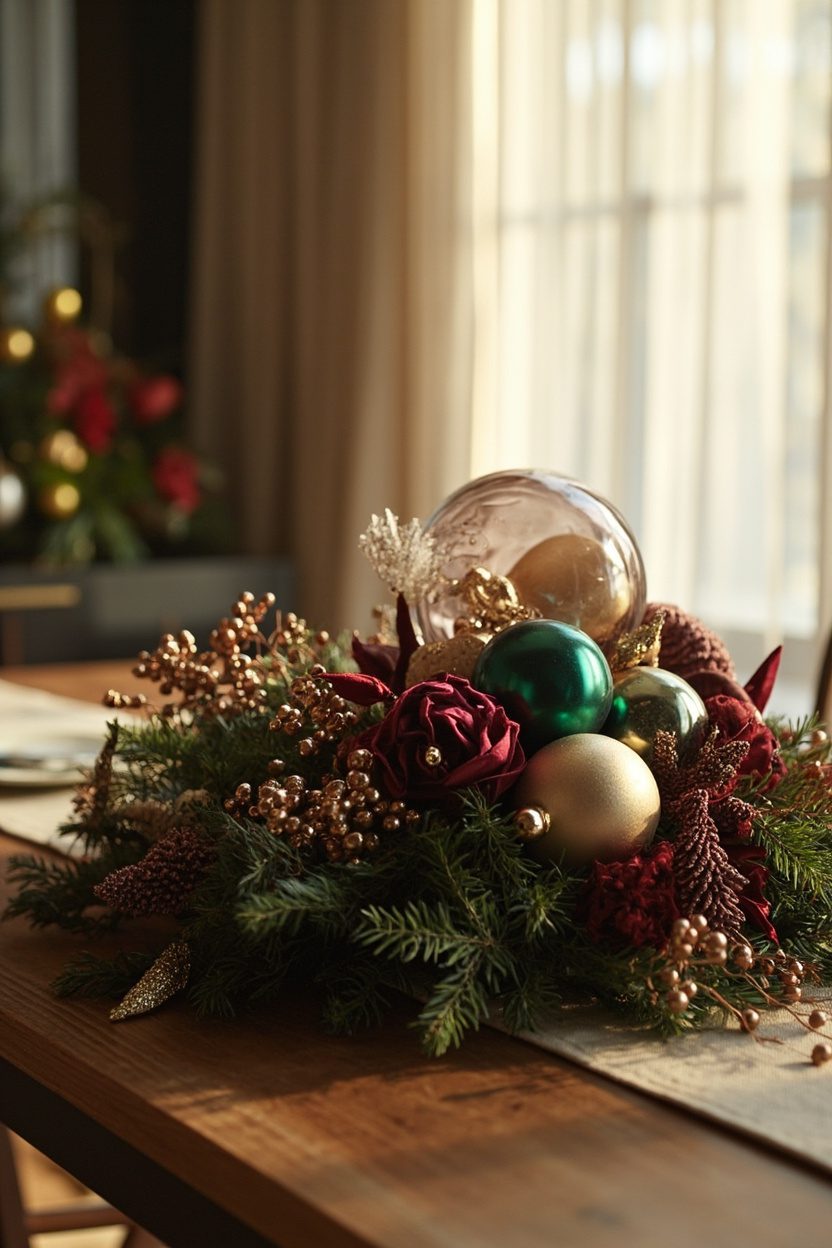
Layer ornaments in varying scales, finishes, and eras to avoid the matchy-store look: matte glass, hammered metal, and a few heirloom bulbs create visual depth on a tree or in a bowl. Decision detail: pick one dominant finish (for example, warm brass) and introduce two contrasting textures (frosted glass and woven rattan) so the mix reads curated, not chaotic.
Spread the mix throughout the house—a trio in a bedroom pendant, a cluster in a hallway bowl, and a single statement bulb on a mantle hook—to unify the scheme across rooms without repetition. Avoid overcrowding: keep at least 30–40% negative space to let individual ornaments register, especially on small trees or open shelves.
Styling Blueprint
- Choose a dominant finish plus two textures to guide purchases and avoid visual clutter.
- Group ornaments in threes for displays; odd numbers read as purposeful and balanced.
- Use clear fishing line for floating ornaments in windows or over dining tables for a whimsical effect.
- Reserve delicate heirlooms for low-traffic rooms or display in cloches to prevent damage.
6. Oversized Ribbon Statements
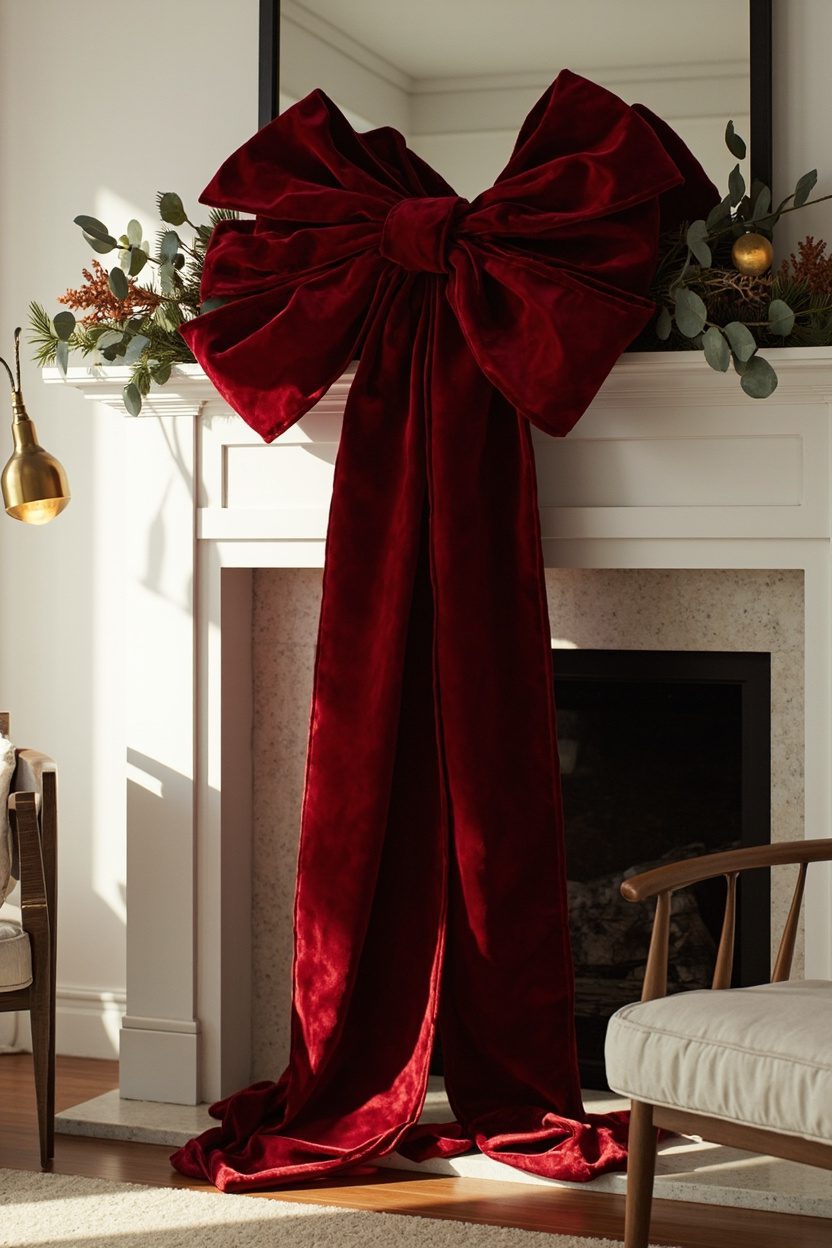
Make ribbon a structural feature: wide wired ribbon (3–4 inches) can be looped into bows large enough to proportionally anchor a sofa, staircase, or oversized wreath. Material choice matters—go for wired wool-blend or velvet for high-end texture and hold, or a weatherproof polyester for outdoor bows that resist moisture and fading.
Placement is deliberate: use oversized ribbon sparingly (one major piece per room) to avoid visual competition, and secure with discreet zip ties or floral wire hidden behind trim. For a budget-conscious twist, cut large lengths from upholstery remnants or thrifted fabric and seal edges with fray check to mimic luxury without the price.
Essential Elements
- Pick ribbon width based on scale: 3–4″ for furniture, 6–8″ for exterior doors and large wreaths.
- Use wired ribbon for structure so bows hold shape despite heat or humidity indoors.
- Anchor with hardware hidden behind trim—zip ties, screws with loops, or heavy-duty double-sided tape outdoors.
- Limit color accents to one per room (ribbon or ornament) to keep the scheme cohesive.
7. Vintage Glass Baubles

Small collections of vintage glass baubles bring instant nostalgia without feeling costumey. Select blown-glass shapes in a limited palette—deep cranberry, forest green, and mercury silver—to read as edited and intentional rather than cluttered; group them in clusters of 5–9 in a shallow bowl or on a mantel for the best visual impact. Avoid mixing modern plastic ornaments with true vintage pieces; glass has weight and opacity differences that will make the mix look amateurish rather than layered.
These baubles work in bedrooms, dining rooms, and foyers where reflective surfaces add depth. For safety and longevity, wrap each piece in acid-free tissue and store them in a divided cedar box between seasons to prevent chipping and moisture damage.
Styling Blueprint
- Limit palette to three colors for coherence and scale the sizes from 1″ to 3″ diameter for balance.
- Group odd numbers in a shallow ceramic bowl or tiered tray near a light source for sparkle.
- Use glass-safe adhesive hooks on mirrors or windows for suspended displays without visible wiring.
- Budget tip: hunt flea markets for single pieces to assemble a curated set under $100 total.
8. Cozy Cottage Textiles
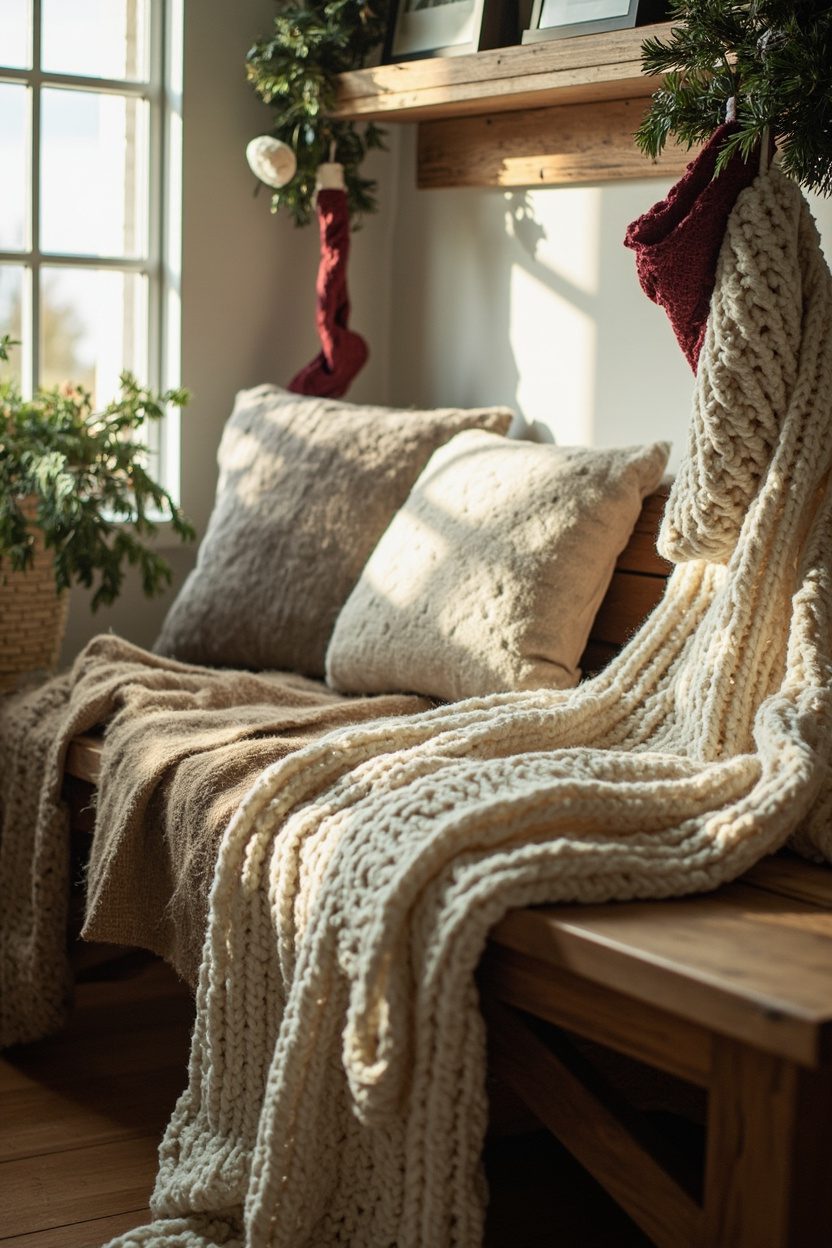
Layered textiles are the quickest way to make any room read as holiday-ready without a single ornament. Start with a neutral base—linen sofa or wool rug—and add a plaid throw in muted reds or navy plus one chunky knit blanket in a warm cream; this combo reads both seasonal and liveable. Choose natural fibers (wool, linen, cotton) for texture and longevity; synthetics can pill and show holiday wear quickly.
Swap a few pillow covers in high-traffic rooms rather than replacing upholstery: a 20″ linen pillow, a 22″ velvet, and a 16″ lumbar in needlepoint will add contrast and scale. In bedrooms, layer a quilt at the foot of the bed and add a thermal sheet for real warmth rather than just visual coziness.
What to Focus On
- Mix scale: a large plaid, medium velvet, and small embroidered cushion to keep depth and proportion correct.
- Stick to 2–3 fabrics to avoid a cluttered feel and ensure easy seasonal storage.
- Choose washable covers where possible for longevity and holiday hosting practicality.
- Placement: fold throws over the arm of a sofa, drape a quilt at a bed’s foot, and stack pillows in descending sizes for polish.
9. Neon Neon Accents
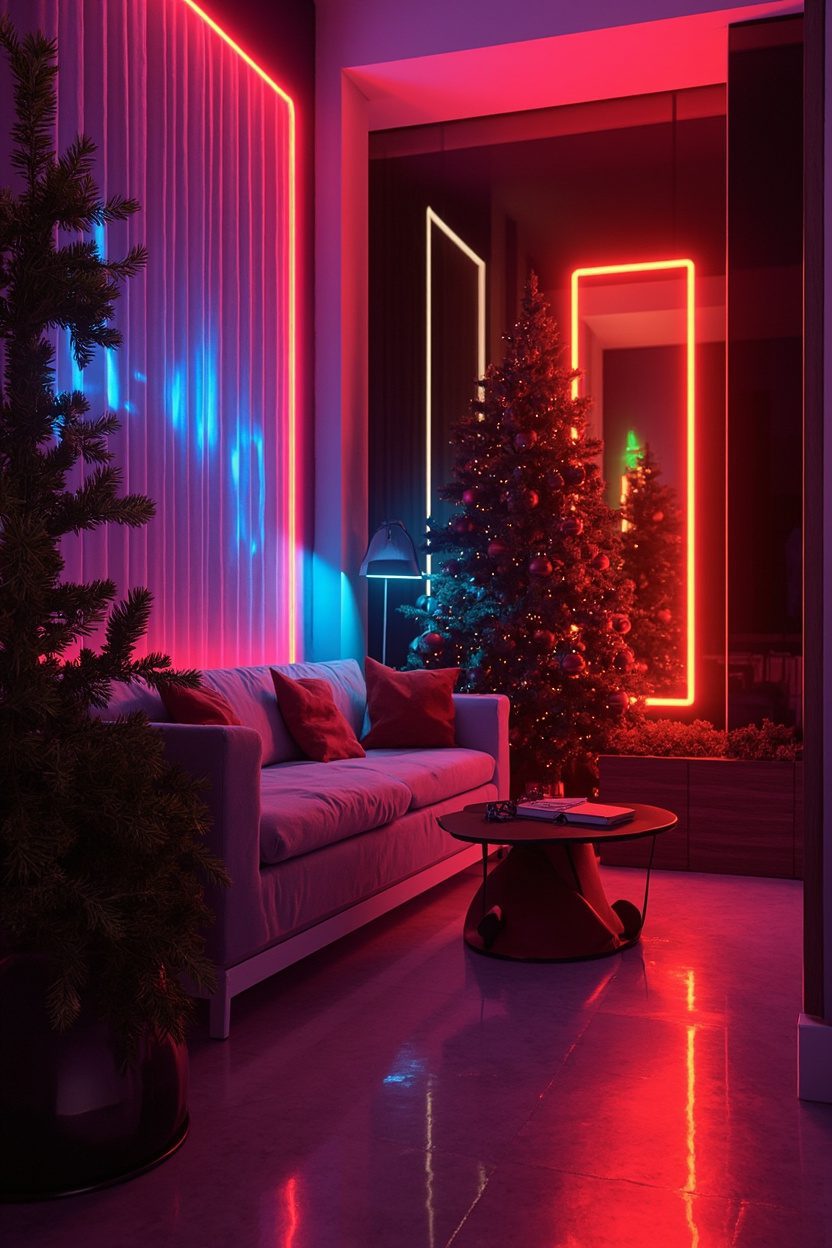
A little neon goes a long way—think a single neon sign in a den, or a pair of neon candlesticks on a bar cart—to inject unexpected playfulness into holiday decor. Opt for warm-hued neon (soft pinks, amber) rather than harsh blue or green so it complements traditional holiday palettes and photographs well. Keep scale small: a 12″ neon tube reads more considered than a gaudy oversized installation.
Neon works best as an accent against matte, natural finishes—reclaimed wood, matte black metal, or plaster walls—so it feels curated rather than theme-park. If you want editable color, choose LED neon substitutes with dimmers to control ambiance and avoid overpowering other decorations.
Essential Elements
- Pick one neon piece per room as a focal point to prevent visual competition.
- Choose warm hues and dimmable fixtures for flexible mood control during gatherings.
- Mounting: hang on eye-level for artwork effect or place on a shelf with a layered vignette behind.
- Power plan: ensure outlet placement or use a discreet cord channel to keep the look tidy.
10. Mixed-Metal Layers
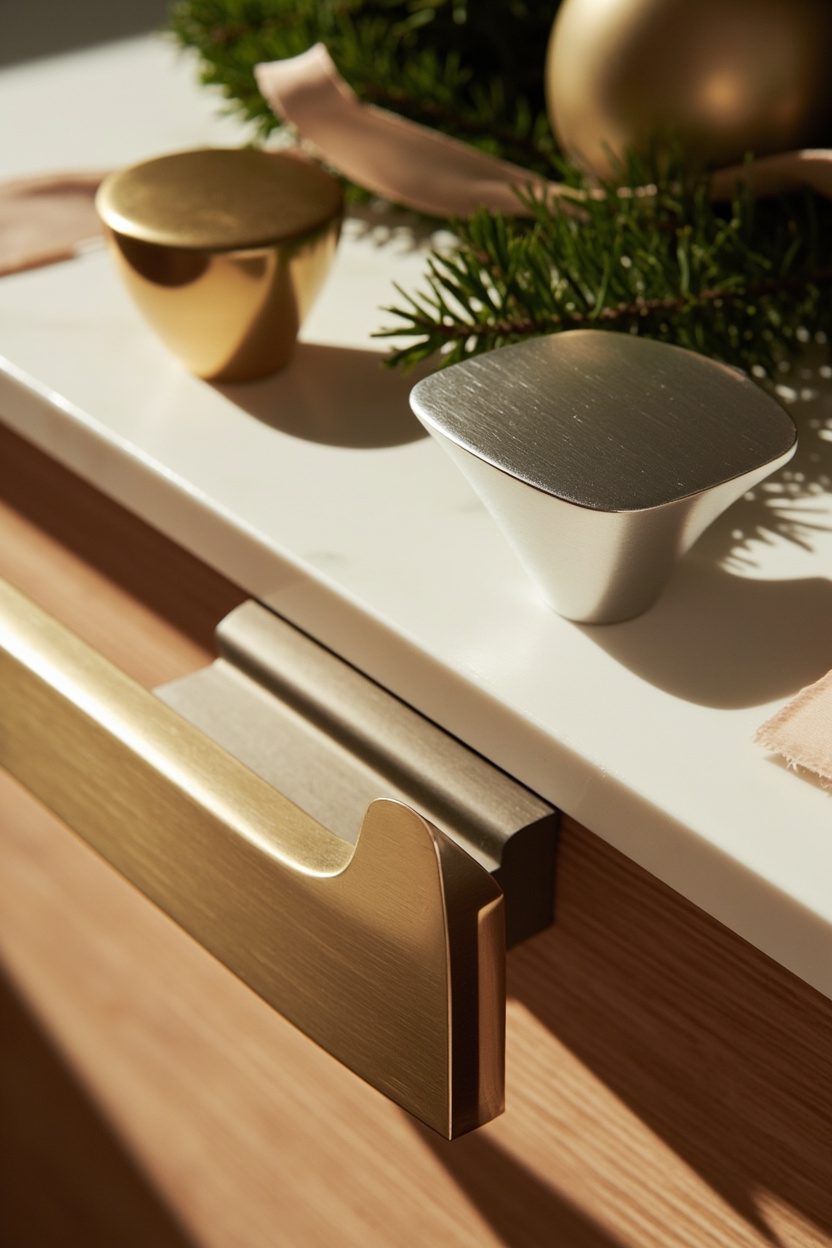
Start by choosing one dominant metal (warm brass or antique bronze works best) and add two contrasting accents in smaller doses, such as polished nickel and aged iron. Layering metals avoids matchy-matchy holiday kitsch; use the dominant metal for larger anchors like a wreath frame or mantel garland hardware, then introduce the others in candlesticks, ornament hooks, and napkin rings to create deliberate contrast and depth.
A practical decision detail: keep finishes consistent by temperature (warm vs. cool) rather than trying to match tones exactly—this prevents the display from reading chaotic. For budget-friendly scale, use thrifted brass candlesticks re-lacquered for the dominant tone and reserve new pieces for high-visibility elements like a centerpiece or staircase runner.
Styling Blueprint
- Pick one dominant metal and commit to it for big pieces (mantel, chandelier, large vase)..
- Add two accent metals in smaller accessories (ornaments, flatware, hooks)..
- Limit to three metal types maximum to avoid visual clutter and maintain sophistication..
11. Themed Table Scapes
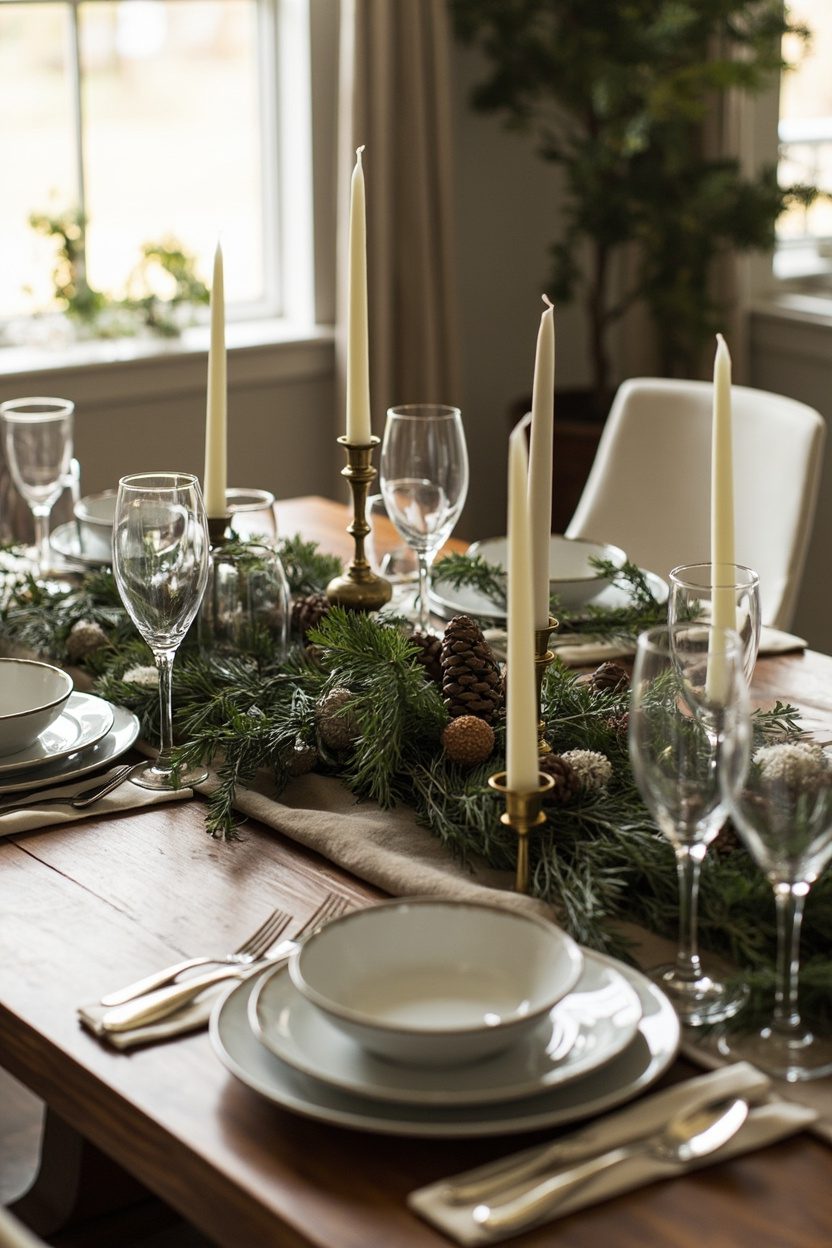
Anchor a holiday meal with a clear theme—rustic woodland, coastal winter, or vintage glam—and specify two dominant materials (for example: linen + raw wood, or velvet + mercury glass). Themed tables allow you to reuse decor across rooms; a woodland runner can become a mantel swag the next day, which is an efficient decorating move during Home Renovations or tight schedules.
A concrete decision to make: set a budget per place setting (low: $10, medium: $25, high: $60) and allocate it between dinnerware, napkins, and a focal item like a mini wreath or place-card ornament. Avoid the mistake of mixing too many patterns—limit patterns to one textile and use solids for the rest to keep the table readable in photos and real life.
What to Focus On
- Define the theme before buying—select two materials and one accent color to guide purchases..
- Choose a focal point (centerpiece) proportionate to table length; avoid blocking sightlines with tall items..
- Set a per-place budget to control splurge vs. thrift balance and reuse potential..
- Include a tactile element (fresh sprigs, cinnamon sticks, or knit napkins) for sensory warmth..
12. Scandinavian Minimalism
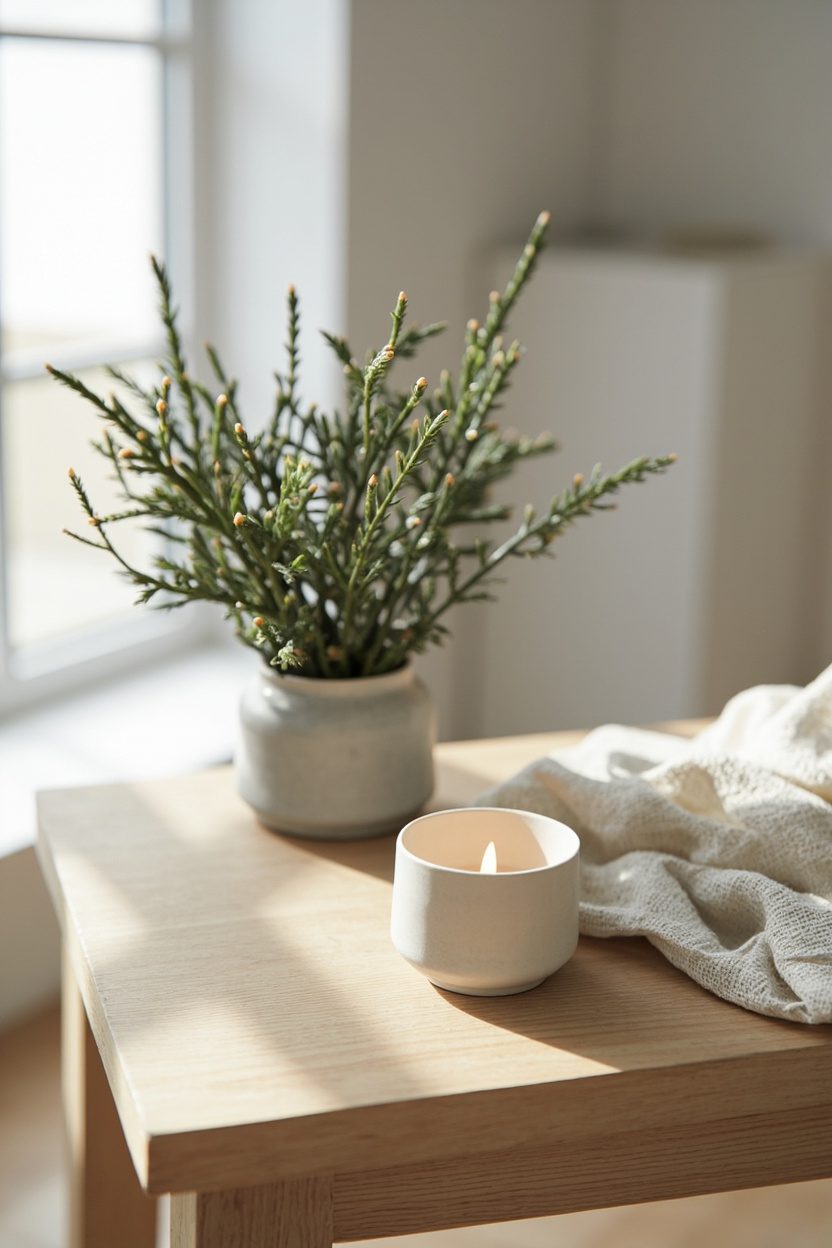
Scandinavian holiday styling leans on restraint: think a palette of soft white, muted gray, and a single accent color (matte forest green or deep red). Prioritize natural textures—felt ornaments, birch candle holders, and wool throws—and keep decorations sparse and deliberately placed so each piece reads like a practiced edit rather than clutter.
A decision detail to enforce the look: limit lighting to two types—warm white string lights and unscented pillar candles—and avoid multicolored LEDs that break the calm. For scale, use small groupings (odd numbers) on shelves and a single statement wreath on the front door; overdecorating is the number one mistake that ruins Scandinavian minimalism.
Essential Elements
- Stick to a restrained palette (white, gray, one accent) to maintain tranquility..
- Use natural materials—wood, wool, felt—for ornaments and textiles to add warmth without clutter..
- Choose two light sources max (warm string lights + candles) and position for soft wash lighting..
- Edit ruthlessly: remove any item that doesn’t contribute to the overall calm or tactile interest..
13. DIY Upcycled Crafts
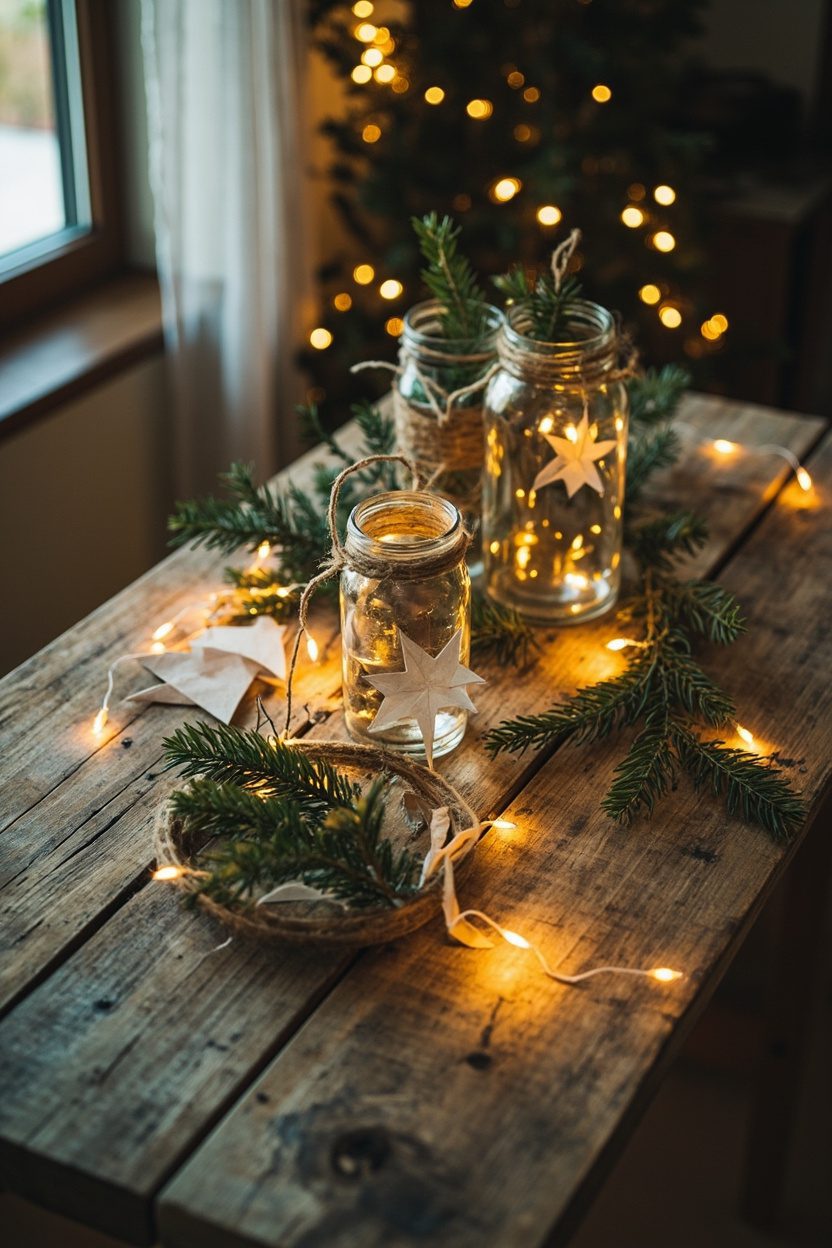
Recycle with intent: use salvaged wood, thrifted linens, and spare glass jars to create seasonally tuned pieces that feel bespoke without the boutique price. For example, convert an old fence picket into a painted tabletop garland (whitewash, 20″ length, drilled for hanging) — the texture reads authentic farmhouse while costing under $25 in materials.
Keep scale and placement in mind: small clusters of upcycled ornaments work on mantels and shelves, but bigger statements (a reclaimed-wood wreath or standing greenery column) need floor clearance and balance against nearby furniture. Avoid overloading delicate pieces with heavy lights; choose battery LEDs for fragile or fabric-based projects to prevent singeing and wiring stress.
Styling Blueprint
- Choose one primary material per project (wood, glass, or textile) to maintain cohesion and simplify sourcing.
- Limit color palette to three tones (base, accent, metallic) to prevent a craft-cluttered look.
- Prioritize lightweight fastening: use removable hooks, Velcro, or hot glue rather than nails for rented spaces.
- Set a realistic budget cap: $25–$75 for most small-to-medium DIY pieces to keep projects doable and replaceable.
14. Mood-Boosting Candles
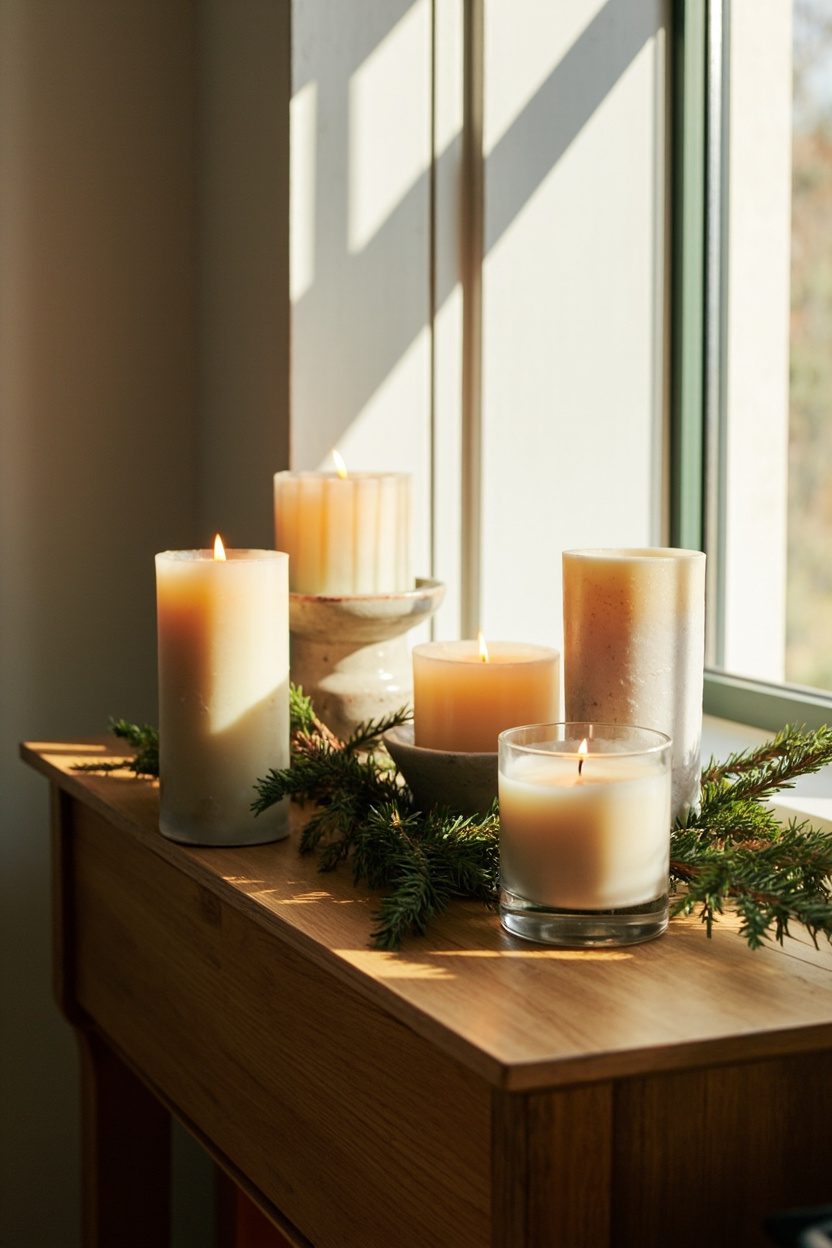
Select candles for scent and safety: pick soy or coconut wax for cleaner burn and non-toxic fragrance oils like citrus-vanilla or fir-and-bay for universal appeal. Use varied vessel heights (2″, 3.5″, 5″) and group in odd numbers to create intentional focal points without overwhelming a room’s proportion.
Place candles thoughtfully: tuck smaller votives in bathrooms and on bedside tables, reserve larger pillars for dining tables or hearths, and always use non-flammable trays or hurricane glass to protect surfaces. Avoid scented candles in small, poorly ventilated rooms—opt for unscented pillar or flameless wax alternatives in those spaces to prevent scent fatigue.
What to Focus On
- Match candle scale to surface: votives for shelves, medium jars for side tables, pillars for mantels.
- Pick one signature scent for the whole house to create continuity and reduce clashes.
- Use glass hurricanes or ceramic trays under candles to guard finishes and contain drips.
- Set a burn-rule: 3–4 hours max per session to extend life and reduce soot build-up.
You can pair this with ideas from 11 Holiday Staircase Decor Ideas That Make a Grand Entrance.
FAQ
How can I make holiday decor feel cohesive across different rooms?
- Choose a unifying element—color, material (like brass or unfinished wood), or motif (pinecone, plaid)—and repeat it in at least three places throughout the house to tie spaces together without being matchy-matchy.
Are flameless candles a good alternative for holiday styling?
- Yes; premium LED candles replicate flicker and warmth with zero open flame, making them ideal for homes with kids, pets, or places where real candles are unsafe or forbidden.
How much should I budget for seasonal decor updates?
- For impactful changes, budget in tiers: $50–$150 for accent updates (textiles, small ornaments), $150–$500 for room-scale swaps (wreaths, new mantel styling), and $500+ for structural or custom pieces during larger Home Renovations.
Where can I find farmhouse-friendly teen room holiday ideas?
- Adapt teen tastes with muted farmhouse tones and playful accents—check resources tailored to youth spaces like Farmhouse Teen Bedroom Ideas for inspiration on mixing comfort and seasonal flair.
Final Thoughts
Holiday decor should enhance everyday living, not complicate it. Choose one or two dominant gestures—a scent, a recurring material, or a signature DIY piece—and let smaller accents echo that choice across rooms. Practical decisions about scale, safety, and a modest budget will keep your home festive, functional, and authentically styled through the season.