


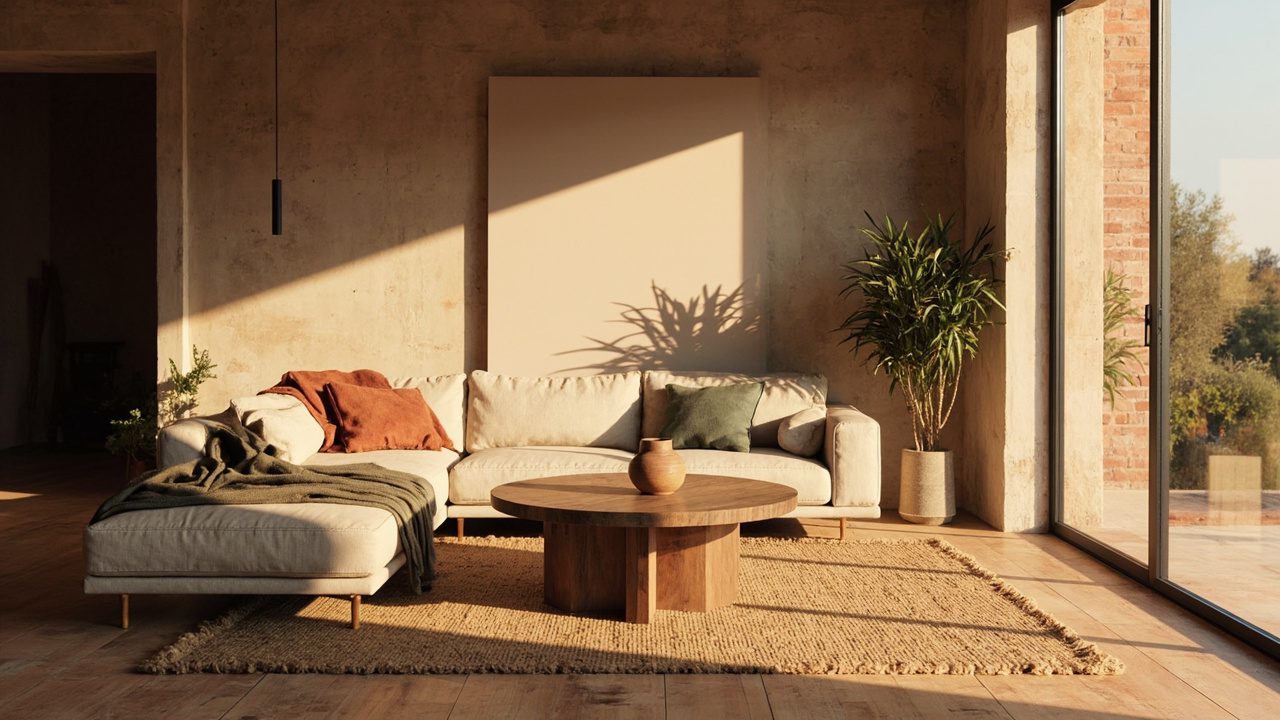
Earthy living rooms feel like a slow exhale, spaces that balance warmth, tactility, and the kind of quiet sophistication you live in every day.
Start with materials that age gracefully: raw wood, handwoven textiles, matte plaster, and terracotta. Warm tones such as ochre, warm taupe, olive, and clay give a room an immediate sense of comfort; the trick is to layer them in varying intensities so the space reads cohesive rather than one-note.
This collection of 16 ideas focuses on tactile choices and decisive color moves that deliver that grounded look without feeling fusty.
Expect concrete direction on material pairings, scale decisions, and a few common mistakes to avoid so your living room will read intentional from first glance to the smallest detail.
- 1. Earthy Color Palette
- 2. Terracotta Accent Wall
- 3. Olive Green Seating
- 4. Warm Taupe Walls
- 5. Buttery Yellow Throws
- 6. Raw Wood Coffee Table
- 7. Woven Textiles Layering
- 8. Clay Pottery Displays
- 9. Stone Fireplace Focus
- 10. Natural Fiber Rugs
- 11. Matte Black Fixtures
- 12. Rattan Light Fixtures
- 13. Mixed Metal Accents
- 14. Indoor Olive Trees
- 15. Handwoven Wall Hangings
- 16. Sculptural Ceramic Vases
- FAQ
- Final Thoughts
1. Earthy Color Palette
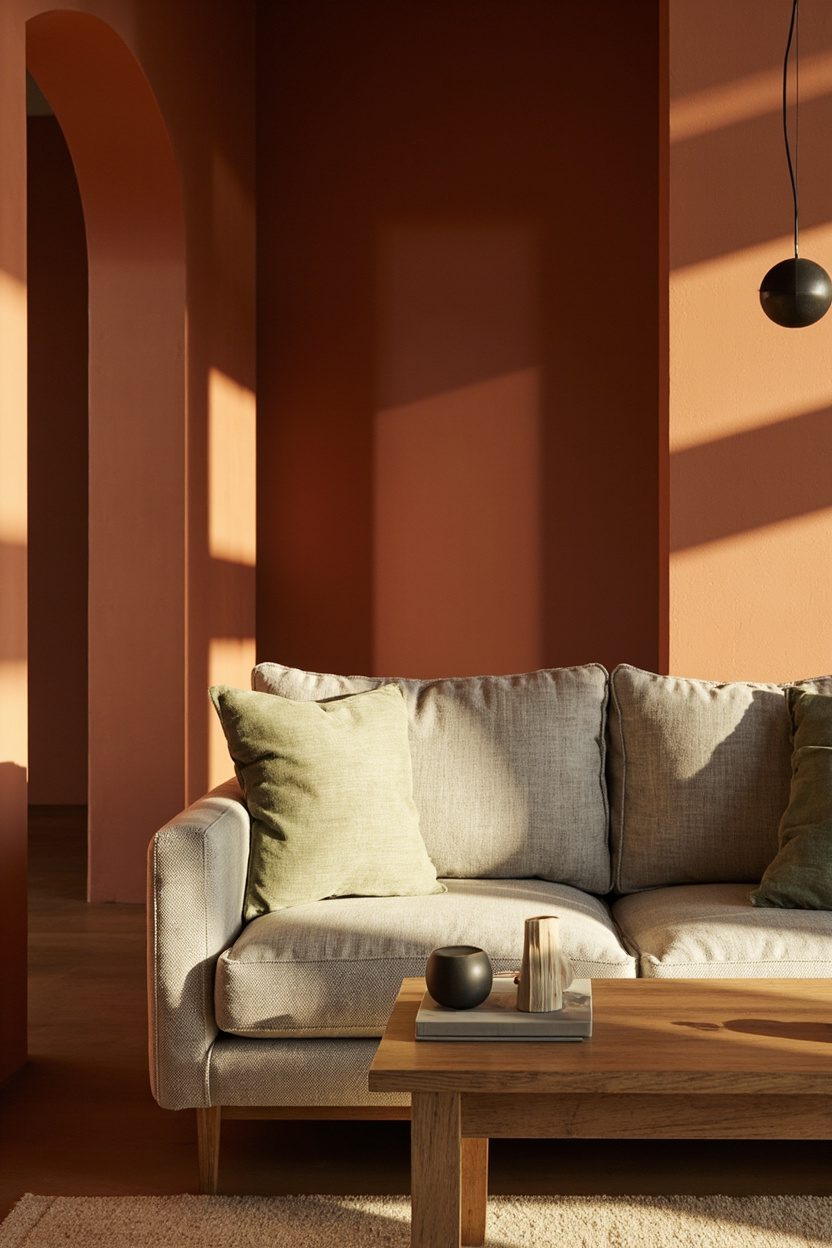
Choose a three-tiered palette: a warm neutral base (warm plaster, greige, or soft taupe), a grounding mid-tone (terracotta, olive, or deep caramel), and a bright accent (buttery yellow or warm clay).
Commit to dominance for one layer, usually the base, and use the mid-tone for most upholstery and large rugs; save the accent for trim, art, or a single statement chair.
Test paint samples are large enough to view with your rug and sofa to avoid color shifts under different lighting.
Avoid the trap of matching too many elements exactly; mix undertones (a pinkish terracotta sofa with a yellow-leaning ochre pillow) to keep the palette complex.
For budget tiers, a paint-and-textile refresh is high impact under $500; if you’re investing more, opt for natural-dyed linens and clay-glazed ceramics to deepen the palette sustainably.
Essential Elements
- Base neutral (taupe or warm plaster) as wall color to anchor the room.
- Mid-tone for large textiles (sofa, rug) in terracotta, olive, or caramel.
- Accent color in small doses (pillows, art, lamp shades) like buttery yellow.
- Test color samples with existing wood tones and flooring before committing.
2. Terracotta Accent Wall
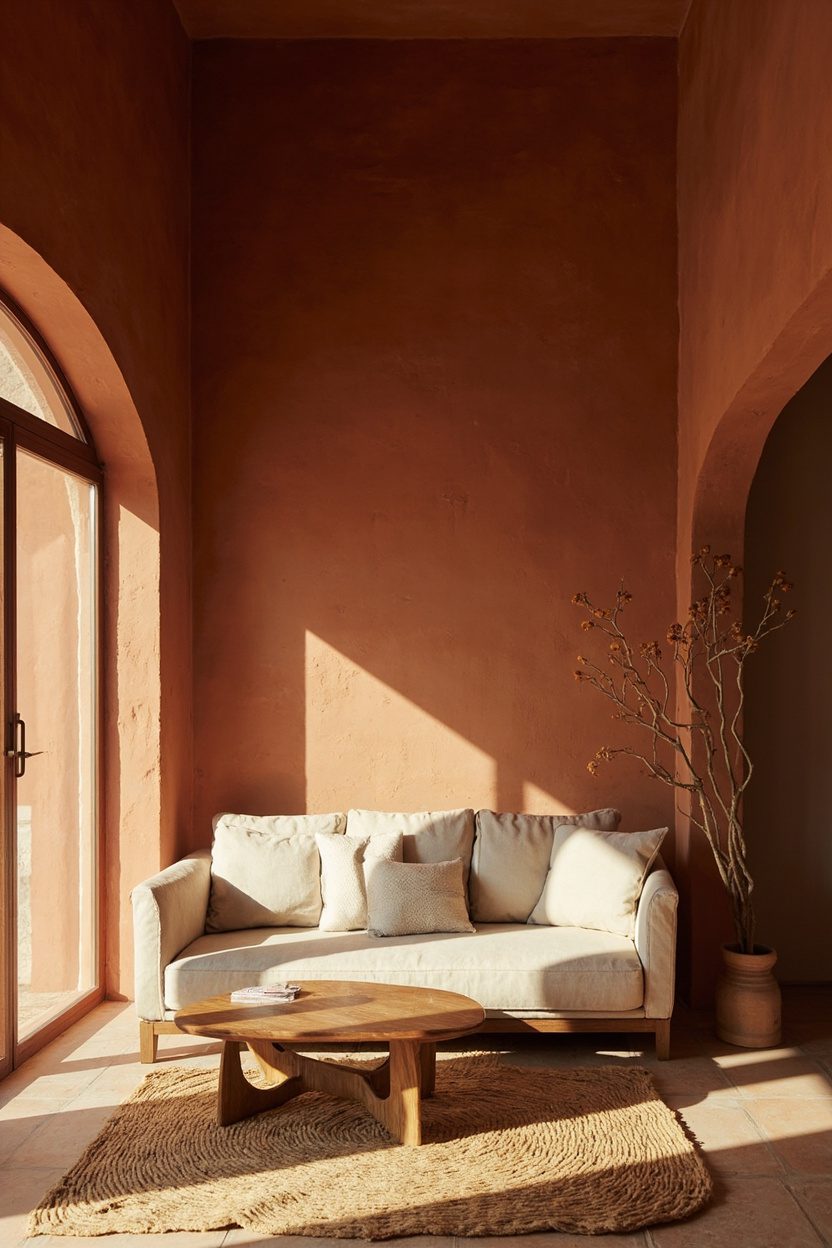
A terracotta wall instantly increases perceived warmth and works well behind a fireplace or TV wall where you want to focus. Use a matte finish, either flat paint or microcement, for an authentic earthen feel; glossy finishes will read too polished.
Decision detail: if your room faces north, choose a terracotta with a warmer, redder undertone to counteract cool light; south-facing rooms can take a more muted clay tone.
Limit the terracotta to one wall to prevent overwhelming the space; balance it with lighter textiles and natural wood furniture.
For an economical option, paint a plywood panel and use it as a removable accent if you anticipate changing styles or plan to stage the home later.
Styling Blueprint
- Apply terracotta to one focal wall behind key furniture to anchor the layout.
- Pair with light linen drapery and oak furniture to soften the pigment.
- Choose matte paints or microcement for an authentic earthen texture.
- Test undertones in room light; warmer terracottas suit north-facing rooms best.
3. Olive Green Seating
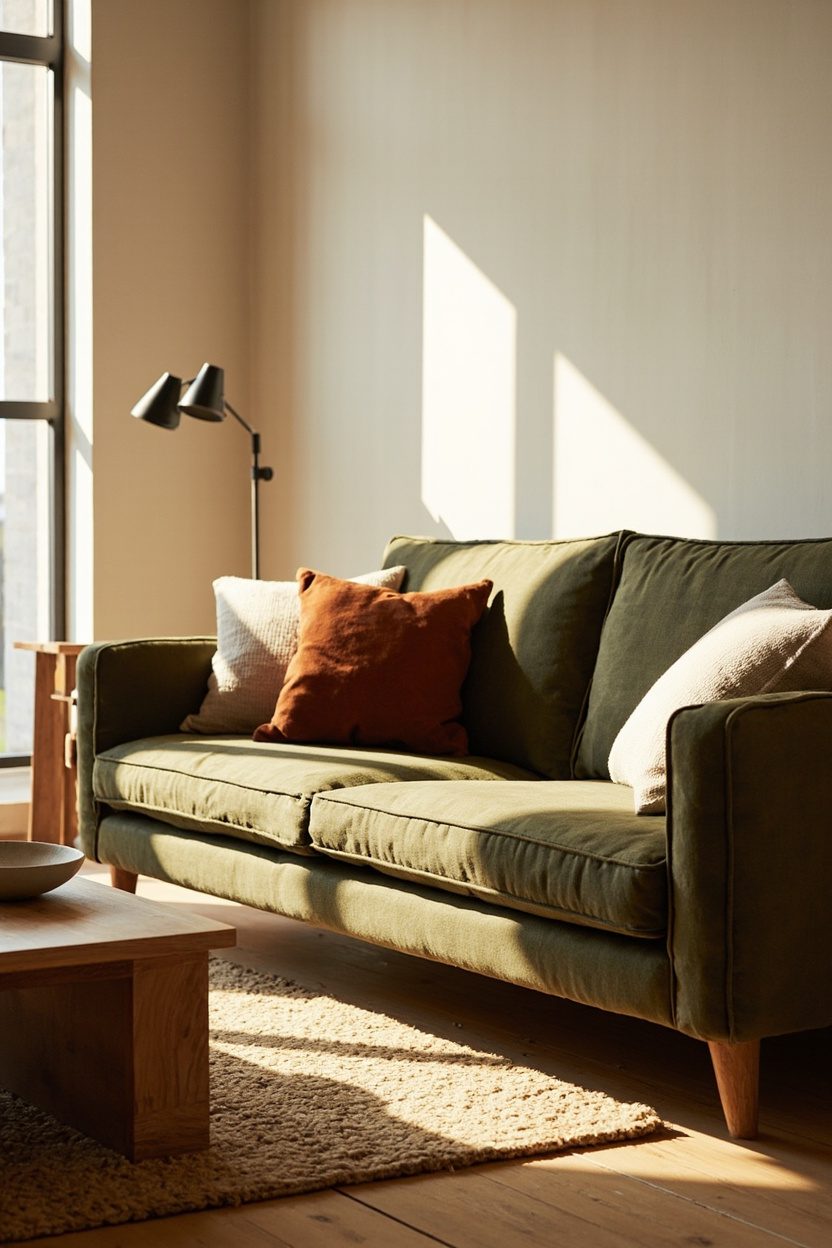
Olive seating a sofa or an armchair reads polished and approachable when scaled correctly: opt for mid-century proportions or a low, deep couch to keep the color from overpowering.
Choose a durable fabric with a linen blend or tightly woven cotton; velvet can work, but pick a matte, tactile pile to avoid a formal look. Practical note: upholster in a darker olive to hide everyday wear if you have pets or kids.
Pair olive seating with warm wood tones and terracotta accents to keep the palette cohesive; avoid pairing olive with cool grays that flatten its warmth.
For tighter budgets, reupholstering an existing sofa in olive-toned performance fabric yields a high-impact change for a fraction of replacement cost.
What to Focus On?
- Select durable upholstery (linen blend or performance fabric) in a mid-to-dark olive shade.
- Match olive seating to warm wood legs rather than chrome to maintain earthiness.
- Balance with terracotta or ochre textiles rather than cool grays.
- Consider reupholstery of an existing frame to save budget while upgrading color.
4. Warm Taupe Walls
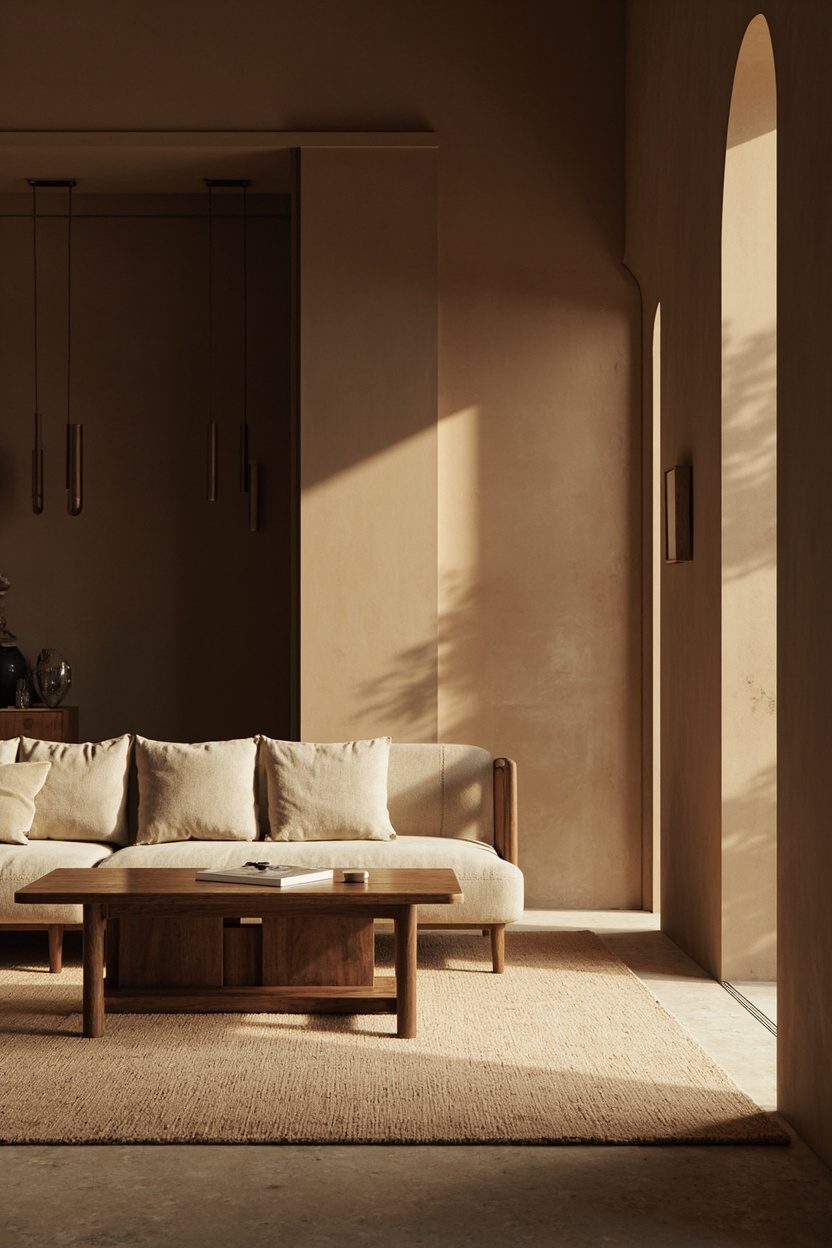
Warm taupe is an underused neutral that reads warm without pushing ginger tones; choose a paint with a brown undertone and low sheen to keep light soft and forgiving. For a 12×16 living room, go for a mid-value taupe (LRV around 35–45) so furnishings retain contrast, too pale and the room flattens, too dark and it reads muddy in north-facing rooms.
Use sample swatches on all four walls before committing, as the color shifts dramatically next to exposed brick or oak floors.
Layer in texture to prevent the walls from feeling flat: wide-weave linen drapes, a sisal rug, and matte ceramic lamps will give the surface depth without competing color-wise.
If you want a modern rustic feel, pair the taupe with warm white trim (not stark bright white) and a single statement element like an olive-green velvet sofa so the palette stays restrained yet lively.
What to Focus On?
- Pick a taupe with a warm brown undertone and LRV 35–45 for balanced warmth and contrast.
- Test 2’x2′ swatches on adjacent walls to see undertone shifts with morning and evening light.
- Keep trim a soft, warm white (avoid ultra-bright white) to frame the color subtly.
- Introduce three natural textures (linen, leather, woven fiber) to add visual depth.
5. Buttery Yellow Throws
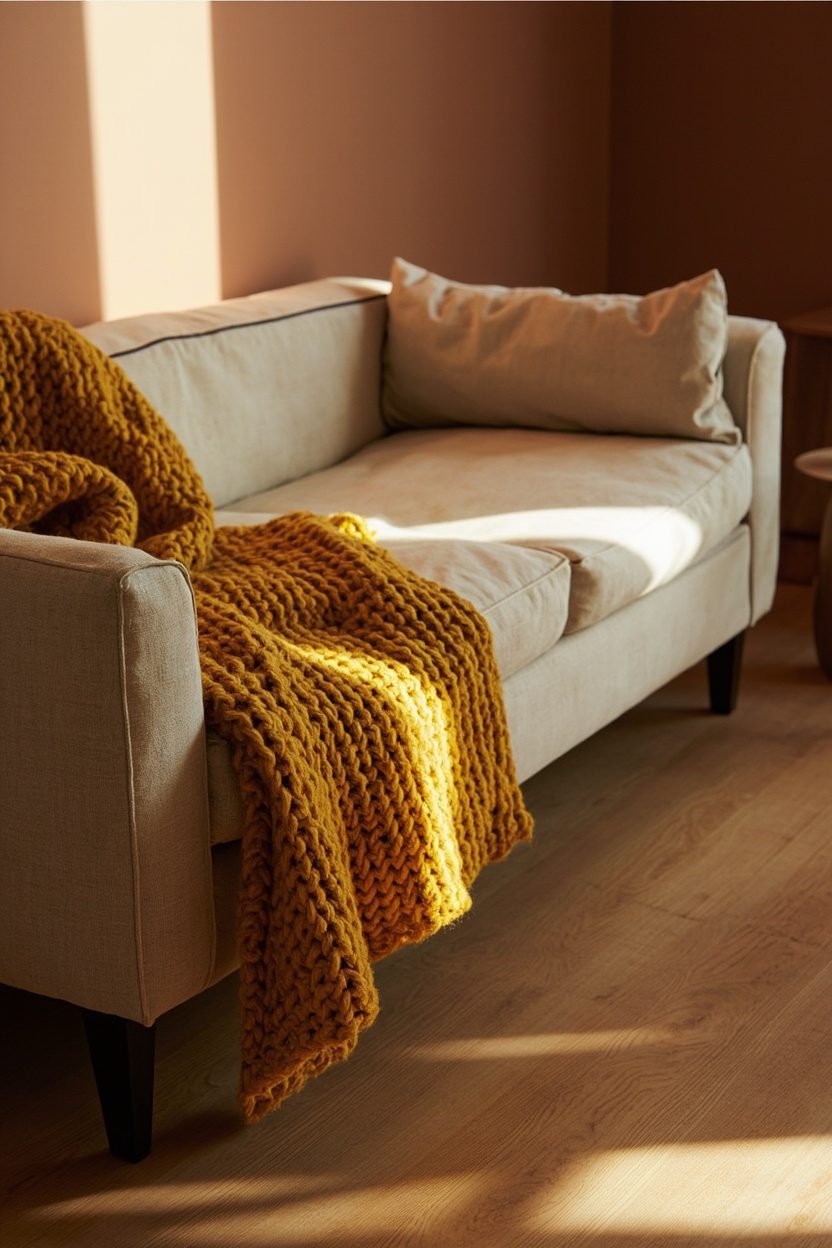
Buttery yellow is the small-stakes way to introduce sunny warmth without dominating a room—select throws in a true butter (cream with a warm yellow bias) rather than neon or school-bus yellow.
Use one throw on the arm of the sofa and a second folded at the foot of an accent chair to create visual rhythm; choose chunky cotton or a cotton-linen blend for year-round use rather than heavy wool if you live in a mild climate. Aim for 1–2% of your room’s visible surface area in this hue so it reads as an accent, not overpowering.
Mix the butter yellow with grounded materials: a leather pouf, terracotta planter, or a reclaimed-wood side table will anchor the brightness.
If you want to push the trendier palette referenced in recent design coverage, add a small pillow in olive or warm taupe to echo the throw and create a cohesive trio of colors that nods to current earthy vibrancy tendencies.
Styling Blueprint
- Choose cotton-linen blends in butter yellow for versatile, washable throws.
- Place throws asymmetrically, drape one over the sofa arm, and one folded on a chair for movement.
- Combine with grounded textures (leather, terracotta, raw wood) to prevent the yellow from feeling sweet.
- Limit buttery accents to 1–2% of visible surfaces to keep the color as a highlight.
6. Raw Wood Coffee Table
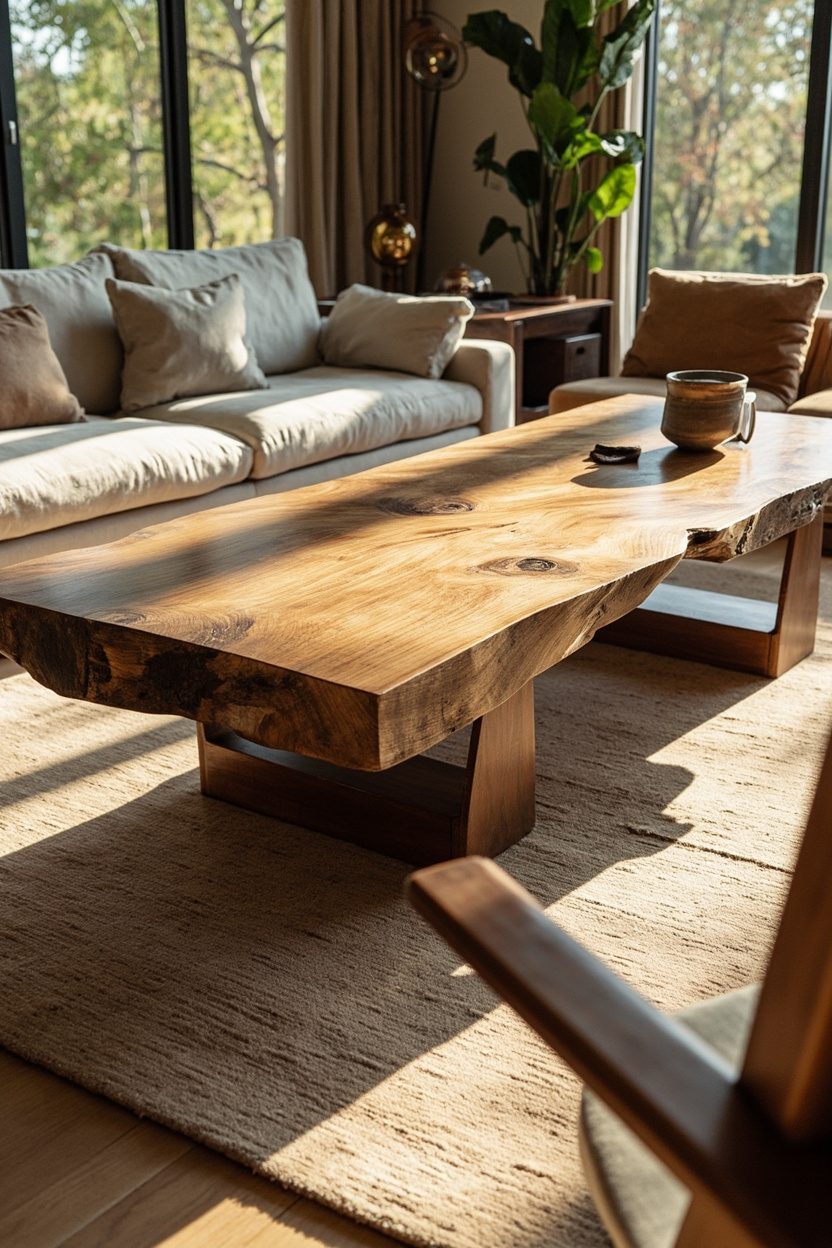
A raw wood coffee table anchors an earthy living room and introduces organic scale; specify a top thickness of 1.5–2 inches and choose species like white oak or walnut with a hand-planed finish for tactility.
If your sofa sits 16–18 inches high, pick a table height 2–4 inches lower for proper proportion; too tall makes the seating feel off-balance. For longevity, opt for a sealed matte oil finish rather than glossy lacquer so the wood can be refreshed with oil over time.
Keep the tabletop simple: one low stack of books, a shallow bowl, and a sculptural candle. Heavy styling hides the grain that you paid for.
If you need storage, select a table with an unobtrusive lower shelf in the same wood tone rather than a contrasting metal base to preserve the organic, tactile story of the piece.
Essential Elements
- Choose white oak or walnut with a hand-planed raw surface and matte oil finish.
- Table height should be 2–4 inches lower than sofa seat height for the correct scale.
- Limit tabletop accessories to low, tactile objects to showcase the wood grain.
- Prefer a same-wood lower shelf over mixed materials if you want a cohesive look.
7. Woven Textiles Layering
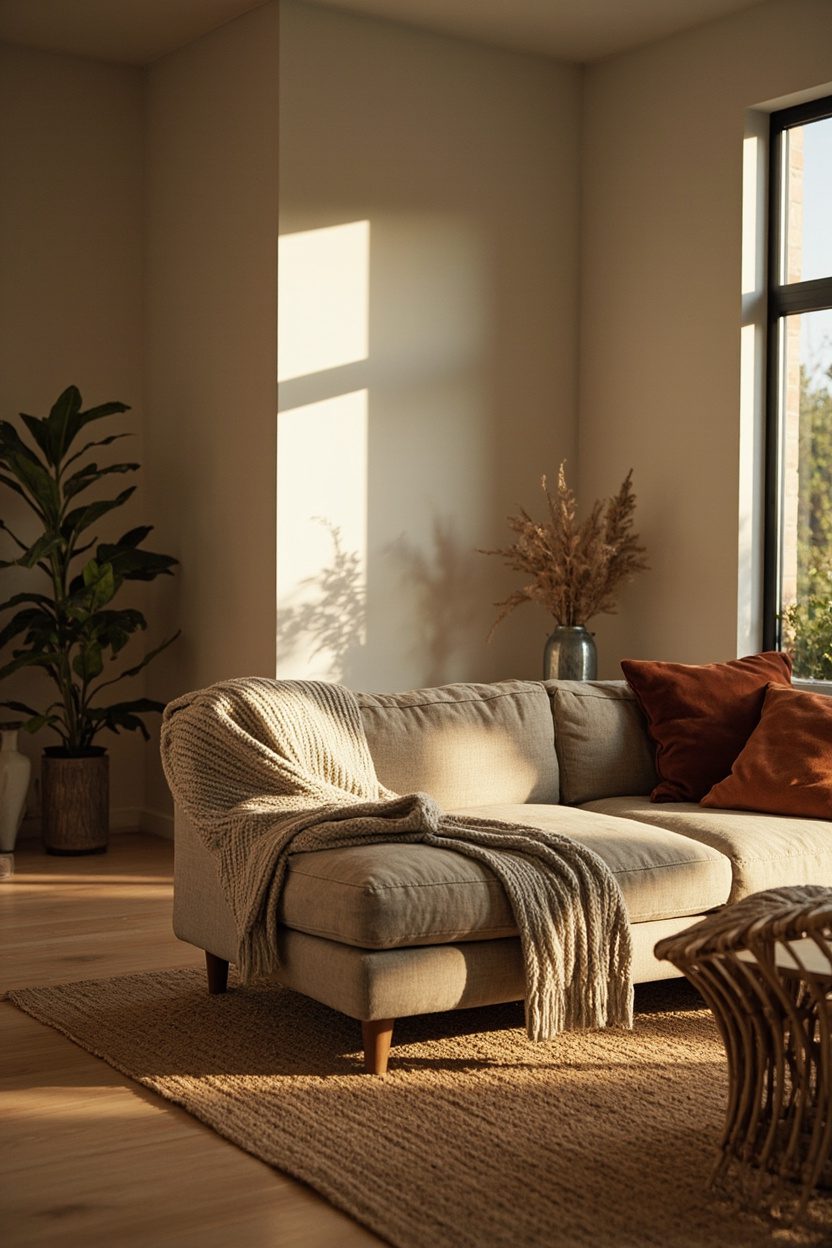
Layering woven textiles immediately adds tactile depth and a lived-in warmth to an earthy living room. Choose a primary sofa throw in a heavyweight wool or chunky alpaca in a muted ochre or terracotta and add midweight cotton kilim pillows in olive and rust to create contrast; avoid same-scale patterns to keep the eye moving and prevent a flat look.
Use natural-fiber area rugs, such as jute or low-pile wool, under a coffee table to ground seating and protect high-traffic zones.
For scale, pick rugs that extend at least 18 inches beyond the sofa legs and prioritize washable cushion covers if you have kids or pets to balance beauty with practicality.
Styling Blueprint
- Start with one heavyweight textile (wool throw) as the anchor piece for color and texture.
- Mix two pattern scales: one large geometric rug, one small-scale embroidered pillow.
- Limit palette to three earthy hues (e.g., clay, olive, sand) to avoid visual clutter.
- Select natural fibers (wool, cotton, jute) for durability and authentic texture.
8. Clay Pottery Displays
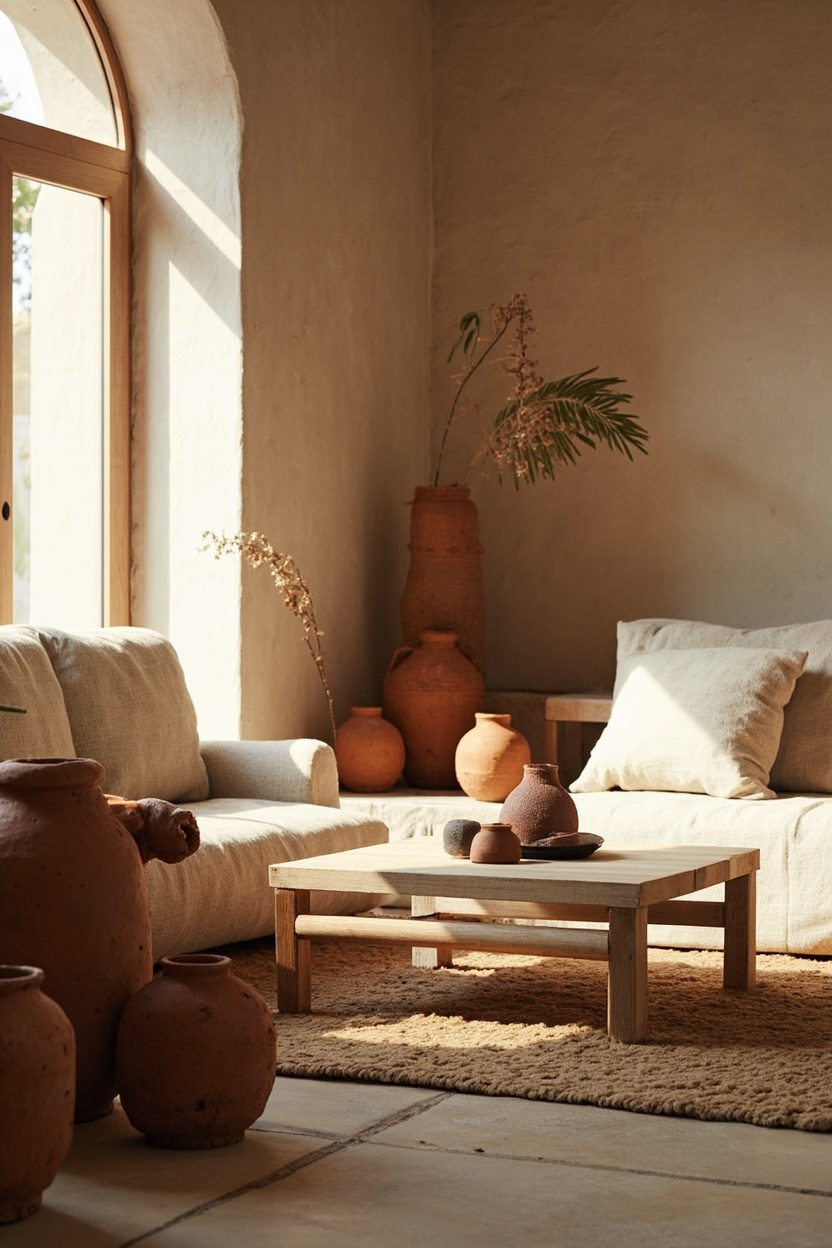
A curated cluster of clay pots brings organic shape and tonal warmth to shelving or a mantel; pick matte finishes in terracotta, sand, and cool umber rather than glazed brights for a grounded look.
Vary height and mouth diameter deliberately mix tall cylinders with squat, rounded ovoids, and keep at least one piece that’s intentionally raw or imperfect to emphasize artisanal character.
Group pottery in odd numbers and anchor displays with a larger central vessel to avoid a scattered feel.
For longevity, use felt pads under clay on painted surfaces and avoid direct sunlight if the clay is unfired or delicate to prevent fading and deterioration.
What to Focus On?
- Choose unglazed or matte-finish clay for an authentic earthy tone and texture.
- Create clusters of 3–5 with varied heights and silhouettes for visual interest.
- Knit in a single contrasting element (dried grass or a green cutting) to add life.
- Mind surface protection: Use pads to prevent scratches on shelves and mantels.
9. Stone Fireplace Focus
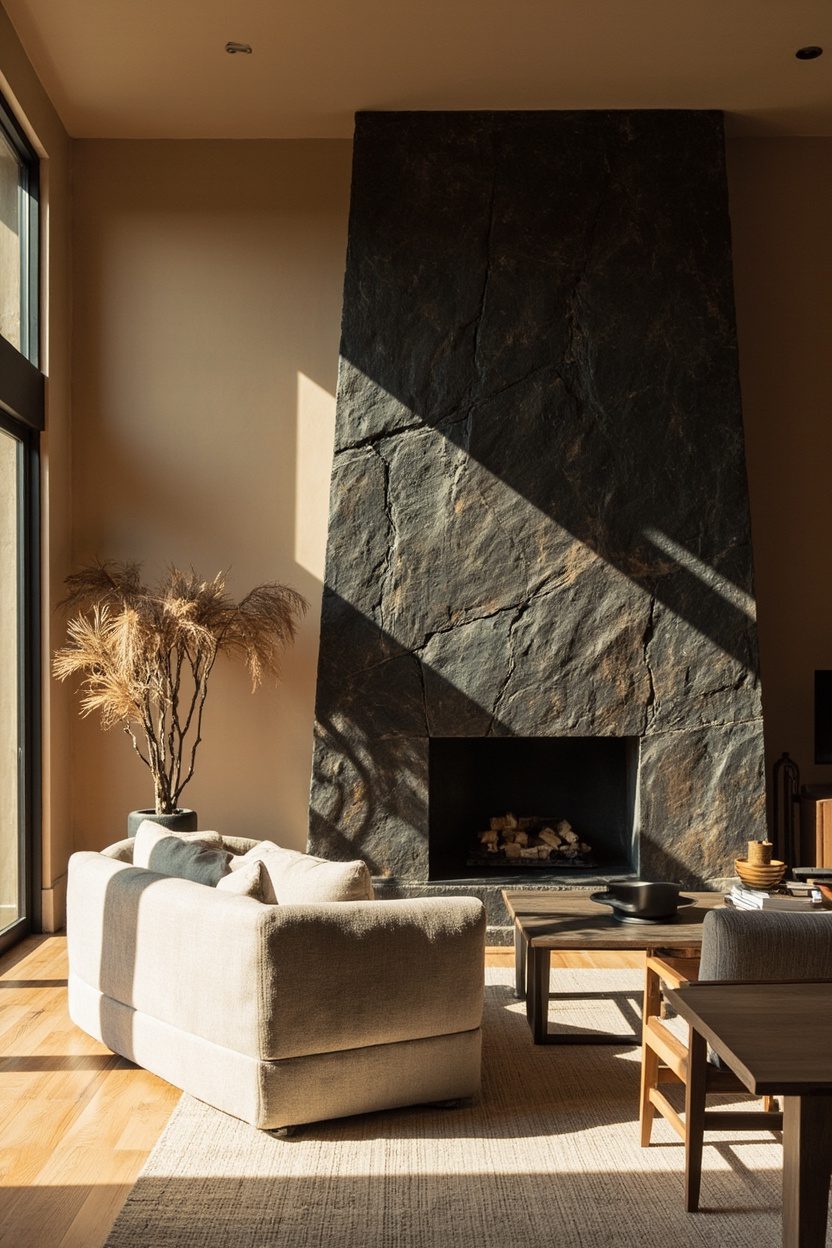
A stone fireplace becomes the heart of an earthy living room when materials and scale are in proportion to the space; choose large-format limestone or stacked fieldstone for wide rooms, and opt for thinner veneer stones in compact rooms to avoid overwhelming scale.
Select mortar color close to the stone tone to create a monolithic, calming mass rather than a choppy patchwork.
Balance the visual weight by pairing the hearth with lighter furnishings linen sofas in warm sand and cane or rattan accent chairs to keep the room from feeling heavy.
If the budget is constrained, install a stone-clad surround only to eye level and finish upward with warm plaster or limewash to achieve a high-end look at a lower cost.
Essential Elements
- Match stone scale to room size: large slabs for big rooms, thin veneers for small spaces.
- Keep mortar color tonal to avoid busy joints and preserve a natural stone appearance.
- Contrast the hearth with lighter textiles and reflective metals (aged brass) for balance.
- Consider partial cladding or a warm plaster finish above to reduce cost while keeping impact.
10. Natural Fiber Rugs
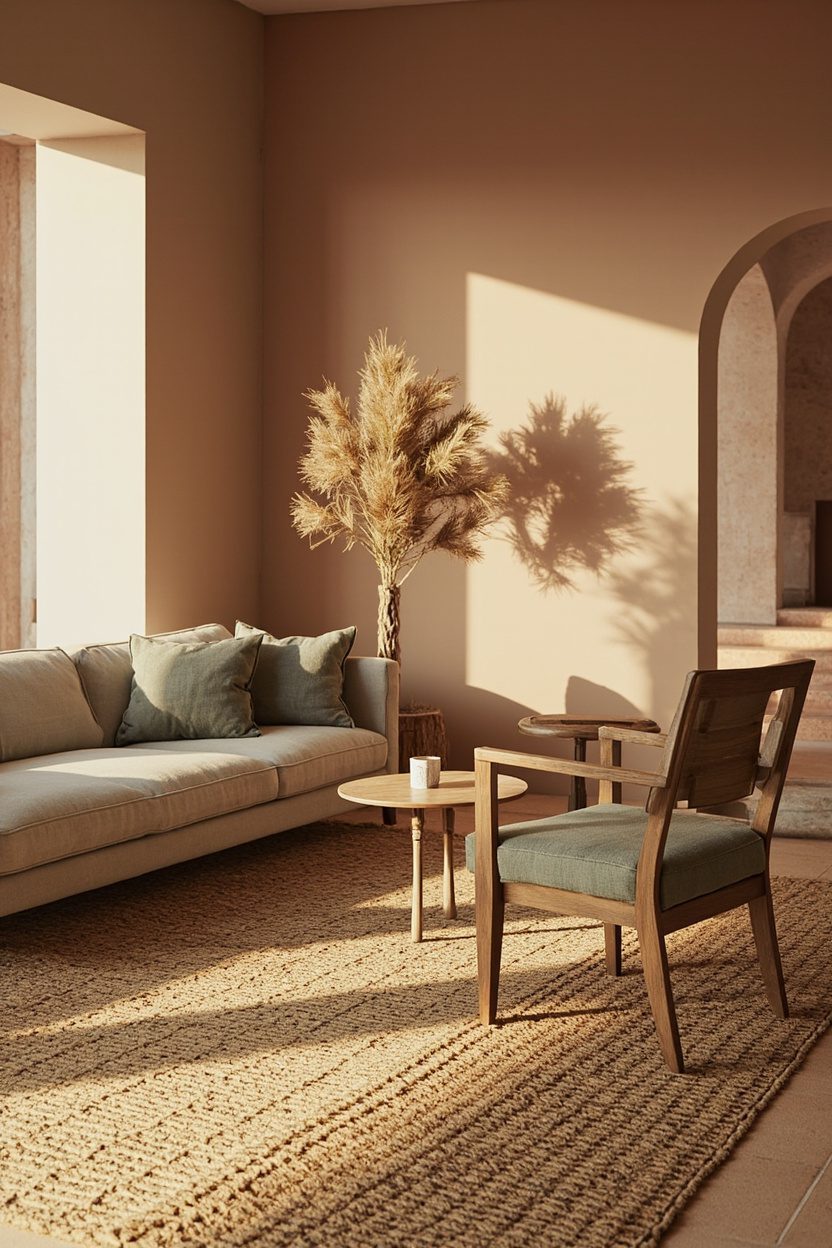
Natural fiber rugs, such as jute, sisal, and seagrass, anchor an earthy living room with tactile warmth and a subtle, sun-kissed palette.
Choose a low-profile weave for high-traffic areas to avoid long fibers trapping dirt; for cozy reading nooks, opt for a thicker braided jute with a 3/8–1/2 inch pile to add softness without sacrificing the natural look.
These rugs read as neutral but carry strong visual texture, so scale matters: pick a rug that allows at least 18 inches of bare floor around the perimeter in standard living rooms, or if you want everything to sit on the rug, choose one that extends 8–12 inches beyond furniture legs for a cohesive composition.
Avoid bleach-whitened or heavily dyed versions, keep color in the warm beige-to-honey range to maintain that grounded, organic feel.
Styling Blueprint
- Pair sisal with warm-wood furniture and muted olive accents for contrast and depth.
- Layer a soft wool or low-pile rug on top in smaller seating zones to add comfort and protect the fiber rug beneath.
- Use rug pads cut to size to prevent slipping and to extend the rug’s life by reducing abrasion.
Budget tip: expect $200–$1,200 depending on size and weave; natural fiber is worth investing in for longevity and eco-credentials.
11. Matte Black Fixtures
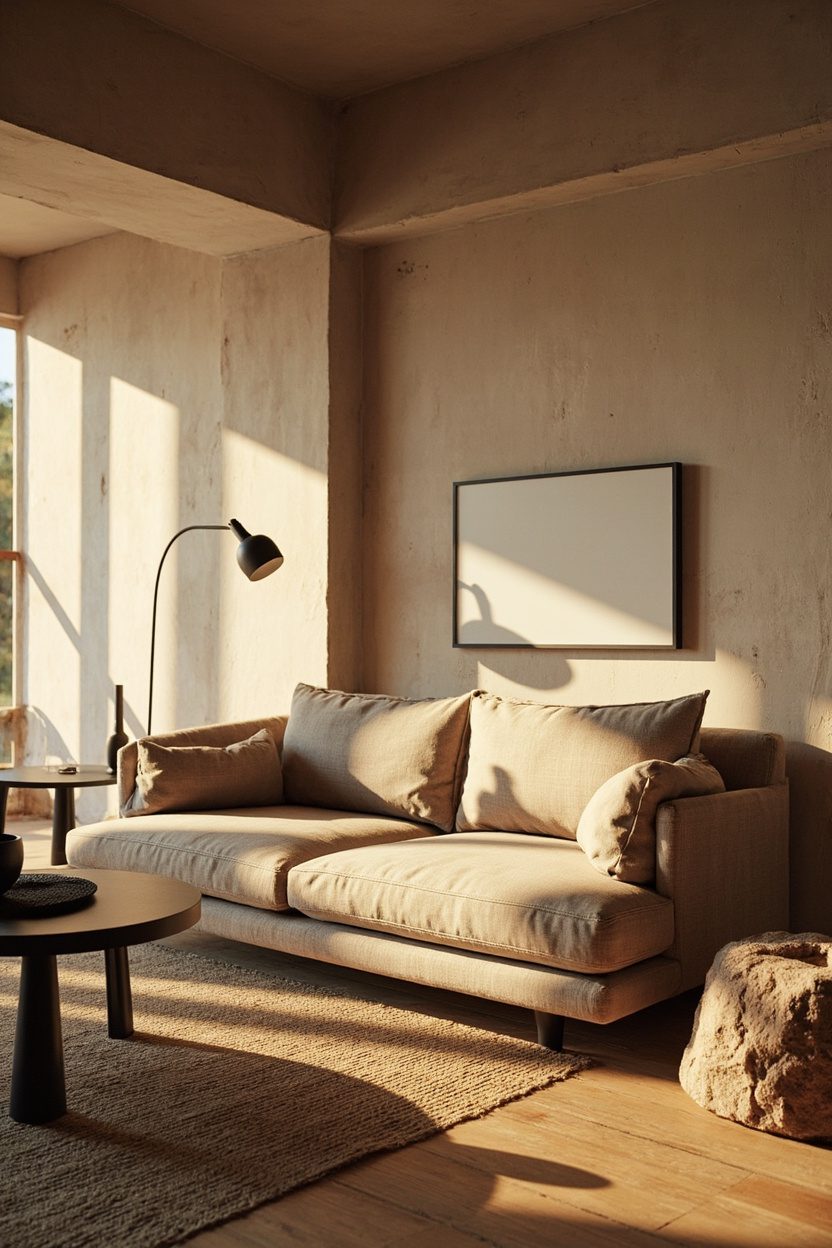
Matte black fixtures, lighting hardware, floor lamps, wall sconces, and electrical plates—provide a modern counterpoint to warm, earthy palettes without being visually heavy.
Specify satin or true matte finishes to avoid oily gloss; for drywall mounting, use 1/2-inch-deep backboxes so the fixture sits flush and reads intentionally integrated rather than tacked-on.
Use black sparingly as the dark anchor in a room dominated by textures and warm tones: limit to 3–5 black elements per main seating area to create rhythm without overpowering the space.
In kitchens or adjacent open-plan areas, pair black fixtures with brass accents or warm wood to prevent the black from reading cold against terracotta backsplashes or sage cabinetry.
What to Focus On?
- Choose LED bulbs with 2700–3000K color temperature to keep black fixtures warm and inviting.
- Match switch plates and hardware finish across the room for a curated, editorial look.
- For larger rooms, use a matte black floor lamp or pendant as the focal anchor rather than numerous small black pieces.
- Avoid mixing high-gloss black with matte black to prevent a disjointed appearance.
12. Rattan Light Fixtures
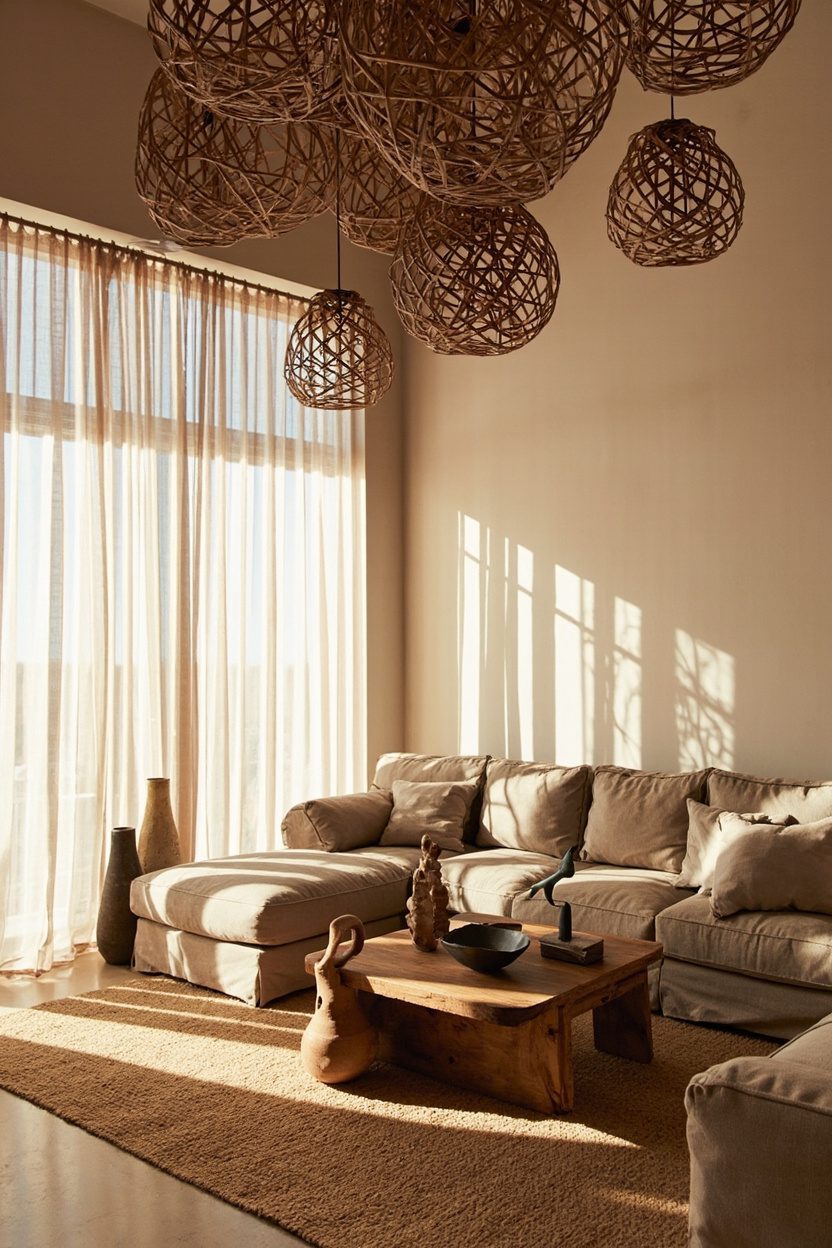
Rattan pendants and woven lampshades introduce shadow play and organic silhouettes that amplify earthy vibrancy, think honeyed tones and soft, dappled light.
Opt for hand-woven pieces or artisanal production; tighter weaves give more ambient light control, while open weaves create dramatic patterned shadows that work well over seating groups or dining areas.
Scale is critical: a single large rattan pendant (24–30 inches in diameter) can replace multiple smaller lights above a lounge or coffee table, but keep its bottom edge at least 30 inches above the tabletop or 7 feet above the floor in circulation zones.
Combine with linen or cotton lamp cords in warm neutrals rather than black cords to maintain a cohesive, sunlit look.
Essential Elements
- Select natural rattan for longevity; avoid cheap resin weaves that mimic the look but lack texture.
- Install dimmers to control the mood and accentuate the woven shadow patterns at night.
- Pair rattan fixtures with warm bulbs (2700K) and a supplemental task lamp for reading nooks.
- Clean gently with a soft brush; do not saturate with water to prevent warping or discoloration.
13. Mixed Metal Accents
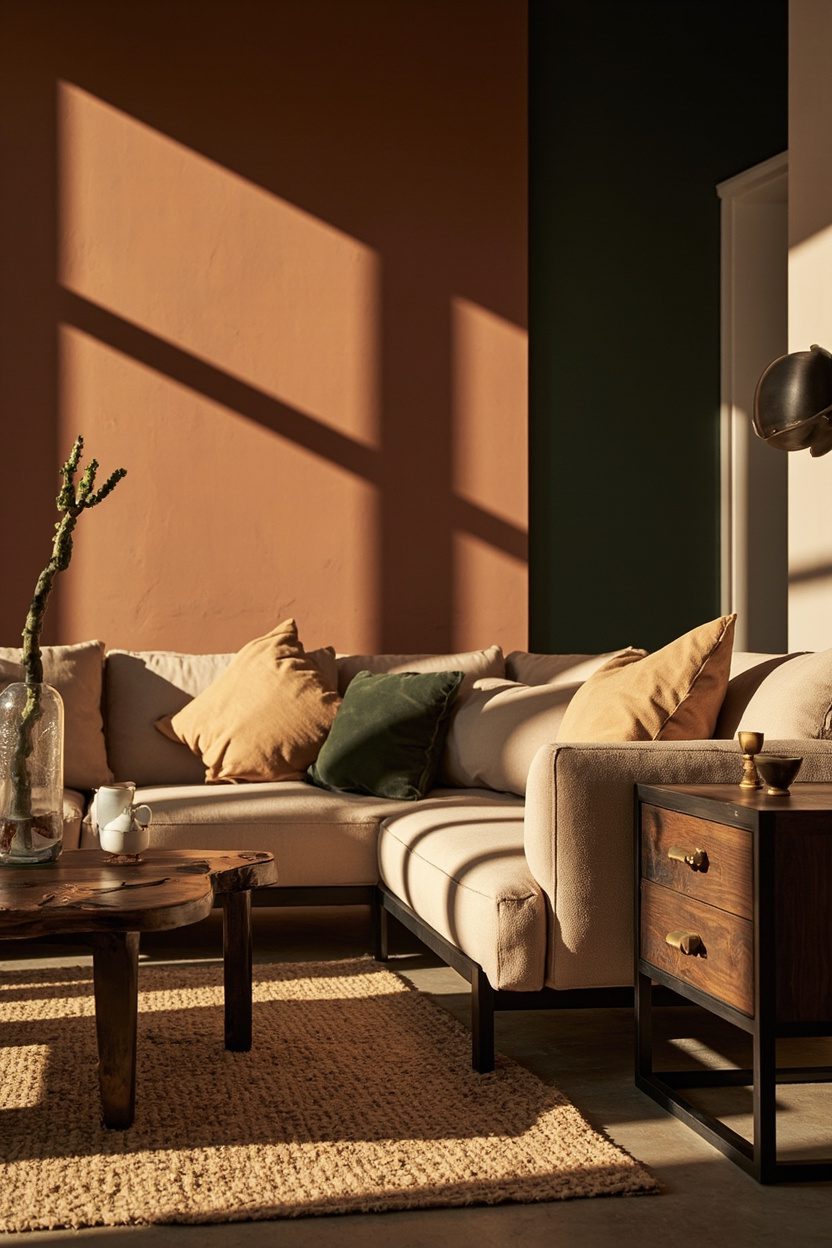
Layering brass, aged bronze, and matte black lets a room read as intentional, not matchy-matchy.
Use warm-brass cabinet pulls or a brass lamp for focal gleam, then balance with matte-black frames or a bronze coffee table base; pick one metal for fixtures (lighting and hardware) and reserve the others for accessories so the palette reads curated rather than cluttered.
A practical decision: choose finishes with similar undertones, warm brass with oil-rubbed bronze, so the metals harmonize instead of clashing.
Mixed metals play well with textured surfaces, leather, rattan, and rough-hewn wood because they introduce small reflective moments that lift a predominantly matte scheme.
Avoid overdoing gold-tone pieces in small rooms; keep brass to 10–20% of visible metal to prevent visual heaviness and stay in a mid-budget tier by swapping expensive solid-metal furniture for plated pieces on less visible connectors.
Styling Blueprint
- Pick one dominant metal for lighting and hardware and two accent metals for smaller pieces like frames or trays.
- Match metal undertones (warm to warm) rather than finish type to maintain cohesion.
- Place reflective metals opposite textured elements (wool rug, woven ottoman) to create contrast.
- Limit brass to 10–20% of visible metal in small rooms to avoid overwhelming warmth.
14. Indoor Olive Trees
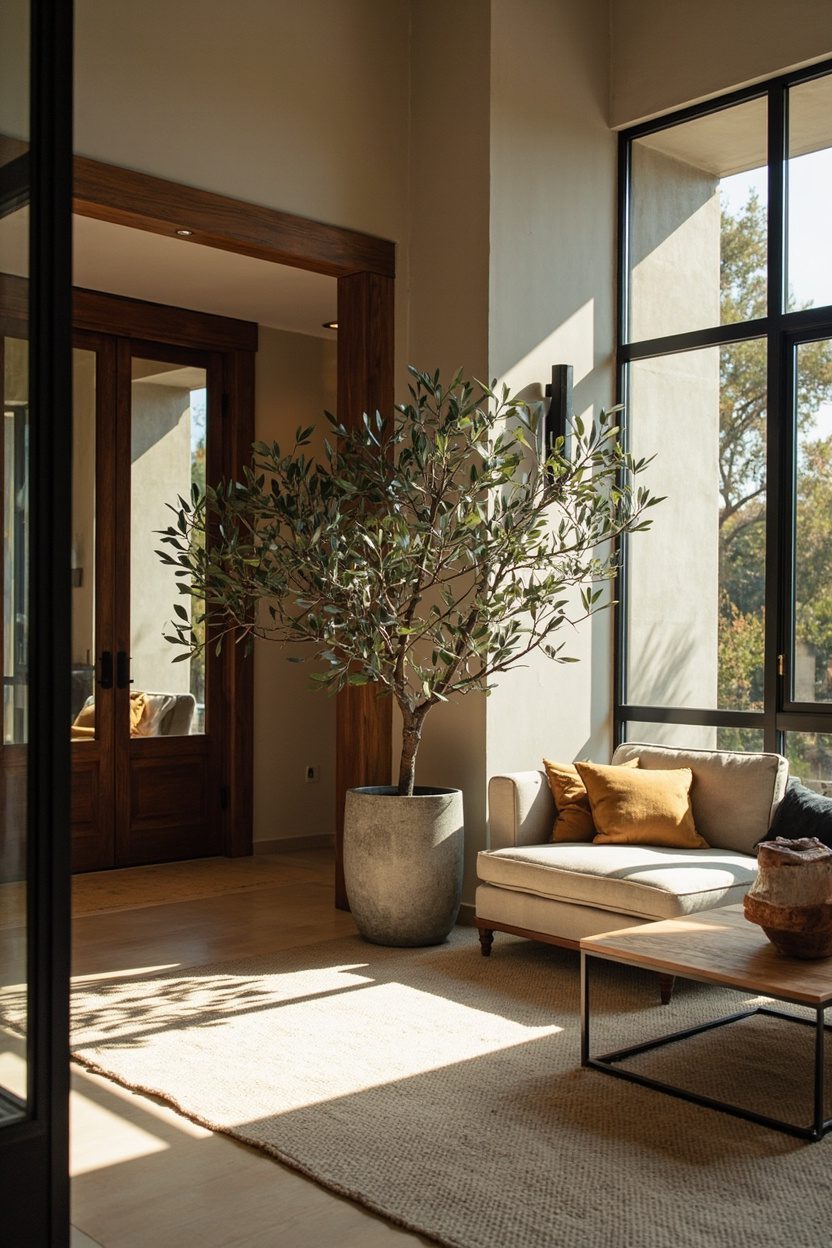
An olive tree brings sculptural height and a muted gray-green that complements terracotta, mustard, and warm taupe palettes, ideal for the earthy vibrancy trend.
Choose a smaller multi-stem olive in a sizable ceramic pot for apartments, or a full 6–7 ft specimen for larger living rooms; olives prefer bright, indirect light and well-draining soil, so pot selection and placement are decisive for long-term health.
Stylistically, set the tree near a reading chair or beside the sofa to create a lived-in vignette; surround the base with a low wicker basket or a raw clay saucer to retain the rustic feel.
If light is limited, substitute with a trained faux olive in a high-quality textured pot, budget-friendly and maintenance-free, while retaining the same sculptural silhouette.
What to Focus On?
- Choose a pot with drainage and lift the plant on a saucer or basket to protect the floors.
- Place in bright, indirect light; rotate monthly for even growth and shape.
- Pair with warm textiles (ochre throw, jute rug) to amplify earthy tones.
- Use faux only when natural light is insufficient; pick a realistic matte-leaf finish.
15. Handwoven Wall Hangings
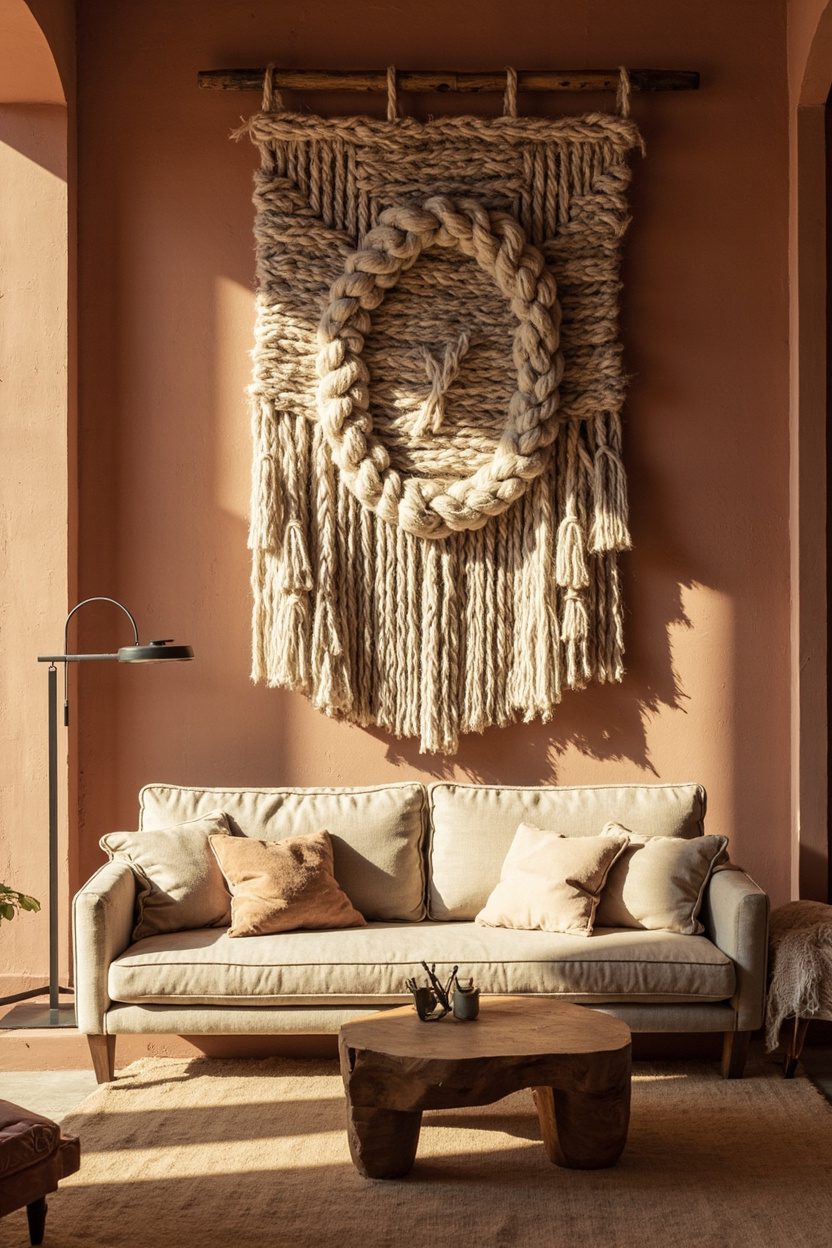
Handwoven wall hangings introduce tactile warmth and craft-forward personality, perfect for breaking up a flat paint color while keeping the palette earthy.
Opt for wool, hemp, or linen pieces in layered neutral weaves with a single warm accent thread (burnt sienna, olive, or mustard) to tie to your room’s color story; size matters, choose a piece roughly two-thirds the width of the sofa for balanced scale.
Hangings work best above low-profile furniture where texture reads clearly; mount hardware on a wooden slat to avoid damaging delicate fibers and to keep the piece level.
If buying on a budget, commission a student weaver for a custom, small-scale piece that uses locally sourced materials. This keeps costs down while adding authentic texture.
Essential Elements
- Select natural fibers (wool, hemp, linen) for authentic texture and matte finish.
- Scale the hanging to two-thirds the width of adjacent furniture for proportional balance.
- Anchor with a wooden slat or discreet rail to protect fibers and ensure level display.
- Introduce one warm accent thread to link the hanging to existing room colors.
16. Sculptural Ceramic Vases
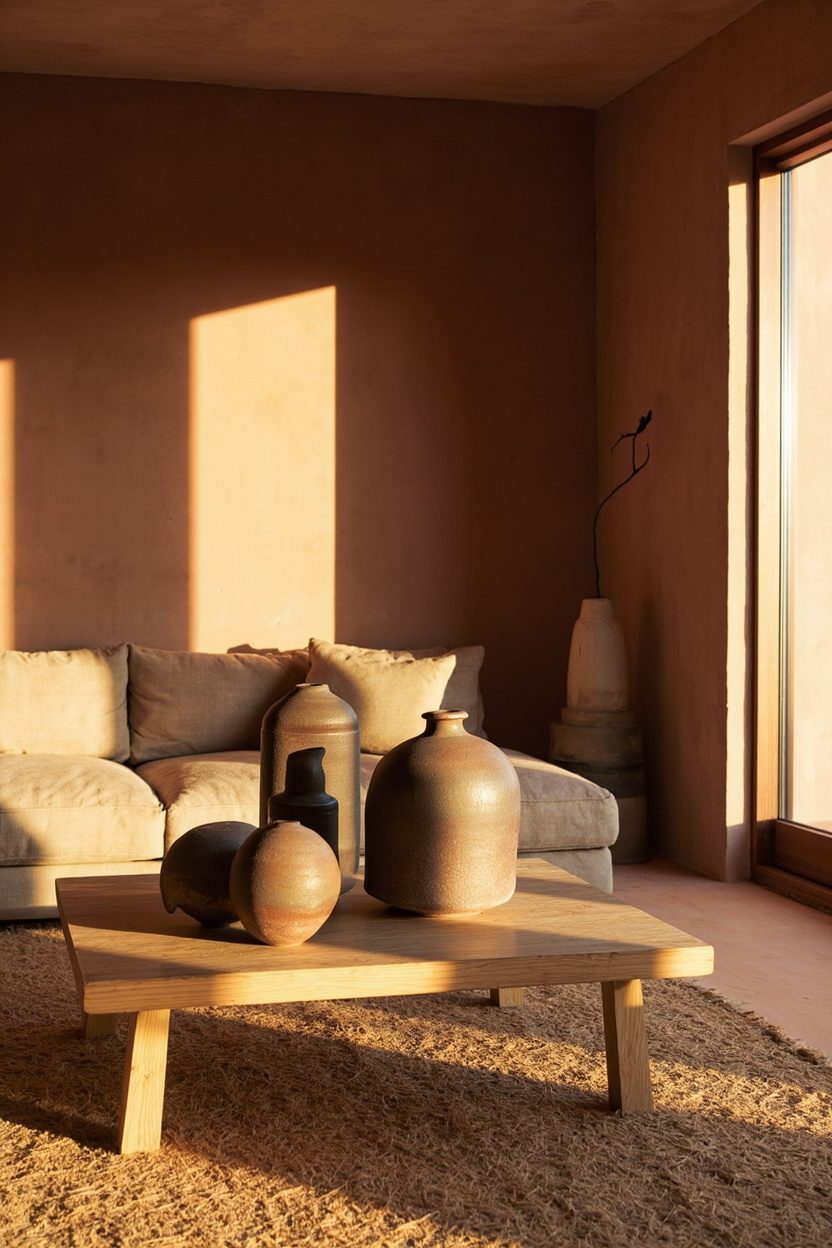
Sculptural ceramic vases anchor an earthy living room by introducing handcrafted volume and a tactile surface.
Choose matt-glazed stoneware in warm ochre, terracotta, or olive to echo the 2026 earthy vibrancy trend; a 16–22 inch scale works best on a low console or clustered on a side table without overpowering sightlines.
Avoid glossy, uniform finishes; opt for subtle glaze runs or sanded textures to maintain that grounded, organic look.
Group vases in odd numbers and vary heights and mouth openings to create a dynamic still-life; mix a statement vase (porcelain with hand-formed ribs) with two smaller earthenware pieces for contrast.
Place dried stems of wheat, pampas, or seeded eucalyptus in the tallest vase rather than dense fresh florals, which compete with the sculptural silhouette.
For budget-conscious styling, a single high-impact vase in a niche can replace a cluster and still read as intentional design.
FAQ
Measure the surface: allow at least 2–3 inches of clearance on either side for breathability.
Keep the tallest piece below eye-line when placed on a sofa-side table—about 20–24 inches maximum.
Use one large vase on a floor or mantel, and clusters on lower furniture to maintain visual balance.
Test with cardboard templates before buying to confirm proportions in your specific layout.
Natural woods (oak, walnut) for warmth and complementary grain contrast.
Woven fibers like rattan or seagrass to amplify texture layering.
Matte metal accents in aged brass for a grounded, slightly vintage edge.
Textiles in clay, olive, and butter yellow to mirror the 2026 earthy palette trends from industry coverage.
Yes—use a single large sculptural piece as a focal point to keep the minimalist intent intact.
Choose neutral glazes and simplified forms to avoid visual clutter in open-concept spaces.
Anchor the vase on a low console near a transitional zone to subtly define areas in open plans.
Coordinate with broader furnishings—refer to open layout principles like those in Open Concept Floor Plans when placing statement pieces.
Dust regularly with a soft, dry cloth; avoid abrasive sponges that can scratch matte glazes.
For interiors, use a damp cloth with mild soap and dry immediately to prevent water marks.
Avoid soaking porous terracotta; seal the interior if you plan to use fresh water for flowers.
Handle by the body, not the neck, to reduce stress on delicate rims and handles.
Final Thoughts
Sculptural ceramic vases are a high-impact, low-effort way to bring natural texture and warm tones into an earthy living room.
A considered choice of finish, scale, and placement transforms them from decorative afterthoughts into defining design gestures. For more ideas that blend rustic warmth and tactile materials, see curated approaches to Farmhouse Decor.