


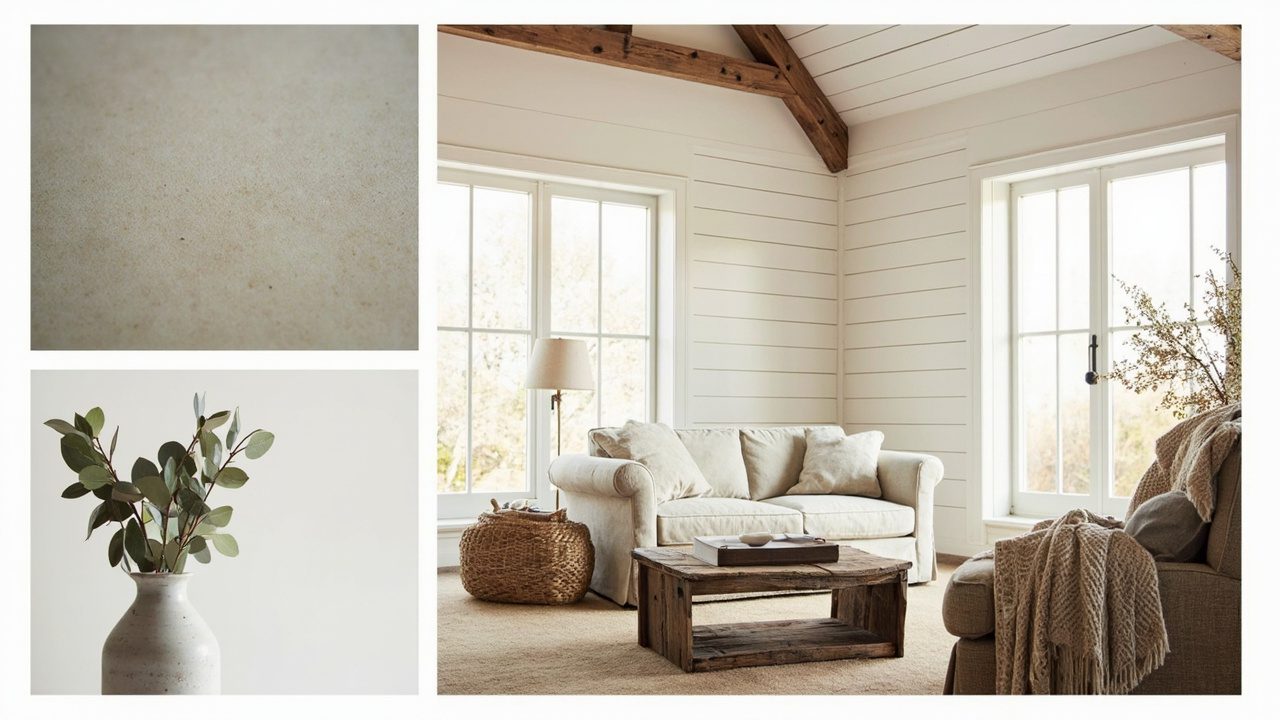
A farmhouse shiplap living room feels relaxed, grounded, and quietly polished. The boards add instant texture, while the right finishes, lighting, and scale choices keep it current. Think durable fabrics, real wood moments, and a few black accents that frame the space without stealing warmth.
Because shiplap reads as a strong backdrop, your styling should mix grit and grace. I like a restrained palette first, then bring in aged brass, nubby linens, and one great vintage piece. For trend context and fresh riffs on the new rustic mood, Hello Lovely Living tracks how modern farmhouse leans softer, earthier, and more natural in 2026.
- 1. Whitewashed Shiplap Walls
- 2. Matte Black Hardware
- 3. Rustic Beam Ceilings
- 4. Cozy A‑Frame Paneling
- 5. Natural Linen Sofas
- 6. Stone Fireplace Surround
- 7. Mixed Wood Tones
- 8. Oversized Farmhouse Art
- 9. Built‑In Shiplap Shelves
- 10. Weathered Oak Mantels
- 11. Layered Neutral Textures
- 12. Soft Gray Shiplap
- 13. Antique Brass Fixtures
- 14. Leather and Linen Mix
- 15. Textured Jute Rugs
- FAQ
1. Whitewashed Shiplap Walls
- Effort Level: Weekend DIY.
- Estimated Budget: 100-500.
- Maintenance Level: Low (Wipe clean).
- Best For: Small, low-light spaces.
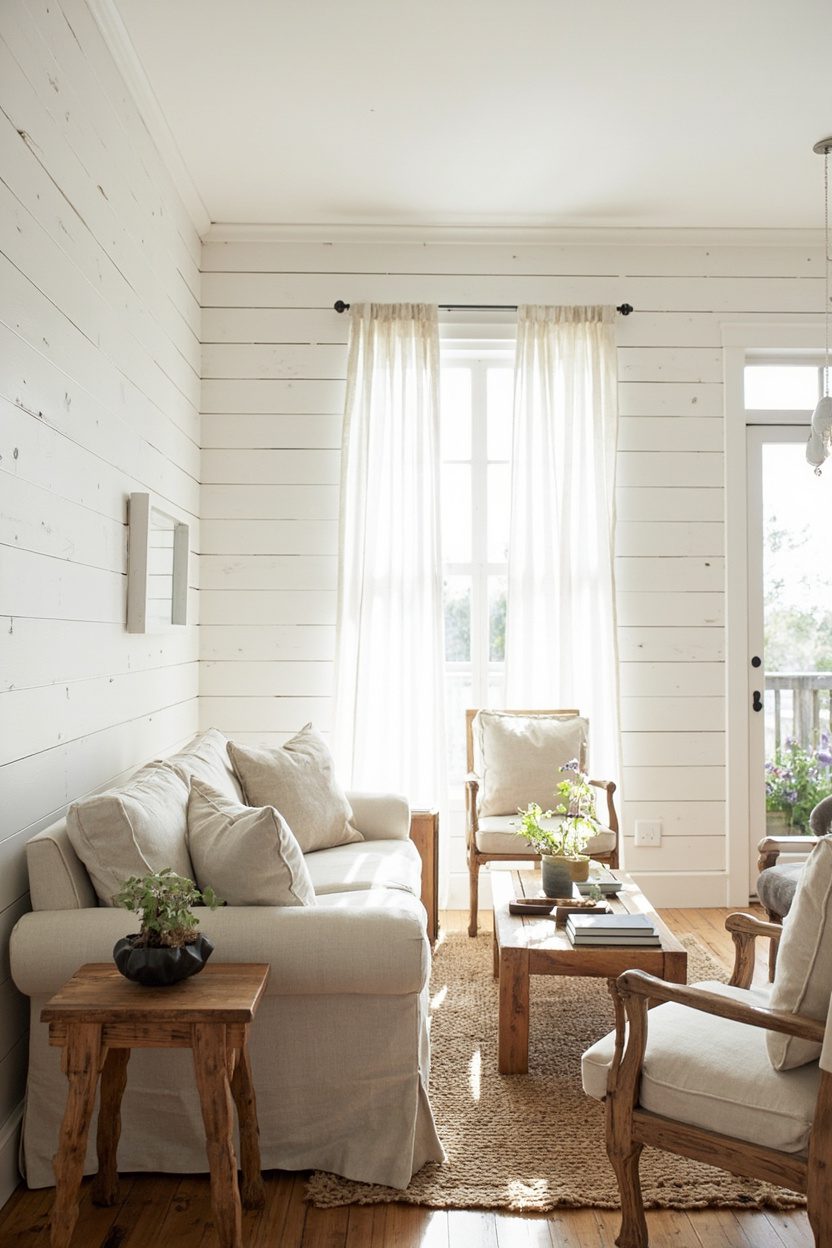
A whitewashed finish keeps boards legible but not stark. It lets the wood grain whisper through, which adds depth without heavy contrast.
Choose knotty pine or poplar boards, 6 to 8 inches wide, for a calm rhythm. Wider planks feel coastal, while narrower boards skew cottage.
Use a diluted matte latex or liming wax for the wash. Test two strengths, because lighting can swing the color warmer or cooler.
Run boards horizontally to widen a narrow room. Alternatively, run them vertically behind the sofa for height and a tidy focal plane.
Why This Works
Whitewashed shiplap softens shadows, so furnishings read cleaner and more curated. Pair it with a slipcovered sofa and a natural jute rug, then let one rustic wood coffee table anchor the palette. For sofa silhouettes that complement this lighter envelope, visit Farmhouse Living Room Sofa Styles.
2. Matte Black Hardware
- Effort Level: Weekend DIY.
- Estimated Budget: 100-500.
- Maintenance Level: Low (Wipe clean).
- Best For: Small, low-light spaces.
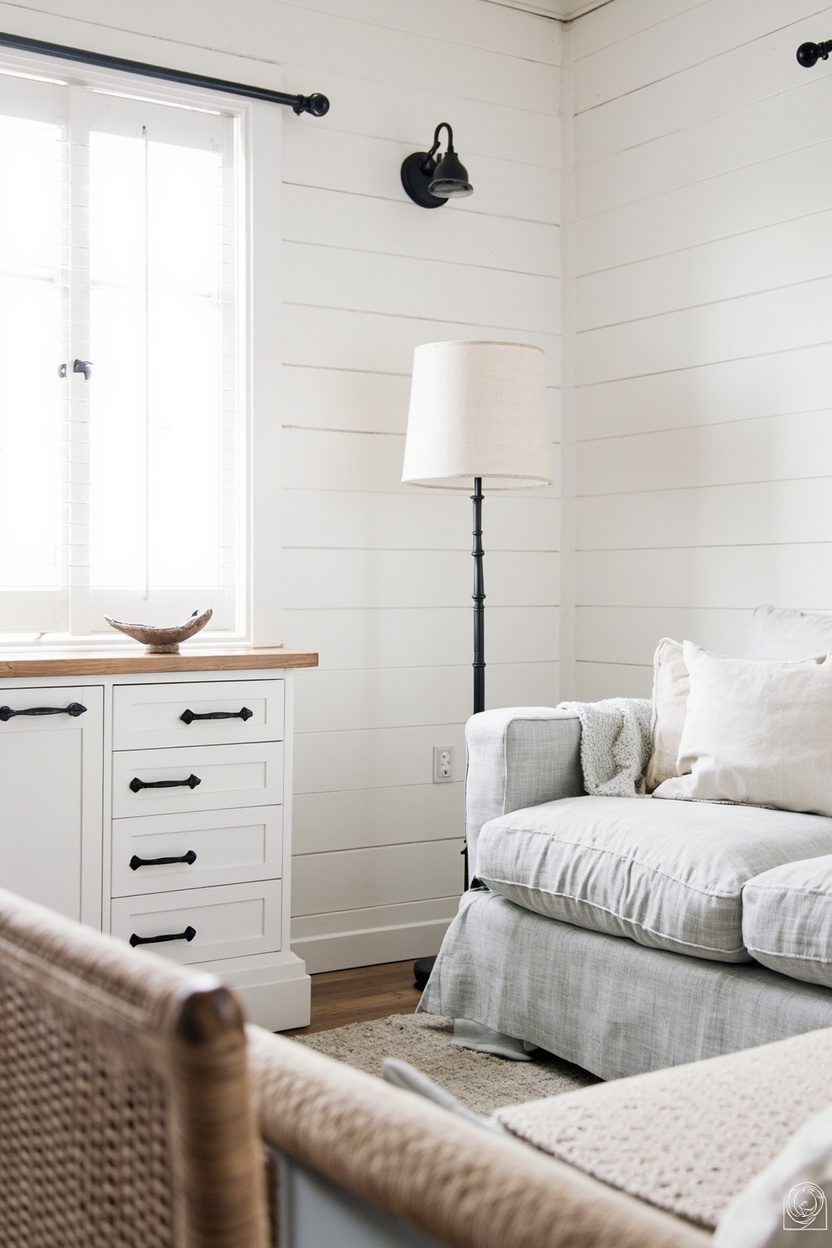
Black pulls, sconces, and curtain rods ground a pale shiplap wall. Because the contrast is crisp, it frames art and textiles with very little effort.
Choose powder-coated matte finishes over glossy to avoid fingerprints. Also, keep profiles simple, like thin rods and classic cabinet knobs.
Repeat black in three points around the room. For example, hardware, a metal-framed mirror, and a drum light create a balanced triangle.
Mind scale. Oversized strap hinges look theatrical on small built-ins, while lean bar pulls flatter narrow console drawers.
Before You Buy
Save: Swap only the most visible touchpoints first, like media cabinet pulls and the main curtain rod. This creates a strong read against shiplap without replacing every hinge in the room.
Splurge: Invest in hardwired matte black sconces on the shiplap feature wall. Good lighting flatters texture, and quality fixtures age better than bargain finishes. For layout ideas around a TV zone, Farmhouse Living Room Tv Wall breaks down smart focal points.
3. Rustic Beam Ceilings
- Effort Level: Weekend DIY.
- Estimated Budget: 100-500.
- Maintenance Level: Low (Wipe clean).
- Best For: Small, low-light spaces.
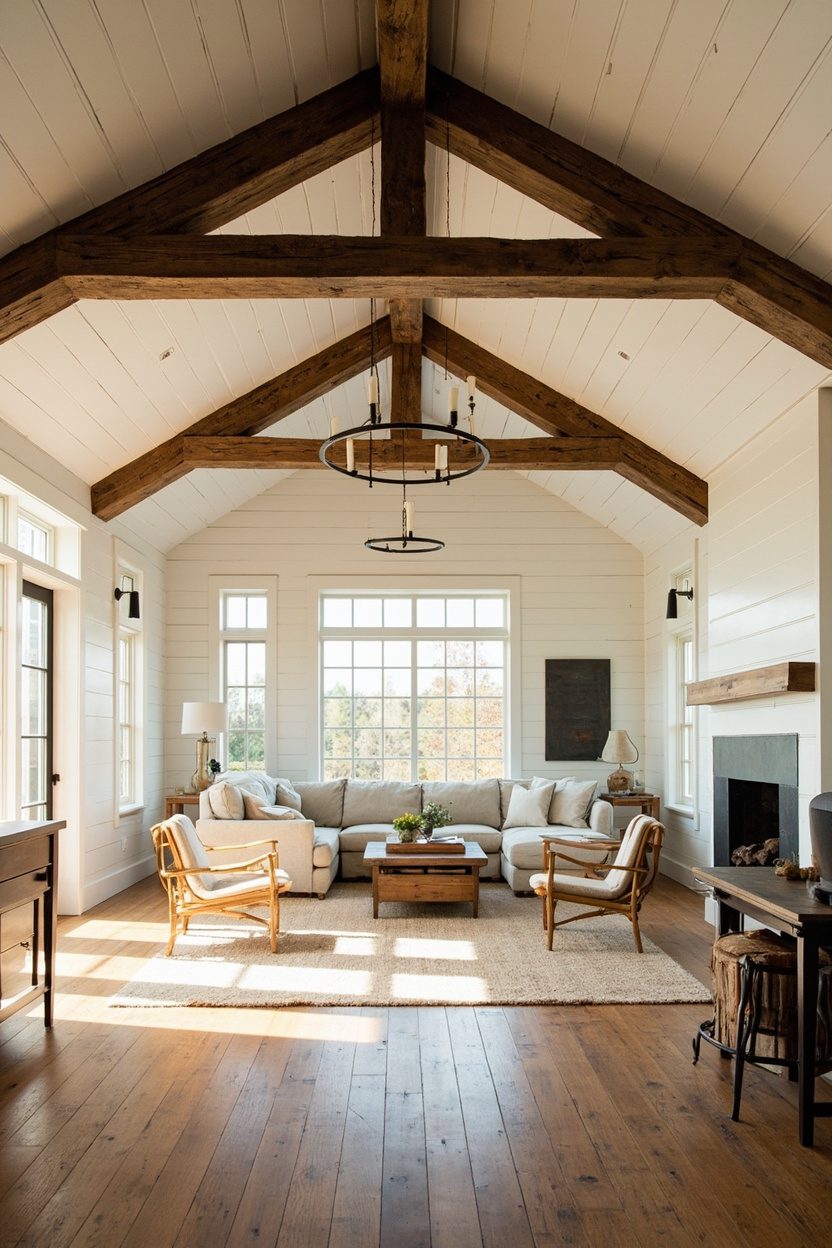
Box beams in reclaimed fir or oak add heft above soft shiplap walls. They pull the eye up, which can make compact rooms feel intentional.
Stain beams two shades deeper than your floor for balance. In contrast, a too-matched tone can feel flat and builder basic.
Space beams 4 to 6 feet apart for a living room, depending on room width. Too tight looks busy, while too wide loses the architectural beat.
If budgets are tight, use stained pine box beams over studs. They are lighter, easier to install, and still read convincingly rustic.
Stylist’s Note
Beams and shiplap love layered neutrals, but they need softness. Add a large flatweave rug and linen panels, then tuck in one leather accent chair to ground the look. For open layouts where beams span zones, Farmhouse Open Plan Living Room has layout ideas that keep flow intact.
4. Cozy A‑Frame Paneling
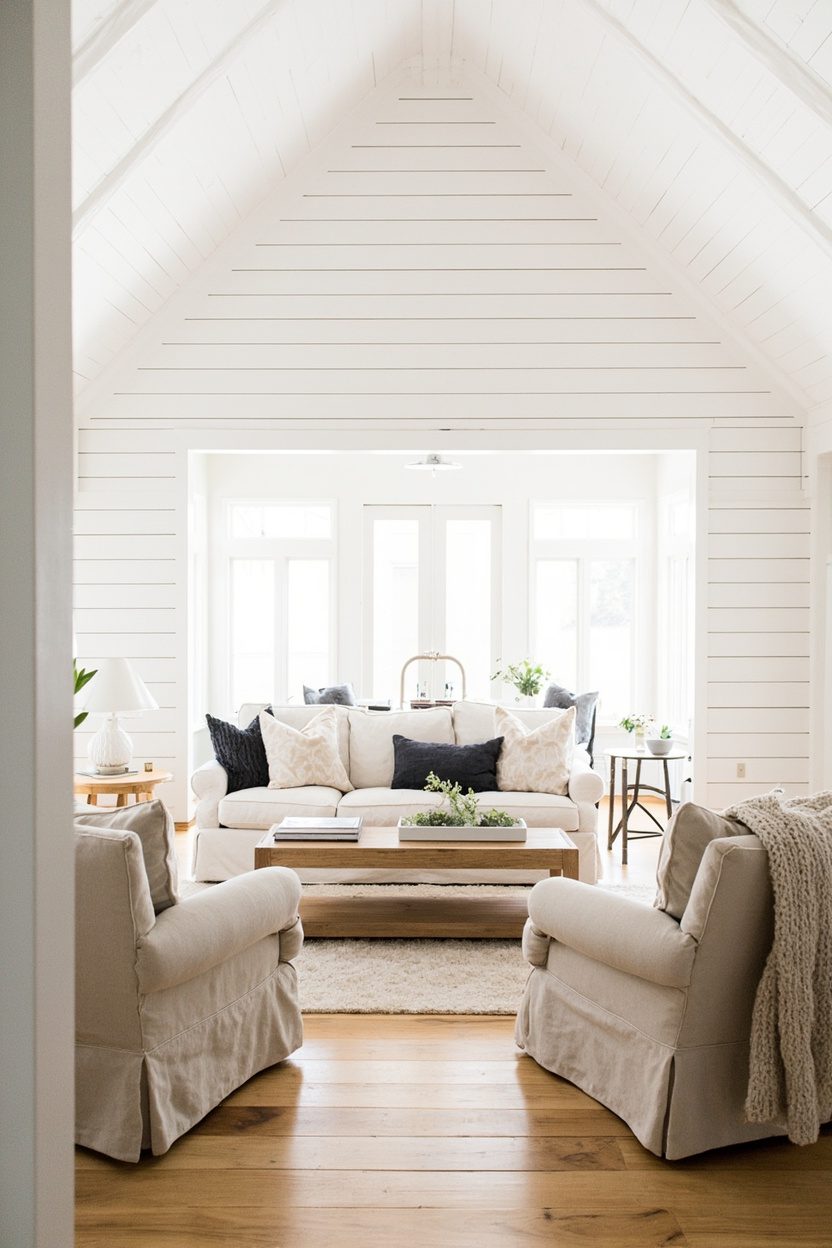
- Effort Level: Weekend DIY.
- Estimated Budget: 300-900.
- Maintenance Level: Low (Wipe clean).
- Best For: Vaulted ceilings and cabins.
Run shiplap up the ceiling line to honor the A‑frame bones. The panels draw the eye upward, which helps a farmhouse shiplap living room feel taller and warmly cocooned.
Choose tongue and groove pine or primed MDF for clean seams. Because ceilings move, stagger joints and leave a small expansion gap at ridges.
Keep the boards light. Alabaster, Swiss Coffee, or natural whitewash will bounce light and soften steep angles without feeling stark.
Pair the paneling with matte black hardware and iron sconces. The contrast reads modern farmhouse, not ski lodge theme.
The Golden Rule Here
Match board width to room scale. In tall A‑frames, 6 to 8 inch boards feel proportional, while 4 inch boards can look fussy. Also, run boards parallel to the ridge so the geometry feels intentional.
What You’ll Need
- Primed shiplap boards or tongue and groove pine.
- Stud finder, brad nailer, and construction adhesive.
- Paintable caulk and wood filler.
- Semi‑gloss trim paint or whitewash stain.
For layout, start at the ridge and work down both sides. Therefore, cut openings for beams and lights as you go, not before.
5. Natural Linen Sofas
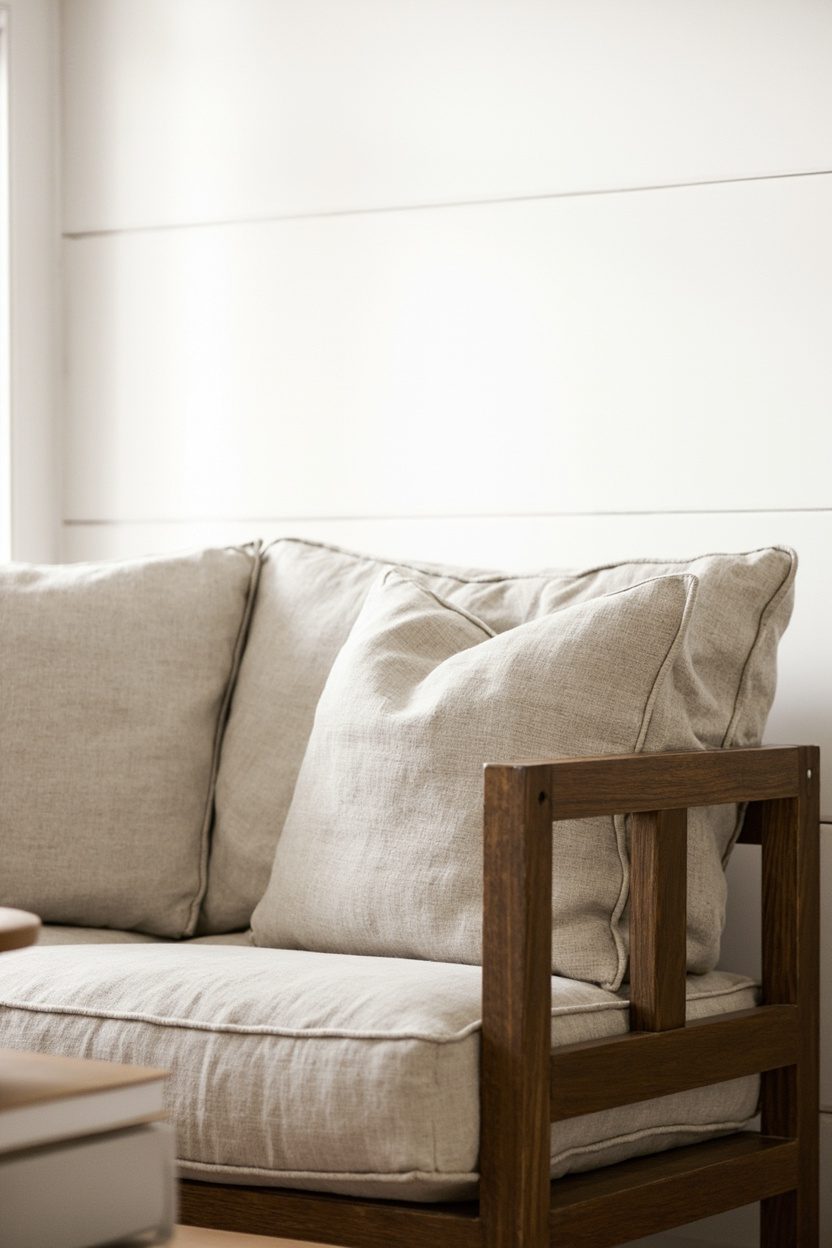
- Effort Level: Buy and place.
- Estimated Budget: 800-2500.
- Maintenance Level: Moderate (Vacuum, rotate cushions).
- Best For: Sunlit family rooms.
Linen sits beautifully against shiplap texture. In a farmhouse shiplap living room, the nubby weave keeps the look relaxed while the silhouette stays tailored.
Go for slipcovered designs in natural, oat, or flax. Because slipcovers wash easily, they handle kids, pets, and red wine better than tight upholstery.
Mind seat depth. A 24 to 26 inch depth suits lounging without swallowing shorter guests. For open plans, consider two sofas facing each other for balance.
Layer with a striped lumbar and a cable knit throw. Meanwhile, keep legs light, like oak or blackened metal, to contrast pale walls.
Real-Talk Warning
When I tried this in my own living room, I skipped pre‑washing the slipcovers and they shrank slightly. Wash on cold, air dry, then steam on the frame for a custom look. Also, linen wrinkles, which is part of the charm.
Measure doorways twice. Oversized bench cushions can jam on tight turns. If you need layout ideas around your media setup, this helps: Farmhouse Living Room Tv Wall. For sofa silhouettes that pair well with shiplap, browse: Farmhouse Living Room Sofa Styles.
6. Stone Fireplace Surround
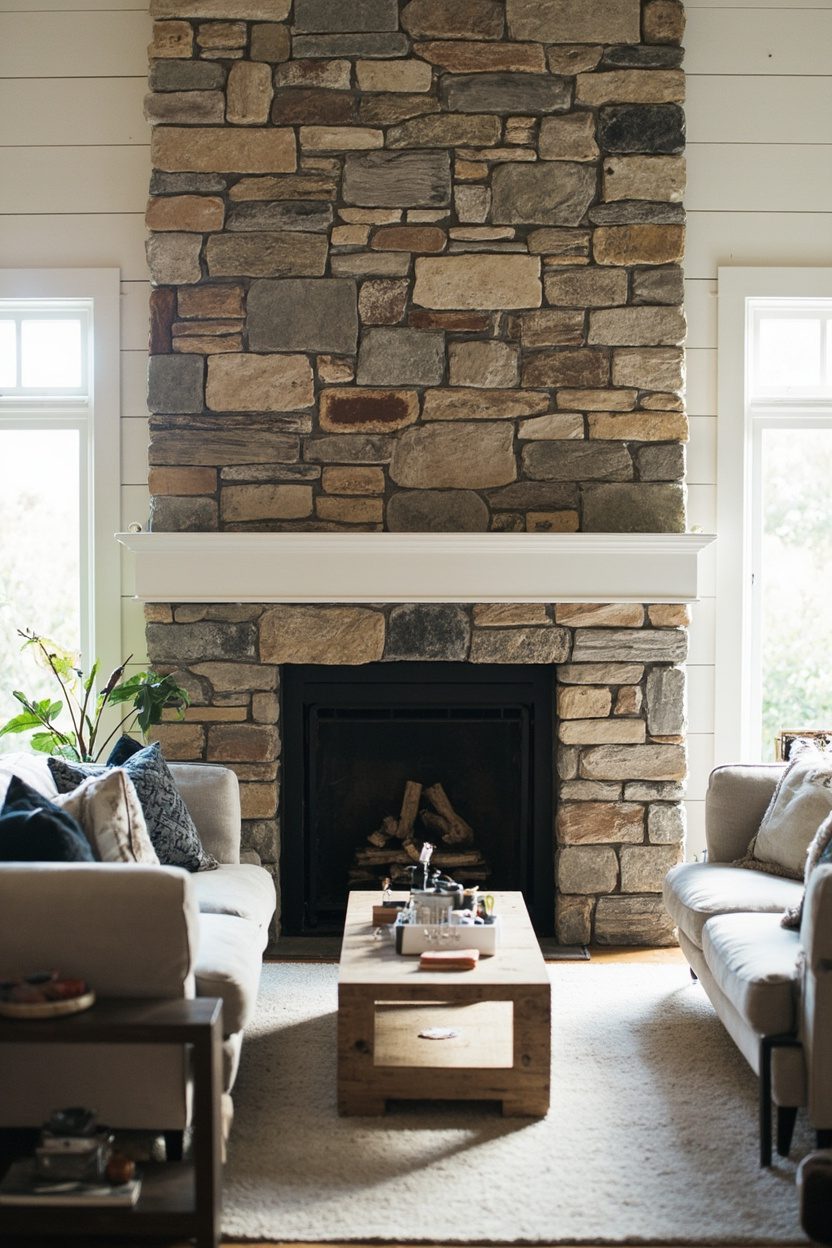
- Effort Level: Pro install recommended.
- Estimated Budget: 1500-6000.
- Maintenance Level: Low (Dust, seal yearly).
- Best For: Main gathering zones.
Rough stone next to smooth boards creates welcome tension. A farmhouse shiplap living room benefits from that mix, because texture keeps neutrals from falling flat.
Choose ledgestone or fieldstone in cool gray for modern reads. Instead, pick tumbled limestone or warm river rock if your floors lean honeyed oak.
Scale the surround to the wall height. For eight foot ceilings, cap the stone a few inches above the mantel, then finish with shiplap to the crown.
Keep the mantel simple, like a 6 inch thick oak beam. Finally, anchor the hearth with a low bench cushion or two chunky woven baskets.
Why This Works
Stone gives the fire credibility while shiplap frames it cleanly. The eye reads depth, pattern, and warmth in one glance, which is why this pairing feels enduring, not trendy.
If you are working in an open plan, extend the shiplap to adjacent zones so the stone becomes the only major texture shift. For layout flow tips, this resource helps: Farmhouse Open Plan Living Room. For visual references on shiplap and stone pairings, browse ideas on Houzz.
7. Mixed Wood Tones
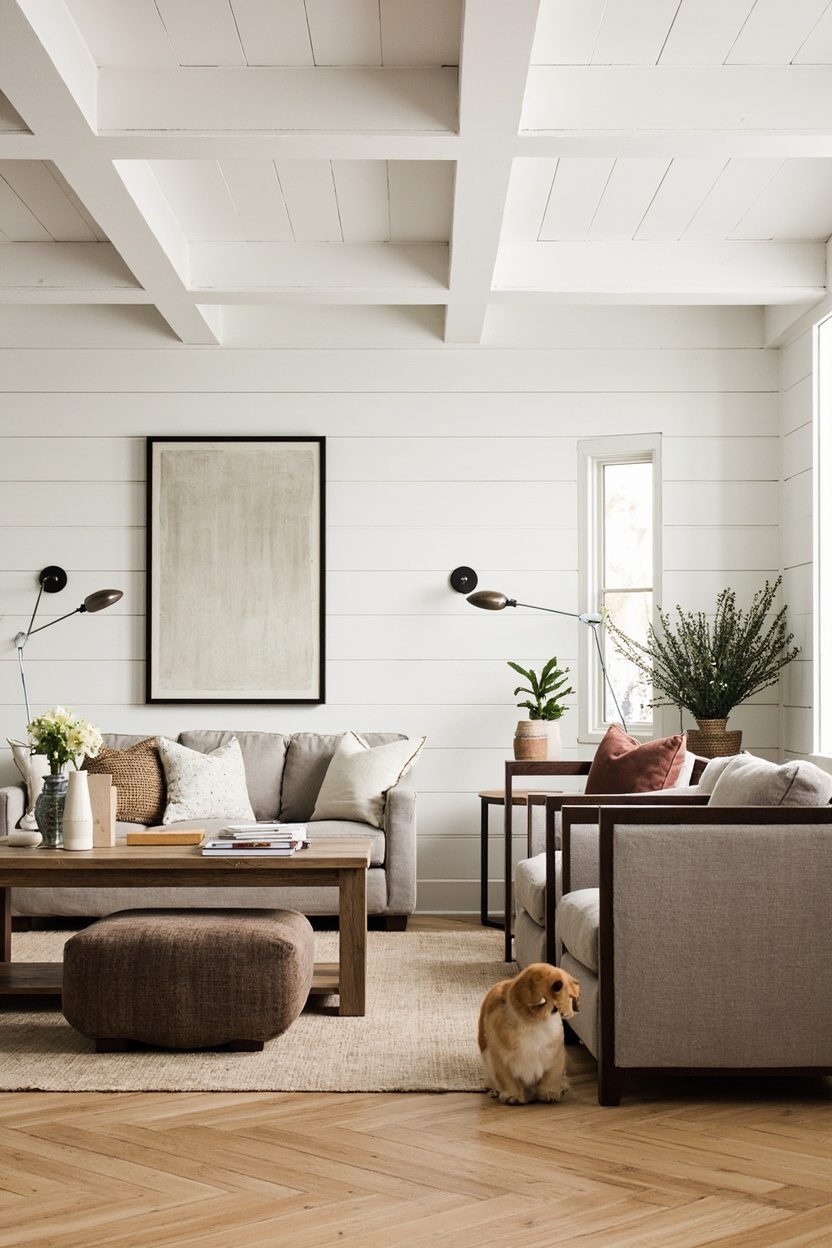
- Effort Level: Weekend DIY.
- Estimated Budget: 200-800.
- Maintenance Level: Low (Wipe clean).
- Best For: Small, low-light spaces.
Layer pale pine shiplap with a mid oak mantel and walnut tables. The variation adds depth, which keeps a farmhouse shiplap living room from feeling flat.
Keep undertones consistent, either warm or cool. For example, pair honey oak with stained pine that leans golden, then add black metal to ground the palette.
Repeat each tone at least twice. Use a rustic beam, matching picture frames, and a wood lamp base so the eye reads it as intentional.
Mind sheen differences. Because matte shiplap can dull darker wood, consider a satin finish on furniture to catch light and balance contrast.
Stylist’s Note
I like to test boards against the shiplap before committing. Bring home sample swatches, then watch them in daylight and lamplight. If the room skews orange at night, pull back the warmth a notch.
Also, tie mixed woods together with a shared textile. A jute rug or ticking stripe pillow softens jumps between tones and keeps the whole scene relaxed. For layout ideas around layered woods and seating, browse Farmhouse Living Room Sofa Styles.
8. Oversized Farmhouse Art
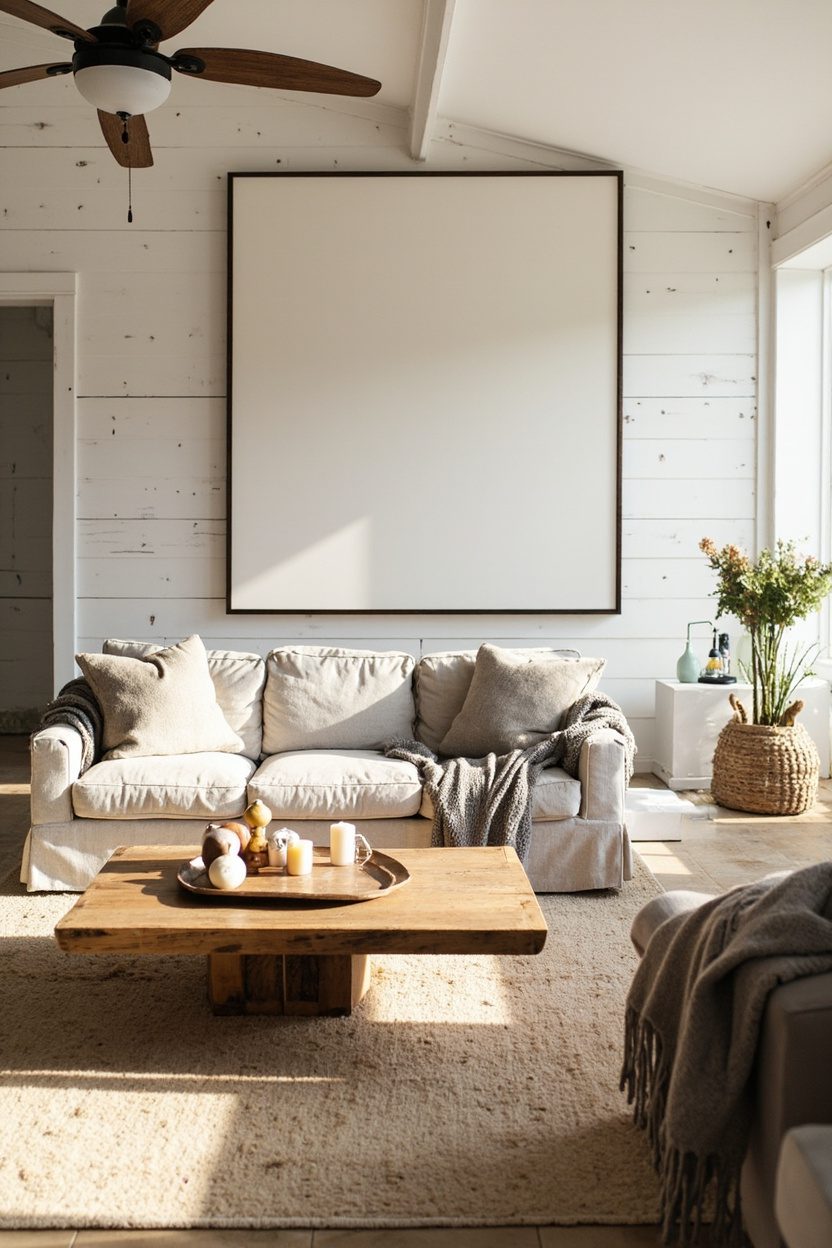
- Effort Level: Weekend DIY.
- Estimated Budget: 150-1200.
- Maintenance Level: Low (Dust lightly).
- Best For: Large blank walls.
Choose one large piece over many small frames. It calms visual noise on shiplap and makes the farmhouse shiplap living room feel considered.
Go for simple subjects that read from across the room. For example, vintage landscapes, barn photography, or a bold quilt block graphic work well.
Size matters. Aim for two thirds the width of your sofa or mantel, and hang with the center about 57 inches from the floor.
Mind glare. Because shiplap reflects light, pick matte canvas or non-glare acrylic, and avoid high-gloss glass.
Splurge vs. Save
Save: Print a high-resolution public domain landscape on matte canvas, then build a chunky pine frame with a 1.5 inch face. Stain it to match your mantel, and use French cleats for secure hanging.
Splurge: Commission a large-scale pastoral from a local artist, or buy gallery-wrapped pieces with museum glass. The richer pigments and archival materials read luxurious, especially against soft white cladding. For statement placement around media walls, you can borrow ideas from Farmhouse Living Room Tv Wall. For broader trend context, Hello Lovely Living tracks the new rustic mood that pairs beautifully with shiplap.
9. Built‑In Shiplap Shelves
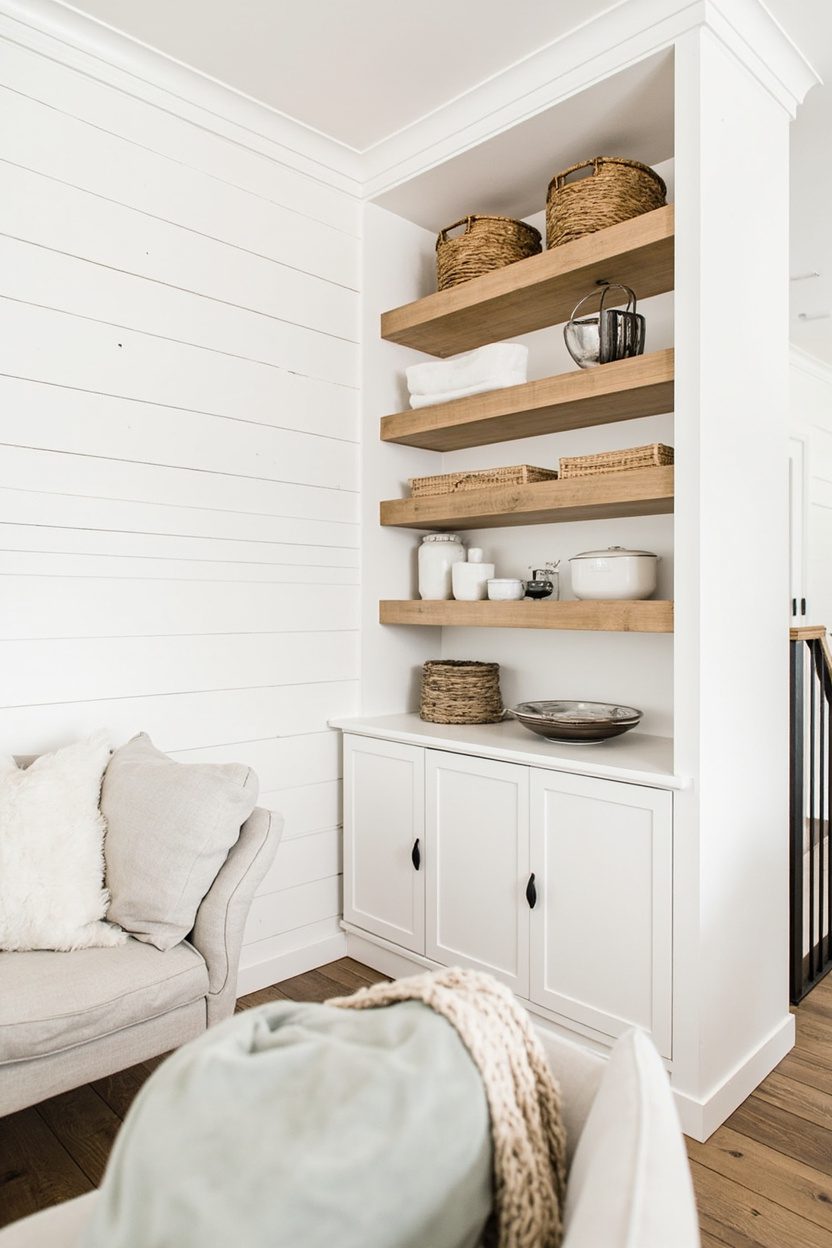
- Effort Level: Weekend DIY.
- Estimated Budget: 300-1500.
- Maintenance Level: Medium (Dust and re-caulk as needed).
- Best For: Alcoves and media walls.
Frame shelves between vertical shiplap returns for a tailored look. It adds storage while reinforcing the farmhouse shiplap living room envelope.
Choose 1 inch thick shelves for sturdiness. Because pine can sag, add hidden steel brackets or a front face trim to keep lines crisp.
Paint shelves the same color as the shiplap for calm, or contrast with a warm taupe or greige. In small rooms, matching paint reads lighter.
Style with a useful ratio. For example, mix 60 percent books, 30 percent objects, and 10 percent negative space to avoid clutter.
Before You Buy
Measure the depth you truly need. Twelve inches fits books and baskets, but 10 inches looks sleeker around a TV area. Also, pre-plan outlet locations so cords disappear behind shelf faces.
If your plan includes an open concept layout, keep shelf color tied to adjacent millwork. That continuity helps zones flow, especially in an Farmhouse Open Plan Living Room.
10. Weathered Oak Mantels
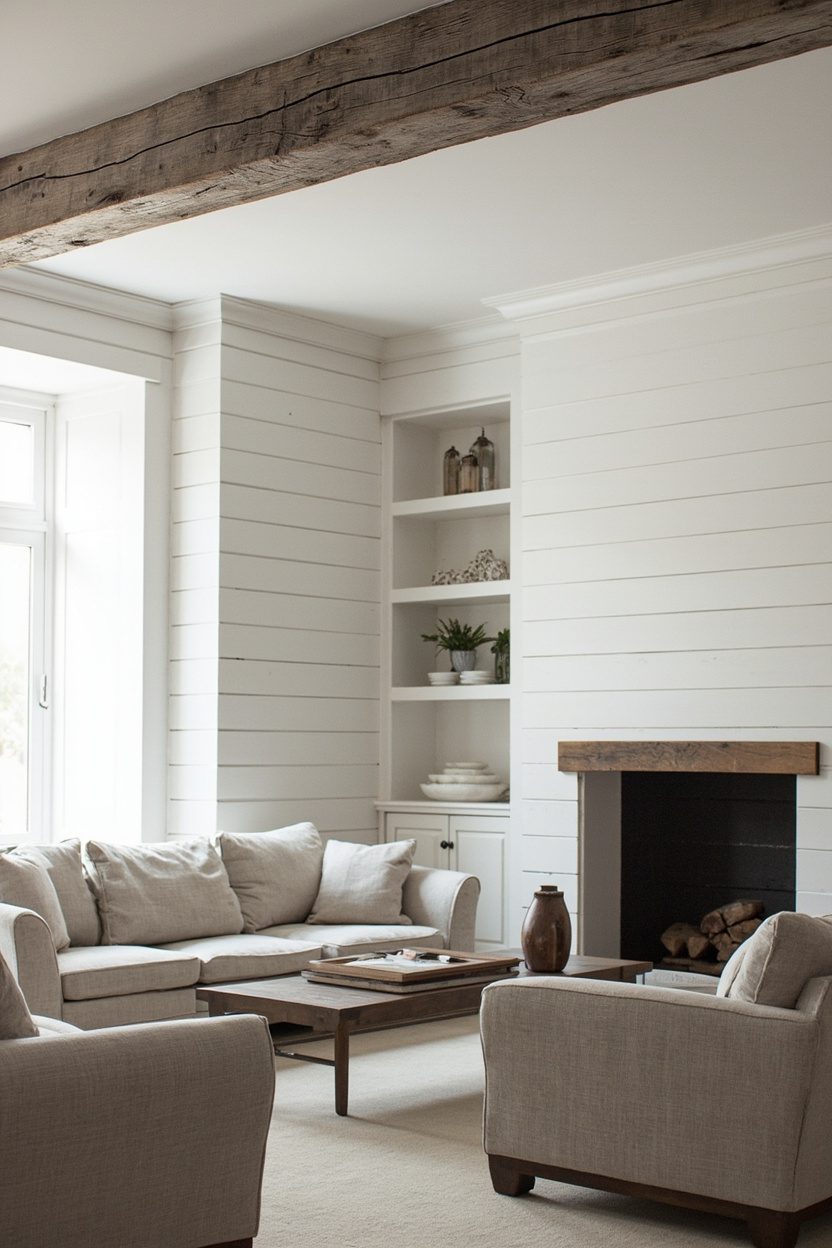
- Effort Level: Weekend DIY.
- Estimated Budget: 300-1,200.
- Maintenance Level: Low (Wipe clean).
- Best For: Small, low-light spaces.
- What You’ll Need: Solid or reclaimed oak beam, matte clear finish, lag bolts and brackets, stud finder.
- What You’ll Need: Miter saw or circular saw, level, impact driver, wood shims.
- What You’ll Need: 220-grit sandpaper, stain samples, wood conditioner.
The character of a farmhouse shiplap living room often begins at the hearth. A weathered oak mantel warms the crisp lines and adds age in an instant.
Choose a beam with visible grain and a few knots. However, avoid deep checks that compromise stability, especially on long spans.
Pair the mantel with vertical or horizontal shiplap in a soft white. Therefore, the oak reads as intentional contrast, not heavy mass.
Keep the depth between 6 and 8 inches for balance over standard fireboxes. For tall ceilings, extend shiplap to the crown and let the mantel float mid-wall.
Anchor with blackened steel brackets if studs do not land perfectly. Or, use a concealed French cleat for a cleaner profile and a modern farmhouse nod.
Before You Buy
Measure the firebox and flanking walls first, then map mantel length with painter’s tape. I like 4 to 6 inches longer than the firebox opening on each side for classic proportion.
Test two stains on the beam’s underside, because oak pulls warm. A matte clear coat usually preserves the silvery tones you want. If you are planning a TV above, consider routing a cable chase before install, and read up on mounting tips over at Farmhouse Living Room Tv Wall for spacing and sightlines.
11. Layered Neutral Textures
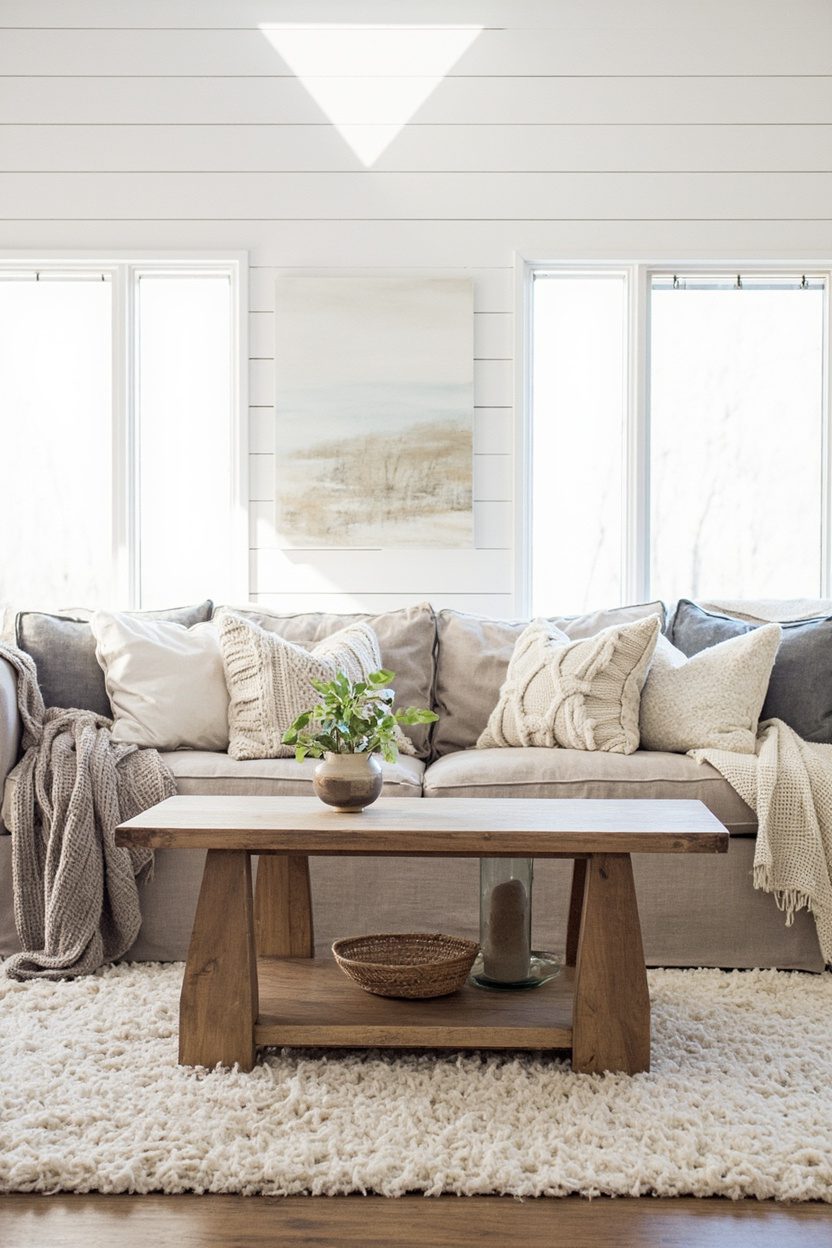
- Effort Level: Weekend DIY.
- Estimated Budget: 150-900.
- Maintenance Level: Low (Wipe clean).
- Best For: Small, low-light spaces.
Start with the shiplap as your quiet backdrop. Then layer nubby linen, chunky knits, and a flatweave rug to bring that touchable calm.
Keep the palette oat, stone, and warm white. Because tone on tone lets the shiplap lines read as texture, not stripes.
Mix scale thoughtfully. A large boucle sofa, medium basket weave pillows, and a fine herringbone throw create depth without clutter.
Add one grounding element in leather or wood. For example, a camel sling chair or weathered oak coffee table keeps the room from feeling airy to a fault.
Repeat textures across the room, not just the sofa. Therefore, include a jute tray, ceramic lamp, and woven basket near the fireplace.
Stylist’s Note
When in doubt, vary the sheen. Pair matte walls with a soft-luster linen and a slightly sheeny ceramic lamp. The light catches in layers and makes neutrals feel considered, not bland. For sofa silhouettes that wear texture well, bookmark Farmhouse Living Room Sofa Styles and choose straighter arms that let fabrics shine.
12. Soft Gray Shiplap
- Effort Level: Weekend DIY.
- Estimated Budget: 100-600.
- Maintenance Level: Low (Wipe clean).
- Best For: Small, low-light spaces.
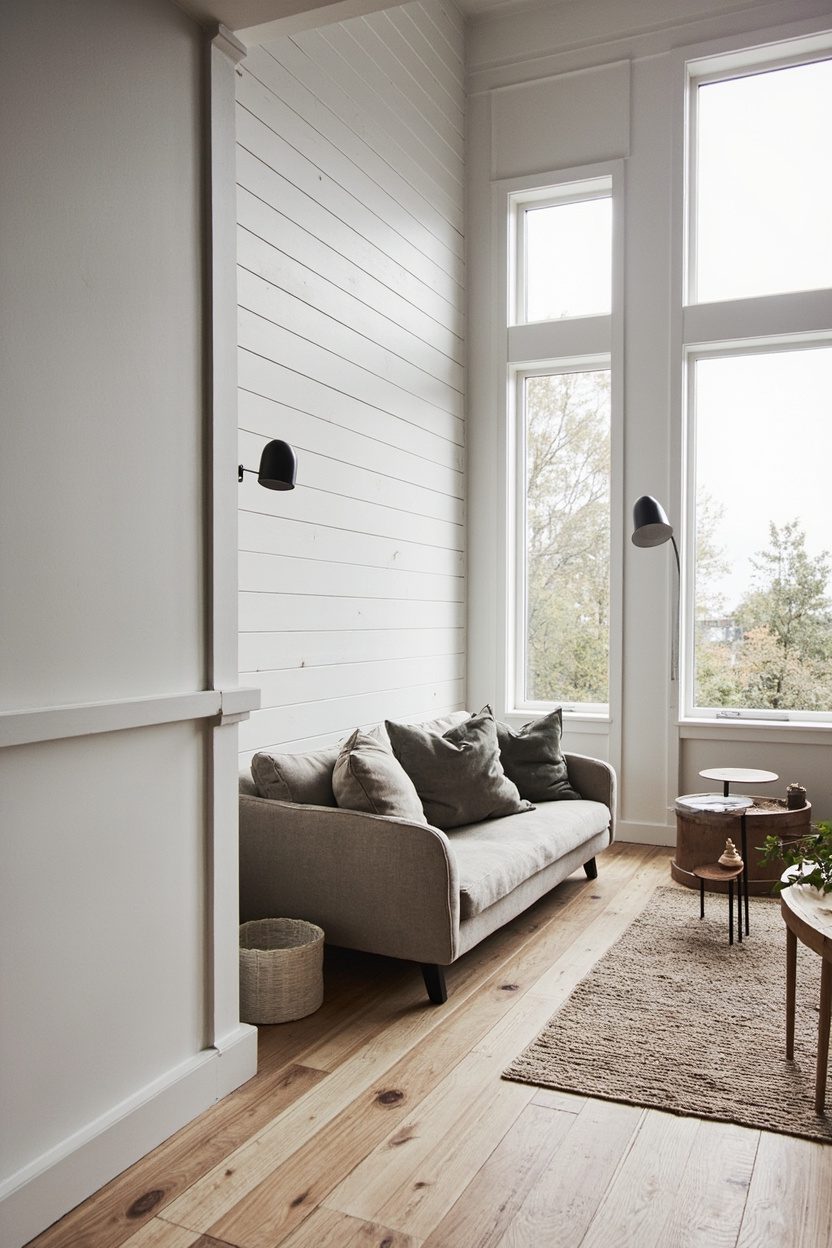
A whisper gray on the boards calms a farmhouse shiplap living room without losing that familiar cottage ease. It is a gentle shift from bright white.
Aim for a warm gray with a touch of taupe. Because cool blue grays can go chilly against oak floors and rustic beams.
Use satin or matte enamel to hide seams and dings. Meanwhile, keep the reveals crisp by back-brushing each joint before it tacks.
Test in morning and lamplight. Therefore, sample two shades one step apart, side by side on actual boards.
When I tried this in my own living room, I picked a gray that looked perfect in the store. At home it read blue at night. I shifted one notch warmer, and the room finally felt grounded.
The Golden Rule Here
Always balance soft gray shiplap with warm, natural pieces. A wool rug, a walnut end table, and linen drapery keep the palette cozy. If your space is open concept, carry the shade onto an adjacent half wall or built-in for flow, then coordinate with ideas from Farmhouse Open Plan Living Room. For more visual examples, browse the shiplap living rooms on Houzz to compare undertones before you commit.
13. Antique Brass Fixtures
- Effort Level: Weekend DIY.
- Estimated Budget: 100-500.
- Maintenance Level: Low (Wipe clean).
- Best For: Small, low-light spaces.
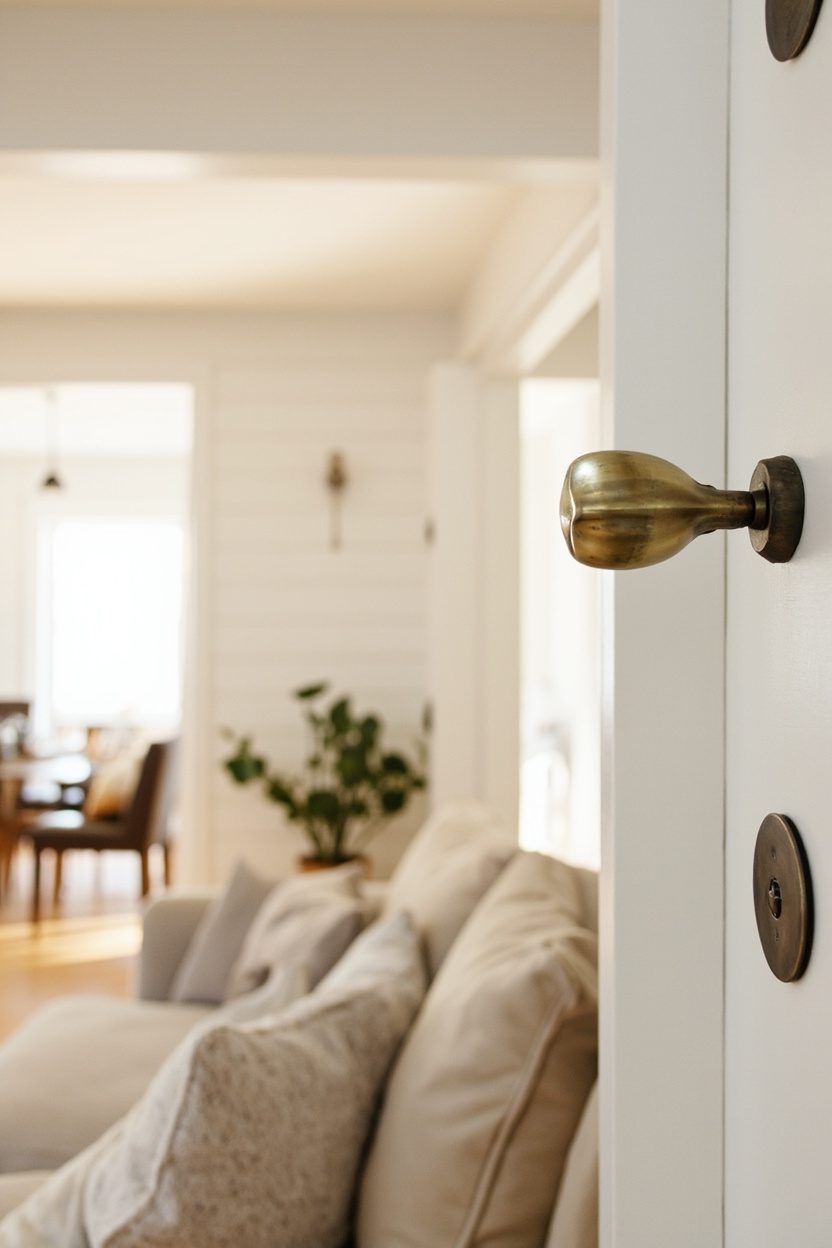
Swap in antique brass sconces or a lean chandelier to warm a farmhouse shiplap living room. The soft sheen pairs with matte boards, so the wall texture stays the star while the metal adds quiet glow.
Choose unlacquered brass if you love patina, or brushed brass for a steadier tone. Either way, the finish bridges rustic wood accents and cleaner slipcovered seating without feeling fussy.
Keep scale in check because shiplap lines can exaggerate size. For eight foot ceilings, select fixtures under 20 inches tall and use clear or frosted bulbs at 2700K for warmth.
Coordinate switch plates and curtain hardware in the same family. That repeat makes the room feel considered, especially if your fireplace surround or media console introduces another metal.
Anchor the metal with natural textures. For example, a seagrass basket by the sofa and a vintage brass floor lamp echo each other, so the mix reads layered, not random.
Why This Works
Brass carries a mellow tone that softens the crisp, linear look of shiplap. Because it reflects light, it also helps low light rooms feel friendlier without adding visual clutter. If you are weighing other finishes, nickel skews cooler and can compete with warm oak floors. Brass, instead, plays nicely with both painted shiplap and reclaimed beams, which is why it keeps showing up in modern country spaces highlighted on Houzz shiplap living rooms.
14. Leather and Linen Mix
- Effort Level: Weekend DIY.
- Estimated Budget: 300-2000.
- Maintenance Level: Medium (Condition leather, wash covers).
- Best For: Busy family rooms.
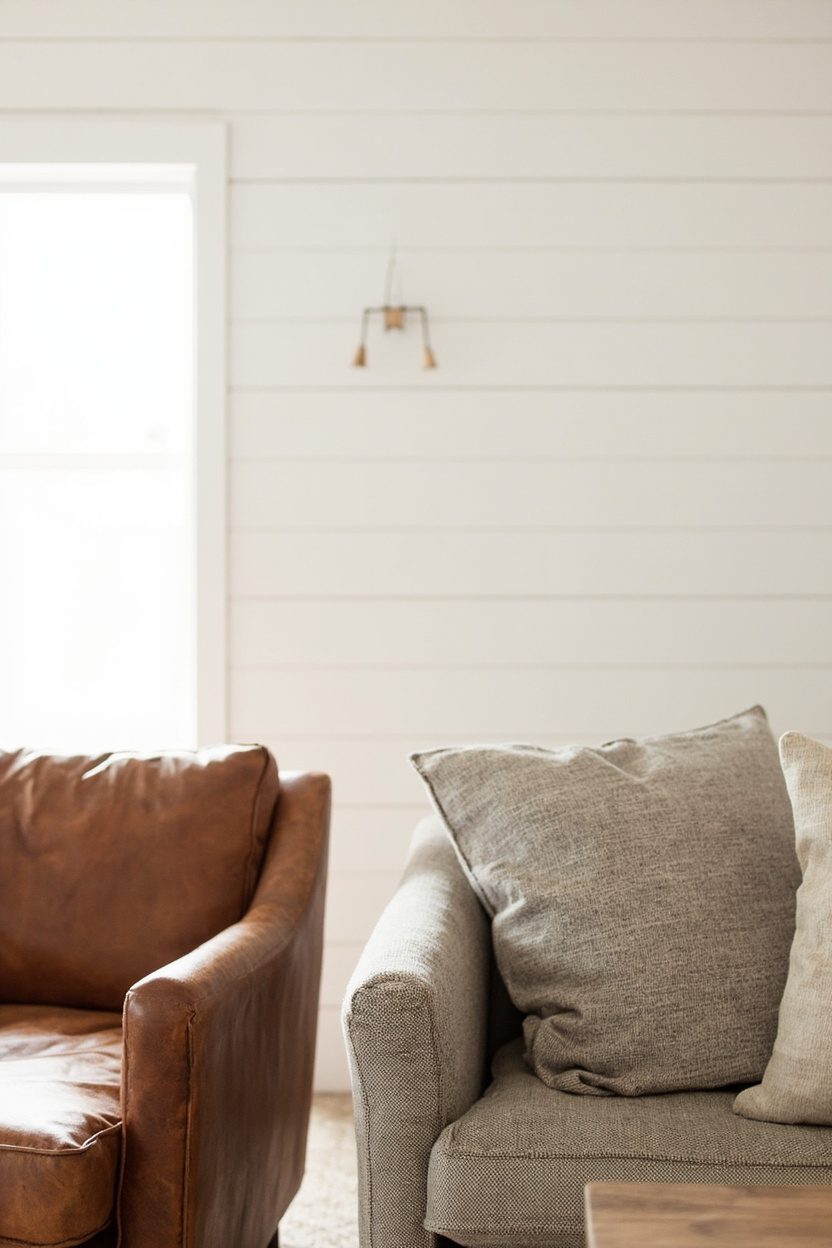
Pair a caramel leather sofa with stone linen accent chairs against a farmhouse shiplap living room wall. The contrast feels casual and durable, yet it stays airy because linen has that dry hand and breathability.
Balance warmth and coolness through color. Choose leather in cognac or saddle, then bring in flax or oatmeal linen so the shiplap’s paint, like Benjamin Moore Simply White, looks fresh, not stark.
Mind texture scale. The sofa provides a smooth block, the linen adds slub, and the shiplap adds line. Therefore, keep rugs and throws quieter to avoid a noisy finish.
Budget tip, try a leather armchair with a linen slipcovered sofa instead. You will still get the high low mix without a full furniture overhaul.
Real-Talk Warning: I made this mistake once by choosing an orange-leaning leather under cool LED bulbs. It read too shiny. Warm 2700K bulbs and a mattifying leather conditioner fixed the tone and shine fast.
Make It Your Own
Start with one hero piece, then layer slowly. If the leather sofa is the anchor, add two 22 inch linen pillows, a chambray throw, and black iron side tables. Because shiplap already carries detail, restraint keeps the balance right. For layout and proportions, it helps to review how seating shapes interact with millwork, like in Farmhouse Living Room Sofa Styles and open layouts covered in Farmhouse Open Plan Living Room.
15. Textured Jute Rugs
- Effort Level: Weekend DIY.
- Estimated Budget: 120-900.
- Maintenance Level: Medium (Vacuum, spot clean).
- Best For: High-traffic zones.
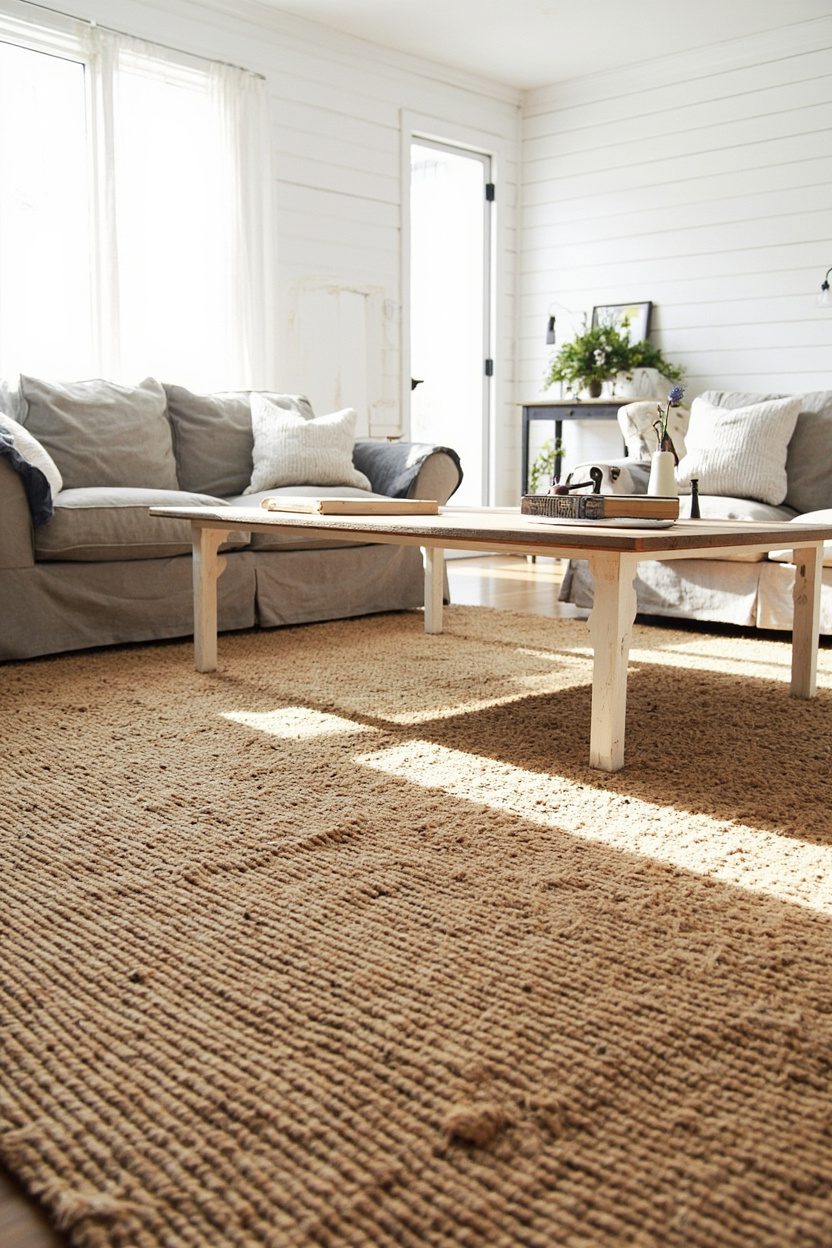
A chunky jute rug grounds a farmhouse shiplap living room with natural texture. Its sandy tone echoes raw wood frames and helps white walls feel sunlit, not sterile.
Choose a 9×12 under an 8 foot by 10 foot seating plan so front legs land on the rug. Proper scale keeps the shiplap from feeling top heavy.
If you want softness, layer a smaller wool flatweave or hide over the jute. The layered look reads cozy while the base rug still handles daily wear.
Watch for fiber blend and weave. A tighter bouclé or braided jute sheds less, while a 70 percent jute, 30 percent cotton blend feels a touch softer underfoot.
For TV zones, jute cuts glare and adds acoustic help. Pair with a low console and hidden cord trays to keep the wall lines crisp, as in Farmhouse Living Room Tv Wall.
Stylist’s Note
Test rug hue against your shiplap paint before buying. Some jute skews gray green, which can dull creamy whites. I keep a few sample mats by the baseboard and check them morning and evening because natural light shifts everything. A rug pad is nonnegotiable for grip and to protect wood floors, and it adds a touch of cushion under those rustic textures. Also, rotate the rug twice a year to even wear where the sun hits hardest.
FAQ
What paint sheen works best on a shiplap feature wall?
Eggshell or satin usually wins because it wipes clean yet keeps glare low. In living rooms, eggshell flatters texture while satin holds up to kids and pets, especially behind sofas and light switches.
Should I run shiplap horizontally or vertically in a small room?
Horizontal boards widen a tight room visually, while vertical boards lift low ceilings. In most small spaces, horizontal feels calmer behind sofas, but vertical can be striking on a fireplace bump out or niche.
How do I keep brass from feeling overly shiny against white shiplap?
Choose brushed or unlacquered finishes and pair with warm 2700K bulbs. If a fixture arrives too glossy, a quick rub with a microfiber cloth and time will soften the look as a natural patina develops.
Can a jute rug work with floor heating and pets?
Yes, with a felt pad and regular vacuuming. Jute handles traffic well, but it dislikes standing moisture. Blot spills immediately, and consider a wool or indoor outdoor layer on top for zones with water bowls.