


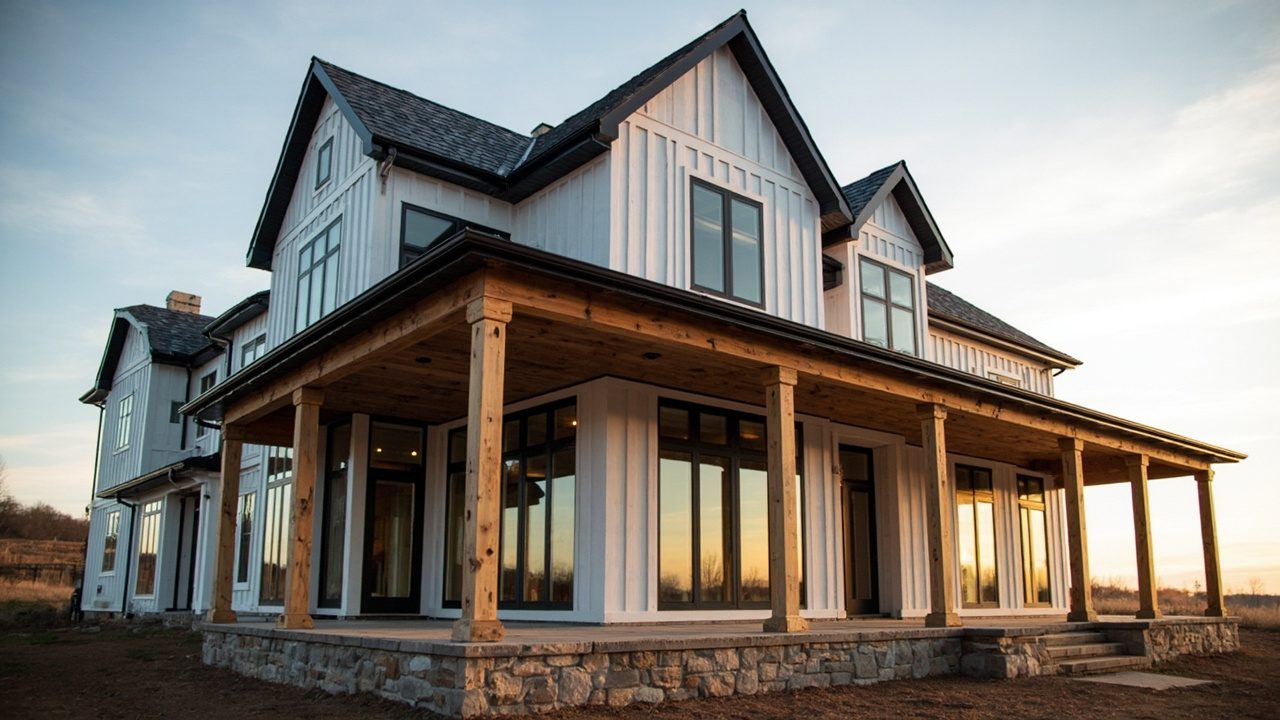
A modern farmhouse exterior should whisper welcome from the street, not shout. Think sunlit siding, honest materials, and rooflines that read clean from the curb, with details that reward a second look, like an intentional door color or a well-placed porch light.
Curb appeal is more than paint and plants; it is a composition of scale, texture, and color, tuned to your neighborhood and budget.
These ideas focus on practical decisions, siding tones, trim contrast, and cladding profiles—so you can make choices that last and photograph well.
- 1. Light-Hued Siding
- 2. Black Trim Contrast
- 3. Board-and-Batten Facades
- 4. Natural Wood Accents
- 5. Mixed Metal Lighting
- 6. Exposed Beam Entryways
- 7. Barn Door Garages
- 8. Stone Foundation Wrap
- 9. Green Roof Integration
- 10. Textured Stucco Panels
- 11. Oversized Porch Swings
- 12. Matte Black Hardware
- 13. Layered Landscape Beds
- 14. Slimline Metal Roofing
- 15. Glass Garage Doors
- Final Thoughts
- FAQ
1. Light-Hued Siding
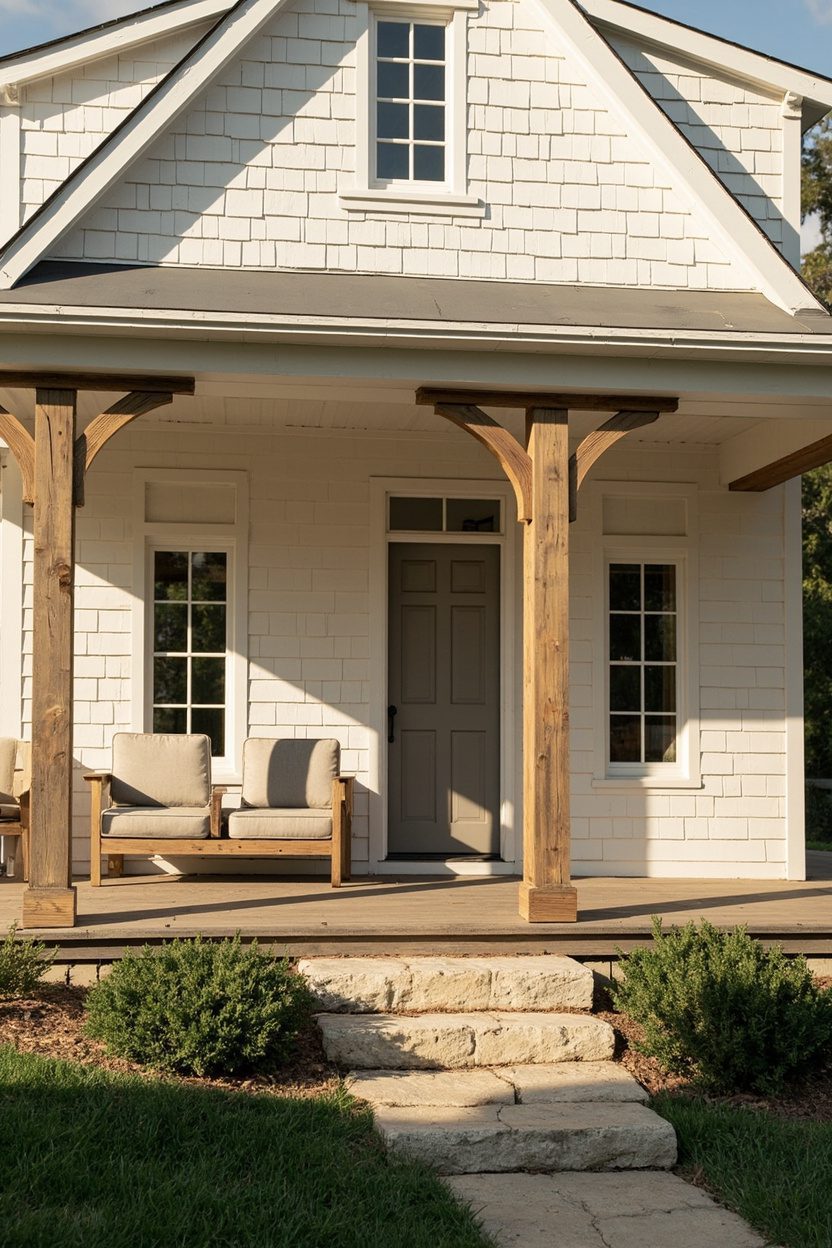
Light-colored siding remains the signature modern farmhouse move for 2026, offering instant brightness and a timeless backdrop for details.
A near-white, soft cream, or warm dove gray reads upscale, reflects light, and hides dust better than ultra-white in many climates.
Choose a durable fiber cement or engineered wood product when the budget allows, to get the look without the seasonal maintenance of softwoods.
Scale matters; match larger lap profiles to bigger facades, and use narrower boards for gables or porches to avoid a flat, monotonous appearance.
Styling Blueprint
- Pick a warm white or greige for longevity and easy coordination with landscaping.
- Use fiber cement or engineered boards for durability and minimal repainting costs.
- Vary siding widths between main walls and porch gables for visual depth.
- Plan for shadow lines by spacing trim and soffits to create a subtle contrast.
2. Black Trim Contrast
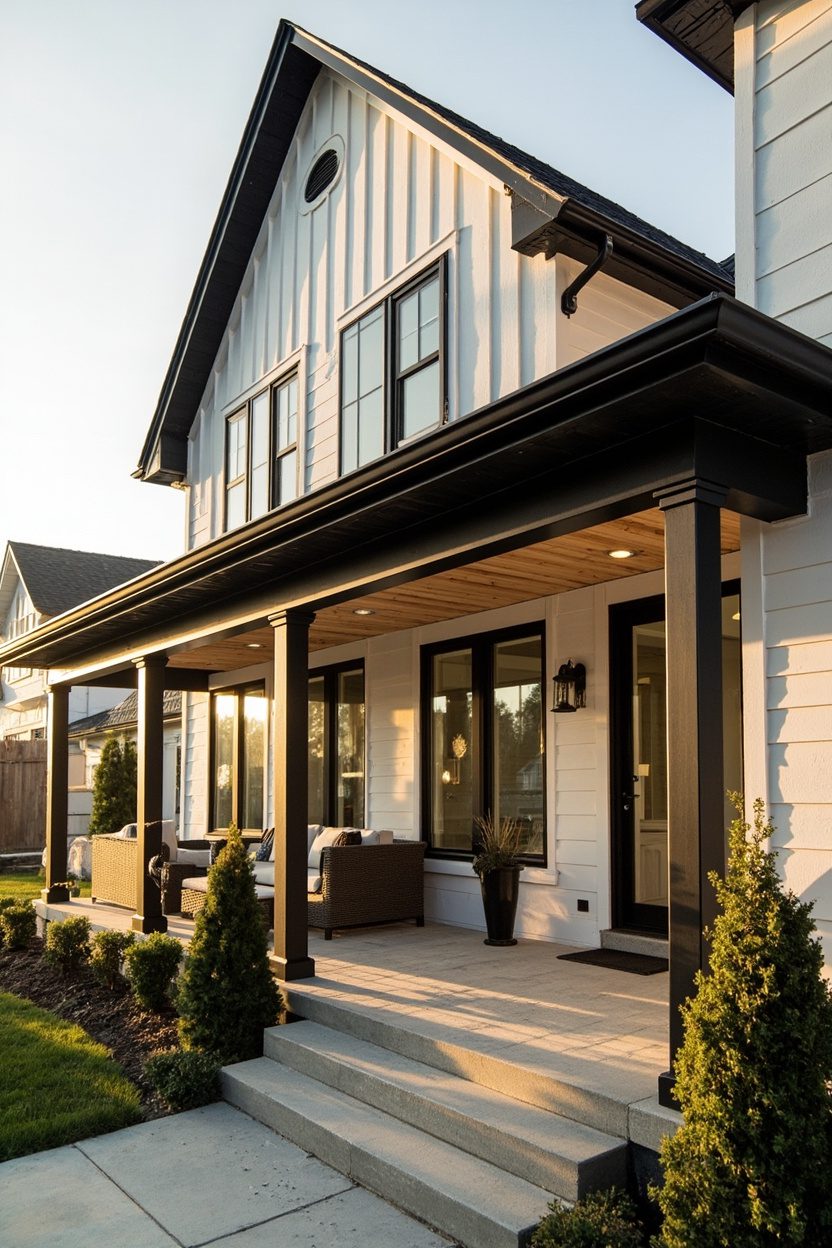
Black trim is a modern farmhouse staple that frames windows and doors like jewelry, delivering crisp definition against pale siding.
Use matte or low-sheen black paint to avoid glare, and reserve glossy finishes for high-touch elements like front doors or metal hardware.
Keep black to trim, window sashes, and gutters to maintain balance, and avoid painting large roof planes or expansive surfaces black, which can overpower scale.
For material choice, powder-coated aluminum or fiberglass windows with factory-applied black finishes reduce ongoing maintenance and keep lines sharp.
Essential Elements
- Limit black to trim and window frames to create a tailored, modern look.
- Choose matte finishes to reduce reflection and hide fingerprints.
- Prefer factory-finished metal windows for crisp, maintenance-free lines.
- Pair black trim with warm siding tones to avoid a cold, stark contrast.
3. Board-and-Batten Facades
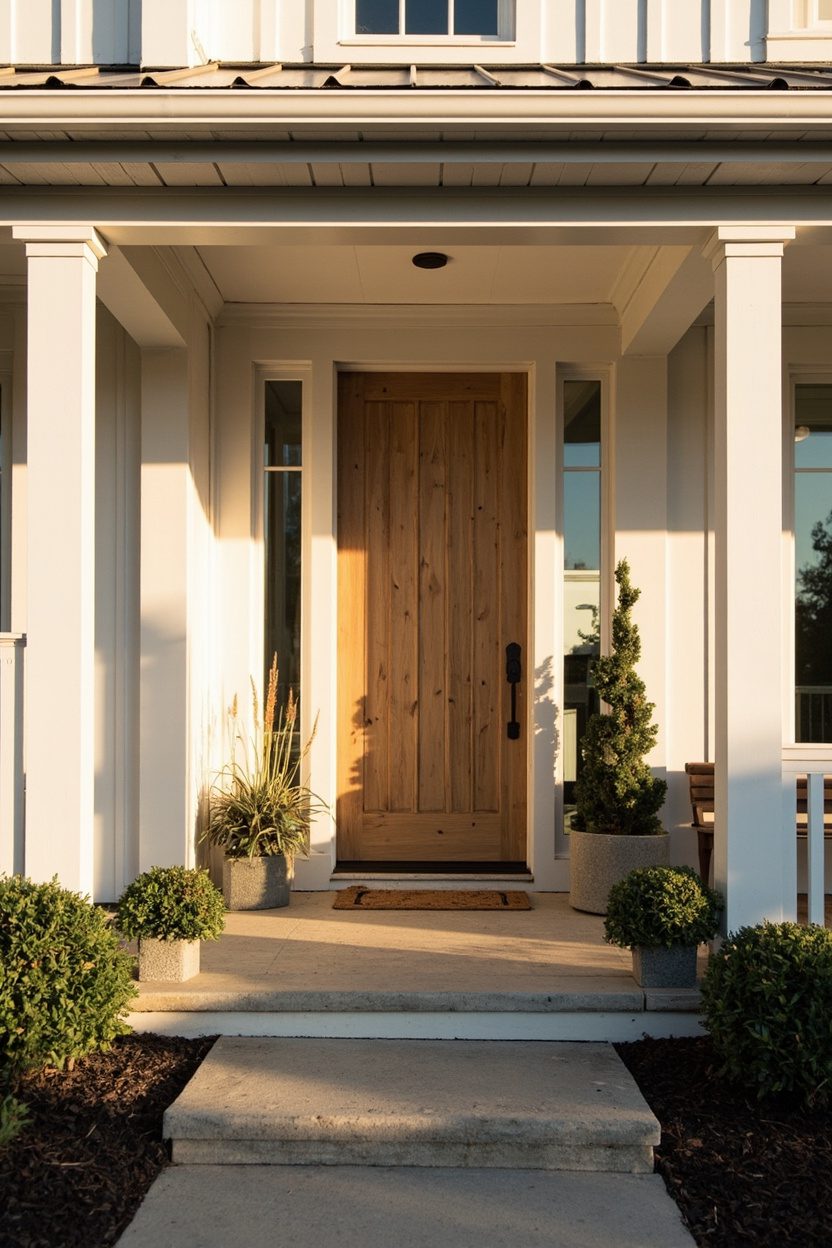
Board-and-batten is the archetype of farmhouse sincerity, translating well to modern proportions with wider battens and cleaner reveals.
Select vertical boards in painted fiber cement or vertical engineered panels for weather resistance and straight lines that read well from a distance.
For scale, increase batten width on large gables to prevent a “striped” look, and align battens with window mullions to maintain a disciplined grid.
Avoid thin, decorative battens on high-exposure walls; they trap dirt and need frequent repainting; opt for deeper, functional battens instead.
What to Focus On?
- Use wider boards and battens on large elevations to keep proportions balanced.
- Choose durable materials like painted fiber cement to reduce maintenance needs.
- Align battens with window lines for a cohesive architectural rhythm.
- Avoid narrow battens on weather-prone façades to prevent dirt buildup and paint failure.
4. Natural Wood Accents
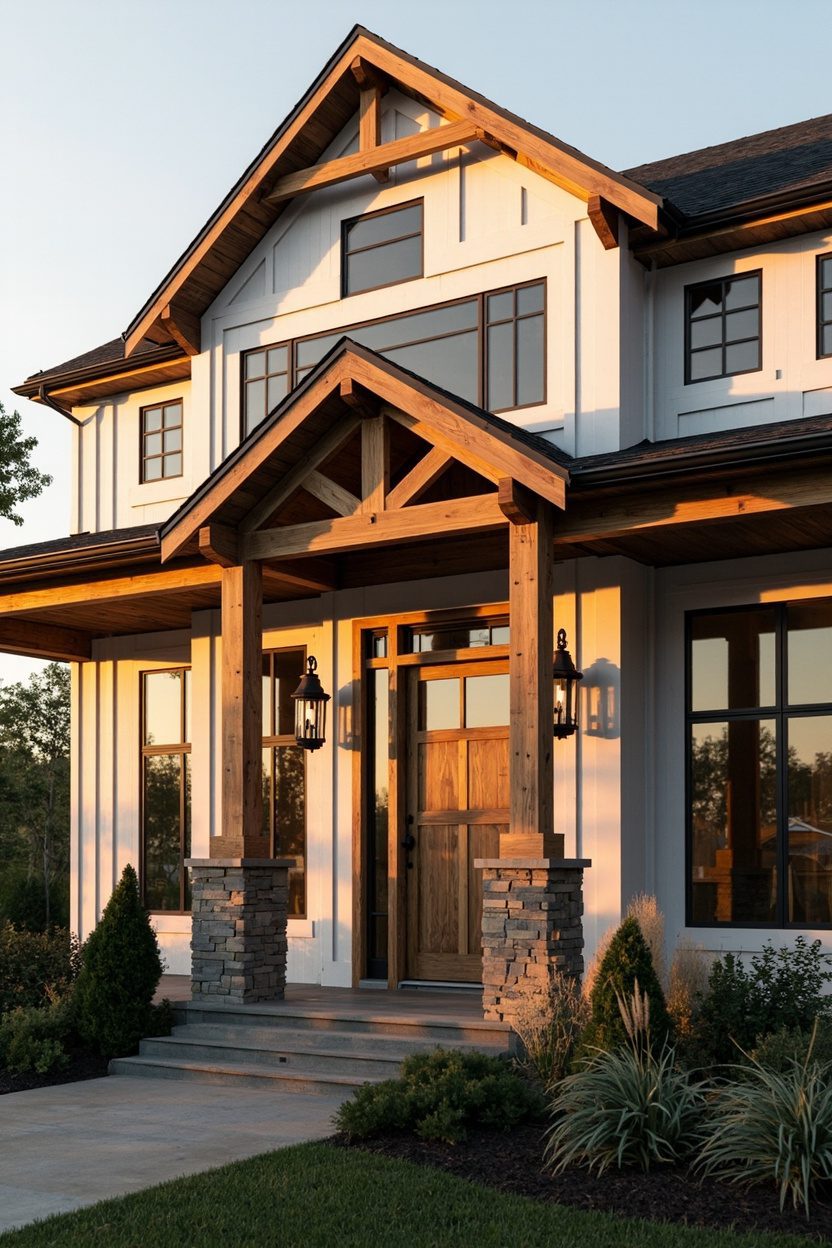
Reclaimed or sustainably sourced cedar and oak add instant warmth, and they age gracefully when left untreated for that weathered farmhouse look.
Use horizontal wood cladding for a single focal wall, limited to one plane to avoid overpowering the façade.
Scale matters, so choose wider boards, 6 to 8 inches, to read correctly from the street, and install with hidden fasteners for a clean line.
Avoid glossy stains; instead, pick a clear matte oil or a light gray stain to protect while preserving grain texture. Budget about $8 to $12 per square foot for quality material and finish.
Styling Blueprint
- Feature one wood element, like a porch ceiling or entry surround, not the whole façade.
- Match wood tone to green plantings, choose warm honey for flowering beds or cool gray for evergreen landscapes.
- Specify rot-resistant species and stainless fasteners to prevent staining and failure.
- Keep trims in painted white or charcoal to frame the wood without competing with it.
5. Mixed Metal Lighting
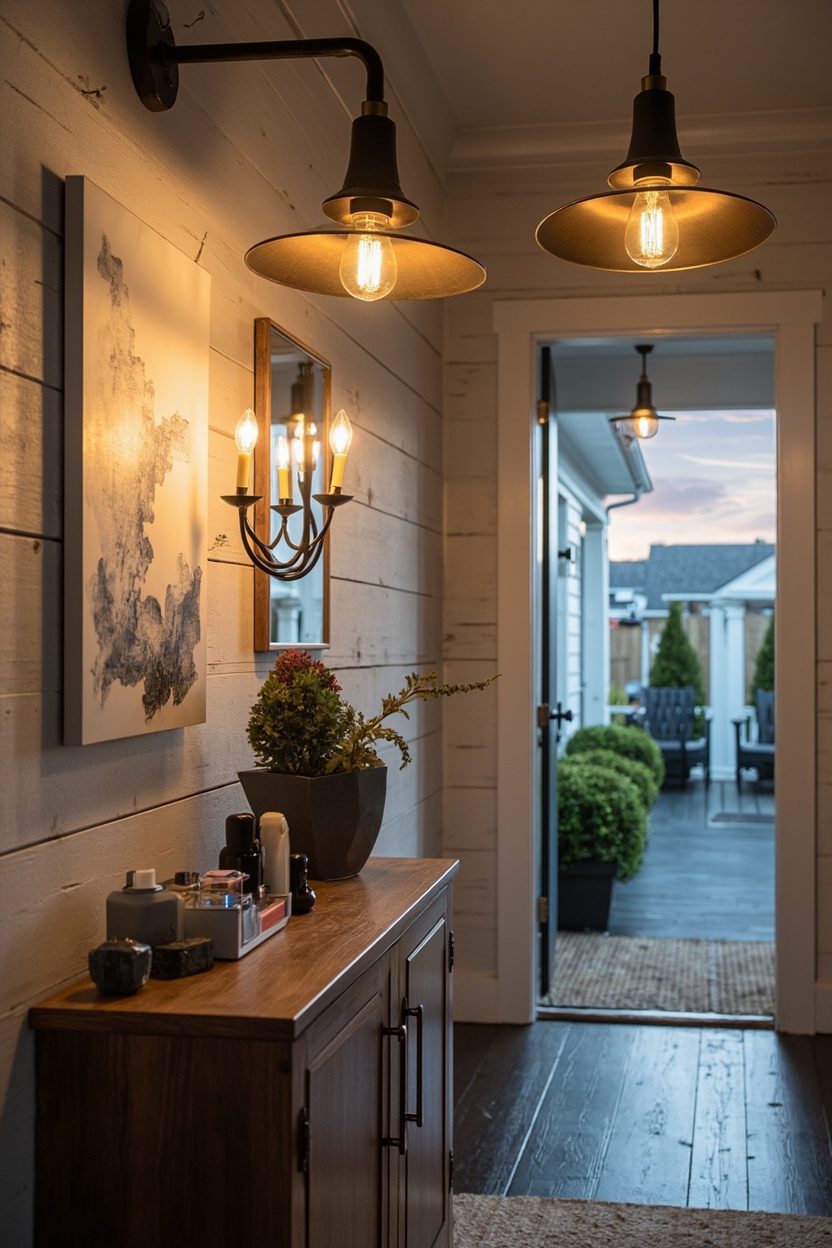
Layered metals feel curated, not matchy, so combine aged brass sconces with matte black pendants for depth and contrast.
Position wall lanterns at a consistent height, typically 66 to 72 inches from grade, to create balanced sightlines and uniform illumination.
Choose fixtures with farmhouse proportions, think elongated cages and clear seeded glass, scale them to the door size, larger doors need bigger fixtures.
For practicality, specify exterior-rated finishes and integrated LED options to reduce maintenance and energy costs over time.
Essential Elements
- Pick a dominant metal and use a secondary accent metal sparingly for trim or small hardware.
- Match fixture scale to the entry width, 12 to 18 inches wide for single doors, 18 to 24 inches for doubles.
- Prioritize sealed, wet-rated fixtures for longevity in varied weather conditions.
- Use warm color temperature, 2700K to 3000K, for flattering curbside light and color rendering.
6. Exposed Beam Entryways
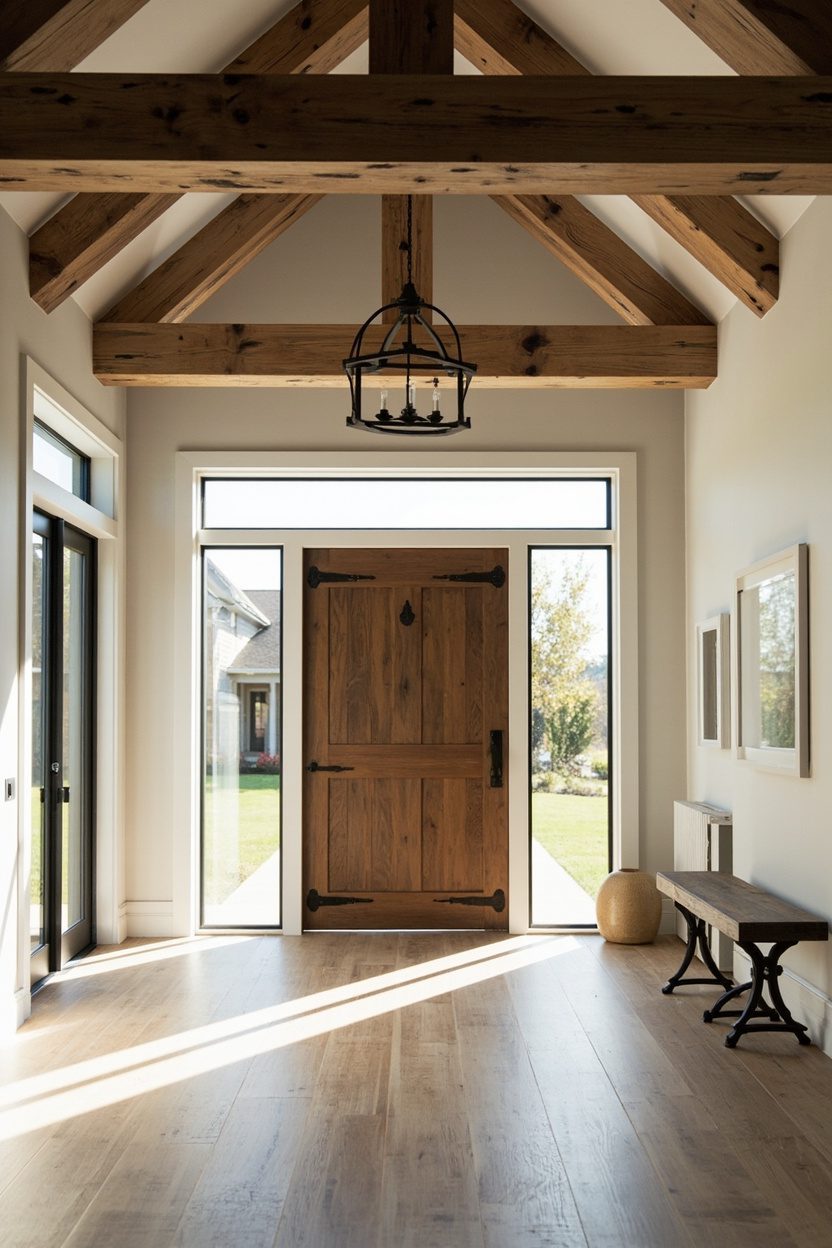
An exposed timber beam over the porch signals hand-crafted character and anchors modern farmhouse proportions.
Opt for robust beams, real or faux, sized to the span, for example, a 6×10 or 8×10, where the porch depth is generous, to avoid a dainty appearance.
Contrast the beam with a light soffit color and use hidden brackets or simple iron straps for a restrained, structural look.
For moisture-prone climates, choose pressure-treated or engineered glulam beams and finish with a breathable oil to protect without trapping moisture.
What to Focus On?
- Scale beams to porch width, err on the larger to maintain farmhouse heft and presence.
- Coordinate the beam finish with other wood accents, either matching or intentionally contrasting tones.
- Specify durable materials for humid or coastal locations, like glulam or modified wood products.
- Avoid overly ornate brackets; choose simple hardware to keep the look authentic and not decorative-heavy.
7. Barn Door Garages
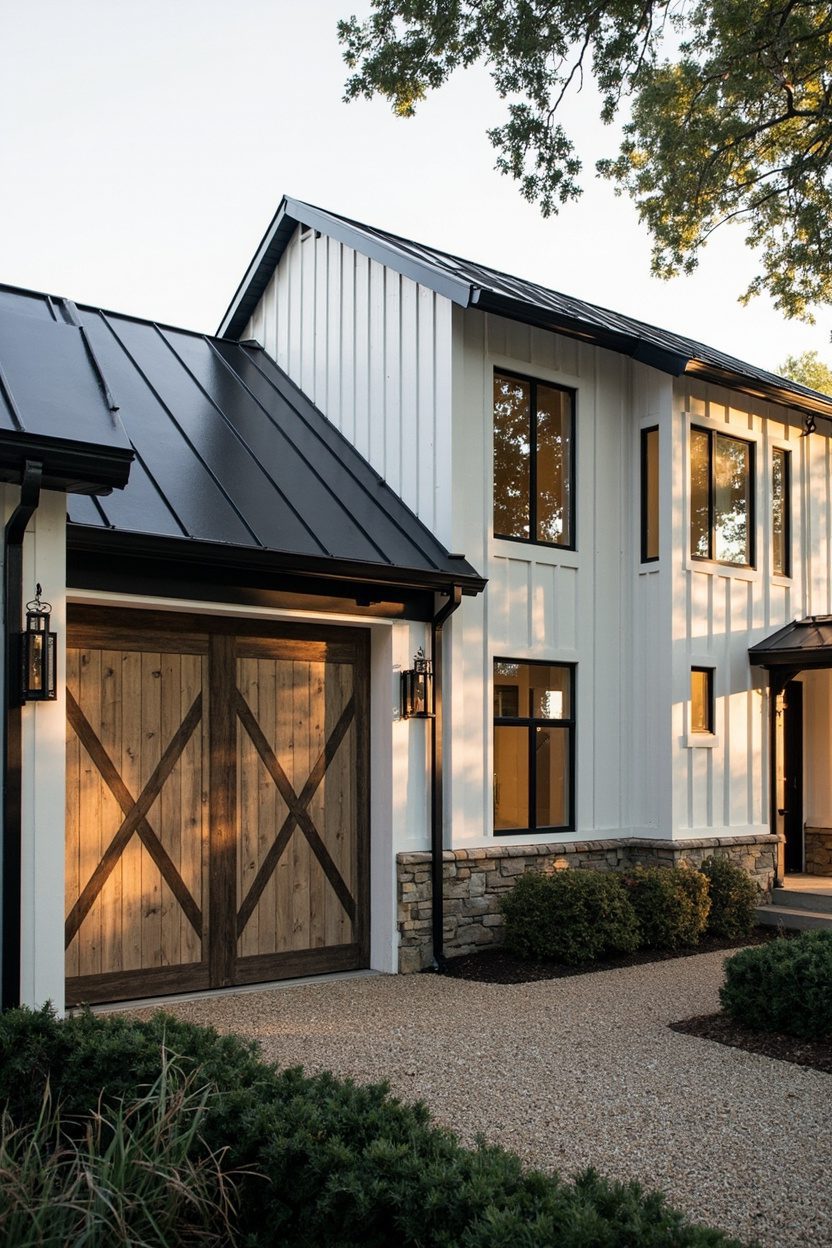
Barn-style garage doors add instant character, translating farmhouse vibes to a large scale without feeling fussy.
Choose solid wood or composite with a realistic wood grain, and stain it a warm walnut or soft gray to resist weathering.
Keep hardware oversized but simple, for example, iron strap hinges and a black pull, which read rustic at a distance and modern up close.
Avoid overly ornate carriage-door replicas; they can look costume-like. Instead, prioritize proper scale so doors align with the roofline and driveway sightlines.
Styling Blueprint
- Material: vertical planks in cedar or composite with a UV-stable stain finish.
- Color: warm walnut or muted gray, coordinate with window trim.
- Hardware: matte black iron straps and a low-profile handle.
- Scale tip: panel height should relate to garage opening by thirds, not equal-width slats.
8. Stone Foundation Wrap
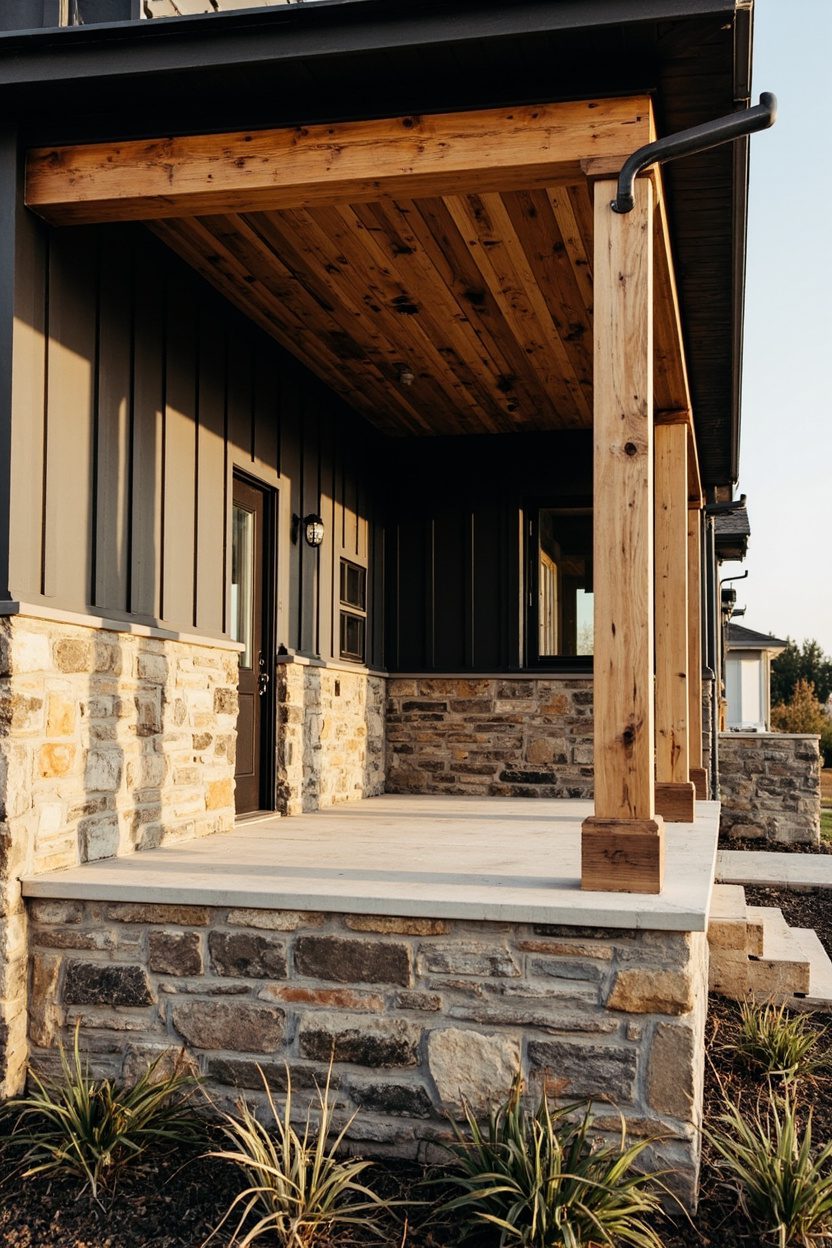
Wrapping the base of the house in real stone grounds the facade, adding texture and durability where splashback and salt damage occur.
Opt for local fieldstone or thin-cut real stone veneer, and run it at least 24 to 36 inches high, or to the sill line for greater permanence.
Match mortar color to the lightest tone in the stone to keep the look cohesive, and avoid stark white mortar, which reads too new against aged wood.
Budget-conscious projects can use a natural ledgestone veneer, but specify a 2-3 inch depth profile to avoid a flat, applied appearance.
Essential Elements
- Height: minimum 24 inches, extending to window sills for a solid look.
- Material: local fieldstone or 2–3 inch real stone veneer.
- Mortar: tone mortar to stone highlights, avoid bright white.
- Drainage: include a hidden ledge and weep holes to prevent moisture buildup.
9. Green Roof Integration
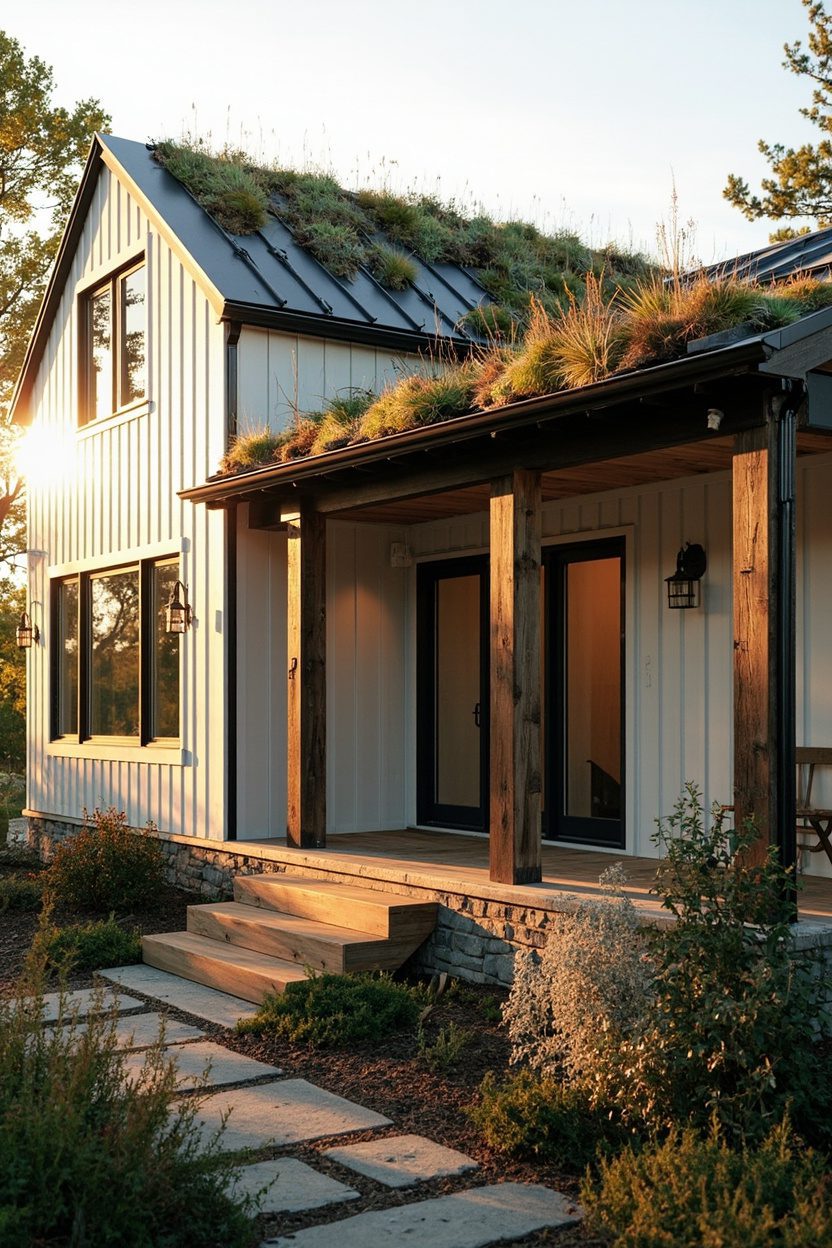
A planted, low-slope green roof softens a farmhouse silhouette and introduces a living layer that blends with surrounding fields and trees.
Select sedum mixes and native drought-tolerant groundcovers for low maintenance, and keep the substrate shallow, around 3 to 4 inches for extensive systems.
Work with a roofer experienced in green roofs to ensure proper waterproofing, root barriers, and load calculations, because saturated substrate adds significant weight.
Visually link the planted roof to the landscape by echoing roof-edge materials, for example, a zinc trim or cedar fascia, to create a deliberate transition.
What to Focus On?
- Plant palette: sedum-dominant mix with local natives for resilience.
- Substrate depth: 3–4 inches for extensive green roofs, deeper for perennials.
- Structure: Confirm live load capacity with the engineer before installation.
- Edge detail: Use concealed metal flashing or cedar for a clean junction with gutters.
10. Textured Stucco Panels
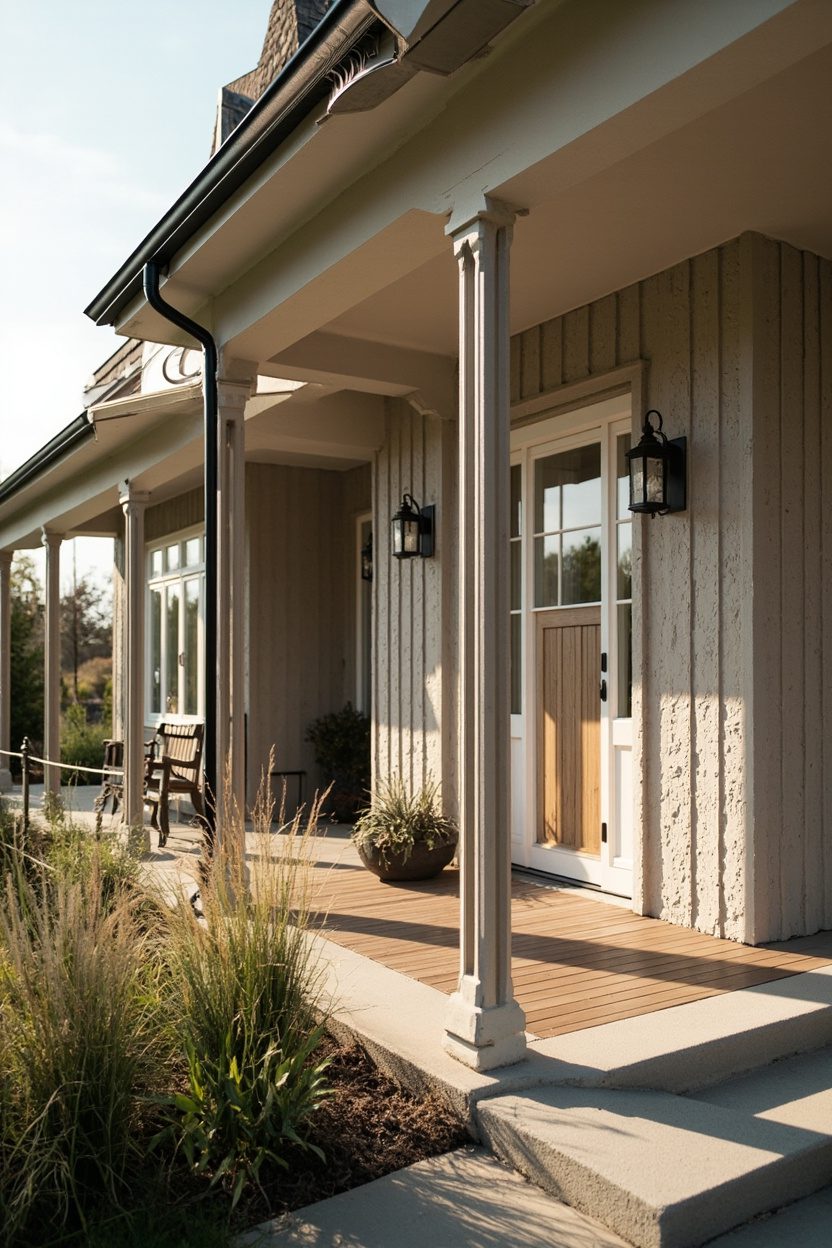
Textured stucco panels add tactile depth to a farmhouse facade, breaking up large expanses of siding without losing the clean lines modern farmhouse demands.
Choose a lime-based stucco in a soft off-white or warm beige to complement wood trim and avoid a clinical white.
Scale matters; use wider panels on the main massing and narrower bands around windows to keep proportions balanced.
Avoid overly smooth or glossy finishes, as they read false against natural materials; opt for a subtle sand texture for authenticity.
Styling Blueprint
- Material: lime-based stucco in off-white or warm beige, with sand finish texture for realism..
- Scale: wider panels on main walls, narrower around openings to maintain proportion..
- Trim pairing: warm stained wood or matte black metal for contrast..
- Maintenance tip: seal yearly, inspect for hairline cracks to prevent water intrusion..
11. Oversized Porch Swings
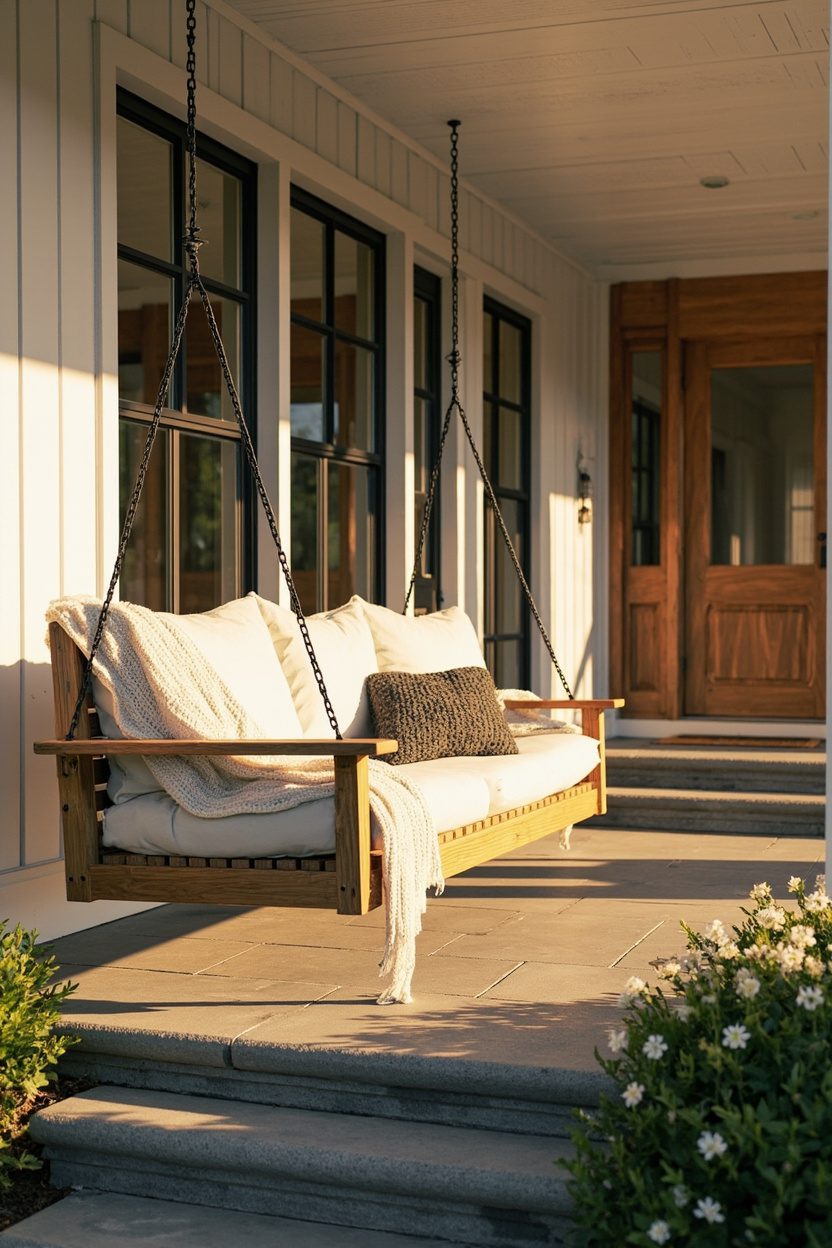
An oversized porch swing anchors a farmhouse entry, turning curb appeal into usable hospitality and extending living space outdoors.
Pick kiln-dried cedar or teak for the frame; these woods tolerate weather while keeping a relaxed, natural look.
Size the swing to seat at least three, about 60 to 72 inches wide, so it reads substantial against deep porches.
Add durable outdoor cushions in washable performance fabrics, leaning into earthy stripe or woven textures rather than fussy patterns.
What to Focus On?
- Material: kiln-dried cedar or teak for longevity and low maintenance..
- Dimensions: 60 to 72 inches wide to comfortably seat three and scale to a wide porch..
- Mounting: use heavy-duty stainless steel chains or marine-grade hardware rated above load requirements..
- Textiles: outdoor performance fabric in neutral or earthy stripes for practical style..
12. Matte Black Hardware
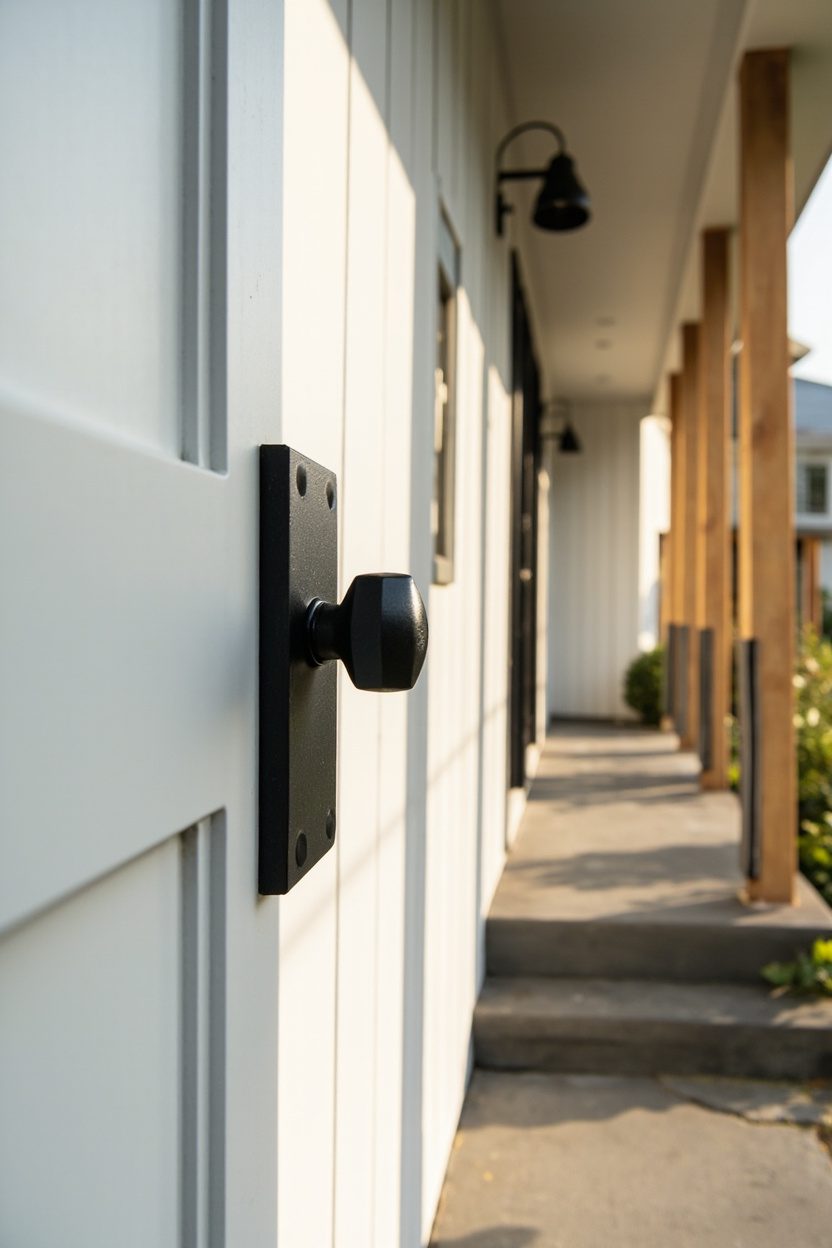
Matte black hardware reads modern but pairs beautifully with farmhouse forms, creating crisp punctuation on doors and garage panels.
Use it consistently across door handles, house numbers, downspouts, and light fixtures to create a cohesive, edited look.
For material, choose powder-coated steel or architectural-grade aluminum to resist chipping and coastal corrosion.
Balance black accents with warm materials, like natural wood doors or stone bases, so the finish feels intentional rather than heavy.
Essential Elements
- Finish: powder-coated matte black on steel or aluminum for durability and a true flat look.
- Placement: repeat on entry hardware, garage pulls, light fixtures, and downspouts for cohesion.
- Contrast: pair with warm wood or light stucco to prevent the black from overpowering the facade.
- Budget: mid-range powder-coated pieces offer longevity; splurge on an entry set for daily use.
13. Layered Landscape Beds
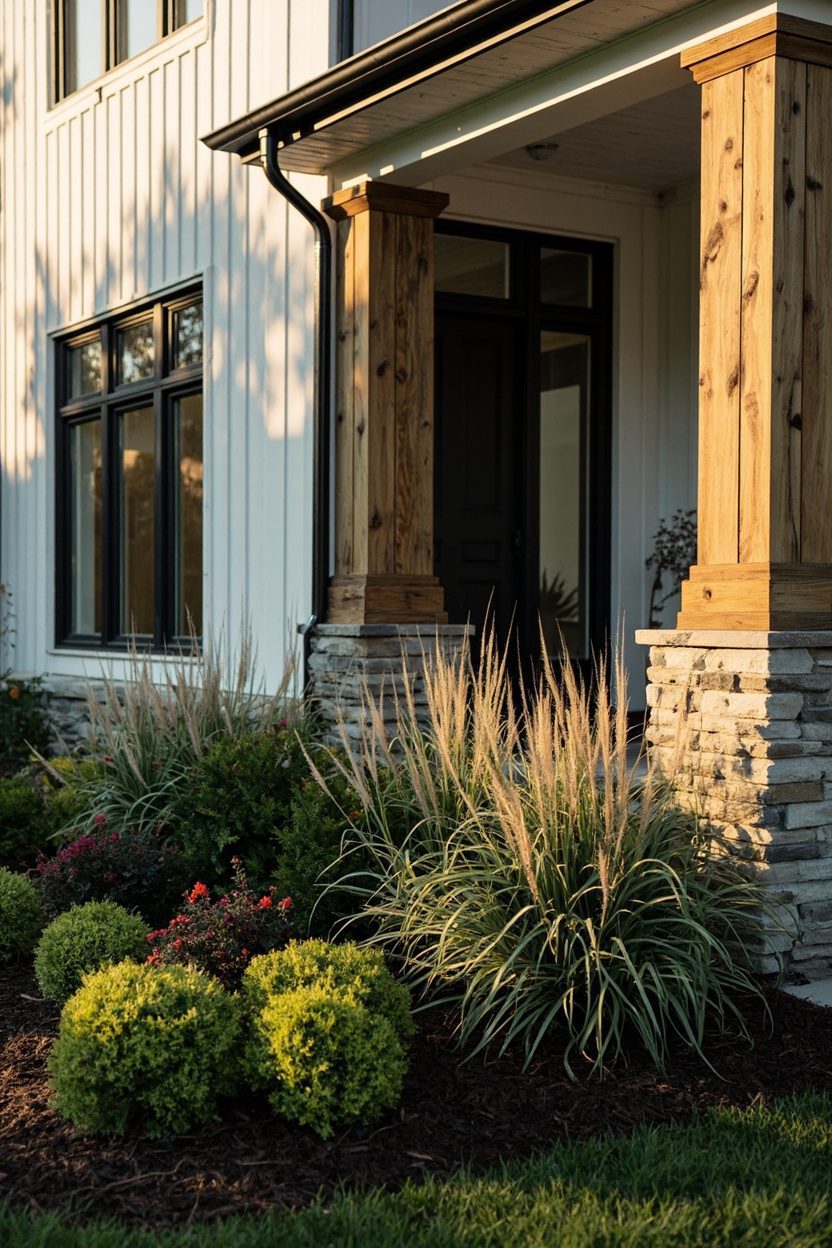
Layered landscape beds give a modern farmhouse front yard depth by arranging plants in distinct height bands from lawn to foundation.
Start with low groundcovers and edging plants, add mid-height perennials, then frame with taller ornamental grasses or small trees for vertical rhythm.
Choose native, drought-tolerant species, and favor textures over flashy blooms to keep maintenance low and the palette cohesive.
Use natural materials for edging, like reclaimed railroad tie timbers or dry-stacked stone, to tie the planting into the house materials and scale.
Styling Blueprint
- Plant in staggered drifts, not single rows, for a naturalized look.
- Limit the palette to three foliage tones, one accent flower color, and one evergreen for year-round structure.
- Place mulch 2 to 3 inches deep, leaving a gap at the foundation to prevent moisture issues.
- Install drip irrigation on a timer to keep water use efficient and plant health consistent.
14. Slimline Metal Roofing
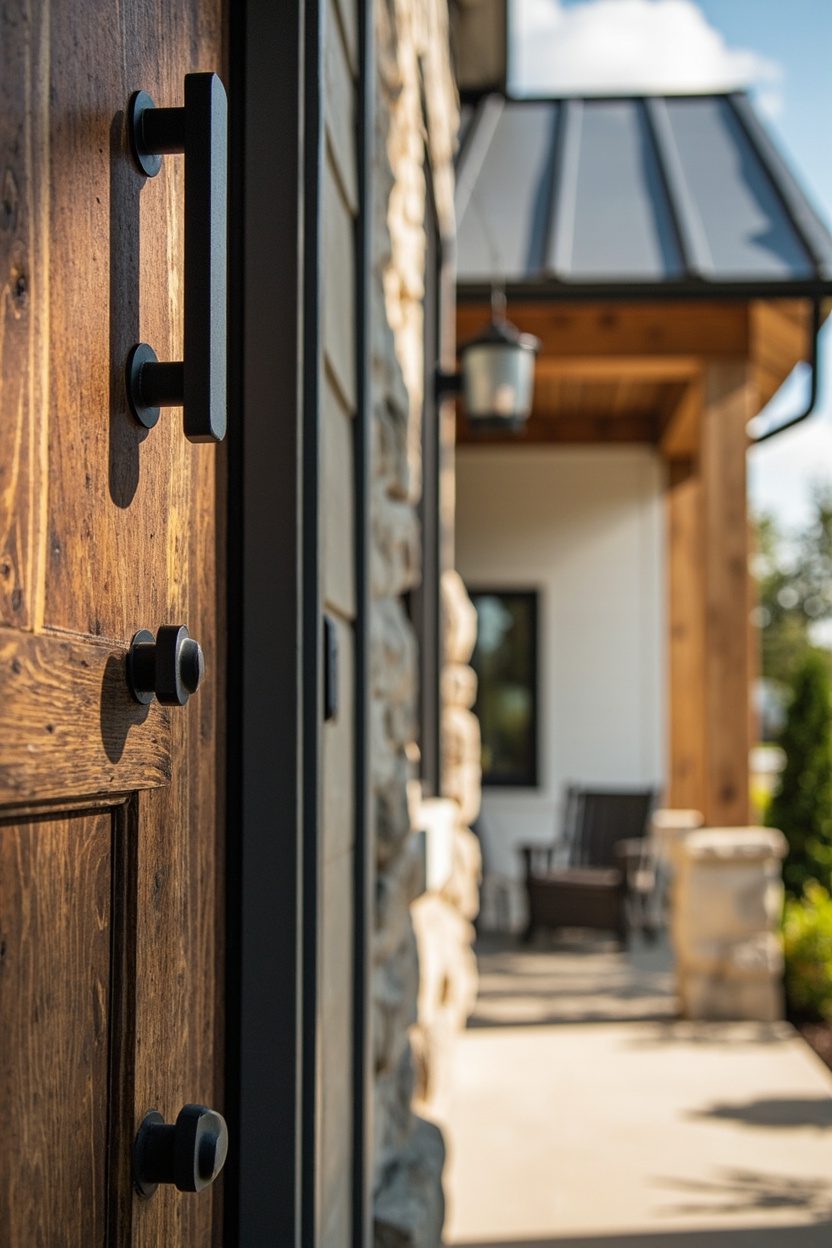
Slimline standing seam metal roofs read modern but pair effortlessly with farmhouse siding, offering longevity and a clean silhouette.
Choose a matte finish in charcoal, olive, or warm pewter to complement light clapboard or board and batten, avoiding reflective coatings that look industrial.
Specify 24- to 26-gauge steel for a balance of durability and cost, and insist on concealed fasteners to preserve the sleek plane and shed water efficiently.
Budget for proper underlayment and attic ventilation, because metal amplifies heat transfer without the right details, and a well-vented roof reduces lifespan risks.
Essential Elements
- Opt for a matte, low-gloss finish to maintain an authentic farmhouse feel.
- Concealed fasteners and 1 to 1.5-inch standing seams for a refined profile.
- Match gutter and trim colors to the roof for cohesive sightlines.
- Factor in snow guards and thermal isolation in colder climates.
15. Glass Garage Doors
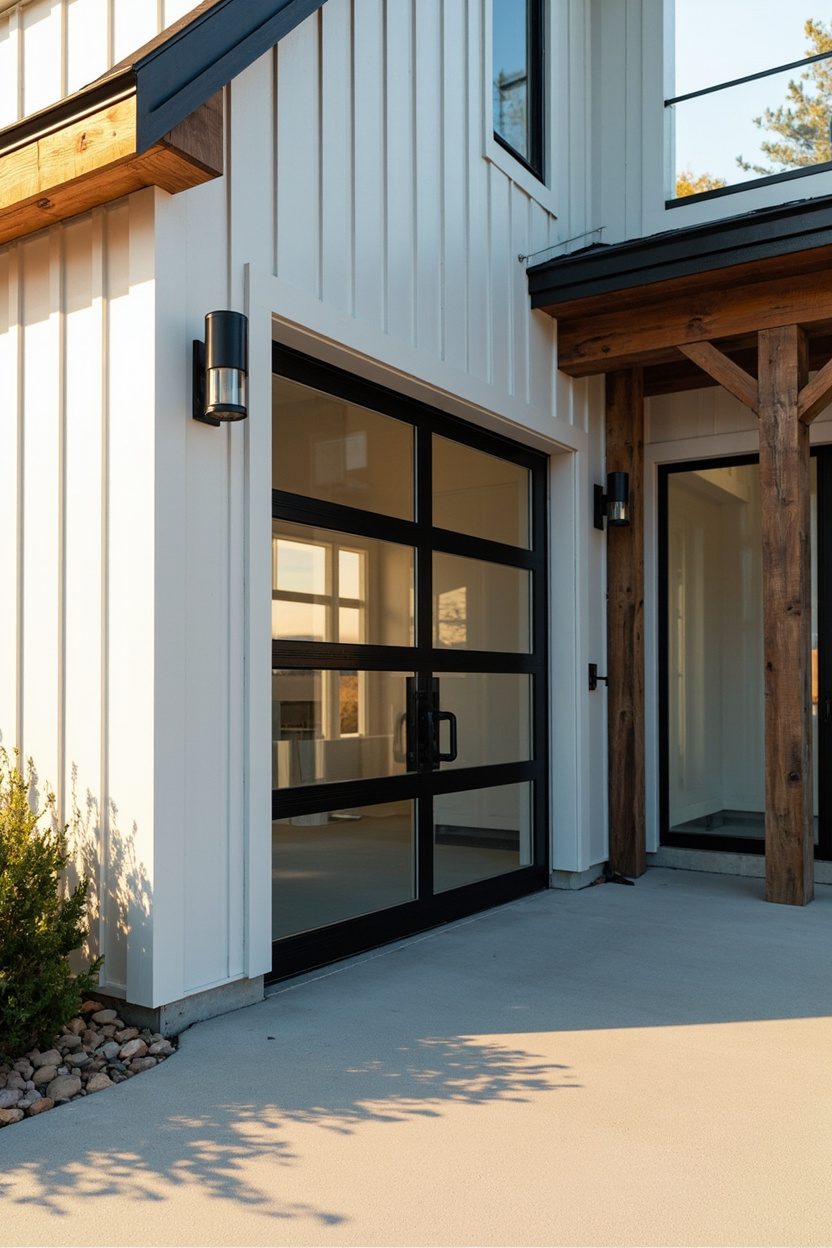
Glass garage doors introduce modern transparency that lightens heavy farmhouse massing, especially on long, horizontal elevations.
Select frosted or seeded glass options to preserve privacy while admitting diffuse daylight into the garage workspace, and pair with a dark metal frame for contrast.
Keep sectional proportions in scale with the house, choosing wider panes and thinner mullions for a contemporary, not fussy, appearance.
Ensure thermal performance by specifying insulated frames and double-pane units, because single-pane glass creates condensation and energy loss on both extremes of temperature.
What to Focus On?
- Use frosted or translucent glass to balance light and privacy requirements.
- Choose dark, slim frames to echo window trim and roof accents.
- Specify insulated glazing and thermal breaks for year-round efficiency.
- Confirm local codes and wind-load ratings before ordering large panels.
For a related idea, see Mix Farmhouse And Modern In The Bedroom.
Final Thoughts
Modern farmhouse curb appeal is about balanced contrasts, where rustic materials meet refined details, and practical choices drive aesthetic cohesion.
Prioritize durable materials, true-to-scale architectural moves, and layered planting to create a welcoming exterior that lasts.
A useful follow-up is 14 Farmhouse Coffee Bar Ideas from a Small Corner to a Full Station.
FAQ
Decide first on the climate zone, then pick low-maintenance natives and textural perennials like nepeta, sedum, and ornamental grasses that create the relaxed, layered look modern farmhouse demands. Prioritize structure and year-round interest over seasonal color, and select three to five repeating species for cohesion.
Modern metal roofs, when installed over proper underlayment and with solid sheathing, are no noisier than asphalt shingles. The key is full-deck installation, sound-attenuating underlayment, and insulation in the attic, which together minimize perceived noise and improve thermal performance.
They can if you choose single-pane or non-insulated glass, but double-pane insulated units with thermal-break frames maintain energy performance similar to standard garage doors. Frosted or low-e coatings further reduce heat transfer and glare while preserving daylighting benefits.
Focus on high-impact, low-cost moves: paint the front door, swap hardware for matte black fixtures, add layered planting with inexpensive perennials, and install light-grade architectural trim to frame windows and entryways. Small material upgrades in key locations often deliver the biggest perceived value.