


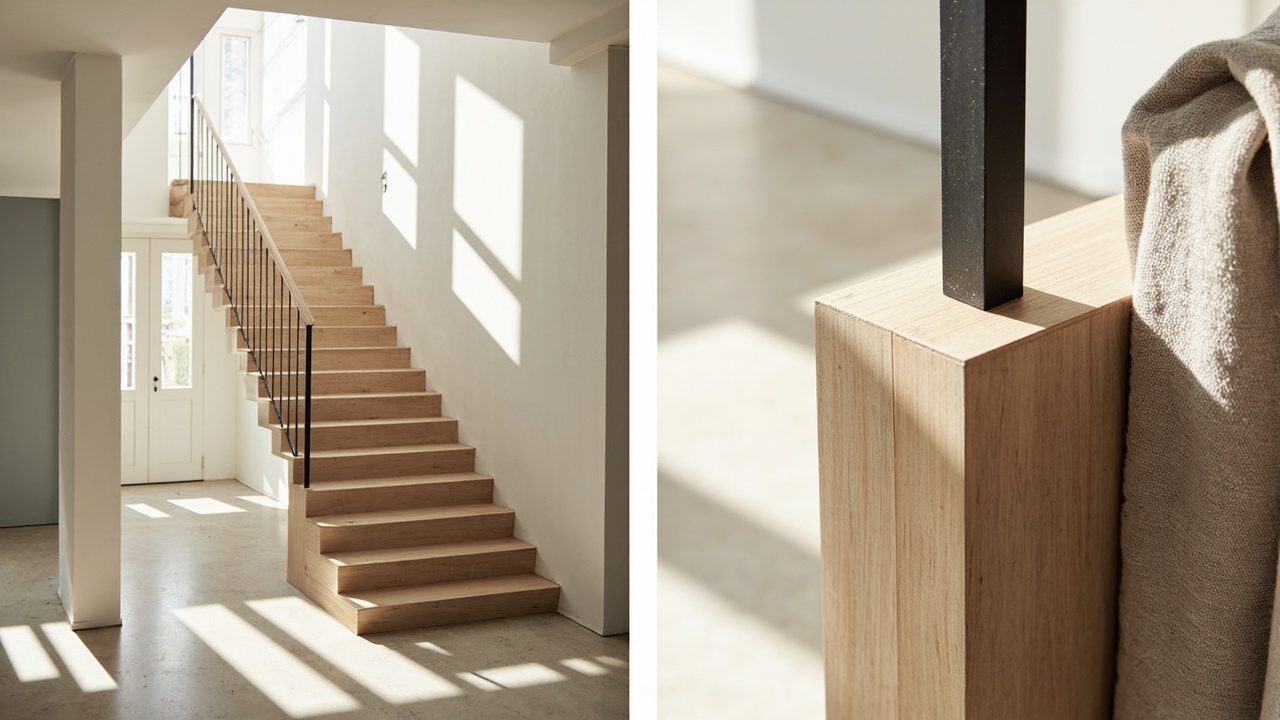
Make your staircase more than a route between floors, make it the signature moment that sets the tone for the whole home.
These ideas focus on visible decisions that change perception, from finish choices to exact placement of accents, so you get a gallery-ready result without guessing.
- 1. Statement Staircases as Bold Color Focal Points
- 2. Maximalist Patterned Stair Riser Treatments
- 3. Warm Wood Tones Across Staircase Styles
- 4. Mixed-Material Metal and Wood Balustrades
- 5. Floating Staircases for Light-filled Spaces
- 6. Curved Staircases with Soft Upholstery Details
- 7. Monochrome Staircases in Anthracite and White
- 8. Statement Lighting for Staircase Drama
- 9. Built-in Storage Beneath Stair Flights
- 10. Custom Railings with Sculptural Finishes
- Final Thoughts
1. Statement Staircases as Bold Color Focal Points
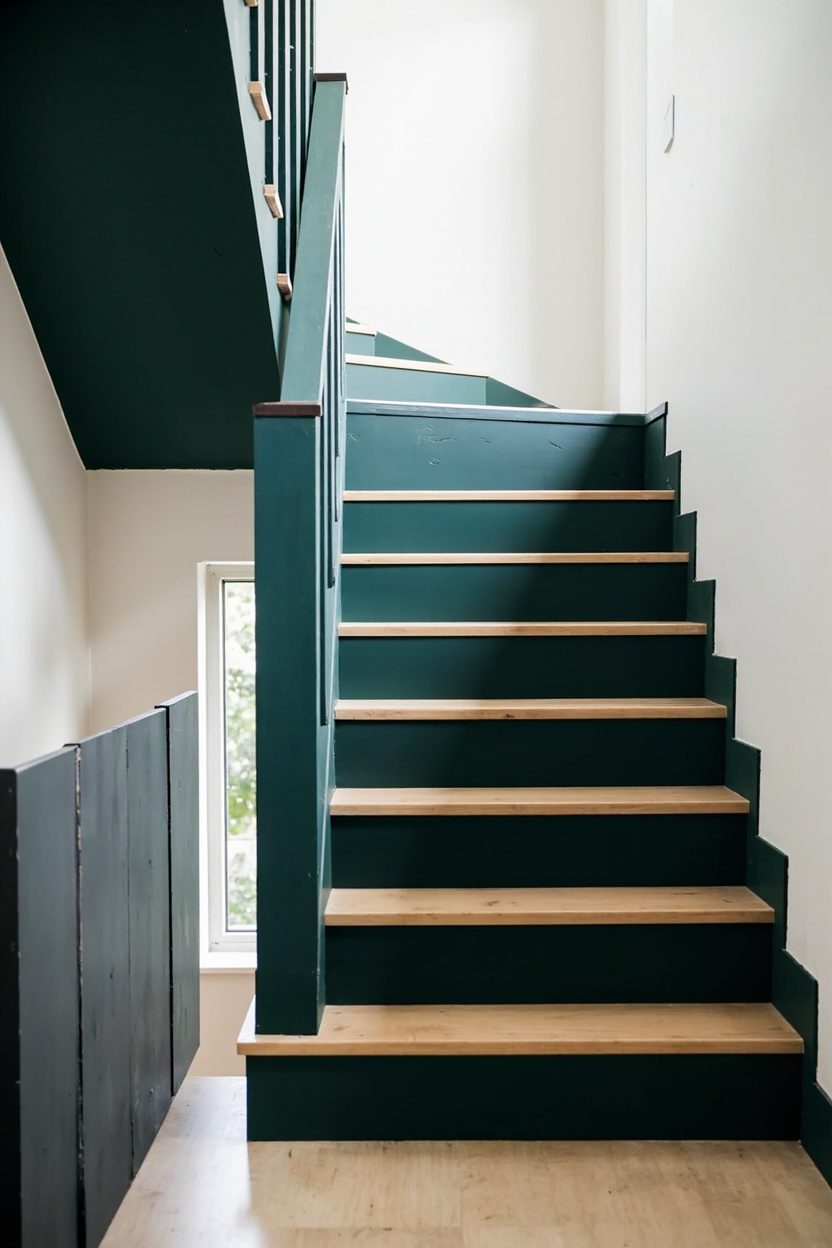
Painted staircases are the fastest way to brand a home. Choose a saturated hue that reads well from the landing, such as deep teal or oxblood, and extend that color onto the risers or underside for continuity.
For balance, cap the treads in a contrasting natural material, like clear-oiled oak, keeping the walking surface durable and the color purely visual.
Avoid painting every element; a common mistake is over-saturating newels and handrails, which flattens the effect; instead, keep the balustrade in a neutral metal or wood tone and use color on the stringer and risers to create a strong vertical statement.
2. Maximalist Patterned Stair Riser Treatments
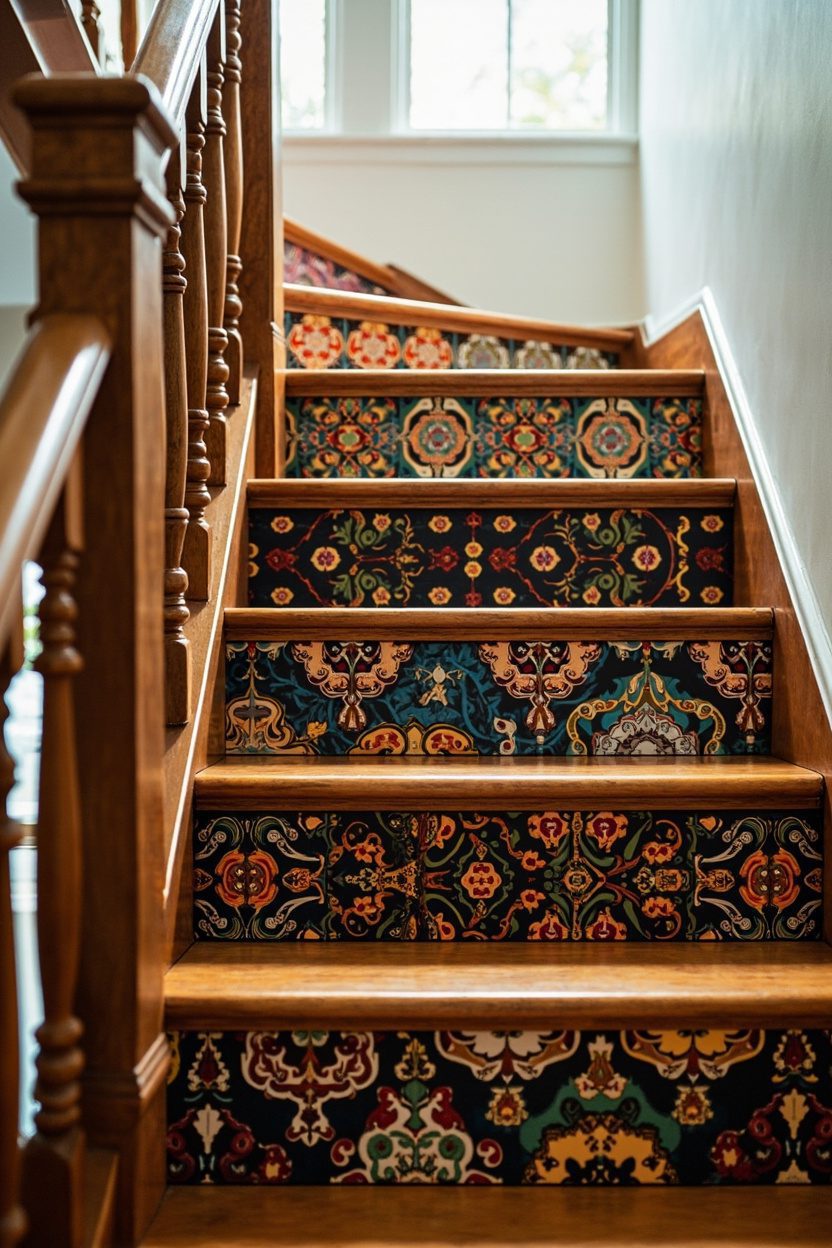
Riser patterns deliver big personality in a narrow footprint, use encaustic-style tiles or hand-painted motifs, and align complex repeats so the pattern hits the same point on each step for a cohesive look. If the budget is tight, install patterned wallpaper on risers protected by a clear, water-based varnish. This keeps costs down and provides wipeable durability.
Scale matters; pick a pattern size that reads from the landing, not just from close-up, and keep the tread material simple, such as matte porcelain or painted wood, to avoid visual competition and a chaotic feel.
3. Warm Wood Tones Across Staircase Styles
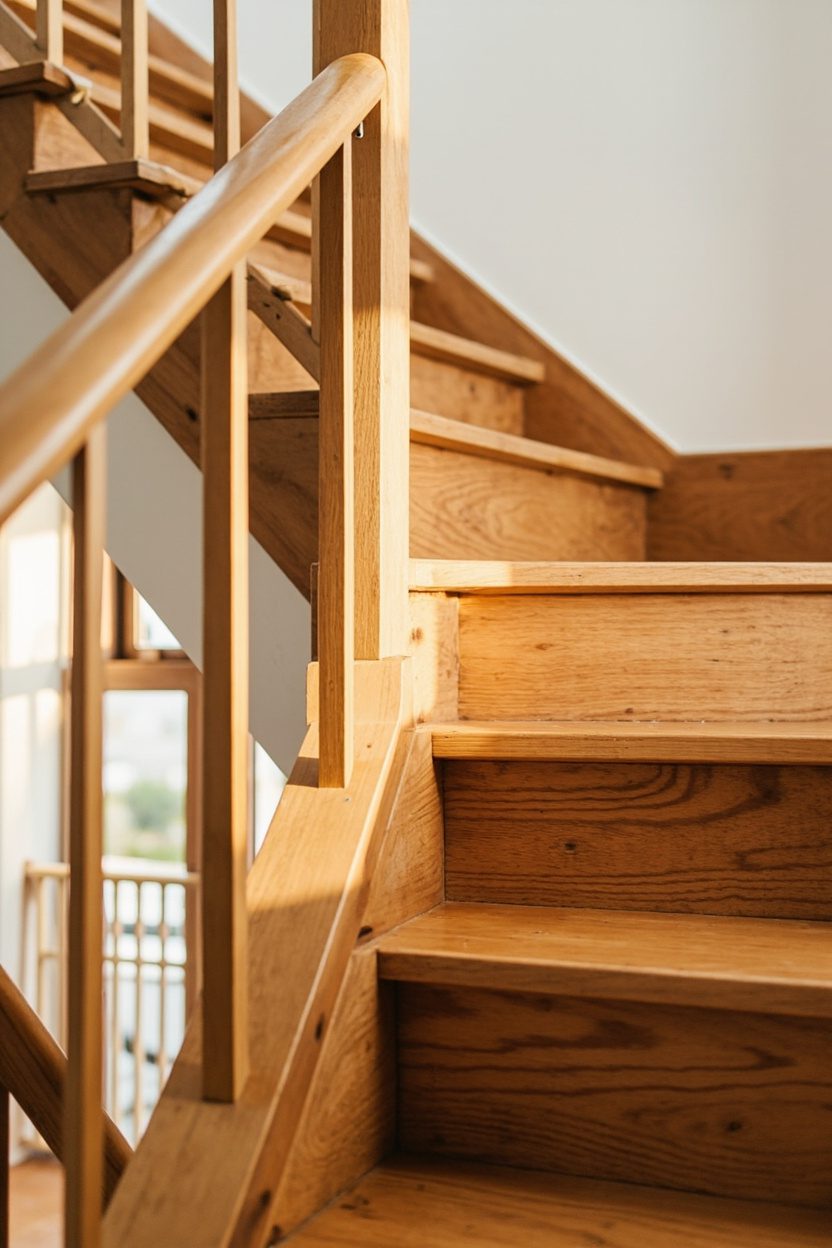
Wood remains the unifying, cozy finish for 2026 staircases. Choose one dominant wood tone across treads, handrail, and skirting for a built-in look, varying only in sheen to introduce subtle contrast. For mixed-material homes, pair warm walnut treads with slim, anthracite metal balusters to maintain warmth while nodding to industrial accents.
Pay attention to proportion; a common error is using thin treads with a heavy newel. The result feels top-heavy; instead, match tread depth to handrail scale, typically 10 to 11 inches tread run, to keep the staircase feeling balanced and intentional.
Japandi Interiors and Boho Dining Room approaches both use the staircase as a visual bridge between styles, and for research on the trend toward expressive stairs, see this write-up from Yahoo on the rise of stylish staircases, which tracks how designers are treating stairs as focal points:
4. Mixed-Material Metal and Wood Balustrades
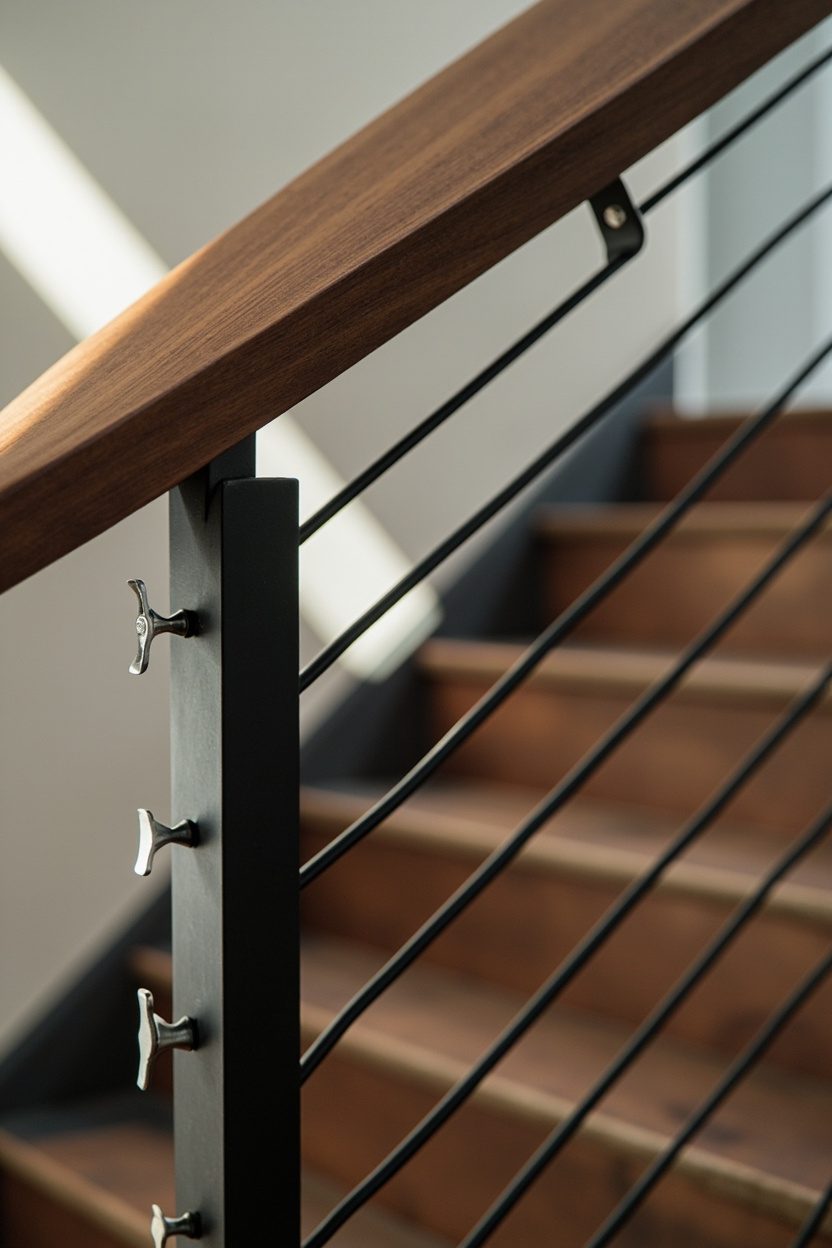
Pairing warm timber handrails with slim metal balusters creates an intentional contrast that reads modern, yet lived-in. Use a hardwood like walnut or oak for the rail, at a 40–45mm width, and powder-coated steel balusters in anthracite for durability, spacing them no more than 100mm apart to meet safety codes while keeping rhythm and transparency.
A common mistake is matching every finish, which flattens the design, so deliberately vary textures, for example, a brushed metal post with a satin wood rail, to add depth and guide the eye up the flight.
5. Floating Staircases for Light-filled Spaces
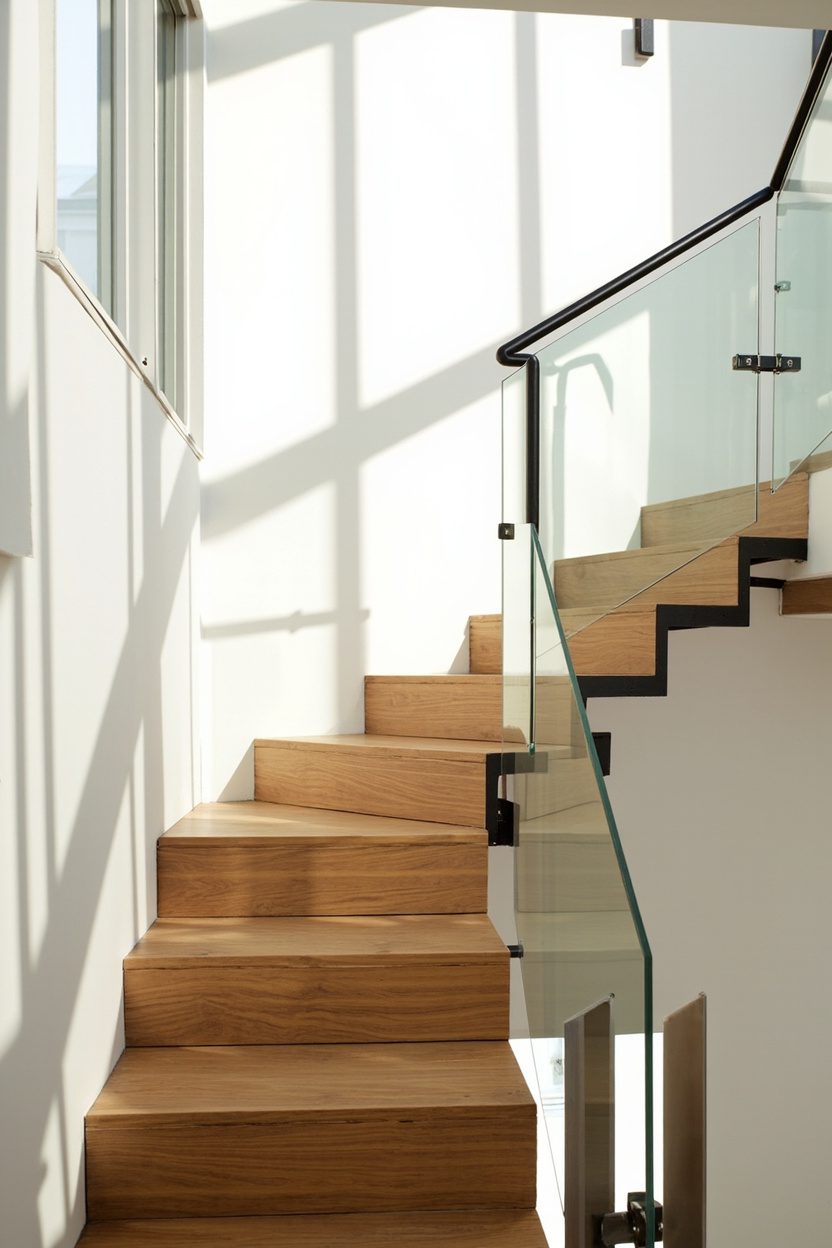
Floating treads anchored to a concealed steel stringer open sightlines and let daylight travel through, which suits narrow or modern living areas where you want visual space.
Specify treads of at least 40mm thickness in a light-stained hardwood, and ensure each tread has secure concealed fixings and a non-slip finish, especially if close to glazing or a pool area, like a stylish Plunge Pool Surround.
For installation in tight budgets, use single-stringer steel with timber-clad treads rather than full cantilevered construction; this saves on structural work and still achieves the floating aesthetic.
6. Curved Staircases with Soft Upholstery Details
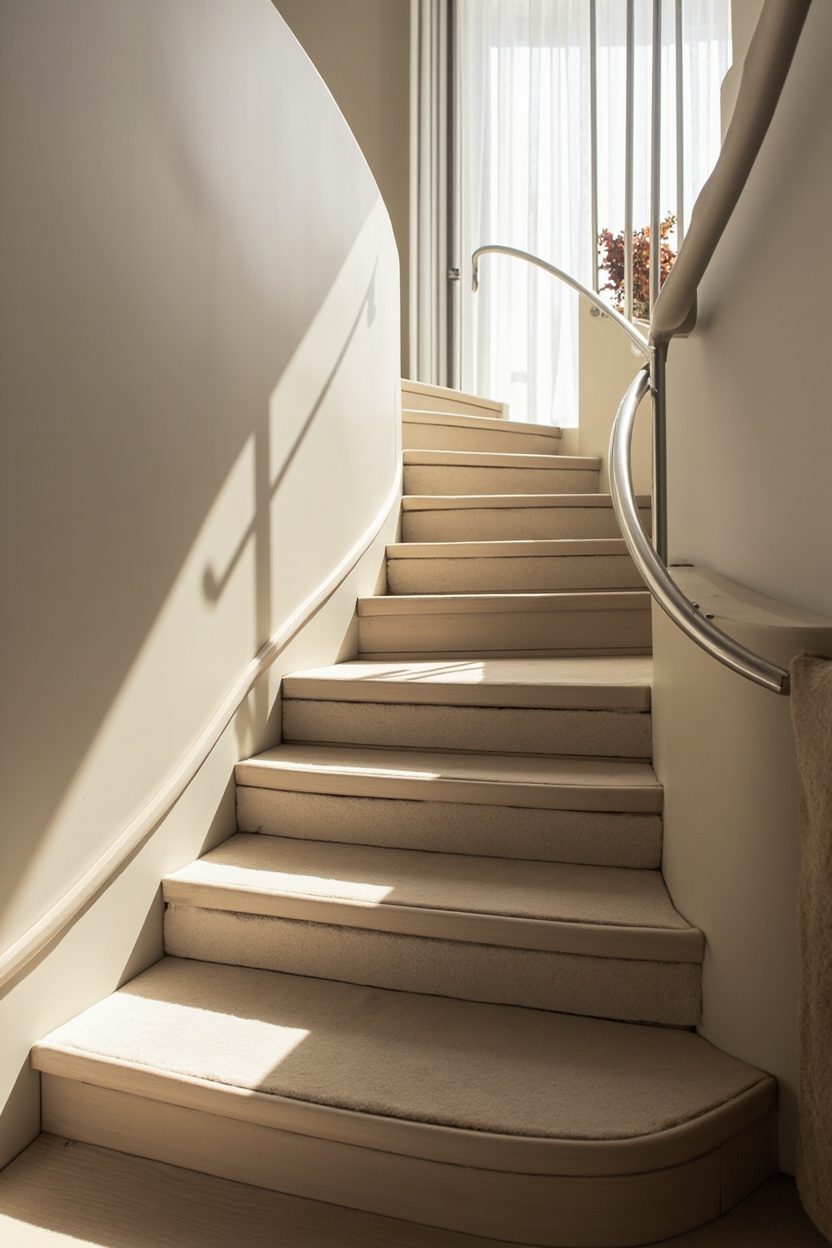
Integrate upholstery on the outer string or on built-in bench seating at landings to make a curved staircase feel tactile and comfortable.
Choose performance fabric in a neutral or muted pattern to withstand traffic and retain elegance. Keep proportions balanced, with a handrail that follows the curve at eye level, and upholster panels no wider than 400mm to avoid a chunky look. This subtle application elevates the staircase without overpowering adjacent decor.
If you want maximalist flair, echo the upholstery color in an adjacent wall panel or a runner, but avoid heavy pattern clashes.
A single statement fabric paired with muted stairs reads cohesive and intentional, as seen in contemporary staircase trends reported by industry experts.
7. Monochrome Staircases in Anthracite and White
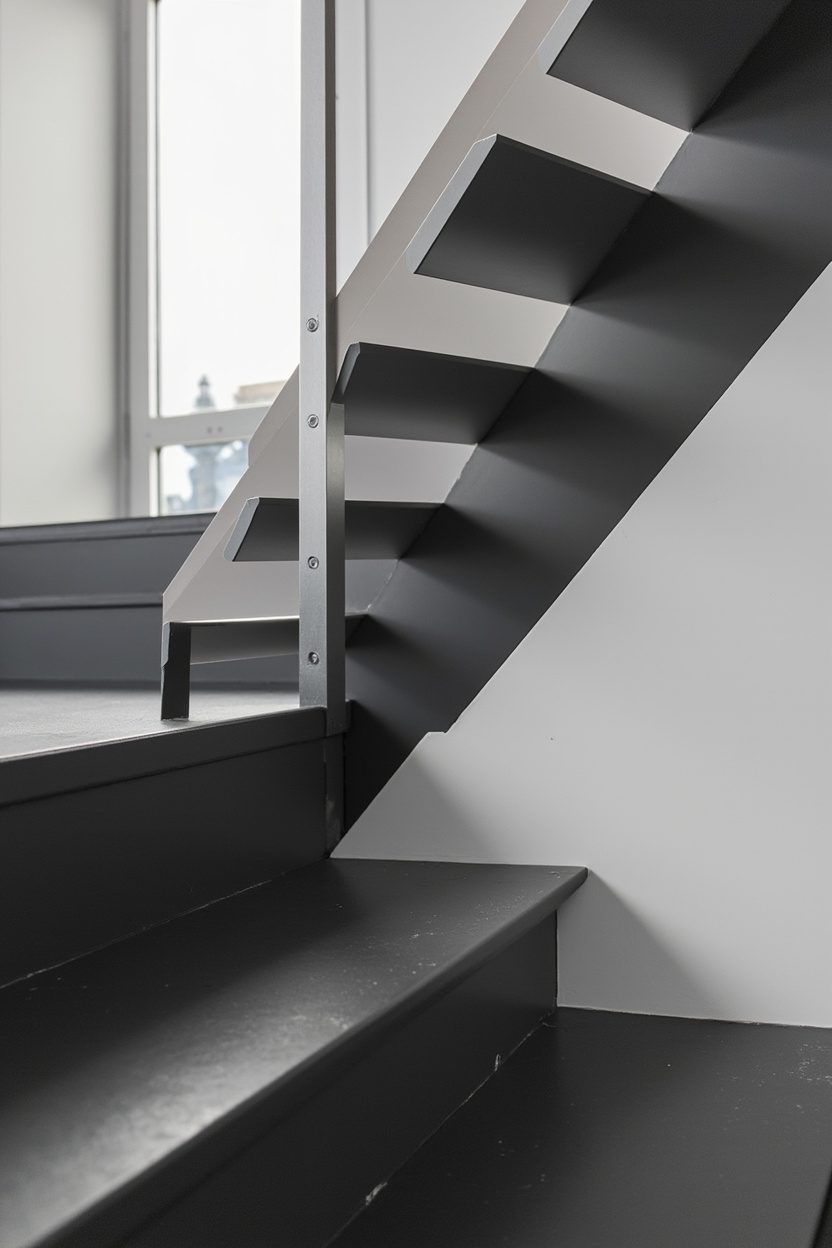
A crisp anthracite stringer with white risers creates a modern silhouette; the high-contrast pairing reads clean and tailored in both minimalist and maximalist homes.
Use satin paint on the treads for slip resistance, and keep the ratio roughly two-thirds dark to one-third light so the dark frame grounds the stairs while the white risers brighten each step visually.
Avoid overdoing black on balustrades; instead, choose slim metal spindles in anthracite to keep sightlines open, and add a narrow runner in a neutral weave if you need extra grip or sound dampening.
8. Statement Lighting for Staircase Drama
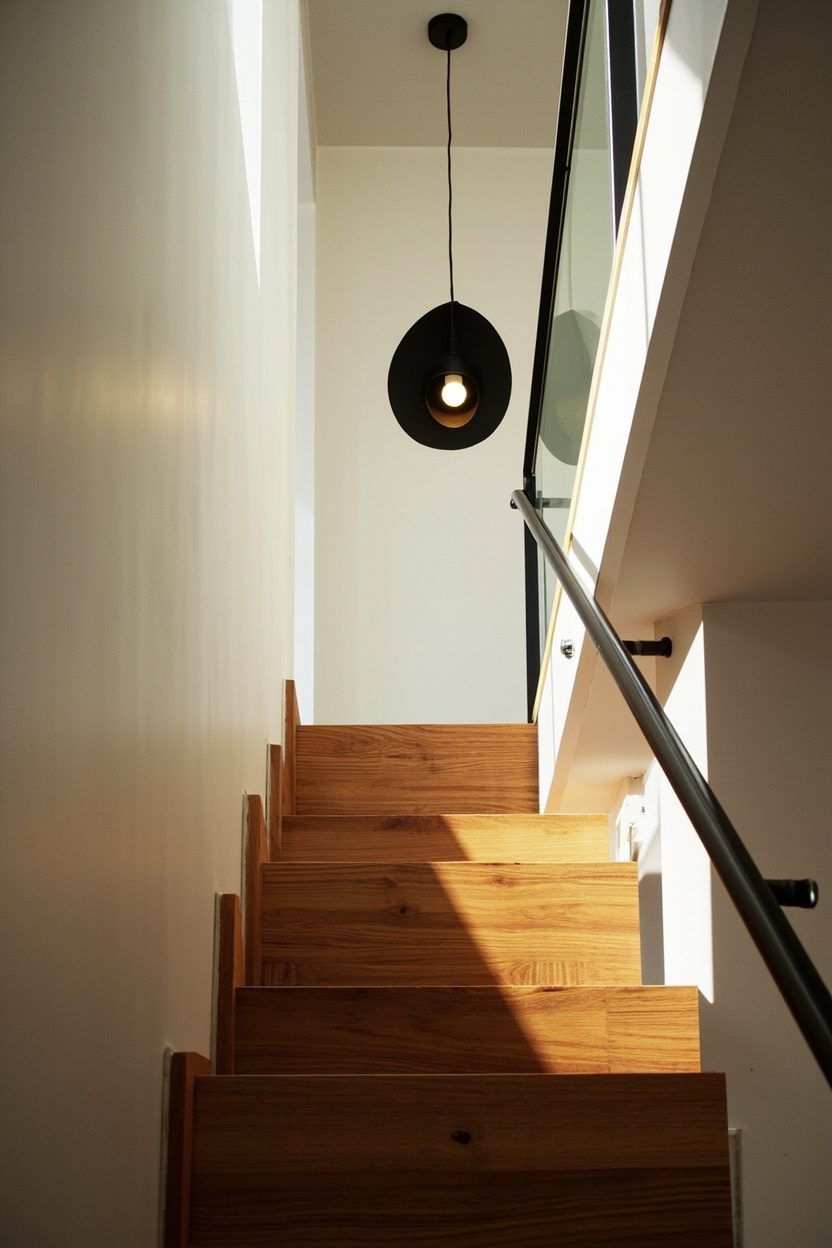
A cascade of pendant lights staggered over the stair void transforms a plain run into a cinematic focal point.
Place pendants so the lowest bulb sits about eye level when viewed from the landing. Combine warm LED temperatures with dimmable drivers to shift the mood, and position recessed uplights on each landing to wash the wall and show off texture, like plaster or timber cladding.
For tighter budgets, mount a linear LED at the handrail underside to create floating steps. This low-profile solution costs less than custom pendants, and it solves common safety mistakes where dramatic fixtures cast confusing shadows.
9. Built-in Storage Beneath Stair Flights
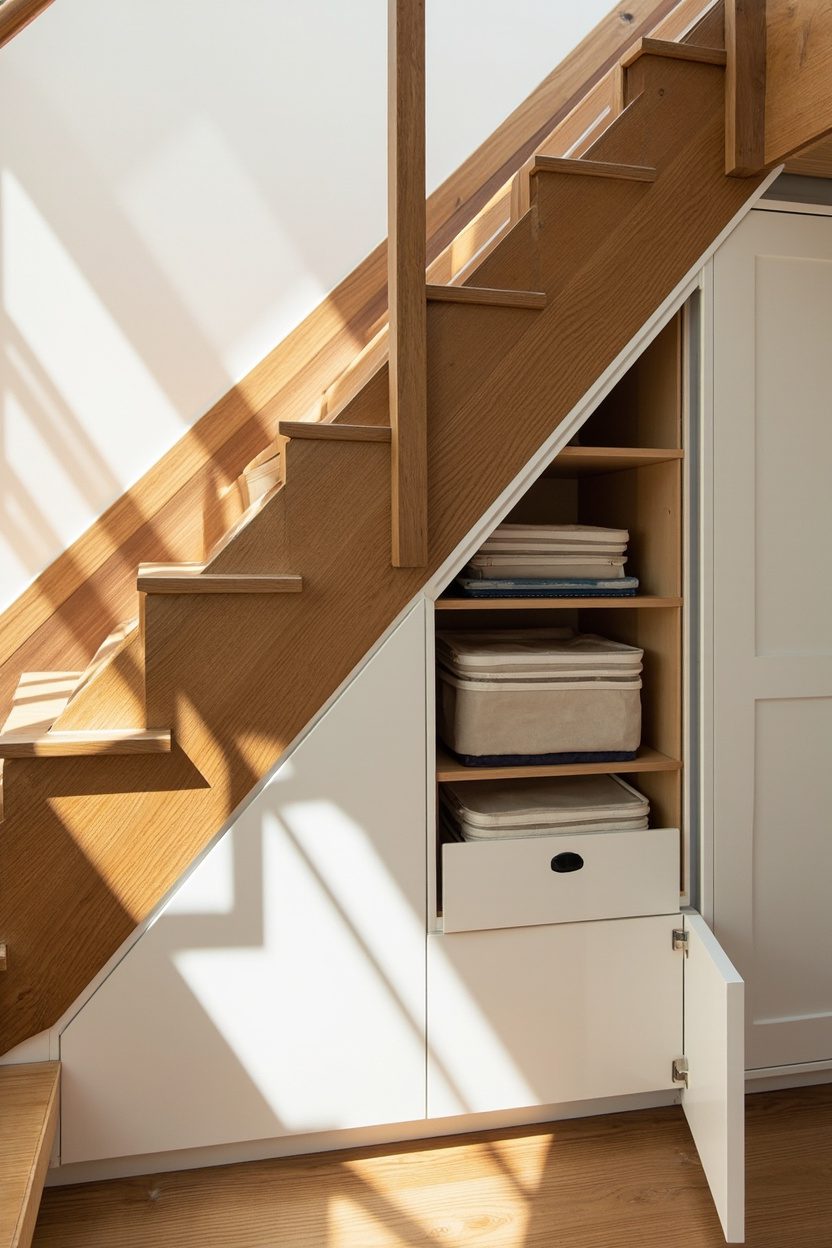
Turn the usually wasted triangular void into custom joinery with pull-out drawers sized to the riser height, specify full-extension runners and dividers to keep shoes and seasonal gear organized, and this keeps circulation tidy without a separate closet.
For open-plan homes, install a flush cabinet face in the same finish as the adjacent wall or a contrasting timber veneer to anchor the stairs visually. Aim for panels with push-to-open hardware for a seamless look.
When stairs are prefabricated, coordinate storage dimensions early with the stairmaker to avoid common mistakes like insufficient depth, and consider ventilated compartments if you store damp items like umbrellas or wet boots.
10. Custom Railings with Sculptural Finishes
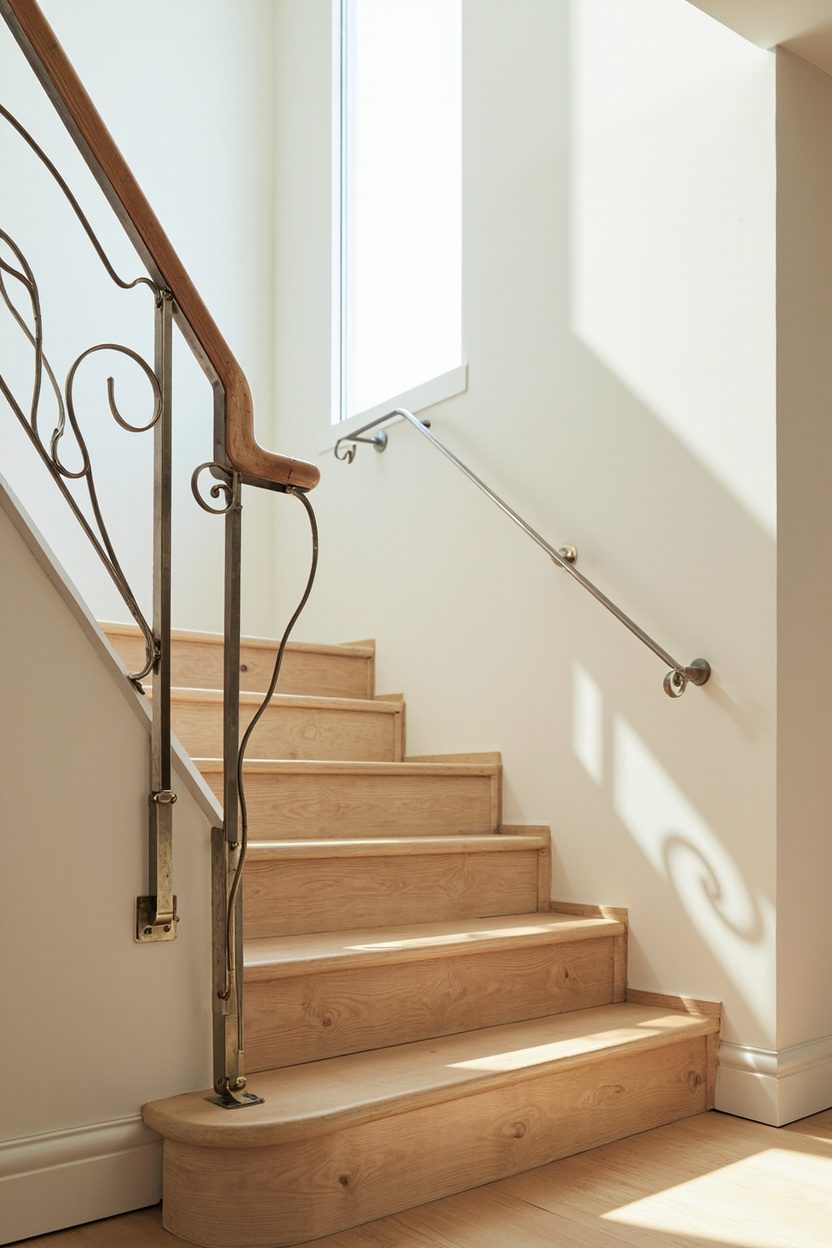
Custom metal or carved-wood railings turn a staircase into an artwork. Choose proportions so the balusters sit visually at one-third of the stair width for balanced sightlines.
Specify a powder-coated metal in anthracite for durability, or a hand‑stained walnut with a satin finish to read warm under indoor lighting, and avoid overly thin pickets that look flimsy on wide treads.
A bold option is to commission laser-cut panels or sinuous wrought-iron forms that curve with the stair, place a continuous handrail at 34 to 38 inches high for code compliance, and a comfortable grip.
If the budget is limited, fit a few sculptural panels at focal points, and use simpler spindles elsewhere to keep cost down without losing impact.
Final Thoughts
A staircase railing is both a safety device and a signature detail. Invest in one clear material or finish and repeat it elsewhere in the room for cohesion, and consult local code early to avoid costly rework.
Japandi Interiors and Boho Chic Decor show how railings can echo wider style choices.
You can pair this with ideas from 15 Low Deck Lighting Ideas from String Lights to Lanterns.