


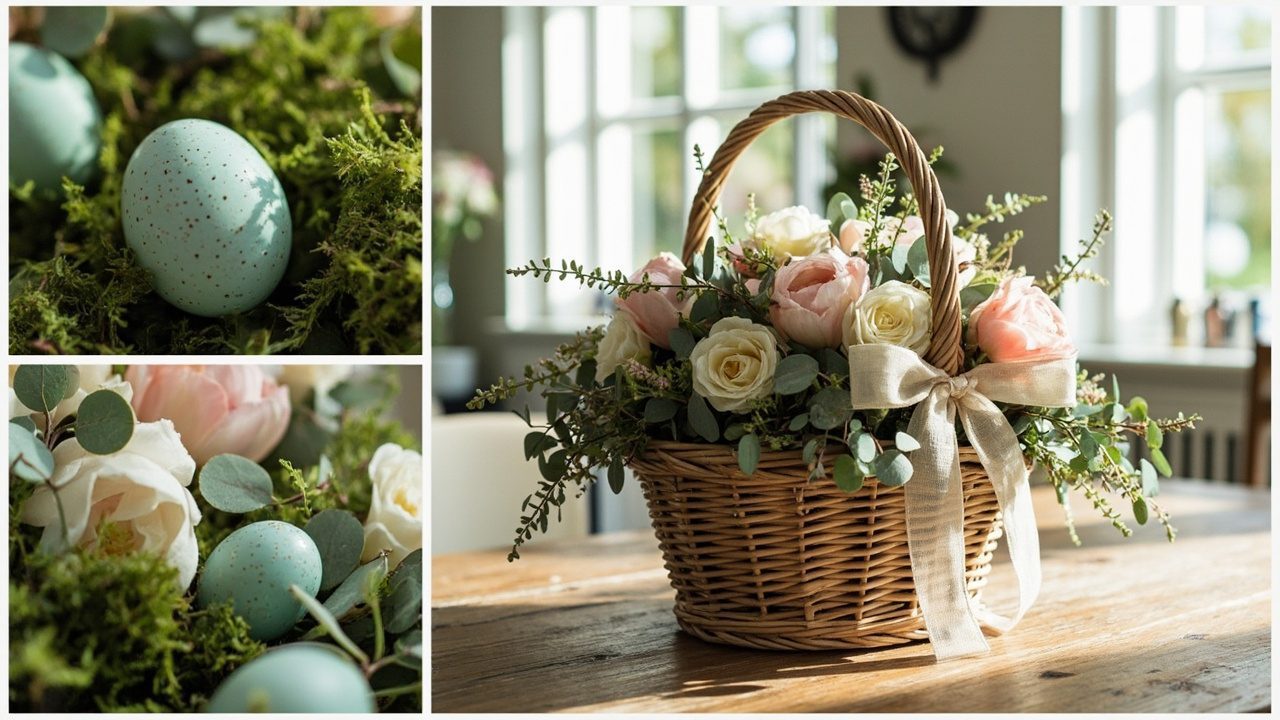
Easter baskets need not be sugar-only affairs. Swap marshmallows for texture, and you get a gift that looks edited, smells like spring, and lasts longer than a sugar rush.
These floral-forward baskets are designed to read like small bouquets, not throwaway party favors, so choose wrap, spacing, and stem length with care.
Think about the recipient and setting before you buy blooms. A child’s basket can be playful with painted carrots and hardy blooms, while an adult’s gift should favour structure and refined materials, like linen ribbon and a neutral palette to let the flowers sing.
- 1. Tulip-Filled Basket Bouquet
- 2. Mini Spring Garden Centerpiece
- 3. Floral Foam Nesting Basket
- 4. Ribbon-Wrapped Stem Bundle
- 5. Pastel Pom-Pom Accents
- 6. Mason Jar Flower Basket
- 7. Wildflower Meadow Basket
- 8. Succulent & Bloom Mix
- 9. Herb-Infused Floral Basket
- 10. Easter Egg Bloom Display
- 11. Dried Flower Keepsake
- 12. Bunny-Eared Flower Basket
- FAQ
- Final Thoughts
1. Tulip-Filled Basket Bouquet
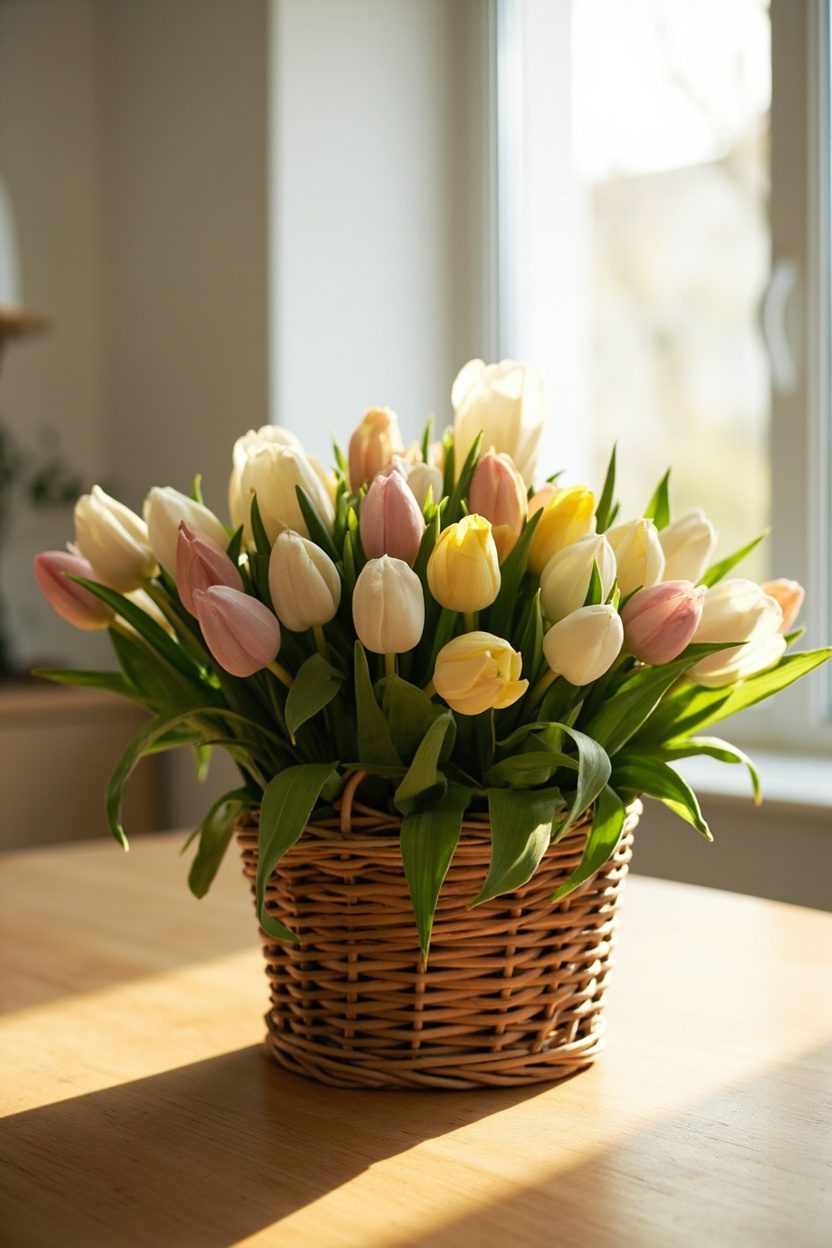
Tulips are the shorthand of spring, affordable in most seasons, and they photograph beautifully, which matters for gifts these days.
Choose a shallow, wide basket so stems can fan out without fighting for space, and trim stems to sit just above the rim for an effortless silhouette.
Limit the palette to two colors, such as cream and coral, to avoid visual noise and to keep production costs manageable on a budget tier.
Avoid overwatering at gifting, because excess moisture will rot the basket base; instead, use a tight water vial or a wrapped florist foam pad for each tulip cluster.
What to Focus On?
- Stem length, trim to 6–8 inches for a standard small basket, to maintain proportion.
- Use a narrow vase insert or water tubes, one per bunch, to prevent soggy liners.
- Choose strong single-stem varieties like Darwin hybrids for longer vase life.
- Tie with a grosgrain ribbon, not curling ribbon, to elevate the look.
2. Mini Spring Garden Centerpiece
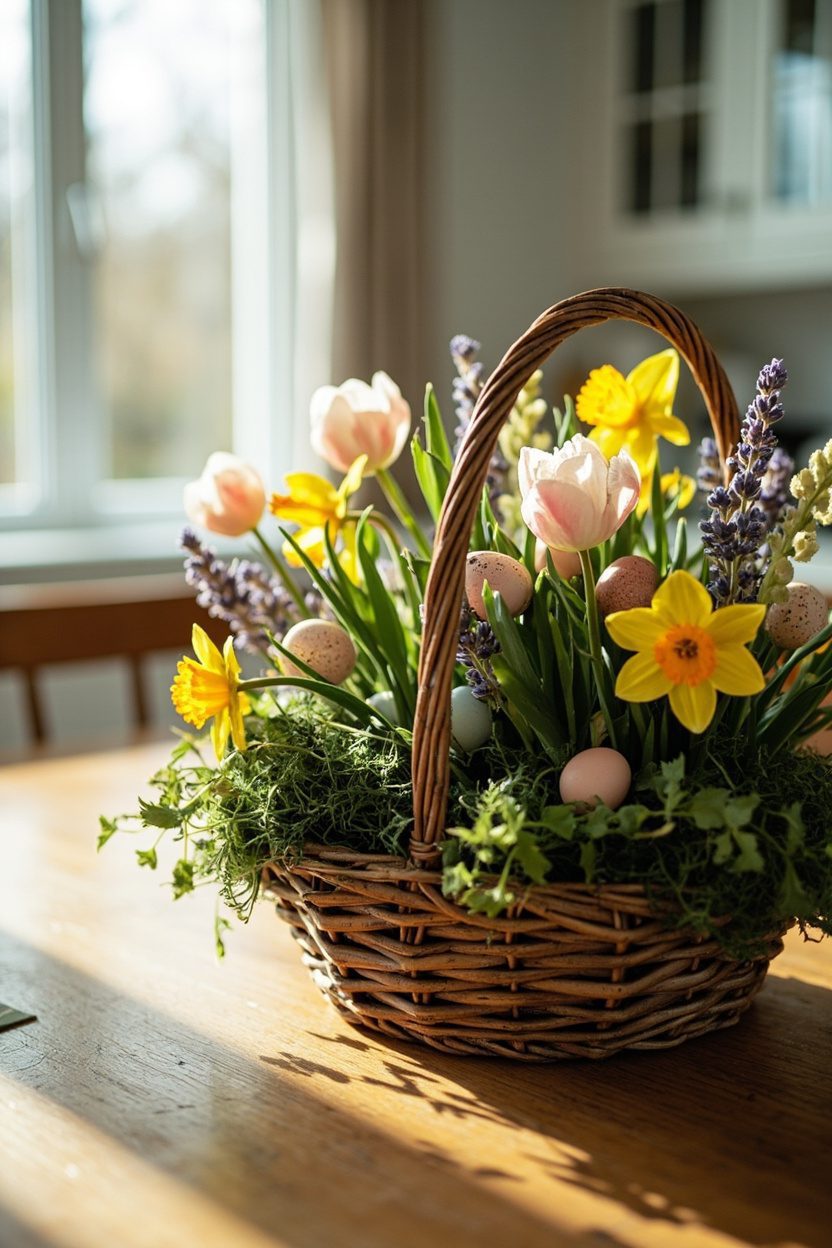
This idea turns a basket into a pocket-sized spring garden, mixing small bulbs, succulents, and cut blooms for layered texture.
Start with a low, wide basket and line it with plastic, then add a shallow tray of potting mix for bulbs and succulents to stay planted and stable.
Include a repeating accent, such as blue grape hyacinths, to anchor the composition and add cohesion across varied plant textures.
Budget-wise, swap one or two cut stems for potted mini-plants, which give longevity and a living gift the receiver can replant after Easter.
Essential Elements
- Plastic-lined basket with drainage tray to protect the weave and allow watering.
- Mix cut flowers like ranunculus with potted succulents for contrast and staying power.
- Use sphagnum moss to cover soil edges for a polished, gardened look.
- Place a small care card with watering instructions to extend the gift’s life.
3. Floral Foam Nesting Basket
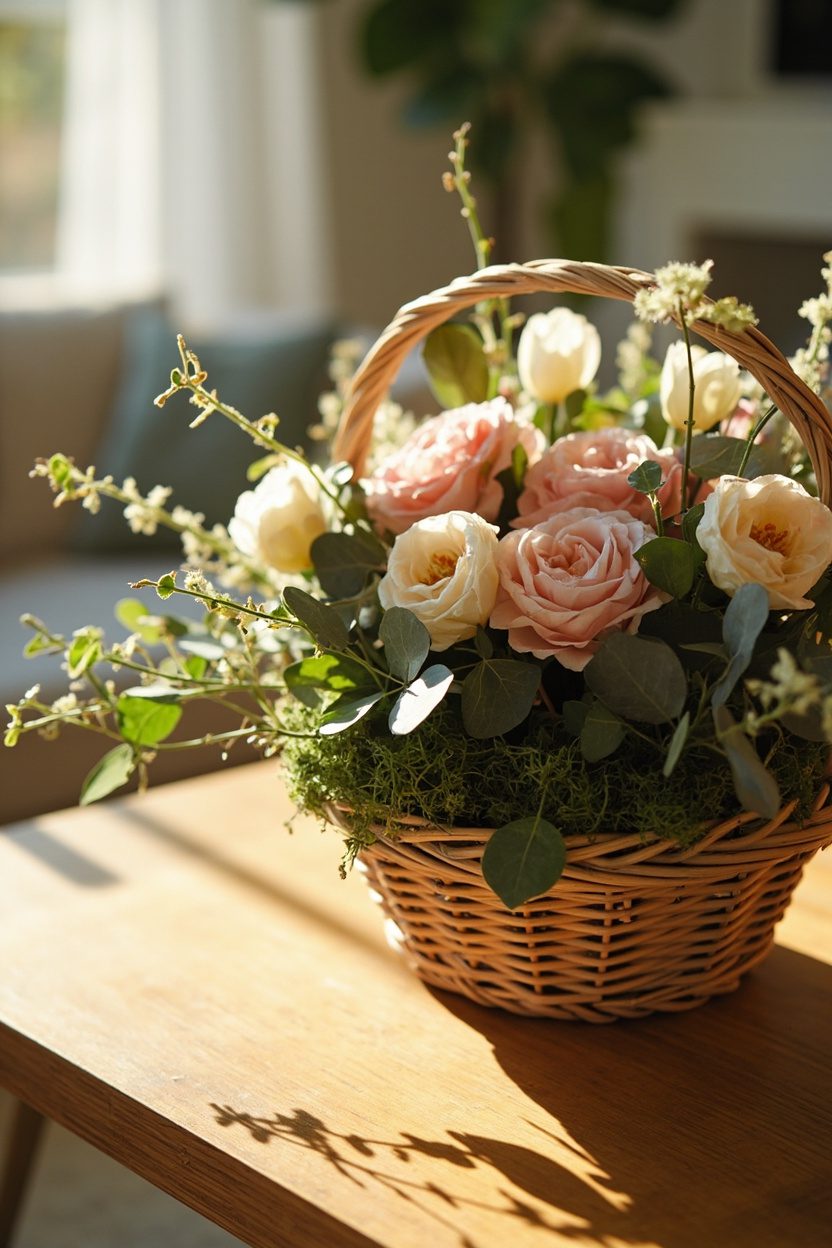
Floral foam lets you lock stems in place and create compact, sculptural arrangements that travel well, ideal for gifting by hand.
Select a biodegradable floral foam if possible, and cut it to fit snugly in the basket base to prevent slippage during transport.
Design in tiers: low filler like waxflower at the rim, mid-height focal blooms such as spray roses, and one taller accent like a single tulip or peony for vertical interest.
Watch for weight, if sending by post; dense foam plus water can make parcels heavy, so consider dry foam with hydration packs for shipping.
Styling Blueprint
- Soak the foam fully, then squeeze out excess to prevent drips inside the basket.
- Use shorter stem lengths, 3–5 inches, to keep the arrangement compact and sturdy.
- Seal the basket interior with a clear plastic liner to protect natural fibres.
- Group like colors together in small clusters for a modern, editorial look.
4. Ribbon-Wrapped Stem Bundle
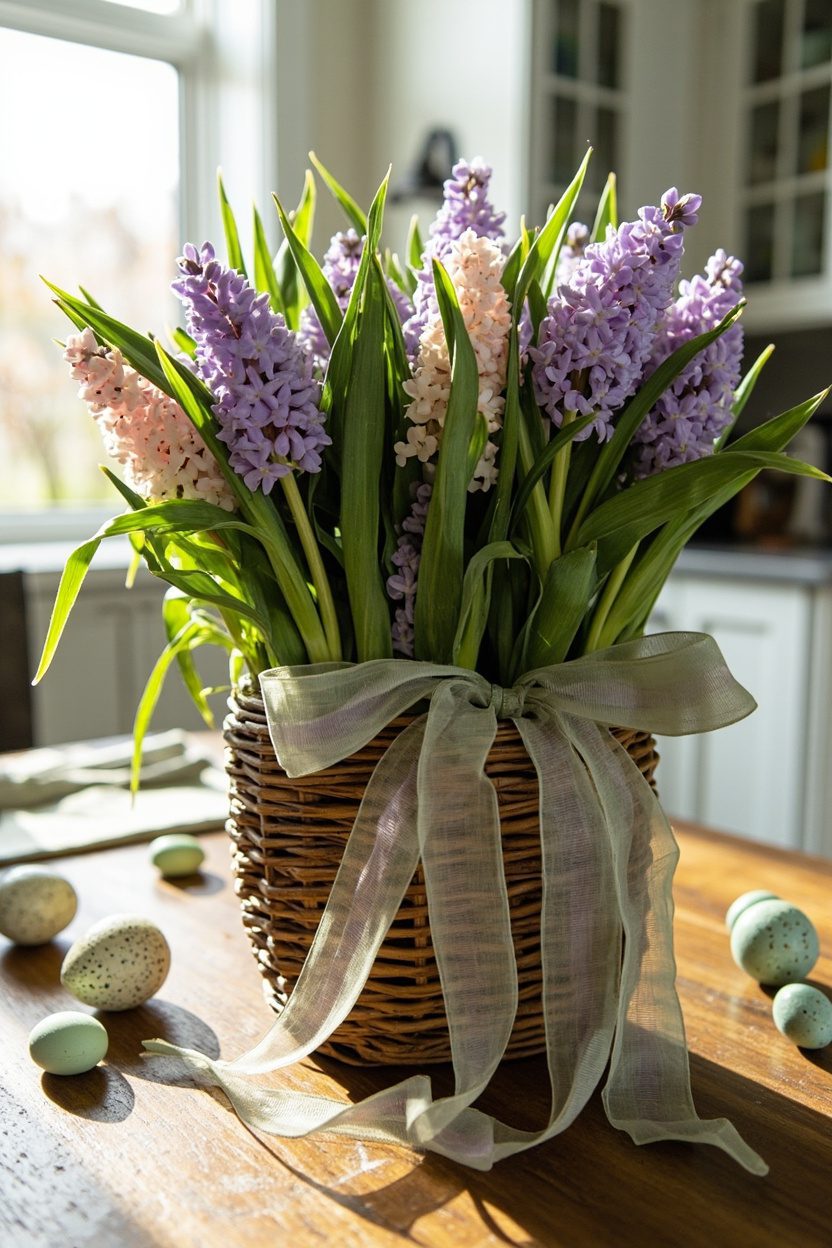
A neat cluster of stems tied with ribbon reads intentional, not tossed-together, which is crucial when flowers share space with toys or treats.
Choose sturdy stems like tulips or ranunculus, trimmed to a uniform 8–10 inch length to fit most basket sizes without flopping over the rim.
Select ribbon of a contrasting texture, for example, grosgrain for a casual look or silk for a dressier gift, and secure with a discreet glue dot at the knot.
Avoid overloading with foliage, which makes ribbons disappear; keep foliage minimal so the ribbon remains the visual anchor.
Styling Blueprint
- Cut stems to 8–10 inches, remove lower leaves, and group 6–9 stems for balance.
- Use a 1–1.5 inch wide ribbon, wrap twice, and finish with a square knot secured by a glue dot.
- Mix one focal bloom with two supporting florals to maintain shape and color clarity.
- Place floral tape or a small wet pack inside the basket base to keep stems hydrated.
5. Pastel Pom-Pom Accents
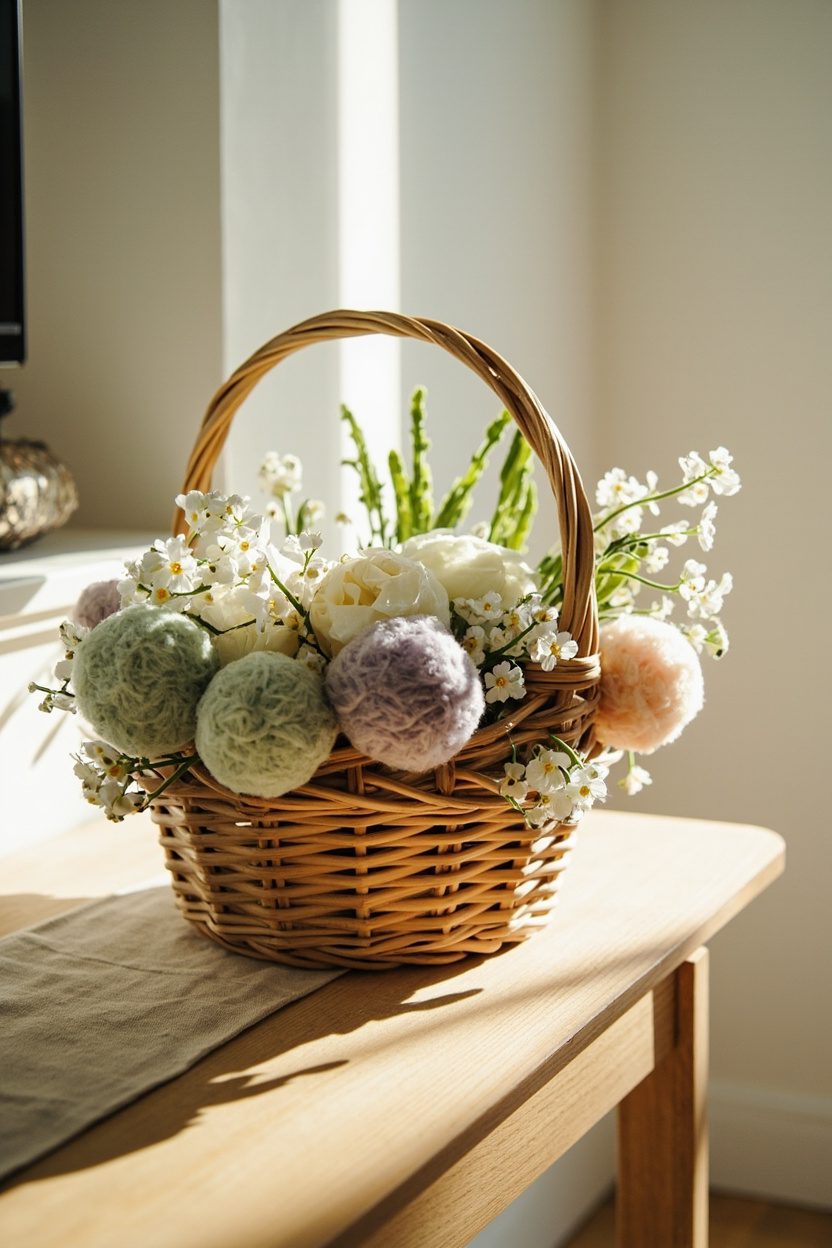
Add soft, felt, or yarn pom-poms slipped onto toothpicks for a child-friendly pop that complements flowers without overshadowing them.
Match pom-pom colors to your palette, for example, mint, blush, and lemon, and limit to 6–8 pops to avoid a craft-store look.
Use shorter stems or compact blooms like spray roses so pom-poms sit above or between flowers instead of hiding them.
Keep budget low by making pom-poms at home from yarn scraps, a tactic that gives texture while keeping the overall design under a modest price point.
Essential Elements
- Create 6–8 pom-poms, attach to 4–6-inch toothpicks, and space evenly around the basket perimeter.
- Select compact flowers, such as spray roses or mini carnations, to balance with pom-pom scale.
- Tie a coordinating ribbon to the basket handle to repeat the pastel theme.
- Anchor stems in a small floral foam disk or wet pack to hold pom-pom placements steady.
6. Mason Jar Flower Basket
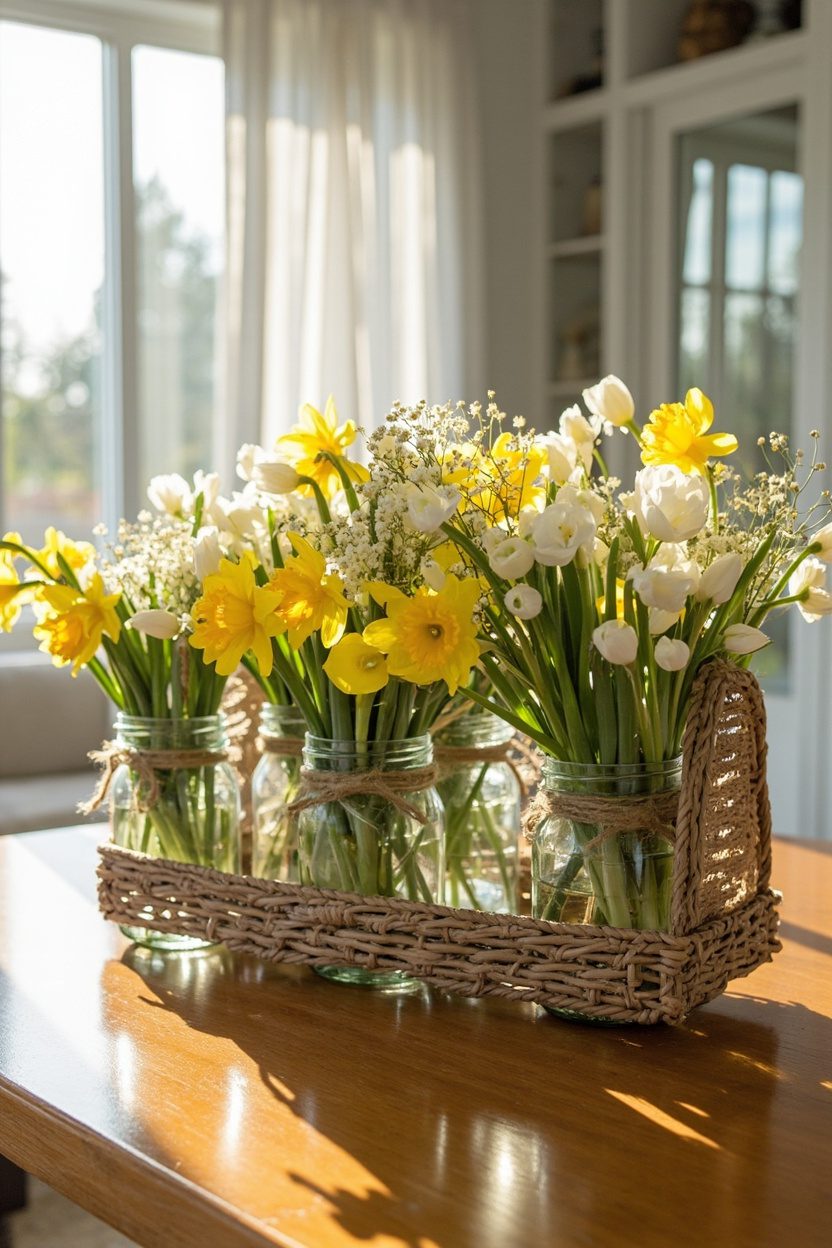
Swap a standard basket liner for a mason jar cluster, which gives a polished, rustic aesthetic and makes watering a one-step task.
Group three small jars inside a shallow basket, use short-stem blooms like daisies or tulips, and stagger jar heights for visual rhythm.
Select clear mason jars for a casual farmhouse look, or paint jars in chalky pastels for a softer, Easter-appropriate palette.
Avoid overcomplicating the base, keep the basket shallow so jars are the hero, and consider including a small tag with flower care notes.
What to Focus On?
- Use three mason jars of varying heights, each filled with 1–2 inches of water and a few stems for freshness.
- Choose durable blooms like chrysanthemums or tulips that tolerate jar-style placement well.
- Secure jars with a thin layer of sphagnum moss or shredded paper to prevent shifting in the basket.
- Paint or tie twine around jar necks to match ribbon accents, keeping the finish cohesive without fuss.
7. Wildflower Meadow Basket
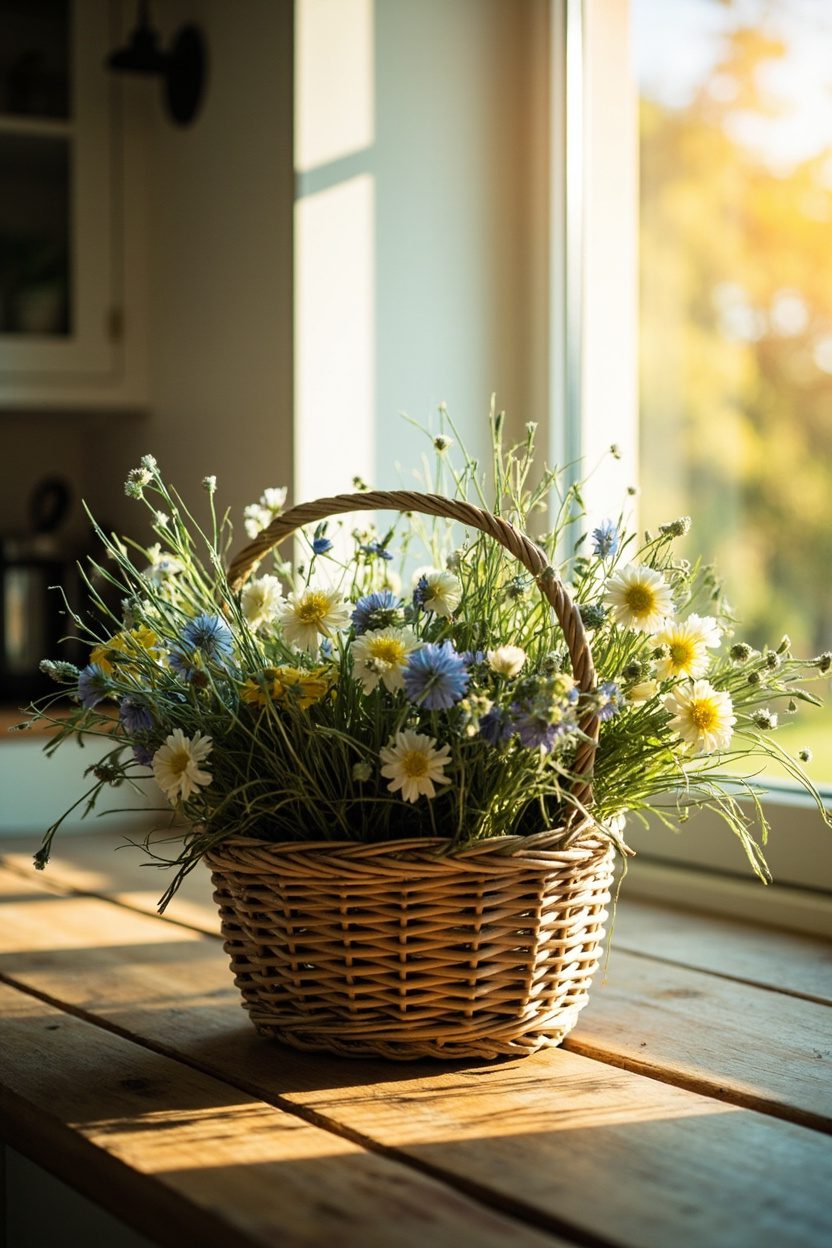
A loose, airy arrangement mimics a meadow, with mixed stems left at varied heights to create movement and a natural silhouette.
Choose a low-cost wicker basket, roughly 12–14 inches across, and line it with floral foam to hold stems at angles without sagging.
Pick English daisies, cornflowers, cosmos, and small sprigs of baby’s breath, keeping a palette to three dominant colors for cohesion.
Avoid over-pruning stems, leave seed heads on some flowers to add texture, and position taller blooms toward the back for depth in small baskets.
Styling Blueprint
- Use floral foam soaked in water, trimmed to fit the basket cavity for secure placement and longer life.
- Group three of each flower variety, staggering heights for an effortless, meadow-like rhythm.
- Add a few grass stems or seedheads for scale and to prevent a too-polished look.
- Keep palette to three colors, with one neutral filler to avoid visual clutter.
8. Succulent & Bloom Mix
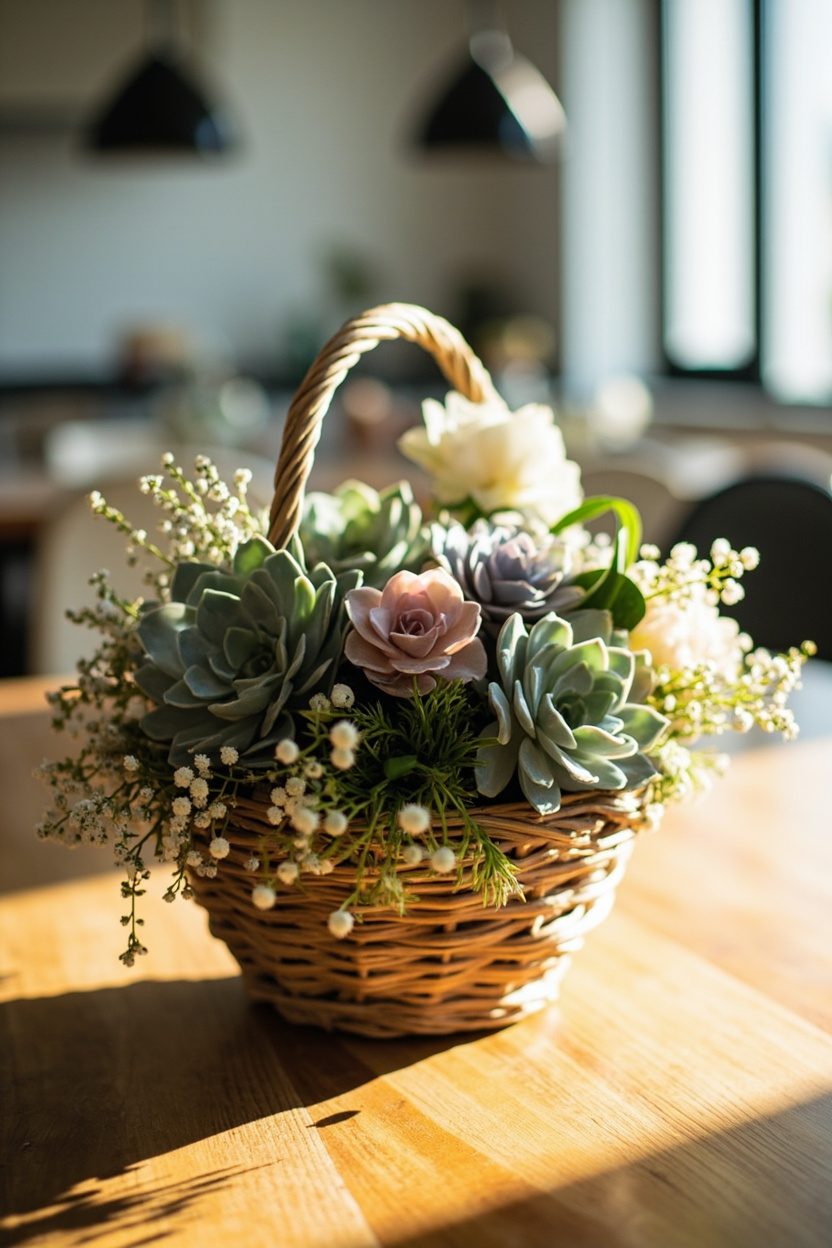
Combine hardy succulents with a few showy, long-lasting blooms to create a modern, low-maintenance basket centerpiece.
Select succulents like echeveria, sedum, or haworthia planted in small clumps, paired with spray roses or ranunculus for contrast in texture and form.
Use a shallow, wide basket lined with a plastic liner and fast-draining soil mix, rather than floral foam, so succulents stay healthy after arranging.
Be precise about watering: water sparingly at the base, avoid wetting petals, and include a small drainage layer to protect the basket material.
Essential Elements
- Shallow basket with plastic liner, filled with gritty succulent potting mix for drainage.
- Plant succulents in clusters of odd numbers, add 2–3 focal blooms tucked among leaves.
- Keep arrangements low, 4–6 inches tall, for tabletop stability and to showcase texture contrast.
- Water at the soil level only, roughly once every 7–10 days, depending on humidity and light.
9. Herb-Infused Floral Basket
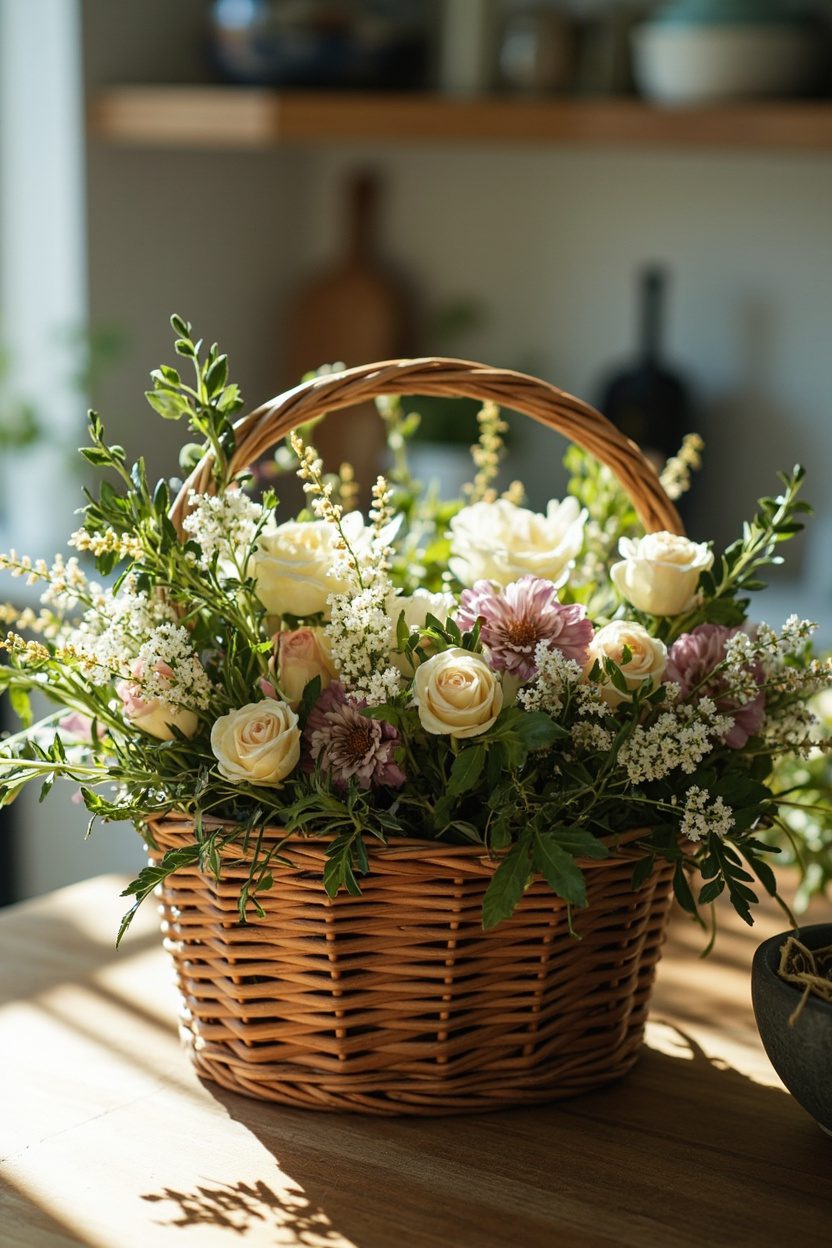
This concept blends fragrant culinary herbs with soft spring blooms, delivering scent, utility, and a lived-in aesthetic.
Choose rosemary, thyme, and mint for structure and aroma, pairing them with lavender, small tulips, or lisianthus for color and delicate form.
Use a medium basket with a removable liner to allow for occasional harvesting, and arrange herbs in the back or center where stems can be trimmed without disturbing blooms.
Mind plant compatibility, keep herbs upright and sun-facing, and avoid heavy, waterlogged soil that will rot both herbs and cut flowers.
What to Focus On
- Place herbs in the basket so they remain potted. Use small nursery pots inside the liner for easy watering and removal.
- Select blooms with sturdy stems, like spray roses or tulips, to withstand mingling with aromatic foliage.
- Trim herbs for use from the outer stems to maintain shape and keep flowers undisturbed.
- Position the basket near the kitchen or a sunny window, so scent and function are maximized.
10. Easter Egg Bloom Display
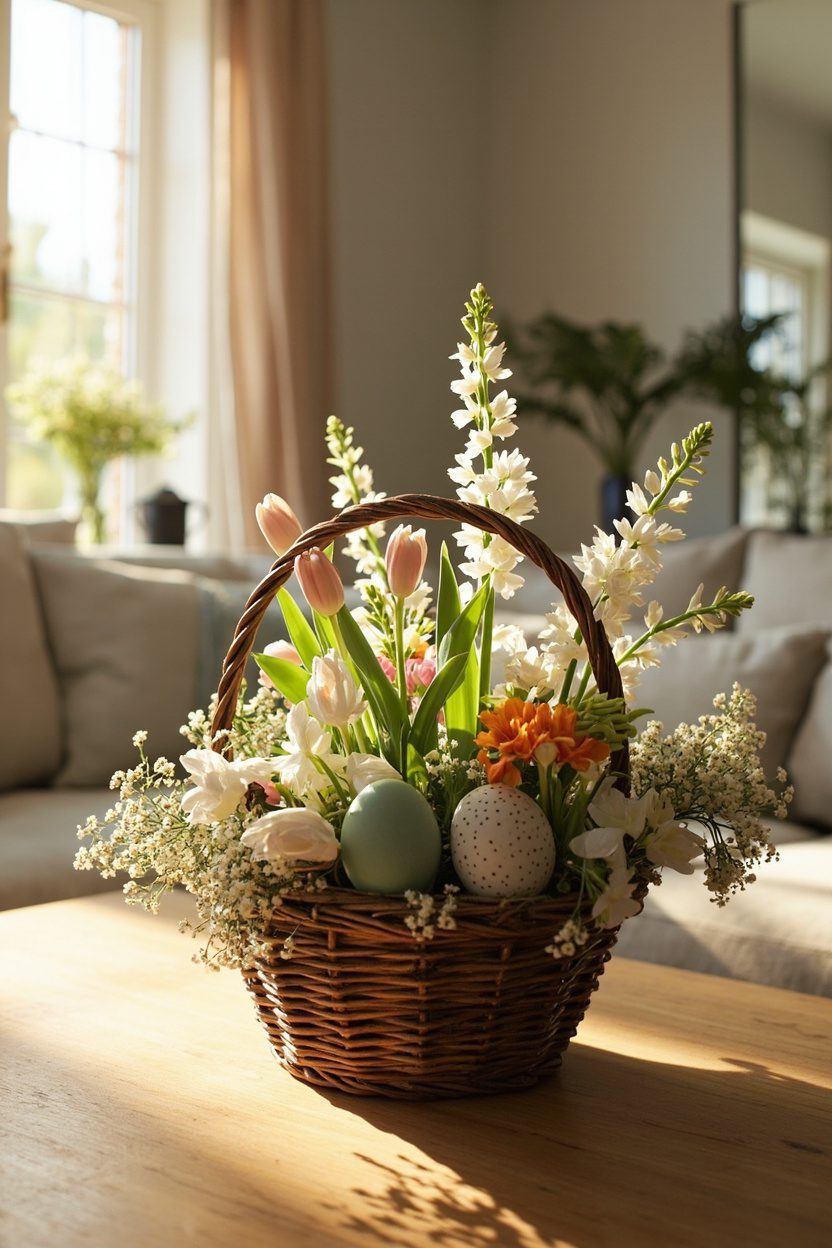
Start with blown-out or plastic eggs as miniature vases, trimming a tiny hole at the top so stems fit without collapsing the shell.
Choose petite flowers, like spray roses, ranunculus, or mini tulips, to keep scale balanced against the egg’s size.
Nest the eggs in a shallow moss-lined basket, spacing them evenly so each bloom reads like an individual tableau.
For a cohesive palette, pick three related hues, for example, blush, cream, and soft yellow, and repeat them across the eggs for rhythm.
Styling Blueprint
- Use floral foam discs beneath the moss to hold eggs steady and hydrated.
- Seal blown shells with a thin coat of clear acrylic if you plan to reuse them.
- Place tallest stems toward the center eggs, tapering height outward for an oval composition.
- Add a few preserved ferns for texture without adding much weight or water.
11. Dried Flower Keepsake

Opt for a wire-handled basket and line it with acid-free tissue to protect dried stems and extend longevity.
Select long-lasting blooms like strawflower, billy buttons, lavender, and bunny tails, which keep color and shape when dried.
Group stems into small posies tied with twine or ribbon, then arrange them standing upright in sand or dried rice to avoid water entirely.
Label each bundle with a note about when it was arranged, turning the basket into a sentimental, tactile record rather than disposable decor.
What to Focus On?
- Choose a neutral, matte ribbon to avoid visual competition with textured dried blooms.
- Keep the arrangement out of direct sun to prevent rapid fading, especially for dyed stems.
- Use silica gel-dried accents for delicate flowers, which preserve shape better than air drying.
- Budget tier: assemble with garden clippings for low cost, or buy specialty dried stems for an elevated look.
12. Bunny-Eared Flower Basket
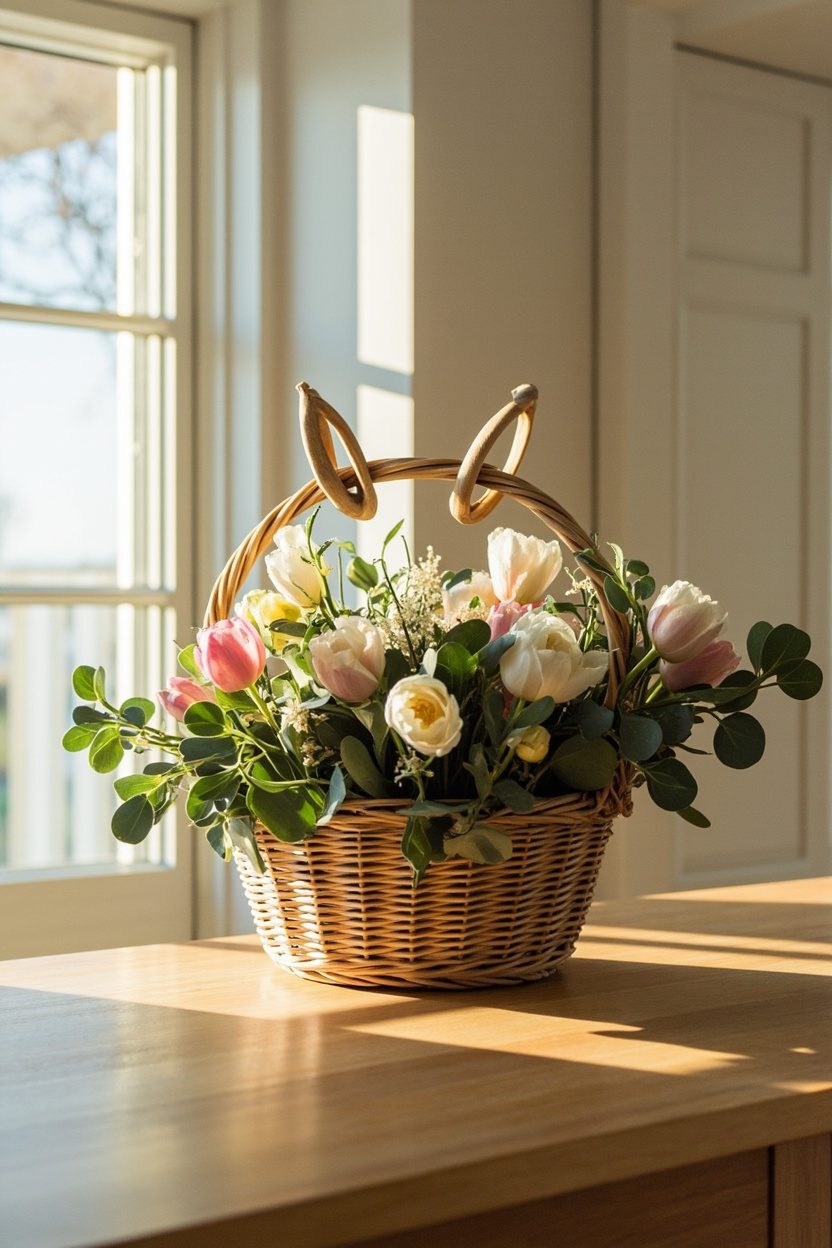
Start with a sturdy willow or wicker basket so the added ear structure stays upright when carried or moved.
Create the ears from bendable grapevine or wire wrapped in floral tape, anchoring them to the basket rim inside with hot glue and floral wire.
Fill the basket with a base of mixed spring flowers, using larger focal blooms like peonies or tulips at the center, and fillers like sweet pea around the edges.
Finish by tying a linen bow under the ears, color-matched to one of the flower hues, and keep the mouth of the basket shallow so blooms peek out like a friendly face.
Essential Elements
- Reinforce ear anchors with a small wooden dowel inside the handle for stability.
- Scale ears to basket width, roughly one-third the basket height, to avoid top-heaviness.
- Limit palette to two dominant colors plus green foliage for a charming, non-cloying result.
- Avoid heavy flowers at the very top; choose lighter stems to reduce strain on the woven rim.
You can pair this with ideas from 12 Spring Front Door Ideas That Impress Every Visitor.
FAQ
Longevity depends on flower type and care; fresh-cut spring blooms typically last 4 to 7 days with daily water changes and cooler placement. Dried arrangements can last months to years if kept out of direct sunlight and humidity, and handled gently.
You can, but package with stabilizing materials like eco-friendly crinkle paper and a water source, such as a sealed water tube for stems, and choose next-day delivery for best results. For dried baskets, wrap gently in tissue and use a snug box to prevent shifting during transit.
Yes, select low-pollen flowers like hydrangea, orchids, snapdragons, or use predominantly foliage and preserved elements to minimize airborne allergens. You can also add a note recommending placement in well-ventilated areas and avoiding strongly scented blooms like lilies for sensitive recipients.
Look for small gifts that marry form and function, such as scented sachets, mini potted succulents, or artisan soaps, which complement florals and extend the basket’s playfulness. For style inspiration tied to room settings, consult resources on Eclectic Cottage Decor or Living Room Decor Boho Touches to align the basket with home interiors.
Final Thoughts
Easter baskets can be purely playful or a refined floral statement, depending on scale, material choices, and color discipline.
Choose one clear design decision per basket, whether it is color trio, ear proportion, or preservation method, and the result will feel intentional, usable, and memorable.