


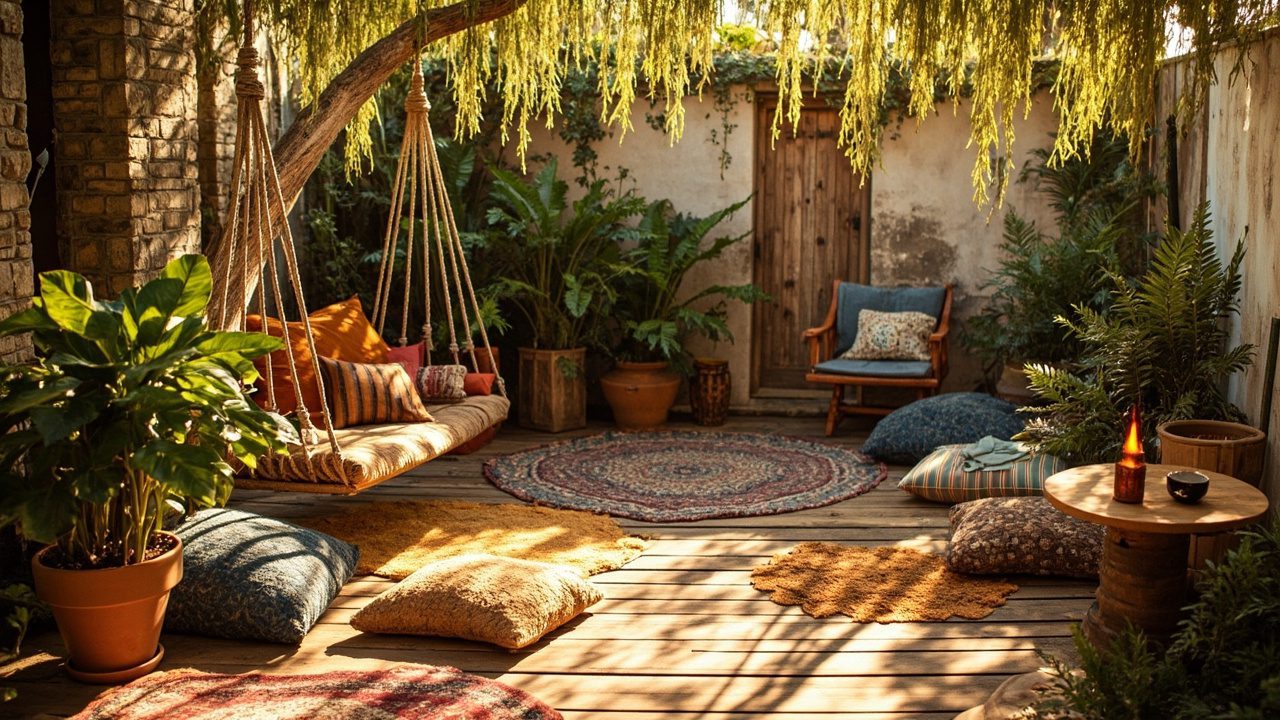
Turn a plain yard into a free-spirited boho escape by mixing texture, color, and unexpected scale. This guide focuses on high-impact, tactile choices that read as collected and effortless, so you get that hippie, magical vibe without overworking the space.
Think in layers, start small, and let one arresting element lead the scheme, a planted macramé cluster or a pebble path that curves like a secret.
Keep proportions human, use weatherproof materials, and avoid tiny scatter cushions that disappear under big floor pillows.
- 1. Boho Macramé Plant Hangers Galore
- 2. Colorful Pebble Mosaic Walkways
- 3. Oversized Statement Garden Pillows
- 4. Vintage Wagon Wheel Planter Display
- 5. Layered Textiles on Outdoor Rugs
- 6. Dwarf Shrub Borders for Paths
- 7. Hanging Glass Terrarium Lanterns
- 8. Tie-Dye Fabric Shade Canopies
- 9. Reclaimed Wood Raised Beds
- 10. Bohemian Wind Chime Installations
- 11. Cottage Flower Mix Borders
- 12. Hand-Painted Ceramic Pot Collections
- 13. Sunburst Mirror Garden Focal
- FAQ
- Final Thoughts
1. Boho Macramé Plant Hangers Galore
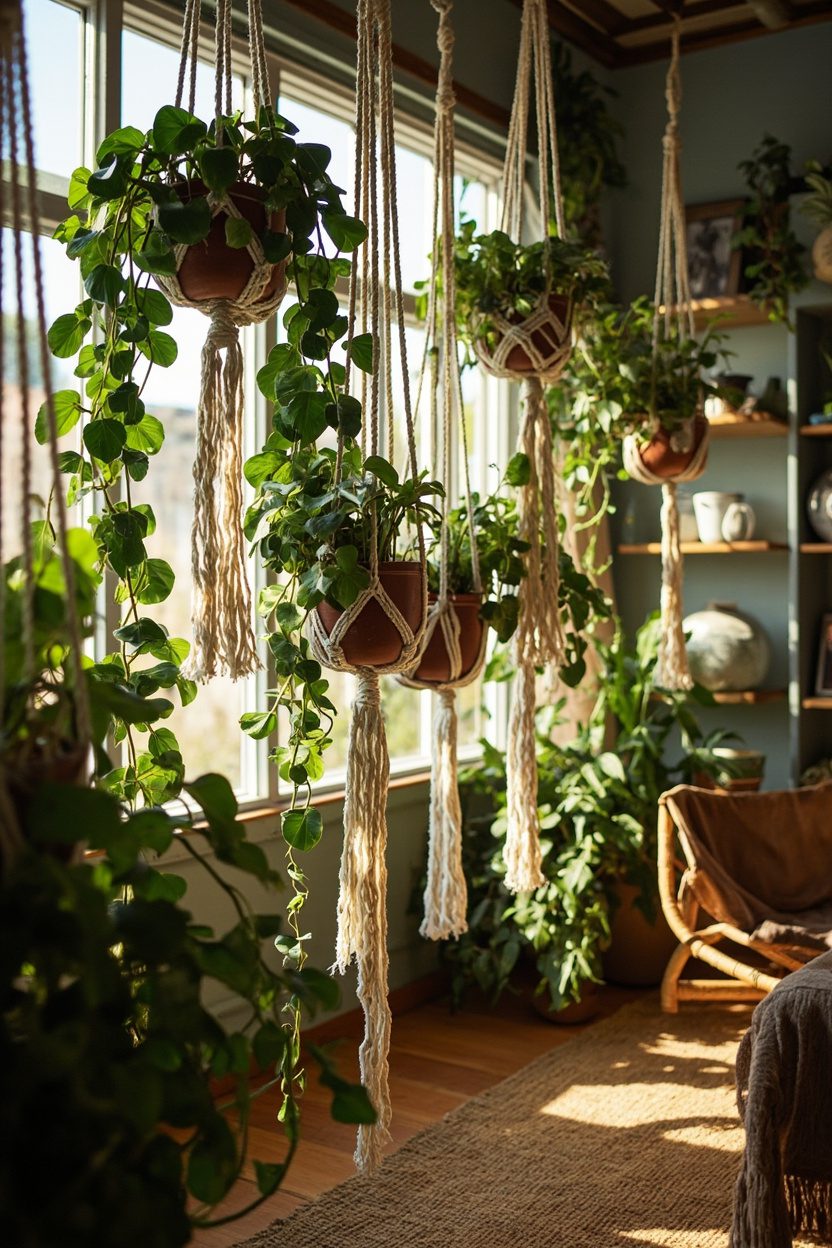
Cluster macramé hangers at varied heights from a pergola beam or stout branch to create cascading foliage that reads like living art. Use outdoor rope, like polyester cord or marine-grade twine, so knots hold up to moisture, and mix planter sizes, keeping at least 8–10 inches between pots to avoid overcrowding.
Introduce one dramatic specimen, such as a trailing pothos or burgundy Tradescantia, paired with a hardy succulent in a smaller pot to balance texture and weight, and avoid the common mistake of hanging everything at the same level, which looks flat rather than layered.
2. Colorful Pebble Mosaic Walkways
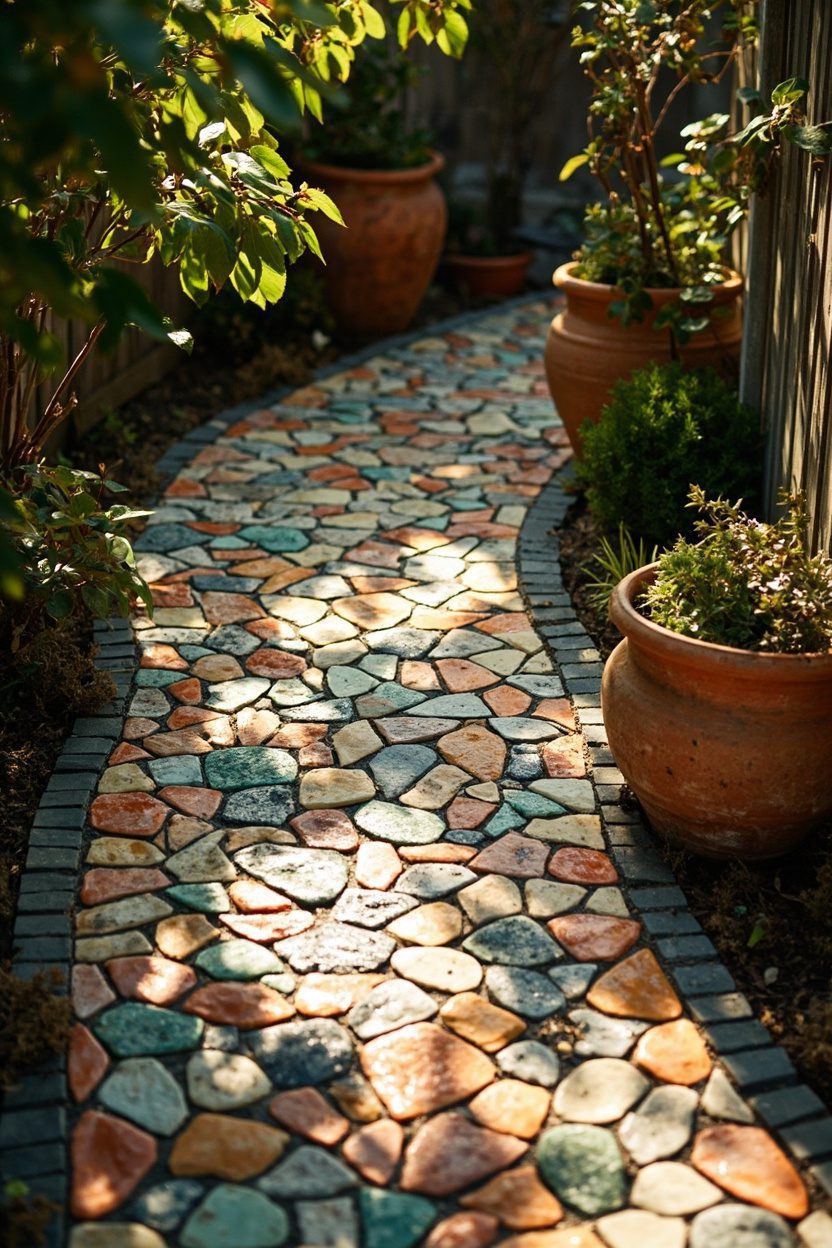
Lay a curving pebble mosaic path to guide the eye, use 4–8 inch stepping stones with pebbles set into polymer-modified mortar for durability, and pick 2–3 dominant colors rather than a rainbow jumble to keep the design readable.
Arrange pebbles in simple motifs, like sunbursts or spirals, at focal points where the path changes direction.
This creates moments of discovery without overwhelming the garden.
Budget tip: source local river rock for base colors and add small accent glass pebbles sparingly, and plan for a 3–4 inch compacted sand or gravel base to prevent settling, which is the most common cause of uneven, weedy walkways.
3. Oversized Statement Garden Pillows
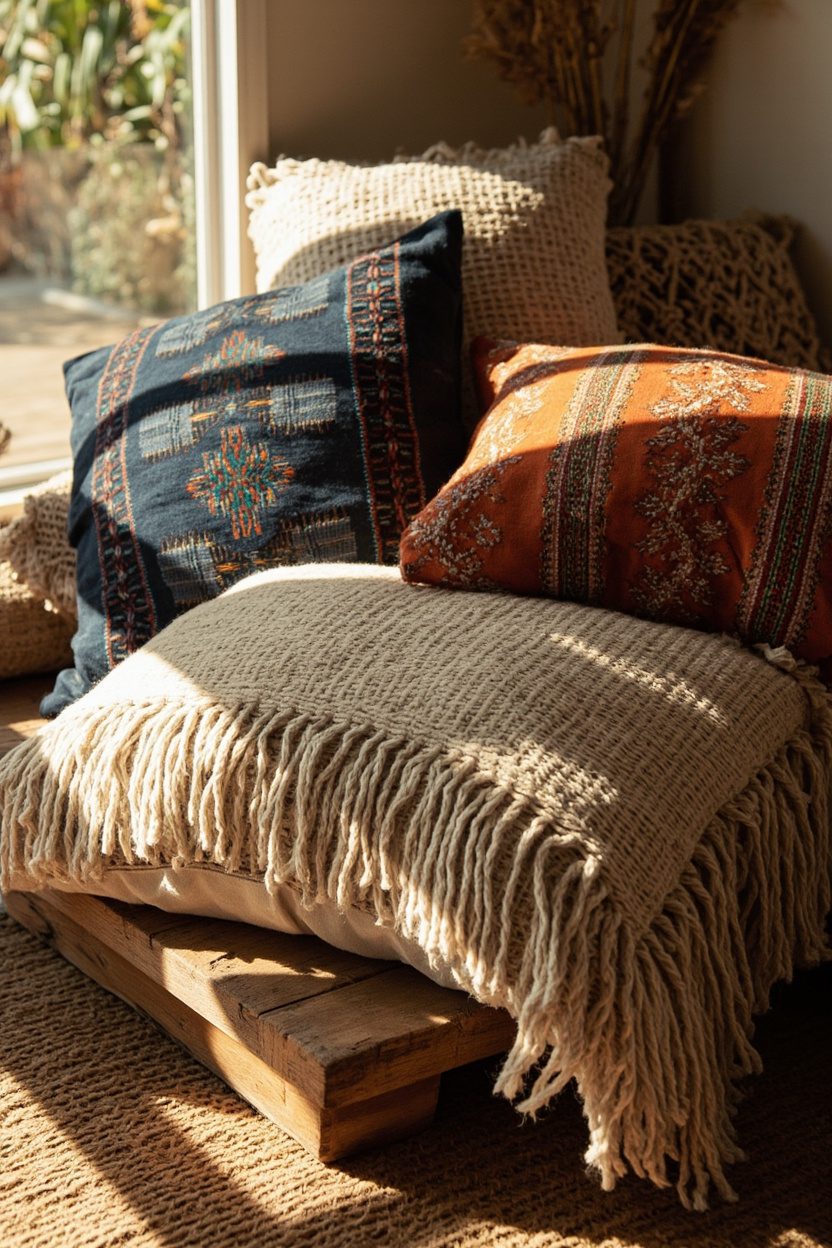
Choose large floor pillows, 30–36 inches across, filled with quick-dry foam or outdoor batting and wrapped in marine-grade fabric to stand up to dew and spills.
Place them on a woven outdoor rug to define a chill lounge area. Mix one oversized lumbar cushion with two round poufs to create a conversational arrangement, and keep prints in a 2:1 ratio of bold to neutral to avoid visual clutter.
For a boho finish, layer one pillow in macramé or fringed cotton over a sturdier, patterned cover, and avoid tiny cushions that get lost; instead, aim for scale that invites reclining and anchors the seating zone.
Boho kitchen and Coastal farmhouse styling guides offer crossover tips for fabric selection and color palettes, useful when bringing indoor textiles outside.
4. Vintage Wagon Wheel Planter Display
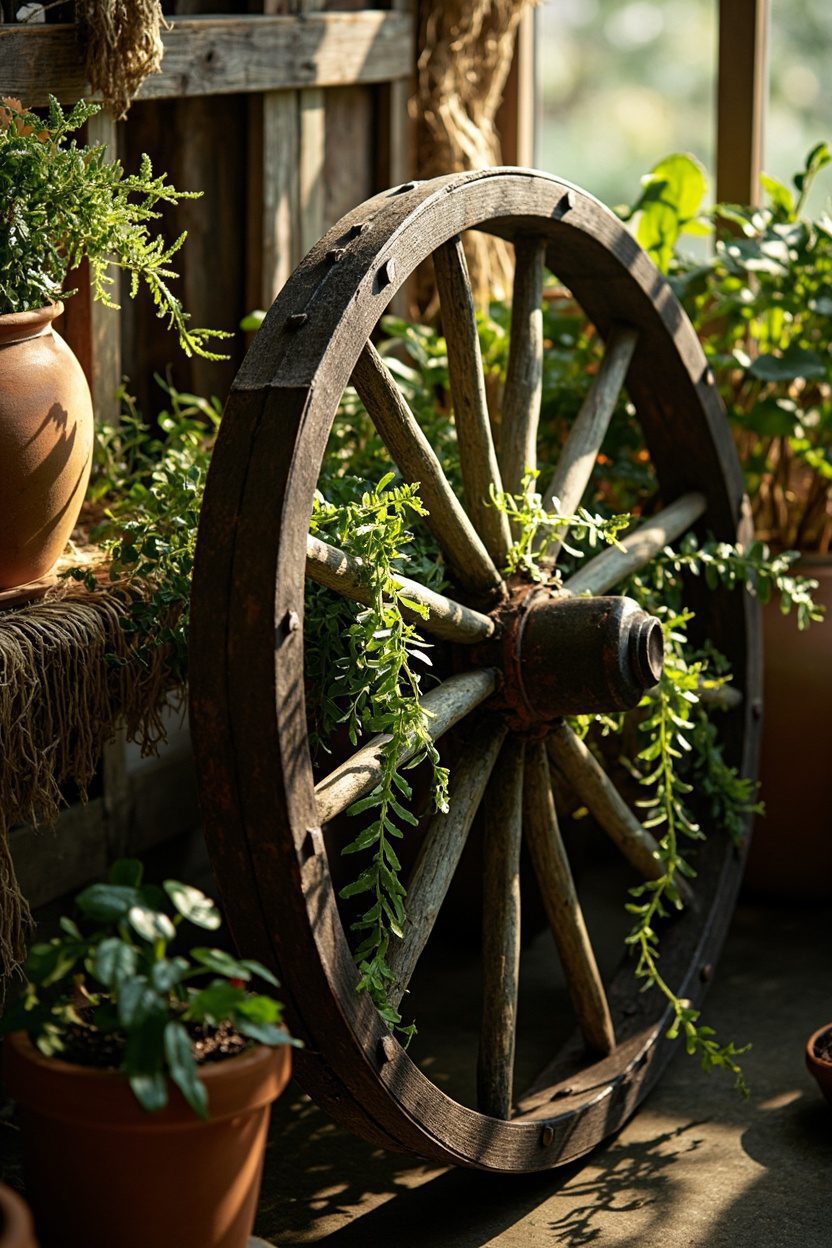
A weathered wagon wheel repurposed as a vertical planter gives instant hippie boho character. Place the wheel against a fence and attach galvanized buckets at staggered heights for succulents and trailing ivy.
Use screws and metal straps rated for outdoor use, space the buckets so larger trailing plants like sweet potato vine can spill 8 to 12 inches beyond the wheel for soft, layered movement.
Mix textures by pairing rusty metal with woven macramé hangers or reclaimed wood shelves, balance proportions by keeping the wheel no larger than two-thirds of the fence panel it leans on, and avoid overplanting. Aim for three to five varieties so each gets room to establish.
5. Layered Textiles on Outdoor Rugs
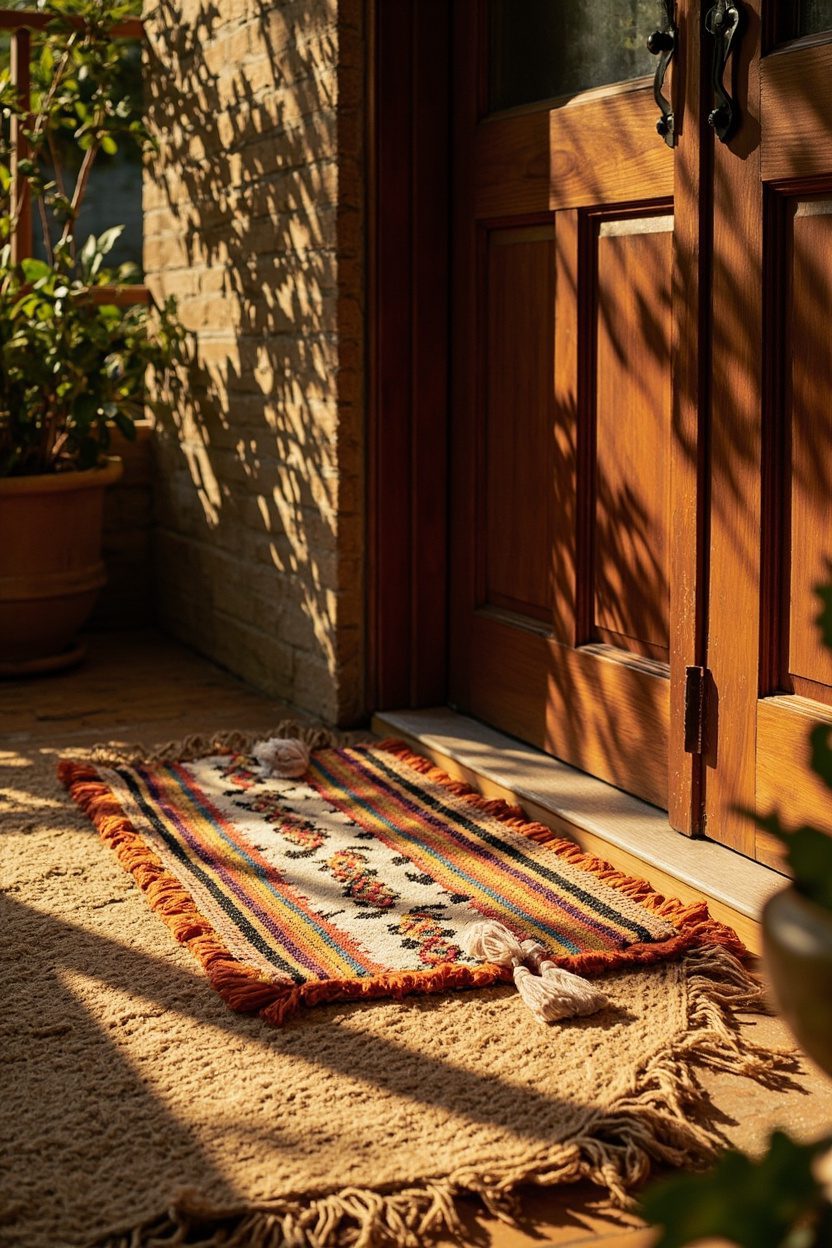
Layer a flatwoven jute rug under a smaller kilim or vintage Persian-style rug to create that boho, lived-in feel, anchor furniture on the larger rug to prevent edges from flapping in the breeze, and choose outdoor-rated dyes if the area sees sun.
For color balance, pick one dominant hue from the top rug and echo it in pillows or a throw. Keep pattern scales mixed, with at least one large-scale and one small-scale pattern to avoid visual clutter.
Use rug tape or outdoor rug grippers at the corners for safety, and rotate rugs seasonally to distribute wear and sun exposure. This extends lifespan and preserves color vibrancy in high-traffic garden seating areas.
6. Dwarf Shrub Borders for Paths
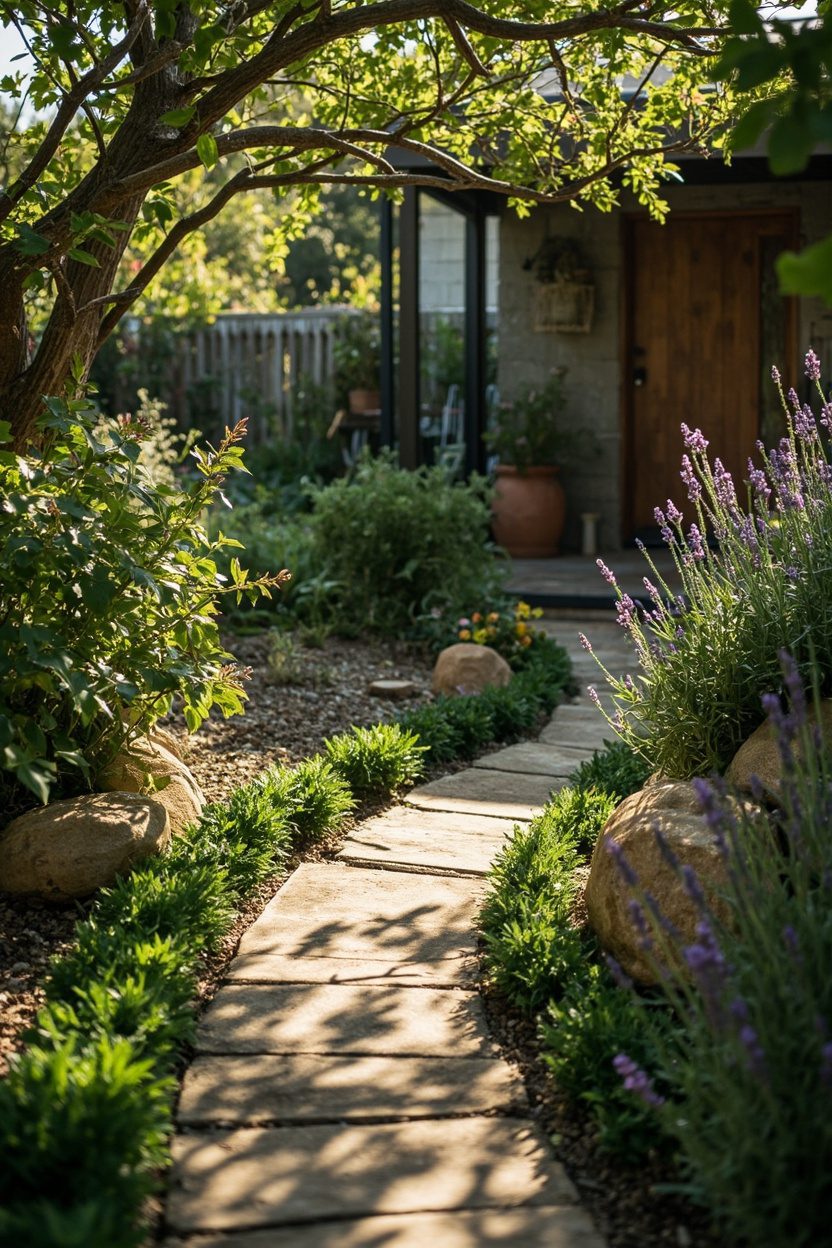
Plant dwarf, mounding shrubs like Little Bonnie™ Dwarf Spiraea 12 to 18 inches from the path edge to create a low, tactile border that stays neat without constant pruning.
Space plants about 18 to 24 inches apart, depending on mature breadth. Choose mixed bloomers and evergreen varieties for year-round interest, alternating textures and heights so the border reads layered rather than uniform.
Install a 2 to 3-inch mulch band and a simple metal or stone edging to define the border and reduce lawn encroachment, and avoid planting deep-rooted species within 3 feet of the path to prevent root heaving. This keeps your path level and safe.
7. Hanging Glass Terrarium Lanterns
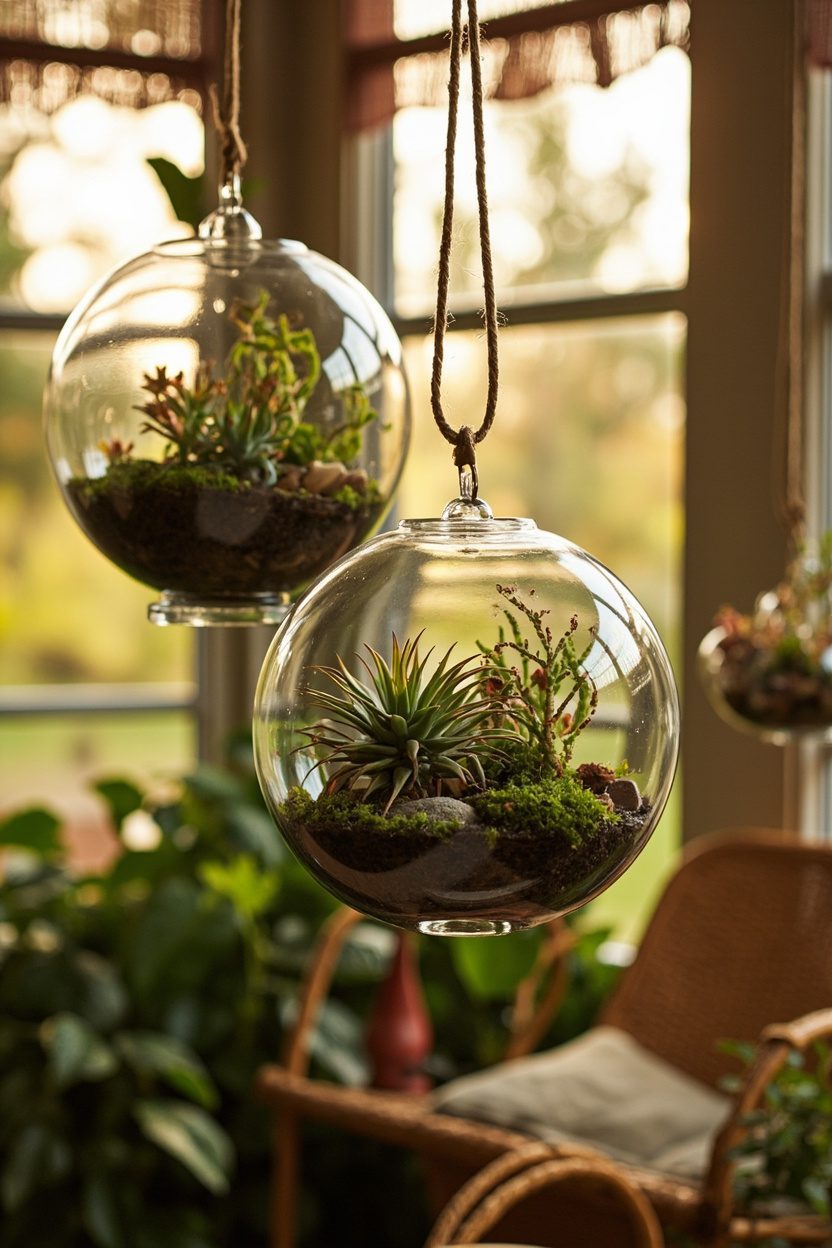
Suspend clusters of small glass terrariums at varying heights to create moving pools of light. Use clear glass globes about 6 to 8 inches wide so each holds a small plant and a tealight or LED.
Anchor them on stainless S-hooks from a pergola beam or copper chain, spacing about 12 inches apart to avoid crowding and to let airflow keep plants healthy.
Use a mix of succulents and air plants, and add a thin layer of sand or activated charcoal for drainage and odor control.
This prevents root rot in humid climates. For evening ambience, pair warm white LEDs with dimmers so the lanterns read as lanterns rather than disco lights, and avoid overloading with large candles, which can fog the glass or scorch foliage.
8. Tie-Dye Fabric Shade Canopies
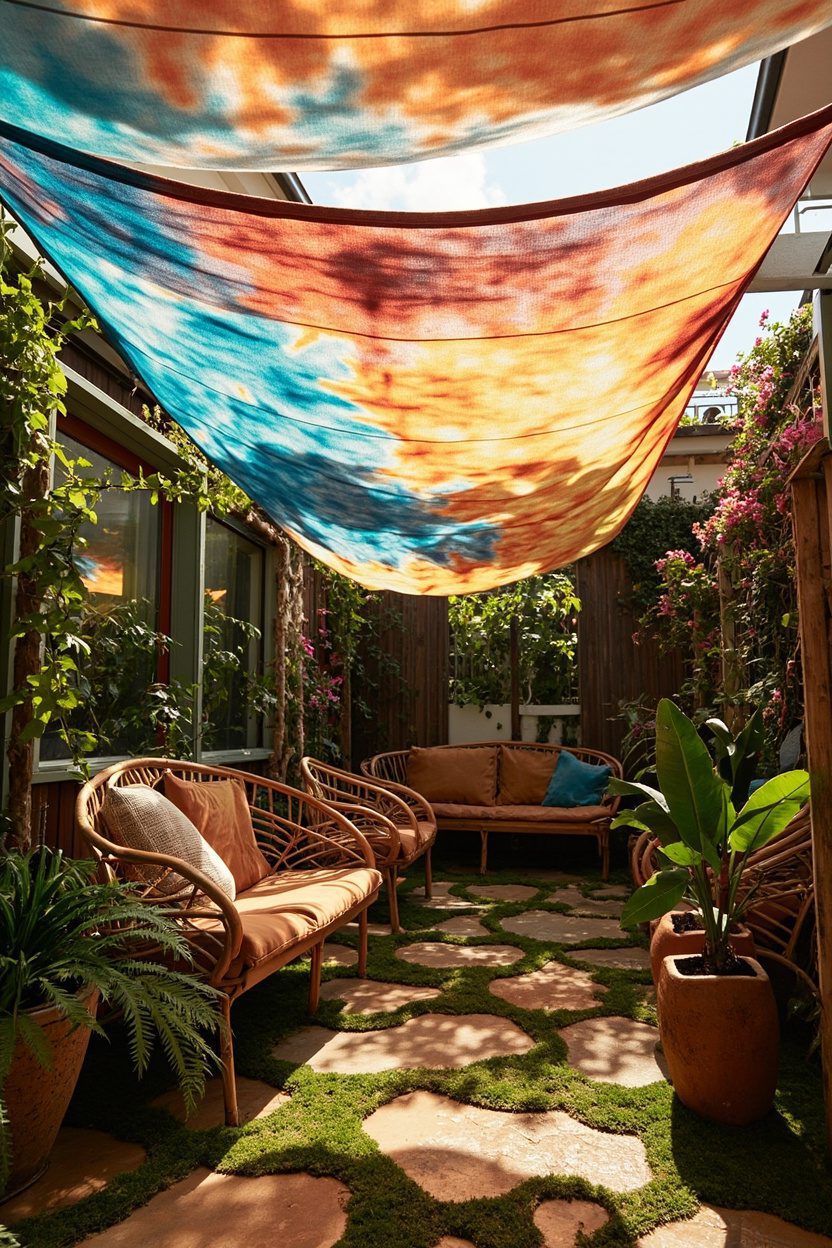
Create breathable shade with large tie-dyed cotton panels, choose outdoor-rated dye and wash fabrics several times before installation to minimize runoff and color bleed, panels around 6 by 8 feet work well for intimate seating nooks.
String the panels loosely from trees or a simple timber frame, allowing one corner to be lower than the rest to encourage airflow and a casual boho silhouette.
Layer patterns and scale, combine a big swirl panel with smaller mandala prints to keep balance, avoid too many heavy patterns next to each other, which can feel cluttered. Use stainless snap hooks and UV-resistant cord for longevity, and remove during storms to protect fabric and reduce mildew risk.
9. Reclaimed Wood Raised Beds
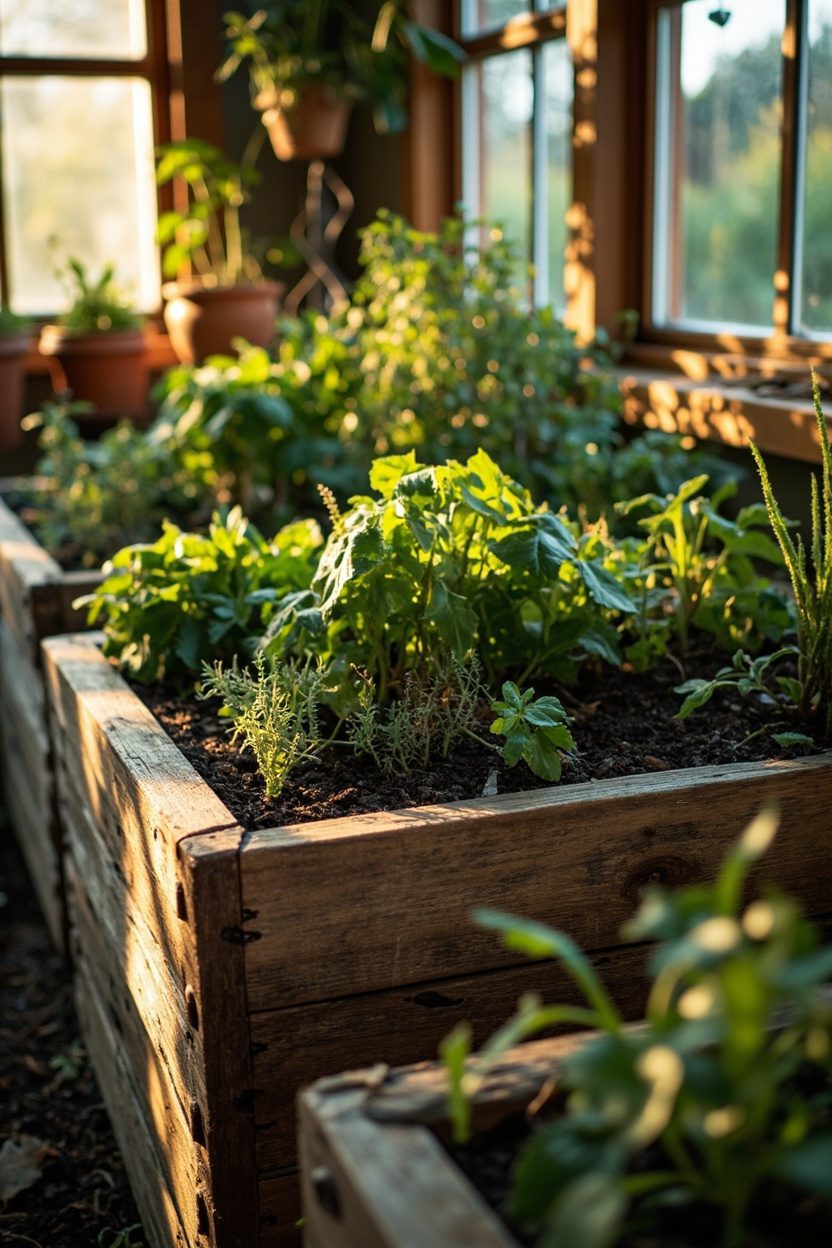
Build raised beds from reclaimed pallet planks or salvaged barn wood, and line the interior with heavy-duty landscape fabric to protect the wood and hold soil. Ideal dimensions are 4 feet wide, so you can reach the middle without stepping in.
Keep boards 1 to 2 inches thick and reinforce corners with galvanized brackets. This gives rustic character while ensuring beds last several seasons.
Plant a wild mix of perennials, herbs, and trailing vines for that hippie meadow look, stagger heights with low thyme at the edges and taller echinacea or sunflowers behind for depth.
If budgets are tight, source wood from local reclamation centers and fill beds in stages, starting with nutrient-rich topsoil only where you’ll plant first.
10. Bohemian Wind Chime Installations
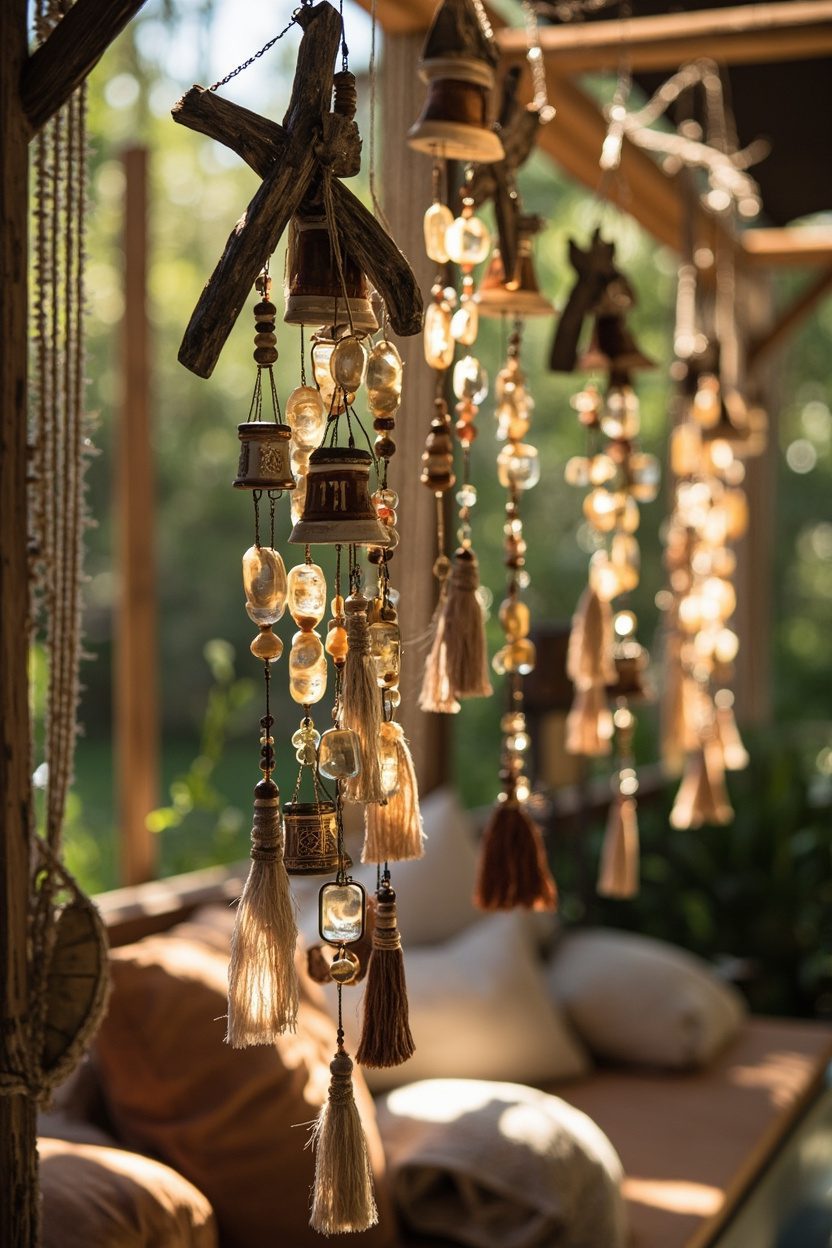
Place wind chimes where they catch both breeze and sightlines, such as near a pergola beam or above a seating nook, so sound and visual texture work together.
Use mixed materials, like copper tubes with sea glass and reclaimed wood, and hang them at varying heights in odd numbers to avoid a static look. Budget about $40 to $150 per focal grouping, depending on materials.
Install a sturdy swivel hook and space each chime at least 18 inches apart to prevent clashing tones, and include one heavier chime with a lower pitch to anchor the soundscape.
For moisture-prone spots, choose marine-grade cord or stainless steel to prevent rapid wear, and avoid placing chimes too close to windows where constant sound becomes intrusive.
11. Cottage Flower Mix Borders
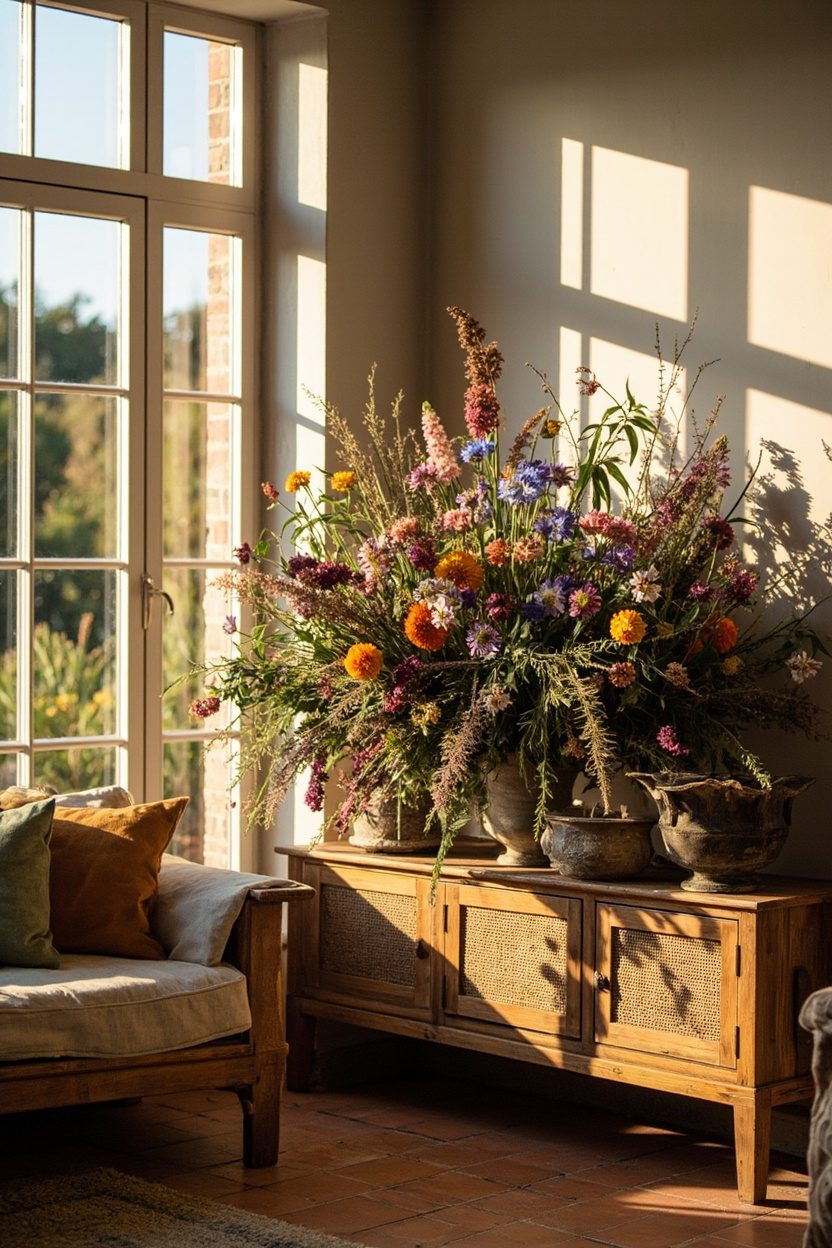
Create a relaxed, hippie-cottage edge by planting a layered mix of perennials and annuals, for example, dwarf spiraea at the back, mid-height echinacea and salvia, then low alyssum and calendula at the front, spacing plants so mature spread is respected, typically 12 to 24 inches apart.
Stick to a palette of saturated oranges, purples, and cream to keep the boho vibe, and use a 2 to 3-inch mulch layer to suppress weeds and retain moisture.
Avoid the common mistake of over-formal edging; instead, use irregular curves and repaired reclaimed brick or salvaged timber to define the border, sunk slightly into the soil for a lived-in look.
For easy maintenance, include at least one self-seeding annual like cosmos, and divide clumping perennials every 3 years to keep the border airy and abundant.
12. Hand-Painted Ceramic Pot Collections
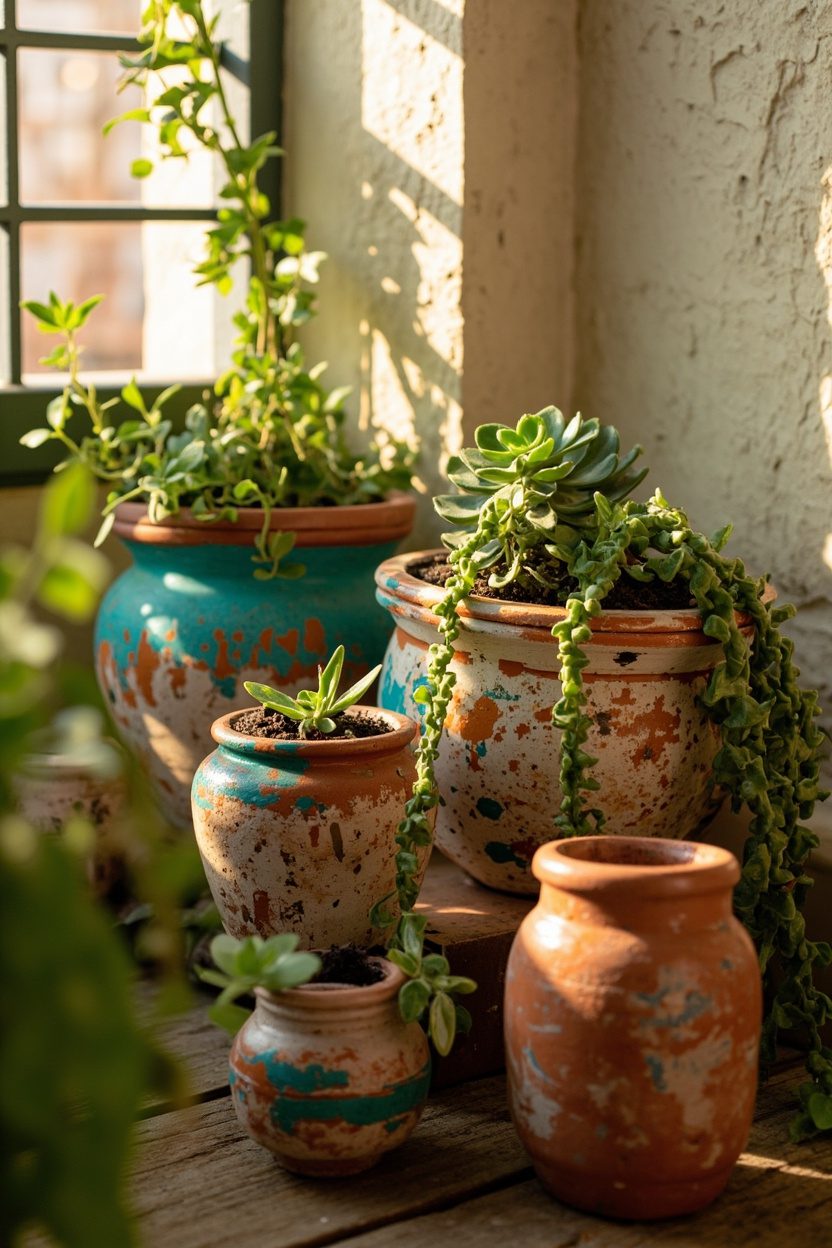
Group pots of varying scales, but keep the largest pot about one-third the width of the display area to maintain proportion, and repeat a single glaze color or motif to unify the collection.
Use terracotta or frost-resistant ceramic, depending on the climate, and drill drainage if indoors, then layer gravel at the base for better moisture control.
Experiment with folk motifs and metallic accents on a few key pieces to create focal interest, and place pots on staggered platforms or reclaimed crates to add verticality without crowding roots.
For a cohesive boho statement, mix textured foliage like fern and spider plant with trailing string-of-pearls for contrast and movement.
13. Sunburst Mirror Garden Focal
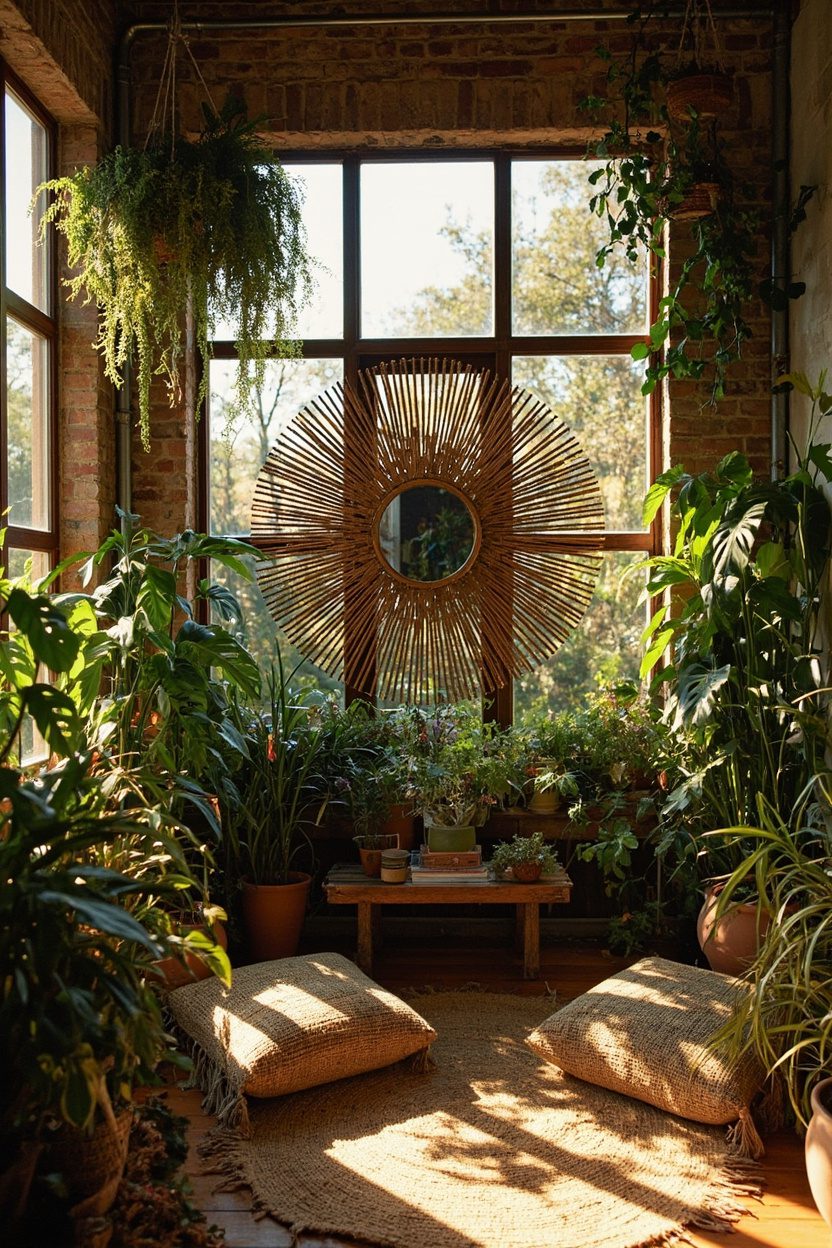
A weather-resistant sunburst mirror makes an instant boho focal, mount it on a fence or a stucco wall at eye level, about 60–70 inches from the ground for standard sightlines.
Choose a mirror with a rattan or powder-coated metal frame, avoid thin glass in windy sites, and back it with a splash of matte terracotta paint to enhance the warm rays visually.
Place plantings around the mirror to soften reflections, use tall, narrow grasses like Miscanthus on one side and a low mound of Little Bonnie™ spiraea on the other for scale, so the mirror reads as intentional, not floating.
A common mistake is hanging it too high or in full glare; aim for dappled light from an overhanging tree to create shifting reflections throughout the day.
You can pair this with ideas from 14 Boho Lighting Ideas from Rattan Pendants to Fairy Light Canopies.
FAQ
Pick a mirror about one-third the width of the wall or fence section it occupies, that keeps proportion with surrounding planters and seating.
Only if it’s rated for exterior use; otherwise, encapsulate a decorative mirror with a sealed frame and place it under an overhang to prevent moisture damage.
Use through-bolts into studs or masonry anchors for brick, and add a marine-grade cable as a fail-safe, especially in windy locations.
No, mirrors rarely affect wildlife, but avoid reflecting direct sun into nests or causing overheating, position for soft reflections and foliage views.
Final Thoughts
A sunburst mirror is a simple, high-impact boho choice that anchors a wild garden while reflecting light and texture, just mind the materials, placement, and plant companions for a magical result.
For broader outdoor styling ideas and project planning, explore practical guides on boho kitchen updates and detailed home renovations.